Interviews are opportunities to demonstrate your expertise, and this guide is here to help you shine. Explore the essential Moving and Storage interview questions that employers frequently ask, paired with strategies for crafting responses that set you apart from the competition.
Questions Asked in Moving and Storage Interview
Q 1. Describe your experience with different types of packing materials and their applications.
Selecting the right packing materials is crucial for a successful move. Different items require different levels of protection. My experience encompasses a wide range of materials, each with specific applications.
- Cardboard boxes: These are the workhorses of any move. I use various sizes – from small boxes for books and fragile items to large boxes for blankets and clothing. The quality of the cardboard is important; I prefer double-walled boxes for heavier items to prevent crushing.
- Bubble wrap: An indispensable material for protecting fragile items like glassware, electronics, and artwork. I use different bubble sizes depending on the fragility of the item. Larger bubbles are suitable for heavier objects; smaller bubbles are better for smaller, delicate items.
- Packing peanuts: Excellent for filling void spaces in boxes to prevent shifting and damage during transit. I prefer biodegradable peanuts to be environmentally conscious.
- Packing paper: Used for wrapping fragile items individually before placing them in boxes. It provides additional cushioning and prevents scratching.
- Foam sheets and corner protectors: Offer superior protection for furniture edges and corners, preventing damage during handling and transport. I’ve used these extensively to protect antique furniture and other high-value items.
- Stretch wrap: Used to secure furniture and other items to prevent shifting and damage. It’s particularly useful for wrapping furniture legs and securing boxes to pallets.
For example, when moving a client’s antique grandfather clock, I would use a combination of a custom-built wooden crate, ample bubble wrap, packing paper, and foam corner protectors to ensure its safe arrival. The selection process always starts with assessing the item’s fragility and value.
Q 2. How do you prioritize tasks during a busy moving day?
Prioritizing tasks on a busy moving day requires a structured approach. My strategy involves a combination of planning and adaptability.
- Pre-move planning: I meticulously plan the loading order, prioritizing items needed at the new location first. This often includes essential toiletries, bedding, and important documents.
- Team coordination: Effective communication with my team is key. I assign tasks based on individual strengths and the urgency of the task. Clear instructions and designated roles ensure smooth workflow.
- Dynamic adjustment: Unexpected issues arise, so I remain adaptable. I prioritize urgent problems (e.g., a broken item) while keeping the overall timeline in mind. This usually involves quick problem-solving and re-prioritizing tasks accordingly.
- Time management: I use time-blocking techniques to estimate the time required for each stage (disassembly, loading, transport, unloading). This helps me stay on schedule and manage expectations.
Imagine a scenario where a crucial piece of furniture needs disassembly before loading. I would prioritize this task over packing less important items to ensure the move doesn’t get delayed.
Q 3. Explain your understanding of weight distribution and its importance in moving.
Weight distribution is paramount in moving, affecting safety, efficiency, and the structural integrity of the moving truck. Uneven distribution can lead to accidents and damage.
Proper weight distribution involves strategically placing heavier items towards the bottom and center of the truck, distributing weight evenly across the axles. Lighter items are placed on top and towards the edges. This prevents the truck from tilting or becoming unstable during transit. I often use the analogy of a seesaw – you need balanced weight on both sides for stability.
For instance, heavy appliances like refrigerators and washing machines are loaded first, near the center of the truck’s floor. Sofas and other large furniture items are placed around them, while lighter boxes are positioned on top. This ensures the weight is distributed as evenly as possible, minimizing the risk of the truck tipping or shifting during transport.
Q 4. What are the key safety procedures you follow when loading and unloading a truck?
Safety is my top priority. I follow a strict protocol for loading and unloading a moving truck to ensure the safety of my team and the client’s belongings.
- Proper lifting techniques: We use proper lifting techniques to avoid back injuries. This involves bending at the knees, keeping the back straight, and lifting with the legs.
- Protective gear: We always wear appropriate safety gear, including gloves and steel-toe boots, to protect ourselves from injuries.
- Secure loading: Items are secured properly using straps, blankets, and other materials to prevent shifting and damage during transit.
- Clear communication: Constant communication between team members ensures coordination and prevents accidents.
- Ramp safety: When using ramps, we ensure they are stable and properly positioned to prevent slips, trips, and falls.
- Spotters: When manoeuvring heavy items, we always use spotters to guide the load and prevent collisions.
For example, before loading any heavy item, we ensure the area is clear of obstacles, and multiple team members work together using appropriate techniques and safety equipment to avoid any mishaps. This collaborative approach significantly reduces the risk of accidents.
Q 5. How do you handle customer complaints or concerns during a move?
Handling customer complaints requires empathy, professionalism, and effective problem-solving. My approach focuses on understanding the issue, finding a solution, and ensuring customer satisfaction.
- Active listening: I listen attentively to the customer’s concerns without interruption, allowing them to fully express their feelings.
- Empathy and validation: I acknowledge their frustration and validate their concerns, showing that I understand their perspective.
- Investigation: I investigate the complaint thoroughly to understand the root cause of the problem.
- Solution-oriented approach: I propose solutions that address the customer’s concerns fairly and effectively. This might involve offering compensation, rectifying the damage, or making amends.
- Follow-up: I follow up with the customer to ensure they are satisfied with the resolution.
For instance, if a customer complains about a damaged item, I will first apologize, document the damage with photos, and then explore solutions like repair, replacement, or compensation depending on the circumstances. Maintaining open communication throughout the process is crucial.
Q 6. Describe your experience with inventory management and tracking systems.
Inventory management and tracking are critical for accurate record-keeping and efficient operations. My experience includes using both manual and digital systems.
Manual systems: These involve using physical inventory sheets to record items moved and stored. While less efficient, they can be helpful in situations with limited technology access.
Digital systems: I’m proficient in using various inventory management software and apps. These systems allow for real-time tracking of items, generating detailed reports, and improving accuracy. This reduces the risk of loss or misplacement of items. Example: Software might track item details (description, condition, weight), location in storage, and customer information.
Regardless of the system used, I ensure meticulous record-keeping, including detailed descriptions of each item, its condition, and its location. This enables accurate inventory reconciliation and efficient retrieval during relocation or delivery. Proper inventory management builds trust and confidence with clients.
Q 7. What are some common challenges in the moving and storage industry, and how have you overcome them?
The moving and storage industry faces several challenges. Some common ones include:
- Seasonal fluctuations: Demand peaks during certain times of the year, leading to logistical challenges and staffing issues.
- Fuel price volatility: Fuel costs significantly impact operational expenses. We manage this by optimizing routes and negotiating fuel contracts.
- Competition: The industry is competitive. We maintain a competitive edge through excellent customer service, efficient operations, and competitive pricing.
- Damage claims: Addressing damage claims requires careful investigation and fair resolution. We minimize this by using proper packing techniques and handling procedures.
- Finding and retaining skilled labor: Attracting and retaining reliable and skilled movers is always a challenge. We address this by offering competitive wages and benefits, creating a positive work environment, and providing ongoing training.
I’ve overcome these by embracing technology for route optimization, using advanced packing techniques to reduce damage, and by fostering a culture of professionalism and teamwork within my team. Proactive planning and efficient resource management are also key strategies.
Q 8. How familiar are you with different types of moving equipment (e.g., hand trucks, dollies, etc.)?
My familiarity with moving equipment extends beyond basic knowledge; I possess hands-on experience using a wide array of tools to ensure efficient and safe moves. This includes various hand trucks – from two-wheel to four-wheel models, each suited for different weight capacities and terrain. I’m proficient with appliance dollies for larger, heavier items like refrigerators and washing machines, and furniture dollies with straps for securing delicate pieces. I also understand the proper use of furniture pads, blankets, and straps to prevent damage during transport.
- Two-wheel hand truck: Ideal for lighter loads and navigating tighter spaces.
- Four-wheel hand truck: Better suited for heavier loads and smoother surfaces.
- Appliance dolly: Specifically designed for moving large appliances, offering stability and protection.
- Furniture dolly: Provides a stable platform for moving furniture, often combined with straps for secure transport.
Understanding the limitations and strengths of each piece of equipment is crucial for preventing accidents and ensuring the smooth execution of any move.
Q 9. Explain your experience with damage prevention and claims procedures.
Damage prevention is paramount in my moving practice. Before each move, I conduct a thorough inventory, noting the condition of each item. This documented assessment serves as a baseline for comparison post-move, minimizing disputes. I employ meticulous packing techniques, using appropriate materials like bubble wrap, packing paper, and sturdy boxes to protect fragile items. Furniture is meticulously wrapped in protective blankets and secured with straps to prevent scratches or shifting during transit.
In the unfortunate event of damage, I follow a strict claims procedure. This involves promptly documenting the damage with photos and a detailed description. The documentation, along with the initial inventory, is then submitted to the client and, if applicable, the insurance company. I clearly communicate the claims process to the client, keeping them updated every step of the way. Transparency and proactive communication are essential in resolving such situations fairly and efficiently.
Q 10. How do you ensure the safe and efficient loading and unloading of fragile items?
Safe and efficient loading and unloading of fragile items requires a multi-pronged approach. First, I meticulously pack these items individually using ample cushioning material – think layers of bubble wrap, packing peanuts, or air pillows. Fragile items are then placed in sturdy, double-walled boxes, clearly labeled as “fragile” with appropriate handling instructions. Heavier items are placed at the bottom of the truck, with progressively lighter and more fragile items stacked on top. During unloading, the reverse process is followed, prioritizing the removal of lighter, more fragile items first.
Furthermore, I utilize specialized equipment like furniture pads and dollies to minimize the risk of drops or impacts. Every step is taken cautiously and deliberately to avoid any sudden movements or jarring that could damage the contents. My team and I consistently reinforce the importance of careful handling and teamwork throughout the process.
Q 11. Describe your knowledge of local, state, and federal regulations related to moving and transportation.
My knowledge of moving regulations is extensive, covering local ordinances, state regulations, and federal DOT (Department of Transportation) rules. This includes understanding weight limits for vehicles, proper licensing and insurance requirements for commercial movers, hazardous materials handling protocols, and compliance with safety standards. I stay updated on any changes or amendments to these regulations through professional development courses and industry publications. For example, I am familiar with the USDOT’s regulations on hours of service for drivers to ensure safe operation and compliance.
Understanding these regulations is crucial for operating legally and ethically, ensuring customer satisfaction, and preventing potential legal issues. This includes understanding the implications of interstate vs. intrastate moves and any additional permits or documentation required.
Q 12. How do you handle unexpected delays or problems during a move?
Unexpected delays or problems are an inherent part of the moving business. My approach prioritizes proactive communication and problem-solving. If a delay occurs – perhaps due to traffic, unforeseen weather, or equipment malfunction – I immediately notify the client, explaining the situation and providing a realistic estimate of the revised timeline. I explore all possible solutions to minimize disruption, such as rerouting, securing alternative equipment, or reassigning personnel. Transparency and maintaining open communication are vital to managing client expectations during such circumstances. I view these challenges as opportunities to demonstrate resourcefulness and commitment to delivering the best possible outcome, even under pressure.
Q 13. Explain your experience with different types of storage units and their suitability for different items.
My experience encompasses various storage unit types, from climate-controlled units ideal for sensitive items like furniture and electronics susceptible to temperature and humidity fluctuations, to standard units suitable for items less sensitive to environmental changes. I also understand the benefits of drive-up units for easy access and larger units for bulkier items. The choice of storage unit depends greatly on the client’s needs and the nature of the items being stored.
For example, valuable artwork or antique furniture would necessitate a climate-controlled unit to prevent damage caused by temperature extremes or moisture. Conversely, less sensitive items like seasonal clothing or sporting equipment might be adequately stored in a standard, non-climate-controlled unit.
Furthermore, I consider security features, such as access control and surveillance systems, when recommending storage solutions, especially for valuable or sensitive items.
Q 14. What is your experience with using inventory software or mobile apps?
I am proficient in using several inventory software and mobile apps to streamline the moving process. These tools facilitate accurate item tracking, condition assessments, and real-time updates for clients. Examples include apps that generate digital inventories with photos, enabling efficient tracking and damage assessment. Some software solutions integrate with scheduling and billing systems, creating a seamless, end-to-end management system for moves. My familiarity extends to both cloud-based and on-premise software, ensuring adaptability to various operational needs. This technological proficiency contributes significantly to the accuracy, efficiency, and transparency of our moving operations.
Q 15. Describe your understanding of insurance coverage in the moving industry.
Insurance coverage in the moving industry is crucial for protecting both the moving company and the customer’s belongings. It’s typically offered in two main forms: liability coverage and full-value protection. Liability coverage, often referred to as ‘released value,’ is a lower-cost option that provides limited compensation in case of damage or loss, usually based on a per-pound rate. Full-value protection, on the other hand, covers the full replacement cost of damaged or lost items. This is a more comprehensive, and therefore more expensive, option. The specifics of the coverage, including declared value, limitations, and exclusions, are outlined in the contract signed by both parties. For example, some policies might exclude items of high value, such as jewelry or antiques, requiring separate insurance for these items. Choosing the right coverage depends on the value and fragility of the customer’s possessions and their risk tolerance.
Understanding the nuances of these policies is vital. For example, a customer moving valuable antiques should choose full-value protection with specific documentation of the items’ value and condition before the move. This ensures they are fully compensated in case of unforeseen circumstances. We always emphasize open communication to help clients choose the insurance option best suited for their needs and budget.
Career Expert Tips:
- Ace those interviews! Prepare effectively by reviewing the Top 50 Most Common Interview Questions on ResumeGemini.
- Navigate your job search with confidence! Explore a wide range of Career Tips on ResumeGemini. Learn about common challenges and recommendations to overcome them.
- Craft the perfect resume! Master the Art of Resume Writing with ResumeGemini’s guide. Showcase your unique qualifications and achievements effectively.
- Don’t miss out on holiday savings! Build your dream resume with ResumeGemini’s ATS optimized templates.
Q 16. How do you calculate the cubic footage of a moving shipment?
Calculating cubic footage is fundamental to determining the size and cost of a move. We generally use the formula: Length (in feet) x Width (in feet) x Height (in feet) = Cubic Feet. For example, a box measuring 2 feet long, 1.5 feet wide, and 1 foot high has a cubic footage of 3 cubic feet (2 x 1.5 x 1 = 3).
However, calculating the cubic footage for an entire move requires a more comprehensive approach. We visually inspect items, estimating their dimensions and grouping similar-sized items. Large furniture pieces are measured directly, and smaller items are estimated based on their volume within boxes. This estimation process often involves using specialized software or apps that can be used in conjunction with a digital camera, providing a more accurate and comprehensive assessment of the total cubic footage. This detailed calculation allows us to accurately estimate the truck size needed and to provide clients with an accurate quote.
Q 17. What strategies do you use to maintain a clean and organized warehouse?
Maintaining a clean and organized warehouse is paramount for efficient operations and customer satisfaction. We use a multi-pronged strategy. First, we implement a strict inventory management system with clear labeling and item location tracking using a combination of barcodes and software-based inventory management. This enables quick retrieval of items and prevents confusion. Second, we have a dedicated cleaning crew that performs regular cleaning schedules following every move-in/move-out and routine preventative maintenance. This ensures hygienic conditions and helps prevent damage to stored goods. Finally, we establish clear organizational zones within the warehouse, separating items based on their size, fragility, and customer requirements. Think of it like a highly organized library, with everything having its assigned ‘shelf’. This system minimizes clutter and maximizes space utilization.
Q 18. Explain your experience with different types of moving vehicles and their capacities.
My experience encompasses various moving vehicles, each with its unique capacity and application. We utilize box trucks of different sizes, ranging from smaller 16-foot trucks suitable for smaller moves or local jobs to larger 26-foot trucks for larger residential moves. For extremely large moves, we employ tractor-trailers with even greater capacity. Each vehicle’s capacity is determined by its cubic footage and weight limitations. For example, a 26-foot truck may hold approximately 1,000-1,500 cubic feet depending on the vehicle’s configuration, which we have to adjust depending on the amount and type of items that need transportation. For international shipments, we collaborate with specialized shipping containers and vessels. Understanding the capabilities and limitations of each vehicle type is vital for proper planning and execution of moving operations. We choose the vehicle that optimally balances cost and efficiency for each move.
Q 19. How do you ensure the security of items stored in a warehouse?
Warehouse security is crucial. We implement a multi-layered approach. Firstly, we use a state-of-the-art security system including 24/7 video surveillance and motion detectors to deter and detect unauthorized access. Access to the warehouse is strictly controlled, with employees using unique access cards and a signing-in/out protocol. Secondly, we store items systematically, ensuring clear labeling and separation of customer belongings to minimize confusion and prevent mix-ups. Finally, high-value items are stored in specially secured areas, possibly with additional measures like individual containerized storage or climate control, depending on the specific customer’s needs and item characteristics. Regular security audits are also carried out to ensure that our systems remain robust and effective. We take a layered, holistic approach to safeguard customer belongings.
Q 20. How do you manage a team of movers to maximize efficiency and productivity?
Managing a team effectively hinges on clear communication, delegation, and a focus on teamwork. Before each move, I clearly communicate the plan, outlining individual roles and responsibilities. I delegate tasks based on team members’ strengths and experience, ensuring that everyone feels valued and has a clear understanding of their contribution to the overall goal. During the move, I foster open communication, addressing challenges promptly and keeping the team updated on progress. I actively monitor performance and provide both positive feedback and constructive criticism. This approach fosters a positive and productive work environment. Using tools for team coordination is also beneficial for improved efficiency. For example, we utilize mobile apps for real-time communication, updating tasks and ensuring that everyone is synchronized in the project’s stages.
Q 21. What is your experience with international moving procedures?
My experience with international moving procedures is extensive. It involves a deep understanding of customs regulations, international shipping documentation, and logistics across borders. Navigating the complexities of international moves requires meticulous planning and attention to detail. This includes preparing the necessary documentation, such as customs declarations and certificates of origin. We work closely with international freight forwarders to manage customs clearance and ensure smooth transit of goods. We also advise clients on customs duties, tariffs, and other potential costs associated with international relocation. Understanding the specific regulations and requirements of different countries is crucial. For instance, certain items may be restricted or require specific permits for import. We handle all aspects from start to finish, coordinating with overseas agents to provide a seamless experience for the client throughout the whole process. Managing expectations and keeping clients well informed about the timelines and potential challenges is key. Transparency is paramount in this process.
Q 22. Describe your understanding of liability and responsibility in the moving industry.
Liability and responsibility in the moving industry are crucial aspects that protect both the moving company and the customer. Liability refers to the legal responsibility a company has for losses or damages incurred during a move. This is often defined by contracts and insurance policies. Responsibility, on the other hand, encompasses the broader ethical and practical obligations the company undertakes to ensure a smooth and safe move. This includes careful handling of belongings, accurate inventory management, and timely delivery.
For example, a moving company’s liability might be limited to a certain dollar amount per item, as specified in the contract. However, their responsibility extends to taking all reasonable steps to prevent damage or loss in the first place – using appropriate packing materials, securing items properly on the truck, and employing trained personnel. Understanding this distinction is key. Liability is about legal obligations, while responsibility is about the company’s commitment to customer satisfaction and ethical practices.
Q 23. How do you handle situations where items are missing or damaged?
Handling missing or damaged items requires a methodical and documented approach. First, I always thoroughly review the inventory list created at the origin. Any discrepancies are immediately noted. Then, I initiate a damage claim process, which typically involves:
- Detailed documentation: Taking photos and videos of the damaged or missing items, noting the condition of the packaging.
- Customer communication: Keeping the customer informed every step of the way, explaining the claim process and timelines.
- Insurance claim filing: If applicable, filing a claim with the company’s insurance provider, providing all necessary documentation.
- Negotiation and resolution: Working with the customer and the insurance company to reach a fair resolution, which may involve reimbursement, repair, or replacement.
For instance, if a valuable antique is damaged, I ensure clear photographic evidence, including the original packaging if possible. I’ll promptly inform the customer and begin the insurance claim, keeping them updated on progress. Transparency and proactive communication are crucial in these situations to maintain customer trust.
Q 24. Explain your experience with different types of customers (residential, commercial, etc.)
My experience encompasses both residential and commercial moves, each presenting unique challenges and requirements. Residential moves often involve emotional attachment to belongings and personalized timelines. Commercial moves, on the other hand, demand precise planning, often with tight deadlines and specialized equipment for handling office furniture and IT equipment.
With residential clients, I focus on building rapport, understanding their needs, and providing a stress-free experience. I might offer packing services, coordinate with utilities, and ensure a seamless transition. For commercial clients, meticulous inventory management, secure data handling, and coordination with IT staff are paramount. I’ve successfully managed moves for small businesses, large corporations, and even government agencies, adapting my approach to each unique situation.
Q 25. What are some best practices for effective communication during a move?
Effective communication is the backbone of a successful move. This involves proactive and consistent updates throughout the process.
- Pre-move communication: Clear explanation of the process, timelines, and any potential issues.
- During the move: Regular updates on the progress, addressing any concerns promptly.
- Post-move communication: Following up to ensure customer satisfaction and address any remaining issues.
- Multiple communication channels: Utilizing email, phone, and text as needed to ensure timely communication.
For example, I might send a text message the day before the move confirming the schedule and providing any last-minute instructions. During the move, I keep the customer informed about the truck’s arrival and progress, answering any questions. A post-move email thanking them for their business and providing contact information for any future needs helps build strong relationships.
Q 26. How do you prepare a moving quote for a customer?
Preparing a moving quote requires a detailed assessment of the customer’s needs. This process typically involves:
- In-home or virtual survey: A thorough assessment of the items to be moved, including size, weight, and quantity.
- Distance calculation: Determining the distance between the origin and destination.
- Labor estimation: Estimating the time and number of movers needed.
- Packing materials: Considering the need for additional packing supplies.
- Additional services: Accounting for any additional services requested, such as packing, unpacking, or specialized handling of items.
The quote itself should be detailed and transparent, outlining all charges clearly. I always provide a written quote, avoiding ambiguity, and answer any questions the customer may have. Factors such as the time of year (peak season commands higher rates), the accessibility of the locations, and potential challenges like stairs or narrow hallways can affect the final quote.
Q 27. What are your salary expectations for this role?
My salary expectations are commensurate with my experience and expertise in the moving and storage industry. Considering my extensive knowledge, proven track record of successful moves, and commitment to exceeding customer expectations, I am seeking a salary in the range of [Insert Salary Range] annually. I am also open to discussing other compensation packages that may include benefits such as health insurance, retirement contributions, and paid time off.
Key Topics to Learn for Your Moving and Storage Interview
- Customer Service and Communication: Understanding client needs, managing expectations, and resolving conflicts professionally. Practical application: Role-playing difficult customer scenarios; demonstrating active listening skills.
- Logistics and Planning: Efficient route planning, scheduling, inventory management, and resource allocation. Practical application: Explain how you would optimize a move involving multiple stops and fragile items; detailing your approach to inventory control.
- Moving Techniques and Safety: Proper handling of furniture, appliances, and other goods; understanding and adhering to safety protocols and regulations. Practical application: Describing safe packing techniques for various items; explaining your knowledge of lifting techniques to prevent injury.
- Inventory Management and Documentation: Accurate record-keeping, damage assessment, and claims processing. Practical application: Explain a system you would use to track inventory throughout a move; describe how you would handle a damaged item claim.
- Teamwork and Collaboration: Working effectively within a team to complete moves efficiently and safely. Practical application: Describe a time you worked effectively as part of a team to overcome a challenge.
- Warehouse Management (if applicable): Understanding warehouse operations, inventory control, and loading/unloading procedures. Practical application: Explain how you would organize a warehouse for optimal efficiency.
- Regulatory Compliance: Familiarity with relevant regulations and safety standards within the moving and storage industry. Practical application: Describe your understanding of DOT regulations or other relevant industry standards.
Next Steps
Mastering the moving and storage industry opens doors to rewarding careers with opportunities for growth and advancement. A strong understanding of logistics, customer service, and safety practices is highly valued by employers. To maximize your job prospects, create an ATS-friendly resume that highlights your skills and experience. ResumeGemini is a trusted resource that can help you build a professional and effective resume. They provide examples of resumes tailored to the Moving and Storage industry, helping you present your qualifications in the best possible light. Take the next step towards your dream job today!
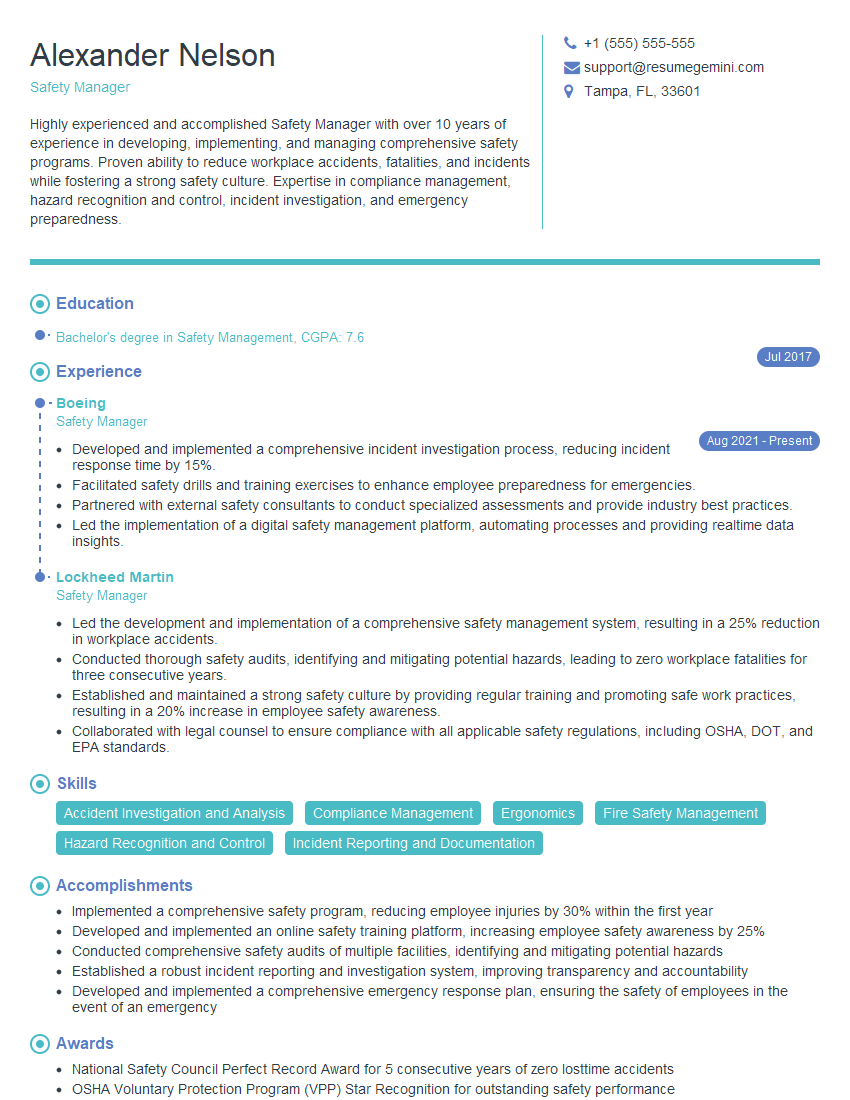
Safety Manager Resume Sample

Operations Manager Resume Sample
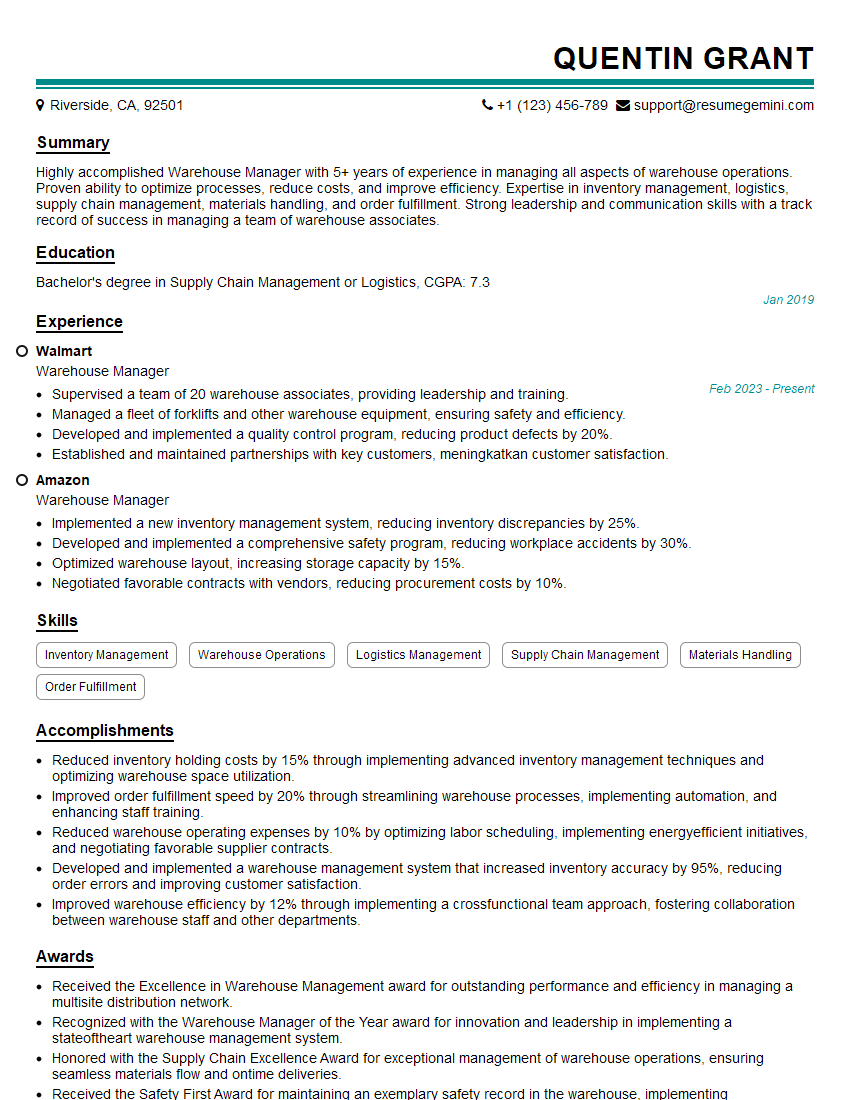
Warehouse Manager Resume Sample
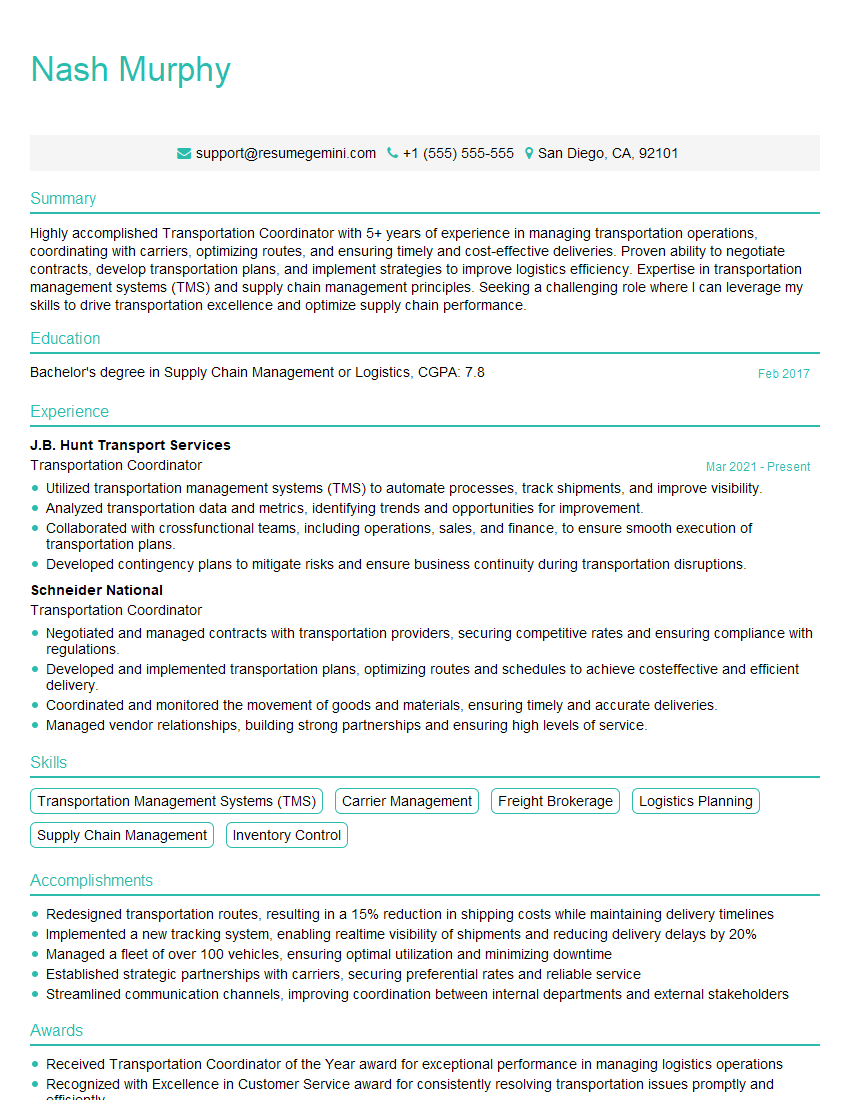
Transportation Coordinator Resume Sample
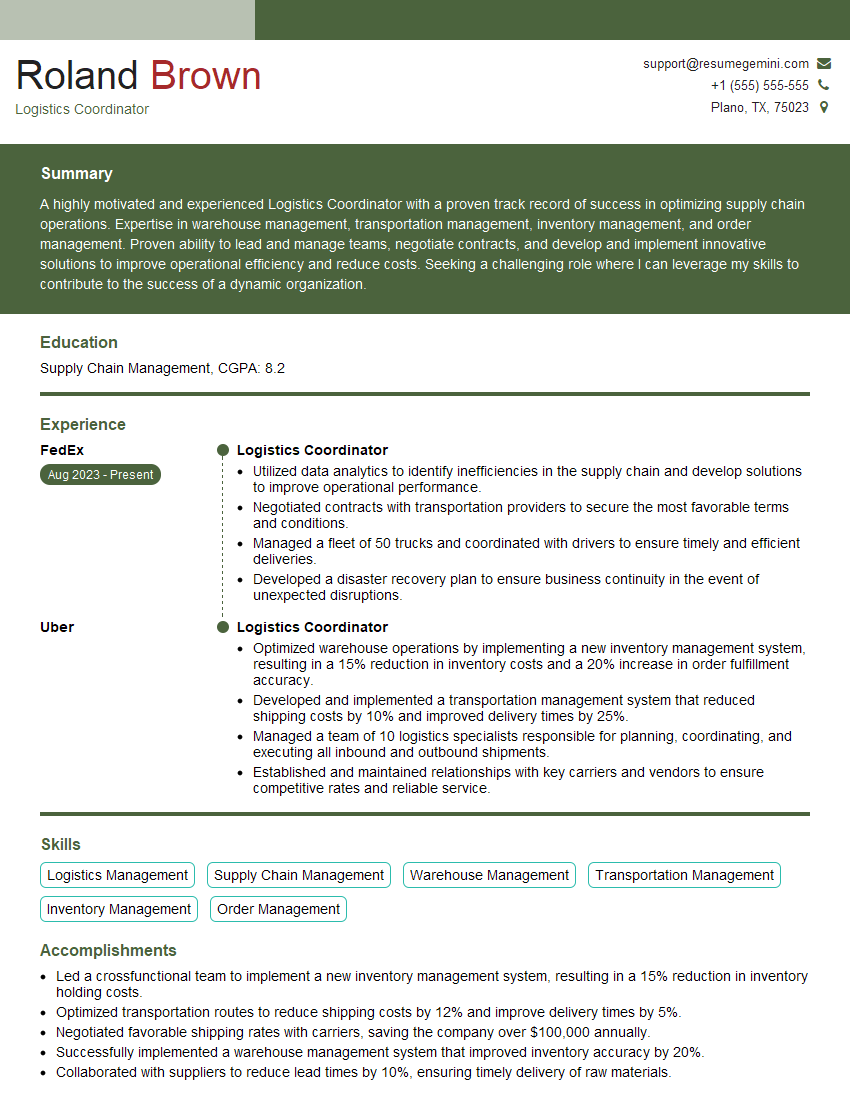
Logistics Coordinator Resume Sample
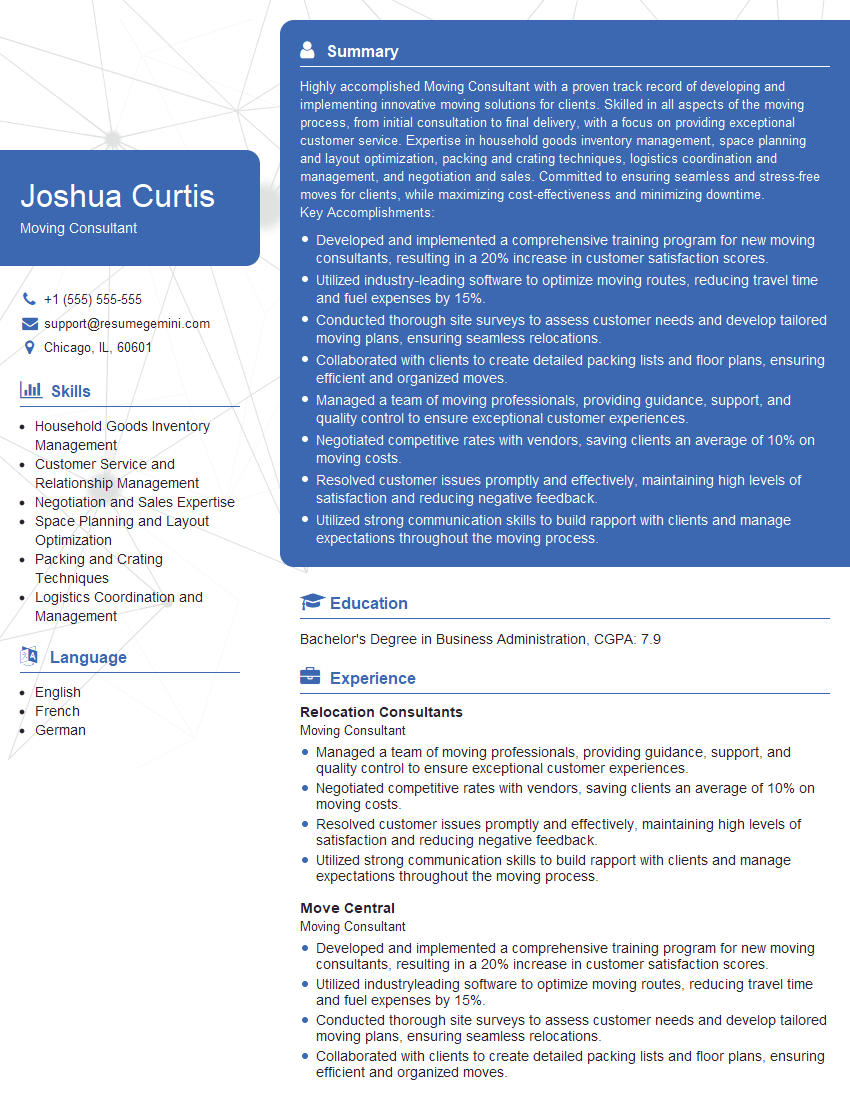
Moving Consultant Resume Sample
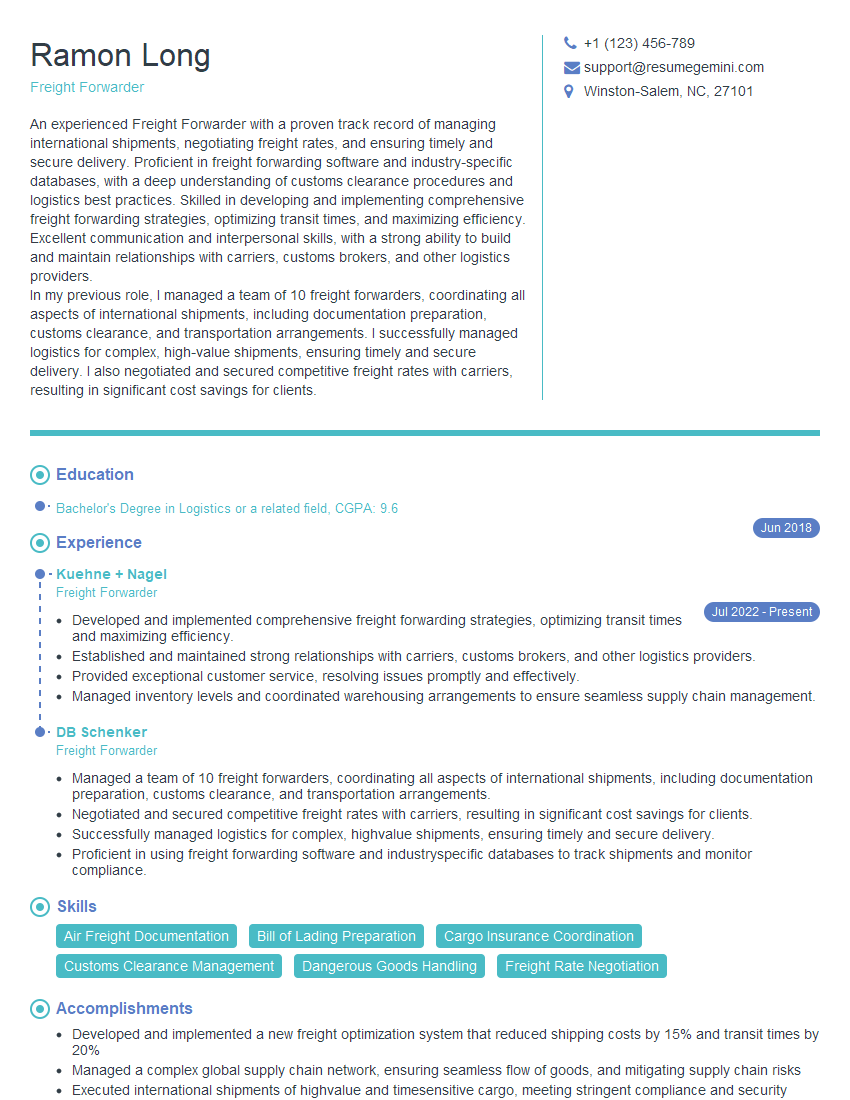
Freight Forwarder Resume Sample
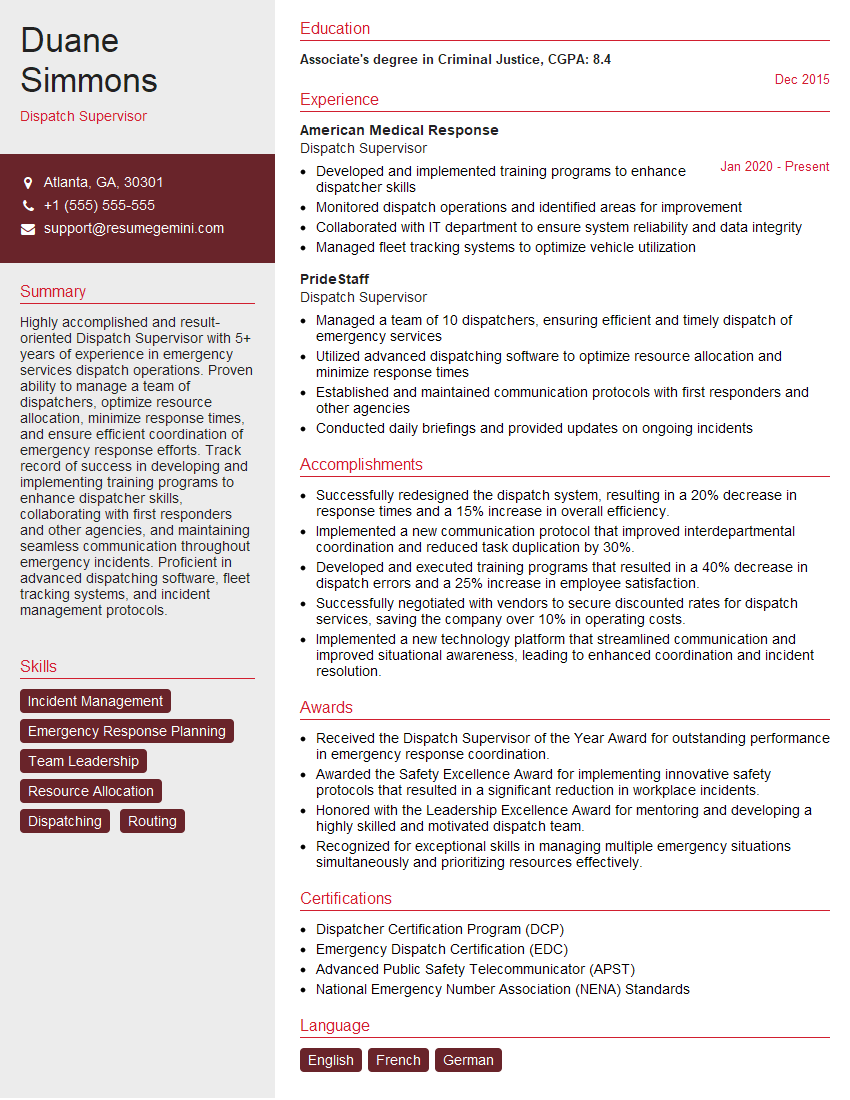
Dispatch Supervisor Resume Sample

Shipping and Receiving Clerk Resume Sample
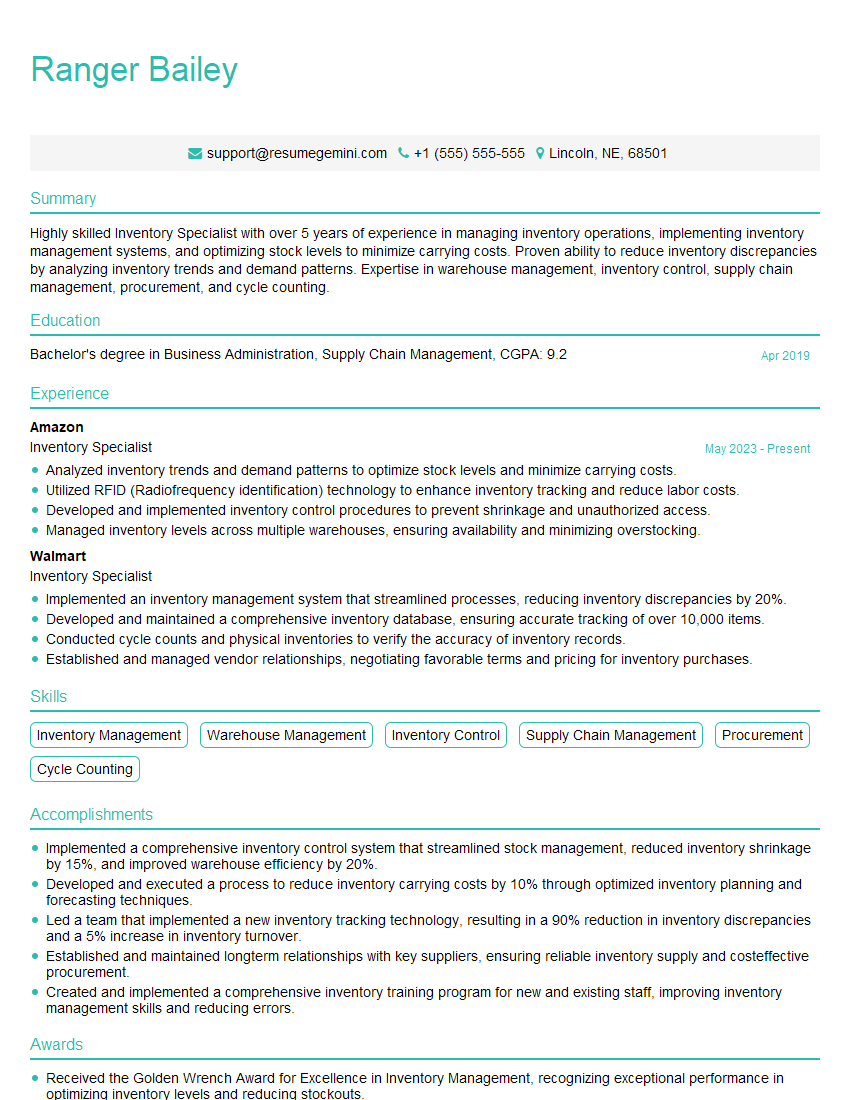
Inventory Specialist Resume Sample
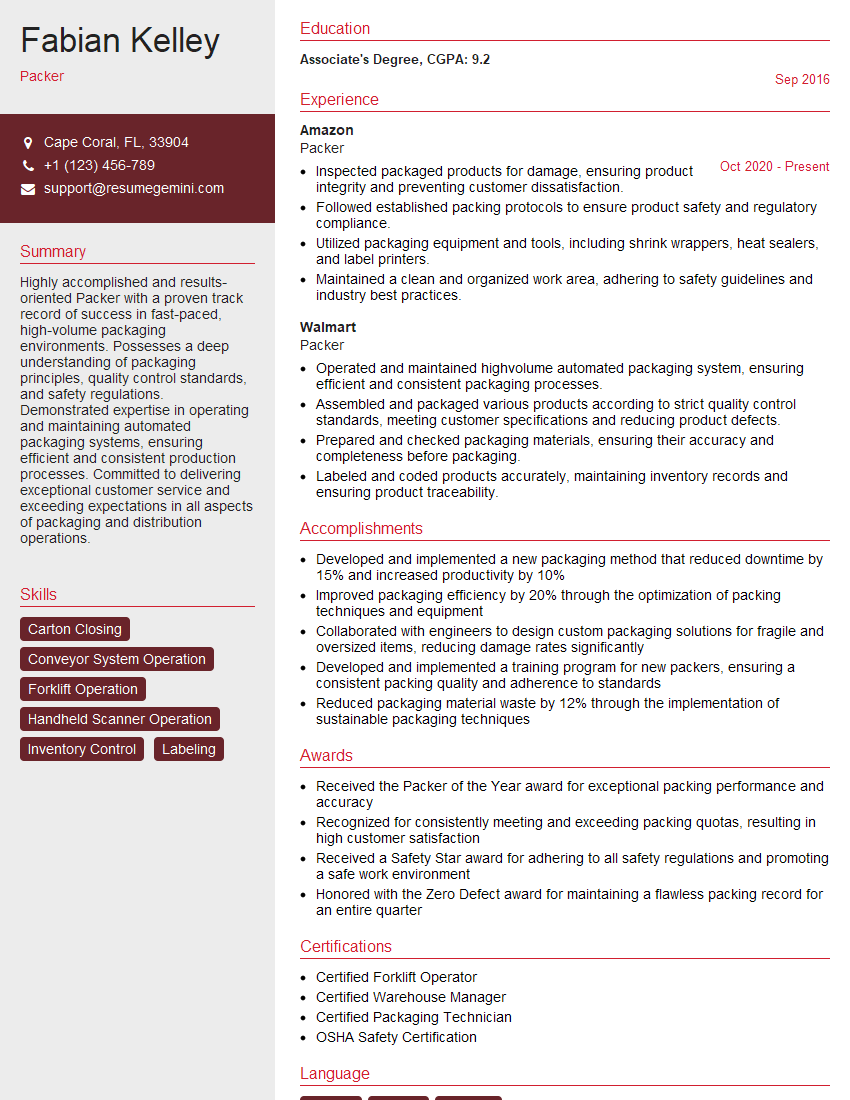
Packer Resume Sample
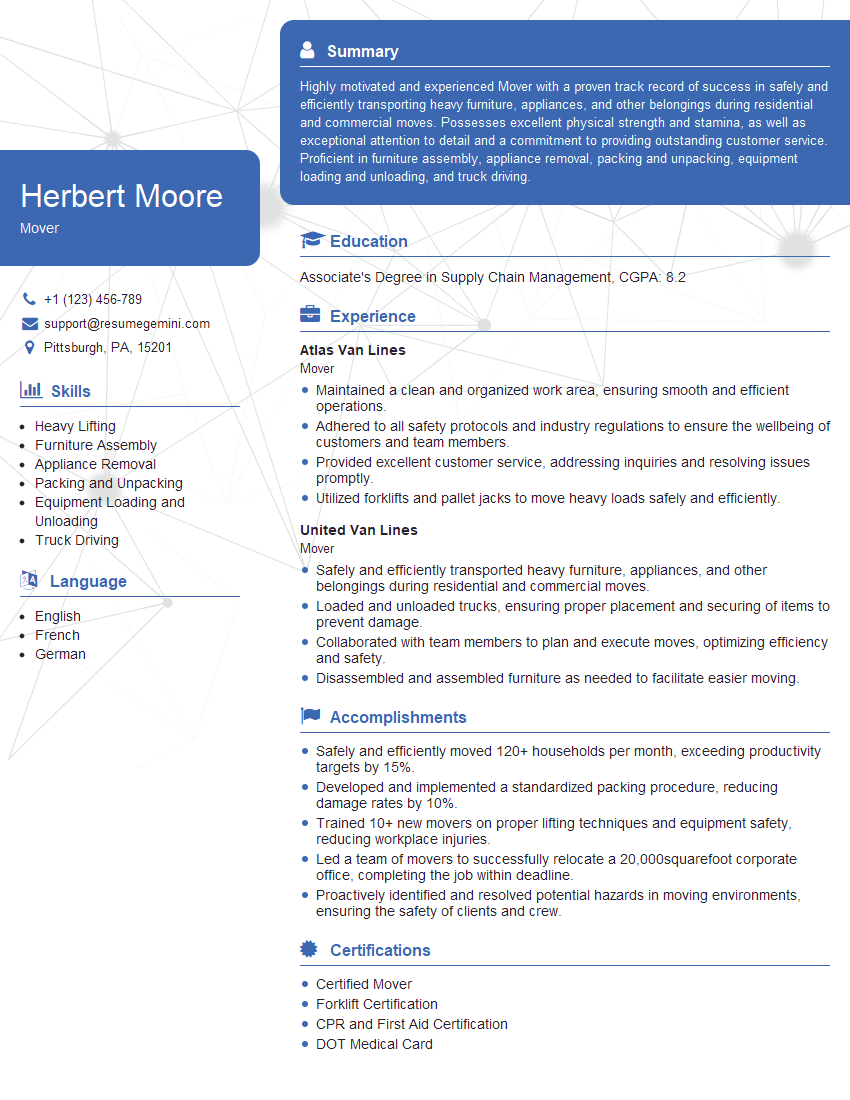
Mover Resume Sample
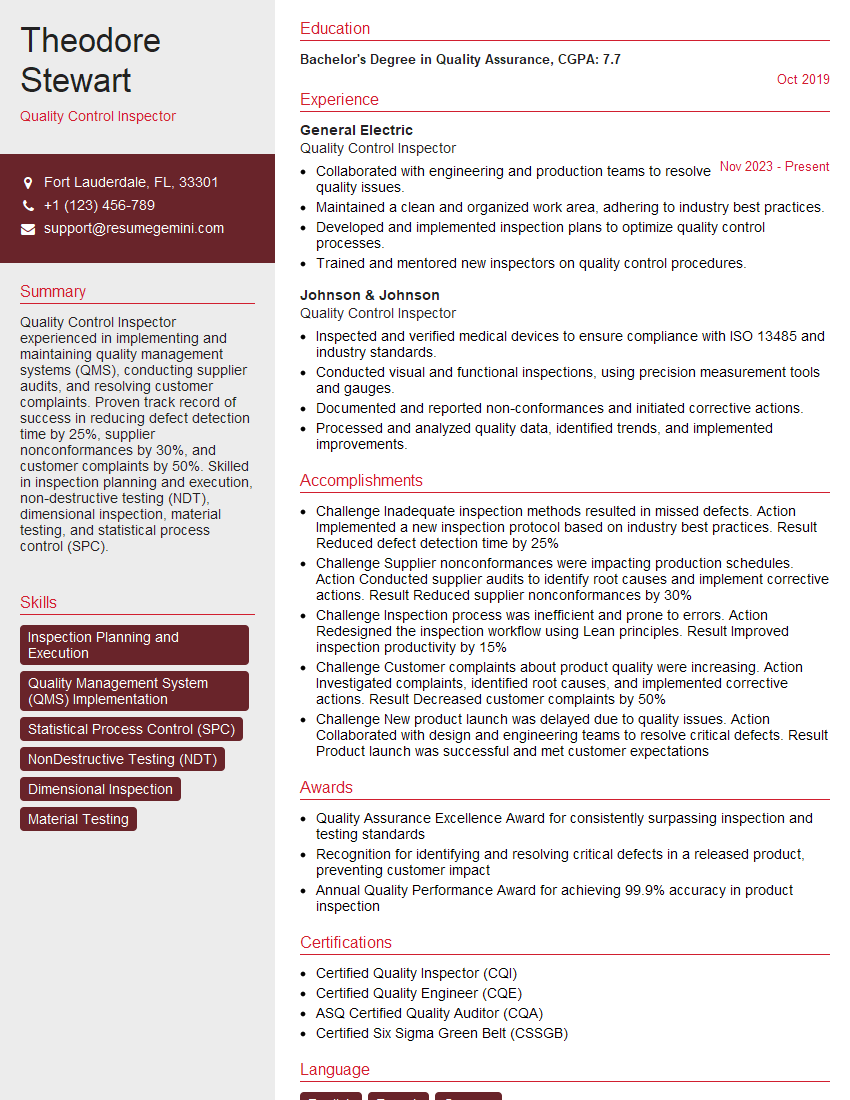
Quality Control Inspector Resume Sample
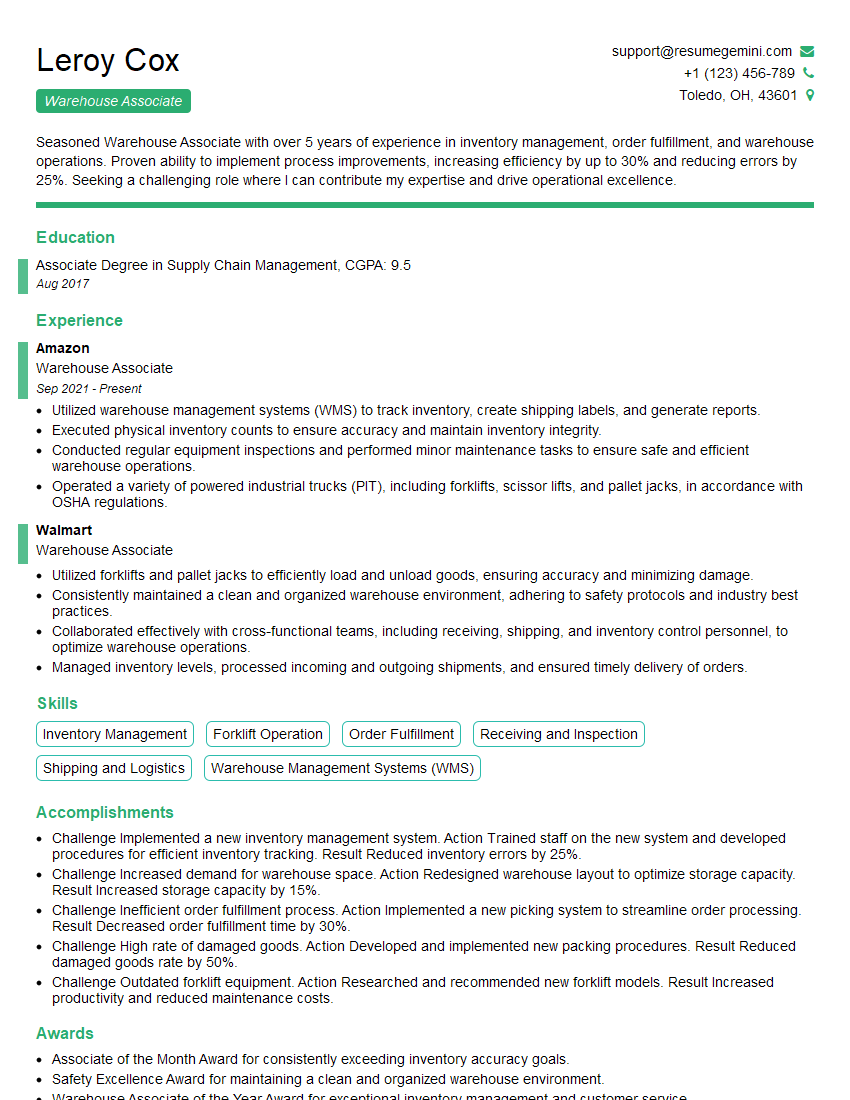
Warehouse Associate Resume Sample
Explore more articles
Users Rating of Our Blogs
Share Your Experience
We value your feedback! Please rate our content and share your thoughts (optional).
What Readers Say About Our Blog
Very informative content, great job.
good