The right preparation can turn an interview into an opportunity to showcase your expertise. This guide to Musician Union Membership interview questions is your ultimate resource, providing key insights and tips to help you ace your responses and stand out as a top candidate.
Questions Asked in Musician Union Membership Interview
Q 1. Explain the process of joining a musicians’ union.
Joining a musicians’ union, like the American Federation of Musicians (AFM) or a similar organization in other countries, typically involves a straightforward process. First, you’ll need to find the local union that covers your geographic area and the type of music you perform. Their websites usually have contact information and membership application forms. The application will ask for personal details, your musical experience, and possibly proof of your professional activity. Once submitted, the application is reviewed, and you may be required to attend a meeting or provide additional information. Upon approval, you pay your membership dues and officially become a member. The process is designed to be inclusive, welcoming both established and emerging musicians. Think of it like joining a professional organization – it’s about networking and gaining access to resources and support.
Q 2. Describe the different types of musician union memberships.
Musicians’ unions typically offer different membership categories. A common distinction is between ‘performing members’ and ‘non-performing members.’ Performing members are actively involved in playing music for a living and usually have voting rights within the union. Non-performing members might be music educators, composers, arrangers, or those who support the music industry in other ways. Some unions also have student memberships offering reduced fees and access to certain resources. Specific categories and requirements vary across unions, so it’s crucial to check the specific union’s bylaws and requirements. For example, some might have separate categories for studio musicians or orchestral players based on their specialized work.
Q 3. What are the key benefits of musician union membership?
Union membership offers a wide array of crucial benefits for musicians. The most significant are often:
- Collective Bargaining: Unions negotiate contracts with employers (venues, recording studios, orchestras) to set minimum pay rates, working conditions, and benefits like health insurance.
- Contract Enforcement: If an employer violates a contract, the union will represent the musician in resolving the dispute.
- Health and Pension Plans: Many unions offer health insurance and retirement plans, crucial benefits that many freelance musicians struggle to access independently.
- Legal Representation: Unions can provide legal counsel in copyright and contract disputes.
- Networking and Job Opportunities: Union membership opens doors to a larger network of musicians and potential job opportunities.
- Professional Development: Some unions offer workshops, seminars, and other resources to enhance musicians’ professional skills.
These benefits are incredibly valuable in an industry often characterized by precarious employment and challenging working conditions.
Q 4. How does a musician union negotiate contracts with employers?
Union negotiations with employers are a complex process, often involving skilled negotiators and legal experts. The union typically forms a bargaining committee representing its members’ interests. This committee researches industry standards, member needs, and the employer’s financial situation to develop proposals. Negotiations can involve several meetings, compromise, and sometimes even mediation or arbitration if agreement cannot be reached. The union strives to secure fair wages, reasonable working hours, health and safety standards, and protection against exploitation. Think of it as a collaborative effort to create a mutually beneficial agreement that safeguards the well-being of musicians and the sustainability of the music industry. For instance, the union might negotiate for minimum session fees for studio musicians or ensure fair treatment for touring musicians.
Q 5. What are the common issues musicians face that unions address?
Musicians face many common challenges, many of which unions actively address:
- Low Pay and Unstable Income: Freelance musicians often struggle with inconsistent work and low pay. Unions negotiate minimum rates and strive to improve working conditions.
- Exploitation and Unfair Treatment: Musicians can be vulnerable to employers who fail to pay fairly, provide proper contracts, or respect their working rights. Unions provide recourse and legal assistance.
- Lack of Benefits: Access to healthcare and retirement plans is often difficult for freelance musicians. Unions offer group plans to address this issue.
- Copyright Infringement: Musicians can face copyright violations regarding their music. Unions can assist in legal action to protect their members’ creative work.
- Poor Working Conditions: Issues like inadequate equipment, unsafe venues, or unreasonable working hours can negatively impact musicians’ health and well-being. Unions actively campaign to improve these conditions.
Q 6. Explain the role of a union representative in resolving disputes.
Union representatives play a vital role in resolving disputes between members and employers. They act as mediators, advocates, and negotiators to ensure fair treatment for their members. If a member faces a problem – unpaid wages, unfair dismissal, or contract violation – they can contact their union representative. The representative will investigate the situation, communicate with the employer, and work towards a resolution. In more serious cases, the representative may assist in preparing for arbitration or legal action. Essentially, the union representative acts as a strong voice, protecting the musician’s rights and interests. Imagine them as a personal advocate, fighting for fairness and ensuring the musician’s voice is heard.
Q 7. How do union dues work and what services are covered?
Union dues are the fees members pay to support the union’s operations. The amount varies across unions and may be structured as a yearly fee, monthly payments, or a percentage of earnings. These dues fund essential services, including:
- Collective Bargaining and Contract Negotiation: Negotiating and enforcing fair contracts for members.
- Legal Representation: Providing legal advice and representation in disputes.
- Health and Pension Plans: Administering and subsidizing health insurance and retirement programs.
- Union Administration and Staff: Maintaining the day-to-day operations of the union.
- Educational and Professional Development Programs: Offering workshops, seminars, and other resources.
In essence, union dues are an investment in collective strength and the protection of musicians’ rights and well-being. The services provided far outweigh the costs for most members.
Q 8. Describe the grievance procedure within a musician’s union.
The grievance procedure within a musician’s union is a formal process designed to resolve disputes between members and employers. It’s essentially a structured system for airing complaints and seeking redress for violations of the collective bargaining agreement or union bylaws. Think of it as a step-by-step guide to getting your concerns addressed.
- Step 1: Informal Resolution: The first step usually involves attempting to resolve the issue informally, perhaps through direct discussion with the employer.
- Step 2: Formal Grievance Filing: If informal attempts fail, the member files a formal written grievance with the union. This grievance outlines the problem, the relevant contract clause violated, and the desired resolution.
- Step 3: Union Representation: The union will then investigate the grievance and represent the member in discussions with the employer.
- Step 4: Arbitration: If negotiations fail to resolve the dispute, the grievance may proceed to arbitration, a neutral third-party hearing where both sides present their case. The arbitrator’s decision is often binding.
- Step 5: Legal Action (in some cases): In rare cases, if the arbitration ruling isn’t satisfactory, further legal action might be pursued.
For example, if a musician wasn’t paid the agreed-upon rate for a performance, they could file a grievance, citing the contract clause specifying payment. The union would then advocate for them to receive the back pay.
Q 9. What is collective bargaining and how does it affect musicians?
Collective bargaining is the process where representatives of a union negotiate with employers on behalf of their members to determine wages, working conditions, benefits, and other terms of employment. For musicians, this is crucial. It’s how unions secure fair treatment and decent compensation for their members, leveling the playing field in a sometimes exploitative industry.
Think of it like this: Imagine a musician negotiating their pay for a gig individually. They’re likely at a disadvantage against a powerful promoter. Collective bargaining gives musicians the strength of numbers. The union negotiates on behalf of all its members, ensuring everyone receives fair wages, benefits, and decent working conditions. This process results in collective bargaining agreements (CBAs), which are legally binding contracts defining the terms of employment.
For example, a union might negotiate minimum session rates for studio musicians, ensuring that they receive adequate compensation for their skills and expertise. Or they could negotiate for health insurance and pension benefits, crucial in a profession with variable income.
Q 10. How does a musician union protect its members’ intellectual property?
Protecting members’ intellectual property (IP) is a significant role for a musician’s union. This often involves advocating for fair usage and compensation of musical works. While the union might not be directly involved in copyright registration (that’s the musician’s responsibility), they play a significant role in ensuring that the musician’s work is properly credited and that they receive fair royalties or compensation.
- Contract Negotiation: Unions negotiate contracts that explicitly define ownership and usage rights of musical works, ensuring that musicians retain control and are compensated fairly for recordings, performances, and other uses of their music.
- Advocacy: Unions actively advocate for legislation and policies that protect musicians’ IP rights, such as strong copyright laws and enforcement mechanisms.
- Education and Resources: Unions often provide members with educational resources and support to understand copyright law and manage their IP effectively.
- Dispute Resolution: The union’s grievance procedure can be used to address disputes relating to unauthorized use or improper credit of a musician’s work.
For instance, the union might negotiate contracts that require proper credit and royalty payments for recordings where union members’ work is used.
Q 11. Explain the process of filing a grievance with the union.
Filing a grievance with a musician’s union typically involves a multi-step process, beginning with an attempt to resolve the issue informally. If that fails, a formal written grievance must be submitted.
- Gather Evidence: Collect all relevant documentation, such as contracts, emails, pay stubs, or witness statements that support your claim.
- Write the Grievance: Clearly and concisely state the issue, the date it occurred, the relevant contract clause(s) violated, and the desired resolution. Be factual and avoid emotional language.
- Submit the Grievance: Follow your union’s specific guidelines on how to submit the grievance, typically in writing. This might involve submitting it to your local branch or designated union representative.
- Follow Up: Once the grievance is filed, follow up with your union representative to discuss the next steps and receive updates on the progress of your case.
It’s crucial to be patient and persistent throughout the process. The union will guide you through each step, working to achieve a fair resolution.
Q 12. What are the common types of contracts negotiated by music unions?
Music unions negotiate a wide range of contracts, depending on the specific employment situation. These contracts usually address payment, working conditions, and other crucial aspects of the engagement.
- Session Musician Contracts: These detail payment rates, working hours, and other terms for musicians hired for recording sessions. They’ll often specify minimum rates per hour or per track.
- Live Performance Contracts: These contracts cover fees, travel expenses, accommodations, and working conditions for live gigs. They might include stipulations about stage setup, sound checks, and equipment provided.
- Touring Contracts: These are comprehensive documents governing extensive tours, including performance fees, transportation, lodging, and per diem payments. They might also stipulate rehearsal time and travel days.
- Recording Contracts (for Artists): While not directly a union contract, unions often help artists negotiate favorable terms within their record deals, protecting them from unfair practices.
Each type of contract varies in detail, but they all aim to provide fair compensation, safe working conditions, and clear contractual obligations for both the musician and the employer.
Q 13. How does a union handle health and welfare benefits for its members?
Health and welfare benefits are often a significant part of the collective bargaining process for musician’s unions. Many unions negotiate for health insurance plans, pension plans, and other benefits to provide financial security and protection for their members.
The specific benefits vary from union to union, depending on factors like membership size, financial stability, and the prevalence of different types of employment amongst their members. Some unions might negotiate for group health insurance plans with employer contributions, while others might offer supplemental insurance options or other welfare programs. Pension plans are also a common benefit, ensuring musicians have a source of income after they retire.
Imagine a musician struggling with a serious illness during a career lull – health insurance negotiated by their union could be a lifeline. Similarly, a retirement plan helps address the often unpredictable income of musicians, providing some security in their later years.
Q 14. Explain the importance of union bylaws and regulations.
Union bylaws and regulations are the internal rules governing the functioning of the union itself. They define the structure of the union, its decision-making processes, the rights and responsibilities of its members, and the procedures for handling disputes. They are essential because they provide a framework for fair and democratic governance within the organization.
These bylaws dictate everything from how officers are elected to how grievances are handled. They also specify membership requirements, disciplinary procedures, and the allocation of union funds. Adherence to these bylaws is crucial for ensuring transparency, accountability, and fairness in the union’s operations.
Think of them as the constitution of the union, outlining its principles and ensuring it operates fairly for all its members. Without clear bylaws, the union would risk operating inconsistently and potentially unfairly.
Q 15. How does a union ensure fair working conditions for musicians?
Musicians’ unions ensure fair working conditions through collective bargaining. This means union representatives negotiate with employers (e.g., concert promoters, recording studios, orchestras) on behalf of all their members to establish minimum standards for wages, benefits, and working conditions. These standards are outlined in a collective bargaining agreement (CBA), a legally binding contract.
For example, a CBA might specify minimum pay rates for different types of performances, guaranteed rehearsal time, provisions for health insurance, and protections against exploitative practices like excessively long working hours without breaks. The union acts as a powerful advocate, ensuring that individual musicians aren’t forced to accept unfair terms out of fear of losing work. If an employer violates the CBA, the union can step in to enforce the agreed-upon conditions.
Career Expert Tips:
- Ace those interviews! Prepare effectively by reviewing the Top 50 Most Common Interview Questions on ResumeGemini.
- Navigate your job search with confidence! Explore a wide range of Career Tips on ResumeGemini. Learn about common challenges and recommendations to overcome them.
- Craft the perfect resume! Master the Art of Resume Writing with ResumeGemini’s guide. Showcase your unique qualifications and achievements effectively.
- Don’t miss out on holiday savings! Build your dream resume with ResumeGemini’s ATS optimized templates.
Q 16. What are the legal ramifications of violating union contracts?
Violating a union contract can have serious legal ramifications. The consequences depend on the specifics of the violation and the terms of the CBA, but they can include:
- Lawsuits: The union can sue the employer for breach of contract, seeking monetary damages for the members who were affected.
- Injunctions: A court may issue an injunction ordering the employer to cease the violating behavior.
- Fines: The employer may face significant financial penalties for violating the contract.
- Reputational damage: Employers who consistently violate union contracts risk damaging their reputation and making it harder to attract talented musicians in the future.
Imagine a situation where a venue agrees to pay a specific rate for a musician’s performance but then attempts to pay less. The union could take legal action to recover the unpaid wages for its member.
Q 17. How does a union advocate for its members’ interests in legislative matters?
Musicians’ unions actively advocate for their members’ interests in legislative matters through lobbying and political action. They work to influence policy at local, state, and national levels. This can involve:
- Lobbying: Union representatives meet with legislators to explain the needs of musicians and advocate for policies that benefit them, such as copyright protections, funding for arts programs, and tax incentives for artistic endeavors.
- Political endorsements: Unions often endorse candidates who support their positions on relevant issues.
- Grassroots activism: Unions encourage their members to contact their elected officials to express their views on important legislation.
For instance, a union might lobby for legislation that strengthens performers’ rights regarding the use of their music in digital platforms or promotes fair compensation for musicians working in film or television.
Q 18. What are some common challenges faced by musicians’ unions?
Musicians’ unions face various challenges in the modern music industry. Some of the most significant include:
- The rise of the gig economy: The increasing prevalence of freelance work and short-term gigs makes it harder to organize musicians and enforce collective bargaining agreements.
- Technological changes: Streaming services and digital music distribution have altered the revenue streams for musicians, leading to challenges in establishing fair compensation models.
- Decreased funding for the arts: Budget cuts in public funding for arts programs impact opportunities for musicians and the ability to support union activities.
- Anti-union sentiment: Some employers actively resist unionization efforts, creating obstacles to collective bargaining.
For example, the shift to digital music distribution has made it difficult to track usage and compensate musicians fairly, leading to ongoing advocacy for equitable royalty payments.
Q 19. How does a union track and manage its members’ dues?
Union dues are typically tracked and managed through a combination of manual and automated systems. Members pay dues regularly (monthly, quarterly, or annually), usually through direct debit, online payment portals, or mail. The union maintains a database to record member information, including payment history. This database allows the union to monitor membership status, track dues payments, and identify any outstanding balances. Sophisticated accounting software helps manage finances and ensure compliance with regulations.
Many unions also offer online portals that allow members to view their account information, update their contact details, and manage their dues payments. This increases transparency and member engagement.
Q 20. Explain the role of a union in supporting musicians’ career development.
Unions play a vital role in supporting musicians’ career development through various initiatives. These can include:
- Workshops and seminars: Unions often organize educational programs on topics such as contract negotiation, business management for musicians, and legal rights.
- Networking opportunities: Union events provide chances for musicians to connect with other professionals in the industry.
- Mentorship programs: Some unions pair experienced musicians with newer members for guidance and support.
- Job boards and placement services: Unions often maintain job boards and provide assistance in finding work.
For a young musician, access to union-provided workshops on contract negotiation can be invaluable, protecting them from exploitative employment practices.
Q 21. How does a union handle disciplinary actions against members?
Union disciplinary actions against members typically involve a formal process outlined in the union’s constitution and bylaws. This often includes:
- Investigation: A grievance procedure begins with an investigation of the alleged misconduct.
- Hearing: The accused member is given the opportunity to present their case before a union committee or board.
- Sanctions: Depending on the severity of the infraction, sanctions can range from a written warning to suspension or expulsion from the union.
The process aims to be fair and impartial, protecting the rights of both the accused member and the union as a whole. Transparency and due process are key elements of this system. Expulsion, for instance, would only occur after a thorough investigation and hearing confirming a serious breach of union rules.
Q 22. What is the difference between a local and national musicians’ union?
The key difference between a local and a national musicians’ union lies in their scope and jurisdiction. A local union, like a chapter of a larger national organization, typically represents musicians within a specific geographic area, such as a city or region. They handle local contracts, negotiations with venues in that area, and address member concerns specific to their region. Think of them as the ‘boots on the ground’ dealing with immediate issues. A national union, on the other hand, provides a broader framework, setting national standards, negotiating with larger entities like record labels or touring companies, and handling issues of national impact such as copyright and intellectual property rights. They often provide support and resources to the local unions, acting as an umbrella organization. For example, a local union might negotiate the minimum pay for musicians at a specific concert hall, while the national union might negotiate the standard royalty rates for recordings.
Q 23. Describe the role of an arbitrator in union disputes.
An arbitrator plays a crucial role in resolving disputes within a musicians’ union. When a disagreement arises—for instance, a dispute over contract interpretation or a grievance filed by a member—and internal union processes haven’t reached a resolution, the parties might agree to binding arbitration. The arbitrator, a neutral third party typically with expertise in labor relations, acts as a judge. They hear evidence from both sides, review relevant documents, and make a final and binding decision that both parties must abide by. This avoids lengthy and costly court battles. The arbitrator’s role is to ensure fairness and apply the collective bargaining agreement objectively. Think of them as a referee ensuring everyone plays by the same rules.
Q 24. How do union negotiations take into account economic factors and market conditions?
Union negotiations must carefully consider economic factors and market conditions to ensure both fair compensation for members and the long-term viability of the union itself. For example, during an economic downturn, the union might prioritize job security over large wage increases. Conversely, in a booming market where demand for musicians is high, the union might seek significant wage increases and improved benefits. Data analysis, including market research on musician salaries, venue profitability, and inflation rates, informs the bargaining process. The union’s negotiating team might include economists or labor relations specialists to build a solid case based on real market data. Failure to account for these realities can harm both the union’s members and their ability to represent them effectively.
Q 25. Explain the concept of ‘right to work’ laws and their impact on unions.
‘Right-to-work’ laws significantly weaken the power of unions. These laws allow individuals in a unionized workplace to benefit from union-negotiated wages and conditions without paying union dues or becoming members. This is often referred to as ‘free riding’. This weakens the union’s financial strength, reducing its ability to fund negotiations, legal representation, and member services. The impact is a reduction in the union’s ability to effectively advocate for its members’ rights and interests, leading to potentially lower wages, poorer benefits, and less job security. It essentially creates a system where some benefit from the union’s efforts without contributing to its upkeep, leading to an imbalance of power.
Q 26. How does a union balance the needs of individual members with the needs of the collective?
Balancing individual member needs with the collective good is a constant challenge for a musicians’ union. This often involves navigating conflicting priorities. For example, a single musician might seek a specific gig or unique contract terms, but this might conflict with the union’s overall goal of establishing fair industry standards for all members. The union uses various mechanisms such as democratic voting processes, grievance procedures, and representative committees to ensure that individual concerns are addressed while upholding the overall goals for the entire membership. A robust internal communication system is essential for transparency and fostering a sense of shared purpose.
Q 27. What are some ethical considerations related to union representation?
Ethical considerations for union representation are paramount. Transparency is vital; the union must be open and honest with its members about its financial dealings, negotiations, and decision-making processes. Conflicts of interest must be carefully managed to prevent favoritism. The union has a responsibility to fairly represent all members, even those with whom the leadership disagrees. Maintaining confidentiality regarding members’ personal information is crucial. Furthermore, the union must engage in fair labor practices, upholding the principles of equal opportunity and non-discrimination in its dealings with employers and members.
Q 28. Describe your experience with managing union contracts or grievances.
During my tenure, I’ve been involved in several aspects of managing union contracts and grievances. I’ve participated in negotiating collective bargaining agreements, focusing on securing fair wages, benefits, and working conditions for our members. This included analyzing industry data, strategizing with the negotiating team, and attending bargaining sessions. I have also handled numerous grievances, working with both members and employers to reach fair and equitable resolutions. This required careful review of contracts, investigation of complaints, and mediation to resolve disputes. In several cases, this involved preparing for arbitration if internal processes failed to resolve the issues. A key aspect was ensuring a fair and consistent application of the collective bargaining agreement across all members and situations.
Key Topics to Learn for Musician Union Membership Interview
- Understanding Union Structure and Governance: Learn about the different levels of union organization, the roles of various committees and officers, and the decision-making processes within the union.
- Contract Negotiation and Interpretation: Familiarize yourself with the process of negotiating contracts, understanding different types of union contracts, and interpreting the clauses and stipulations within them. Practice analyzing contract language for potential benefits and drawbacks.
- Union Benefits and Services: Thoroughly research the specific benefits offered by the union, such as health insurance, retirement plans, and legal assistance. Understand how to access and utilize these services effectively.
- Dispute Resolution and Grievance Procedures: Learn about the union’s internal processes for resolving disputes and grievances, including the steps involved and the potential outcomes. Understand how to effectively advocate for yourself within the union structure.
- Ethical Conduct and Union Solidarity: Study the union’s code of conduct and ethical guidelines. Understand the importance of solidarity and collective bargaining in achieving fair working conditions and compensation.
- Union Membership Rights and Responsibilities: Clearly understand your rights and responsibilities as a union member, including participation in union activities, adherence to union rules, and the consequences of violating those rules.
- Industry-Specific Knowledge: Demonstrate a solid understanding of the specific challenges and opportunities within the music industry relevant to your specialization (e.g., orchestral, jazz, studio recording).
Next Steps
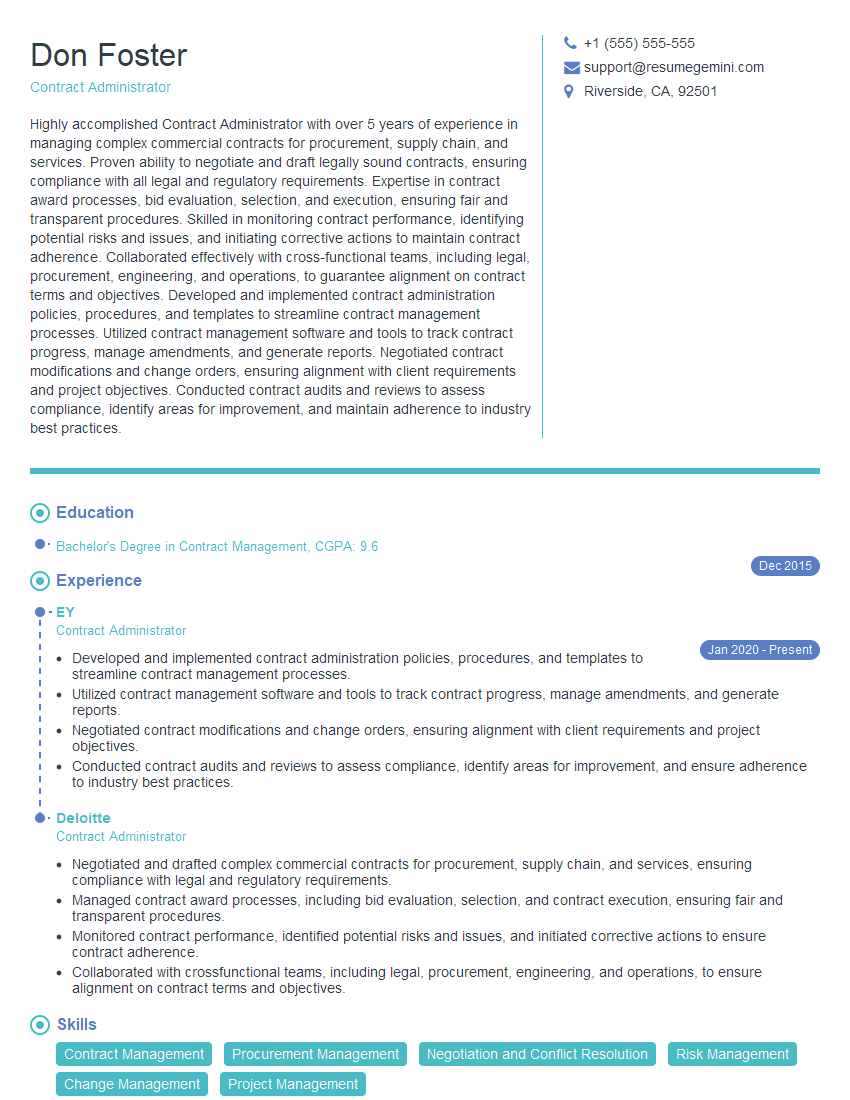
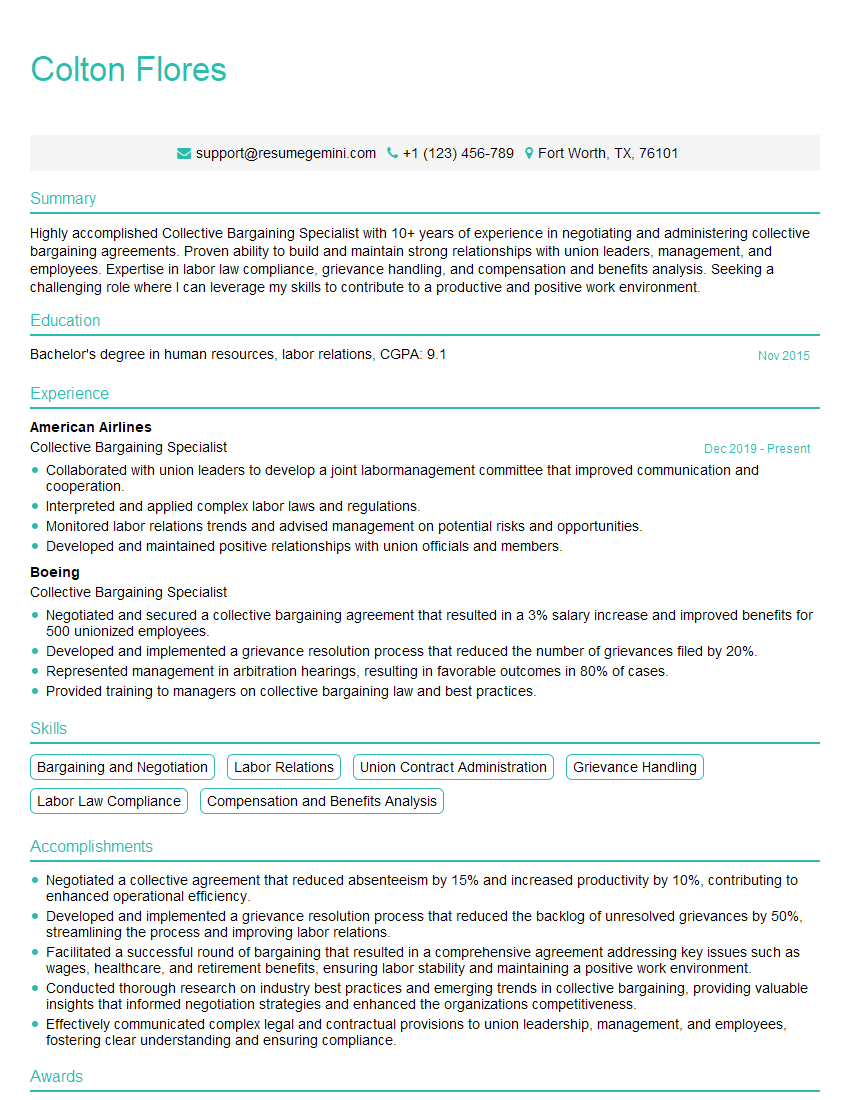
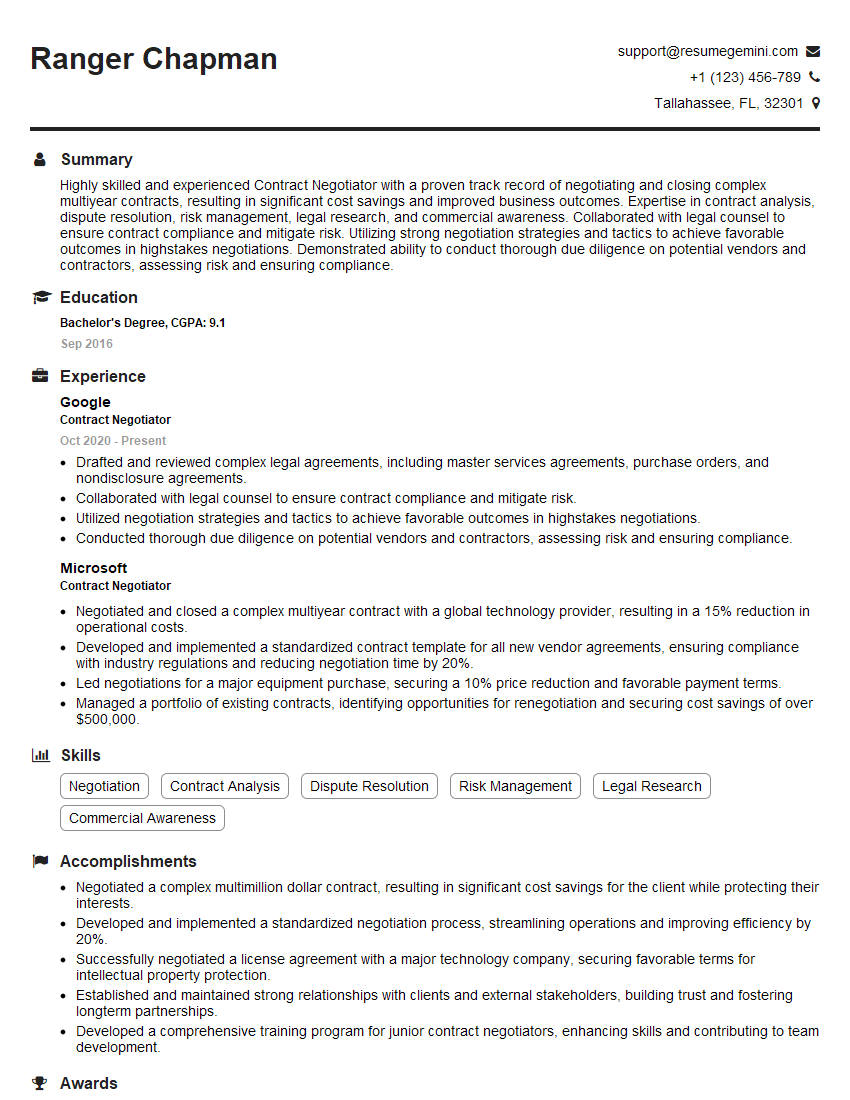
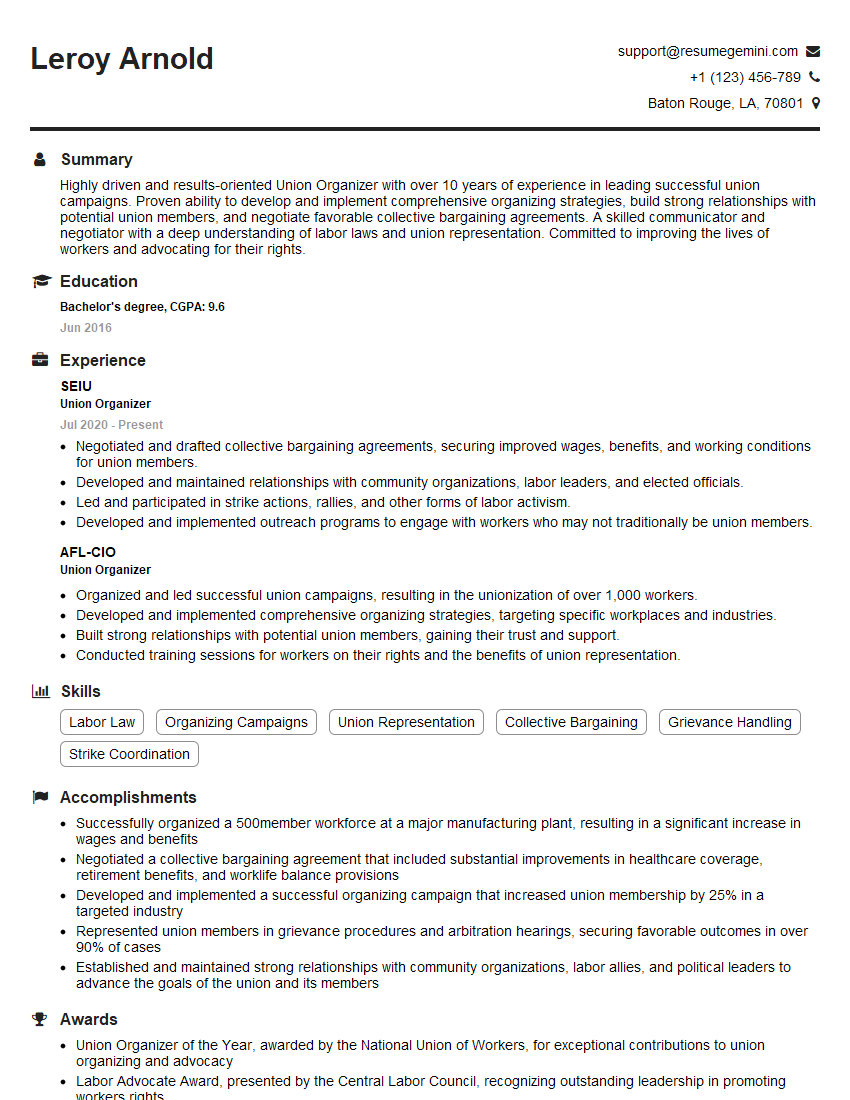
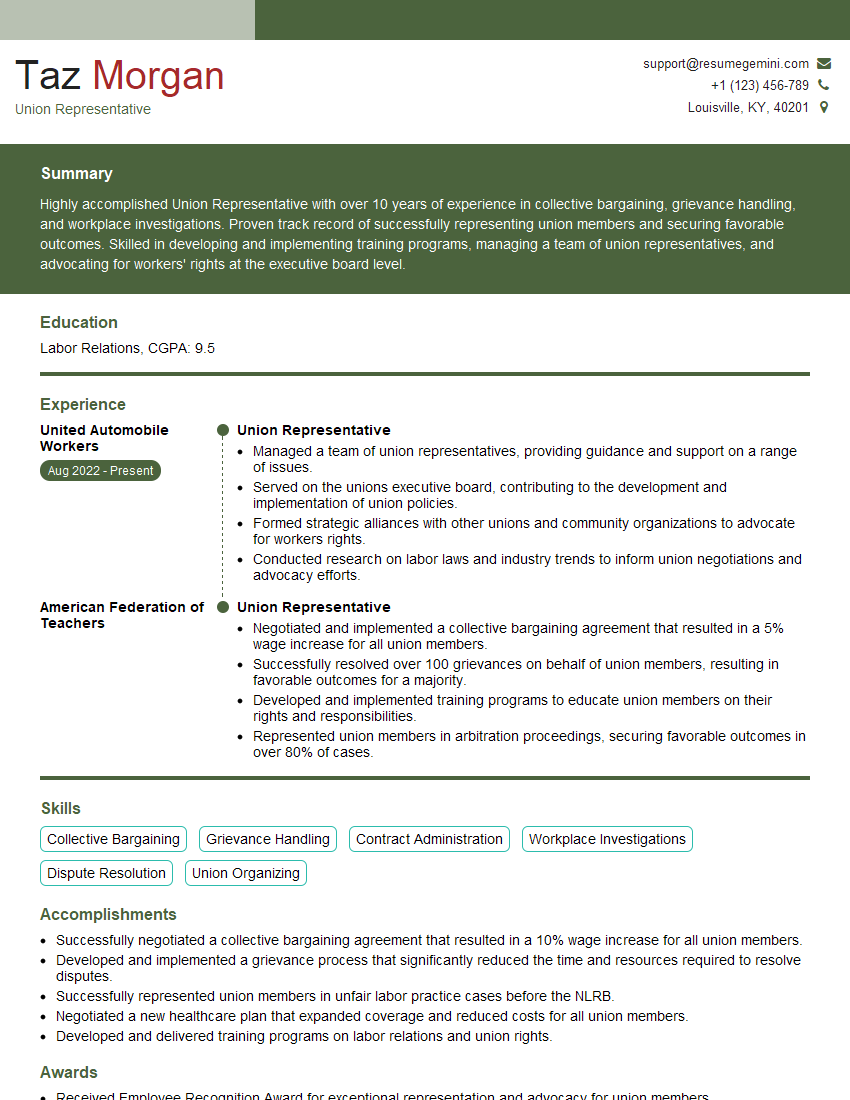
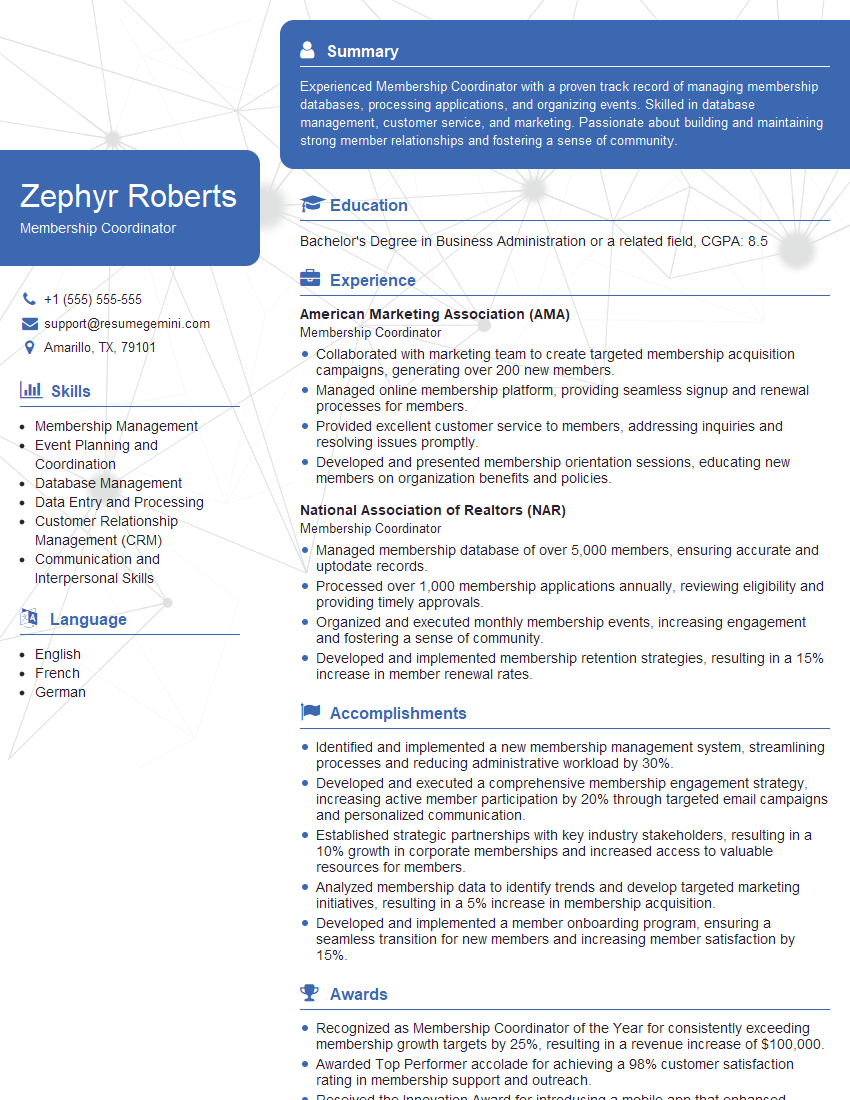
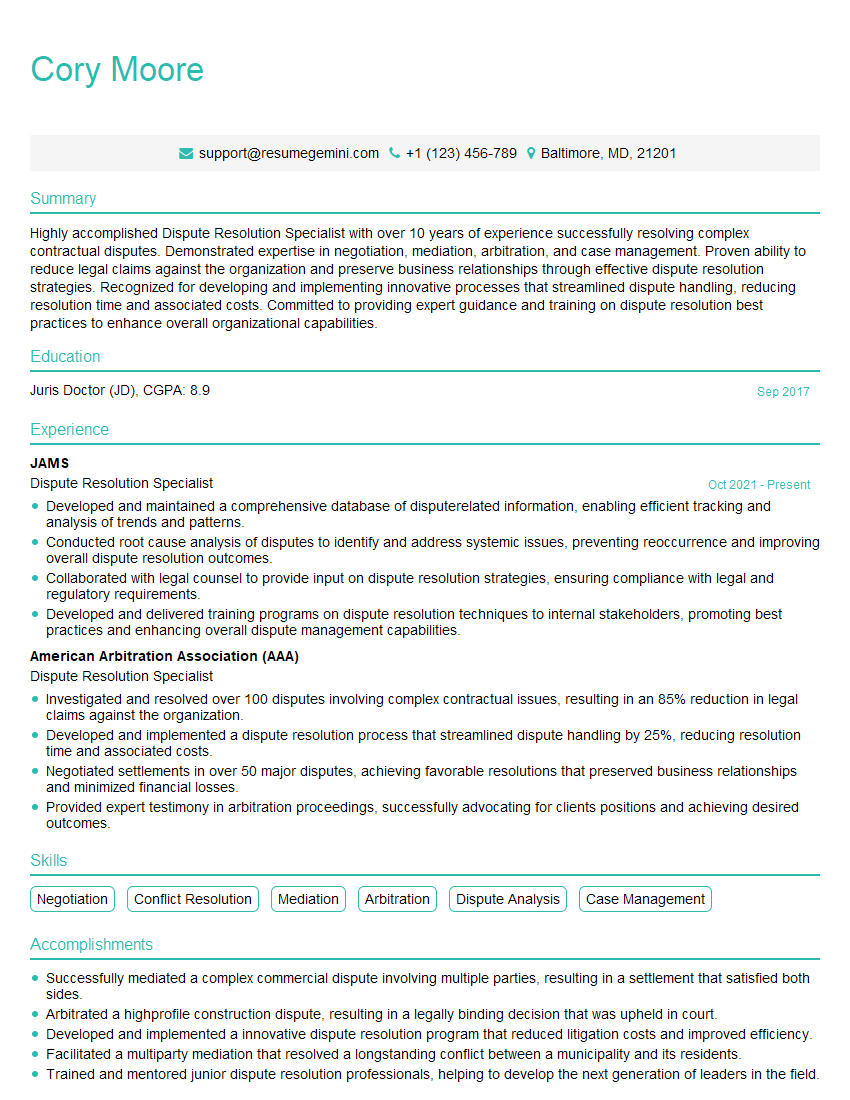
Mastering the intricacies of Musician Union Membership is crucial for your career growth. A strong understanding of union structure, benefits, and processes will significantly enhance your job prospects and help you navigate the complexities of the music industry. To stand out, create an ATS-friendly resume that highlights your skills and experience effectively. ResumeGemini is a trusted resource for building professional resumes, and they provide examples tailored to Musician Union Membership applications to help you showcase your qualifications perfectly. Invest time in crafting a compelling resume to maximize your chances of success.
Explore more articles
Users Rating of Our Blogs
Share Your Experience
We value your feedback! Please rate our content and share your thoughts (optional).
What Readers Say About Our Blog
Very informative content, great job.
good