Every successful interview starts with knowing what to expect. In this blog, we’ll take you through the top National Security Risk Assessment interview questions, breaking them down with expert tips to help you deliver impactful answers. Step into your next interview fully prepared and ready to succeed.
Questions Asked in National Security Risk Assessment Interview
Q 1. Explain the difference between qualitative and quantitative risk assessment in a national security context.
Qualitative and quantitative risk assessments are two distinct approaches to evaluating threats. Qualitative assessments focus on descriptive analysis, using terms like ‘high,’ ‘medium,’ and ‘low’ to represent the likelihood and impact of a risk. They’re often used when precise numerical data is scarce, relying instead on expert judgment and experience. Think of it like using a color-coded map – red represents high risk, yellow medium, and green low, giving a general picture of the threat landscape.
Quantitative assessments, conversely, use numerical data and statistical methods to determine the probability and potential impact of a risk. They often involve calculating risk scores using formulas and require a solid data foundation. This is more akin to a detailed report with precise figures – a probability of 70% that a certain event will cause $10 million in damages. In national security, qualitative assessments might be used to assess the likelihood of a state-sponsored cyberattack, while quantitative methods could be applied to assess the financial impact of a successful attack on critical infrastructure.
The choice between qualitative and quantitative methods depends on the context. Sometimes a combined approach offers the most comprehensive understanding, leveraging qualitative insights to inform quantitative analysis and vice-versa.
Q 2. Describe your experience with various risk assessment methodologies (e.g., OCTAVE, NIST).
Throughout my career, I’ve extensively used various risk assessment methodologies, including OCTAVE (Operationally Critical Threat, Asset, and Vulnerability Evaluation) and NIST (National Institute of Standards and Technology) frameworks. OCTAVE is particularly useful for its collaborative and iterative approach, allowing organizations to tailor their assessments to their specific needs. I’ve applied it successfully in several scenarios involving critical infrastructure protection, working with teams to identify vulnerabilities and develop appropriate mitigation strategies. For example, I led a project using OCTAVE to assess the risk of a power grid outage due to cyber threats, resulting in a significant improvement in security protocols.
NIST offers a comprehensive set of standards and guidelines, which I’ve often integrated into my assessments. NIST Cybersecurity Framework (CSF) provides a practical, flexible, and cost-effective approach to improve the organization’s ability to prevent, detect, and respond to cyber security events. I’ve employed NIST’s risk management framework to quantify risks, developing a risk register for various government agencies focusing on data breaches. My experience spans various sectors, from financial institutions to defense contractors, showcasing adaptability across diverse contexts.
Q 3. How do you prioritize risks in a national security environment with competing threats?
Prioritizing risks in a national security environment with competing threats requires a structured approach. I typically utilize a risk matrix that considers both the likelihood and impact of each threat. The likelihood is determined based on intelligence data, threat actor capabilities, and historical trends, while the impact is assessed based on the potential damage to national interests – this could include economic disruption, loss of life, or damage to national reputation.
I use a weighted scoring system, assigning higher weights to critical national infrastructure and strategic assets. For example, a cyberattack against a nuclear power plant would be weighted higher than an attack on a less critical system, even if the latter had a higher probability. After scoring all the identified risks, they are then ranked in order of severity, from most to least critical. This allows resource allocation to focus on the most impactful and probable threats first, ensuring efficient and effective risk management. Regular reviews and updates are essential to reflect the dynamic nature of the threat landscape.
Q 4. What are the key elements of a comprehensive national security risk assessment report?
A comprehensive national security risk assessment report should include several key elements:
- Executive Summary: A concise overview of the assessment’s findings and recommendations.
- Methodology: A detailed description of the assessment process, including the methodologies used and data sources.
- Threat Assessment: An analysis of potential threats, including their likelihood, impact, and potential sources.
- Vulnerability Assessment: An evaluation of the vulnerabilities in national assets and infrastructure.
- Risk Analysis: A synthesis of threats and vulnerabilities, identifying specific risks and their associated likelihood and impact.
- Risk Prioritization: A ranking of risks based on their severity and potential consequences.
- Mitigation Strategies: Recommendations for mitigating identified risks, including both technical and non-technical solutions.
- Resource Allocation: A plan for allocating resources to address the highest-priority risks.
- Monitoring and Evaluation: A plan for monitoring the effectiveness of mitigation strategies and updating the assessment over time.
The report should be clear, concise, and easily understood by policymakers and decision-makers, while also providing sufficient detail for technical experts.
Q 5. How do you incorporate intelligence data into your risk assessment process?
Intelligence data is critical to a robust national security risk assessment. I incorporate intelligence through a multi-layered approach. First, I work closely with intelligence agencies to gain access to relevant threat information, including reports on emerging threats, adversary capabilities, and potential attack vectors. This intelligence is then used to refine the threat assessment, updating the likelihood and impact estimations of potential risks. For example, if intelligence suggests an increase in cyberattacks targeting financial institutions, this would adjust the probability scores assigned to such attacks in our model.
Second, I utilize open-source intelligence (OSINT) to supplement classified information. OSINT can provide valuable insights into adversary tactics, techniques, and procedures (TTPs). Finally, I utilize data analytics to identify patterns and trends in the intelligence data, helping to improve the accuracy of the risk assessment. Maintaining strict adherence to security protocols and handling classified information responsibly is paramount throughout this process.
Q 6. Describe your experience with vulnerability assessments and penetration testing.
My experience with vulnerability assessments and penetration testing is extensive. I’ve led numerous engagements, employing various tools and techniques to identify vulnerabilities in systems and networks. Vulnerability assessments involve using automated and manual methods to scan for known weaknesses in software, hardware, and configurations. This often includes using tools like Nessus or OpenVAS to identify common vulnerabilities and exposures (CVEs). The results are then analyzed to prioritize the most critical vulnerabilities.
Penetration testing goes a step further, simulating real-world attacks to assess the effectiveness of security controls. This involves actively trying to exploit vulnerabilities to determine whether an attacker could successfully breach the system. Ethical hacking principles guide this process to ensure that testing is conducted responsibly and without causing undue harm. For example, I recently led a penetration test of a national energy grid’s SCADA system, which identified several critical vulnerabilities that were promptly addressed, preventing potential widespread power outages.
Q 7. Explain how you would assess the risk of a specific cyber threat to a national infrastructure.
Assessing the risk of a specific cyber threat to national infrastructure requires a structured approach. First, I would define the specific threat, including the attacker’s capabilities and motives, the target infrastructure’s criticality (e.g., power grid, water treatment plant), and potential attack vectors. Second, I would conduct a detailed vulnerability assessment of the target infrastructure, identifying potential weaknesses that the attacker could exploit.
Next, I would quantify the likelihood of a successful attack, considering factors like the attacker’s capabilities, the effectiveness of existing security controls, and the complexity of exploiting identified vulnerabilities. Then, I’d assess the potential impact of a successful attack, considering factors such as economic losses, loss of life, environmental damage, and social disruption. Finally, I’d calculate the overall risk by combining the likelihood and impact. This provides a numerical risk score, allowing for comparison with other risks and informing prioritization decisions. The result would be a comprehensive risk profile that informs the development of effective mitigation strategies.
Q 8. What are the key legal and regulatory frameworks relevant to national security risk assessment?
National security risk assessment is heavily influenced by a complex web of legal and regulatory frameworks. These frameworks vary by nation but generally include laws related to intelligence gathering, cybersecurity, critical infrastructure protection, and export controls. For example, in the United States, the National Security Act of 1947 established the framework for many intelligence agencies and their operations, influencing how risks related to espionage and foreign interference are assessed. The Cybersecurity Infrastructure Security Agency (CISA) plays a significant role in assessing and mitigating risks to critical infrastructure, with related regulations defining reporting requirements and security standards. The International Traffic in Arms Regulations (ITAR) and the Export Administration Regulations (EAR) govern the export of sensitive technologies, impacting risk assessments related to technology proliferation. These frameworks provide a legal basis for the assessment process itself, defining what constitutes sensitive information, permissible actions, and the responsibilities of various actors involved in risk mitigation.
Compliance with these regulations is crucial. A failure to comply can result in legal repercussions, reputational damage, and operational vulnerabilities, all of which weaken national security. Therefore, understanding the specific legal and regulatory landscape is paramount before, during, and after a national security risk assessment is conducted.
Q 9. How do you communicate complex risk assessment findings to both technical and non-technical audiences?
Communicating complex risk assessment findings effectively requires tailoring the message to the audience. For technical audiences, I would use precise terminology, detailed data visualizations, and potentially quantitative risk models (e.g., probability and impact matrices). I might discuss specific vulnerabilities, exploit scenarios, and technical mitigation strategies. For example, I might present a detailed network security diagram showing identified weaknesses alongside proposed solutions involving firewalls and intrusion detection systems.
For non-technical audiences, I focus on clear, concise language avoiding jargon. I use visualizations like charts and graphs highlighting key risks and their potential impact in relatable terms, for example, the potential economic cost of a cyberattack or the number of citizens at risk from a specific threat. Storytelling and analogies are very effective here. For instance, explaining the cascading effect of a single compromised system might be better received by an analogy to a domino effect. The overall aim is to clearly convey the severity and urgency of the threats without overwhelming them with technical details.
Q 10. Describe your experience with risk mitigation strategies in national security.
My experience encompasses a wide range of risk mitigation strategies. This includes developing and implementing cybersecurity protocols, such as multi-factor authentication and intrusion detection systems, to protect sensitive data and critical infrastructure. I’ve been involved in designing and conducting security awareness training programs to educate personnel on recognizing and reporting potential threats. In the realm of physical security, I’ve worked on projects concerning access control systems, surveillance technologies, and personnel vetting procedures. Furthermore, I have experience working with international partners to develop collaborative strategies for mitigating transnational threats like terrorism and cybercrime. For example, I helped develop a program to improve information sharing between allied nations regarding emerging cyber threats and vulnerabilities.
Risk mitigation often involves a layered approach, combining technical, procedural, and human elements to build resilience against multiple attack vectors. The process starts with identifying vulnerabilities and threats, analyzing their potential impact, and then selecting the most effective and cost-efficient mitigation strategies.
Q 11. How do you measure the effectiveness of implemented risk mitigation strategies?
Measuring the effectiveness of risk mitigation strategies requires a multi-faceted approach. Key Performance Indicators (KPIs) are crucial. For cybersecurity, we might track the number of successful intrusions, the time to detect and respond to incidents, and the cost of security breaches. For physical security, KPIs might include the number of security incidents, response times, and the effectiveness of access control measures. Regular security audits and penetration testing are also essential to identify residual vulnerabilities and assess the effectiveness of implemented controls.
Beyond quantitative metrics, qualitative assessments are important. This could include reviewing incident response procedures, evaluating employee training effectiveness through surveys or simulations, and assessing the overall security posture through regular security assessments and red teaming exercises. Continuous monitoring and evaluation, with adjustments made as needed, are critical to the ongoing success of the mitigation strategy.
Q 12. Explain the concept of threat modeling and its application in national security.
Threat modeling is a systematic process used to identify potential security threats to a system, application, or process. In the context of national security, it might involve identifying vulnerabilities in critical infrastructure, evaluating the potential impact of a terrorist attack on a major city, or assessing the risk of foreign interference in an election. It’s essentially a structured brainstorming process, often involving different teams with complementary expertise, to anticipate possible attacks or failures.
The process typically involves defining the system’s scope and boundaries, identifying assets to be protected, brainstorming potential threats and their likelihood, and assessing the potential impact of each threat. Various threat modeling methodologies exist, such as STRIDE (Spoofing, Tampering, Repudiation, Information disclosure, Denial of service, Elevation of privilege) and PASTA (Process for Attack Simulation and Threat Analysis). The output is a prioritized list of threats and vulnerabilities, which informs risk mitigation efforts.
Q 13. How do you handle uncertainty and incomplete information in risk assessments?
Uncertainty and incomplete information are inherent challenges in national security risk assessments. We address this through a combination of techniques. Firstly, we acknowledge the limitations of our knowledge and explicitly state uncertainties in our reports. Secondly, we use sensitivity analysis to understand how changes in assumptions affect the overall risk assessment. For example, if we’re unsure about the probability of a specific threat, we might conduct analyses using a range of probabilities to determine the impact on overall risk.
Thirdly, we employ probabilistic risk assessment techniques. These involve quantifying uncertainty using probability distributions, allowing for a more nuanced understanding of risk than a simple high/medium/low categorization. Finally, we actively seek out information from multiple sources and use expert judgment to fill in knowledge gaps, always clearly acknowledging where assumptions and expert opinions have been incorporated.
Q 14. What are some common biases that can affect national security risk assessments?
Several cognitive biases can significantly skew national security risk assessments. Confirmation bias, the tendency to seek out information that confirms pre-existing beliefs, can lead to overlooking crucial data that challenges existing assumptions. Availability bias, where readily available information is overemphasized, can lead to overestimation of easily recalled threats while neglecting less salient, but potentially more dangerous, ones. Anchoring bias, where initial information disproportionately influences subsequent judgments, can improperly set the tone for an entire risk analysis.
Groupthink, the tendency for group members to suppress dissenting opinions to maintain consensus, can stifle critical evaluation of potential risks. Overconfidence bias, where individuals overestimate their ability to predict future events, can lead to an inaccurate assessment of the likelihood and impact of threats. Mitigating these biases requires rigorous methodology, diverse teams, challenge and verification of assumptions, and a conscious effort to critically examine information and avoid jumping to conclusions.
Q 15. Describe your experience with using risk assessment tools and software.
My experience with risk assessment tools and software spans a wide range, from commercially available platforms like RSA Archer and RiskLens to specialized government-developed systems. I’m proficient in using these tools to model threats, assess vulnerabilities, and quantify risks across various national security domains. For example, I’ve utilized RSA Archer to conduct enterprise-wide risk assessments, mapping assets, identifying threats, and analyzing potential impacts. This involved defining risk scenarios, assigning likelihood and impact scores, and generating reports to support strategic decision-making. My experience also includes working with specialized software for vulnerability scanning and penetration testing, allowing for a more comprehensive understanding of an organization’s security posture. Beyond the software, I’m adept at using various methodologies like FAIR (Factor Analysis of Information Risk) and OCTAVE (Operationally Critical Threat, Asset, and Vulnerability Evaluation) to structure and perform the assessments.
In one particular project, we used RiskLens to model the financial impact of a potential cyberattack targeting critical infrastructure. By quantifying the potential loss in terms of revenue disruption, remediation costs, and reputational damage, we were able to prioritize mitigation efforts and justify investments in security enhancements.
Career Expert Tips:
- Ace those interviews! Prepare effectively by reviewing the Top 50 Most Common Interview Questions on ResumeGemini.
- Navigate your job search with confidence! Explore a wide range of Career Tips on ResumeGemini. Learn about common challenges and recommendations to overcome them.
- Craft the perfect resume! Master the Art of Resume Writing with ResumeGemini’s guide. Showcase your unique qualifications and achievements effectively.
- Don’t miss out on holiday savings! Build your dream resume with ResumeGemini’s ATS optimized templates.
Q 16. How do you stay current with emerging threats and vulnerabilities relevant to national security?
Staying current with emerging threats and vulnerabilities is paramount in national security. My approach is multi-faceted. I regularly monitor threat intelligence feeds from government agencies like the Cybersecurity and Infrastructure Security Agency (CISA) and the National Security Agency (NSA), as well as reputable private sector organizations. I also actively participate in professional communities and attend conferences, webinars, and workshops to engage with leading experts and learn about the latest attack vectors and defense strategies. Analyzing open-source intelligence (OSINT) is another critical component; this allows me to track the evolution of cybercriminal groups, geopolitical tensions, and emerging technologies that could be weaponized.
Furthermore, I leverage vulnerability databases like the National Vulnerability Database (NVD) to identify and assess weaknesses in commonly used systems and software. This proactive approach helps us anticipate and mitigate potential threats before they can be exploited. For instance, recent research on SolarWinds and Log4j vulnerabilities highlighted the need for constant vigilance and rapid response capabilities.
Q 17. How do you incorporate geopolitical factors into your risk assessments?
Geopolitical factors are inextricably linked to national security risks. I incorporate these factors into my assessments by considering the international landscape and potential conflict zones. For example, increased tensions between nations can lead to a higher likelihood of cyberattacks, espionage, or even kinetic attacks. I use geopolitical analysis reports from organizations like the RAND Corporation and the International Crisis Group to inform my understanding of the broader context. This includes analyzing power dynamics, alliances, and regional instability.
Consider a scenario involving a potential conflict in a resource-rich region. The risk assessment would need to incorporate the potential for disruption to supply chains, increased cyber espionage targeting energy infrastructure, and the possibility of physical attacks on critical assets. By understanding the geopolitical dynamics, we can more accurately assess the likelihood and impact of these events and develop appropriate mitigation strategies.
Q 18. What is your experience with crisis management and incident response related to national security?
My experience in crisis management and incident response encompasses participation in numerous tabletop exercises and real-world incident response activities. This includes developing and implementing incident response plans, coordinating with various stakeholders (government agencies, private sector organizations, and international partners), and managing communications during a crisis. I’m familiar with various incident response frameworks like NIST Cybersecurity Framework and have hands-on experience in containing and mitigating the impact of security incidents.
For example, I’ve worked on several simulated cyberattacks targeting critical infrastructure, where my role involved leading the incident response team, isolating affected systems, restoring services, and conducting post-incident analysis to improve future preparedness. The process involved meticulous documentation, forensic analysis, and coordination with law enforcement agencies where applicable.
Q 19. Explain your understanding of the CIA triad (Confidentiality, Integrity, Availability) and its application.
The CIA triad—Confidentiality, Integrity, and Availability—is a fundamental concept in information security and is directly applicable to national security. Confidentiality ensures that sensitive information is accessible only to authorized individuals or systems. Integrity guarantees the accuracy and completeness of data and prevents unauthorized modification. Availability ensures that authorized users have timely and reliable access to information and resources when needed. In the national security context, a breach in any of these areas could have severe consequences.
For example, a breach of confidentiality could lead to the exposure of classified information, compromising national security. A breach of integrity could lead to the manipulation of critical systems, potentially causing widespread disruption. A denial-of-service attack (a breach of availability) could cripple essential services, causing chaos and potentially endangering lives. Maintaining the CIA triad is therefore critical for safeguarding national interests and ensuring the effective functioning of government agencies and critical infrastructure.
Q 20. How do you balance the need for security with operational efficiency in a national security context?
Balancing security and operational efficiency is a constant challenge in national security. An overly restrictive security posture can hinder productivity and effectiveness, while insufficient security can leave systems vulnerable to attack. The key is to find a balance through risk management. This involves identifying and prioritizing the most critical assets and threats, implementing appropriate security controls, and regularly assessing the effectiveness of those controls.
Cost-benefit analysis plays a crucial role in this balancing act. Investing in highly secure, but potentially expensive, solutions might not always be justified if the risk is low. This requires a deep understanding of the organization’s mission, its tolerance for risk, and the potential consequences of security breaches. A layered security approach, employing multiple security controls, can offer a robust defense while minimizing operational disruptions. Regular security awareness training for staff is another crucial aspect to enhance both security and operational efficiency.
Q 21. Describe your understanding of different types of cyberattacks and their potential impact.
My understanding of cyberattacks encompasses a wide range, including:
- Malware: Viruses, worms, trojans, ransomware—these can compromise systems, steal data, and disrupt operations.
- Phishing and Social Engineering: Attacks that exploit human psychology to gain unauthorized access to systems or information.
- Denial-of-Service (DoS) and Distributed Denial-of-Service (DDoS) Attacks: Overwhelming systems with traffic to render them unavailable.
- SQL Injection: Exploiting vulnerabilities in databases to gain unauthorized access to data.
- Advanced Persistent Threats (APTs): Sophisticated, long-term attacks often sponsored by nation-states.
- Supply Chain Attacks: Compromising software or hardware during development or distribution to gain access to numerous downstream targets.
The potential impact of these attacks can range from minor inconveniences to catastrophic failures. For instance, a successful ransomware attack against a critical infrastructure provider could lead to widespread power outages or disruptions to essential services, while an APT could lead to the theft of sensitive national security information or the compromise of critical military systems. Understanding the various attack vectors and their potential impact is crucial for developing effective prevention and mitigation strategies.
Q 22. How do you develop and implement a national security risk management plan?
Developing and implementing a national security risk management plan is a complex, iterative process requiring a holistic approach. It starts with a thorough understanding of the nation’s critical assets and potential threats. This involves identifying vulnerabilities across various sectors – cybersecurity, physical infrastructure, economic stability, and even public health. Think of it like building a house: you wouldn’t build without blueprints and understanding the environment (earthquakes, floods etc.).
The process typically involves these key steps:
- Risk Identification: This involves systematically identifying potential threats and vulnerabilities affecting national security. This could include things like cyberattacks targeting critical infrastructure, terrorism, espionage, natural disasters, or even the spread of misinformation.
- Risk Assessment: Once threats are identified, we assess the likelihood and potential impact of each threat. This often involves using quantitative and qualitative methods to estimate the severity of the potential damage. For example, a cyberattack on the power grid might have a high likelihood and catastrophic impact, while a less sophisticated attack might have a lower likelihood and limited impact.
- Risk Prioritization: Not all risks are created equal. We prioritize risks based on their likelihood and impact, focusing resources on the most critical threats first. This might involve a matrix or other visualization tools.
- Risk Response Planning: This is where we determine how to address the prioritized risks. Strategies include mitigation (reducing the likelihood or impact), avoidance (eliminating the risk altogether), transfer (insuring against the risk), and acceptance (acknowledging the risk and accepting the consequences). For instance, we might invest in stronger cybersecurity defenses (mitigation), conduct regular threat drills (mitigation), or purchase cyber insurance (transfer).
- Implementation and Monitoring: The plan is put into action. This often involves establishing clear roles and responsibilities, allocating resources, and implementing security controls. Continuous monitoring and review are crucial to ensure the plan remains effective and is updated in response to evolving threats and vulnerabilities.
The entire process should be underpinned by strong collaboration among various government agencies, private sector organizations, and international partners. Effective communication and information sharing are critical throughout the process.
Q 23. Explain the concept of supply chain security and its relevance to national security.
Supply chain security refers to the protection of the flow of goods and services from origin to end-user. It’s become increasingly critical to national security because modern economies are highly interconnected and reliant on global supply chains. A disruption or compromise at any point in the chain can have significant national security consequences.
For example, imagine a foreign actor compromising a company that manufactures crucial components for our national defense systems. This could lead to:
- Compromised Equipment: The compromised components could have backdoors or malicious code, rendering our defense systems vulnerable.
- Disrupted Operations: A disruption in the supply of these components could halt or severely impair our military operations.
- Economic Instability: The disruption could create significant economic fallout, affecting various sectors and potentially destabilizing the nation.
Therefore, securing the supply chain requires a multi-faceted approach including:
- Risk Assessment and Mitigation: Identifying and mitigating vulnerabilities within the supply chain through due diligence, background checks, and robust security protocols.
- Diversification: Reducing reliance on single suppliers or geographical locations to minimize the impact of disruptions.
- Information Sharing: Establishing effective information sharing mechanisms among government agencies, industry partners, and international allies to quickly identify and respond to threats.
- Transparency and Traceability: Ensuring transparency and traceability throughout the supply chain to enhance accountability and reduce opportunities for malicious actors.
Protecting our supply chains is no longer just a matter of economic efficiency; it’s a fundamental aspect of national security.
Q 24. How do you assess the risk of insider threats?
Assessing the risk of insider threats requires a multi-layered approach that combines technical security measures with a strong focus on human factors. It’s not simply about preventing malicious actors; it’s equally about managing accidental or unintentional breaches.
Here’s a breakdown of the process:
- Identifying Potential Insider Threats: This goes beyond simply looking for malicious intent. It includes assessing employees at all levels for potential vulnerabilities, such as those with access to sensitive information who might be experiencing financial difficulties, relationship issues, or feelings of resentment. It also includes evaluating contractors and third-party vendors.
- Analyzing Vulnerabilities: We examine the organization’s policies, procedures, and technical controls to identify potential weaknesses that could be exploited by insiders. This includes weak access controls, inadequate data encryption, and insufficient monitoring of employee activity.
- Assessing Likelihood and Impact: We combine qualitative and quantitative assessments to determine the likelihood of an insider threat event and the potential impact if it were to occur. A high-access employee with a history of erratic behavior, for example, presents a significantly higher risk.
- Implementing Mitigation Strategies: This involves a blend of technical and non-technical measures. Technical measures might include data loss prevention (DLP) tools, intrusion detection systems, and robust access controls. Non-technical measures focus on employee screening, background checks, security awareness training, and fostering a positive work environment to reduce potential grievances.
- Continuous Monitoring and Review: Regularly monitoring employee activity, conducting audits, and reviewing security policies are essential to identify emerging risks and adapt to changing circumstances.
A key aspect is understanding that insider threats aren’t always malicious. An employee inadvertently clicking a phishing email can cause significant damage. Therefore, focusing on security awareness training and promoting a security-conscious culture are critical components.
Q 25. What are your thoughts on the effectiveness of different cybersecurity frameworks (e.g., NIST Cybersecurity Framework)?
Cybersecurity frameworks like the NIST Cybersecurity Framework (CSF) provide valuable guidance for organizations to manage and reduce their cybersecurity risks. They offer a structured approach, helping organizations align their security practices with industry best practices and government regulations.
The NIST CSF, for instance, is widely regarded as a robust framework, utilizing a five-tiered structure (Identify, Protect, Detect, Respond, Recover) to cover the entire cybersecurity lifecycle. Its flexibility allows it to adapt to various organizations and industries. It’s not a prescriptive standard, meaning it doesn’t dictate specific technologies or solutions but rather provides a common language and structure for organizations to develop their own customized cybersecurity plans.
However, the effectiveness of any framework depends on its implementation. Simply adopting a framework without proper planning and execution won’t automatically improve an organization’s security posture. Effective implementation requires:
- Leadership Commitment: Buy-in from senior management is critical to allocate the necessary resources and ensure compliance.
- Proper Resource Allocation: Sufficient budget, staffing, and training are necessary to effectively implement the framework.
- Continuous Improvement: Regularly reviewing and updating the plan in response to evolving threats and organizational changes.
Other frameworks exist, each with its strengths and weaknesses. The choice depends on the specific needs and context of the organization. Regardless of the framework chosen, a strong emphasis on practical implementation and ongoing adaptation is paramount.
Q 26. Explain your understanding of the role of human factors in national security risk assessment.
Human factors play a dominant role in national security risk assessment. Technical vulnerabilities are often exploited through human error or manipulation. People are the weakest link in any security system.
Here are some key aspects:
- Human Error: Accidental mistakes such as clicking on malicious links, losing devices containing sensitive information, or failing to follow security protocols can lead to significant breaches.
- Social Engineering: Malicious actors can manipulate individuals through psychological tactics (phishing, pretexting) to gain access to sensitive information or systems.
- Insider Threats: As discussed earlier, disgruntled or compromised insiders can pose a significant risk.
- Decision-Making Under Pressure: In crisis situations, human decision-making can be compromised, leading to poor judgments with potentially severe consequences.
- Fatigue and Stress: Prolonged periods of stress and fatigue can impair judgment and increase the likelihood of errors.
Therefore, effectively mitigating human factors requires:
- Comprehensive Security Awareness Training: Regular and engaging training programs to educate employees about security risks and best practices.
- Robust Security Policies and Procedures: Clear and concise policies that are consistently enforced.
- Ergonomic Design: Creating a user-friendly environment to reduce user frustration and error.
- Psychological Assessments: In certain cases, psychological evaluations can help identify individuals who might be more susceptible to manipulation or coercion.
Understanding and addressing human factors is essential to building a resilient national security posture. It’s not just about technology; it’s about people.
Q 27. Describe a situation where you had to make a difficult decision related to risk management in a national security context. What was the outcome?
During a simulated cyberattack on a critical infrastructure system, we faced a difficult decision regarding the allocation of limited resources. We had identified two potential vulnerabilities: one with a high likelihood of exploitation but a moderate impact, and another with a low likelihood but potentially catastrophic impact.
The high-likelihood/moderate-impact vulnerability could be addressed relatively quickly and cheaply with standard security patches. The low-likelihood/catastrophic-impact vulnerability, however, required a more substantial investment in advanced security technologies and a significant time commitment for implementation.
The decision was challenging because resource limitations meant we couldn’t fully address both vulnerabilities simultaneously. After thorough deliberation considering the risk matrix (likelihood and impact) and the potential consequences of each scenario, we prioritized the low-likelihood/catastrophic-impact vulnerability. While it was a larger investment, the potential damage was far greater than the moderate impact of the other vulnerability.
The outcome was positive. While the high-likelihood vulnerability was temporarily left unpatched, it was closely monitored. We implemented robust mitigation strategies to lessen its potential impact. The investment in addressing the low-likelihood/catastrophic-impact vulnerability significantly strengthened the overall security posture of the critical infrastructure system. The decision highlighted the importance of prioritizing risk based on potential impact, even when the likelihood is low. It was a lesson in strategic risk management and resource allocation in high-stakes environments.
Key Topics to Learn for National Security Risk Assessment Interview
- Threat and Vulnerability Identification: Understanding methodologies for identifying potential threats (e.g., cyberattacks, terrorism, espionage) and vulnerabilities within an organization or system. Practical application includes conducting vulnerability assessments and penetration testing.
- Risk Analysis and Evaluation: Mastering techniques for analyzing identified threats and vulnerabilities, assessing their likelihood and potential impact, and prioritizing risks based on criticality. This includes understanding qualitative and quantitative risk assessment methodologies.
- Risk Mitigation Strategies: Developing and implementing effective strategies to reduce or eliminate identified risks. This involves exploring various control measures, from technological solutions to policy changes and training programs.
- National Security Frameworks and Regulations: Familiarity with relevant national security frameworks, regulations, and best practices that guide risk assessment processes. This includes understanding compliance requirements and their impact on risk management.
- Communication and Reporting: Effectively communicating risk assessments to stakeholders at different levels, including translating technical findings into clear and concise reports for executive-level audiences.
- Incident Response and Recovery Planning: Understanding the importance of having a robust incident response plan and incorporating recovery strategies into the overall risk assessment process.
- Data Security and Privacy: Analyzing the risks associated with handling sensitive data and ensuring compliance with data privacy regulations relevant to national security.
Next Steps
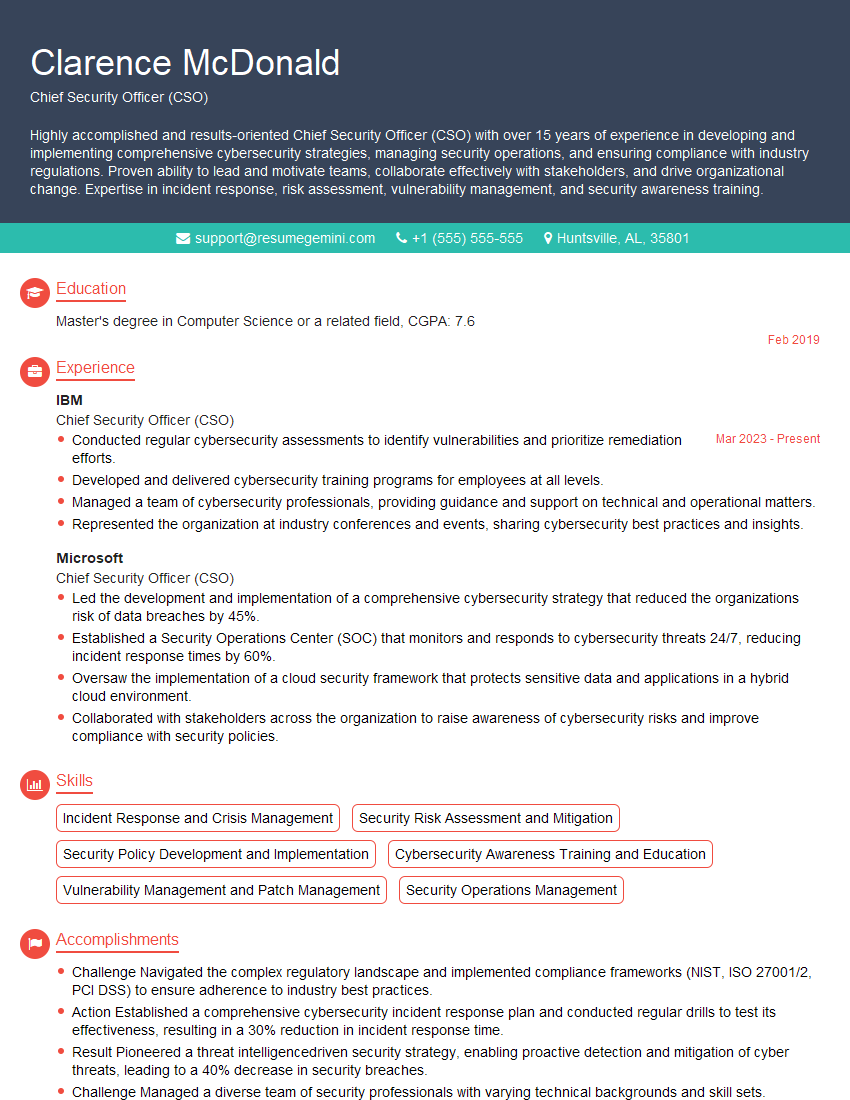
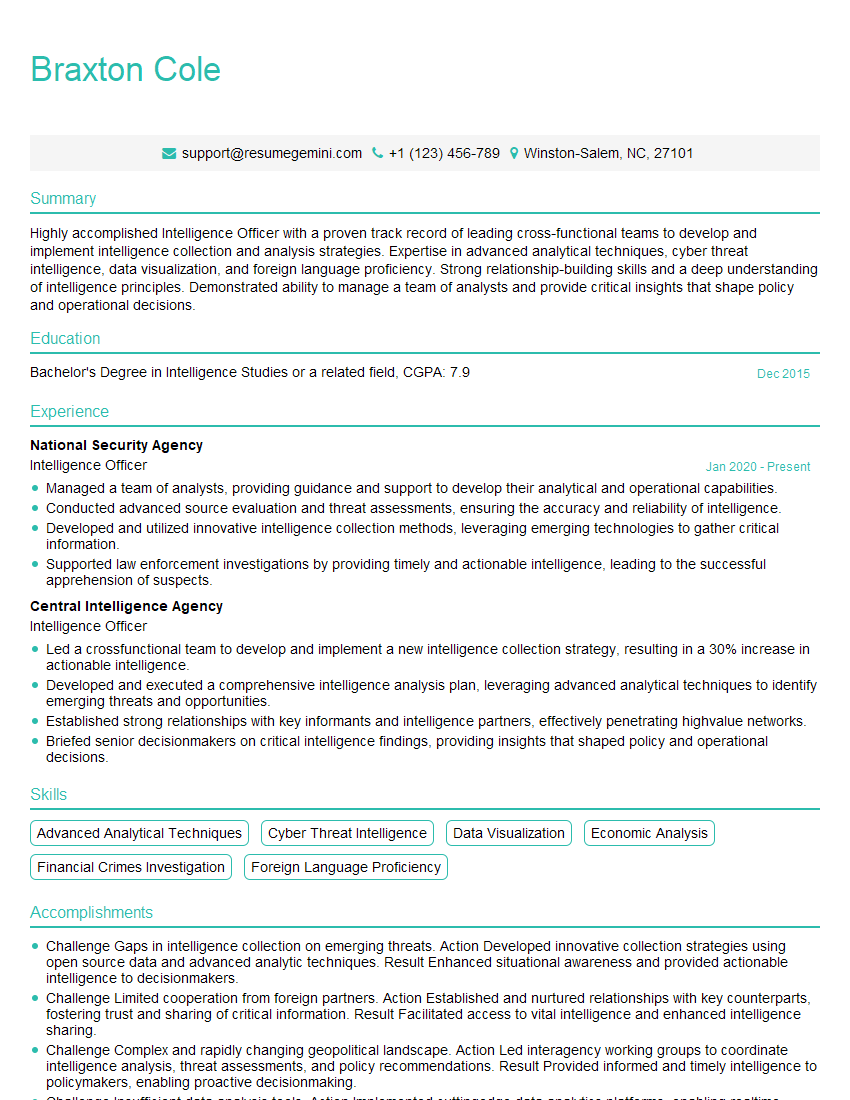
Mastering National Security Risk Assessment opens doors to exciting and impactful careers within government, defense, and private sectors. Demonstrating expertise in this area significantly enhances your job prospects. To maximize your chances, building an ATS-friendly resume is crucial. ResumeGemini offers a trusted platform for crafting professional and impactful resumes tailored to your specific career goals. We provide examples of resumes specifically designed for National Security Risk Assessment professionals to help you showcase your skills and experience effectively. Take advantage of this valuable resource to elevate your job search.
Explore more articles
Users Rating of Our Blogs
Share Your Experience
We value your feedback! Please rate our content and share your thoughts (optional).
What Readers Say About Our Blog
Very informative content, great job.
good