Feeling uncertain about what to expect in your upcoming interview? We’ve got you covered! This blog highlights the most important Naval Architecture Principles interview questions and provides actionable advice to help you stand out as the ideal candidate. Let’s pave the way for your success.
Questions Asked in Naval Architecture Principles Interview
Q 1. Explain the principles of buoyancy and Archimedes’ principle.
Buoyancy is the upward force exerted on an object submerged in a fluid, like water. Archimedes’ principle states that this buoyant force is equal to the weight of the fluid displaced by the object. Imagine placing a beach ball in a pool – it floats because the buoyant force pushing it upwards is greater than the ball’s weight. If the buoyant force were less than the weight, it would sink, like a rock. This principle is fundamental to ship design; a ship floats because its weight is less than the weight of the water it displaces. The key is to design the hull shape to displace enough water to balance the ship’s weight.
Q 2. Describe the different types of ship hulls and their applications.
Ship hulls come in various forms, each optimized for specific purposes.
- Monohulls: The most common type, characterized by a single hull. They are versatile and suitable for a wide range of applications, from small fishing boats to large cargo ships. Monohulls are generally efficient for long distances but can be prone to rolling in rough seas.
- Catamarans: Featuring two parallel hulls, catamarans offer greater stability than monohulls due to their wider beam (width). This makes them popular for high-speed ferries and sailing vessels. However, they often have higher wind resistance.
- Trimarans: Similar to catamarans but with three hulls, trimarans provide even greater stability and speed, making them attractive for racing yachts and high-speed passenger craft. Their hydrodynamic characteristics provide excellent performance but can be challenging to maneuver in close quarters.
- SWATH (Small Waterplane Area Twin Hull): These vessels have submerged hulls connected by a small above-water structure. They are extremely stable due to the submerged hulls, resulting in a smoother ride. They’re often used for research vessels and military applications requiring a stable platform.
The choice of hull form depends heavily on the intended use of the vessel, its operational profile, and the environmental conditions it will face.
Q 3. What are the key factors influencing ship stability?
Ship stability is its ability to return to an upright position after being tilted. Several key factors influence this:
- Shape of the Hull: A wider, more stable hull form inherently provides better initial stability.
- Weight Distribution: Proper weight distribution is crucial. A high center of gravity makes the ship less stable, while a low center of gravity enhances stability. Think of stacking blocks – a wider base makes the stack more stable.
- Water Density: The density of the surrounding water affects buoyancy. Ships are less stable in less dense water (like warmer water).
- Cargo Loading: The way cargo is loaded significantly impacts stability. Improper loading can lead to instability and even capsizing. Proper cargo securing and distribution are vital.
- Free Surface Effect: Liquids within the ship that are free to move, like fuel or ballast water, can significantly reduce stability. The effect is increased with a larger surface area of the liquid.
Designing for stability involves careful consideration of all these factors during the design phase to ensure safe and reliable vessel operation.
Q 4. How do you calculate the metacentric height of a vessel?
Metacentric height (GM) is a crucial measure of a ship’s initial static stability. It’s the distance between the center of gravity (G) and the metacenter (M). The metacenter is the point about which a ship rotates when subjected to a small angle of heel.
Calculating GM involves several steps, often using hydrostatic calculations:
- Determine KG (distance from keel to center of gravity): This requires knowing the weight and location of all components of the ship.
- Determine KB (distance from keel to center of buoyancy): This is calculated using the ship’s waterplane area and displacement.
- Determine BM (distance from center of buoyancy to metacenter): This is given by
BM = I / V, where ‘I’ is the second moment of area of the waterplane and ‘V’ is the underwater volume. - Calculate GM: Finally,
GM = BM - KG. A positive GM indicates initial stability. The larger the GM, the more stable the ship. A negative GM indicates instability.
Hydrostatic software packages are commonly used for these calculations, as they can handle the complexities of ship geometry and loading conditions efficiently.
Q 5. Explain the concept of hydrostatic curves and their use in ship design.
Hydrostatic curves are graphical representations of a ship’s hydrostatic properties, providing valuable information for various design and operational aspects. They typically show parameters like displacement, center of buoyancy, and waterplane area as functions of the ship’s draft (how deep it sits in the water).
Hydrostatic curves are essential in:
- Preliminary Design: They enable designers to explore different hull forms and dimensions to optimize stability, displacement, and other key characteristics.
- Weight Estimation: The curves help estimate the weight of the vessel based on the design draft.
- Loading and Stability Calculations: They are crucial for determining the effects of various loading conditions on stability, allowing safe loading practices to be determined.
- Damage Control Assessment: Hydrostatic curves facilitate the assessment of the ship’s stability if damaged and flooded compartments.
In essence, hydrostatic curves provide a quick and efficient tool for visualizing and analyzing the relationship between a ship’s draft, displacement, and hydrostatic properties. They are integral to ensuring safe and efficient operation.
Q 6. Describe different methods for determining longitudinal strength of a ship.
Determining the longitudinal strength of a ship, its ability to withstand bending moments along its length, is critical for safety and structural integrity. Several methods are employed:
- Simplified Methods: These methods, suitable for preliminary design, use formulas based on the ship’s overall dimensions and loading conditions. They provide a quick estimate of bending moments and stresses.
- Finite Element Analysis (FEA): This sophisticated technique uses computer software to model the ship’s structure in detail. It divides the hull into many small elements and calculates stresses and deflections under various loading conditions, offering a highly accurate assessment of longitudinal strength.
- Strip Theory Method: This approach divides the ship’s hull into a series of transverse strips and analyzes each strip separately for bending and shear stresses. The results are then combined to obtain the overall longitudinal strength.
The choice of method depends on the design stage, the required accuracy, and available resources. FEA is preferred for detailed analysis, while simplified methods are useful for quick estimations during early stages.
Q 7. What are the key considerations in propeller design?
Propeller design is a complex process involving numerous considerations to achieve optimal propulsion efficiency. Key factors include:
- Diameter and Pitch: These dimensions affect the propeller’s thrust and rotational speed. The pitch defines the distance the propeller would advance in one revolution in still water.
- Number of Blades: The number of blades influences the propeller’s efficiency and cavitation characteristics. More blades generally lead to quieter operation but may reduce efficiency at high speeds.
- Blade Section Shape: The cross-sectional shape of the blades affects the propeller’s lift and drag characteristics, significantly influencing its efficiency.
- Material Selection: Propeller materials must be strong, corrosion-resistant, and lightweight. Common materials include bronze, stainless steel, and various composites.
- Cavitation: Cavitation, the formation of vapor bubbles on the propeller blades due to low pressure, must be carefully considered. It can lead to damage and noise. Propeller design aims to minimize cavitation by optimizing blade geometry and speed.
- Wake Adaptation: The propeller must be designed to efficiently utilize the ship’s wake, which affects the propeller performance.
Advanced Computational Fluid Dynamics (CFD) simulations are commonly used to optimize propeller designs, ensuring efficient propulsion and minimizing undesirable effects like vibration and noise.
Q 8. Explain the importance of structural analysis in ship design.
Structural analysis is paramount in ship design because it ensures the vessel’s safety and longevity. It’s essentially a detailed examination of how a ship’s structure will respond to various loads and stresses throughout its operational life. Without robust structural analysis, a ship might fail catastrophically, leading to loss of life and property. We use sophisticated computer models and software to simulate the stresses on the hull, deck, and internal structures under different conditions – from calm waters to extreme storms. These analyses help determine the necessary material thicknesses, stiffener arrangements, and overall structural design to withstand these forces effectively. Think of it like designing a skyscraper; you wouldn’t build it without detailed calculations of wind loads, seismic activity, and other potential stresses.
For example, a structural analysis might reveal that a particular section of the hull requires extra reinforcement due to higher stress concentrations around openings or in areas subjected to significant wave impact. This type of analysis allows us to optimize the design for weight and cost while maintaining a crucial level of safety.
Q 9. Describe different types of structural framing used in ship construction.
Ship construction employs various structural framing systems, each with its own strengths and weaknesses. The choice depends on factors like ship type, size, and intended use.
- Longitudinal Framing: This system features longitudinal girders running along the ship’s length, connected by transverse frames. It’s particularly effective for long, slender vessels like tankers and bulk carriers, offering high longitudinal strength to withstand bending moments caused by waves.
- Transverse Framing: Here, transverse frames (ribs) run perpendicular to the keel, connected by longitudinal girders. This system provides good resistance to local pressures and is often used in shorter, wider vessels like barges and ferries.
- Combined Framing: This is a hybrid system, combining elements of both longitudinal and transverse framing to optimize strength and weight distribution. It’s a popular choice for many modern vessels, offering a balance between longitudinal and transverse strength.
- I-Shaped Frames: These steel frames are common for added rigidity in the hull. Their particular shape is ideal for weight-efficient design while handling great amounts of load.
Imagine a car’s chassis: longitudinal framing is like having strong beams running the length of the car, while transverse framing is like the cross-members that provide added rigidity. The best system depends on the specific needs of the ‘vehicle’ (ship).
Q 10. What are the effects of different wave conditions on ship motion?
Wave conditions significantly impact ship motion. Different wave parameters like height, length, and period cause various types of motion, often simultaneously.
- Heaving: Vertical oscillation (up and down movement).
- Rolling: Rotation about the longitudinal axis (side-to-side rocking).
- Pitching: Rotation about the transverse axis (fore-and-aft rocking).
- Yawing: Rotation about the vertical axis (sideways movement of the bow or stern).
- Swaying: Lateral movement (sideways movement).
The severity of these motions depends on the wave characteristics and the ship’s inherent characteristics like its size, shape, and stability. A longer ship will generally experience greater pitching and a wider ship will experience less rolling. Steeper waves will cause more pronounced motions. In extreme conditions, these motions can lead to structural damage, equipment malfunction, or even capsizing. Ship design must account for expected wave conditions to ensure the vessel’s seaworthiness and safety.
For instance, a small boat in a rough sea might experience significant rolling and pitching, while a large container ship will typically experience more moderate motions due to its larger size and higher stability.
Q 11. Explain the concept of added resistance due to waves.
Added resistance due to waves refers to the increase in resistance a ship experiences when moving through waves compared to calm water. This added resistance arises from several factors:
- Wave-making resistance: Waves generated by the ship’s hull interact with the oncoming waves, causing additional resistance.
- Wave drift forces: The forces exerted by the waves on the hull can create additional drag.
- Slamming: Violent impact of the hull with the waves, particularly in head seas, generates significant resistance.
- Bow wave interactions: The bow wave generated by the ship interacts with the oncoming waves, resulting in increased resistance.
This added resistance significantly affects fuel consumption and speed. Ship designers consider wave conditions during the design process to estimate the added resistance and optimize the hull form to minimize it. The added resistance is heavily dependent on the wave height, period and the ship’s heading relative to the waves.
Q 12. How do you calculate the resistance of a ship in calm water?
Calculating the resistance of a ship in calm water is a complex process, usually done using computational fluid dynamics (CFD) or empirical methods based on established formulas and experimental data. It’s broken down into several components:
- Frictional resistance: This is the resistance due to the friction between the hull and the water. It’s often calculated using formulas like the ITTC (International Towing Tank Conference) 1957 friction line.
- Pressure resistance (form drag): This is due to the pressure distribution around the hull. It’s related to the shape of the hull and is often calculated using empirical methods or CFD.
- Wave-making resistance: This is the resistance caused by the generation of waves by the ship’s hull. It’s a complex phenomenon, and its calculation often requires advanced CFD simulations or empirical methods based on hull form parameters.
- Appendage resistance: This includes the resistance from appendages like rudders, propellers and bilge keels.
The total resistance is the sum of these components. The process usually involves: defining the hull geometry, selecting a suitable method (CFD or empirical), performing the calculations, and validating the results with experimental data where possible. This information is crucial for determining engine power requirements, fuel consumption, and overall ship performance.
Q 13. Describe different types of ship propulsion systems.
Ship propulsion systems vary greatly depending on the vessel’s size, speed, and intended use. Here are some common types:
- Propellers: These are the most common form of propulsion, using rotating blades to create thrust. They can be single or multiple propellers, fixed-pitch or controllable-pitch, and located at the stern or in a tunnel.
- Waterjets: These systems suck in water, accelerate it through a nozzle, and eject it at high velocity to generate thrust. They’re often found on high-speed vessels and those operating in shallow waters.
- Podded propulsors: These integrate the propeller and motor into a single unit that can rotate 360 degrees, offering increased maneuverability. They’re commonly found on large cruise ships and ferries.
- Azipods: A type of podded propulsion system, with the motor housed inside a submerged pod.
- Sails: Although less common in modern commercial shipping, sails are a sustainable propulsion method still used in some recreational vessels.
Each system has advantages and disadvantages concerning efficiency, maneuverability, cost, and maintenance. The selection of the appropriate system depends on many factors that are weighed during the vessel’s design process.
Q 14. What are the regulations and standards governing ship design?
Ship design is governed by a complex web of international regulations and standards to ensure safety, environmental protection, and operational efficiency. Key organizations include:
- International Maritime Organization (IMO): The IMO sets international standards for ship construction, safety, and pollution prevention. The International Convention for the Safety of Life at Sea (SOLAS) is a crucial example.
- Class Societies: Organizations like DNV, ABS, Lloyd’s Register, and others classify ships, certifying that they meet certain standards and regulations. They conduct surveys and inspections throughout the ship’s life.
- Flag States: The country under whose flag a ship sails has responsibility for ensuring compliance with international and national regulations.
- Port States: Ports have the authority to inspect ships to ensure compliance with safety and environmental regulations.
These regulations cover various aspects, including hull strength, stability, fire safety, life-saving equipment, pollution prevention, and operational limits. Compliance is crucial for a ship to operate legally and safely. Failure to comply can result in detention, fines, and even legal action.
Q 15. Explain your understanding of the IMO conventions.
The International Maritime Organization (IMO) conventions are a series of international treaties and regulations aimed at improving maritime safety and preventing pollution from ships. Think of them as the global rulebook for shipping. They cover a vast range of topics, ensuring ships are built, operated, and maintained to high standards. Key conventions include the SOLAS (Safety of Life at Sea) Convention, MARPOL (Marine Pollution) Convention, and the STCW (Standards of Training, Certification and Watchkeeping for Seafarers) Convention.
- SOLAS focuses on ship safety, encompassing hull integrity, fire protection, life-saving appliances, and radio communications. It’s like a comprehensive safety manual for every vessel.
- MARPOL tackles marine pollution from ships, setting limits on discharges of oil, sewage, garbage, and other harmful substances. It’s crucial for protecting marine ecosystems.
- STCW establishes minimum standards for the training, certification, and watchkeeping of seafarers. This ensures a competent and well-trained crew on every ship, enhancing safety and efficiency.
Compliance with these conventions is crucial for a ship to operate internationally. Non-compliance can lead to significant penalties, including detention of the vessel and legal action. My experience includes directly applying these regulations during design review, ensuring all aspects of a vessel meet or exceed IMO requirements.
Career Expert Tips:
- Ace those interviews! Prepare effectively by reviewing the Top 50 Most Common Interview Questions on ResumeGemini.
- Navigate your job search with confidence! Explore a wide range of Career Tips on ResumeGemini. Learn about common challenges and recommendations to overcome them.
- Craft the perfect resume! Master the Art of Resume Writing with ResumeGemini’s guide. Showcase your unique qualifications and achievements effectively.
- Don’t miss out on holiday savings! Build your dream resume with ResumeGemini’s ATS optimized templates.
Q 16. What is the significance of CFD (Computational Fluid Dynamics) in naval architecture?
Computational Fluid Dynamics (CFD) is a powerful tool in naval architecture, allowing us to simulate the flow of water around a ship’s hull. Imagine being able to test thousands of hull designs in a computer, instead of building physical models. This is precisely what CFD enables. It helps predict performance characteristics like resistance, propulsion efficiency, and wave generation with high accuracy. By virtually testing different hull forms, appendages, and propellers, we can optimize the design for speed, fuel efficiency, and maneuverability.
For example, CFD helps analyze the flow around a propeller to optimize its design for maximum thrust and efficiency, reducing fuel consumption and emissions. Similarly, it can predict wave patterns created by the hull, which is vital for minimizing motion sickness in passengers and preventing damage to the vessel.
In my work, CFD analyses have been instrumental in improving the hydrodynamic performance of several vessel designs, leading to significant cost savings and environmental benefits through reduced fuel consumption.
Q 17. Describe the process of designing a ship from initial concept to final design.
Designing a ship is a complex, multi-stage process, starting from a vague initial concept and progressing through detailed engineering drawings and specifications.
- Concept Design: This initial phase defines the ship’s purpose, size, and key characteristics. We consider factors like cargo capacity, speed, range, and operational requirements. Think of it as sketching a rough outline of the ship’s main features.
- Preliminary Design: This stage refines the concept into more concrete parameters. Detailed calculations are performed to determine the main dimensions, hull form, and propulsion system. We’re starting to flesh out the details.
- Detailed Design: Here, we delve into the specifics, creating comprehensive engineering drawings for every part of the vessel. This involves structural design, piping systems, electrical layouts, and much more. Imagine building a detailed LEGO model.
- Production Design: The blueprints are ready for the shipyard. We collaborate with the builders, addressing any manufacturing challenges and ensuring smooth production. It’s like providing the shipyard with precise assembly instructions.
- Testing and Commissioning: Once built, the ship undergoes extensive testing to verify its performance and compliance with regulations. This final phase ensures everything functions as designed before the ship sets sail.
Each stage involves close collaboration with various specialists, including naval architects, marine engineers, and regulatory authorities, making it a truly collaborative effort. I have successfully led teams through all these stages for several projects, demonstrating my expertise in each aspect of the process.
Q 18. What software packages are you familiar with in naval architecture?
My experience encompasses a wide range of naval architecture software packages. I’m proficient in:
- Maxsurf: For hull form design, lines plan generation, and overall ship geometry modeling.
- AutoCAD: For creating detailed 2D drawings and schematics.
- Rhino/Orca3D: For advanced 3D modeling and surface design.
- HydroD: For hydrodynamic analysis, including resistance and propulsion calculations.
- SESAM: For structural analysis and finite element modeling (FEM).
Familiarity with these programs allows me to handle all aspects of ship design, from initial conceptualization to final production drawings.
Q 19. Explain your experience with structural analysis software (e.g., ABAQUS, ANSYS).
I have extensive experience using structural analysis software, primarily ABAQUS and ANSYS. These tools are vital for ensuring the structural integrity of a ship. We use finite element analysis (FEA) to simulate the stresses and strains on various components under different loading conditions.
For instance, we might use ABAQUS to analyze the hull girder’s response to wave loads, ensuring sufficient strength to withstand extreme conditions. ANSYS can be used to model the behavior of individual components, like bulkheads or decks, under various scenarios. This helps identify potential weak points and optimize the design for strength and weight efficiency.
I’ve used these tools to perform detailed structural analysis for several projects, resulting in optimized designs that meet all required safety standards while minimizing material usage.
Q 20. How do you ensure compliance with environmental regulations in ship design?
Environmental regulations are paramount in modern ship design. We ensure compliance through a multi-pronged approach, focusing on:
- MARPOL compliance: We rigorously design systems for handling and disposing of oily water, sewage, garbage, and other pollutants, ensuring adherence to MARPOL Annexes I, IV, and V. This includes designing efficient treatment plants and waste management systems.
- Ballast water management: We incorporate ballast water treatment systems to prevent the spread of invasive species, in accordance with IMO regulations. This often involves selecting and integrating appropriate treatment technologies.
- Air emission control: Our designs incorporate technologies to reduce harmful emissions, such as sulfur oxides (SOx) and nitrogen oxides (NOx), meeting emission control areas (ECA) requirements and aiming to reduce greenhouse gas emissions (GHG).
- Noise reduction: We design ships to minimize underwater radiated noise, protecting marine mammals. This might involve optimizing propeller design, hull form, and machinery layouts.
We work closely with regulatory bodies throughout the design process to confirm that all aspects meet the latest environmental standards. This is not merely a checklist but an integral part of the design philosophy, ensuring responsible and sustainable vessel operations.
Q 21. Describe your understanding of hydrodynamics and its application in ship design.
Hydrodynamics is the study of fluids in motion, specifically how water interacts with ships. It’s fundamental to naval architecture because it governs the ship’s performance, efficiency, and seakeeping characteristics.
Key aspects of hydrodynamics relevant to ship design include:
- Resistance: Understanding the forces that resist a ship’s motion through water is crucial for determining propulsion power requirements and fuel efficiency. This involves analyzing frictional resistance, wave-making resistance, and pressure resistance.
- Propulsion: Designing efficient propellers and propulsion systems is critical. This considers propeller-hull interaction, cavitation, and wake characteristics.
- Seakeeping: Understanding how a ship responds to waves is vital for ensuring safety and passenger comfort. This involves analyzing motions such as roll, pitch, and heave.
- Maneuverability: Assessing the ship’s ability to turn and respond to steering commands is crucial for safety and efficient operation. This involves analyzing rudder forces and hull form interactions with the water.
My experience includes utilizing hydrodynamic principles to optimize hull forms, propeller designs, and other appendages for improved performance and reduced fuel consumption. A strong grasp of hydrodynamics is essential for designing efficient and seaworthy vessels.
Q 22. Explain the concept of freeboard and its importance.
Freeboard is the distance between the waterline and the top of the deck at the side of a ship. Think of it as the ship’s ‘safety margin’ against waves washing over the deck. It’s crucial for ensuring the vessel’s safety and preventing flooding. The amount of freeboard required is determined by several factors, including the ship’s size, type, and the area it operates in. International regulations, like the International Convention on Load Lines (also known as the Load Line Convention), dictate minimum freeboard values to ensure a sufficient safety margin in various sea conditions. Insufficient freeboard significantly increases the risk of flooding, which can lead to instability, capsizing, and loss of life. Conversely, excessive freeboard might be inefficient from a design perspective, leading to unnecessary weight and reduced cargo capacity.
For instance, a cargo ship operating in the North Atlantic would need a higher freeboard than a similar-sized ship operating in the calmer waters of the Mediterranean Sea. This is because the North Atlantic is known for its rough seas and larger waves, demanding a larger safety margin to prevent water ingress.
Q 23. Describe different methods used for damage stability assessment.
Damage stability assessment is crucial for determining a ship’s ability to remain afloat and stable after suffering damage, such as flooding due to collision or grounding. Several methods are used, each with its strengths and limitations:
Probabilistic Methods: These methods use statistical analysis to assess the likelihood of different damage scenarios and their impact on stability. They consider the probability of damage occurring in different locations and the resulting effects on buoyancy and stability. This approach is sophisticated and accounts for various uncertainties in damage extent and location.
Deterministic Methods: These methods involve analyzing specific damage scenarios using established formulas and procedures. A common deterministic approach involves calculating the residual buoyancy and stability after assuming a certain extent of flooding in a particular compartment. The calculations examine if the ship retains sufficient stability to withstand the effects of the damage. This method is simpler but doesn’t account for the probabilities of different damage scenarios.
Compartmentation Analysis: This examines the effect of flooding on individual compartments, considering the size and location of each. This focuses on minimizing the volume of water that can enter the vessel through the damaged area. Watertight bulkheads and doors are crucial elements for effective compartmentation, restricting the spread of water within the ship. Effective compartmentation is paramount in mitigating the consequences of damage.
The choice of method depends on the complexity of the vessel and the level of detail required. For simpler vessels, deterministic methods might suffice, while for complex vessels like large tankers or passenger ships, probabilistic methods are often preferred to provide a more comprehensive assessment of the risk.
Q 24. How do you handle conflicting requirements in ship design?
Conflicting requirements are commonplace in ship design. For example, the need for increased cargo capacity might conflict with stability requirements, or the desire for high speed might conflict with fuel efficiency. My approach involves a structured process:
Prioritization: Identifying and prioritizing the most critical requirements. This often involves discussions with stakeholders to understand their relative importance. Some requirements might be non-negotiable (e.g., safety regulations), while others may allow for some degree of compromise.
Trade-off Analysis: Evaluating the trade-offs involved in meeting different requirements. This might involve quantitative assessments (e.g., comparing the cost of increasing stability versus the cost of reducing cargo capacity) and qualitative assessments (e.g., considering the impact of reduced speed on delivery times).
Iterative Design: Employing an iterative design process, where initial designs are refined based on the results of the trade-off analysis. This often involves multiple design iterations until an acceptable balance between competing requirements is achieved. This iterative approach allows for flexibility and adaptation based on feedback and analysis throughout the design process.
Multidisciplinary Collaboration: Collaborating with other engineers and specialists (e.g., structural engineers, electrical engineers) to find creative solutions that address the conflicting requirements while maintaining the overall integrity and functionality of the design. This fosters a holistic approach.
Ultimately, the goal is to find a design that optimally balances all requirements, accepting that perfect solutions might not always be attainable. The process of compromise is essential in achieving a functional, safe and economically viable ship design.
Q 25. Explain your approach to solving a complex design problem.
My approach to solving complex design problems follows a systematic methodology:
Problem Definition: Clearly defining the problem, including all constraints and objectives. This includes gathering all necessary information and clarifying ambiguities to have a complete understanding of the task at hand.
Conceptual Design: Generating multiple conceptual designs to explore different approaches to the problem. This stage encourages creativity and innovation, considering various solutions without getting bogged down in the details of a single approach.
Preliminary Design: Developing preliminary designs based on the best conceptual designs. This involves more detailed calculations, simulations, and analyses to assess the feasibility and performance of each option.
Detailed Design: Refining the chosen preliminary design through detailed engineering drawings, calculations, and specifications. This is where the design is finalized and prepared for construction.
Verification and Validation: Rigorously verifying and validating the design through simulations, model testing, and analysis to ensure it meets all requirements and safety standards. This stage is essential for ensuring that the design will perform as expected.
Throughout this process, I actively seek feedback from colleagues and stakeholders, ensuring a collaborative and iterative approach to problem-solving.
Q 26. What are your strengths and weaknesses as a naval architect?
Strengths: My strengths lie in my strong analytical skills, my ability to effectively translate complex technical concepts into practical applications, and my proficiency in using various software tools for naval architecture design and analysis. I’m also a collaborative team player and have excellent communication skills, allowing me to effectively convey technical information to both technical and non-technical audiences.
Weaknesses: While I am proficient in many areas, I sometimes need to improve my time management skills when faced with multiple, concurrent tasks. I also aim to enhance my knowledge in the emerging field of autonomous vessels and their unique design considerations.
Q 27. Describe a challenging project you worked on and how you overcame the challenges.
One challenging project involved designing a specialized research vessel for operation in arctic conditions. The primary challenges included the need for enhanced ice-breaking capabilities, robust structural integrity in extreme cold temperatures, and efficient fuel consumption despite the demanding operating environment. The solution involved:
Innovative Hull Design: We employed advanced computational fluid dynamics (CFD) simulations to optimize the hull form for ice-breaking performance and reduced resistance. This minimized the ship’s power requirement.
Specialized Materials: We selected high-strength, low-temperature-resistant materials for the hull and superstructure to ensure structural integrity in the harsh arctic environment.
Advanced Propulsion System: The propulsion system was designed for efficient fuel consumption and optimal performance in icy conditions. This was crucial for extended operational ranges in remote regions.
Through meticulous planning, rigorous analysis, and collaborative teamwork, we successfully overcame these challenges and delivered a vessel that met all the performance requirements, demonstrating resilience and adaptability in extreme conditions.
Q 28. Where do you see yourself in 5 years in the field of Naval Architecture?
In five years, I aim to be a leading expert in the design and optimization of sustainable and efficient marine vessels. This includes developing expertise in the design of next-generation vessels incorporating alternative fuel technologies and advanced automation systems. I’m also interested in contributing to the development of innovative solutions addressing the challenges related to climate change within the maritime industry. I envision myself leading design projects for complex vessels and potentially taking on a leadership role within a prominent naval architecture firm or research institution.
Key Topics to Learn for Your Naval Architecture Principles Interview
- Hydrostatics: Understanding buoyancy, stability, and trim. Practical application: Analyzing the stability of a vessel in various loading conditions.
- Hydrodynamics: Exploring resistance, propulsion, and maneuvering. Practical application: Optimizing hull form for fuel efficiency and speed.
- Ship Structures: Mastering the structural design and analysis of ships, including strength calculations and material selection. Practical application: Ensuring structural integrity under various loads and environmental conditions.
- Ship Design and Construction: Familiarize yourself with the entire ship design process, from conceptual design to detailed engineering and construction. Practical application: Understanding the interplay between different design aspects and their impact on the final product.
- Seakeeping: Analyzing a vessel’s motion in waves and its response to environmental forces. Practical application: Designing for optimal seaworthiness and passenger comfort.
- Regulations and Standards: Understanding relevant classification society rules and international maritime regulations. Practical application: Ensuring compliance with safety and environmental standards.
- Computational Fluid Dynamics (CFD): Gaining familiarity with numerical modeling techniques used in naval architecture. Practical application: Simulating and optimizing hydrodynamic performance.
- Finite Element Analysis (FEA): Understanding structural analysis techniques for ship design. Practical application: Assessing structural strength and predicting failure modes.
Next Steps
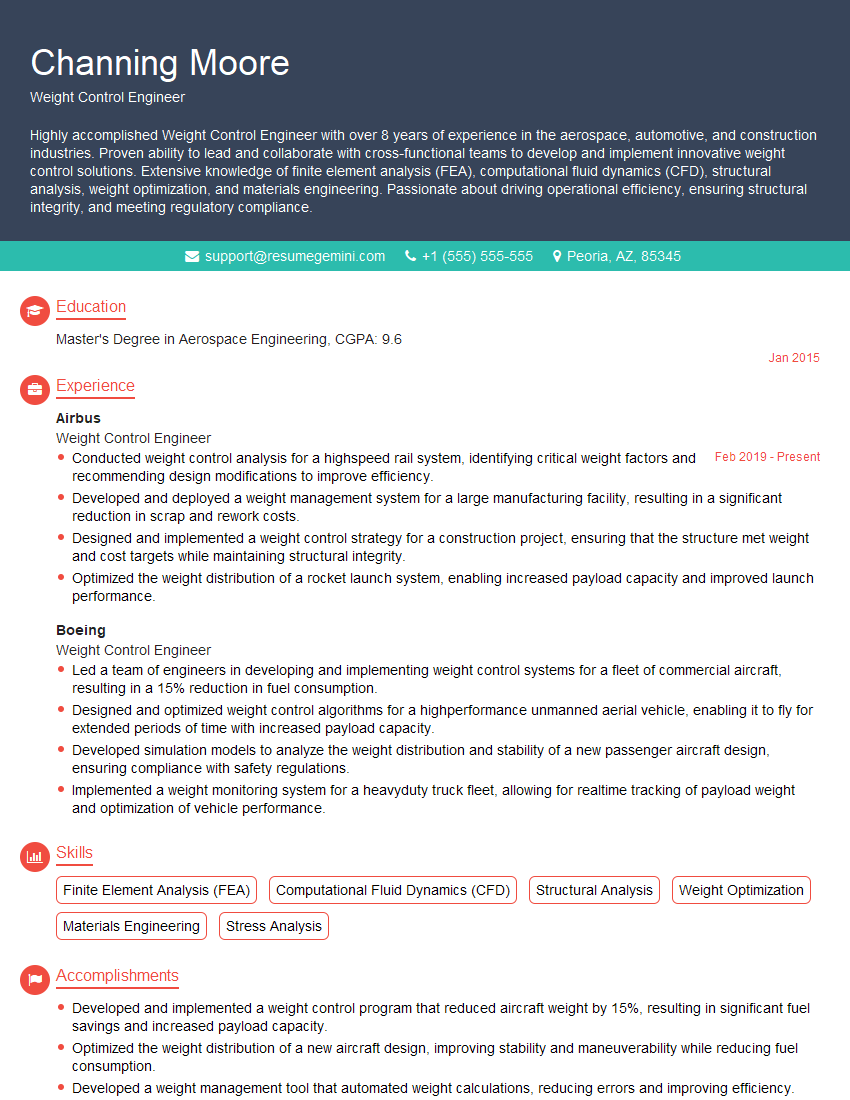
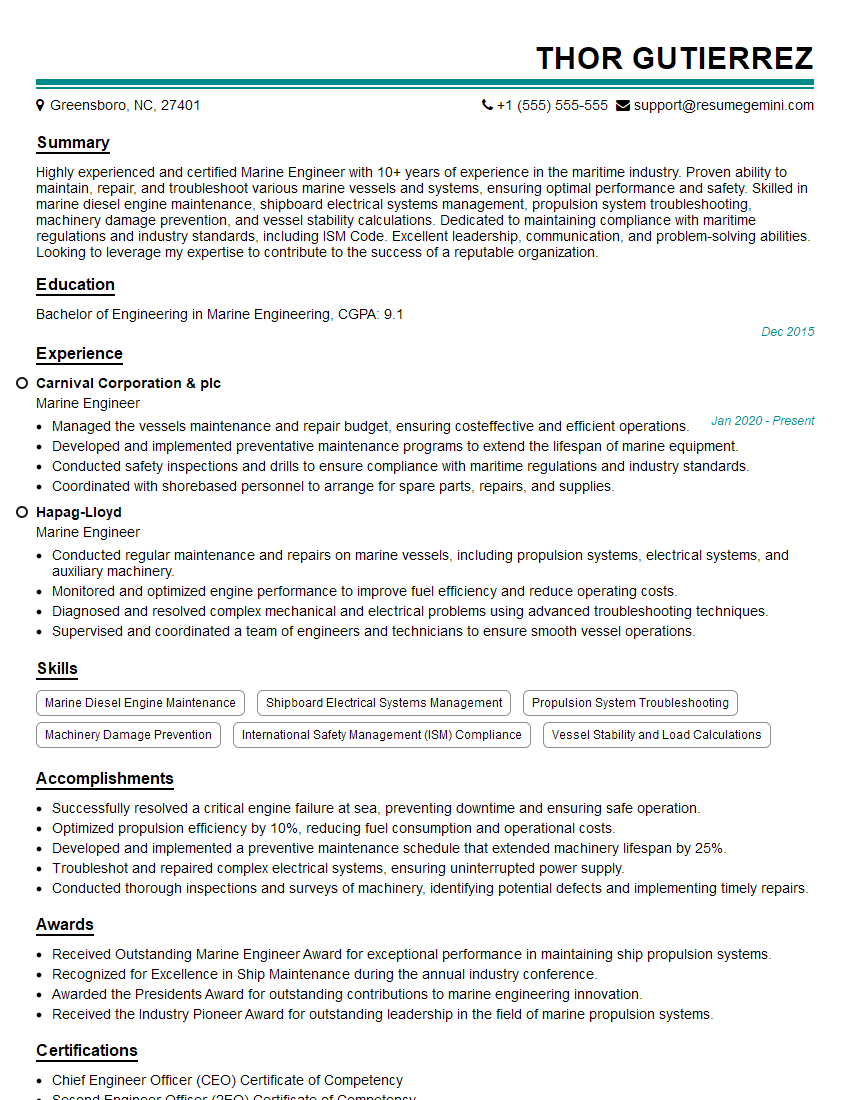
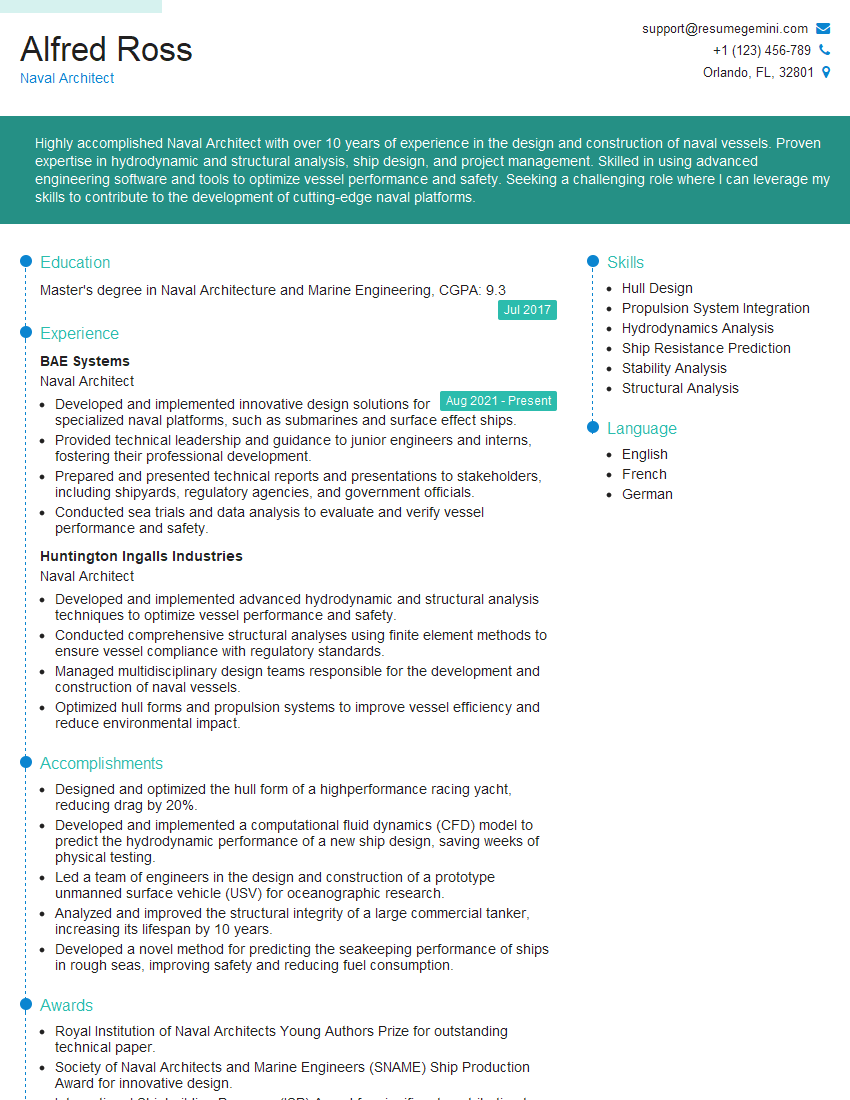
Mastering Naval Architecture Principles is crucial for a successful and rewarding career in the maritime industry. A strong understanding of these fundamentals will open doors to exciting opportunities and allow you to contribute significantly to innovative ship designs and safer maritime operations. To maximize your job prospects, it’s essential to present your skills and experience effectively. Creating an ATS-friendly resume is key in today’s competitive job market. We highly recommend using ResumeGemini to build a professional and impactful resume that showcases your expertise. ResumeGemini provides examples of resumes tailored specifically to Naval Architecture Principles to help you get started. Take the next step towards your dream career – invest in your resume today.
Explore more articles
Users Rating of Our Blogs
Share Your Experience
We value your feedback! Please rate our content and share your thoughts (optional).
What Readers Say About Our Blog
Very informative content, great job.
good