Cracking a skill-specific interview, like one for Navigation Instruments Maintenance, requires understanding the nuances of the role. In this blog, we present the questions you’re most likely to encounter, along with insights into how to answer them effectively. Let’s ensure you’re ready to make a strong impression.
Questions Asked in Navigation Instruments Maintenance Interview
Q 1. Describe the process of calibrating a gyrocompass.
Gyrocompass calibration is a crucial process ensuring accurate heading information. It involves aligning the gyrocompass with true north, compensating for errors caused by factors like ship’s motion and magnetic fields. The process typically involves several steps:
Pre-Calibration Checks: Verify power supply, examine for any physical damage, and check for any error messages displayed on the unit.
Initial Alignment: Use a known reference point (e.g., a precisely known bearing) to provide an initial heading. This might involve aligning the gyrocompass with a known landmark or using a magnetic compass for a rough alignment. This step helps reduce the time the gyro needs to settle to a stable reading.
Gyrocompass Self-Calibration (Automatic Calibration): Modern gyrocompasses often have built-in self-calibration routines. These routines use sophisticated algorithms to compensate for various errors, often requiring the ship to remain stationary for a specific period. During this phase, the gyrocompass continuously compares its calculated heading with any available external heading reference, such as GPS or astronomical data, to refine its internal parameters.
Manual Adjustment (If Necessary): In some cases, minor manual adjustments might be necessary to fine-tune the alignment. This would usually be guided by the instrument’s internal diagnostics or service manual. The manual adjustment procedures and their limitations are specific to the gyrocompass model.
Post-Calibration Checks: After the calibration process, a series of checks must be performed to verify the accuracy of the heading information provided by the gyrocompass. This may involve comparing the readings with other navigation aids or performing specific tests as outlined in the instrument’s service manual.
For example, a significant deviation from a known bearing might point towards a malfunctioning component within the gyrocompass, requiring further investigation and potentially repair.
Q 2. Explain the function of an Automatic Identification System (AIS).
The Automatic Identification System (AIS) is a crucial safety and navigation tool used by vessels to broadcast their position, course, speed, and other relevant information automatically to other vessels and shore-based stations. It acts as a sort of maritime ‘social network’, allowing for increased situational awareness and collision avoidance.
Function: AIS transmits data using VHF radio, providing real-time information about vessels in the vicinity. This data can help mariners avoid collisions, manage traffic separation schemes, and enhance search and rescue operations.
Data Transmitted: Typical data includes MMSI (Maritime Mobile Service Identity), position, course, speed, heading, dimensions, type of vessel, and cargo information. This information is crucial for overall safety.
Real-world Application: Imagine a busy port environment. AIS allows vessels to monitor the movements of other ships, helping them navigate safely around potentially hazardous situations, like crossing traffic lanes or maneuvering around other vessels.
AIS is critical for safety and efficiency in modern maritime operations, especially in congested waterways.
Q 3. How do you troubleshoot a malfunctioning GPS receiver?
Troubleshooting a malfunctioning GPS receiver requires a systematic approach. The initial steps involve identifying the nature of the malfunction. Is it not receiving any signal, displaying incorrect position data, or showing other error messages?
Check Antenna and Cables: First, visually inspect the GPS antenna for any physical damage. Ensure the cable connections are secure and undamaged. A loose cable or a faulty antenna can easily lead to signal loss.
Check Power Supply: Verify the receiver is receiving the correct voltage. A power supply issue can lead to erratic or no GPS data.
Check for Obstructions: Metal structures, dense foliage, or even the vessel’s superstructure can block GPS signals, especially in certain locations. Try moving the antenna to a more open location for testing.
Examine GPS Receiver Settings: Incorrect settings can impair GPS functionality. Verify baud rates, data output format and ensure the receiver is configured correctly for the intended use.
Check for Interference: Some electronic equipment can interfere with GPS signals. Check for any sources of electromagnetic interference nearby that could be disrupting the receiver’s operation.
Software Reset/Update: Try a software reset of the GPS receiver or check for firmware updates. Sometimes software glitches can cause issues that a simple reset can resolve.
Consult Manufacturer’s Documentation: Refer to the manufacturer’s specifications and troubleshooting guides for more specific guidance.
For instance, if you encounter frequent signal interruptions in a specific geographical area, you might need to investigate for local sources of interference or install a more powerful antenna.
Q 4. What are the common causes of radar system failures?
Radar system failures can stem from a variety of sources, broadly categorized into hardware and software problems.
Hardware Failures:
- Magnetron Issues: The magnetron, which generates the microwave signal, is a common point of failure. It can experience reduced power output, leading to weak or no radar return. This is often accompanied by a loss of range and poor target definition.
- Transmitter/Receiver Problems: Issues in the transmitter or receiver circuits can cause signal degradation or complete failure. These issues can result in poor signal detection, distorted images, or no display at all.
- Antenna Problems: A damaged or misaligned antenna significantly impairs signal transmission and reception, leading to reduced range, poor target clarity, or no radar image.
- Display Failures: Problems with the display unit, such as a faulty monitor or processing unit, can prevent the operator from seeing the radar image.
Software Failures:
- Software Glitches: Software bugs can cause erratic behavior, including incorrect data processing or display glitches.
- Configuration Errors: Incorrect settings in the radar’s configuration can lead to malfunctioning. This might involve incorrect range settings, clutter rejection settings or other operational parameters.
Effective troubleshooting involves systematic checks, starting with the most likely causes and progressing to more complex diagnostic steps. Using the radar’s built-in self-diagnostics, if any, can be invaluable in pinpointing the cause of a malfunction.
Q 5. Describe the maintenance procedures for an ECDIS system.
Maintaining an Electronic Chart Display and Information System (ECDIS) is crucial for safe navigation. It involves both routine checks and more thorough periodic maintenance.
Daily Checks: This includes verifying the system’s power, checking the chart display for any anomalies, and ensuring the ECDIS is functioning correctly with all integrated navigation sensors (GPS, gyrocompass, etc.).
Regular Updates: Keeping the ECDIS software and chart data up-to-date is paramount. New charts and software updates address bugs, incorporate regulatory changes, and improve functionality. Failure to update can lead to navigational errors.
Backups: Regular backups of ECDIS data are essential to mitigate potential data loss. This involves backing up both the chart data and system configurations.
System Checks: Periodically performing comprehensive system checks – in accordance with the manufacturer’s guidelines – is crucial to ensure all components are working correctly. This might involve checking system functionality and calibrating integrated sensors, like the GPS or gyrocompass, in accordance with their service manuals.
Sensor Calibration: Calibration of the integrated sensors ensures accuracy of the information displayed on the ECDIS. Sensor calibration procedures are specific to each sensor type and should always follow the manufacturer’s guidelines.
Professional Servicing: Regular professional servicing by qualified technicians is vital to identify potential issues before they become significant problems. This ensures the long-term reliability and safety of the ECDIS system.
For example, failing to update charts can lead to incorrect depth information, potentially resulting in grounding. Regular maintenance prevents such incidents.
Q 6. Explain the principles of inertial navigation.
Inertial navigation systems (INS) determine position, velocity, and orientation without external references like GPS or radio signals. They achieve this by using precisely measured accelerations to calculate changes in position and orientation. Imagine a highly sensitive accelerometer measuring any change in your movement. This is the fundamental principle of inertial navigation.
Gyroscopes: Gyroscopes measure angular velocity (rotation rate), providing information about changes in orientation. Think of a spinning top; it resists changes in its axis of rotation. This property is used in a highly sophisticated way to precisely measure orientation.
Accelerometers: Accelerometers measure linear acceleration in three dimensions (x, y, and z axes). They sense any changes in speed or direction. These accelerometers need to be incredibly sensitive to be effective.
Integration: The key is that these accelerometers are constantly measuring acceleration. By integrating the acceleration data over time, the INS calculates the velocity; by further integrating the velocity, it calculates the change in position. This process is continuously repeated, using sophisticated mathematical algorithms, to produce the system’s navigational output.
Error Accumulation: A critical aspect is error accumulation. Because INS relies on integration, any small errors in acceleration measurements compound over time, leading to drift in position and velocity. Sophisticated algorithms and calibration are used to mitigate this drift. High-precision gyroscopes and accelerometers are essential to minimize these errors.
INS is vital in applications where GPS is unavailable, like submarines or aircraft flying at high altitudes. However, due to the accumulation of errors, they are typically used in conjunction with other navigational aids for increased accuracy over long periods.
Q 7. How do you diagnose and repair a faulty depth sounder?
Diagnosing and repairing a faulty depth sounder involves a systematic approach, starting with the simplest checks and progressing to more complex procedures.
Check Transducer and Cable: Examine the transducer for any signs of damage (cracks, corrosion, fouling) and verify the cable connections are secure and undamaged. A faulty transducer or damaged cable is a frequent source of problems. Make sure the transducer is properly installed and has good contact with the hull.
Check Power Supply and Connections: Verify the depth sounder is receiving correct power. Loose connections or insufficient power can lead to malfunction. This includes checking the power supply to the transducer as well.
Inspect the Display: Examine the display for any error messages. The displayed information might provide clues about the source of the malfunction.
Check for Interference: Some electronic equipment can interfere with the depth sounder’s operation. Identify and eliminate any potential sources of electromagnetic interference.
Test in Different Locations: Test the depth sounder in known areas with accurate depths to verify its readings against the established values.
Check Settings: Incorrect settings (e.g., wrong transducer type selected) can affect readings. Review the operational settings and ensure they are correct for your application.
Calibration: If the transducer and power supply check out, calibration of the depth sounder might be needed. Calibration procedures are typically outlined in the manufacturer’s documentation.
Seek Professional Help: If the problem persists after performing these checks, seek assistance from a qualified marine technician. Advanced diagnostic equipment might be needed to identify more complex internal faults within the depth sounder.
For example, a consistently inaccurate depth reading in a known location could suggest a problem with the transducer’s calibration, or it could suggest a fault within the depth sounder itself.
Q 8. What safety precautions are necessary when working with high-voltage navigation equipment?
Working with high-voltage navigation equipment demands rigorous adherence to safety protocols. Think of it like handling a powerful, potentially dangerous tool – respect is key. The first and foremost precaution is always to de-energize the system completely before commencing any maintenance or repair. This involves switching off the main power supply and verifying its absence using a certified voltage tester. Never rely on visual inspection alone.
- Lockout/Tagout Procedures: Implement a formal lockout/tagout system to prevent accidental energization. This involves physically locking the power switch to prevent its operation.
- Personal Protective Equipment (PPE): Appropriate PPE is paramount. This includes insulated gloves, safety glasses, and arc flash suits for high-voltage systems, depending on the voltage level.
- Proper Grounding: Ensure the equipment is properly grounded to prevent electrical shocks and potential damage. Grounding straps and bonding wires should be meticulously connected.
- Trained Personnel: Only trained and qualified personnel should work on high-voltage systems. Proper training on safety procedures and the use of specialized tools is absolutely essential.
- Emergency Procedures: Familiarize yourself with emergency procedures, including the location of emergency shut-off switches and first aid equipment, and ensure all team members are aware.
For instance, during a recent maintenance job on a ship’s radar system, we meticulously followed a lockout/tagout procedure, using both physical locks and tags to prevent accidental power restoration during the work. This ensured the safety of the entire team. Ignoring these protocols could have resulted in serious injury or even fatality.
Q 9. Describe your experience with different types of navigation sensors.
My experience encompasses a wide range of navigation sensors, each with its own strengths and weaknesses. Think of these sensors as the eyes and ears of a vessel, providing critical information for safe navigation.
- GPS Receivers: I’ve worked extensively with various GPS receivers, ranging from simple handheld units to integrated navigation systems. These are essential for accurate positioning using satellite signals. Troubleshooting issues like signal blockage or multipath interference is a common task.
- Gyrocompasses: I’m proficient in the maintenance and calibration of gyrocompasses, which provide a highly accurate heading reference irrespective of magnetic fields. I’ve handled both mechanical and modern ring laser gyro systems.
- Magnetic Compasses: While less sophisticated than gyrocompasses, magnetic compasses still play a role, especially as a backup system. Understanding deviation and compensation is crucial for their accurate use. I’ve dealt with issues relating to magnetic interference from onboard equipment.
- Depth Sounders: I’ve worked with various types of depth sounders, from single-beam to multi-beam systems. I have experience in calibrating transducers and interpreting sonar data to determine water depth accurately. This includes dealing with issues such as transducer fouling or false readings.
- AIS (Automatic Identification System): I’m familiar with the maintenance and troubleshooting of AIS transponders and receivers, essential for collision avoidance. This includes understanding the data streams and potential communication problems.
One memorable instance involved troubleshooting a faulty GPS receiver on a research vessel. By systematically checking the antenna connections, power supply, and software settings, I identified a loose connection, preventing a costly delay in the research mission.
Q 10. Explain the difference between magnetic and gyro compasses.
The core difference between magnetic and gyro compasses lies in their operating principles and the sources of error they are susceptible to. Imagine a magnetic compass as a simple needle reacting to Earth’s magnetic field and a gyrocompass as a sophisticated spinning wheel maintaining its orientation in space.
- Magnetic Compass: A magnetic compass uses the Earth’s magnetic field to indicate direction. It’s simple and relatively inexpensive, but its accuracy is affected by magnetic deviation (caused by the ship’s metal structure) and magnetic variation (the difference between true north and magnetic north). Think of this as the compass being pulled slightly off course by the metal around it.
- Gyrocompass: A gyrocompass uses a spinning rotor to maintain its orientation relative to the Earth’s rotation. It’s far less susceptible to magnetic interference and provides a much more accurate heading, but it requires a power source and is more complex and expensive. Think of it as a more precise, self-orienting instrument.
In practical terms, a gyrocompass is the preferred choice for precise navigation, especially in large vessels or those operating near magnetic anomalies. However, magnetic compasses serve as valuable backup systems, highlighting the importance of redundancy in navigation.
Q 11. How do you interpret navigation charts and publications?
Interpreting navigation charts and publications requires a keen eye for detail and a thorough understanding of cartographic conventions. Think of it as deciphering a highly specialized language. It involves understanding symbols, scales, and the information presented.
- Chart Symbols: I’m proficient in identifying various chart symbols, representing everything from navigational hazards (rocks, shoals) to aids to navigation (buoys, lighthouses). I understand the significance of depths, contours, and other crucial information.
- Chart Scales: I can readily interpret charts of different scales, understanding the level of detail provided at each scale and choosing the appropriate chart for the intended purpose.
- Publications: I’m familiar with using various navigational publications like sailing directions, tide tables, and Notices to Mariners. These provide additional information essential for safe navigation, such as predicted tidal levels and navigational warnings.
- Chart Datum: Understanding the chart datum (reference level for depths) is critical for safe navigation. Depth readings are relative to this datum.
For example, while planning a voyage, I carefully examine the charts for potential hazards, check for updated Notices to Mariners, and factor in tidal predictions from appropriate publications to determine the safe navigable depth at a specific time.
Q 12. What are the common sources of error in navigation systems?
Navigation systems, despite their sophistication, are susceptible to various sources of error. These errors can accumulate and significantly affect the accuracy of position and heading, ultimately compromising safety.
- Sensor Errors: Errors can originate from the sensors themselves. For instance, GPS signals can be affected by atmospheric conditions, satellite geometry, and multipath interference. Gyrocompasses can drift over time.
- Environmental Factors: External factors like magnetic interference (from onboard equipment or natural sources), sea state (affecting GPS signal reception), and atmospheric refraction (affecting radio wave propagation) can all introduce errors.
- System Errors: Errors can arise from the navigation system itself, including software glitches, incorrect data processing, or faulty calculations.
- Human Error: Incorrect data entry, improper calibration, or failure to account for systematic errors can significantly impact accuracy. Human error remains a significant contributor.
Imagine a scenario where a faulty compass reading leads to a collision. Identifying and mitigating these sources of error through regular calibration, maintenance, and redundancy is crucial for safe navigation.
Q 13. Explain the concept of differential GPS (DGPS).
Differential GPS (DGPS) enhances the accuracy of GPS positioning by correcting for systematic errors in the satellite signals. Think of it as refining a basic GPS reading to be much more precise.
A network of ground-based reference stations monitors GPS signals. These stations know their precise location and compare their GPS-derived position to their known location. The difference represents the error in the satellite signals. This error information is then transmitted to GPS receivers via radio signals.
DGPS receivers use this correction data to refine their position calculations, significantly improving accuracy from a typical accuracy of several meters down to a few centimeters. The improvement is especially noticeable in coastal areas and other environments where GPS signals are prone to multipath errors. This enhanced accuracy is particularly vital in tasks like precise surveying and navigation in confined waters.
Q 14. Describe your experience with troubleshooting and repairing electronic chart systems.
Troubleshooting and repairing electronic chart systems (ECS) requires a systematic approach and a thorough understanding of the system’s hardware and software components. It’s like detective work, combining technical skills with problem-solving abilities.
My experience includes diagnosing issues related to:
- Software Glitches: Identifying and resolving software bugs, often requiring software updates or system resets.
- Hardware Failures: Diagnosing and replacing faulty components such as display screens, processors, or input devices.
- Data Issues: Addressing problems with chart data loading, updating, or corruption. Often requires data backups and system restoration.
- Sensor Integration: Troubleshooting issues related to the integration of the ECS with other navigation sensors, such as GPS or gyrocompasses.
- Network Connectivity: Addressing problems with network connectivity, especially in systems that rely on remote data sources or updates.
In one instance, I resolved a recurring ECS freeze by identifying a conflict between the ECS software and recently installed navigation software. A simple software update solved the problem, illustrating the importance of maintaining compatibility across all integrated navigation systems.
Q 15. How do you ensure the accuracy of navigation instruments?
Ensuring the accuracy of navigation instruments is paramount for safe and efficient operation. It’s a multi-faceted process involving calibration, testing, and ongoing monitoring. Think of it like regularly servicing your car – you wouldn’t drive long distances without regular checks.
- Calibration: This involves adjusting the instrument to match known standards. For example, a GPS receiver might be calibrated using known geographic coordinates to ensure its position readings are accurate. This often involves specialized equipment and procedures.
- Testing: Regular functional tests are crucial. This could involve comparing readings from multiple navigation instruments (GPS, gyrocompass, etc.) to identify discrepancies. Cross-referencing with known landmarks or charted positions is also effective.
- Data Validation: The data received needs constant validation. Are the signals clear? Are there any unusual readings? Anomalies should trigger investigation, potentially highlighting a malfunction or interference.
- Environmental Factors: Remember to account for environmental influences such as magnetic variations, atmospheric conditions, and signal interference (especially in urban areas with tall buildings).
For example, during a recent offshore survey, we discovered a slight drift in the gyrocompass reading. By comparing it to GPS data and conducting a thorough calibration, we identified and corrected a minor alignment issue, preventing potential navigation errors.
Career Expert Tips:
- Ace those interviews! Prepare effectively by reviewing the Top 50 Most Common Interview Questions on ResumeGemini.
- Navigate your job search with confidence! Explore a wide range of Career Tips on ResumeGemini. Learn about common challenges and recommendations to overcome them.
- Craft the perfect resume! Master the Art of Resume Writing with ResumeGemini’s guide. Showcase your unique qualifications and achievements effectively.
- Don’t miss out on holiday savings! Build your dream resume with ResumeGemini’s ATS optimized templates.
Q 16. What are the key components of a modern integrated navigation system?
A modern integrated navigation system combines several key components to provide a comprehensive and redundant navigation picture. It’s like having multiple backups to ensure you always know where you are.
- GPS Receiver: Provides latitude, longitude, and altitude information using signals from orbiting satellites. Accuracy can be enhanced using differential GPS (DGPS) techniques.
- Gyrocompass: A self-contained system that determines heading independent of external references like magnetic fields. Essential for accurate course keeping, particularly in polar regions with magnetic anomalies.
- Electronic Chart Display and Information System (ECDIS): A digital display showing electronic charts, vessel position, and other navigational data. ECDIS offers features like route planning and collision avoidance.
- Automatic Identification System (AIS): Transmits and receives vessel identity and position data, providing situational awareness of nearby vessels. Extremely important for collision avoidance.
- Radar: Detects objects using radio waves, providing information on range, bearing, and sometimes even the size and type of object.
- Depth Sounder: Measures water depth using sound waves, crucial for safe navigation in shallow waters.
- Integrated Navigation Computer: The ‘brain’ of the system, processing data from all the sensors and presenting the information on the display. It also frequently facilitates data logging for analysis.
The integration of these components allows for redundancy; if one system fails, others can still provide essential navigation information, minimizing risk.
Q 17. Explain the importance of regular maintenance for navigation equipment.
Regular maintenance is non-negotiable for navigation equipment. Malfunctioning equipment can lead to accidents, delays, and financial losses, not to mention the potential endangerment of lives. Think of it as preventative medicine; regular checkups prevent major problems down the line.
- Preventative Maintenance: Scheduled inspections and calibrations according to manufacturer’s recommendations. This includes cleaning, lubrication, and functional testing of components.
- Corrective Maintenance: Addressing identified problems promptly. Delays in addressing issues can lead to larger and more expensive repairs.
- Software Updates: Modern navigation systems rely on software for many functions. Keeping this up-to-date is vital for accuracy and functionality, often incorporating bug fixes and enhanced features.
- Documentation: Meticulous record-keeping of all maintenance activities is essential for compliance and traceability.
In my experience, a well-maintained navigation system significantly improves operational efficiency. During a transatlantic voyage, a pre-emptive maintenance check uncovered a minor fault in the GPS antenna connector, preventing a potential major disruption.
Q 18. Describe your experience with various types of navigation software.
My experience encompasses a wide range of navigation software, both proprietary and open-source. Each has its strengths and weaknesses. Choosing the right software depends heavily on specific needs and the type of vessel.
- Proprietary Systems: These are often integrated packages from manufacturers of navigation equipment and typically offer seamless integration with their hardware. Examples include systems from Furuno, Raymarine, and B&G. They tend to be user-friendly but can be more expensive.
- Open-Source Software: This offers flexibility and customization potential but might require more technical expertise to configure and maintain. Such systems often require considerable knowledge to fully implement and manage.
- Charting Software: I’m proficient with various charting applications, including those that incorporate raster and vector charts, and those capable of integrating with other navigation data sources.
For instance, I recently migrated a fleet from an older proprietary system to a newer, more efficient open-source alternative. This involved a significant amount of data migration and training but ultimately improved the system’s flexibility and reduced operational costs over time.
Q 19. How do you handle emergency situations related to navigation system failures?
Navigation system failures are serious. Having a well-defined emergency procedure is crucial. My approach follows a structured framework emphasizing safety and effective communication.
- Immediate Actions: Switch to backup navigation systems immediately. This includes manual plotting using paper charts, sextants, and other traditional methods. Assess the situation and inform relevant parties.
- Communication: Alert the crew, owners, and any relevant authorities. This should include the nature of the failure and potential impact.
- Problem Isolation: Systematically check each component of the navigation system to identify the cause of failure, if possible, or to evaluate the feasibility of any necessary repairs.
- Alternative Navigation Methods: Utilize available backups (e.g., dead reckoning, celestial navigation, visual bearings). This demonstrates competency in traditional navigation techniques.
- Risk Mitigation: Slow the vessel, assess environmental factors, and implement safety procedures to minimize the impact of the failure.
During a recent incident where our primary GPS receiver failed, our well-rehearsed emergency procedure allowed us to maintain situational awareness and safety by seamlessly transitioning to our backup systems, minimizing any disruption to the voyage.
Q 20. What are the legal and regulatory requirements for maintaining navigation instruments?
Legal and regulatory requirements for maintaining navigation instruments are stringent and vary depending on the flag state (the country under whose laws the vessel is registered) and the type of vessel. These regulations are designed to ensure safe navigation and prevent accidents.
- International Maritime Organization (IMO) Regulations: The IMO sets international standards for maritime safety, including requirements for the maintenance and testing of navigation equipment. These standards are often incorporated into national legislation.
- Flag State Regulations: Each flag state has its own specific regulations and may conduct regular inspections to ensure compliance. Failure to meet these standards can result in penalties and potential detention of the vessel.
- Port State Control: Even vessels operating under compliance with their flag state’s regulations can still be inspected in foreign ports (Port State Control). This allows for global safety standards to be applied more uniformly.
- Class Society Requirements: Classification societies, such as DNV, ABS, or Lloyd’s Register, provide certification for the vessel and its equipment. They enforce standards for maintenance and inspections to maintain their class.
Maintaining comprehensive records of all maintenance and inspections is vital for demonstrating compliance with these regulations.
Q 21. Explain your experience with different types of navigation displays.
My experience includes various navigation display types, each with its advantages and disadvantages. Choosing the right display depends on factors like vessel size, complexity of the navigation system, and crew preferences.
- Traditional Analog Displays: These still have a place, especially as backups. They’re simple, reliable, and less susceptible to electronic failures. However, they lack the information density and integrated features of digital displays.
- Digital Displays (LCD/LED): More common now, these provide significantly more information in a compact space and enable integration with other navigation systems. Different sizes and resolutions are available, catering to specific needs.
- Multifunction Displays (MFDs): These are integrated displays capable of showing data from multiple sources, enabling efficient navigation management.
- ECDIS Displays: Specifically designed for electronic charts, offering advanced features such as route planning and collision avoidance.
Recently, I was involved in upgrading a vessel’s navigation system, which involved replacing aging analog displays with modern MFDs, significantly improving the clarity, efficiency, and situational awareness for the crew.
Q 22. Describe your experience with preventative maintenance schedules for navigation equipment.
Preventative maintenance schedules for navigation equipment are crucial for ensuring safe and reliable operation. These schedules are tailored to the specific equipment, its usage intensity, and manufacturer recommendations. They typically involve regular inspections, calibrations, and cleaning to identify and address potential issues before they lead to failures.
For example, a gyrocompass might require a weekly check of its drift rate, a monthly alignment check, and an annual full service including bearing lubrication. A GPS receiver, on the other hand, might require less frequent physical checks but needs regular firmware updates to ensure optimal performance and access to the latest satellite data. I use a computerized maintenance management system (CMMS) to track scheduled maintenance, generate work orders, and record completed tasks. This system alerts me to upcoming maintenance needs and helps me manage multiple systems effectively. A robust preventative maintenance program minimizes downtime, extends equipment lifespan, and enhances overall operational efficiency.
- Regular Inspections: Visual checks for damage, loose connections, corrosion.
- Functional Tests: Verifying system accuracy and performance against known standards.
- Calibration: Adjusting the system to ensure accurate readings.
- Cleaning: Removing dust, debris, and corrosion.
- Software Updates: Updating firmware and software to improve functionality and address security vulnerabilities.
Q 23. How do you communicate technical information effectively to non-technical personnel?
Communicating complex technical information to non-technical personnel requires a clear and concise approach. I avoid jargon and technical terms whenever possible, using simple analogies and visual aids to illustrate key concepts. For instance, when explaining the concept of gyrocompass drift, I might compare it to a slightly inaccurate clock that needs occasional adjustment. I also focus on the impact of the technical issue on the overall operation, rather than the technical details of the problem. Active listening and tailoring the explanation to the audience’s level of understanding are essential. Finally, providing a summary of the key findings and recommended actions helps to ensure that the message is received and understood.
For example, if explaining a problem with a GPS receiver’s signal acquisition, instead of saying “The ephemeris data is corrupted causing a loss of lock,” I’d say something like, “The system is having trouble receiving satellite signals, resulting in inaccurate positioning. We’re working to fix it by updating the system software.” Using visuals such as diagrams, flowcharts, or even short videos significantly enhances understanding.
Q 24. What are the latest advancements in navigation technology?
Navigation technology is constantly evolving. Some of the most significant recent advancements include:
- Improved GNSS (Global Navigation Satellite System) technology: Increased accuracy, more satellites, and improved signal processing techniques resulting in better positioning in challenging environments.
- Integrated Navigation Systems: Combining multiple navigation sources (GPS, inertial navigation systems, radar) to provide a more robust and reliable position fix, even when individual systems are unavailable or unreliable. This redundancy dramatically improves safety and reliability.
- Advanced Charting and Electronic Chart Display and Information Systems (ECDIS): ECDIS systems provide integrated navigation data, charting, and route planning features, enhancing safety and efficiency.
- Autonomous Navigation Systems: Utilizing artificial intelligence and machine learning for route optimization and collision avoidance, paving the way for increased autonomy in maritime and aviation applications. This is particularly relevant for autonomous vessels and drones.
- Augmented Reality (AR) Navigation: Overlay digital information onto the real-world view, providing real-time information directly in the pilot’s or captain’s field of vision.
These advancements enhance safety, accuracy, and efficiency in navigation across various sectors.
Q 25. Describe your experience with working on both analog and digital navigation systems.
My experience encompasses both analog and digital navigation systems. I’ve worked extensively with traditional analog systems, such as gyrocompasses and magnetic compasses, understanding their mechanics and limitations. This involves hands-on troubleshooting, calibration, and repair, often requiring specialized tools and a deep understanding of the underlying physics. For instance, aligning a gyrocompass accurately requires patience, precision, and a firm grasp of its operational principles. This foundational knowledge is invaluable even in today’s digital age because many systems still rely on the same core principles.
With digital systems, my experience includes working with GPS receivers, ECDIS, and integrated navigation systems. This involves software troubleshooting, understanding data communication protocols, and utilizing diagnostic tools. Troubleshooting digital systems often involves examining log files, analyzing error messages, and employing specialized software. One example is troubleshooting data communication errors between a GPS receiver and an ECDIS by checking data cables, power supply, and the communication settings within the system’s configuration menus. I’m proficient in both approaches, understanding that legacy systems may require different troubleshooting skills and techniques compared to the more advanced digital systems.
Q 26. How do you troubleshoot communication issues between different navigation components?
Troubleshooting communication issues between navigation components requires a systematic approach. I start by identifying the specific components that are not communicating correctly and the nature of the problem. This could involve checking for error messages, analyzing data streams, and verifying system connectivity. Next, I check the physical connections, ensuring cables are properly seated and undamaged. I then check the power supply to each component. Next, I examine the communication protocols – for example, NMEA 0183, NMEA 2000 – to ensure they are correctly configured and that data is being transmitted and received correctly. Diagnostic software and specialized tools are often employed to analyze communication traffic and identify potential bottlenecks or errors. The process often involves examining log files from each component to pinpoint the source of the problem.
For instance, if the GPS data isn’t reaching the chart plotter, I’d first check the physical connection between the GPS and the plotter. Then, I would investigate the NMEA data stream to see if the GPS is transmitting data correctly, and if the plotter is receiving and interpreting it correctly. This often involves using a NMEA signal analyzer to check the integrity of the data stream.
Q 27. Explain your process for documenting maintenance procedures and repairs.
Documentation is critical for maintaining a comprehensive record of maintenance procedures and repairs. My process involves creating clear and concise records for every maintenance task and repair, including details such as the date, time, equipment involved, problem description, actions taken, parts used, and the final outcome. I use a combination of digital and physical documentation methods. For digital records, I use CMMS software and detailed electronic logbooks which can be easily searched and shared. This ensures consistency and accessibility. Physical records are maintained in equipment logbooks located within the equipment’s area.
I adhere to a standard format that ensures consistency and clarity. For example, when documenting a repair, I’d include a detailed description of the problem, photos or diagrams where relevant, a step-by-step account of the repair process, a list of parts replaced or repaired, and a verification of the system’s functionality after the repair. This ensures clear and accurate traceability. This detailed record helps with future troubleshooting, preventative maintenance scheduling, and ensures regulatory compliance.
Key Topics to Learn for Navigation Instruments Maintenance Interview
- Gyrocompass Systems: Understanding principles of operation, common malfunctions (e.g., drift, precession), troubleshooting techniques, and calibration procedures.
- GPS Navigation Systems: Familiarity with GPS signal acquisition, data processing, error sources (e.g., multipath, atmospheric effects), and antenna maintenance.
- Auto Pilot Systems: Knowledge of different autopilot types, their functionalities, routine inspections, fault diagnosis, and system integration with other navigation instruments.
- Electronic Chart Display and Information Systems (ECDIS): Understanding ECDIS operation, chart management, data updates, system backups, and troubleshooting display issues.
- Radar Systems: Knowledge of radar principles, maintenance of radar components (e.g., magnetron, antenna), troubleshooting signal interference, and performance testing.
- Depth Sounders and Log Systems: Understanding the operation of various depth sounding technologies (e.g., single/dual beam), log systems (e.g., Doppler, impeller), and their maintenance requirements.
- Integrated Navigation Systems: Understanding how different navigation instruments interact within an integrated system, data fusion techniques, and overall system performance monitoring.
- Safety Regulations and Procedures: Familiarity with relevant international maritime safety regulations (e.g., SOLAS) concerning navigation equipment maintenance and safety standards.
- Preventive Maintenance and Troubleshooting: Understanding the importance of scheduled maintenance, developing effective maintenance plans, and applying systematic troubleshooting methodologies.
- Documentation and Reporting: Proper documentation of maintenance activities, creating detailed reports, and maintaining accurate records.
Next Steps
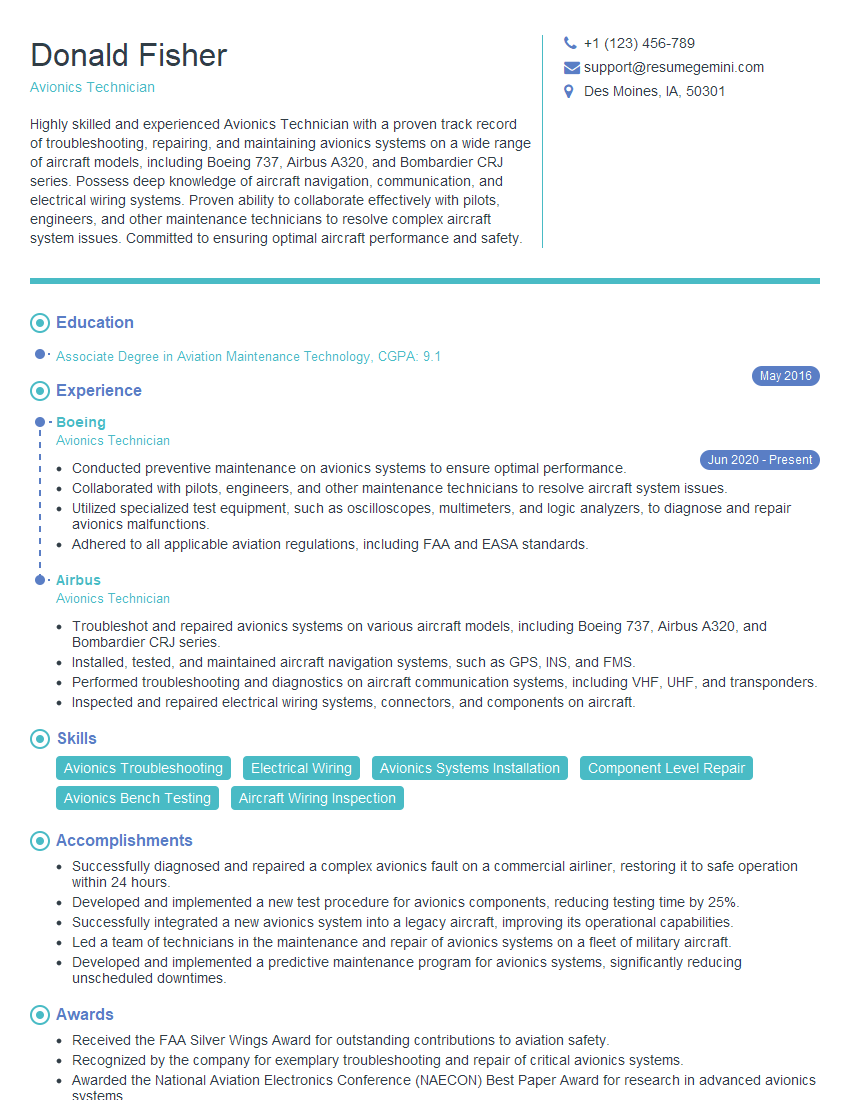
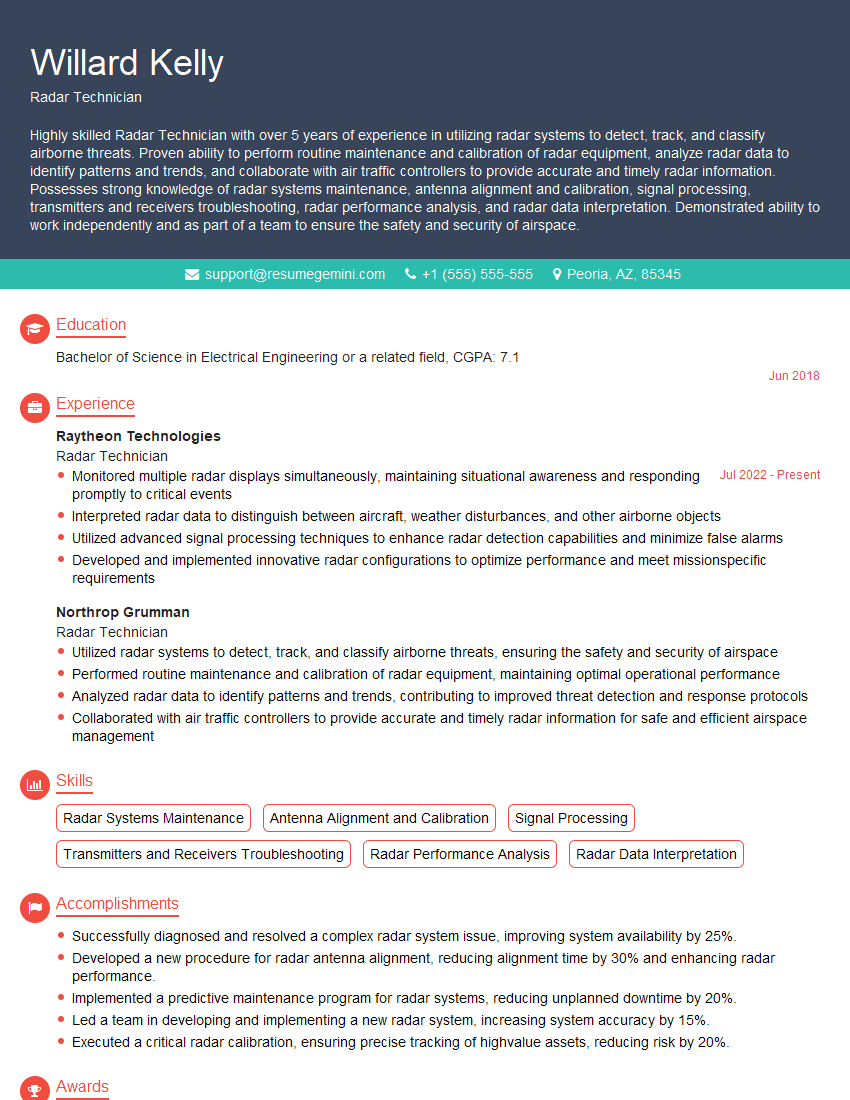
Mastering Navigation Instruments Maintenance opens doors to rewarding careers in the maritime industry, offering opportunities for advancement and specialization. A strong resume is crucial for showcasing your skills and experience to potential employers. Creating an ATS-friendly resume significantly increases your chances of getting noticed by recruiters. We recommend using ResumeGemini, a trusted resource, to build a professional and effective resume that highlights your qualifications. ResumeGemini provides examples of resumes tailored to Navigation Instruments Maintenance to help you get started.
Explore more articles
Users Rating of Our Blogs
Share Your Experience
We value your feedback! Please rate our content and share your thoughts (optional).
What Readers Say About Our Blog
Very informative content, great job.
good