Interviews are opportunities to demonstrate your expertise, and this guide is here to help you shine. Explore the essential Navigation Systems Maintenance and Calibration interview questions that employers frequently ask, paired with strategies for crafting responses that set you apart from the competition.
Questions Asked in Navigation Systems Maintenance and Calibration Interview
Q 1. Explain the process of GPS signal acquisition and tracking.
GPS signal acquisition and tracking is a multi-step process that begins with the receiver searching for signals from GPS satellites. Think of it like a detective searching for clues. The receiver listens for specific signals transmitted by these satellites, each carrying unique information about its location and time. This process, called acquisition, involves identifying the satellite signal and decoding the navigation message. Once a signal is acquired, the receiver continuously tracks it, which is crucial for maintaining a fix on the satellite’s position. Tracking involves precisely measuring the time it takes for the signal to travel from the satellite to the receiver. This time difference, combined with precise satellite positions provided in the navigation message, allows the receiver to calculate its own location. Think of this tracking as keeping an eye on that clue, making sure you haven’t lost track of it. The receiver will usually use several satellites to triangulate your location for greater accuracy. If the receiver loses track of a satellite signal, it will attempt reacquisition to maintain a reliable GPS solution.
The process involves several stages: search, acquisition, tracking, and data processing. The search stage involves scanning the frequency range for potential GPS signals. Acquisition locks onto a specific signal, while tracking continuously monitors it to avoid losing it. Finally, data processing uses information from multiple satellites to calculate position, velocity, and time.
Q 2. Describe different types of navigation sensors and their applications.
Navigation systems rely on a variety of sensors, each contributing unique data to the overall navigation solution. Imagine a detective using various tools to solve a case; each tool provides a different perspective. Let’s look at a few key examples:
- GPS Receivers: These are the most common navigation sensors, relying on signals from orbiting GPS satellites to determine location, velocity, and time. They’re essential for most outdoor navigation applications.
- Inertial Measurement Units (IMUs): IMUs comprise accelerometers and gyroscopes. Accelerometers measure acceleration, while gyroscopes measure rotation rate. These sensors provide information about the movement of the vehicle or device, even without GPS signals (like in tunnels). They are crucial for dead reckoning – estimating position based on past movements.
- Magnetic Sensors (Compass): These sensors measure the Earth’s magnetic field to determine heading. However, magnetic interference from nearby metal objects is a significant source of error.
- Barometric Altimeters: These measure atmospheric pressure to determine altitude. They are helpful for vertical position estimation.
- Odometers/Wheel Speed Sensors: These measure wheel rotations to estimate distance traveled; used in vehicles.
Each sensor type has its strengths and weaknesses; combining multiple sensors – sensor fusion – often leads to a more accurate and robust navigation solution.
Q 3. How do you troubleshoot a faulty GPS receiver?
Troubleshooting a faulty GPS receiver involves a systematic approach. Think of it as solving a mystery – you need to follow clues to identify the culprit.
- Check for Obstructions: Ensure that the receiver has a clear view of the sky, free from buildings, trees, or other obstacles that might block GPS signals. This is often the simplest fix.
- Antenna Integrity: Examine the antenna for any physical damage or misalignment. A damaged or poorly connected antenna can significantly impair reception.
- Signal Strength: Use a GPS signal monitoring tool to check the number of visible satellites and the strength of their signals. Low signal strength could indicate poor satellite visibility or interference.
- Receiver Settings: Verify the receiver’s configuration. Incorrect settings, such as an incorrect date/time or the wrong coordinate system, can cause errors.
- Software/Firmware Updates: Update the receiver’s software and firmware to the latest versions. These updates often contain bug fixes and improved performance.
- Interference: Look for sources of electromagnetic interference, like nearby radio transmitters, that could be disrupting the signal.
- Hardware Failure: If all else fails, the receiver itself might be faulty. Testing with a known-good antenna and in a location with strong GPS signals can help pinpoint if the issue lies with the receiver itself.
Using a combination of these steps ensures a thorough troubleshooting process to locate the problem.
Q 4. What are the common sources of error in navigation systems?
Navigation systems are susceptible to various error sources. Consider this as various challenges a detective might encounter during an investigation.
- Atmospheric Effects: The ionosphere and troposphere can delay GPS signals, causing inaccuracies in position calculations. Imagine the signal traveling through a fog or bumpy terrain – it slows things down.
- Multipath Errors: Signals reflecting off buildings or other surfaces can reach the receiver at slightly different times, causing errors in the calculated position. It’s like receiving an echo which confuses the time of the actual arrival.
- Satellite Clock Errors: Satellites have onboard clocks that are not perfectly accurate. These errors propagate into position calculations.
- Receiver Noise: Electronic noise in the receiver can interfere with signal processing, resulting in noisy position data.
- Sensor Errors: Errors in IMU data from biases or drift can accumulate over time, resulting in significant position errors, especially in GPS-denied environments.
- Magnetic Disturbances: Magnetic fields from metal objects or electrical equipment can interfere with compass readings, resulting in heading errors.
Understanding these error sources is critical for designing robust and accurate navigation systems.
Q 5. Explain the concept of Kalman filtering in navigation systems.
Kalman filtering is a powerful technique used to estimate the state of a dynamic system from noisy measurements. Imagine trying to track a moving object that’s hard to see through fog – Kalman filtering helps you estimate its position despite limited visibility. In navigation, it fuses data from multiple sensors, each with their own uncertainties, to create a more accurate estimate of position, velocity, and other relevant parameters.
It works by predicting the system’s state based on a model, then updating this prediction with new sensor measurements. This process iteratively refines the estimate, minimizing the effect of noise and uncertainties in individual sensors. The filter uses a mathematical model of the system’s dynamics and a statistical model of sensor noise to produce the optimal estimate. It’s recursive, meaning that it constantly updates its estimate as new data arrives.
For instance, in a GPS/IMU integrated system, the Kalman filter combines relatively inaccurate IMU data (high frequency, but prone to drift) with less frequent but more accurate GPS data to provide a continuous and accurate position estimate, even when GPS signals are temporarily unavailable.
Q 6. Describe the process of calibrating an inertial navigation system (INS).
Calibrating an Inertial Navigation System (INS) involves determining and correcting the systematic errors present in the sensor data. Imagine tuning a musical instrument; you need to adjust it to produce the correct notes. INS calibration typically involves several steps:
- Level Calibration: The INS is placed on a level surface to determine the accelerometer biases. These biases represent the constant offset that the accelerometers output even when no acceleration is present.
- Scale Factor Calibration: This process involves determining the scaling factor for each accelerometer and gyroscope axis. This ensures that the sensor outputs are properly scaled to the actual acceleration or rotation rate.
- Alignment Calibration: This step determines the misalignment between the sensor axes and the navigation frame. This is essential for accurate orientation estimation.
- Bias Calibration (Gyroscope): Similar to accelerometer bias, gyroscope biases need to be determined and compensated for to ensure accurate rotation rate measurement.
- Temperature Compensation: Sensor characteristics can drift with temperature changes. Temperature compensation involves measuring sensor output at different temperatures and modeling these changes for accurate correction.
Calibration methods can range from simple static tests on a level surface to more complex dynamic calibrations involving specific maneuvers. The goal is to minimize systematic errors, ensuring the INS provides accurate and reliable navigation data.
Q 7. What are the different types of calibration procedures for navigation sensors?
Calibration procedures vary depending on the sensor type and the desired accuracy. Think of it like a chef selecting different tools depending on the recipe. Here are a few examples:
- Static Calibration: This involves holding the sensor stationary in a known orientation or position. This method is suitable for determining biases and scale factors, but it might not capture all dynamic error sources.
- Dynamic Calibration: This involves moving the sensor in known ways. For example, rotating the sensor at a constant rate to calibrate gyroscopes. This approach captures dynamic error sources that static methods miss.
- In-Situ Calibration: This refers to calibrating the sensor while it is operating within its intended application. This method is useful for automatically updating the calibration parameters as conditions change.
- Two-Point Calibration: A common technique, especially for IMUs, this involves placing the sensor in two known orientations and using the resulting measurements to estimate sensor errors.
- Multi-Point Calibration: For improved accuracy, sensors may be measured in several different orientations to obtain a more comprehensive characterization of the sensor errors.
The choice of calibration procedure depends on the application’s requirements, available resources, and the sensor’s characteristics. Sophisticated calibration methods might employ advanced techniques like optimization algorithms to minimize calibration errors. Proper calibration is critical for ensuring the accuracy and reliability of navigation systems.
Q 8. How do you ensure the accuracy of navigation data?
Ensuring the accuracy of navigation data is paramount. It’s a multi-faceted process involving several key steps. First, we rely on a robust network of reference stations – these are ground-based receivers that constantly monitor the signals from GPS satellites and correct for errors like atmospheric delays and satellite clock drifts. This data is then used in precise point positioning (PPP) techniques to refine the location data. Second, we conduct regular calibrations of the navigation system’s sensors, such as IMUs (Inertial Measurement Units) and GPS receivers. This involves comparing their readings against known accurate positions, identifying any offsets or biases, and applying corrections. For example, we might use a high-precision survey-grade GPS receiver to establish a known point, then compare it to the readings from the system we are calibrating. Third, we rigorously test the software algorithms that process the raw navigation data. These algorithms incorporate error models and filtering techniques to reduce noise and improve accuracy. Think of it like removing the static from a radio signal to get a clearer, more accurate message. Finally, regular quality checks are crucial to ensure consistency and reliability, including simulated navigation tests under various conditions, verifying the consistency of the data against known map data and comparing output against established reference points.
Q 9. What are the safety procedures you follow while maintaining navigation systems?
Safety is always the top priority when maintaining navigation systems. We adhere to strict procedures, including detailed risk assessments before any work begins. This involves identifying potential hazards like working at heights, exposure to electrical systems, or working near moving vehicles. We use appropriate personal protective equipment (PPE) such as safety glasses, gloves, and high-visibility clothing. Lockout/Tagout procedures are rigorously followed when working on energized systems, ensuring that power is completely isolated before any maintenance is performed. We also maintain detailed logs of all maintenance activities, documenting any anomalies or issues encountered. Before restarting systems after maintenance, we meticulously check all connections and configurations to prevent system failures or malfunctions. Moreover, team training on safe working practices and emergency response procedures is essential and regularly updated. For example, a common procedure is establishing a controlled area around the equipment during maintenance to prevent accidental damage or injury.
Q 10. Explain the importance of regular maintenance on navigation systems.
Regular maintenance is crucial for several reasons. Firstly, it significantly extends the lifespan of the navigation system by preventing premature wear and tear. Think of it like regular servicing of a car – neglecting it leads to major problems down the line. Secondly, maintenance prevents malfunctions that could lead to safety hazards. A faulty navigation system in a critical application, such as air traffic control or maritime navigation, could have catastrophic consequences. Thirdly, regular maintenance ensures accuracy and reliability of the data. Sensor drift, software bugs, and environmental factors can degrade performance over time. Regular calibration and testing ensures the navigation system continues to meet its performance requirements. Finally, it reduces downtime and operational costs. Addressing minor issues during regular maintenance prevents them from escalating into major, costly repairs. Regular maintenance, therefore, contributes directly to both safety and efficiency.
Q 11. How do you identify and resolve navigation system malfunctions?
Identifying and resolving navigation system malfunctions follows a systematic approach. We start by gathering data: checking error logs, reviewing system status indicators, and interviewing operators to understand the nature of the malfunction. This data helps us pinpoint the potential source of the problem. We then use diagnostic tools, such as signal analyzers and software debugging tools, to examine the system in detail. For example, signal strength analysis can reveal GPS reception problems, while software debugging can identify coding errors. Once the root cause is identified, we implement the necessary corrective actions – this could involve replacing faulty components, updating software, or recalibrating sensors. After the repair, we rigorously test the system to ensure that the malfunction has been resolved and that the system is operating as expected. Documentation of the entire process, including the root cause, corrective actions, and testing results, is essential for future reference and continuous improvement.
Q 12. What are the common causes of GPS signal loss or degradation?
GPS signal loss or degradation can stem from several factors. Atmospheric conditions, like heavy rain, snow, or fog, can attenuate the signal, making it weaker and harder to receive. Obstructions, such as buildings, trees, or even mountains, can block the line of sight to GPS satellites. Multipath interference, where the signal reflects off surfaces before reaching the receiver, can introduce errors in the position readings. Ionospheric and tropospheric delays, caused by changes in the Earth’s atmosphere, affect the signal’s speed and introduce errors. Finally, intentional jamming or spoofing of the GPS signal, while less common, can also disrupt reception and accuracy. Understanding these factors allows us to select appropriate locations for GPS antennas, to implement signal processing techniques that can mitigate some of these effects, and to incorporate alternative navigation sensors (such as inertial navigation systems) as a redundancy measure.
Q 13. Describe your experience with different types of navigation software.
My experience encompasses a wide range of navigation software, including proprietary systems from major manufacturers and open-source platforms. I’ve worked extensively with software packages used for post-processing kinematic (PPK) GPS data, software that corrects raw GPS data based on reference station information to achieve centimeter-level accuracy. I’m proficient in using software for inertial navigation system (INS) data fusion, which combines GPS data with INS data to maintain positional awareness even during periods of GPS signal blockage. I have experience with flight planning software incorporating various navigation data, such as maps, obstacle information, and weather data. My experience includes working with both desktop-based and embedded navigation systems, understanding the unique challenges and opportunities presented by each platform. The selection of a suitable software package depends heavily on the specific application and its requirements.
Q 14. Explain your understanding of different coordinate systems used in navigation.
Understanding different coordinate systems is critical in navigation. The most common are geographic coordinate systems, which use latitude and longitude to specify a location on the Earth’s surface, and projected coordinate systems, which transform the spherical Earth model into a flat plane, useful for mapping and surveying. Within these categories, there are various projections – UTM (Universal Transverse Mercator), State Plane Coordinate Systems, etc., each with its own strengths and limitations depending on the application area. For instance, latitude and longitude are convenient for global positioning, but a projected coordinate system is more suitable for local area mapping, as it minimizes distortions in distances and areas. Datum is another crucial aspect; this refers to a reference ellipsoid and its associated parameters, which define the Earth’s shape. Different datums exist (WGS84, NAD83, etc.), and using an inconsistent datum will result in inaccuracies. Understanding these various coordinate systems and their transformations is vital for ensuring seamless integration and consistent results across different navigation systems and data sources.
Q 15. How do you interpret navigation system error messages and logs?
Interpreting navigation system error messages and logs is crucial for effective troubleshooting. Think of it like a doctor diagnosing a patient – you need to understand the symptoms to find the cause. I approach this systematically. First, I identify the source of the error message – is it from the GPS receiver, the chart plotter, the autopilot, or the integrated navigation system itself? Then, I examine the error code itself. Many systems use standardized codes (like NMEA-0183 sentences), but others have proprietary codes. My experience allows me to quickly understand what these codes signify. For instance, a GPS error code indicating weak signal might suggest a problem with the antenna placement or atmospheric interference, whereas a chart plotter error might indicate corrupted data or a software glitch.
Next, I look at the accompanying log files. These are like a detailed patient history; they provide a chronological record of events leading up to the error. This could include data on signal strength, position fixes, heading, and other critical parameters. Analyzing these logs helps me pinpoint the exact time and context of the error, enabling me to narrow down the potential causes. Finally, I correlate the error messages and logs with the system’s operational status at the time. Was there unusual vessel movement? Was the system subjected to extreme conditions? All these factors are considered. For example, if a compass error is consistently reported during high-speed maneuvers, it might indicate a problem with the gyrocompass rather than a magnetic anomaly.
Career Expert Tips:
- Ace those interviews! Prepare effectively by reviewing the Top 50 Most Common Interview Questions on ResumeGemini.
- Navigate your job search with confidence! Explore a wide range of Career Tips on ResumeGemini. Learn about common challenges and recommendations to overcome them.
- Craft the perfect resume! Master the Art of Resume Writing with ResumeGemini’s guide. Showcase your unique qualifications and achievements effectively.
- Don’t miss out on holiday savings! Build your dream resume with ResumeGemini’s ATS optimized templates.
Q 16. What is your experience with troubleshooting navigation system hardware?
Troubleshooting navigation system hardware requires a blend of technical knowledge and methodical approach. I’ve worked extensively with a range of hardware, from standalone GPS receivers to fully integrated navigation suites. My troubleshooting process typically begins with a visual inspection – checking for loose connections, damaged cables, or signs of water ingress. Then I proceed to more advanced diagnostics. I might use a multimeter to test voltage and current levels, confirm continuity in circuits, or isolate faulty components.
One memorable instance involved a yacht’s autopilot malfunctioning. Initial investigation showed no obvious physical damage. Through systematic testing with a calibrated signal generator, I pinpointed a faulty signal processing unit within the autopilot’s core. Replacing this component resolved the issue, underlining the importance of having a thorough understanding of the system’s architecture. I’m proficient in using specialized diagnostic tools, including signal analyzers, to identify intermittent faults or subtle signal degradation that might be missed through simple visual inspection. I also understand the importance of safety procedures while working with electrical systems.
Q 17. Describe your experience with different types of navigation system hardware.
My experience encompasses a wide spectrum of navigation system hardware. I’ve worked with various GPS receivers, from low-cost consumer-grade units to high-precision, multi-frequency systems used in professional surveying or autonomous navigation. I’m also familiar with different types of chart plotters, ranging from simple handheld devices to sophisticated integrated systems with radar, sonar, and AIS integration. I have experience with various types of gyrocompasses, magnetic compasses, and motion sensors, understanding their strengths and weaknesses in different operational contexts. My experience extends to autopilots, which present unique challenges in terms of calibration and maintenance. Each autopilot system has its own nuances, so I emphasize understanding the specific manufacturer’s documentation and diagnostic procedures. Furthermore, I have experience with integrated navigation bridge systems that consolidate data from multiple sensors to provide a comprehensive view of the vessel’s position and surroundings.
Q 18. How familiar are you with different mapping and charting systems?
My familiarity with mapping and charting systems is extensive. I’m proficient in using various Electronic Chart Display and Information Systems (ECDIS) including those compliant with IMO standards. I understand the differences between raster charts (images of paper charts) and vector charts (data-based charts), and I can select the appropriate chart format based on the application’s needs. I am adept at interpreting nautical charts, understanding their symbology, and interpreting tide and current information. I’ve worked with various chart data providers, and I’m aware of the need to keep charts updated with the latest corrections (ENC updates). Beyond nautical charts, I’ve also worked with terrestrial mapping systems for land-based navigation applications, understanding the different projection systems and coordinate references needed for accuracy. This broad experience allows me to effectively integrate data from diverse sources to create a seamless and accurate navigation picture.
Q 19. How do you ensure data integrity in navigation systems?
Ensuring data integrity in navigation systems is paramount for safe and reliable operation. This involves several key strategies. First, regular data backups are essential. This protects against data loss due to hardware failure, software corruption, or accidental deletion. I use a tiered backup strategy, typically employing local backups, network backups and offsite backups. Secondly, I implement strict data validation procedures. This includes checking data checksums to detect corrupted files and cross-referencing data from multiple sources to identify discrepancies. Regular system audits are crucial to identify any potential data integrity issues. Thirdly, I emphasize the use of version control systems for software and chart updates, enabling rollback to previous stable versions if needed. Fourthly, I stress adherence to manufacturer’s recommendations for chart updates and software upgrades which often include data integrity checks. Finally, training of personnel in proper data handling procedures is a key element. For example, proper shutdown procedures can prevent data corruption, and following data entry guidelines can prevent errors from occurring in the first place.
Q 20. What is your experience with using diagnostic tools for navigation systems?
My experience with diagnostic tools spans various technologies. I regularly use multimeters to test power and signal levels, and oscilloscopes to inspect signal waveforms for anomalies. For GPS systems, I utilize GPS signal analyzers to assess signal strength, noise levels, and the accuracy of satellite tracking. I’m familiar with specialized software for diagnosing issues within chart plotters and integrated navigation systems, including those that allow for remote diagnostics. For autopilots, I frequently use manufacturer-specific diagnostic software to run tests and identify faulty components. I also use network analyzers to troubleshoot communication problems between different components within the navigation system. In cases of complex system failures, I am able to use specialized diagnostic software to pinpoint the source of the problem, such as analyzing log files from each component, and correlating errors and system events.
Q 21. Explain the importance of data backup and recovery in navigation systems.
Data backup and recovery are fundamental to ensuring navigation system uptime and preventing catastrophic data loss. Imagine a scenario where a critical system component fails, leading to loss of navigational data. The consequences – potential collisions, grounding, and delays – can be severe. That is why I prioritize a robust data backup and recovery plan. This includes regular backups of all critical navigation data (charts, waypoints, routes, etc.) to multiple locations (local storage, network storage, and offsite cloud storage). A robust recovery plan outlines the procedures for restoring data in the event of a system failure. This involves clear instructions for data restoration from backups, and testing those procedures at regular intervals to ensure their effectiveness. We also maintain a documented version history for software and chart updates to allow a quick restoration to previous versions if necessary. These procedures help to minimize downtime and ensure the continued safe and reliable operation of the navigation system. Moreover, regular testing of the backup and recovery process itself is paramount to confirm that the process works as intended.
Q 22. Describe your experience with working on different types of vessels/aircraft/vehicles.
My experience spans a diverse range of platforms, including commercial vessels (both cargo and passenger ships), private yachts, and general aviation aircraft. I’ve worked on systems ranging from traditional gyro-compass and LORAN-C setups to modern integrated bridge systems (IBS) incorporating GPS, GLONASS, and other satellite navigation technologies. On vessels, this included working with various types of autopilots, electronic chart display and information systems (ECDIS), and radar systems. In the aviation context, my experience includes working on aircraft navigation systems, including inertial navigation systems (INS), GPS, and air data computers. Each platform presents unique challenges and requires a nuanced understanding of its specific operational requirements and system architecture. For instance, marine systems are typically more robust to handle harsh environmental conditions, while aviation systems prioritize accuracy and lightweight design.
- Example: On a recent project involving a large container ship, I was responsible for the maintenance and calibration of the entire IBS, encompassing radar, GPS, AIS (Automatic Identification System), and ECDIS.
- Example: In aviation, I’ve worked with the troubleshooting and repair of a faulty INS on a smaller corporate jet, requiring detailed understanding of the system’s alignment procedures and error correction algorithms.
Q 23. How do you maintain compliance with relevant regulations for navigation systems?
Maintaining compliance with navigation system regulations is paramount. This involves adhering to standards set by organizations like the International Maritime Organization (IMO) for marine vessels and the Federal Aviation Administration (FAA) for aircraft in the US, and equivalent bodies internationally. Compliance includes regular inspections, calibration, and documentation of all maintenance activities. We meticulously track all certifications and ensure that all equipment is operating within its specified tolerances. This also entails staying updated on the latest regulations and amendments. Failure to comply can result in significant safety risks and legal repercussions. We use a comprehensive maintenance management system to track certifications, calibrations, and repair history. Each system’s documentation is carefully maintained, including the results of performance checks and calibrations.
- Example: For ECDIS systems on vessels, we must ensure compliance with IMO Resolution MSC.232(82) for performance standards and updates for electronic charts and navigational data.
- Example: In aviation, adherence to FAA regulations regarding the testing and certification of GPS and other navigation equipment is critical for safe operation.
Q 24. What is your understanding of different communication protocols used in navigation systems?
Navigation systems utilize various communication protocols for data exchange, both internally within the system and with external sources. Common protocols include:
- NMEA 0183: A widely used standard for exchanging navigation data between different devices. It uses a simple, sentence-based format, and I have extensive experience troubleshooting issues related to its implementation.
- NMEA 2000: A newer, more robust network protocol using a CAN bus, offering higher data rates and more sophisticated error checking. I’m proficient in diagnosing and resolving issues on networks utilizing this protocol.
- Ethernet: Increasingly common for higher bandwidth applications like radar and ECDIS. Understanding network configuration and troubleshooting is crucial here.
- ARINC 429: A protocol predominantly used in aviation systems for exchanging data between avionics units. I have experience working with this standard, particularly in the context of flight management systems integration.
Understanding these protocols is crucial for diagnosing communication failures and integrating new equipment into existing systems. For instance, a faulty NMEA 0183 sentence can lead to inaccurate data being displayed on the chart plotter, while issues with the NMEA 2000 network can cause more widespread system malfunctions.
Q 25. Describe your experience with integrating navigation systems with other onboard systems.
Integrating navigation systems with other onboard systems is a significant part of my role. This involves understanding the interfaces and data flows between different systems. For instance, the integration of navigation data with an automatic identification system (AIS) provides situational awareness of other vessels, while integrating with engine control systems enables automation of navigation tasks. Successful integration requires careful consideration of data formats, communication protocols, and power requirements. It often involves configuration of software parameters and testing of the system to ensure data integrity.
- Example: I integrated a new radar system with an existing ECDIS on a cargo vessel, requiring careful configuration of data transfer protocols and calibration of the radar’s position reference. This ensured seamless display of radar data on the ECDIS.
- Example: In aviation, I integrated a new GPS receiver with the aircraft’s flight management system, ensuring accurate position data was fed into the flight plan and navigation algorithms.
Q 26. How do you handle conflicting information from different navigation sources?
Conflicting information from different navigation sources is a common challenge. This usually involves discrepancies between GPS, gyrocompass, or other systems. My approach involves a systematic evaluation of the reliability of each source. Factors considered include the accuracy and precision of each sensor, its age, and its recent history of maintenance. We use a hierarchical system where more reliable sources take precedence. For example, if there’s a slight discrepancy between GPS and gyrocompass data, I would prioritize the GPS unless there are known issues with the GPS receiver’s signal or integrity.
Data fusion techniques, where data from multiple sources are combined to produce a more accurate estimate, are becoming increasingly important. However, a thorough understanding of the limitations of each sensor is still essential. Manual intervention may be required in certain circumstances. Detailed logging of the conflicting information and the resolution steps is critical for future analysis.
Q 27. Explain your experience with performing preventative maintenance on navigation systems.
Preventative maintenance is crucial for ensuring the reliability and accuracy of navigation systems. This involves a schedule of regular inspections, testing, and calibrations according to manufacturers’ recommendations and regulatory guidelines. This includes visual inspections for physical damage, functional testing to verify the system’s operation, and calibration to ensure accuracy. For example, gyroscopic compasses require regular alignment, while GPS antennas may need cleaning or adjustments. Thorough documentation is crucial for tracking maintenance activities and ensuring compliance. A well-defined preventative maintenance plan is key to minimizing downtime and ensuring operational safety.
- Example: Regular cleaning of GPS antennas to maintain signal quality.
- Example: Performing routine checks on the integrity of NMEA 2000 network connections.
- Example: Calibration of the ECDIS display according to manufacturer specifications and regulatory requirements.
Q 28. Describe a challenging navigation system problem you solved and how you approached it.
One challenging case involved a sudden loss of GPS signal on a large cruise ship in a relatively remote area. Initial diagnostics pointed to a faulty GPS antenna, but replacement didn’t resolve the issue. Further investigation revealed a problem with the integrity of the NMEA 2000 network. A faulty connection within the network was causing data loss from multiple sources. The problem was compounded by the fact that the vessel’s backup navigation systems were also affected.
My approach involved a systematic troubleshooting process: first isolating the affected network segments and using a protocol analyzer to identify faulty data packets. The faulty connection within the NMEA 2000 backbone was subsequently located and repaired. This required careful tracing of the network cables and specialized diagnostic tools. The repair not only restored the primary GPS signal but also resolved other issues affecting the vessel’s integrated navigation system, ensuring safe navigation until port. The systematic approach, utilizing diagnostic tools and a thorough understanding of the network architecture, proved critical in resolving this complex issue. Documentation of the issue and the solution was updated to prevent recurrence.
Key Topics to Learn for Navigation Systems Maintenance and Calibration Interview
- System Fundamentals: Understanding the theoretical underpinnings of various navigation systems (GPS, INS, etc.), including their operational principles and limitations.
- Calibration Procedures: Mastering the practical techniques for calibrating different navigation system components, ensuring accuracy and reliability. This includes understanding error sources and mitigation strategies.
- Troubleshooting and Diagnostics: Developing proficiency in identifying and resolving malfunctions within navigation systems through systematic troubleshooting, using diagnostic tools and interpreting error codes.
- Maintenance and Repair: Gaining practical experience in performing routine maintenance tasks, identifying parts requiring replacement, and executing repairs according to established procedures and safety regulations.
- Data Interpretation and Analysis: Learning to interpret data from navigation systems, identify anomalies, and use this information for accurate calibration and troubleshooting. This includes proficiency in using relevant software tools.
- Safety Regulations and Compliance: Understanding and adhering to relevant safety regulations and industry best practices during maintenance and calibration procedures.
- Sensor Technologies: Familiarizing yourself with the different types of sensors used in navigation systems and their respective strengths and weaknesses.
- Software and Firmware Updates: Understanding the process of updating software and firmware in navigation systems and the implications for calibration and performance.
Next Steps
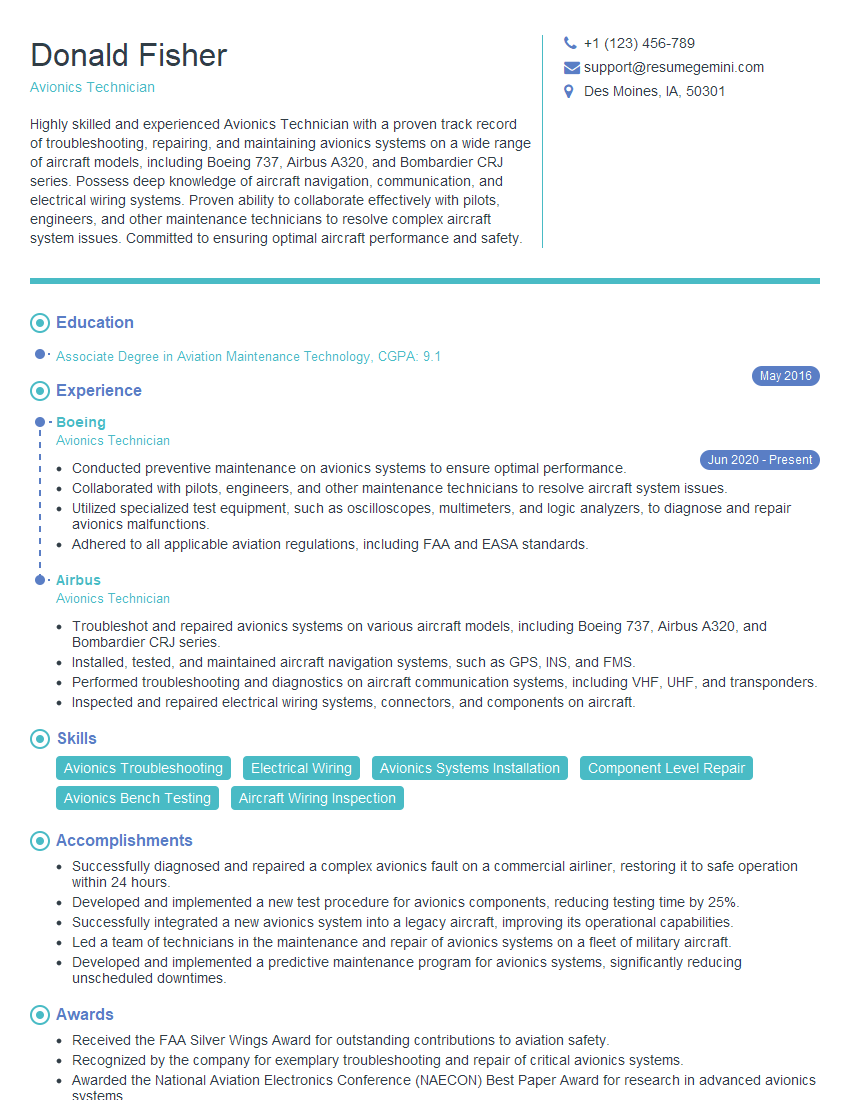
Mastering Navigation Systems Maintenance and Calibration opens doors to exciting career opportunities in a rapidly evolving technological landscape. A strong foundation in these skills translates directly into higher earning potential and increased job security. To maximize your chances of landing your dream role, it’s crucial to create a resume that effectively showcases your expertise. An ATS-friendly resume is key to getting past Applicant Tracking Systems and into the hands of hiring managers. ResumeGemini is a trusted resource that can help you build a professional and impactful resume tailored to your skills and experience. Examples of resumes specifically designed for Navigation Systems Maintenance and Calibration professionals are available through ResumeGemini, helping you present yourself as the ideal candidate.
Explore more articles
Users Rating of Our Blogs
Share Your Experience
We value your feedback! Please rate our content and share your thoughts (optional).
What Readers Say About Our Blog
Very informative content, great job.
good