Unlock your full potential by mastering the most common NEC, NFPA, IEC interview questions. This blog offers a deep dive into the critical topics, ensuring you’re not only prepared to answer but to excel. With these insights, you’ll approach your interview with clarity and confidence.
Questions Asked in NEC, NFPA, IEC Interview
Q 1. Explain the difference between NEC, NFPA 70E, and IEC 60364.
The NEC (National Electrical Code), NFPA 70E (Standard for Electrical Safety in the Workplace), and IEC 60364 (Low-voltage electrical installations) are all crucial standards for electrical safety, but they serve different purposes and have varying scopes.
- NEC: This is a widely adopted standard in the United States and covers the installation of electrical systems. It dictates requirements for wiring methods, equipment installation, overcurrent protection, and more, focusing on preventing hazards like fire and shock.
- NFPA 70E: This standard specifically addresses electrical safety in the workplace. It builds upon the NEC by outlining procedures for arc flash hazard risk assessment, personal protective equipment (PPE) requirements, and safe work practices for electrical workers. It’s all about worker safety during electrical operations.
- IEC 60364: This is an international standard used globally (except for the US, which uses NEC). It’s very similar in scope to the NEC, covering the design, installation, and verification of electrical installations. However, it uses a different structure and terminology than the NEC. It also has numerous parts addressing different aspects of electrical installations.
Think of it this way: the NEC or IEC 60364 provide the rules for building the electrical system, while NFPA 70E provides the rules for working safely *on* that system.
Q 2. Describe the requirements for grounding and bonding per NEC.
Grounding and bonding in the NEC are essential for safety. Grounding connects non-current-carrying metal parts of an electrical system to the earth, providing a path for fault currents to flow to the ground, preventing dangerous voltages on exposed metal surfaces. Bonding connects non-current-carrying metal parts within an electrical system together, ensuring they are all at the same electrical potential, preventing voltage differences that could cause shocks or arcs.
- Grounding: NEC Article 250 details grounding requirements. It specifies the use of grounding electrodes (like ground rods) and the size and type of grounding conductors. The goal is to provide a low-impedance path to the earth.
- Bonding: NEC Article 250 also addresses bonding. Metallic enclosures of equipment, conduits, and other metal parts must be bonded to ensure electrical continuity and to prevent dangerous voltage buildup.
Example: A metal electrical enclosure must be grounded to a grounding electrode system and bonded to other metal enclosures nearby to ensure that a fault current will flow safely to the ground rather than cause a shock hazard. Failure to properly ground and bond leads to significantly increased risk of electric shock and fire.
Q 3. What are the common causes of arc flash incidents and how can they be mitigated according to NFPA 70E?
Arc flash incidents are caused by a sudden, high-energy release of electrical energy, often resulting in severe burns and other injuries. NFPA 70E highlights several common causes:
- Faulty equipment: Damaged insulation, loose connections, or worn components can create arcing faults.
- Improper installation: Incorrect wiring, inadequate grounding, or poor workmanship increase the risk.
- Unexpected contact: Accidental contact with energized conductors is a leading cause.
- Overcurrent conditions: Excessive current flow beyond the capacity of the system.
Mitigation strategies according to NFPA 70E include:
- Arc Flash Hazard Analysis: Performing a detailed analysis to determine the potential arc flash energy and incident energy at various points in the electrical system.
- Electrical Safety Programs: Implementing comprehensive programs that cover worker training, lockout/tagout procedures, and PPE usage.
- Personal Protective Equipment (PPE): Using appropriate PPE, such as arc flash suits, face shields, and gloves, based on the calculated arc flash hazard.
- Engineering Controls: Employing engineering controls such as reduced voltage systems, arc flash relays, and improved equipment design to reduce the hazard.
- Safe Work Practices: Establishing and adhering to safe work procedures, including lockout/tagout, before working on energized equipment.
Example: Before working on a switchgear, an arc flash risk assessment must be performed to determine the appropriate PPE. Workers must then follow the lockout/tagout procedure to de-energize the equipment before working on it.
Q 4. How do you determine the appropriate size of conductors based on NEC tables?
Determining conductor size according to NEC Tables involves considering several factors: the ampacity (current-carrying capacity) of the conductor, the type of insulation, the ambient temperature, and the installation method. NEC Chapter 9, Table 310.15(B)(16), provides ampacity ratings for various conductor types and sizes under specific conditions.
Step-by-step process:
- Determine the load current: Calculate the total current that the conductor will carry. This is often found by adding up the loads connected to the circuit.
- Select the conductor type: Choose the conductor material (copper or aluminum) and insulation type (THHN, XHHW, etc.).
- Consider installation conditions: Account for factors like ambient temperature, installation method (e.g., in conduit, in free air), and number of conductors in a raceway. These factors may derate the ampacity from the values provided in the table.
- Consult NEC Table 310.15(B)(16): Find the ampacity rating for the selected conductor type, size, and installation conditions.
- Select a conductor size: Choose a conductor with an ampacity rating equal to or greater than the calculated load current.
Example: If a calculation shows a load current of 30 amps, and the chosen conductor is copper THHN in conduit at an ambient temperature of 30°C, you would consult Table 310.15(B)(16) to find the appropriate conductor size (e.g., 10 AWG copper THHN) that has an ampacity exceeding 30 amps. You’d need to account for any derating factors mentioned above which reduce the table’s listed ampacity for that given scenario.
Q 5. Explain the importance of selecting the correct overcurrent protection device according to NEC.
Selecting the correct overcurrent protection device (OCPD), such as a circuit breaker or fuse, is vital for preventing electrical hazards. An improperly sized OCPD can lead to fires or equipment damage. The NEC mandates that the OCPD must be sized to protect the conductors and equipment from excessive current.
Key considerations:
- Conductor Protection: The OCPD must trip or melt before the conductor reaches its temperature limit, preventing overheating and potential fires.
- Equipment Protection: The OCPD must protect connected equipment from damage due to overcurrent conditions.
- Coordination: Multiple OCPDs in a system must be coordinated to ensure that the appropriate device trips first in case of a fault. This prevents unnecessary shutdowns of sections of the system.
NEC requirements: NEC Article 240 details requirements for overcurrent protection. The size of the OCPD is determined by the ampacity of the conductor it protects and the load it serves. Typically, it will be rated at or less than the ampacity of the wire but must be large enough to carry the expected load. Inappropriate selection of OCPD can lead to fires, equipment damage or even hazards to personnel.
Example: A circuit with 15-ampere conductors would typically utilize a 15-ampere circuit breaker as its OCPD. Using a 20-ampere breaker here would be potentially dangerous, as the 15-amp conductors would be overloaded before the OCPD would trip.
Q 6. What are the requirements for electrical safety in hazardous locations as defined by NEC and IEC?
Electrical safety in hazardous locations, such as those containing flammable gases, dusts, or fibers, requires special considerations. Both the NEC (Articles 500-504, 505, 511-517) and IEC 60079 address these issues.
NEC: Classifies hazardous locations based on the type and degree of hazard (Class I, II, III; Divisions 1 and 2). It specifies requirements for using explosion-proof or intrinsically safe equipment, special wiring methods, and other safety measures to prevent ignition of flammable materials.
IEC 60079: Offers a similar classification system for hazardous locations, albeit using different terminology. It provides detailed technical requirements for equipment, installation, and verification in these areas.
Common requirements (both NEC and IEC):
- Equipment Selection: Using equipment specifically designed and certified for use in hazardous locations (e.g., explosion-proof motors, intrinsically safe instrumentation).
- Wiring Methods: Utilizing appropriate wiring methods to prevent sparking or arcing (e.g., conduit sealing, special cable types).
- Environmental Protection: Ensuring proper sealing and protection of equipment against the specific hazards present.
- Ventilation: Adequate ventilation to reduce the concentration of flammable substances.
Example: In a Class I, Division 1 location (an area with a high risk of flammable gas), explosion-proof enclosures would be mandatory for all electrical equipment. Special wiring methods, such as rigid conduit with proper sealing fittings, would also be required to prevent the ignition of gas or vapors.
Q 7. Describe the different types of grounding systems and their applications.
Grounding systems provide a path for fault currents to flow to the earth, protecting people and equipment. Several types exist:
- Grounding Electrode System: This consists of grounding electrodes (like ground rods) driven into the earth, connected together to form a low-impedance path to the earth. This is the primary grounding point for a facility.
- System Grounding: This refers to grounding the neutral point of a power system (e.g., grounding the neutral of a transformer secondary). This helps limit voltage during faults and minimizes the risk of shock.
- Equipment Grounding: This involves grounding the metal enclosures of electrical equipment, providing a path for fault currents to flow to the ground, preventing dangerous voltages on the enclosure.
- Plate Grounding: Uses large metal plates buried in the ground. This is often used where soil conditions make using ground rods difficult.
- Pipe Grounding: Utilizes metallic water pipes (if metallic and properly bonded) as a grounding electrode. However, reliance on water pipes for grounding is becoming less common due to the increasing use of plastic piping and other factors.
Applications:
- Grounding Electrode System: Used in all electrical installations to provide a common grounding point for the entire system.
- System Grounding: Used in power systems to limit voltage during faults and improve safety.
- Equipment Grounding: Required for all metal-enclosed electrical equipment to protect personnel from electric shock.
- Plate Grounding and Pipe Grounding: Used in specific situations where other grounding methods might be less effective.
The choice of grounding system depends on factors like soil resistivity, the type of power system, and local codes and regulations.
Q 8. Explain the concept of arc flash hazard analysis and risk assessment.
Arc flash hazard analysis and risk assessment is a critical process to identify and mitigate the potential dangers of arc flashes in electrical systems. An arc flash is a sudden, high-energy release of electrical energy that occurs when a fault occurs in an electrical system. This can result in severe burns, hearing loss, and even death. The analysis involves identifying potential arc flash hazards within a facility, determining the incident energy levels at various points in the electrical system, and implementing appropriate safety measures.
The process typically involves several steps:
- System Identification: Mapping out the electrical system, including equipment ratings and configurations.
- Fault Current Calculation: Determining the available fault current at each point in the system. This calculation uses the system impedance and source impedance.
- Incident Energy Calculation: Using software tools and industry standards (like IEEE 1584) to calculate the incident energy (in calories per square centimeter) at various locations. This calculation takes into account factors like voltage, fault current, and arc duration.
- Risk Assessment: Determining the probability and severity of an arc flash incident. This typically involves considering factors like the frequency of work performed near energized equipment and the presence of suitable personal protective equipment (PPE).
- Mitigation Strategies: Implementing measures to reduce the risk, such as using engineering controls (e.g., arc flash reduction equipment), administrative controls (e.g., lockout/tagout procedures), and PPE (e.g., arc flash suits).
Imagine a scenario in a manufacturing plant where maintenance is performed near a large switchgear. An arc flash hazard analysis would identify the high incident energy levels in that area, and the risk assessment would reveal a high probability of exposure. This would necessitate wearing appropriate PPE, including arc flash suits, and possibly implementing engineering controls like arc flash relays to reduce the available fault current.
Q 9. How do you calculate voltage drop in a circuit?
Voltage drop is the reduction in voltage between the source and the load in an electrical circuit. It’s caused by the resistance of the conductors and is undesirable because it reduces the efficiency of the circuit and can affect the operation of the equipment. We can calculate it using Ohm’s Law: Voltage Drop (V) = I * R, where I is the current in amperes, and R is the total resistance of the conductors in ohms. The total resistance is calculated as R = ρ * L / A, where ρ is the resistivity of the conductor material, L is the length of the conductor, and A is the cross-sectional area of the conductor.
For example, consider a 100-meter long copper conductor with a cross-sectional area of 10 mm² carrying a current of 10A. Copper’s resistivity (ρ) is approximately 1.7 x 10⁻⁸ Ωm. The resistance would be:
R = (1.7 x 10-8 Ωm * 100 m) / (10 x 10-6 m²) ≈ 0.17 ΩTherefore, the voltage drop would be:
V = 10 A * 0.17 Ω ≈ 1.7 VThis 1.7V drop might seem small, but over long distances or with high currents, it can significantly impact the system. Accurate voltage drop calculations are critical for proper sizing of conductors and ensuring equipment operates within its specified voltage range. Overlooking voltage drop can lead to equipment malfunction or premature failure.
Q 10. What are the requirements for installing and maintaining emergency lighting systems?
Emergency lighting systems are crucial for ensuring safe evacuation during power outages. Requirements for installation and maintenance vary slightly depending on the jurisdiction and specific code (NEC, NFPA 101, IEC standards), but several common threads exist:
- Power Source: Emergency lighting must have a reliable backup power source, typically batteries, capable of providing illumination for a specified duration (usually 90 minutes). The NEC and NFPA 101 specify minimum durations and testing frequencies.
- Illumination Levels: Specific illumination levels must be maintained in exit routes, stairwells, and other designated areas. The codes dictate minimum lux levels or foot-candles depending on the area.
- Testing and Maintenance: Regular testing and maintenance are crucial to ensure the system’s reliability. This includes testing battery performance, checking for proper illumination levels, and conducting visual inspections for damage or defects. The frequency of testing and maintenance is prescribed in the codes.
- Placement and Signage: Emergency lights must be strategically placed to provide adequate illumination of exit routes and be clearly visible and marked with appropriate exit signage.
- Accessibility: Emergency lighting must be accessible for maintenance and replacement of components.
For instance, in a high-rise building, the NEC would require a comprehensive emergency lighting system with sufficient battery backup, strategically placed fixtures to illuminate all stairwells and corridors, and regular testing as per code to ensure occupant safety during a power failure. Neglecting maintenance could lead to insufficient illumination, impeding evacuation and potentially endangering lives.
Q 11. Describe the various methods for protecting against electrical shock.
Protecting against electrical shock involves a multi-layered approach combining several methods:
- Grounding: Connecting non-current-carrying metal parts of equipment to earth. This provides a low-resistance path for fault currents, preventing dangerous voltages from appearing on exposed metal parts. This is mandated by NEC and IEC standards.
- Ground Fault Circuit Interrupters (GFCIs): These devices detect small imbalances in current between the hot and neutral wires, indicating a potential ground fault, and rapidly interrupt the power supply. GFCIs are mandatory in many locations near water sources, preventing potentially lethal electric shocks.
- Insulation: Using insulating materials to prevent contact with energized conductors. This is a fundamental safety measure specified in both NEC and IEC regulations.
- Lockout/Tagout (LOTO): A procedure to de-energize equipment and prevent it from being accidentally re-energized during maintenance or repairs. NFPA 70E strongly emphasizes the use of LOTO procedures.
- Personal Protective Equipment (PPE): Including insulated tools, rubber gloves, and other protective gear to reduce the risk of contact with energized parts. NFPA 70E dictates appropriate PPE based on the risk assessment.
- Arc Flash Protection: Implementing measures to mitigate the hazards of arc flashes, such as using arc flash relays and appropriate PPE. This is critical in high-voltage systems and is addressed in NFPA 70E.
For example, an electrician working on a low-voltage circuit would use insulated tools and possibly GFCI protection. However, someone working on a high-voltage switchgear would require extensive PPE, including an arc flash suit, and a comprehensive lockout/tagout procedure.
Q 12. Explain the difference between a GFCI and an AFCI.
Both GFCIs (Ground Fault Circuit Interrupters) and AFCIs (Arc Fault Circuit Interrupters) are safety devices designed to prevent electrical hazards, but they protect against different types of faults:
- GFCI: Detects small current imbalances between the hot and neutral conductors, indicating a ground fault. It rapidly interrupts the power to prevent electric shock. GFCIs are highly effective in protecting against shocks caused by accidental contact with grounded objects.
- AFCI: Detects and interrupts the power supply in response to arcing faults. These arcs can occur within wiring due to insulation breakdown, loose connections, or other problems. AFCI’s protect against the hazards of electrical fires caused by arcing faults. These are particularly important in circuits supplying bedrooms because arcing faults often precede fires.
The key difference is that GFCIs protect against ground faults (leading to shock), while AFCIs protect against arc faults (leading to fire). In many locations, both GFCIs and AFCIs are required in specific circuits, offering comprehensive protection against electrical hazards. For instance, bedrooms often require both AFCIs for fire protection and GFCIs for shock protection near sinks or other wet areas.
Q 13. What are the requirements for working on energized equipment according to NFPA 70E?
NFPA 70E, the standard for electrical safety in the workplace, outlines strict requirements for working on energized equipment. The core principle is to minimize the risk of electrical shock and arc flash injuries. Key requirements include:
- Risk Assessment: Performing a thorough risk assessment to identify potential hazards and determine appropriate safety measures. This assessment includes arc flash hazard analysis and identification of potential shock hazards.
- Electrical Safety Program: Implementing a comprehensive electrical safety program that includes training, procedures, and equipment selection.
- Permit-Required Work: Establishing a permit-required work system for potentially hazardous tasks, requiring authorization and specific safety procedures before starting any work.
- Lockout/Tagout (LOTO): Using LOTO procedures to de-energize and isolate equipment before working on it whenever possible.
- Personal Protective Equipment (PPE): Using appropriate PPE based on the risk assessment, including insulated tools, rubber gloves, arc flash suits, and other protective gear.
- Training: Ensuring workers receive adequate training on electrical safety procedures and the proper use of PPE.
Working on energized equipment is inherently dangerous and should only be undertaken by qualified and trained personnel following established safety protocols. Ignoring NFPA 70E requirements can lead to severe injuries or fatalities. For example, failure to use proper PPE when working near energized equipment could result in serious electrical burns or shock, even death. The use of a permit-required system and adherence to LOTO procedures minimize this risk.
Q 14. How do you determine the required working distance for arc flash hazards?
The required working distance for arc flash hazards is determined based on the incident energy level at a given point in the electrical system. This distance, often referred to as the arc flash boundary, defines the area within which workers need to wear appropriate PPE to protect themselves from the effects of an arc flash. The calculation is not a simple formula but is typically derived using arc flash analysis software, considering factors such as:
- Incident Energy: Calculated in calories per square centimeter (cal/cm²).
- Voltage: The system voltage.
- Fault Current: The available fault current at that point in the system.
- Protective Clothing: The arc flash rating of the PPE to be worn.
The software uses data from the electrical system analysis and calculates the required distance based on the protective clothing’s arc flash rating and the incident energy level. This ensures that the PPE will provide sufficient protection from the energy levels at the calculated working distance. If the incident energy exceeds the protective capabilities of the available PPE, then the working distance must be increased or engineering controls applied to reduce incident energy.
For example, if an arc flash analysis shows an incident energy of 10 cal/cm² at a particular location, and the worker will be wearing PPE rated for 4 cal/cm², the software will calculate a minimum working distance that ensures the PPE provides adequate protection. Failure to maintain this distance could lead to severe injuries in the event of an arc flash. This is crucial in ensuring worker safety, complying with regulations, and preventing workplace accidents.
Q 15. Explain the importance of proper lockout/tagout procedures.
Lockout/Tagout (LOTO) procedures are crucial for preventing accidental energization of equipment during maintenance or repair, safeguarding workers from electrical shock, burns, or other injuries. Think of it as a ‘Do Not Disturb’ sign, but with serious legal and safety consequences. Proper LOTO ensures that energy sources—electrical, mechanical, hydraulic, pneumatic, etc.—are isolated and rendered incapable of being unexpectedly activated.
- The process typically involves:
- Isolation: Disconnecting the power source.
- Lockout: Applying a lock to the disconnect device, preventing unauthorized re-energization.
- Tagout: Attaching a tag clearly identifying the worker performing the maintenance and the reason for the lockout.
- Verification: Testing to ensure the equipment is de-energized before commencing work.
- Release: The worker who applied the lockout removes it only after verifying the work is complete and safe to re-energize.
Example: Imagine a technician servicing a large motor. Before starting, they’d follow a LOTO procedure involving isolating the power breaker, locking it out with their personal lock, tagging it with their name and work details, verifying the motor is off, and then finally, unlocking and removing the tag once the work is finished. Failure to follow LOTO procedures can lead to severe accidents, substantial fines, and even legal repercussions.
Career Expert Tips:
- Ace those interviews! Prepare effectively by reviewing the Top 50 Most Common Interview Questions on ResumeGemini.
- Navigate your job search with confidence! Explore a wide range of Career Tips on ResumeGemini. Learn about common challenges and recommendations to overcome them.
- Craft the perfect resume! Master the Art of Resume Writing with ResumeGemini’s guide. Showcase your unique qualifications and achievements effectively.
- Don’t miss out on holiday savings! Build your dream resume with ResumeGemini’s ATS optimized templates.
Q 16. Describe the different types of cable classifications and their applications.
Cable classifications are based on various factors, including insulation type, voltage rating, application, and environmental conditions. Different standards—like NEC (National Electrical Code), NFPA (National Fire Protection Association), and IEC (International Electrotechnical Commission)—provide detailed classifications. Here are some common types:
- Based on insulation: THHN (Thermoplastic High Heat Resistant Nylon), THWN (Thermoplastic High Heat Resistant Nylon with Wet Location rating), XHHW (Cross-Linked High Heat Resistant with Wet Location rating), etc. These codes indicate the cable’s heat and moisture resistance.
- Based on voltage: Cables are rated for different voltage levels (e.g., 600V, 5kV, 15kV), dictating their suitability for low-voltage circuits or high-voltage power transmission.
- Based on application: Control cables, power cables, instrumentation cables, fiber optic cables each have unique designs and characteristics matching their specific applications. For example, control cables are designed for low-voltage signaling, while power cables are built for transmitting high current.
- Based on installation: Direct burial cables, conduit cables, aerial cables all have distinct designs optimized for their respective installation methods. For instance, direct burial cables are designed to withstand the forces and conditions of direct ground burial.
Example: THHN is frequently used in interior wiring, while XHHW is a more durable option suitable for wet locations or higher temperatures. Choosing the right cable classification is vital for safety and system performance. Mismatching can lead to overheating, insulation breakdown, and fire hazards.
Q 17. What are the requirements for installing and maintaining fire alarm systems?
Installing and maintaining fire alarm systems requires adherence to stringent codes like NFPA 72 (National Fire Alarm Code). This involves careful planning, proper installation, regular testing, and comprehensive documentation. Key requirements include:
- Design: A system design based on the building’s layout, occupancy type, and fire hazards.
- Components: Using approved smoke detectors, heat detectors, manual pull stations, control panels, and notification appliances (horns, strobes). Consider factors like sensitivity, response time, and coverage area.
- Installation: Correct wiring, grounding, and placement of components per NFPA 72 standards. Improper installation can render the system ineffective.
- Testing: Regular testing, including weekly, monthly, and annual inspections, is crucial to ensure functionality. This covers detector testing, panel functionality, and siren/strobe operation.
- Maintenance: Routine maintenance involves cleaning, inspecting, and replacing faulty components to prevent degradation and ensure reliable performance.
- Documentation: Detailed records of installations, tests, and maintenance are critical for compliance and future troubleshooting.
Example: In a high-rise building, a sophisticated system with multiple interconnected panels, diverse detectors, and voice evacuation systems might be employed. Regular maintenance and testing of these systems are paramount for ensuring the safety of the building’s occupants.
Q 18. Explain the concept of load calculations and demand factors.
Load calculations determine the electrical demand of a building or system. This involves calculating the total power consumption of all connected devices and appliances. Demand factors account for the fact that not all equipment will operate at full capacity simultaneously.
Load Calculation: This involves adding the wattage of all equipment. For example: a 1000W microwave, a 500W refrigerator, and a 150W TV equate to a total load of 1650W.
Demand Factor: The demand factor reflects the probability that all loads will operate concurrently. It’s expressed as a decimal (less than 1.0) or a percentage. A demand factor of 0.8 means that the actual load is 80% of the total calculated load. This accounts for the unlikely scenario where all appliances are running simultaneously.
Practical Application: Accurate load calculations are crucial for sizing electrical service panels, wiring, and protective devices. Underestimating load can lead to overloading and potential fire hazards. Overestimating can lead to unnecessary costs.
Example: A building has a calculated load of 100 kVA. If the demand factor for the building is 0.75, the actual expected demand is 75 kVA. This allows for a smaller, more cost-effective electrical service to be selected while maintaining safety and reliability.
Q 19. How do you interpret electrical drawings and schematics?
Interpreting electrical drawings and schematics requires understanding various symbols, line types, and conventions. These drawings provide a visual representation of the electrical system’s layout, wiring, and components.
- Symbols: Familiarize yourself with the standard symbols representing different electrical components (switches, outlets, breakers, motors, etc.). These symbols are defined in standards like the IEC 60617.
- Line Types: Different line types represent different aspects of the system (e.g., solid lines for wiring, dashed lines for control signals, etc.).
- Panel Schedules: These tables identify the components found within each electrical panel.
- One-Line Diagrams: These simplified drawings show the main power flow and connections within the system.
- Wiring Diagrams: These drawings detail the exact connections between various electrical components.
Example: A wiring diagram will clearly show the connection between a light switch, the wiring to the light fixture, and the power source. By following the path of the wires, one can trace the flow of electricity. One-line diagrams offer a broader, system-level perspective, while detail drawings focus on specific circuits.
Practice and familiarity with various types of drawings are essential. Proficiency involves understanding the relationship between schematic representations and the physical installation.
Q 20. What is the purpose of a power factor correction?
Power factor correction improves the efficiency of electrical systems. It addresses the issue of reactive power, which does not perform useful work but still contributes to current flow.
Reactive Power: Inductive loads (motors, transformers) consume reactive power. This reactive power causes the current to lag behind the voltage, reducing the overall power factor.
Power Factor: This represents the ratio of real power (doing useful work) to apparent power (total power). A power factor close to 1 is ideal. A low power factor means more current is drawn for the same amount of real power, leading to higher energy costs and increased stress on electrical equipment.
Power Factor Correction: Capacitors are used to compensate for the inductive load and improve the power factor. They supply reactive power, reducing the demand from the supply.
Benefits: Reduced energy costs, improved system efficiency, lower electrical losses, reduced equipment stress, and increased lifespan of equipment.
Example: A factory with many motors may have a low power factor. By installing capacitor banks, the factory can improve its power factor, thereby reducing its energy bill and the strain on its electrical system.
Q 21. Explain the difference between single-phase and three-phase power systems.
Single-phase and three-phase power systems differ in the number of alternating current (AC) phases they use. This affects their voltage characteristics, power capacity, and applications.
- Single-Phase: This system uses a single alternating current phase. It’s common in residential applications, offering lower voltage and power capacity.
- Three-Phase: This system uses three alternating current phases, each with a 120-degree phase shift. It’s commonly used for industrial applications and high-power needs, offering higher voltage and power capacity.
Voltage: Single-phase systems typically have a voltage of 120V or 240V in residential setups. Three-phase systems usually operate at higher voltages like 208V, 480V, or even higher depending on the application.
Power Capacity: Three-phase systems deliver significantly more power compared to single-phase systems. This makes them suitable for high-power machinery and industrial processes. A single-phase system can only supply limited power due to its single phase.
Applications: Single-phase is ideal for homes, small offices, and low-power equipment. Three-phase power is better suited for large industrial facilities, factories, and high-power applications.
Example: A typical household uses a single-phase power supply, while a manufacturing plant running heavy machinery almost always utilizes a three-phase power supply for reliable and sufficient power.
Q 22. What are the requirements for electrical installations in residential, commercial and industrial settings?
Electrical installation requirements vary significantly depending on the setting – residential, commercial, or industrial – primarily due to differing load demands, occupancy levels, and safety concerns. Let’s break down the key aspects of each:
Residential: The NEC (National Electrical Code) governs residential installations in the US. Key requirements focus on safety for occupants, including proper grounding, circuit protection (breakers and fuses), and adequate wiring for appliances and lighting. Specific requirements exist for kitchen circuits, bathroom GFCI protection, and arc-fault circuit interrupters (AFCIs) in bedrooms. Think of it like building a strong foundation for your home’s electrical system – it’s about preventing fires and shocks.
Commercial: Commercial installations, also governed by the NEC, involve more complex systems with higher power demands. This includes considerations for lighting systems, HVAC, elevators, and specialized equipment. Requirements are often stricter due to higher occupancy levels and potential for larger-scale disruptions. Code adherence is crucial, and often requires licensed and qualified electricians.
Industrial: Industrial settings present the most rigorous requirements, often involving high voltage and specialized equipment. The NEC, alongside other industry standards and potentially specific client requirements, dictates safety protocols for hazardous locations (e.g., Class I, Division 1 areas). Thorough grounding, isolation, and explosion-proof equipment are paramount. Think power generation, heavy machinery, and potentially dangerous processes – safety is non-negotiable.
Internationally, IEC standards offer a global framework but individual countries might have their own adaptations and regulations. It’s always crucial to consult the applicable local and national electrical codes.
Q 23. Describe the process of performing a safety inspection of an electrical system.
A safety inspection of an electrical system is a systematic process aimed at identifying potential hazards and ensuring compliance with relevant codes. It involves a methodical approach, encompassing visual inspections, testing, and documentation. Here’s a typical process:
- Visual Inspection: This begins with a careful examination of all visible wiring, panels, outlets, and equipment for signs of damage, overheating, loose connections, or improper installation. I look for things like frayed wires, scorch marks, missing covers, and overloaded circuits. It’s like a thorough visual examination of every electrical component.
- Testing: This might involve using various tools like multimeters to check voltage, current, and resistance. Grounding integrity is tested to ensure proper earthing. Insulation resistance testing verifies the condition of insulation. I’d be looking for any abnormalities that may indicate a problem.
- Documentation: All findings, including both compliant and non-compliant aspects, are meticulously documented with photographic evidence. This ensures accountability and enables a clear picture of the system’s condition.
- Reporting: A comprehensive report is prepared outlining the inspection findings, identifying any code violations, and recommending corrective actions. This report provides a roadmap for addressing safety concerns and ensuring compliance.
The specific tests performed depend on the complexity of the system and the local codes. For instance, arc flash hazard analysis might be necessary for industrial settings.
Q 24. How do you address code violations?
Addressing code violations requires a systematic approach prioritizing safety and compliance. The process involves several key steps:
- Identification and Documentation: Precisely identify each violation, noting its location, nature, and potential hazards. Detailed photographs and measurements are crucial.
- Risk Assessment: Evaluate the severity of each violation – is it an immediate safety hazard requiring immediate action, or can it be addressed at a later date without jeopardizing safety?
- Corrective Actions: Develop a plan of action to correct the violations. This may involve repairs, replacements, or system upgrades, depending on the nature and severity of the violations.
- Implementation: Implement the corrective actions according to the plan, ensuring adherence to all relevant codes and standards. This may involve working with qualified electricians or contractors.
- Verification and Re-inspection: Once the corrective actions are completed, the system is re-inspected to verify that the violations have been successfully addressed and the system is now compliant.
- Documentation: Thoroughly document all corrective actions, including dates, methods, and outcomes. This includes ‘before’ and ‘after’ photographs, permits, and reports.
In some cases, a formal notification to the relevant authorities may be necessary, especially for serious violations.
Q 25. What are the key differences between the NEC and the IEC codes?
The NEC (National Electrical Code) and the IEC (International Electrotechnical Commission) standards both aim to ensure electrical safety, but they differ significantly in scope and application.
- Scope: The NEC is a national standard specifically for the United States, while the IEC develops international standards adopted by many countries worldwide. This means IEC standards often serve as a base upon which individual countries build their own national regulations.
- Enforcement: The NEC’s enforcement is primarily at the local level through inspections and permitting processes. IEC standards lack such direct enforcement; compliance is often voluntary or driven by national regulations that incorporate IEC guidelines.
- Structure: The NEC is a prescriptive code, providing specific requirements for materials and installation methods. The IEC often adopts a more performance-based approach, specifying desired outcomes rather than dictating exact procedures. Think of it as the NEC being more detail-oriented while the IEC emphasizes results.
- Harmonization: There’s ongoing effort to harmonize the NEC with IEC standards to promote global interoperability and facilitate international trade, but significant differences remain.
In essence, they both target electrical safety but differ in their reach, enforcement, and approach. Think of the IEC as a global framework upon which many national standards, like the NEC, are built.
Q 26. Explain your understanding of harmonic distortion in power systems.
Harmonic distortion in power systems refers to the presence of non-sinusoidal waveforms, which means waveforms that deviate from the pure sine wave of a perfect AC power supply. These deviations occur as multiples (harmonics) of the fundamental frequency (typically 50Hz or 60Hz). These harmonics are caused by non-linear loads, devices whose current draw isn’t proportional to the voltage applied.
Think of a pure sine wave as a smooth, rolling hill. Harmonic distortion introduces ripples and jagged edges to that smooth hill. These irregularities can negatively impact equipment and the power system as a whole. Common sources include rectifiers in power supplies, variable speed drives (VSDs), and switching power supplies in computers and other electronic devices.
Effects of Harmonic Distortion:
- Overheating of transformers and other equipment: Harmonics increase the effective current flowing, leading to higher heat generation in equipment.
- Malfunctioning of sensitive equipment: Harmonics can disrupt the operation of equipment relying on clean power.
- Increased energy losses: Harmonics contribute to power losses in the system.
- Resonance issues: Specific harmonic frequencies can cause resonance, leading to amplified voltages and currents.
Mitigating harmonic distortion involves using filters (passive or active) and employing proper power factor correction techniques. Careful selection and placement of equipment are also vital to minimize its occurrence.
Q 27. What are the common causes of electrical equipment failures?
Electrical equipment failures stem from various causes, often a combination of factors. Here are some of the most common:
- Overloading: Exceeding the rated capacity of a circuit or equipment leads to overheating and potential failure. This is like overloading a truck – eventually, it will break down.
- Short Circuits: An unintended path for current to flow, often due to insulation failure or damaged wiring, can cause overheating, arcing, and fire hazards.
- Overheating: Excessive heat generated from overloading, poor ventilation, or faulty components can damage insulation, weaken materials, and lead to eventual failure.
- Wear and Tear: Natural degradation of components over time due to continuous operation and exposure to environmental factors. This is like the wear and tear of any mechanical system.
- Environmental Factors: Exposure to moisture, extreme temperatures, or corrosive substances can damage insulation and components.
- Manufacturing Defects: Faulty components or improper manufacturing can lead to premature failures.
- Improper Installation: Incorrect wiring, insufficient grounding, and loose connections significantly increase the risk of failure.
- Power Surges: Sudden increases in voltage can damage sensitive equipment.
Preventive maintenance, regular inspections, and proper installation are key to minimizing equipment failures.
Q 28. Describe your experience with electrical testing and troubleshooting.
Throughout my career, I’ve extensively used a range of electrical testing and troubleshooting techniques. My experience spans diverse settings, from residential renovations to complex industrial facilities. I routinely utilize instruments such as multimeters, clamp meters, insulation resistance testers, and specialized equipment for specific tasks like arc flash studies. My process typically involves:
- Systematic Approach: I employ a methodical approach, starting with a thorough visual inspection to identify potential problem areas. Then, I use appropriate testing equipment to pinpoint the exact cause of the issue.
- Safety First: Safety is always paramount. I strictly adhere to lockout/tagout procedures and employ appropriate personal protective equipment (PPE) to minimize risks.
- Troubleshooting Techniques: I use a combination of techniques like voltage and current measurements, continuity tests, and insulation resistance testing to isolate faults. For instance, using a clamp meter to measure current draw on a circuit helps identify an overloaded circuit.
- Data Analysis: I analyze test results to interpret findings and identify the root cause of the problem. This often involves understanding the system’s architecture and operating parameters.
- Documentation: All findings are meticulously documented, including test results, observations, and corrective actions implemented. This creates a detailed record of the troubleshooting process.
I’ve successfully resolved numerous complex electrical issues, including identifying and fixing faulty wiring, addressing ground faults, resolving short circuits, and repairing or replacing damaged equipment. My experience has honed my diagnostic skills and ability to effectively troubleshoot diverse electrical challenges.
Key Topics to Learn for NEC, NFPA, IEC Interviews
Mastering these codes is crucial for success in your interview. Focus on understanding both the theory and practical application to showcase your expertise.
National Electrical Code (NEC):
- Wiring Methods and Materials: Understand different conductor types, cable sizing calculations, and installation techniques. Be prepared to discuss best practices and code compliance.
- Overcurrent Protection: Explain the principles of circuit breakers and fuses, their selection criteria, and coordination. Practice solving problems related to short circuit calculations and fault current analysis.
- Grounding and Bonding: Demonstrate a thorough understanding of grounding techniques, equipment grounding conductors, and bonding requirements for safety and proper electrical system operation.
- Special Occupancies: Familiarize yourself with the specific requirements for hazardous locations, healthcare facilities, and other unique environments.
National Fire Protection Association (NFPA) Standards (relevant to electrical):
- NFPA 70E: Understand the requirements for electrical safety in the workplace, including arc flash hazard analysis and personal protective equipment (PPE) selection.
- NFPA 70B: Familiarize yourself with the recommended practices for electrical equipment maintenance and testing.
International Electrotechnical Commission (IEC) Standards (relevant to electrical):
- IEC 60364: Understand the international standards for electrical installations. Focus on areas that align with NEC and NFPA standards to demonstrate global competency.
- Relevant IEC standards for specific equipment or systems: Research any IEC standards pertinent to your specific field of expertise and job description.
Remember to prepare for problem-solving scenarios that test your application of these codes. Think about how you would approach common challenges faced in electrical system design and installation.
Next Steps
A strong understanding of NEC, NFPA, and IEC standards is essential for career advancement in the electrical field. It demonstrates your commitment to safety, compliance, and technical proficiency, opening doors to more challenging and rewarding roles.
To maximize your job prospects, create an ATS-friendly resume that highlights your skills and experience effectively. ResumeGemini is a trusted resource for building professional resumes that catch the eye of recruiters. They offer examples of resumes tailored to NEC, NFPA, and IEC roles to help you get started. Invest the time to craft a compelling resume – it’s your first impression!

Safety Manager Resume Sample
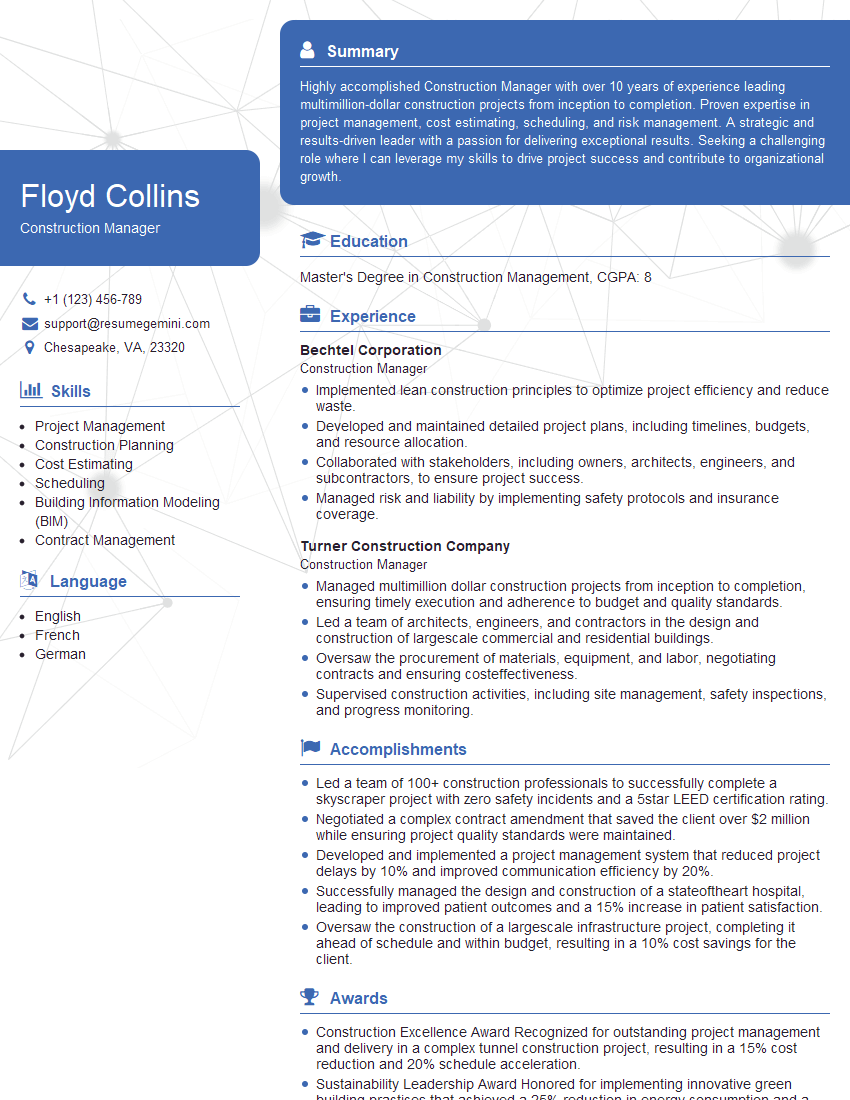
Construction Manager Resume Sample

Project Engineer Resume Sample
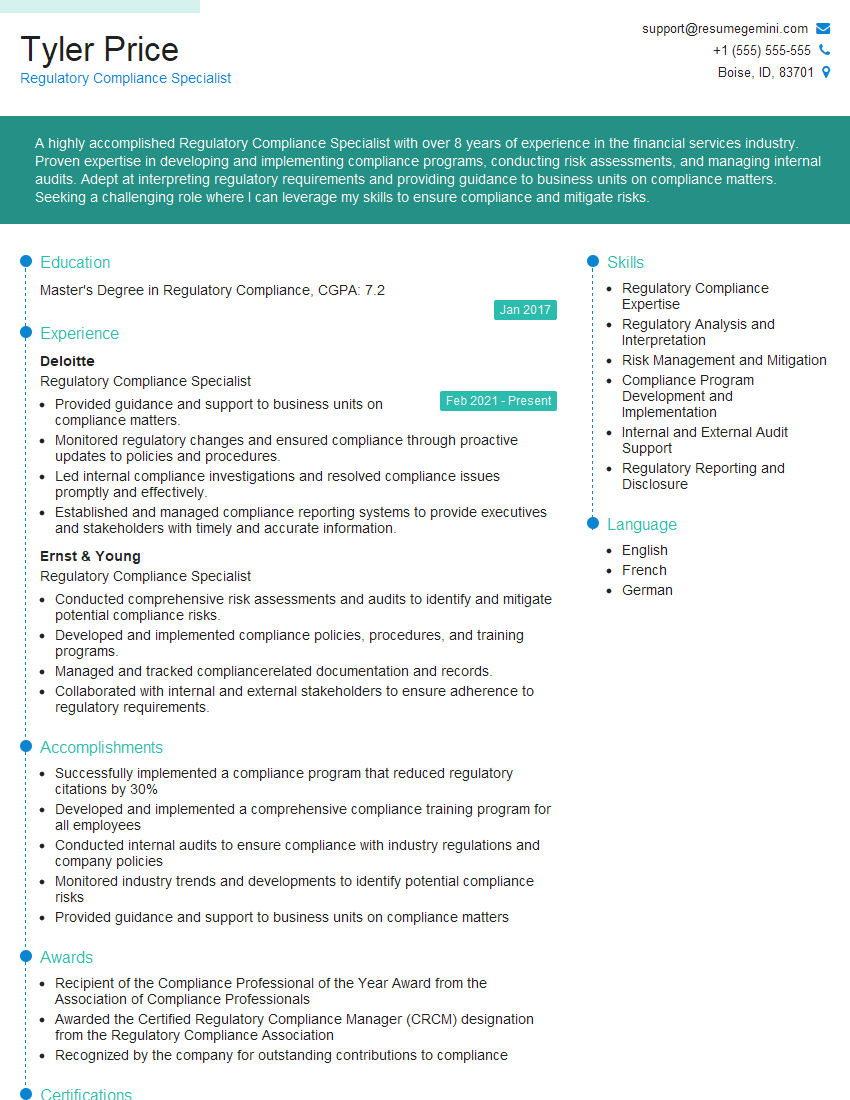
Regulatory Compliance Specialist Resume Sample

Automation Engineer Resume Sample

Systems Integration Engineer Resume Sample

Electrical Designer Resume Sample

Electrical Engineer Resume Sample

Field Engineer Resume Sample

Instrumentation Engineer Resume Sample

Power Systems Engineer Resume Sample

Fire Protection Engineer Resume Sample

Safety Engineer Resume Sample

Control Systems Engineer Resume Sample
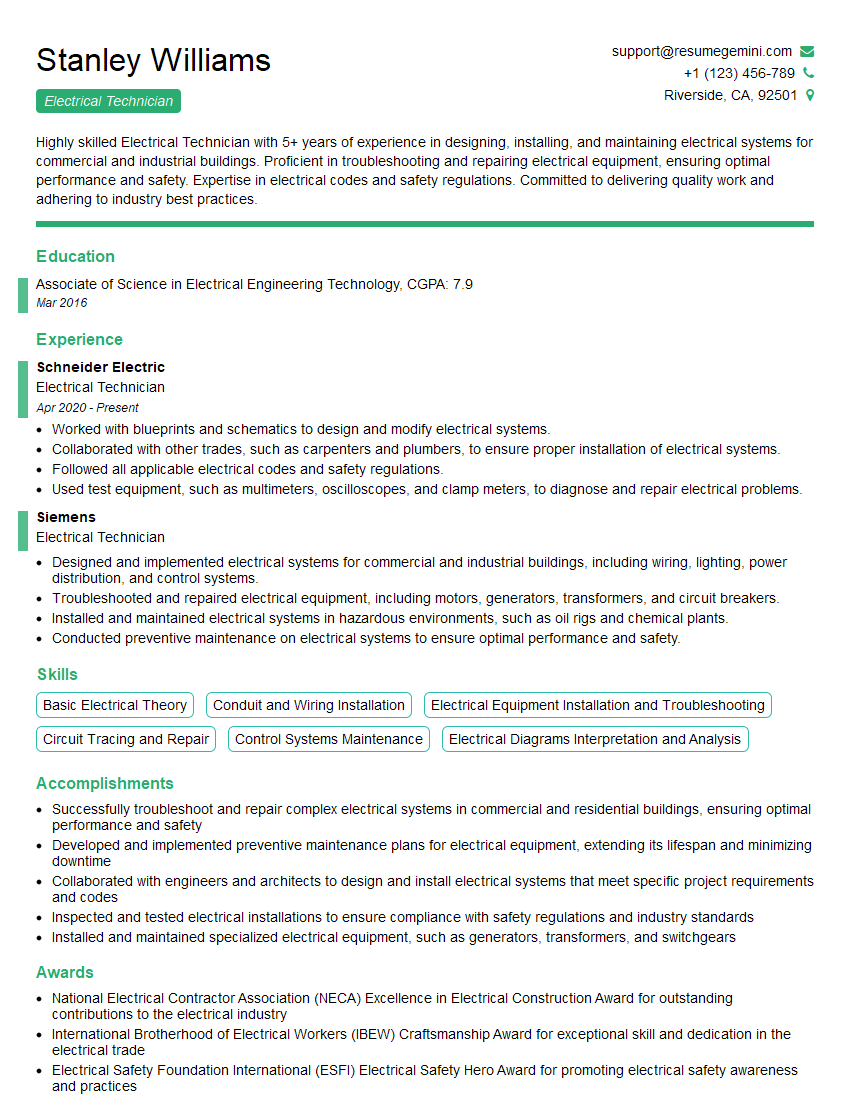
Electrical Technician Resume Sample

Building Inspector Resume Sample

Maintenance Electrician Resume Sample
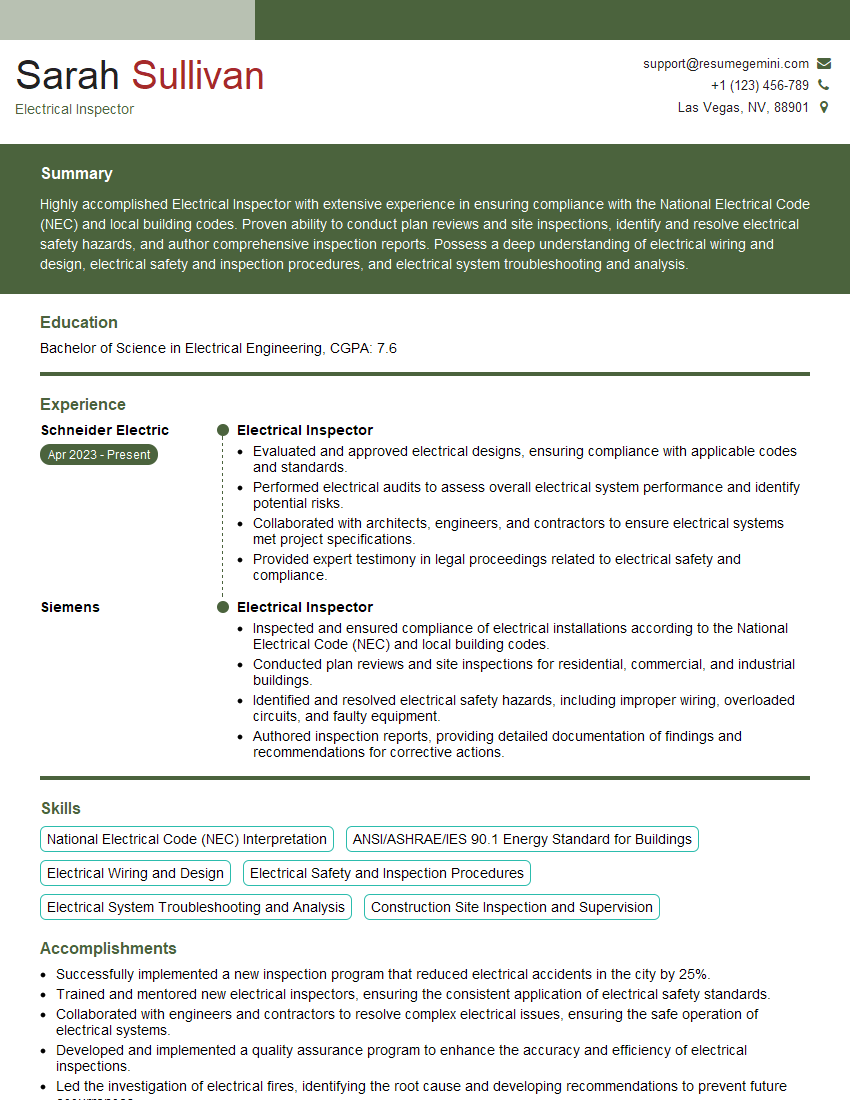
Electrical Inspector Resume Sample

Plan Examiner Resume Sample

Quality Control Inspector Resume Sample
- Safety Manager
- Construction Manager
- Project Engineer
- Regulatory Compliance Specialist
- Automation Engineer
- Systems Integration Engineer
- Electrical Designer
- Electrical Engineer
- Field Engineer
- Instrumentation Engineer
- Power Systems Engineer
- Fire Protection Engineer
- Safety Engineer
- Control Systems Engineer
- Electrical Technician
- Building Inspector
- Maintenance Electrician
- Electrical Inspector
- Plan Examiner
- Quality Control Inspector
Explore more articles
Users Rating of Our Blogs
Share Your Experience
We value your feedback! Please rate our content and share your thoughts (optional).
What Readers Say About Our Blog
Very informative content, great job.
good