The thought of an interview can be nerve-wracking, but the right preparation can make all the difference. Explore this comprehensive guide to Needle and Thread Sewing interview questions and gain the confidence you need to showcase your abilities and secure the role.
Questions Asked in Needle and Thread Sewing Interview
Q 1. What types of sewing machines are you familiar with?
My experience encompasses a wide range of sewing machines, from basic mechanical models to advanced computerized machines. I’m proficient with both domestic and industrial machines, understanding their unique functionalities and capabilities. For example, I’m comfortable working with Singer, Brother, and Janome domestic machines, recognizing their different stitch options and tension adjustments. With industrial machines, I have experience using single-needle and multi-needle machines for various tasks like topstitching and coverstitching, understanding their higher speeds and durability requirements.
My familiarity extends to specialized machines like sergers (overlock machines) for professional seam finishing and embroidery machines for intricate designs. This broad experience allows me to adapt my approach to different projects and machine types.
Q 2. Describe your experience with different needle types and their applications.
Needle selection is crucial for successful sewing. Different fabrics require needles with varying points and sizes to prevent skipped stitches, fabric damage, or broken needles. For example:
- Sharp needles (universal or sharps): Suitable for woven fabrics like cotton, linen, and silk. They pierce the fabric cleanly.
- Ballpoint needles: Designed for knit fabrics like jersey or interlock. The rounded tip glides between the loops of the knit, preventing snags and runs.
- Stretch needles: Similar to ballpoint but with a slightly stronger shaft and enhanced elasticity, ideal for delicate knit fabrics or stretchy wovens.
- Jeans needles: Feature a reinforced shaft and a strong point designed to penetrate tough denim and other heavy fabrics.
- Embroidery needles: Have a sharp point but a larger eye to accommodate thicker embroidery threads.
Choosing the wrong needle can lead to frustrating results. Using a sharp needle on a knit fabric, for instance, will likely cause runs. I always carefully consider the fabric type and weight before selecting a needle. This is a fundamental step in ensuring a professional finish.
Q 3. Explain the process of selecting the correct thread for a given fabric.
Thread selection is just as important as needle selection. The thread must complement the fabric in terms of weight and fiber content for optimal results. Generally, you want to match the thread weight to the fabric weight: heavier fabrics need heavier threads, lighter fabrics need lighter threads.
For example, a lightweight cotton voile would be sewn with a fine cotton thread like 50 wt or 60 wt, while a heavy canvas would be sewn with a stronger thread, perhaps 30 wt or even heavier upholstery thread. The fiber content also matters. Using polyester thread on a silk garment might make the seam too stiff and prominent; a silk or cotton thread would be more appropriate.
Beyond weight and fiber, the thread’s color should also be chosen carefully. It’s often best to match the thread to the fabric color, though contrasting thread can be a purposeful design element. I always test my thread and needle combination on a scrap of the fabric before beginning the main project to avoid unexpected results.
Q 4. How do you troubleshoot common sewing machine problems?
Troubleshooting sewing machine problems requires a systematic approach. I start with the basics, checking:
- Proper threading: Incorrect threading is the most common cause of issues. I meticulously check each step of the threading process.
- Needle: A bent or damaged needle is a frequent culprit. I inspect the needle for damage and replace it if needed.
- Tension: Incorrect tension settings can lead to skipped stitches or puckering. I adjust the tension dial to find the correct balance.
- Bobbin: A poorly wound bobbin can cause problems. I check the bobbin for proper winding and placement.
- Feed dogs: If the fabric isn’t feeding correctly, I check the feed dogs to ensure they’re not obstructed.
If the problem persists after these checks, I consult the machine’s manual or seek professional assistance. I believe a thorough understanding of the machine’s mechanics is critical for effective troubleshooting.
Q 5. What are your preferred methods for finishing seams?
Seam finishing is essential for durability and a professional look. My preferred methods depend on the fabric and the project’s requirements.
- Serging/Overlocking: This is my go-to method for most seams, especially with knit fabrics. It prevents fraying and creates a neat, stretchy finish.
- Zigzag stitch: A versatile alternative for woven fabrics, preventing fraying and adding strength to the seam.
- Pinked edges: This works well for fabrics that don’t fray easily, offering a simple and fast finishing method.
- French seams: For very fine fabrics, providing a clean, professional finish that completely encloses the raw edges.
- Hong Kong finish: Used for a luxurious, professional look, especially in garment construction. Bias binding is wrapped around the raw seam edges.
The choice of seam finish is part of my overall design consideration, tailored to the specific fabric and style of garment or item I’m creating.
Q 6. How do you measure and cut fabric accurately?
Accurate fabric measurement and cutting are fundamental to successful sewing. I use a combination of tools and techniques:
- Sharp shears or rotary cutter: Clean cuts are essential to avoid fabric distortion and ensure accurate seam allowances.
- Measuring tape and ruler: Accurate measurements are crucial, and I double-check all my measurements to ensure accuracy.
- Cutting mat: Provides a stable surface and protects my work surface from accidental cuts.
- Pins: Keeping fabric pieces securely aligned during cutting is essential to ensure precise cuts.
- Pattern weights: These are preferable to pins in some instances as they eliminate the potential for pin holes and ensure the pattern stays in place.
I always pre-wash fabrics before cutting to avoid shrinkage after the garment is completed. I take extra care when cutting curves and bias cuts, ensuring smooth lines and consistent seam allowances. This precision is crucial for a quality finished product.
Q 7. Explain your experience with pattern making and alterations.
I have extensive experience in pattern making and alterations. I’m proficient in drafting patterns from scratch, adapting existing patterns, and making alterations to achieve a perfect fit. I understand various pattern drafting methods, including the sloper method, which is the foundation of many pattern designs.
When altering patterns, I work carefully to make changes that maintain the integrity of the design. For example, I understand how altering the shoulder width will impact the armhole and sleeve cap. I’m comfortable working with various body types and making adjustments for fit, such as taking in or letting out seams, adjusting sleeve length, or changing the neckline.
My skills extend to using commercial patterns effectively. I can grade patterns to different sizes, and manipulate them to create variations in style, such as changing sleeve styles, collars, or adding design details. A keen eye for detail and a deep understanding of garment construction are key to successful pattern making and alterations.
Q 8. Describe your experience with various sewing techniques (e.g., hand stitching, machine stitching).
My experience spans both hand and machine stitching, each offering unique advantages. Hand stitching, while slower, allows for incredible precision and control, perfect for delicate repairs or intricate embroidery. I’m proficient in various hand stitches, including running stitch, backstitch, slipstitch, and blanket stitch, each chosen based on the fabric and desired effect. For instance, a slipstitch is invisible and ideal for seams, while a blanket stitch adds a decorative edge. Machine stitching, on the other hand, is far more efficient for larger projects and consistent seams. I’m adept at using different machine stitch types – straight stitch, zigzag stitch, satin stitch – to achieve diverse looks and functionalities. For example, a zigzag stitch prevents fraying on raw edges, while a satin stitch creates a dense, decorative fill. I’ve worked with various machine types, including both industrial and domestic models, adapting my techniques to each machine’s capabilities.
Q 9. How do you manage fabric tension during sewing?
Managing fabric tension is crucial for achieving even, professional-looking seams. It involves balancing the tension between the needle, the feed dogs (the teeth that move the fabric under the needle), and the presser foot. Too much tension leads to puckering or breaking the thread; too little results in loose, uneven stitches. I assess the fabric type; lightweight fabrics like silk require gentle tension, while heavier fabrics like denim need more. I adjust the machine’s tension dial accordingly, often starting with the manufacturer’s recommended setting and making small adjustments based on the result. I also use techniques like adjusting the presser foot pressure to accommodate different fabric thicknesses. For instance, using a lighter pressure foot on delicate silk prevents pulling or damage. I frequently test stitches on a scrap of the fabric before starting the main project to ensure the tension is correct. If inconsistencies arise, I will further adjust the machine settings or the feed dogs to obtain the desired evenness.
Q 10. How do you handle different types of fabric (e.g., silk, leather, denim)?
Sewing different fabrics requires adapting techniques and tools. Silk, being delicate, requires specialized needles (like microtex or silk needles) to prevent snags and a gentle touch. I use a slow, steady speed and carefully manage tension. Leather, on the other hand, requires heavier needles and often a walking foot to feed the fabric evenly through the machine. It may also need a different stitch type, perhaps a more robust zigzag, for stronger seams. With denim, I usually use a stronger needle and adjust the stitch length to prevent skipped stitches. I always pre-wash all fabric, regardless of type, to prevent shrinkage after the garment is completed. I have a ‘fabric library’ where I keep notes on my experience with specific fabrics – including needle type, stitch length, tension settings, and pressing techniques – making each project more efficient and the end result more professional.
Q 11. What are your strategies for working with complex patterns?
Tackling complex patterns involves a methodical approach. I start by carefully studying the pattern instructions and diagrams thoroughly before cutting any fabric. I often pre-wash and press the fabric to avoid issues later on. I then meticulously trace and cut the pattern pieces, paying close attention to notches and markings. I use a clear, well-lit workspace and frequently check my progress against the pattern instructions. I prefer to assemble the garment in stages, following the pattern’s recommended order. For example, I’ll often assemble the main garment sections first before working on smaller details or embellishments. For particularly intricate areas, I use pins to secure fabric precisely, ensuring proper alignment and preventing shifting. I also employ techniques like basting (loose hand-stitching) to temporarily hold seams together before machine stitching, which helps achieve precise alignment and allows for any necessary adjustments. I find breaking down a complex pattern into smaller, manageable tasks keeps me focused and reduces errors. Visualizing each step before execution minimizes the risk of mistakes. Testing the fit of the garment during construction is crucial for any complex pattern; this enables me to adjust the garment if any alterations are needed before finishing any seams.
Q 12. How do you ensure quality control in your sewing work?
Quality control is an ongoing process, not just a final step. It begins with careful fabric selection and preparation. I meticulously check for any flaws or inconsistencies in the fabric before starting. Throughout the sewing process, I regularly inspect my work for even stitching, accurate seam allowances, and proper alignment. I use a seam ripper sparingly but effectively to correct any mistakes immediately. Pressing the seams at each stage is also a critical element of quality control; it helps to create a professional finish and eliminates any wrinkles or puckers. Once the garment is complete, I conduct a thorough final inspection, checking for any loose threads, missed stitches, or uneven hems. Before delivering the completed item, I ensure it meets the client’s specifications and reflects the high standards of my work. I often take detailed progress photos to later refer to, which can help in troubleshooting any issues. It also helps me to track my improvements and efficiency over time. Seeking feedback and using a checklist are additional steps in my quality control process.
Q 13. Describe your experience with different sewing machine attachments.
My experience includes using a variety of sewing machine attachments. The walking foot is essential for working with multiple layers of fabric or difficult materials like leather or vinyl, as it ensures even feeding. A zipper foot allows for precise stitching close to the zipper teeth. A buttonhole foot simplifies the process of creating professional-looking buttonholes. I’ve also used different types of presser feet for specific tasks, like rolled hems or cording. Other attachments, such as edge stitch guides and free-motion quilting attachments, allow for different types of decorative stitching. Each attachment expands the sewing machine’s capabilities, offering greater precision and control. I’m constantly researching and learning to incorporate new attachments that meet the specific demands of each project and fabric. The specific attachment that I use is determined by the needs of the project.
Q 14. How do you maintain and clean your sewing machine?
Maintaining my sewing machine is key to its longevity and performance. After each use, I brush away any lint or fabric scraps from the bobbin area, feed dogs, and around the needle. I regularly clean the bobbin case and lubricate the machine according to the manufacturer’s instructions. I use a specialized sewing machine brush and occasionally compressed air to remove dust from hard-to-reach areas. I replace the needle regularly, even if it doesn’t appear damaged, as worn needles can impact stitch quality and lead to breakage. I also keep my machine covered when not in use to protect it from dust and dirt. I keep a log of my cleaning and maintenance and any parts I replace. This preventative maintenance ensures smooth operation and helps to prevent costly repairs. Regular cleaning and maintenance is as essential as learning different sewing techniques.
Q 15. What safety precautions do you take while sewing?
Safety is paramount in sewing. My approach is multifaceted, starting with proper machine maintenance. Before each session, I inspect my machine for loose parts, ensuring the needle is correctly installed and tightened, and that the presser foot is functioning smoothly. This prevents needles from breaking and causing injury. I always use a sewing machine cover when not in use to avoid accidental contact.
Beyond the machine, I prioritize personal safety. I keep my workspace clean and organized, eliminating tripping hazards and preventing tangles in the threads. I always use sharp, appropriately sized needles for the fabric I’m working with – dull needles require more force and are more prone to bending and breaking. Finally, I never sew while tired or distracted; fatigue leads to accidents.
- Example: When working with heavy denim, I use a heavy-duty needle to prevent breakage and ensure a clean stitch.
- Example: I always keep my fingers away from the needle plate while the machine is running, using a thimble for added protection when needed.
Career Expert Tips:
- Ace those interviews! Prepare effectively by reviewing the Top 50 Most Common Interview Questions on ResumeGemini.
- Navigate your job search with confidence! Explore a wide range of Career Tips on ResumeGemini. Learn about common challenges and recommendations to overcome them.
- Craft the perfect resume! Master the Art of Resume Writing with ResumeGemini’s guide. Showcase your unique qualifications and achievements effectively.
- Don’t miss out on holiday savings! Build your dream resume with ResumeGemini’s ATS optimized templates.
Q 16. How do you interpret sewing patterns and instructions?
Interpreting sewing patterns is like reading a map for garment construction. I start by thoroughly reviewing the pattern envelope, noting the finished garment measurements and sizing information to determine the correct size. Then, I carefully examine the pattern pieces, identifying each component (e.g., bodice, sleeve, collar). The pattern instructions provide step-by-step guidance. I follow these instructions meticulously, paying close attention to seam allowances (typically 5/8 inch unless otherwise specified).
The pattern often uses symbols, like notches and grainlines; these are crucial for accurate alignment. Notches act as matching points when joining different pieces. Grainlines dictate the direction of fabric threads for proper drape and hang of the finished garment. For example, a lengthwise grain will ensure the garment hangs straight.
I often use a highlighter to mark important steps and note any special instructions or alterations I may need to make. Once I understand the plan, I’m ready to start cutting and sewing, following the instructions precisely, treating the pattern as a blueprint for success.
Q 17. What are your time management skills in a production environment?
In a production environment, efficient time management is essential. My approach involves prioritizing tasks based on deadlines and urgency. I create a detailed production schedule, breaking down larger projects into smaller, manageable steps. This allows for better tracking of progress and identification of potential bottlenecks.
I also utilize time-saving techniques, such as batching similar tasks together. For example, I might sew all the collars before moving on to sleeves. This minimizes machine setup changes and increases overall efficiency. I continuously monitor my progress against the schedule, adapting as needed and communicating any delays or challenges promptly to my supervisor. In my experience, effective communication is as important as speed in maintaining productivity.
Example: If I’m producing 100 shirts, I’ll plan each stage of production: cutting, stitching the collars, stitching the sleeves, and then assembling the final garment. This allows for a streamlined workflow.
Q 18. Describe your experience with industrial sewing machines.
I have extensive experience with various industrial sewing machines, including single-needle and multi-needle machines, overlock machines (sergers), and coverstitch machines. I am comfortable operating machines with different stitch lengths, tensions, and feed mechanisms. I understand the importance of proper machine maintenance, including regular lubrication and cleaning, to ensure optimal performance and prevent breakdowns. My experience ranges from simple straight stitch operations on a single-needle machine to more complex operations requiring precise control and coordination, such as those used in creating intricate seams.
Example: I’ve used industrial overlock machines to create professional-looking seams on knit fabrics, eliminating the need for additional finishing. I’m also proficient in using double needle machines to create parallel stitching lines for hems or decorative stitching, significantly reducing time in this stage of the process compared to manual stitching.
Q 19. What software programs are you familiar with for design or pattern making?
My software proficiency includes Adobe Illustrator for creating and manipulating design patterns. I’m also experienced with several pattern-making software programs, such as [mention specific software if you have experience – e.g., Pattern Design, Optitex, etc. ]. These tools allow me to create precise and efficient patterns, adapting them to various sizes and styles. They greatly enhance accuracy and reduce the time it takes to produce professional-quality patterns. This skillset allows for digital pattern manipulation which streamlines the pattern making and development process.
Q 20. How do you identify and repair common sewing errors?
Identifying and repairing sewing errors is a crucial skill. Common errors include skipped stitches, uneven seams, puckering, and inaccurate pattern matching. I diagnose the problem by carefully examining the stitching and fabric. Skipped stitches often indicate incorrect needle threading or tension adjustments. Uneven seams can result from inconsistent feed-dog movement or improper stitch length. Puckering indicates the need for adjustments in tension and seam allowances. Inaccurate pattern matching points to improper pattern alignment or cutting.
My repair strategies involve addressing the underlying cause. For skipped stitches, I check the threading and adjust the tension. Uneven seams might require re-stitching or adjusting the machine settings. For puckering, I often carefully press the seam and make adjustments to stitch length or tension. Inaccurate pattern matching requires careful alignment before repeating the sewing steps.
Example: If a seam is puckering, I’ll check the tension settings on my sewing machine and potentially adjust the stitch length to create a more balanced tension across the fabric. If the pattern pieces are improperly aligned, I carefully take out the stitches, align the pieces correctly and re-sew the area.
Q 21. What is your experience with different types of seams?
My experience encompasses a wide range of seams, each chosen based on the fabric type and garment design. I’m proficient in basic seams like straight seams, French seams (for a clean, professional finish), and felled seams (often used in heavier fabrics). I’m also skilled in more complex seams such as welt pockets and bound buttonholes. My knowledge extends to specialized seams for specific fabric types: for example, using a serger (overlock machine) for knit fabrics to prevent fraying. The choice of seam directly influences both the garment’s durability and aesthetic appeal.
- Straight seam: A simple, basic seam, suitable for many fabrics.
- French seam: Encloses raw edges, offering a very clean and durable seam, commonly used in fine fabrics.
- Felled seam: Durable and strong, suitable for outerwear and workwear.
- Serged seam: Prevents fraying, ideal for stretchy or easily frayed fabrics.
Q 22. How would you handle a situation where a machine malfunctions during production?
Machine malfunctions are an unfortunate reality in any sewing production environment. My approach is systematic and prioritizes safety. First, I’d immediately turn off the machine to prevent further damage or injury. Then, I’d assess the situation: Is it a simple jam, a broken needle, or something more complex? For minor issues like thread jams, I have the skills to quickly resolve them. I’m proficient in troubleshooting common machine problems, such as replacing needles, cleaning bobbins, and adjusting tension.
However, if the malfunction is beyond my immediate expertise – for instance, a significant mechanical failure – I’d follow established company protocol. This usually involves reporting the issue to the supervisor or maintenance team and documenting the problem thoroughly. I’d also temporarily shift my focus to other tasks to maintain productivity until the machine is repaired. My experience ensures minimal downtime and efficient problem resolution.
Q 23. Explain your experience working with various sewing projects (e.g., garments, quilts, upholstery).
My sewing experience spans a wide range of projects. I’ve worked extensively on garment construction, from simple t-shirts to more intricate tailored pieces, mastering various techniques like darts, zippers, and buttonholes. My quilt-making experience involves pattern design, fabric selection, and precise piecing to create both traditional and modern designs. I’m also experienced in upholstery, working with heavier fabrics and different tools to reupholster furniture. This experience has provided me with a comprehensive skillset, allowing me to adapt my techniques depending on the material and project requirements.
For example, in garment construction, precision and attention to detail are paramount to ensure a well-fitting and aesthetically pleasing garment. In contrast, upholstery often requires more robust stitching techniques and a different understanding of material properties to ensure durability. This diverse experience makes me a versatile and adaptable candidate.
Q 24. How do you stay updated with the latest trends in sewing techniques and technology?
Staying current in the sewing world is crucial. I actively engage in several methods to keep my skills sharp and knowledge up-to-date. I subscribe to industry magazines like Threads and Sew News, which feature the latest techniques, technology, and product reviews. I also regularly attend sewing workshops and conferences to learn from expert instructors and network with fellow professionals. Online resources, such as blogs, YouTube channels, and online sewing communities, are invaluable for learning new techniques and seeing how other sewers solve problems.
Furthermore, I’m always experimenting with new fabrics and technologies myself. Trying out new sewing machine features or innovative stitching methods is a way to stay on the cutting edge and push my creative boundaries. This continuous learning ensures I remain highly proficient and able to adapt to the evolving demands of the industry.
Q 25. Describe a time you had to troubleshoot a complex sewing problem. What was the solution?
During a large-scale quilting project, I encountered a persistent puckering problem in a specific seam. Initially, I thought the problem was my seam allowance, but adjusting it didn’t resolve the issue. I systematically examined my process: needle size, thread type, tension settings, and even the fabric itself. After careful consideration, I realized the problem stemmed from the fabric’s varying thickness. Certain areas were denser, leading to inconsistent feeding and the resultant puckering.
My solution was two-fold. First, I used a walking foot, which distributes pressure more evenly on both layers of fabric. Secondly, I pre-treated the fabric with a fabric stabilizer to ensure consistency in its thickness and prevent stretching. These two steps addressed the root cause and eliminated the puckering, resulting in a flawless final product. This experience highlighted the importance of methodical troubleshooting and the ability to adapt techniques to specific fabric characteristics.
Q 26. What is your understanding of different types of stitches and their uses?
Understanding stitch types is fundamental to successful sewing. Different stitches serve different purposes. A basic straight stitch is used for seams, while a zig-zag stitch is ideal for finishing edges to prevent fraying. A blind hem stitch is almost invisible, perfect for hemming trousers or skirts. A satin stitch creates a decorative effect, often used for embroidery or appliqué.
Then there are more specialized stitches like overlock (serger) stitches, which are used to finish seams quickly and prevent fraying, and decorative stitches, used for embellishment. The selection of the correct stitch depends heavily on the fabric type, the intended purpose of the seam, and the desired aesthetic outcome. I have a strong grasp of these stitch types and how to select the appropriate ones for various sewing projects.
Q 27. How do you work effectively as part of a team in a sewing environment?
Teamwork is essential in a sewing environment. I’m a strong believer in open communication and collaboration. I actively contribute to a positive team dynamic by sharing my knowledge and expertise with colleagues. I’m always willing to help others when they need assistance, and I actively seek help when I face challenges.
In a production setting, effective teamwork is crucial for meeting deadlines and maintaining quality. I understand the importance of working efficiently and effectively as a team member, supporting colleagues, and ensuring everyone’s contributions are valued. My ability to communicate clearly and work collaboratively leads to efficient production and a higher quality final product.
Q 28. What are your salary expectations for this role?
My salary expectations for this role are in the range of $[Insert Salary Range] annually. This is based on my experience, skills, and the requirements of this position. I am open to discussing this further based on the complete compensation package and the specifics of the role.
Key Topics to Learn for Needle and Thread Sewing Interview
- Hand Sewing Techniques: Mastering basic stitches like running stitch, backstitch, and whip stitch. Understanding their applications in different fabrics and projects.
- Machine Sewing Techniques: Familiarity with operating sewing machines, including threading, tension adjustment, and stitch selection. Experience with various sewing machine types is a plus.
- Fabric Selection and Properties: Knowledge of different fabric types (cotton, silk, linen, etc.), their characteristics, and appropriate needle and thread choices for each.
- Pattern Reading and Interpretation: Ability to understand and follow sewing patterns, including marking, cutting, and assembling garment pieces.
- Seam Finishing Techniques: Understanding different seam finishes (serging, pinking, zigzag stitching) and their importance in garment durability and aesthetics.
- Troubleshooting Common Sewing Issues: Ability to identify and resolve common problems like skipped stitches, broken needles, and uneven seams. Demonstrating problem-solving skills is crucial.
- Garment Construction Principles: Understanding the basic principles of garment construction, including darts, pleats, zippers, and buttonholes.
- Safety Procedures and Equipment Maintenance: Familiarity with safe sewing practices and the proper maintenance of sewing machines and tools.
Next Steps
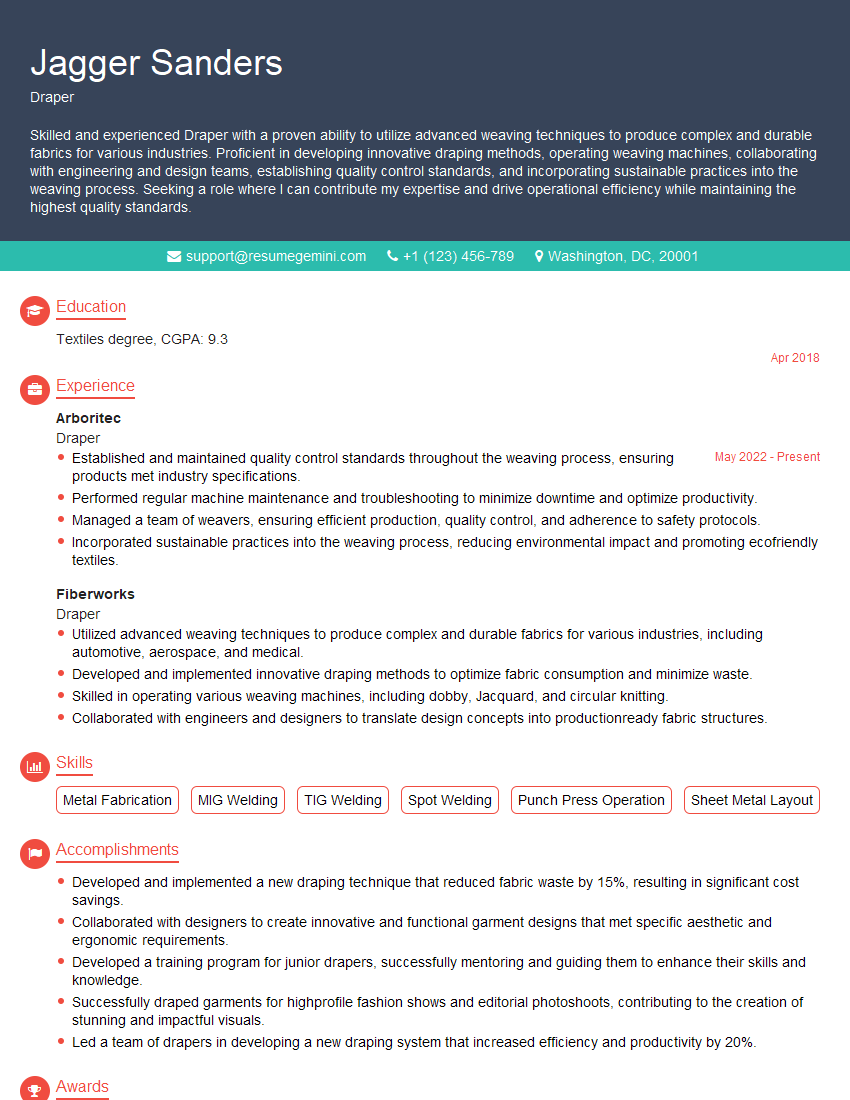
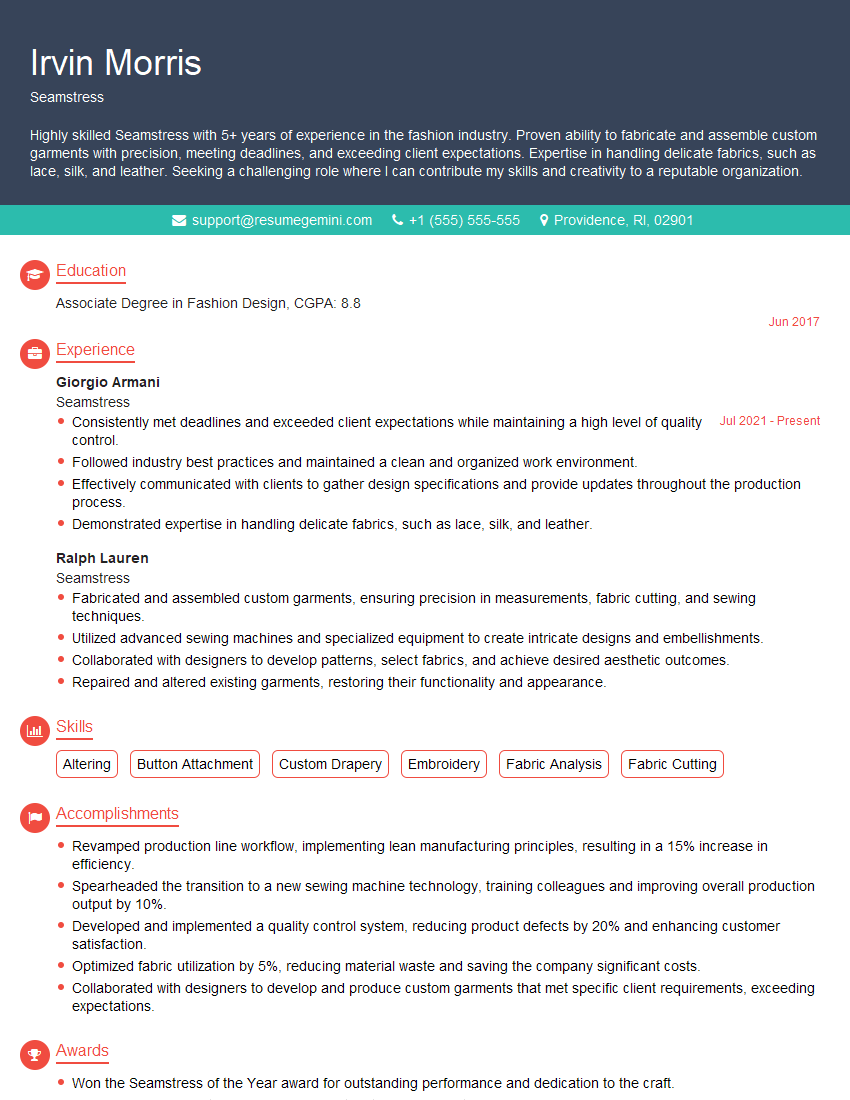
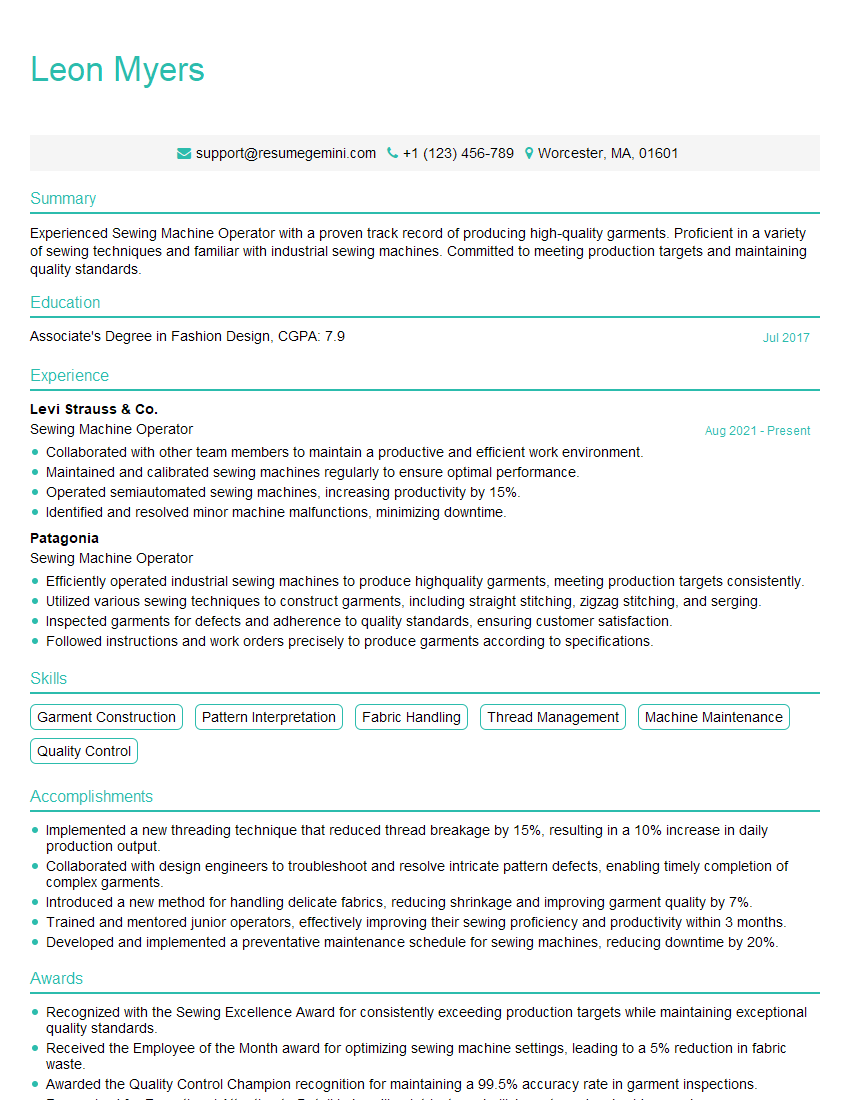
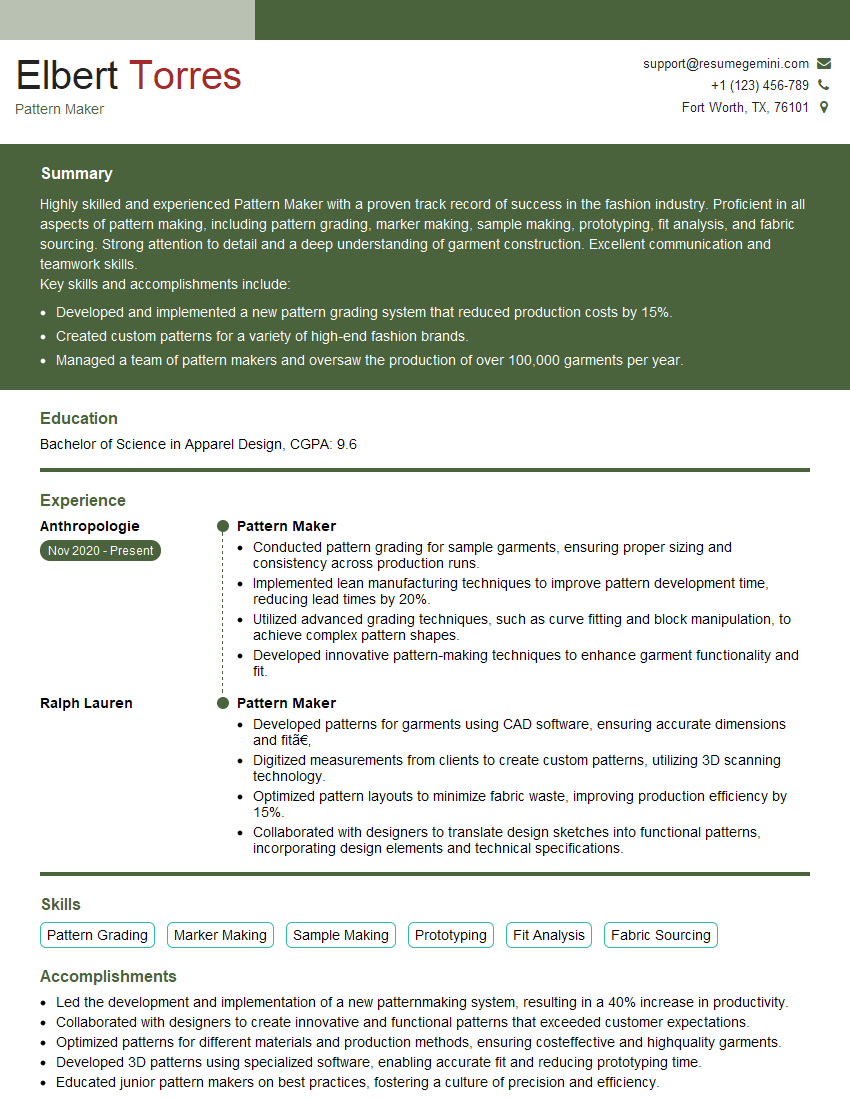
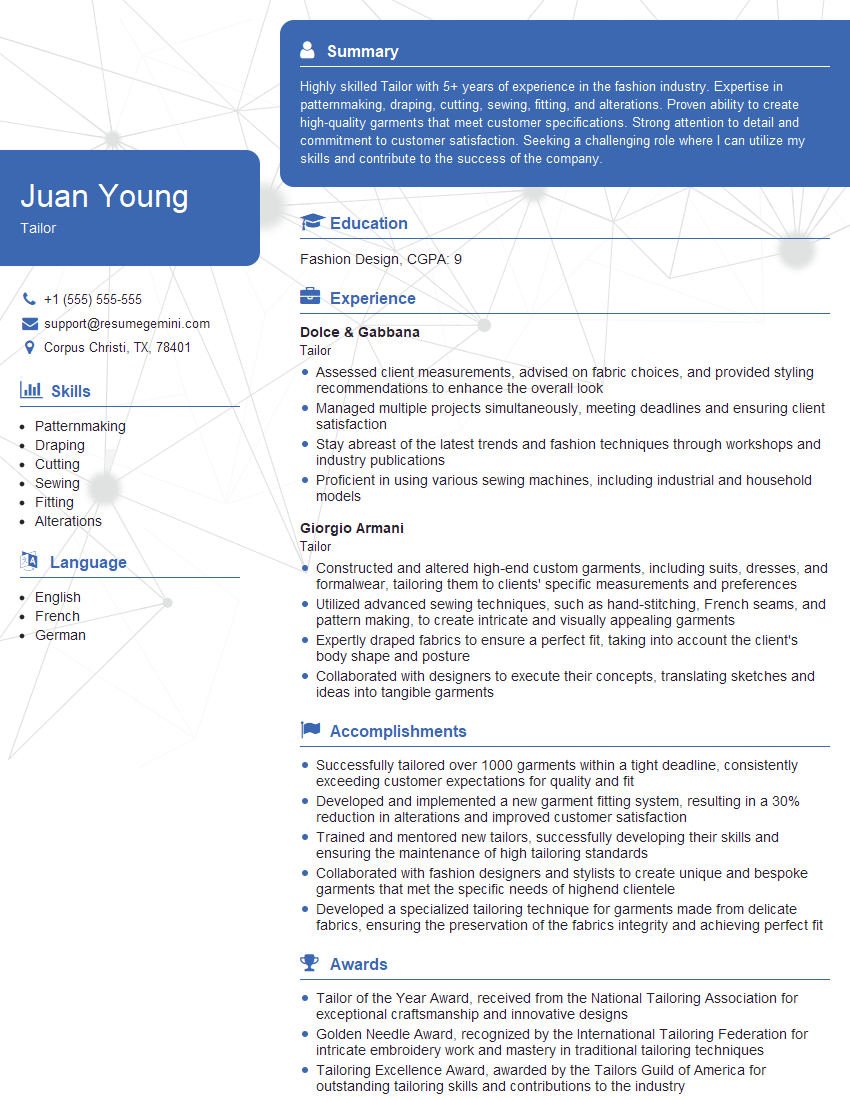
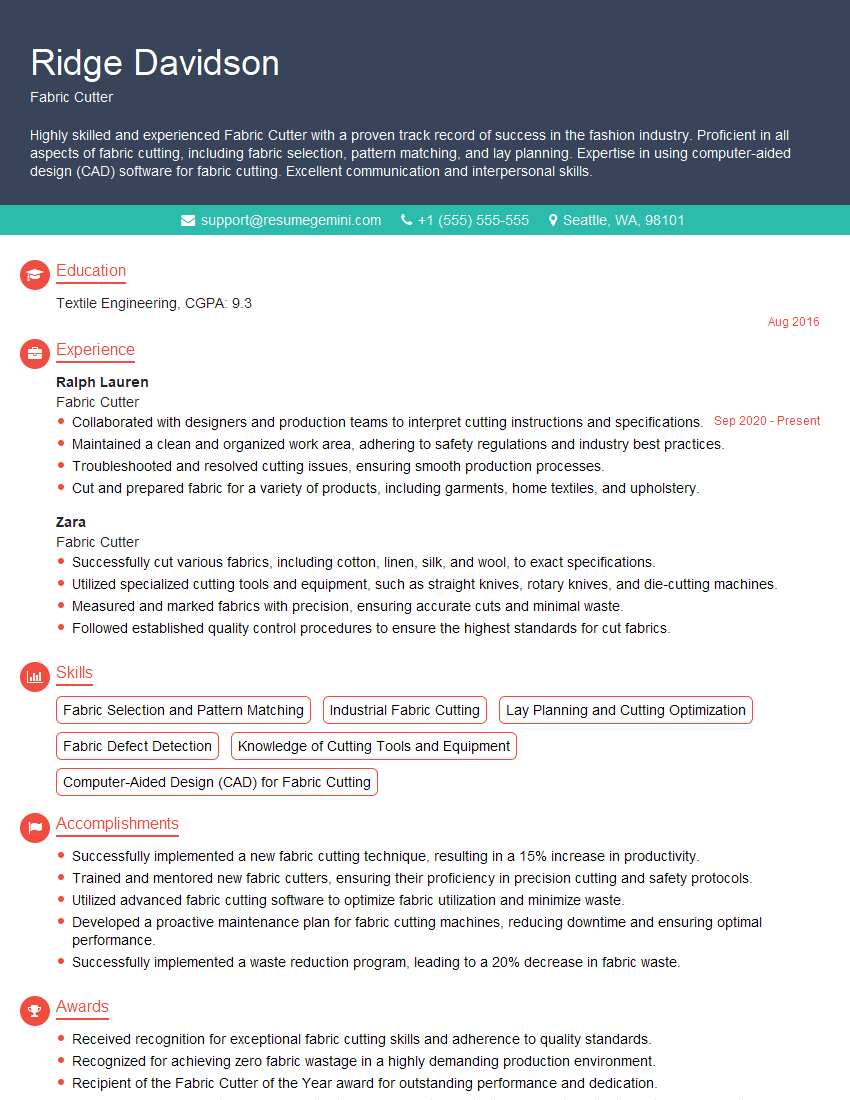
Mastering needle and thread sewing opens doors to diverse and rewarding career opportunities in fashion, design, tailoring, and crafts. A strong foundation in these skills is highly valued by employers. To significantly enhance your job prospects, focus on creating an ATS-friendly resume that highlights your abilities effectively. ResumeGemini is a trusted resource to help you build a professional and impactful resume. We provide examples of resumes tailored to Needle and Thread Sewing to guide you through the process. Invest time in crafting a compelling resume – it’s your first impression to potential employers!

Explore more articles
Users Rating of Our Blogs
Share Your Experience
We value your feedback! Please rate our content and share your thoughts (optional).
What Readers Say About Our Blog
Very informative content, great job.
good