Preparation is the key to success in any interview. In this post, we’ll explore crucial New Product Development and Launch interview questions and equip you with strategies to craft impactful answers. Whether you’re a beginner or a pro, these tips will elevate your preparation.
Questions Asked in New Product Development and Launch Interview
Q 1. Describe your experience in managing the entire product lifecycle.
Managing the entire product lifecycle involves overseeing a product from its initial conception to its eventual end-of-life. This is a continuous process encompassing several key stages. I’ve consistently managed these stages using a combination of strategic planning, meticulous execution, and data-driven decision-making.
- Idea Generation & Concept Development: This stage focuses on identifying market needs, brainstorming ideas, and developing a compelling product concept. I typically use techniques like SWOT analysis and competitive benchmarking to refine ideas.
- Design & Development: This involves creating prototypes, conducting user testing, and refining the product design based on feedback. Agile methodologies are frequently employed here to ensure flexibility and adaptability.
- Testing & Quality Assurance: Rigorous testing ensures the product meets quality standards and user expectations. This includes unit testing, integration testing, and user acceptance testing (UAT).
- Launch & Marketing: A successful launch requires a well-defined marketing strategy, including go-to-market planning, channel selection, and promotional activities. I focus on building pre-launch anticipation and effectively communicating the product’s value proposition.
- Growth & Maintenance: Post-launch, the focus shifts to product growth, ongoing maintenance, and gathering user feedback for future iterations. This stage involves monitoring key performance indicators (KPIs) and adapting strategies based on market trends and customer needs.
- Decline & End-of-Life: This final stage involves managing the product’s sunsetting, potentially migrating users to newer products, and effectively phasing out support.
For example, in my previous role, I led the development of a new mobile application. I oversaw the entire lifecycle, from initial market research indicating a need for a more user-friendly interface to the final decommissioning of the app’s previous version.
Q 2. Explain your approach to market research for new product development.
My approach to market research is systematic and multi-faceted, focusing on both qualitative and quantitative data to gain a comprehensive understanding of customer needs and market opportunities. I avoid relying solely on one method, believing a mixed-methods approach provides a more accurate and nuanced view.
- Secondary Research: I begin with desk research, analyzing existing market data, reports, and competitor analysis to establish a baseline understanding.
- Primary Research: This involves direct interaction with target customers. I employ methods such as surveys (both online and offline), focus groups, in-depth interviews, and ethnographic studies to gather valuable insights into customer needs, preferences, and pain points. The choice of method depends on the research objectives and target audience.
- Competitive Analysis: A deep dive into competitors’ offerings helps identify opportunities and threats. This involves examining their products, marketing strategies, pricing models, and customer reviews.
- Data Analysis: The collected data is carefully analyzed to identify trends, patterns, and actionable insights. This often involves statistical analysis and data visualization to effectively communicate findings.
For instance, when developing a new line of sustainable kitchenware, we conducted both online surveys and in-person focus groups to understand consumer preferences regarding eco-friendly materials and design aesthetics. This data helped us design a product line that resonated with our target market.
Q 3. How do you prioritize features in a new product roadmap?
Prioritizing features in a product roadmap requires a structured approach that balances business value, customer needs, and technical feasibility. I typically employ a prioritization matrix, combining several key criteria to rank features.
- Value: How much business value does the feature deliver? (e.g., increased revenue, improved customer satisfaction)
- Urgency: How soon is the feature needed? (e.g., addressing critical bugs, meeting market demands)
- Feasibility: How difficult and costly is it to implement the feature?
- Risk: What are the potential risks associated with implementing or not implementing the feature?
I often use a MoSCoW method (Must have, Should have, Could have, Won’t have) to categorize features. This framework helps clearly define priorities and manage expectations. Visual tools like a Kanban board help track progress and facilitate transparent communication within the development team. For example, I might prioritize a high-value, urgent feature that is relatively easy to implement over a lower-value feature that requires extensive development time and resources. This ensures that we focus on delivering the most impactful features first.
Q 4. Describe a time you had to pivot a product strategy mid-development. What was the outcome?
During the development of a new fitness tracking device, we initially focused on a high-end, feature-rich product targeting professional athletes. However, mid-development, market research revealed a stronger demand for a more affordable, user-friendly device targeting a broader, fitness-conscious consumer base. This required a significant pivot.
We decided to adapt the product strategy, simplifying the device’s features, streamlining the design, and significantly reducing the production costs. This involved redesigning parts of the hardware and software, and adjusting the marketing messaging. The outcome was highly positive. The revised product resonated strongly with its target market, achieving higher sales figures and significantly improving market share compared to our initial, more niche product projections. The lesson learned was the importance of continuous market monitoring and the flexibility to adapt to changing market dynamics.
Q 5. What methodologies (Agile, Waterfall, etc.) have you used in new product development?
My experience encompasses both Agile and Waterfall methodologies, with a preference for Agile in most new product development scenarios. The choice of methodology depends on the project’s specific needs and constraints.
- Waterfall: I have used Waterfall in situations requiring a highly structured, sequential approach with clearly defined deliverables and milestones. This works well for projects with stable requirements and minimal anticipated changes. However, its rigidity can be a disadvantage when dealing with evolving requirements.
- Agile (Scrum, Kanban): Agile methodologies are typically my preferred choice for new product development. Their iterative and incremental approach allows for greater flexibility, adapting to changing market demands and user feedback. Scrum’s sprints provide a structured framework for managing work, while Kanban’s visual workflow fosters improved collaboration and transparency. The iterative nature of Agile enables continuous testing and improvement, reducing the risk of significant rework later in the process.
For example, a large-scale software project might benefit from a Waterfall approach due to its complexity and need for meticulous planning. However, for a new mobile application, Agile’s iterative nature allows for incorporating user feedback throughout the development process, resulting in a more user-centric product.
Q 6. How do you measure the success of a new product launch?
Measuring the success of a new product launch involves monitoring various KPIs across different dimensions. There’s no single metric, but a combination of factors provides a holistic view.
- Sales & Revenue: Key indicators include sales volume, revenue generated, customer acquisition cost (CAC), and average revenue per user (ARPU).
- Market Share: Tracking market share helps assess the product’s competitiveness and overall market acceptance.
- Customer Satisfaction: Gathering customer feedback through surveys, reviews, and support interactions is crucial to gauge satisfaction levels.
- Customer Retention: A high customer retention rate demonstrates product value and customer loyalty.
- User Engagement: Metrics like daily/monthly active users (DAU/MAU), session duration, and feature usage provide insights into user behavior and product engagement.
- Return on Investment (ROI): Ultimately, the success of a new product launch is measured by its financial return compared to the investment made.
For example, a successful launch might be indicated by exceeding projected sales targets, achieving a high customer satisfaction rating, and demonstrating strong user engagement metrics like high DAU/MAU ratios. Monitoring these KPIs allows for early identification of potential issues and informs future product iterations and marketing strategies.
Q 7. Explain your process for identifying and mitigating risks in new product development.
Identifying and mitigating risks in new product development is a continuous process that starts in the initial concept phase and continues throughout the entire lifecycle. I employ a proactive, risk-management framework.
- Risk Identification: This involves brainstorming potential risks across various areas, including technical challenges, market uncertainties, financial constraints, regulatory hurdles, and competitive pressures. Techniques like SWOT analysis and brainstorming sessions help identify potential risks.
- Risk Assessment: Each identified risk is evaluated based on its likelihood and potential impact. This helps prioritize which risks require immediate attention.
- Risk Mitigation Strategies: For each high-priority risk, specific mitigation strategies are developed. This might include contingency planning, implementing robust testing procedures, securing necessary resources, or developing alternative solutions.
- Risk Monitoring & Control: Risks are continuously monitored throughout the development process. Regular progress reviews and risk assessments identify emerging risks and assess the effectiveness of mitigation strategies.
For example, a potential risk might be delays in securing necessary regulatory approvals for a new medical device. The mitigation strategy could be to engage with regulatory bodies early in the development process, proactively addressing potential concerns and accelerating the approval timeline. Continuous monitoring helps identify and address any unexpected delays or issues.
Q 8. How do you handle conflicting priorities among stakeholders in a new product launch?
Conflicting priorities among stakeholders are inevitable in new product launches. Think of it like a tug-of-war – everyone wants their piece of the pie. Effective management requires a structured approach. I typically start by clearly defining the product vision and goals. This serves as the north star, guiding decision-making. Then, I facilitate a prioritized stakeholder meeting using techniques like MoSCoW analysis (Must have, Should have, Could have, Won’t have). This method helps us categorize requirements based on their importance, allowing us to make informed trade-offs. Finally, I document all decisions and ensure transparent communication to keep everyone informed and engaged. For example, in a previous project involving a new mobile app, marketing wanted a feature-rich launch, while engineering prioritized stability. Using MoSCoW, we prioritized core functionality for launch, delaying less critical features to future releases. This prevented delays and ensured a successful launch.
Q 9. Describe your experience with A/B testing and its role in product development.
A/B testing is crucial for data-driven decision-making in product development. It allows us to compare two versions of a product (A and B) to see which performs better. This could involve anything from different button colors to alternative website layouts. For instance, we might test two versions of a landing page – one with a prominent call-to-action button and another with a less prominent one. By tracking metrics like click-through rates and conversion rates, we determine which version drives more engagement and sales. My experience includes using tools like Optimizely and Google Optimize. I have used A/B testing extensively to refine website designs, improve email marketing campaigns, and optimize app interfaces. A recent project involved testing multiple variations of a mobile game’s tutorial, resulting in a 15% increase in player retention.
Q 10. How do you define and measure key performance indicators (KPIs) for a new product?
Defining and measuring KPIs depends on the product’s goals. For example, a SaaS product might prioritize monthly recurring revenue (MRR) and customer churn rate, whereas an e-commerce product might focus on conversion rate and average order value. Key KPIs should be SMART – Specific, Measurable, Achievable, Relevant, and Time-bound. We use a combination of quantitative and qualitative data. Quantitative data comes from analytics platforms (like Google Analytics or Mixpanel) tracking things like website traffic, sales, and user engagement. Qualitative data, obtained through user surveys and interviews, helps us understand *why* certain metrics are performing the way they are. For a recent product launch, our key KPIs included customer acquisition cost (CAC), lifetime value (LTV), and customer satisfaction (CSAT) score, measured through post-purchase surveys. Tracking these KPIs allowed us to make data-driven adjustments to our marketing and product strategies.
Q 11. How do you manage a product budget effectively?
Effective budget management requires meticulous planning and consistent tracking. I begin by creating a detailed budget outlining all anticipated costs – from research and development to marketing and distribution. This budget is then broken down into smaller, manageable components. I utilize project management software to track expenses against the budget, identifying potential overruns early on. Regular budget reviews are crucial, allowing us to adapt to changing circumstances and prioritize critical tasks. I also advocate for transparent communication with stakeholders, providing regular reports on spending and ensuring everyone understands the budget’s allocation. For example, in a previous project, we used agile budgeting techniques, allocating resources iteratively based on the results of each sprint. This allowed us to optimize spending and adapt to evolving product requirements.
Q 12. What is your experience with Minimum Viable Product (MVP) development?
The Minimum Viable Product (MVP) is a crucial concept in my approach to product development. An MVP is a version of a product with just enough features to attract early-adopter customers and validate a product idea early on. The goal isn’t perfection, but validation. I’ve led numerous projects using the MVP approach. This involves identifying core functionalities, prioritizing features based on user feedback, and rapidly developing and releasing a basic version of the product. Post-launch, we gather user feedback and data to iterate and improve the product based on real-world usage. A recent example involved developing a mobile app for scheduling appointments. We started with a basic MVP, focusing on core scheduling functionality. Based on user feedback, we then added features like calendar integration and payment processing in subsequent iterations.
Q 13. Describe your experience with user research and its impact on product development.
User research is fundamental to successful product development. It allows us to understand our target audience, their needs, and their pain points. I incorporate user research throughout the entire product development lifecycle. This includes conducting user interviews, surveys, usability testing, and analyzing user feedback from various sources. The insights gained shape design decisions, features, and the overall product strategy. For example, in a recent project, user research revealed a significant pain point related to the app’s navigation. This feedback led to a redesigned interface, improving user experience and engagement significantly. We use qualitative and quantitative data from different research methods to build a comprehensive understanding of the target audience.
Q 14. How do you ensure alignment between product development and marketing teams?
Alignment between product and marketing teams is crucial for a successful launch. I foster this alignment by ensuring consistent communication and shared understanding of the product’s vision, target audience, and key messaging. Joint planning sessions, where both teams collaborate on the go-to-market strategy and messaging, are key. Regular meetings, progress updates, and shared access to relevant data (market research, user feedback) are essential for maintaining this alignment. Moreover, I ensure that the product development roadmap is informed by marketing’s insights on market trends and customer needs. In one project, we created a shared document outlining the product’s key features, target audience, messaging, and marketing plan. This ensured everyone was on the same page, leading to a highly effective and coordinated launch campaign.
Q 15. How do you handle feedback from beta testers or early adopters?
Handling feedback from beta testers and early adopters is crucial for refining a product before its official launch. It’s not just about collecting data; it’s about understanding the why behind the feedback. My approach involves a structured process:
- Organized Feedback Collection: I use dedicated platforms like UserTesting or SurveyMonkey to gather feedback, ensuring clear instructions and targeted questions. This allows for easy categorization and analysis of the responses.
- Qualitative and Quantitative Analysis: I analyze both the quantitative data (e.g., ratings, feature usage) and the qualitative data (e.g., open-ended comments, user interviews). This holistic view reveals trends and underlying issues.
- Prioritization and Triage: Not all feedback is created equal. I prioritize issues based on severity, frequency, and impact on the user experience. This helps focus development efforts on the most critical areas.
- Iterative Development: Based on the prioritized feedback, we make iterative changes to the product. This might involve bug fixes, UI/UX improvements, or even feature modifications. We release updates frequently to beta testers for further testing and feedback.
- Transparency and Communication: I maintain open communication with beta testers, keeping them updated on progress and addressing their concerns. This fosters a sense of community and encourages continued participation.
For example, during the beta testing phase of a mobile app, we received significant negative feedback about the navigation. By analyzing user comments and screen recordings, we identified a confusing menu structure. We redesigned the navigation based on this feedback, resulting in a significant improvement in user satisfaction in subsequent testing rounds.
Career Expert Tips:
- Ace those interviews! Prepare effectively by reviewing the Top 50 Most Common Interview Questions on ResumeGemini.
- Navigate your job search with confidence! Explore a wide range of Career Tips on ResumeGemini. Learn about common challenges and recommendations to overcome them.
- Craft the perfect resume! Master the Art of Resume Writing with ResumeGemini’s guide. Showcase your unique qualifications and achievements effectively.
- Don’t miss out on holiday savings! Build your dream resume with ResumeGemini’s ATS optimized templates.
Q 16. Describe your experience with competitive analysis and its influence on product strategy.
Competitive analysis is the backbone of a successful product strategy. It’s not just about identifying competitors; it’s about understanding their strengths, weaknesses, and strategies to find opportunities for differentiation. My approach involves:
- Identifying Key Competitors: This goes beyond direct competitors; it includes indirect competitors offering similar solutions or addressing the same customer needs.
- Analyzing Competitor Strengths and Weaknesses: I analyze their products, marketing materials, pricing strategies, and customer reviews to understand their market positioning and identify potential gaps.
- SWOT Analysis: Performing a SWOT (Strengths, Weaknesses, Opportunities, Threats) analysis helps synthesize the competitive landscape and identify potential areas for our product to excel.
- Market Segmentation and Targeting: Based on the competitive landscape, I refine our target audience and identify underserved market segments.
- Value Proposition Development: By understanding what competitors offer and what they lack, I can craft a compelling value proposition that sets our product apart.
In a previous project, a competitor dominated the market with a complex, expensive software solution. Our analysis revealed a significant segment of users who needed a simpler, more affordable alternative. We capitalized on this opportunity by developing a streamlined, user-friendly product, priced competitively, and gained significant market share.
Q 17. What tools or technologies do you use to manage new product development projects?
Managing new product development projects requires a robust toolkit. I utilize a combination of tools and technologies to ensure efficiency and collaboration:
- Project Management Software: Jira, Asana, or Monday.com for task management, bug tracking, and progress monitoring. These tools help visualize the workflow and track deadlines.
- Collaboration Platforms: Slack or Microsoft Teams for seamless communication and file sharing among team members and stakeholders.
- Version Control Systems: Git (GitHub, GitLab, Bitbucket) for managing code changes and collaborating on software development.
- Prototyping Tools: Figma, Adobe XD, or Sketch for creating wireframes, mockups, and interactive prototypes. This allows for early user testing and feedback integration.
- Data Analytics Platforms: Google Analytics, Mixpanel, or Amplitude for tracking product usage and user behavior post-launch.
For example, using Jira’s Kanban boards allows us to visualize the progress of individual tasks and identify potential bottlenecks early on. This proactive approach helps keep the project on track and avoid delays.
Q 18. How do you deal with unexpected delays or setbacks during a product launch?
Unexpected delays and setbacks are inevitable in product development. A proactive approach is essential to mitigate their impact:
- Risk Assessment and Mitigation: Identifying potential risks early in the process allows for proactive planning and development of contingency plans.
- Transparent Communication: Openly communicating delays and setbacks to stakeholders builds trust and manages expectations.
- Prioritization and Scope Management: Re-evaluating project priorities and scope can help refocus efforts on the most critical aspects of the product.
- Resource Allocation: Adjusting resource allocation might involve adding extra personnel or shifting priorities to address critical issues.
- Post-Mortem Analysis: Conducting a post-mortem analysis after a setback helps understand the root causes and prevent similar issues in future projects.
For instance, during a launch, we experienced a critical bug in the payment gateway. We immediately communicated the issue to stakeholders, implemented a temporary workaround, and prioritized fixing the bug. A post-mortem analysis revealed flaws in our testing process, which we subsequently addressed.
Q 19. What is your process for defining and tracking product requirements?
Defining and tracking product requirements is a critical step that ensures the product meets user needs and business objectives. My process typically involves:
- User Research: Conducting thorough user research to understand user needs, pain points, and desired functionalities. This may involve surveys, interviews, and usability testing.
- Requirement Elicitation: Gathering requirements from various stakeholders, including users, developers, marketing, and sales teams. This ensures alignment on goals and expectations.
- Prioritization and Ranking: Using techniques like MoSCoW (Must have, Should have, Could have, Won’t have) to prioritize requirements based on importance and feasibility.
- User Stories: Capturing requirements as user stories (e.g., “As a user, I want to be able to log in securely so that I can access my account”) to make them clear and understandable.
- Requirement Tracking and Management: Using a dedicated tool to track the status of each requirement, ensuring traceability throughout the development process.
For example, using user stories helps developers understand the user perspective and build features accordingly. Tracking requirements ensures that all features are addressed, leading to a more complete product.
Q 20. Describe your experience with go-to-market strategies.
Go-to-market (GTM) strategy defines how a product reaches its target market. My experience involves a multi-faceted approach:
- Market Research and Segmentation: Deep understanding of the target market, including demographics, psychographics, and buying behavior.
- Value Proposition Definition: Clearly articulating the unique value the product offers to the target audience.
- Marketing and Sales Channels: Identifying and utilizing appropriate marketing and sales channels, including digital marketing, social media, content marketing, public relations, and direct sales.
- Pricing Strategy: Developing a pricing strategy that is competitive yet aligns with the value proposition and profit margins.
- Launch Plan: Creating a detailed launch plan that outlines the timeline, activities, and responsibilities for each team member.
- Post-Launch Monitoring and Optimization: Continuously monitoring performance metrics and making adjustments to the GTM strategy as needed.
In one project, we employed a phased GTM strategy. Initially, we focused on a niche market segment to test the product and gather feedback before scaling to a broader audience. This approach reduced risk and allowed us to refine our messaging and marketing efforts.
Q 21. How do you manage stakeholder expectations throughout the product development process?
Managing stakeholder expectations is critical for successful product development. It requires consistent communication and transparency:
- Regular Communication: Providing regular updates on progress, challenges, and milestones through various communication channels.
- Defined Roles and Responsibilities: Clearly outlining roles and responsibilities to prevent confusion and ensure accountability.
- Stakeholder Meetings: Holding regular stakeholder meetings to discuss progress, address concerns, and solicit feedback.
- Risk Management and Contingency Planning: Proactively identifying and addressing potential risks and developing contingency plans.
- Realistic Expectations: Setting realistic expectations from the outset, acknowledging potential challenges and timelines.
- Feedback Mechanisms: Establishing clear feedback mechanisms to capture stakeholder concerns and address them proactively.
I often use a project dashboard to visualize progress against key milestones and share it regularly with stakeholders, allowing them to track progress easily. This proactive approach maintains alignment and fosters collaboration throughout the development process.
Q 22. Explain your understanding of product-market fit.
Product-market fit is the degree to which a product satisfies market demand. It’s not just about building a great product; it’s about building a great product that people actually want and are willing to pay for. It’s a crucial milestone in the product development lifecycle, indicating that your product resonates with your target audience and has a viable market.
Imagine trying to sell ice skates in a desert – poor product-market fit! Conversely, a successful mobile game finding a large player base demonstrates excellent product-market fit. We assess this through metrics like customer acquisition cost (CAC), customer lifetime value (CLTV), user engagement (daily/monthly active users), and customer satisfaction scores (CSAT, NPS).
In my experience, achieving product-market fit involves iterative development and rigorous market research. It requires a deep understanding of customer needs and preferences, followed by rapid prototyping and testing to validate assumptions.
Q 23. How do you incorporate customer feedback into product iterations?
Incorporating customer feedback is paramount for iterative product development. It’s not enough to simply *collect* feedback; it’s about actively *listening*, *analyzing*, and *acting* upon it. We utilize several methods:
- Surveys and Questionnaires: These help gather quantitative and qualitative data on user experiences and preferences.
- User Interviews: In-depth conversations with users allow us to understand the context behind their feedback and uncover unmet needs.
- Beta Testing Programs: Early access programs provide valuable real-world feedback on product performance and usability.
- A/B Testing: Comparing different versions of features or designs allows us to objectively measure the impact of changes.
- Social Media Monitoring: Tracking conversations and reviews on platforms like Twitter and Facebook provides insights into public perception.
For instance, in a previous project, user feedback revealed navigation issues in our software. By conducting user interviews and analyzing survey results, we identified the root cause and implemented a redesigned navigation system, significantly improving user satisfaction.
Q 24. Describe your experience with product pricing strategies.
Product pricing strategies are crucial for profitability and market positioning. The choice depends heavily on factors like target market, competitive landscape, product costs, and value proposition. I have experience with various strategies including:
- Cost-Plus Pricing: Calculating price by adding a markup to the cost of production. This is simple but doesn’t consider market demand.
- Value-Based Pricing: Setting prices based on the perceived value to the customer. This requires a thorough understanding of customer needs and willingness to pay.
- Competitive Pricing: Matching or slightly undercutting competitors’ prices. This is effective but can lead to price wars.
- Premium Pricing: Charging a higher price to reflect superior quality or exclusivity. This strategy works best with products offering significant value differentiation.
- Freemium Pricing: Offering a basic version of the product for free, with premium features available for a fee. This is ideal for acquiring a large user base.
For example, in one project, we initially used cost-plus pricing, but after market research indicated a higher willingness to pay, we switched to value-based pricing, resulting in significantly increased profitability.
Q 25. How do you build and maintain a strong product development team?
Building a strong product development team requires a combination of technical skills, collaborative spirit, and a shared vision. I focus on the following:
- Diverse Skillsets: Assembling a team with a mix of designers, engineers, product managers, and marketers ensures a comprehensive approach to product development.
- Clear Communication: Establishing open and transparent communication channels promotes collaboration and prevents misunderstandings.
- Shared Goals: Defining clear goals and objectives ensures that everyone is working towards the same outcome.
- Continuous Learning: Fostering a culture of continuous learning and improvement helps team members stay up-to-date with the latest technologies and trends.
- Empowerment and Recognition: Empowering team members and recognizing their contributions fosters motivation and engagement.
For instance, I once mentored a junior engineer who lacked confidence. By providing regular feedback, support, and opportunities for growth, I helped them develop into a highly valuable member of the team.
Q 26. Explain your experience with Agile development sprints and their impact on product delivery.
Agile development sprints have revolutionized product development by enabling iterative progress and faster delivery. We typically use 2-week sprints, each focusing on a specific set of features or improvements. Each sprint involves planning, development, testing, and a review. This iterative approach allows us to incorporate feedback early and often, reducing the risk of building the wrong product.
Example Sprint Backlog:- Design login screen
- Develop user authentication
- Implement user profile management
- Test all features
- Review and demonstrate working prototype
The impact on product delivery is significant: faster time-to-market, reduced development costs, and increased customer satisfaction. Agile allows for flexibility and adaptation to changing requirements, ensuring that the final product aligns closely with market needs.
Q 27. What are your preferred methods for tracking and reporting progress on new product development?
Tracking and reporting progress is critical for successful product development. We use a combination of tools and techniques:
- Project Management Software (e.g., Jira, Asana): These platforms allow us to track tasks, deadlines, and progress visually.
- Burndown Charts: These charts provide a visual representation of the remaining work in a sprint, helping us monitor progress and identify potential roadblocks.
- Regular Sprint Reviews: These meetings provide an opportunity to review progress, address challenges, and receive feedback.
- Key Performance Indicators (KPIs): Tracking KPIs such as user engagement, conversion rates, and customer satisfaction allows us to measure the impact of our efforts.
- Reporting Dashboards: Custom dashboards visualize key metrics, providing a clear overview of progress and performance.
This systematic approach ensures transparency and accountability, allowing stakeholders to stay informed and make data-driven decisions.
Q 28. How do you balance innovation with maintaining existing products?
Balancing innovation with maintaining existing products is a delicate act. It’s essential to dedicate resources to both; neglecting either can be detrimental. I approach this by implementing a strategy combining prioritized innovation and continuous improvement:
- Prioritized Innovation Pipeline: We maintain a pipeline of innovative ideas, rigorously evaluating their potential impact and market fit before allocating resources. This ensures that innovation efforts are focused on high-potential projects.
- Continuous Improvement Program: Regularly analyzing user feedback, market trends, and performance data allows us to identify areas for improvement in existing products. This ensures that our current offerings remain competitive and relevant.
- Dedicated Teams: Separate teams may be assigned to maintain existing products and develop new ones, fostering specialization and efficiency.
- Resource Allocation: A carefully planned budget allocates resources based on the importance and potential of both innovation and maintenance efforts.
- Data-Driven Decision Making: Performance metrics guide resource allocation, ensuring the most promising projects receive adequate attention.
This approach ensures that both existing and future products benefit from continuous development and optimization.
Key Topics to Learn for New Product Development and Launch Interview
- Idea Generation & Concept Development: Understanding market research methodologies, competitive analysis, and brainstorming techniques to identify promising new product opportunities. Consider how you’ve approached identifying unmet customer needs or market gaps.
- Product Design & Prototyping: Discuss your experience with different design thinking methodologies (e.g., lean startup, Design Sprint), prototyping processes, and iterative development. Prepare examples demonstrating your ability to translate concepts into tangible products.
- Market Analysis & Go-to-Market Strategy: Familiarize yourself with market sizing, segmentation, and target audience identification. Practice articulating a comprehensive go-to-market plan, including marketing, sales, and distribution strategies.
- Project Management & Execution: Showcase your skills in planning, organizing, and executing complex projects within budget and timelines. Be prepared to discuss Agile methodologies, risk management, and stakeholder communication.
- Product Launch & Post-Launch Analysis: Understand the various phases of a product launch, from pre-launch activities to post-launch monitoring and performance analysis. Discuss metrics you’d use to evaluate success and identify areas for improvement.
- Data Analysis & Decision Making: Highlight your ability to interpret data to inform product development decisions. Demonstrate how you utilize data-driven insights to optimize product features, marketing campaigns, and overall strategy.
- Technical Proficiency (Depending on the Role): Depending on the specific role, brush up on relevant technical skills like software development, data science, or engineering principles related to the products being developed. Be ready to discuss your technical capabilities and how they support the NPD process.
Next Steps
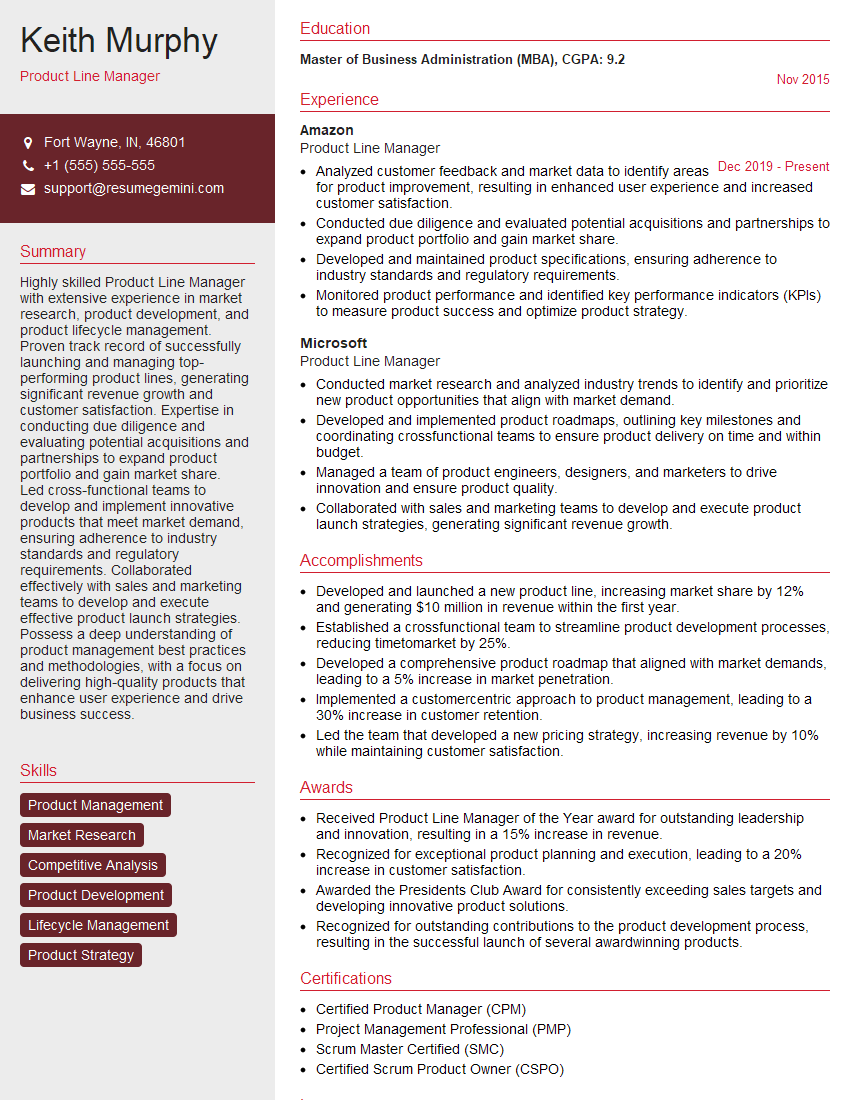
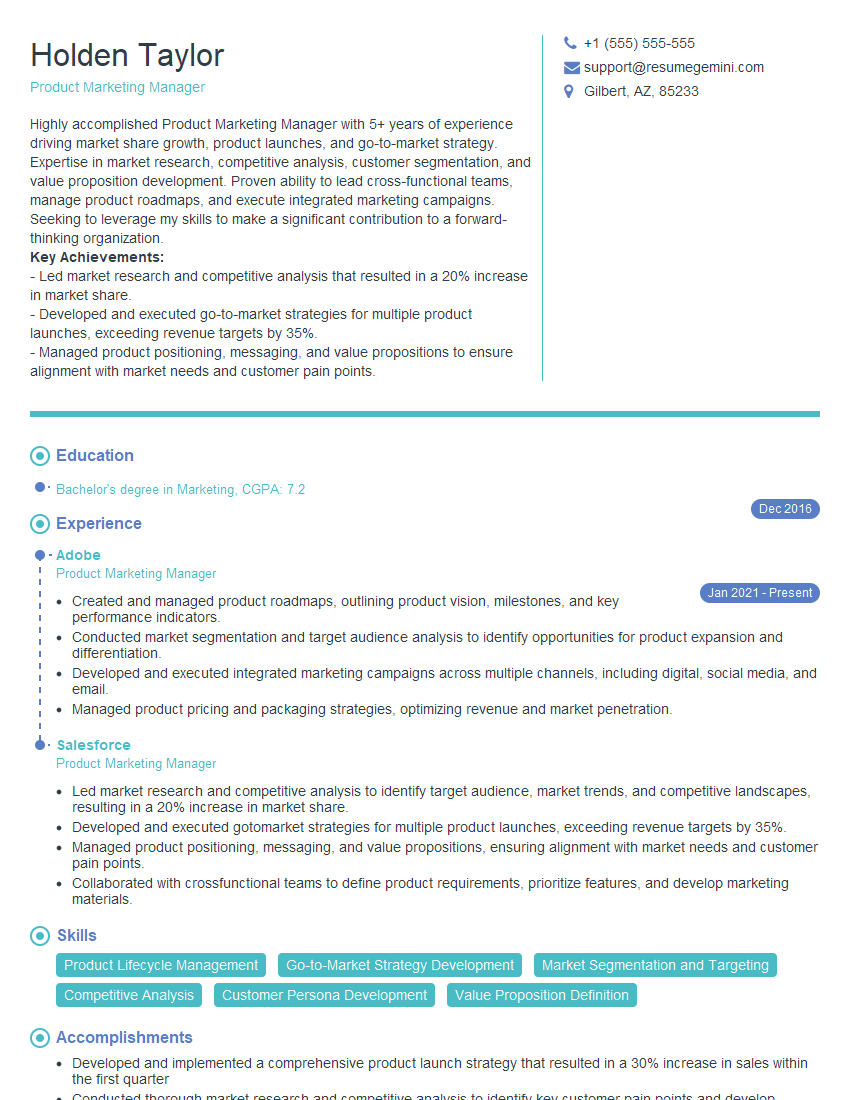
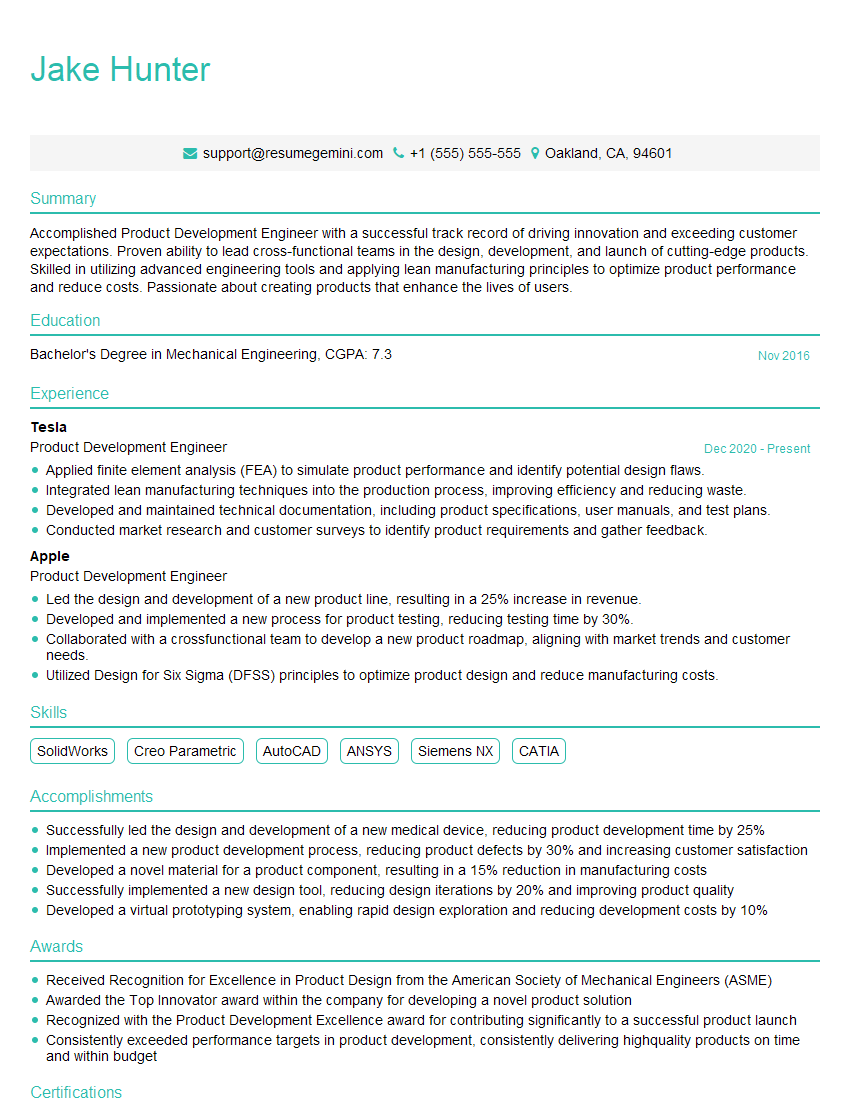
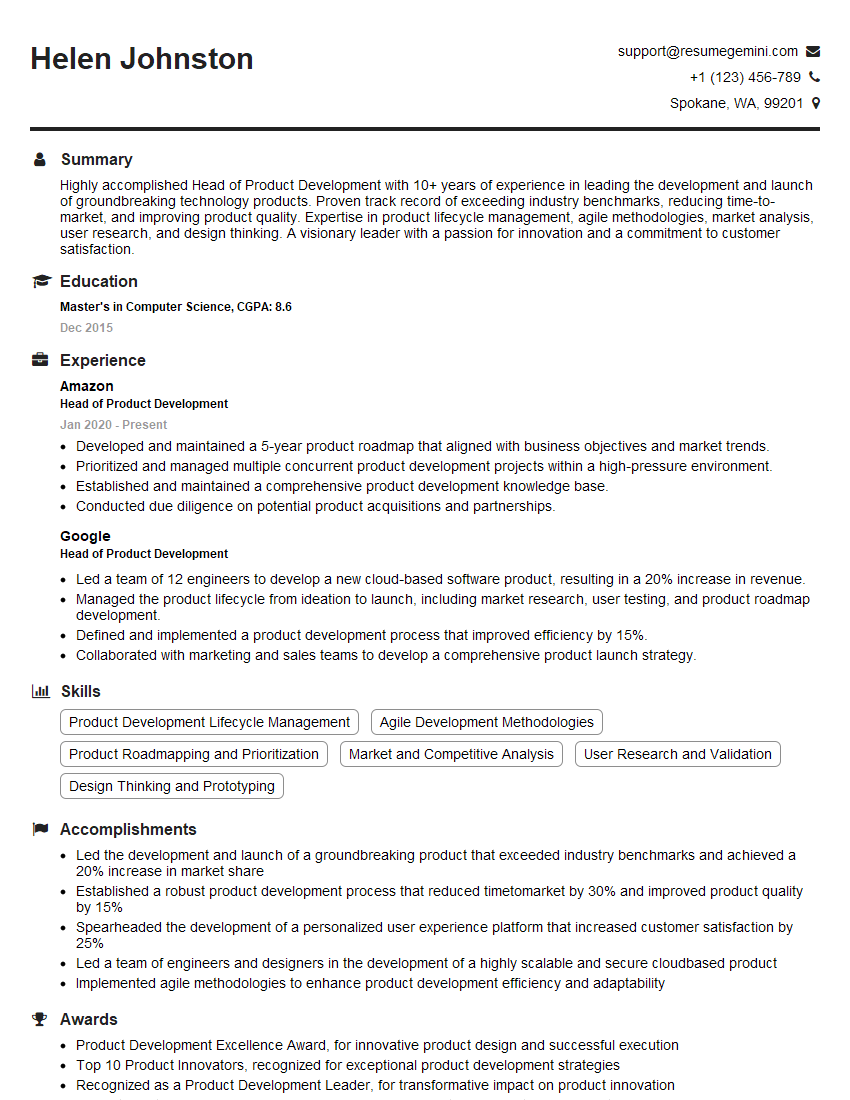
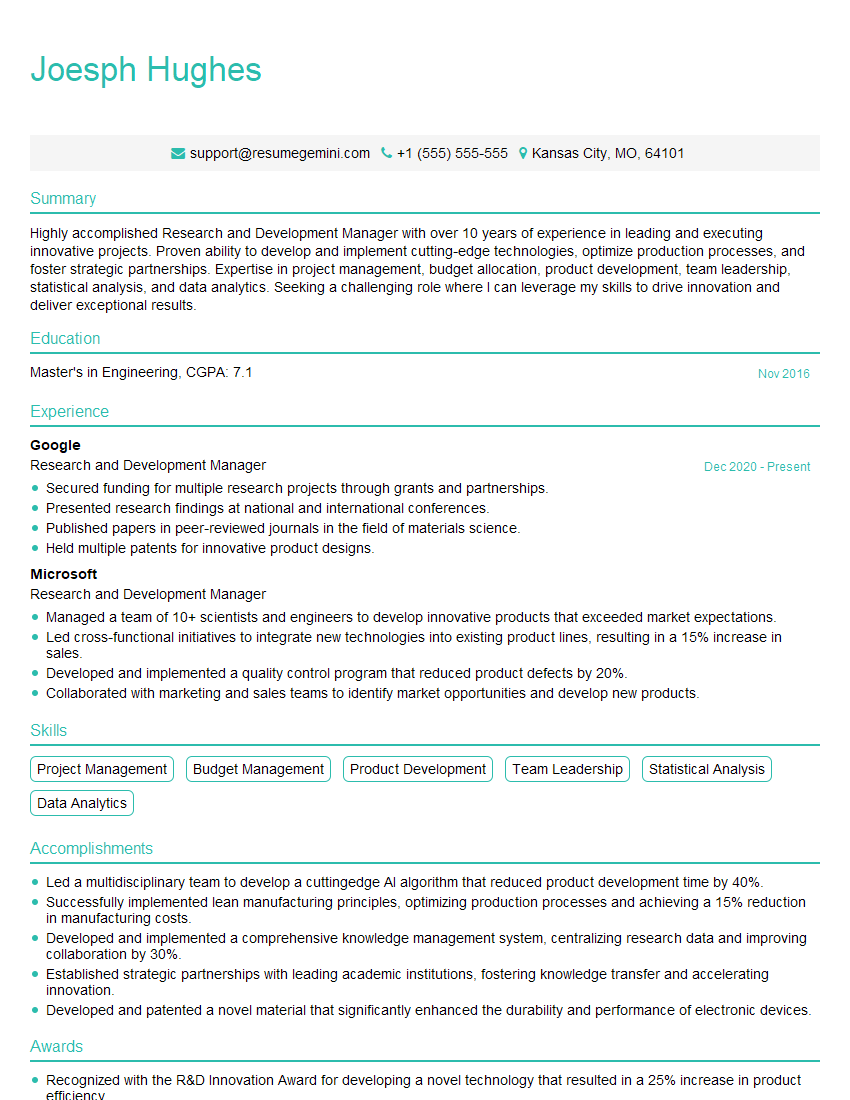
Mastering New Product Development and Launch is crucial for accelerating your career growth in today’s dynamic marketplace. It showcases your ability to think strategically, solve problems creatively, and execute effectively – highly sought-after skills across many industries. To maximize your job prospects, focus on creating a strong, ATS-friendly resume that clearly highlights your relevant skills and experience. ResumeGemini is a trusted resource to help you build a professional resume that stands out. Examples of resumes tailored to New Product Development and Launch are available to help guide you.
Explore more articles
Users Rating of Our Blogs
Share Your Experience
We value your feedback! Please rate our content and share your thoughts (optional).
What Readers Say About Our Blog
Very informative content, great job.
good