Preparation is the key to success in any interview. In this post, we’ll explore crucial News Production interview questions and equip you with strategies to craft impactful answers. Whether you’re a beginner or a pro, these tips will elevate your preparation.
Questions Asked in News Production Interview
Q 1. Describe your experience with newsgathering and verification processes.
News gathering and verification are the cornerstones of responsible journalism. My experience encompasses a multi-faceted approach, starting with identifying credible sources. This involves utilizing a range of methods, from press releases and official statements to on-the-ground reporting and interviews with eyewitnesses. I meticulously evaluate the reliability of each source, considering their potential biases and motivations.
Verification is a rigorous process that involves fact-checking information from multiple independent sources. For example, if reporting on a natural disaster, I wouldn’t solely rely on social media posts. Instead, I would cross-reference information with official government reports, meteorological data, and reports from reputable news organizations. I also utilize techniques like reverse image searches to verify the authenticity of photos and videos. The goal is to build a robust narrative based on confirmed facts, not assumptions.
Furthermore, I am proficient in using open-source intelligence (OSINT) tools and techniques to gather and verify information. This includes using tools that can geolocate images and videos to confirm their origin, as well as analyzing social media trends to understand the evolving narrative of a breaking news event.
Q 2. Explain your familiarity with newsroom software and systems (e.g., ENPS, Avid).
My familiarity with newsroom software is extensive. I’m highly proficient in ENPS (Electronic News Production System) for newsroom workflow management, including story planning, assignment tracking, and script writing. I’m also experienced with Avid Media Composer for video editing, including logging footage, cutting sequences, adding graphics, and creating final broadcast-quality video. I understand the importance of these systems in streamlining the news production process, improving collaboration, and ensuring timely delivery of news content.
Beyond ENPS and Avid, I’m also comfortable using various other software like iNews, Dalet Galaxy, and other newsroom computer systems (NRCS). I am quick to learn new software and adapt my workflow accordingly. For instance, during a recent project, I had to quickly learn to use a new graphic software package in order to meet a tight deadline for a live broadcast, demonstrating my adaptability and willingness to embrace new technologies.
Q 3. How do you prioritize breaking news stories under pressure?
Prioritizing breaking news under pressure requires a calm and methodical approach. My strategy involves a three-step process: Assess, Assign, and Act.
- Assess: I quickly determine the significance and newsworthiness of the breaking news, evaluating its impact and potential audience interest. Is this a local incident or a national crisis? What are the potential consequences?
- Assign: I delegate tasks efficiently to my team members based on their expertise and available resources. I ensure clear communication of roles and responsibilities.
- Act: I monitor the evolving situation, continuously updating our coverage based on new information. This involves making rapid decisions regarding resources, personnel, and story angles while maintaining accuracy and ethical standards.
During a recent political crisis, we used this framework to successfully cover fast-breaking developments. By quickly assessing the situation’s severity, assigning reporters and editors to specific tasks, and constantly updating our coverage, we delivered accurate and timely information to our viewers.
Q 4. What strategies do you use for managing a team in a fast-paced news environment?
Managing a team in a fast-paced news environment calls for clear communication, collaborative spirit, and a supportive leadership style. I believe in fostering a culture of trust and mutual respect within the team. This involves empowering team members, providing constructive feedback, and recognizing their contributions.
I utilize various strategies for effective team management, including regular briefings to keep everyone informed and coordinated, open channels of communication to address concerns promptly, and clear delegation of roles and responsibilities. I also encourage teamwork and cross-training to ensure that the team can effectively handle multiple tasks simultaneously. During busy periods, I focus on ensuring everyone is working efficiently and has the resources needed to perform their tasks well, providing support and encouragement as needed.
For example, I successfully led a team during a major breaking event, effectively delegating assignments, and providing continuous support to maintain the team’s morale. Open communication and a collaborative approach allowed us to maintain accuracy and meet tight deadlines under considerable pressure.
Q 5. Describe your experience with live television production.
I have extensive experience in live television production, from contributing to news segments to directing and producing entire broadcasts. This includes managing all aspects of the production process, including pre-production planning, on-air execution, and post-production review. My understanding of technical aspects, such as camera operation, audio mixing, and graphics insertion, is integral to successful live broadcasts.
I am adept at handling unforeseen events during live broadcasts, such as technical malfunctions or breaking news updates. I maintain composure under pressure, making quick and effective decisions to ensure the smooth continuation of the broadcast. For instance, during a live interview, we experienced a sudden power outage. My experience allowed me to swiftly switch to a backup system and maintain the broadcast with minimal interruption to viewers.
Q 6. How do you ensure the accuracy and fairness of news stories?
Ensuring accuracy and fairness in news stories is paramount. My approach involves a multi-layered verification process, starting with sourcing information from multiple independent and credible sources. I actively seek out diverse perspectives to present a balanced and comprehensive account of the events.
I rigorously fact-check information, using a variety of resources and techniques, including cross-referencing with official documents, reviewing primary sources, and consulting with subject matter experts. I also utilize fact-checking websites and databases. Furthermore, I am meticulous in my attribution, always clearly identifying the sources of information used in the story. This ensures transparency and allows the audience to assess the credibility of the information presented.
For example, in a recent investigative report, I spent several weeks verifying information from multiple sources before publishing, ensuring that the story was both accurate and fair. The story was meticulously fact-checked, and each source was carefully identified to ensure transparency and accountability.
Q 7. Explain your understanding of journalistic ethics and standards.
Journalistic ethics and standards form the foundation of my work. I firmly believe in upholding the principles of truth, accuracy, fairness, and independence. This involves adhering to strict guidelines on sourcing information, avoiding conflicts of interest, and ensuring that my reporting is free from bias.
I understand the importance of protecting the confidentiality of sources when necessary and respecting the privacy of individuals involved in news stories. I am also committed to correcting errors and publishing clarifications promptly should inaccuracies arise. This includes adhering to principles of transparency and accountability and always striving to present information in a context that is both informative and respectful.
My commitment to ethical journalism extends beyond adherence to specific codes; it’s woven into the fabric of my journalistic practice. I strive to uphold the highest standards of integrity, not just for the sake of adhering to rules, but because it is essential for fostering public trust and contributing to a well-informed society.
Q 8. How do you adapt to changing news cycles and breaking news events?
Adapting to the ever-shifting landscape of news is paramount. Think of it like navigating a river – sometimes it’s a calm stream, other times a raging torrent. Breaking news is that torrent. My approach involves a multi-pronged strategy: First, constant monitoring of multiple news sources – social media, wire services (like AP and Reuters), and reputable online news sites. This gives me a 360-degree view of developing situations. Second, I prioritize speed and accuracy. We need to get the information out quickly, but it must be verified. This involves cross-referencing multiple sources and fact-checking rigorously. Finally, flexibility and adaptability are key. News plans are often scrapped and rewritten on the fly. I’m comfortable working under pressure and making quick, informed decisions in dynamic situations. For example, during a major hurricane, I might shift our entire news coverage to focus on real-time updates, coordinating live reports with our reporters in affected areas, while simultaneously adjusting our digital content strategy to ensure maximum reach.
Q 9. Describe your experience with story pitching and development.
Story pitching and development is the heart of news production. It’s about identifying compelling narratives and shaping them into engaging stories. I begin with brainstorming sessions, considering current events, audience interests, and potential angles that haven’t been explored. Then comes research – scouring databases, interviewing sources, and verifying facts. A good story pitch includes a compelling hook, a clear narrative structure, and a well-defined target audience. For example, I recently pitched a story on the impact of climate change on local agriculture, focusing on the experiences of individual farmers. This allowed us to go beyond dry statistics and connect with the audience on a human level. Developing the story then involves outlining the structure, assigning tasks to reporters, managing interviews, and ensuring fact-checking and accuracy throughout the process.
Q 10. How do you collaborate effectively with reporters and other newsroom personnel?
Collaboration is essential in news production. Think of it as an orchestra – each instrument (reporter, editor, producer, etc.) plays a vital role, but only in harmony does it create beautiful music. I foster effective collaboration by employing clear communication, regular meetings, and a shared understanding of goals and deadlines. I use project management tools to track progress and ensure transparency. Regular check-ins, both formally and informally, allow for open dialogue, the quick resolution of problems, and a sense of shared ownership. For instance, during the production of a complex investigative report, I would regularly meet with the reporters to discuss progress, address any challenges, and offer feedback on their work. I facilitate feedback sessions where everyone has a voice and ideas are valued. Open, honest communication, mutual respect, and a commitment to the team’s success are key to ensuring the success of our output.
Q 11. How do you handle conflicting priorities and deadlines?
Conflicting priorities and deadlines are inevitable in a fast-paced news environment. My approach is a structured one: I start by prioritizing tasks based on urgency and importance. This often involves using a system like the Eisenhower Matrix (urgent/important). Then, I break down large tasks into smaller, manageable components to make them less daunting. I use project management tools to visualize timelines and track progress. Open communication with team members is crucial to ensure everyone understands the priorities and is working towards the same goals. I’m also not afraid to say ‘no’ if taking on another task compromises the quality of existing assignments. Think of it like a juggler – you can only handle so many balls before you drop one. Knowing your limits and saying no when necessary is vital for maintaining quality and delivering on time.
Q 12. What are your preferred methods for content distribution?
Content distribution in the digital age requires a multifaceted strategy. I leverage various platforms to reach the widest possible audience. This includes our own website, social media platforms (Twitter, Facebook, Instagram), and partnerships with other news outlets. We use data analytics to understand which platforms and content formats are most effective and tailor our approach accordingly. For example, short, impactful video clips work well on platforms like Instagram, while longer-form articles are better suited for our website. We also use email newsletters and push notifications to ensure that our audience receives timely updates. It’s about being where our audience is and delivering the content in a format they prefer. This requires constant monitoring and adjustment based on audience engagement and platform trends.
Q 13. Describe your experience with writing news scripts and headlines.
Writing clear, concise news scripts and headlines is crucial for effective communication. For scripts, I focus on simplicity, clarity, and accuracy. The language should be easily understood by the average viewer, avoiding jargon and overly complex sentence structures. The script should also flow smoothly and naturally. Headlines should be concise and attention-grabbing, accurately reflecting the story’s content. I often use the inverted pyramid style for both scripts and headlines – leading with the most important information first. For example, a headline might be “Local Family Reunited After Years Apart,” while the script would start with the most important details before moving to the background information. The goal is to convey the essence of the story quickly and effectively.
Q 14. How do you maintain the quality and consistency of news output?
Maintaining quality and consistency in news output requires a rigorous approach. This includes establishing and enforcing clear editorial guidelines, employing robust fact-checking processes, and providing regular training and feedback to staff. We use a multi-layered editing system, involving several checks and balances before publication. This involves copy editing, fact-checking, and a final review by a senior editor. We also utilize style guides to maintain consistency in grammar, spelling, and formatting. Regular performance reviews and feedback sessions help to identify and address any areas needing improvement. Finally, gathering audience feedback through surveys and social media monitoring helps us gauge the effectiveness of our work and identify areas for improvement. It’s a continuous process of refinement, aiming for accuracy, objectivity, and ethical reporting.
Q 15. How do you use social media to promote news stories?
Social media is a crucial tool for promoting news stories, acting as a direct line to the audience and a powerful platform for engagement. My strategy involves a multi-pronged approach. First, I optimize content for each platform. This means tailoring the length and format of posts to suit the specific platform – a short, impactful tweet on Twitter is different from a detailed Facebook post with visuals. Secondly, I use targeted advertising to reach specific demographics. For example, if we have a story about local politics, we’d target users in that specific geographic area interested in political news. Thirdly, I actively engage with users, responding to comments and questions, fostering a sense of community and building trust. Finally, I monitor analytics closely, tracking metrics such as reach, engagement, and click-through rates to optimize future campaigns. For example, if a particular hashtag proves successful, we will incorporate it into future strategies. This data-driven approach ensures that we’re reaching our target audience effectively and maximizing the impact of our news stories.
Career Expert Tips:
- Ace those interviews! Prepare effectively by reviewing the Top 50 Most Common Interview Questions on ResumeGemini.
- Navigate your job search with confidence! Explore a wide range of Career Tips on ResumeGemini. Learn about common challenges and recommendations to overcome them.
- Craft the perfect resume! Master the Art of Resume Writing with ResumeGemini’s guide. Showcase your unique qualifications and achievements effectively.
- Don’t miss out on holiday savings! Build your dream resume with ResumeGemini’s ATS optimized templates.
Q 16. What experience do you have with video editing software?
I’m proficient in several video editing software packages, including Adobe Premiere Pro, Final Cut Pro, and DaVinci Resolve. My experience encompasses all aspects of the video editing process, from ingesting footage and color correction to adding graphics, sound effects, and music, and finally exporting the finished product in various formats for optimal distribution across different platforms. In Premiere Pro, for instance, I’m adept at using keyframing for precise control of animations and transitions, while in Final Cut Pro I leverage its intuitive interface for quick and efficient editing, especially for news segments with tight deadlines. My expertise extends to managing large projects, collaborating with other editors, and adhering to strict broadcast standards. I’ve also had experience with simpler tools like iMovie for creating quick social media snippets.
Q 17. Explain your understanding of different news formats (e.g., TV, online, social media).
News formats differ significantly in their delivery method, audience engagement, and content style. Television news prioritizes visual storytelling, concise narratives, and immediate impact. Online news offers greater depth, multimedia integration (like photos, videos, and interactive elements), and opportunities for user interaction through comments sections. Social media news prioritizes brevity, shareability, and visual appeal, often incorporating real-time updates and interactive features. For example, a breaking news event might be initially covered with a short, impactful video clip on social media, followed by a more detailed written report on the website, and ultimately a longer analysis on a TV news broadcast. Understanding these nuances is vital to crafting compelling and effective news content that reaches the broadest possible audience on every platform.
Q 18. How do you ensure that all aspects of the news production are compliant with legal regulations?
Legal compliance is paramount in news production. We adhere to strict guidelines regarding defamation, libel, privacy, copyright, and intellectual property rights. Our process involves fact-checking sources meticulously, obtaining permissions for using copyrighted material, carefully considering the privacy implications of published information, and ensuring that all statements are accurate and fair. Our legal team reviews significant stories before publication, and our editorial team receives regular training on legal and ethical considerations. We also maintain detailed records of all our sources and materials to ensure accountability and transparency. For example, before publishing an interview, we’d obtain consent for broadcast and clarify any potential legal concerns.
Q 19. Describe a challenging news production situation and how you overcame it.
During a major hurricane, our team faced a significant challenge. Our primary communication channels were down, and we had to quickly adapt to maintain our news coverage. We immediately established alternative communication methods using satellite phones and backup generators to power our equipment. We leveraged social media to gather information directly from citizens in affected areas. We also collaborated with other news organizations to share resources and information, effectively creating a collaborative network. While the situation was incredibly stressful, our team’s quick thinking, adaptability, and collaborative spirit allowed us to provide crucial updates to the public throughout the crisis. This experience reinforced the importance of disaster preparedness and the strength of collaborative journalism.
Q 20. What metrics do you use to measure the success of news content?
Measuring the success of news content requires a multifaceted approach. We track website traffic (page views, unique visitors, time on site), social media engagement (likes, shares, comments), audience feedback (survey responses, comments), and search engine rankings (SEO performance). Furthermore, we monitor the impact of our stories – did it generate public discourse, influence policy, or raise awareness about a critical issue? We also look at our distribution metrics across our different platforms, comparing reach and engagement across social media, our website, and television. A high viewership for a TV segment combined with strong social media engagement around the same story indicates a successful and impactful news piece.
Q 21. How do you stay current with industry trends and technologies?
Staying current in this fast-paced industry requires a proactive approach. I regularly attend industry conferences and workshops, subscribe to relevant publications, and actively participate in online communities and forums dedicated to news production and journalism. I also dedicate time to experimenting with new technologies and software, testing their applicability to newsgathering and dissemination. For example, exploring the use of AI-powered tools for transcription or video editing can enhance efficiency and streamline workflows. Continuous learning is essential to remain competitive and adapt to evolving industry trends and technologies.
Q 22. Explain your experience with budgeting and resource allocation in news production.
Budgeting and resource allocation in news production is a crucial aspect of ensuring efficient and effective newsgathering and dissemination. It involves strategically allocating financial resources and personnel to maximize impact while staying within budgetary constraints. This process starts with defining objectives – what stories are we prioritizing, what platforms are we using, and what is our desired reach? Then comes the breakdown: we allocate funds for personnel (reporters, editors, camera crews, etc.), equipment (cameras, editing software, microphones), travel, and other operational expenses.
For example, a breaking news event might necessitate a larger allocation of resources than a planned investigative piece. We might need to prioritize sending multiple crews to the scene, allocate extra hours for editing and rapid distribution, and perhaps even increase our social media budget for wider reach. Conversely, a long-term investigative project might require a smaller team but a longer-term budget commitment for research and interviews. I’ve used project management software to track spending, resource utilization, and deadlines, ensuring transparency and accountability across the team. Efficient allocation also includes exploring cost-effective solutions without compromising quality, such as leveraging free or open-source software, strategic partnerships, and optimizing workflows.
Q 23. How do you incorporate audience feedback into your content strategy?
Incorporating audience feedback is paramount for producing relevant and engaging news content. This involves a multi-pronged approach. Firstly, we actively monitor social media engagement: likes, shares, comments, and the overall sentiment expressed towards our content. This gives us immediate insight into what resonates with our audience and what doesn’t. Secondly, we use analytics tools that provide deeper insights into audience demographics, consumption patterns, and platform preferences. This helps tailor content formats and delivery methods to specific segments.
For instance, if we see a high engagement rate on a specific type of video content, we’ll produce more similar pieces. If we notice a particular article generated a lot of negative feedback, we’ll analyze the reasons and modify our approach in future publications. Furthermore, we actively seek direct feedback through polls, surveys, and focus groups. This provides qualitative data that complements the quantitative insights from analytics. This direct feedback loop allows us to constantly iterate and improve our content strategy, ensuring it remains relevant and responsive to the needs and expectations of our audience.
Q 24. What is your understanding of the importance of diversity and inclusion in news?
Diversity and inclusion are not just buzzwords; they are fundamental to producing credible and representative news. A newsroom that reflects the diversity of its audience is better equipped to understand and serve that audience. It ensures that diverse perspectives are represented in the stories we tell, and prevents biases from shaping our narratives. This involves conscious efforts in hiring practices, ensuring equitable opportunities for all staff, and promoting inclusive workplace culture. It also manifests in the content we produce: actively seeking diverse sources, representing different viewpoints, and avoiding perpetuating harmful stereotypes.
For example, if we are covering a community event, we ensure our reporting team includes individuals who represent the various demographics of that community, ensuring stories are reported with cultural sensitivity and understanding. We also actively challenge assumptions within our own team to ensure our own biases aren’t influencing editorial decisions. Ultimately, embracing diversity and inclusion not only elevates our journalistic integrity, but also strengthens our connection with a wider, more engaged audience.
Q 25. How do you handle difficult interviews or challenging interview subjects?
Handling difficult interviews or challenging interview subjects requires a combination of preparation, tact, and strong communication skills. Thorough research is key: the more you know about your subject and their background, the better you can anticipate potential challenges and formulate appropriate questions. It’s also crucial to establish a rapport with the interviewee, creating a safe and respectful environment for open communication. Remember to listen actively, even when faced with evasive answers or hostility. Polite but firm redirection is often necessary; for example, if an interviewee deviates from the topic, you might say, “That’s interesting, but let’s circle back to [original question]”.
In cases of highly sensitive or emotional topics, it’s important to be empathetic and compassionate, always prioritizing the safety and well-being of the interviewee. I have found that stating my intentions clearly and respectfully before beginning the interview, emphasizing the importance of their perspective, helps significantly in easing tension. If conflict arises, I maintain a calm demeanor, allowing the interviewee to express their views while remaining focused on obtaining relevant information. Post-interview, careful editing is crucial, ensuring that the interview is both accurate and fair to all parties involved.
Q 26. Describe your understanding of copyright and intellectual property in news production.
Copyright and intellectual property are crucial aspects of news production. Essentially, copyright protects original creative works, including written articles, photographs, and video footage. Using copyrighted material without permission is infringement and can result in legal repercussions. Understanding fair use is vital. This doctrine allows for limited use of copyrighted material for purposes such as criticism, commentary, news reporting, teaching, scholarship, or research. However, fair use is not a blanket exemption and its applicability depends on specific factors such as the nature of the use, the amount used, and the effect on the market.
In practice, our newsroom adheres to strict guidelines for acquiring permissions for using copyrighted material. We have a process for verifying ownership, obtaining necessary licenses, and properly attributing sources. This includes careful documentation of every image, video clip, or audio recording used in our news production, along with details of permissions granted. We also regularly train our staff on copyright law and best practices to minimize the risks of infringement and ensure compliance. Ignoring copyright laws can significantly damage a news organization’s reputation and could result in costly legal battles.
Q 27. How do you balance speed and accuracy in a news environment?
Balancing speed and accuracy in news is a constant challenge. Speed is essential in breaking news, allowing us to inform the public quickly; however, accuracy is paramount to maintain credibility and trust. We employ a multi-layered approach to achieve this balance. This includes having a dedicated fact-checking team that verifies information from multiple sources before publication. We prioritize verifying information from credible sources, cross-referencing details with other reputable outlets, and utilizing fact-checking tools and databases.
For breaking news, we might publish an initial report with essential information, acknowledging that it is still developing and might be updated. As more information becomes available and verified, subsequent updates are issued, ensuring accuracy while maintaining a timely delivery of information. We also emphasize the importance of using clear and concise language to avoid ambiguity or misinterpretations. Training staff in rapid fact-checking methodologies, utilizing collaborative editing tools, and establishing clear editorial guidelines are crucial for achieving this delicate balance between speed and accuracy.
Q 28. Explain your experience with fact-checking and verification processes
Fact-checking and verification are integral parts of maintaining journalistic integrity. It’s a multi-step process involving multiple sources and verification methods. It begins with source verification: we rigorously check the credibility of our sources, assessing their expertise, potential biases, and track record. We cross-reference information obtained from one source with information from other independent and reliable sources. When dealing with numerical data or statistics, we check for accuracy and ensure data integrity. For visual evidence such as photos or videos, we verify their authenticity using reverse image search, analyzing metadata, and checking the source’s reputation.
For example, when reporting on a controversial claim, we won’t rely on a single source; instead, we seek out multiple independent sources to confirm the claim’s accuracy. If there are conflicting accounts, we carefully analyze each one, identifying potential biases and inconsistencies. We also utilize fact-checking databases and specialized tools to verify information such as dates, locations, and events. This rigorous process, coupled with detailed documentation of sources and verification methods, is critical for producing accurate and reliable news reports and ensures the organization’s commitment to ethical journalism. This process also includes acknowledging any uncertainties or limitations in our verification efforts.
Key Topics to Learn for News Production Interview
- News Gathering and Verification: Understanding different sources, verifying information, and ethical considerations in sourcing.
- Story Selection and Development: Identifying newsworthy events, crafting compelling narratives, and structuring stories for various platforms (TV, radio, online).
- Writing for Broadcast: Mastering concise and impactful writing styles suitable for different media, including scripts for on-air talent.
- Editing and Post-Production: Familiarization with editing software, audio and video techniques, and ensuring high-quality output.
- Live News Production: Understanding the fast-paced nature of live broadcasts, managing breaking news situations, and working effectively under pressure.
- Workflow and Collaboration: Effectively collaborating with reporters, editors, and on-air talent; understanding production workflows and deadlines.
- Digital Media and Social Media Integration: Utilizing digital platforms for news dissemination, engaging audiences online, and understanding social media best practices in news.
- Technical Aspects: Basic understanding of broadcasting equipment, digital media workflows, and common production challenges.
- Legal and Ethical Considerations: Awareness of copyright, defamation, and other legal and ethical issues in news production.
Next Steps
Mastering News Production opens doors to exciting and impactful careers in journalism and media. A strong foundation in these skills significantly enhances your employability and positions you for growth within the industry. To maximize your job prospects, creating an ATS-friendly resume is crucial. This ensures your application is effectively scanned and noticed by hiring managers. ResumeGemini can help you build a professional and impactful resume tailored to the specific requirements of News Production roles. Examples of resumes optimized for this field are available to guide you through the process.
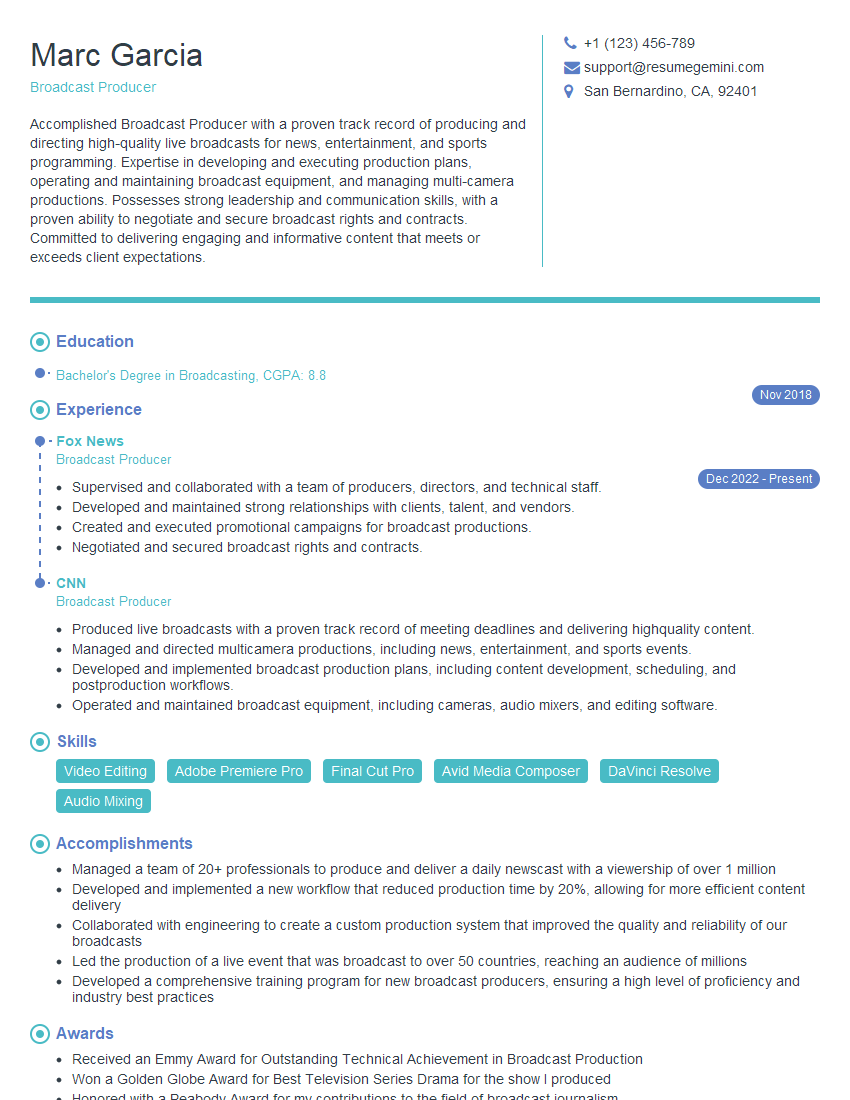
Broadcast Producer Resume Sample

Assignment Editor Resume Sample
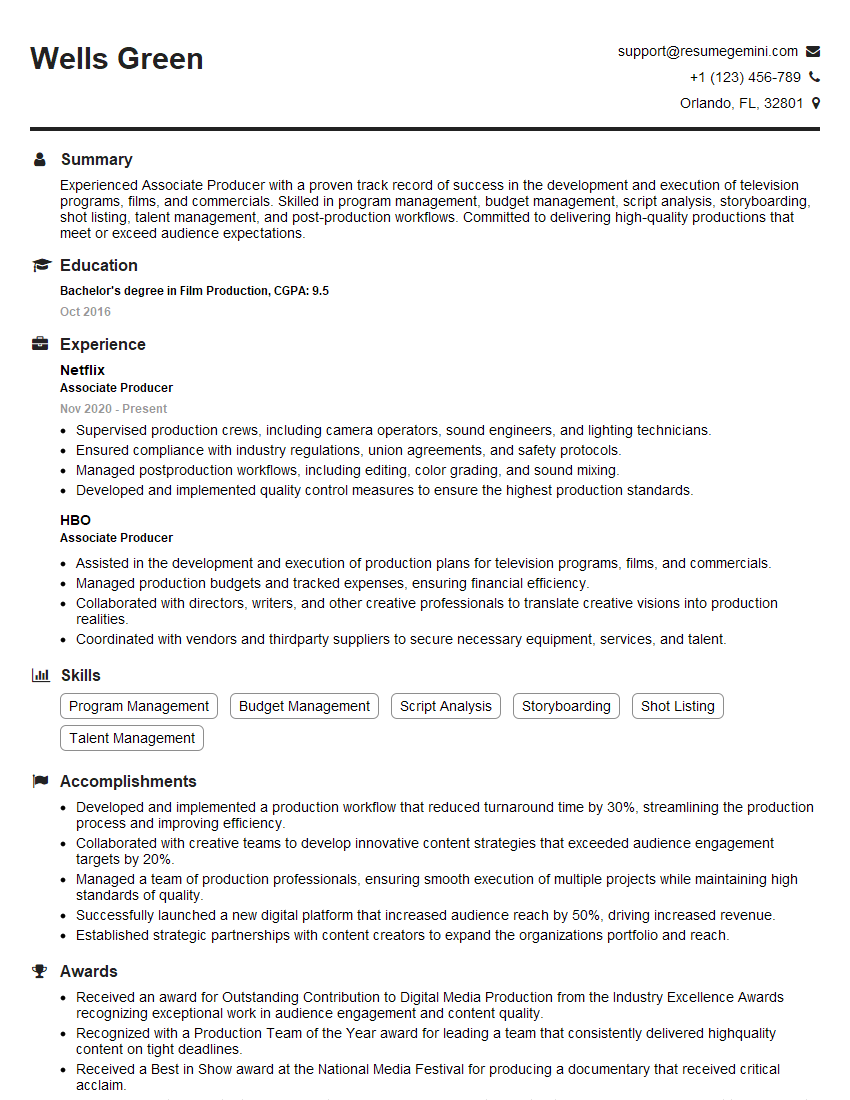
Associate Producer Resume Sample
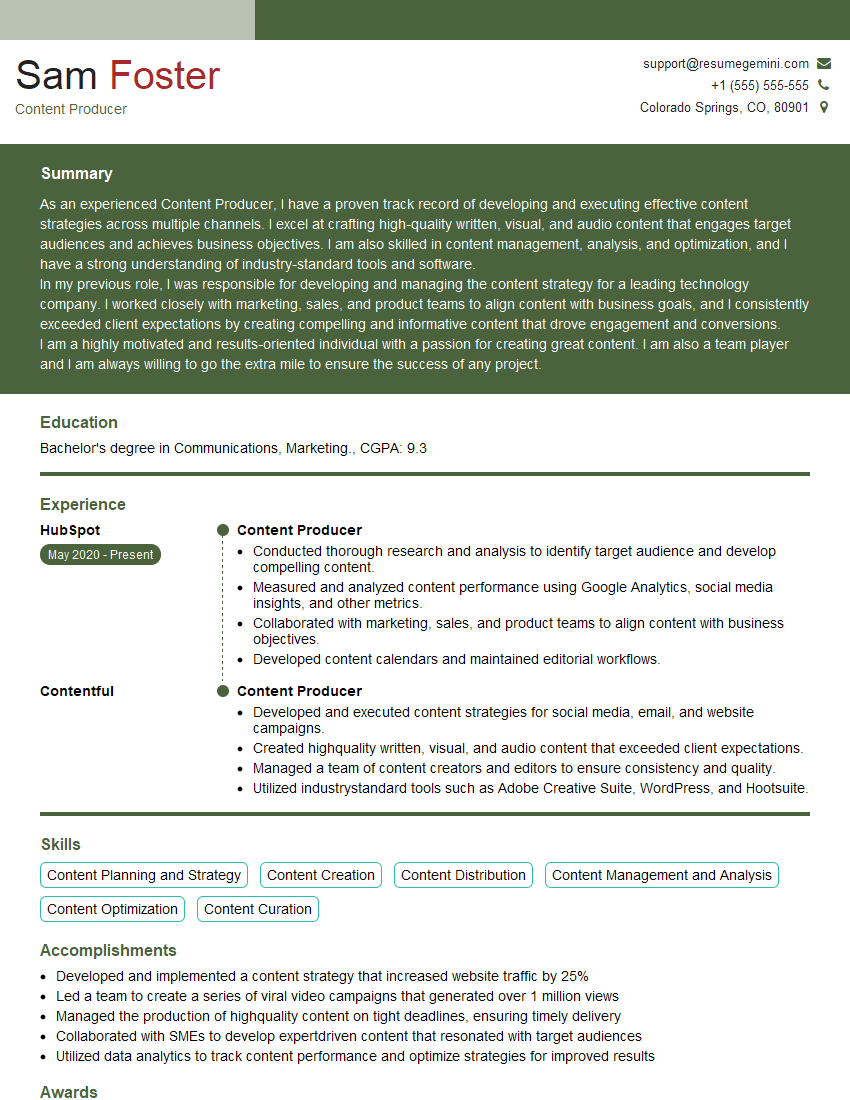
Content Producer Resume Sample
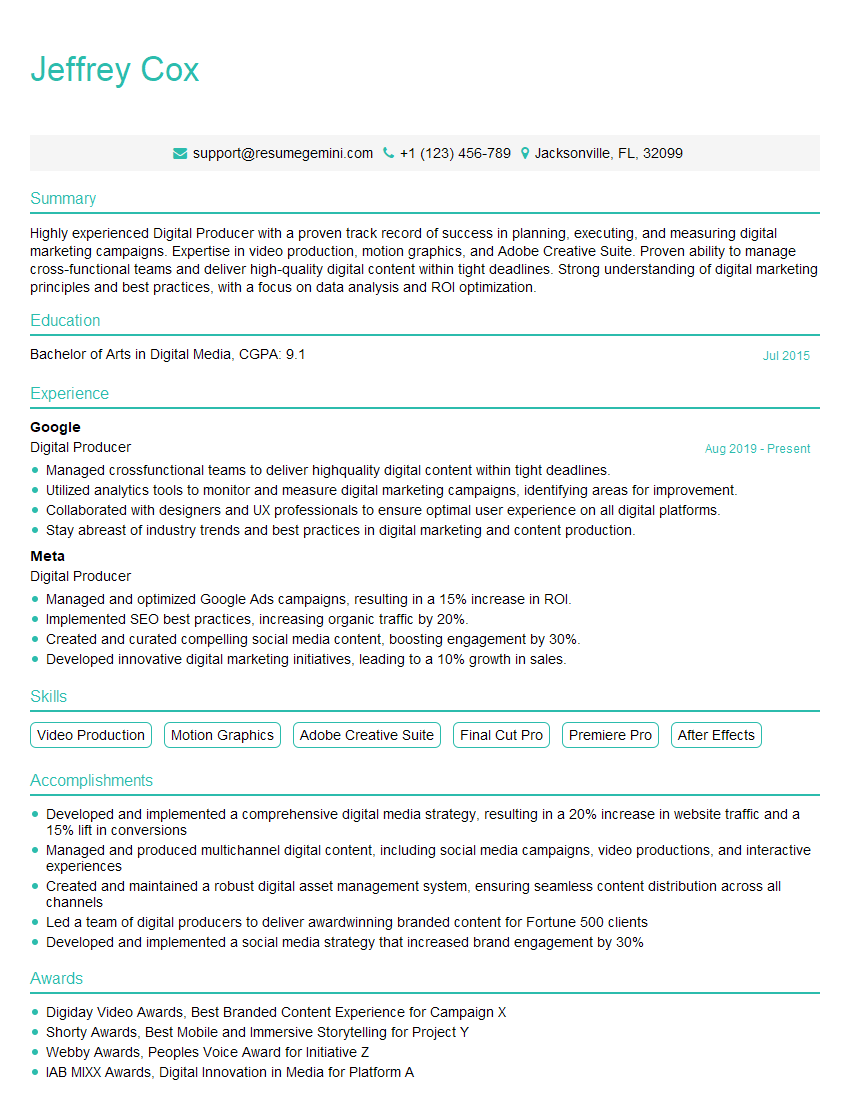
Digital Producer Resume Sample
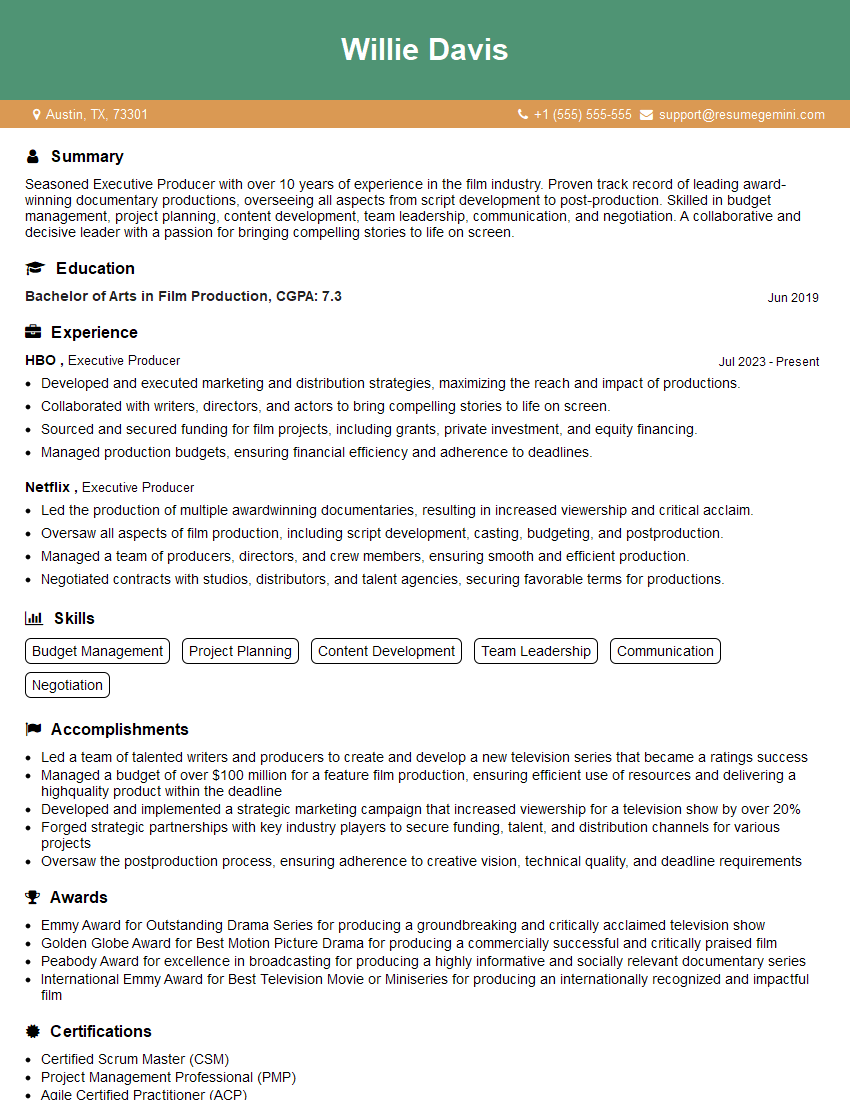
Executive Producer Resume Sample
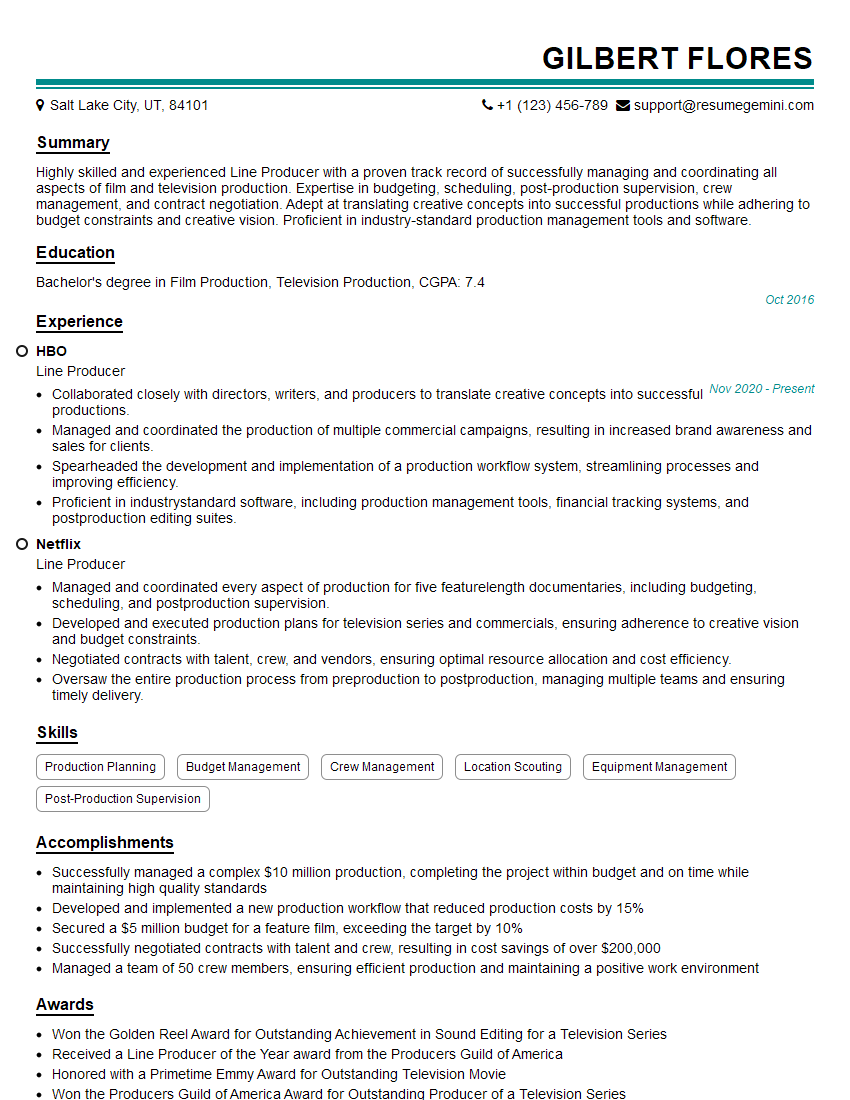
Line Producer Resume Sample
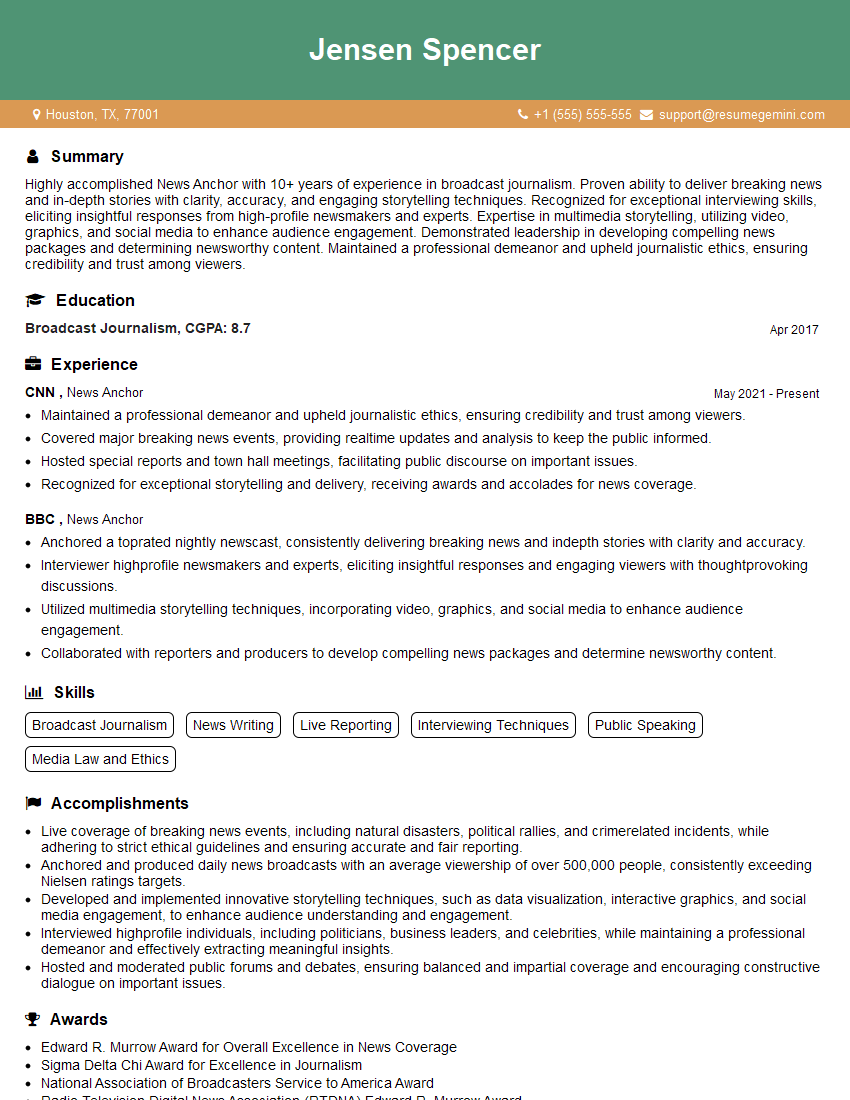
News Anchor Resume Sample
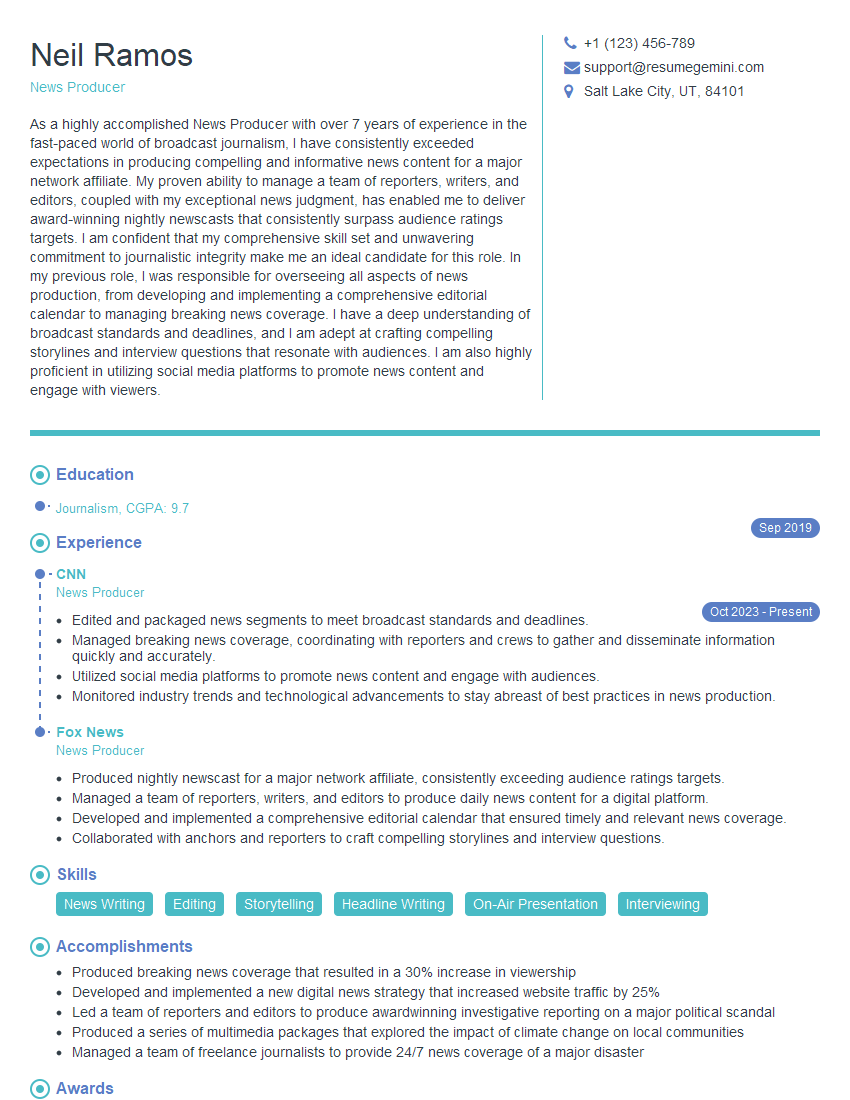
News Producer Resume Sample
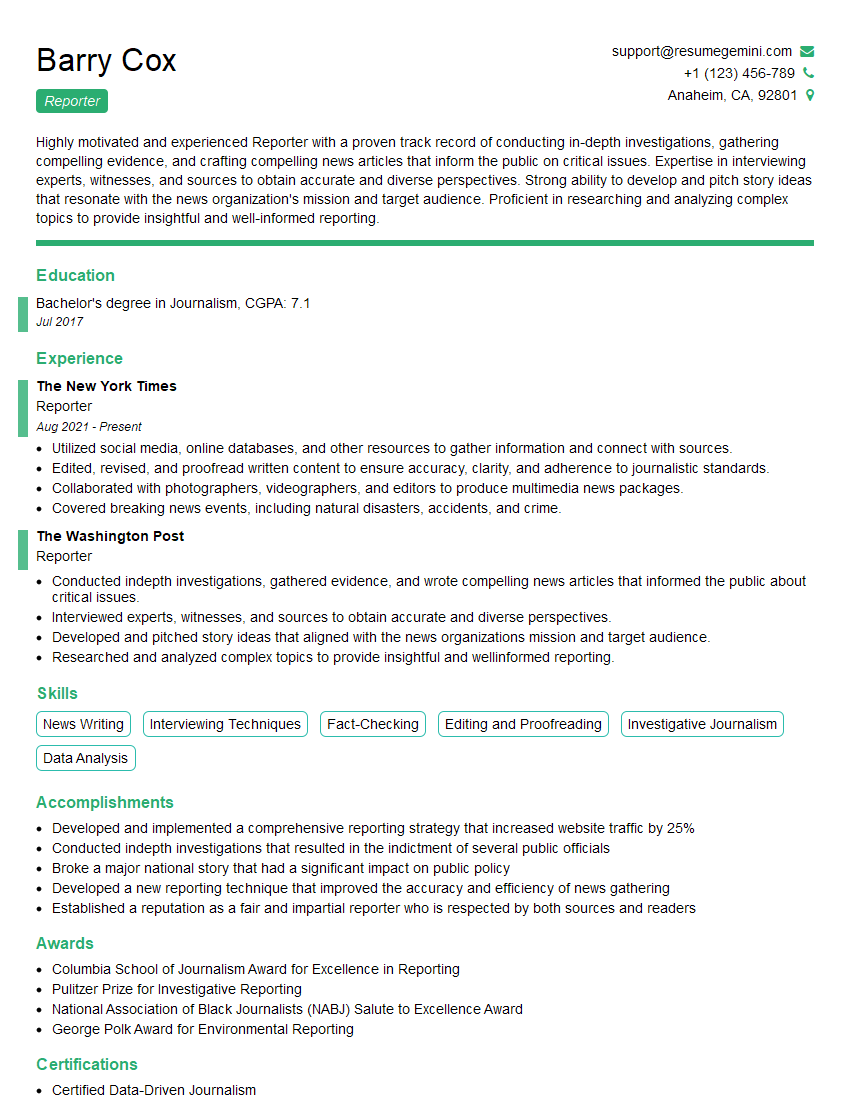
Reporter Resume Sample
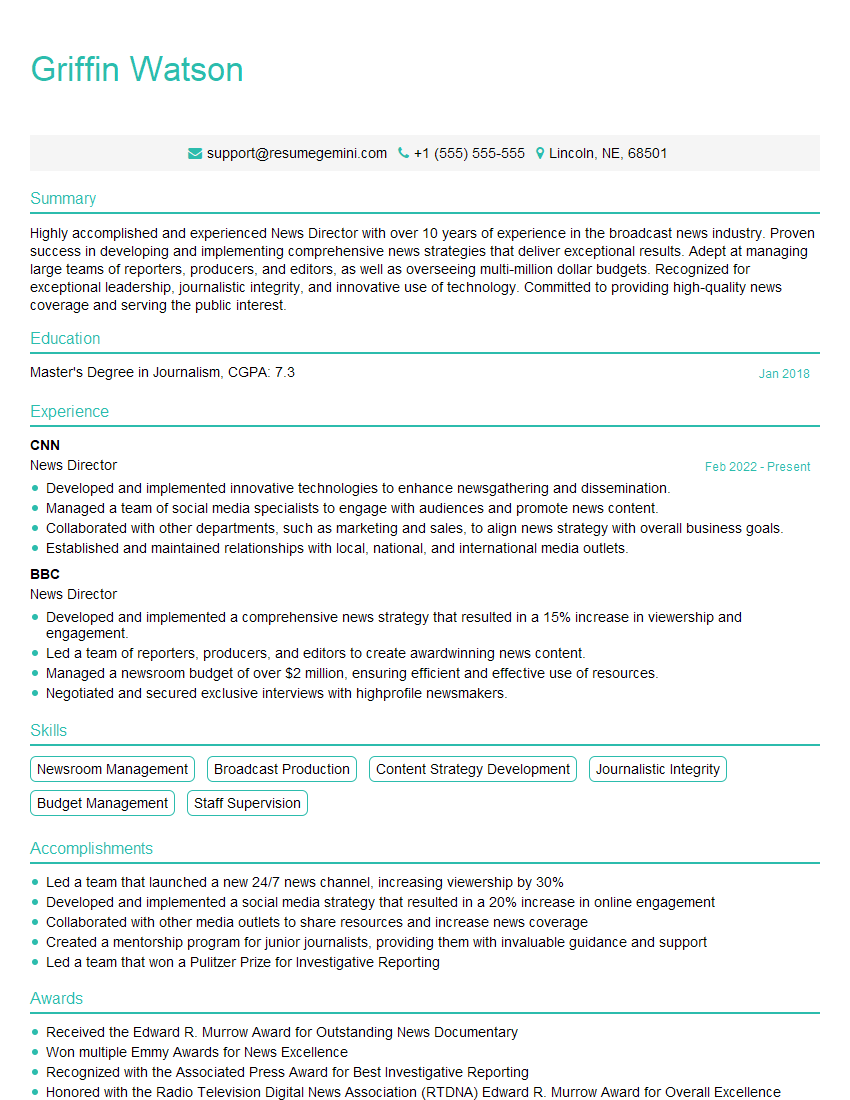
News Director Resume Sample
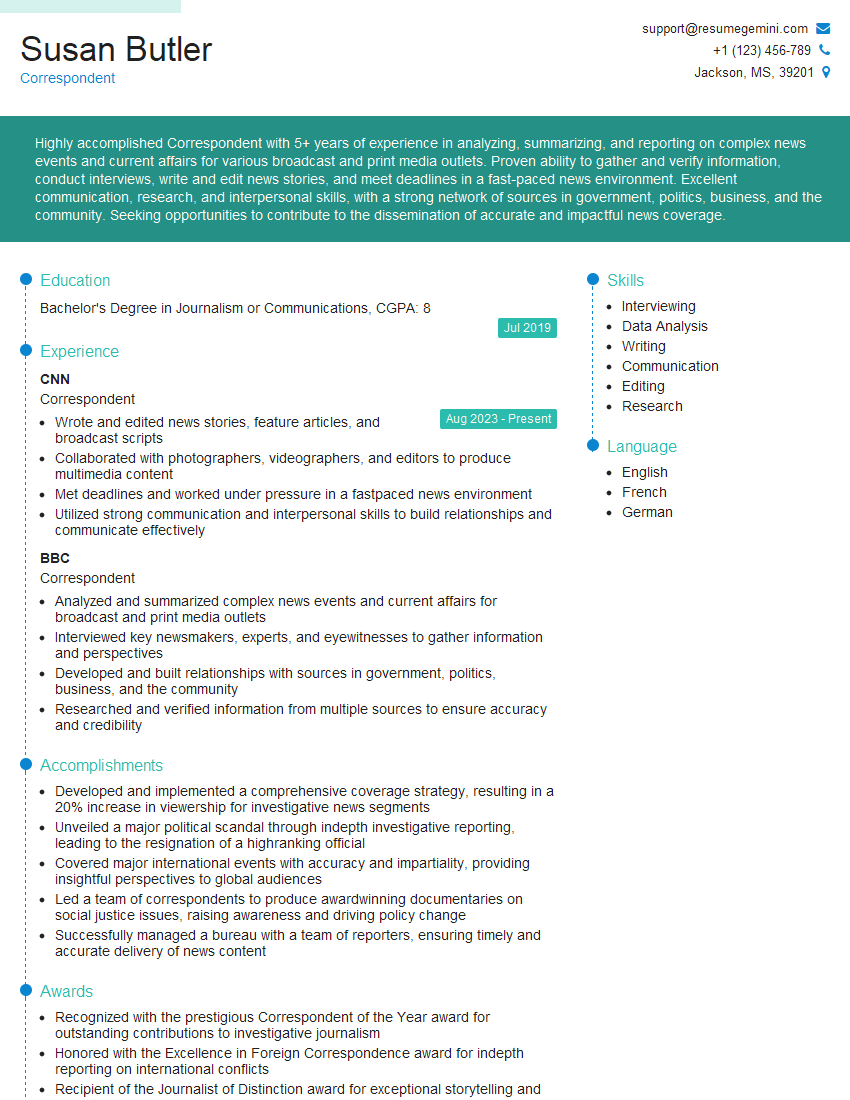
Correspondent Resume Sample
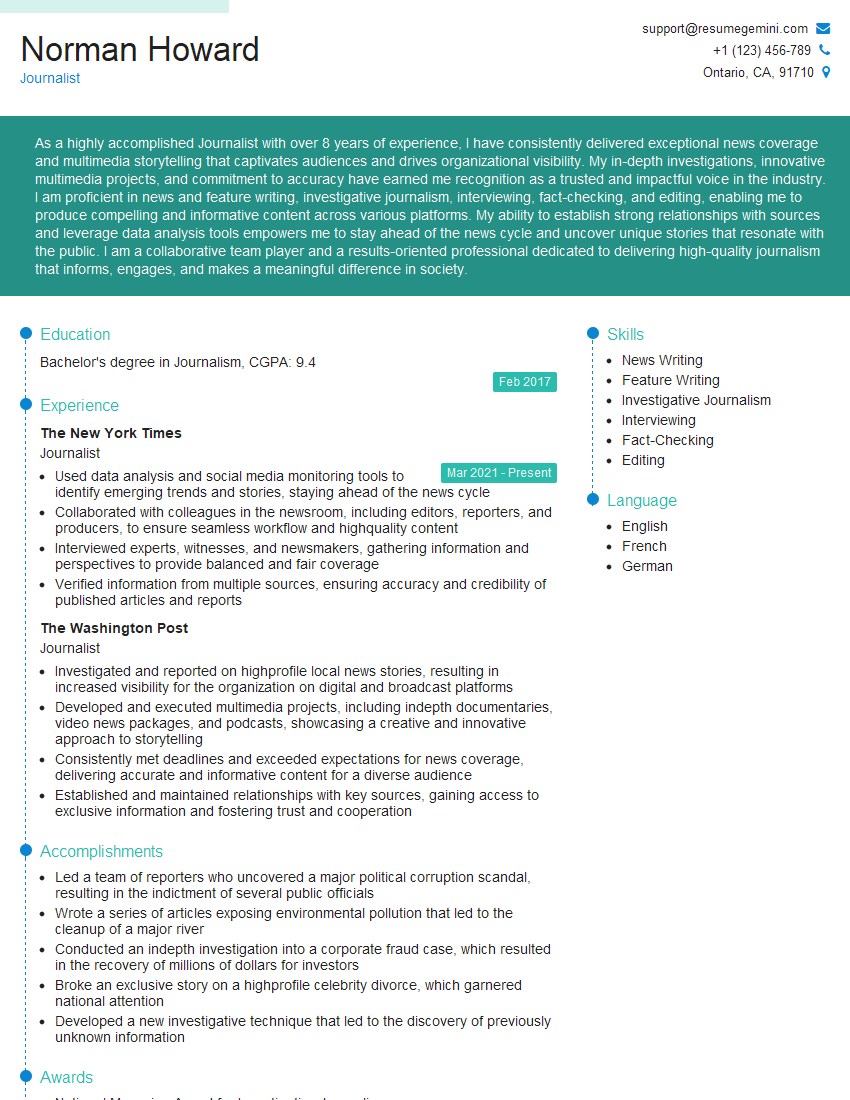
Journalist Resume Sample
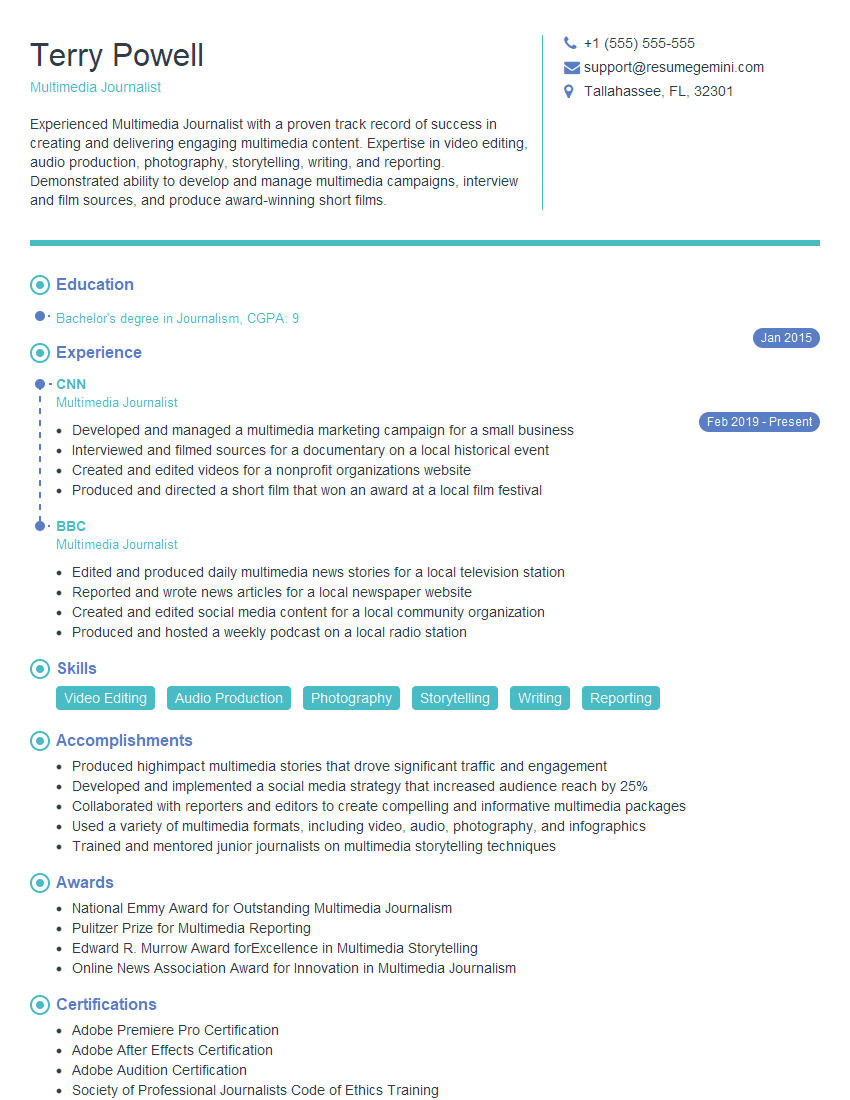
Multimedia Journalist Resume Sample
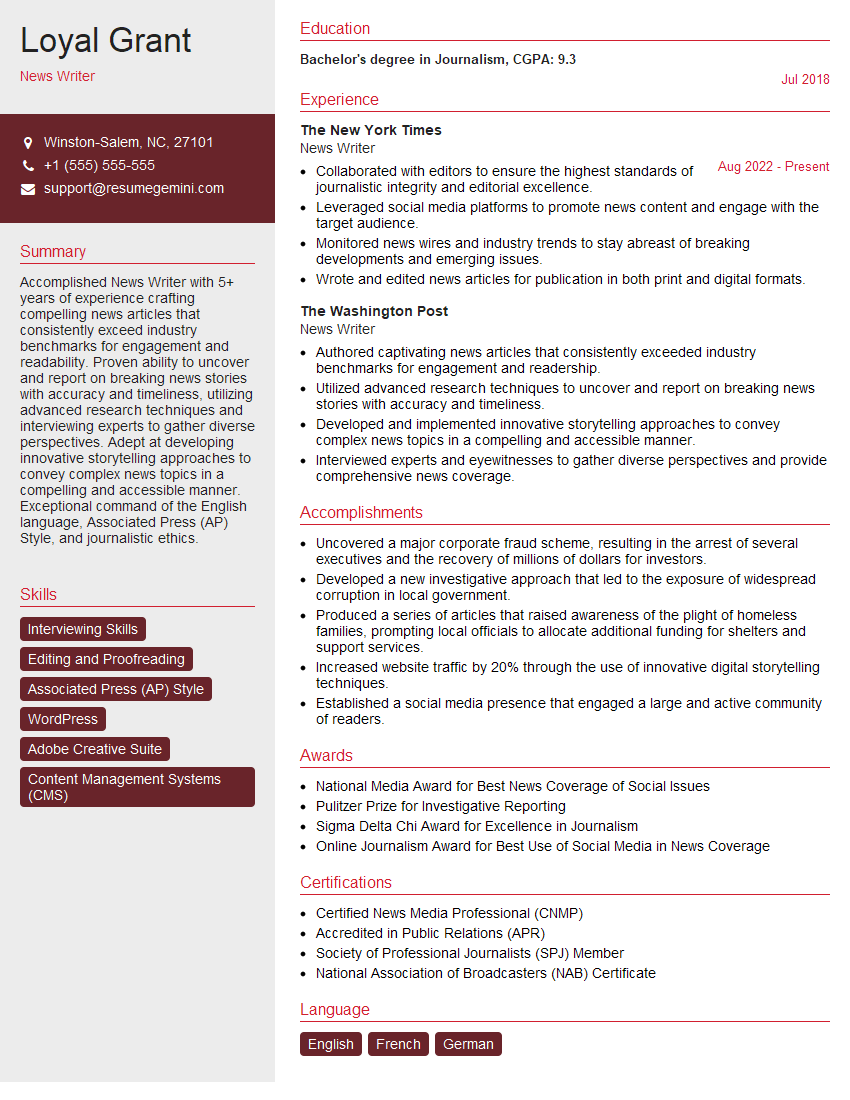
News Writer Resume Sample
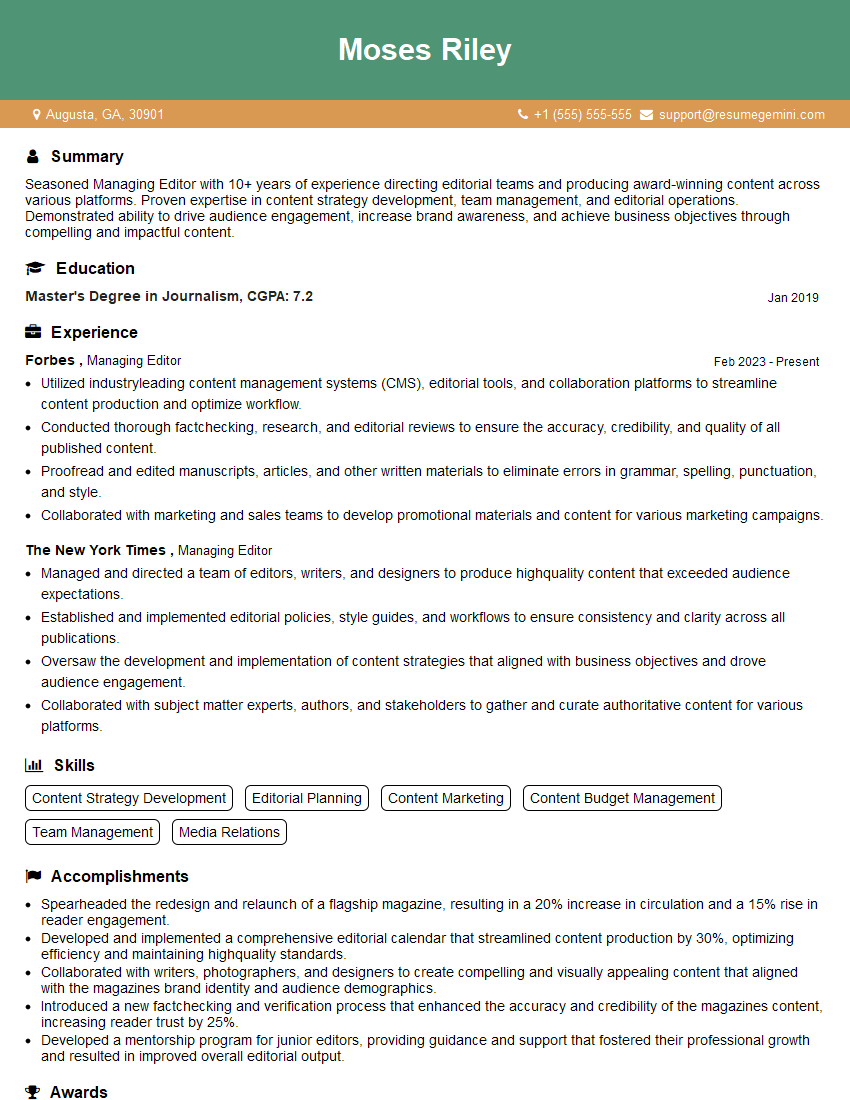
Managing Editor Resume Sample
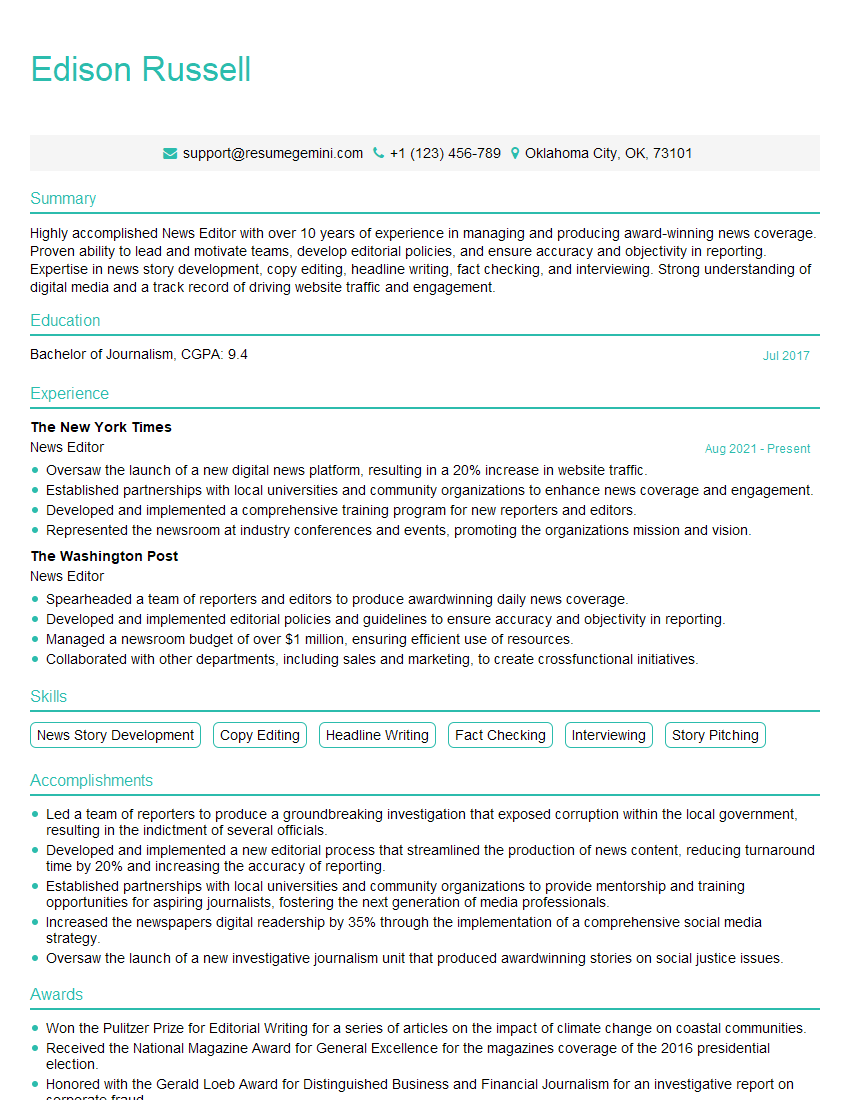
News Editor Resume Sample
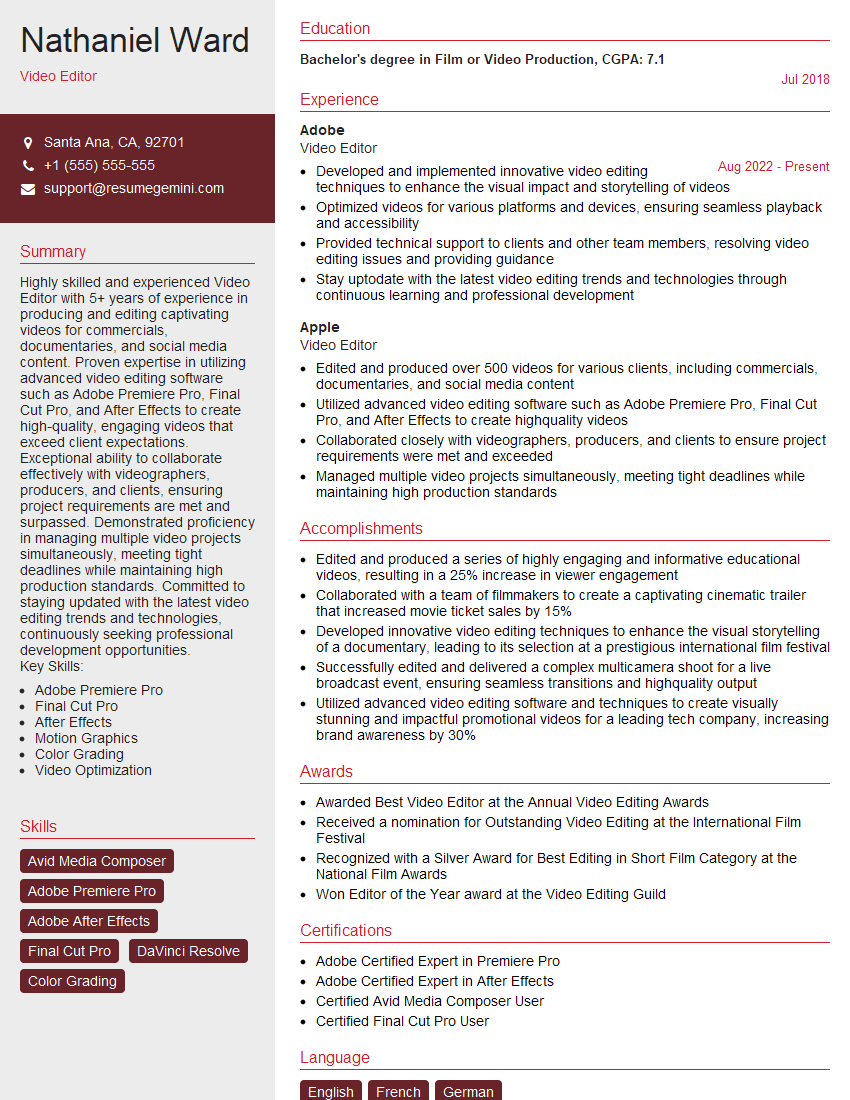
Video Editor Resume Sample
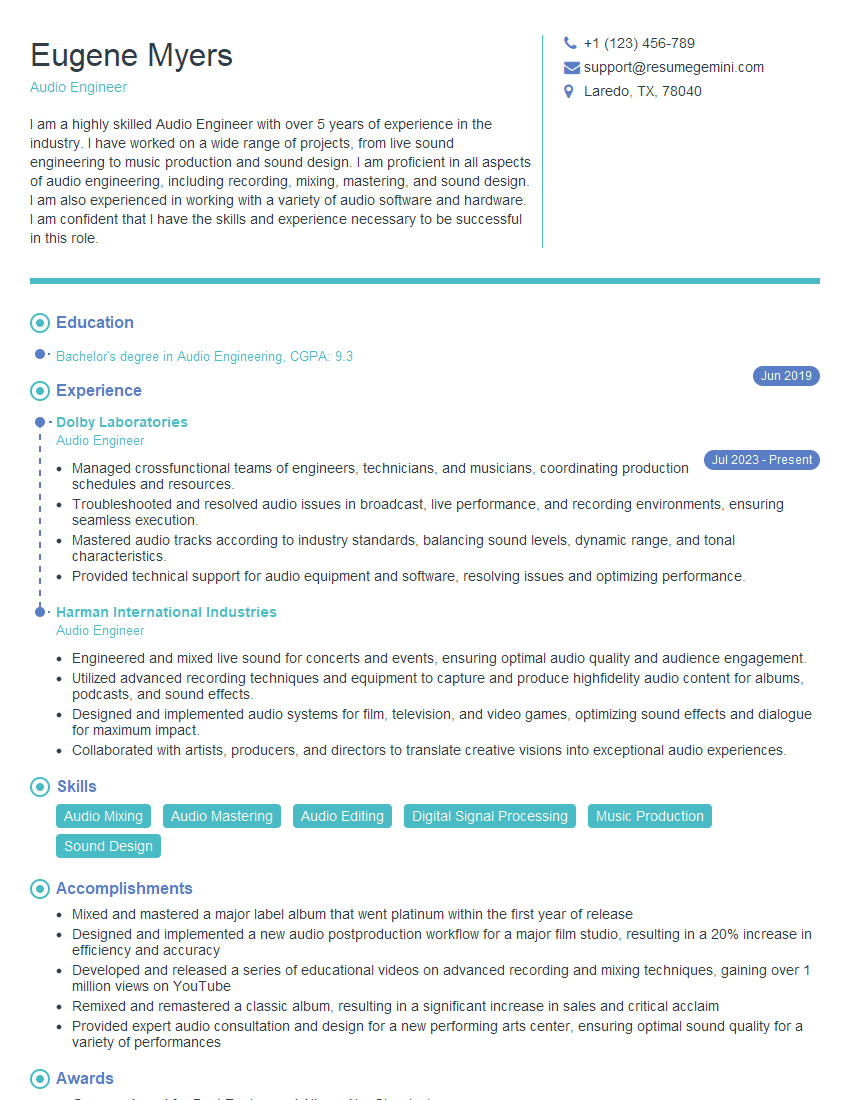
Audio Engineer Resume Sample
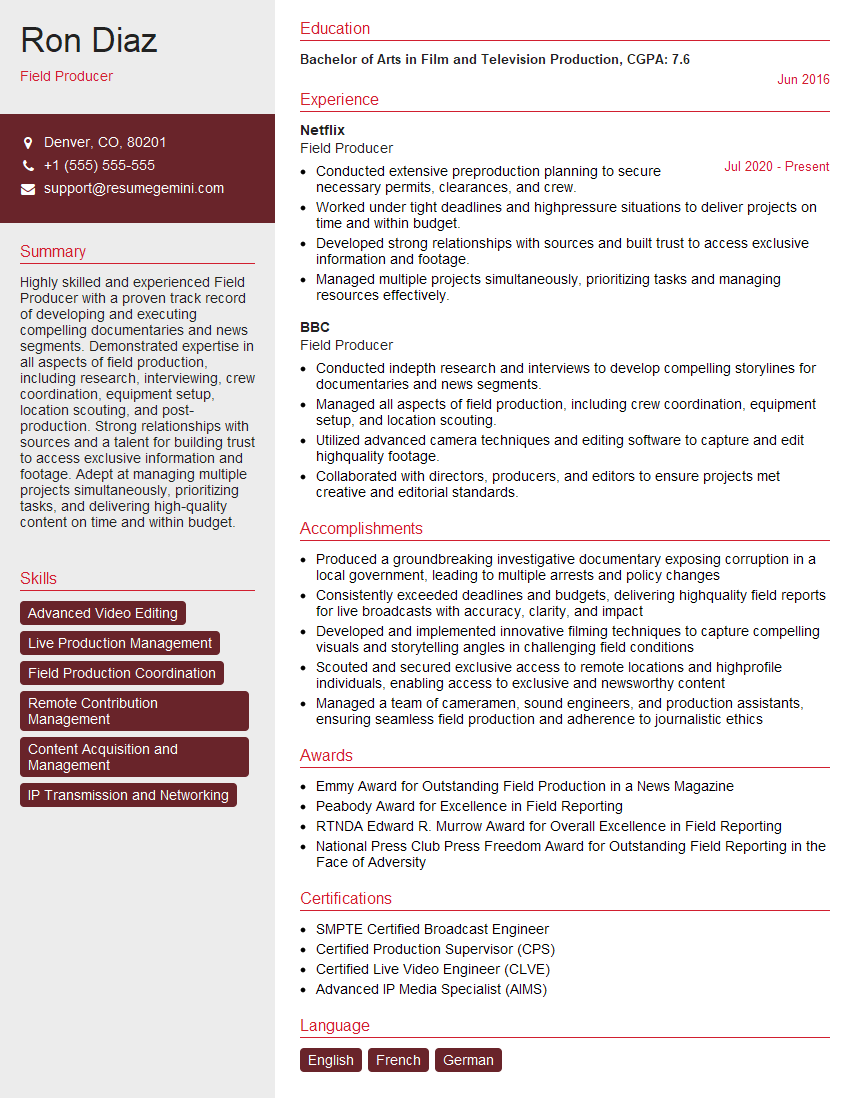
Field Producer Resume Sample
- Broadcast Producer
- Assignment Editor
- Associate Producer
- Content Producer
- Digital Producer
- Executive Producer
- Line Producer
- News Anchor
- News Producer
- Reporter
- News Director
- Correspondent
- Journalist
- Multimedia Journalist
- News Writer
- Managing Editor
- News Editor
- Video Editor
- Audio Engineer
- Field Producer
Explore more articles
Users Rating of Our Blogs
Share Your Experience
We value your feedback! Please rate our content and share your thoughts (optional).
What Readers Say About Our Blog
Very informative content, great job.
good