Interviews are more than just a Q&A session—they’re a chance to prove your worth. This blog dives into essential Newsroom Research interview questions and expert tips to help you align your answers with what hiring managers are looking for. Start preparing to shine!
Questions Asked in Newsroom Research Interview
Q 1. Explain your experience using various research databases (LexisNexis, Factiva, etc.).
My experience with research databases like LexisNexis and Factiva spans over seven years, encompassing various journalistic assignments. I’m proficient in leveraging their advanced search functionalities to pinpoint precise information across a wide range of sources – from news articles and legal documents to company records and government reports. For instance, when investigating a corporate scandal, I’d use LexisNexis’s ‘Company Dossier’ feature to access financial records, court filings, and news coverage related to the implicated organization. Similarly, Factiva’s strong international coverage proves invaluable when researching global events; its real-time updates ensure the information is always current. I’m comfortable using Boolean search operators (AND, OR, NOT) and wildcard characters to refine my searches and filter irrelevant results. My skillset also extends to understanding the unique strengths of each database; for example, I know to utilize LexisNexis for its extensive legal archives, while Factiva excels in its broad range of international news sources.
Q 2. Describe your process for verifying information from multiple sources.
Verifying information from multiple sources is paramount in responsible journalism. My process involves a multi-step approach. First, I identify at least three independent sources reporting on the same information. I then analyze the sources for consistency in facts and figures. Discrepancies trigger a deeper investigation. This includes cross-referencing the data with official documents, statistics, or expert opinions. I also scrutinize the source’s credibility and potential biases. For example, a press release from a company might be viewed with more skepticism than a report from an independent investigative journalist or government agency. I meticulously document all sources, including URLs, publication dates, and author details, to maintain transparency and allow for easy tracing of the information’s origin. This rigorous process helps prevent the spread of misinformation and ensures accurate reporting.
Q 3. How do you handle conflicting information found during research?
Conflicting information demands careful handling and critical thinking. My approach begins by identifying the nature of the conflict. Are the differences minor inconsistencies, or are they major discrepancies impacting the overall narrative? I return to the primary source verification process, expanding my search to include additional reputable sources. If the conflict persists, I acknowledge the existence of different perspectives in my reporting, clarifying the source of each claim and highlighting any biases that might be at play. For example, if two news outlets offer drastically different accounts of an event, I would analyze their reporting methodologies, consider their potential biases, and potentially seek commentary from neutral experts. It is vital to avoid presenting conflicting information as fact without highlighting the discrepancy and its implications.
Q 4. What strategies do you employ to efficiently search for specific information online?
Efficient online searching requires strategic planning. I begin by defining my search terms precisely. Instead of using broad keywords, I utilize specific phrases or Boolean operators to narrow down the results. For example, instead of searching for ‘climate change,’ I might search for ‘"climate change" AND impact AND agriculture‘ to focus on a specific aspect. I utilize advanced search operators offered by search engines like Google (e.g., site:, filetype:, intitle:) to refine my searches further. I also leverage Google Scholar, specialized databases (depending on the topic), and utilize the ‘Advanced Search’ options to filter results based on date, language, and region. I always assess the reliability and authority of websites before using their content as a source. This methodical approach ensures I quickly locate the information I need while maintaining the integrity of my research.
Q 5. Explain your understanding of journalistic ethics related to research and fact-checking.
Journalistic ethics are the cornerstone of my research and fact-checking processes. Accuracy, fairness, and impartiality guide every step of my work. I am meticulous in citing my sources, avoiding plagiarism, and ensuring that the information presented is factual and not manipulated. I strive to avoid bias and represent all sides of a story fairly, especially when dealing with controversial subjects. I always consider the potential impact of my reporting on individuals and communities and adhere to strict confidentiality policies when necessary. For instance, if working with sensitive sources, I’d ensure anonymity while maintaining journalistic accuracy. Adherence to a strict ethical code ensures trustworthiness and public confidence in the news being reported.
Q 6. How do you prioritize research tasks within tight deadlines?
Prioritizing research tasks under tight deadlines involves a combination of planning and efficient execution. I start by breaking down the research project into smaller, manageable tasks. I prioritize the most crucial information needs first, focusing on elements essential to the core narrative. This is followed by a timeline for each task with realistic deadlines. I leverage time-management techniques like the Pomodoro method to maintain focus and prevent burnout. I regularly review my progress, adjusting the schedule as needed and eliminating tasks that are not absolutely vital to the story. Using tools like Trello or Asana can improve organization and productivity in this phase. It’s critical to remember that while speed is important, accuracy should never be compromised.
Q 7. Describe your experience using social media for news research.
Social media presents both opportunities and challenges for news research. While platforms like Twitter or Facebook can provide real-time updates, eyewitness accounts, and diverse perspectives, I approach them with caution. I prioritize verified accounts, official statements, and content from reputable organizations. I avoid relying solely on social media for crucial facts, using it more as a tool for identifying potential leads, understanding public sentiment, or finding alternative perspectives that may be missed in traditional news sources. I always verify information found on social media with more established sources before incorporating it into my reporting. I am also aware of the potential for misinformation and manipulation on social media and therefore apply rigorous verification measures to any information gleaned from such platforms.
Q 8. How familiar are you with open-source intelligence (OSINT) techniques?
Open-source intelligence (OSINT) is the practice of collecting information from publicly available sources to support newsgathering and investigative reporting. I’m highly familiar with a wide range of OSINT techniques, encompassing everything from social media analysis and web scraping to the examination of government records and satellite imagery. My proficiency extends to utilizing advanced search operators and leveraging online databases to uncover crucial details often hidden within vast amounts of data.
For example, during a recent investigation into environmental violations, we utilized OSINT techniques to corroborate claims made by local residents. We cross-referenced satellite imagery with publicly available environmental permits and social media posts to build a compelling narrative. This multi-layered approach allowed us to effectively verify the accuracy of our reporting and expose the violations.
Q 9. What software or tools do you find most useful for newsroom research?
My toolkit for newsroom research is diverse, and the specific tools I employ often depend on the nature of the investigation. However, some consistently useful software and tools include:
- Advanced search engines: Google, DuckDuckGo, and specialized search engines like Shodan (for internet-connected devices) are crucial for efficiently navigating the vast expanse of online information.
- Web archives: The Wayback Machine is invaluable for accessing past versions of websites, enabling us to track changes in content and identify potential inconsistencies.
- Social media analytics tools: These tools allow for detailed analysis of social media activity, including identifying key influencers, tracking trends, and uncovering hidden connections.
- Database software: Tools like Airtable or spreadsheets help manage and organize the large volumes of information gathered during investigations.
This allows for efficient cross-referencing and analysis. - Data visualization software: Tools like Tableau or Gephi allow for visually representing complex datasets, making trends and connections more readily apparent.
Furthermore, I’m proficient in using various programming languages, including Python, to automate data collection and analysis through scripting. This significantly enhances the efficiency and scalability of our research processes.
Q 10. How do you ensure accuracy and completeness in your research reports?
Ensuring accuracy and completeness is paramount in newsroom research. My approach is multi-faceted and involves:
- Source verification: I rigorously cross-reference information from multiple independent sources to corroborate facts and ensure accuracy. This includes verifying the credibility and potential biases of each source.
- Fact-checking: I utilize various fact-checking tools and techniques to verify the accuracy of claims, statistics, and data presented in reports.
- Documentation: Meticulous record-keeping, including maintaining detailed logs of all sources, research methods, and data analysis, is critical for transparency and reproducibility.
- Peer review: I regularly seek feedback from colleagues and editors to ensure the accuracy and completeness of my reports before publication.
For example, in one instance, we discovered a discrepancy in reported statistics. By meticulously tracing back the origins of the conflicting data and cross-referencing them with official reports, we uncovered a reporting error and presented the corrected information.
Q 11. How do you handle sensitive or confidential information during your research?
Handling sensitive or confidential information requires a strict adherence to ethical guidelines and legal regulations. My approach involves:
- Confidentiality agreements: If necessary, I’ll sign confidentiality agreements to ensure the protection of sensitive information.
- Data security: I employ strong security measures to protect sensitive data, including encryption and secure storage methods.
- Anonymization: When appropriate, I will anonymize data to protect the identity of individuals or sources.
- Legal counsel: I always consult with legal counsel to ensure that our research complies with all applicable laws and regulations.
I understand the gravity of such information and prioritize its protection above all else.
Q 12. Describe your experience working collaboratively with journalists or editors.
Collaboration is essential in newsroom research. I’ve consistently worked closely with journalists and editors throughout the research process. This includes:
- Regular briefings: Providing regular updates on research progress, challenges, and findings.
- Joint brainstorming: Participating in brainstorming sessions to develop research strategies and address potential roadblocks.
- Feedback incorporation: Actively incorporating feedback from journalists and editors to refine research questions and reports.
- Data sharing: Effectively sharing research findings and data in a clear and accessible format.
For instance, during a recent investigative piece, I worked closely with the lead reporter, providing them with regular updates on our findings and adapting my research focus based on their evolving journalistic narrative.
Q 13. Explain your process for identifying and mitigating potential biases in research.
Identifying and mitigating biases is a critical part of my research process. I actively employ several strategies to achieve this:
- Source diversity: I strive to consult a wide range of sources representing diverse perspectives and backgrounds to avoid relying solely on information from a single viewpoint.
- Critical evaluation: I critically assess the potential biases inherent in each source and method, considering the source’s motivations, funding, and potential conflicts of interest.
- Transparency: I ensure transparency in my methodology and data sources, enabling others to assess the potential for bias.
- Self-reflection: I am mindful of my own potential biases and strive for objectivity in my analysis and interpretation of data.
By employing these techniques, I aim to create research that is both accurate and unbiased.
Q 14. How do you manage large volumes of information gathered during research?
Managing large volumes of information is a common challenge in newsroom research. My approach involves:
- Structured data organization: Employing organized file systems, databases, and tagging systems to effectively categorize and retrieve information.
- Data annotation and tagging: Adding descriptive tags and annotations to data points to facilitate efficient searching and retrieval.
- Automated data analysis: Using scripting and programming to automate data cleaning, analysis, and summarization.
- Information visualization: Creating visual representations of data to identify trends and patterns easily.
For example, during a complex investigation involving thousands of documents, I utilized a combination of database software and Python scripting to organize, analyze, and ultimately identify key connections within the dataset that might have been missed with manual review alone.
Q 15. Describe a time you had to quickly verify a breaking news story.
Verifying breaking news requires rapid, yet rigorous fact-checking. Think of it like assembling a puzzle under immense time pressure – each piece needs to fit perfectly, or the whole picture crumbles. During a recent report on a major power outage, initial social media reports claimed widespread damage and injuries. My process involved several steps: first, I cross-referenced social media posts with official statements from utility companies and emergency services. Second, I contacted reputable local news outlets to confirm their reporting. Finally, I located and spoke with several individuals in the affected area to gather firsthand accounts. Only after corroborating information from multiple independent, reliable sources did we publish the story, ensuring accuracy despite the urgency.
Career Expert Tips:
- Ace those interviews! Prepare effectively by reviewing the Top 50 Most Common Interview Questions on ResumeGemini.
- Navigate your job search with confidence! Explore a wide range of Career Tips on ResumeGemini. Learn about common challenges and recommendations to overcome them.
- Craft the perfect resume! Master the Art of Resume Writing with ResumeGemini’s guide. Showcase your unique qualifications and achievements effectively.
- Don’t miss out on holiday savings! Build your dream resume with ResumeGemini’s ATS optimized templates.
Q 16. How do you evaluate the credibility and reliability of online sources?
Evaluating online sources’ credibility is crucial; it’s akin to discerning gold from fool’s gold. My approach involves several key steps. First, I examine the source’s domain name and ‘About Us’ section to understand its affiliation and potential bias. Is it a reputable news organization, an academic institution, or a personal blog? Second, I check the author’s credentials. Do they possess relevant expertise? Third, I look for evidence of fact-checking and source attribution. Are claims supported by credible evidence, or are there unsubstantiated assertions? Finally, I compare the information across multiple sources. Agreement across several trustworthy sources greatly increases the credibility of the information. For example, a news article citing government reports and expert interviews is more reliable than one relying solely on anonymous sources or unverified social media posts.
Q 17. Explain your understanding of copyright and intellectual property issues in news research.
Copyright and intellectual property are fundamental to responsible news research. Understanding these legal aspects is essential to avoiding plagiarism and ethical breaches. Using copyrighted material without permission is illegal and can have serious consequences for a news organization. This includes images, videos, and text excerpts. My approach involves careful sourcing and attribution. If using copyrighted material, I always secure the necessary permissions from the copyright holder. Fair use guidelines allow limited use of copyrighted material for news reporting, but it’s essential to understand these carefully; they’re not a blanket permission. For example, I might use a brief quote from a book in a news article, citing the source correctly, but I wouldn’t reproduce large sections of it without authorization. Furthermore, I always strive to respect intellectual property rights by correctly attributing all sources, including visuals and data.
Q 18. How do you use research to support the storytelling process?
Research is the backbone of effective storytelling in news. It provides the factual foundation and context needed to create compelling and accurate narratives. It’s akin to building a house; the research provides the sturdy frame and the details. I use research to identify key individuals for interviews, verify facts and figures, find relevant data, and understand the historical context of the story. For instance, while reporting on a local housing crisis, research provided the statistics on rising rents and homelessness, along with government policies related to affordable housing. This allowed us to paint a complete picture for our readers, going beyond simple reporting to present a compelling analysis.
Q 19. Describe your experience with fact-checking visual information (images, videos).
Fact-checking visual information is crucial; a single misleading image can seriously damage a news story’s credibility. My process begins with reverse image searches using tools like Google Images or TinEye to check the image’s origin and identify potential manipulations. Then, I examine metadata such as EXIF data (date, location, camera details) to cross-reference with reported information. I also scrutinize the image for any signs of manipulation such as unusual lighting, inconsistencies, or unnatural elements. For example, while reviewing footage of a protest, we found a photo that seemed staged. A reverse image search revealed it had been used in unrelated contexts years earlier. Further investigation confirmed our suspicions, and the image was not included in the final piece.
Q 20. How do you adapt your research methods to different types of news stories?
Adapting research methods to different story types is essential for achieving accurate and relevant reporting. Investigative journalism requires a different approach than breaking news. For a breaking news story, I prioritize speed and verifying information from multiple reliable sources quickly. This might involve using social media monitoring, checking official statements, and contacting key figures for immediate comment. In contrast, investigative pieces involve in-depth research using public records, interviews, and potentially even undercover work, requiring careful planning and meticulous documentation. For feature stories, I use in-depth interviews and detailed observation, creating a richer narrative. Each story necessitates a tailored research strategy, ensuring the information is both accurate and effective in the context of the narrative.
Q 21. How proficient are you in using advanced search operators?
I am highly proficient in using advanced search operators. These are incredibly powerful tools that allow me to refine searches and find very specific information. For example, using quotation marks around a phrase ensures I only get results containing that exact phrase ("climate change"). The minus sign excludes certain terms (climate change -denial), and the asterisk acts as a wildcard (clim* change). Boolean operators (AND, OR, NOT) further refine searches, improving precision and greatly enhancing my research efficiency. My skill in these operators allows me to quickly locate specific data and reports, saving valuable time and improving the quality of my research.
Q 22. How familiar are you with different research methodologies?
My familiarity with research methodologies is extensive, encompassing both qualitative and quantitative approaches. Qualitative methods, such as interviews, focus groups, and document analysis, are crucial for understanding the nuances of human experiences and perspectives, particularly vital in uncovering the human stories behind news. Quantitative methods, including surveys, statistical analysis, and data mining, allow for the identification of trends and patterns within large datasets, offering valuable context and insights. I’m proficient in employing mixed-methods approaches, combining qualitative and quantitative data to gain a more comprehensive understanding of the subject matter. For instance, I might conduct interviews to gain in-depth perspectives on a specific social issue, while simultaneously analyzing relevant statistical data to identify broader trends. This combined approach provides a rich and balanced understanding of the issue.
- Qualitative: Ethnographic research, case studies, thematic analysis
- Quantitative: Statistical modeling, experimental design, content analysis
- Mixed Methods: Combining surveys with follow-up interviews to explore survey responses in detail.
Q 23. How would you approach researching a complex, multi-faceted story?
Researching a complex, multifaceted story requires a structured and iterative approach. I begin by clearly defining the scope of the story and breaking it down into manageable research questions. This process often involves brainstorming sessions with colleagues to ensure all relevant aspects are considered. Next, I develop a detailed research plan, outlining the methods I’ll employ and the data sources I’ll utilize. This might include archival research, interviews with key figures, and analysis of publicly available data. The research is conducted in stages, with regular evaluation and refinement of the approach. For example, initial findings might lead to new research questions or adjustments to the research strategy. This iterative process ensures the story remains focused and comprehensive while allowing for the incorporation of unexpected discoveries. Finally, I meticulously document all sources and methodologies, ensuring the story’s findings are credible and verifiable.
For example, when researching the impact of a major policy change, I would begin by identifying key stakeholders, consulting relevant government documents and reports, and conducting interviews with individuals impacted by the policy. The analysis of this varied data would then inform subsequent stages of research.
Q 24. Describe your experience working with different data formats (text, audio, video).
I possess significant experience working with various data formats. Textual data, from documents and transcripts to social media posts, is analyzed using qualitative and quantitative methods, including content analysis and natural language processing. Audio and video data require specialized tools and techniques. For audio, transcription is crucial, often followed by analysis of speech patterns and tone. Video analysis involves meticulous review and potentially the use of video editing software to extract specific moments or details. I am proficient in utilizing software like NVivo for qualitative data analysis and R or Python for quantitative analysis of data from all these sources. For instance, in investigating a political campaign, I would analyze campaign speeches (audio/video), news coverage (text), and social media interactions (text) to form a complete picture.
Q 25. How do you maintain ethical standards when dealing with anonymous sources?
Maintaining ethical standards when dealing with anonymous sources is paramount. Transparency is key; I always make it clear to the source what information will be used and how their anonymity will be protected. This typically involves agreeing on a code word or pseudonym and ensuring all identifying information is redacted from the final piece. Verification of information provided by anonymous sources is crucial. I always try to corroborate their claims with multiple independent sources. Furthermore, I am mindful of the potential for manipulation and strive to approach such interactions with critical thought. Breaches of trust can have severe consequences, damaging both the source’s life and the news organization’s credibility. Building trust with sources, even anonymous ones, involves transparency, respect for their concerns and a clear understanding of the ethical implications.
Q 26. How do you utilize data visualization tools to present research findings?
Data visualization is crucial for presenting complex research findings in a clear and engaging manner. I use tools like Tableau, Power BI, and even simpler options like Excel to create charts, graphs, and maps that illustrate key trends and patterns. For example, a bar chart might show the breakdown of public opinion on a particular issue, while a map could illustrate geographical variations in crime rates. The choice of visualization technique depends on the type of data and the story being told. The goal is always to make the data accessible and engaging for the audience, ensuring they can easily grasp the key insights from the research.
For instance, when presenting research on income inequality, I might use a combination of bar charts to compare income levels across different demographics and a scatter plot to show the correlation between income and education level. Clear labeling, concise captions, and a consistent visual style are essential for effective communication.
Q 27. How do you stay current with the latest research tools and trends?
Staying current with research tools and trends is an ongoing process. I regularly attend industry conferences and workshops, subscribe to relevant newsletters and journals, and actively participate in online communities focused on data analysis and journalism. I also experiment with new tools and techniques, evaluating their applicability to my work. This ongoing learning process is crucial for adapting to the constantly evolving digital landscape and ensures my research methods remain robust and efficient. This includes exploring new software, methodologies, and data sources to enhance the quality and efficiency of my work.
Q 28. Describe your experience with conducting background checks or investigations.
My experience with background checks and investigations is substantial. This often involves verifying the accuracy of information from multiple sources, examining public records (such as court documents or property records), and using online search engines and databases to gather information about individuals or organizations. This process is rigorous and adheres strictly to legal and ethical guidelines. The aim is to establish facts, not to pass judgment. For instance, when verifying a source’s claims, I might consult public records to check for prior convictions or investigate their professional history. It’s a crucial step in ensuring accuracy and mitigating reputational risks.
Key Topics to Learn for Newsroom Research Interview
- Source Verification and Credibility Assessment: Understanding methodologies for verifying information from diverse sources (online, offline, primary & secondary), evaluating bias, and assessing credibility.
- Information Gathering and Synthesis: Practical application of research techniques to gather relevant information quickly and efficiently, synthesizing diverse data points into concise and accurate reports.
- Fact-Checking and Accuracy: Developing a keen eye for detail, mastering fact-checking protocols, and identifying potential inaccuracies or misleading information.
- Database Management and Research Tools: Familiarity with relevant databases (e.g., LexisNexis, Westlaw), research tools, and software used in newsroom environments for efficient information retrieval.
- Legal and Ethical Considerations: Understanding copyright laws, journalistic ethics, and responsible data handling practices related to newsgathering and research.
- Data Analysis and Interpretation: Applying critical thinking skills to analyze complex datasets, extract meaningful insights, and present findings in a clear and understandable format.
- Collaboration and Communication: Demonstrating effective teamwork, clear communication skills, and the ability to work collaboratively with journalists and editors to meet deadlines.
- Problem-solving and Adaptability: Applying problem-solving skills to navigate unexpected challenges, adapt to changing priorities, and deliver accurate information under pressure.
Next Steps
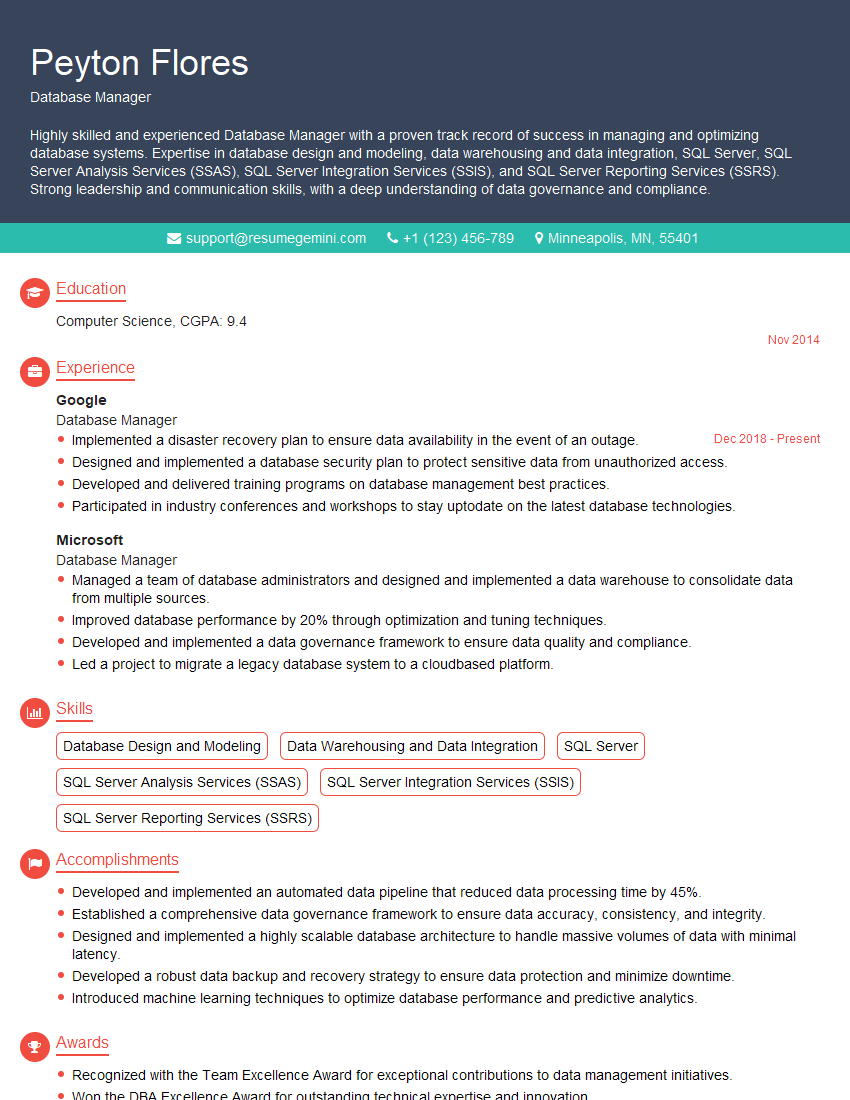
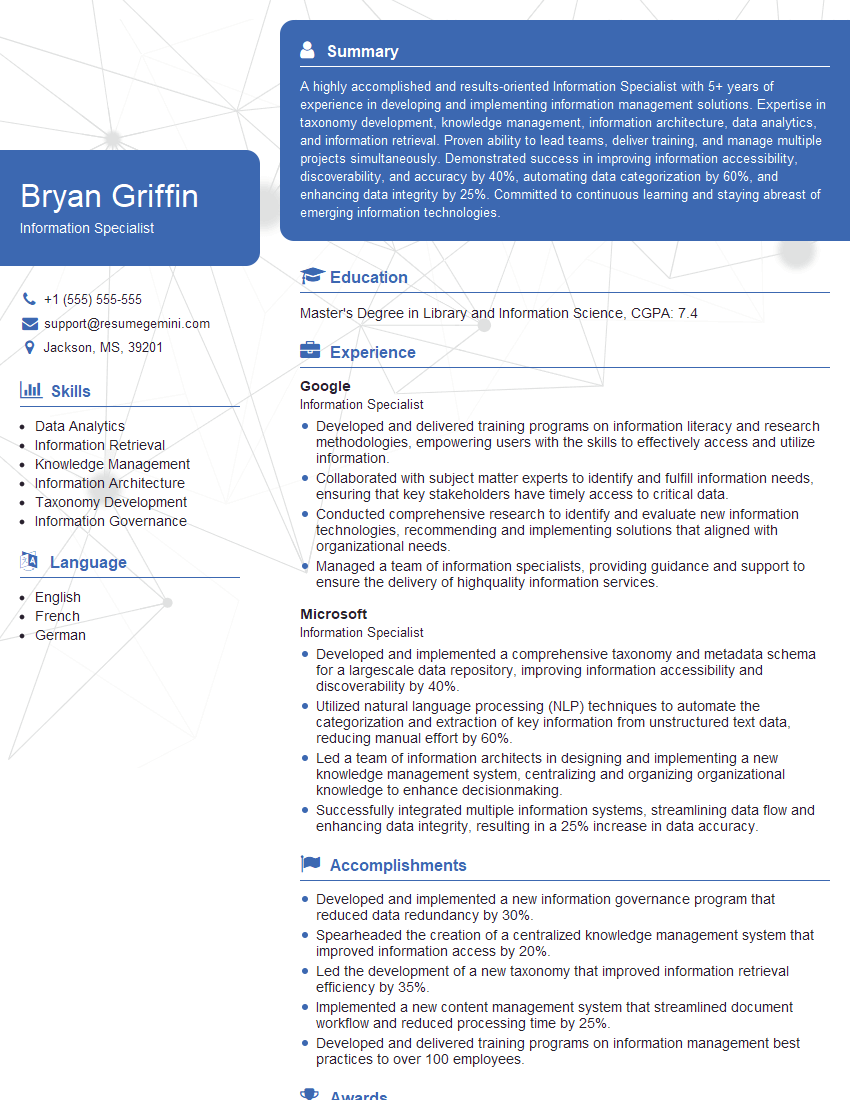
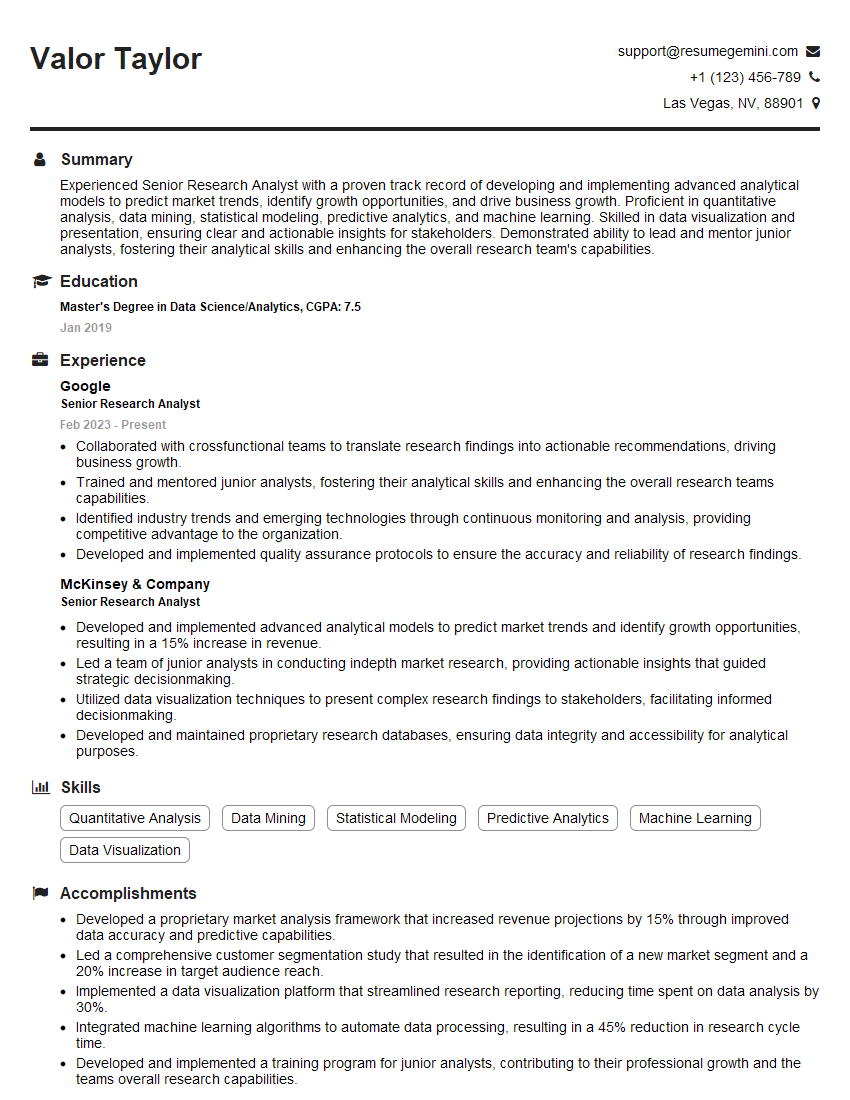
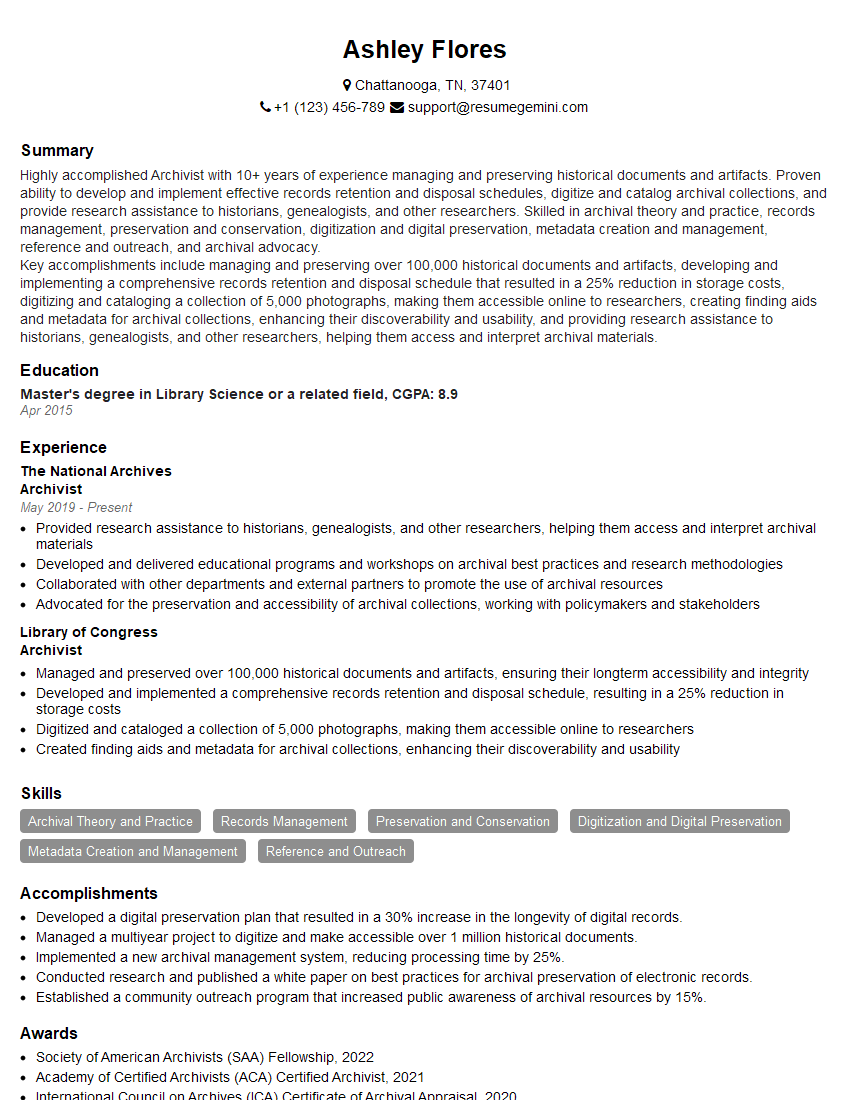
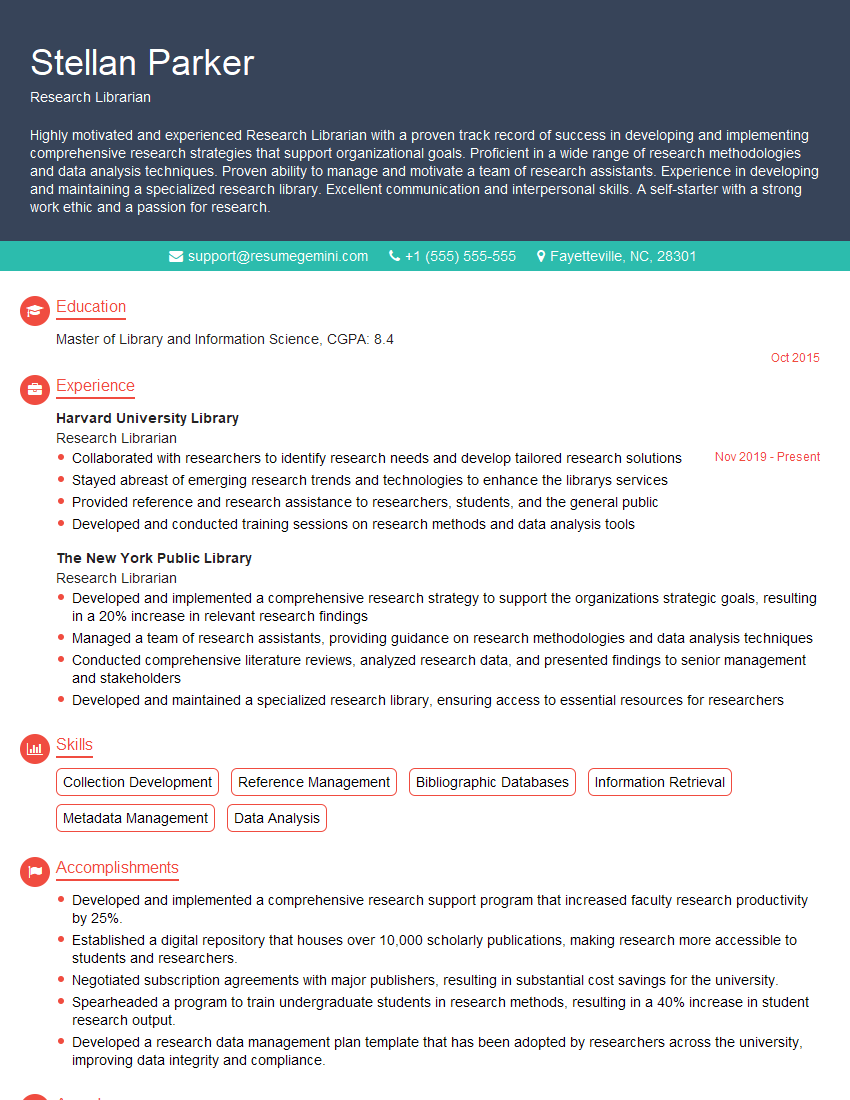
Mastering Newsroom Research is crucial for a successful and rewarding career in journalism and related fields. It demonstrates a commitment to accuracy, ethical practices, and the ability to contribute significantly to the newsgathering process. To maximize your job prospects, creating an ATS-friendly resume is essential. This ensures your application gets noticed by recruiters and hiring managers. We highly recommend using ResumeGemini to build a professional and impactful resume. ResumeGemini provides a streamlined and effective platform, and we offer examples of resumes tailored to Newsroom Research roles to guide you.
Explore more articles
Users Rating of Our Blogs
Share Your Experience
We value your feedback! Please rate our content and share your thoughts (optional).
What Readers Say About Our Blog
Very informative content, great job.
good