The thought of an interview can be nerve-wracking, but the right preparation can make all the difference. Explore this comprehensive guide to Vessel Classification and Standards interview questions and gain the confidence you need to showcase your abilities and secure the role.
Questions Asked in Vessel Classification and Standards Interview
Q 1. Explain the role of a classification society.
Classification societies are independent organizations that establish and maintain standards for the design, construction, and operation of vessels. Think of them as the ‘safety inspectors’ of the maritime world. They ensure that ships are built and maintained to a high standard, minimizing risks to life, property, and the environment. This is achieved through a rigorous process of plan review, surveys, and audits. Their role is crucial because they provide confidence to shipowners, insurers, and flag states that a vessel is seaworthy and meets international regulations.
For example, a classification society might review the design plans of a new oil tanker to ensure its structural integrity can withstand the stresses of ocean travel and the hazards associated with transporting oil. They then perform inspections during construction and periodic surveys throughout the vessel’s lifespan to verify that the standards are being met.
Q 2. Describe the different types of vessel classifications.
Vessel classification isn’t just a simple ‘pass’ or ‘fail’; it’s a detailed categorization reflecting the vessel’s type, size, intended use, and level of safety standards. Broadly, classifications can be categorized by:
- Ship Type: This includes tankers (crude oil, chemical, LNG), bulk carriers, container ships, passenger vessels (cruises, ferries), etc., each with specific design and operational requirements.
- Class Notation: This is a symbolic representation indicating the vessel’s compliance with specific rules and standards set by the classification society. For instance, a notation might indicate the ship’s ice class, structural strength, and the presence of specific safety features. A higher class notation implies higher safety standards.
- Special Service Notations: These notations reflect the vessel’s suitability for specific operations, such as carrying hazardous materials or operating in harsh environmental conditions (e.g., ice-strengthened hull).
Imagine a cruise ship versus a fishing trawler—both are vessels, but their classifications will vastly differ, reflecting their diverse operational demands and inherent risks.
Q 3. What are the key international conventions and regulations governing vessel classification?
Several international conventions and regulations govern vessel classification, ensuring global consistency in maritime safety. The most important ones include:
- SOLAS (Safety of Life at Sea): This is the cornerstone of international maritime safety regulations, setting minimum standards for ship design, construction, equipment, and operation. It directly impacts classification requirements.
- MARPOL (International Convention for the Prevention of Pollution from Ships): This convention addresses marine pollution, mandating standards for preventing pollution from ships’ operational activities and waste disposal, impacting the design and operational aspects of vessels considered for classification.
- ILO Conventions: International Labour Organization conventions address seafarers’ working conditions and safety, influencing the design and safety features incorporated into vessels and checked during classification.
- International Code for Ships Operating in Polar Waters (Polar Code): This addresses the specific challenges of operating in polar waters, impacting the design and operational requirements for vessels venturing into these regions.
These conventions are regularly updated to reflect technological advancements and evolving safety concerns. Classification societies play a vital role in interpreting and implementing these regulations.
Q 4. Explain the process of vessel classification, from initial design to final certification.
Vessel classification is a continuous process, not a single event. It begins even before the keel is laid:
- Plan Approval: The classification society reviews the vessel’s design plans, ensuring compliance with relevant regulations and standards. This includes aspects like hull strength, stability, machinery, and life-saving equipment.
- Construction Supervision: During the building process, the classification society conducts regular surveys to monitor compliance with approved plans and ensure proper welding, material quality, and overall construction quality.
- Hull and Machinery Surveys: Once built, a thorough inspection is carried out to verify the vessel’s condition and compliance. This typically involves non-destructive testing of critical structural elements.
- Sea Trials: Sea trials assess the vessel’s performance and stability under various operating conditions.
- Certification: Upon successful completion of all surveys and sea trials, the classification society issues a certificate indicating the vessel’s class and compliance with regulations. This certificate is essential for the vessel’s operation.
- Periodic Surveys: Throughout the vessel’s operational life, periodic surveys are conducted to assess its condition and ensure continued compliance with regulations. This is crucial for maintaining the vessel’s seaworthiness.
Think of it like building a house—a rigorous inspection and approval process ensures the house meets safety standards before occupation, and regular maintenance checks are needed throughout its lifetime.
Q 5. What are the main structural components of a ship, and how are they classified?
A ship’s structural components are complex and numerous, but some key elements include:
- Hull: The main body of the ship, providing buoyancy and structural strength. It’s often classified based on materials (steel, aluminum), construction method (welded, riveted), and design features (e.g., ice class).
- Deck: The upper structure of the ship, providing a platform for cargo handling, equipment, and crew accommodation. Classification considers its structural strength, watertight integrity, and load-bearing capacity.
- Bulkheads: Internal walls that divide the vessel into compartments, improving watertightness and structural integrity. Classification focuses on their strength, construction, and watertightness.
- Superstructure: Structures above the main deck, such as accommodation, navigation bridge, etc. Their structural classification considers wind and wave loads and fire resistance.
Classification involves assigning suitable standards to each component based on the ship’s design, operational profile, and intended use. Each component needs to withstand expected stresses and environmental factors.
Q 6. How do you assess the structural integrity of a vessel during classification surveys?
Assessing structural integrity during classification surveys employs a multi-faceted approach:
- Visual Inspection: Inspectors visually examine the hull, deck, and other structures for signs of corrosion, cracking, deformation, or damage.
- Thickness Measurements: Using ultrasonic testing or other non-destructive methods, inspectors measure the thickness of plates and sections to detect thinning due to corrosion. This is critical for evaluating the remaining strength.
- Non-Destructive Testing (NDT): Techniques like ultrasonic testing, radiography, and magnetic particle inspection are employed to detect internal flaws and defects that may not be visible on the surface.
- Strength Calculations: Sophisticated structural analysis software is utilized to evaluate the ship’s structural strength under various load conditions, taking into account factors such as wave action and cargo weight.
- Stress Measurement: Strain gauges can be used to monitor the stress levels experienced by different parts of the ship during operation.
The goal is to identify any structural weaknesses before they become critical safety hazards. It’s a proactive, preventative approach.
Q 7. Describe the different types of surveys conducted during a vessel’s life cycle.
Surveys conducted throughout a vessel’s life cycle vary in scope and frequency:
- Initial Surveys: These take place during construction and upon completion, verifying compliance with approved plans.
- Annual Surveys: These are less extensive than others, focusing on readily accessible areas and critical equipment.
- Intermediate Surveys: Conducted at intervals between annual and special surveys, focusing on specific areas requiring more attention.
- Special Surveys: More extensive surveys, typically carried out every few years, involving a detailed examination of the vessel’s hull, machinery, and equipment.
- Docking Surveys: Performed when the vessel is in dry dock, offering a thorough examination of the underwater hull, propellers, and rudder.
- Damage Surveys: Conducted in response to damage sustained by the vessel, assessing the extent of damage and recommending repairs.
The frequency and type of survey depend on the vessel’s age, type, and operational profile. It’s a systematic approach to maintain the vessel’s seaworthiness and safety.
Q 8. What are the criteria for evaluating the stability of a vessel?
Evaluating a vessel’s stability involves assessing its ability to remain upright and afloat under various conditions. It’s a complex process considering factors that can affect equilibrium, such as the distribution of weight (cargo, fuel, passengers), the shape of the hull, and environmental forces like waves and wind. Key criteria include:
- Intact Stability: This examines the vessel’s stability when the hull is undamaged. It’s assessed through calculations using the vessel’s displacement, metacentric height (GM), and various other factors to determine the range of angles through which the vessel can heel (tilt) before capsizing. A higher GM generally indicates greater initial stability.
- Damaged Stability: This crucial aspect focuses on the vessel’s ability to remain afloat after sustaining damage, such as flooding of a compartment. Regulations often mandate specific standards for damaged stability, ensuring the vessel can survive significant damage and still remain afloat long enough for rescue or repairs.
- Freeboard: The distance between the waterline and the deck edge. Sufficient freeboard is vital to prevent water from entering the vessel during rough seas, thereby maintaining stability and preventing flooding.
- Hydrostatic Calculations: These calculations determine the vessel’s stability characteristics by modeling the distribution of weight and buoyancy.
Imagine a sailboat: a wider beam and lower center of gravity will make it more stable than a narrow, tall-masted sailboat. Similarly, a cargo ship with its cargo properly secured and distributed will be far more stable than one with unevenly distributed weight.
Q 9. Explain the importance of maintaining a vessel’s classification.
Maintaining a vessel’s classification is paramount for several reasons. Classification, essentially a certification issued by a classification society (like DNV, ABS, Lloyd’s Register), demonstrates that the vessel meets specific standards of safety, construction, and seaworthiness. This is crucial for:
- Insurance: Most insurers require a valid classification certificate, as it mitigates risk and lowers premiums.
- Legal Compliance: Operating a vessel without valid classification is often illegal and can lead to significant fines and legal repercussions, as it demonstrates a disregard for maritime safety regulations.
- Port State Control: Port state control officers can detain a vessel lacking valid classification, leading to costly delays and repairs. They perform inspections to verify adherence to international standards.
- Credibility and Market Value: A valid classification certificate enhances a vessel’s reputation and market value, making it easier to charter or sell.
- Trade and Finance: Banks and financial institutions often require valid classification as collateral when providing loans for vessel purchases or upgrades.
Think of it like a car’s MOT (Ministry of Transport) certificate. Without it, the car is considered unsafe and illegal to operate, similar to how a vessel without valid classification poses safety and legal risks.
Q 10. How do you handle non-conformities found during a classification survey?
Handling non-conformities during a classification survey requires a systematic and documented approach. The process generally follows these steps:
- Identification and Documentation: Thorough documentation of each non-conformity is crucial, including details like location, severity, and potential impact on safety. Photographs and detailed descriptions are essential.
- Assessment of Severity: Non-conformities are categorized based on their severity (e.g., minor, major, critical), influencing the urgency of corrective action.
- Development of Corrective Actions: A plan to rectify each non-conformity needs to be developed, specifying the repairs, replacements, or modifications required. This often involves consultation with the classification society’s surveyor.
- Implementation and Verification: The corrective actions are implemented, and the classification surveyor verifies their effectiveness. Re-inspections may be needed.
- Documentation of Closure: The entire process, from identification to verification, must be meticulously documented and submitted to the classification society for review and approval.
For instance, if a crack is discovered in a critical structural member during a survey, it’s a major non-conformity. The corrective action would involve a thorough assessment of the crack’s extent, potential for propagation, and the need for repairs or replacement of the component. This would be followed by re-inspection and documentation of the successful repair before the vessel’s classification is renewed or maintained.
Q 11. What are the consequences of operating a vessel without valid classification?
Operating a vessel without valid classification carries severe consequences:
- Detention: Port State Control authorities can detain the vessel, preventing it from sailing until the classification is reinstated. This leads to substantial financial losses due to downtime and potential demurrage charges.
- Fines and Penalties: Significant fines can be imposed on the vessel owner or operator for violating maritime safety regulations and operating an uncertified vessel.
- Legal Liability: In case of an accident or incident, operating without valid classification can severely impact liability claims, potentially leading to increased insurance premiums or difficulties in securing insurance.
- Reputational Damage: Operating an unclassified vessel damages the owner’s reputation within the shipping industry, potentially impacting future business opportunities.
- Insurance Issues: Insurance coverage may be void or severely limited for vessels operating without valid classification, leaving the owner vulnerable to substantial financial risk.
Imagine a truck driving without insurance or a valid license; the risks and penalties are significant. Similarly, operating a vessel without valid classification exposes the owner and operator to a multitude of serious repercussions.
Q 12. Describe the different types of marine machinery and their classification requirements.
Marine machinery encompasses a wide range of equipment vital for a vessel’s operation. Classification requirements vary based on the machinery’s criticality and function. Examples include:
- Main Engines: These are the primary propulsion system of the vessel. Their classification requires stringent adherence to design, construction, and operational standards, including regular inspections and maintenance documented in the machinery’s log book. This ensures reliability and safety.
- Auxiliary Engines: These provide power for various onboard systems, such as generators, pumps, and winches. Their classification standards, while not as stringent as main engines, still require adherence to safety and performance regulations.
- Boilers: Used for steam generation, boilers are subject to rigorous classification, encompassing pressure testing, material certifications, and regular inspections to prevent catastrophic failures.
- Pumps: Various pumps (e.g., bilge, fire, ballast) are classified to ensure they function effectively in emergencies and prevent flooding or other hazardous situations.
- Steering Gear: The steering gear is a critical safety system and is subject to strict classification to ensure it can safely maneuver the vessel under various conditions, including emergencies. Regular inspections and maintenance are mandatory.
Each type of machinery has specific classification rules, often detailed in the classification society’s rules and regulations. These rules specify design, construction, testing, and maintenance requirements to ensure the safety and reliability of the equipment.
Q 13. How do you assess the safety of a vessel’s electrical systems?
Assessing the safety of a vessel’s electrical systems requires a comprehensive approach focusing on several key aspects:
- Wiring and Cabling: Inspection focuses on the condition of wiring and cabling, ensuring proper insulation, secure connections, and compliance with relevant standards. This prevents short circuits and electrical fires.
- Switchboards and Distribution Systems: Switchboards must be inspected for proper labeling, functionality, and protection devices. The distribution system must ensure efficient power distribution while adhering to safety regulations.
- Safety Devices: Essential safety devices, like circuit breakers, fuses, and earthing systems, must be functional and adequately sized. This prevents overloading and protects the system and personnel.
- Equipment and Appliances: All electrical equipment must comply with maritime safety standards and undergo regular testing and maintenance to ensure their safe operation.
- Emergency Lighting and Power Systems: Emergency lighting and power systems are crucial in emergencies, requiring rigorous testing and regular maintenance to ensure reliability during power outages.
A typical assessment might involve visual inspections, functional testing of circuits and equipment, and verification of documentation related to the maintenance and testing of the electrical system. Non-conformities would be addressed using a similar process to the one described in question 3.
Q 14. Explain the role of risk assessment in vessel classification.
Risk assessment plays a crucial role in vessel classification, forming the foundation of safety standards and regulations. It’s a systematic process used to identify hazards, analyze their potential consequences, and implement appropriate control measures to mitigate those risks. The process typically includes:
- Hazard Identification: Identifying all potential hazards associated with the vessel’s design, construction, operation, and maintenance.
- Risk Analysis: Assessing the likelihood and severity of each hazard, often using a risk matrix to prioritize risks based on their potential impact.
- Risk Evaluation: Determining if the level of risk is acceptable based on industry standards and regulations. Unacceptable risks require control measures.
- Risk Control: Implementing control measures to mitigate identified risks, such as designing safety systems, implementing operational procedures, or providing safety training.
- Monitoring and Review: Continuously monitoring the effectiveness of control measures and reviewing the risk assessment process regularly to adapt to changing conditions.
For example, risk assessment might reveal a high risk of fire in the engine room due to the presence of flammable materials and potential ignition sources. Control measures might include improved ventilation, fire detection and suppression systems, and stricter rules on handling flammable materials. The classification society will ensure that appropriate measures are in place to mitigate the risk to an acceptable level.
Q 15. What are the key elements of a vessel’s safety management system (SMS)?
A Vessel’s Safety Management System (SMS) is a crucial framework designed to proactively prevent accidents and pollution. Think of it as a comprehensive safety manual and action plan for a ship. It’s not just a document; it’s a living, breathing system requiring constant review and improvement.
- Safety Policy: This forms the foundation, outlining the company’s commitment to safety and environmental protection. It sets the tone and expectations for everyone onboard.
- Accountability: Clear lines of responsibility and authority ensure tasks are completed and issues are addressed promptly. Each crew member knows their role in maintaining safety.
- Risk Assessment: Identifying potential hazards and implementing control measures is key. This involves regular inspections, drills, and proactive maintenance to minimize risks.
- Emergency Preparedness: Having well-rehearsed emergency plans, drills, and readily available equipment (like lifeboats and fire-fighting systems) is critical for responding to unforeseen events. This includes communication protocols and emergency contact information.
- Nonconformity Reporting and Corrective Actions: A system for identifying, reporting, and rectifying any safety deficiencies or near-miss incidents is vital for continuous improvement. This involves investigating root causes and preventing recurrence.
- Audits and Reviews: Regular internal and external audits assess the effectiveness of the SMS and identify areas for improvement. This provides valuable feedback for enhancing safety measures.
- Documentation and Records: Maintaining comprehensive records of safety inspections, training, maintenance, and incidents is essential for demonstrating compliance and tracking progress.
For example, a well-implemented SMS might include regular safety meetings, detailed checklists for pre-voyage preparations, and a robust reporting system for near misses, allowing the company to address potential problems before they escalate into major incidents.
Career Expert Tips:
- Ace those interviews! Prepare effectively by reviewing the Top 50 Most Common Interview Questions on ResumeGemini.
- Navigate your job search with confidence! Explore a wide range of Career Tips on ResumeGemini. Learn about common challenges and recommendations to overcome them.
- Craft the perfect resume! Master the Art of Resume Writing with ResumeGemini’s guide. Showcase your unique qualifications and achievements effectively.
- Don’t miss out on holiday savings! Build your dream resume with ResumeGemini’s ATS optimized templates.
Q 16. How does the International Maritime Organisation (IMO) influence vessel classification standards?
The International Maritime Organisation (IMO) plays a paramount role in shaping global vessel classification standards. It’s the United Nations specialized agency responsible for maritime safety and security. It doesn’t directly classify vessels, but it sets the international regulations and standards that classification societies must follow.
The IMO develops and adopts international conventions, codes, and resolutions, which are then implemented by flag states and enforced through Port State Control. These instruments cover various aspects of vessel design, construction, operation, and safety, significantly influencing the classification process. For instance, the International Convention for the Safety of Life at Sea (SOLAS) sets minimum safety standards for ship construction, equipment, and operation. Classification societies use these IMO regulations as a basis for their own rules and guidelines when classifying vessels.
An example of IMO influence is the adoption of the Ballast Water Management Convention, which necessitates specific treatment systems for ballast water, directly impacting vessel design and construction, and the classification process needs to ensure these systems meet the required standards.
Q 17. What are the key differences between flag state and port state control?
Flag State Control and Port State Control are two crucial aspects of maritime regulatory oversight, but they differ significantly in their scope and authority. Think of the Flag State as the ship’s ‘home country,’ and Port State Control as the inspectors at various ports of call.
- Flag State Control: This refers to the responsibility of a nation whose flag a vessel flies (its flag state) to ensure that the ship complies with international and national regulations. The flag state has the primary responsibility for overseeing the vessel’s safety and compliance throughout its operational life. They conduct surveys, audits, and inspections of ships registered in their country.
- Port State Control: Port State Control (PSC) involves inspections of foreign vessels that call at a country’s ports. It is a system where coastal states check if foreign-flagged ships comply with international maritime regulations and standards. PSC inspections are usually shorter and more focused on immediate safety concerns than Flag State inspections. If significant deficiencies are found, the vessel may be detained until the issues are rectified.
In essence, Flag State Control is proactive and long-term, while Port State Control is reactive and focused on immediate compliance at specific ports.
For example, a ship registered in Panama (flag state) would be subject to inspections by Panamanian authorities (Flag State Control). However, when that same ship calls at a port in the United States, it might be inspected by US Coast Guard authorities (Port State Control) to verify its compliance with international regulations and standards.
Q 18. Describe your experience with plan approval and design review processes.
My experience with plan approval and design review processes spans over 15 years, encompassing a wide range of vessel types from container ships to specialized offshore support vessels. The process typically involves a thorough assessment of the vessel’s design documentation to ensure it meets all relevant classification society rules, statutory regulations (like SOLAS), and client requirements. This involves reviewing structural calculations, stability assessments, machinery arrangements, and other critical aspects of the vessel’s design.
I’ve been involved in numerous plan approval projects, starting with the initial concept design, progressing through detailed design phases, and concluding with the final approval for construction. This often includes providing feedback and suggestions to designers on improving safety, efficiency, and cost-effectiveness. I’m proficient in utilizing various software packages for design review and analysis, including finite element analysis (FEA) software, which allows for accurate and detailed structural assessments.
For example, I recall a project where a proposed design for a new offshore wind turbine installation vessel had a critical flaw in its crane design. The plan approval process uncovered this early on in the project, and we were able to resolve it before it progressed to the construction phase, preventing costly rework and potential safety hazards.
Q 19. Explain your understanding of different materials used in ship construction and their classification.
Ship construction materials must meet stringent strength, durability, and corrosion resistance requirements. The choice of materials depends heavily on the vessel type, its operational environment, and cost considerations. Classification societies have detailed rules governing the acceptable materials and their usage.
- Steel: The most common material, various grades of steel (high-strength steel, mild steel) are used depending on the structural member’s function and the level of stress it will endure. Classification rules specify the minimum yield strength and chemical composition required.
- Aluminum Alloys: Used for superstructures, lifeboats, and other lightweight components due to their high strength-to-weight ratio, corrosion resistance is critical, and specific alloys are required based on the marine environment.
- High-Strength Steels: In modern shipbuilding, High-Strength Steels are used to enhance the structural strength with less weight. Specific grades are approved with detailed rules regarding weldability and toughness.
- Fibre Reinforced Polymers (FRP): Used increasingly for smaller vessels, deck houses, and specialized components due to their lightness and corrosion resistance; however, classification societies have specific rules for their design and construction to ensure structural integrity.
Each material’s classification involves testing and verification to confirm that it meets the specified properties. Material certificates and test reports are crucial parts of the classification process. For example, a classification society would require a detailed analysis and testing to approve a new type of high-strength steel for use in a vessel’s hull structure, including impact testing, tensile testing, and weldability tests.
Q 20. How do you handle conflicts or disagreements with shipyards or owners during classification?
Handling conflicts with shipyards or owners during classification requires a collaborative and professional approach. My priority is ensuring the vessel’s safety and compliance with regulations. I usually employ a structured approach to conflict resolution:
- Clear Communication: The first step is to ensure all parties understand the issue completely. This includes clearly explaining the reasons for any objections or disagreements.
- Data and Evidence: All disagreements are addressed with data-driven evidence. I rely on relevant standards, codes, and test results to support my position.
- Collaborative Problem-Solving: I encourage open communication and collaboration to find solutions that satisfy all parties. This may include proposing alternative design solutions or testing methodologies.
- Escalation Procedures: In situations where resolution can’t be achieved, established escalation procedures are followed, which may involve higher-level management within the classification society and the shipyard/owner.
- Documentation: Detailed documentation is maintained throughout the conflict resolution process to ensure a clear record of events, decisions, and agreements.
For instance, in one case, a shipyard proposed a cost-saving measure that could have compromised structural integrity. After presenting the technical details and risks involved, we were able to find a compromise that maintained safety without significant cost increases.
Q 21. Explain your experience with using classification society rules and guidelines.
My experience with classification society rules and guidelines is extensive, covering all aspects of vessel design, construction, and operation. I am proficient in using the rules and guidelines published by major classification societies, including DNV, ABS, LR, and ClassNK. These rules provide detailed requirements for various aspects of vessel design and construction, ensuring compliance with international regulations.
I utilize these rules daily, interpreting their requirements, and applying them to specific vessel designs. I understand the nuances of these rules and the implications of their application, especially regarding structural design, machinery, electrical systems, fire safety, and life-saving appliances. My experience includes using these rules to verify the compliance of existing vessels and reviewing designs for new construction projects.
For example, I regularly use the structural design rules to verify that the vessel’s hull and superstructure can withstand the environmental loads they will experience throughout their service life. I also use machinery rules to ensure the main and auxiliary engines, pumps, and other equipment meet the required safety and performance standards. Proficiency in applying these rules efficiently and accurately is critical to ensuring the safety and reliability of vessels.
Q 22. How familiar are you with software used for vessel classification and structural analysis?
My familiarity with software used for vessel classification and structural analysis is extensive. I’m proficient in several industry-standard packages. These include finite element analysis (FEA) software like ABAQUS and ANSYS, which are crucial for simulating structural behavior under various loading conditions. I also have experience with hydrodynamic analysis software like HydroD, essential for predicting wave loads and vessel motions. Furthermore, I’m comfortable using classification society-specific software for plan review and approval, such as those provided by DNV, ABS, or LR. My expertise extends to using these tools not just for individual analyses, but also for integrating data from various sources to create a comprehensive understanding of a vessel’s structural integrity and performance.
Beyond the software itself, I possess a strong understanding of the underlying principles of structural mechanics, fluid dynamics, and numerical methods, enabling me to critically evaluate the results generated by these tools and identify potential limitations or errors.
Q 23. Describe a challenging classification survey you conducted and how you resolved it.
One particularly challenging survey involved a bulk carrier that showed significant corrosion in its ballast tanks beyond what was initially reported. This was discovered during a detailed underwater inspection. The extent of the corrosion raised serious concerns about the vessel’s structural integrity and seaworthiness. The challenge was not only the extent of the damage but also the need to determine the remaining strength and the best course of action within a tight timeframe and budget constraints.
My approach involved a multi-step process. First, a thorough documentation of the corrosion was undertaken, including detailed photographic and dimensional surveys. Next, using FEA software, we modeled the weakened structure to simulate its response to various loading conditions, including wave action and cargo weight. This enabled us to quantify the remaining strength and identify critical areas. Finally, based on the analysis, we proposed a repair plan that involved localized reinforcement using high-strength steel plates. This minimized disruption and cost while ensuring that the vessel met all classification requirements and was returned to service safely.
Q 24. What are the latest trends and developments in vessel classification?
The field of vessel classification is constantly evolving, driven by technological advancements and a growing focus on sustainability and efficiency. Several key trends are shaping the industry:
- Increased use of digital technologies: Digital twins, AI-driven predictive maintenance, and big data analytics are being integrated into vessel design, construction, and operation, improving efficiency and safety.
- Focus on environmental protection: Stricter emission regulations (like IMO 2020) and growing demand for eco-friendly designs are leading to the development of alternative fuels, more efficient propulsion systems, and advanced waste management technologies. Classification societies are adapting their rules to reflect this.
- Advanced materials and construction methods: The use of lighter, stronger materials (such as high-strength steels and composites) and advanced manufacturing techniques are improving vessel performance and reducing lifecycle costs.
- Cybersecurity: With increasing automation and connectivity, ensuring the cybersecurity of onboard systems is becoming paramount. Classification rules are adapting to address this growing concern.
Q 25. How do you stay updated on changes in regulations and standards?
Staying current with changes in regulations and standards is crucial in vessel classification. I utilize a multi-pronged approach:
- Subscription to classification society publications: I maintain active subscriptions to the major classification societies (DNV, ABS, LR, etc.) to receive updates on rule changes and guidance.
- Attendance at industry conferences and workshops: These events provide invaluable networking opportunities and insights into the latest developments.
- Active participation in professional organizations: Membership in relevant professional bodies ensures access to resources and updates.
- Regular review of relevant legislation and regulatory bodies’ websites: Staying abreast of IMO regulations and national maritime administrations’ notices is essential.
This proactive approach ensures that I’m always aware of the latest requirements and best practices.
Q 26. Describe your experience with audits and inspections.
My experience with audits and inspections is extensive. I’ve conducted numerous surveys, ranging from initial construction audits to periodic surveys and special surveys on a variety of vessel types, including tankers, bulk carriers, containerships, and offshore support vessels. This involves a systematic review of all aspects of vessel design, construction, and operation to ensure compliance with classification rules and relevant regulations. A typical audit might involve reviewing documentation, performing visual inspections, and conducting non-destructive testing (NDT) to assess the condition of critical components.
Beyond the technical aspects, a key part of the process is effective communication and collaboration with the ship owner, shipyard, and crew. Maintaining open communication, clearly explaining findings, and working collaboratively towards solutions is crucial for a successful audit and the overall safety of the vessel.
Q 27. How do you ensure compliance with environmental regulations during vessel classification?
Ensuring compliance with environmental regulations is a top priority during vessel classification. This involves verifying that the vessel meets the requirements of various international conventions and national regulations related to:
- Ballast water management: Ensuring the vessel is fitted with approved ballast water management systems (BWMS) to prevent the spread of invasive species.
- Oil pollution prevention: Verifying the integrity of oil tanks, piping systems, and other equipment to minimize the risk of oil spills.
- Air emission control: Confirming compliance with regulations on sulfur oxide (SOx), nitrogen oxide (NOx), and particulate matter (PM) emissions.
- Waste management: Assessing the adequacy of the vessel’s waste management systems to prevent pollution.
- Noise pollution: Ensuring compliance with noise emission limits set by international conventions.
This involves reviewing design plans, inspecting installed equipment, and verifying the implementation of operational procedures to ensure environmental protection.
Q 28. Explain your understanding of the lifecycle cost of a vessel and its relation to classification.
The lifecycle cost of a vessel encompasses all costs associated with its design, construction, operation, maintenance, and eventual disposal. Classification plays a significant role in influencing this lifecycle cost. Higher initial investment in robust design and high-quality materials, often guided by stringent classification requirements, can lead to lower operating and maintenance costs over the vessel’s lifespan by reducing the frequency and severity of repairs and extending the vessel’s operational life. Conversely, cutting corners during construction, potentially leading to non-compliance with classification standards, can result in increased maintenance, repair, and downtime costs in the long run, significantly impacting the overall lifecycle cost.
Classification societies, therefore, play a crucial role in balancing the initial investment with long-term cost-effectiveness. Their rules and standards are designed to ensure that vessels are built and maintained to a high level of safety and reliability, contributing to a lower total lifecycle cost while minimizing environmental and safety risks.
Key Topics to Learn for Vessel Classification and Standards Interview
- International Maritime Organization (IMO) Conventions: Understand the key conventions like SOLAS, MARPOL, and STCW, and their impact on vessel design, construction, and operation. Focus on practical application of these regulations.
- Classification Societies: Familiarize yourself with the roles and responsibilities of major classification societies (e.g., DNV, ABS, Lloyd’s Register) and their respective classification rules and notations. Consider how these rules affect vessel design choices and operational limits.
- Hull Structure and Strength: Grasp the fundamental principles of structural mechanics as applied to vessel design. Be prepared to discuss common structural components, stress analysis, and failure modes. Practical application includes understanding how load cases and material selection affect structural integrity.
- Stability and Buoyancy: Master the concepts of hydrostatic stability, metacentric height, and intact and damaged stability. Be ready to discuss practical implications and calculations related to cargo loading, ballasting, and damage control.
- Safety and Risk Management: Understand the principles of risk assessment and mitigation in the maritime industry. This includes familiarity with safety management systems (SMS), emergency procedures, and accident investigation methodologies.
- Regulations and Compliance: Demonstrate a strong understanding of the regulatory framework governing vessel classification and standards, including the processes for surveys, inspections, and certification. Practical application includes understanding the documentation requirements and audit trails.
- Advanced Topics (for Senior Roles): Depending on the seniority of the position, be prepared to discuss more advanced concepts such as fatigue analysis, finite element analysis (FEA), or specific regulations related to specialized vessel types (e.g., LNG carriers, tankers).
Next Steps
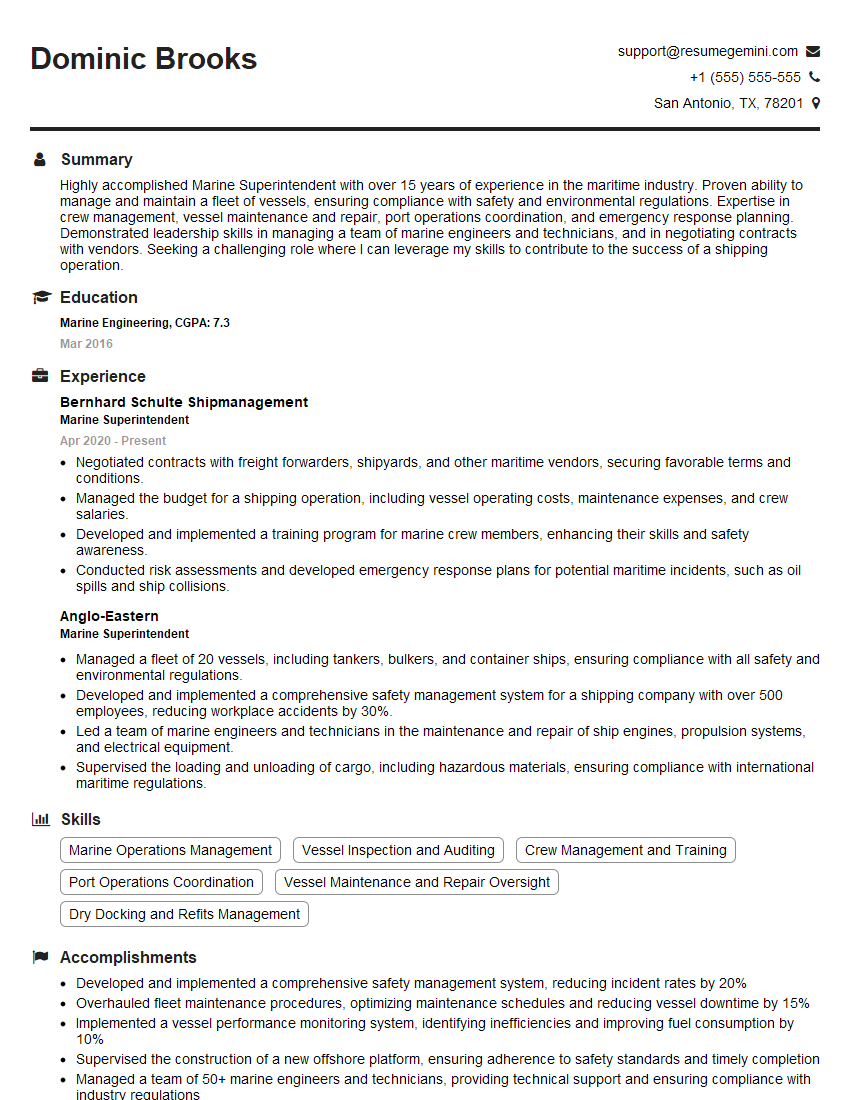
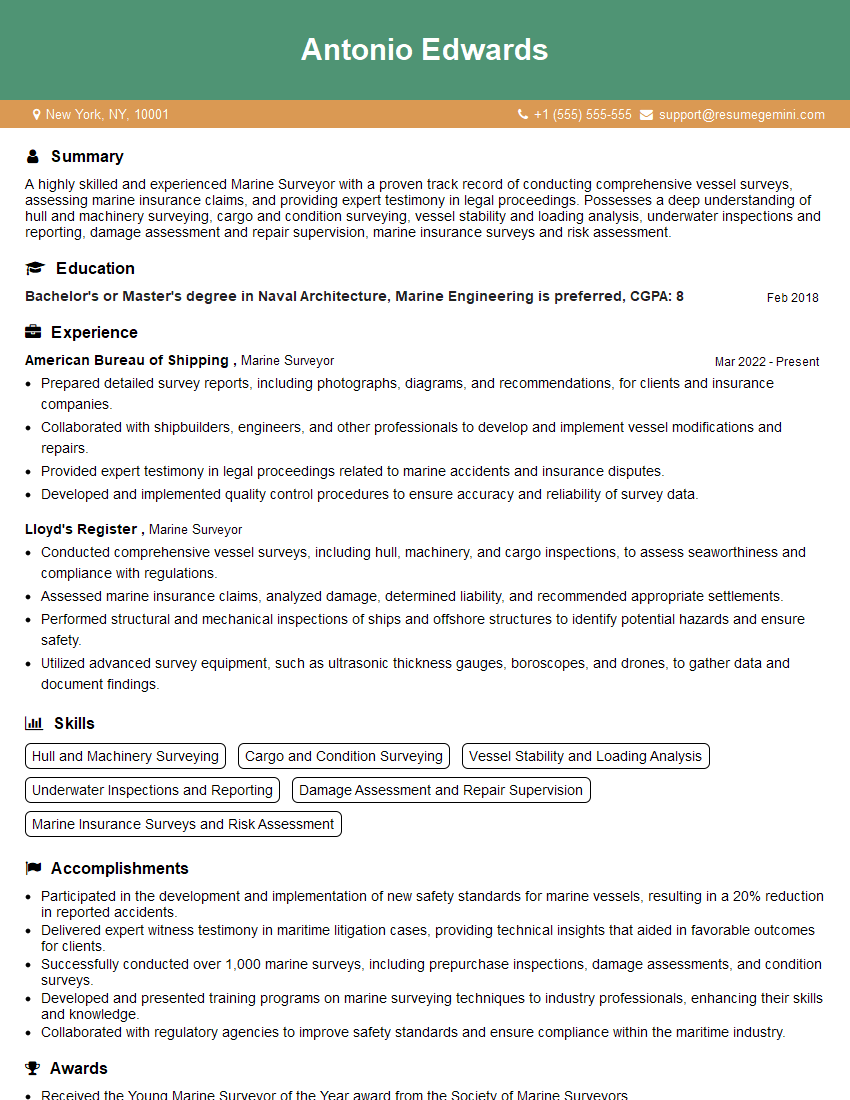
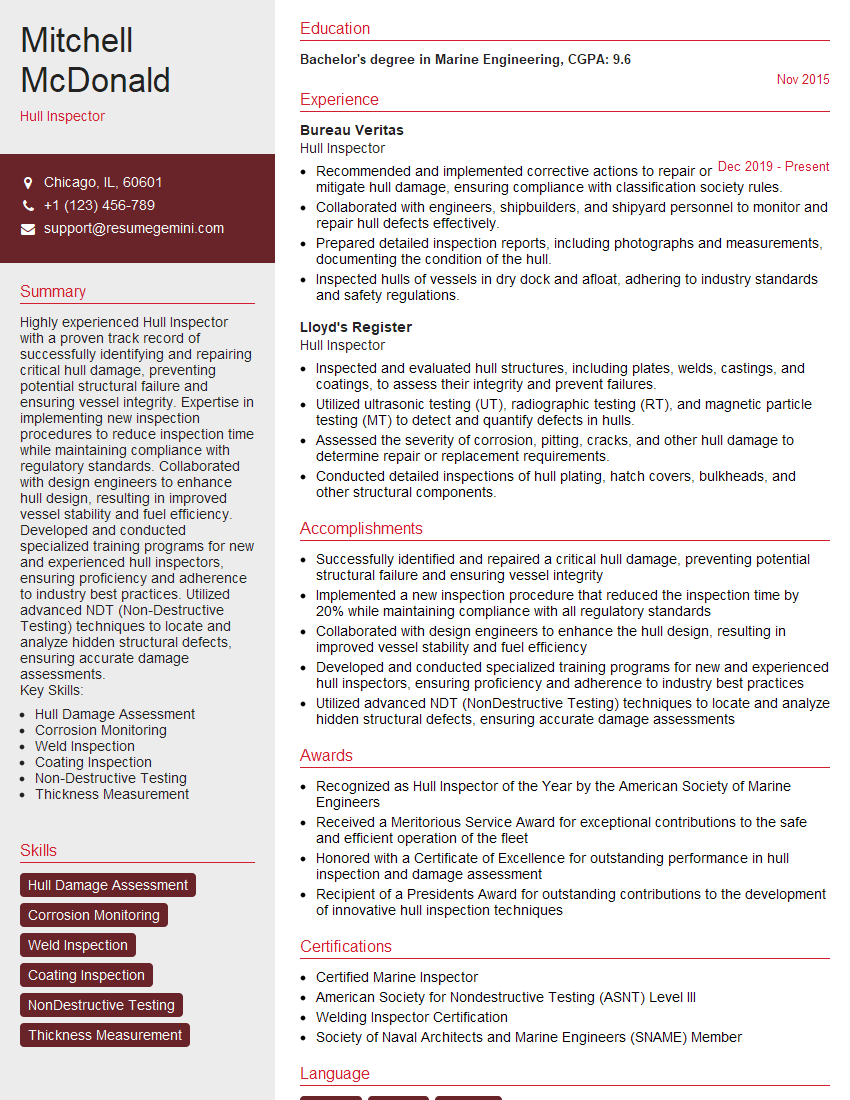
Mastering Vessel Classification and Standards is crucial for career advancement in the maritime industry. A strong understanding of these principles demonstrates your commitment to safety, compliance, and technical proficiency – highly valued attributes in this field. To significantly increase your chances of securing your dream role, creating a compelling and ATS-friendly resume is essential. ResumeGemini is a trusted resource that can help you build a professional resume that showcases your skills and experience effectively. Examples of resumes tailored to Vessel Classification and Standards are available, allowing you to craft a document that perfectly highlights your qualifications for your target positions. Invest time in perfecting your resume – it’s your first impression with potential employers.
Explore more articles
Users Rating of Our Blogs
Share Your Experience
We value your feedback! Please rate our content and share your thoughts (optional).
What Readers Say About Our Blog
Very informative content, great job.
good