Are you ready to stand out in your next interview? Understanding and preparing for NFPA Code Analysis interview questions is a game-changer. In this blog, we’ve compiled key questions and expert advice to help you showcase your skills with confidence and precision. Let’s get started on your journey to acing the interview.
Questions Asked in NFPA Code Analysis Interview
Q 1. Explain the differences between NFPA 101 and NFPA 5000.
NFPA 101, Life Safety Code, focuses on the overall life safety of building occupants during a fire. It addresses building construction, protection features, and operational procedures to ensure safe evacuation. NFPA 5000, Building Construction and Safety Code, provides a comprehensive code for the design, construction, and operation of buildings, encompassing broader safety issues beyond fire safety, including structural integrity, accessibility, and other hazard mitigation measures.
Think of it this way: NFPA 101 is specifically about getting people out safely in a fire, while NFPA 5000 is a more holistic code covering all aspects of building safety and construction. NFPA 101 is often referenced and adopted by local jurisdictions as part of their building codes, while NFPA 5000 offers a complete, self-contained code that can be adopted independently. They can even be used together; NFPA 5000 might incorporate parts of NFPA 101.
Q 2. Describe your experience interpreting and applying NFPA codes.
I have extensive experience interpreting and applying numerous NFPA codes, primarily focusing on NFPA 101, NFPA 13 (sprinkler systems), NFPA 72 (alarm systems), and NFPA 25 (water-based fire protection systems). My work has involved reviewing plans for various occupancies, including high-rise residential buildings, healthcare facilities, and educational institutions. For example, I recently reviewed plans for a new hospital, ensuring the design complied with the requirements for fire separation, smoke control systems, and emergency egress routes as outlined in NFPA 101. This involved detailed plan analysis, code interpretation, and collaboration with architects and engineers. I also have experience in conducting fire safety inspections, ensuring compliance with specific NFPA standards, including the identification of deficiencies and recommending corrective actions. This hands-on experience has honed my ability to translate complex code requirements into practical solutions.
Q 3. How do you handle discrepancies between different NFPA codes?
Discrepancies between NFPA codes are handled using a tiered approach. The most specific code always takes precedence. For instance, if NFPA 101 has a general requirement for fire separations, and NFPA 99 (healthcare facilities) provides more stringent requirements, NFPA 99’s specifics override the general requirements of NFPA 101. If there’s no explicit hierarchy, the most recently adopted or amended code generally governs. If conflicts still persist, I would consult with other subject matter experts, relevant AHJ (Authority Having Jurisdiction) interpretations, and potentially utilize engineering judgment to determine the most appropriate solution, always prioritizing life safety.
In practice, this requires a deep understanding of the intent behind each code and the potential hazards involved. A clear understanding of the overall fire safety strategy is essential to resolving these conflicts effectively.
Q 4. What are the key elements of a fire protection plan review?
A comprehensive fire protection plan review involves a thorough examination of multiple aspects of the fire safety strategy. Key elements include:
- Review of design drawings: This includes evaluating the layout, means of egress, fire separation, and location of fire protection systems.
- Analysis of fire protection systems: This involves assessing the adequacy of fire sprinklers, fire alarms, smoke detectors, and other systems based on occupancy type and hazard classification.
- Compliance with applicable NFPA codes: This is a critical step, involving a detailed comparison of the design against the relevant codes and standards.
- Identification of deficiencies and hazards: This part documents any discrepancies or potential safety issues that require attention.
- Development of recommendations: Finally, recommendations are provided for design modifications or corrective actions to address any identified deficiencies.
The review process often involves collaboration with design professionals and the AHJ to ensure a compliant and effective fire protection system is in place.
Q 5. Explain the process of conducting a fire safety inspection according to NFPA standards.
A fire safety inspection following NFPA standards is a systematic process. First, a pre-inspection meeting to coordinate access, scope, and expectations. The inspection itself involves a thorough walkthrough of the facility, examining:
- Means of egress: Checking for unobstructed paths, proper signage, and functional exit hardware.
- Fire detection and alarm systems: Testing components and verifying their operability.
- Fire suppression systems: Inspecting sprinklers, standpipes, extinguishers, and other suppression equipment for proper installation and maintenance.
- Emergency lighting and power: Verifying adequate illumination in case of power failure.
- Fire safety management: Reviewing the organization’s fire safety plans, training programs, and emergency procedures.
Following the inspection, a detailed report is compiled documenting findings, including identified deficiencies and recommendations for corrective action. The report is often categorized by urgency and severity of identified problems. Follow-up inspections may be necessary to ensure the implementation of recommended improvements. The inspection process aims to proactively identify and address fire hazards before they result in an incident.
Q 6. How do you determine the appropriate fire suppression system for a given occupancy?
Determining the appropriate fire suppression system for a given occupancy requires careful consideration of several factors:
- Occupancy type: Different occupancies (residential, commercial, industrial) have unique fire risks and require different systems.
- Hazard classification: The type of materials present and their potential to ignite and spread fire significantly impacts the selection of the appropriate suppression system. For example, a facility storing flammable liquids will require different protection than an office building.
- Building construction: Building design features, like the size and layout of spaces, play a significant role. High-rise buildings may need more sophisticated systems compared to smaller structures.
- Local codes and regulations: The requirements and regulations mandated by the local AHJ must be followed.
The process involves applying the relevant NFPA codes and standards, considering the specific hazards, and often consulting with fire protection engineers to arrive at the most suitable system design. For example, a high-rise residential building may require a comprehensive system combining sprinklers, standpipes, and a sophisticated fire alarm system, while a small retail store may only require a sprinkler system and portable fire extinguishers. It’s a detailed, risk-based analysis.
Q 7. What are the common challenges you face in NFPA code analysis?
Common challenges in NFPA code analysis include:
- Ambiguity in code language: Some codes can be open to multiple interpretations, requiring careful consideration and analysis.
- Keeping up with code changes: NFPA codes are regularly updated, requiring ongoing professional development to stay abreast of the latest revisions and amendments.
- Balancing code requirements with practical constraints: Sometimes, complying with all aspects of a code can be challenging or costly, requiring finding practical solutions that still ensure adequate safety.
- Integration of multiple codes: Projects often involve several NFPA codes, requiring coordinated analysis and resolution of potential conflicts.
- Dealing with outdated systems: Older buildings may have fire protection systems that don’t meet current code requirements, requiring careful evaluation and planning for upgrades or replacements.
Overcoming these challenges requires a deep understanding of the codes, a willingness to consult with other experts, and a focus on a practical approach prioritizing the life safety of building occupants.
Q 8. How do you stay updated on changes and revisions to NFPA codes?
Staying current with NFPA code changes is crucial for any fire safety professional. I employ a multi-pronged approach. Firstly, I subscribe to NFPA’s official publications and receive email alerts announcing new editions and revisions. Secondly, I actively participate in industry conferences and webinars hosted by NFPA and other reputable organizations. These events often feature presentations and discussions on the latest code updates and their practical implications. Thirdly, I maintain professional memberships with organizations like the Society of Fire Protection Engineers (SFPE), which provides access to continuing education resources and publications that cover code changes and interpretations. Finally, I regularly review online resources and industry journals specializing in fire safety to stay abreast of emerging trends and best practices related to code compliance.
Q 9. Describe your experience with NFPA 72 (National Fire Alarm Code).
My experience with NFPA 72, the National Fire Alarm Code, is extensive. I’ve been involved in the design, inspection, and testing of fire alarm systems in a variety of building types, from high-rise residential complexes to industrial facilities and healthcare settings. I understand the intricacies of system design, including the selection of appropriate detectors (smoke, heat, carbon monoxide), notification appliances, and control panels. I’m proficient in interpreting the code’s requirements for system testing, maintenance, and inspection, including the documentation process. For example, I’ve worked on projects where integrating legacy systems with new technologies posed a challenge. I successfully navigated those hurdles by understanding the relevant sections of NFPA 72, focusing on ensuring compatibility and adherence to current standards while optimizing system performance and reliability. My approach is always to select a system that meets the required level of protection while also being cost-effective and maintainable.
Q 10. Explain the importance of egress planning in fire safety.
Egress planning is paramount in fire safety because it dictates how occupants can safely evacuate a building during a fire. Proper egress design ensures that people can quickly and efficiently escape to a place of safety. It encompasses several key elements: adequate number and width of exits, clearly marked and illuminated pathways, unobstructed travel distances, appropriate signage, and compliant emergency lighting. For instance, in a large office building, insufficient exit capacity or poorly lit stairwells could lead to delays in evacuation, increasing the risk of injury or fatalities. I have direct experience in designing egress systems, ensuring that each component adheres to NFPA 101’s requirements, considering factors such as building occupancy, the nature of the building’s contents, and the potential fire hazards. A well-planned egress system is not just about meeting the minimum code; it’s about creating a safe and efficient evacuation strategy that prioritizes the lives of occupants.
Q 11. How do you handle situations where a building’s design conflicts with NFPA codes?
When a building’s design conflicts with NFPA codes, it’s crucial to engage in a collaborative problem-solving approach. The first step is to clearly identify the specific areas of conflict. Then, I work with the architects, engineers, and building owners to explore alternative design solutions that meet the code requirements while preserving the overall design intent. This might involve suggesting modifications to the building layout, specifying alternative materials, or incorporating additional fire protection features. If modifications are not feasible, I’ll help prepare a variance request explaining the reasons for the deviation and justifying why the proposed alternative still provides an equivalent level of safety. This request, along with engineering calculations and supporting data, is submitted to the local authority having jurisdiction (AHJ) for review and approval. My experience includes successful negotiation of variances with AHJs, balancing code compliance with realistic design constraints. Each case is unique, and my aim is to find the most effective and safe solution within the legal framework.
Q 12. What is your approach to identifying and mitigating fire hazards?
My approach to identifying and mitigating fire hazards is systematic and thorough. It begins with a comprehensive site survey, visually inspecting the building for potential hazards like combustible materials, improper storage practices, damaged electrical wiring, and inadequate fire protection equipment. This is followed by a detailed review of the building’s plans and fire protection systems. I utilize risk assessment techniques, such as HAZOP (Hazard and Operability Study) and FTA (Fault Tree Analysis), to identify potential failure modes and critical hazards. These assessments help prioritize mitigation efforts, focusing on the most critical hazards first. Then, I develop a customized mitigation plan that includes specific recommendations for hazard elimination, engineering controls, administrative controls (such as implementing safety procedures), and personal protective equipment (PPE) if necessary. Finally, I work with building owners and stakeholders to implement and monitor the effectiveness of the mitigation plan. A successful mitigation strategy is not a one-time event; it requires ongoing monitoring and maintenance.
Q 13. Describe your experience working with building owners and contractors to ensure code compliance.
Collaborating with building owners and contractors is essential for successful code compliance. I strive to build strong working relationships based on mutual respect and clear communication. I clearly explain the code requirements and their implications to all parties involved, using plain language that is easy to understand. I work proactively to address any questions or concerns they may have, providing technical expertise and guidance as needed. I understand that cost is always a factor, so I explore cost-effective solutions that maintain a high level of safety. My approach involves providing regular updates on progress and actively soliciting feedback throughout the project. A recent example involved a contractor who was unfamiliar with certain aspects of NFPA 13 (Standard for the Installation of Sprinkler Systems). I provided him with comprehensive training and support, ultimately ensuring compliance and a higher-quality installation.
Q 14. How familiar are you with the NFPA Life Safety Code (NFPA 101)?
I am very familiar with the NFPA 101, Life Safety Code. It’s a fundamental code that I use extensively in my work. I understand its provisions related to means of egress, fire alarm systems, fire suppression systems, emergency lighting, and overall building safety. I understand how these various systems and components work together to create a comprehensive life safety plan. My experience includes applying NFPA 101 to various occupancies, from healthcare facilities (requiring special considerations for patient care areas) to educational buildings (requiring appropriate safeguards for student populations) and assembly occupancies. I’m adept at interpreting the code’s requirements for different occupancy classifications and applying those requirements to specific design considerations. I also understand the importance of staying updated on amendments and interpretations to NFPA 101 to ensure I’m always employing the latest best practices.
Q 15. Explain the role of accessibility in NFPA code compliance.
Accessibility in NFPA code compliance is paramount, ensuring that fire safety measures don’t inadvertently create barriers for people with disabilities. It’s not just about meeting minimum requirements; it’s about creating truly inclusive environments where everyone can safely evacuate in an emergency. This involves careful consideration of building design elements and the implementation of assistive technologies.
- Accessible Evacuation Routes: NFPA codes mandate features like ramps, wider doorways, tactile signage, and audible alarms that cater to people with visual, auditory, or mobility impairments. For example, a building must provide accessible routes of egress with sufficient width and clear signage indicating the direction of exit, using both visual and tactile cues.
- Accessible Fire Alarm Systems: Systems must provide visual and audible alerts, including flashing strobe lights for individuals who are deaf or hard of hearing. The placement of these alarms is crucial to ensure they are visible to occupants from various positions within a space.
- Accessible Refuge Areas: These are designated areas where people with mobility impairments can safely wait for assistance during an evacuation. They should be properly equipped and easily accessible from evacuation routes. For instance, a building might include a refuge area equipped with a communication system and a readily available fire extinguisher.
Failure to meet these accessibility requirements not only violates the law but also significantly compromises the safety and well-being of a vulnerable population. My experience includes working on numerous projects where detailed accessibility assessments were critical to ensure compliance, often involving collaboration with accessibility specialists to ensure inclusive solutions.
Career Expert Tips:
- Ace those interviews! Prepare effectively by reviewing the Top 50 Most Common Interview Questions on ResumeGemini.
- Navigate your job search with confidence! Explore a wide range of Career Tips on ResumeGemini. Learn about common challenges and recommendations to overcome them.
- Craft the perfect resume! Master the Art of Resume Writing with ResumeGemini’s guide. Showcase your unique qualifications and achievements effectively.
- Don’t miss out on holiday savings! Build your dream resume with ResumeGemini’s ATS optimized templates.
Q 16. What software or tools do you use for NFPA code analysis?
For NFPA code analysis, I utilize a combination of software and tools tailored to the specific project needs. There isn’t one single ‘best’ tool, as the choice depends on the project’s complexity and specific code requirements. However, some commonly used tools and approaches include:
- NFPA Code Handbooks: These are the essential foundation. I constantly refer to the latest editions for accurate and up-to-date information. Thorough familiarity with the relevant chapters is paramount.
- Computer-Aided Design (CAD) Software: Software like AutoCAD or Revit is crucial for visualizing building plans and integrating code requirements into the design process. I use these to overlay fire protection systems, egress paths, and other safety features onto the building plans, ensuring compliance during the design phase.
- Specialized Fire Protection Engineering Software: Software that can perform simulations of fire spread and evacuation dynamics can be invaluable for complex projects. These programs help verify that the design meets the required safety standards.
- Spreadsheet Software (e.g., Excel): Used for organizing data, tracking compliance, and documenting calculations related to fire safety features, such as occupancy loads and required fire extinguisher numbers.
Furthermore, I leverage online resources and databases to access interpretations, updates, and relevant case studies to inform my analysis. My approach always prioritizes thoroughness and accuracy, cross-referencing information from multiple sources to avoid misinterpretations.
Q 17. How do you prioritize different aspects of fire safety in a building design?
Prioritizing fire safety aspects in building design requires a balanced approach. It’s not simply about prioritizing one over another; rather, it’s about understanding the interdependencies and potential cascading effects of failures in different systems. A hierarchical approach based on risk assessment is employed.
- Life Safety First: The highest priority is always given to measures that protect human life. This includes features like adequate means of egress, effective fire alarm systems, and appropriately located fire extinguishers. If a conflict arises, life safety always supersedes other considerations.
- Property Protection: Following life safety, measures to mitigate property damage are considered. These include fire suppression systems, fire-resistant materials, and compartmentalization strategies. The goal is to limit the extent of damage and reduce the risk of total loss.
- Business Continuity: This involves minimizing the disruption caused by a fire. This could include redundant systems, data backups, and strategies for quick recovery. While important, this consideration remains secondary to life safety and property protection.
For instance, in a hospital, life safety measures like clearly marked evacuation routes for patients and staff take precedence over protecting valuable medical equipment. A risk assessment and a cost-benefit analysis help in determining the optimal balance between safety, cost, and functionality within the project constraints.
Q 18. Describe your experience with fire risk assessment methodologies.
My experience with fire risk assessment methodologies is extensive. I’m proficient in various approaches, including qualitative and quantitative methods. The choice of methodology depends on the specific characteristics of the building and its occupancy.
- Qualitative Assessments: These involve a visual inspection of the building, reviewing its design plans, and identifying potential hazards based on experience and expert judgment. This method is often used for initial assessments or smaller projects.
- Quantitative Assessments: These use more rigorous statistical and computational techniques to estimate the probability and consequences of fire incidents. This may involve software simulations or probabilistic models to predict fire spread, smoke movement, and evacuation times. These are often more suitable for large or high-risk facilities.
- Hazard and Operability Studies (HAZOP): A systematic method of identifying potential hazards and operational problems by considering deviations from normal operating conditions. This technique is highly effective for identifying potential fire sources and their impact.
A typical risk assessment involves identifying potential hazards, analyzing their likelihood and severity, and then developing mitigation strategies. I’ve applied these methodologies in diverse settings, ranging from residential buildings to industrial facilities, tailoring the approach to meet the project’s unique circumstances and regulatory requirements.
Q 19. How do you communicate complex code requirements to non-technical audiences?
Communicating complex code requirements to non-technical audiences requires clear, concise language and visual aids. My approach involves translating technical jargon into everyday terms and using analogies to make the information relatable.
- Simple Language: Avoid technical terms whenever possible, replacing them with simpler equivalents. For instance, instead of saying ‘means of egress,’ I might say ‘escape routes’.
- Visual Aids: Use diagrams, illustrations, and videos to illustrate complex concepts. A picture of a properly marked exit route is far more effective than a lengthy written description.
- Analogies and Stories: Relate technical concepts to familiar experiences. For instance, explaining fire compartmentalization using the analogy of individual rooms in a house can be effective. Real-world examples of fire incidents and their outcomes can drive home the importance of code compliance.
- Interactive Sessions: Instead of just presenting information, I facilitate interactive sessions where the audience can ask questions and participate in discussions. This allows me to tailor the explanations to their specific concerns and address any misconceptions.
My experience shows that a well-crafted presentation, tailored to the audience’s level of understanding, is critical to ensuring that safety messages are understood and acted upon.
Q 20. What is your understanding of the NFPA process for code development?
The NFPA’s code development process is a highly collaborative and consensus-based effort involving various stakeholders. It’s a cyclical process that begins with identifying the need for a code or an update, followed by a series of steps to produce a comprehensive and effective document. Key steps include:
- Initiation of Proposal: The process starts with a proposal to develop or revise a code, often stemming from identified gaps in existing standards or emerging technological advancements.
- Technical Committee Formation: Experts from diverse backgrounds—fire protection engineers, firefighters, code officials, and representatives from various industries—are assembled to form a technical committee responsible for drafting and reviewing the code.
- Public Input: The draft code is made available for public review and comment, allowing stakeholders to contribute their expertise and ensure widespread consideration.
- Committee Deliberation and Revision: Based on public input, the technical committee refines the draft code, addressing comments and concerns.
- NFPA Review and Approval: After rigorous review and revisions, the code is presented to the NFPA for final approval and adoption.
The entire process emphasizes balance between safety, feasibility, and technological advancement. Understanding this process is vital to interpreting the codes and appreciating the rationale behind specific requirements.
Q 21. How do you handle conflicting requirements from different regulatory bodies?
Handling conflicting requirements from different regulatory bodies requires a careful and systematic approach. It’s crucial to understand the legal hierarchy and jurisdictional overlaps.
- Identify the Conflict: The first step is to clearly identify the conflicting requirements and the specific codes or regulations involved. Note the specific requirements that clash.
- Determine Jurisdictional Authority: Establish which regulatory body has ultimate authority in the specific situation. Generally, the most stringent requirement prevails.
- Consult Relevant Authorities: If the jurisdictional authority isn’t clear or requires further clarification, I engage in discussions with the relevant regulatory bodies to seek clarification and interpretation. Formal written requests for clarification might be necessary.
- Document the Process: All decisions, communications, and justifications must be meticulously documented to maintain a clear audit trail. This documentation is essential if future disputes or appeals arise.
- Prioritize Life Safety: In case of irreconcilable conflicts, prioritizing life safety measures is always paramount. Any solution must meet the minimum requirements for life safety, even if it means departing from less critical aspects of other requirements.
Navigating conflicting regulations requires a proactive and communicative approach, with a strong emphasis on clear documentation and adherence to the most stringent safety standards.
Q 22. Explain your understanding of the concept of ‘means of egress’.
Means of egress is simply the path people can use to safely leave a building in case of a fire or other emergency. It’s not just about the exit doors; it’s the entire system of pathways, including:
- Exits: Doors, stairwells, ramps, and other openings leading to a safe area outside.
- Exit access: The area from the occupied space to the exit itself. This includes hallways, corridors, and any other spaces people need to traverse.
- Exit discharge: The area from the exit to a place of safety outside the building, such as a street or open space.
Think of it like this: your means of egress is the route you take from your seat in a movie theater to the street outside during a fire alarm. Each part—your seat to the aisle (exit access), the aisle to the door (exit), and the door to the sidewalk (exit discharge)—is crucial. NFPA codes specify requirements for the width, number, and design of each component to ensure a safe evacuation for everyone.
For example, a building might require a certain number of exits based on its occupancy, and those exits must be clearly marked and free from obstructions. Exit access routes need to be adequately lit and wide enough to allow for easy movement, even during a chaotic evacuation.
Q 23. What is your experience with fire alarm system design and testing?
I have extensive experience in fire alarm system design and testing, encompassing various building types and complexities. My work includes designing systems that meet the requirements of NFPA 72, National Fire Alarm Code. This involves selecting appropriate detectors (smoke, heat, etc.), notification appliances (horns, strobes, voice evacuation systems), and control panels, as well as designing the wiring and power distribution. I’ve worked on projects ranging from small commercial spaces to large multi-story buildings.
Testing is equally critical. I am proficient in performing both functional and acceptance testing, following NFPA 72 guidelines. This ensures all components are working as intended. I can identify and troubleshoot issues such as false alarms or failures in specific components, and I’m adept at documenting the entire process for compliance. A recent example involved troubleshooting a recurring false alarm in a high-rise building caused by a faulty sensor; through systematic testing and analysis, we pinpointed the problem and fixed it, preventing disruptions and ensuring the safety of the building’s occupants.
Q 24. Describe your experience with sprinkler system design and inspection.
My experience with sprinkler system design and inspection includes working with NFPA 13, Standard for the Installation of Sprinkler Systems. I’ve designed systems for various occupancy types, considering factors such as building construction, contents, and water supply availability. My work includes hydraulic calculations to determine pipe sizes and water flow rates, ensuring adequate water pressure and coverage. I understand the different types of sprinkler heads (pendant, upright, sidewall) and their applications in different environments.
Inspection is a vital part of ensuring ongoing compliance. I conduct regular inspections to check for obstructions, corrosion, damage, and proper operation. I document these inspections thoroughly and am experienced in preparing reports that highlight any deficiencies needing remediation. I’ve helped clients avoid significant problems by early detection of potential failures during routine inspections. For example, I discovered a corroded section of pipe during an inspection, which prevented a potential system failure that could have had disastrous consequences.
Q 25. Explain the differences between different types of fire extinguishers and their applications.
Different fire extinguishers are designed for different types of fires, categorized by class: A, B, C, D, and K. Using the wrong extinguisher can be dangerous or even ineffective.
- Class A: Ordinary combustibles like wood, paper, cloth. These usually contain water or a water-based agent.
- Class B: Flammable liquids like grease, gasoline, oil. These commonly use CO2, foam, or dry chemical agents.
- Class C: Energized electrical equipment. These require non-conductive agents like CO2 or dry chemical.
- Class D: Combustible metals like magnesium, titanium. These require special extinguishers designed for these specific materials.
- Class K: Cooking oils and fats. These use a special agent to cool and suppress the fire.
Choosing the right extinguisher involves understanding the potential fire hazards in a given location. A kitchen requires a Class K extinguisher; an office building may need Class A and C; and a workshop with flammable solvents would benefit from Class B.
Q 26. How do you ensure compliance with NFPA codes during the construction phase?
Ensuring NFPA code compliance during construction requires proactive involvement throughout the project. This begins with a thorough review of the plans to ensure they meet the relevant codes. I coordinate with the design team, contractors, and inspectors to ensure all systems (fire protection, means of egress, etc.) are installed and inspected according to the codes. This involves:
- Pre-construction planning: Reviewing plans and specifications to identify potential code conflicts.
- Construction observation: Regular site visits to observe installations, ensure compliance with plans and specifications, and spot any deviations.
- Inspections: Coordinating with the authority having jurisdiction (AHJ) for inspections at various stages of construction.
- Documentation: Maintaining detailed records of all inspections, tests, and corrections.
An example of a proactive approach involves identifying a potential code violation during plan review. Instead of waiting until construction is complete, we work with the architects to adjust the design and prevent costly rework later on.
Q 27. What is your approach to documenting code compliance?
My approach to documenting code compliance is systematic and comprehensive. It uses digital and physical records to establish a clear audit trail. This includes:
- Plans and specifications: Marked-up sets with all approved revisions.
- Inspection reports: Detailed records from AHJ inspections, with any corrections noted and verified.
- Test results: Documentation of all tests performed on fire protection systems (sprinklers, fire alarms, etc.).
- Photographs: Visual evidence of installations, inspections, and corrections.
- As-built drawings: Final drawings showing the completed systems as installed.
This complete documentation package is essential for demonstrating compliance and serves as a valuable resource for future maintenance and repairs. A well-organized system helps in minimizing liability and potential disputes.
Q 28. Describe your experience with conducting fire drills and emergency preparedness plans.
I have extensive experience in conducting fire drills and developing emergency preparedness plans. This involves understanding the specific needs and characteristics of the building and its occupants. My process includes:
- Developing the plan: Creating a comprehensive plan that considers evacuation routes, assembly points, communication protocols, and roles and responsibilities for personnel.
- Conducting drills: Regular drills are crucial to test the plan’s effectiveness and identify areas for improvement. I oversee drills, assess their effectiveness, and use the feedback to refine the plan.
- Training: Educating occupants on the plan and their roles during an emergency.
- Documentation: Maintaining detailed records of drills and training sessions.
A recent project involved developing an emergency plan for a large healthcare facility. This required careful consideration of the unique needs of patients and staff and included detailed procedures for moving patients to safe locations. Regular drills ensured the plan functioned smoothly, allowing for necessary adjustments to optimize the process.
Key Topics to Learn for NFPA Code Analysis Interview
- Code Interpretation & Application: Understanding the structure and intent of NFPA codes, including definitions, requirements, and exceptions. Focus on practical application – how to interpret specific code sections and apply them to real-world scenarios.
- Risk Assessment & Mitigation: Analyzing fire hazards and developing strategies for mitigation based on relevant NFPA codes. This includes identifying potential hazards, evaluating risks, and recommending appropriate preventative measures.
- Life Safety Systems: Thorough knowledge of fire detection, suppression, and alarm systems. Understand the integration of these systems and their compliance with NFPA standards. Consider practical scenarios involving system design and maintenance.
- Code Adoption & Enforcement: Familiarize yourself with the process of adopting and enforcing NFPA codes within different jurisdictions. Understand the variations and interpretations that can occur.
- Plan Review & Inspection: Mastering the skills necessary to effectively review fire protection plans and conduct inspections to ensure compliance. Prepare to discuss methodologies and best practices.
- NFPA Standards & References: Develop a strong understanding of the various NFPA standards and how they interconnect. Practice referencing relevant sections to support your analyses.
- Problem-Solving & Critical Thinking: NFPA code analysis often involves complex scenarios. Practice your problem-solving skills, emphasizing logical reasoning and critical thinking to arrive at effective solutions.
Next Steps
Mastering NFPA Code Analysis opens doors to rewarding and impactful careers in fire protection, safety engineering, and building design. To maximize your job prospects, creating a compelling and ATS-friendly resume is crucial. ResumeGemini is a trusted resource that can help you craft a professional resume that highlights your skills and experience effectively. We offer examples of resumes tailored specifically to NFPA Code Analysis professionals to guide you through the process. Take the next step towards your dream career – invest in your resume with ResumeGemini.
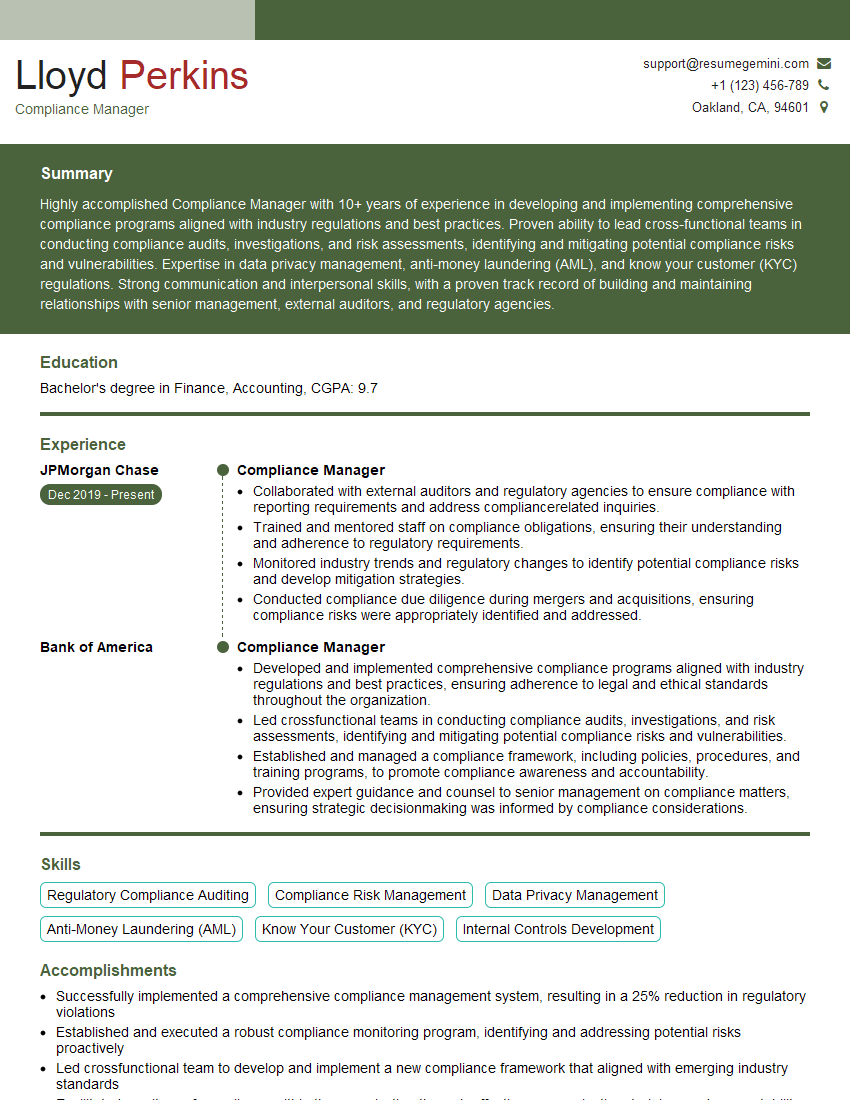
Compliance Manager Resume Sample
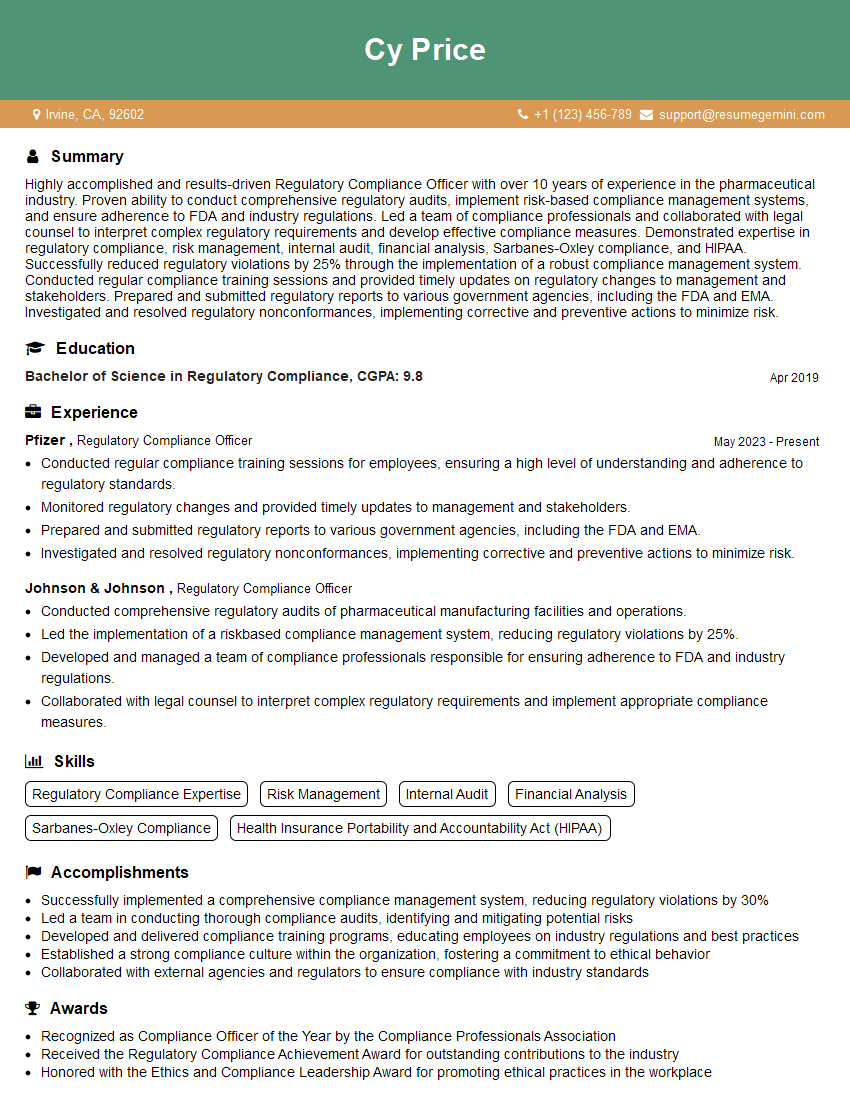
Regulatory Compliance Officer Resume Sample

Risk Management Specialist Resume Sample
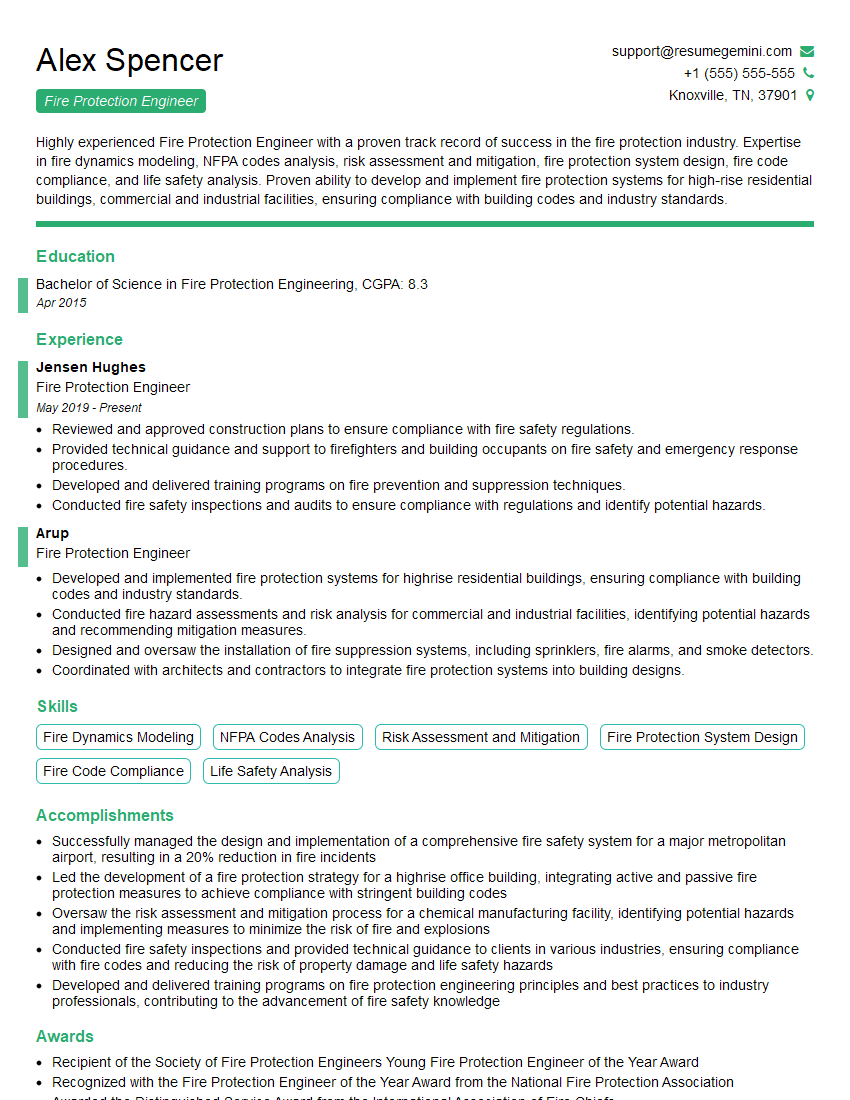
Fire Protection Engineer Resume Sample
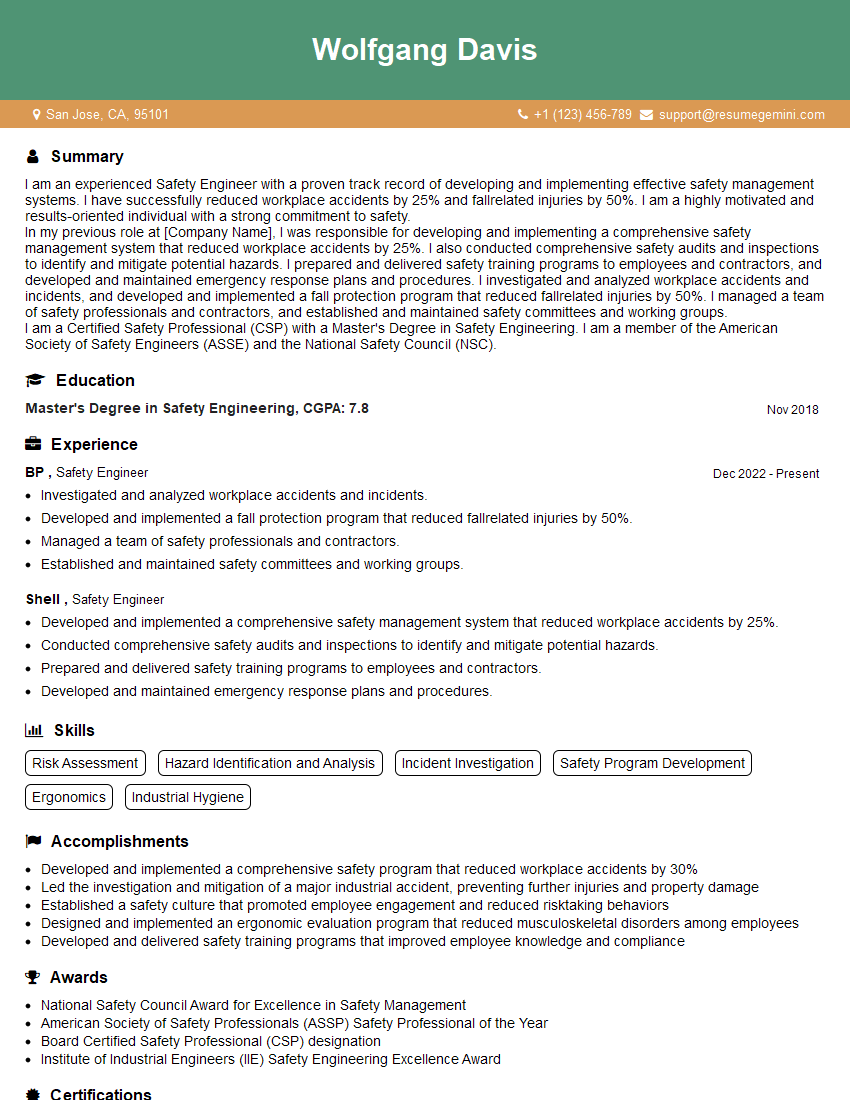
Safety Engineer Resume Sample
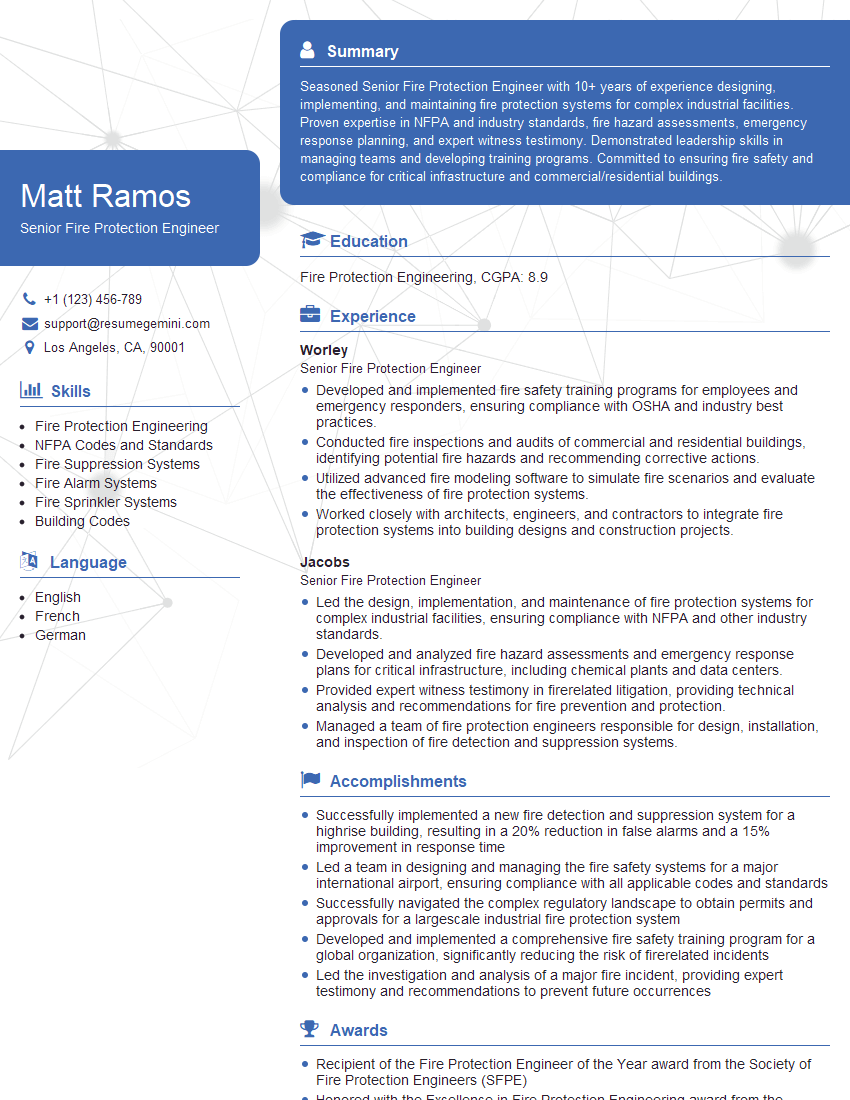
Senior Fire Protection Engineer Resume Sample
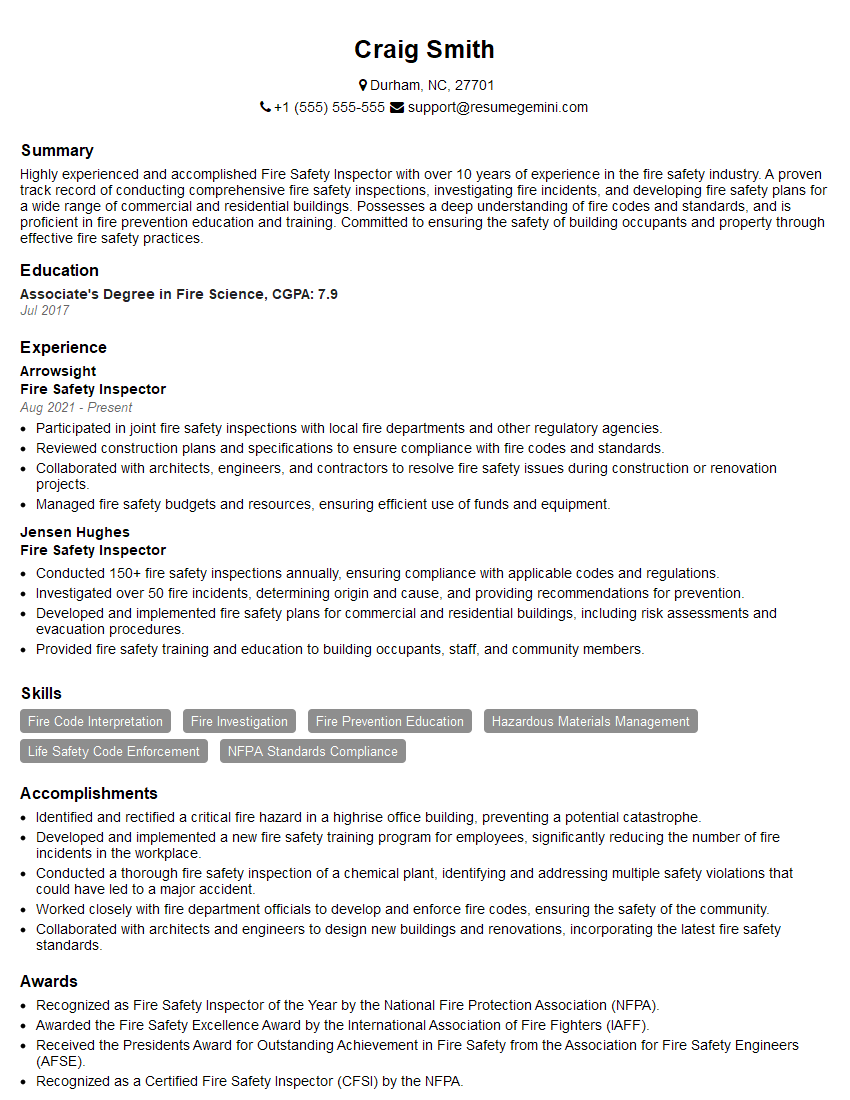
Fire Safety Inspector Resume Sample
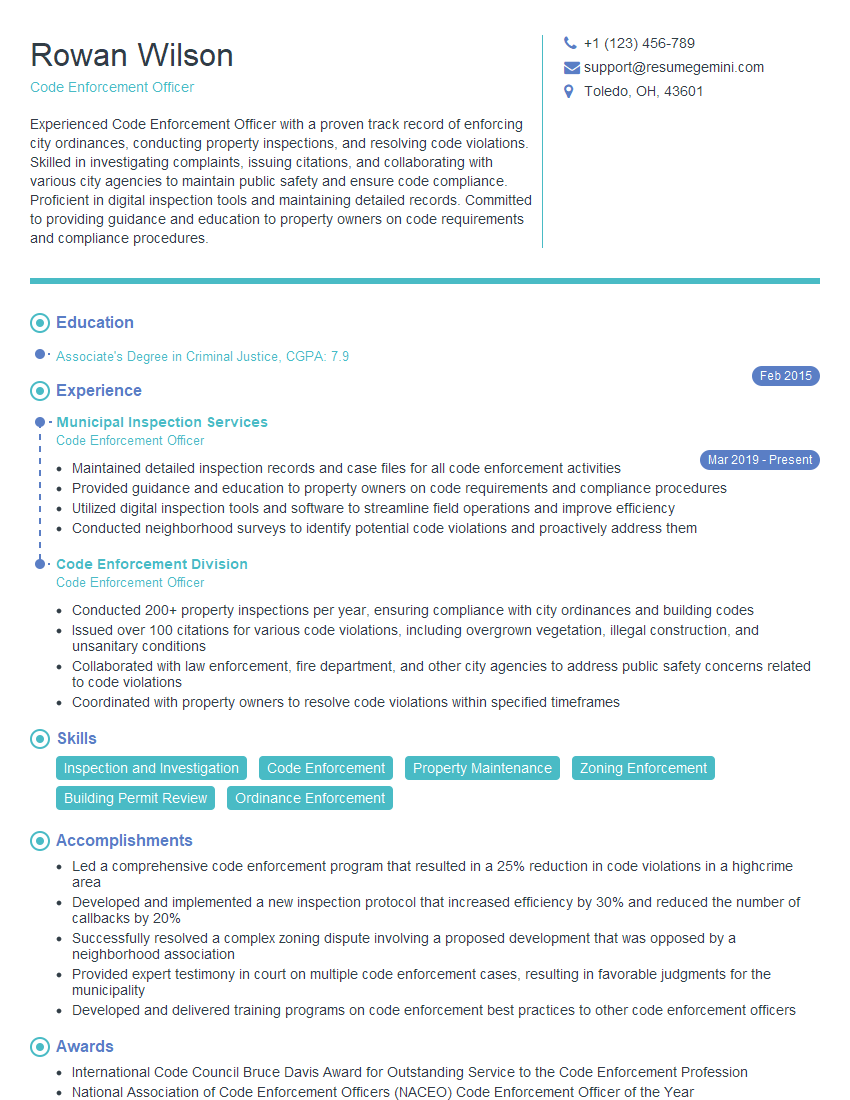
Code Enforcement Officer Resume Sample
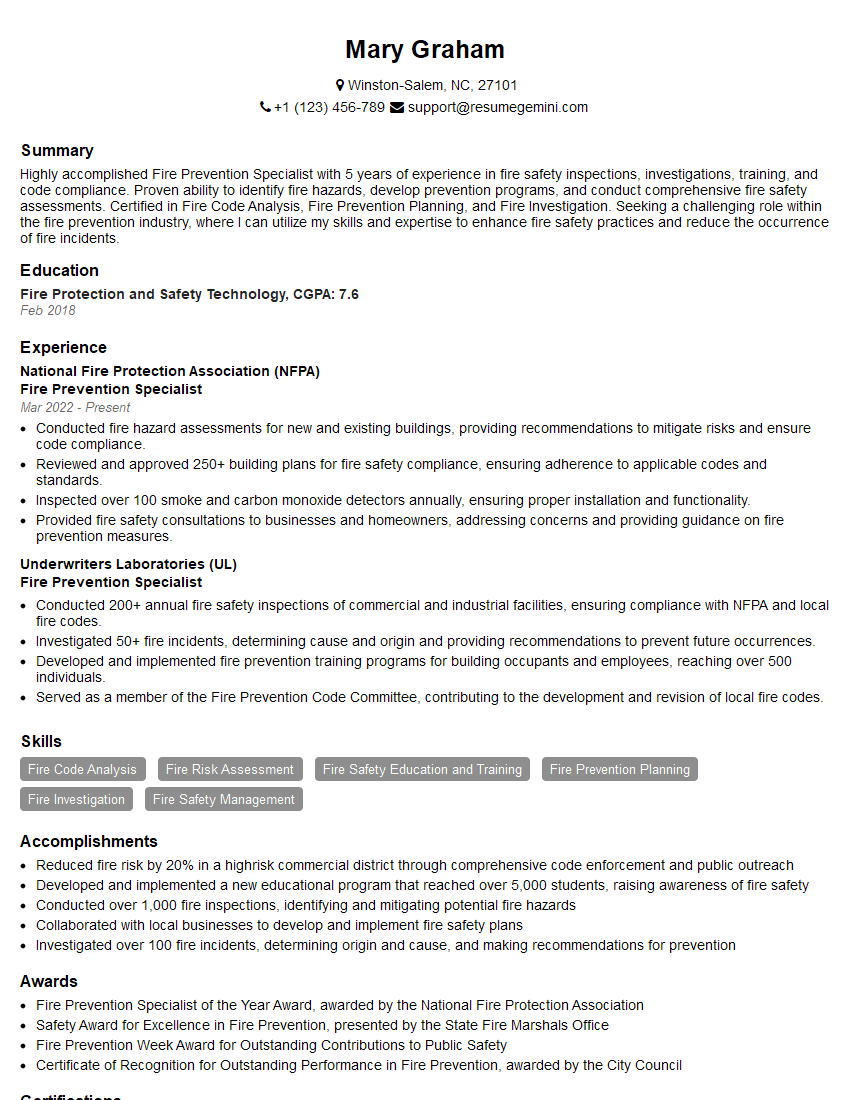
Fire Prevention Specialist Resume Sample
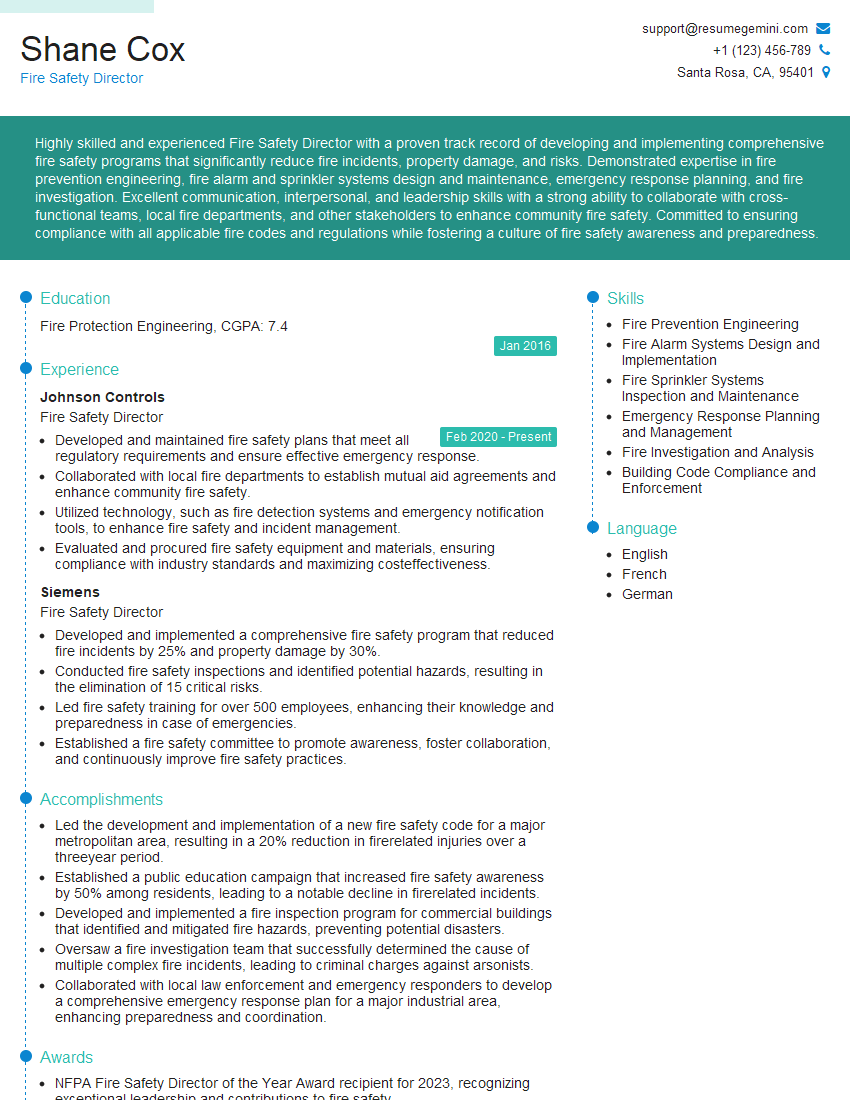
Fire Safety Director Resume Sample
Explore more articles
Users Rating of Our Blogs
Share Your Experience
We value your feedback! Please rate our content and share your thoughts (optional).
What Readers Say About Our Blog
Very informative content, great job.
good