Feeling uncertain about what to expect in your upcoming interview? We’ve got you covered! This blog highlights the most important Nuclear Medicine and Imaging interview questions and provides actionable advice to help you stand out as the ideal candidate. Let’s pave the way for your success.
Questions Asked in Nuclear Medicine and Imaging Interview
Q 1. Explain the principles of radioactive decay.
Radioactive decay is the process by which an unstable atomic nucleus loses energy by emitting radiation, such as alpha particles, beta particles, or gamma rays. This process transforms the unstable nucleus into a more stable one. Think of it like a ball rolling down a hill – the unstable nucleus is at the top of the hill (high energy state), and decay is the process of it rolling down to a lower energy state.
There are several types of decay:
- Alpha decay: Emission of an alpha particle (two protons and two neutrons), effectively reducing the atomic number by 2 and the mass number by 4.
- Beta decay: Emission of a beta particle (an electron or positron), changing the atomic number by +1 (beta-minus) or -1 (beta-plus) but not changing the mass number significantly.
- Gamma decay: Emission of a gamma ray (high-energy photon), which doesn’t change the atomic number or mass number but reduces the energy of the nucleus.
The rate of decay is characterized by the half-life, which is the time it takes for half of the radioactive atoms in a sample to decay. This is a fundamental concept in Nuclear Medicine, as we need to understand how quickly the radiotracer will decay within the patient’s body.
Q 2. Describe the process of performing a PET scan.
A PET (Positron Emission Tomography) scan uses a radioactive tracer injected into the patient’s bloodstream. This tracer emits positrons, which annihilate with electrons in the body, producing pairs of gamma rays that travel in opposite directions. Specialized detectors in the PET scanner detect these gamma rays, allowing for the reconstruction of a 3D image showing the distribution of the tracer in the body.
The process typically involves these steps:
- Radiotracer injection: A small amount of radiotracer, specific to the organ or process being studied, is injected intravenously.
- Patient positioning: The patient lies on a specialized bed inside the PET scanner.
- Data acquisition: The scanner detects the emitted gamma rays. This often involves a period of waiting to allow the tracer to accumulate in the target tissue.
- Image reconstruction: Computer algorithms process the detected gamma ray data to create detailed 3D images showing tracer distribution.
- Image interpretation: A physician specialized in Nuclear Medicine interprets the images to diagnose and assess the patient’s condition.
For example, in oncology, FDG (fluorodeoxyglucose) is a commonly used PET tracer that accumulates in rapidly dividing cells, like cancer cells, allowing for the detection and staging of tumors.
Q 3. What are the different types of radiotracers used in Nuclear Medicine?
Radiotracers used in Nuclear Medicine are radioactive isotopes attached to specific molecules that target particular organs, tissues, or biological processes. The choice of radiotracer depends on the specific clinical application.
Some examples include:
- 18F-FDG (Fluorodeoxyglucose): Used in oncology for detecting and staging cancers.
- 99mTc-sestamibi: Used in cardiology for myocardial perfusion imaging.
- 99mTc-MDP (methylene diphosphonate): Used in bone scintigraphy for detecting bone diseases and fractures.
- 123I-iodine: Used in thyroid imaging and therapy.
- 67Ga-citrate: Used in oncology for detecting and staging certain types of tumors and inflammatory processes.
The ideal radiotracer will have a short half-life to minimize radiation exposure, emit gamma rays with suitable energy for imaging, and have a high target-to-background ratio to enhance image clarity. Furthermore, the attached molecule needs to target the tissue of interest selectively.
Q 4. Explain the difference between SPECT and PET imaging.
Both SPECT (Single-Photon Emission Computed Tomography) and PET are nuclear medicine imaging techniques, but they differ in the type of radiation they detect and the resulting image quality.
Here’s a comparison:
- Radiation Detected: SPECT detects single gamma rays emitted by radiotracers, while PET detects pairs of annihilation gamma rays from positron-emitting tracers.
- Image Resolution: PET generally offers superior spatial resolution (image clarity and detail) compared to SPECT. This is because the coincidence detection of annihilation photons in PET allows for better localization of the tracer.
- Radiotracers: PET uses positron-emitting isotopes (e.g., 18F), while SPECT uses single-photon-emitting isotopes (e.g., 99mTc).
- Cost and Availability: PET scanners are generally more expensive and less widely available than SPECT scanners.
In practical terms, PET is often preferred for oncology applications where high spatial resolution is crucial for accurate tumor staging and detection. SPECT can be a more cost-effective option for other applications like cardiac perfusion studies.
Q 5. How do you ensure patient safety during a nuclear medicine procedure?
Patient safety is paramount in nuclear medicine. We minimize radiation exposure through several strategies:
- ALARA Principle: We adhere to the ALARA principle – As Low As Reasonably Achievable – minimizing radiation dose to both the patient and staff.
- Optimized Radiotracer Doses: We use the smallest effective dose of radiotracer that still produces diagnostic quality images. This is calculated based on factors like patient weight and the type of study.
- Shielding: We utilize appropriate shielding, such as lead aprons and barriers, to protect patients and personnel from unnecessary radiation exposure.
- Time Minimization: Procedures are designed to be as short as possible, reducing the time the patient is exposed to the radiotracer.
- Proper Waste Disposal: Radioactive waste is handled and disposed of according to strict regulations to protect the environment.
- Informed Consent: Patients are fully informed about the procedure, including potential risks and benefits, before undergoing the scan. They must provide informed consent.
Regular quality control checks on our equipment and careful adherence to radiation safety protocols ensure optimal patient safety.
Q 6. Describe the quality control procedures for a gamma camera.
Quality control (QC) for a gamma camera is crucial to ensure accurate and reliable images. QC procedures are performed regularly and involve several steps:
- Daily QC: This includes checking the uniformity of the camera’s response, energy resolution, and center-of-rotation. This often involves using flood and point sources of radioactivity.
- Weekly QC: This may include more comprehensive checks such as spatial resolution testing and linearity assessment.
- Monthly QC: This could involve more specialized tests to assess camera sensitivity and stability over time.
- Annual QC: Often requires more extensive calibrations and potentially a service by the manufacturer.
These QC procedures ensure the camera is functioning correctly and producing images that are accurate and reliable for diagnosis. Results are documented and kept for auditing purposes.
For example, uniformity testing uses a flood source of radioactivity to check that the camera’s detectors are responding consistently across the entire field of view. Any significant deviations might indicate faulty detectors and the need for service.
Q 7. What are the limitations of Nuclear Medicine imaging?
Despite its many advantages, Nuclear Medicine imaging has limitations:
- Radiation Exposure: Although minimized, there is always a small amount of radiation exposure associated with the procedure. This is a major consideration, especially for pregnant women and children.
- Limited Spatial Resolution (in some cases): Compared to techniques like MRI or CT, the spatial resolution of some Nuclear Medicine techniques can be lower, particularly for SPECT.
- Patient Preparation and Contraindications: Some procedures require specific patient preparation, and certain medical conditions might contraindicate the use of some radiotracers (for example, patients with renal impairment might not be suitable for some radiotracers).
- Cost and Availability: Nuclear medicine facilities and specialized equipment can be expensive, limiting accessibility for some patients.
- Interpretation Complexity: The interpretation of Nuclear Medicine images requires specialized expertise, and the findings are not always straightforward.
Despite these limitations, Nuclear Medicine remains a valuable diagnostic tool providing unique functional and metabolic information that complements other imaging modalities.
Q 8. How do you interpret a PET/CT image?
Interpreting a PET/CT image involves a systematic approach combining anatomical information from the CT scan with functional data from the PET scan. We’re essentially looking at a fusion of two datasets. The CT provides high-resolution anatomical detail, showing the precise location of organs and tissues. The PET scan, on the other hand, reveals metabolic activity, highlighting areas of increased or decreased uptake of the radiotracer, which can indicate disease processes.
Step-by-step interpretation:
- Visual Inspection: Begin by visually inspecting both the CT and PET images separately, noting any gross abnormalities or anatomical variations.
- Fusion Image Review: Then, carefully review the fused PET/CT images. This overlay allows for precise localization of metabolically active regions within the anatomical context.
- SUV Analysis: Standardized Uptake Value (SUV) quantification helps in assessing the degree of radiotracer uptake. Higher SUV values generally correspond to increased metabolic activity, often indicative of malignancy.
- Region-of-Interest (ROI) Analysis: For specific areas of interest, ROIs are drawn on the images to quantitatively analyze tracer uptake. This provides objective data for comparison with normal tissue or other regions.
- Correlation with Clinical History: Finally, the findings are correlated with the patient’s medical history, symptoms, and other diagnostic tests to establish a comprehensive diagnosis.
Example: In a suspected lung cancer case, the CT may show a nodule. The PET scan would reveal if this nodule shows increased FDG (fluorodeoxyglucose) uptake, a hallmark of cancer cells’ high metabolic activity, strengthening the diagnosis of malignancy.
Q 9. Explain the role of a radiopharmaceutical in nuclear medicine.
Radiopharmaceuticals are the heart of nuclear medicine. These are radioactive drugs, specifically designed to target specific organs, tissues, or cells within the body. They consist of a radioactive isotope attached to a carrier molecule (a pharmaceutical). The carrier molecule directs the radiopharmaceutical to the target, while the radioactive isotope emits radiation, which is then detected by imaging systems like PET or SPECT scanners.
Role:
- Targeted Delivery: Radiopharmaceuticals allow us to visualize and quantify physiological processes at a cellular level, offering unparalleled insights into organ function and disease.
- Diagnostic Imaging: They are crucial for generating images in procedures like PET, SPECT, and bone scans, allowing for early detection and diagnosis of various diseases, including cancer, heart disease, and neurological disorders.
- Therapeutic Applications: Some radiopharmaceuticals are also used for targeted radiation therapy, delivering a concentrated dose of radiation directly to cancerous cells while minimizing damage to surrounding healthy tissues. Examples include radioimmunotherapy and targeted alpha therapy.
Example: 18F-FDG (fluorodeoxyglucose) is a common radiopharmaceutical used in PET scans to detect cancer. Cancer cells have higher glucose metabolism than normal cells; therefore, FDG, a glucose analog, is preferentially taken up by cancer cells, allowing us to visualize them on a PET scan.
Q 10. Describe the process of administering a radiopharmaceutical.
Administering a radiopharmaceutical is a precise procedure requiring strict adherence to safety protocols. The method of administration depends on the specific radiopharmaceutical and the intended imaging procedure.
Process:
- Preparation: The radiopharmaceutical is prepared by a trained nuclear medicine technologist, ensuring accurate dosage and sterility.
- Patient Identification: The patient’s identity is meticulously verified to prevent errors.
- Administration Route: Administration routes vary, including intravenous (IV) injection, oral ingestion, or inhalation. IV is the most common route.
- Dosage Calculation: The appropriate dose is carefully calculated based on the patient’s weight, body surface area, and the specific radiopharmaceutical.
- Post-administration Instructions: After administration, patients are given specific instructions, such as hydration guidelines to help in the excretion of the radiopharmaceutical.
- Radiation Safety Precautions: Appropriate radiation safety precautions are followed, including the use of lead aprons and shielding where necessary.
Example: For a PET scan using 18F-FDG, the radiopharmaceutical is administered intravenously, usually through an IV line in the patient’s arm. Patients are then asked to fast for a few hours before the scan to improve image quality.
Q 11. What are the potential side effects of radiopharmaceuticals?
While generally safe, radiopharmaceuticals can have potential side effects, though they are usually mild and transient. The severity depends on the specific radiopharmaceutical, the dose administered, and the patient’s individual health status.
Potential Side Effects:
- Allergic Reactions: Some patients may experience allergic reactions, such as rash, itching, or swelling. Pre-medication is often given to minimize this risk.
- Radiation-Induced Side Effects: High doses of radiation can potentially cause nausea, vomiting, or fatigue. This is rare with typical diagnostic doses.
- Temporary Organ Effects: Some radiopharmaceuticals may temporarily affect specific organs. For example, some renal radiopharmaceuticals can cause slight temporary kidney impairment.
- Long-Term Effects: The risk of long-term side effects from diagnostic doses is extremely low due to the short half-life of most radiopharmaceuticals. However, this risk is carefully evaluated during the planning stages for therapeutic procedures involving higher doses.
Example: A patient receiving 99mTc-MDP for a bone scan might experience mild nausea or fatigue, which usually resolves within a few hours. A thorough risk-benefit assessment is always performed before any procedure.
Q 12. How do you handle radioactive waste?
Handling radioactive waste is a critical aspect of nuclear medicine, ensuring the safety of personnel, the public, and the environment. Strict regulations govern the management of radioactive waste, emphasizing minimizing waste production and safe disposal.
Handling Process:
- Waste Segregation: Radioactive waste is meticulously segregated according to its activity level, chemical composition, and physical form. This includes syringes, vials, patient linens, and other contaminated materials.
- Decay-in-Storage: Waste with short half-life isotopes is often stored for a period to allow for radioactive decay before disposal.
- Specialized Containers: Radioactive waste is stored in specially designed containers that meet regulatory standards, preventing leakage and ensuring radiation shielding.
- Disposal Methods: Disposal methods vary depending on the level of radioactivity and the type of waste. This can involve incineration, secure landfill disposal, or transfer to a licensed radioactive waste processing facility.
- Documentation and Monitoring: Detailed documentation of all waste handling activities, including measurements of radioactivity, is crucial for compliance and safety monitoring.
Example: Used syringes containing radioactive material are placed in designated lead-lined containers before being transferred to a licensed disposal facility.
Q 13. Explain the concept of radiation dosimetry.
Radiation dosimetry is the science of measuring and calculating the amount of ionizing radiation absorbed by a person or an object. It’s crucial for ensuring radiation safety in nuclear medicine and other radiation-related fields. The goal is to estimate the potential biological effects of radiation exposure.
Concept:
- Dose Measurement: Dosimetry uses various instruments (e.g., Geiger counters, ionization chambers) to measure radiation exposure in units like Gray (Gy) or Sievert (Sv).
- Dose Calculation: More complex calculations model the radiation dose distribution within the patient’s body based on the administered activity, the type of radiopharmaceutical, and the patient’s anatomy using computer-based models (e.g., Monte Carlo simulations).
- Risk Assessment: The calculated doses are used to assess the potential risks to the patient and staff from radiation exposure. These are compared to established safety limits.
- Optimization: Dosimetry findings help optimize imaging protocols, minimizing radiation exposure while maintaining adequate image quality.
Example: Before a radiopharmaceutical is administered, a dosimetrist calculates the estimated radiation dose to various organs, enabling a comprehensive assessment of the risk-benefit ratio for the patient. This information is vital for informed consent and procedure optimization.
Q 14. What is the difference between ionizing and non-ionizing radiation?
The key difference between ionizing and non-ionizing radiation lies in their ability to ionize atoms. Ionizing radiation has enough energy to remove electrons from atoms, creating ions. This ionization process can damage DNA and other biological molecules, potentially leading to cellular damage and health problems. Non-ionizing radiation, on the other hand, does not have sufficient energy to cause ionization.
Ionizing Radiation:
- High Energy: Includes alpha particles, beta particles, gamma rays, and X-rays.
- Ionization: Causes ionization, leading to potential biological damage.
- Health Risks: Can cause cellular damage, potentially leading to cancer or other health issues at high doses.
- Examples in Nuclear Medicine: Gamma rays from radiopharmaceuticals used in diagnostic and therapeutic procedures.
Non-ionizing Radiation:
- Low Energy: Includes radio waves, microwaves, infrared radiation, visible light, and ultraviolet (UV) light.
- No Ionization: Does not have enough energy to directly ionize atoms.
- Health Risks: While generally less harmful than ionizing radiation, high levels of exposure to some forms of non-ionizing radiation, such as UV light, can still cause damage (e.g., sunburn, skin cancer).
- Examples: MRI utilizes strong magnetic fields and radio waves (non-ionizing) to produce images.
In essence: Ionizing radiation has the potential for direct biological damage, making radiation safety a paramount concern in nuclear medicine. Non-ionizing radiation does not cause direct ionization and carries lower health risks but may still have indirect biological effects at high levels.
Q 15. Describe the ALARA principle and its application in Nuclear Medicine.
The ALARA principle, which stands for As Low As Reasonably Achievable, is a fundamental guideline in radiation protection. It emphasizes minimizing radiation exposure to both patients and personnel involved in nuclear medicine procedures. This isn’t about eliminating all radiation exposure – that’s often impossible – but rather about reducing it to the lowest level practical, while still achieving the diagnostic or therapeutic goal.
In Nuclear Medicine, ALARA is applied through various strategies:
- Optimization of imaging protocols: This includes using the lowest possible radioactive dose that still provides diagnostically useful images. We carefully select the radiopharmaceutical, adjust the injection dose based on patient weight and the study’s goal, and optimize acquisition parameters like scan time and collimator selection to minimize radiation exposure while maintaining image quality. For example, using a pinhole collimator for SPECT imaging might increase resolution but also requires a longer scan time and higher radiation dose, necessitating a careful balancing act.
- Shielding: Lead shielding is used to protect healthcare workers from radiation emitted by patients and radioactive sources. This is especially important during procedures involving high-activity radiopharmaceuticals. We use lead aprons, gloves, and barriers, strategically positioning them to minimize exposure.
- Distance: Maintaining a safe distance from the radiation source significantly reduces exposure. The inverse square law dictates that radiation intensity decreases proportionally to the square of the distance. Hence, stepping back a few feet can significantly lower radiation dose.
- Time: Limiting the time spent near a radiation source is another crucial component of ALARA. We perform procedures quickly and efficiently, using well-rehearsed techniques and minimizing unnecessary delays. Proper training and efficient workflow are essential to reduce exposure time.
For example, in a thyroid uptake study, we might use a smaller dose of iodine-123 and optimize the counting time to achieve a balance between accurate diagnostic information and minimizing radiation exposure to the patient.
Career Expert Tips:
- Ace those interviews! Prepare effectively by reviewing the Top 50 Most Common Interview Questions on ResumeGemini.
- Navigate your job search with confidence! Explore a wide range of Career Tips on ResumeGemini. Learn about common challenges and recommendations to overcome them.
- Craft the perfect resume! Master the Art of Resume Writing with ResumeGemini’s guide. Showcase your unique qualifications and achievements effectively.
- Don’t miss out on holiday savings! Build your dream resume with ResumeGemini’s ATS optimized templates.
Q 16. What are the safety regulations related to handling radioactive materials?
Safety regulations governing radioactive materials are stringent and vary slightly between countries but share core principles. They are primarily designed to protect personnel, patients, and the environment. Key aspects include:
- Licensure and training: Personnel handling radioactive materials must be properly licensed and receive comprehensive training on radiation safety, handling procedures, emergency response, and waste management. This ensures they understand the risks and can implement appropriate safety measures.
- Restricted areas: Areas where radioactive materials are handled or stored are designated as restricted areas, often with access limited to authorized personnel only. Signage, monitoring devices, and alarm systems further enhance safety.
- Personal protective equipment (PPE): Appropriate PPE, including lead aprons, gloves, and eye protection, is mandatory when handling radioactive materials. The specific type and level of protection depends on the activity and type of radioisotope.
- Leakage testing: Regular leakage testing of sealed sources and equipment is essential to prevent accidental releases of radioactive materials. Any leakage must be immediately reported and addressed.
- Waste management: Radioactive waste must be handled and disposed of according to strict guidelines to prevent environmental contamination. This involves segregation, packaging, and transfer to authorized disposal facilities.
- Radiation monitoring: Radiation monitoring devices, such as Geiger counters and dosimeters, are used to measure radiation levels in the workplace and on personnel. Regular monitoring ensures compliance with safety standards and helps detect potential problems early.
- Emergency preparedness: Clear emergency procedures must be in place to handle spills, accidents, or other unforeseen events involving radioactive materials. This includes protocols for contamination control, evacuation, and medical treatment.
Non-compliance with these regulations can lead to severe penalties, including fines, license revocation, and legal action. Adherence is paramount to maintaining a safe working environment.
Q 17. How do you troubleshoot equipment malfunctions during a procedure?
Troubleshooting equipment malfunctions during a nuclear medicine procedure requires a systematic approach. The priority is always patient safety and data integrity.
My approach usually follows these steps:
- Safety First: If the malfunction poses an immediate safety risk (e.g., radiation leak, power failure), I immediately stop the procedure and follow the established emergency protocols. Patient and staff safety are paramount.
- Assess the problem: Identify the specific malfunction. This may involve checking error messages displayed on the equipment, observing any unusual behavior, and reviewing the operational logs. Often, the error message provides a clue. For example, a gamma camera might show an error message indicating a high-voltage problem, a low-count rate, or a collimator failure.
- Check simple solutions: Begin with simple troubleshooting steps. This could involve checking power connections, ensuring proper calibration, or verifying that the software is up-to-date. Many issues stem from seemingly minor problems.
- Consult documentation: Refer to the equipment’s operating manual and troubleshooting guides. These often provide detailed instructions for resolving common issues and may include diagrams or flowcharts that help to systematically narrow down the cause.
- Contact service engineer: If the problem persists after checking simple solutions and consulting documentation, I contact the equipment manufacturer’s service engineer. Providing them with detailed information about the error messages and observed behavior facilitates efficient diagnosis and repair.
- Alternative solutions: If the equipment cannot be repaired promptly, and the clinical situation permits, I may consider alternative imaging techniques or postpone the procedure until the equipment is fixed. The patient’s needs and the urgency of the examination are key factors in decision-making.
- Documentation: All troubleshooting steps, including the problem, attempted solutions, and outcomes, are meticulously documented in the patient’s records to maintain an accurate account of the event.
For instance, if a gamma camera’s high voltage is unstable, leading to poor image quality, I’d first check power supplies, then inspect the high-voltage cables and connections. If that fails, I’d consult the manual and, if needed, call for service.
Q 18. How do you manage a patient who experiences an adverse reaction to a radiopharmaceutical?
Adverse reactions to radiopharmaceuticals are rare but can occur. Management depends on the severity and type of reaction.
My approach involves:
- Immediate assessment: Assess the patient’s condition and the severity of the reaction. This includes monitoring vital signs (heart rate, blood pressure, respiration) and observing any symptoms like nausea, vomiting, rash, or difficulty breathing.
- Supportive care: Provide supportive care based on the symptoms. This might include administering antihistamines for allergic reactions, antiemetics for nausea and vomiting, or oxygen therapy for respiratory distress.
- Contact physician: Immediately contact the attending physician or a medical specialist, particularly if the reaction is severe. This is crucial for appropriate medical management.
- Document everything: Meticulously document the adverse reaction, including the time of onset, symptoms, interventions implemented, and the patient’s response to treatment. This is essential for patient safety and for future reference.
- Report to regulatory authorities: Depending on the severity and nature of the reaction, it might be necessary to report the incident to regulatory authorities, such as the FDA or equivalent in other countries. This ensures that potential safety issues with the radiopharmaceutical are addressed.
For example, if a patient experiences a mild allergic reaction (rash, itching) after receiving a radiopharmaceutical, I would administer antihistamines, monitor the patient closely, and document the event in the medical record. If the reaction is severe (anaphylaxis), I would immediately initiate emergency measures, such as administering epinephrine, and seek immediate medical assistance.
Q 19. Explain the concept of attenuation in nuclear imaging.
Attenuation in nuclear imaging refers to the reduction in the intensity of gamma rays as they pass through tissue. Different tissues attenuate gamma rays to varying degrees, depending on their density and composition. This is a crucial concept because it affects the image quality and interpretation.
Imagine shining a flashlight through a hand. The light is attenuated (reduced) as it passes through your bones, resulting in a shadow. Similarly, gamma rays emitted by a radiopharmaceutical within the body are attenuated by tissues they encounter. Denser tissues, such as bone, attenuate more gamma rays than less dense tissues like air or fat.
In nuclear imaging, attenuation correction is essential to obtain accurate images. Without correction, areas with higher tissue density will appear darker (less radioactive) than they actually are, leading to misinterpretation of the images. Attenuation correction algorithms use various methods to estimate the amount of attenuation and compensate for it, improving image accuracy. These methods often involve acquiring separate transmission scans (using a radioactive source outside the body) to determine the attenuation map and correcting the emission data accordingly.
Q 20. How do you ensure accurate image acquisition in Nuclear Medicine?
Ensuring accurate image acquisition in nuclear medicine involves meticulous attention to detail throughout the entire process. It’s a multi-faceted approach:
- Patient preparation: Proper patient preparation is crucial. This includes providing clear instructions, ensuring adequate hydration (where applicable), and managing potential interfering factors like bowel movements for certain studies. Properly positioned and immobilized patients minimize motion artifacts which will negatively impact image quality.
- Radiopharmaceutical administration: The correct radiopharmaceutical is administered in the correct dose at the right time. Accurate dose calculation, based on patient weight and body surface area, is paramount. Any deviation can affect image quality and interpretation.
- Equipment calibration and quality control: Regular calibration and quality control (QC) of imaging equipment, like gamma cameras, SPECT/CT systems, and PET scanners, are essential to ensure accurate and reliable image acquisition. QC procedures check various aspects of the imaging chain, from detector sensitivity and uniformity to energy resolution and spatial resolution. A well-maintained system is critical.
- Imaging parameters optimization: Selection of appropriate imaging parameters, including collimator type, acquisition time, energy window settings, and matrix size, has a substantial impact on image quality. The specific parameters are adjusted based on the type of examination being conducted.
- Image reconstruction: Accurate reconstruction of images from the raw data is essential. Choosing the right reconstruction algorithm and parameters (e.g., filter, iteration count) can significantly improve image quality and reduce artifacts.
- Image post-processing: Post-processing techniques such as smoothing and attenuation correction can improve the quality and interpretability of images. However, it’s essential to avoid over-processing, which may lead to loss of crucial information.
A systematic approach to each of these steps ensures high-quality, accurate images that help radiologists accurately diagnose diseases and guide treatment decisions.
Q 21. What are the different types of detectors used in nuclear imaging?
Nuclear imaging utilizes various types of detectors to capture the gamma rays emitted by radiopharmaceuticals. The choice of detector depends on the specific imaging modality and application. Common types include:
- Scintillation detectors: These are the most common type, particularly in gamma cameras and SPECT systems. They consist of a scintillator crystal (such as NaI(Tl)) that converts gamma rays into visible light photons. These photons are then detected by photomultiplier tubes (PMTs), which convert the light into electrical signals. The signals are processed to generate the image.
- Semiconductor detectors: These detectors, such as high-purity germanium (HPGe) detectors, offer superior energy resolution compared to scintillation detectors. They are often used in research or applications requiring precise energy measurements but are less commonly used in routine clinical imaging due to their cost and cryogenic cooling requirements.
- Photomultiplier tubes (PMTs): While not detectors themselves, PMTs are essential components of scintillation detectors. They amplify the weak light signals produced by the scintillator crystal, enabling accurate detection of gamma rays.
- Silicon photomultiplier (SiPM) arrays: SiPMs are increasingly replacing PMTs in some imaging systems. They offer advantages such as smaller size, lower voltage requirements, and higher sensitivity.
- Position-sensitive detectors: These detectors, commonly found in PET scanners, can determine the location of gamma ray interactions, providing three-dimensional imaging capability. They are often based on arrays of scintillation detectors or semiconductor detectors combined with advanced signal processing techniques.
Each detector type has its strengths and weaknesses, influencing its suitability for specific applications. For example, while HPGe detectors offer excellent energy resolution for precise energy measurements, their sensitivity is lower compared to NaI(Tl) detectors used in gamma cameras, which are optimized for higher sensitivity.
Q 22. Describe the image reconstruction process in PET/CT.
PET/CT image reconstruction is a complex process that transforms raw data acquired by the scanner into meaningful anatomical and functional images. It involves several key steps:
Data Acquisition: The PET scanner detects pairs of annihilation photons emitted from the decay of radiotracers within the patient’s body. These events are recorded as three-dimensional coordinates.
Attenuation Correction: X-rays from the CT component of the PET/CT scanner measure the attenuation of photons as they pass through the body. This data is used to correct for the loss of signal intensity due to tissue absorption, resulting in a more accurate representation of tracer concentration.
Scatter Correction: Scattered photons can be misinterpreted as originating from the point of actual tracer uptake. Sophisticated algorithms are employed to identify and remove these events, improving image clarity.
Reconstruction Algorithms: Several algorithms are used to reconstruct the 3D distribution of radiotracer from the corrected photon data. Filtered Back Projection (FBP) and Iterative Reconstruction methods (like OSEM or MAP) are common choices. Iterative methods generally provide superior image quality with reduced noise, at the cost of longer computation time.
Image Fusion: The reconstructed PET images are fused with the anatomical information from the CT scan, which allows for precise localization of the areas of tracer uptake within the body. This combined image provides valuable diagnostic information.
For example, in oncology, PET/CT helps in staging cancer by identifying the primary tumor and its metastasis. The CT provides anatomical context while the PET shows metabolic activity, allowing clinicians to assess tumor size, location, and aggressiveness.
Q 23. How do you interpret different patterns of uptake on a nuclear medicine image?
Interpreting nuclear medicine images requires a thorough understanding of the radiotracer used, the clinical question being addressed, and knowledge of normal anatomical variants. Different patterns of uptake can indicate various physiological or pathological processes.
Increased Uptake (Hot Spots): Indicates increased concentration of the radiotracer, often suggesting increased metabolic activity or blood flow. For example, high FDG uptake in a PET scan might indicate malignancy, infection, or inflammation. The clinical context is crucial in differentiating these possibilities.
Decreased Uptake (Cold Spots): Suggests a decreased concentration of the radiotracer. This might represent areas of tissue damage, necrosis, or fibrosis, depending on the tracer used. For example, a cold spot on a thyroid scan could signify a nodule or an area of hypothyroidism.
Heterogeneous Uptake: Irregular or uneven distribution of the tracer can suggest abnormalities. For instance, irregular uptake of FDG in the liver could indicate liver metastases or focal liver disease.
Physiologic Uptake: Certain organs naturally exhibit higher uptake of specific radiotracers. For example, the liver and kidneys show high uptake of certain tracers due to their metabolic function. Understanding these physiological patterns is crucial for accurate interpretation.
Always consider the patient’s history and clinical presentation when interpreting images. This holistic approach helps in reaching a well-founded diagnosis.
Q 24. What are the advantages and disadvantages of using different radiotracers?
The choice of radiotracer depends heavily on the specific clinical question. Each tracer possesses unique properties, offering advantages and disadvantages:
18F-FDG (Fluorodeoxyglucose): Widely used in oncology for detecting metabolically active tumors. It has a good balance of imaging characteristics but can also be taken up by inflammatory tissues, which might result in false positives.
99mTc-sestamibi: Commonly used in cardiac imaging to assess myocardial perfusion. It has a relatively long half-life and good imaging properties. However, its sensitivity in detecting small defects might be lower than other tracers.
123I-MIBG (Metaiodobenzylguanidine): Useful in neuroendocrine tumor imaging. Its advantage lies in its specific uptake by neuroendocrine cells but has a lower sensitivity compared to some other tracers.
Advantages of different tracers can include higher sensitivity and specificity, shorter imaging times, and better image resolution. Disadvantages can include longer half-lives leading to higher radiation dose, higher costs, and potential for allergic reactions. The selection process always prioritizes patient safety and the most clinically informative outcome.
Q 25. Explain the role of a Nuclear Medicine Physicist in quality assurance.
A Nuclear Medicine Physicist plays a vital role in ensuring the quality and safety of nuclear medicine procedures. Their responsibilities in quality assurance (QA) include:
Calibration and Quality Control of Imaging Equipment: Regular calibration and testing of PET/CT scanners, gamma cameras, and other equipment to ensure accurate and reliable image acquisition. This involves checking energy resolution, spatial resolution, and uniformity.
Radioisotope Quality Control: Verification of the purity, activity, and identity of radiopharmaceuticals received from suppliers, ensuring they meet required specifications.
Radiation Safety Monitoring: Implementing and monitoring radiation safety protocols, including personnel dosimetry, area monitoring, and waste disposal. This minimizes radiation exposure to patients and staff.
Image Quality Assessment: Evaluating image quality parameters to ensure that acquired images are diagnostically acceptable. This includes assessment of noise levels, contrast, and artifacts.
Development and Implementation of QA Programs: The physicist is instrumental in developing and maintaining comprehensive QA programs that meet regulatory requirements and best practices.
For example, a physicist might develop a procedure for daily quality control checks on a gamma camera, ensuring its optimal performance and preventing the acquisition of suboptimal images.
Q 26. How do you ensure the accuracy of radiation dose calculations?
Accuracy in radiation dose calculations is paramount in nuclear medicine. We ensure this accuracy through several measures:
Use of Standardized Calculation Methods: Employing established and validated dosimetry methods and software, ensuring consistency and reliability.
Accurate Patient Data Input: Precisely measuring patient weight, height, and organ size for accurate dose estimation. This is especially important for pediatric patients.
Regular Calibration of Dosimetry Equipment: Checking the calibration and accuracy of radiation detectors and equipment used in dose calculations.
Quality Control of Radiopharmaceuticals: Ensuring the administered radioactivity is accurately measured and matches the prescribed dose. This involves using calibrated dose calibrators.
Independent Verification: Double-checking calculations by independent professionals to minimize errors.
For instance, we use sophisticated software incorporating patient-specific anatomical information from CT scans to calculate the absorbed radiation dose to critical organs, minimizing the risk of exceeding safe limits.
Q 27. Describe your experience with different imaging modalities.
My experience encompasses a wide range of nuclear medicine imaging modalities, including:
PET/CT: Extensive experience in performing, analyzing, and interpreting PET/CT scans for various clinical indications, primarily oncology, cardiology, and neurology.
SPECT (Single-Photon Emission Computed Tomography): Proficient in performing and interpreting SPECT studies for cardiac perfusion, bone scintigraphy, and other applications.
Planar Imaging: Experienced in acquiring and analyzing planar gamma camera images for thyroid scans, bone scans, and other procedures. I am also experienced with other modalities, such as gamma camera and dedicated thyroid probes.
Hybrid Imaging: Working with PET/MRI as well and familiar with its challenges.
This breadth of experience allows me to select the most appropriate imaging modality for a given clinical scenario and interpret the results effectively, considering the advantages and limitations of each technique.
Q 28. How do you stay updated with the latest advancements in Nuclear Medicine?
Keeping abreast of advancements in nuclear medicine is crucial for providing optimal patient care. I utilize several strategies to stay updated:
Professional Societies and Conferences: Active membership in professional organizations like the Society of Nuclear Medicine and Molecular Imaging (SNMMI) and attendance at national and international conferences, enabling interaction with leading experts in the field.
Peer-Reviewed Journals: Regularly reviewing articles published in top-tier nuclear medicine journals to stay informed on the latest research findings and technological developments.
Continuing Medical Education (CME): Participating in CME courses and workshops to maintain and enhance my knowledge and skills. This often includes online courses and webinars focusing on specific topics of interest.
Collaboration with Colleagues: Engaging in discussions and collaborations with colleagues to share knowledge and learn from their experiences. This includes case conferences and multidisciplinary team meetings.
By engaging in these methods, I ensure my practice reflects the current best practices and latest advancements in nuclear medicine technology and clinical applications.
Key Topics to Learn for Your Nuclear Medicine and Imaging Interview
Ace your interview by mastering these fundamental areas of Nuclear Medicine and Imaging. Remember, a deep understanding of both the theory and practical application will set you apart.
- Radioactive Decay and Half-Life: Understand the different types of decay, their implications for imaging, and how to calculate effective half-life. Be prepared to discuss practical applications in dose calculations and treatment planning.
- Radionuclide Production and Properties: Familiarize yourself with common radionuclides used in Nuclear Medicine, their production methods, and their specific physical and chemical properties relevant to imaging techniques. Consider the advantages and disadvantages of different isotopes.
- Instrumentation and Imaging Techniques: Develop a strong grasp of various imaging modalities such as SPECT, PET, and planar imaging. Understand the principles of operation, image acquisition, and image reconstruction for each technique. Be ready to compare and contrast them.
- Image Interpretation and Analysis: Practice interpreting images from different modalities. Focus on identifying normal and abnormal findings, understanding artifacts, and explaining your reasoning. Prepare to discuss quantitative analysis methods.
- Radiation Safety and Protection: Demonstrate a comprehensive understanding of radiation safety principles, ALARA principles, and regulatory guidelines. Be ready to discuss practical applications of radiation safety in the clinical setting.
- Nuclear Medicine Procedures: Review common Nuclear Medicine procedures, including their indications, contraindications, and potential complications. This includes understanding patient preparation and post-procedure care.
- Quality Control and Quality Assurance: Understand the importance of quality control and quality assurance in Nuclear Medicine and Imaging, including the procedures and protocols involved in maintaining equipment performance and ensuring accurate results.
- Data Analysis and Reporting: Discuss how data is collected, analyzed, and presented in reports for clinical interpretation. Understand the importance of accurate record-keeping and reporting.
Next Steps: Launch Your Nuclear Medicine and Imaging Career
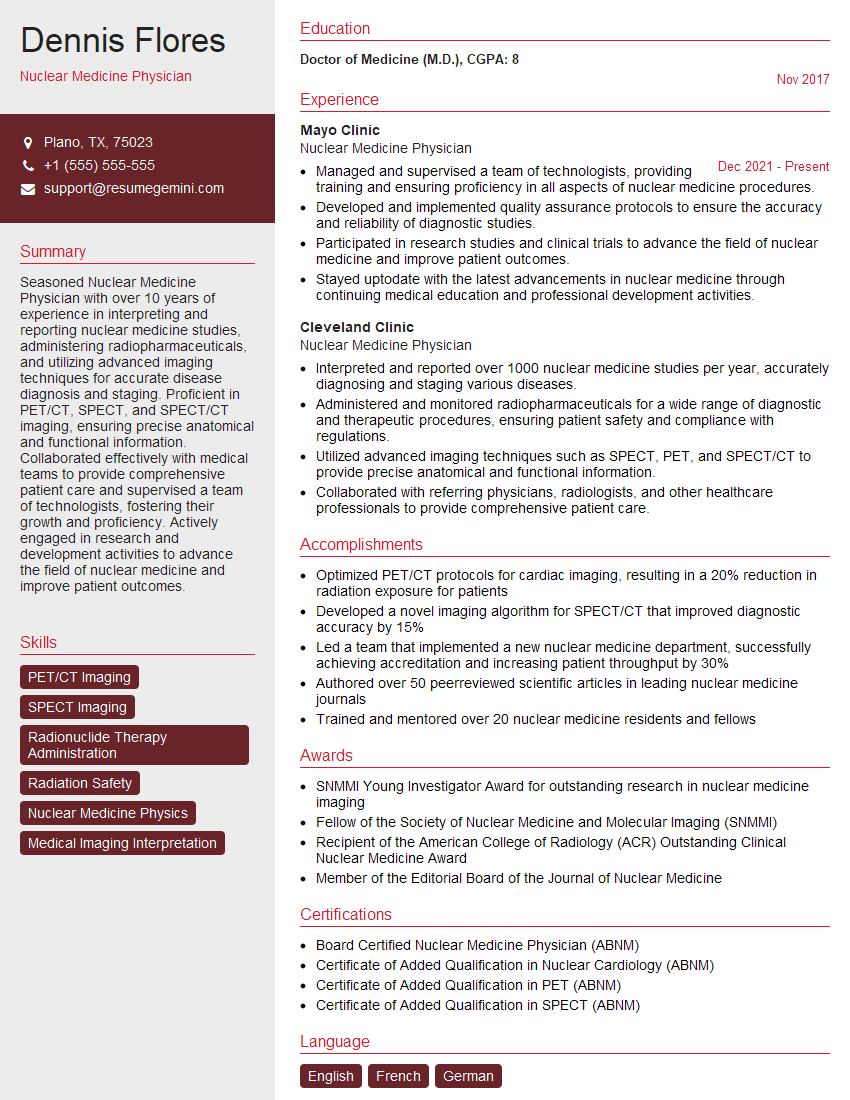
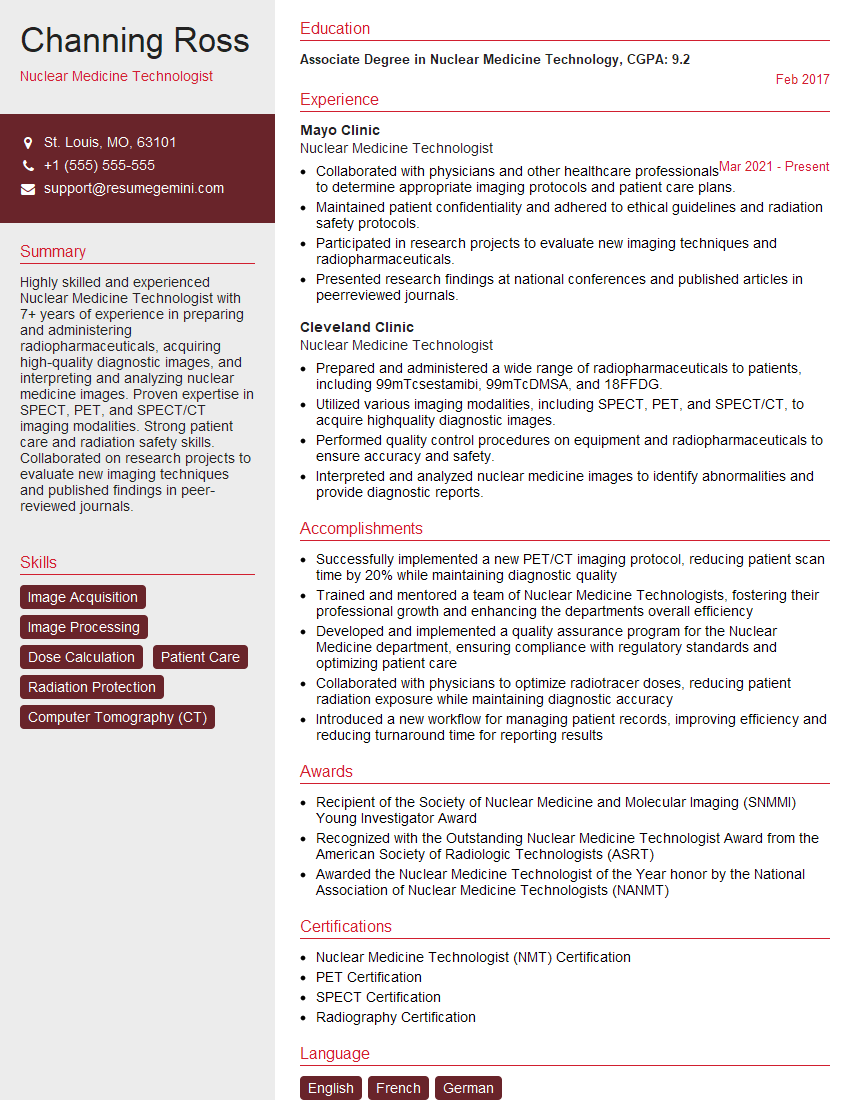
Mastering these key concepts will significantly boost your interview confidence and open doors to exciting career opportunities in this dynamic field. To maximize your job prospects, create a compelling resume that showcases your skills and experience effectively. An ATS-friendly resume is crucial for getting noticed by recruiters. We highly recommend using ResumeGemini, a trusted resource that helps you build professional, impactful resumes. ResumeGemini offers examples of resumes tailored to Nuclear Medicine and Imaging professionals, providing you with the perfect starting point to craft your winning application.
Explore more articles
Users Rating of Our Blogs
Share Your Experience
We value your feedback! Please rate our content and share your thoughts (optional).
What Readers Say About Our Blog
good