Interviews are more than just a Q&A session—they’re a chance to prove your worth. This blog dives into essential Offset and Digital Printing interview questions and expert tips to help you align your answers with what hiring managers are looking for. Start preparing to shine!
Questions Asked in Offset and Digital Printing Interview
Q 1. Explain the difference between offset and digital printing.
Offset and digital printing are two distinct methods for mass-producing printed materials. Offset printing, the older method, uses an indirect printing process. Ink is transferred from a plate to a rubber blanket, and then from the blanket to the substrate (paper, cardstock, etc.). Digital printing, on the other hand, prints directly onto the substrate using a digital file as the source. Think of it like this: offset printing is like using a stamp, transferring ink indirectly, while digital printing is like using an inkjet printer, applying ink directly.
The key difference lies in the printing plates and process. Offset uses physical plates for each color, requiring a setup time. Digital requires only the digital file and is print-on-demand.
Q 2. Describe the four-color printing process (CMYK).
The four-color printing process, CMYK, uses four inks to create a vast color gamut. CMYK stands for Cyan, Magenta, Yellow, and Key (black). Each color is printed as a separate layer, and the colors overlap and combine optically to create different hues. Cyan, Magenta, and Yellow are subtractive colors; when they combine, they absorb light, and the remaining light reflects the color we see. Black ink (Key) is added to improve darkness and sharpness.
For instance, to create green, cyan and yellow are combined. Red is created by a combination of magenta and yellow. The black ink enhances the richness and depth of the dark tones.
The process relies on precise registration – aligning the four color layers perfectly to prevent blurry or misaligned images.
Q 3. What are the advantages and disadvantages of offset printing?
Offset printing offers several advantages: high print quality, especially for large print runs; cost-effectiveness for large volumes due to economies of scale; consistent color accuracy across many copies; and ability to handle various substrates, allowing for creative finishes.
- High quality: Offset offers superior image sharpness and color accuracy compared to many digital methods.
- Cost-effective for high volumes: The initial setup cost is offset by the lower cost per print for large runs.
- Substrate versatility: Offset excels in printing on a wide range of materials.
Disadvantages include high setup costs, which makes it expensive for small runs; longer turnaround times due to plate preparation and press setup; and a higher level of technical expertise required.
Q 4. What are the advantages and disadvantages of digital printing?
Digital printing’s key advantages include its low setup costs, making it ideal for short runs and customized prints; fast turnaround times; easy to make changes, offering high flexibility; and cost-effectiveness for small to medium print runs.
- On-demand printing: Print only what you need, when you need it.
- Fast turnaround: Reduces time to market.
- Customization: Ideal for personalized items or variable data printing.
However, digital printing may have lower print quality, especially for fine detail, compared to offset in certain instances; higher cost per print for very large volumes; and may have a more limited range of substrates than offset printing.
Q 5. What is a color profile and why is it important in printing?
A color profile is a standardized description of a color space, defining how colors are represented numerically. Think of it as a translator between the digital world and the printing world. It ensures that the colors you see on your screen are accurately represented in print. Different devices (monitors, printers) interpret colors differently, leading to color discrepancies. A color profile bridges this gap.
For example, a printer’s color profile tells the printer how to mix inks to achieve a specific color on its particular paper stock. Without a profile, the printed colors will likely differ significantly from your monitor’s display. The importance is maintaining consistent, accurate color representation throughout the printing workflow.
Q 6. Explain the concept of color management.
Color management is the process of ensuring consistent color reproduction across different devices and stages of the printing process. This involves using color profiles, calibrating devices (monitors, printers, scanners), and employing color management software to convert colors between different color spaces, reducing color variations and maintaining consistency.
It’s like having a central control system to coordinate color, preventing mismatched hues. The result is accurate color reproduction, regardless of whether you view the design on a computer, proof it on a monitor, or see the final printed output.
Q 7. What is pre-press and what are the key stages involved?
Pre-press is the crucial stage before actual printing where the design file is prepared for printing. It involves several steps that ensure a successful print job. These key stages include:
- Design and layout: Creating the artwork and arranging elements on the page.
- Image editing and retouching: Enhancing image quality, adjusting colors, and correcting flaws.
- File preparation: Converting the design file into a format suitable for the printing process, often including color conversion (e.g., RGB to CMYK).
- Proofing: Creating test prints (soft proofs or hard proofs) to verify color accuracy and layout before full-scale printing.
- Platemaking (offset): Creating the printing plates for offset presses.
- Imposition: Arranging pages correctly on the printing sheet to optimize paper usage and simplify finishing.
A well-executed pre-press process is essential for a high-quality final print, minimizing errors and ensuring accurate color representation.
Q 8. Describe your experience with different types of paper stocks.
My experience with paper stocks is extensive, encompassing a wide range of weights, finishes, and types. Understanding paper is crucial for achieving the desired aesthetic and functionality in a print job. For instance, consider the difference between a lightweight, uncoated paper for a newsletter and a heavy-duty, coated stock for a high-end brochure.
- Coated Papers: These papers have a coating applied to their surface, resulting in a smooth finish, vibrant color reproduction, and sharp image quality. They are ideal for high-resolution images and sharp text. Examples include gloss, matte, and dull coated stocks.
- Uncoated Papers: These papers have a natural, porous surface, giving them a more textured feel. They’re often preferred for their natural look and feel, and are suitable for applications where a softer, more environmentally friendly feel is desired. Examples include recycled, text, and cover uncoated stocks.
- Specialty Papers: This category encompasses a vast array of options, including textured papers (linen, felt), colored papers, metallic papers, and even synthetic substrates. Each offers unique visual and tactile properties, impacting the overall outcome of the print job.
Choosing the right paper stock involves considering the print method (offset or digital), the desired print quality, the budget, and the overall aesthetic goals of the project. I’ve worked with hundreds of different paper stocks throughout my career, and I’m adept at selecting the optimal option for any given project based on these factors. For example, I once had to source a specific textured paper for a high-end invitation suite that matched the client’s branding perfectly. It was crucial to find the correct paper stock to make the project a success.
Q 9. How do you ensure accurate color consistency in printing?
Color consistency is paramount in printing, and achieving it involves a multi-faceted approach. Inconsistent color can ruin a project, so maintaining accuracy is critical. It begins long before the printing process itself.
- Color Management System (CMS): A robust CMS is essential. This involves using calibrated monitors, profiling the printing press, and employing color management software to ensure consistent color representation from digital file to final print.
- Proofing: Soft proofing (on-screen) and hard proofing (printed proof) are crucial for reviewing colors before committing to a large print run. We use calibrated monitors for accurate soft proofing and high-quality, professional printers for hard proofing, matching the final print specifications as closely as possible.
- Press Calibration & Maintenance: Regular calibration of the printing press—both offset and digital—is critical. This involves adjusting ink density, dot gain, and other factors to maintain consistent color output. Regular maintenance of the equipment ensures that the press continues to perform optimally.
- Ink Consistency: Using high-quality, consistent inks is key. Different manufacturers have different formulations and some inks may perform better on specific paper types.
I’ve personally witnessed situations where slight variations in ink can lead to noticeable color shifts across a large print job. By meticulously following color management best practices, from file preparation to press operation, we consistently achieve accurate and repeatable color results.
Q 10. Explain the different types of finishing techniques (e.g., binding, lamination).
Finishing techniques significantly impact the final product’s presentation and durability. They transform a simple printed sheet into a professional and appealing piece.
- Binding: This refers to how pages are held together. Common methods include saddle-stitch (stapling), perfect binding (gluing), wire-o binding (double-loop wire), and case binding (hardcover).
- Lamination: This involves applying a plastic film to the surface of the printed material, enhancing its durability, water resistance, and overall finish. Gloss lamination adds shine, while matte lamination offers a subtle, less reflective finish.
- Die-Cutting: This process uses a sharp die to cut out custom shapes or designs from the paper, adding a unique visual element.
- Foil Stamping/Embossing: Adds metallic accents or raised texture to the printed surface for a luxurious and high-end feel.
- Folding: Simple yet crucial, this step ensures readability and proper presentation. Different folds (e.g., letter folds, gate folds) serve various purposes.
The choice of finishing techniques depends largely on the project’s requirements and budget. For a simple booklet, saddle-stitch binding might suffice. However, a high-end corporate report might require case binding and lamination for a professional and durable finish. I always work closely with clients to select finishing options that best meet their needs and project objectives.
Q 11. What is a printing press and how does it work (offset)?
An offset printing press is a sophisticated machine that uses an indirect printing method, meaning the image is transferred from a plate to a blanket cylinder, and then to the paper. This process allows for high-volume, high-quality printing.
- Plate Cylinder: The image is transferred onto a thin metal plate, often aluminum.
- Blanket Cylinder: The image from the plate is transferred to a rubber blanket.
- Impression Cylinder: The image is then transferred from the blanket to the paper.
- Ink and Dampening Systems: Offset printing uses a balance of ink and water (dampening solution) to achieve sharp image reproduction and prevent smudging.
The process works by the ink’s affinity for the inked areas of the plate, while the water repels it from the non-inked areas. This precise balance is crucial for high-quality results. Offset printing excels in large volume print jobs, where its high speed and low cost per print become significantly advantageous. I have experience operating various types of offset presses, from smaller sheet-fed machines to large web presses used for high-volume printing.
Q 12. What is a digital printing press and how does it work?
Digital printing presses use an electrophotographic process, similar to a laser or inkjet printer, but on a much larger scale. Instead of using plates, digital presses print directly onto the paper from a digital file. This offers flexibility and speed, but typically at a higher cost per print than offset for large runs.
- Image Processing: The digital file is processed by the machine’s RIP (Raster Image Processor), which converts the data into a format the press understands.
- Imaging Unit: The image is then created using either toner (laser printers) or inkjet ink (inkjet printers) onto the printing medium.
- Paper Handling: The digital press feeds paper and processes the print job. Advanced models can handle various paper types and sizes.
Digital printing is perfect for short-run jobs, personalized print materials, and situations where quick turnaround times are necessary. I’ve worked extensively with various digital printing presses, from small-format printers for business cards to large-format printers for posters and banners. The ability to print variable data (personalization) is a significant advantage of digital printing that we frequently utilize for marketing campaigns or customized product packaging.
Q 13. How do you troubleshoot common printing problems (e.g., misregistration, color inconsistencies)?
Troubleshooting printing problems requires a systematic approach. I’ve encountered numerous issues over the years and have developed a robust strategy for diagnosis and resolution.
- Misregistration: This refers to images or colors not aligning correctly. Causes include improper plate mounting, timing issues on the press, or paper feed problems. Troubleshooting involves careful inspection of the printing press setup and adjustment of the registration controls.
- Color Inconsistencies: Variations in color can stem from several sources including ink problems, press calibration issues, or improper color management. Diagnosing this involves examining ink density, checking press settings, reviewing color profiles, and scrutinizing the original digital file.
- Streaking/Blurring: These issues can result from problems with ink rollers, dampening rollers, or paper moisture content. Addressing these involves cleaning the rollers, adjusting ink and dampening, and controlling paper humidity.
- Paper Jams: Common in all printing, they require careful attention to the paper path to identify and clear blockages.
My troubleshooting strategy follows a methodical approach: 1. Visual inspection of the print output; 2. Checking press settings; 3. Examining the paper and ink; 4. Testing various adjustments to isolate the root cause; and 5. Making the necessary corrections. I am highly experienced in using both offset and digital printing equipment and troubleshooting problems efficiently and effectively.
Q 14. What is the significance of DPI and PPI in printing?
DPI (dots per inch) and PPI (pixels per inch) are crucial metrics in printing, although they refer to different aspects of the process.
- DPI (Dots Per Inch): This refers to the resolution of the printed output, specifically the number of ink dots per inch. A higher DPI generally means a sharper, higher-quality image.
- PPI (Pixels Per Inch): This refers to the resolution of the digital image file, representing the number of pixels per inch. A higher PPI in the source image provides more detail for a sharper final print.
The relationship is that a higher PPI image allows for a higher DPI print. However, exceeding the capabilities of the printer will not result in a better print. It’s important to match the PPI of the source file to the capabilities of the printer to avoid unnecessary file sizes and potential loss of quality. For example, an image with 300 PPI is generally considered suitable for high-quality offset printing. Digital printing often has lower resolution limitations, so careful consideration must be given to ensure the best possible print results. Understanding the interplay between DPI and PPI is crucial for optimizing the quality and efficiency of the print process.
Q 15. What software are you proficient in for pre-press work (e.g., Adobe Illustrator, InDesign, Photoshop)?
For pre-press work, I’m highly proficient in Adobe Creative Suite, specifically Illustrator, InDesign, and Photoshop. Illustrator is my go-to for vector-based artwork, ensuring crisp lines and scalability for both offset and digital printing. InDesign is crucial for page layout and design, especially for multi-page documents like brochures and books. I use Photoshop for raster image editing, retouching, and color correction, vital for achieving optimal print quality. My expertise extends to managing color profiles (like CMYK for offset and RGB for digital) to guarantee color accuracy across different mediums. For example, I recently used Illustrator to create a complex logo for a client, then brought it into InDesign to create a marketing brochure, carefully managing the color profile to ensure consistent brand representation across all print deliverables.
Career Expert Tips:
- Ace those interviews! Prepare effectively by reviewing the Top 50 Most Common Interview Questions on ResumeGemini.
- Navigate your job search with confidence! Explore a wide range of Career Tips on ResumeGemini. Learn about common challenges and recommendations to overcome them.
- Craft the perfect resume! Master the Art of Resume Writing with ResumeGemini’s guide. Showcase your unique qualifications and achievements effectively.
- Don’t miss out on holiday savings! Build your dream resume with ResumeGemini’s ATS optimized templates.
Q 16. How do you manage print projects and meet deadlines?
Managing print projects and meeting deadlines relies on a structured approach. I start with a detailed project brief, clarifying the client’s needs, specifications (size, quantity, paper type etc.), and deadline. This is followed by a thorough pre-flight check of all design files, including resolution checks and color profile validations. I then create a detailed project schedule, breaking down tasks into manageable stages, and utilize project management software to track progress and identify potential bottlenecks. I proactively communicate with clients and the print shop throughout the process, highlighting any issues or delays promptly. For instance, on a recent large-scale poster campaign, I used a Gantt chart to visualize the project timeline, allowing me to track the design, proofing, and printing phases efficiently and meet the client’s tight deadline. Regular communication with the printer prevented unexpected problems and ensured a smooth workflow.
Q 17. Describe your experience with quality control procedures in printing.
Quality control is paramount in printing. My experience encompasses a multi-stage process starting with the initial design files. I perform rigorous checks for resolution, color accuracy, bleed, and proper imposition. Before sending files to the printer, I create a digital proof – a simulated representation of the final printed product – which allows for a final review of any potential errors. Once the print job is complete, I perform a thorough inspection of the first few prints, checking for color consistency, sharpness, registration (alignment of colors), and any print defects. This is often followed by a visual inspection of a random sample from the entire print run, depending on the job’s size and importance. For high-value projects, I might also use a densitometer to objectively measure color density to ensure consistent results. A recent project involving high-quality business cards required meticulous color calibration and multiple proof checks to guarantee the client’s brand colours were accurately reproduced.
Q 18. How do you calculate the cost of a printing job?
Calculating the cost of a printing job involves several factors. First, I determine the substrate cost (paper, cardstock, etc.) based on the quantity and type required. Next, I calculate the ink cost, which varies depending on the type of ink, coverage, and printing method (offset or digital). Labor costs (design, pre-press, and potentially finishing) are also factored in. Machine time, including setup and run time, is a significant element, especially for offset printing. Finally, I include a markup percentage to account for overhead and profit. For example, estimating a business card print job involves calculating costs for cardstock, ink for four-color process, machine time on the digital press, design time, and finally adding a margin for profit. I use specialized software sometimes to aid in these calculations, providing accurate and transparent cost breakdowns for clients.
Q 19. What is your experience with different types of inks?
I have extensive experience with various ink types. In offset printing, I work frequently with CMYK (Cyan, Magenta, Yellow, and Key/Black) process inks, offering a wide color gamut. I also have experience with Pantone spot colors, which provide precise, consistent color matching for brand consistency. In digital printing, I’ve used various inks, including pigmented inks (known for their durability) and dye-based inks (known for their vibrancy). The choice of ink significantly impacts the final product’s quality, durability, and cost. For example, using Pantone spot colors is crucial for corporate logos where precise brand color is paramount, while for large-format posters, CMYK inks offer cost-effectiveness and a wide range of colors.
Q 20. What is your experience with different types of substrates?
My experience with substrates is broad, encompassing various paper types (coated, uncoated, textured), card stocks, and specialty materials like vinyl and canvas. The selection of a substrate is critical as it affects the final print’s look, feel, and durability. For example, glossy coated paper provides vibrant colors and sharp images but may not be suitable for text-heavy documents. Uncoated stock is better suited for text and may have a more natural feel. I consider the purpose of the print, the desired aesthetic, and budget constraints when selecting the appropriate substrate. A recent project involving a high-end invitation required a luxurious textured cardstock, whereas a large-scale poster required a cost-effective and durable paper stock.
Q 21. Explain the process of proofing and how you ensure accuracy.
Proofing is a crucial step to ensure print accuracy. I typically create digital proofs using software like Adobe Acrobat, accurately representing the final print output. Soft proofs are useful for checking overall layout and color, but a hard proof (a physical printed sample) offers a more accurate representation of the final product. For critical projects, I may request a press proof – a sample run on the actual printing press – to ensure perfect color accuracy and registration. Beyond color and image accuracy, I carefully examine the proof for any flaws in typography, image resolution, and registration before proceeding with the full print run. This multi-stage proofing process minimizes errors and ensures a high-quality final product. For example, on a project involving a limited-edition art print, a press proof was absolutely necessary to guarantee the vibrancy and accuracy of the colors in the final printed artwork.
Q 22. Describe your experience with different types of printing plates.
My experience encompasses a wide range of printing plates, crucial for both offset and digital printing. In offset, I’ve extensively worked with conventional plates (like aluminum plates using photosensitive materials), CTP (Computer-to-Plate) plates which offer superior speed and accuracy and various types based on plate chemistry (e.g., thermal, violet). For digital printing, I’m proficient with digital plates used in inkjet or electrophotographic systems; these often require less pre-press work and are more suited for short runs and variable data printing. I understand the nuances of each type, including their sensitivity to light, processing requirements, and print quality implications. For example, I once had to troubleshoot a problem with streaking on a large offset print run, which was ultimately traced to improper processing of the CTP plates due to a change in the developer solution.
Choosing the right plate is critical for optimal results. Factors considered include print volume, substrate, desired image quality, and budget constraints. For high-volume projects with consistent color, CTP plates provide unbeatable precision and efficiency. However, for smaller, more variable jobs, digital plates offer a more cost-effective and flexible approach.
Q 23. How familiar are you with different types of binding methods?
My familiarity with binding methods is extensive, covering the spectrum of needs for different projects. I’m experienced with perfect binding (often used for softcover books and magazines), saddle stitch binding (for brochures and booklets), wire-O binding (for notebooks and calendars), spiral binding (a cost-effective option), and case binding (for hard cover books requiring durability). I’m also familiar with specialized methods like lay-flat binding (essential for calendars or books that need to open completely flat) and PUR binding (using a strong, flexible adhesive ideal for high-quality books).
The selection of the right binding method depends on factors like page count, budget, desired aesthetic, and the level of durability needed. For instance, a high-page-count novel would require case binding, whereas a short brochure might only need saddle stitching. I’ve successfully managed complex projects requiring a combination of binding methods, ensuring seamless transitions and a high-quality final product.
Q 24. How do you handle customer communication and manage expectations?
Effective customer communication is paramount in the printing industry. I employ a proactive approach, beginning with a thorough initial consultation to understand project requirements, budget, and deadlines. This includes clarifying artwork specifications, discussing color profiles (e.g., Pantone matching), and setting realistic expectations about turnaround times and potential limitations. I regularly provide updates throughout the process, using clear, non-technical language to keep clients informed. For example, if a delay arises due to unforeseen issues with the artwork, I immediately contact the client, explaining the problem and offering potential solutions.
I also maintain meticulous records of all client communications, ensuring transparency and accountability. Addressing concerns promptly and professionally, and being willing to compromise when possible, leads to positive client relationships and repeat business. My strategy is based on building trust and delivering on promises, exceeding expectations whenever possible.
Q 25. What is your experience with print finishing equipment?
My experience with print finishing equipment is comprehensive, encompassing a variety of machines used to enhance the final product. I’m proficient with die-cutting machines (used for creating custom shapes), embossing and debossing machines (for adding texture), folding machines (various types for different folding styles), laminating machines (for protection and enhanced durability), and cutting and creasing machines. I also have experience with perforating and numbering equipment.
I understand the operational nuances of each machine, including safety protocols and maintenance requirements. Troubleshooting malfunctions is part of my daily workflow, requiring both technical know-how and problem-solving skills. For instance, recently, I resolved a paper jam issue on a high-speed folder by carefully analyzing the machine settings and adjusting the paper feed mechanism.
Q 26. Describe your experience with workflow management software.
My experience includes proficiency with various workflow management software solutions, such as MIS (Management Information Systems) software, which helps streamline pre-press, production, and post-press processes. I’m familiar with software for job tracking, estimating, and scheduling, ensuring efficient workflow and project management. I’ve worked with systems that integrate with design software, facilitating smooth data transfer and minimizing errors. This helps ensure accuracy, reduce turnaround time, and improve overall efficiency.
I understand the importance of data integrity and the role of these systems in providing real-time visibility into project status. This enables me to identify potential bottlenecks or problems early on and take proactive steps to mitigate them, ensuring projects are delivered on time and within budget.
Q 27. What are some common industry standards for color accuracy?
Common industry standards for color accuracy are crucial for consistent and reliable print reproduction. Pantone Matching System (PMS) is widely used for spot colors, providing a standardized color library. For process colors (CMYK), ISO coated and uncoated standards ensure consistency across different printing presses and locations. G7 methodology focuses on achieving visual similarity across various printing methods, regardless of the press used. Digital printing often involves ICC profiles for color management in digital workflows. These standards allow for precise color matching between the design and the final printed output.
Ensuring color accuracy involves using calibrated monitors, color management software, and controlled printing environments. Understanding and implementing these standards helps avoid costly reprints due to color variations, which is a vital aspect of client satisfaction and operational efficiency.
Q 28. What are your strategies for maintaining a safe and efficient work environment in the print shop?
Maintaining a safe and efficient work environment is a top priority. This involves adhering to strict safety protocols, regular equipment maintenance, and a commitment to employee training. Safety measures include using appropriate personal protective equipment (PPE), regularly inspecting equipment for potential hazards, and implementing emergency procedures. A well-organized and clean workspace reduces the risk of accidents and improves overall productivity. Efficient workflow organization reduces bottlenecks and ensures timely project completion.
Regular training on safety procedures and equipment operation is conducted for all staff. This includes training on proper lifting techniques, machine operation, chemical handling, and fire safety. I also encourage open communication, ensuring that employees feel comfortable reporting any safety concerns or suggesting improvements.
Key Topics to Learn for Offset and Digital Printing Interview
- Offset Printing Fundamentals: Understanding the printing process, including platemaking, inking, dampening, and impression. Explore different printing press types and their capabilities.
- Digital Printing Fundamentals: Grasping the core differences between digital and offset, focusing on technologies like toner-based and inkjet printing. Analyze print-on-demand capabilities.
- Color Management and Profiles (ICC): Mastering color theory, its practical application in both offset and digital printing, and the importance of accurate color reproduction using ICC profiles. Be ready to discuss color space conversions.
- Pre-press Preparation: Understanding file preparation, including image resolution, color modes (CMYK, RGB), file formats (PDF, TIFF), and trapping techniques for both print methods. Practical experience with software like Adobe Illustrator and Photoshop is highly valuable.
- Print Finishing Techniques: Familiarize yourself with various finishing options like cutting, folding, binding, laminating, and embossing. Understand their application to different projects and how choices impact the final product.
- Substrate Knowledge: Demonstrate an understanding of different paper types, their properties, and suitability for various printing techniques. Discuss the impact of paper choice on print quality and cost.
- Quality Control and Troubleshooting: Be prepared to discuss common printing issues, their causes, and solutions. Highlight experience with print quality checks and methodologies for identifying and resolving defects.
- Estimating and Costing: Understanding the factors influencing print costs, such as paper type, ink, and finishing, and the ability to prepare accurate project estimates is crucial.
- Sustainability in Printing: Discuss environmentally friendly printing practices, including the use of eco-friendly inks and papers, and waste reduction strategies.
- Industry Software and Workflow: Familiarity with relevant software (RIP software, pre-press software) and understanding the overall workflow from file submission to final product delivery.
Next Steps
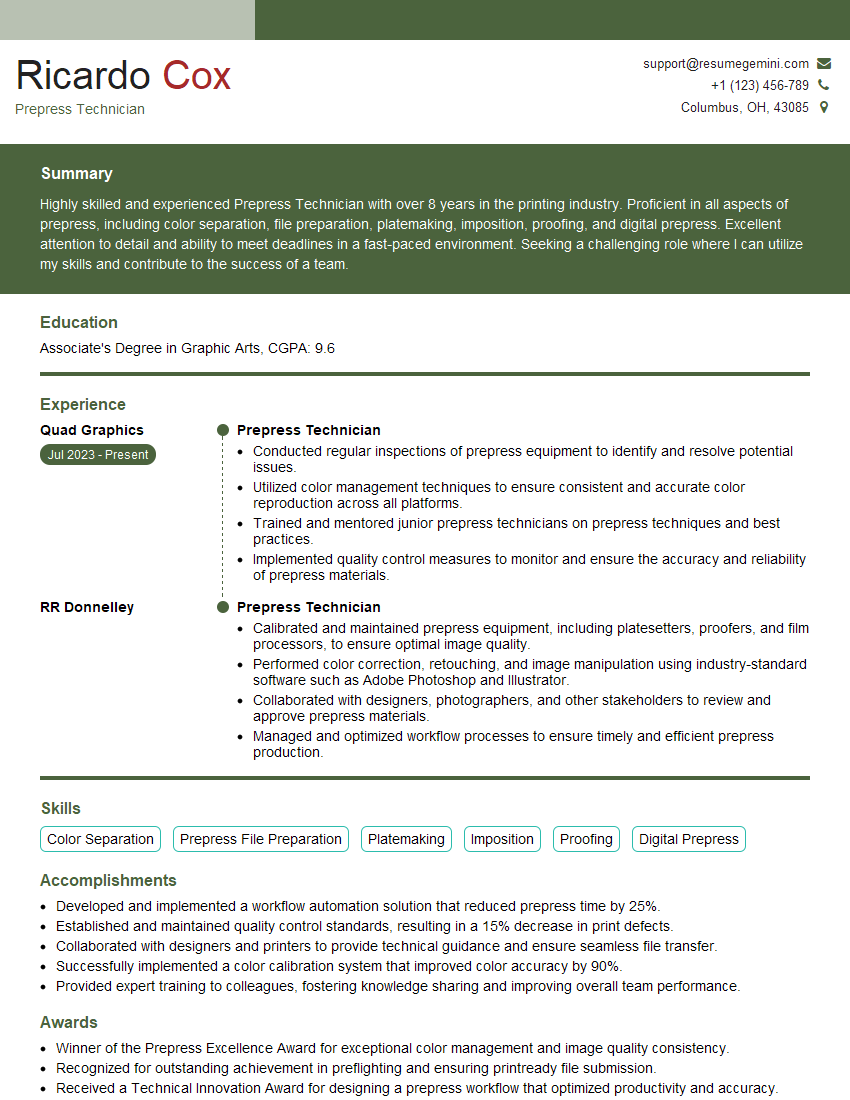
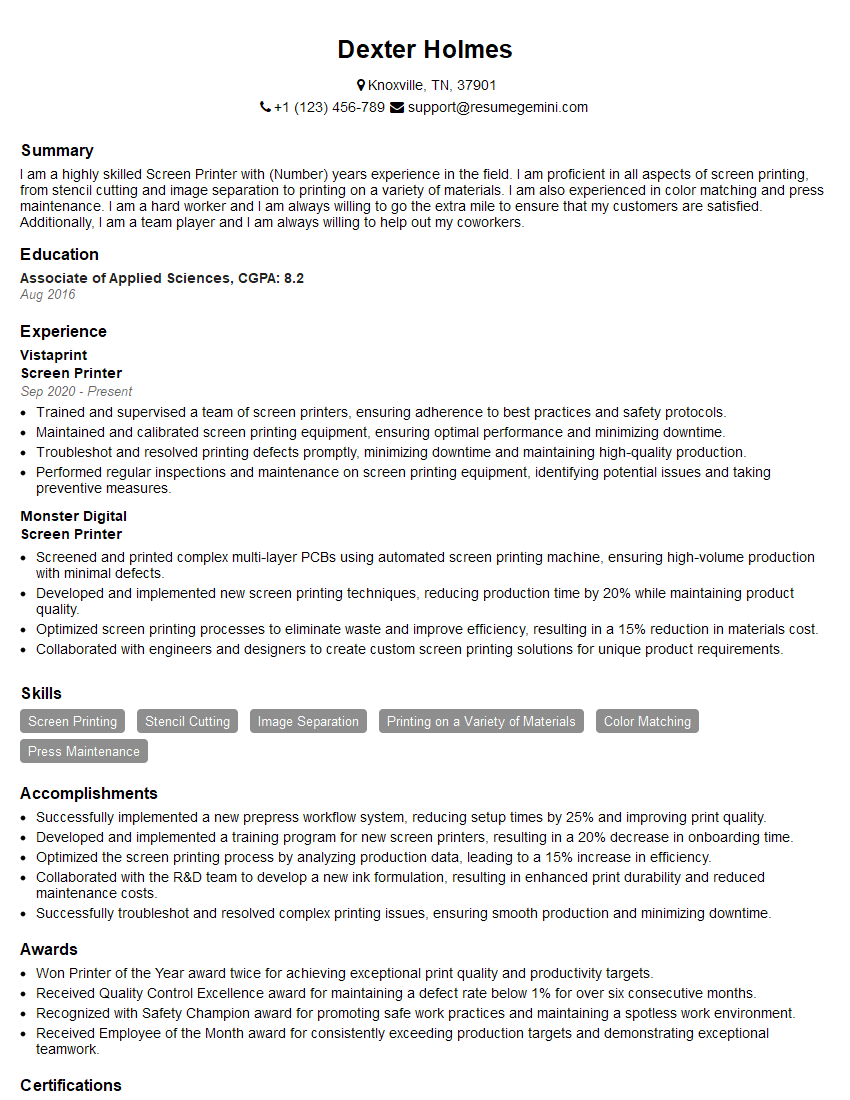
Mastering both offset and digital printing opens doors to a diverse and rewarding career path, offering opportunities in various sectors. A strong understanding of these processes is highly sought after. To maximize your job prospects, it’s vital to create an ATS-friendly resume that effectively highlights your skills and experience. ResumeGemini is a trusted resource for building professional and impactful resumes, and we provide examples of resumes tailored specifically to the Offset and Digital Printing industry to help you get started. Invest time in crafting a compelling resume; it’s your first impression on potential employers.

Explore more articles
Users Rating of Our Blogs
Share Your Experience
We value your feedback! Please rate our content and share your thoughts (optional).
What Readers Say About Our Blog
Very informative content, great job.
good