Interviews are more than just a Q&A session—they’re a chance to prove your worth. This blog dives into essential Offset Plate Making interview questions and expert tips to help you align your answers with what hiring managers are looking for. Start preparing to shine!
Questions Asked in Offset Plate Making Interview
Q 1. Explain the process of Computer-to-Plate (CTP) imaging.
Computer-to-Plate (CTP) imaging is a digital process that replaces traditional film-based methods for creating offset printing plates. Instead of using film negatives, a digital file (usually a PDF) is sent directly to a CTP imager. This machine uses a laser to expose a photosensitive plate, creating the image directly onto the plate without the need for an intermediate film step. Think of it like printing a photo directly onto metal instead of using darkroom techniques.
The process typically involves these steps:
- Prepress Preparation: The digital file is checked for resolution, color profiles, and any potential issues that could impact print quality. This often involves trapping and color management software.
- RIP Processing: A Raster Image Processor (RIP) converts the digital file into a format understood by the CTP imager. It determines where the laser should expose the plate to create the desired image.
- Plate Exposure: The CTP imager exposes the plate using a laser. Different types of CTP imagers utilize different wavelengths of light (e.g., violet, UV). The laser burns away the non-image areas of the photosensitive plate, leaving the image areas intact.
- Plate Processing (optional): Some CTP plates require processing in a developer unit to further enhance the image and remove unexposed areas. This step is usually automated within the CTP workflow.
- Plate Mounting: Once the plate is processed and dried, it’s carefully mounted onto a printing press cylinder.
Using CTP significantly improves efficiency by eliminating the film stage, reducing waste, and providing greater control over the printing process. This results in improved consistency and faster turnaround times.
Q 2. Describe different types of offset printing plates (e.g., PS, thermal, violet).
Offset printing plates come in various types, each with its own characteristics and applications:
- Photosensitive (PS) Plates: These plates use a photosensitive layer that reacts to UV light. They are relatively inexpensive but require careful handling to avoid light exposure before imaging. They generally offer good print quality and durability. Often used with traditional platemaking.
- Thermal Plates: These plates use heat to expose the image. A thermal CTP imager uses a thermal head to apply heat to specific areas, hardening the plate where the image will be. They are known for their high resolution and fine detail, but are often more expensive than PS plates. Less susceptible to pre-exposure issues compared to PS.
- Violet Plates: This type of plate is designed to be highly sensitive to violet lasers used in modern CTP systems. They offer high resolution, excellent image stability, and relatively fast processing times. They are frequently preferred for their efficiency and reduced chemical usage.
The choice of plate type depends on factors like budget, print quality requirements, and the type of CTP equipment available. For instance, a high-volume commercial printer might opt for violet CTP plates for their speed and quality, while a smaller print shop might find thermal plates a suitable balance of cost and performance.
Q 3. What are the key quality characteristics of a good offset printing plate?
A good offset printing plate must exhibit several key quality characteristics for optimal print results:
- High Resolution and Sharpness: The plate should be able to reproduce fine details and sharp lines accurately.
- Good Dot Reproduction: It should reproduce dots of various sizes consistently, critical for halftones and smooth gradients.
- Excellent Ink Transfer: The plate should efficiently transfer ink to the substrate (paper or other material), ensuring vibrant colors and consistent coverage.
- Durability and Longevity: The plate should withstand the stresses of the printing process and provide a consistent image throughout a long print run.
- Resistance to Scratches and Abrasion: The plate needs to resist damage during handling and the printing process.
- Proper Water Balance: In offset printing, the plate must have a balance of ink and water receptivity to prevent ink smearing or blurring.
These qualities ensure consistent print quality, minimize waste, and maximize the efficiency of the printing process. A plate lacking in one or more of these areas can lead to significant problems, such as image degradation, color inconsistencies, and overall print defects.
Q 4. How do you identify and troubleshoot common platemaking problems (e.g., scratches, pinholes)?
Identifying and troubleshooting platemaking problems requires a systematic approach:
- Visual Inspection: Examine the plate carefully for scratches, pinholes, or other physical defects. These are often visible under magnification.
- Test Prints: Make a test print to identify if the problems are related to the plate or other factors in the printing process.
- Scratches: Usually caused by rough handling or improper cleaning. They show up as visible lines or imperfections in the print. Prevention is key – handle plates with care.
- Pinholes: Tiny holes in the plate that lead to ink spattering or unwanted dots. They could be due to dust, imperfections in the plate material, or improper processing. Careful cleaning and using appropriate filters often prevent this.
- Image Defects: Inconsistent dot sizes, color variations, or blurred areas often indicate issues with the CTP imaging process, plate exposure, or even problems with the original digital file.
Troubleshooting involves isolating the cause – is it a prepress issue, a platemaking issue, or a printing issue? Addressing the root cause is crucial for consistent quality. Detailed records, including plate exposure parameters and printing conditions, help with diagnosis and improvement. Using a calibrated system and quality control checks are highly important.
Q 5. Explain the importance of proper plate mounting and registration.
Proper plate mounting and registration are critical for accurate and consistent printing. Think of it like building a house: if the foundation (plate mounting) is weak or misaligned, the whole structure (print) will suffer.
Plate Mounting: This involves securely attaching the plate to the printing cylinder using adhesive and ensuring the plate is perfectly flat and free from wrinkles or air bubbles. Improper mounting can lead to inconsistencies in ink transfer, and the plate may separate from the cylinder mid-run. Specialized mounting equipment and careful techniques are required for a secure bond.
Registration: This refers to the precise alignment of the different printing plates (for multi-color printing). If the colors aren’t registered properly, you’ll see misalignment of colors, creating fuzzy or blurry images. Precise registration ensures that each color aligns perfectly with its intended position, resulting in sharp, well-defined images.
Both plate mounting and registration contribute to print quality, efficiency, and ultimately, client satisfaction. Accurate mounting and registration are crucial for high-volume printing to avoid expensive waste and delays.
Q 6. What are the safety precautions associated with handling chemicals used in platemaking?
Platemaking involves various chemicals, some of which are hazardous. Strict safety precautions are essential:
- Personal Protective Equipment (PPE): Always wear appropriate PPE, including gloves, eye protection, and lab coats to minimize skin and eye contact. This is paramount for dealing with developers and other chemicals.
- Ventilation: Ensure adequate ventilation in the platemaking area to prevent the buildup of harmful fumes. This may involve specialized ventilation systems or simply working in a well-ventilated area.
- Chemical Handling: Follow the manufacturer’s instructions carefully for handling, storage, and disposal of all chemicals. Know how to react to spills and the proper clean-up procedures.
- Waste Disposal: Dispose of chemicals properly according to local regulations. Never pour chemicals down the drain unless specifically approved for such disposal.
- Safety Training: All personnel involved in platemaking should receive thorough safety training and understand emergency procedures.
Following these safety precautions protects both the operator’s health and the environment. Neglecting safety precautions can lead to serious injuries, environmental damage, and legal repercussions.
Q 7. Describe the process of plate exposure and development.
Plate exposure and development are key steps in the platemaking process:
Plate Exposure: This is the process of creating the image on the photosensitive plate using light (UV or violet laser for CTP) or heat (for thermal plates). In CTP, a laser scans the plate according to the digital file, exposing the photosensitive layer. In traditional methods, a film negative is used to expose the plate. This step is highly automated and controlled in modern systems. Exposure parameters such as intensity and duration are critical for achieving optimal image quality.
Plate Development: Following exposure, the plate undergoes development, a process that removes the unexposed or unwanted areas of the photosensitive layer. This step enhances the image and prepares it for printing. For CTP, this might be an automated process within the CTP unit; for traditional methods, it usually involves immersion in a developer solution. The development process needs precise timing and control to prevent under or over-development, which can impact the final print.
Both exposure and development must be precisely controlled. Incorrect exposure can result in poor image density and contrast; improper development can lead to blurred edges, uneven tones, and plate degradation. The goal is to create a plate with a sharp, well-defined image ready for printing.
Q 8. How do you ensure consistent plate quality?
Consistent plate quality is paramount in offset printing, directly impacting the final print’s quality and consistency. Achieving this relies on a multi-faceted approach encompassing meticulous attention to every stage of the platemaking process.
- Pre-press Preparation: High-resolution digital files are crucial. Using proper color profiles and ensuring the artwork is correctly prepared according to the printing press specifications are vital first steps. Any defects in the digital file will be replicated in the plate.
- CTP (Computer-to-Plate) Exposure: Precise exposure parameters, including laser power, speed, and resolution, must be carefully set and monitored. Regular calibration of the CTP device is essential to ensure consistent exposure across the plate. We use a densitometer to measure the density of the exposed areas to verify consistent exposure.
- Plate Processing: The chemical processing (for conventional plates) or the washing and drying (for thermal plates) must be meticulously controlled. Maintaining the correct temperature, chemical concentrations, and processing times is critical. Automated plate processors often offer better control and consistency in this step.
- Quality Control: Regular inspection of the plates is crucial. We use a variety of tools, including a magnifying glass and densitometer, to check for defects such as pinholes, scratches, or uneven exposure. A final proof before printing gives a vital last chance for quality assurance.
For example, imagine baking a cake. If your recipe (digital file) is incorrect, or your oven temperature (CTP exposure) is off, your cake (final print) will be ruined. Careful attention to detail at each stage is essential to produce a perfect plate, every time.
Q 9. What are the different types of plate cleaning solutions and their applications?
Plate cleaning solutions are crucial for removing residual ink, gum, and other debris from offset plates, ensuring optimal print quality and extending plate life. Different solutions cater to specific plate types and cleaning needs.
- Solvent-Based Cleaners: These are effective for removing stubborn ink and are often used for cleaning conventional plates. However, they require careful handling due to their flammability and potential environmental impact. We always ensure proper ventilation when using solvent-based cleaners.
- Water-Based Cleaners: These are generally environmentally friendly and less hazardous than solvent-based cleaners. They are suitable for most plate types, especially those used with UV inks. However, they may not be as effective in removing heavy ink buildup.
- Specialized Plate Cleaners: Certain manufacturers produce specialized cleaners formulated for their specific plate types. These often offer the best cleaning performance and compatibility, ensuring optimal plate life and print quality.
The choice of cleaning solution depends on factors such as the type of plate, the ink used, and the level of soiling. In our shop, we have a detailed cleaning procedure that outlines the appropriate cleaner and cleaning steps for different scenarios. This ensures consistent and effective plate cleaning, maximizing plate life and preventing print defects.
Q 10. How do you manage plate storage to prevent damage or degradation?
Proper plate storage is critical for preventing damage and degradation, ensuring the plates remain usable and deliver consistent print quality. Improper storage can lead to scratches, oxidation, and even complete plate degradation.
- Cleanliness: Before storage, plates should be thoroughly cleaned and dried to prevent ink buildup or contamination.
- Protection: Plates should be stored in protective sleeves or containers to prevent scratching and damage.
- Environment: The storage area should be cool, dry, and dark. Avoid exposure to direct sunlight, humidity, or extreme temperatures. These conditions can lead to plate degradation and shorter lifespan.
- Organization: A well-organized storage system allows for easy retrieval and prevents accidental damage or misplacement. We use a labelling system, clearly identifying the plate’s specifications and job number.
Think of it like storing valuable photographic negatives; improper handling and storage can result in irreplaceable loss. Similarly, careless storage of offset plates can lead to costly reprints and production delays.
Q 11. Explain the concept of dot gain and its impact on platemaking.
Dot gain refers to the increase in the size of a printed dot compared to the original dot size on the plate. It’s a significant factor in offset printing and impacts color reproduction and image quality. It is particularly noticeable in areas of solid color or fine detail.
During the printing process, various factors contribute to dot gain, including ink spread, paper absorption, and printing pressure. Excessive dot gain leads to darker, muddier colors and loss of detail, while insufficient dot gain results in light, weak colors and loss of image sharpness.
In platemaking, dot gain is managed through careful control of the halftone screening process in the RIP software and the selection of appropriate plate types. Proper color management and careful calibration of the CTP equipment also significantly reduce unwanted dot gain, ensuring accurate color reproduction and image quality.
For example, a 50% dot on the plate might print as a 60% dot due to dot gain. This 10% increase needs to be accounted for during the pre-press stages. We account for this using color management profiles and calibration, effectively controlling dot gain for consistent results.
Q 12. How do you calibrate and maintain CTP equipment?
CTP equipment requires regular calibration and maintenance to ensure consistent and high-quality plate production. This involves a combination of routine checks, preventative maintenance, and periodic calibration using standardized test targets.
- Daily Checks: This includes inspecting the laser head, checking the imaging area for cleanliness, and verifying the functionality of all mechanical components.
- Preventative Maintenance: This involves regular cleaning, lubrication, and replacement of worn parts according to the manufacturer’s recommendations. We keep detailed maintenance logs to track service history.
- Calibration: Regular calibration of the CTP device is essential. This involves using standardized test targets to verify the accuracy of the laser exposure and the overall image quality. We use specialized software to perform these calibrations, documenting the results. This ensures accurate dot sizes and consistent color reproduction.
Regular maintenance is like a car’s service. Neglecting it will eventually lead to major problems. By performing regular maintenance and calibration, we ensure our CTP equipment operates efficiently, produces high-quality plates, and minimizes downtime. This saves time and money in the long run.
Q 13. What is the role of RIP software in platemaking?
RIP (Raster Image Processor) software plays a vital role in platemaking by translating vector-based artwork into a raster image format suitable for CTP exposure. It’s the bridge between the design software and the platemaking process.
Key functions of RIP software in platemaking include:
- Image Processing: The RIP processes the artwork, converting it into a halftone image composed of dots of varying sizes, representing the tones and colors in the original image.
- Screening: It applies screening to the image, controlling the frequency and angle of the screen dots, which affects the print quality and appearance.
- Color Management: The RIP manages color profiles, ensuring accurate color reproduction from screen to plate to print. It uses color management profiles to compensate for dot gain.
- Plate Output: It generates the data used to expose the CTP plate, defining the placement of dots on the plate surface.
Choosing the correct RIP software and settings is crucial for achieving high-quality prints. Using the wrong settings can lead to print defects such as moiré patterns or incorrect color reproduction. We carefully select our RIP software to match the specific characteristics of our CTP plates and printing press.
Q 14. Explain the importance of color management in offset platemaking.
Color management is crucial in offset platemaking because it ensures that the colors in the final print accurately match the colors in the original design. Without proper color management, color inconsistencies and inaccuracies can significantly impact print quality.
Effective color management involves using color profiles and other tools to control and maintain color consistency throughout the process. This includes:
- Using Standardized Color Spaces: Using a consistent color space, such as CMYK, throughout the process is essential. This ensures that colors are correctly interpreted and reproduced.
- Color Profile Creation and Management: Accurate color profiles for the monitors, printers, and plates are critical. These profiles account for the characteristics of the different devices involved, ensuring consistent color reproduction across the workflow.
- Calibration and Proofing: Regular calibration of monitors and printing equipment and the use of soft and hard proofs help in achieving color accuracy.
Imagine trying to paint a picture using mismatched paints. The colors wouldn’t be accurate, and the final product would look quite different from the original intention. Similarly, without color management, the colors in the printed material would likely differ significantly from the original design, leading to costly reprints and client dissatisfaction.
Q 15. How do you troubleshoot issues related to plate registration?
Plate registration issues, where the colors don’t align perfectly on the printed sheet, are a common headache in offset printing. Troubleshooting involves a systematic approach. First, I’d check the mechanical aspects: are the printing press’s registration guides clean and properly adjusted? Are there any loose parts or worn components contributing to misalignment?
Next, I focus on the platemaking process itself. Were the plates exposed and processed correctly? Inconsistencies in the imaging or processing stages (like uneven exposure, inadequate washing, or improper drying) can cause registration problems. I’d examine the plates under magnification for any imperfections that might indicate issues in this stage.
Software settings in the CTP (Computer-to-Plate) workflow are another critical area. Incorrect imposition or misalignment of the plates during the prepress workflow can lead to registration errors. I meticulously check the imposition software for any errors.
Finally, substrate related issues shouldn’t be discounted. If the paper is warped or inconsistent in its dimensions, it can easily create registration problems regardless of perfect platemaking. I’d measure the paper for inconsistencies in size and warping. A systematic approach, starting with the mechanical aspects and working toward the finer details of the platemaking process and the substrate, helps pinpoint and solve registration problems quickly.
Career Expert Tips:
- Ace those interviews! Prepare effectively by reviewing the Top 50 Most Common Interview Questions on ResumeGemini.
- Navigate your job search with confidence! Explore a wide range of Career Tips on ResumeGemini. Learn about common challenges and recommendations to overcome them.
- Craft the perfect resume! Master the Art of Resume Writing with ResumeGemini’s guide. Showcase your unique qualifications and achievements effectively.
- Don’t miss out on holiday savings! Build your dream resume with ResumeGemini’s ATS optimized templates.
Q 16. What are the environmental considerations in offset platemaking?
Environmental considerations in offset platemaking are crucial for both quality and safety. Temperature and humidity play a significant role; consistent conditions are key for optimal plate processing and consistent image quality. Fluctuations can lead to variations in the development process and ultimately affect the printing results. We monitor these parameters continuously and maintain a climate-controlled environment.
Chemical management is paramount. We utilize environmentally friendly plate processing chemicals and adhere to strict waste disposal regulations. Proper handling, storage, and disposal of chemicals are not just good environmental practice but also essential for workplace safety. Regular training of staff on safe handling procedures is vital.
Energy consumption is another key factor. Modern CTP devices and automated plate processors are energy-efficient; however, regular maintenance and responsible energy management strategies are essential to reduce our environmental impact. The choice of plate type can also influence energy consumption during processing.
Finally, the lifecycle of the plates should be considered; many plates are recyclable, reducing landfill waste. We partner with responsible recyclers for our used plates.
Q 17. Describe your experience with different plate materials and their properties.
My experience spans various plate materials, each with unique properties impacting print quality and cost-effectiveness. Aluminum plates are the industry standard, offering a good balance of cost and performance. They’re readily available in various thicknesses and surface treatments (e.g., grained, polished), which affect ink transfer and durability.
Polyester plates offer advantages in terms of durability and flexibility, making them ideal for applications requiring frequent plate changes or printing on uneven surfaces. However, they typically come at a higher cost.
I’ve also worked with positive-working plates (where the imaged area is raised) and negative-working plates (where the imaged area is recessed). The choice depends on the printing press and desired print quality. Positive-working plates, for example, generally provide better detail but may require different processing procedures.
Furthermore, I have experience with different plate surface treatments, including those designed for specific ink types and printing demands. For example, plates with a specially treated surface may offer improved resistance to scratching or improved ink transfer properties.
Q 18. How do you handle plate defects and rework?
Plate defects can range from minor scratches to major image inconsistencies. My approach involves careful identification of the defect using a magnifying glass and often a specialized plate inspection tool. This step is crucial to determine the cause and the most appropriate solution.
Minor defects, like small scratches, can often be addressed through rework. This may involve cleaning the plate, spot-etching, or carefully repairing the damaged area using specialized materials. Success depends on the extent of the damage and the plate material. For major defects, replacement is often more practical and cost-effective.
Prevention is always the best approach. Maintaining clean equipment, using proper handling techniques and consistent plate processing procedures significantly reduce the risk of defects. Careful monitoring of the entire platemaking workflow and regular equipment maintenance ensures high-quality plates.
Q 19. Explain your experience with different types of CTP imagers.
My experience encompasses several types of CTP imagers, including thermal, violet laser, and UV laser systems. Thermal imagers use heat to expose the plate, offering relatively lower costs and simplicity. However, their resolution may be slightly lower compared to laser systems.
Violet laser imagers provide higher resolution and improved image quality, making them ideal for high-fidelity printing. They’re a popular choice for medium-to-large print shops.
UV laser imagers are high-end solutions offering exceptional image quality, speed and durability, with improved resistance to scratches. They are typically found in large-scale, high-volume printing operations. The choice of imager always depends on the budget, print quality requirements, and production volume.
Q 20. Describe your experience with plate finishing processes (e.g., punching, bending).
Plate finishing involves processes such as punching and bending to prepare plates for mounting onto the printing press. Punching creates the precise holes necessary for plate mounting and registration. This requires a precise and robust punching machine that ensures the accuracy of the holes.
Bending, usually done with a plate bender, adds a slight curve to the plate, compensating for the cylinder’s curvature on the printing press. Precise bending is essential to maintain accurate registration and prevent plate slippage.
Both punching and bending must be performed with utmost care to avoid damaging the plate. Using the right tools, adhering to manufacturer’s guidelines, and regular maintenance of the equipment are all crucial to ensure a clean, accurate finishing process.
Q 21. What software programs are you proficient in using for platemaking?
My proficiency extends to several software programs commonly used in platemaking. I’m highly skilled in using Esko Suite, which includes software for prepress tasks like imposition, color management, and workflow automation. This suite offers comprehensive tools and ensures a streamlined and efficient platemaking process.
I’m also experienced in using various RIP (Raster Image Processor) software from different manufacturers. These RIPs manage image processing, color conversion, and output to the CTP device. Understanding the nuances of each RIP is crucial for optimal output quality and efficiency.
Finally, I’m proficient in using platemaking-specific software for managing plate specifications, tracking production, and generating reports. These tools help optimize workflow, monitor efficiency, and manage production costs.
Q 22. How do you maintain accurate inventory control of plates and supplies?
Accurate inventory control in platemaking is crucial for efficient production and cost management. Think of it like running a well-stocked restaurant kitchen – you need the right ingredients at the right time to avoid delays and waste. We use a combination of methods to maintain this. Firstly, a robust database system tracks all plates, chemicals, and supplies, including their purchase dates, quantities, and usage. This system generates alerts when stock levels fall below a pre-defined threshold, prompting timely reordering. Secondly, we conduct regular physical inventory checks to reconcile the database with actual stock. Discrepancies are investigated and addressed immediately, ensuring the data remains accurate. Finally, we utilize a first-in, first-out (FIFO) system for consumables like plates and chemicals to minimize waste due to expiration.
For example, if our database shows we’re low on specific type of plates, a reorder notification is automatically generated, allowing us to purchase and receive them before a project is impacted. Regular physical checks help us identify potential issues like damage or spoilage which are immediately rectified.
Q 23. Explain your understanding of color profiles and their use in platemaking.
Color profiles are essential in platemaking to ensure accurate color reproduction from the digital design to the printed output. Imagine trying to paint a picture using only verbal instructions – you’d likely get very different results depending on the painter’s interpretation. Similarly, without color profiles, the interpretation of colors on different devices (like the designer’s monitor, RIP software, and printing press) varies wildly. Color profiles standardize the color space, translating color values consistently across these devices.
We typically use ICC (International Color Consortium) profiles. For example, a CMYK (Cyan, Magenta, Yellow, Key/Black) profile is created for our specific printing press, ensuring that the colors displayed on the prepress software are accurately represented on the printed piece. Using the correct profile prevents color shifts and variations between the digital design and the final print, leading to consistent, high-quality output. Mismatched color profiles are often a source of costly reprints, so careful profile selection is critical.
Q 24. How do you interpret and implement job specifications related to platemaking?
Interpreting job specifications is paramount to ensure the final product meets the client’s requirements. Job specs usually include details such as the type of plates needed (e.g., thermal, CtP), the screen ruling (lines per inch – LPI), the substrate being printed on (type of paper), and any special color requirements. We meticulously review these specifications, identifying any potential challenges or areas needing clarification.
For instance, if the spec requires a specific LPI that’s unusual for the chosen substrate, I would discuss the feasibility with the prepress team to prevent printing issues. If the specifications are unclear, I would proactively contact the client or project manager for clarification before proceeding, avoiding errors which lead to costly delays and re-work. We maintain a checklist system to verify that all aspects of the job specs are properly addressed during the platemaking process.
Q 25. How do you contribute to a team environment in a fast-paced printing environment?
In a fast-paced printing environment, teamwork is essential. I actively participate in daily team briefings, ensuring everyone understands the workflow and potential bottlenecks. I readily assist colleagues when needed, sharing my expertise and providing support. This could involve helping troubleshoot platemaking issues, training new team members, or simply lending a hand when workloads are high. I believe that open communication and collaboration are key to maintaining a positive and productive atmosphere, leading to timely completion of projects with minimal errors.
For example, if a colleague is struggling with a complex platemaking job, I’ll work with them to find a solution, sharing my experience and problem-solving skills. Proactive collaboration helps us all work more efficiently and effectively.
Q 26. Describe a time you had to solve a challenging platemaking problem.
We once faced a recurring problem with ghosting (faint, unwanted images) appearing on a particular client’s prints. Initial troubleshooting pointed to the plates, but replacing them didn’t resolve the issue. After systematically eliminating other potential causes like press settings and inks, I realized the problem stemmed from a slight mismatch in the color profiles used during the design and platemaking stages. The discrepancy, though small, was enough to cause the ghosting effect.
My solution involved meticulously reviewing and calibrating the color profiles, ensuring perfect alignment. This involved working closely with the prepress team and using specialized color management software to pinpoint the exact discrepancies and correct them. After the recalibration, the ghosting problem was eliminated, demonstrating the critical role of accurate color profile management. The client was extremely satisfied with the resolution and this incident reinforced the importance of rigorous attention to detail and profile accuracy.
Q 27. How do you stay updated on new technologies and best practices in offset platemaking?
Staying updated in offset platemaking requires continuous learning and professional development. I achieve this through multiple avenues. I regularly attend industry conferences and workshops to learn about the latest technologies and best practices. I subscribe to industry publications and journals, keeping abreast of new innovations and advancements in platemaking techniques. I also actively participate in online forums and communities, engaging with fellow professionals and sharing knowledge. Additionally, I actively seek out training opportunities offered by equipment manufacturers, ensuring that my skills remain aligned with the latest technological developments in the field.
For example, recently I attended a seminar on the latest advancements in CtP technology, learning about improvements in platemaking speed and efficiency. This knowledge allowed me to suggest upgrades to our current platemaking system that could potentially enhance productivity and improve overall workflow.
Q 28. What are your salary expectations for this position?
My salary expectations are in line with the industry standard for a skilled offset platemaker with my experience and qualifications. I am flexible and open to discussing a compensation package that reflects the value I bring to your organization.
Key Topics to Learn for Offset Plate Making Interview
- Plate Preparation: Understanding different plate types (e.g., aluminum, polymer), surface treatments, and pre-press procedures. Practical application: Troubleshooting issues during plate preparation, such as scratches or imperfections.
- Image Setting Technologies: Familiarity with Computer-to-Plate (CTP) systems, including different imaging technologies (e.g., thermal, violet laser) and their respective strengths and weaknesses. Practical application: Diagnosing and resolving imaging errors on the CTP device.
- Plate Processing: Mastering the process of developing, exposing, and post-processing plates to ensure optimal print quality. Practical application: Identifying and correcting issues related to plate processing, such as insufficient development or improper exposure.
- Quality Control: Implementing quality control measures throughout the platemaking process, including inspecting plates for defects and ensuring consistent results. Practical application: Utilizing appropriate tools and techniques for quality control, such as densitometers and microscopes.
- Color Management: Understanding color profiles, color separations, and how they impact the final printed output. Practical application: Adjusting color settings to achieve accurate color reproduction.
- Troubleshooting and Problem-Solving: Developing skills in identifying and resolving common issues encountered during plate making, including dot gain, ghosting, and other printing defects. Practical application: Applying systematic troubleshooting methods to pinpoint the root cause of printing problems.
- Safety Procedures and Regulations: Understanding and adhering to all relevant safety regulations and procedures related to chemicals and equipment used in plate making. Practical application: Safe handling and disposal of chemicals and proper use of safety equipment.
- Workflow Optimization: Understanding and optimizing workflow processes for maximum efficiency and productivity. Practical application: Identifying bottlenecks in the workflow and implementing solutions to improve speed and reduce errors.
Next Steps
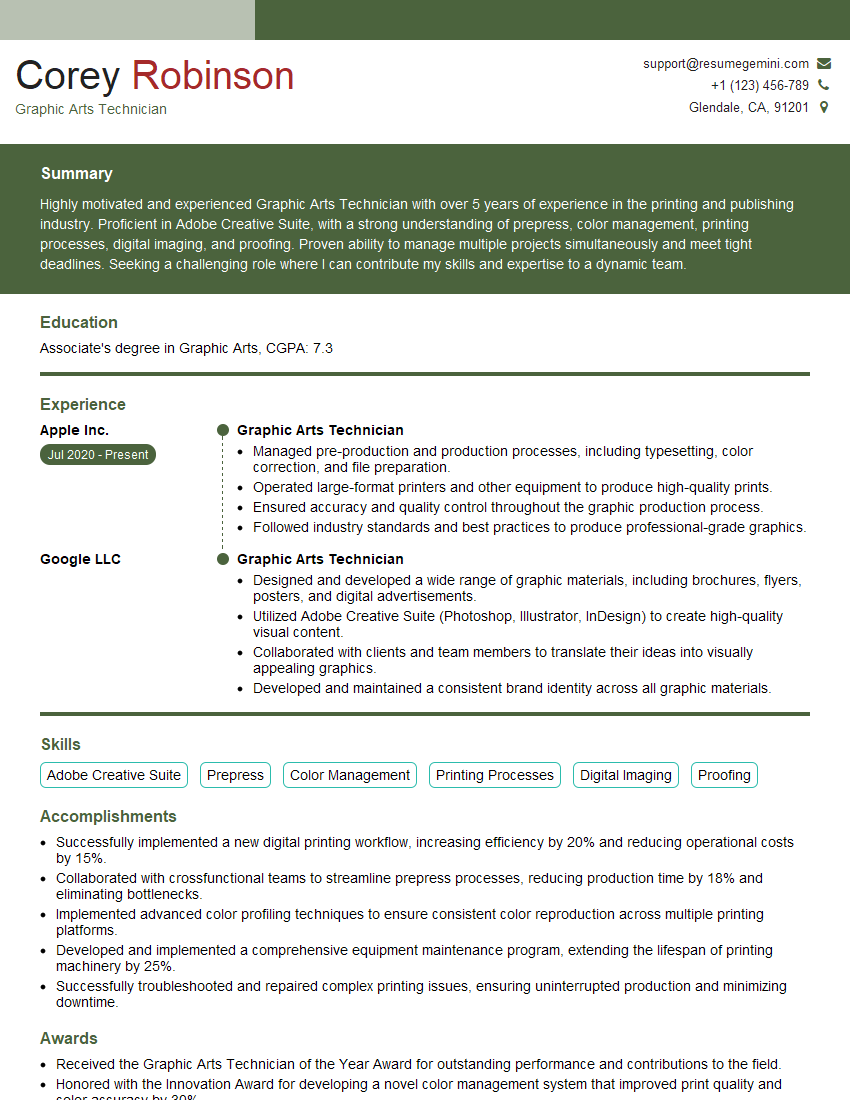
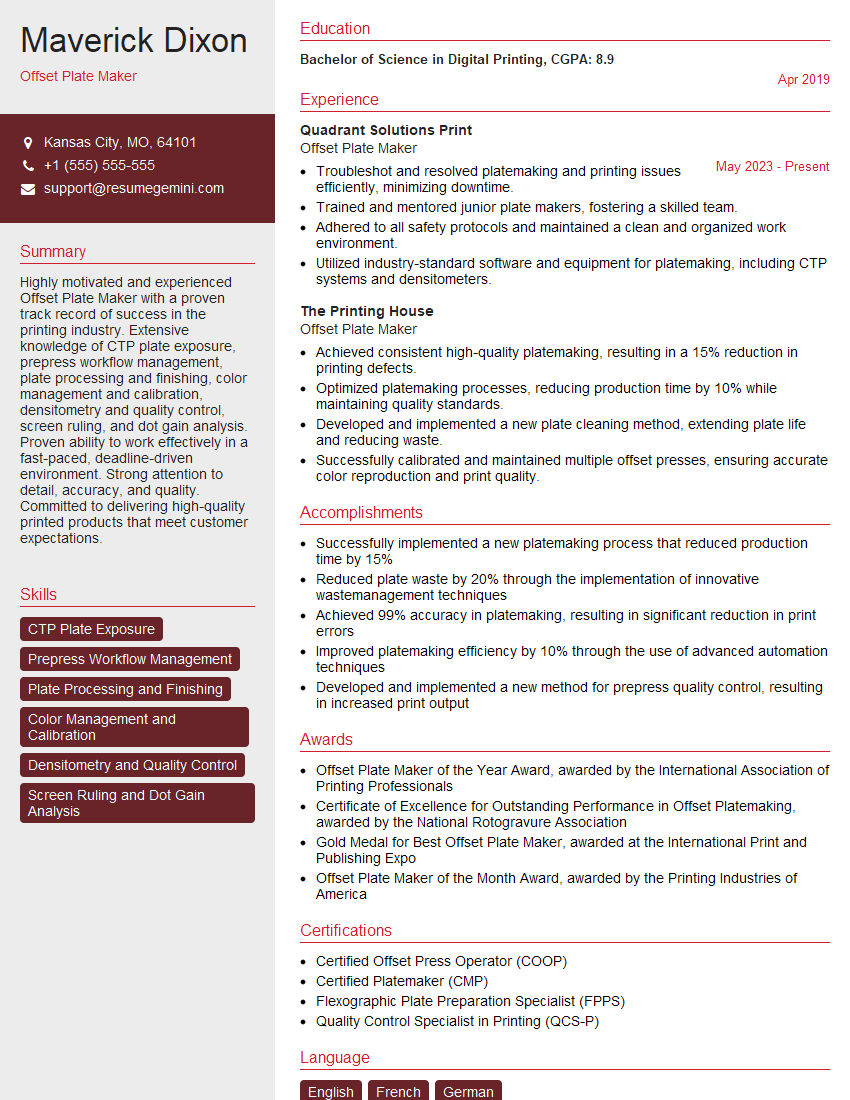
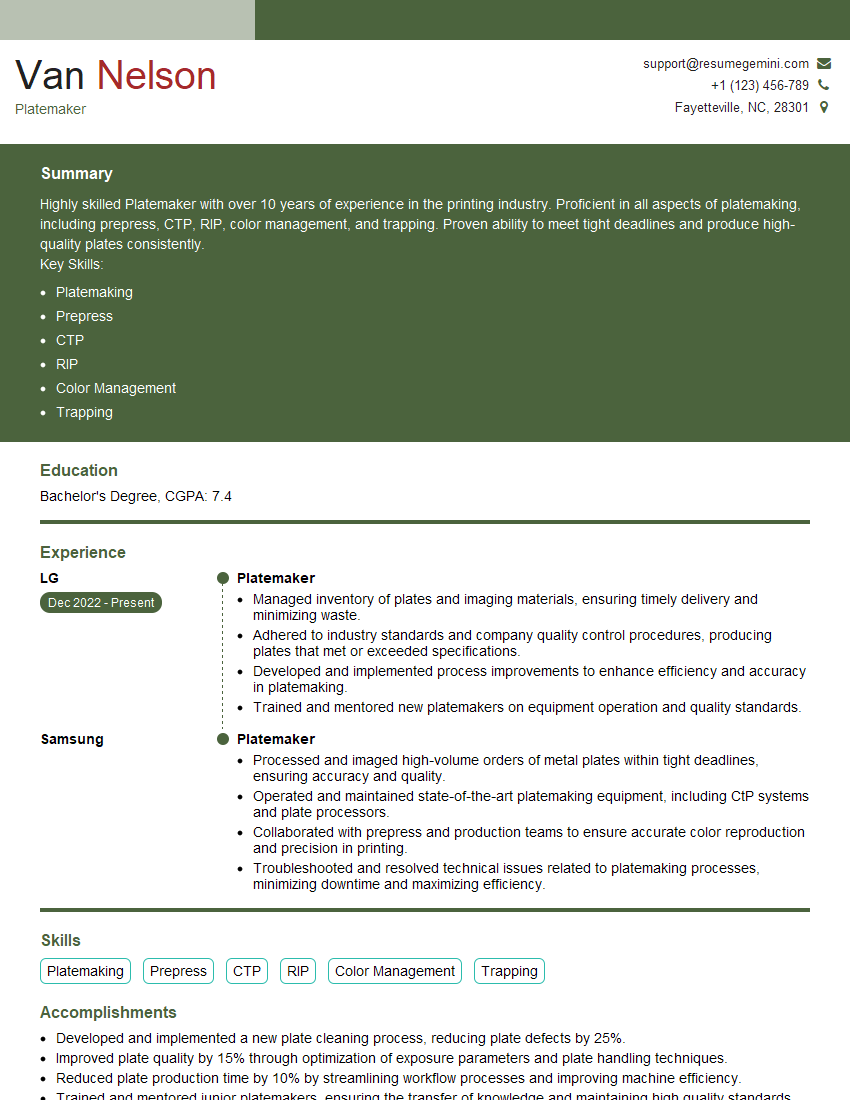
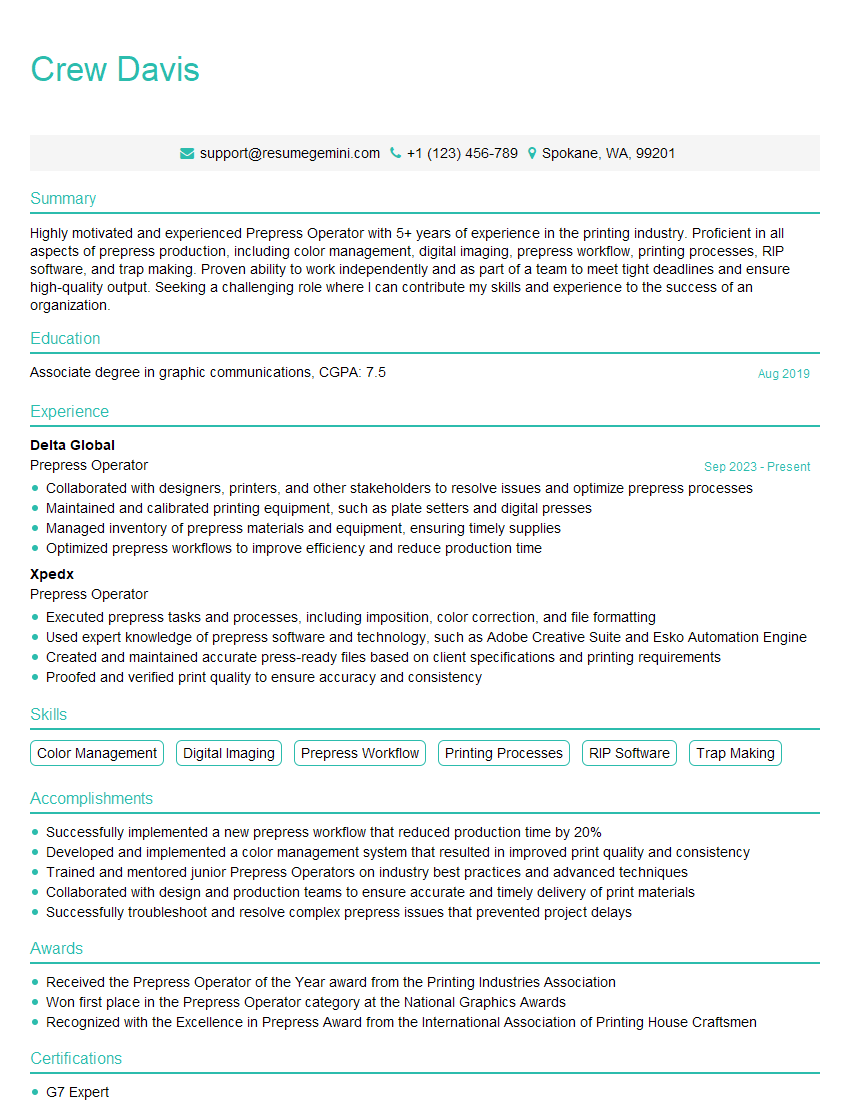
Mastering Offset Plate Making opens doors to exciting career opportunities in the printing industry, offering diverse roles with excellent growth potential. To stand out, create an ATS-friendly resume that highlights your skills and experience effectively. ResumeGemini is a trusted resource to help you build a professional and impactful resume that catches the eye of recruiters. Examples of resumes tailored to Offset Plate Making are available to help you get started.



Explore more articles
Users Rating of Our Blogs
Share Your Experience
We value your feedback! Please rate our content and share your thoughts (optional).
What Readers Say About Our Blog
Very informative content, great job.
good