Interviews are opportunities to demonstrate your expertise, and this guide is here to help you shine. Explore the essential Rail Car Cleaning and Maintenance interview questions that employers frequently ask, paired with strategies for crafting responses that set you apart from the competition.
Questions Asked in Rail Car Cleaning and Maintenance Interview
Q 1. Describe your experience with different rail car cleaning methods (e.g., pressure washing, chemical cleaning).
My experience encompasses a wide range of rail car cleaning methods, tailored to the specific type of car and the nature of the soiling. Pressure washing is a common technique for removing loose dirt, grime, and debris from exterior surfaces. We use varying pressures depending on the material – lower pressure for delicate areas like windows and higher pressure for robust metal siding. However, pressure washing isn’t always sufficient. Chemical cleaning is often necessary for tackling stubborn stains, grease, and biological matter. This involves selecting the right cleaning agent – from biodegradable detergents for general cleaning to specialized solvents for removing oil or graffiti. For instance, I’ve used alkaline cleaners for heavy grease removal on tank cars and acid-based cleaners (with appropriate safety precautions) for removing mineral deposits.
We also employ specialized cleaning methods like dry ice blasting for delicate surfaces and steam cleaning for interior sanitation. The choice of method always depends on a risk assessment, considering the type of car, the contaminants, and environmental factors.
Q 2. What safety protocols do you follow when cleaning rail cars?
Safety is paramount in rail car cleaning. We strictly adhere to a comprehensive safety protocol that starts with a thorough pre-cleaning inspection to identify potential hazards like leaking fluids or unstable structures. Personal Protective Equipment (PPE) is mandatory, including safety glasses, gloves (chemical-resistant as needed), respirators (for dust or chemical fumes), and high-visibility clothing. We always work in teams, ensuring a buddy system is in place for monitoring and immediate assistance. Furthermore, we follow strict lockout/tagout procedures when working on cars with potential electrical hazards. Detailed safety briefings are conducted before every job, and any deviation from protocol is immediately addressed.
We also utilize confined space entry protocols for cleaning the interiors of tank cars or other enclosed spaces, employing atmospheric monitoring equipment to ensure safe oxygen levels and the absence of hazardous gases. Proper disposal of cleaning waste is crucial; we meticulously separate hazardous from non-hazardous waste, in compliance with all relevant environmental regulations.
Q 3. How do you identify and address hazardous materials found in rail cars?
Identifying and handling hazardous materials is critical. Before any cleaning begins, we thoroughly review the car’s shipping documents (bills of lading) to determine the contents and any associated hazards. This information helps us select appropriate PPE and cleaning methods. Visual inspection is also crucial; we look for leaks, spills, or markings indicating hazardous materials. If we find any signs of hazardous materials, we immediately halt cleaning and report it to the designated authorities. We then follow strict procedures for containment, decontamination, and disposal, working with specialized hazardous materials cleanup teams if necessary.
For example, if we discover a residue of a corrosive material, we would use a neutralizer to render it harmless before proceeding with general cleaning. Documentation of the discovery, procedures followed, and waste disposal is meticulously maintained.
Q 4. Explain your experience with rail car sanitation procedures and regulations.
My experience covers a wide range of rail car sanitation procedures and regulations, emphasizing food-grade sanitation for cars transporting edibles. This involves understanding and adhering to regulations like those set by the FDA and other relevant agencies. Procedures include the use of approved sanitizers, thorough rinsing, and meticulous documentation. For example, we use high-pressure hot water washing followed by a sanitizing agent rinse for food-grade cars. Regular inspections and audits ensure compliance. For non-food-grade cars, sanitation might focus on removing biological matter or preventing the spread of disease vectors. We always ensure adherence to all relevant OSHA and environmental regulations.
Record-keeping is essential for compliance, and we meticulously document every cleaning procedure, including the type of cleaning agents used, personnel involved, and any discovered hazards.
Q 5. What types of cleaning agents are appropriate for different rail car materials (e.g., metal, wood, upholstery)?
The selection of cleaning agents depends heavily on the material of the rail car. For metal surfaces, we typically use detergents, degreasers, and specialized cleaners for removing specific contaminants. For wood, gentler, water-based cleaners are often used to avoid damage. For upholstery, we might use upholstery-specific cleaning solutions, often employing extraction methods to prevent staining or damage. For example, we might use a phosphate-free detergent for metal surfaces to avoid corrosion and a specialized cleaner for removing graffiti from painted surfaces. Always remember that testing a cleaning agent in an inconspicuous area before widespread application is crucial to prevent unintended damage.
In every case, the chosen agent’s compatibility with the material and its potential environmental impact are carefully considered.
Q 6. How do you ensure the efficient use of cleaning supplies and minimize waste?
Efficient cleaning supply usage is a priority, both economically and environmentally. We utilize precise measurements of cleaning agents, avoiding unnecessary overuse. We employ pre-soaking techniques to loosen dirt and grime before cleaning, reducing the amount of water and cleaning agents needed. We regularly maintain our cleaning equipment to ensure optimal performance and minimize wasted resources. We also recycle cleaning solution containers whenever possible and dispose of chemical waste responsibly, following all relevant regulations. For example, we track our cleaning agent usage and adjust our processes to minimize waste. This also includes regular training for the team on efficient cleaning techniques.
Ultimately, our goal is to achieve the highest level of cleanliness while minimizing both the costs and environmental footprint.
Q 7. Describe your experience with rail car maintenance tasks (e.g., lubrication, minor repairs).
My rail car maintenance experience includes various tasks, including lubrication of moving parts like couplers and hinges to prevent rust and ensure smooth operation. I’m proficient in performing minor repairs, such as replacing worn-out seals, patching small holes in the car’s body, and tightening loose bolts. I’m also familiar with inspecting brake systems and reporting any significant issues to the appropriate personnel. I’ve performed preventative maintenance tasks, like checking wheel bearings and ensuring the proper functioning of doors and safety mechanisms. Prioritizing regular maintenance is crucial to preventing more significant and costly repairs later on.
For example, I’ve successfully repaired minor leaks in air brake lines, ensuring the safe operation of the rail cars. Maintaining detailed records of all maintenance procedures is essential for tracking car performance and ensuring regulatory compliance.
Q 8. How do you handle unexpected issues or equipment malfunctions during the cleaning process?
Unexpected issues are a part of rail car cleaning. Our approach is proactive and systematic. First, we have a comprehensive checklist for pre-cleaning inspections, identifying potential problems before they arise. If a malfunction occurs, for example, a clogged hose on a high-pressure washer, our first step is safety: immediately shutting down the equipment and ensuring the area is secure. We then follow a troubleshooting protocol specific to the equipment. This might involve checking power sources, examining hoses for kinks or damage, or replacing faulty parts. We keep a well-stocked inventory of common replacement parts to minimize downtime. If the issue is beyond our immediate expertise, we contact our maintenance team or the equipment manufacturer for assistance. Thorough documentation of the incident, including the time, nature of the malfunction, repair steps, and any downtime, is crucial for preventative maintenance and future problem-solving.
For example, if a high-pressure nozzle malfunctions, we wouldn’t simply replace it. We’d analyze if the issue was a single bad nozzle or if there’s a larger problem like insufficient water pressure or a problem with the pump. This ensures we address the root cause and prevent future occurrences.
Q 9. What are the common causes of rail car damage and how can they be prevented?
Rail car damage can stem from several sources, including accidents (collisions, derailments), harsh weather conditions (extreme temperatures, ice, snow), improper loading and unloading, and inadequate cleaning practices. Preventing damage is a multifaceted approach.
- Accidents: This requires adherence to strict safety protocols, proper signaling, and regular track inspections.
- Weather: Protective coatings, regular inspections for corrosion, and timely repairs are crucial. We often use specialized winter cleaning procedures to prevent ice build-up.
- Loading/Unloading: Proper training of personnel, use of appropriate loading equipment, and regular inspections of loading/unloading areas are vital. We need to ensure proper weight distribution to prevent stress on the car structure.
- Cleaning: Using appropriate cleaning agents and techniques, avoiding abrasive materials, and ensuring equipment is properly maintained and operated prevent damage during the cleaning process itself. For example, high-pressure washing requires skilled operators to avoid damaging delicate surfaces.
Imagine a rail car with damaged undercarriage due to corrosion. By regularly inspecting and applying protective coatings, we can significantly extend its lifespan and prevent costly repairs or replacements.
Q 10. What are your strategies for managing time and resources efficiently during rail car cleaning projects?
Efficient time and resource management hinges on detailed planning and execution. We begin with a thorough assessment of the rail cars needing cleaning, their condition, and specific cleaning requirements. This allows us to create a realistic schedule, optimizing the use of personnel, equipment, and cleaning agents. We use specialized software for scheduling, tracking progress, and managing resources. Crew assignments are optimized based on experience and the complexity of the cleaning tasks. Regular communication within the team ensures smooth workflow and prevents bottlenecks. We also leverage technology; for instance, using data-driven route optimization to reduce travel time between cleaning locations.
For example, we might prioritize cleaning cars needing urgent attention or those with high priority cargo, ensuring efficient use of our resources and meeting critical deadlines. Proper inventory management of cleaning supplies also ensures we don’t run out of crucial materials during a project.
Q 11. How do you ensure the quality of your work and maintain a high standard of cleanliness?
Maintaining high cleaning standards involves a multi-pronged approach: stringent quality control checks, use of standardized procedures, and regular employee training. Before, during, and after cleaning, we conduct thorough inspections using checklists to ensure all areas are cleaned to specifications. We also use visual aids (photographs, documented checklists) to define acceptable levels of cleanliness for different car types and components. Regular calibration of our cleaning equipment ensures consistent performance, and we track the consumption of cleaning agents to optimize usage and cost-effectiveness. Our team undergoes regular training in safe cleaning practices, the use of cleaning agents, and proper equipment operation. A continuous improvement process allows us to identify areas for improvement and refine our procedures based on feedback and data analysis.
Think of it like a five-star hotel—each room needs to be spotless. We employ similar attention to detail, but on a much larger scale, adhering to the strictest standards and documented procedures.
Q 12. Describe your experience with different types of rail cars and their unique cleaning requirements.
My experience spans various rail car types, each presenting unique cleaning challenges. Tank cars require specialized cleaning to remove residue, adhering to strict safety regulations. Passenger cars require a gentler approach, focusing on the comfort and hygiene of future passengers; this may involve more specialized cleaning agents and attention to detail in passenger areas. Freight cars, on the other hand, need thorough cleaning to remove debris and ensure safe transportation of goods. The cleaning procedures differ significantly depending on the type of goods previously transported – food products require extra sanitization.
For instance, cleaning a tank car that previously carried hazardous materials requires meticulous adherence to safety protocols and specialized equipment to ensure complete decontamination. We must carefully follow industry-specific guidelines and regulations for proper disposal of waste materials.
Q 13. What are your knowledge of OSHA regulations pertaining to rail car cleaning and maintenance?
OSHA regulations are paramount in our work. We are thoroughly familiar with the Hazard Communication Standard (HazCom), which necessitates proper labeling, storage, and handling of cleaning chemicals. We also strictly adhere to Personal Protective Equipment (PPE) requirements, ensuring all personnel use appropriate safety gear such as gloves, eye protection, and respirators, depending on the cleaning task and chemicals used. Our training programs comprehensively cover OSHA guidelines on confined space entry (if applicable), lockout/tagout procedures for equipment maintenance, and emergency response protocols. We maintain detailed records of our safety training and ensure regular compliance inspections are carried out. Understanding and implementing OSHA regulations is not just a legal obligation; it’s a critical part of ensuring the safety and well-being of our team.
For example, before entering a tank car for cleaning, we perform a thorough confined-space entry assessment and follow all necessary procedures to ensure the safety of our personnel.
Q 14. How do you document your work and maintain records of cleaning and maintenance activities?
Documentation is crucial for maintaining a high standard of quality and accountability. We use a digital system to document all cleaning and maintenance activities. This includes pre-cleaning inspections, cleaning checklists, post-cleaning inspections, equipment maintenance logs, chemical usage records, and any incidents or repairs that occurred during the process. All documentation includes date, time, personnel involved, specific rail car identification, and details about the work performed. This detailed record-keeping is essential for traceability, auditing, and continuous improvement. It allows us to easily track performance, identify trends, and improve our processes over time. These records are securely stored and readily accessible for review by management or regulatory authorities.
For example, if there’s a problem later, such as damage found on a specific rail car, we can easily trace the cleaning history, identifying any potential issues or points of failure that could be improved.
Q 15. How do you prioritize tasks and manage your workload during peak periods?
Prioritizing tasks during peak periods in rail car cleaning requires a systematic approach. I use a combination of techniques, including creating prioritized task lists based on urgency and importance. For instance, cars carrying perishable goods or those with imminent departure times take precedence. I also leverage Kanban-style boards (either physical or digital) to visualize the workflow and identify bottlenecks. This allows for real-time adjustments and ensures that the most critical cleaning and maintenance tasks are completed first. I also proactively communicate with the scheduling team to understand upcoming demands and adjust my workload accordingly, preventing last-minute rushes.
For example, if we have a backlog of cars needing interior cleaning, I might prioritize those with the most severe soiling first, while delegating less urgent cleaning tasks to other team members. Simultaneously, I might schedule exterior cleaning for cars with less pressing schedules, ensuring all tasks are addressed effectively and efficiently.
Career Expert Tips:
- Ace those interviews! Prepare effectively by reviewing the Top 50 Most Common Interview Questions on ResumeGemini.
- Navigate your job search with confidence! Explore a wide range of Career Tips on ResumeGemini. Learn about common challenges and recommendations to overcome them.
- Craft the perfect resume! Master the Art of Resume Writing with ResumeGemini’s guide. Showcase your unique qualifications and achievements effectively.
- Don’t miss out on holiday savings! Build your dream resume with ResumeGemini’s ATS optimized templates.
Q 16. Describe your experience with working as part of a team.
Teamwork is fundamental in rail car cleaning. In my previous roles, I’ve consistently collaborated effectively with colleagues, sharing expertise and supporting each other to meet deadlines. For instance, I’ve been part of teams where we divided tasks based on individual skill sets, with some focusing on high-pressure washing, others on interior detailing, and others on specialized cleaning for hazardous materials. We regularly held briefings to discuss challenges, share best practices, and ensure everyone is on the same page. Effective communication and mutual respect are paramount. I actively participate in team problem-solving, offering suggestions and collaborating to find the best solutions. Open communication fosters a positive team environment and leads to higher efficiency and quality of work. One particular success story involved troubleshooting a malfunctioning vacuum system – through collective brainstorming and technical knowledge sharing, we resolved the issue quickly, minimizing downtime.
Q 17. How do you handle difficult or challenging situations in the workplace?
Difficult situations in rail car cleaning often involve unexpected problems like equipment malfunctions, chemical spills, or aggressive deadlines. My approach is to stay calm and assess the situation systematically. First, I prioritize safety, ensuring everyone is secure before addressing the problem. Then, I identify the root cause of the problem by gathering information and analyzing the situation thoroughly. I look for solutions based on my knowledge and experience, but if the issue is beyond my expertise, I consult with supervisors or other specialists. Clear communication throughout the process is crucial to keeping everyone informed and involved in the solution. For example, when a chemical spill occurred, my first priority was the safety of my team and ensuring the area was secured. Then, I followed the established spill response protocol, reporting the incident and coordinating cleanup with the appropriate personnel.
Q 18. What are your problem-solving skills when facing unexpected cleaning challenges?
Problem-solving is a core aspect of my role. Unexpected cleaning challenges, such as stubborn graffiti or unusual types of spills, require a flexible approach. I start by identifying the nature of the challenge and research the most effective cleaning methods and products. I might consult safety data sheets (SDS) to ensure safe handling of cleaning agents. Sometimes, I need to experiment with different techniques and products to find the optimal solution, documenting my findings for future reference. For instance, I once encountered a rail car with exceptionally stubborn graffiti. After researching various graffiti removers, I tested a few on a small inconspicuous area to find the one that was most effective without damaging the car’s paint. The documentation of this process helped other team members address similar issues in the future.
Q 19. What is your experience with using specialized cleaning equipment (e.g., high-pressure washers, vacuum systems)?
I have extensive experience operating specialized cleaning equipment. This includes various high-pressure washers with different nozzle settings, allowing me to adjust pressure and spray patterns for optimal cleaning efficiency depending on the surface and type of soiling. My experience also extends to various vacuum systems, including those designed for wet and dry cleaning, and specialized units for handling hazardous materials. I’m proficient in maintaining and troubleshooting these machines, understanding their limitations, and performing regular safety checks. I’m also trained in the safe handling and disposal of cleaning solutions and waste materials generated during operations.
Q 20. How do you ensure the safety of yourself and others during rail car cleaning operations?
Safety is paramount in rail car cleaning. I strictly adhere to all safety protocols and regulations, including wearing appropriate personal protective equipment (PPE) such as gloves, eye protection, and safety footwear. I also understand and follow lockout/tagout procedures when working with equipment and ensure the work area is properly secured to prevent unauthorized access. Before starting any task, I conduct a thorough risk assessment to identify potential hazards and implement safety precautions. I regularly participate in safety training and briefings to stay updated on best practices and emerging safety regulations. I always report any unsafe conditions or practices immediately to my supervisor.
Q 21. What are your skills in identifying and reporting maintenance issues?
Identifying and reporting maintenance issues is crucial for preventing costly repairs and ensuring operational efficiency. During cleaning, I regularly inspect rail cars for signs of damage, wear, or malfunctioning components. This includes checking for leaks, corrosion, broken parts, and any other potential maintenance problems. I document all findings meticulously, using standardized reporting procedures and providing clear descriptions with photographic evidence when necessary. These reports are crucial for scheduling timely repairs and preventing potentially hazardous situations. For example, I once identified a significant crack in the undercarriage of a rail car during a routine cleaning. My detailed report with photographic evidence enabled the maintenance team to address the issue promptly, preventing a possible derailment.
Q 22. Explain your experience with using Personal Protective Equipment (PPE).
Safety is paramount in rail car cleaning. My experience with Personal Protective Equipment (PPE) is extensive, encompassing the consistent and correct use of all necessary gear. This includes, but isn’t limited to, safety glasses to protect my eyes from flying debris, respirators to filter out harmful dust and fumes, heavy-duty gloves to shield my hands from chemicals and rough surfaces, and steel-toe boots to protect my feet from potential hazards on the rail yard. I’m also trained in selecting the appropriate PPE based on the specific cleaning task and the chemicals involved. For instance, when working with corrosive cleaners, I’d always opt for chemical-resistant gloves and aprons. Regular inspection and maintenance of my PPE are also crucial; I always report any damaged or worn-out equipment immediately to ensure my safety and the safety of others.
Furthermore, I proactively participate in safety training sessions and refreshers to stay updated on best practices and new safety regulations. I understand the importance of reporting near misses to prevent future incidents and contribute to a safer working environment for everyone.
Q 23. How familiar are you with different types of rail car coatings and their cleaning requirements?
I’m very familiar with a wide range of rail car coatings and their unique cleaning requirements. Different coatings demand different cleaning approaches to avoid damage or premature deterioration. For example, some coatings are highly sensitive to harsh chemicals, requiring gentler, biodegradable cleaning solutions. Others are more robust and can withstand stronger detergents. I possess in-depth knowledge of coatings such as epoxy, polyurethane, acrylics, and specialized coatings used for food-grade transport. I can identify the coating type visually and, if needed, through testing, to determine the appropriate cleaning methodology. My experience includes cleaning cars with specialized coatings designed for hazardous materials transport, requiring strict protocols and decontamination procedures.
Understanding the specific properties of each coating is essential. For instance, improper cleaning of epoxy coatings could lead to cracking and compromising the structural integrity of the car. My approach always starts with identifying the coating, consulting relevant Safety Data Sheets (SDS) for chemicals, and selecting the appropriate cleaning agents and techniques to avoid any damage or contamination.
Q 24. Describe your experience with waste disposal procedures for rail car cleaning.
Waste disposal in rail car cleaning is governed by stringent environmental regulations. My experience involves meticulous adherence to these regulations, which includes proper segregation of waste streams, proper labeling, and disposal through licensed and authorized facilities. I’m proficient in handling various waste types generated during cleaning, including hazardous waste like solvents and used cleaning solutions, as well as non-hazardous waste such as cleaning rags and packaging materials. Each waste type has specific handling procedures and disposal pathways, and my experience encompasses all of them.
For example, hazardous waste requires special containers, labeling compliant with local and federal regulations (like the DOT hazardous material regulations), and disposal through licensed waste management companies. I meticulously maintain detailed records of all waste generated, including the type, quantity, and disposal method for complete traceability and compliance. This documentation ensures accountability and aids in identifying opportunities for waste reduction and environmental protection.
Q 25. How do you maintain a clean and organized work environment?
Maintaining a clean and organized work environment is crucial for efficiency and safety. My approach involves a combination of proactive measures and routine practices. This begins with a systematic organization of tools and equipment. I ensure that each tool has a designated place, and I meticulously clean and store them after use. I also practice 5S methodology (Sort, Set in Order, Shine, Standardize, Sustain) to maintain a systematic workflow and reduce clutter. Regular cleaning of the work area, including removal of debris and spills, is a non-negotiable part of my routine.
Before starting any cleaning task, I visually inspect the area and identify potential hazards. I address any potential hazards like spills or loose materials before beginning the task. My commitment to maintaining a clean and organized workspace improves safety by preventing slips, trips, and falls. Moreover, a clear and organized environment improves overall work efficiency, allowing for a more effective and focused work process.
Q 26. What are your experience with inventory management of cleaning supplies?
Effective inventory management of cleaning supplies is vital for smooth operations and cost control. My experience includes using both manual and computerized inventory tracking systems. I regularly check stock levels, identify low-stock items, and place timely orders to prevent disruptions in cleaning schedules. I maintain a detailed record of all cleaning supplies, including their quantity, purchase date, and expiration dates. This ensures that we always have the necessary supplies on hand and prevents waste from expired products.
Furthermore, I actively participate in identifying cost-effective alternatives without compromising quality or safety. This includes exploring environmentally friendly cleaning solutions and negotiating better prices with suppliers. Accurate inventory management not only prevents stockouts but also helps identify opportunities to minimize costs and optimize our resource allocation.
Q 27. How do you handle customer complaints or concerns regarding cleanliness?
Handling customer complaints or concerns regarding cleanliness is a critical aspect of my role. My approach is to listen empathetically to the customer’s concerns and acknowledge their perspective. I aim to understand the specific issue and gather all relevant information. Then, I clearly explain the steps I will take to address the complaint. This may involve re-cleaning the car, conducting a thorough inspection, or initiating a more comprehensive cleaning procedure based on the specific nature of the complaint.
I always maintain open and professional communication throughout the process, keeping the customer informed of my progress and ensuring their concerns are fully resolved. If necessary, I escalate the issue to my supervisor for further action. My goal is to ensure customer satisfaction and maintain a positive relationship, even when dealing with difficult situations. Documentation is key; I maintain records of every complaint and the steps taken to resolve it, ensuring future similar issues are addressed promptly.
Q 28. What are your career aspirations within the rail car cleaning and maintenance field?
My career aspirations within the rail car cleaning and maintenance field are focused on continuous learning and advancement. I’m eager to develop my expertise in specialized cleaning techniques, such as those required for hazardous materials transportation or food-grade rail cars. I’m also interested in gaining supervisory experience and eventually leading a team of cleaning professionals. I see myself contributing to the development and implementation of improved cleaning processes and technologies that promote both efficiency and sustainability.
Specifically, I am interested in exploring the use of innovative cleaning technologies, such as automated cleaning systems, to enhance efficiency and reduce environmental impact. Ultimately, my goal is to become a highly skilled and respected professional, making significant contributions to the safety, efficiency, and sustainability of the rail car cleaning industry.
Key Topics to Learn for Rail Car Cleaning and Maintenance Interview
- Safety Procedures and Regulations: Understanding and applying all relevant safety protocols, including OSHA standards and company-specific guidelines for handling chemicals, operating equipment, and working at heights.
- Cleaning Techniques and Equipment: Familiarization with various cleaning methods (e.g., high-pressure washing, vacuuming, chemical application) and the operation and maintenance of associated equipment (e.g., cleaning trucks, specialized cleaning tools).
- Waste Management and Disposal: Proper handling, storage, and disposal of hazardous and non-hazardous waste materials generated during the cleaning process, adhering to environmental regulations.
- Preventive Maintenance: Identifying and addressing potential maintenance needs, such as lubrication, inspection of components, and minor repairs to prevent major breakdowns. Understanding basic mechanical principles and recognizing signs of wear and tear.
- Interior and Exterior Cleaning: Differentiating cleaning procedures for different car components, such as passenger areas, restrooms, and undercarriages. Knowing appropriate cleaning agents for various surfaces and materials.
- Troubleshooting and Problem Solving: Developing skills to identify and resolve common cleaning and maintenance issues efficiently and effectively. This includes analyzing problems, identifying root causes, and implementing solutions.
- Record Keeping and Reporting: Maintaining accurate records of cleaning and maintenance activities, including completed tasks, materials used, and any identified issues. Proficiency in using relevant reporting software or systems.
- Knowledge of Rail Car Types and Systems: Understanding the different types of rail cars and their unique cleaning and maintenance requirements. Familiarity with basic rail car systems and components.
Next Steps
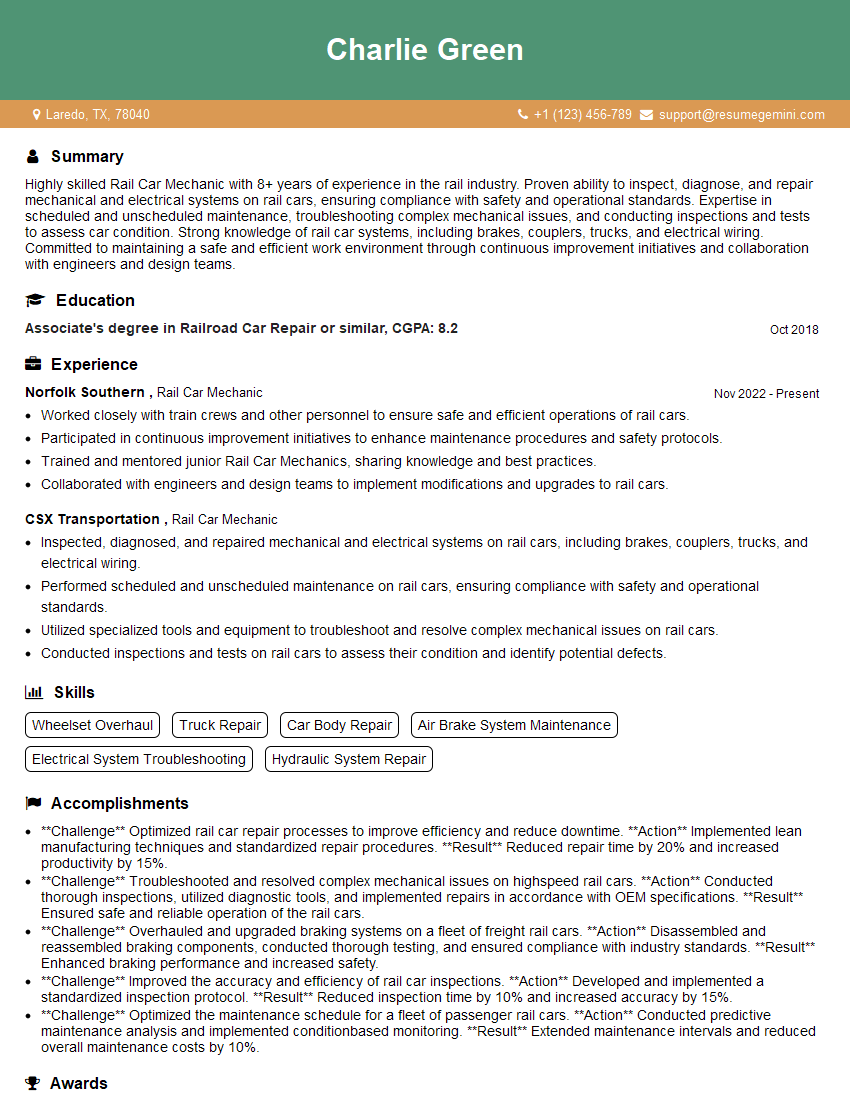
Mastering Rail Car Cleaning and Maintenance opens doors to a stable and rewarding career with opportunities for advancement. A strong understanding of these skills demonstrates your commitment to safety, efficiency, and operational excellence, making you a highly valuable asset to any rail company. To significantly enhance your job prospects, focus on creating an ATS-friendly resume that highlights your qualifications effectively. ResumeGemini is a trusted resource that can help you build a professional and impactful resume. They provide examples of resumes tailored to Rail Car Cleaning and Maintenance, guiding you through the process of showcasing your expertise and securing your dream role.
Explore more articles
Users Rating of Our Blogs
Share Your Experience
We value your feedback! Please rate our content and share your thoughts (optional).
What Readers Say About Our Blog
Very informative content, great job.
good