Unlock your full potential by mastering the most common Operate and maintain cranes and hoists interview questions. This blog offers a deep dive into the critical topics, ensuring you’re not only prepared to answer but to excel. With these insights, you’ll approach your interview with clarity and confidence.
Questions Asked in Operate and maintain cranes and hoists Interview
Q 1. Describe your experience operating different types of cranes (e.g., overhead, tower, mobile).
My experience encompasses operating various crane types, each demanding a unique skill set. I’ve extensively worked with overhead cranes in manufacturing settings, mastering their precise movements for efficient material handling. These cranes are typically used for lifting and moving heavy objects within a factory or warehouse. I’m also proficient with tower cranes, commonly used in construction projects. Their height and reach require a heightened awareness of wind conditions and load sway. Finally, my experience includes operating mobile cranes, which are versatile but necessitate careful maneuvering and site assessment due to their mobility. For example, I once used a mobile crane to delicately place a large piece of machinery onto a barge, requiring precise control and consideration of the crane’s stability on uneven ground. The experience highlighted the importance of understanding the limitations of each crane type and adapting techniques accordingly.
Q 2. Explain the pre-operational checks you perform on a crane before each use.
Pre-operational checks are crucial for ensuring safe crane operation. My routine begins with a visual inspection of the entire crane, checking for any obvious damage like cracks, leaks, or loose bolts. I then meticulously examine the hoisting mechanism, including the hook, cables, and sheaves, looking for wear and tear or any signs of damage. I carefully check the brakes, ensuring they are functioning correctly and the brake mechanism is free from defects. Next, I verify the load indicator and limit switches are working accurately. Finally, I test the emergency stop system. This entire process is carefully documented in a pre-operational checklist, ensuring nothing is overlooked. One time, during my inspection, I noticed a slight fraying on a cable that could have caused a catastrophic failure. Catching it early prevented a potential accident and highlighted the importance of thoroughness in these checks.
Q 3. What are the common causes of crane malfunctions and how would you troubleshoot them?
Crane malfunctions can stem from various sources. Common causes include worn or damaged cables, faulty brakes, hydraulic leaks, and electrical issues. Troubleshooting begins with isolating the problem. If the crane refuses to lift, I might first check the power supply and then examine the hoisting mechanism for blockages or mechanical faults. Brake problems often require careful inspection of the brake pads and related components. Hydraulic leaks necessitate tracing the source of the leak and repairing or replacing the affected parts. Electrical problems may necessitate expert assistance to safely diagnose and repair the electrical system. I approach troubleshooting systematically, starting with simple checks and escalating to more complex diagnostics as needed. Documenting the problem and the troubleshooting steps is essential for future reference and maintenance records. For example, once I traced a seemingly random crane malfunction to a faulty electrical connection corroded by moisture, underscoring the importance of regular maintenance in adverse weather conditions.
Q 4. How do you ensure the safety of yourself and others during crane operation?
Safety is paramount. I always adhere to strict safety protocols, including wearing appropriate personal protective equipment (PPE) such as hard hats, safety shoes, and high-visibility clothing. Before lifting any load, I ensure the area is clear of personnel and obstructions. I clearly communicate with the crane signal person and other workers involved in the lift. I never exceed the crane’s rated load capacity. I am always mindful of wind conditions and other environmental factors that may affect crane stability. Furthermore, I always follow the manufacturer’s recommendations for operation and maintenance. I treat every lift as though it is the most important one, consistently adhering to the highest safety standards. One situation where clear communication prevented a mishap was a time we used hand signals to adjust a heavy load’s position during a construction lift – clear, precise signaling prevented a potential accident.
Q 5. What are the load capacity limits and safety factors you consider when lifting loads?
Load capacity limits are clearly stated on the crane’s data plate and must never be exceeded. Safety factors are critical considerations. These are numerical multipliers applied to the load capacity to account for unforeseen events or uncertainties. The standard safety factor varies depending on regulations and the type of crane. Typical safety factors range from 3 to 5. Before lifting a load, I always verify that it is well within the crane’s rated capacity, considering the safety factor. Incorrect estimations can have catastrophic consequences. For instance, I once refused to lift a load deemed ‘slightly’ over the limit by an inexperienced supervisor, emphasizing the importance of strict adherence to safety regulations, even under pressure.
Q 6. Describe your experience with different types of hoisting mechanisms.
My experience includes working with various hoisting mechanisms, including drum-type hoists, electric chain hoists, and hydraulic hoists. Drum-type hoists utilize a rotating drum to wind the cable, suitable for heavy loads. Electric chain hoists are simpler, ideal for moderate loads and more compact spaces. Hydraulic hoists are well-suited for controlled lifting in precision operations. Each mechanism has its strengths and limitations, requiring appropriate selection based on the task. Understanding the nuances of each type is crucial for efficient and safe operation. For example, I used a hydraulic hoist for a delicate operation requiring smooth and precise movement, whereas a drum hoist was used for heavy steel beams during a construction project.
Q 7. Explain the process of inspecting and maintaining crane components (e.g., brakes, hooks, cables).
Regular inspection and maintenance are essential for preventing malfunctions and ensuring crane safety. This involves a systematic examination of all components, including the brakes, hooks, cables, and sheaves. Brakes are checked for wear, proper adjustment, and efficient operation. Hooks are inspected for cracks, deformations, or excessive wear. Cables are examined for fraying, kinking, or corrosion. Sheaves are checked for proper alignment and wear. Any damaged components must be replaced immediately. Regular lubrication is critical for extending the life of moving parts. Detailed records of all inspections and maintenance activities must be diligently maintained. I always prioritize regular maintenance and thorough inspections as the best defense against unexpected problems, because a small problem left unaddressed can escalate into something catastrophic.
Q 8. How familiar are you with relevant safety regulations and standards (e.g., OSHA, ANSI)?
My familiarity with safety regulations and standards like OSHA (Occupational Safety and Health Administration) and ANSI (American National Standards Institute) is extensive. I’ve worked consistently under these guidelines throughout my career. I understand the importance of regular inspections, proper training, and adherence to safety protocols, including lockout/tagout procedures, personal protective equipment (PPE) usage (hard hats, safety harnesses, etc.), and safe operating procedures for specific crane types and load capacities. I’m intimately familiar with OSHA 1910 Subpart N, specifically addressing cranes and derricks, and ANSI B30 standards for various lifting equipment. For example, I’ve directly used my understanding of OSHA’s requirements to implement and maintain a comprehensive safety program at previous jobsites, identifying and mitigating potential hazards before they caused incidents.
Regular refresher training keeps my knowledge current on any revisions or updates to the standards, ensuring a safe working environment for myself and everyone around me.
Q 9. What is your experience with load charts and calculations?
Load charts and calculations are fundamental to safe crane operation. I’m proficient in interpreting load charts to determine safe working loads (SWLs) for various boom lengths, angles, and radii, considering factors like wind speed and ground conditions. I can perform calculations to determine the center of gravity of a load to ensure stability and prevent tipping. This involves understanding the physics involved, including the effects of leverage and stress on the crane structure. For example, I recently used these calculations to safely lift a large transformer, meticulously charting the load distribution to keep it within the crane’s SWL at all times.
Beyond simply using pre-existing load charts, I understand how to calculate SWLs using appropriate formulas and engineering principles. I also know how to interpret manufacturer’s specifications and apply them to real-world lifting situations.
Q 10. How do you handle unexpected situations or emergencies during crane operation?
Handling unexpected situations or emergencies requires quick thinking, decisive action, and a thorough understanding of crane operation and safety procedures. My approach follows a structured process:
- Immediate assessment: Quickly assess the nature of the emergency (e.g., mechanical failure, load swing, environmental hazard).
- Safety first: Prioritize the safety of myself and all personnel in the area. This often involves stopping the crane operation immediately and activating emergency stops.
- Communication: Clear and concise communication with ground personnel, supervisors, and potentially emergency responders is paramount. This involves using pre-determined signals or communication methods.
- Problem solving: Based on the assessment, I’d initiate appropriate corrective action—this could range from securing a load with additional equipment to safely lowering it to the ground, or implementing an emergency shutdown procedure.
- Post-incident analysis: After the immediate danger has passed, a thorough investigation would be undertaken to determine the root cause of the incident, implementing preventative measures to avoid recurrence.
For instance, during a recent operation, a sudden gust of wind caused a load to swing unexpectedly. I immediately stopped the crane, communicated the situation to ground personnel via radio, and slowly repositioned the boom to stabilize the load before carefully lowering it. A subsequent investigation led to stricter wind speed limitations for future operations.
Q 11. What are the different types of crane hook attachments and their uses?
Crane hook attachments are crucial for safely and efficiently handling diverse loads. Several common types include:
- Standard hook: The most common type, suitable for lifting loads with lifting points or rings.
- Clevis hook: Used with a clevis pin, offering a secure connection.
- Grab hooks: Designed for gripping irregular or bulky items.
- Eye bolts: For lifting objects with pre-installed eyes.
- Spreader beams: Distribute the load across multiple lifting points, suitable for large, unwieldy items.
- Magnetic lifters: For lifting ferrous metals.
- Vacuum lifters: For lifting non-ferrous materials, often used for delicate items.
The choice of attachment depends entirely on the load’s characteristics, weight, and shape. Using the incorrect attachment could lead to accidents, damage to the load, or equipment failure. I always select the most appropriate attachment for the task, considering safety factors and the load’s specific requirements.
Q 12. Describe your experience with preventive maintenance schedules for cranes and hoists.
Preventive maintenance is critical for ensuring the safe and reliable operation of cranes and hoists. My experience includes developing and implementing comprehensive preventive maintenance schedules based on manufacturer’s recommendations, operational hours, and site-specific conditions. These schedules typically involve regular inspections, lubrication, and testing of critical components such as brakes, hooks, sheaves, and wire ropes. Documentation is meticulously maintained, recording inspections, repairs, and any anomalies observed.
For instance, at my previous role, I established a weekly inspection program for overhead cranes, including visual checks of cables, structural integrity, and electrical components. This proactive approach helped detect and address minor issues before they escalated into major problems, significantly improving equipment uptime and safety.
Q 13. How do you communicate effectively with ground personnel during crane operation?
Effective communication with ground personnel is essential for safe and efficient crane operation. My approach incorporates various techniques:
- Clear hand signals: Using standardized hand signals as per ANSI standards for crane operation ensures concise instructions.
- Two-way radios: These provide clear verbal communication, especially beneficial in noisy environments.
- Pre-lift planning: Thoroughly discussing the lift plan, including load weight, lifting points, and potential hazards, eliminates misunderstandings.
- Confirmation of instructions: Always confirming instructions with ground personnel before initiating a lift avoids errors.
- Emergency communication plan: Having a pre-arranged method for communicating emergencies ensures a rapid response.
For instance, before every lift, I always review the plan with the ground crew, confirming their understanding of the hand signals and the planned path of the load. This consistent communication ensures everyone is on the same page, minimizing the risk of accidents.
Q 14. What is your experience working at heights and understanding fall protection measures?
I have extensive experience working at heights, adhering strictly to fall protection measures. This involves understanding and utilizing various fall protection equipment including but not limited to full body harnesses, lanyards, safety nets, and fall arrest systems. I am proficient in selecting appropriate equipment based on specific tasks and environmental conditions. Knowing how to properly inspect and maintain fall protection equipment is also critical, including regular checks for wear and tear and ensuring proper functionality.
My experience includes working on large-scale construction projects and industrial settings, where I always prioritize my safety and the safety of those around me by strictly following safety procedures and using appropriate equipment. I have regularly participated in fall protection training to stay updated on best practices and regulatory requirements.
Q 15. How do you identify and report damaged or worn crane components?
Identifying damaged or worn crane components requires a systematic approach. I always begin with a thorough visual inspection, checking for obvious signs of damage such as cracks, bends, corrosion, or excessive wear on all critical parts. This includes the hook, wire rope, sheaves, drums, structural members, brakes, and the entire electrical system. I use checklists to ensure nothing is missed. For example, I’d meticulously examine the wire rope for broken wires, kinking, or corrosion, paying close attention to the end fittings. Any discrepancies, no matter how small, are flagged.
Reporting is equally crucial. I’d use a standardized reporting form, documenting the specific location of the damage, its severity (using a scale if applicable), and any potential safety implications. Photos and/or videos are also invaluable and are included with the report. The report is then submitted to the supervisor for prompt action, which may involve immediate repairs, part replacement, or crane decommissioning until the issue is resolved. Following company safety procedures ensures efficient and safe resolution.
Career Expert Tips:
- Ace those interviews! Prepare effectively by reviewing the Top 50 Most Common Interview Questions on ResumeGemini.
- Navigate your job search with confidence! Explore a wide range of Career Tips on ResumeGemini. Learn about common challenges and recommendations to overcome them.
- Craft the perfect resume! Master the Art of Resume Writing with ResumeGemini’s guide. Showcase your unique qualifications and achievements effectively.
- Don’t miss out on holiday savings! Build your dream resume with ResumeGemini’s ATS optimized templates.
Q 16. Explain the difference between static and dynamic loading.
Static loading refers to the weight or force placed on a crane while it remains stationary. Think of it like a stack of bricks sitting on a pallet – a constant, unchanging load. Dynamic loading, on the other hand, involves forces that change over time. This includes the added forces from acceleration, deceleration, swinging loads, and impacts during the lifting process. Imagine lifting a heavy object and then suddenly stopping it – the dynamic loading during the stop is considerably higher than the object’s static weight.
The distinction is critical for safety calculations. Cranes are designed to handle static loads, but dynamic loads can significantly increase stresses on the structure and components, potentially leading to structural failure if not accounted for in the design and operation. Understanding these differences guides safe operating practices and load limits.
Q 17. What is your understanding of different types of crane brakes and their functionality?
Cranes employ various braking systems to ensure safe and controlled operations. Common types include:
- Mechanical Brakes: These rely on friction to stop the movement. Common examples are disc brakes, drum brakes, and cone brakes. They are generally robust and reliable, requiring minimal maintenance. However, they are subject to wear and tear and need regular inspection and adjustment.
- Hydraulic Brakes: These use hydraulic pressure to engage brake shoes or discs. They offer smooth braking and are often used in larger cranes. Regular maintenance, including checking fluid levels and inspecting seals, is essential for reliable performance.
- Electric Brakes: These brakes use electromagnetic forces to engage the brake mechanism. They are commonly used in conjunction with other braking systems, providing fail-safe operation. Regular inspection of the electrical components and brake mechanism is necessary.
Each brake type has specific functionalities and requires different maintenance approaches. A thorough understanding of these functionalities is critical for safe crane operation and maintenance procedures. Failure of any brake system can lead to catastrophic accidents; therefore, their inspection and maintenance are of paramount importance.
Q 18. How do you ensure proper rigging techniques are used for safe lifting operations?
Ensuring proper rigging techniques is fundamental to safe lifting. This starts with selecting the appropriate lifting gear – slings, hooks, shackles, and other components – that are rated for the load’s weight and type. The condition of the rigging equipment is assessed prior to each use; any damage necessitates replacement. I meticulously follow load charts and manufacturer recommendations. Proper hitching techniques are essential to distribute the load evenly across all lifting points, preventing damage to the load or the rigging gear. Improper hitching can cause the load to shift or even topple, leading to accidents.
Furthermore, I always ensure the load is properly secured before lifting and that the lifting path is clear of obstacles. Pre-lift inspections are paramount. Before initiating a lift, I always conduct a thorough risk assessment, taking into account environmental factors, wind speed, and other potential hazards. A well-trained rigger, knowing how to properly inspect equipment, tie off loads and account for the myriad forces that may affect a lift, is vital to a successful lift.
Q 19. What is your experience with lubrication and maintenance of crane components?
Lubrication is a critical aspect of crane maintenance, extending the life of components and ensuring smooth operation. I follow the manufacturer’s lubrication schedule meticulously, using the correct type and grade of lubricant for each component. This includes greasing moving parts like bearings, sheaves, and pins at specified intervals. I record all lubrication activities in a logbook to track maintenance history. Insufficient or incorrect lubrication can lead to increased wear, friction, and ultimately, component failure. Conversely, excessive lubrication can attract contaminants, leading to premature failure.
Beyond lubrication, routine maintenance includes inspecting components for wear and tear, replacing worn parts as needed, and tightening bolts and nuts. A preventative maintenance schedule is crucial, catching issues before they escalate into major problems and ensuring compliance with safety regulations. In essence, a well-maintained crane is a safe crane.
Q 20. Describe your understanding of wire rope inspection and replacement.
Wire rope inspection is a crucial safety measure. I inspect it regularly for signs of wear and tear, including broken wires, corrosion, kinking, and bird-caging. The number of broken wires in a specific length is a key indicator of its remaining service life. I always check end fittings for any damage or signs of loosening. Industry standards dictate the acceptable limits for broken wires and other damage; exceeding these limits requires immediate wire rope replacement.
Replacement involves carefully removing the old wire rope, ensuring proper disposal to prevent injury or environmental damage. The new wire rope must be of the correct diameter, material, and construction, matching the crane’s specifications. Proper installation and end fitting termination are critical for maintaining the rope’s integrity and strength. Improper installation renders the rope unreliable and dangerous. It must be seated correctly in the drum to avoid damage during operation.
Q 21. What are the signs of a malfunctioning crane or hoist that you would need to address?
Several signs indicate a malfunctioning crane or hoist. Unusual noises, like squealing, grinding, or banging, often signify worn bearings, damaged gears, or other mechanical problems. Excessive vibration during operation could indicate problems with the motor, drive system, or structural components. Slow or jerky movement may suggest issues with the braking system or electrical components.
Leaks of hydraulic fluid or grease are also clear signs of problems. Any unusual behavior, such as the crane drifting or failing to hold its position, necessitates immediate investigation. Similarly, failure of any safety mechanisms, such as the overload protection system or emergency stop, requires immediate shutdown and repair. Furthermore, any indications of damage to the structural members of the crane should be reported immediately and lead to the crane being removed from service. Addressing these issues promptly is crucial for preventing accidents and ensuring operational safety.
Q 22. How would you respond to a sudden power outage while operating a crane?
A sudden power outage during crane operation requires immediate and controlled action to prevent accidents. My first response is to immediately cease all crane movements and engage the emergency brake. This is crucial to prevent uncontrolled lowering of the load, which could cause damage or injury.
Next, I would assess the situation. Is the outage affecting other equipment? Are there any immediate hazards to personnel nearby? I would then communicate the situation to my supervisor and other relevant personnel, following established emergency procedures. Depending on the type of crane and its features, I may attempt a controlled lowering using any available auxiliary power systems or manual override mechanisms, but only if it’s safe to do so. If the load is secured safely and no further action is needed, the operator would await power restoration before any further activity.
For example, during a recent project, a power surge caused a temporary outage on a tower crane I was operating. Following procedure, I engaged the emergency brake, which held the load securely. I contacted the site supervisor, who confirmed that the power outage was site-wide, and we waited for the power to be restored before resuming operations. No damage or injuries occurred because of the immediate, safe response.
Q 23. Describe your experience with different types of crane controls (e.g., pendant, remote).
I’m proficient with various crane control systems, including pendant controls, remote controls, and cabin controls. Pendant controls, often used for smaller cranes and hoists, provide direct, hands-on control via a wired pendant with buttons and levers. I’ve used these extensively in warehousing environments for lifting and moving pallets. Remote controls offer wireless operation, increasing operator flexibility and safety in hazardous or confined spaces. These are particularly useful when manipulating loads in areas inaccessible to a crane operator in a cabin. Finally, cabin controls provide a fully enclosed, ergonomic operator environment, offering enhanced visibility and control, often found on larger tower cranes or overhead cranes.
The advantages and disadvantages vary: Pendant controls are simple and reliable but limit operator mobility; remote controls are flexible but require careful attention to maintain radio contact and line-of-sight; cabin controls maximize operator safety and control but reduce mobility.
My experience encompasses using pendant controls for handling smaller loads in a warehouse setting and operating large tower cranes from a cabin. I am also proficient with various remote-control systems complying with all safety standards.
Q 24. What are the limitations of different types of cranes and hoists?
The limitations of different crane types and hoists depend heavily on their design, capacity, and operational environment. For instance, overhead cranes have limitations on their horizontal reach and can’t operate outside the area covered by their tracks. Tower cranes excel at high-reach lifting but are restricted by their position and stability, which means that wind conditions are crucial to consider. Mobile cranes, while offering versatility, have restrictions based on their outrigger placement and ground conditions; soft ground can greatly reduce lifting capacity. Hoists, generally, have lower lifting capacities and shorter vertical travel compared to cranes.
Other important factors influencing limitations include load moment capacity (the maximum load and radius a crane can handle safely), environmental conditions such as wind speed and temperature, and the condition of the crane itself (regular maintenance is crucial).
- Overhead Cranes: Limited horizontal reach, susceptible to collisions.
- Tower Cranes: High reach, but susceptible to wind conditions and limited mobility.
- Mobile Cranes: Versatile, but ground conditions and outrigger placement limit capacity.
- Hoists: Limited lifting capacity and reach.
Q 25. How do you handle challenging lifting situations, such as confined spaces or obstacles?
Challenging lifting situations demand meticulous planning and execution, putting a premium on risk assessment and safety. Before starting any lift in a confined space or around obstacles, I conduct a thorough site survey, identifying potential hazards and developing a safe lifting plan. This includes considering the load’s weight, dimensions, and center of gravity, as well as the available space, the proximity of obstacles, and the structural integrity of the surroundings. I’ll also carefully select the appropriate lifting equipment, ensuring its capacity exceeds the load’s weight and considering any necessary rigging adjustments to navigate obstacles. In confined spaces, I’d use smaller, more maneuverable cranes or hoists if feasible.
For example, when lifting a large piece of equipment into a narrow factory space, I used a smaller, more agile mobile crane with precise controls. The planned route was mapped out to avoid collisions with other equipment. Spotters were positioned to provide guidance during the lift, ensuring that the load safely cleared all obstacles.
Communication is key. Clear instructions and constant communication with spotters and other crew members prevent accidents and ensure everyone is aware of the lifting plan and potential risks. Proper signaling and risk mitigation are paramount for such lifts.
Q 26. Explain your experience with crane load monitoring systems.
My experience with crane load monitoring systems involves using various technologies to ensure safe lifting practices. These systems provide real-time data on the load weight, the crane’s position, and other critical parameters. I am familiar with load cells integrated into the hoisting mechanism, providing accurate weight measurements that prevent overloading. Some systems also incorporate inclinometers to monitor the crane’s angle and prevent instability. Many modern systems integrate with software and provide visual and audible warnings for overload, exceeding operational limits, or other hazardous conditions.
The data from these systems is invaluable for preventing accidents and optimizing lifting procedures. This data is also recorded for future reference, contributing to overall safety and operational efficiency records. For instance, a recent project utilized a system with real-time load monitoring displayed on a screen in the crane cabin. It provided a clear, visual representation of weight and helped prevent overload and maintain safe operations.
Q 27. What are your strategies for staying updated on safety regulations and best practices in crane operation?
Staying updated on safety regulations and best practices in crane operation is paramount. I achieve this through several methods. Firstly, I actively participate in professional development courses and workshops, which provide insights into the latest techniques, technologies, and regulations. Secondly, I review industry publications and online resources, such as the OSHA guidelines and relevant professional organization publications, to stay abreast of changes in safety standards and best practices.
Further, I actively participate in safety meetings and discussions with colleagues and supervisors, sharing knowledge and learning from others’ experiences. Finally, I ensure that my certifications and licenses are current and that I am adequately trained on all equipment I operate, reflecting the ongoing nature of safety standards and the technologies used in the sector.
Q 28. Describe your experience with documenting maintenance activities and repairs.
Accurate documentation of maintenance activities and repairs is critical for safety and regulatory compliance. My approach involves detailed records kept in both physical and digital formats, following a standardized system. Each maintenance activity or repair is documented with the date, time, description of the work performed, parts replaced, and the technician’s signature. Pre- and post-maintenance checks are documented, along with any observations or issues noted during the process.
Digital maintenance management systems are employed to maintain these records systematically, which provides easy access to historical data for future reference. This meticulous record-keeping assists in tracking equipment lifespan, identifying recurring issues, and planning preventative maintenance, contributing to improved efficiency and safety. This organized approach also facilitates compliance audits and ensures that the equipment maintains its certification and operational safety.
Key Topics to Learn for Operate and Maintain Cranes and Hoists Interview
- Crane and Hoist Types: Understanding the different types of cranes (tower, mobile, overhead) and hoists (chain, wire rope), their applications, and limitations.
- Safety Regulations and Procedures: Thorough knowledge of OSHA (or relevant regional) safety regulations, pre-operational checks, load capacity calculations, and emergency procedures.
- Operational Techniques: Mastering safe lifting techniques, proper rigging procedures, load handling, and communication protocols with ground crews.
- Mechanical Principles: Understanding basic mechanical principles like leverage, center of gravity, and load distribution as they relate to crane and hoist operation.
- Maintenance and Inspection: Knowledge of routine maintenance tasks, preventative maintenance schedules, identifying potential malfunctions, and performing basic repairs.
- Troubleshooting and Problem Solving: Ability to diagnose common malfunctions, identify the root cause of problems, and implement effective solutions while adhering to safety protocols.
- Load Charts and Capacity Limits: Interpreting load charts accurately, understanding the impact of different factors on lifting capacity, and ensuring safe operation within limits.
- Communication and Teamwork: Effective communication skills crucial for coordinating with riggers, signal persons, and other team members to ensure safe and efficient operations.
Next Steps
Mastering the operation and maintenance of cranes and hoists opens doors to rewarding careers in construction, manufacturing, and logistics, offering excellent earning potential and opportunities for advancement. To maximize your job prospects, it’s crucial to present your skills effectively. Building an ATS-friendly resume is key to getting noticed by recruiters. ResumeGemini can help you craft a professional and compelling resume that highlights your qualifications and experience. ResumeGemini provides examples of resumes tailored specifically for Operate and Maintain Cranes and Hoists roles, giving you a head start in creating a document that will impress potential employers.

Crane Operator Resume Sample

Heavy Equipment Operator Resume Sample

Rigger Resume Sample

Crane Mechanic Resume Sample

Hoist Mechanic Resume Sample
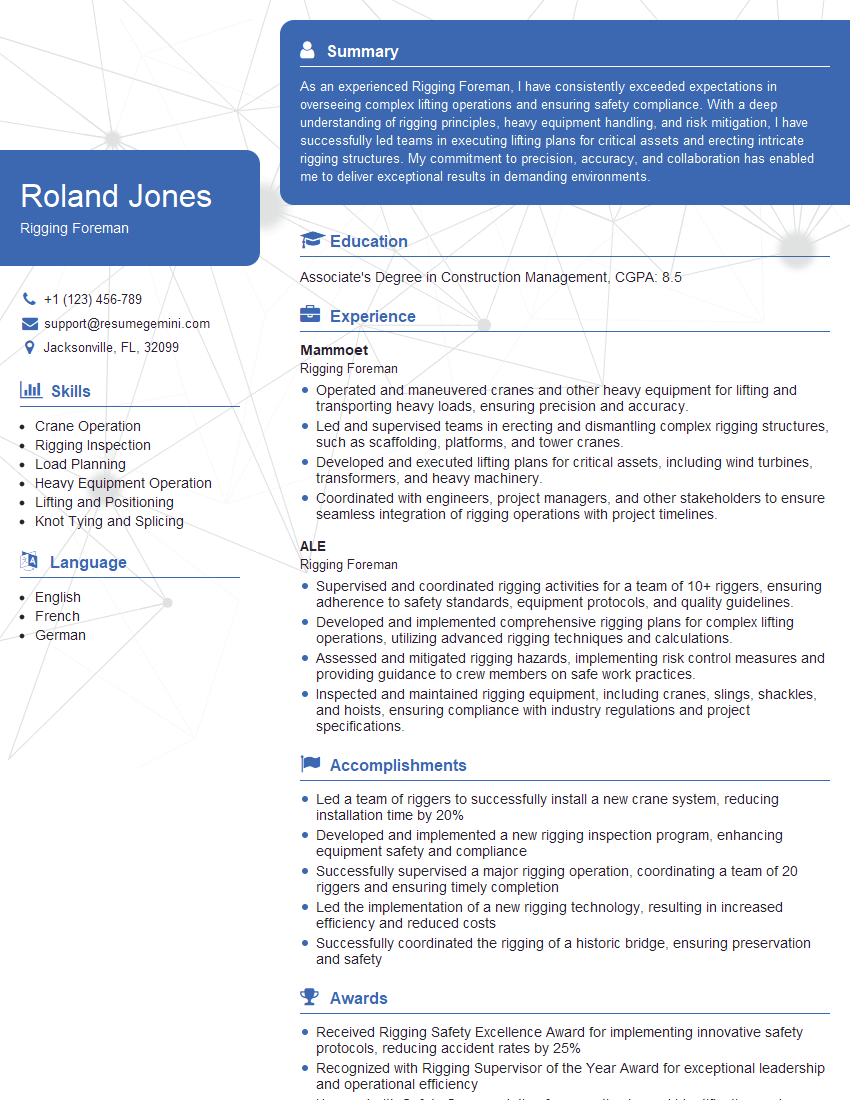
Rigging Foreman Resume Sample

Gantry Crane Operator Resume Sample

Mobile Crane Operator Resume Sample

Overhead Crane Operator Resume Sample

Port Crane Operator Resume Sample

Tower Crane Operator Resume Sample

Hoist Operator Resume Sample
Explore more articles
Users Rating of Our Blogs
Share Your Experience
We value your feedback! Please rate our content and share your thoughts (optional).
What Readers Say About Our Blog
Very informative content, great job.
good