Feeling uncertain about what to expect in your upcoming interview? We’ve got you covered! This blog highlights the most important Operating control panels interview questions and provides actionable advice to help you stand out as the ideal candidate. Let’s pave the way for your success.
Questions Asked in Operating control panels Interview
Q 1. Describe your experience with different types of control panels.
My experience encompasses a wide range of control panels, from simple, smaller units managing individual machines to complex, large-scale systems orchestrating entire industrial processes. I’ve worked with panels for various applications, including:
- Machine Control Panels: These typically control individual pieces of equipment like conveyors, packaging machines, or CNC machines. I’ve worked extensively with panels for automated assembly lines, where precise timing and sequencing are crucial.
- Process Control Panels: These manage larger, integrated processes like water treatment plants, chemical processing facilities, or power generation plants. This often involves interacting with PLCs, SCADA systems, and extensive sensor networks. For example, I was involved in a project upgrading the control panel of a wastewater treatment plant, improving efficiency and reducing energy consumption.
- Building Management Systems (BMS): I’ve also worked with panels integrating HVAC, lighting, and security systems in large commercial buildings. These panels often involve network communication and sophisticated monitoring capabilities.
My experience covers various panel designs – from custom-built panels tailored to specific needs to pre-engineered panels offering standard functionality. I’m familiar with different communication protocols (e.g., Profibus, Ethernet/IP, Modbus) and safety standards (e.g., IEC 61131-3).
Q 2. Explain the function of a Programmable Logic Controller (PLC) within a control panel.
A Programmable Logic Controller (PLC) is the brain of most industrial control panels. It’s a ruggedized computer specifically designed to control electromechanical processes. Think of it as a highly specialized microprocessor that receives input signals from sensors, processes them according to a pre-programmed logic, and sends output signals to actuators (motors, valves, etc.).
Within a control panel, the PLC typically sits at the heart, receiving information about the system’s state from various sensors (temperature, pressure, level, etc.). It then uses this information to execute its program, making decisions based on programmed logic (if-then-else statements, timers, counters). Finally, it sends commands to actuators to control the process, ensuring it operates as intended.
For example, in a bottling plant, the PLC might control the filling level of bottles based on sensor readings, stopping the filling process if a bottle is overfilled or underfilled. It might also coordinate the conveyor belt speed to match the filling rate.
Q 3. What is SCADA and how does it interact with control panels?
Supervisory Control and Data Acquisition (SCADA) is a system for monitoring and controlling industrial processes. It acts as a supervisory layer above the individual PLCs and other control devices in a control panel. Think of it as a manager overseeing many individual workers (PLCs).
SCADA systems interact with control panels by collecting data from PLCs and other field devices through various communication protocols. This data is then displayed on a central operator interface (often a computer screen) showing the real-time status of the entire process. Operators can use the SCADA interface to monitor the process, make changes to setpoints (desired values), and even remotely control individual devices.
For example, in a pipeline monitoring system, SCADA gathers data on pressure, flow rate, and temperature from PLCs at different points along the pipeline. Operators can then view this data on a central SCADA screen, identify potential problems (e.g., a pressure drop indicating a leak), and remotely adjust valves to maintain optimal pipeline operation.
Q 4. How do you troubleshoot malfunctions in a control panel?
Troubleshooting control panel malfunctions requires a systematic approach. My process typically involves:
- Safety First: Always isolate the power to the control panel before any troubleshooting begins. This is paramount to personal safety.
- Identify the Problem: Pinpoint the specific malfunction. Is it a complete system shutdown? A specific machine not functioning correctly? Are there any error codes or alarms?
- Review Documentation: Check wiring diagrams, PLC program documentation, and operator manuals. This helps understand the system’s design and expected behavior.
- Visual Inspection: Carefully examine the control panel for loose connections, damaged wires, blown fuses, or other obvious physical problems.
- Use Diagnostic Tools: Utilize PLC programming software, multimeters, and other diagnostic tools to check voltage, current, signal levels, and the PLC’s internal state.
- Test Inputs/Outputs: Verify that input sensors are providing correct readings and that output signals are reaching the actuators.
- Isolate the Problem: Systematically trace the problem back to its source. Is it a faulty sensor? A programming error? A hardware failure?
- Repair or Replace: Once the problem is identified, repair or replace the faulty component, ensuring proper connections and functionality.
- Testing and Verification: After the repair, thoroughly test the system to ensure it’s working correctly and safely before returning it to service.
Q 5. Describe your experience with HMI (Human-Machine Interface) software.
I have extensive experience with various HMI (Human-Machine Interface) software packages, including Rockwell Automation FactoryTalk View SE, Siemens WinCC, and Schneider Electric Vijeo Citect. These software packages allow the creation of user-friendly interfaces for interacting with control systems.
My expertise includes designing and implementing HMIs that display process variables, provide operational controls, manage alarms, and generate reports. I’m proficient in creating intuitive screens, designing effective alarm management systems, and integrating HMIs with different communication protocols and databases. For example, I designed an HMI for a food processing plant that provided real-time monitoring of production parameters, improved operator efficiency, and reduced production downtime.
Beyond basic functionality, I understand the importance of HMI design for ergonomics and user experience. An easy-to-understand HMI is crucial for efficient operation and error prevention.
Q 6. What safety precautions do you follow when working with control panels?
Safety is paramount when working with control panels. My safety procedures always include:
- Lockout/Tagout (LOTO): Always follow proper LOTO procedures before working on any live electrical equipment. This ensures the power is completely isolated and prevents accidental energization.
- Personal Protective Equipment (PPE): Using appropriate PPE such as safety glasses, gloves, and safety shoes is crucial to protect against potential hazards.
- Understanding the System: Thoroughly understand the system’s function and potential hazards before beginning any work.
- Following Wiring Diagrams: Always reference wiring diagrams and documentation to ensure correct procedures.
- Proper Grounding: Verify that the control panel is properly grounded to prevent electrical shocks.
- Awareness of Hazardous Energy Sources: Be aware of all potential sources of hazardous energy (electrical, pneumatic, hydraulic) and take precautions to avoid exposure.
- Working with a Partner: When possible, work with a partner for enhanced safety and improved efficiency.
Q 7. Explain your understanding of control panel wiring diagrams.
Control panel wiring diagrams are essential for understanding the interconnection of components within a control panel. They show the paths of electrical signals, power circuits, and communication signals between various devices like PLCs, sensors, actuators, and operator interfaces. They act like a detailed map of the control system.
I’m proficient in reading and interpreting various types of wiring diagrams, including ladder diagrams, schematic diagrams, and wiring connection diagrams. These diagrams are crucial for troubleshooting, maintenance, and system modifications. For example, a ladder diagram uses a symbolic representation of the electrical circuit, showing the connection of relay contacts, coils, and other components. Understanding these diagrams is essential for tracing signals, identifying faults, and making modifications to the control system.
My experience also includes creating and modifying wiring diagrams using software like AutoCAD Electrical. This is critical for documenting design changes, ensuring consistency, and facilitating easy maintenance.
Q 8. How do you interpret sensor data displayed on a control panel?
Interpreting sensor data on a control panel involves understanding the sensor’s units, range, and the context of the process it’s monitoring. I start by identifying the sensor type (e.g., temperature, pressure, flow) and checking the displayed value against its expected operating range. Any deviation from the normal operating parameters will trigger further investigation. For instance, if a temperature sensor in a refrigeration unit shows a value exceeding the setpoint, I would immediately check for potential malfunctions like compressor failure or refrigerant leaks. Beyond the raw numerical value, I also look for trends. Is the value steadily increasing or decreasing? This helps predict potential issues before they become critical. Visualization tools, like charts and graphs on the panel, aid in identifying trends more easily. Finally, I cross-reference the sensor data with other relevant sensor readings and process variables. This holistic approach provides a comprehensive picture of the system’s status.
Example: A pressure sensor in a hydraulic system displays a gradually decreasing pressure. Instead of immediately assuming a leak, I would first check if there’s a change in the system’s operational demands, as that could be the reason for the lower pressure. If the demand remains the same, then the investigation into potential leaks would commence.
Q 9. Describe your experience with different types of industrial sensors.
My experience encompasses a broad range of industrial sensors, including:
- Temperature Sensors: Thermocouples (wide range, rugged), RTDs (high accuracy, stable), and thermistors (cost-effective, high sensitivity) for various temperature monitoring applications, from ovens to cryogenic systems.
- Pressure Sensors: Strain gauge, piezoelectric, and capacitive pressure sensors for monitoring pressure in pneumatic and hydraulic systems, pipelines, and vessels. I have worked with sensors ranging from low-pressure measurements in vacuum systems to high-pressure applications in industrial presses.
- Flow Sensors: Coriolis, ultrasonic, and differential pressure flow meters for measuring fluid flow rates in chemical processes, pipelines, and water distribution networks. The choice of sensor depends greatly on the fluid’s properties (e.g., viscosity, conductivity).
- Level Sensors: Ultrasonic, capacitive, and radar level sensors for measuring the liquid level in tanks and reservoirs. I have experience troubleshooting issues related to sensor fouling and calibration.
- Proximity Sensors: Inductive, capacitive, and photoelectric sensors for detecting the presence or absence of objects in automation and robotics applications.
I’m proficient in selecting the appropriate sensor based on factors like accuracy, response time, environmental conditions, cost, and the specific application requirements. I am also skilled in sensor calibration and troubleshooting.
Q 10. What are the common types of actuators used in control panels?
Control panels utilize various actuators to execute control commands. Common types include:
- Solenoid Valves: Electromagnetically operated valves used to control the flow of fluids (liquids or gases) in pneumatic and hydraulic systems. They are widely used in process control and automation.
- Hydraulic Actuators: Use pressurized hydraulic fluid to generate linear or rotary motion. They’re known for high force output and are employed in heavy-duty applications such as presses and robots.
- Pneumatic Actuators: Similar to hydraulic actuators but use compressed air. They are favored in applications requiring simpler design and less maintenance, though they have a lower force output compared to hydraulic ones.
- Electric Motors: Various types, including AC and DC motors, provide rotational motion and are used in a wide range of applications, from conveyor belts to pumps. Stepper motors and servo motors offer precise control over position and speed.
- Servo Drives: These are closed-loop control systems that precisely control the position, velocity, and torque of electric motors. They are crucial in applications requiring high precision and accuracy.
The selection of the actuator depends on factors such as the required force, speed, accuracy, environmental conditions, and cost.
Q 11. Explain your experience with different communication protocols (e.g., Ethernet/IP, Modbus).
I possess extensive experience with various industrial communication protocols, including Ethernet/IP, Modbus, Profibus, and others. My experience extends from configuring and troubleshooting network connections to integrating diverse field devices into control systems.
Ethernet/IP: A high-speed, robust protocol commonly used in industrial automation, offering features such as deterministic communication and extensive device support. I’ve utilized Ethernet/IP for large-scale systems with hundreds of connected devices. I understand its configuration, troubleshooting, and diagnostic capabilities.
Modbus: A widely adopted serial communication protocol characterized by its simplicity and open standard. I have worked extensively with Modbus RTU and Modbus TCP, integrating various sensors, actuators, and PLCs using this protocol. It’s particularly useful for smaller systems and legacy equipment integration.
My experience includes diagnosing communication errors, performing network configuration, implementing redundancy and safety protocols, and selecting the appropriate communication infrastructure based on specific needs. I am familiar with the strengths and weaknesses of various protocols and can select the optimal one for each situation.
Q 12. How do you ensure the safety and reliability of a control panel?
Ensuring the safety and reliability of a control panel is paramount. My approach involves a multi-layered strategy that encompasses design, implementation, and ongoing maintenance.
- Proper Design: This includes selecting appropriate components rated for the specific application, employing redundancy mechanisms where critical, incorporating safety interlocks, and adhering to relevant safety standards (e.g., IEC 61131, UL 508A). For example, using dual sensors for critical processes to prevent operation if one sensor malfunctions.
- Redundancy: Incorporating redundant components and communication paths minimizes downtime in case of failures. This could involve using dual PLCs, backup power supplies, or redundant network connections.
- Proper Wiring and Grounding: Maintaining proper wiring practices, including using appropriate cable types and grounding techniques, minimizes the risk of electrical hazards and electromagnetic interference.
- Safety Interlocks and Emergency Stops: Implementing safety interlocks to prevent hazardous operations under unsafe conditions and easily accessible emergency stops ensures the operators’ safety.
- Regular Inspections and Testing: Routine inspections and functional tests aid in the early detection of potential issues before they escalate into major failures.
Furthermore, documentation of the panel’s design, components, and wiring diagrams is essential for efficient maintenance and troubleshooting.
Q 13. Describe your experience with preventative maintenance on control panels.
Preventative maintenance on control panels is crucial to minimize downtime and extend the lifespan of the system. My experience involves a structured approach that includes:
- Visual Inspections: Regular visual inspections to check for loose connections, signs of overheating, corrosion, and any physical damage.
- Cleaning: Removing dust and debris from the panel to prevent overheating and ensure proper ventilation. This is especially important in harsh industrial environments.
- Tightening Connections: Regularly checking and tightening terminal connections to ensure good electrical contact.
- Testing: Performing functional tests to verify that all components and systems are operating as expected. This might include testing sensor readings, actuator response times, and PLC program functionality.
- Calibration: Calibrating sensors and other measuring instruments to maintain accuracy and ensure reliable operation.
- Software Updates: Regularly updating the PLC software and firmware to patch vulnerabilities and incorporate improvements.
I maintain detailed logs of all preventative maintenance activities, enabling better tracking of system performance and predicting potential issues.
Q 14. What are the common causes of control panel failures?
Control panel failures can stem from various sources. Common causes include:
- Component Failures: Failure of individual components such as sensors, actuators, PLCs, and power supplies due to wear and tear, environmental conditions, or manufacturing defects.
- Wiring and Connection Issues: Loose connections, short circuits, and broken wires can disrupt the electrical pathways and lead to malfunctions.
- Software Errors: Bugs in the PLC program or configuration errors can result in unexpected behavior or system crashes.
- Environmental Factors: Exposure to extreme temperatures, humidity, or corrosive substances can damage components and lead to premature failure.
- Overheating: Poor ventilation, excessive load, or faulty components can lead to overheating, which can damage electronic components.
- Power Surges and Brownouts: Unexpected power fluctuations can cause damage to sensitive electronic components. Surge protectors and UPS systems mitigate this risk.
Systematic troubleshooting, incorporating thorough inspection and testing, is necessary to identify the root cause of a failure. A structured approach, often using diagnostic tools provided by the manufacturers, is key to effective problem-solving.
Q 15. How do you diagnose and repair control panel issues?
Diagnosing and repairing control panel issues requires a systematic approach. It starts with a thorough understanding of the system’s functionality and a careful examination of the symptoms. Think of it like diagnosing a car problem – you wouldn’t start replacing parts randomly; you’d check the obvious first (e.g., is the car getting fuel?).
- Safety First: Always prioritize safety by de-energizing the panel before any physical inspection or repair.
- Symptom Analysis: Identify the specific issue: Is it a complete shutdown? Intermittent malfunction? Specific component failure? Detailed notes are crucial here.
- Visual Inspection: Check for loose connections, burnt components, damaged wires, or signs of overheating. Look for obvious things first – a blown fuse, a tripped breaker, or a loose wire can often solve the problem quickly.
- Testing: Utilize multimeters, oscilloscopes, and other diagnostic tools to test voltage, current, and signals. This helps pinpoint faulty components accurately.
- Troubleshooting: Follow a logical troubleshooting process, isolating the problem systematically. For example, if a motor isn’t working, check the power supply to the motor, then the motor starter, then the motor itself.
- Repair/Replacement: Once the faulty component is identified, repair it if possible or replace it with a compatible part. Ensure proper installation and secure all connections.
- Testing and Verification: After the repair, thoroughly test the system to verify that the problem is resolved and that the entire system is operating as expected.
For example, I once diagnosed a control panel shutdown by tracing a faulty connection from a seemingly unrelated sensor. The loose wire created a short circuit that tripped the main breaker. A simple tightening solved the problem, preventing a costly downtime.
Career Expert Tips:
- Ace those interviews! Prepare effectively by reviewing the Top 50 Most Common Interview Questions on ResumeGemini.
- Navigate your job search with confidence! Explore a wide range of Career Tips on ResumeGemini. Learn about common challenges and recommendations to overcome them.
- Craft the perfect resume! Master the Art of Resume Writing with ResumeGemini’s guide. Showcase your unique qualifications and achievements effectively.
- Don’t miss out on holiday savings! Build your dream resume with ResumeGemini’s ATS optimized templates.
Q 16. Explain your experience with documenting control panel configurations.
Documenting control panel configurations is essential for maintenance, troubleshooting, and future upgrades. I employ a multi-faceted approach ensuring clarity, accuracy, and accessibility.
- Schematic Diagrams: Detailed drawings showing the wiring layout, component placement, and signal flow. These are the blueprints of the control panel.
- Component Lists: A comprehensive inventory of all parts, including part numbers, specifications, and manufacturers. This is crucial for ordering replacements.
- Wiring Diagrams: Specific diagrams outlining the connection between individual components. These aid in tracing signals and diagnosing faults.
- Logic Diagrams/Ladder Logic: For programmable logic controllers (PLCs), I create diagrams illustrating the control program logic. This is invaluable for understanding the system’s operational sequence.
- Configuration Files: For programmable devices, I meticulously document all settings and parameters in the configuration files. This often involves taking screenshots and adding explanatory comments.
- Version Control: Implementing a version control system (like Git) is vital for tracking changes made to the documentation over time. This ensures that we always have access to the latest version and a history of previous configurations.
I use a combination of specialized software and industry-standard documentation templates to ensure consistency and readability. For example, recently I documented a complex PLC configuration using a combination of ladder logic diagrams, configuration backups, and a detailed written explanation of the control algorithm.
Q 17. Describe your experience with control panel testing and commissioning.
Control panel testing and commissioning is a critical phase that ensures the system performs as designed. My approach involves several stages:
- Factory Acceptance Testing (FAT): This is performed at the manufacturer’s facility. I verify that all components function correctly according to the specifications, and all wiring and programming is accurate. This helps catch any issues early in the process.
- Site Acceptance Testing (SAT): After installation, SAT involves testing the panel in its operational environment. This includes verifying integration with other systems and checking for proper functionality under real-world conditions.
- Functional Testing: Testing each component and function to verify proper operation. This may involve simulating various scenarios or operating conditions.
- Safety Testing: Ensuring that all safety features and interlocks are functioning correctly and meet safety standards. This is a crucial aspect of commissioning.
- Performance Testing: Evaluating the panel’s performance under load and extreme operating conditions. This ensures reliability and efficiency.
- Documentation: Thorough documentation of all testing procedures, results, and any issues encountered during the process. This documentation serves as a record of the panel’s performance and a valuable reference for future maintenance.
In a recent project, we simulated a power failure during SAT to verify the emergency shutdown system’s response time and functionality. This rigorous testing allowed us to identify and correct a minor software glitch before the system went live.
Q 18. How do you handle emergency situations involving control panels?
Emergency situations demand swift and decisive action. My approach involves a combination of immediate response and systematic problem-solving.
- Safety First: Ensure the safety of personnel and equipment. Isolate the problem area and de-energize the panel if necessary.
- Assessment: Quickly assess the nature and extent of the emergency. What is the problem? What are the immediate risks?
- Emergency Procedures: Follow established emergency procedures. This might involve contacting emergency services, initiating shutdown protocols, or activating backup systems.
- Containment: Take steps to contain the problem and prevent further damage or escalation. This could involve isolating sections of the system or implementing temporary workarounds.
- Diagnosis: Once the immediate danger has passed, begin diagnosing the cause of the emergency. This requires a calm and methodical approach.
- Repair/Restoration: Implement the necessary repairs or implement temporary fixes to restore system functionality. If a critical component is damaged, arrange for replacement as soon as possible.
- Post-Incident Review: After the emergency is resolved, conduct a thorough review to identify contributing factors, evaluate the effectiveness of emergency procedures, and implement improvements to prevent future occurrences.
I’ve handled numerous emergency situations, including a sudden system failure during a critical manufacturing process. By calmly implementing our established procedures and quickly isolating the problem, we minimized downtime and avoided significant financial losses.
Q 19. What are your experience with different types of industrial control systems?
My experience spans a wide range of industrial control systems (ICS). I have worked with various architectures and technologies, including:
- Programmable Logic Controllers (PLCs): Extensive experience with various PLC brands such as Allen-Bradley, Siemens, and Schneider Electric, including programming, configuration, and troubleshooting.
- Supervisory Control and Data Acquisition (SCADA) Systems: Experience with various SCADA platforms, including configuration, data management, and HMI design.
- Distributed Control Systems (DCS): Familiarity with DCS architectures and their applications in process control environments.
- Human-Machine Interfaces (HMIs): Proficient in designing and configuring HMIs for intuitive operation and efficient monitoring.
- Industrial Networks: Experience with various industrial network protocols such as Profibus, Ethernet/IP, Modbus, and others. This is essential for proper system integration.
This broad experience allows me to effectively adapt to different system architectures and readily solve problems across various ICS platforms. For example, I successfully migrated a legacy SCADA system to a more modern platform, improving system reliability and reducing maintenance costs.
Q 20. Explain your familiarity with various control panel components.
I have in-depth familiarity with a wide range of control panel components. This includes:
- PLCs and HMIs: Understanding of their programming, configuration, and operation.
- Input/Output (I/O) Modules: Knowledge of various I/O types (analog, digital, discrete) and their applications.
- Sensors and Actuators: Experience with various sensor technologies (temperature, pressure, flow, level) and actuator types (valves, motors, pumps).
- Power Supplies and Distribution: Understanding of power requirements and distribution within the control panel.
- Wiring and Cabling: Knowledge of appropriate cable types and wiring techniques for industrial applications.
- Protective Devices: Familiarity with fuses, circuit breakers, and other safety devices.
- Enclosures and Mounting Hardware: Understanding of enclosure types and their environmental ratings.
My understanding extends to the integration and interaction of these components to form a functioning control system. For instance, I can troubleshoot issues involving mismatched I/O modules and faulty wiring by carefully analyzing signal flow and voltage levels.
Q 21. How do you stay up-to-date with advancements in control panel technology?
Staying current in the rapidly evolving field of control panel technology is crucial. I employ several strategies:
- Industry Publications and Journals: Regularly reading industry publications and journals keeps me informed about the latest advancements, technologies, and best practices.
- Conferences and Workshops: Attending industry conferences and workshops provides opportunities to network with peers and learn from experts.
- Online Courses and Webinars: Utilizing online learning platforms to expand my knowledge on new technologies and techniques.
- Manufacturer Training: Participating in vendor training programs to gain expertise on specific products and technologies.
- Professional Organizations: Membership in professional organizations keeps me engaged with the latest trends and developments.
- Hands-on Experience: Actively seeking opportunities to work with new technologies and expand my practical experience.
Recently, I completed a course on the latest advancements in industrial networking technologies, enhancing my ability to design and implement efficient and reliable control systems.
Q 22. Describe a time you had to troubleshoot a complex control panel issue.
One particularly challenging situation involved a large industrial oven’s control panel experiencing intermittent shutdowns. The oven, crucial for a baking process, would unexpectedly halt, causing significant production delays and material waste. Initial diagnostics pointed towards various potential culprits – faulty sensors, relay malfunction, even power supply issues.
My troubleshooting approach was systematic. First, I meticulously examined the alarm logs and error codes from the Programmable Logic Controller (PLC) which managed the oven’s operation. This revealed a pattern: the shutdowns consistently occurred during peak temperature cycles.
Next, I used a multimeter to test the thermocouple sensors responsible for monitoring the oven’s temperature. While the readings initially seemed normal, I discovered that one sensor exhibited slight drift under high heat. Although it wasn’t failing completely, this subtle inaccuracy was causing the PLC to trigger a safety shutdown based on its pre-programmed parameters. Replacing this sensor immediately resolved the issue.
This experience highlighted the importance of understanding the complete system, going beyond surface-level diagnostics and focusing on the nuanced interactions between different components. It’s not always about finding a single broken part but about understanding the entire system’s behaviour.
Q 23. What is your experience with relay logic and ladder diagrams?
Relay logic and ladder diagrams are fundamental to my work. Relay logic, at its core, uses relays – electromechanical switches – to control various processes based on predefined conditions. Ladder diagrams provide a visual representation of this logic, making complex systems easier to understand and design.
I’m proficient in designing and interpreting ladder diagrams. For example, I’ve designed numerous diagrams for controlling automated assembly lines, incorporating various sensors, actuators, and safety interlocks. These diagrams visually represent the logical flow of signals – if a sensor detects a part, a relay activates, and an actuator performs a specific action.
Example: A simple ladder diagram for a motor start/stop function:
[Input 1 (Start Button)]---[Relay Coil]---[Output 1 (Motor)]
[Input 2 (Stop Button)]---[Normally Closed Contact]---[Relay Coil]
In this simple example, the motor starts when the start button (Input 1) is pressed, energizing the relay coil. The stop button (Input 2) acts as a normally closed contact; pressing it de-energizes the coil and stops the motor. This simple illustration highlights how ladder diagrams express complex electrical control systems in a clear, understandable manner.
Q 24. How do you ensure compliance with safety standards when working with control panels?
Safety is paramount in control panel design and implementation. I strictly adhere to relevant safety standards, such as those set by OSHA (Occupational Safety and Health Administration) and IEC (International Electrotechnical Commission). This involves several key aspects:
- Lockout/Tagout (LOTO) procedures: Before working on any panel, I rigorously follow LOTO procedures to ensure the power is completely isolated and the equipment is safe to access.
- Proper grounding and bonding: Ensuring the control panel is correctly grounded prevents electrical shock and protects equipment from damage.
- Emergency stop mechanisms: Control panels are equipped with clearly marked and readily accessible emergency stop buttons that instantly shut down the system in case of an emergency.
- Protective enclosures: Choosing appropriate enclosures rated for the environment and preventing access to live components is critical.
- Safety relays and interlocks: Utilizing safety relays and interlocks prevents hazardous operations under unsafe conditions. These often monitor multiple safety inputs and must all be satisfied for the system to operate.
Regular inspections and documentation are crucial to maintain compliance. All safety measures are documented, and regular inspections help to identify and rectify potential hazards before they lead to incidents.
Q 25. Describe your experience with different types of control panel enclosures.
My experience encompasses a wide variety of control panel enclosures, each selected based on specific environmental and safety requirements:
- NEMA-rated enclosures: These are commonly used in industrial settings and provide protection against various environmental factors such as dust, moisture, and impact. NEMA Type 12 enclosures are suitable for indoor applications, while NEMA Type 4X provides superior protection against water and corrosion, for outdoor or washdown environments.
- Stainless steel enclosures: These are ideal for corrosive environments such as chemical processing plants or food and beverage facilities.
- Explosion-proof enclosures: In hazardous locations where flammable gases or dusts are present, explosion-proof enclosures are mandatory to prevent ignition sources.
- Wall-mounted, floor-mounted, and free-standing enclosures: The choice depends on the panel’s size, the available space and application.
Selecting the correct enclosure is a critical aspect of design. The wrong choice could lead to equipment failure, safety hazards, and costly downtime.
Q 26. What is your experience with network security in relation to control panels?
Network security is increasingly crucial for modern control panels, as many systems now connect to enterprise networks for data acquisition, remote monitoring, and control. My approach focuses on minimizing vulnerabilities and ensuring data integrity.
- Firewalls and intrusion detection systems: Implementing firewalls to control network traffic and intrusion detection systems to monitor for suspicious activity helps protect the control panel network.
- Secure protocols: Using secure protocols like HTTPS for communication prevents unauthorized access and data interception. Secure protocols also offer authentication mechanisms, ensuring that only authorized personnel can access the system.
- Regular software updates: Keeping the PLC firmware and associated software up to date patches security vulnerabilities. This is crucial to address any newly found exploits.
- Access control: Restricting network access to authorized personnel only using strong passwords and role-based access control (RBAC) significantly improves security.
- Network segmentation: Isolating the control panel network from the main business network through network segmentation can limit the impact of potential breaches.
Regular security audits and vulnerability assessments are essential to maintain a strong security posture. Understanding industrial control system (ICS) security principles is also vital to prevent cyberattacks that could disrupt operations or damage equipment.
Q 27. How do you manage multiple control panel systems simultaneously?
Managing multiple control panel systems simultaneously requires a structured and organized approach. This involves a combination of effective planning, efficient tools, and strong communication.
- Centralized monitoring systems: Using a Supervisory Control and Data Acquisition (SCADA) system allows for centralized monitoring and control of multiple control panels from a single interface. This provides a comprehensive overview of the entire process.
- Remote access and diagnostics: Remote access capabilities allow for troubleshooting and diagnostics without needing physical presence at each panel.
- Automated reporting and alerts: Automated reporting systems provide timely information on system performance, potential issues, and alarms. This enables prompt action to minimize downtime.
- Standardized procedures: Implementing standardized procedures for maintenance, troubleshooting, and upgrades streamlines the management process across different systems.
- Documentation: Maintaining comprehensive documentation, including wiring diagrams, PLC programs, and maintenance logs, is crucial for efficient troubleshooting and future modifications.
A clear understanding of each system’s function and interdependencies is essential for seamless management. Proactive maintenance and preventative measures can also reduce downtime and improve overall efficiency.
Q 28. Explain your understanding of process control loops.
Process control loops are the foundation of automated process control systems. These loops continuously monitor a process variable (like temperature, pressure, or flow rate), compare it to a setpoint (desired value), and adjust a manipulated variable (like valve position or heater power) to maintain the process variable at the setpoint.
A typical control loop includes:
- Sensor: Measures the process variable.
- Controller: Compares the measured value to the setpoint and calculates the necessary adjustment.
- Actuator: Adjusts the manipulated variable based on the controller’s output.
- Process: The system being controlled.
Example: Imagine controlling the temperature of a water tank. The sensor is a thermometer, the controller is a PLC or a dedicated temperature controller, the actuator is a valve controlling the flow of hot water into the tank, and the process is the water tank itself. The controller continuously monitors the temperature. If it’s too low, it opens the hot water valve further; if it’s too high, it closes it. This closed-loop system strives to maintain the desired temperature.
Different control algorithms (like Proportional-Integral-Derivative (PID) control) are used to optimize the loop’s performance, minimizing oscillations and ensuring stability. Understanding these control algorithms is crucial for tuning loops to achieve optimal process performance.
Key Topics to Learn for Operating Control Panels Interview
- Hardware Understanding: Gain a solid grasp of the physical components within operating control panels, including sensors, actuators, and communication interfaces. Understand their functionalities and potential points of failure.
- Software Proficiency: Familiarize yourself with the software used to monitor and control the panel. This might include SCADA systems, PLC programming, or HMI software. Practice navigating and interpreting data presented.
- Process Control Principles: Master the underlying principles of process control, such as feedback loops, PID control, and alarm management. Understand how these principles are applied within the operating panel’s context.
- Troubleshooting & Diagnostics: Develop strong troubleshooting skills. Practice identifying common issues, interpreting error messages, and using diagnostic tools to pinpoint problems efficiently. Consider common failure modes for different components.
- Safety Procedures & Regulations: Understand and be prepared to discuss relevant safety protocols and industry regulations pertaining to operating control panels. This is crucial for demonstrating responsibility and awareness.
- Data Acquisition & Analysis: Learn how data is acquired, processed, and presented within the system. Practice interpreting trends and identifying anomalies in data streams.
- Network Communication: Understand the communication protocols used by the operating control panel and how it interacts with other systems within the overall network. This could include Ethernet, Modbus, or other relevant protocols.
Next Steps
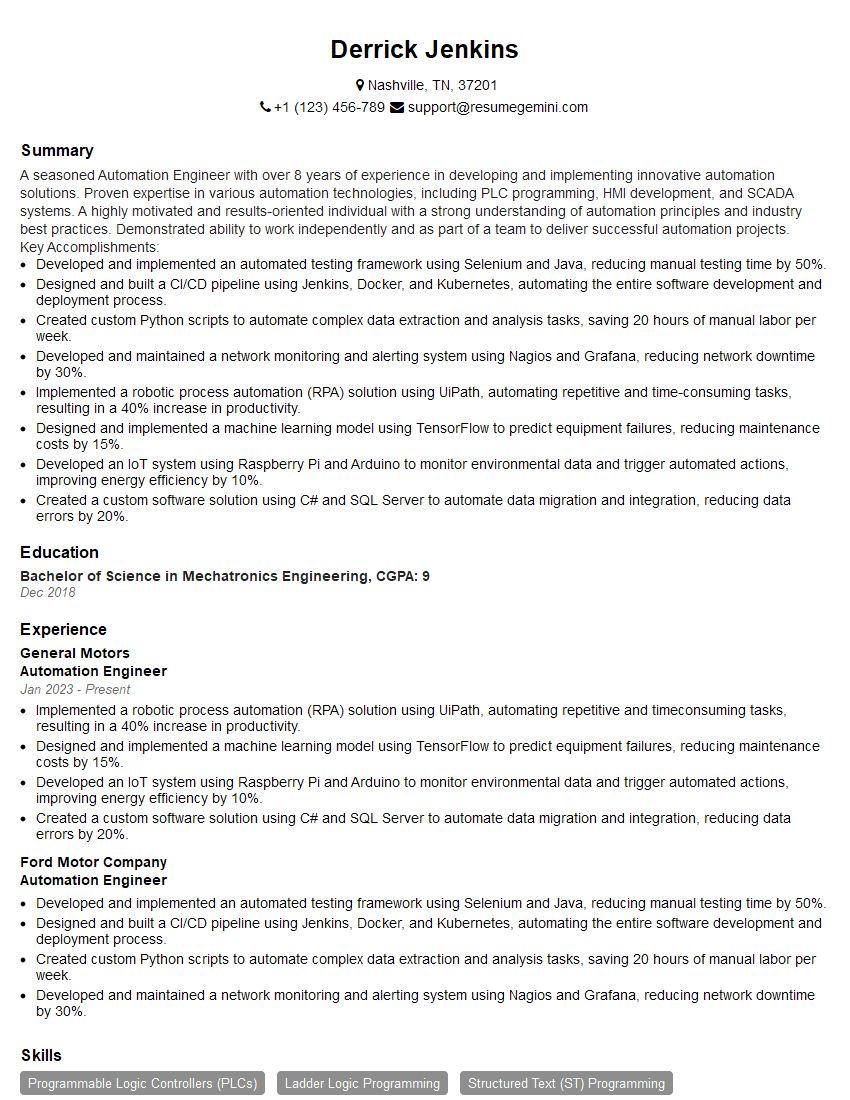
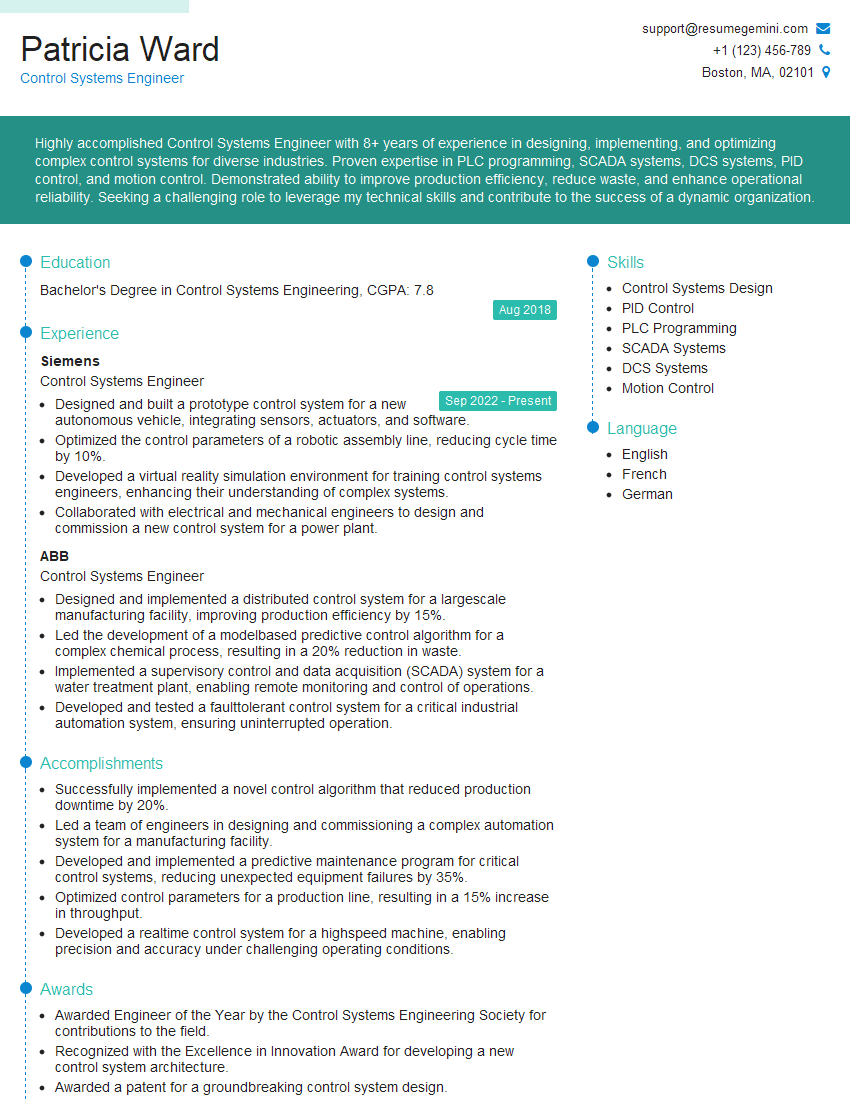
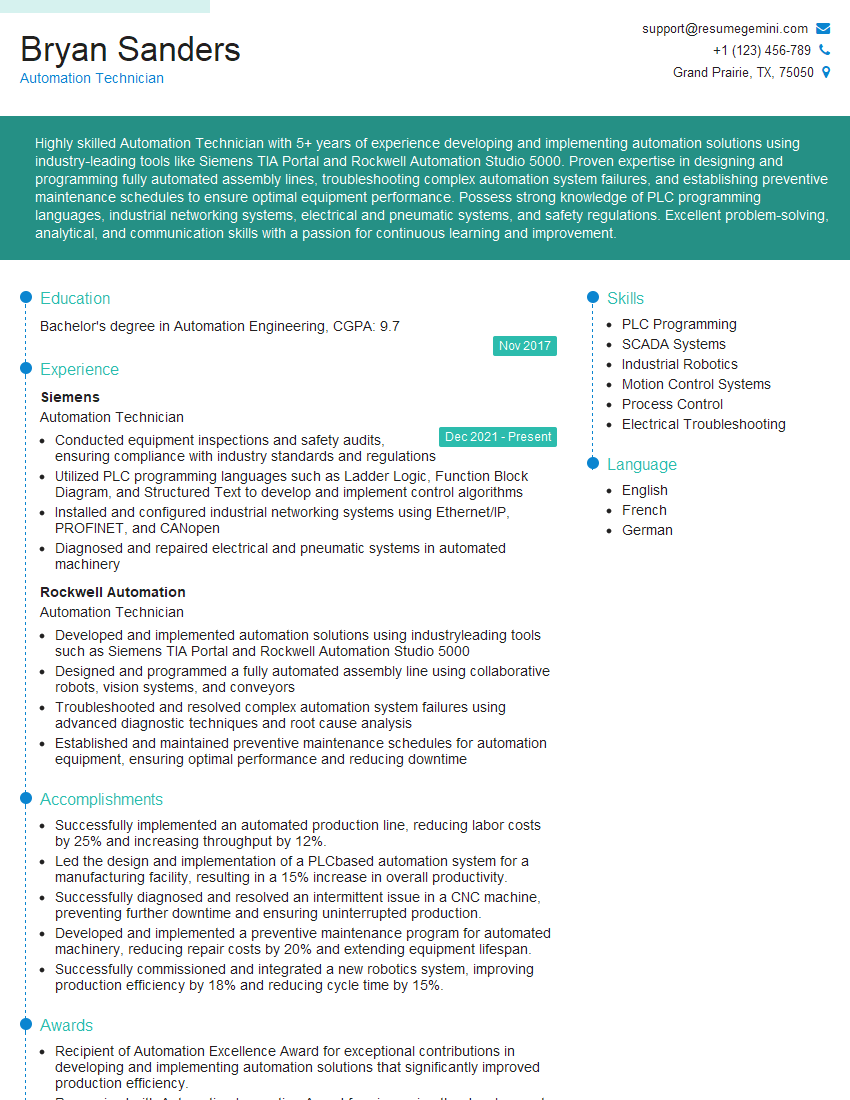
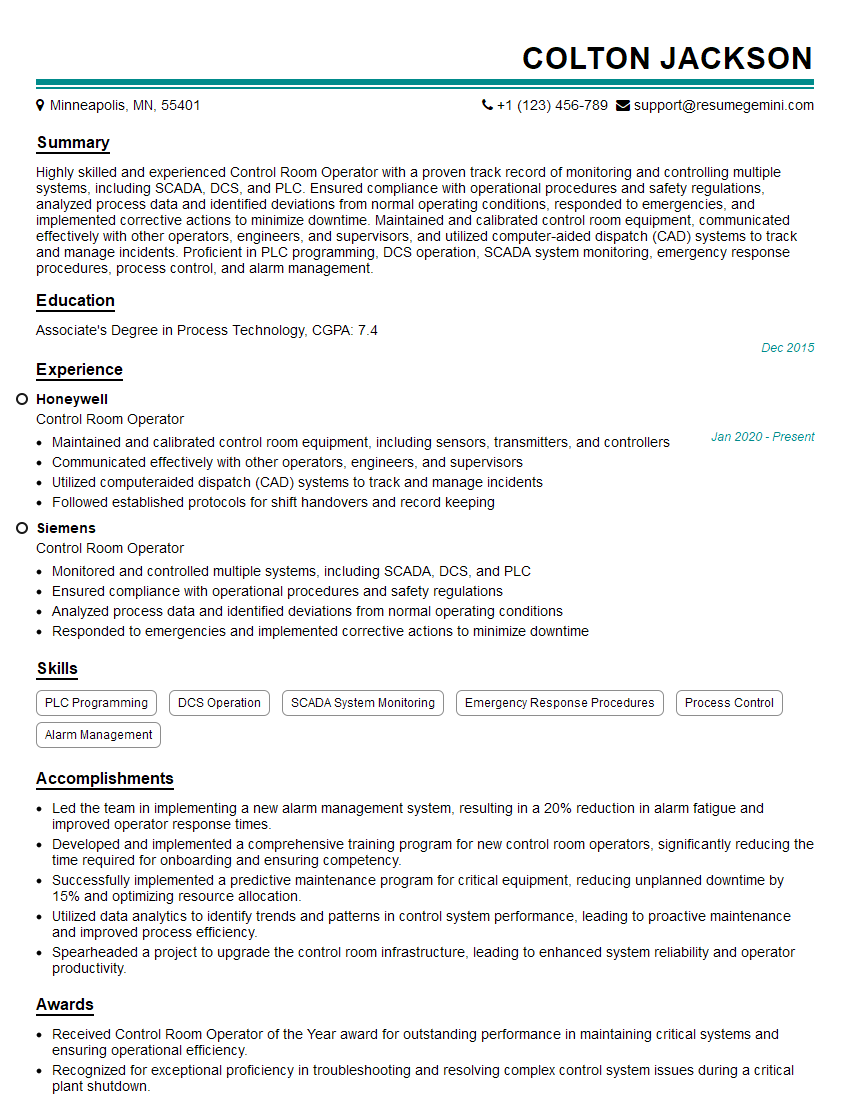
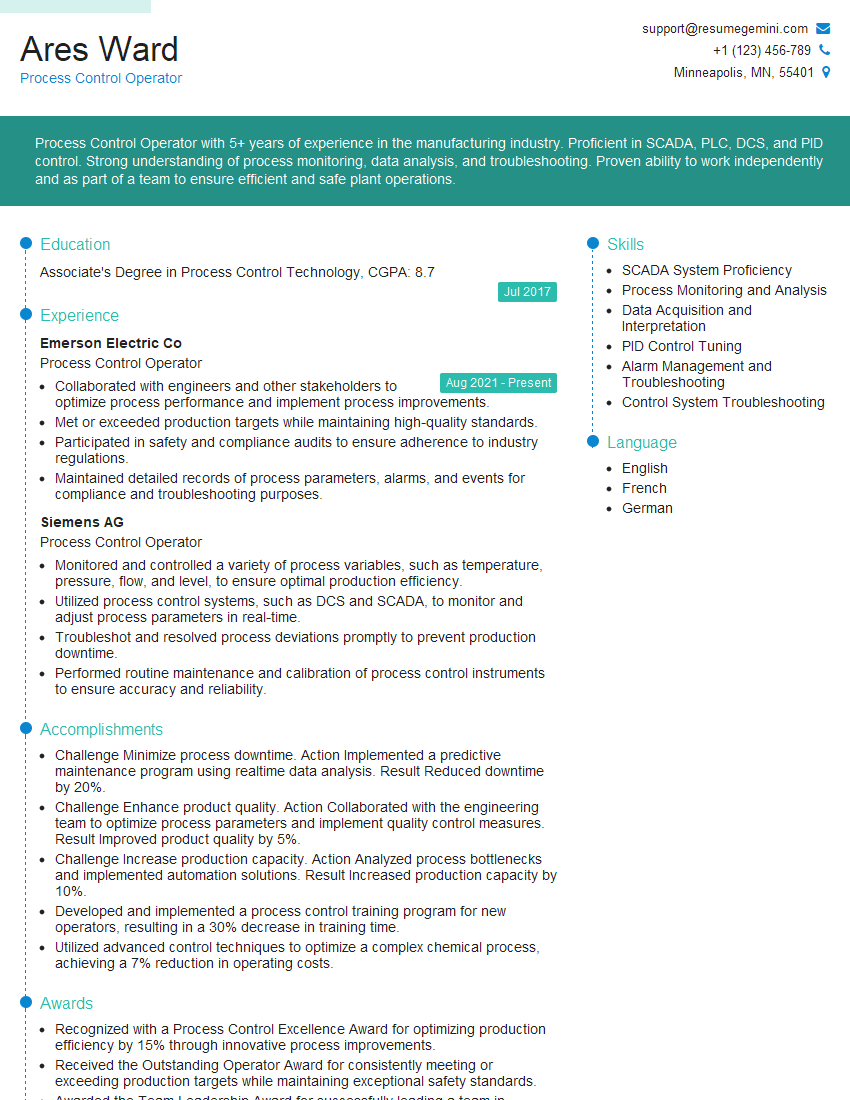
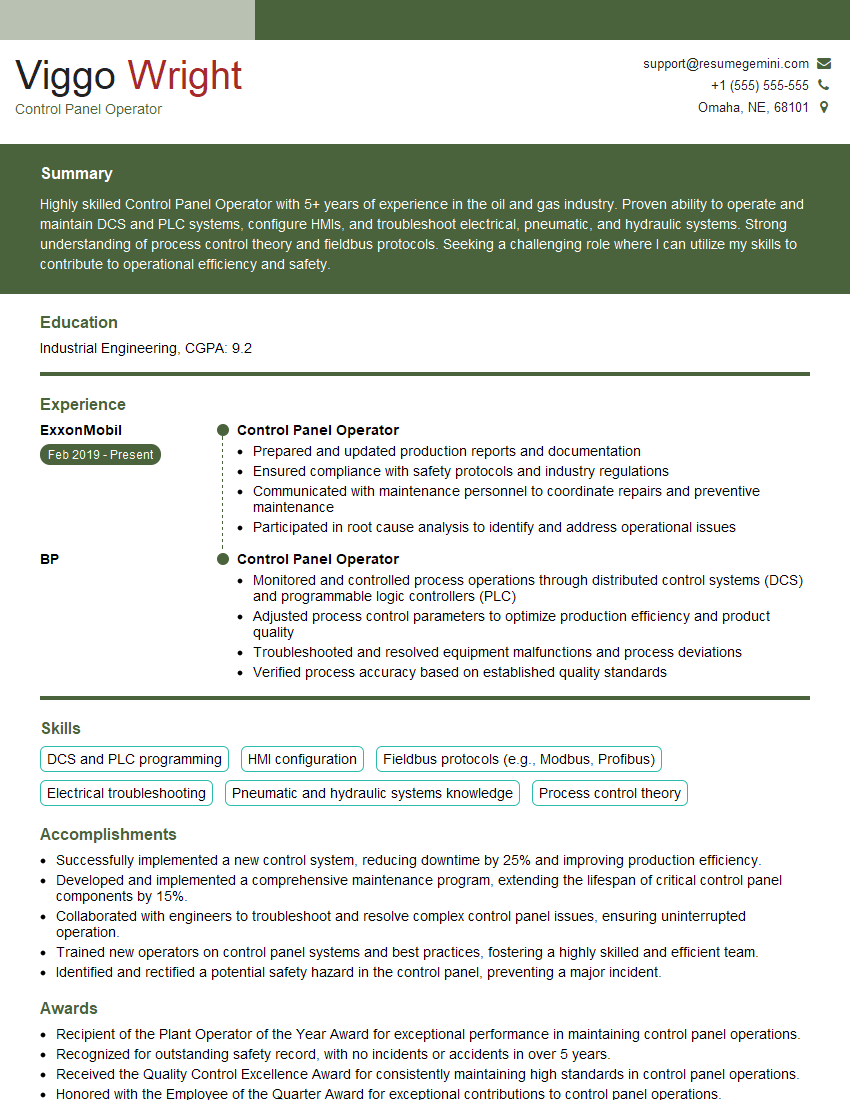
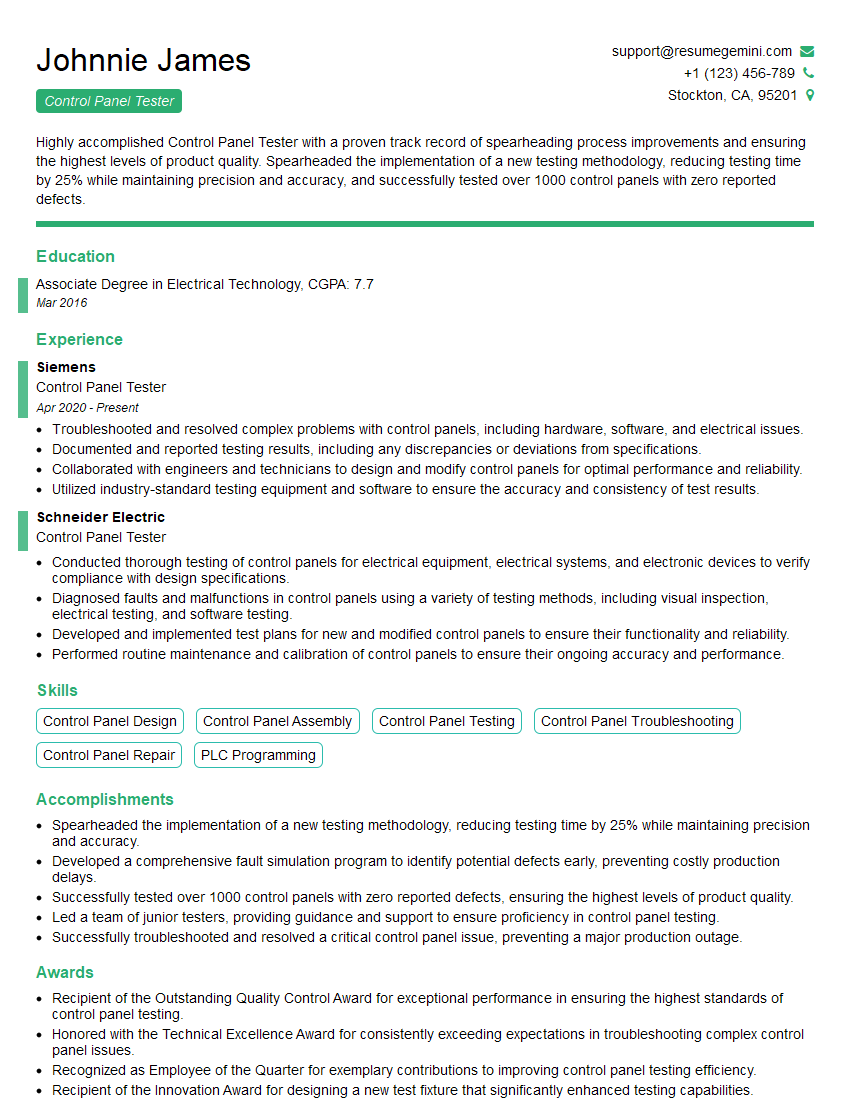
Mastering operating control panels opens doors to exciting and rewarding careers in automation, manufacturing, and process engineering. These skills are highly sought after and offer significant growth potential. To maximize your job prospects, create a strong, ATS-friendly resume that highlights your technical abilities and experience. ResumeGemini is a trusted resource to help you build a professional resume that showcases your skills effectively. Examples of resumes tailored to Operating Control Panels professionals are available to guide you. Take the next step towards your dream career today!
Explore more articles
Users Rating of Our Blogs
Share Your Experience
We value your feedback! Please rate our content and share your thoughts (optional).
What Readers Say About Our Blog
Very informative content, great job.
good