The thought of an interview can be nerve-wracking, but the right preparation can make all the difference. Explore this comprehensive guide to Operating Mailroom Machinery interview questions and gain the confidence you need to showcase your abilities and secure the role.
Questions Asked in Operating Mailroom Machinery Interview
Q 1. Describe your experience operating various types of mail sorting machines.
My experience encompasses a wide range of mail sorting machines, from basic inserters to high-speed automated systems. I’ve worked extensively with optical character readers (OCRs) that automatically sort mail based on address recognition. I’m also proficient with manual and automated letter openers, and various conveyor belt systems used to transport mail efficiently. For example, in my previous role, we utilized a Pitney Bowes IntelliSort system which significantly improved our mail processing speed and accuracy. I’m comfortable troubleshooting and maintaining different makes and models of this equipment, ensuring optimal operational efficiency. I’ve also worked with simpler machines such as manual tray sorters, providing a good understanding of the entire spectrum of mail sorting technology.
Q 2. Explain the process of preparing mail for postage.
Preparing mail for postage is a multi-step process crucial for efficient and cost-effective mailing. It begins with ensuring all mail pieces are properly addressed, using clear and legible font. We then verify the correct postage amount is calculated based on weight, size, and destination. This often involves using postage meters or franking machines, which we will discuss later. Next, we check for any inconsistencies – are all envelopes properly sealed? Is there sufficient space for any necessary barcodes or labels? Finally, we organize the mail by destination to optimize the sorting process. For bulk mailings, specific sorting guidelines, sometimes including specific tray codes, will need to be followed to streamline postal processing and potentially benefit from lower postage rates. Think of it like preparing ingredients before baking a cake; the more meticulous the preparation, the smoother the process will run.
Q 3. How familiar are you with different postage meter types and their functionalities?
I’m very familiar with various postage meter types and their functionalities. My experience includes working with both desktop and larger floor-standing models from companies like Pitney Bowes and FP Mailing. I understand the differences between different models, including their capacity, printing capabilities (e.g., printing postage, return addresses, barcodes), and connectivity options (e.g., network integration for tracking purposes). I’m also familiar with the software interfaces used to manage postage accounts, print postage labels, and generate reports. For instance, I know how to program a Pitney Bowes postage meter to automatically calculate postage based on weight and destination, and how to troubleshoot connectivity issues. I know how to order more postage when needed, and how to create reports that show how much postage has been spent. In essence, I can efficiently operate and manage a postage metering system to ensure smooth postal operations.
Q 4. What are the safety precautions you take when operating mailroom machinery?
Safety is paramount when operating mailroom machinery. Before operating any equipment, I always ensure I’ve received appropriate training and understand the machine’s operational procedures. I always wear appropriate personal protective equipment (PPE), which may include gloves to avoid paper cuts and safety glasses to protect my eyes from flying debris. Regular safety inspections of the machines themselves are also critical. I check for any loose parts, frayed wires, or obstructions before starting up, and report any issues promptly. Following manufacturer’s safety guidelines is essential. I also adhere strictly to the lockout/tagout procedures when performing maintenance or repairs to prevent accidental start-ups. It’s all about a proactive approach to ensure a safe working environment.
Q 5. How do you handle mail jams or malfunctions in mail processing equipment?
Handling mail jams or malfunctions requires a systematic approach. First, I assess the situation to understand the nature of the problem. Is it a simple paper jam or a more complex mechanical issue? If it’s a simple jam, I carefully follow the manufacturer’s instructions on how to clear it. This often involves turning the machine off, accessing the jam location carefully (avoiding getting my hands caught in moving parts), and gently removing the obstruction. For more complex malfunctions, my first step is to consult the machine’s manual or contact technical support. If necessary, I’ll temporarily switch to a backup system or manual processing to minimize disruption. Detailed record-keeping of all malfunctions and their resolution is essential for preventative maintenance and future problem-solving. For example, frequently occurring jams might indicate a need for machine adjustment or part replacement.
Q 6. Describe your experience with using franking machines.
My experience with franking machines is extensive. I’ve used various models to apply postage and imprint our company’s details on outgoing mail. This includes operating, maintaining, and troubleshooting various franking machines, ensuring accuracy and efficiency in postage application. I’m proficient in setting up and configuring franking machine settings to reflect the appropriate postage rate for different classes of mail. I also understand the importance of regularly servicing the machine to maintain its accuracy and reliability. For example, I’m adept at managing the meter’s postage account, ensuring sufficient funds are available to process mail and ordering postage as needed to avoid disruptions in mail operations. I know how to resolve common issues like ink cartridge replacements and paper jams, ensuring minimal downtime.
Q 7. What are the common maintenance procedures for mailroom equipment?
Common maintenance procedures for mailroom equipment include regular cleaning to remove dust and debris that can cause malfunctions. This includes cleaning the various belts and rollers, ensuring clear pathways for mail movement, preventing jams. Lubrication of moving parts is also essential to prevent wear and tear, extending the life of the machines. I also perform routine inspections of critical components – checking the condition of belts, rollers, sensors, and motors. Any worn or damaged parts should be replaced promptly. Following a preventative maintenance schedule outlined by the manufacturer is crucial. Regular software updates on computerized systems are essential to ensure optimal performance and to benefit from bug fixes and enhanced features. Maintaining detailed logs of all maintenance activities, including date, type of service, and parts replaced, is vital for tracking machine health and facilitating informed decision-making.
Q 8. How do you ensure the accuracy and efficiency of mail sorting and distribution?
Accuracy and efficiency in mail sorting and distribution are paramount. Think of it like a well-oiled machine – each part needs to function smoothly and precisely. We achieve this through a multi-pronged approach.
Automated Sorting Equipment: Utilizing advanced machines like optical character readers (OCR) and barcode sorters significantly speeds up the process. These machines read addresses and sort mail according to zip codes, postal codes, or other routing information, reducing manual handling and human error. For example, a large mailroom might use a high-speed sorter that can process thousands of pieces of mail per hour, significantly faster than manual sorting.
Standardized Procedures: Strict adherence to established procedures is vital. We follow a step-by-step process, from receiving the mail to its final distribution, ensuring consistency and minimizing errors. This could include regular quality checks at each stage of the process.
Regular Training and Quality Control: Ongoing training for staff on proper mail handling techniques, equipment operation, and postal regulations is crucial. Regular quality checks and audits are implemented to identify and correct any discrepancies promptly. For example, we might conduct random audits of sorted mail to ensure accuracy.
Data Management Systems: Modern mailrooms utilize sophisticated tracking software to monitor mail flow, identify potential bottlenecks, and generate reports on key performance indicators (KPIs) like processing time and accuracy. This helps us continuously optimize our processes.
Q 9. Explain your experience with different types of mail (letters, packages, parcels).
My experience encompasses a wide range of mail types, each with its own handling requirements. Think of it like a toolbox – you need the right tool for each job.
Letters: Handling letters involves high-volume processing, often utilizing automated sorters. Ensuring correct addressing and timely delivery is critical. I’m proficient in operating equipment designed specifically for high-speed letter sorting and have experience with various letter formats and sizes.
Packages: Packages require more careful handling, often involving manual intervention, especially larger or oddly shaped ones. We must ensure that fragile items are properly protected during transit. I’m familiar with different packaging materials and techniques to secure items and prevent damage. Experience includes operating conveyor belts, package weighers, and dimensioners.
Parcels: Similar to packages, parcels often require additional security measures, such as tracking and signature confirmation. I’m proficient in utilizing barcode scanners and tracking software to ensure that parcels are accurately logged and delivered. I have experience handling both domestic and international parcels and understanding relevant customs regulations.
Q 10. How do you prioritize tasks and manage workflow in a busy mailroom environment?
Prioritizing tasks and managing workflow in a busy mailroom requires a systematic approach, similar to conducting an orchestra – each section needs to play its part in harmony. I typically employ these strategies:
Prioritization Matrix: I use a prioritization matrix to categorize tasks based on urgency and importance. Time-sensitive items, such as express mail or critical documents, are prioritized over routine mail. This could be a simple visual system like a whiteboard with categorized sections for urgent, important, and less critical items.
Workflow Optimization: I constantly analyze workflow processes to identify bottlenecks and inefficiencies. This might involve streamlining routes, optimizing equipment usage, or adjusting staff assignments to ensure smooth operations. For instance, analyzing data to see if certain times of day consistently cause backups can point towards necessary adjustments.
Communication and Teamwork: Open communication with colleagues is essential to ensure everyone is informed of priorities and potential challenges. This often involves daily or shift-start briefings to outline immediate goals and address any arising issues. This collaborative approach ensures smooth and efficient operations.
Q 11. What software or systems have you used for mail tracking and management?
I’ve worked with several mail tracking and management systems, ranging from simple database programs to sophisticated enterprise-level solutions. Each system has its own strengths, but the goal is always the same: efficient tracking and management.
MailManager Pro: This software provided comprehensive tracking capabilities, allowing us to monitor mail flow from the moment it entered the facility to its final delivery. Features included barcode scanning integration, automated reporting, and real-time tracking dashboards.PostTrack: A cloud-based solution that facilitated collaboration and improved communication amongst different departments. It allowed us to generate custom reports on key performance indicators (KPIs) like delivery times and error rates.Custom Database Solutions: In smaller mailrooms, I’ve helped develop custom database systems to track mail using spreadsheet software and basic programming tools. This provided a solution tailored to specific needs and constraints.
Q 12. How familiar are you with postal regulations and guidelines?
My knowledge of postal regulations and guidelines is extensive. It’s crucial for ensuring compliance and avoiding costly errors or delays. This includes understanding:
Address Standardization: Accurate addressing is paramount for efficient delivery. I’m familiar with USPS (United States Postal Service) and international postal standards, including the use of correct abbreviations and formats.
Mailing Classes and Rates: I’m well-versed in different mailing classes (First-Class Mail, Priority Mail, etc.) and their associated rates, allowing me to optimize costs for the organization.
Packaging and Labeling Requirements: I understand the regulations concerning package size, weight, and labeling, ensuring that mail adheres to postal guidelines and arrives safely at its destination.
Hazardous Materials Regulations: I’m trained on handling hazardous materials according to postal regulations, ensuring safe transport and preventing potential incidents.
Q 13. Describe your experience with handling confidential or sensitive mail.
Handling confidential or sensitive mail requires utmost discretion and adherence to strict security protocols. Think of it like safeguarding valuable assets. My experience involves:
Restricted Access: Maintaining secure access to mailrooms and sorting areas, limiting access to authorized personnel only, and using security systems such as cameras and alarm systems.
Secure Handling Procedures: Implementing procedures to prevent unauthorized access or viewing of confidential mail, including using secure containers and designated processing areas.
Data Protection: Understanding and complying with data privacy regulations (like GDPR or HIPAA, depending on context) when handling mail containing sensitive personal information.
Chain of Custody: Maintaining a clear record of handling for sensitive mail, documenting each step of the process to track its movement and ensure accountability.
Q 14. How do you troubleshoot common problems with mailroom equipment?
Troubleshooting mailroom equipment requires a systematic approach, like diagnosing a car problem. My process involves:
Identify the Problem: First, pinpoint the issue – is it a paper jam, a malfunctioning sensor, or something else? This often involves visual inspection and operator feedback.
Consult Documentation: Refer to the equipment’s operating manuals or troubleshooting guides for common issues and solutions. This could involve checking online resources or contacting the manufacturer’s technical support.
Basic Maintenance: Perform basic checks like clearing jams, checking power connections, and inspecting belts and rollers. Preventative maintenance is key.
Escalation: If the problem persists after basic troubleshooting, escalate the issue to qualified technicians or maintenance personnel. This is crucial to prevent downtime and ensure equipment safety.
Q 15. What is your experience with using label printers and label applicators?
My experience with label printers and applicators spans several years and various models. I’m proficient in operating both thermal transfer and direct thermal printers, understanding the nuances of label material selection – from paper to synthetic materials – for different applications. I can troubleshoot common printer issues, such as label jams or print quality problems, quickly and efficiently. For example, I once resolved a recurring jam in a high-volume label printer by adjusting the print head pressure and ensuring the label roll was properly seated. My experience with applicators includes both manual and automated systems. I’m adept at configuring applicators for various label sizes and shapes, ensuring accurate and consistent application. I understand the importance of maintaining applicator accuracy to prevent mislabeling and wasted materials. In one instance, I optimized an automated applicator’s settings, resulting in a 15% increase in throughput and a reduction in mislabeled packages.
Career Expert Tips:
- Ace those interviews! Prepare effectively by reviewing the Top 50 Most Common Interview Questions on ResumeGemini.
- Navigate your job search with confidence! Explore a wide range of Career Tips on ResumeGemini. Learn about common challenges and recommendations to overcome them.
- Craft the perfect resume! Master the Art of Resume Writing with ResumeGemini’s guide. Showcase your unique qualifications and achievements effectively.
- Don’t miss out on holiday savings! Build your dream resume with ResumeGemini’s ATS optimized templates.
Q 16. How would you handle a situation where a piece of mail is damaged or lost?
Handling damaged or lost mail requires a methodical approach prioritizing accuracy and accountability. For damaged mail, I’d first assess the extent of the damage. If minor, and the contents are intact, I’d carefully repair the item using appropriate materials like tape or envelopes. If severely damaged, compromising the content, I’d document the damage using photographs and a detailed description. A damage report would be filed, notifying the sender and recipient as per established procedures. For lost mail, a thorough search of the mailroom is crucial. I’d check all sorting areas and storage locations. If unsuccessful, I’d meticulously review the mail logs to trace the item’s path. I’d subsequently contact the sender and recipient to explain the situation and initiate a claim or replacement process, adhering to company policy and legal requirements.
Q 17. Explain your understanding of different types of mail handling equipment (e.g., inserters, folders).
My understanding of mail handling equipment is comprehensive. I’m experienced with various inserters, ranging from simple manual inserters to high-speed automated systems capable of inserting multiple documents into envelopes simultaneously. I know how to program these machines to handle different document sizes and configurations, ensuring accurate insertion and preventing jams. Similarly, my experience with folders includes both simple folding machines and more complex systems that can perform multiple folds and create different finished product formats. I understand the importance of regular maintenance and cleaning to optimize performance and prevent costly downtime. For example, I know how critical proper paper feed alignment is to prevent misfeeds and jams in both inserters and folders, and can quickly diagnose and resolve these issues. My experience also includes understanding and utilizing other equipment such as franking machines, scales, and postage meters.
Q 18. Describe your experience with inventory management in a mailroom setting.
Inventory management in a mailroom is critical for efficiency and cost control. I use a combination of methods to manage inventory, including implementing a barcode system for tracking supplies. Regular stock checks are conducted to identify low stock items and prevent delays. I also employ a first-in, first-out (FIFO) system to minimize waste, especially with perishable items or those with expiration dates. I’m proficient in using inventory management software to track stock levels, order supplies, and generate reports. For example, I’ve successfully implemented a system where automated alerts are sent when stock levels reach a predetermined threshold, proactively preventing stockouts. This system resulted in a significant reduction in the cost of emergency orders.
Q 19. How do you ensure the security of mail and packages in the mailroom?
Mailroom security is paramount. We maintain a secure environment by controlling access to the mailroom, using access cards or other security measures to restrict entry to authorized personnel only. Sensitive mail is handled separately and stored securely, often in locked cabinets or designated areas. We follow strict procedures for handling confidential materials, ensuring they are not left unattended and are processed according to established protocols. Regular audits are conducted to maintain a high level of security and compliance with regulations. For example, we utilize surveillance systems to monitor activity within the mailroom and to aid in investigations if needed. Furthermore, all personnel receive training on security procedures to ensure everyone understands their role in maintaining security.
Q 20. How familiar are you with different types of postage and their costs?
I’m familiar with various postage types, including first-class mail, priority mail, express mail, and parcel post. I understand the factors that influence postage costs, such as weight, size, destination, and mail class. I use postage meters and online postage systems to calculate and apply postage accurately and efficiently. I stay updated on changes to postal rates and regulations to ensure accurate postage application and minimize costs. For instance, I can optimize postage costs by selecting the most cost-effective mail class for a given package or by utilizing bulk mailing discounts. This requires understanding different mailing options and how they meet different delivery speed and cost requirements.
Q 21. What are the key performance indicators (KPIs) you track in a mailroom?
Key Performance Indicators (KPIs) in a mailroom are essential for measuring efficiency and effectiveness. The KPIs I track include mail processing speed (pieces per hour), error rates (e.g., mis-sorted mail, mislabeled items), on-time delivery rates, and cost per piece of mail. We monitor inventory levels and supply costs as well. Regular reporting on these KPIs helps to identify areas for improvement and track progress towards efficiency goals. For instance, by analyzing error rates, we can pinpoint bottlenecks in the mailroom processes, leading to targeted improvements in training and workflow. This data-driven approach ensures that the mailroom operates smoothly and efficiently, meeting all deadlines and staying within budget.
Q 22. How would you train a new employee on mailroom procedures and equipment operation?
Training a new mailroom employee involves a structured approach combining theoretical knowledge with hands-on practice. I begin with a comprehensive overview of mailroom procedures, including sorting methods, addressing standards (e.g., using the correct USPS format), and understanding different mail classes (First-Class Mail, Priority Mail, etc.). I’d use visual aids like flowcharts and diagrams to illustrate the process.
Next, I’d provide detailed instructions on operating each piece of equipment, starting with the simpler machines like scales and postage meters. For each machine, I’d demonstrate proper operation, emphasizing safety precautions. For example, with a postage meter, I’d show how to properly load the meter, print postage, and address concerns regarding meter malfunctions. I’d then allow the trainee to practice under my supervision, providing feedback and correction as needed. More complex machinery, like inserters or folder/sealers, would be introduced progressively, with hands-on training extending over several days.
Throughout the training, I emphasize the importance of accuracy, efficiency, and adherence to postal regulations. Regular quizzes and practical assessments would evaluate their understanding and skill level. I believe in a mentoring approach, providing ongoing support and answering questions even after the initial training period.
Q 23. Describe your experience with using postage meters and scales.
I have extensive experience using various postage meters and scales, ranging from basic mechanical models to sophisticated digital systems. My proficiency includes loading postage, printing postage labels, troubleshooting common issues (like paper jams or incorrect postage calculations), and performing regular maintenance checks. For instance, I’m familiar with Pitney Bowes and FP Mailing Systems postage meters, and I understand how to manage their different features, such as accounting functions and postage reconciliation reports.
Regarding scales, I’m skilled in using both parcel scales and letter scales to accurately weigh mailpieces. This ensures correct postage is applied and prevents any penalties from incorrect weight calculations. I understand the importance of using the right type of scale for different mail classes and package sizes, and I am adept at calibrating scales to ensure accurate measurements. In a previous role, I successfully identified a faulty scale through regular calibration checks, preventing significant postage overcharges.
Q 24. How do you stay updated on changes in postal regulations or technologies?
Staying current with postal regulations and technologies is critical in this field. I achieve this through several avenues. Firstly, I actively subscribe to and regularly review updates from the United States Postal Service (USPS) website, focusing on announcements concerning rate changes, new services, and any modifications in regulations. I also attend industry workshops and seminars whenever possible to learn about new technologies and best practices.
Secondly, I actively participate in professional networks and online forums, engaging with other mailroom professionals to share information and discuss recent developments. This allows me to tap into a collective knowledge base and stay abreast of emerging trends. For example, I recently learned about improved software for streamlining mailroom operations through online forums focused on postal industry advancements.
Finally, I prioritize continuous learning by exploring industry publications and journals that cover postal technology and regulations. This combination of proactive information gathering and active professional engagement ensures I am always well-informed and ready to adapt to changing circumstances.
Q 25. How would you handle a situation with a high volume of mail?
Handling high-volume mail requires a methodical and organized approach. My strategy involves prioritizing mail based on its urgency and delivery requirements. For instance, I’d first sort and process time-sensitive mail like Express Mail or certified mail. I would then prioritize mail based on mail class and destination.
To handle the volume efficiently, I’d leverage all available resources and technology. This includes using mail-sorting equipment, such as automated inserters and sorters, to maximize throughput. I’d also assess if additional staffing support is needed, especially during peak periods, and proactively request assistance if necessary. Furthermore, I’d ensure the mailroom workspace is optimally organized to facilitate efficient processing, including clear labeling and designated areas for each mail class.
Throughout the high-volume period, I’d meticulously monitor the progress and identify any bottlenecks. This might involve adjusting sorting methods or equipment configurations to optimize workflow. Open communication with colleagues and supervisors is crucial, so they are aware of the workload and any potential delays.
Q 26. What are your strengths and weaknesses regarding mailroom operation?
My strengths lie in my meticulous attention to detail, my proficiency in operating various mailroom machines, and my ability to work efficiently under pressure. I pride myself on maintaining accuracy and adhering strictly to postal regulations, which ensures timely and compliant mail delivery. I am also a quick learner and adapt well to new technologies and procedures, as demonstrated when our mailroom implemented a new automated inserter last year; I mastered its operation quickly.
My area for improvement is delegation. While I’m highly organized and detail-oriented, I sometimes find it challenging to delegate tasks effectively, preferring to ensure everything is done to my own exacting standards. I am actively working to overcome this weakness by practicing improved communication and trust-building with colleagues, allowing them to take ownership of certain tasks.
Q 27. What are your salary expectations for this role?
My salary expectations are commensurate with my experience and skills within the range of $[Lower Bound] to $[Upper Bound] annually. This range considers the responsibilities of this position, the compensation levels for similar roles in this region, and my proven track record of success in mailroom management.
Q 28. Why are you interested in this position?
I am highly interested in this position due to several factors. Firstly, I am drawn to the opportunity to contribute my expertise in mailroom operations to a reputable organization. Your company’s reputation for efficiency and commitment to excellent service aligns perfectly with my professional values. Secondly, I am excited by the prospect of working with advanced mailroom technology and further developing my skills in this field. Finally, the opportunity to work within a dynamic and collaborative team is very appealing. I believe my skills and experience make me a valuable asset, and I am confident in my ability to make significant contributions to your team’s success.
Key Topics to Learn for Operating Mailroom Machinery Interview
- Machine Operation & Maintenance: Understanding the functionalities of various mailroom machines (e.g., inserters, sorters, folders, franking machines) and performing basic maintenance tasks.
- Safety Procedures & Regulations: Adhering to safety protocols while operating machinery, including proper handling of equipment and materials to prevent accidents.
- Mail Processing Workflow: Familiarity with the entire mail processing workflow, from receiving and sorting mail to final distribution and dispatch. This includes understanding different mail classes and their handling requirements.
- Troubleshooting & Problem-Solving: Identifying and resolving common machine malfunctions, using troubleshooting guides and reporting issues effectively.
- Quality Control & Accuracy: Ensuring accurate and efficient mail processing, minimizing errors and maintaining high quality standards.
- Postal Regulations & Best Practices: Understanding relevant postal regulations and industry best practices for efficient and compliant mail handling.
- Inventory Management: Maintaining stock levels of essential supplies, such as envelopes, labels, and ink cartridges.
- Data Entry & Record Keeping: Accurate data entry of mail volumes, tracking shipments, and maintaining detailed records of mailroom activity.
Next Steps
Mastering Operating Mailroom Machinery opens doors to a stable and rewarding career with opportunities for advancement. A strong understanding of these machines and related processes is highly valued by employers. To significantly increase your job prospects, focus on creating an ATS-friendly resume that highlights your skills and experience effectively. ResumeGemini is a trusted resource that can help you build a professional and impactful resume. We provide examples of resumes tailored to Operating Mailroom Machinery positions to guide you through the process. Invest time in crafting a compelling resume—it’s your first impression on potential employers.
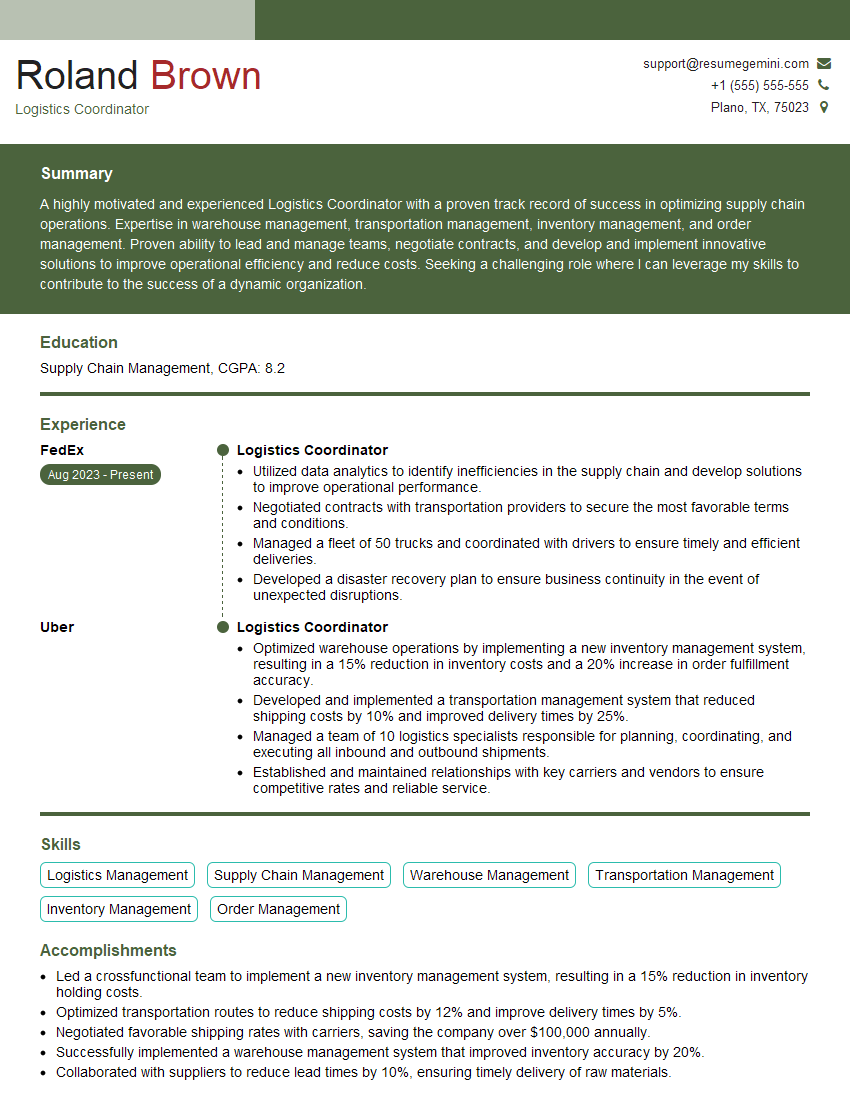
Logistics Coordinator Resume Sample
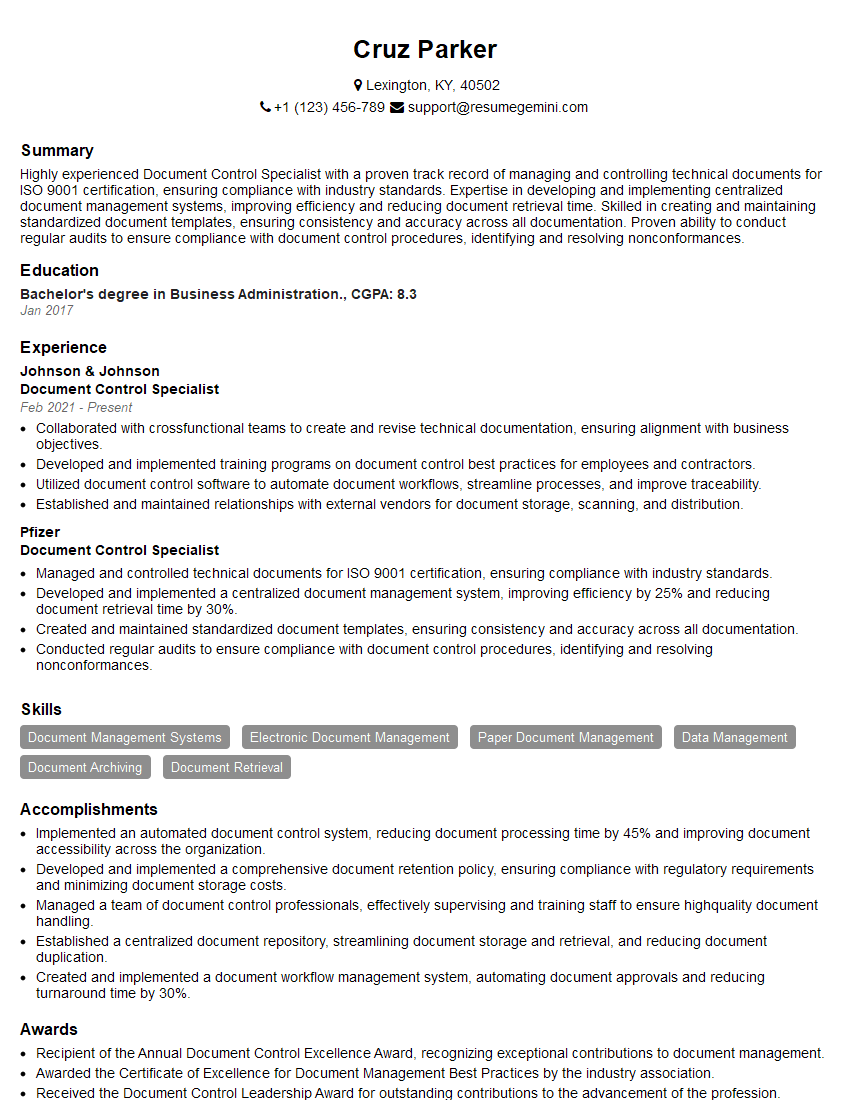
Document Control Specialist Resume Sample
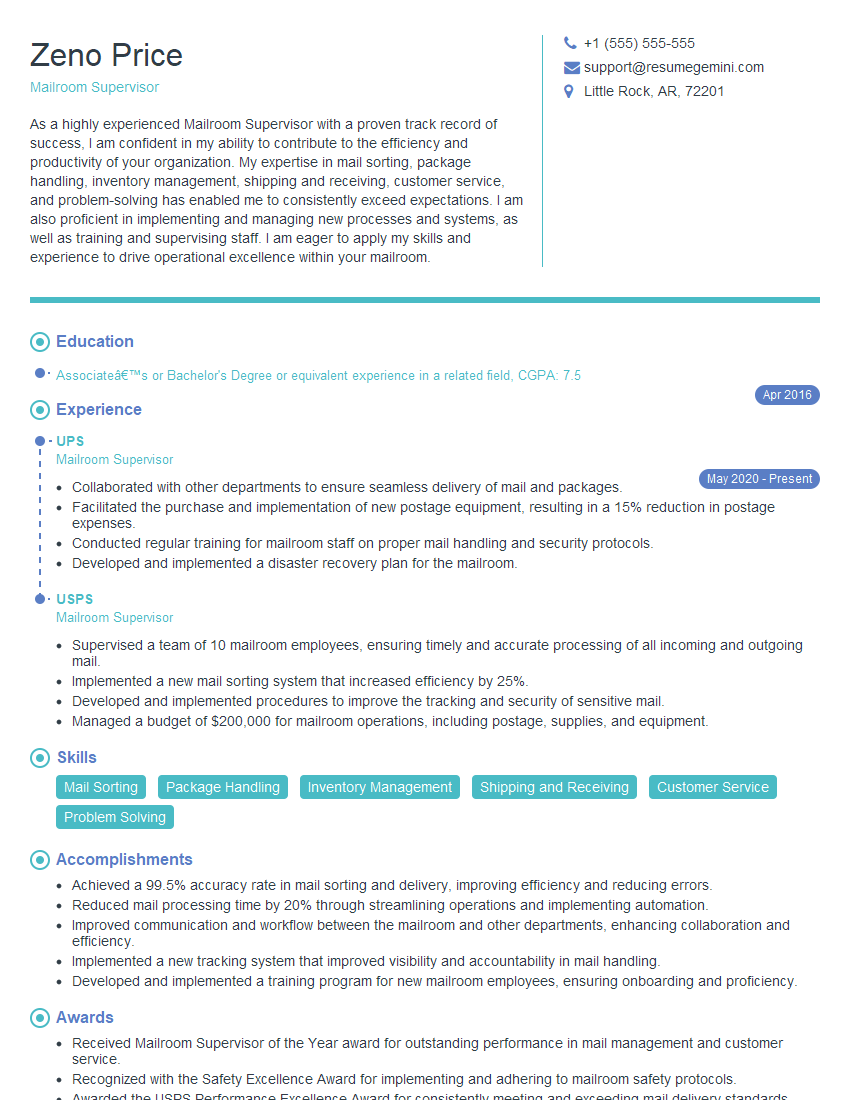
Mailroom Supervisor Resume Sample
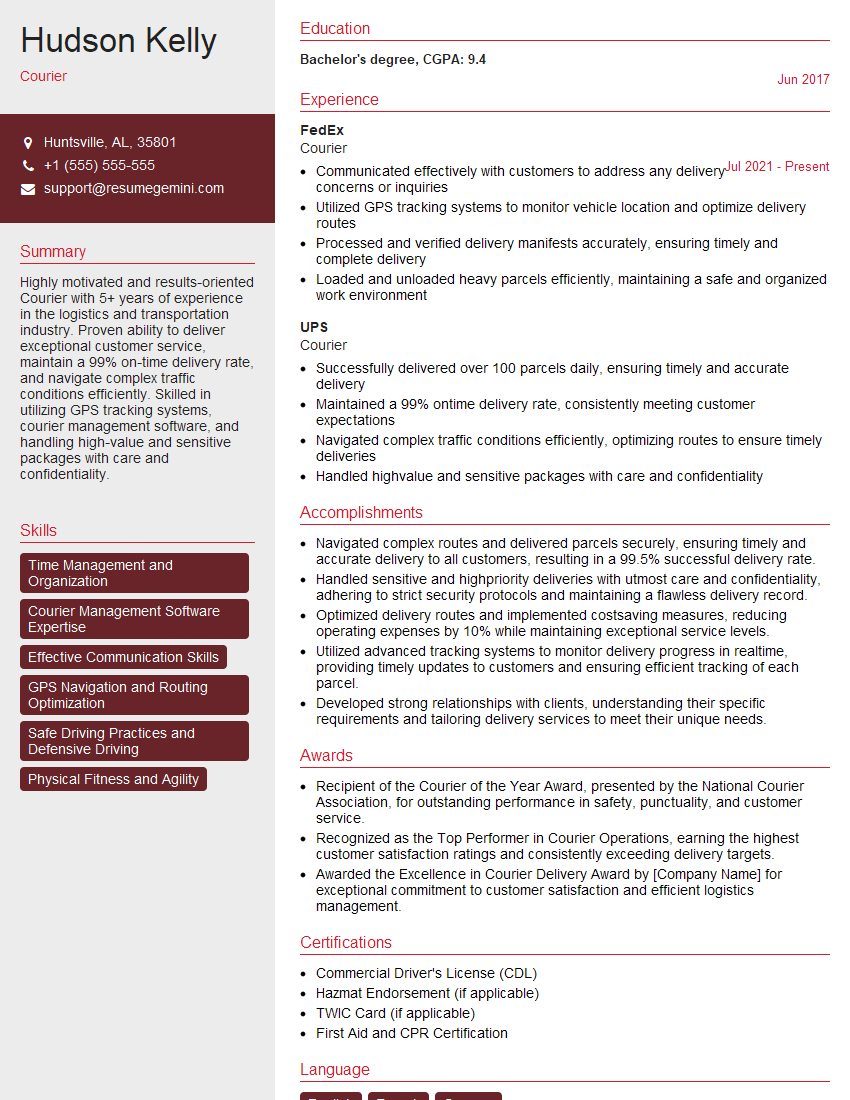
Courier Resume Sample
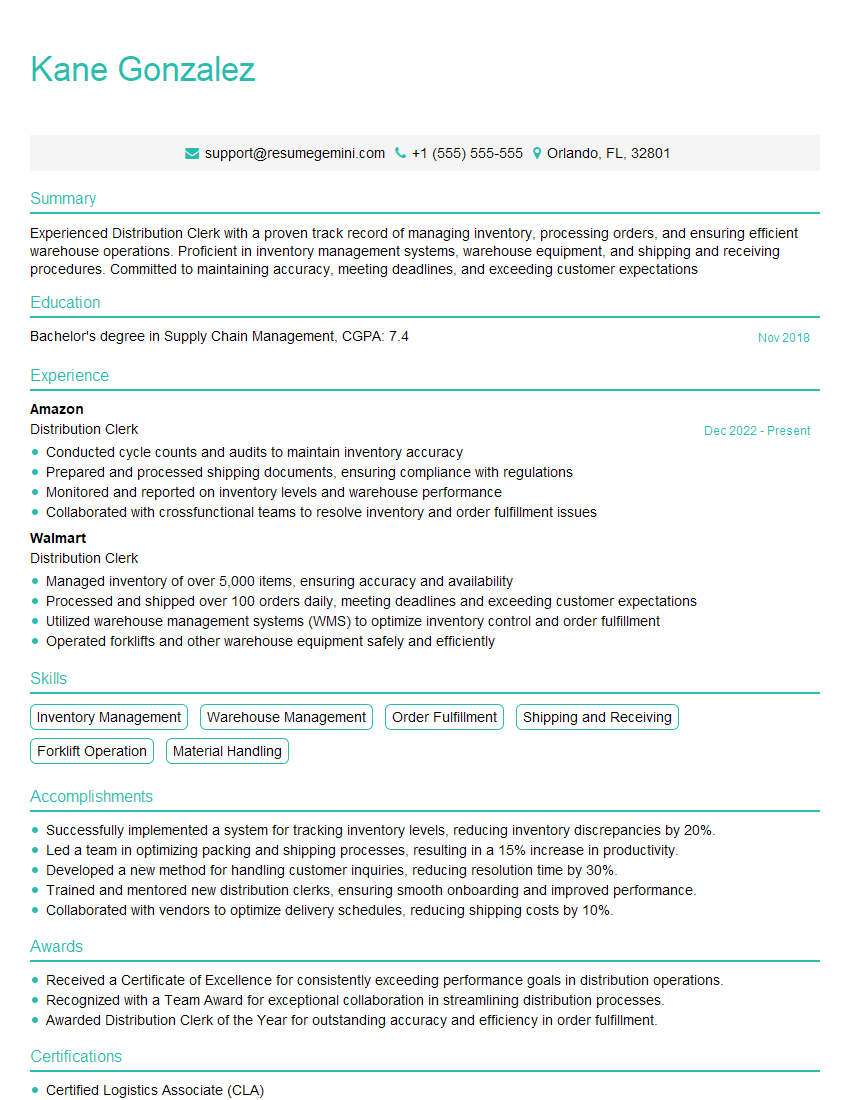
Distribution Clerk Resume Sample
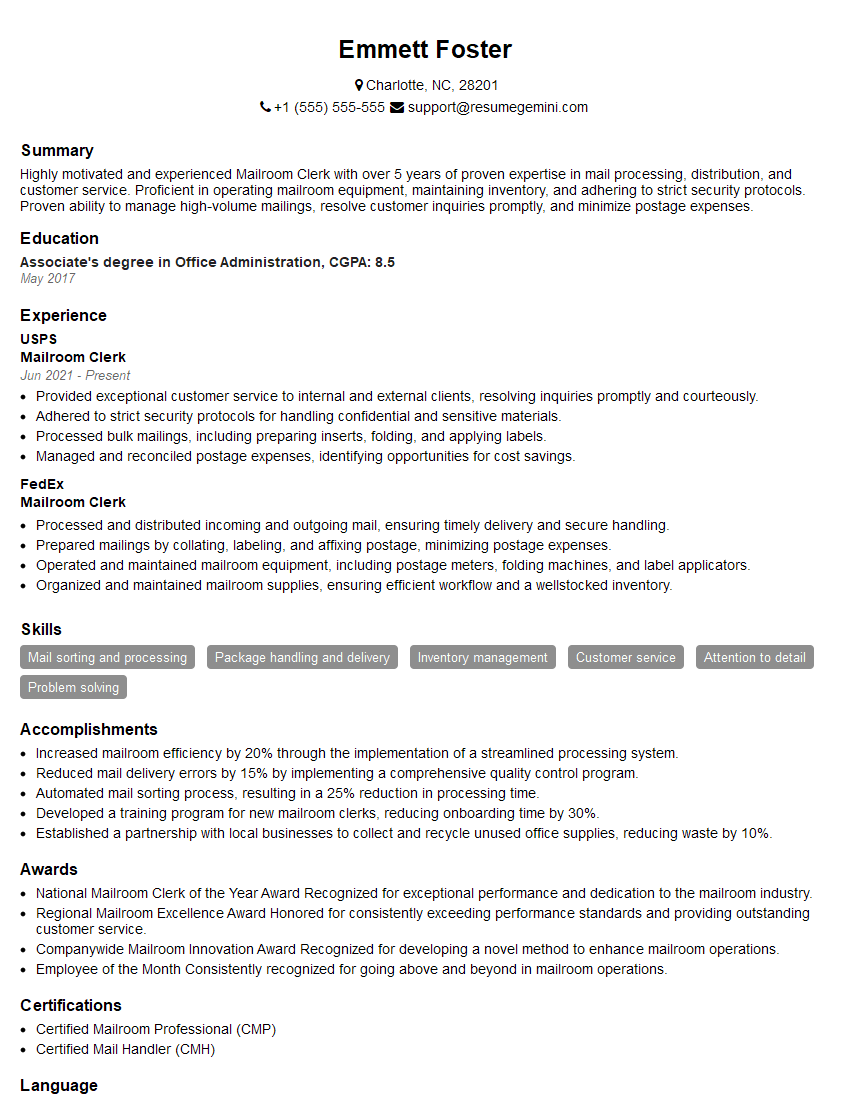
Mailroom Clerk Resume Sample

Postal Clerk Resume Sample
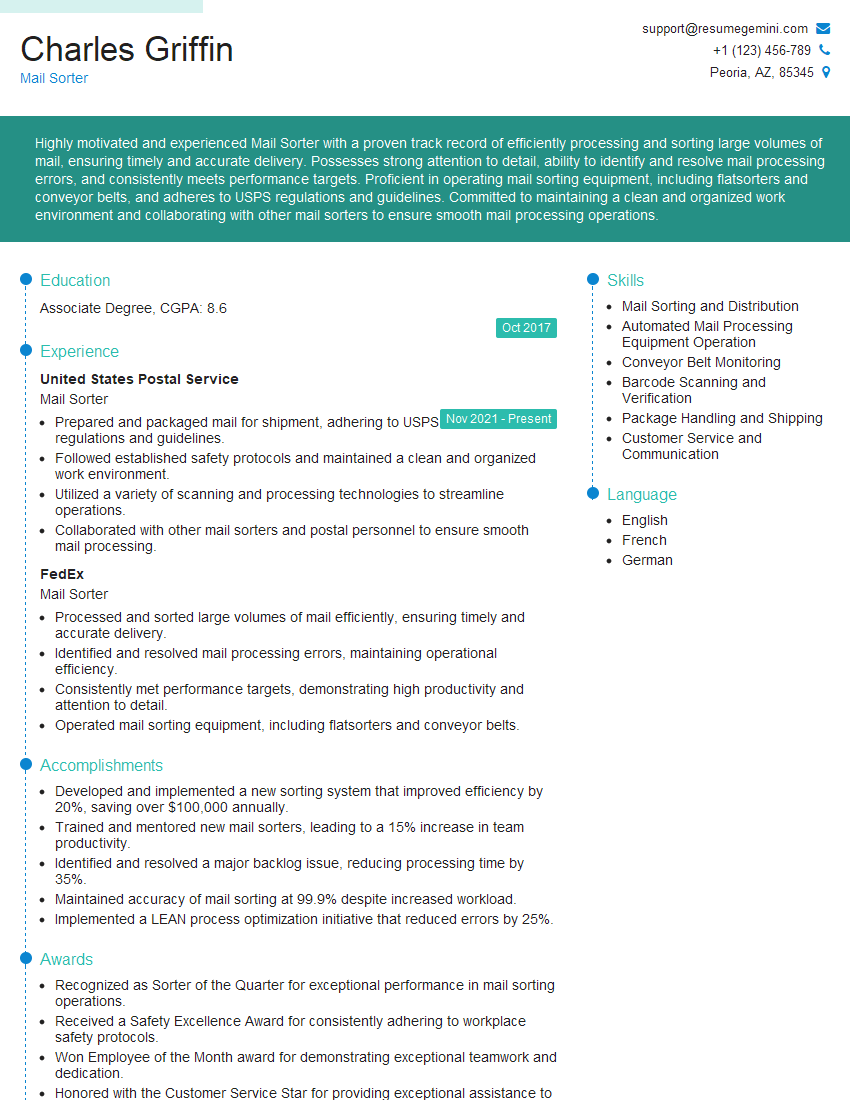
Mail Sorter Resume Sample

Shipping and Receiving Clerk Resume Sample
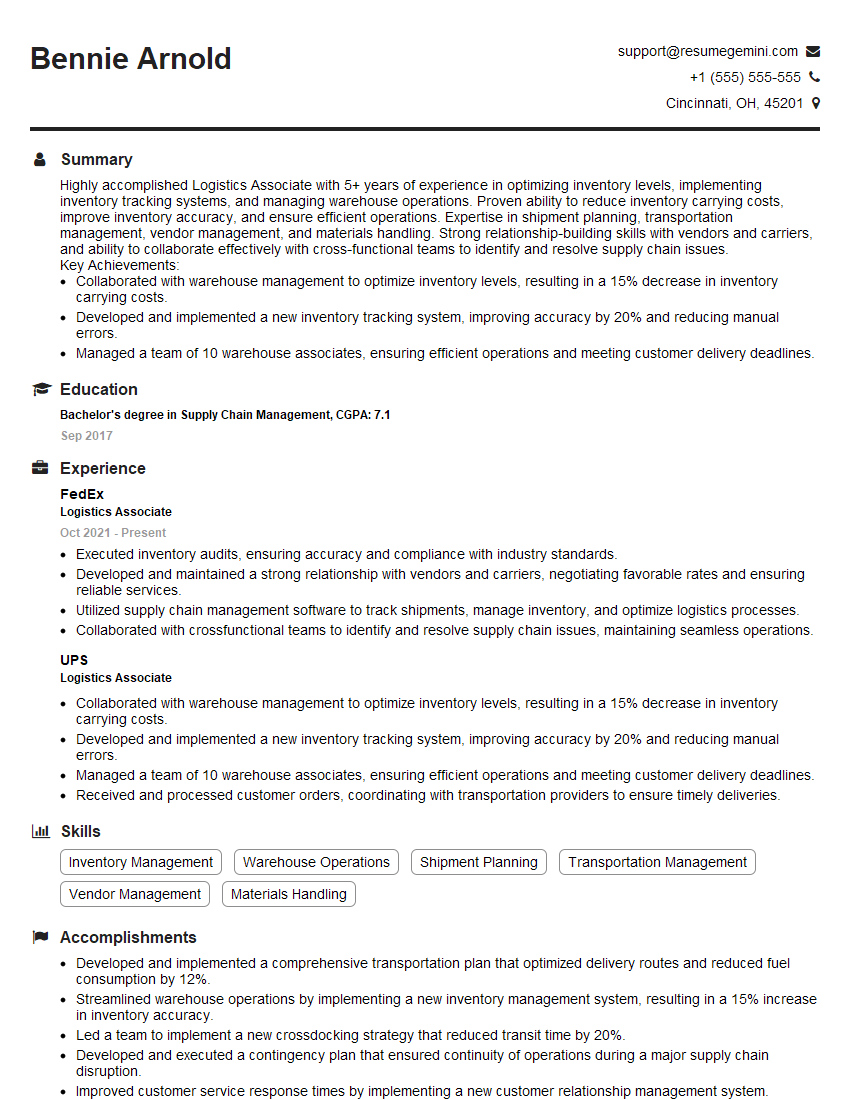
Logistics Associate Resume Sample
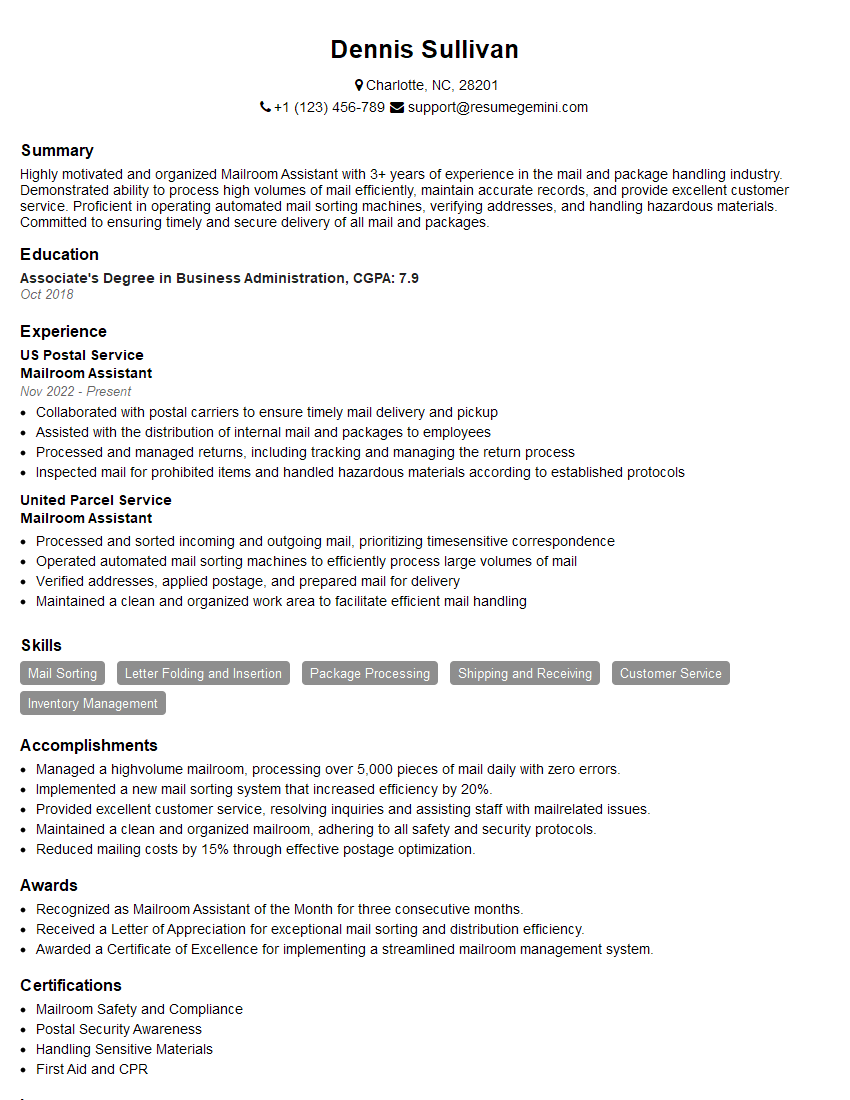
Mailroom Assistant Resume Sample
Explore more articles
Users Rating of Our Blogs
Share Your Experience
We value your feedback! Please rate our content and share your thoughts (optional).
What Readers Say About Our Blog
Very informative content, great job.
good