Interviews are opportunities to demonstrate your expertise, and this guide is here to help you shine. Explore the essential Operating Telehandlers interview questions that employers frequently ask, paired with strategies for crafting responses that set you apart from the competition.
Questions Asked in Operating Telehandlers Interview
Q 1. What are the different types of telehandlers and their applications?
Telehandlers, also known as telescopic handlers, come in various types, each suited for specific applications. The main differentiators are size, engine power, and lifting capacity.
- Agricultural Telehandlers: These are typically smaller and more agile, designed for tasks like feeding livestock, moving hay bales, and handling manure. Think of them as the workhorses of the farm.
- Industrial Telehandlers: Larger and more powerful, these machines are used in construction, warehousing, and material handling in general. They can lift heavier loads to greater heights.
- Rough Terrain Telehandlers: Built for challenging environments, these feature enhanced off-road capabilities with features like four-wheel drive and increased ground clearance. These are ideal for construction sites or uneven terrain.
- Rotating Telehandlers: These models offer the ability to rotate the boom 360 degrees, providing unparalleled versatility in placing materials precisely. This is invaluable on construction sites where precise placement is critical.
The choice of telehandler depends entirely on the specific needs of the job. A farmer will prioritize maneuverability and smaller footprint, while a construction company will prioritize lifting capacity and reach.
Q 2. Explain the pre-operational checks you perform on a telehandler.
Pre-operational checks are crucial for safety and operational efficiency. Think of it as a vital medical checkup before surgery for the machine. My checklist always includes:
- Visual Inspection: A thorough check for any visible damage to the boom, tires, hydraulic lines, and other components. Look for leaks, cracks, or loose parts.
- Fluid Levels: Checking the levels of engine oil, hydraulic fluid, coolant, and fuel is essential. Low levels can lead to catastrophic failure.
- Tire Pressure: Proper tire inflation is critical for stability and preventing tire damage. Under-inflation can cause instability, while over-inflation can cause premature wear.
- Hydraulic System Test: Checking the responsiveness of the hydraulics—operating the boom and attachments to ensure smooth movement and the absence of leaks—is crucial.
- Brakes and Steering: Testing the functionality of the brakes and steering system is vital for safe operation.
- Safety Devices: Ensuring the proper functioning of the seatbelt, lights, horn, and emergency shut-off is paramount for safety.
- Documentation Review: Checking the load charts and any recent maintenance records is a crucial step to identify any potential restrictions.
By diligently following this checklist, I significantly reduce the risk of accidents and ensure the telehandler is operating at its peak performance.
Q 3. Describe the correct procedure for attaching and detaching attachments.
Attaching and detaching attachments is a potentially hazardous operation requiring precision. Always consult the manufacturer’s manual for specific instructions. The general procedure involves:
- Secure the Telehandler: Engage the parking brake and ensure the telehandler is on a level surface.
- Lower the Boom: Lower the boom to a safe and accessible position.
- Engage Attachment Locking Mechanisms: Most attachments use a quick-attach system. This usually involves pins or hydraulic locking mechanisms. Carefully align the attachment with the mounting points and engage the locking pins firmly. Double-check everything is locked before proceeding.
- Test the Attachment: Before lifting any load, test the attachment’s functionality by gently raising and lowering the boom and cycling the attachment’s function (if applicable).
- Detaching: Reverse the process carefully. Ensure the attachment is lowered and the hydraulic lines are disconnected or pressure is released before unlocking the quick-attach system.
Never attempt to force an attachment, and always ensure that the attachment is securely locked before operation. A poorly attached attachment is an accident waiting to happen. I always remind my team to double-check, especially in high-pressure situations.
Q 4. How do you ensure the stability of a telehandler during operation?
Maintaining telehandler stability is paramount for safety. Here’s how I ensure it:
- Load Chart Awareness: Always refer to the load chart for the specific telehandler and attachment being used. This chart specifies the maximum safe load at various boom extensions and heights.
- Outrigger Deployment: Using outriggers significantly increases stability, especially when working with heavy loads or at maximum reach. Always extend the outriggers fully and ensure they’re firmly seated on a stable surface.
- Ground Conditions: Always assess the ground conditions before operation. Soft or uneven ground can compromise stability. Avoid operating on slopes or unstable surfaces.
- Smooth Operation: Avoid jerky movements when operating the boom. Smooth and controlled movements prevent sudden shifts in the center of gravity, which could lead to tipping.
- Load Centering: Center the load as much as possible to maintain a low center of gravity. Off-center loads significantly reduce stability.
- Wind Conditions: Be mindful of wind speeds. High winds can significantly impact stability, especially at height. Avoid operation in high-wind conditions.
Remember, even small errors can lead to catastrophic consequences. Following these steps diligently helps avoid costly accidents and ensures jobsite safety.
Q 5. What are the load capacity limitations of a telehandler and how are they determined?
Load capacity limitations are crucial safety factors for telehandlers. These limitations are determined by several factors and are clearly defined in the manufacturer’s load chart.
These charts specify the maximum weight the machine can lift safely at different boom extensions and heights. For instance, the maximum lifting capacity will be significantly lower when the boom is fully extended compared to when it’s retracted. This is due to the increased moment arm (distance from the pivot point) creating more stress on the machine.
The load capacity is determined through rigorous testing by the manufacturer, considering factors like boom strength, chassis design, and hydraulic system capacity. These charts are not to be disregarded, they are the only reliable guide for safe operation.
Factors that affect load capacity include:
- Boom Extension: The further the boom is extended, the less weight it can lift.
- Boom Angle: Lifting to higher points reduces load capacity.
- Attachment Weight: The weight of the attachment itself reduces the available capacity.
- Ground Conditions: Unstable ground will further decrease the actual load capacity.
Always consult the load chart specific to your machine before lifting any load.
Q 6. How do you calculate the safe working load for different attachments?
Calculating the safe working load (SWL) for different attachments requires careful consideration of several factors. It’s not a simple calculation, but rather a process guided by the manufacturer’s specifications.
The primary source for SWL is the telehandler’s load chart, which already accounts for the machine’s structural limitations at different boom positions. This load chart usually provides the SWL for a standard bucket or hook. If you are using a different attachment, you must account for the weight of the attachment itself.
Example: Let’s say the load chart shows a SWL of 5,000 kg at a specific boom extension. If your attachment (e.g., a pallet fork) weighs 200kg, your adjusted SWL becomes 4,800 kg (5,000 kg – 200 kg).
Important Note: This is a simplified example. Always consult the manufacturer’s guidelines for specific instructions on calculating SWL for various attachments. Some attachments have their own SWL limitations that are lower than the telehandler’s maximum lifting capacity. Always use the most restrictive SWL for safe operation.
Q 7. Explain the different types of outriggers and their purpose.
Outriggers are crucial for enhancing the stability of a telehandler, especially when lifting heavy loads at full extension. Different types exist, each with its purpose.
- Standard Outriggers: These are the most common type and are typically hydraulically powered. They extend outward from the chassis, providing a wider base of support.
- Sliding Outriggers: These offer more versatility, as they can slide along a track on the chassis, allowing for adjustment to suit the ground conditions or the position of the load. This is advantageous on uneven terrain.
- Variable-Width Outriggers: These can adjust their width, giving operators the option to choose between maximum stability (wider stance) or a smaller footprint for maneuvering in tighter spaces.
- Integrated Outriggers: These are built into the chassis of the machine, offering a streamlined design. While offering convenience, they may not provide the same level of stability as other types.
The purpose of all outrigger types is to significantly increase the stability of the telehandler, allowing for heavier loads and greater reach. Always ensure the outriggers are fully extended and securely locked before commencing work.
Q 8. What are the safety regulations and procedures you must follow while operating a telehandler?
Operating a telehandler safely requires adherence to a strict set of regulations and procedures. These prioritize preventing accidents and protecting both the operator and those around them. Before even starting the machine, a thorough pre-operational check is crucial. This involves inspecting the tires, hydraulics, lights, and all safety features like the horn and seatbelt to ensure they are functioning correctly. Then, understanding the terrain is paramount; uneven ground or slopes need careful assessment and potentially slower operation.
- Personal Protective Equipment (PPE): Always wear a seatbelt, safety helmet, high-visibility clothing, and appropriate footwear.
- Load Charts: Strictly adhere to the telehandler’s load chart, understanding the limitations based on the load’s weight, height, and the machine’s reach. Never exceed the maximum lifting capacity.
- Safe Lifting Techniques: Lift smoothly and slowly, avoiding jerky movements that could destabilize the machine or the load. Always keep the load close to the machine and within the operational range.
- Ground Conditions: Assess the ground for stability before lifting or moving heavy loads. Avoid lifting on soft ground, uneven surfaces, or near slopes.
- Awareness of Surroundings: Maintain constant awareness of your surroundings, including other workers, pedestrians, and obstacles. Use appropriate signaling and communication to ensure everyone’s safety.
For example, on a recent job site, I refused to lift a load that was slightly beyond the manufacturer’s specified limits, even though the project manager was pushing for it. Prioritizing safety over schedule is always the right choice.
Q 9. How do you handle emergency situations, such as equipment malfunction or accidents?
Emergency situations demand immediate and decisive action. My training emphasizes a systematic approach. The first step is to immediately stop the machine and assess the situation. If it’s an equipment malfunction, like a hydraulic leak, I would turn off the engine, engage the parking brake, and alert my supervisor or the site manager immediately. For example, if I detected a hydraulic fluid leak, I would follow the company’s procedures for reporting this, ensuring that the area was secured until the leak could be repaired.
In case of an accident, after ensuring personal safety, I’d prioritize the safety of anyone involved, administering first aid if qualified and calling emergency services. I would then secure the telehandler, preventing further incidents, and cooperate fully with any investigations that follow. Accurate reporting is vital. My experience includes dealing with a situation where a load slipped; I immediately stopped the machine, called for assistance, and documented the incident following company protocol, which included taking pictures and filling out the required reports.
Q 10. Describe your experience with different types of terrain and their impact on telehandler operation.
Different terrains significantly impact telehandler operation, demanding adjustments in speed, technique, and safety protocols. Operating on level, firm ground is the easiest. However, uneven surfaces like rough terrain or slopes require significantly more caution. I always choose a lower speed on uneven surfaces, reduce the load size if needed, and use extra care to keep the machine stable and balanced.
- Soft Ground: Operating on soft ground increases the risk of the machine getting stuck or tipping. I would choose a wider stance and reduce speed drastically or avoid lifting completely.
- Slopes: Operating on slopes requires extra caution to prevent tipping. I would avoid excessive extension of the boom and operate with the machine angled appropriately to minimize risk. I would never work on slopes exceeding the machine’s limits.
- Uneven Surfaces: Requires careful maneuverability to maintain stability. Slow speed and precise movements are critical.
For instance, during a construction project on a hillside, I carefully planned each lift, choosing the most stable route and ensuring adequate counterbalance for the load and the incline angle. Understanding the terrain’s limitations is as crucial as knowing the machine’s.
Q 11. How do you maintain a telehandler’s operational efficiency and prevent breakdowns?
Maintaining a telehandler’s operational efficiency and preventing breakdowns requires a proactive and diligent approach. This involves a combination of preventive maintenance and operator awareness. Regular inspections are key, checking everything from tire pressure and fluid levels to the boom’s movement and the integrity of the hydraulic system.
- Daily Checks: These include checking fluid levels (hydraulic oil, engine oil, coolant), tire pressure, and visual inspection for any damage or leaks.
- Scheduled Maintenance: Following the manufacturer’s recommended maintenance schedule for oil changes, filter replacements, and more involved inspections is crucial. These are often time-based or usage-based, depending on the machine and its application.
- Operator Awareness: Knowing the sounds and behavior of the machine is critical. Unusual noises, vibrations, or fluid leaks should be reported immediately.
- Cleanliness: Regularly cleaning the machine helps to identify potential problems early and also prevents wear and tear from dirt and debris.
For example, I noticed a slight squealing noise in the hydraulic system during my daily check. Reporting this immediately allowed for a timely repair, avoiding a potential major breakdown later on.
Q 12. What are the common causes of telehandler accidents and how can they be prevented?
Telehandler accidents often stem from several preventable causes. The most common include overloading the machine beyond its capacity, operating on unstable terrain, and failing to adhere to safe lifting techniques. Improper training, insufficient site supervision, and inadequate maintenance also play significant roles.
- Overloading: Never exceeding the load capacity specified in the load chart is non-negotiable.
- Unsafe Terrain: Operating on unstable ground or excessive slopes dramatically increases the risk of tipping.
- Poor Lifting Techniques: Jerky movements or improper load placement can lead to accidents.
- Lack of Training: Proper training is fundamental, ensuring operators understand the machine’s capabilities and limitations.
- Inadequate Maintenance: Neglecting maintenance can lead to equipment failures and unexpected malfunctions.
For instance, I’ve witnessed an accident caused by a driver attempting to lift a load exceeding the specified limit. This emphasizes the critical role of comprehensive training and the importance of always referring to the load chart.
Q 13. Explain the importance of regular maintenance and servicing of a telehandler.
Regular maintenance and servicing of a telehandler are not merely cost-saving measures; they are fundamental to ensuring safe and efficient operation. Neglecting maintenance significantly increases the risk of accidents, equipment failures, and costly repairs. Regular servicing keeps the machine functioning optimally, extending its lifespan, and reducing downtime.
- Preventative Maintenance: Scheduled maintenance detects and addresses potential problems before they escalate, saving significant time and money in the long run.
- Safety: Regular inspections identify potential safety hazards, preventing accidents and keeping the operator and surroundings safe.
- Efficiency: A well-maintained machine works more efficiently, requiring less energy and reducing fuel consumption.
- Compliance: Many jurisdictions require regular telehandler inspections and maintenance to ensure compliance with safety regulations.
Think of a car: regular servicing, including oil changes and tire rotations, ensures it runs smoothly and safely. A telehandler is no different. It’s an investment that requires consistent attention to keep it in optimal condition.
Q 14. How do you interpret load charts and ensure safe load handling?
Load charts are the cornerstone of safe load handling. They provide crucial information on the telehandler’s lifting capacity under various conditions, including the boom’s extension, load height, and angle. These charts are not optional; they are a safety instruction manual.
To interpret a load chart, I first identify the machine’s model and check its capacity in accordance with manufacturer specifications. I then determine the weight and dimensions of the load, its centre of gravity (COG), and the distance of the load from the machine. Next, I determine the boom’s position and height. I consult the chart, using the boom’s angle and the given weight to cross-reference it with the lifting capacity. This will show whether the operation falls within safe parameters.
For example, if the load chart shows that the maximum capacity at full boom extension is 3,000 kg, but the load weights 3,500 kg, I would absolutely not attempt to lift it. Always err on the side of caution, and never attempt a lift outside the load chart’s specifications. Using a load chart correctly isn’t just about following a table—it’s about proactively ensuring safety.
Q 15. Describe your experience with different types of telehandler attachments.
My experience encompasses a wide range of telehandler attachments, each designed for specific tasks. Think of them as interchangeable tools on a versatile machine. I’m proficient with common attachments like forks for pallet handling – crucial for construction and warehousing. I’ve extensively used buckets for moving bulk materials like gravel, sand, or topsoil. I’m also experienced with jib attachments which extend reach and allow for precise placement of materials in tight spaces, which is invaluable in renovation projects. Beyond these basics, I’ve worked with specialized attachments including concrete mixers, man baskets for personnel lifts (always prioritizing safety, of course!), and even grapple attachments for handling logs or scrap metal. Each attachment requires understanding its weight limitations and operational nuances to ensure safe and efficient use.
- Forks: Essential for precise pallet movement and stacking.
- Buckets: Ideal for handling loose materials; different bucket sizes cater to various volumes.
- Jib Attachments: Increase reach and improve maneuverability in confined areas.
- Man Baskets: Used for personnel lifting, strictly following safety regulations.
Career Expert Tips:
- Ace those interviews! Prepare effectively by reviewing the Top 50 Most Common Interview Questions on ResumeGemini.
- Navigate your job search with confidence! Explore a wide range of Career Tips on ResumeGemini. Learn about common challenges and recommendations to overcome them.
- Craft the perfect resume! Master the Art of Resume Writing with ResumeGemini’s guide. Showcase your unique qualifications and achievements effectively.
- Don’t miss out on holiday savings! Build your dream resume with ResumeGemini’s ATS optimized templates.
Q 16. How do you communicate effectively with colleagues and supervisors during operations?
Effective communication is paramount in a team environment, especially when operating heavy machinery. I believe in proactive and clear communication. Before starting any task, I always confirm the job details with my supervisor, clarifying any uncertainties about load weights, placement points, or potential hazards. During operation, I maintain visual contact with my colleagues and use hand signals or radio communication to coordinate movements, especially in congested areas. If any unexpected issues arise, I immediately report them to my supervisor, providing a clear and concise description of the problem. For example, if I notice a potential ground instability, I’ll stop the operation immediately and radio my supervisor to assess the situation before proceeding. This open and transparent approach ensures everyone is informed and safety remains a top priority.
Q 17. Explain your understanding of the relevant health and safety regulations.
My understanding of health and safety regulations concerning telehandler operation is comprehensive. I’m fully aware of the importance of pre-operational checks, including inspecting tires, hydraulics, and safety devices like the load chart. I strictly adhere to load capacity limits – exceeding them can lead to catastrophic accidents. I always wear appropriate PPE, including safety helmets, high-visibility clothing, and safety boots. Furthermore, I’m familiar with site-specific risk assessments and emergency procedures. Working at height demands extra caution, and I’m trained on preventing falls from height, including proper use of harnesses and fall arrest systems when necessary. Regular training keeps my knowledge up-to-date on evolving safety standards and best practices. Ignoring safety regulations is simply not an option; it’s about protecting myself and others.
Q 18. Describe your experience with working at heights using a telehandler.
Working at heights with a telehandler necessitates a heightened awareness of safety protocols. My experience includes numerous projects requiring lifting materials to upper floors of buildings or placing components at significant heights. Before commencing any task involving height, I always meticulously perform a thorough site survey, identifying potential hazards such as overhead power lines, obstructions, and unstable ground conditions. I ensure that the machine is properly stabilized and that all safety devices are operational. When using a man basket, I follow strict procedures, including securing the basket correctly, using appropriate harnesses, and communicating constantly with those in the basket and my ground crew. I meticulously maintain a safe working distance from the edge of platforms or structures, always prioritizing stability and control. Remember: complacency is the enemy at heights.
Q 19. What are the limitations of a telehandler in terms of reach and lifting capacity?
Telehandlers, while versatile, have inherent limitations regarding reach and lifting capacity. Reach is significantly affected by the boom’s extension and the angle of the boom. Lifting capacity diminishes as reach increases; you can lift more at a shorter distance and less as you extend the boom. This is clearly depicted in the telehandler’s load chart, a crucial document detailing safe lifting capacities for various boom extensions and angles. Ignoring the load chart is a recipe for disaster. For instance, attempting to lift a maximum weight at full boom extension is dangerous and will likely result in instability or even overturn. Understanding these limitations is crucial for safe and effective operation. Always prioritize stability and never exceed the stated capacities.
Q 20. How do you ensure the safe transportation of a telehandler?
Safe transportation of a telehandler is critical and involves careful planning and execution. The first step is securing the machine properly on a suitable trailer using appropriate straps and tie-downs. The weight distribution needs to be balanced to prevent swaying or instability during transit. The telehandler’s boom must be lowered and secured to prevent accidental movement. It’s essential to comply with all relevant transportation regulations, including load limits for the towing vehicle and adherence to speed limits. Before transport, a thorough check must be done to ensure that nothing will shift or fall off during the transport process. I always ensure that the trailer lights are functional, and the necessary documentation, such as permits, are in order. Safe transportation isn’t just about following rules; it’s about ensuring the well-being of everyone on the road.
Q 21. How do you troubleshoot common telehandler problems?
Troubleshooting telehandler problems requires a systematic approach. I always begin by identifying the specific issue – is it a hydraulic leak, an engine problem, or an electrical fault? Once identified, I consult the telehandler’s manual for potential causes and solutions. Simple issues, like low hydraulic fluid, can be addressed quickly by topping it up after checking for leaks. More complex problems, such as engine malfunctions, might require specialist attention. I always prioritize safety – never attempt repairs while the machine is running. If the problem is beyond my expertise, I immediately report it to a qualified mechanic. Regular preventative maintenance minimizes the occurrence of these issues. For example, regularly checking fluid levels, filters, and belts prevents more serious problems down the road, contributing to consistent uptime and safety.
Q 22. What is your experience with using telehandler operating manuals?
Operating manuals are the bible for safe and efficient telehandler operation. My experience involves not just reading them, but actively using them as a reference throughout my work. I don’t see them as just a document to file away; I view them as a critical tool for understanding the machine’s capabilities, limitations, and specific safety procedures. For instance, I’ve consistently consulted manuals to understand the correct lifting capacities for different boom configurations and load types, ensuring I never exceed the machine’s safe working load. I also refer to the preventative maintenance schedules to ensure my machine is always in top condition, preventing costly breakdowns and potential safety hazards. I often find myself cross-referencing sections on hydraulic systems with troubleshooting guides when addressing minor issues, allowing me to address problems quickly and efficiently, minimizing downtime.
Specifically, I am familiar with interpreting diagrams for hydraulic and electrical systems, understanding load charts and stability calculations, and adhering to the manufacturer’s recommendations for pre-operational checks. I’m comfortable with the nuances of different manufacturers’ manuals, recognizing that while the core principles remain consistent, there are always subtle differences in operating procedures and safety guidelines.
Q 23. Describe your experience with working in a team environment.
Teamwork is essential in construction and logistics. I’ve worked on numerous projects where effective communication and collaboration were key to success. For instance, during a recent warehouse construction project, I worked closely with the crane operator to coordinate the precise placement of large steel beams. Open communication regarding hand signals, radio communication, and visual confirmation ensured the beams were set without incident. This involved understanding their constraints and adapting my own operating schedule. Another example includes working with ground personnel during material handling. I’ve learned to clearly communicate my movements and intentions so they can maintain safe distances and work areas. This trust and understanding allows for efficient workflow and prevents accidents.
My approach to teamwork emphasizes active listening, clear communication, and mutual respect. I’m comfortable taking direction, contributing ideas, and offering assistance to my colleagues. I believe a strong team dynamic is crucial for productivity and safety, and I actively contribute to fostering such an environment.
Q 24. How do you adapt your operating techniques to different job sites and conditions?
Adaptability is crucial when operating telehandlers in diverse environments. My operating techniques are adjusted based on several key factors including ground conditions, weather, and the specific task at hand. For example, operating on a muddy or uneven site requires slower speeds, careful maneuvering, and increased attention to the machine’s stability. I might need to adjust the outrigger deployment for optimal stability based on the terrain. In windy conditions, I reduce lifting heights and speeds to mitigate the risk of tipping. I might also choose to avoid operating altogether if wind speeds are too high, prioritizing safety over productivity. When lifting delicate materials such as glass panels, I use extra caution and adjust my lifting techniques accordingly to avoid damage.
Each job site demands a different approach. I assess the situation, identify potential hazards, and plan my operations accordingly. This proactive approach minimizes risk and maximizes efficiency. I’m equally comfortable working in confined spaces, large open areas, or high-rise settings, adapting my techniques to suit each environment.
Q 25. How do you prioritize safety in a fast-paced work environment?
Safety is my paramount concern. In a fast-paced environment, maintaining vigilance is crucial. My approach is multi-faceted. Firstly, I meticulously perform pre-operational checks according to the manufacturer’s guidelines, ensuring all safety systems are functioning correctly. This includes checking hydraulic fluid levels, tire pressure, lights, and emergency brakes. Secondly, I consistently maintain awareness of my surroundings, including pedestrians, other equipment, and overhead obstructions. I use all available safety features, such as seatbelts, load restraints, and audible warnings. Thirdly, I never operate beyond the machine’s limitations, respecting the rated load capacities and stability guidelines. If a task seems unsafe, I stop and address the issue before proceeding. I follow all site-specific safety rules and regulations.
I believe safety isn’t just about following rules; it’s a mindset. Proactive risk assessment and a commitment to safe operating practices are essential to prevent accidents. I encourage my fellow workers to maintain awareness and always point out potential hazards. I value a culture of safety and actively contribute to it.
Q 26. Describe your experience with using telematics and tracking systems on telehandlers.
My experience with telematics and tracking systems is limited, but I am eager to learn and expand my skillset in this area. I understand the benefits of these systems, including enhanced productivity monitoring, predictive maintenance, and improved security. In the past, I’ve observed the use of telematics for monitoring fuel consumption, tracking operating hours, and identifying potential mechanical issues before they become major problems. I’m familiar with the general principles of GPS tracking and data logging, and I recognize that these systems can provide valuable insights into machine performance and operator behavior. I’m confident in my ability to quickly learn and effectively use any telematics system provided.
Specifically, I’m interested in how telematics data can be used to improve operational efficiency, reduce downtime, and enhance safety. The ability to remotely monitor machine status and receive alerts about potential problems is a significant advantage, enabling proactive maintenance and reducing the likelihood of unexpected breakdowns.
Q 27. What are your salary expectations for this position?
My salary expectations are in line with the industry standards for experienced telehandler operators with my skillset and experience in this region. I am open to discussing a competitive compensation package that fairly reflects my value and contribution to the company. I am more interested in a long term career and growth opportunities, than solely focusing on immediate salary.
Key Topics to Learn for Operating Telehandlers Interview
- Machine Operation & Controls: Understanding the various controls, levers, and pedals; safe starting and shutdown procedures; pre-operational checks and maintenance.
- Load Stability & Safety: Calculating load capacity based on reach and terrain; recognizing and avoiding potential hazards; understanding load charts and weight limitations; implementing safe lifting techniques.
- Terrain & Working Conditions: Operating on uneven ground, inclines, and confined spaces; adapting operation to different weather conditions; awareness of ground stability and potential obstacles.
- Attachment Familiarity: Knowledge of different attachments (forks, buckets, etc.) and their appropriate applications; safe attachment changes and procedures.
- Maintenance & Troubleshooting: Basic preventative maintenance tasks; identifying common mechanical issues; reporting malfunctions and following safety protocols.
- Regulations & Compliance: Adherence to all relevant safety regulations and company policies; understanding of load securing methods and documentation.
- Communication & Teamwork: Effective communication with ground personnel and supervisors; following instructions accurately; working safely as part of a team.
Next Steps
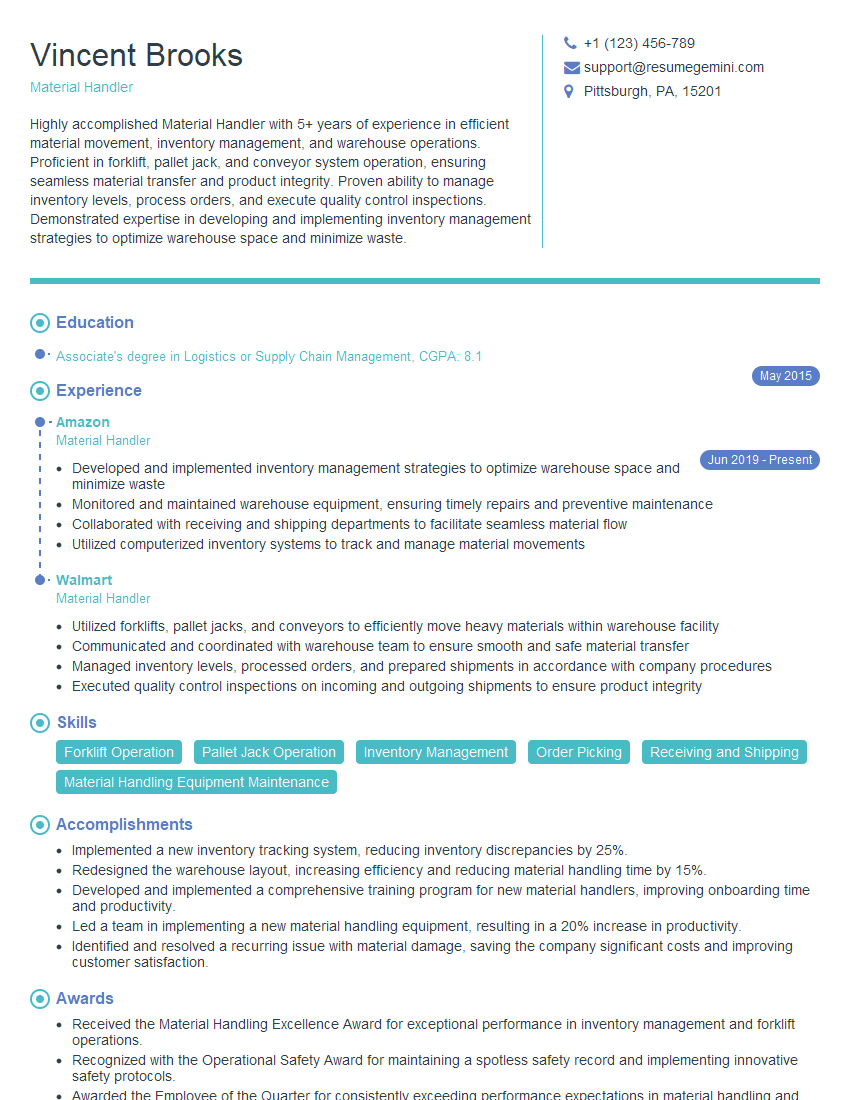
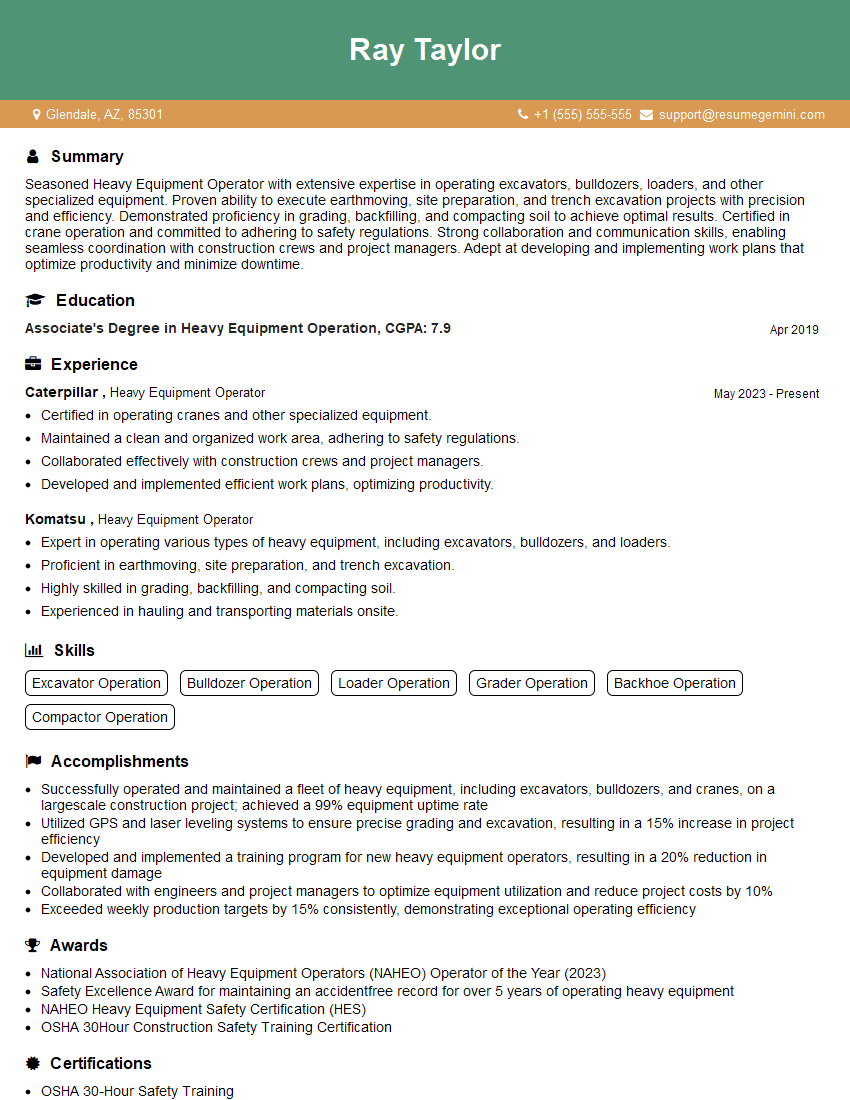
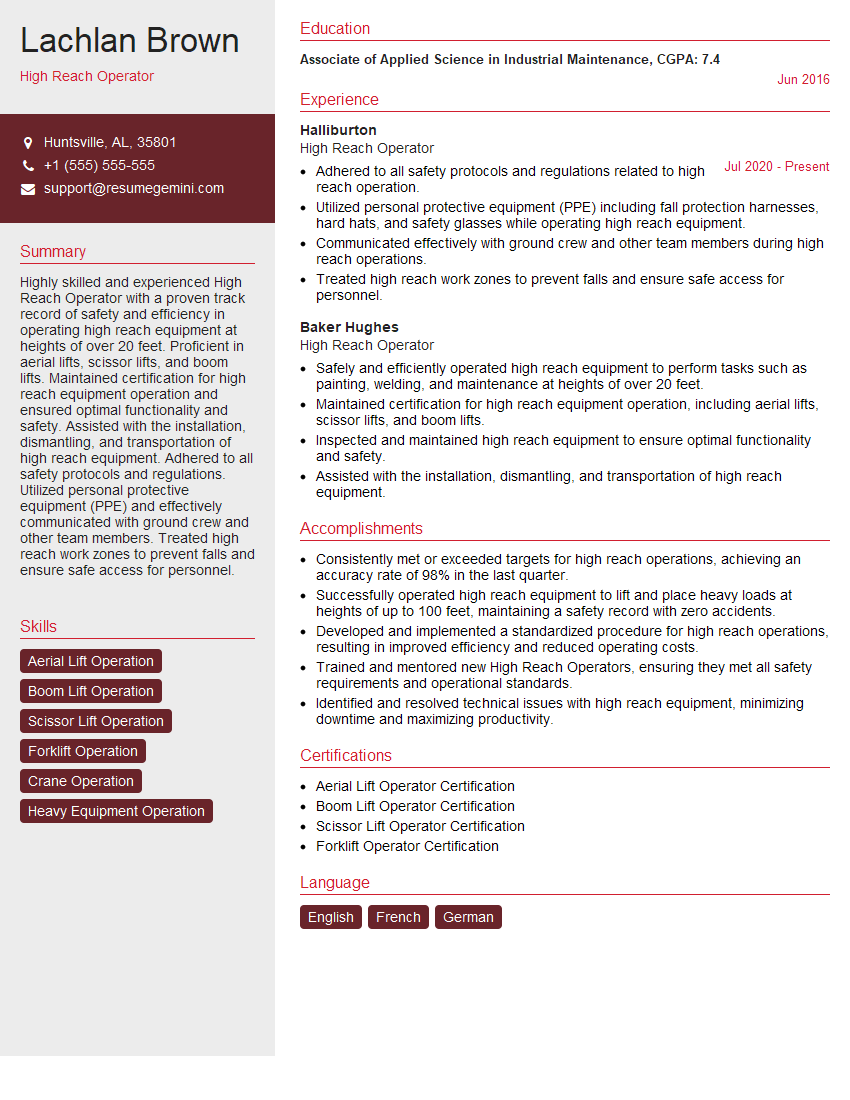
Mastering the operation of telehandlers opens doors to diverse and rewarding careers in construction, logistics, and materials handling. A strong understanding of these machines demonstrates valuable skills and experience to potential employers. To significantly improve your job prospects, it’s crucial to create a resume that’s both ATS-friendly (Applicant Tracking System friendly) and showcases your skills effectively. ResumeGemini is a trusted resource for building professional, impactful resumes. Leverage their expertise to create a standout resume that highlights your telehandler operating abilities. Examples of resumes tailored to Operating Telehandlers are available to help guide you.
Explore more articles
Users Rating of Our Blogs
Share Your Experience
We value your feedback! Please rate our content and share your thoughts (optional).
What Readers Say About Our Blog
Very informative content, great job.
good