Preparation is the key to success in any interview. In this post, we’ll explore crucial Operation of dump trucks or other heavy equipment interview questions and equip you with strategies to craft impactful answers. Whether you’re a beginner or a pro, these tips will elevate your preparation.
Questions Asked in Operation of dump trucks or other heavy equipment Interview
Q 1. Describe your experience operating dump trucks.
I have over ten years of experience operating various dump trucks in diverse environments, from construction sites to quarries. My experience encompasses all aspects of the job, from pre-trip inspections to safe loading, transportation, and unloading of materials. I’ve consistently demonstrated a commitment to safety and efficiency, achieving a perfect safety record throughout my career. For example, on one particularly challenging project involving the transportation of heavy aggregate across uneven terrain, I meticulously planned each route, resulting in on-time delivery without any incidents.
Q 2. What types of dump trucks have you operated?
My experience includes operating a wide range of dump trucks, including single-axle, tandem-axle, and tri-axle models. I’ve also operated articulated dump trucks (ADTs) which are ideal for off-road use and challenging terrain. Each type has its own unique characteristics and operating procedures which I’ve mastered over time. For instance, I’m proficient in utilizing the various features of ADTs, such as their superior maneuverability and articulation, to navigate tight spaces and uneven ground efficiently and safely. I’m also experienced with rear-dump, side-dump, and bottom-dump trucks, adapting my technique to the specific needs of each job and material.
Q 3. Explain the pre-operation inspection procedure for a dump truck.
A thorough pre-operation inspection is critical for safety. My procedure involves a systematic check of all major components. This includes:
- Visual inspection: Checking for any damage to the body, tires, lights, and other external components.
- Fluid levels: Verifying engine oil, coolant, transmission fluid, brake fluid, and power steering fluid levels. Low levels can lead to severe mechanical issues.
- Tire pressure: Ensuring proper inflation for optimal performance and safety. Under-inflated tires increase the risk of blowouts and affect fuel efficiency.
- Brakes: Testing the service and parking brakes to confirm they are functioning correctly. Brake failure is a major safety concern.
- Lights and signals: Checking all lights, turn signals, and brake lights. Ensuring visibility is crucial for safe operation, especially in low-light conditions.
- Steering and suspension: Examining for any play or damage in the steering mechanism and suspension components. These affect vehicle handling and stability.
- Safety equipment: Verifying the functionality of seatbelts, horns, emergency lights, and fire extinguishers.
Documentation of this inspection is crucial; I always complete a pre-trip inspection report noting any issues.
Q 4. How do you ensure the safe loading and unloading of a dump truck?
Safe loading and unloading are paramount. My approach involves:
- Communication: Clear communication with the loader operator is essential. Hand signals and verbal communication ensure correct loading and prevent overloading.
- Load distribution: Ensuring even weight distribution across the truck bed to maintain stability and prevent tipping. Overloading is a significant safety hazard.
- Proper positioning: Positioning the truck correctly before loading and unloading to avoid accidents. This includes considering the slope of the ground and the proximity of other equipment or obstacles.
- Slow and controlled movements: Operating the dump body slowly and carefully during raising and lowering to avoid sudden movements that could lead to cargo spillage or damage.
- Safety cones and personnel: Using safety cones and personnel as needed to guide traffic and warn others of the potential hazards.
I always prioritize safety first, even if it means slowing down the process.
Q 5. What are the common safety hazards associated with operating dump trucks?
Operating dump trucks presents several safety hazards:
- Rollover accidents: Occurring due to uneven terrain, excessive speed, improper loading, or sudden maneuvers.
- Tire blowouts: Caused by underinflation, overloading, or damage to the tire.
- Collisions with other vehicles or objects: Particularly in congested work areas or when visibility is limited.
- Falling objects: Materials falling from the dump bed during unloading can pose serious risks to personnel nearby.
- Equipment malfunctions: Mechanical failures, such as brake failure or steering issues, can lead to accidents.
- Exposure to hazardous materials: Depending on the material being transported, exposure to hazardous substances is possible.
Consistent adherence to safety protocols and proactive preventative maintenance are crucial to mitigating these hazards.
Q 6. How do you handle difficult terrain while operating a dump truck?
Navigating difficult terrain requires careful planning and execution. My approach involves:
- Assessing the terrain: Carefully evaluating the terrain before proceeding to identify potential hazards and plan a safe route.
- Using low gears: Selecting appropriate low gears to maintain sufficient torque and traction, especially on inclines or declines.
- Maintaining slow speed: Driving slowly and steadily, avoiding abrupt movements or jerky steering, to maintain control.
- Tire management: Selecting the appropriate tires for the terrain and ensuring proper tire pressure for optimal grip and traction.
- Spotters: Utilizing spotters when navigating particularly challenging or restricted areas to guide maneuvers and enhance safety.
Experience and judgment are critical in these situations; I prioritize safety over speed.
Q 7. Describe your experience with maintaining a dump truck.
Regular maintenance is essential for the longevity and safe operation of dump trucks. My experience includes:
- Daily checks: Performing daily pre-trip inspections as previously described.
- Scheduled maintenance: Adhering to the manufacturer’s recommended maintenance schedule, including oil changes, filter replacements, and other preventative measures.
- Troubleshooting minor issues: Identifying and addressing minor issues promptly to prevent escalation into major problems.
- Reporting major repairs: Reporting any major mechanical issues to the appropriate maintenance personnel.
- Keeping maintenance records: Maintaining accurate records of all maintenance activities for tracking and reporting purposes.
Proactive maintenance prevents unexpected breakdowns and enhances safety. I treat maintenance as an integral part of safe and efficient operations.
Q 8. How do you handle mechanical issues while on a job site?
Handling mechanical issues on a job site is crucial for maintaining productivity and safety. My approach involves a combination of preventative maintenance and proactive troubleshooting. First, I conduct daily pre-trip inspections, checking fluid levels, tire pressure, and the overall condition of the truck. This preventative approach helps identify minor problems before they escalate. If a problem does arise, I immediately follow these steps:
- Safety First: Secure the vehicle and the work area, ensuring no one is in danger.
- Assessment: Try to identify the problem’s nature – is it a minor issue I can handle, or does it require professional assistance?
- Minor Repairs: For minor issues like a flat tire (provided I have the necessary tools and it’s safe to do so), I’ll perform the repair myself. For more complex issues, I’ll use my knowledge of the truck’s systems to diagnose the problem.
- Communication: I immediately communicate the issue to my supervisor or mechanic, providing a clear description of the problem and its impact on the job. I’ll also document the issue using a company-provided form.
- Waiting for Assistance: I wait for professional assistance if needed, ensuring the vehicle remains secure until the issue is resolved.
For instance, once I experienced a sudden loss of power mid-haul. After ensuring the safety of the surrounding area, I quickly assessed the situation, noticing a significant fuel leak. I immediately contacted the supervisor and provided specific details. The truck was towed, and the issue was diagnosed as a ruptured fuel line. This quick response minimized downtime and prevented further damage.
Q 9. What are your strategies for managing fuel efficiency?
Fuel efficiency is paramount in the heavy equipment industry, both economically and environmentally. My strategies for maximizing fuel efficiency encompass several key areas:
- Proper Maintenance: Regular maintenance, including oil changes, filter replacements, and tire pressure checks, is critical. An improperly maintained truck burns significantly more fuel.
- Driving Habits: Smooth acceleration and braking are essential. Aggressive driving significantly increases fuel consumption. I anticipate traffic conditions and plan my route accordingly, avoiding unnecessary stops and starts.
- Load Optimization: I always ensure my loads are appropriately sized and distributed. Overloading puts unnecessary strain on the engine and increases fuel consumption. Likewise, hauling an undersized load is inefficient.
- Terrain Awareness: I am mindful of the terrain. Driving uphill requires more fuel; therefore, I plan routes to minimize steep inclines wherever possible. I also avoid idling unnecessarily.
- Speed Management: Maintaining a consistent and appropriate speed, and avoiding excessive speeding, greatly improves fuel economy. This is especially relevant on longer hauls.
For example, on a recent project, I consistently exceeded fuel efficiency targets by employing these strategies. My attention to detail and responsible driving habits resulted in a noticeable reduction in fuel costs for the company.
Q 10. Explain your understanding of load limits and weight distribution.
Understanding load limits and weight distribution is fundamental to safe and efficient operation of a dump truck. Exceeding weight limits can lead to serious accidents, fines, and damage to equipment and infrastructure. My understanding encompasses:
- Legal Limits: I am thoroughly familiar with the legal weight limits for my truck and the jurisdictions where I operate. These limits vary depending on factors such as axle configuration and road type.
- Truck Capacity: I know the specific payload capacity of my truck, which is indicated on the vehicle’s specifications. I never exceed this limit.
- Weight Distribution: Evenly distributing the load is crucial to prevent overloading any single axle. Uneven weight distribution can cause instability, damage to the truck’s suspension, and tire wear. I always ensure the load is distributed evenly within the truck’s bed.
- Load Securing: I know the importance of securing the load properly to prevent shifting during transport. Loose materials can cause imbalance and contribute to accidents.
Imagine transporting a large amount of loose gravel. Improper distribution could cause the load to shift during transport, leading to instability and potential rollover. I meticulously distribute the gravel and use tarps to secure it, ensuring safe transportation.
Q 11. Describe your experience with different types of hauling materials.
My experience includes hauling a wide range of materials, each with its unique challenges:
- Aggregates (Gravel, Sand, Stone): This is the most common material I haul. I’m skilled in efficient loading and unloading techniques to minimize spillage and downtime.
- Soil and Fill Dirt: I understand the importance of compacting these materials to prevent shifting during transport.
- Asphalt: Hauling hot asphalt requires careful handling to prevent spills and ensure safe delivery to the paving crew. I’m experienced in working with the specialized equipment needed for asphalt hauling.
- Demolition Debris: Hauling demolition debris requires understanding proper disposal procedures and safety regulations to ensure compliance with local and national standards.
- Other Materials: I have experience hauling various other materials, adapting my techniques as needed, always adhering to safety and legal regulations.
For example, when hauling asphalt, the timing is critical. It needs to be delivered and spread rapidly before it cools down. My experience ensures efficient delivery, minimizing downtime and allowing the paving crew to work uninterrupted.
Q 12. How do you comply with all relevant safety regulations and guidelines?
Safety is my top priority. I comply with all relevant safety regulations and guidelines by:
- Following Company Policies: I strictly adhere to all company safety policies and procedures. This includes regular safety training and participation in safety meetings.
- Pre-Trip Inspections: I perform thorough pre-trip inspections of my truck before every shift, checking for mechanical issues and ensuring the vehicle is in safe operating condition.
- Using PPE: I always use appropriate personal protective equipment (PPE), including hard hats, safety glasses, and high-visibility clothing.
- Following Traffic Laws: I obey all traffic laws and regulations, driving defensively and carefully.
- Load Securement: I ensure proper load securement to prevent accidents due to shifting or spillage.
- Staying Alert: I maintain situational awareness, constantly monitoring my surroundings for hazards, and promptly addressing any potential safety issues.
One time, I noticed a potential hazard—a loose power line near the job site—during a pre-trip inspection. I immediately reported it to my supervisor, averting a potential accident.
Q 13. What is your experience with GPS tracking and route planning?
I have extensive experience with GPS tracking and route planning. This technology significantly enhances efficiency and safety:
- Route Optimization: GPS systems allow me to plan the most efficient routes, minimizing travel time and fuel consumption. I use these systems to avoid traffic congestion and road closures.
- Real-Time Tracking: GPS tracking allows supervisors to monitor my location and progress in real time, facilitating better communication and coordination.
- Delivery Scheduling: Precise tracking improves delivery scheduling, ensuring timely material delivery to the job site.
- Data Analysis: GPS data provides valuable insights into driving habits and fuel efficiency, enabling continuous improvement in operational efficiency.
On a recent project, the GPS system alerted me to an unexpected road closure. I was able to reroute efficiently, avoiding significant delays and ensuring timely delivery of materials.
Q 14. How do you communicate effectively with other members of the construction crew?
Effective communication is vital in a construction environment. My communication strategy emphasizes:
- Clear and Concise Language: I use clear and concise language to convey information accurately. I avoid jargon and ensure everyone understands my messages.
- Active Listening: I actively listen to instructions and feedback from supervisors and other crew members, ensuring I understand expectations.
- Non-Verbal Communication: I use hand signals and other non-verbal cues appropriately, especially in noisy environments.
- Professionalism: I maintain a professional demeanor at all times, resolving conflicts constructively and contributing positively to teamwork.
- Radio Communication: I utilize two-way radios effectively to communicate with other crew members regarding location, progress, and any potential issues.
For instance, if I’m approaching a location with limited space, I use the radio to inform the other crew members to clear the area, preventing collisions and ensuring a smooth workflow.
Q 15. Describe a time you had to overcome a challenging situation while operating heavy equipment.
One particularly challenging situation involved hauling fill material to a remote site with extremely narrow and winding access roads. The load was heavy, the terrain uneven, and visibility was limited due to overgrown vegetation. To overcome this, I first meticulously planned my route, making several test runs at low speed to identify potential hazards like sharp turns and drop-offs. I then proceeded slowly and cautiously, frequently checking my mirrors and surroundings, using the dump truck’s low-range gearing to maintain control. Communication with the spotter on the ground was crucial to ensure a safe passage. We used hand signals to coordinate movements around blind corners and obstacles. By breaking down the challenge into smaller, manageable steps and prioritizing communication and careful maneuvering, we successfully delivered the material without incident. This experience underscored the importance of thorough planning, slow and steady operation in difficult conditions, and effective teamwork.
Career Expert Tips:
- Ace those interviews! Prepare effectively by reviewing the Top 50 Most Common Interview Questions on ResumeGemini.
- Navigate your job search with confidence! Explore a wide range of Career Tips on ResumeGemini. Learn about common challenges and recommendations to overcome them.
- Craft the perfect resume! Master the Art of Resume Writing with ResumeGemini’s guide. Showcase your unique qualifications and achievements effectively.
- Don’t miss out on holiday savings! Build your dream resume with ResumeGemini’s ATS optimized templates.
Q 16. How do you prioritize safety in a fast-paced construction environment?
Safety is paramount in a fast-paced construction environment. My approach is multifaceted and starts before I even enter the cab. It involves a thorough pre-operation check of the equipment, ensuring all safety features are functioning correctly – lights, brakes, horn, etc. I always adhere to all site-specific safety regulations and wear the required personal protective equipment (PPE) – hard hat, safety glasses, high-visibility vest, etc. On the job site, maintaining awareness of my surroundings is key. I constantly scan for pedestrians, other equipment, and potential hazards. This includes communicating clearly and effectively with co-workers, using hand signals and radios to avoid collisions or accidents. I also follow traffic rules meticulously, yielding to other vehicles and ensuring the dump truck’s blind spots are monitored. Regular breaks to avoid fatigue are essential, as fatigue can significantly impact reaction time and decision-making.
Q 17. What is your approach to preventative maintenance of heavy equipment?
Preventative maintenance is crucial for maximizing the lifespan and reliability of heavy equipment. My approach follows a comprehensive checklist, focusing on daily, weekly, and monthly inspections. Daily checks involve visually inspecting tires, fluid levels (engine oil, coolant, transmission fluid), lights, and brakes. I also check for any leaks or unusual noises. Weekly maintenance includes a more thorough examination of the engine compartment, including checking belts, hoses, and filters. Monthly maintenance involves more in-depth checks, often including lubrication of key components and a closer inspection of the undercarriage for wear and tear. I maintain detailed records of all maintenance performed, noting the date, type of service, and any issues encountered. This helps identify potential problems early on and allows for proactive repairs, preventing major breakdowns and costly downtime. Furthermore, I always report any unusual wear or damage immediately to my supervisor.
Q 18. How do you handle unexpected delays or setbacks on a job site?
Unexpected delays or setbacks are inevitable on any job site. My approach begins with identifying the root cause of the delay. This might involve anything from equipment malfunctions to weather-related issues, or unforeseen site conditions. Once identified, I assess the impact on the overall project timeline and communicate this immediately to the site supervisor. Together we work to develop a contingency plan. This may include adjusting the work schedule, reallocating resources, or seeking alternative solutions to overcome the obstacle. For instance, if a component fails, I would immediately report it, and we’d arrange for its repair or replacement, prioritizing the urgency. Open communication and collaborative problem-solving are essential in navigating these unexpected challenges and keeping the project on track as much as possible.
Q 19. Explain your understanding of different types of soil and their impact on operation.
Understanding different soil types is fundamental to operating heavy equipment safely and effectively. Clay soils, for example, can be extremely sticky when wet, making traction difficult and increasing the risk of getting stuck. Conversely, sandy soils can be unstable and prone to shifting, particularly on slopes. Gravelly soils offer better traction but can be abrasive, wearing down tires and other components faster. Recognizing these differences allows me to adjust my operating technique. For instance, I’d use lower gears and reduced speeds on clay soils, minimizing wheel slip. In sandy areas, I might need to choose a wider tire pattern to distribute weight better, and on slopes, I’d take extra precautions. I carefully assess the ground conditions before operating, adapting my approach as needed to ensure both safety and efficiency. Knowing the soil’s load-bearing capacity is crucial to avoid overloading or causing ground instability.
Q 20. What is your experience with operating equipment in various weather conditions?
Operating heavy equipment in various weather conditions requires adaptability and caution. Rain, for example, reduces traction and increases the risk of skidding. I compensate for this by reducing speed, increasing following distances, and using extra caution on turns. Snow and ice present even greater challenges; I might need to use tire chains or even wait for conditions to improve before operating. Extreme heat can also affect equipment performance, potentially causing overheating or fluid issues. I monitor engine temperature closely and ensure adequate hydration during hot weather. Wind can impact visibility and stability, requiring slow and controlled movements, especially with a heavy load. Regardless of the conditions, I always prioritize safety, adapting my techniques to maintain control and prevent accidents.
Q 21. How familiar are you with different types of dump truck attachments?
My experience encompasses a range of dump truck attachments. I’m proficient with standard dump bodies, of course, for general hauling of various materials. I’ve also worked with specialized attachments such as snow plows for winter operations, and I am familiar with hooklifts, which allow for quick and efficient swapping of different containers or bodies. Experience with these attachments requires understanding their specific operational characteristics, including weight limits, safety procedures, and how they affect the dump truck’s handling. For example, a snow plow attachment will significantly alter the truck’s center of gravity, requiring more careful maneuvering, especially on turns. Regularly reviewing the operating manuals for these attachments is vital to maintain safe and efficient operation. Knowledge of these various attachments significantly enhances versatility and efficiency on the job site.
Q 22. Describe your knowledge of relevant licensing and certifications.
My licensing and certifications reflect a deep commitment to safety and operational proficiency. I hold a valid Commercial Driver’s License (CDL) with endorsements for hauling heavy equipment and hazardous materials, as needed by the specific job. This CDL is regularly updated and I ensure all medical certifications remain current. Beyond the CDL, I possess certifications in operating specific types of heavy equipment, such as articulated dump trucks, front-end loaders, and excavators, depending on my experience. These certifications are obtained through reputable training programs and demonstrate my proficiency in safe and efficient operation of this machinery. Finally, I actively participate in safety training programs, often exceeding the minimum requirements to stay abreast of best practices and evolving regulations.
Q 23. How do you ensure compliance with environmental regulations?
Environmental compliance is paramount in my work. I meticulously follow all regulations related to spill prevention and cleanup, waste disposal, and erosion control. This involves understanding and adhering to site-specific permits and regulations, often provided by environmental agencies and project managers. For example, on a recent project involving excavation near a waterway, I ensured proper silt fencing and sediment control measures were in place to prevent soil erosion and water contamination. Before commencing any task, I always review the site’s environmental plan to identify potential risks and mitigation strategies. I also participate in regular environmental training to stay informed on evolving best practices and any changes to applicable regulations. Regular equipment checks for leaks and proper fluid disposal are also part of my routine.
Q 24. What are your strategies for minimizing wear and tear on equipment?
Minimizing wear and tear on equipment involves a proactive, multi-faceted approach. Firstly, I always perform pre-operational checks, similar to a pilot’s pre-flight checklist, to identify any potential issues early. This includes inspecting tire pressure, fluid levels, and the overall structural integrity of the vehicle. During operation, I avoid aggressive driving habits like excessive speeding or harsh braking that put unnecessary stress on components. Proper maintenance is key; this means following the manufacturer’s recommended service schedule religiously, including regular oil changes, filter replacements, and lubrication. I also pay close attention to the machine’s performance and report any unusual sounds or vibrations immediately to prevent small issues from becoming major repairs. Finally, I ensure the equipment is properly stored and protected from the elements when not in use, preventing corrosion and damage from weather.
Q 25. How do you handle conflict resolution on a job site?
Conflict resolution on a job site requires a calm and professional approach. I prioritize open communication, listening actively to all parties involved to understand the root cause of the disagreement. If a conflict arises, my first step is to attempt a direct, informal resolution. I’ll try to clarify misunderstandings and find a common ground. For instance, if there’s a dispute over material delivery schedules, I’ll work with both the delivery team and the site foreman to create a mutually acceptable plan. If informal methods fail, I escalate the conflict to my supervisor or the site manager, providing a detailed, unbiased account of the situation. My focus is always on finding solutions that preserve productivity and maintain a positive working environment. Safety is always the top priority in any conflict resolution scenario.
Q 26. How do you stay updated on the latest industry best practices and technologies?
Staying updated in this industry is crucial. I regularly attend industry conferences and workshops, where I learn about new technologies and best practices. I also subscribe to relevant trade publications and online resources to remain informed on safety regulations and operational efficiency improvements. I actively participate in professional organizations related to heavy equipment operation, which provides opportunities for networking and knowledge sharing with experienced colleagues. Further, I actively seek out mentorship from senior operators, learning from their experiences and insights. Continuous learning ensures I maintain a high level of competence and adapt to evolving industry standards.
Q 27. What are your salary expectations?
My salary expectations are commensurate with my experience and qualifications, and I am open to discussing a competitive compensation package based on the specifics of the role and company benefits. I am confident my skills and dedication add significant value to any team.
Q 28. Do you have any questions for me?
I would appreciate the opportunity to learn more about the specific challenges and opportunities associated with this role. I’m also keen to understand the company’s commitment to safety protocols and its approach to employee training and development. What are the long-term career progression prospects within the company?
Key Topics to Learn for Operation of Dump Trucks or Other Heavy Equipment Interviews
- Vehicle Operation & Maintenance: Understanding the mechanics of dump trucks and other heavy equipment, including pre-trip inspections, routine maintenance procedures, and troubleshooting common mechanical issues. This includes knowledge of hydraulic systems, engine diagnostics, and safety checks.
- Safety Procedures & Regulations: Familiarity with OSHA regulations, site-specific safety protocols, and safe operating procedures for heavy equipment. This includes understanding load limits, proper signaling, and emergency response procedures.
- Load Handling & Transportation: Efficient and safe loading, transportation, and unloading techniques, considering factors like weight distribution, terrain, and weather conditions. This also includes understanding different types of loads and their handling requirements.
- GPS & Navigation: Utilizing GPS systems for navigation and route optimization, especially in large-scale operations or construction sites. Understanding the use of technology in improving efficiency and safety.
- Communication & Teamwork: Effective communication with colleagues, supervisors, and other site personnel. Understanding the importance of teamwork and collaboration in achieving project goals safely and efficiently.
- Problem-Solving & Decision-Making: Demonstrating the ability to identify and resolve operational challenges, such as equipment malfunctions, unexpected delays, or adverse weather conditions. This includes making sound judgments in high-pressure situations.
Next Steps
Mastering the operation of dump trucks and other heavy equipment opens doors to a rewarding career with excellent earning potential and opportunities for advancement. Building a strong resume is crucial for showcasing your skills and experience to potential employers. An ATS-friendly resume is essential for getting your application noticed by Applicant Tracking Systems used by most companies. To help you create a compelling and effective resume, we encourage you to use ResumeGemini, a trusted resource for building professional resumes. Examples of resumes tailored to Operation of dump trucks or other heavy equipment are available to help guide you.
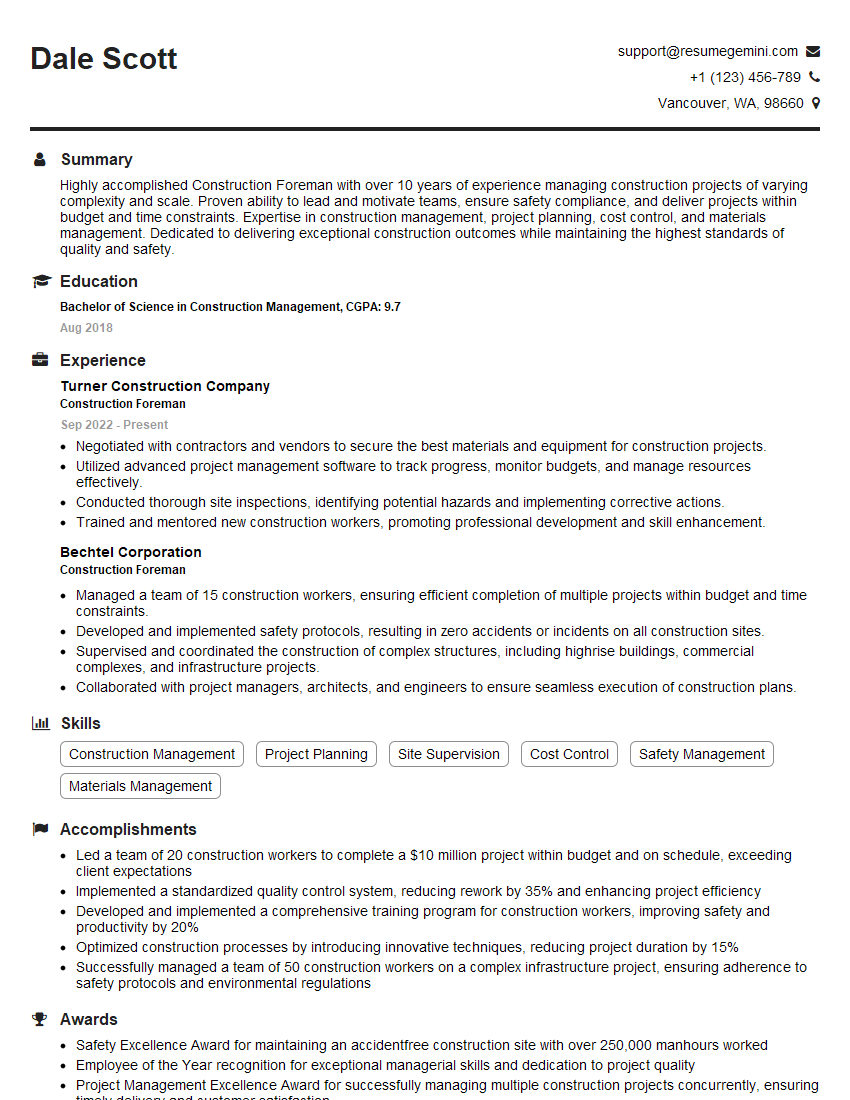
Construction Foreman Resume Sample

Crane Operator Resume Sample
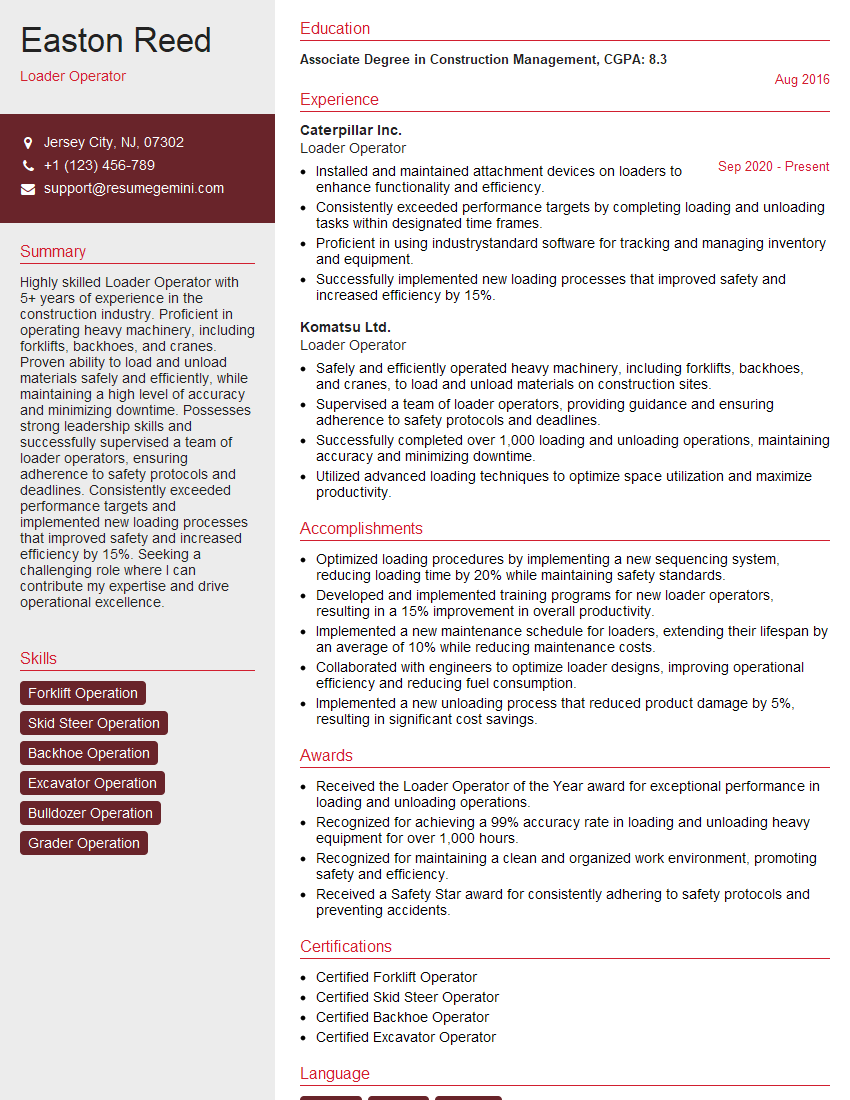
Loader Operator Resume Sample

Site Supervisor Resume Sample

Heavy Equipment Operator Resume Sample
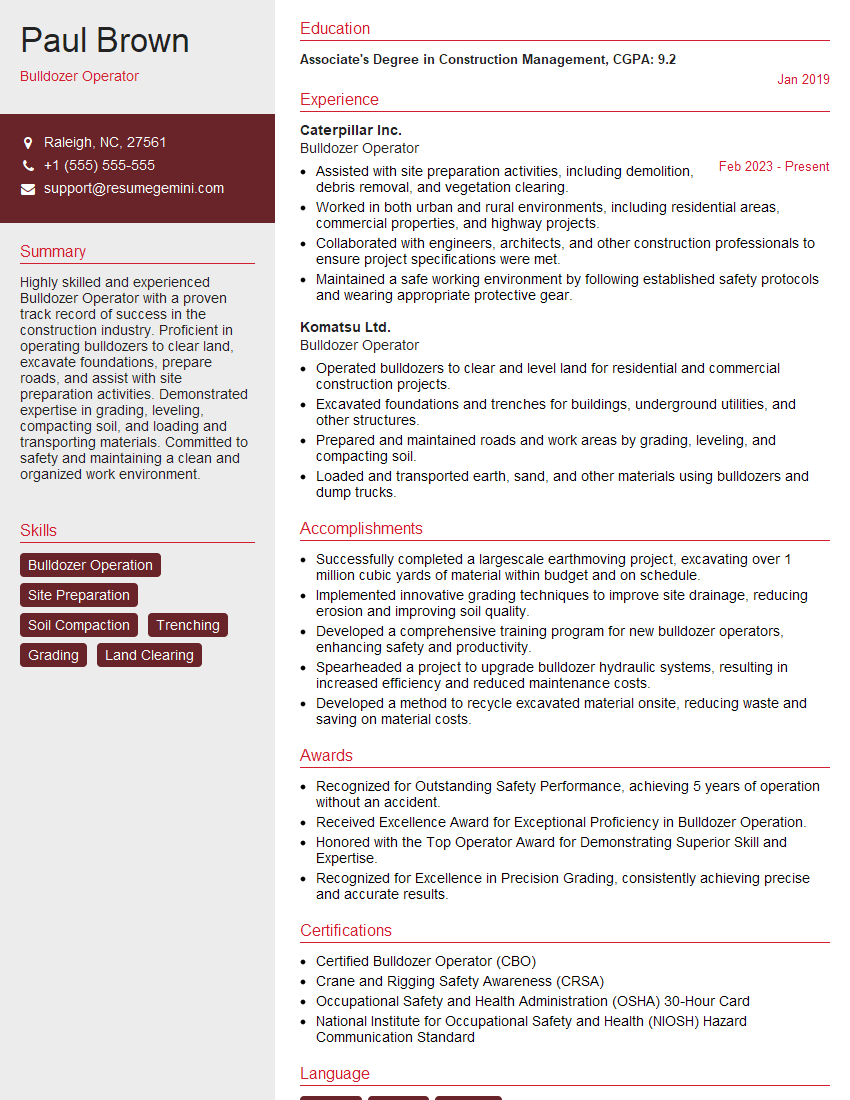
Bulldozer Operator Resume Sample
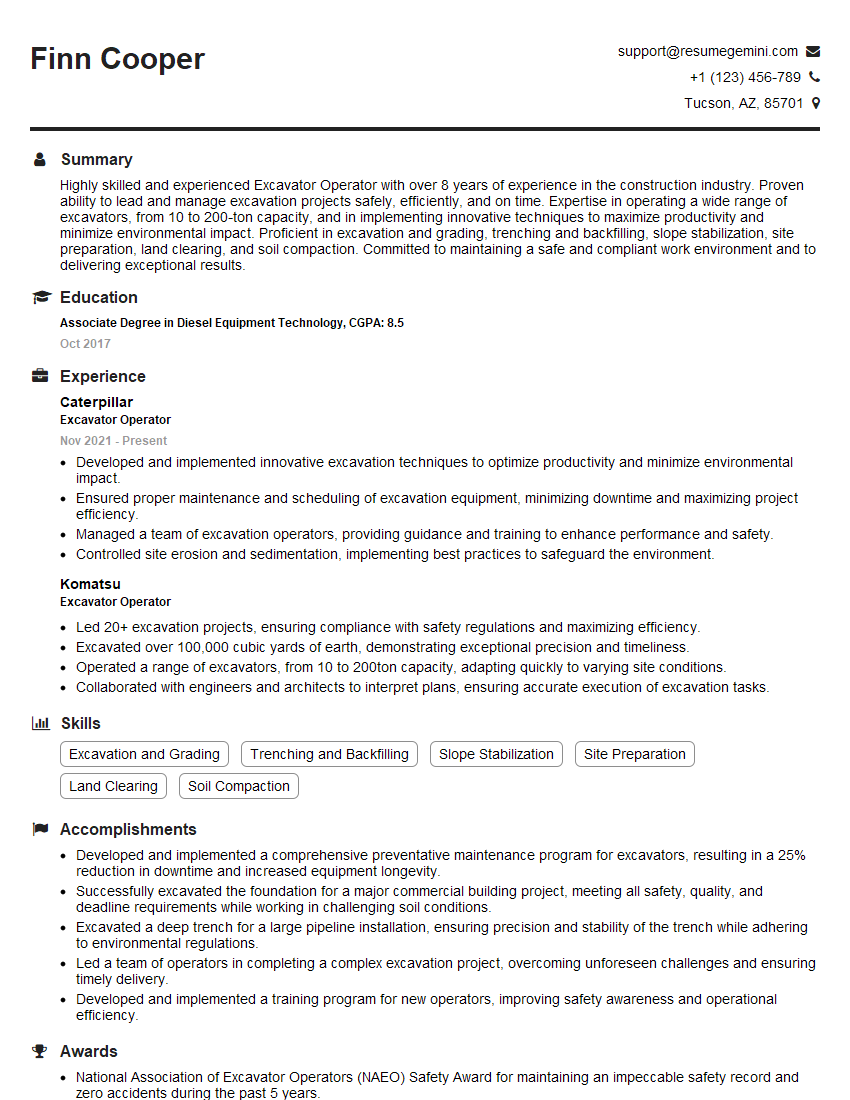
Excavator Operator Resume Sample

Grader Operator Resume Sample
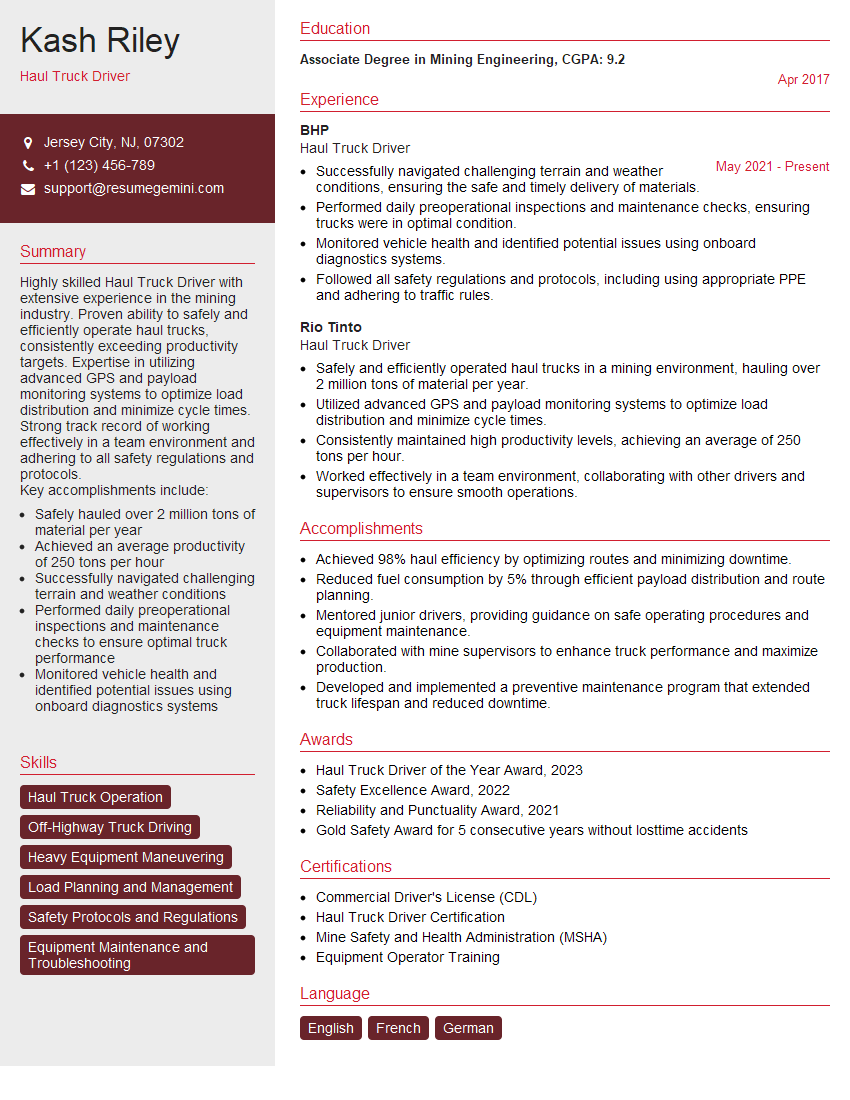
Haul Truck Driver Resume Sample
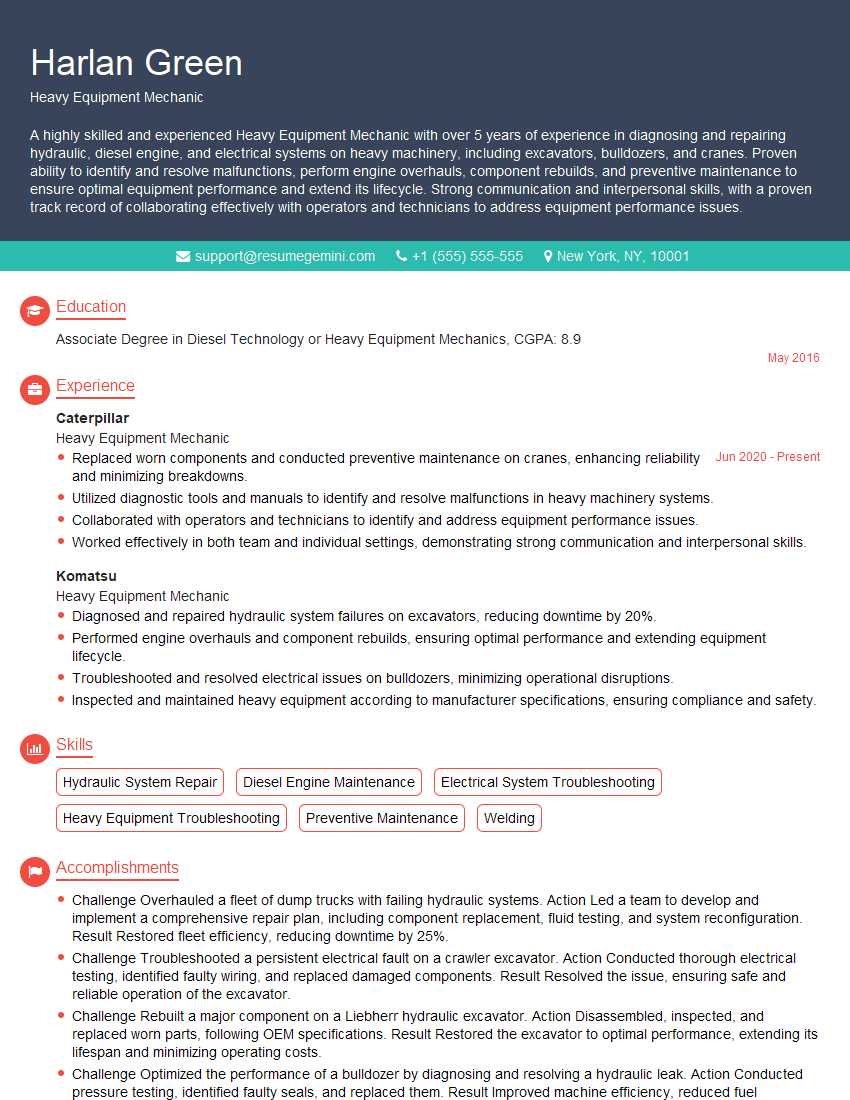
Heavy Equipment Mechanic Resume Sample
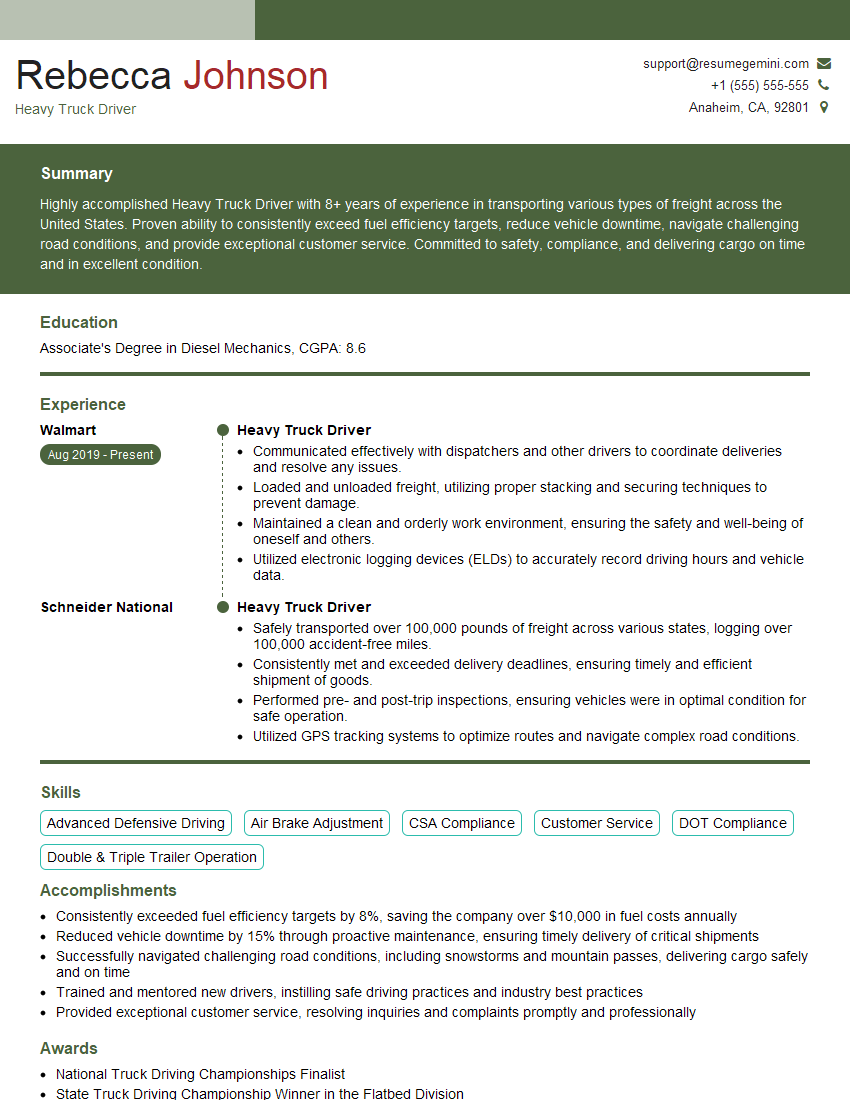
Heavy Truck Driver Resume Sample
Explore more articles
Users Rating of Our Blogs
Share Your Experience
We value your feedback! Please rate our content and share your thoughts (optional).
What Readers Say About Our Blog
Very informative content, great job.
good