Interviews are opportunities to demonstrate your expertise, and this guide is here to help you shine. Explore the essential Operation of heavy equipment interview questions that employers frequently ask, paired with strategies for crafting responses that set you apart from the competition.
Questions Asked in Operation of heavy equipment Interview
Q 1. Describe your experience operating excavators.
My excavator experience spans over 10 years, encompassing various models from small, compact machines used in urban settings to large, heavy-duty excavators employed in large-scale construction projects. I’m proficient in operating both hydraulic and cable-operated excavators, and I have a strong understanding of their mechanical components and hydraulic systems. I’ve worked on projects ranging from trenching and site preparation to demolition and material handling. For example, on a recent project involving the construction of a new residential development, I used a 30-ton excavator to excavate the foundation trenches, ensuring precise dimensions and grading to meet the engineer’s specifications. Another project required me to use a smaller excavator for delicate work within a confined space, showcasing my adaptability and precision.
My skills extend beyond basic operation; I’m adept at using various attachments, including rippers, breakers, and different types of buckets, tailored to the specific job requirements. I consistently prioritize safety, adhering to all regulations and completing daily pre-operational checks to ensure the excavator is in optimal working condition before commencing any task.
Q 2. Explain the pre-operational checks you perform on a bulldozer.
Before operating a bulldozer, a thorough pre-operational check is crucial. This involves a systematic inspection of several key components. I start with a visual inspection, looking for any obvious damage, leaks, or loose parts. This includes checking the tracks for wear and tear, ensuring they’re properly lubricated and tensioned. I then inspect the blade and its linkages for any signs of damage or misalignment.
- Engine Systems: Checking oil and coolant levels, inspecting belts and hoses for wear and cracks, and ensuring the battery connections are secure are vital steps.
- Hydraulic Systems: I’ll check the hydraulic fluid level and look for any leaks in the lines or cylinders. Smooth operation of the hydraulic controls is also tested.
- Brakes and Steering: Testing the responsiveness of the brakes and the smooth operation of the steering system are paramount for safety.
- Lights and Signals: I confirm that all lights and signals are functioning correctly to ensure visibility and communication.
- Safety Features: Checking the ROPS (Roll Over Protective Structure) and FOPS (Falling Object Protective Structure) are secure and undamaged is a non-negotiable part of my routine.
A pre-operational checklist helps ensure that all critical points have been covered. Only after a complete and satisfactory inspection do I proceed with operation.
Q 3. How do you maintain safe operating procedures while working with heavy equipment?
Maintaining safe operating procedures with heavy equipment is paramount. It’s a multifaceted approach that begins with thorough training and certification, followed by consistent adherence to safety regulations and best practices.
- Pre-operational Checks: As detailed earlier, these are fundamental.
- Awareness of Surroundings: Constant vigilance is key. This includes maintaining a clear view of the working area, being aware of any obstructions, and communicating with other workers on-site. Using hand signals or two-way radios enhances communication and prevents accidents.
- Speed and Control: Operating at a safe speed and maintaining proper control of the equipment prevents loss of control, especially on uneven or slippery terrain.
- Proper Positioning: Always ensure the equipment is correctly positioned and stable before starting any operation. Avoid operating on unstable ground or slopes.
- Personal Protective Equipment (PPE): Wearing appropriate PPE, such as hard hats, safety glasses, gloves, and high-visibility clothing is non-negotiable.
- Emergency Procedures: Knowing emergency shutdown procedures and having a clear understanding of what to do in case of an accident or malfunction is vital.
My approach to safety is proactive rather than reactive. It’s a continuous process that requires constant attention and responsible decision-making.
Q 4. What are the different types of loaders and their applications?
Loaders are essential pieces of construction equipment, and several types exist, each suited for specific applications.
- Wheel Loaders: These are highly versatile, used for loading and moving materials like dirt, gravel, and snow. Their mobility is their strength; they work efficiently on paved surfaces and relatively smooth terrain.
- Backhoe Loaders: These combine a front-end loader with a backhoe, offering a dual functionality. They’re ideal for digging, loading, and lifting materials in various situations.
- Skid Steer Loaders: Compact and maneuverable, these are perfect for tight spaces and confined areas. Their versatility allows for a variety of attachments, expanding their capabilities.
- Telehandlers: These have a telescopic boom that extends vertically and horizontally, useful for lifting and placing materials at significant heights. They are used in warehousing, construction, and agricultural settings.
The choice of loader depends on the nature of the project, the type of materials being handled, and the working environment. For instance, a wheel loader might be chosen for large-scale earthmoving, whereas a skid steer would be preferred for landscaping or indoor demolition.
Q 5. Describe your experience with different types of terrain and their impact on equipment operation.
Experience operating heavy equipment across various terrains has taught me the importance of adaptability and appropriate techniques. Different terrains present unique challenges and require adjustments in operating strategies.
- Level Ground: This is the easiest terrain, allowing for efficient and high-speed operation. However, even here, safety precautions should be maintained.
- Slopes: Operating on slopes requires extreme caution. Speed must be reduced significantly, and the load should be positioned strategically to maintain stability and prevent rollovers. The machine’s weight distribution plays a significant role here.
- Mud and Soft Ground: Soft ground requires careful maneuvering to avoid getting stuck. Understanding the ground conditions and choosing the right speed and technique are crucial. Using tracks instead of wheels can greatly improve traction in these situations.
- Rocky Terrain: Rocky areas necessitate slow, cautious movements to avoid damaging the equipment. Using the appropriate attachments, like rippers, is helpful in breaking up the rock.
Each terrain demands specific adjustments in operating techniques, speed, and load handling. Experience and a strong understanding of the equipment’s capabilities are essential for safe and efficient operation.
Q 6. Explain how you handle unexpected equipment malfunctions.
Handling unexpected equipment malfunctions requires a calm and systematic approach. The first step is to immediately shut down the equipment, ensuring all power sources are disconnected to prevent further damage or accidents. Then, a thorough assessment of the situation is necessary.
- Identify the Problem: Determine the nature of the malfunction. Is it a minor issue or something more serious? Listening for unusual noises and observing any unusual behavior helps with diagnosis.
- Safety First: Ensure the area is secure and no one is at risk. Set up warning signs or cones if needed.
- Attempt Basic Troubleshooting: If the problem is minor (e.g., a loose connection), attempt to fix it according to my training and knowledge. Avoid attempting repairs beyond my skillset.
- Report the Malfunction: Contacting the supervisor or maintenance team is crucial. Accurate reporting of the malfunction, including the symptoms, helps them diagnose and address the issue efficiently.
- Await Assistance: Avoid attempting to operate the equipment until it has been inspected and approved by qualified personnel. Safety should always be the top priority.
My experience has taught me the importance of clear communication and careful problem-solving when dealing with unexpected equipment failures. Always err on the side of caution.
Q 7. What safety measures do you prioritize when operating heavy equipment near power lines?
Operating heavy equipment near power lines necessitates a heightened level of awareness and strict adherence to safety guidelines. The potential for electrocution is severe, so preventative measures are vital. The distance of the equipment from the power lines is critical and this must be checked before starting any operation. Knowing the location of all overhead lines is paramount.
- Know the Regulations: Familiarize yourself with the specific regulations and safety guidelines regarding power line clearance. These regulations vary according to the voltage of the power lines.
- Spotter: Always have a trained spotter to observe the equipment’s proximity to the power lines. Effective communication between the operator and spotter is essential.
- Utilize Safety Equipment: Protective equipment, such as insulated gloves and safety boots, should be worn. The equipment itself may have proximity sensors or warning systems that should be carefully monitored.
- Plan the Operation: Planning the operation carefully, including the path of the equipment, will help avoid unintended contact with power lines.
- Emergency Shutdown Procedures: Knowing and practicing emergency shutdown procedures is paramount. Knowing how to shut down the machine and clear the area safely in case of a dangerous situation is vital.
Operating near power lines is inherently risky. A cautious approach, rigorous adherence to safety protocols, and communication with trained personnel are crucial for preventing accidents.
Q 8. Describe your experience with GPS-guided heavy equipment.
My experience with GPS-guided heavy equipment spans several years and various projects. I’ve operated excavators, bulldozers, and graders equipped with GPS systems for tasks ranging from precise grading and earthmoving to pipeline trenching and building foundations. These systems significantly improve accuracy and efficiency. For example, on a recent project involving the creation of a precise drainage ditch, the GPS system allowed me to maintain the exact depth and width specifications throughout the entire length, minimizing rework and ensuring optimal water flow. I’m proficient in using both real-time kinematic (RTK) and differential GPS (DGPS) systems, understanding their respective accuracies and limitations. I’m also familiar with various software interfaces and data management associated with these systems, allowing for efficient project planning and progress monitoring.
I’m comfortable with tasks like setting up base stations, calibrating the equipment, and interpreting the GPS data displayed on the machine’s monitor to ensure accurate operation. Troubleshooting minor GPS glitches is also part of my skill set, saving valuable time on-site.
Q 9. How do you ensure the stability of heavy equipment on uneven ground?
Ensuring stability on uneven ground requires a multi-faceted approach combining operator skill, machine capabilities, and site assessment. Before starting any operation, I carefully assess the ground conditions, looking for soft spots, slopes, and potential obstacles. This initial assessment helps me plan the best approach and select the appropriate machine and attachments. For example, using wider tracks or outriggers on a crane can significantly increase stability on soft or sloped ground. On particularly challenging terrain, I might use a more robust machine designed for uneven ground, or I may even employ techniques like employing multiple passes or reducing the load to maintain stability.
During operation, I utilize the machine’s features, such as stabilizers or articulated joints, to optimize stability. I also maintain awareness of the machine’s center of gravity and avoid abrupt movements or excessive loads that might compromise its balance. Think of it like balancing a bicycle – slow and deliberate movements are key. Finally, if I notice any instability, I immediately stop the operation and reassess the situation before proceeding.
Q 10. What are the signs of hydraulic system failure and how would you respond?
Hydraulic system failures can manifest in various ways, and recognizing the signs early is crucial to prevent major damage and ensure safety. Some common indicators include unusual noises (hissing, whining, or grinding), leaks (oil spills or drips), sluggish or unresponsive movements, overheating, and reduced hydraulic pressure. For instance, a hissing sound often suggests a leak in a hose or seal, while sluggish movements may indicate low fluid level or a problem with the pump.
My response to suspected hydraulic failure involves a systematic approach: 1) Immediately shut down the equipment to prevent further damage. 2) Visually inspect the system for leaks or damage. 3) Check fluid levels. 4) If possible, verify hydraulic pressure readings using the machine’s gauges. 5) If the problem persists, I contact a qualified mechanic for diagnosis and repair. Safety is paramount, and I will never attempt to repair a hydraulic system unless I have the proper training and expertise.
Q 11. How familiar are you with different types of bucket attachments and their uses?
My familiarity with bucket attachments extends to a wide range, including general-purpose buckets, ditch cleaning buckets, rock buckets, demolition buckets, and specialized buckets for specific materials like asphalt or snow. Each bucket type has unique design features and applications. For example, a general-purpose bucket is ideal for moving dirt and other loose materials, while a rock bucket, with its reinforced design, is better suited for handling heavy rocks and debris.
I select the appropriate bucket based on the project requirements. If I’m working on a site where precise grading is required, a smaller, more maneuverable bucket might be better. In contrast, a large rock bucket is essential for breaking up large boulders during road construction. Choosing the right bucket not only enhances productivity but also ensures the safety and efficient completion of the task. This is about understanding the nuance of what each bucket is designed for; a simple task might be completed much faster and more efficiently with the right choice of bucket.
Q 12. Describe your experience with different types of blades (dozer, grader).
I have extensive experience with various types of blades used on dozers and graders. On dozers, I’ve worked with straight blades, U-blades, and angle blades. Each blade type is designed for different tasks: straight blades are great for pushing large volumes of material, while U-blades are more effective for finer grading and finishing work. Angle blades provide versatility, allowing for efficient side casting.
With graders, I’m familiar with different blade designs optimized for specific operations like ditch cleaning, road construction, and snow removal. The selection of a particular blade heavily depends on the job’s specifics. For instance, a longer blade might be preferred for smoother grading over large areas, while a shorter blade might be better for working in tighter spaces or ditches. Adjusting blade angle and tilt is essential to optimize performance and efficiency in diverse conditions. The knowledge and experience of how to make those adjustments and manage these differences is a crucial part of the job.
Q 13. How would you calculate the load capacity of a crane for a given lift?
Calculating the load capacity of a crane for a given lift involves considering several factors: the crane’s rated capacity, the weight of the load, the radius (distance between the load and the crane’s center of rotation), the boom angle, and any additional factors like wind speed or ground conditions. Crane manufacturers provide load charts that specify the safe load limits for different combinations of these variables.
The process typically involves: 1) Determining the weight of the load. 2) Measuring the radius of the lift. 3) Locating the relevant section of the crane’s load chart corresponding to the boom angle. 4) Identifying the maximum allowable load for that configuration. 5) Comparing the load’s weight to the maximum allowable load. If the load’s weight exceeds the maximum allowable load, a different lifting configuration (e.g., shorter radius, different boom angle) or a larger crane might be required. Safety is paramount, and always erring on the side of caution is crucial.
Q 14. Explain the importance of regular maintenance on heavy equipment.
Regular maintenance on heavy equipment is essential for several reasons: safety, productivity, longevity, and cost-effectiveness. Neglecting maintenance can lead to catastrophic failures, downtime, and increased repair costs. Think of it as regular check-ups for your car; ignoring them can lead to bigger problems down the road.
A comprehensive maintenance program includes regular inspections of critical components such as engines, hydraulic systems, transmissions, brakes, and tires. This includes checking fluid levels, lubricating moving parts, and replacing worn-out components as needed. Preventative maintenance, such as changing oil and filters at regular intervals, can significantly extend the life of the equipment and reduce unexpected breakdowns. By adhering to a strict maintenance schedule, operators minimize risks and ensure their equipment remains in peak operational condition, leading to greater efficiency and safety.
Q 15. What are the regulations and safety standards you adhere to when operating heavy equipment?
Safety is paramount in heavy equipment operation. My adherence to regulations and standards is unwavering. This involves understanding and strictly following all relevant Occupational Safety and Health Administration (OSHA) guidelines, as well as manufacturer’s specifications for each piece of equipment. This includes, but is not limited to:
- Pre-operational inspections: I meticulously check all fluid levels (hydraulic, engine oil, coolant), tire pressure, brakes, lights, and any visible signs of damage before each operation. Think of it like a pilot’s pre-flight checklist – essential for a safe flight (or in this case, operation).
- Personal Protective Equipment (PPE): I always wear the appropriate PPE, including hard hats, safety glasses, high-visibility clothing, and steel-toe boots. This protects me from potential hazards like falling objects, flying debris, and crushing injuries.
- Site safety protocols: I am familiar with and diligently follow all site-specific safety rules and procedures, including traffic management plans, communication protocols, and emergency procedures. This ensures everyone’s safety on the jobsite, a team effort.
- Safe operating procedures: I understand and follow safe operating procedures for each machine I operate. This includes maintaining a safe distance from overhead power lines, never operating under the influence of drugs or alcohol, and being acutely aware of my surroundings at all times.
- Training and certification: I hold all necessary certifications and licenses for the equipment I operate, demonstrating my commitment to safe and proficient operation. Regular refresher courses keep my skills sharp and my knowledge up-to-date.
Ultimately, my commitment to safety isn’t just about following rules; it’s a mindset, a proactive approach to preventing accidents and ensuring a safe working environment for myself and my colleagues.
Career Expert Tips:
- Ace those interviews! Prepare effectively by reviewing the Top 50 Most Common Interview Questions on ResumeGemini.
- Navigate your job search with confidence! Explore a wide range of Career Tips on ResumeGemini. Learn about common challenges and recommendations to overcome them.
- Craft the perfect resume! Master the Art of Resume Writing with ResumeGemini’s guide. Showcase your unique qualifications and achievements effectively.
- Don’t miss out on holiday savings! Build your dream resume with ResumeGemini’s ATS optimized templates.
Q 16. Describe a time you had to troubleshoot a mechanical issue in the field.
During a road construction project, the hydraulic system on our excavator malfunctioned, resulting in a loss of digging power. The initial diagnosis was difficult due to the complexity of the hydraulic system, but I systematically troubleshooted the problem using a process of elimination.
First, I checked the hydraulic fluid level. It was low. Next, I visually inspected the lines for leaks. I found a small leak near a hose connector. However, the leak wasn’t sufficient to account for the complete loss of power. I then checked the hydraulic pump’s pressure relief valve and found it stuck in the closed position. This was preventing the system from pressurizing correctly. I used a calibrated pressure gauge to confirm this. Finally, using the excavator’s maintenance manual, I carefully freed the stuck valve, then topped off the fluid. The excavator was back in operation within an hour. This experience reinforced the value of careful pre-operation checks and the necessity of a methodical troubleshooting approach.
Q 17. How familiar are you with different types of fuel and lubricants used in heavy equipment?
My familiarity with different fuel and lubricants is extensive. Heavy equipment typically uses diesel fuel, but the specific grade (e.g., Ultra Low Sulfur Diesel) varies depending on the engine and environmental regulations. I’m also experienced with biodiesel blends, understanding their properties and potential impact on engine performance and longevity. Improper fuel can lead to serious engine damage.
Regarding lubricants, I’m knowledgeable about various types of engine oils, hydraulic fluids, and greases. Each has specific viscosity ratings and performance characteristics. For instance, selecting the wrong viscosity engine oil can lead to poor lubrication, excessive wear, and ultimately, catastrophic engine failure. Understanding the correct specification for each fluid type is critical. I always check the equipment’s manual for precise recommendations.
Q 18. What are your strategies for efficient fuel consumption while operating heavy equipment?
Efficient fuel consumption is crucial for both cost-effectiveness and environmental responsibility. My strategies include:
- Proper maintenance: Regularly scheduled maintenance, including air filter changes and engine tune-ups, ensures optimal engine performance and reduces fuel waste. A well-maintained engine is a more efficient engine.
- Smooth operation: Aggressive acceleration and braking waste fuel. I prioritize smooth operation, avoiding unnecessary jerking movements and sudden changes in speed. Imagine driving a car – smooth driving saves fuel.
- Appropriate gear selection: Selecting the appropriate gear for the load and terrain maximizes engine efficiency. Heavy loads require lower gears, whereas lighter loads can utilize higher gears.
- Engine idling minimization: I avoid unnecessary idling. If the machine will be idle for more than a few minutes, I shut it down to conserve fuel.
- Load matching: I ensure the equipment’s capacity matches the job’s needs. Using a larger machine for a smaller task is inefficient and wasteful.
These techniques, implemented consistently, significantly reduce fuel consumption and operational costs.
Q 19. Explain your understanding of load charts and weight limits.
Load charts and weight limits are essential for safe and efficient operation. Load charts provide specifications of the maximum weight that the equipment can safely lift or carry under various conditions. Exceeding these limits can cause catastrophic failure, resulting in accidents and potentially serious injuries or fatalities. Think of it as the equipment’s ‘weight limit’ label.
I always consult the load chart before starting any lifting or carrying operation, considering factors like the weight of the load, the distance of the lift, and the ground conditions. I also ensure that the load is properly secured and balanced to prevent tipping or shifting. Safe load handling is not simply a guideline; it’s a crucial safety measure. Ignoring weight limits is simply unacceptable.
Q 20. How do you communicate effectively with other crew members on a job site?
Effective communication is vital on a job site. My approach involves:
- Clear and concise language: I use clear and concise language, avoiding jargon or technical terms that might be misunderstood. Simple and direct communication is key.
- Hand signals: I use standardized hand signals for communication when verbal communication is difficult or dangerous, especially in noisy environments. This is a universal language of safety.
- Two-way radios: I utilize two-way radios for maintaining constant communication with other crew members, especially during complex operations or emergencies. This ensures that everyone is aware of what is happening and can respond appropriately.
- Pre-job briefings: Participation in pre-job briefings ensures that everyone is aware of the plan for the day, including safety procedures and potential hazards. It’s a crucial team-building exercise too.
- Active listening: I practice active listening, paying close attention to what others are saying to ensure clear understanding and prevent miscommunication.
Open and respectful communication promotes a safe and productive working environment for the entire crew.
Q 21. Describe your experience with different types of ground conditions (e.g., rocky, sandy, muddy).
Experience with varying ground conditions is essential for safe and efficient operation. Each condition requires a different approach and operational strategy. My experience includes operating heavy equipment on:
- Rocky terrain: Requires careful maneuvering to avoid damage to the equipment and ensure stability. Lower speeds and deliberate movements are crucial.
- Sandy terrain: Can cause the equipment to sink or become bogged down. Specialized tires and techniques, such as using wider tracks or mats, are often necessary. Understanding ground bearing capacity is essential.
- Muddy terrain: Can significantly reduce traction. Careful planning and use of appropriate countermeasures, such as using tracks or adding ballast, are essential to avoid getting stuck.
Understanding ground conditions is paramount. Adapting my operation to the specific terrain is essential for preventing accidents and ensuring productivity. It’s all about assessing the situation and adjusting accordingly.
Q 22. How do you adapt your operation techniques to different weather conditions?
Adapting heavy equipment operation to different weather conditions is paramount for safety and efficiency. It’s not just about adjusting speed; it’s about understanding how weather impacts the machine, the ground, and the overall job site.
- Rain: Reduced traction necessitates slower speeds and more careful maneuvering. Muddy conditions can lead to equipment getting stuck, so I’d use techniques like using lower gears and wider tire tracks to distribute weight. Visibility is also reduced, so I increase following distances and use additional caution.
- Snow/Ice: Extreme caution is needed. I would reduce speed significantly, possibly adding chains or using specialized tires for better grip. The risk of slipping and sliding is dramatically increased, demanding slower and more deliberate movements. I’d also ensure the equipment is properly winterized.
- Extreme Heat: High temperatures can affect engine performance and operator comfort. I’d schedule work for cooler parts of the day, utilize extra hydration, and ensure proper engine maintenance to prevent overheating.
- Strong Winds: High winds can affect the stability of tall equipment. I would reduce operation speed, take extra care when working near structures, and even consider postponing work if conditions become unsafe.
For example, during a particularly heavy rainstorm while operating a bulldozer, I slowed my speed to a crawl, widening the blade to distribute the weight and prevent sinking into the mud. This allowed me to continue working without causing damage or delays.
Q 23. What are the limitations of different types of heavy equipment?
Different types of heavy equipment have unique limitations stemming from their design and intended purpose. Understanding these limitations is crucial for safe and efficient operation.
- Excavators: While versatile, excavators have limited reach and lifting capacity. Their stability can be compromised on uneven terrain. Overloading can lead to tipping.
- Bulldozers: Excellent for earthmoving, but they’re less precise than excavators and have limited maneuverability in confined spaces. Their size also makes them less adaptable to smaller projects.
- Loaders: Good for material handling, but their lifting capacity is limited, and their stability can be challenged by uneven terrain or overloading. They also have restricted visibility compared to some other equipment.
- Cranes: Essential for lifting heavy objects, but they require extensive setup and have limitations concerning their reach and lifting capacity, depending on their size and the ground conditions. They also necessitate careful load balancing.
For instance, I once had to adjust a project plan because the chosen excavator’s reach was insufficient for a specific phase. We brought in a longer-reach excavator to avoid rework and schedule delays. Understanding these limitations upfront is critical for project success.
Q 24. How do you plan your work to maximize efficiency and minimize downtime?
Maximizing efficiency and minimizing downtime requires meticulous planning and proactive management.
- Pre-Job Planning: This involves a detailed assessment of the worksite, including terrain, access points, material locations, and potential hazards. I would create a step-by-step plan, including equipment selection, safety protocols, and anticipated timelines.
- Regular Maintenance: Daily and scheduled preventative maintenance significantly reduces the risk of breakdowns. This includes regular checks of fluids, filters, and critical components.
- Efficient Workflows: Optimizing the sequence of tasks and coordinating with other crews minimizes unproductive time. I’d ensure a smooth flow of materials and avoid unnecessary movements or repositioning.
- Troubleshooting: Knowing how to quickly identify and address minor issues minimizes delays. Having a basic understanding of mechanical repairs can help to resolve minor problems promptly.
- Communication: Clear communication with supervisors, fellow operators, and other personnel ensures efficient collaboration and timely support when needed.
In one project, we created a detailed workflow chart for a large excavation project, highlighting critical path activities. This allowed us to identify potential bottlenecks and implement solutions proactively, resulting in a 15% increase in efficiency.
Q 25. Describe your experience working in confined spaces with heavy equipment.
Operating heavy equipment in confined spaces demands heightened awareness and precision. Safety is the utmost priority.
- Site Assessment: A thorough assessment is essential, evaluating the space’s dimensions, obstacles, and potential hazards. I’d prioritize safe entry and exit routes.
- Spotters: Using trained spotters is crucial, particularly in areas with limited visibility. Their guidance ensures I avoid collisions with structures or other equipment.
- Slow and Controlled Movements: Speed must be significantly reduced to minimize the risk of accidents. Precise control is needed for every maneuver.
- Equipment Selection: Selecting appropriately sized equipment is critical. Smaller equipment is preferable where possible to maximize maneuverability.
- Safety Equipment: Proper personal protective equipment (PPE) is non-negotiable, including hard hats, safety glasses, and hearing protection.
I recall working in a basement excavation where space was extremely limited. We used a small excavator and a team of spotters, carefully coordinating each movement. This cautious approach ensured the completion of the task without any incidents.
Q 26. Explain the process of conducting a daily equipment inspection.
A thorough daily equipment inspection is non-negotiable for safety and operational efficiency. It’s a systematic process to identify potential problems before they escalate.
- Visual Inspection: Checking for any visible damage, leaks, or loose parts. This includes examining tires, hydraulic lines, and the overall structure of the equipment.
- Fluid Levels: Verifying the levels of engine oil, transmission fluid, coolant, and hydraulic fluid. Low levels could indicate leaks or other problems.
- Tire Pressure: Ensuring proper tire inflation for optimal performance and stability.
- Functional Checks: Testing the functionality of all systems, including lights, brakes, steering, and attachments. This ensures the equipment is working correctly.
- Safety Checks: Checking safety devices like seatbelts, emergency shut-offs, and warning systems.
- Documentation: Recording all findings in a logbook or digital system, including any necessary repairs or maintenance requests.
For example, during a pre-shift inspection, I noticed a small crack in a hydraulic hose. By reporting it immediately, we prevented a potential failure and costly downtime later in the day.
Q 27. How do you handle conflict resolution or disagreement on a construction site?
Conflict resolution on a construction site requires a calm, professional, and collaborative approach. Open communication is key.
- Active Listening: Understanding all perspectives involved before offering solutions is crucial. This includes hearing out concerns and validating feelings.
- Professional Communication: Maintaining a respectful tone and focusing on the problem, not the person, is vital. Avoid accusatory language.
- Collaborative Problem-Solving: Working together to find a mutually acceptable solution that addresses everyone’s concerns is the goal.
- Escalation Protocol: Knowing when to involve a supervisor or manager if a resolution cannot be reached independently is important.
- Documentation: Documenting the conflict and the agreed-upon solution is crucial for accountability and future reference.
In one instance, a disagreement arose regarding the sequence of tasks between two crews. By facilitating a discussion where each team explained their concerns, we collaboratively created a revised schedule that satisfied both parties and maintained the project timeline.
Q 28. What are your career goals related to heavy equipment operation?
My career goals involve continued growth and expertise in heavy equipment operation. I aim to become a highly skilled and versatile operator, specializing in challenging projects and contributing to high-quality construction outcomes.
- Advanced Certifications: Obtaining advanced certifications and licenses to expand my operational capabilities and increase my marketability.
- Specialized Training: Seeking specialized training in niche areas of heavy equipment operation to become a sought-after expert.
- Mentorship: Mentoring and training less experienced operators, sharing my knowledge and skills to contribute to the industry.
- Safety Leadership: Taking a leading role in promoting safety standards and procedures on construction sites.
- Project Management: Potentially transitioning into a project management role, leveraging my operational expertise to oversee larger-scale projects.
Ultimately, I want to be recognized as a reliable and skilled operator who consistently contributes to successful and safe project completion, while also developing and mentoring the next generation of operators.
Key Topics to Learn for Operation of Heavy Equipment Interview
- Equipment Operation Fundamentals: Understanding basic operating principles, safety procedures, and pre-operational checks across various heavy equipment types (e.g., excavators, bulldozers, loaders).
- Practical Application: Describe your experience operating specific equipment, highlighting successful project completion, adherence to safety protocols, and problem-solving scenarios encountered on the job.
- Maintenance and Troubleshooting: Demonstrate knowledge of routine maintenance procedures, common malfunctions, and basic troubleshooting techniques. Be prepared to discuss preventative maintenance schedules and their importance.
- Safety Regulations and Compliance: Discuss your understanding and practical application of relevant safety regulations, including OSHA standards and site-specific safety procedures. Highlight your commitment to a safe work environment.
- Site Assessment and Planning: Explain your ability to assess a work site, plan operations effectively, and adapt to changing conditions. This includes understanding site limitations and potential hazards.
- Technology and Equipment Integration: Discuss familiarity with GPS systems, onboard computers, and other technological advancements in heavy equipment operation. Highlight any experience with advanced machine controls.
- Environmental Considerations: Show awareness of environmental regulations and best practices related to heavy equipment operation, such as minimizing soil erosion or managing fuel consumption.
Next Steps
Mastering the operation of heavy equipment opens doors to a rewarding and diverse career path, offering opportunities for advancement and specialization. To maximize your job prospects, it’s crucial to present your skills and experience effectively. Creating an ATS-friendly resume is key to ensuring your application gets noticed by recruiters. ResumeGemini is a trusted resource that can help you build a professional, impactful resume tailored to the heavy equipment industry. Examples of resumes specifically designed for Operation of Heavy Equipment professionals are available to guide you.

Crane Operator Resume Sample
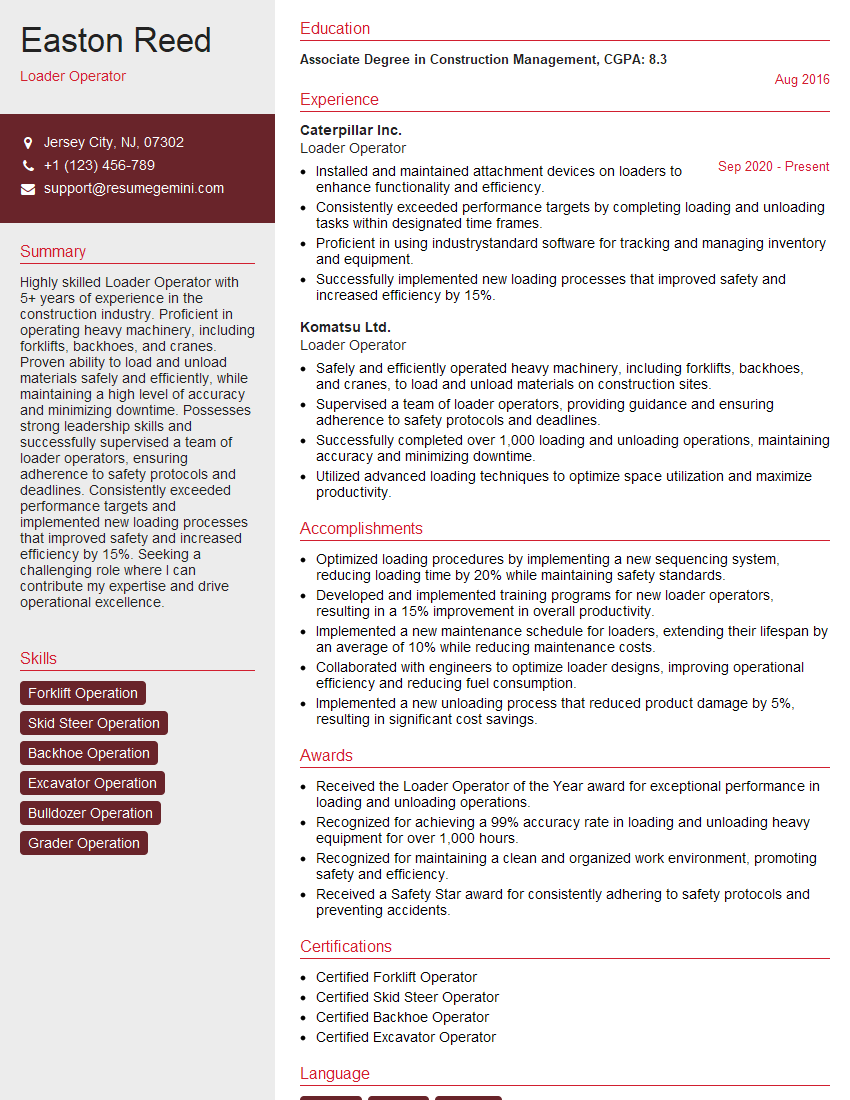
Loader Operator Resume Sample

Heavy Equipment Operator Resume Sample

Roller Operator Resume Sample

Backhoe Operator Resume Sample
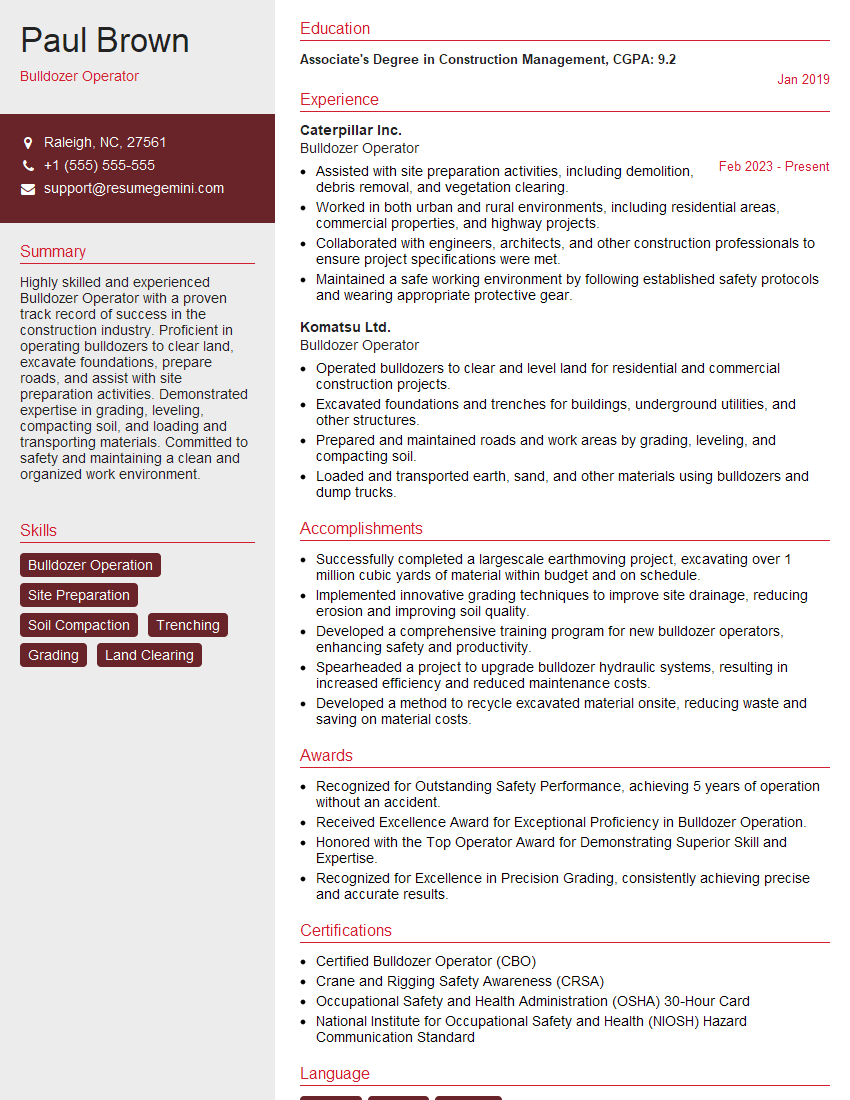
Bulldozer Operator Resume Sample
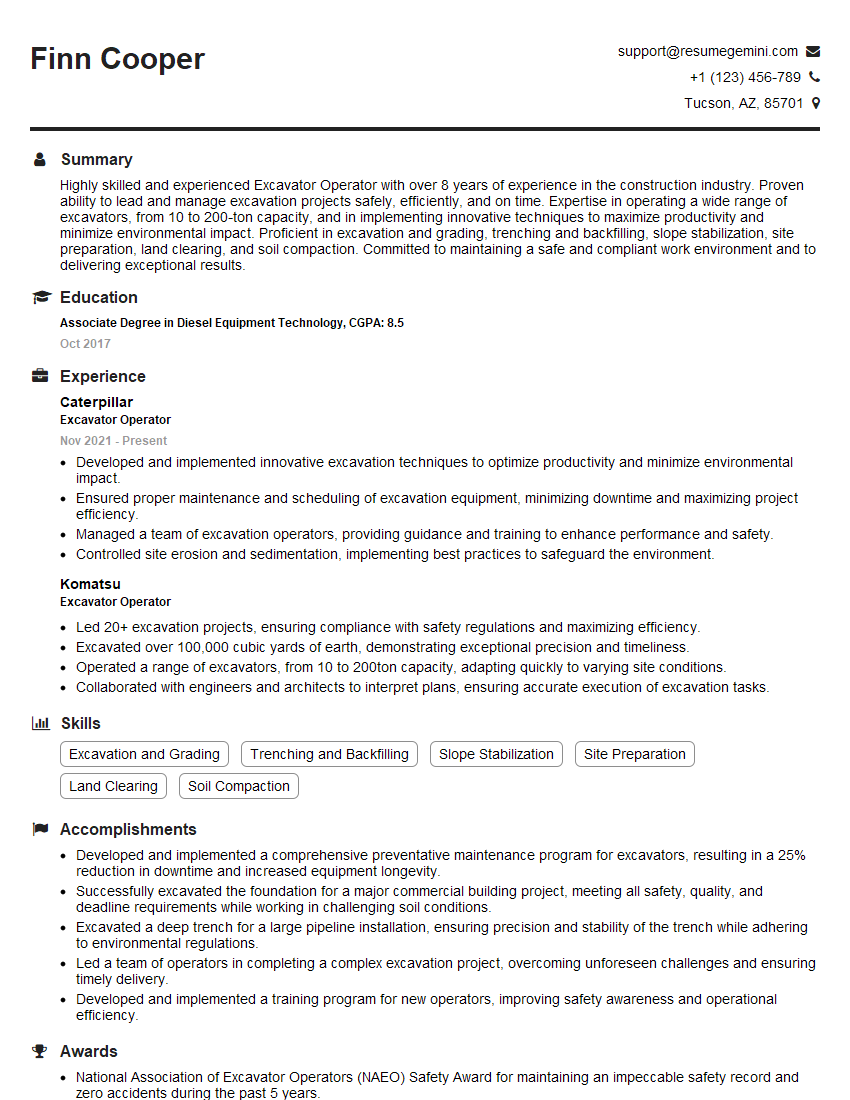
Excavator Operator Resume Sample
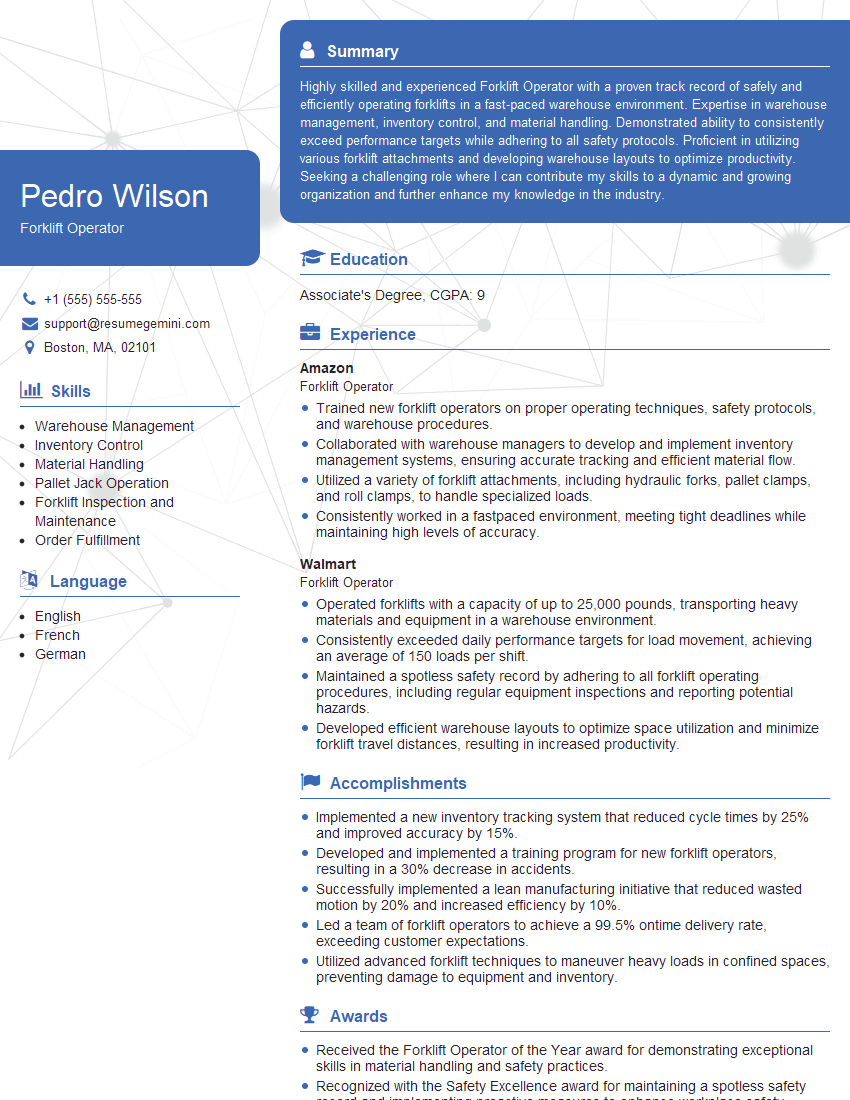
Forklift Operator Resume Sample

Grader Operator Resume Sample
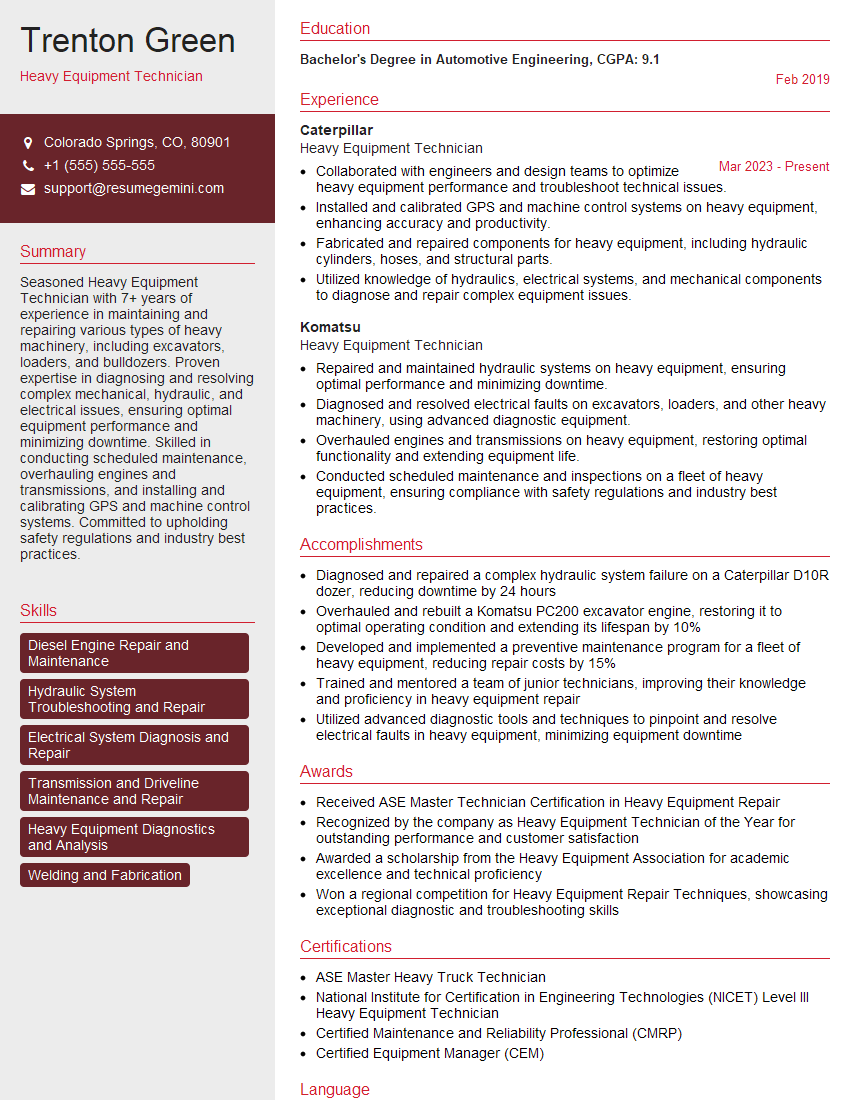
Heavy Equipment Technician Resume Sample
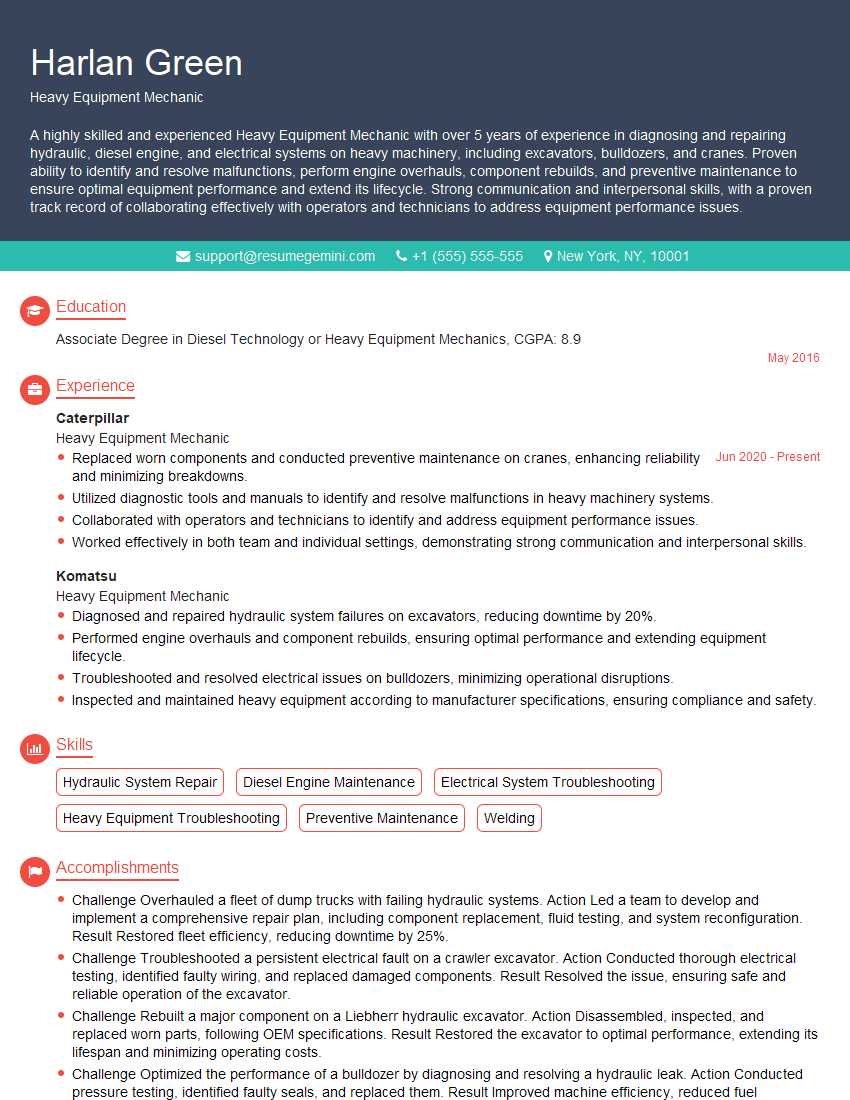
Heavy Equipment Mechanic Resume Sample

Mobile Crane Operator Resume Sample

Tower Crane Operator Resume Sample
Explore more articles
Users Rating of Our Blogs
Share Your Experience
We value your feedback! Please rate our content and share your thoughts (optional).
What Readers Say About Our Blog
Very informative content, great job.
good