Are you ready to stand out in your next interview? Understanding and preparing for Commissioning and Testing interview questions is a game-changer. In this blog, we’ve compiled key questions and expert advice to help you showcase your skills with confidence and precision. Let’s get started on your journey to acing the interview.
Questions Asked in Commissioning and Testing Interview
Q 1. Explain the difference between Factory Acceptance Testing (FAT) and Site Acceptance Testing (SAT).
Factory Acceptance Testing (FAT) and Site Acceptance Testing (SAT) are both crucial phases in the commissioning process, but they occur in different locations and have distinct focuses.
FAT, conducted at the vendor’s facility, verifies that the equipment meets the specified design requirements before it’s shipped to the project site. Think of it as a final check at the factory before the product leaves. We meticulously test individual components and their interactions, ensuring they function as expected according to the contract specifications. For example, during the FAT of a large HVAC unit, we’d verify the chiller’s cooling capacity, the airflow rates of the fans, and the operation of safety interlocks. We document everything with detailed reports and test results, including any deviations or non-conformances.
SAT, on the other hand, happens on-site after the equipment is installed and integrated into the overall system. It verifies the entire system’s performance within its intended environment. It’s like a final systems check at the actual project site. This involves testing the interaction between different pieces of equipment and ensuring seamless operation within the building’s infrastructure. For instance, for the same HVAC unit, during SAT, we’d verify the correct integration with the building management system (BMS), the proper operation of the unit within the building’s electrical and plumbing systems, and the achievement of the desired indoor temperature and humidity levels. Discrepancies found during SAT might require on-site adjustments or even revisions to the system’s design.
In essence, FAT focuses on individual equipment performance, while SAT emphasizes the integrated system’s performance in its operational environment.
Q 2. Describe your experience with commissioning complex systems.
I have extensive experience commissioning complex systems, particularly in the realm of large-scale building automation systems (BAS) and critical infrastructure projects like data centers and hospitals. One memorable project involved the commissioning of a new state-of-the-art hospital wing. This encompassed a vast array of interconnected systems: HVAC, fire safety, security, medical gas distribution, and a sophisticated building management system. The complexity lay in ensuring seamless integration and interoperability between these disparate systems, and rigorous testing was essential to identify and resolve any potential conflicts early on.
My approach always involves a phased commissioning process, starting with pre-commissioning activities like reviewing design documents and developing a comprehensive commissioning plan. This plan outlines specific test procedures, acceptance criteria, and timelines for each system. Throughout the process, I emphasize close collaboration with the design team, contractors, and end-users to ensure a smooth and efficient commissioning process. We utilized a robust issue tracking system to log, investigate, and resolve any discrepancies found during testing. Ultimately, meticulous planning, strong communication, and a systematic testing approach were crucial to delivering a fully functional and compliant hospital wing on time and within budget.
Q 3. What are the key performance indicators (KPIs) you use to measure successful commissioning?
Successful commissioning is measured using several key performance indicators (KPIs). These KPIs are tailored to the specific project but generally include:
- Completion Rate of Commissioning Activities: This tracks the percentage of planned commissioning tasks completed on time and according to specifications. A high completion rate indicates efficient project management.
- Number of Discrepancies and their Resolution Time: The fewer discrepancies found and the faster they are resolved, the smoother the commissioning process and the higher the quality of the final product. We track both the number of open issues and their resolution time.
- System Performance against Design Specifications: We verify that the systems perform to the standards outlined in the design documents. This may involve comparing measured values (e.g., temperature, pressure, flow rates) to the design specifications.
- Compliance with Codes and Standards: Ensuring adherence to relevant regulations and industry standards is critical. This is documented through inspection reports and test results.
- Client Satisfaction: Ultimately, a successful commissioning process results in a satisfied client. Regular communication and addressing their concerns are key.
These KPIs help track progress, identify potential issues early, and demonstrate the effectiveness of the commissioning process.
Q 4. How do you handle discrepancies found during commissioning?
Discrepancies found during commissioning are handled systematically using a well-defined process. The first step is to document the discrepancy thoroughly, including detailed descriptions, supporting evidence (photos, videos, data logs), and the location of the issue. We then analyze the root cause. This might involve reviewing design drawings, checking equipment specifications, and collaborating with the design and construction teams. Once the root cause is identified, we develop and implement a corrective action plan. This plan outlines the steps needed to resolve the discrepancy, assigns responsibility, sets deadlines, and defines acceptance criteria. The corrective action is then implemented, followed by verification testing to ensure the problem has been resolved. Finally, the discrepancy is closed and documented in the commissioning report. For major discrepancies, a formal change order process might be required.
For example, if a discrepancy involves an HVAC unit not meeting its specified cooling capacity, we’d investigate potential causes like insufficient refrigerant charge, malfunctioning components, or ductwork issues. The corrective action might involve recharging the refrigerant, replacing faulty parts, or adjusting the ductwork. Post-correction testing would then confirm that the unit meets its required capacity.
Q 5. What is your experience with different types of testing methodologies (e.g., unit, integration, system)?
My experience encompasses various testing methodologies, including:
- Unit Testing: This focuses on individual components or modules. For instance, in the context of a BMS, we’d test individual sensors, controllers, and actuators independently to ensure they function correctly. This is often done by the vendor during FAT.
- Integration Testing: This involves testing the interactions between different modules or systems. In our BMS example, we’d test how the sensors, controllers, and actuators work together to manage a specific zone’s temperature. This is crucial during SAT.
- System Testing: This tests the entire system as a whole. For the BMS, we’d perform functional tests and load tests to ensure that the entire building’s climate control, lighting, and security systems operate as designed under various conditions.
Often, a combination of these methodologies is employed during both FAT and SAT to provide comprehensive testing and verification.
Q 6. Explain your understanding of commissioning specifications and sequences of operations.
Commissioning specifications define the requirements for testing and acceptance of systems and equipment. They outline the testing procedures, acceptance criteria, and documentation requirements. They serve as a roadmap for the entire commissioning process. A well-written specification ensures that all stakeholders have a clear understanding of the expectations.
Sequences of operations (SOO) are detailed step-by-step instructions that guide the startup and operation of equipment and systems. They’re essentially recipes for operating a complex system. They are crucial for ensuring safe and efficient startup. For example, an SOO for a complex HVAC system would outline the specific steps for starting up the chiller, the pumps, and the air handling units in the correct order to avoid damaging the equipment or disrupting operations. SOO’s often use flowcharts to visualize the operation and are very helpful during commissioning for understanding and troubleshooting.
Both commissioning specifications and sequences of operations are vital for ensuring the successful commissioning of any complex system. They provide the framework for testing and verification, and minimize the risk of errors and delays.
Q 7. How do you ensure compliance with relevant codes and standards during commissioning?
Ensuring compliance with relevant codes and standards during commissioning is paramount. This involves a multi-faceted approach:
- Identifying Applicable Codes and Standards: The first step is to identify all relevant codes (e.g., building codes, electrical codes, fire codes) and standards (e.g., ASHRAE, NFPA) applicable to the project. This requires a thorough review of the project documents and consultation with relevant authorities.
- Integrating Codes and Standards into Commissioning Plan: The commissioning plan should explicitly address compliance with all relevant codes and standards. This includes specifying the required tests, inspection procedures, and documentation requirements.
- Performing Inspections and Tests: During the commissioning process, inspections and tests are performed to ensure compliance. This might involve visual inspections, functional tests, and performance testing.
- Maintaining Comprehensive Documentation: All compliance-related activities, including inspections, tests, and any necessary corrective actions, are meticulously documented. This documentation serves as proof of compliance and is essential for obtaining permits and approvals.
- Addressing Non-Compliances: Any identified non-compliances are addressed promptly through corrective actions. These actions must be documented and verified before the system can be accepted.
By following this systematic approach, we ensure that the commissioned systems meet all legal and regulatory requirements, ultimately ensuring the safety and functionality of the completed project.
Q 8. Describe your experience with commissioning management software and tools.
Commissioning management software and tools are crucial for efficient project execution. My experience encompasses using various platforms, from simple spreadsheet-based systems for tracking tasks and progress to sophisticated cloud-based solutions offering integrated features like scheduling, document management, and issue tracking. I’m proficient with software that facilitates communication and collaboration among the project team, subcontractors, and clients. For instance, I’ve extensively used a system that allowed real-time updates on testing results, enabling immediate identification and resolution of discrepancies. This system also generated automated reports, significantly reducing manual effort and improving data accuracy. Another tool I’ve utilized integrated with building information modeling (BIM) software, allowing for a seamless flow of information between design and commissioning. This integrated approach enhanced coordination and significantly reduced conflicts. My expertise extends to utilizing specialized software for specific commissioning tasks, such as HVAC commissioning sequences, which automates the process of testing and documenting results.
Q 9. How do you manage and resolve conflicts between different stakeholders during commissioning?
Managing stakeholder conflicts during commissioning requires a proactive and collaborative approach. It starts with clear communication and establishing a common understanding of project goals and expectations from the outset. Regular meetings and transparent communication channels are essential to keep everyone informed of the project’s progress and any potential issues. When conflicts arise, I employ a structured approach: I first listen actively to understand each party’s perspective, identifying the root cause of the disagreement. Then, I facilitate a collaborative discussion, focusing on finding mutually acceptable solutions rather than assigning blame. For instance, in a recent project, a dispute arose between the mechanical and electrical contractors regarding the responsibility for a particular system integration test. By holding a joint meeting, clarifying the contract specifications, and agreeing on a clear division of responsibilities, we successfully resolved the conflict and prevented project delays. Documentation of the agreed-upon solutions is critical to avoiding future misunderstandings.
Q 10. What is your experience with creating and reviewing commissioning plans?
Creating and reviewing commissioning plans is a core component of my expertise. A well-defined plan outlines the scope of work, testing procedures, schedules, responsibilities, and documentation requirements. I ensure that the plan aligns with industry best practices, relevant codes and standards, and the project’s specific requirements. I typically start by analyzing the design documents, understanding the system functionalities, and identifying the key performance indicators (KPIs). This informs the development of a comprehensive testing plan, which includes detailed procedures for each system and component, including acceptance criteria. For example, in a recent hospital project, the commissioning plan included detailed testing procedures for the critical HVAC system, ensuring its ability to maintain precise temperature and humidity levels within the operating rooms. During the review process, I rigorously check for completeness, accuracy, and feasibility, ensuring that all necessary resources and personnel are identified. Collaboration with stakeholders during the review phase is essential to address any concerns and make necessary revisions.
Q 11. How do you document commissioning activities and findings?
Thorough documentation is paramount throughout the commissioning process. This includes maintaining accurate records of all activities, findings, and corrective actions. We utilize a combination of digital and physical documentation methods. Digital documentation uses software to create and manage electronic records, including test results, inspection reports, photographs, and other relevant data. This approach facilitates easy access, sharing, and archiving of information. For example, we use a centralized database to store all commissioning documents, ensuring that all stakeholders have access to the latest information. Physical documentation, such as signed-off checklists and hard copies of test reports, provides a backup and ensures that important information is preserved even in the event of technology failures. We also adhere to specific naming conventions and organizational structures for documents to ensure ease of retrieval. This comprehensive documentation approach ensures compliance with regulatory requirements and facilitates future maintenance and troubleshooting.
Q 12. How do you prioritize tasks and manage time effectively during a commissioning project?
Effective task prioritization and time management are vital for successful commissioning. I use various techniques, including critical path analysis to identify tasks that are crucial to the overall project schedule. This involves analyzing task dependencies and estimating the duration of each task, allowing me to focus on high-priority items. I also employ project management software to track progress, manage deadlines, and allocate resources effectively. Furthermore, regular progress meetings with the project team help identify potential bottlenecks and adjust the schedule accordingly. For instance, in a large-scale building project, we used a Kanban board to visualize the workflow and prioritize tasks based on urgency and dependency. This approach ensured that critical tasks were completed on time, mitigating potential delays. Regular communication with stakeholders helps prevent misunderstandings and ensures everyone is aligned on priorities.
Q 13. Describe your experience with troubleshooting and resolving technical issues during commissioning.
Troubleshooting and resolving technical issues are common occurrences during commissioning. My approach involves a systematic investigation, starting with a thorough understanding of the problem. This often involves reviewing design documents, test results, and operating manuals. I then employ diagnostic tools and techniques, such as data logging and system analysis, to identify the root cause of the issue. For instance, during the commissioning of a new HVAC system, we encountered a problem with inconsistent temperature control in a particular zone. Through detailed data logging and analysis, we discovered a faulty sensor that was providing inaccurate readings. Replacing the sensor resolved the issue, demonstrating the importance of a systematic troubleshooting process. Effective collaboration with other team members, including engineers, contractors, and vendors, is crucial in these situations to ensure a comprehensive evaluation and efficient resolution of technical issues.
Q 14. What is your understanding of the commissioning process lifecycle?
The commissioning process lifecycle typically follows a phased approach, beginning with the planning phase where the commissioning plan and procedures are developed. This is followed by the implementation phase, where the actual commissioning activities, including testing, inspection, and verification, are carried out. The next phase involves the documentation of findings and generation of reports, highlighting any deficiencies or deviations from the design specifications. Finally, a closeout phase is essential, during which all outstanding issues are resolved, and final documentation, such as the commissioning report, is submitted. Throughout the lifecycle, there’s a continuous feedback loop, with regular communication and collaboration between stakeholders to ensure alignment and effective problem-solving. A key element is the ongoing verification of systems and equipment against performance criteria, ensuring that the building systems operate as intended and meet the owner’s operational needs. This approach supports ongoing performance and optimal building operation.
Q 15. Explain your experience with different types of building systems (e.g., HVAC, plumbing, electrical).
My experience spans a wide range of building systems, encompassing HVAC, plumbing, electrical, and fire protection systems. In HVAC, I’ve worked extensively on commissioning complex VAV (Variable Air Volume) systems, chillers, boilers, and building automation systems (BAS). This includes verifying proper airflow, temperature control, and energy efficiency. With plumbing systems, my focus has been on testing domestic water systems, fire sprinklers, and sanitary drainage to ensure proper pressure, flow rates, and leak detection. In electrical systems, I have experience commissioning power distribution, lighting controls, and emergency power systems, focusing on safety compliance and operational efficiency. For instance, on a recent high-rise project, I oversaw the commissioning of a sophisticated HVAC system incorporating smart sensors and predictive maintenance capabilities, resulting in a 15% reduction in energy consumption during the first year of operation.
My approach involves thorough review of design documents, observation of installation, performance testing, and meticulous documentation. I’m adept at identifying and resolving discrepancies between design intent and as-built conditions. For example, I once discovered a miswiring in the electrical panel during the commissioning phase of a hospital, which could have resulted in significant safety hazards. Early detection and resolution prevented a potential crisis.
Career Expert Tips:
- Ace those interviews! Prepare effectively by reviewing the Top 50 Most Common Interview Questions on ResumeGemini.
- Navigate your job search with confidence! Explore a wide range of Career Tips on ResumeGemini. Learn about common challenges and recommendations to overcome them.
- Craft the perfect resume! Master the Art of Resume Writing with ResumeGemini’s guide. Showcase your unique qualifications and achievements effectively.
- Don’t miss out on holiday savings! Build your dream resume with ResumeGemini’s ATS optimized templates.
Q 16. How do you ensure the safety of personnel during commissioning activities?
Safety is paramount during commissioning. My approach is proactive, implementing a comprehensive safety plan that includes regular toolbox talks, site-specific safety orientations, and the use of appropriate personal protective equipment (PPE). We conduct thorough risk assessments identifying potential hazards such as working at heights, exposure to energized equipment, and confined space entry. Specific safety measures like lock-out/tag-out procedures for electrical equipment and fall protection systems are rigorously enforced. Detailed safety protocols are included in the commissioning plan, and all team members receive specific training to ensure adherence to these standards. We also maintain detailed incident reports and conduct post-incident analysis to continuously improve our safety practices. I always emphasize that safety is a shared responsibility, creating a culture where everyone feels empowered to stop work if a safety concern arises.
Q 17. What are some common challenges you face during commissioning projects, and how do you overcome them?
Common challenges include schedule constraints, incomplete design documents, and coordination issues with subcontractors. Schedule conflicts often arise due to the overlapping nature of construction and commissioning activities. To mitigate this, we proactively develop a detailed commissioning schedule, integrating it with the overall project timeline. We maintain open communication with the general contractor and subcontractors to ensure timely completion of tasks. Inconsistent design documents can lead to delays and rework. We address this through regular meetings with the design team to clarify ambiguities and resolve discrepancies. Effective communication and collaboration with subcontractors are crucial for ensuring that their work meets the required standards. We establish clear communication channels and maintain meticulous records of all interactions and decisions. For example, a recent project faced delays due to late delivery of critical equipment. We mitigated the impact by prioritizing commissioning tasks that were not reliant on that equipment while actively engaging with the supplier to expedite delivery.
Q 18. Describe your experience with data analysis and reporting in the context of commissioning.
Data analysis and reporting are integral to my commissioning process. We utilize various data acquisition tools to collect performance data from building systems, often integrating with the BAS. This data is then analyzed to verify that systems are performing according to design specifications and energy efficiency targets. We use software like Excel, specialized commissioning software, and building information modeling (BIM) data to analyze trends, identify anomalies, and generate comprehensive reports. These reports clearly summarize our findings, including recommendations for adjustments or repairs, and provide visual representations of system performance through graphs and charts. For instance, we used data analysis to pinpoint a faulty damper motor in an HVAC system that was causing inefficient air distribution, leading to a targeted solution and improved energy performance.
Q 19. How do you collaborate effectively with other commissioning team members and subcontractors?
Effective collaboration is essential for successful commissioning. We establish clear roles and responsibilities within the commissioning team, including regular meetings and open communication channels. We leverage collaborative tools such as project management software to track progress and ensure that everyone has access to relevant information. Regular communication with subcontractors is achieved through detailed submittal reviews, regular site meetings, and proactive conflict resolution. We foster a culture of mutual respect and trust, recognizing that each team member brings unique expertise to the project. For example, on a recent project, a conflict arose between the HVAC and electrical subcontractors regarding the integration of their systems. Through proactive intervention and collaborative problem-solving, we reached a mutually agreeable solution, preventing significant delays.
Q 20. Explain your experience with different types of commissioning methodologies (e.g., traditional, phased, integrated).
I have experience with traditional, phased, and integrated commissioning methodologies. Traditional commissioning involves sequential testing of individual systems, typically occurring near the end of construction. Phased commissioning, on the other hand, breaks down the commissioning process into smaller, manageable phases, allowing for earlier identification and resolution of issues. Integrated commissioning incorporates commissioning principles throughout the entire design and construction process, fostering better collaboration and more efficient solutions. The choice of methodology depends on project complexity, budget, and schedule. For example, on a large-scale hospital project, an integrated commissioning approach was essential to coordinate the commissioning of numerous complex systems, minimizing risks and ensuring optimal performance. In contrast, a smaller renovation project might benefit from a phased approach.
Q 21. How do you utilize technology and automation to improve efficiency in commissioning?
Technology and automation significantly enhance commissioning efficiency. We utilize data loggers, automated testing equipment, and commissioning software to streamline data collection and analysis. This reduces the time and resources required for manual testing and reporting. Building automation systems (BAS) provide access to real-time system performance data, enabling remote monitoring and diagnostics. Digital twin technology allows for virtual commissioning of systems before construction, minimizing potential issues during the actual commissioning process. For instance, we employed automated testing software to validate the functionality of thousands of lighting control devices in a large office building, drastically reducing testing time and improving accuracy compared to manual methods. The use of cloud-based data storage and analysis platforms also facilitates collaboration and efficient reporting.
Q 22. Describe your experience with developing and executing commissioning test procedures.
Developing and executing commissioning test procedures is a crucial part of ensuring building systems perform as designed. It involves a systematic approach, starting with a thorough review of design documents to identify all testable components and their functionalities. Then, I create detailed test procedures that outline the steps to verify each system’s performance. These procedures typically include pre-test checks, testing methods, acceptance criteria, and documentation requirements.
For example, in commissioning a HVAC system, a procedure might involve verifying the correct operation of temperature sensors, confirming that dampers move to the correct positions based on control signals, and testing the functionality of safety interlocks. After developing the procedures, I meticulously execute them, documenting all results and deviations from the expected performance. Any discrepancies are reported to the design and construction teams for resolution before system handover. I’ve worked on projects ranging from small office buildings to large healthcare facilities, adapting the complexity of the procedures to meet the project’s scale and technical requirements.
I also use specialized commissioning software to streamline the process and enhance data management. This software allows me to schedule tests, track progress, analyze results, and generate comprehensive reports. This digital approach significantly improves efficiency and reduces the risk of errors compared to manual methods.
Q 23. How do you verify the performance of commissioned systems against design specifications?
Verifying commissioned systems against design specifications requires a meticulous comparison of actual performance against the design intent. This involves collecting data through various testing methods, such as functional testing, performance testing, and integrated systems testing. Functional testing verifies that each component operates as intended, while performance testing assesses its efficiency and capacity. Integrated systems testing ensures that multiple systems work together harmoniously.
For instance, to verify the performance of a chiller plant, I would measure its cooling capacity, energy consumption, and water flow rates. These measurements are then compared to the design specifications provided by the engineers. Any deviations beyond acceptable tolerances require investigation to identify the root cause. This might involve reviewing construction documents, inspecting equipment, and collaborating with contractors to address issues. Sophisticated data analysis techniques might be applied if trends are subtle. I often use data logging equipment to collect continuous data over extended periods to observe system behavior under various operating conditions, allowing me to identify subtle deviations that might be missed in shorter, simpler testing.
Documenting all findings, including deviations and corrective actions, is crucial. This documentation forms a vital part of the commissioning report, which is used to demonstrate that the systems meet the required standards before project completion.
Q 24. What is your experience with energy commissioning and energy modeling?
Energy commissioning focuses on optimizing building systems to enhance energy efficiency and reduce operational costs. My experience includes conducting energy audits, identifying energy-saving opportunities, and implementing measures to improve building performance. This often involves using energy modeling software to simulate different scenarios and predict the impact of proposed energy-efficiency upgrades.
For example, I’ve used energy modeling software to simulate the impact of replacing outdated lighting fixtures with high-efficiency LED lighting. The simulation predicted a significant reduction in energy consumption, and the subsequent implementation of the upgrades confirmed these predictions. In another project, we used energy modeling to determine the optimal control strategies for a HVAC system, resulting in significant energy savings. I’m proficient with various energy modeling software packages, and I always strive to utilize best practices established by organizations like ASHRAE to ensure that the modeling process is rigorous and the results are reliable.
Energy modeling is a powerful tool for predicting the performance of energy-efficiency measures before implementation, reducing the risk of costly mistakes and ensuring that projects meet their energy performance goals.
Q 25. Explain your understanding of building automation systems (BAS) and their role in commissioning.
Building Automation Systems (BAS) are the central nervous system of modern buildings, controlling and monitoring various building systems such as HVAC, lighting, and security. They play a crucial role in commissioning by providing a platform for testing, verifying, and optimizing the performance of these systems. The BAS allows me to access real-time data from sensors and controllers, monitor system performance, and remotely control equipment.
During commissioning, the BAS is extensively tested to ensure that its programming is accurate and that it can effectively control all connected equipment. This includes verifying that control sequences are correctly implemented, that alarms are functioning properly, and that data is accurately logged and reported. I often work with BAS programmers to ensure that the system’s functionality aligns with design requirements and that the system’s graphic user interface is intuitive and user-friendly. The BAS also supports long-term monitoring, ensuring that systems are performing optimally after commissioning and facilitating proactive maintenance.
For example, I may use the BAS to verify that the HVAC system’s cooling setpoint is accurately maintained, that the system automatically switches between heating and cooling modes as needed, and that any equipment malfunctions are promptly flagged via the alarm system. This real-time feedback is essential for identifying issues and confirming optimal system performance.
Q 26. How do you ensure the long-term operability and maintainability of commissioned systems?
Ensuring the long-term operability and maintainability of commissioned systems involves several key steps. First, thorough documentation is crucial. This includes detailed commissioning reports, as-built drawings, and operational manuals that clearly describe the system’s design, operation, and maintenance requirements. This documentation serves as a valuable resource for building operators and maintenance personnel.
Second, comprehensive training is essential. I always make sure to train building operators on how to effectively operate and maintain the commissioned systems. This training covers topics such as system operation, troubleshooting, and routine maintenance procedures. This enables building personnel to address minor issues before they escalate into significant problems. Furthermore, I create detailed preventive maintenance schedules and checklists to ensure that routine inspections and maintenance activities are performed at appropriate intervals, identifying potential issues before they become significant problems.
Third, establishing a robust commissioning process that focuses on functional performance verification instead of just design conformance is essential. This will allow for continued system optimization over time, maximizing overall effectiveness and reducing downtime. Finally, regular monitoring of the systems’ performance using the BAS or other monitoring tools helps identify potential issues before they become major problems, ultimately ensuring the systems’ operational effectiveness and longevity.
Q 27. Describe your experience with developing and implementing a commissioning quality assurance program.
Developing and implementing a commissioning quality assurance (CQA) program involves establishing a structured framework to ensure the quality of the commissioning process itself. This program defines roles and responsibilities, establishes standardized procedures, and sets clear expectations for quality control. A CQA program ensures that commissioning activities are completed accurately, efficiently, and in compliance with relevant standards.
Key elements of a CQA program include: defining clear commissioning scopes and objectives; developing standardized commissioning procedures and checklists; establishing a system for tracking commissioning progress and documenting findings; conducting regular quality control reviews and audits to identify potential improvements; and maintaining a robust communication system among all stakeholders. My experience includes developing CQA programs for various projects, ranging from small renovations to large new construction projects. I’ve adapted the program’s specifics to the unique requirements of each project, always ensuring alignment with industry best practices and relevant standards.
For example, a CQA program may include a checklist for each commissioning activity, ensuring that all steps are consistently followed. Regular audits assess compliance with these checklists. Deviations are documented and addressed immediately, promoting continuous improvement in the commissioning process. The goal is to create a self-improving commissioning system that continually enhances its ability to deliver high-quality results.
Q 28. How do you stay current with advancements in commissioning technologies and best practices?
Staying current with advancements in commissioning technologies and best practices is vital for maintaining a competitive edge in the field. I actively participate in professional organizations such as ASHRAE, where I engage with the latest research and best practices. I regularly attend industry conferences and workshops to learn about new technologies and techniques. This includes exploring innovative commissioning tools and software, new building system technologies, and the evolving standards and guidelines related to commissioning.
I also actively engage in professional development activities, including online courses, webinars, and training programs. For example, I recently completed a course on advanced energy modeling techniques and am actively exploring the use of artificial intelligence and machine learning in commissioning. Following key industry journals, publications and actively participating in online forums enables continuous learning and knowledge sharing with industry peers. This continuous learning ensures I remain at the forefront of the commissioning field, delivering the highest quality of service to my clients.
This proactive approach to professional development keeps my knowledge fresh and relevant, allowing me to leverage the latest innovations to deliver effective and efficient commissioning solutions for my clients.
Key Topics to Learn for Your Commissioning and Testing Interview
- System Understanding: Thoroughly grasp the system’s design, specifications, and operational requirements before commencing testing. This includes understanding P&IDs, datasheets, and control strategies.
- Testing Methodologies: Familiarize yourself with various testing approaches like functional testing, performance testing, and safety testing. Be prepared to discuss the practical application of these methods in different scenarios.
- Instrumentation and Measurement: Demonstrate a strong understanding of the instrumentation used in commissioning and testing, including sensors, transducers, and data acquisition systems. Be ready to explain how to troubleshoot and calibrate these tools.
- Commissioning Procedures: Understand the various phases of commissioning, including pre-commissioning, commissioning, and post-commissioning activities. Be prepared to discuss practical examples and potential challenges.
- Troubleshooting and Problem-Solving: Develop your ability to analyze system behavior, identify malfunctions, and propose effective solutions based on your understanding of the system and testing results. Think about scenarios and how you’d approach them systematically.
- Safety and Regulations: Highlight your awareness of relevant safety regulations and protocols within the commissioning and testing process. Understanding safety procedures is paramount.
- Documentation and Reporting: Showcase your proficiency in documenting test procedures, recording results, and generating comprehensive reports. Clear and concise reporting is critical.
- Industry Standards: Demonstrate familiarity with relevant industry standards and best practices pertinent to commissioning and testing in your specific field (e.g., building automation, process control).
Next Steps
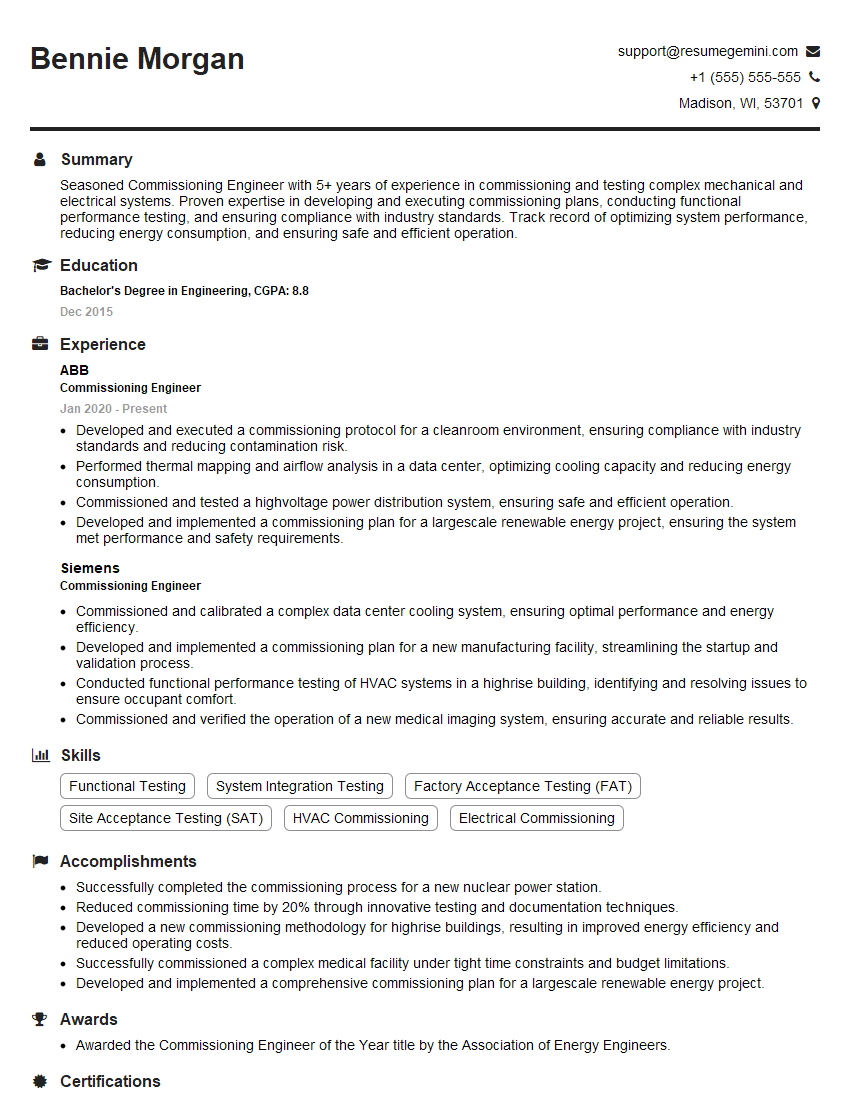
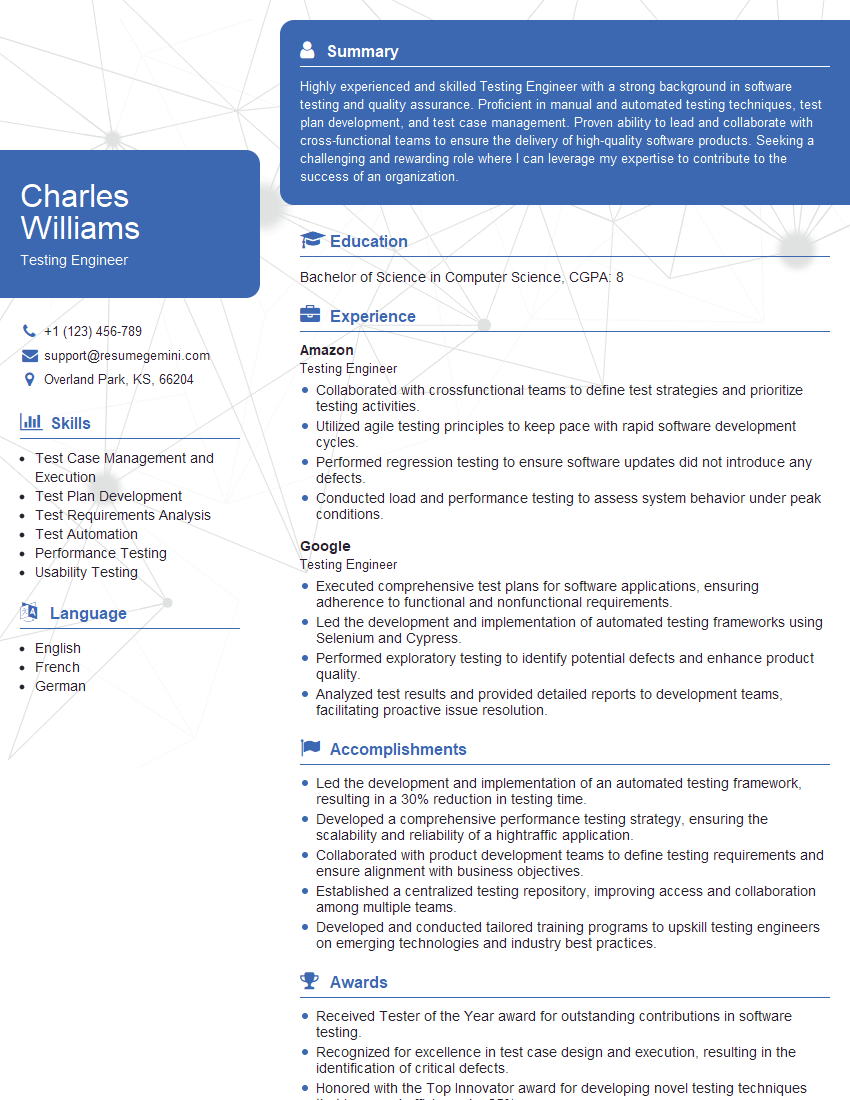
Mastering commissioning and testing is crucial for career advancement in this in-demand field. It opens doors to exciting opportunities and higher earning potential. To maximize your job prospects, create an ATS-friendly resume that highlights your skills and experience effectively. ResumeGemini is a trusted resource to help you build a professional resume that catches the eye of recruiters. We provide examples of resumes tailored to Commissioning and Testing to guide you in showcasing your qualifications effectively. Take the next step towards your dream career today!
Explore more articles
Users Rating of Our Blogs
Share Your Experience
We value your feedback! Please rate our content and share your thoughts (optional).
What Readers Say About Our Blog
Very informative content, great job.
good