The right preparation can turn an interview into an opportunity to showcase your expertise. This guide to OperationOfHeavyMachinery interview questions is your ultimate resource, providing key insights and tips to help you ace your responses and stand out as a top candidate.
Questions Asked in OperationOfHeavyMachinery Interview
Q 1. Describe your experience operating excavators.
My excavator experience spans over eight years, encompassing various models from compact excavators for intricate urban projects to larger units for extensive earthmoving tasks. I’m proficient in operating both hydraulic and mechanical excavators, mastering techniques like trenching, digging foundations, and material handling. For example, on a recent project constructing a new housing development, I utilized a 30-ton excavator to efficiently excavate the basements and install underground utilities. My experience includes working with different attachments, such as rippers, hammers, and buckets, adapting my techniques based on the specific needs of the job and the soil conditions.
I’m adept at operating excavators in confined spaces, prioritizing safety and precision in my movements. I’ve successfully completed projects in challenging environments, requiring precise control and understanding of the machine’s capabilities and limitations. My proficiency also extends to preventive maintenance, enabling me to identify potential issues and contribute to minimizing downtime.
Q 2. Explain the pre-operation checklist for a bulldozer.
The pre-operation checklist for a bulldozer is crucial for ensuring safe and efficient operation. It’s a systematic process I rigorously follow before every use. The checklist typically includes:
- Visual Inspection: Checking for any visible damage to the tracks, blade, and undercarriage. Look for leaks, loose bolts, or any signs of wear and tear. Think of it like a car inspection, but far more critical!
- Fluid Levels: Verifying the levels of engine oil, hydraulic fluid, coolant, and fuel. Low fluid levels can lead to catastrophic failures.
- Tire Pressure (if applicable): Ensuring correct tire inflation to maintain traction and stability. Under-inflation or over-inflation can lead to serious accidents.
- Brake and Steering System Check: Testing the responsiveness of the brakes and steering mechanisms to ensure they function correctly. A simple test drive is usually sufficient.
- Safety Features: Confirming that the lights, horn, and other safety devices are working properly. Safety is paramount, and these features are your life lines.
- Operational Controls: Testing all control levers and pedals to make sure they operate smoothly and respond without delay.
- Surrounding Area Assessment: Before starting, I always thoroughly inspect the work area for obstacles, personnel, and potential hazards. This is crucial for preventing accidents.
Failing to perform this checklist can lead to significant safety risks and mechanical issues, and I prioritize it diligently.
Q 3. What safety procedures do you follow when operating heavy machinery?
Safety is my utmost priority when operating heavy machinery. My approach involves multiple layers of precautions:
- Pre-Operational Checks: Always starting with a thorough pre-operation checklist, as previously discussed.
- Personal Protective Equipment (PPE): Wearing appropriate PPE such as hard hats, safety glasses, hearing protection, and high-visibility clothing.
- Site Awareness: Maintaining constant situational awareness of the surroundings, including other workers, obstacles, and potential hazards. This includes using mirrors and spotters when necessary.
- Safe Operating Practices: Following established safe operating procedures for each machine and adhering to site-specific safety regulations. This is a constant learning process and I’m always open to training.
- Communication: Maintaining clear and consistent communication with other personnel on the site, using hand signals or radios as appropriate.
- Emergency Procedures: Knowing and understanding the emergency procedures for the specific machine and the worksite, in case of unforeseen events.
- Regular Maintenance: Participating actively in regular machine maintenance to ensure its operational safety. Preventative maintenance minimizes the risks.
I view safety as an ongoing commitment, not just a checklist. A near-miss incident is as valuable a learning opportunity as a successful completion.
Q 4. How do you handle unexpected equipment malfunctions?
Handling unexpected equipment malfunctions requires a calm and methodical approach. My response is based on a tiered system:
- Immediate Action: The first step is to shut down the machine safely, following the established emergency shutdown procedures. This prevents further damage and minimizes the risk of accidents.
- Assessment: Once the machine is safely stopped, I conduct a thorough assessment of the problem, identifying the cause and extent of the malfunction. This could involve checking gauges, listening for unusual noises, or visually inspecting components.
- Reporting: I report the malfunction to my supervisor immediately, providing a detailed description of the issue and the steps I’ve taken. Effective communication is key.
- Troubleshooting (if qualified): Depending on my level of expertise and the nature of the problem, I might attempt basic troubleshooting, following the machine’s manual and my training. However, I avoid attempting repairs beyond my skillset.
- Professional Assistance: If the problem is beyond my ability to solve, I will contact a qualified mechanic or service technician to repair the machine. Safety and proper repair supersede any time constraints.
Documenting the incident thoroughly is vital for future prevention and analysis. My training emphasized the importance of minimizing downtime and identifying recurring problems.
Q 5. Describe your experience with different types of loaders.
My experience includes operating various types of loaders, including wheel loaders, skid steer loaders, and backhoe loaders. Each has its own strengths and weaknesses, making them suitable for different applications.
- Wheel Loaders: These are my most frequent loaders, used for moving large quantities of material over longer distances. Their high capacity and speed are invaluable for large-scale projects like road construction.
- Skid Steer Loaders: These compact loaders excel in tight spaces where maneuverability is paramount. I’ve utilized them extensively in landscaping and smaller construction sites where larger equipment is impractical.
- Backhoe Loaders: These versatile machines combine the functions of a backhoe and a front-end loader. The ability to excavate and load simultaneously is incredibly useful for tasks requiring both digging and material handling.
My experience extends to operating loaders with various attachments, such as forks, buckets, and snow blowers, allowing me to adapt to a variety of tasks. Knowing the limitations and capabilities of each type of loader is critical to successful and efficient operation.
Q 6. What are the limitations of a crane’s lifting capacity?
A crane’s lifting capacity is not simply a single number but is significantly impacted by several factors:
- Rated Capacity: The maximum weight a crane can lift under ideal conditions, usually specified in the crane’s manual. This is the theoretical maximum.
- Boom Length and Angle: The longer the boom and the greater its angle from the vertical, the less weight the crane can safely lift. The boom acts like a lever, and longer levers require more force.
- Wind Speed and Direction: High winds can significantly reduce the crane’s capacity and pose a serious safety risk. Wind affects the stability and control of the load.
- Load Radius: The distance from the crane’s center of rotation to the load’s center of gravity. The further the load, the lower the lifting capacity.
- Load Configuration: The shape, size, and distribution of weight within the load can impact stability. An unevenly distributed load can shift during lifting.
- Ground Conditions: The stability of the ground beneath the crane’s outriggers is critical. Soft or unstable ground reduces the crane’s capacity.
Ignoring these limitations can lead to catastrophic structural failure and accidents. Always consult the crane’s load chart for safe operation.
Q 7. How do you ensure the stability of a crane during operation?
Ensuring crane stability involves a multi-faceted approach, prioritizing safety at every step:
- Proper Setup: Begin with careful selection of the crane’s location, ensuring the ground is firm and level. Outriggers must be fully extended and properly positioned.
- Load Chart Consultation: Always consult the crane’s load chart to determine the safe lifting capacity under the current conditions. This chart accounts for boom length, radius, and other factors.
- Weight Distribution: Ensure the load is evenly distributed to prevent it from swinging unexpectedly during lifting and movement. This prevents instability.
- Outrigger Deployment: Outriggers should be fully extended and firmly seated on stable ground. Incorrect deployment can compromise stability.
- Wind Conditions Monitoring: Continuously monitor wind speed and direction, and stop operations if wind speeds exceed safe limits. High winds can easily topple a crane.
- Smooth Operations: Operate the crane smoothly and avoid sudden movements, which can cause oscillations and instability. Smooth movements are crucial to prevent load sway.
- Supervision: Have a designated signal person to guide the crane operator and ensure clear communication. A dedicated spotter is essential.
Crane stability is not just a technical aspect; it is a matter of life and death. Prioritizing these measures consistently is vital for ensuring safety on the job site.
Q 8. Explain your experience with grading techniques.
Grading techniques involve precisely moving earth to create a level or sloped surface. This is crucial in construction, landscaping, and road building. My experience spans various methods, from using a grader’s blade to create a smooth finish to employing GPS-guided systems for highly accurate large-scale projects. For instance, I’ve worked on highway projects requiring precise longitudinal and cross slopes to ensure proper drainage and safety. I’m proficient in techniques like cutting, filling, and blading, and understand the importance of maintaining proper blade angles and speed to achieve the desired grade. I also have experience working with different soil types and adjusting techniques accordingly, for example, using a different approach for loose sandy soil versus compacted clay.
One memorable project involved grading a large area for a new housing development. Achieving the precise grades required for foundations and drainage was crucial. Using a combination of GPS guidance and manual blade adjustments, we achieved the required tolerances, avoiding costly rework and delays. This experience demonstrated my ability to work effectively under pressure and deliver high-quality results.
Q 9. Describe your experience with different types of backhoes.
Backhoes are versatile machines, and I’ve worked extensively with various types, categorized primarily by their size and configuration. Small backhoes, often found on construction sites and landscaping projects, are excellent for smaller tasks like trenching and foundation work. Medium-sized backhoes offer a balance of maneuverability and power, ideal for a wider range of applications. Large backhoes are used for heavier excavation jobs, such as digging large trenches or foundations for substantial structures. Beyond size, there are differences in features like the type of hydraulic system (e.g., open-center, closed-center), which impacts responsiveness and efficiency. I’ve also worked with backhoes featuring different types of buckets, from narrow trenching buckets to wide digging buckets, selecting the appropriate tool for the task at hand.
For instance, on a recent project involving utility line installation, I used a small backhoe with a narrow trenching bucket to carefully excavate trenches while minimizing damage to surrounding infrastructure. On another occasion, a large backhoe with a wider bucket was essential for creating the foundation for a large commercial building.
Q 10. How do you maintain the proper tire pressure on heavy equipment?
Maintaining proper tire pressure on heavy equipment is critical for safety, fuel efficiency, and tire longevity. Underinflation leads to increased wear, heat buildup, and potential tire failure, while overinflation can cause uneven wear and damage to the rim. I use a reliable tire pressure gauge, ensuring it’s calibrated and accurately measuring pressure in the appropriate units (PSI or kPa). The manufacturer’s recommended pressure is always checked in the operator’s manual. This value depends on the load and conditions (e.g., different pressures for on-road and off-road work).
The process involves checking the pressure when the tires are cold (ideally, after the equipment has been sitting for several hours). I then inflate or deflate the tires as needed using a suitable air compressor. I meticulously record the pressure readings, ensuring a consistent pressure across all tires for balance. Ignoring proper pressure can have significant consequences, such as a blowout, potentially leading to accidents and substantial repair costs.
Q 11. What are the different types of excavator attachments and their uses?
Excavator attachments significantly expand their capabilities. The choice of attachment depends heavily on the specific task. Common attachments include:
- Buckets: Various sizes and shapes for digging, loading, and material handling. There are narrow trenching buckets, wide digging buckets, and even specialized buckets for handling specific materials.
- Hydraulic Hammers: Used for breaking rock, concrete, and other tough materials.
- Rippers: For loosening hard ground and breaking up compacted soil.
- Grapples: For handling logs, scrap metal, and other bulky materials.
- Augers: For drilling holes for foundations or utility poles.
- Thumbs: Added to buckets to improve material handling and precision.
For instance, on a demolition project, a hydraulic hammer was essential for breaking concrete, while on a landscaping project, a grapple was used for efficiently handling large rocks and debris. Selecting the correct attachment is vital for efficiency, safety, and minimizing potential damage to equipment.
Q 12. How do you perform a daily inspection of a forklift?
A daily forklift inspection is crucial for safety. My routine includes checking the following:
- Tires: Inspect for wear, cuts, and proper inflation. Uneven wear may indicate mechanical issues.
- Hydraulic System: Check for leaks and proper operation. Look for fluid drips, which indicate potential problems with seals or hoses.
- Mast and Chains: Check for damage, bending, or wear. Verify the smooth and efficient operation of the lift mechanism.
- Brakes: Test braking action, ensuring the forklift responds smoothly and stops effectively.
- Lights and Horns: Verify that lights and horns are working correctly for visibility and safety.
- Steering and Controls: Check that the steering, levers, and pedals operate smoothly and correctly.
- Fuel Levels: Check fuel levels and look for any leaks.
- Overall Condition: Check for any loose parts, damage, or any other issues that might affect the forklift’s safety.
Documentation is key. I would always record any issues found and report them to the supervisor for repair. A poorly maintained forklift is a dangerous one, and routine checks prevent accidents and costly repairs.
Q 13. Explain your understanding of load charts and weight distribution.
Load charts and weight distribution are fundamental to safe operation. Load charts specify the maximum weight an equipment can safely lift at different distances and angles. Exceeding these limits can lead to equipment damage, instability, and serious injury. Weight distribution is crucial; overloading one side or using an inappropriate lift point can cause instability and tipping.
Understanding load charts is essential. I carefully check the weight of the load, its center of gravity, and the distance from the lift point to ensure it’s within the safe operating parameters. I also take into account ground conditions. Soft or uneven ground can reduce stability, requiring careful positioning and potentially a lighter load. For instance, when lifting heavy materials, I always ensure the load is properly balanced and secured to prevent shifting during transit. Failing to consider these factors could lead to accidents and costly repairs.
Q 14. How do you manage fuel consumption efficiently?
Efficient fuel consumption is vital for both cost savings and environmental responsibility. My approach involves several strategies:
- Proper Maintenance: Regular maintenance, including engine tune-ups, ensures optimal engine performance and fuel efficiency.
- Operator Skill: Smooth operation minimizes fuel waste. Aggressive acceleration and braking consume significantly more fuel.
- Load Management: Carrying only necessary loads reduces strain on the engine and improves fuel efficiency.
- Idle Reduction: Minimize idling time by shutting down the equipment when not in use for extended periods.
- Terrain Selection: When possible, choose routes and paths that minimize obstacles and steep grades. This reduces strain on the engine, saving fuel.
For example, on a large grading project, I meticulously planned routes to minimize unnecessary engine strain, resulting in noticeable fuel savings over the course of the project. Fuel efficiency isn’t just about cost; it also minimizes the environmental impact of our operations.
Q 15. What are the common causes of equipment breakdowns and how do you troubleshoot them?
Equipment breakdowns are unfortunately a common occurrence in heavy machinery operation. They stem from a variety of causes, broadly categorized as mechanical, electrical, and hydraulic failures. Effective troubleshooting requires a systematic approach.
- Mechanical Failures: These often involve wear and tear, such as worn bearings, broken drive chains, or damaged gears. Think of it like a car needing regular maintenance – neglecting this leads to eventual breakdown. Troubleshooting involves visual inspection, listening for unusual noises, and checking for excessive vibration. For example, a noticeable grinding sound in a tracked vehicle might indicate a worn track roller.
- Electrical Failures: These could be anything from faulty wiring, blown fuses, or malfunctioning sensors. Imagine a computer suddenly freezing; similar issues can occur with the complex electronic systems in modern machinery. Diagnosing these problems often involves using multimeters to check voltage and continuity in circuits, and consulting wiring diagrams. A suddenly unresponsive control panel might point to a power supply or control module issue.
- Hydraulic Failures: Leaks in hoses or cylinders, malfunctioning pumps, or contaminated hydraulic fluid are common culprits. Hydraulic systems are essentially the ‘muscles’ of the machine, so a failure here can be crippling. Troubleshooting frequently includes checking for leaks, measuring hydraulic pressure, and inspecting fluid condition. A noticeable drop in hydraulic pressure during operation can indicate a leak somewhere in the system.
My troubleshooting strategy always starts with a safety check – ensuring the machine is securely shut down and the area is safe. Then, I carefully examine the machine, checking for obvious signs of damage. I then utilize relevant diagnostic tools, including multimeters and pressure gauges. Finally, if the issue isn’t immediately apparent, I consult service manuals and potentially contact a mechanic for specialized assistance. Prioritizing safety and a methodical approach significantly reduces downtime and prevents further damage.
Career Expert Tips:
- Ace those interviews! Prepare effectively by reviewing the Top 50 Most Common Interview Questions on ResumeGemini.
- Navigate your job search with confidence! Explore a wide range of Career Tips on ResumeGemini. Learn about common challenges and recommendations to overcome them.
- Craft the perfect resume! Master the Art of Resume Writing with ResumeGemini’s guide. Showcase your unique qualifications and achievements effectively.
- Don’t miss out on holiday savings! Build your dream resume with ResumeGemini’s ATS optimized templates.
Q 16. Describe your experience with GPS guidance systems in heavy equipment operation.
I have extensive experience using GPS guidance systems in various heavy equipment, including excavators, bulldozers, and graders. These systems dramatically improve accuracy and efficiency. For example, on a recent road construction project, we used GPS-guided graders to ensure precise grading within the specified tolerances. Without GPS, achieving that level of accuracy would have been significantly more time-consuming and required more manual adjustments.
My experience encompasses different types of systems, both those integrated into the machine’s control system and standalone systems that provide guidance to the operator. I’m proficient in interpreting GPS data, setting up reference points, and using the system’s various features, like automatic steering and grade control. I understand the importance of accurate base station setup and signal reception for optimal performance, and I can troubleshoot issues related to signal loss or data errors. Working with GPS technology has resulted in reduced material waste, improved project timelines, and overall enhanced project quality.
Q 17. How do you ensure site safety around heavy machinery?
Site safety is paramount in heavy machinery operation. It’s not just a policy; it’s a core value. My approach involves a multi-faceted strategy focused on prevention and proactive measures.
- Pre-operational checks: Before starting any work, I conduct thorough inspections of the equipment, checking for mechanical faults, fluid leaks, and ensuring all safety devices, such as lights and horns, are functioning correctly.
- Site awareness: I constantly assess the surroundings, paying close attention to the location of other workers, equipment, and any potential hazards. Maintaining a safe distance from other equipment and pedestrians is non-negotiable.
- Communication: Clear and consistent communication with fellow crew members is vital. This involves using hand signals, radios, or any established communication protocols to avoid misunderstandings and prevent accidents.
- Traffic control: In areas with significant pedestrian or vehicular traffic, I implement traffic control measures, such as using signage, flaggers, and appropriately designated work zones. This is especially important in densely populated construction sites.
- Emergency procedures: Knowing and following emergency procedures, including shutdown protocols and evacuation plans, is crucial. Every crew member must be familiar with these procedures.
I actively participate in toolbox talks and safety training sessions to stay updated on safety regulations and best practices. Safety is not a secondary consideration; it’s integrated into every aspect of my work. A safe worksite isn’t just about avoiding accidents; it leads to increased efficiency and productivity.
Q 18. What is your experience with operating heavy machinery in confined spaces?
Operating heavy machinery in confined spaces presents unique challenges that require extra caution and skill. Reduced maneuverability, limited visibility, and increased risk of collisions demand a heightened sense of awareness. I have experience working in various confined spaces, such as underground mining operations and urban construction projects with limited access.
My approach involves meticulous planning and preparation. This includes carefully studying the site layout, understanding the dimensions of the workspace, and assessing potential obstacles. Before starting operations, I ensure sufficient lighting and ventilation are in place, and that communication systems are fully functional. I utilize smaller, more maneuverable machines whenever possible, and I employ spotters to guide me and ensure the safety of others. Precision and controlled movements are paramount to avoid damage to the equipment and the surrounding environment.
In extremely tight spaces, I rely heavily on visual cues from spotters and potentially utilize cameras to improve visibility in blind spots. The use of advanced technology like proximity sensors can also enhance safety in confined areas.
Q 19. Explain your experience with working at night or in adverse weather conditions.
Operating heavy machinery at night or in adverse weather presents significant challenges, demanding enhanced vigilance and safety precautions. I’ve gained extensive experience working in such conditions on numerous projects.
Night Operations: Working at night requires extra lighting, both on the machine and the surrounding area. Properly functioning headlights and additional work lights are essential for maintaining visibility and situational awareness. Fatigue is also a serious concern, so adequate rest and breaks are crucial.
Adverse Weather: In conditions like rain, snow, or fog, visibility is severely reduced, increasing the risk of accidents. I adapt my operating techniques to suit the conditions, reducing speed, increasing following distance, and paying extra attention to traction and stability. In extreme cases, work may need to be postponed until conditions improve. I always prioritize safety over productivity in challenging weather.
Regardless of the time or conditions, I meticulously adhere to safety protocols, regularly checking equipment functionality and maintaining communication with the team. The additional preparation and cautious operation are essential for safe and successful project completion.
Q 20. How do you communicate effectively with other crew members on a construction site?
Effective communication is crucial for a safe and efficient construction site. My approach involves a combination of verbal and non-verbal communication strategies.
- Hand signals: I am proficient in using standardized hand signals for communicating with other crew members, particularly in noisy environments where verbal communication is difficult.
- Two-way radios: I use two-way radios to coordinate operations, report potential hazards, and request assistance when necessary.
- Pre-shift meetings: I actively participate in pre-shift meetings to discuss the day’s tasks, safety procedures, and potential hazards.
- Active listening: I pay close attention to what others are saying and make sure I understand instructions clearly before proceeding.
- Clear and concise language: I use clear and concise language to avoid misunderstandings and ensure that everyone is on the same page.
Building trust and rapport with my coworkers is key. Open communication fosters a collaborative and safe environment where everyone feels comfortable voicing concerns or reporting issues. I believe that clear and consistent communication is essential to prevent accidents and ensure efficient project execution.
Q 21. Describe your experience with different types of terrain and how it affects operation.
Different terrains significantly impact heavy machinery operation, requiring adjustments in technique, speed, and equipment selection. My experience spans a variety of terrains, from soft, muddy ground to rocky, uneven surfaces.
- Soft Ground: On soft ground, I reduce speed and use wider tracks or tires to distribute the weight and prevent sinking. I may also need to adjust the machine’s settings to optimize traction.
- Rocky Terrain: Rocky terrain requires cautious maneuvering to avoid damaging the machine’s undercarriage. I utilize lower gears and adjust my speed to navigate the uneven surface safely.
- Steep Slopes: Operating on steep slopes necessitates extra care to avoid rollovers. I use appropriate techniques to maintain stability and avoid exceeding the machine’s operational limits.
- Muddy Conditions: Muddy conditions reduce traction, potentially leading to slippage. I carefully monitor the machine’s performance and adjust speed and technique to ensure safe operation.
I adapt my operating style based on the specific terrain. This includes selecting appropriate equipment for the task, understanding the machine’s limitations, and employing safe operating procedures to ensure both the safety of myself and the machine. Proper assessment of the terrain is vital before starting any task to avoid unexpected challenges and potential accidents.
Q 22. Explain your understanding of different soil types and their impact on excavation.
Understanding soil types is crucial for efficient and safe excavation. Different soils exhibit varying properties affecting excavation methods, equipment selection, and project timelines. For example, sandy soil is easily excavated, while clay can be very sticky and difficult to work with. Rock requires specialized equipment and techniques.
- Sandy Soil: Well-drained, loose, and easily excavated. Requires less powerful equipment but can be prone to collapse.
- Clay Soil: High water retention, sticky when wet, and difficult to excavate. Requires specialized equipment and potentially dewatering techniques. Can be extremely challenging to handle.
- Silty Soil: Fine-grained soil, similar to clay but less cohesive. Can become unstable when wet.
- Rocky Soil: Requires specialized equipment like rock breakers or ripping attachments. Excavation is slow and labor-intensive.
- Gravelly Soil: Contains a mix of sand, silt, and stones. Excavation can be easier than clay but more challenging than sand.
Knowing the soil type beforehand allows for better planning, including selecting the right equipment (e.g., choosing a backhoe for sandy soil and a rock breaker for rocky terrain), estimating excavation time, and mitigating potential risks (e.g., slope stability issues in clay).
Q 23. What is your experience with preventative maintenance schedules?
Preventative maintenance is paramount for the longevity and safety of heavy machinery. My experience includes developing and adhering to comprehensive schedules based on manufacturer recommendations and operational hours. These schedules typically include:
- Daily Inspections: Checking fluid levels (oil, coolant, hydraulic fluid), tire pressure, visual checks for leaks, damage, or loose parts. This is crucial for identifying minor issues before they escalate.
- Regular Servicing: Scheduled maintenance at specific intervals (e.g., every 500 hours, every year) including oil changes, filter replacements, lubrication of moving parts, and more in-depth inspections.
- Component-Specific Maintenance: Addressing the needs of specific components like engines, transmissions, and hydraulic systems based on manufacturer guidelines and usage patterns. This might include specialized cleaning or part replacement.
I’ve always meticulously documented all maintenance activities, ensuring traceability and accountability. This proactive approach reduces downtime, extends equipment life, and most importantly, improves safety by preventing unexpected failures in the field. For instance, in a past role, implementing a stricter preventative maintenance schedule reduced equipment downtime by 15%, saving significant time and money on the project.
Q 24. How do you calculate the amount of material needed for a project?
Calculating material needs involves several steps and careful consideration of project specifics. It’s not a simple formula, but rather a process that utilizes various tools and techniques.
- Determine the volume: This involves precise measurements of the excavation area (length, width, depth). Survey data and drawings are essential for this step. For complex shapes, we may use volume calculation software.
- Account for swell factor: When soil is excavated, its volume increases (swell factor). This factor varies greatly depending on the soil type. For instance, clay swells more than sand. This needs to be factored in when ordering fill material.
- Consider shrinkage factor (for fill materials): Conversely, some fill materials shrink when compacted. This needs to be accounted for in calculations to avoid material shortages.
- Add for waste: Add a percentage to account for material loss during transportation, handling, or unexpected issues. A typical range is 5-10%, depending on the complexity of the project.
- Verify calculations: Cross-checking calculations and seeking a second opinion before ordering materials is a good practice. Software can aid in this process.
Example: For a rectangular excavation (10m x 5m x 2m), the volume is 100 cubic meters. Assuming a swell factor of 1.2 and a waste factor of 10%, the total material needed would be 100 * 1.2 * 1.1 = 132 cubic meters.
Q 25. What software or technologies are you familiar with in the context of heavy equipment operation?
My familiarity with software and technology in heavy equipment operation is extensive. I’m proficient in several programs and technologies.
- GPS/GNSS Systems: I have experience using GPS-based machine control systems for precise excavation and grading. This significantly improves accuracy and reduces rework.
- 3D Modeling Software (AutoCAD Civil 3D, Revit): I can interpret and work with 3D models of construction sites, enabling me to plan excavation activities accurately and efficiently.
- Construction Management Software (Primavera P6, MS Project): For scheduling, tracking progress, and resource management throughout a project. This aids in effective project coordination.
- Telematics Systems: Used to monitor equipment performance, location, fuel consumption, and maintenance requirements. These systems provide real-time data, which is crucial for optimizing operations and reducing costs.
Furthermore, I’m comfortable using various diagnostic tools for troubleshooting equipment issues and understanding machine performance data. This helps ensure machines are operating at peak efficiency and minimizes downtime.
Q 26. Describe a time you had to solve a complex problem during heavy equipment operation.
During a large-scale excavation project, we encountered unexpected bedrock formations significantly deeper than indicated in the initial survey. This posed a major challenge as the project timeline was already tight and the required specialized equipment wasn’t readily available.
My approach involved:
- Assessing the situation: Carefully evaluating the extent of the bedrock and its impact on the project schedule and budget.
- Seeking expert advice: Consulting with geological experts to determine the best approach for excavating the bedrock efficiently and safely.
- Resource allocation: Securing the necessary specialized equipment (rock breakers, additional labor) and adjusting the project timeline accordingly.
- Communicating effectively: Keeping the project manager and stakeholders informed about the changes, proposed solutions, and potential cost implications.
- Implementing the solution: Supervising the excavation process, ensuring adherence to safety regulations, and implementing efficient strategies for removing the bedrock.
Through careful planning, effective communication, and strategic resource allocation, we successfully overcame the challenge, minimizing the impact on the project timeline and budget. The experience highlighted the importance of adaptability, problem-solving, and effective communication in managing complex excavation projects.
Q 27. Explain your understanding of relevant safety regulations and standards.
Safety is my top priority. My understanding of relevant safety regulations and standards is comprehensive. I’m familiar with OSHA (Occupational Safety and Health Administration) regulations for construction and excavation, as well as other relevant industry standards (e.g., ANSI, ASME).
- Personal Protective Equipment (PPE): I strictly enforce the use of appropriate PPE, including hard hats, safety glasses, high-visibility clothing, safety boots, and hearing protection.
- Safe Excavation Practices: This includes proper shoring and sloping techniques to prevent cave-ins, utilizing spotters during blind-spot maneuvers, and maintaining a safe distance from moving equipment.
- Lockout/Tagout Procedures: I’m trained and experienced in lockout/tagout procedures for preventing accidental starts during equipment maintenance or repair.
- Emergency Response Plans: I’m familiar with emergency response procedures, including reporting accidents, administering first aid, and evacuating personnel in case of emergencies.
- Regular Safety Meetings: I advocate for and participate in regular safety meetings to reinforce safe practices, address safety concerns, and keep workers informed about any updates to safety regulations.
I believe that a proactive approach to safety, involving regular training, diligent inspections, and a culture of safety awareness, is essential for accident prevention.
Q 28. How do you ensure compliance with environmental regulations during your work?
Environmental compliance is crucial. My work always adheres to relevant environmental regulations, including those related to soil erosion, water pollution, and waste disposal.
- Erosion and Sediment Control: I implement measures like silt fences, straw bales, and other erosion control techniques to prevent soil erosion and sedimentation into waterways.
- Water Management: I ensure that runoff is managed effectively to prevent water pollution. This often involves using diversion ditches, sediment basins, and other water management practices.
- Waste Management: I work diligently to separate and dispose of hazardous waste properly, complying with all applicable regulations.
- Air Quality: I understand the impact of dust and emissions from heavy equipment and utilize measures like dust suppression techniques (water sprays) and using properly maintained equipment to minimize air pollution.
- Permitting and Compliance: I’m familiar with the permitting process and ensure that all necessary permits are obtained before commencing work, adhering to all conditions of the permit throughout the project.
Ultimately, environmentally responsible practices are not just a regulatory requirement; they’re essential for sustainability and protecting our environment. I’m committed to minimizing my environmental footprint in all aspects of my work.
Key Topics to Learn for Operation of Heavy Machinery Interview
- Machine Operation Fundamentals: Understanding the basic principles of operating various types of heavy machinery, including excavators, loaders, bulldozers, and cranes. This includes pre-operation checks, safe operating procedures, and emergency protocols.
- Safety Regulations and Procedures: Thorough knowledge of all relevant safety regulations, including OSHA standards and site-specific safety guidelines. This encompasses personal protective equipment (PPE) usage, hazard identification, and accident prevention techniques.
- Maintenance and Troubleshooting: Familiarity with routine maintenance procedures, identifying common mechanical issues, and performing basic troubleshooting. Understanding preventative maintenance schedules is crucial.
- Site Awareness and Jobsite Safety: Demonstrating an understanding of site conditions, environmental factors, and potential hazards. This includes safe maneuvering of machinery in confined spaces and around other personnel and equipment.
- Load Capacity and Stability: Calculating load capacity, understanding the center of gravity, and ensuring safe lifting and transporting of materials. This also includes recognizing potential instability and avoiding tipping hazards.
- GPS and Technological Integration: Familiarity with GPS systems and other technological advancements used in modern heavy machinery operation, such as machine control systems and data logging.
- Communication and Teamwork: Highlighting skills in effective communication with supervisors, colleagues, and other personnel on the job site. This includes following instructions clearly and contributing to a safe and efficient team environment.
Next Steps
Mastering the operation of heavy machinery opens doors to rewarding and high-demand careers in construction, mining, and infrastructure development. To significantly boost your job prospects, creating a strong, ATS-friendly resume is essential. ResumeGemini is a trusted resource that can help you build a professional and impactful resume designed to catch the attention of recruiters. Examples of resumes tailored to the Operation of Heavy Machinery field are available through ResumeGemini to help guide you in crafting your own compelling application materials. Invest time in perfecting your resume—it’s your first impression on potential employers.

Site Manager Resume Sample

Construction Foreman Resume Sample

Crane Operator Resume Sample
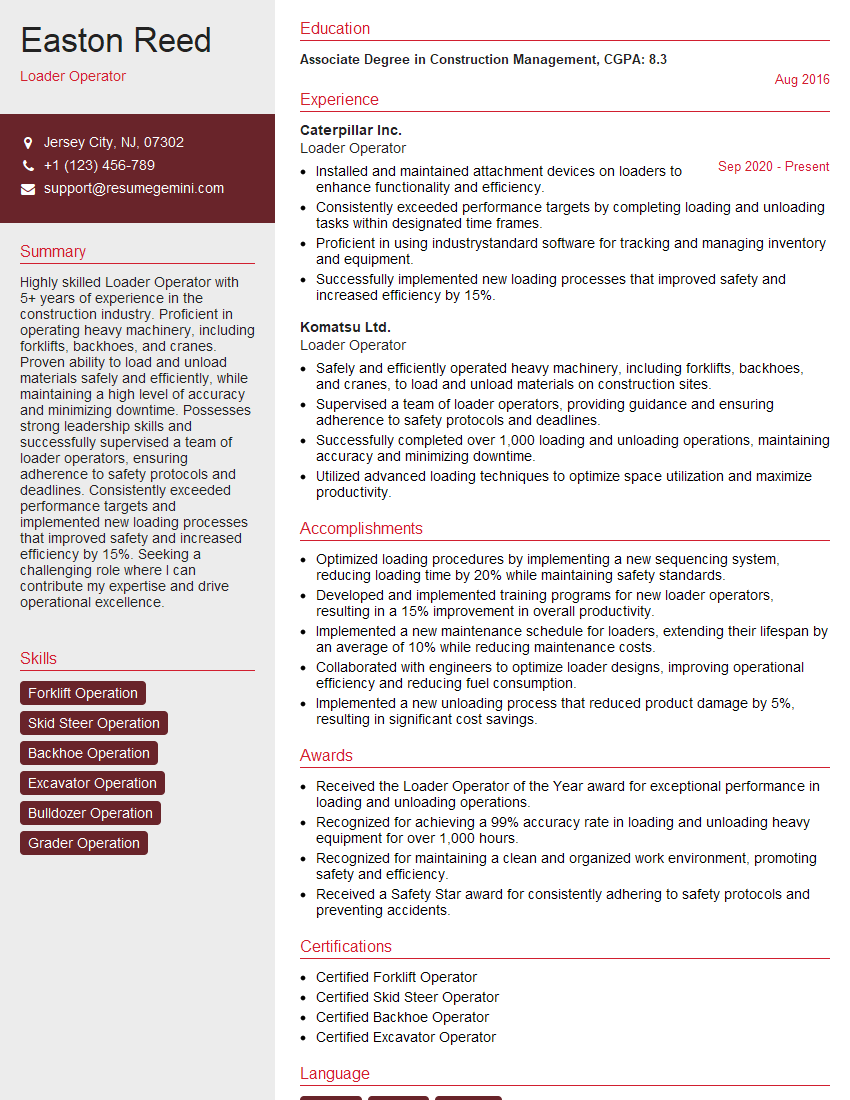
Loader Operator Resume Sample

Heavy Equipment Operator Resume Sample
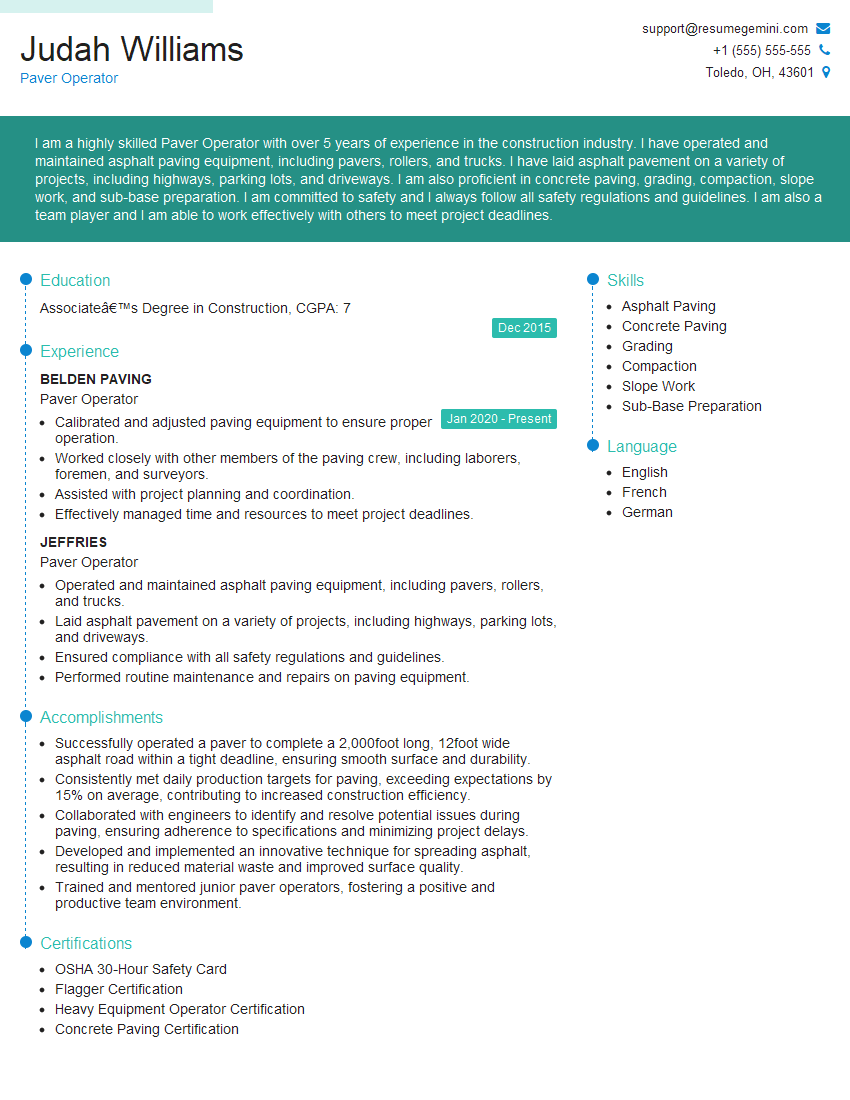
Paver Operator Resume Sample

Roller Operator Resume Sample

Backhoe Operator Resume Sample
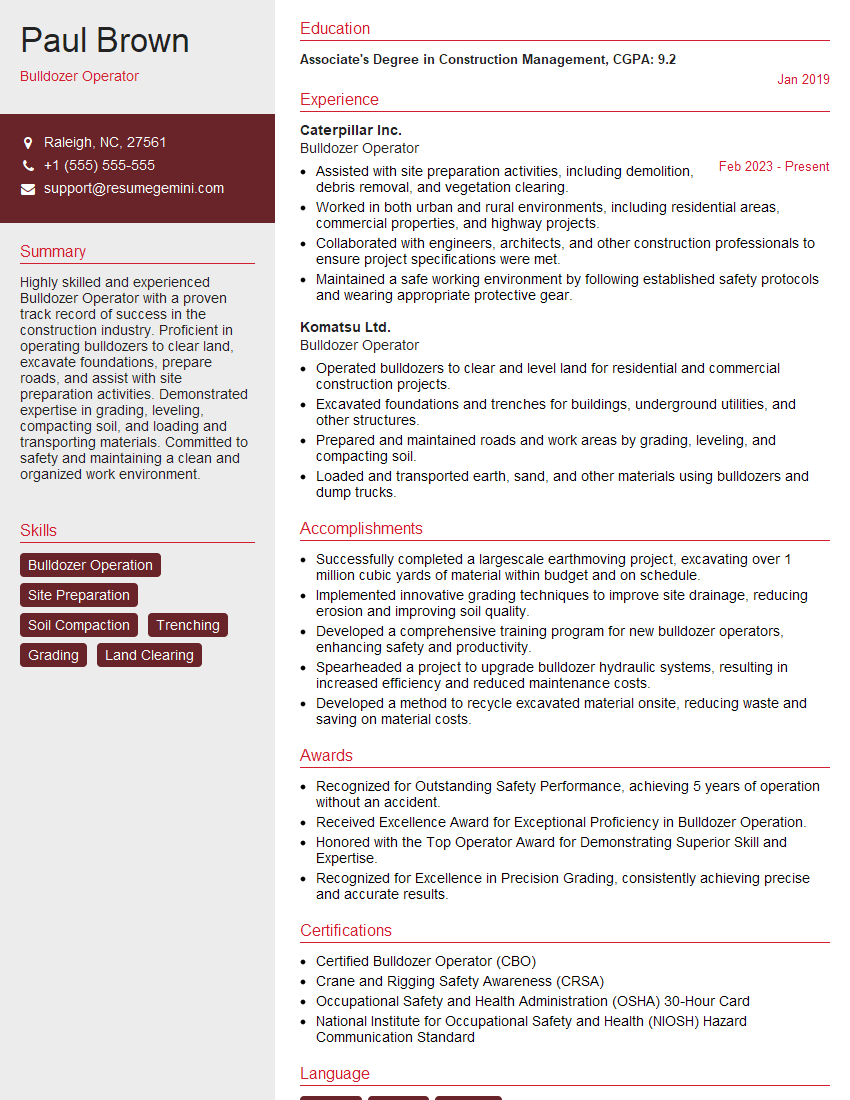
Bulldozer Operator Resume Sample

Excavator Operator Resume Sample
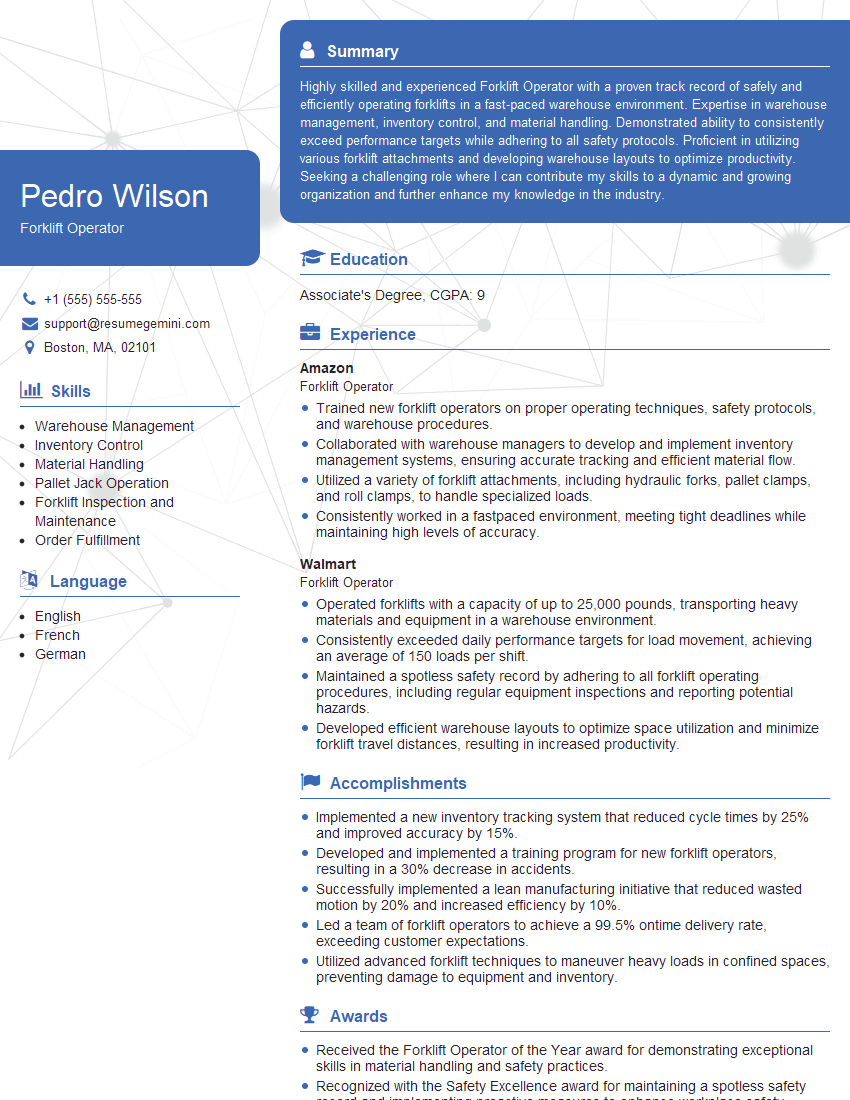
Forklift Operator Resume Sample

Grader Operator Resume Sample

Heavy Machinery Operator Resume Sample
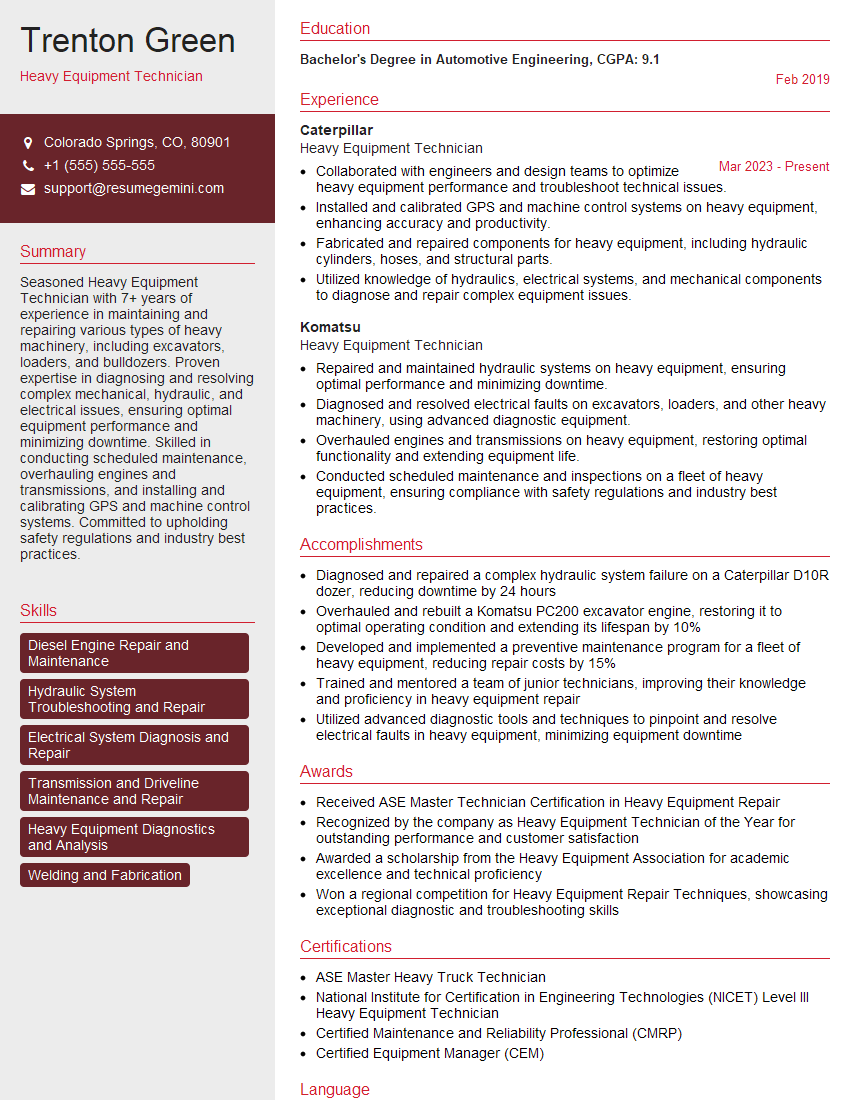
Heavy Equipment Technician Resume Sample
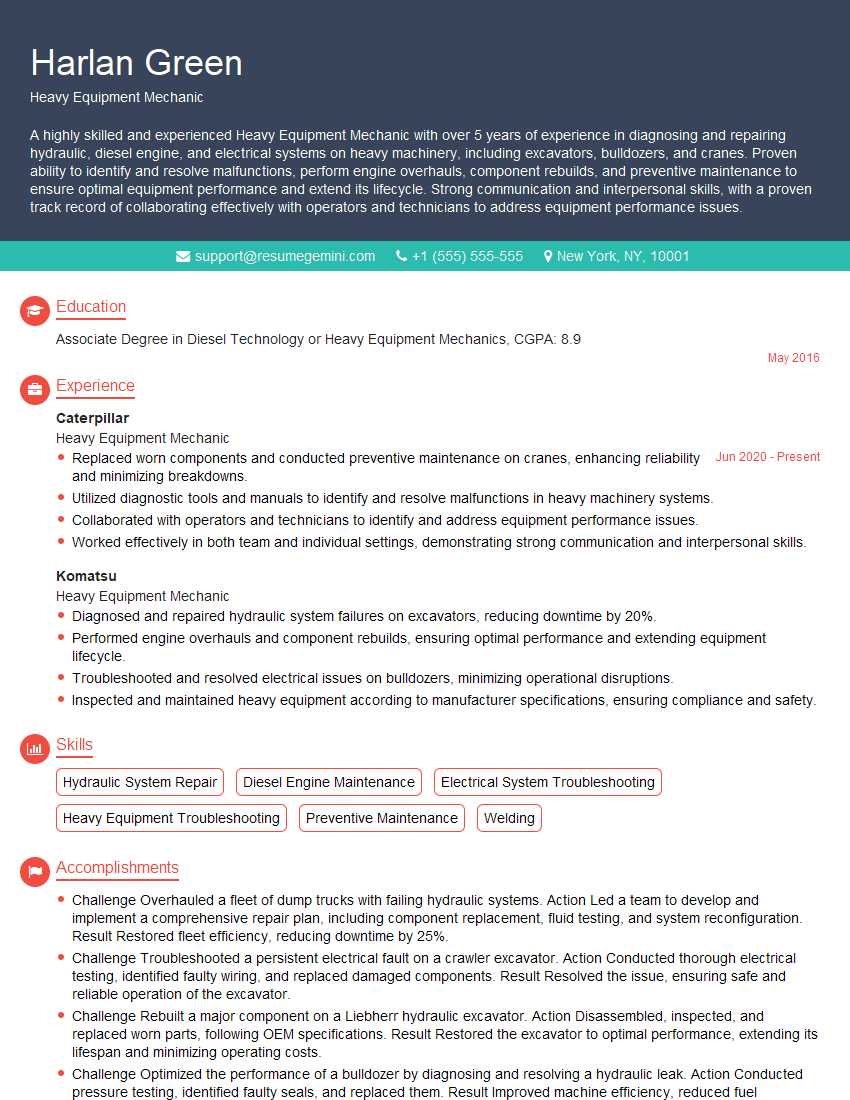
Heavy Equipment Mechanic Resume Sample

Heavy Equipment Supervisor Resume Sample
- Site Manager
- Construction Foreman
- Crane Operator
- Loader Operator
- Heavy Equipment Operator
- Paver Operator
- Roller Operator
- Backhoe Operator
- Bulldozer Operator
- Excavator Operator
- Forklift Operator
- Grader Operator
- Heavy Machinery Operator
- Heavy Equipment Technician
- Heavy Equipment Mechanic
- Heavy Equipment Supervisor
Explore more articles
Users Rating of Our Blogs
Share Your Experience
We value your feedback! Please rate our content and share your thoughts (optional).
What Readers Say About Our Blog
Very informative content, great job.
good