Interviews are opportunities to demonstrate your expertise, and this guide is here to help you shine. Explore the essential Optical Engineering Standards interview questions that employers frequently ask, paired with strategies for crafting responses that set you apart from the competition.
Questions Asked in Optical Engineering Standards Interview
Q 1. Explain the significance of ISO 10110 in optical system design.
ISO 10110 is a crucial international standard defining the specifications for drawing and specifying geometrical tolerances of optical elements. Think of it as the blueprint language for ensuring that manufactured optical components meet the design requirements for performance. Its significance lies in providing a standardized way to communicate the acceptable variations in shape, size, and surface quality of lenses, mirrors, and other optical components. Without a standardized system like this, miscommunication between designers and manufacturers could lead to costly rework or even project failure.
The standard uses precise graphical symbols and numerical values to describe various parameters, ensuring that everyone involved – from the optical engineer to the manufacturing technician – understands the acceptable limits. This avoids ambiguity and makes the manufacturing process efficient and consistent.
For example, ISO 10110 specifies how to define the permissible deviations from ideal spherical or aspherical surfaces, ensuring that the resulting optical component accurately focuses light as intended. It also covers tolerances for surface roughness, which directly affects light scatter and image quality.
Q 2. Describe different types of optical surface imperfections and their impact on system performance.
Optical surface imperfections, often called defects, significantly impact the performance of optical systems. They can degrade image quality, increase light scatter, and lead to a reduction in overall system efficiency. These imperfections can be broadly categorized into:
- Figure Errors: These refer to deviations from the ideal surface shape, such as spherical aberration, astigmatism, coma, and distortion. They affect the focusing capabilities of the optical system, leading to blurry or distorted images. Think of it like having ripples in a perfectly flat mirror – the reflection will be distorted.
- Surface Roughness: This is the microscopic texture of the surface. A rough surface scatters light, reducing the amount of light transmitted through the system and creating a hazy or grainy image. Imagine shining a light on a smooth surface versus a rough one – the smooth surface reflects light more cleanly.
- Scratches and Digs: These are macroscopic defects on the surface, resulting from damage during manufacturing or handling. They directly scatter light and can create artifacts in the image. A scratch on a lens is like a tiny crack that disrupts the smooth path of light.
- Chipping and Flaking: These are more severe defects that can significantly compromise the integrity and performance of the optical element. This is equivalent to significant damage, similar to a large chip on a lens.
The impact of these imperfections on system performance depends on their size, location, and type. Small imperfections might be tolerable, while larger ones can render the component unusable. ISO 10110 provides the framework for specifying acceptable levels of these defects.
Q 3. How do you specify optical tolerances according to ISO 10110?
Specifying optical tolerances according to ISO 10110 involves using a combination of graphical symbols and numerical values to represent the permissible variations in different parameters. The standard provides a structured way to communicate these tolerances clearly and unambiguously. It’s not just about providing a single number; it’s about providing context.
For example, to specify the allowable deviation from an ideal spherical surface, you’d use a specific symbol (often a circle with arrows indicating the direction of tolerance) and a numerical value representing the maximum permitted deviation. This deviation could be expressed in terms of wavelengths (λ), microns (µm), or other relevant units depending on the application.
Further, ISO 10110 also defines how to specify tolerances for:
- Surface Roughness (Ra): Expressed in micrometers (µm) and defines the average deviation of the surface profile.
- Centering and Decentration: Specifies the allowable misalignment of the optical axis. This is vital in multi-element systems, where proper alignment is crucial.
- Thickness and Diameter: Standard dimensional tolerances apply, ensuring consistent physical dimensions.
The choice of tolerance values depends on various factors including the application’s requirements, the manufacturing process capabilities, and the cost considerations. A stricter tolerance often translates to a higher manufacturing cost.
Q 4. What are the key elements of a comprehensive optical test plan?
A comprehensive optical test plan is vital for verifying the performance of an optical system and ensuring it meets the specified requirements. Think of it as a detailed recipe for testing, ensuring consistent and reliable results. Key elements include:
- Test Objectives: Clearly define what needs to be tested (e.g., image quality, transmission, wavefront error).
- Test Methods: Specify the techniques and equipment to be used for each test (e.g., interferometry, MTF measurement, scatterometry).
- Test Setup: Detail the arrangement of components and instruments for each test, including environmental control (temperature, humidity).
- Acceptance Criteria: Define the acceptable limits or thresholds for each measured parameter, based on the specified tolerances (linking to ISO 10110).
- Test Procedures: Step-by-step instructions for conducting each test, including data acquisition and analysis.
- Data Analysis Methods: Specify how the collected data will be analyzed and interpreted, such as statistical analysis to determine if the system meets the requirements.
- Reporting and Documentation: Define the format and content of the test report, including all relevant data, analysis, and conclusions.
A well-defined test plan ensures consistent testing, objective evaluation, and ultimately, high-quality optical systems.
Q 5. Discuss the role of statistical process control in optical manufacturing.
Statistical Process Control (SPC) plays a crucial role in optical manufacturing by providing a framework for monitoring and controlling the manufacturing process to minimize variations and defects. It’s like having a quality control system constantly monitoring the production line.
SPC techniques use statistical methods to track process parameters, identify trends, and detect any deviations from target values. This early detection allows for corrective action to prevent widespread defects and ensures consistent output. Commonly used SPC tools include control charts, which graphically display data over time, helping identify patterns and potential problems.
In optical manufacturing, SPC can be applied to monitor parameters like surface roughness, radius of curvature, and optical transmission. By analyzing these parameters over time, manufacturers can identify sources of variation, optimize processes, and ensure the consistent production of high-quality optical components meeting the specifications defined in ISO 10110.
For instance, a control chart monitoring surface roughness might reveal a sudden increase in roughness, indicating a problem with the polishing process. This early warning allows for prompt investigation and corrective action before many defective parts are produced.
Q 6. How would you interpret and apply a tolerance budget in optical system design?
A tolerance budget is a systematic allocation of allowable errors or tolerances to individual components within an optical system. It ensures that the cumulative effect of all component tolerances does not exceed the overall system performance requirements. Think of it like a financial budget, allocating funds to different areas while staying within the overall limit.
The process of creating a tolerance budget involves:
- Define System Requirements: Clearly state the overall performance requirements of the optical system (e.g., image quality, resolution).
- Identify Critical Parameters: Determine which parameters significantly impact the overall system performance.
- Sensitivity Analysis: Analyze the sensitivity of each critical parameter to variations in individual components. This helps determine which components need tighter tolerances.
- Allocate Tolerances: Based on sensitivity analysis and manufacturing capabilities, allocate tolerances to each component in a way that ensures the cumulative effect stays within the overall system requirements.
- Verify the Budget: Use tolerancing analysis software (e.g., optical design software) to simulate the system performance with the allocated tolerances to confirm that the overall system meets the specifications.
Properly managing the tolerance budget is crucial for achieving the desired performance within cost and manufacturing constraints. Overly tight tolerances will increase manufacturing costs, while loose tolerances could lead to unacceptable system performance.
Q 7. What are the common optical material specifications and how do they relate to performance?
Optical material specifications are crucial for determining the performance of an optical system. These specifications describe the material’s properties relevant to its optical function. Key specifications include:
- Refractive Index (n): This defines how much the material bends light. The refractive index varies with wavelength, leading to chromatic aberration if not properly managed. This is often presented as a function of wavelength (n(λ)).
- Dispersion (dn/dλ): Describes how much the refractive index changes with wavelength. Higher dispersion leads to greater chromatic aberration.
- Transmission Range: Specifies the range of wavelengths over which the material transmits light effectively. Materials often have a cutoff wavelength, beyond which transmission drops sharply.
- Absorption Coefficient: Quantifies how much light is absorbed by the material. High absorption reduces system efficiency.
- Thermal Expansion Coefficient: Indicates how much the material expands or contracts with temperature changes. Significant thermal expansion can affect the alignment and performance of the optical system.
- Mechanical Properties: Includes hardness, Young’s modulus, and Poisson’s ratio, which are important for selecting appropriate materials for handling and environmental conditions.
The choice of optical material depends on the application’s requirements. For example, high-precision imaging systems might require materials with low dispersion and high transmission, while less demanding applications might use more cost-effective materials.
Material specifications are often found in datasheets provided by material manufacturers. These datasheets provide detailed information about the optical and mechanical properties of the material, enabling optical engineers to select the most suitable material for their application.
Q 8. Explain the concepts of wavefront error and its measurement.
Wavefront error describes the deviation of an actual wavefront from a perfect, usually spherical, reference wavefront. Think of it like ripples in a perfectly flat pond – the ripples represent the wavefront error. A perfect optical system would produce a perfectly flat wavefront, but imperfections in the lenses or mirrors cause these deviations. These deviations directly impact the image quality, causing blurriness, aberrations, and reduced resolution.
Measurement of wavefront error typically involves interferometry. This technique uses interference patterns created by combining the wavefront being tested with a reference wavefront. Common interferometers include:
- Fizeau Interferometer: Used for testing flat surfaces, comparing the test surface to a reference flat.
- Twyman-Green Interferometer: Used for testing lenses and other optical components, splitting a beam and comparing the reflected wavefronts.
- Shack-Hartmann Wavefront Sensor: A sensor array that measures the local wavefront slope across the wavefront, allowing for high-speed wavefront measurements.
The interference pattern generated reveals the differences between the test and reference wavefronts. Software then analyzes this pattern to quantify the wavefront error, usually expressed in terms of root mean square (RMS) wavefront error in wavelengths or nanometers. A smaller RMS value indicates better optical quality.
For example, in the manufacturing of high-precision telescope mirrors, interferometry is crucial to ensure the mirror surface conforms to stringent specifications and minimizes wavefront error for optimal image resolution.
Q 9. How do you choose appropriate optical coatings for a specific application?
Choosing the right optical coating is critical for optimizing the performance of an optical system. The selection process involves careful consideration of several factors including:
- Wavelength Range: The coating must be optimized for the specific wavelengths of light the system will use. A coating designed for visible light will perform poorly in the infrared.
- Desired Spectral Characteristics: Does the application require high transmission, high reflection, or a specific filter characteristic (e.g., bandpass, notch)?
- Angle of Incidence: The coating’s performance can vary significantly with the angle at which light strikes the surface. This is particularly important for off-axis optical systems.
- Environmental Conditions: The coating’s durability and resistance to environmental factors like temperature, humidity, and chemicals must be considered. Some coatings are more susceptible to degradation than others.
- Substrate Material: The material of the optical component (glass, silicon, etc.) influences the choice of coating. The coating must adhere properly to the substrate.
For instance, a high-power laser application might require a highly durable anti-reflective coating to minimize damage from high intensity light. Conversely, a dichroic mirror in a camera requires a coating that precisely splits the light into different wavelengths.
Often, specialized coating manufacturers provide design and simulation tools to help customers select optimal coatings for their specific application. This involves detailed specifications and iterative design refinement based on modeling and experimental validation.
Q 10. Describe different methods for optical alignment and adjustment.
Optical alignment and adjustment are critical for optimal system performance. Several methods are used, often in combination:
- Autocollimation: A method using a collimated beam reflected back onto itself, useful for aligning mirrors and determining parallelism.
- Knife-edge Test: A precise way to find the location of a beam focus, involves scanning a sharp edge across the beam and observing the intensity change.
- Power Meter/Detector Measurements: Utilizing a detector to measure the intensity of the light after passing through an optical system. Useful for detecting misalignments leading to reduced power transmission.
- Interferometry (again!): Can be used for precision alignment, as discussed earlier. It provides detailed information about the wavefront shape and enables highly accurate alignment.
- Kinematic Mounting: Employing three points of contact to ensure a stable and reproducible alignment of an optical component.
A common example is aligning a laser diode to an optical fiber. This often involves a combination of mechanical adjustment and power meter measurements, with iterative refinement until maximum coupling efficiency is achieved.
Many times, specialized alignment tools and jigs are designed for specific applications to ensure repeatability and precision. These tools incorporate features that provide stability, adjustability, and precise measurement capabilities.
Q 11. What are the key considerations when designing for environmental factors (temperature, humidity)?
Environmental factors significantly impact the performance and stability of optical systems. Key considerations include:
- Temperature Effects: Changes in temperature can cause thermal expansion or contraction of optical components, altering their dimensions and optical properties. This can lead to misalignment and changes in refractive index. This is commonly mitigated through the use of materials with low thermal expansion coefficients (e.g., Zerodur) or temperature compensation mechanisms.
- Humidity Effects: Humidity can affect the performance of optical coatings, causing changes in their reflectivity, transmission, or even degradation over time. Protective coatings or sealing techniques can minimize these issues.
- Material Selection: Choosing materials with low sensitivity to temperature and humidity changes is crucial. Understanding the hygroscopic nature of certain materials, which absorb moisture and affect their optical properties, is critical.
- Thermal Management: Using thermal controls like heaters, coolers, or thermally isolating components helps maintain a stable operating temperature.
Consider a space-based telescope, where the extreme temperature variations necessitate the use of specialized materials and thermal control mechanisms. Alternatively, a high-precision laser interferometer used in industrial manufacturing may need temperature stabilization to maintain accuracy.
Environmental testing plays a key role in verifying the robustness of an optical system to these factors. Simulations and experiments are conducted across a range of environmental conditions to ensure performance meets requirements.
Q 12. Explain the difference between geometric and physical optics.
Geometric optics and physical optics represent different levels of approximation in describing light propagation.
Geometric optics treats light as rays traveling in straight lines, obeying laws of reflection and refraction. It’s a simplified model, ignoring the wave nature of light. This is suitable for analyzing systems where the wavelengths are much smaller than the system dimensions. Think of it as a useful approximation like using a map to navigate – it provides a good overview without requiring deep understanding of every detail of the terrain.
Physical optics, or wave optics, takes into account the wave nature of light, considering phenomena like diffraction, interference, and polarization. It’s a more accurate model, especially when dealing with features comparable to the wavelength of light. It uses Maxwell’s equations to describe light propagation.
For example, designing a simple lens system using ray tracing is appropriate using geometric optics. However, to precisely model the diffraction effects in a high-resolution imaging system or the behavior of a diffraction grating, physical optics is necessary.
In essence, geometric optics is a useful simplification of physical optics, valid under certain conditions. While geometric optics is a great starting point for many designs, physical optics is crucial for understanding and accurately predicting the behaviour of light in more complex situations.
Q 13. How do you verify the compliance of an optical component with relevant standards?
Verification of an optical component’s compliance with relevant standards involves a thorough testing process. This typically includes:
- Dimensional Measurements: Verifying the size, shape, and surface finish of the component using techniques like coordinate measuring machines (CMMs) or optical profilometers. These measurements must meet the tolerances specified in the standard.
- Optical Performance Testing: Evaluating the component’s performance characteristics, such as transmission, reflection, scattering, and wavefront error, using appropriate instruments like spectrophotometers, interferometers, or scattering meters. The results are compared to the values specified in the standard.
- Environmental Testing: Assessing the component’s behavior under various environmental conditions (temperature, humidity, pressure) to ensure it meets the required specifications for stability and performance. This often involves climate chambers or specialized environmental test chambers.
- Documentation and Traceability: Maintaining comprehensive records of all tests performed, including data, methods, and calibration certificates, for complete traceability of the measurements.
Relevant standards are often defined by organizations like ISO, ANSI, or MIL-SPEC, depending on the specific application. For example, the ISO 10110 standards define specifications for the form and location of optical components.
Failure to meet these standards can have significant consequences, from the loss of a product’s functionality to the risk of safety hazards. Thorough testing is crucial to ensure quality, performance, and safety.
Q 14. Discuss the importance of traceability in optical metrology.
Traceability in optical metrology is paramount for ensuring the reliability and comparability of measurement results. It establishes a chain of custody from the primary measurement standards to the final measurement performed on an optical component. This ensures that the measurements are accurate, consistent, and can be validated.
A traceable measurement means the accuracy of the measurement can be reliably linked back to national or international standards. This is typically achieved through a calibration chain. For example, a spectrophotometer used to measure the transmission of an optical filter must be regularly calibrated against a traceable standard provided by a national metrology institute. The calibration certificate then becomes part of the measurement record, establishing traceability.
Without traceability, the accuracy and validity of the measurements are questionable. Inaccurate measurements can lead to faulty designs, production failures, and potentially safety issues. Traceability is particularly critical in industries like aerospace, defense, and medical devices where high accuracy and reliability are crucial.
Maintaining accurate records, properly calibrating instruments, and using traceable standards are essential components of establishing and maintaining a robust traceability system in optical metrology. This fosters confidence and trust in the results obtained.
Q 15. What is the significance of surface roughness specifications?
Surface roughness specifications are crucial in optical engineering because they directly impact the performance of optical components. Microscopic imperfections on an optical surface scatter light, reducing the amount of light transmitted or reflected in the desired direction. This scattering leads to reduced image quality, increased stray light, and potentially even damage to sensitive optical systems. Think of it like trying to see a reflection in a bumpy pond versus a calm lake – the smoother the surface, the clearer the reflection.
These specifications are typically given as Ra (average roughness) or Rz (maximum height of surface irregularities), measured in micrometers or Angstroms. The acceptable roughness value depends heavily on the application. For example, a high-precision laser system might require Ra values in the sub-nanometer range, whereas a simple lens in a toy might tolerate much rougher surfaces. Meeting these specifications requires careful polishing and manufacturing processes. Failure to do so can lead to significant performance degradation and potentially necessitate costly rework or component replacement.
Career Expert Tips:
- Ace those interviews! Prepare effectively by reviewing the Top 50 Most Common Interview Questions on ResumeGemini.
- Navigate your job search with confidence! Explore a wide range of Career Tips on ResumeGemini. Learn about common challenges and recommendations to overcome them.
- Craft the perfect resume! Master the Art of Resume Writing with ResumeGemini’s guide. Showcase your unique qualifications and achievements effectively.
- Don’t miss out on holiday savings! Build your dream resume with ResumeGemini’s ATS optimized templates.
Q 16. What are the different types of optical testing equipment and their applications?
Optical testing employs various sophisticated instruments to ensure component and system quality. Here are a few examples:
- Interferometers: These precisely measure surface irregularities and wavefront aberrations. A common type is the Fizeau interferometer, used for testing flat surfaces, while Twyman-Green interferometers are suitable for testing lenses and mirrors. They provide high-resolution data, crucial for assessing optical quality.
- Optical Power Meters: These measure the power of optical beams, ensuring the component’s transmission or reflection characteristics meet specifications. They are essential for characterizing lasers, fiber optics, and other optical systems.
- Spectrometers: These instruments analyze the spectral content of light, identifying wavelength-dependent properties of optical materials and coatings. This is vital for applications involving specific wavelengths, like telecommunications or spectroscopy.
- Autocollimators: These are used to measure small angles with high precision, useful for aligning optical components and checking their angular accuracy. This is critical in applications like telescopes or laser scanning systems.
- MTF (Modulation Transfer Function) Measurement Systems: These assess the imaging performance of lenses and optical systems by measuring their ability to transfer contrast at different spatial frequencies. This provides a measure of image sharpness and resolution.
The choice of testing equipment depends entirely on the specific optical component or system and the required level of precision.
Q 17. Explain how to interpret optical specifications from datasheets.
Optical datasheets provide crucial specifications for components and systems. Understanding these is key to successful integration. Let’s break down how to interpret common specifications:
- Wavelength Range: This specifies the range of wavelengths over which the component performs optimally. For example,
400-700 nmindicates operation in the visible spectrum. - Numerical Aperture (NA): This characterizes the light-gathering ability of a lens or fiber. A higher NA indicates a greater light-gathering capacity. It’s often found in fiber optic specifications.
- Transmission/Reflection: This describes the percentage of light transmitted or reflected by the component at a given wavelength. Low transmission can signal issues with coatings or material absorption.
- Surface Flatness/Figure Error: Expressed in wavelengths (λ) or fractions of a wavelength (λ/4, λ/10 etc.), it describes the deviation of a surface from its ideal shape, impacting image quality.
- Clear Aperture: The actual usable area of the optical element.
- Focal Length: The distance between the lens and its focal point, vital in imaging systems.
- Tolerances: These specify allowable deviations from the nominal values, indicating acceptable manufacturing variations.
+/- 0.1 mmrepresents a tolerance of 0.1 mm around a given dimension.
Always pay close attention to units (nm, mm, µm, etc.) and consult the datasheet carefully for specific definitions and interpretations.
Q 18. How do you assess the risk associated with specific optical tolerances?
Assessing the risk associated with optical tolerances requires a methodical approach. It involves considering the impact of deviations from nominal values on the overall system performance. A risk assessment would typically involve:
- Identifying critical tolerances: Determine which tolerances have the most significant impact on system performance. This may involve simulations or sensitivity analysis.
- Quantifying the impact: Assess how deviations from the nominal values affect key performance indicators (KPIs), such as image quality, power transmission, or system stability. This might involve using Monte Carlo simulations to model the effects of various tolerance combinations.
- Determining the probability of failure: Estimate the likelihood that the component will fall outside the acceptable range due to manufacturing variations or environmental factors.
- Evaluating the consequences of failure: Assess the impact of a tolerance violation on the system’s operation, including cost, safety, and schedule implications.
- Risk mitigation strategies: Develop strategies to reduce the risk, such as tighter tolerances, improved manufacturing processes, or the use of redundancy.
This process allows for a balanced approach, considering both cost and performance. It’s a crucial step in designing robust and reliable optical systems.
Q 19. What is the role of modeling and simulation in optical system development?
Modeling and simulation are indispensable in modern optical system development. They allow engineers to virtually design, test, and optimize systems before physical prototyping, saving time and resources. Software tools like Zemax, Code V, and LightTools provide powerful capabilities for:
- Optical design optimization: Simulate various design configurations and parameters to find optimal solutions that meet performance requirements.
- Tolerance analysis: Predict the impact of manufacturing tolerances on system performance, helping to define realistic specifications.
- Aberration analysis: Identify and analyze optical aberrations, guiding the design of correction strategies.
- Performance prediction: Simulate the system’s performance under various operating conditions, ensuring it meets specifications.
- Illumination design: Model the illumination system’s characteristics to optimize light distribution and efficiency.
These simulations provide invaluable insights, reducing the need for extensive experimental testing and enabling the design of more efficient and reliable systems.
Q 20. Describe different types of optical aberrations and their correction methods.
Optical aberrations are imperfections in the imaging properties of optical systems, leading to blurred or distorted images. Common aberrations include:
- Spherical Aberration: Caused by rays from the outer edges of a lens focusing at a different point than those from the center, resulting in a blurred image.
- Chromatic Aberration: Different wavelengths of light are refracted differently, leading to color fringing.
- Coma: Off-axis points appear as comet-shaped blur.
- Astigmatism: Point sources appear as lines, rather than points, due to different focal lengths in tangential and sagittal planes.
- Distortion: Straight lines are bent or curved in the image.
- Field Curvature: The image plane is curved, resulting in a loss of sharpness away from the center.
Correction methods involve using combinations of lenses, aspheric surfaces, or diffraction gratings to compensate for these effects. Sophisticated lens design software plays a crucial role in designing systems that minimize aberrations.
Q 21. How do you address discrepancies between design specifications and measured results?
Discrepancies between design specifications and measured results are common in optical engineering and often require a systematic investigation. The process would typically involve:
- Repeatability checks: First, verify the measurements by repeating them several times to confirm consistency and eliminate random errors. Use proper measurement uncertainty analysis.
- Review of design and manufacturing processes: Compare the design specifications with the actual manufacturing drawings and processes to identify potential sources of error. This may involve examining the manufacturing tolerances or the quality of the optical elements.
- Analysis of measurement setup and methodology: Check for systematic errors in the measurement setup, such as misalignment or incorrect calibration. Ensure the measurement method is appropriate for the optical component being tested.
- Environmental considerations: Account for environmental factors that might affect the measurements, such as temperature, humidity, and vibrations.
- Modeling and simulation recalibration: Revisit the original simulations and models to investigate whether there were inaccuracies or assumptions that contributed to the discrepancy. It might require updating the model with more accurate material properties or environmental parameters.
- Root cause analysis: Determine the root cause of the discrepancy using techniques like the 5 Whys or fishbone diagrams.
- Corrective actions: Implement appropriate corrective actions to address the identified root cause, potentially involving redesign, re-manufacturing, or adjustments to the measurement process.
A thorough investigation is crucial, ensuring the final product meets the required performance standards.
Q 22. What are the challenges in integrating optical components into a larger system?
Integrating optical components into a larger system presents several significant challenges. Think of it like building with incredibly precise LEGOs – a tiny misalignment can have huge consequences. One key challenge is tolerancing. Each component has manufacturing variations (think slight differences in lens curvature or mirror flatness), and these must be carefully considered to ensure the entire system performs as designed. Another challenge is environmental factors. Temperature changes, vibrations, and even pressure fluctuations can affect the alignment and performance of optical components, requiring robust designs and potentially active stabilization systems. Coupling losses between components are also a major concern. Efficiently transferring light from one component to the next can be tricky, leading to signal degradation. Finally, thermal management is critical. High-power lasers or other light sources can generate considerable heat, impacting component stability and potentially causing damage. Addressing these challenges requires careful consideration of material selection, mechanical design, and thermal analysis.
Q 23. Discuss your experience with different optical design software packages.
I have extensive experience with several leading optical design software packages, including Zemax OpticStudio, Code V, and LightTools. Zemax OpticStudio is my primary tool, and I’m proficient in using its various modules for designing, analyzing, and tolerancing optical systems. I’ve used its non-sequential ray tracing capabilities for complex systems involving scattering and diffraction. Code V is another powerful tool I’ve utilized, especially for its robust optimization algorithms and its strength in handling extremely complex systems. LightTools is particularly useful for creating realistic simulations of system appearance and illumination, which is essential for many applications, such as automotive lighting design. My expertise encompasses not just using the software but also understanding the underlying optical principles that the software models. For example, I can use the software to analyze aberrations, then use that analysis to modify the design based on my fundamental knowledge of optical physics.
Q 24. Explain your understanding of optical system performance metrics.
Optical system performance is evaluated using several key metrics, each providing insights into different aspects of the system’s quality. Resolution measures the ability to distinguish between closely spaced objects; high resolution is crucial for imaging systems like microscopes or telescopes. Spot size, often measured at the focal plane, indicates the concentration of light, important for laser systems or focusing applications. Modulation Transfer Function (MTF) quantitatively describes the system’s ability to transfer contrast as a function of spatial frequency, providing a comprehensive measure of image quality. Wavefront error represents deviations from a perfect wavefront, critical for interferometric systems and high-precision imaging. Transmission measures the efficiency of light passing through the system, indicating losses due to absorption, scattering, or reflection. Field of view (FOV) defines the angular extent of the scene the system can capture. Different applications prioritize different metrics; for example, a high-resolution astronomical telescope emphasizes resolution and wavefront error, while a fiber optic communication system might focus on transmission and spot size.
Q 25. How do you ensure repeatability and reproducibility in optical measurements?
Ensuring repeatability and reproducibility in optical measurements is paramount. This involves a multi-faceted approach. First, we must meticulously document the measurement setup, including component specifications, environmental conditions (temperature, humidity), and the exact procedures used. Using calibrated equipment is critical, ensuring that our instruments provide accurate and traceable results. We regularly calibrate our equipment according to established procedures and maintain comprehensive calibration records. Proper environmental control, such as using temperature-controlled chambers, minimizes variations caused by environmental fluctuations. Finally, we employ statistical methods to analyze our data, identify outliers, and quantify uncertainty. By following rigorous procedures and adhering to established standards like ISO 17025, we maintain confidence in the consistency and reliability of our measurements. Consider a simple example: If we’re measuring the focal length of a lens, we must repeat the measurement multiple times, use a calibrated measuring device, and control the surrounding temperature to eliminate sources of variability.
Q 26. What are your strategies for troubleshooting optical system problems?
Troubleshooting optical system problems requires a systematic approach. I typically begin by carefully reviewing the system’s design specifications and comparing them to the observed performance. This often involves analyzing the system’s alignment using optical tools such as autocollimators or interferometers. If the problem appears to stem from a specific component, I would test that component independently to isolate the fault. Environmental factors are also considered – are vibrations or temperature fluctuations affecting the system’s performance? I employ a process of elimination, systematically checking each component and environmental factor until the root cause is identified. For example, if a system is exhibiting poor image quality, I might first check for misalignments, then investigate the quality of the optical components themselves. Documentation is key; detailed records of each test and measurement help narrow down the possibilities and expedite problem-solving. Simulation tools like Zemax can also be valuable for modeling the system and predicting the effects of potential adjustments.
Q 27. How do you stay up-to-date with advancements in optical engineering standards?
Staying current with advancements in optical engineering standards is crucial. I actively participate in professional organizations like SPIE (International Society for Optics and Photonics) and OSA (Optical Society of America), attending conferences, workshops, and webinars to learn about the latest standards and technologies. I subscribe to relevant journals and publications, including Applied Optics and Optical Engineering, and regularly review the standards documents published by organizations like ISO (International Organization for Standardization) and ANSI (American National Standards Institute). Furthermore, I engage in continuous professional development, taking courses and attending training sessions to enhance my knowledge of new standards and measurement techniques. Keeping abreast of these advancements is crucial for ensuring that my designs and measurements adhere to the highest standards of quality and accuracy.
Q 28. Describe a challenging optical design problem you solved and your approach.
One challenging project involved designing a high-resolution, wide-field-of-view imaging system for a space-based application. The primary challenge was achieving the required image quality while maintaining a compact and lightweight design with stringent power constraints. My approach involved a multi-step iterative process. First, I used Zemax OpticStudio to explore different optical configurations, evaluating the trade-offs between resolution, field of view, and system size. I then focused on minimizing aberrations through careful lens selection and optimization. Managing thermal effects was crucial; I employed finite element analysis (FEA) to predict temperature distributions and ensure the system’s stability under varying thermal loads. Thorough tolerancing analysis was crucial to ensure that manufacturing variations wouldn’t compromise performance. The final design incorporated freeform optics to optimize image quality across the wide field of view. This project required a deep understanding of optical design principles, thermal management, and tolerancing, ultimately resulting in a system that met all the demanding requirements. It was rewarding to see the project successfully launched and deliver high-quality images from space.
Key Topics to Learn for Optical Engineering Standards Interview
- Optical System Design and Tolerancing: Understanding the principles behind designing robust optical systems and how to analyze and mitigate the impact of manufacturing tolerances on performance.
- Geometric Optics and Ray Tracing: Applying ray tracing techniques to analyze optical system performance, including aberrations and image quality. Practical application: Designing and optimizing imaging systems for specific applications (e.g., microscopy, telescopes).
- Physical Optics and Diffraction: Understanding the wave nature of light and its impact on optical system performance, including diffraction limits and resolution. Practical application: Designing optical elements that minimize diffraction effects.
- Optical Materials and Coatings: Knowledge of the properties of various optical materials (e.g., glass, crystals) and their application in optical systems. Understanding anti-reflection and high-reflection coatings and their design.
- Optical Testing and Metrology: Familiarity with various optical testing techniques (e.g., interferometry, autocollimation) used to characterize the performance of optical components and systems. Practical application: Ensuring quality control in optical manufacturing.
- Standards and Specifications (e.g., ISO, ANSI): Understanding relevant industry standards and specifications for optical components and systems. This includes familiarity with relevant documentation and compliance procedures.
- Optical Design Software: Proficiency in using optical design software (e.g., Zemax, Code V) to simulate and optimize optical systems. Demonstrate practical application of this knowledge by addressing real-world design challenges.
Next Steps
Mastering Optical Engineering Standards is crucial for career advancement in this competitive field. A strong understanding of these concepts will significantly enhance your problem-solving abilities and open doors to exciting opportunities. To maximize your job prospects, creating a compelling and ATS-friendly resume is vital. ResumeGemini is a trusted resource that can help you build a professional resume that highlights your skills and experience effectively. Examples of resumes tailored to Optical Engineering Standards are available to guide your resume creation process. Invest time in crafting a strong resume – it’s your first impression to potential employers.
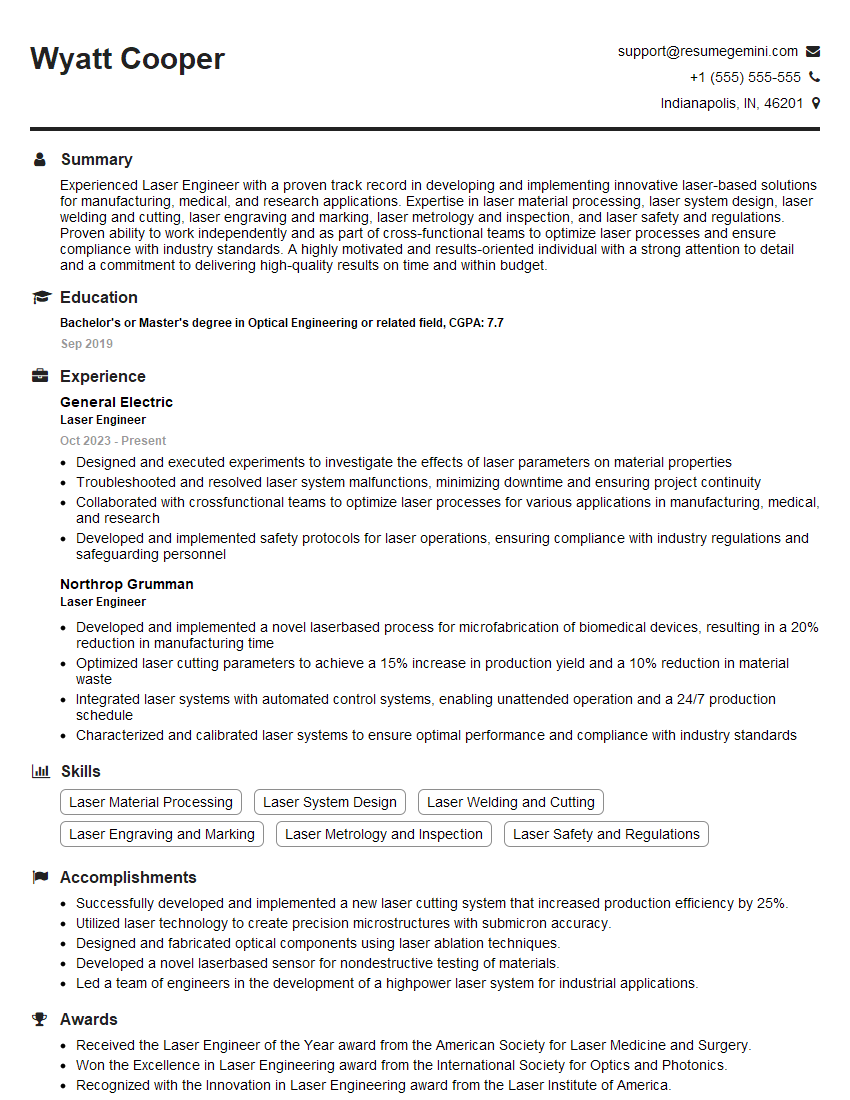
Laser Engineer Resume Sample
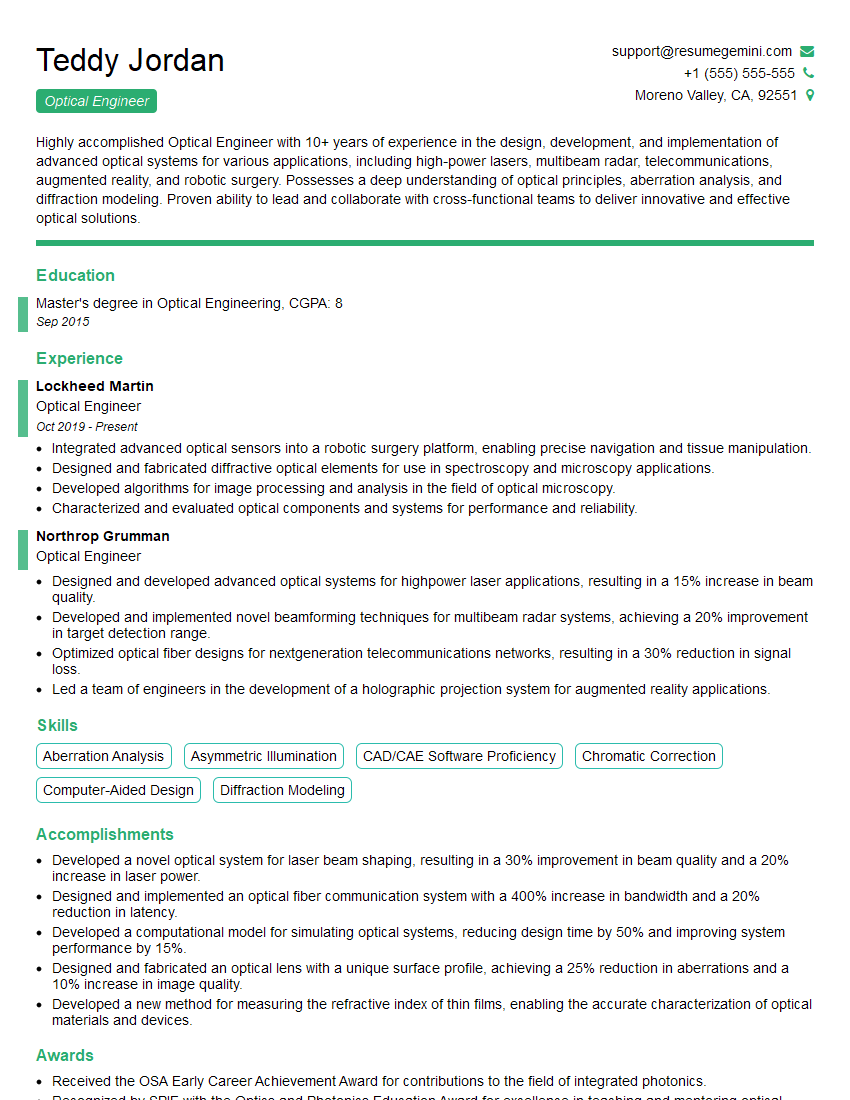
Optical Engineer Resume Sample
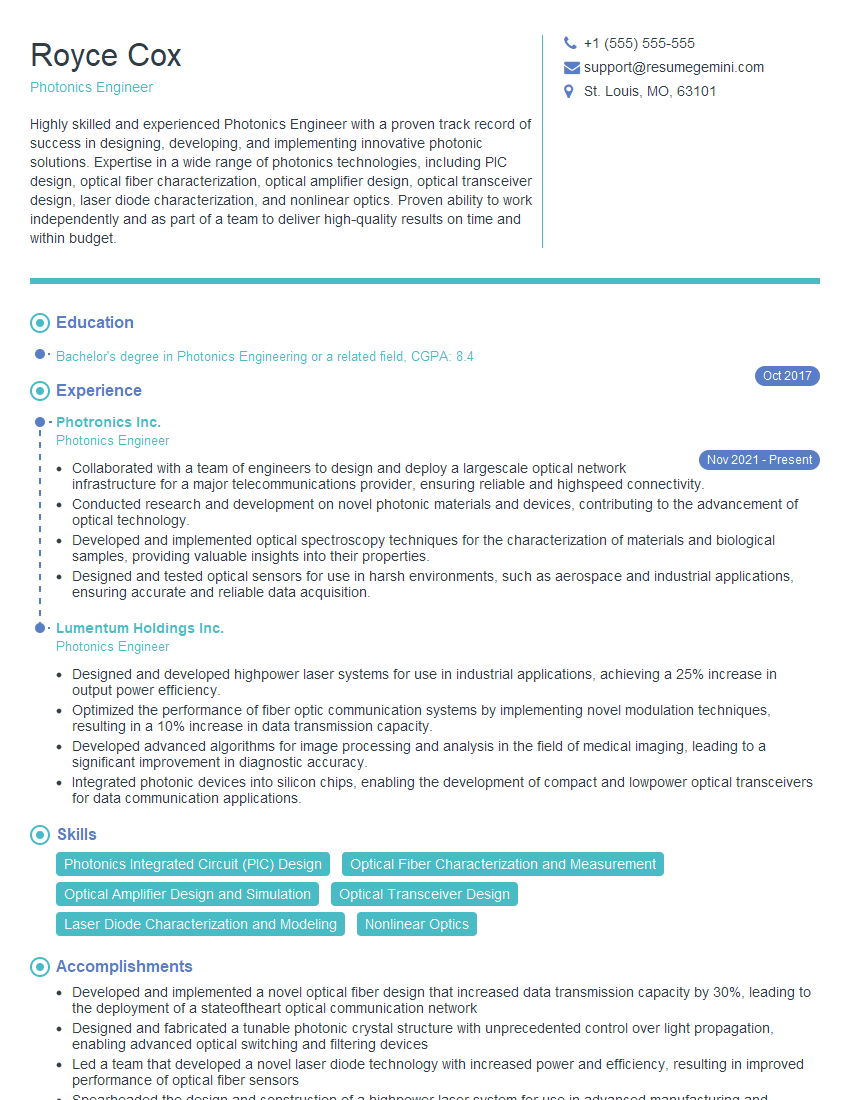
Photonics Engineer Resume Sample
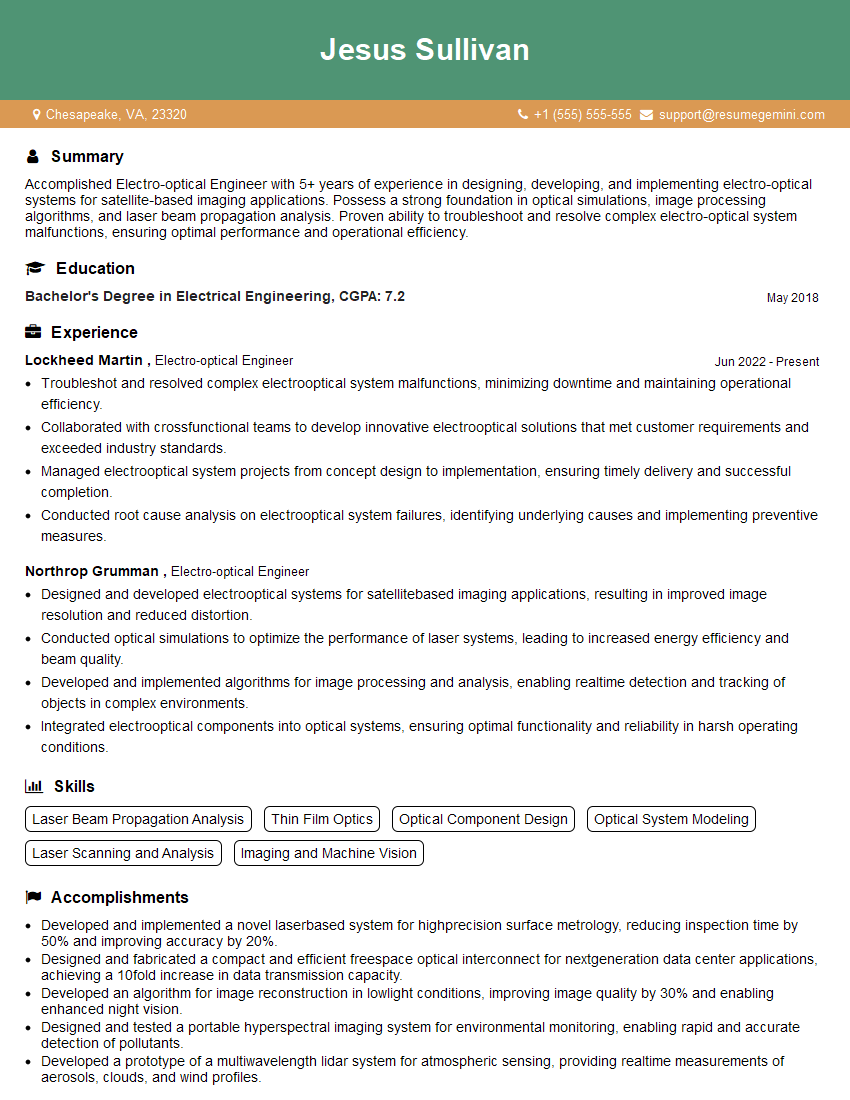
Electro-optical Engineer Resume Sample
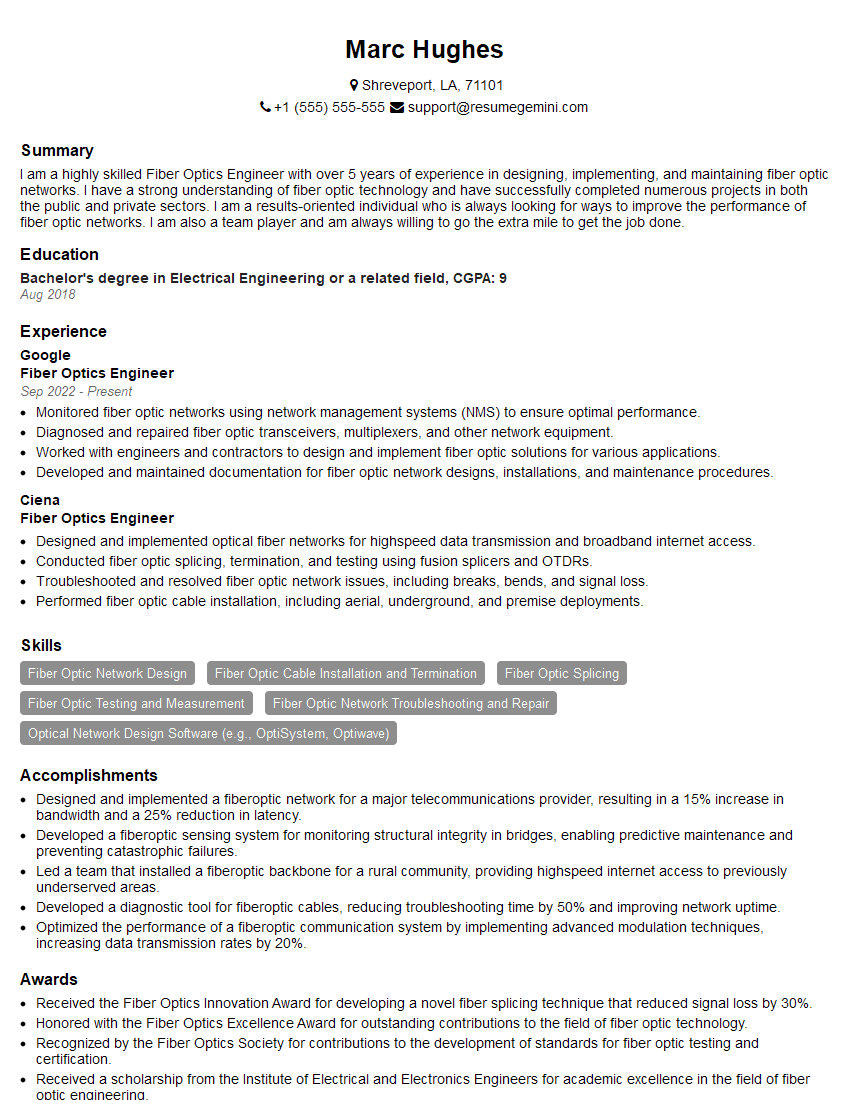
Fiber Optics Engineer Resume Sample
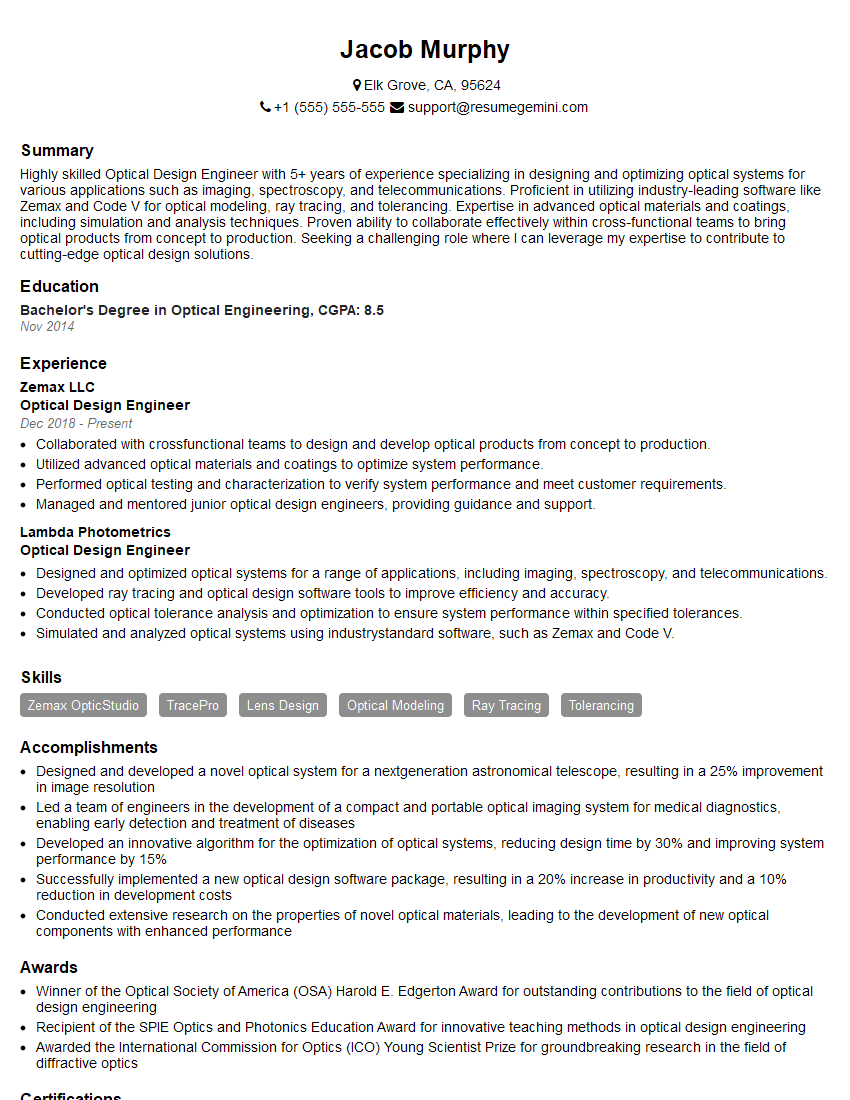
Optical Design Engineer Resume Sample
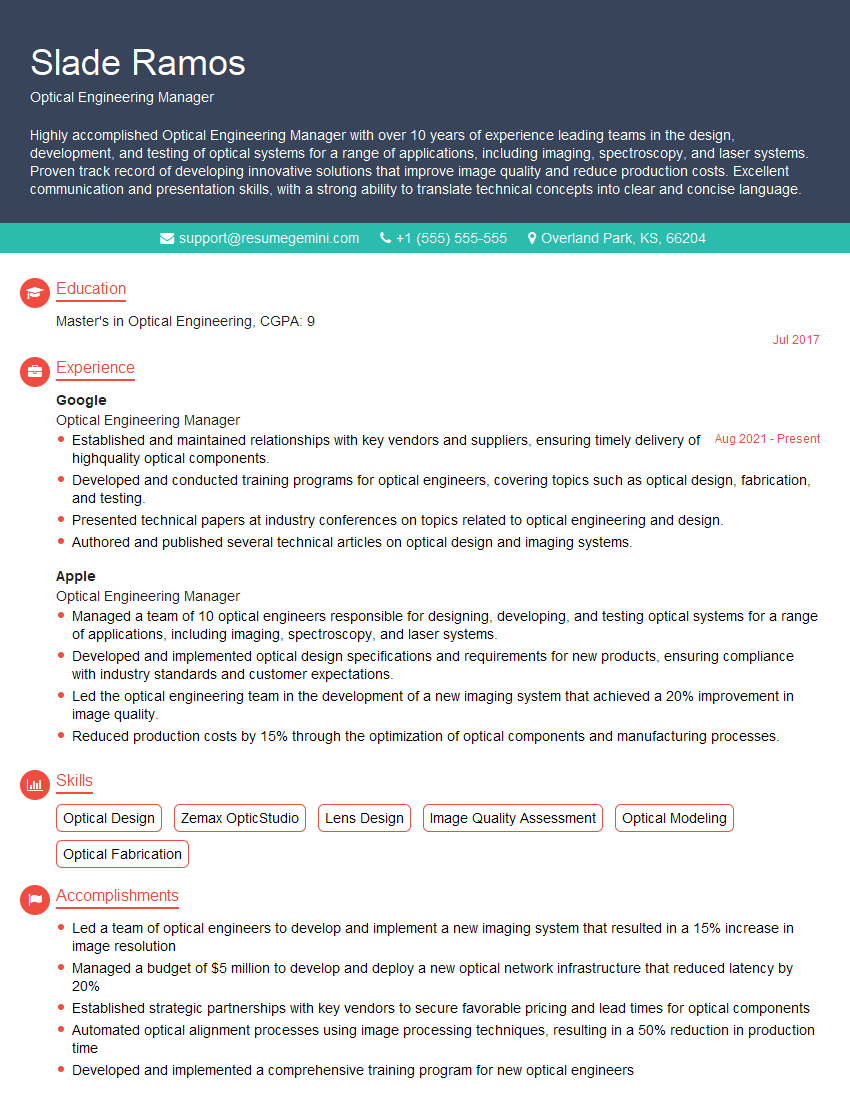
Optical Engineering Manager Resume Sample
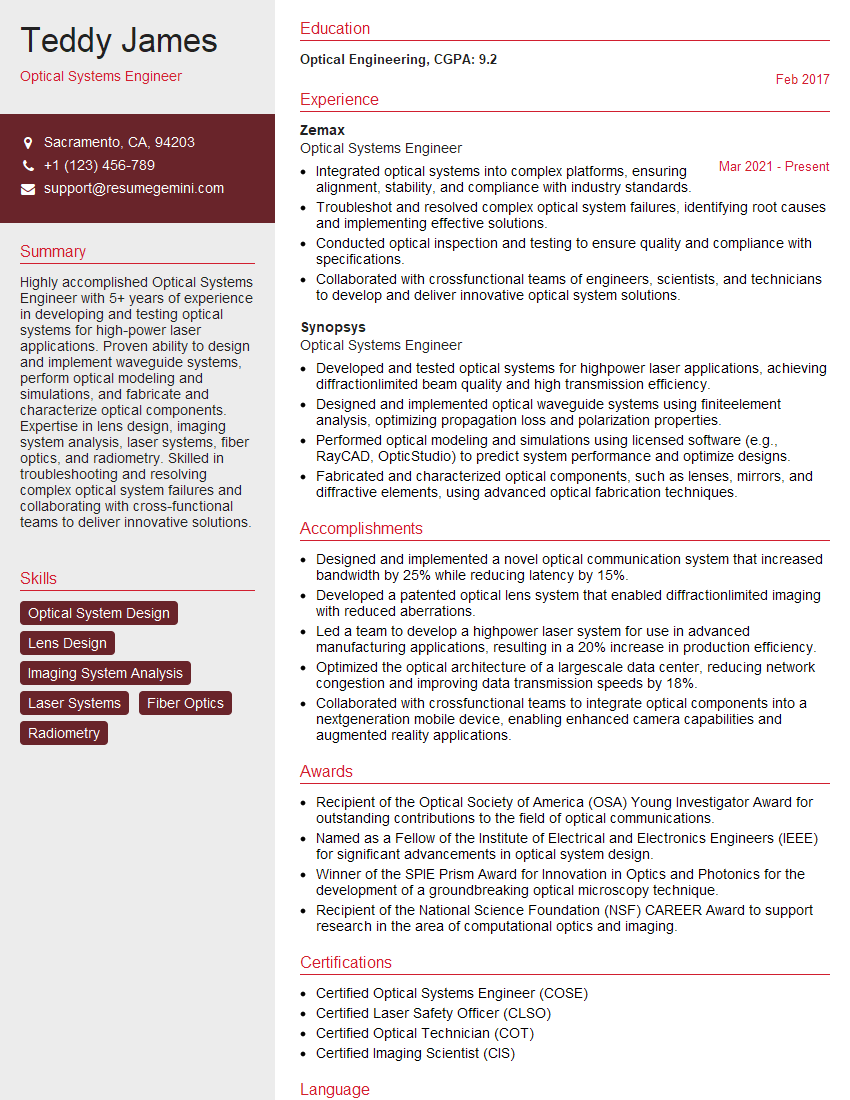
Optical Systems Engineer Resume Sample
Explore more articles
Users Rating of Our Blogs
Share Your Experience
We value your feedback! Please rate our content and share your thoughts (optional).
What Readers Say About Our Blog
Very informative content, great job.
good