The right preparation can turn an interview into an opportunity to showcase your expertise. This guide to Origin Mapping interview questions is your ultimate resource, providing key insights and tips to help you ace your responses and stand out as a top candidate.
Questions Asked in Origin Mapping Interview
Q 1. Explain the concept of origin mapping and its applications.
Origin mapping, in its simplest form, is the process of identifying the geographical origin of something – be it goods, people, pollutants, or even online traffic. It’s like being a detective, tracing back the source of something to understand its journey. Applications are incredibly diverse. In supply chain management, it helps track products from origin to consumer, ensuring transparency and accountability. In epidemiology, it pinpoints the source of disease outbreaks, aiding in effective containment. Environmental scientists use it to locate pollution sources for remediation efforts. Even in marketing, understanding the geographic origin of website traffic can help tailor advertising campaigns more effectively. Imagine tracing coffee beans from a specific farm in Colombia to a cafe in New York City – that’s origin mapping in action.
Q 2. What are the different types of origin mapping techniques?
Origin mapping techniques vary depending on the data available and the specific question being asked. Some common methods include:
- Direct Tracing: This involves directly tracking the origin, like using GPS trackers on shipments or surveying individuals about their travel patterns.
- Statistical Methods: Techniques like spatial interpolation and regression analysis can be used when direct data is limited. We might use known pollution levels at several points to estimate pollution origins across a wider area.
- Network Analysis: For tracking information flows or movement of people, network analysis can reveal key origins and pathways. For example, analyzing social media data to determine the origin of a viral trend.
- Remote Sensing: Satellite imagery and aerial photography can identify origins of deforestation, agricultural practices, or even pollution plumes.
- Isotopic Analysis: In certain fields like environmental science or archaeology, isotopic analysis can help pinpoint the source of materials. For example, the isotopic signature of water can reveal its origin.
Q 3. Describe the process of creating an origin-destination matrix.
Creating an origin-destination (OD) matrix involves quantifying the movement between different locations. Think of it as a spreadsheet where rows represent origins and columns represent destinations, and each cell shows the number of trips or the quantity of goods moved between those two points. The process generally involves:
- Data Collection: This might involve surveys, GPS tracking, toll data, or other relevant sources depending on the application. Imagine surveying commuters to determine their home and work locations.
- Data Aggregation: The raw data is then aggregated into zones or regions to create the OD matrix. We might group individual addresses into neighborhoods or census tracts.
- Matrix Creation: The aggregated data is then organized into the OD matrix. Each cell (i,j) represents the flow from origin i to destination j.
- Validation: The final matrix is checked for consistency and plausibility. Outliers or impossible values need to be investigated.
For example, a transportation planner might use an OD matrix to model traffic flow and plan for infrastructure improvements.
Q 4. How do you handle missing data in origin mapping?
Missing data is a common challenge in origin mapping. Several strategies can be employed:
- Imputation: Missing values can be estimated using statistical methods, such as mean imputation, regression imputation, or more advanced techniques like multiple imputation. This essentially ‘fills in the blanks’ using available data.
- Data Augmentation: This involves adding more data to compensate for the missing information. This could involve conducting additional surveys, using data from similar regions, or employing advanced statistical models to estimate missing values.
- Sensitivity Analysis: Assessing how sensitive the results are to the missing data can reveal how much impact the missing information has on the overall conclusions.
The best approach depends on the nature of the missing data, the amount of missing data, and the research question.
Q 5. What are the common challenges encountered in origin mapping?
Origin mapping, while powerful, presents several challenges:
- Data Availability and Quality: Gathering accurate and complete data can be expensive and time-consuming. Data might be inconsistent, incomplete, or inaccurate.
- Spatial Resolution: The precision of the origin identification depends on the spatial resolution of the data. Coarse data can lead to imprecise origin estimations.
- Confidentiality Issues: In some cases, data might be sensitive or confidential, making it difficult to access or share.
- Uncertainty and Error: There’s always some degree of uncertainty and error associated with origin mapping, especially when relying on indirect methods.
- Computational Complexity: Analyzing large datasets can be computationally intensive, requiring significant computing power and advanced software.
Q 6. What software or tools are you familiar with for origin mapping?
I’m familiar with several software and tools used in origin mapping, including:
- GIS Software (e.g., ArcGIS, QGIS): These are essential for visualizing and analyzing spatial data.
- Statistical Software (e.g., R, Python with libraries like SciPy and Pandas): Used for data analysis, statistical modeling, and imputation.
- Network Analysis Software (e.g., Gephi, ArcGIS Network Analyst): Useful for analyzing movement and flows through networks.
- Specialized Software for OD Matrix Creation and Analysis: Several proprietary and open-source tools are specifically designed for creating and working with OD matrices.
Q 7. How do you ensure the accuracy and reliability of origin mapping data?
Ensuring accuracy and reliability requires a multi-faceted approach:
- Data Quality Control: Implementing rigorous data validation procedures is crucial. This involves checking for errors, inconsistencies, and outliers.
- Methodological Rigor: Selecting appropriate and validated methods based on the data and research question is essential. The chosen methods should be transparent and well-documented.
- Sensitivity Analysis: Assessing how sensitive results are to variations in data or methods helps understand the robustness of the findings.
- Validation against Independent Data: Whenever possible, comparing results with independent data sources strengthens the credibility of the findings.
- Transparency and Documentation: Clearly documenting all data sources, methods, and assumptions ensures replicability and allows others to scrutinize the work.
Q 8. Explain the difference between point and area origin mapping.
Origin mapping, in essence, traces the source of something – be it pollutants, disease outbreaks, or even consumer goods. Point and area origin mapping differ primarily in the precision of their source identification.
Point origin mapping pinpoints the exact location of the source. Think of tracking a specific contaminated water well causing a localized illness outbreak. The source is a singular, identifiable point. Data analysis would focus on identifying the geographic coordinates of that well.
Area origin mapping, on the other hand, identifies a region or area as the source, rather than a single point. This is more typical when dealing with diffuse sources like air pollution from a sprawling industrial complex. While you can’t pinpoint a single smokestack, you can identify the industrial zone as the origin of the pollution. The analysis here would focus on defining the boundaries of that zone and possibly characterizing the intensity of pollution within that area.
Q 9. How do you interpret and visualize origin mapping results?
Interpreting and visualizing origin mapping results hinges on effectively communicating the probability or likelihood of different source locations. Several methods exist to achieve this.
- Maps with color gradients: These are a highly intuitive approach. Darker colors might represent higher probabilities of origin, with lighter colors indicating lower probabilities. For point origin mapping, you might see a ‘heat map’ effect, concentrating around the most likely source.
- Probability surfaces: These present the results as a 3D surface where height represents the probability of origin for each location. This is particularly effective for visualizing complex patterns.
- Pie charts or bar graphs: For discrete sources, these charts can clearly show the relative contribution of each potential source to the overall observed effect.
The chosen visualization method depends heavily on the type of data, the complexity of the source distribution, and the audience’s familiarity with data visualization techniques. Often, a combination of approaches provides the clearest and most impactful presentation.
Q 10. Describe your experience with different data sources for origin mapping (e.g., GPS, surveys).
My experience spans a variety of data sources for origin mapping. The choice of data source depends heavily on the nature of the problem.
- GPS data: This is crucial for tracking the movements of mobile sources like vehicles or animals. For example, tracking GPS data from delivery trucks can help map the origin of goods delivery across a city.
- Surveys: Surveys provide valuable qualitative and quantitative data, particularly for identifying potential sources based on human reports or observations. This was useful in a recent project tracing the source of a foodborne illness outbreak where customer surveys pinpointed a common restaurant.
- Environmental sensors: Air quality monitors, water quality sensors, and soil sampling data are invaluable for identifying the spatial distribution of pollutants and other environmental factors. I’ve used this extensively to map the origins of water contamination in a watershed.
- Administrative data: Data from government agencies, such as industrial permits or disease registries, can provide crucial contextual information for the analysis. This contextual information can help prioritize likely source areas.
Often, a combination of data sources is necessary to paint a comprehensive picture. For instance, combining GPS data with environmental sensor data can provide a powerful means of understanding the spatial and temporal dynamics of pollution sources.
Q 11. How do you validate the results of an origin mapping analysis?
Validating origin mapping results is crucial to ensure the reliability of the conclusions. This process involves several key steps.
- Sensitivity analysis: Testing the robustness of the results by altering input parameters or data assumptions. This helps assess how sensitive the results are to uncertainties in the input data.
- Comparison with independent data: Comparing the identified sources with information from alternative sources, such as historical records, witness testimonies, or other relevant datasets. This strengthens the credibility of the findings.
- Field verification: Conducting on-site inspections or sampling to confirm the presence of the source at the location identified by the analysis. This is often the most crucial step, as it provides ground-truth validation.
- Statistical evaluation: Applying statistical tests to assess the significance of the identified sources and to quantify the uncertainty associated with the results.
The chosen validation methods depend largely on the resources available, the type of data used, and the nature of the problem being addressed. However, a multi-faceted approach that combines several validation techniques is always preferred to provide a comprehensive assessment of the reliability of the origin mapping results.
Q 12. What are the limitations of origin mapping?
Despite its power, origin mapping is not without limitations.
- Data availability and quality: The accuracy of origin mapping is directly tied to the quality and completeness of the data. Missing data, measurement errors, or inaccurate reporting can lead to flawed results.
- Model assumptions: Origin mapping models often rely on various assumptions about the dispersion of pollutants or the spread of disease. If these assumptions are not met in reality, the results can be misleading.
- Computational complexity: Analyzing large datasets can be computationally intensive, particularly for complex scenarios with many potential sources. This can create practical limitations in terms of time and resources.
- Uncertainty quantification: Quantifying the uncertainty associated with the results is often challenging, particularly when dealing with complex systems with multiple interacting factors.
It’s crucial to acknowledge these limitations when interpreting and communicating the results of origin mapping. Transparency about data limitations and model assumptions is paramount for maintaining the integrity of the analysis.
Q 13. How can origin mapping be used to improve decision-making in your field?
Origin mapping significantly improves decision-making in many fields by providing crucial spatial information about the sources of various phenomena.
- Environmental management: Identifying pollution sources allows for targeted interventions to reduce environmental impact. This could involve implementing stricter regulations on specific industries or implementing remediation strategies in contaminated areas.
- Public health: Tracing the origin of disease outbreaks facilitates rapid containment efforts, preventing further spread and improving public health outcomes. This can aid in resource allocation to affected areas and better inform public health campaigns.
- Supply chain management: Understanding the origin of goods helps improve supply chain efficiency, track product quality, and ensure compliance with regulations. This enhances transparency and allows companies to address potential risks and vulnerabilities more effectively.
- Crime prevention: Mapping the origin of crimes can assist law enforcement in identifying crime hotspots, deploying resources more effectively, and developing targeted crime prevention strategies.
By providing a spatially explicit understanding of origins, origin mapping enables data-driven, targeted interventions and informed decision-making, ultimately leading to improved outcomes in numerous fields.
Q 14. Describe a situation where you used origin mapping to solve a problem.
In a recent project involving a large-scale water contamination event, we used origin mapping to pinpoint the source. Initial reports suggested widespread contamination, causing considerable public alarm. We combined several data sources: water quality test results from numerous sampling sites across the affected area, geographic information system (GIS) data on local infrastructure (water pipes, industrial plants), and historical records of industrial activity.
Using a Bayesian origin mapping model, we analyzed the data and produced a probability surface showing the likelihood of contamination originating from various locations. The analysis strongly suggested a specific industrial plant as the most probable source, a finding supported by later on-site inspections which confirmed a leak in a wastewater treatment facility connected to the plant. This allowed for a rapid response: immediate shutdown of the facility and effective remediation efforts, quickly alleviating the public health crisis and preventing further contamination.
Q 15. How do you handle spatial autocorrelation in origin mapping data?
Spatial autocorrelation, the tendency for nearby locations to be more similar than distant locations, is a crucial consideration in origin mapping. Ignoring it can lead to inaccurate conclusions. We handle it primarily through statistical methods.
- Spatial Lag Models: These models incorporate the spatial dependence explicitly by including a spatially lagged dependent variable. For example, we might model the origin of a pollutant by considering not only its concentration at a given location but also the concentrations in neighboring locations. This accounts for the spillover effects.
- Geographically Weighted Regression (GWR): GWR allows for locally varying regression coefficients, effectively acknowledging that the relationship between origin and destination may vary across space. Imagine analyzing migration patterns: GWR would let us discover regional differences in the factors influencing migration decisions.
- Spatial filtering techniques: Methods such as spatial smoothing can reduce the influence of autocorrelation by averaging values across neighboring areas. This is helpful when dealing with noisy data or high levels of clustering.
Choosing the appropriate method depends on the specific data and research question. Often, a combination of techniques is necessary for a thorough analysis. For instance, we might use spatial filtering to preprocess the data before applying a spatial lag model.
Career Expert Tips:
- Ace those interviews! Prepare effectively by reviewing the Top 50 Most Common Interview Questions on ResumeGemini.
- Navigate your job search with confidence! Explore a wide range of Career Tips on ResumeGemini. Learn about common challenges and recommendations to overcome them.
- Craft the perfect resume! Master the Art of Resume Writing with ResumeGemini’s guide. Showcase your unique qualifications and achievements effectively.
- Don’t miss out on holiday savings! Build your dream resume with ResumeGemini’s ATS optimized templates.
Q 16. What is the role of geographic information systems (GIS) in origin mapping?
Geographic Information Systems (GIS) are indispensable in origin mapping. They provide the framework for visualizing, analyzing, and managing the spatial data involved. GIS software handles everything from data import and georeferencing to complex spatial statistical analysis.
- Data Management: GIS effectively organizes and manages diverse data sets, such as point locations, polygons (representing areas), and raster data (like satellite imagery). This is crucial when dealing with multiple sources of origin information.
- Spatial Analysis: GIS allows for various spatial analyses such as proximity analysis (finding locations closest to sources), overlay analysis (combining different layers of spatial information), and network analysis (modeling movement along transportation networks).
- Visualization: Creating maps and other visualizations is essential for communicating findings. GIS provides powerful cartographic tools to create informative and visually appealing outputs.
For example, imagine tracking the origin of agricultural products. GIS allows us to overlay maps of farm locations, transportation routes, and market locations to visualize the entire supply chain and identify potential bottlenecks.
Q 17. Explain the concept of spatial resolution and its importance in origin mapping.
Spatial resolution refers to the level of detail in spatial data. In origin mapping, it dictates how precisely we can pinpoint the origin of something. Higher spatial resolution means more precise locations, while lower resolution means coarser or more generalized locations.
The importance of spatial resolution is paramount. A high spatial resolution allows us to identify finer-scale patterns and relationships. For example, identifying the precise source of a water contaminant requires high-resolution data, maybe even at the meter level. In contrast, studying broader migration patterns might only require coarser resolution data at a county or regional level. Choosing the appropriate resolution is a trade-off between detail and data availability; higher resolution data is often more difficult and expensive to collect.
Consider analyzing the spread of a disease. High-resolution data, such as individual addresses, could help pinpoint the exact origin and transmission pathways, whereas lower-resolution data, such as census tracts, would give a more generalized picture.
Q 18. How do you account for temporal variations in origin mapping data?
Temporal variations are ubiquitous in origin mapping data. Ignoring them can severely distort the results. We account for these variations through several techniques:
- Time Series Analysis: This involves analyzing how the origins change over time. For example, we could track how the primary source of air pollution in a city shifts over several years.
- Dynamic Mapping: This creates animations or sequential maps to visualize how origins shift across different time periods. This method effectively communicates the temporal dimension of the process.
- Temporal Aggregation: When dealing with high-frequency data, we might aggregate it into longer time intervals (e.g., daily data into monthly data) to simplify the analysis and reduce noise.
- Statistical modeling: Incorporating time as an independent variable in statistical models allows us to examine how time influences the origin of phenomena. We might see that the origin shifts with changing seasons or economic conditions.
For instance, studying the origin of a forest fire requires considering weather patterns and fuel availability over time. Understanding how these factors changed in the days or weeks leading up to the fire is essential to pinpointing the likely ignition point.
Q 19. What are the ethical considerations in using origin mapping?
Ethical considerations in origin mapping are crucial, particularly when dealing with sensitive data.
- Privacy: Origin mapping often involves personal or sensitive information. Anonymization and aggregation techniques are necessary to protect individual privacy. For example, when mapping the origin of disease outbreaks, individual patient data must be handled responsibly.
- Bias and discrimination: Origin mapping results can be misused to perpetuate stereotypes or discrimination. It’s essential to present findings objectively and avoid making generalizations or assumptions that could be harmful.
- Transparency: The methodology, data sources, and limitations of the analysis should be clearly communicated to ensure transparency and avoid misinterpretations. This is essential for maintaining credibility and preventing the misuse of findings.
- Data security: Protecting the data from unauthorized access is essential. Secure storage and handling procedures must be in place.
For instance, mapping crime origins requires careful consideration to prevent stigmatization of specific neighborhoods or communities. The focus should be on informing crime prevention strategies, not on creating unfair biases or reinforcing negative stereotypes.
Q 20. How do you assess the quality of origin mapping data?
Assessing the quality of origin mapping data involves several steps:
- Accuracy: How precisely are the origins located? This is influenced by the data collection methods and the spatial resolution. We often assess accuracy through comparison with independent data sources or ground truthing.
- Completeness: Are all relevant origins included in the data set? Missing data can significantly bias the results, and careful consideration must be given to the potential for missing data.
- Precision: This relates to the reproducibility of the results. Are the methods and procedures clearly defined to allow for replication of the study?
- Uncertainty: Acknowledging and quantifying uncertainty is crucial. Origin mapping almost always involves some uncertainty due to limitations in data collection or the inherent complexity of the processes being studied.
- Data consistency: Checks are performed for errors and inconsistencies in data collection methods. For instance, comparing the geographic coordinates of the same location in different data sources to identify inconsistencies.
For example, in studying the origin of pollutants, we’d verify the accuracy of monitoring station locations, the calibration of monitoring equipment and assess if there are any systematic biases in data collection.
Q 21. Explain the difference between origin mapping and other spatial analysis techniques.
Origin mapping differs from other spatial analysis techniques in its primary focus: identifying the source or origin of a phenomenon. While other techniques might analyze spatial patterns or relationships, origin mapping specifically aims to trace things back to their source.
- Spatial Interpolation: Predicts values at unsampled locations based on known values. Origin mapping, in contrast, focuses on identifying the location of the source itself.
- Spatial Clustering Analysis: Identifies clusters of similar values in space. This can be informative, but it doesn’t necessarily identify the origin of the pattern.
- Spatial Regression: Examines relationships between variables in space. While it can be used to model the influence of factors on the origin of something, the primary focus of spatial regression is on the relationships themselves, not the origin per se.
Consider the spread of an invasive species. Spatial interpolation might predict the species’ presence in unsampled locations, but origin mapping would attempt to identify the exact point or area where the species was initially introduced. Spatial clustering analysis could reveal areas of high species density, but origin mapping would trace back the invasion pathway.
Q 22. How can you integrate origin mapping with other analytical methods?
Origin mapping, the process of identifying the source of materials or pollutants, can be powerfully enhanced by integrating it with other analytical methods. Think of it like a detective using multiple clues to solve a case.
Isotope analysis: Combining origin mapping with isotope ratios (e.g., strontium, lead) allows for a more precise determination of source areas. Imagine tracking the movement of contaminated groundwater; isotope analysis can pinpoint specific geological formations as the origin.
Geochemical fingerprinting: Origin mapping can be paired with geochemical data to identify unique elemental signatures associated with different sources. This is similar to using DNA analysis to identify individuals – each source has a distinct ‘fingerprint’.
Statistical modeling: Techniques like Bayesian inference or machine learning can be used to process large and complex datasets, improving the accuracy and robustness of origin mapping. This is like using advanced statistical tools to analyze the detective’s collected evidence.
Remote sensing: Satellite imagery and aerial photography provide crucial spatial context, guiding sampling strategies and validating origin mapping results. This is like using aerial reconnaissance to identify potential crime scenes.
For instance, in a study of illegal logging, combining origin mapping with remote sensing data (to identify logged areas) and wood isotope analysis (to trace wood back to its source) would provide a powerful approach to combatting illegal activities.
Q 23. What are some advanced techniques used in origin mapping?
Advanced techniques in origin mapping are constantly evolving, driven by improvements in computing power and analytical methodologies. Here are some examples:
Multivariate statistical analysis: Techniques such as principal component analysis (PCA) and discriminant function analysis (DFA) allow for the simultaneous analysis of multiple variables, leading to more robust and informative results. This helps us untangle complex relationships between different factors contributing to origin.
Inverse modeling: This sophisticated approach uses observations of pollutant concentrations to estimate source characteristics and locations. Imagine trying to find the source of a leak – inverse modeling helps estimate where the leak is by using measurements of leaked water pressure.
Geostatistics: Kriging and other geostatistical methods are used to interpolate data and create continuous maps of pollutant concentrations, aiding in the visualization and interpretation of results. This is analogous to creating a heatmap showing areas of higher crime activity.
Artificial intelligence and machine learning: AI and machine learning algorithms are increasingly used for pattern recognition, anomaly detection, and predictive modeling in origin mapping, improving both accuracy and efficiency.
Q 24. Discuss your experience with different projection systems used in origin mapping.
Projection systems are crucial in origin mapping as they define how we represent the spherical Earth on a flat map. Choosing the appropriate system is vital for accuracy and depends on the scale and geographic extent of the study area.
Geographic Coordinate Systems (GCS): Latitude and longitude define location on the Earth’s surface; these are fundamental but not suitable for direct distance measurements in mapping.
Projected Coordinate Systems (PCS): These transform geographic coordinates into a flat, planar surface, useful for distance and area calculations. Common examples include UTM (Universal Transverse Mercator), suitable for smaller areas, and Albers Equal-Area Conic, for larger areas where preserving area is important.
Web Mercator (EPSG:3857): Widely used in web mapping applications, but significantly distorts areas at higher latitudes. This is fine for global overview maps but unsuitable for precise measurements in polar regions.
My experience involves selecting the most appropriate projection system based on the specific project requirements. For instance, in a regional-scale study focusing on area calculations, an equal-area projection like Albers would be preferred. While for a smaller scale study focusing on precise distances, a UTM projection might be more suitable.
Q 25. How do you address data privacy concerns when working with origin mapping data?
Data privacy is paramount in origin mapping, especially when dealing with sensitive information like individual locations or personal details potentially linked to sources. My approach emphasizes responsible data handling throughout the entire process.
Data anonymization: Techniques such as aggregation and generalization can protect individual privacy while preserving the integrity of the overall data. This could involve replacing precise locations with broader zones or reporting data as aggregated statistics.
Data encryption: Encrypting data both in transit and at rest safeguards it against unauthorized access. This is a standard security practice to prevent breaches.
Access control: Strict access controls limit data access to authorized personnel only, ensuring confidentiality. This involves the use of secure user permissions and data management systems.
Compliance with regulations: Adherence to relevant data privacy regulations (like GDPR or HIPAA, depending on the context) is crucial. This includes obtaining informed consent where necessary.
Always remember, responsible data handling builds trust and ensures that the benefits of origin mapping can be realised without compromising privacy.
Q 26. Describe your approach to analyzing large datasets for origin mapping.
Analyzing large datasets for origin mapping demands efficient strategies and computational resources. My approach involves a multi-stage process:
Data pre-processing: This is crucial to clean, transform, and prepare data for analysis. It involves handling missing values, outliers, and inconsistencies.
Data reduction techniques: Methods like PCA or feature selection can reduce data dimensionality, improving processing speed and avoiding overfitting in statistical models. This helps manage the computational burden.
Distributed computing: For extremely large datasets, parallel processing using tools like Spark or Hadoop allows us to divide the computational load across multiple machines, significantly accelerating analysis. This is analogous to using multiple detectives to simultaneously investigate different aspects of the same case.
Efficient algorithms: Selecting optimized algorithms for statistical modeling and mapping is essential to minimize processing time. This step ensures faster solutions.
In a recent project involving analyzing thousands of environmental samples, we successfully applied a distributed computing framework to perform geostatistical analysis, providing accurate maps and visualizations within a reasonable timeframe.
Q 27. How do you communicate the results of an origin mapping analysis to non-technical audiences?
Communicating complex origin mapping results to non-technical audiences requires clear, concise, and visually engaging methods. I focus on:
Visualizations: Maps are fundamental. Using intuitive color schemes, clear labels, and avoiding excessive detail makes the information easily digestible. Think of a simple color-coded map showing pollution levels rather than complex tables of numbers.
Storytelling: Presenting the findings as a narrative, highlighting key findings and their implications makes the information relatable and memorable. This approach helps people grasp the broader significance of the work.
Analogies and metaphors: Using relatable examples helps bridge the gap between technical concepts and everyday understanding. For instance, comparing the spread of pollutants to the ripples created when dropping a stone in a pond.
Interactive presentations: Engaging tools like interactive maps and dashboards can improve audience comprehension and foster discussion. This adds a dynamic and engaging element.
Ultimately, the goal is to make the scientific findings accessible and relevant to decision-makers and the general public to help drive effective action.
Q 28. What are your future aspirations in the field of origin mapping?
My future aspirations in origin mapping center on leveraging advancements in technology to enhance its accuracy, efficiency, and applicability.
Integration of AI/ML: I want to explore the potential of AI and machine learning to automate aspects of origin mapping, particularly data analysis and interpretation, freeing up time for higher-level decision making.
Development of novel statistical methods: The constant influx of data from multiple sources necessitates more powerful and flexible statistical techniques. I am keen to contribute to developing these methods.
Application to emerging environmental challenges: The challenges posed by microplastics pollution, emerging contaminants, and climate change demand innovative applications of origin mapping. I aim to address these challenges using my expertise.
Ultimately, my goal is to contribute to the development and application of origin mapping tools that make a tangible difference in protecting human health and the environment.
Key Topics to Learn for Origin Mapping Interview
- Data Structures for Origin Mapping: Understanding how different data structures (e.g., graphs, trees, spatial indexes) are used to represent and manage origin data efficiently. Consider the trade-offs between different structures.
- Algorithms and Optimization Techniques: Explore algorithms crucial for origin mapping, such as shortest path algorithms (Dijkstra’s, A*), clustering techniques, and methods for handling large datasets. Focus on understanding the computational complexity and optimization strategies.
- Spatial Analysis and Geographic Information Systems (GIS): Familiarize yourself with the fundamental concepts of GIS and their application in origin mapping. Understand how to work with spatial data, projections, and coordinate systems.
- Data Visualization and Presentation: Mastering effective ways to visualize origin data using maps, charts, and other visual representations. Understand how to choose the best visualization technique for communicating insights clearly.
- Statistical Analysis and Interpretation: Develop a strong understanding of statistical methods used to analyze origin data and draw meaningful conclusions. Learn to identify patterns, trends, and anomalies.
- Error Handling and Quality Control: Understanding potential sources of error in origin data and methods for ensuring data quality and accuracy. This includes data cleaning, validation, and uncertainty analysis.
- Practical Application: Case Studies: Research and understand real-world applications of origin mapping across various industries (e.g., transportation, logistics, epidemiology). Be prepared to discuss specific examples and challenges.
Next Steps
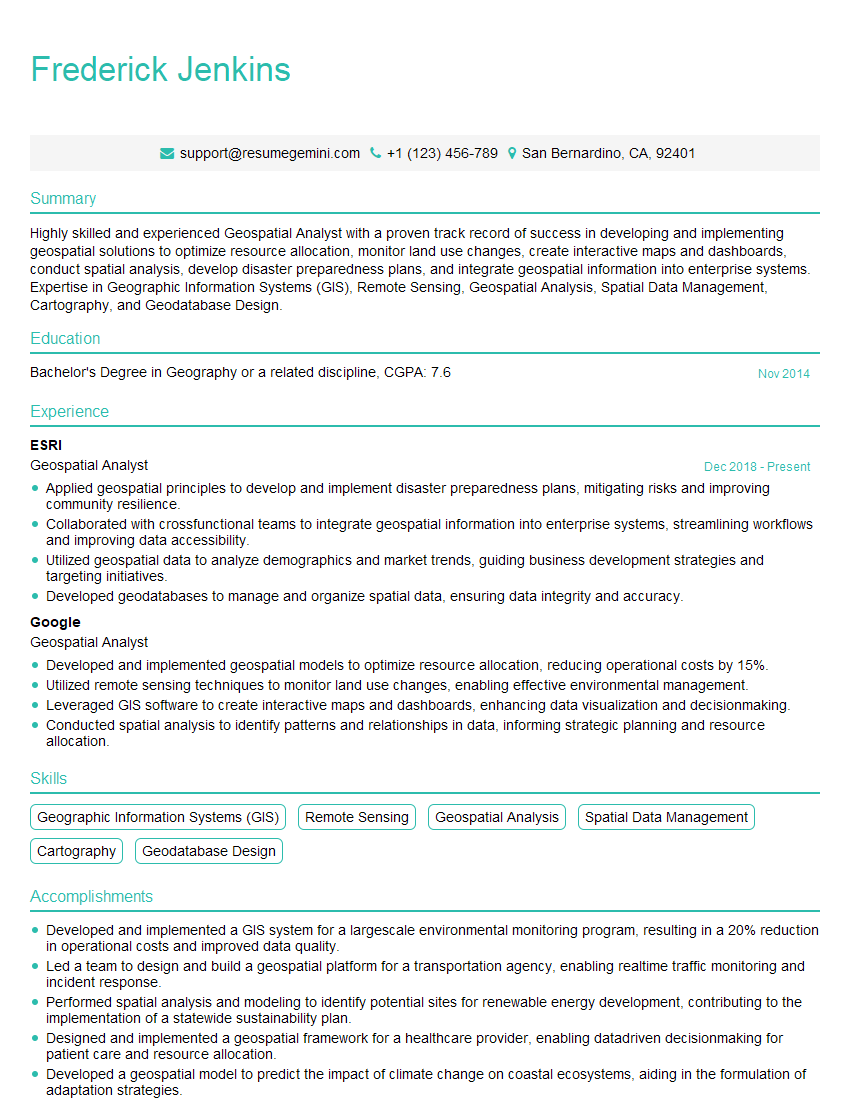
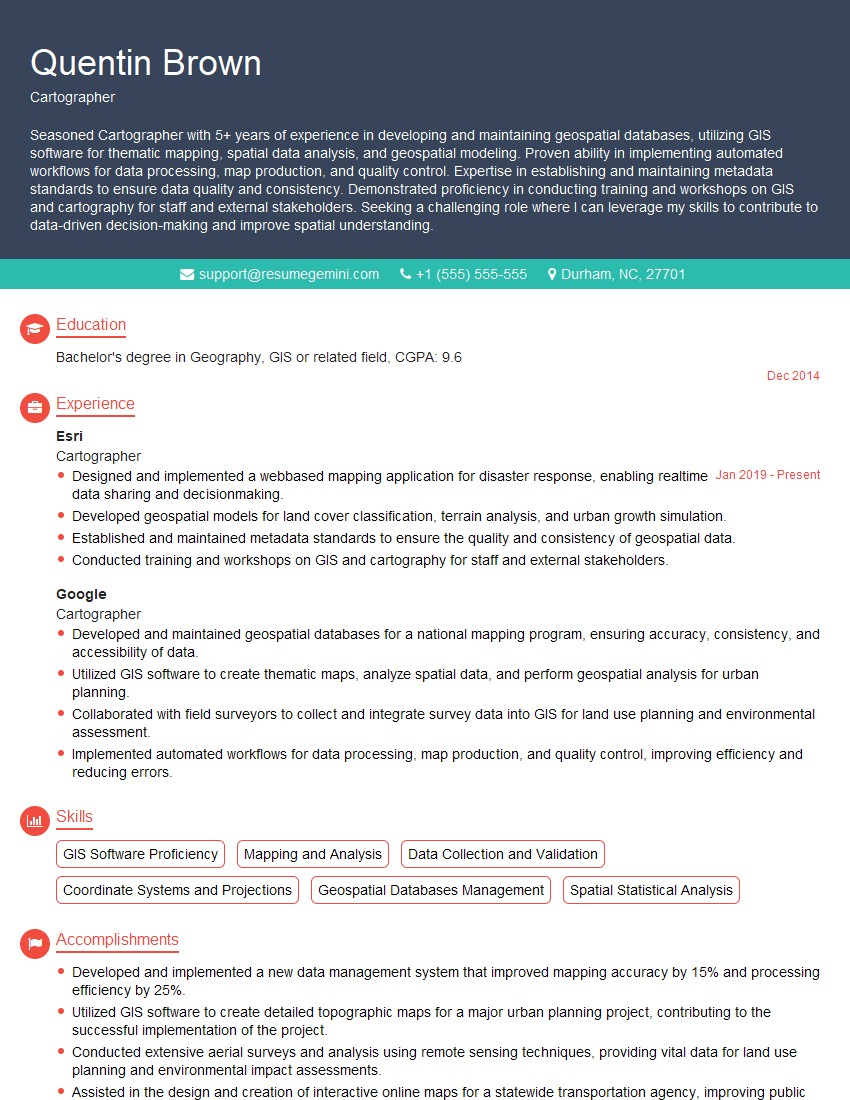
Mastering Origin Mapping opens doors to exciting career opportunities in data analysis, geographic information science, and various related fields. A strong understanding of these concepts will significantly enhance your interview performance and overall career prospects. To maximize your chances of success, it’s crucial to present your skills effectively. Creating an ATS-friendly resume is essential for getting your application noticed by recruiters. We highly recommend using ResumeGemini to build a professional and impactful resume tailored to the Origin Mapping field. Examples of resumes specifically crafted for Origin Mapping roles are available to help guide your process.
Explore more articles
Users Rating of Our Blogs
Share Your Experience
We value your feedback! Please rate our content and share your thoughts (optional).
What Readers Say About Our Blog
Very informative content, great job.
good