Interviews are more than just a Q&A session—they’re a chance to prove your worth. This blog dives into essential Silver Staining interview questions and expert tips to help you align your answers with what hiring managers are looking for. Start preparing to shine!
Questions Asked in Silver Staining Interview
Q 1. Describe the different types of silver staining techniques.
Silver staining encompasses a variety of techniques, all relying on the reduction of silver ions to metallic silver, which deposits on specific tissue components, creating a dark-brown or black precipitate. The different types are mainly categorized by their target structures and methodology. Key techniques include:
- Golgi stain: A classic method renowned for visualizing the entire neuron, including its soma, dendrites, and axon. It’s imprecise in that it only stains a small percentage of neurons in a given tissue section.
- Bielschowsky stain: A modification of the original silver staining methods, offering improved specificity for axons and neurofibrils. This is often preferred for visualizing axonal degeneration or neurofibrillary tangles in diseases like Alzheimer’s.
- Modified Bielschowsky methods: Numerous variations exist, fine-tuning parameters like silver impregnation time or developer solutions to optimize staining for specific applications. These adaptations often enhance the visualization of particular neuroanatomical structures.
- Bodian stain: Primarily used for visualizing nerve fibers and particularly useful in highlighting the presence of amyloid plaques.
- Holmes silver stain: Often used in conjunction with other stains, primarily focused on the visualization of axons and myelin.
The choice of technique depends heavily on the specific research question and the type of neural structures being investigated.
Q 2. Explain the principles behind silver staining.
Silver staining leverages the reduction of silver ions (Ag+) to metallic silver (Ag0), which precipitates on target tissue components. This reduction is facilitated by the presence of reducing agents within or associated with the tissue structures. Think of it like a photographic development process: the silver ions are the ‘unexposed’ film, and the reducing agents are the ‘developer’ that reveal the structure.
The precise mechanism isn’t fully understood, but it’s thought that the reducing agents present in specific neuronal elements (e.g., neurofibrils, axons) bind the silver ions and catalyze their reduction. This results in the deposition of metallic silver, visually staining the structures.
Factors influencing the staining process include the concentration of silver ions, the type and concentration of reducing agents, the pH of the solution, and the duration of incubation. These parameters are carefully controlled to achieve optimal staining results.
Q 3. What are the applications of silver staining in neuropathology?
Silver staining is indispensable in neuropathology for visualizing several key features:
- Neurofibrillary tangles and senile plaques in Alzheimer’s disease: The Bielschowsky stain, for example, is crucial for their identification and quantification.
- Axonal degeneration in various neurological disorders: Silver stains highlight the presence of damaged axons, providing insights into the pathophysiology of diseases like multiple sclerosis or traumatic brain injury.
- Neuroanatomical structures: The Golgi stain allows for detailed visualization of neuronal morphology, including dendritic spines and axonal projections, critical for understanding brain architecture and development.
- Microglia and other immune cells: Some modified silver staining methods can be employed to visualize activated microglia and other inflammatory cells in diseased brain tissues.
Essentially, it helps pathologists understand the structural changes in the nervous system associated with disease, aiding in diagnosis and research.
Q 4. What are the advantages and disadvantages of silver staining compared to other staining methods?
Advantages:
- High sensitivity: Silver staining offers excellent sensitivity for visualizing fine neuronal structures, often better than other staining methods such as hematoxylin and eosin (H&E).
- Specific staining of neuronal structures: Depending on the method, it can target axons, neurofibrils, or entire neurons, providing specific information.
- Visualization of subtle pathological changes: It highlights subtle alterations in neuronal morphology associated with various neurodegenerative diseases.
Disadvantages:
- Technical complexity: The procedures are often laborious and require meticulous attention to detail. Slight variations can significantly impact the results.
- Lack of reproducibility: The results can be inconsistent across different batches or labs due to factors like reagent quality and incubation times.
- Potential for artifacts: Poorly performed staining can lead to the formation of artifacts that can be misinterpreted as real structures.
- Use of hazardous chemicals: Silver nitrate, in particular, is a hazardous chemical requiring careful handling and disposal.
Compared to H&E, which provides a general overview of tissue morphology, silver stains offer more detailed information about specific neuronal elements but at the cost of increased technical complexity.
Q 5. How do you prepare tissue samples for silver staining?
Tissue preparation for silver staining is crucial for success. The process typically involves the following steps:
- Fixation: The tissue is typically fixed in a fixative like formalin to preserve its structure. The choice of fixative and fixation time can influence the staining outcome.
- Processing: This step often involves dehydration through graded alcohols and clearing with xylene before embedding in paraffin wax. This facilitates sectioning.
- Sectioning: The paraffin-embedded tissue block is sectioned using a microtome to obtain thin slices (typically 5-10 μm).
- Mounting: The sections are mounted on glass slides.
- Deparaffinization and rehydration: Before staining, the paraffin wax is removed, and the sections are rehydrated through a series of graded alcohols and water. This prepares the tissue for silver ion uptake.
Proper fixation and processing are essential to avoid artifacts and ensure optimal staining results. The specific steps and solutions may vary slightly depending on the chosen silver staining technique.
Q 6. What are the critical steps in performing a successful Golgi stain?
The Golgi stain, while elegant in its ability to visualize entire neurons, is notoriously challenging to master. Critical steps include:
- Impregnation: The tissue sections are immersed in a solution containing silver nitrate and potassium dichromate. This step is crucial for the impregnation of the neurons with silver ions. The precise concentration and duration are critical and depend on the specific Golgi method used.
- Reduction: After impregnation, the tissue is transferred to a reducing solution (often containing hydroquinone or formalin). This step reduces the silver ions to metallic silver, precipitating it within the neurons. This requires careful timing and temperature control.
- Dehydration, clearing, and mounting: Following reduction, the sections are dehydrated, cleared in xylene, and mounted with a resinous mounting medium. The speed of this process needs to be slow and steady to prevent precipitate dislodgement.
Success relies on a delicate balance of impregnation and reduction. The impregnation stage should not be too short or long; similarly, the reduction must not be aggressive or insufficient. Often multiple trials are required to find optimal conditions for a given tissue sample.
Even with optimal conditions, the Golgi stain only stains a small percentage of neurons in a random fashion, making interpretation a careful task.
Q 7. Describe the process of performing a Bielschowsky stain.
The Bielschowsky stain offers a more precise and less capricious method of visualizing axons and neurofibrils compared to the Golgi method. The steps generally include:
- Pre-treatment: The sections are often pre-treated with oxidizing agents (e.g., potassium permanganate) to enhance the affinity of the tissue for silver.
- Silver impregnation: The tissue is then immersed in a solution containing silver nitrate, often with the addition of other agents to control the reduction process.
- Reduction: A reducing solution (e.g., hydroquinone or formalin) is used to reduce the silver ions to metallic silver, leading to deposition within the axons and neurofibrils.
- Tonning (optional): A gold toning step (using gold chloride) is often included to enhance the contrast and intensity of the staining.
- Fixation of the silver: A solution of sodium thiosulfate (hypo) is often used to ‘fix’ the silver, preventing further reduction and improving stability.
- Dehydration, clearing, and mounting: Similar to the Golgi method, the sections are then dehydrated, cleared, and mounted.
The Bielschowsky stain’s advantages lie in its more consistent staining of axons and neurofibrils, making it a reliable technique for assessing axonal damage and neurofibrillary tangles. The specific details of the protocol can vary considerably.
Q 8. Explain the role of reducing agents in silver staining.
Reducing agents are crucial in silver staining because they facilitate the reduction of silver ions (Ag+) to metallic silver (Ag0). This reduction is what produces the dark brown or black precipitate that stains the target structures, making them visible under a microscope. Think of it like this: the silver ions are like invisible ink; the reducing agent is the developer that brings the image to life by converting the invisible ions into visible metallic silver.
Common reducing agents include hydroquinone, metol, and formalin. Each has slightly different properties affecting the staining intensity and specificity. For instance, hydroquinone is known for its strong reducing power, leading to intense staining but potentially increased background staining if not carefully controlled. The choice of reducing agent often depends on the specific staining protocol and the target structure.
Q 9. How do you troubleshoot problems encountered during silver staining, such as uneven staining or background staining?
Troubleshooting silver staining issues requires a systematic approach. Uneven staining often points to inconsistencies in the staining process, such as inadequate agitation during reagent application or variations in tissue thickness. To address this, ensure thorough mixing of reagents and consistent exposure time for each step. Consider using a rocking platform for even reagent distribution.
Background staining, on the other hand, usually indicates an issue with the reduction step—either excessive reduction or insufficient washing. To minimize background, carefully control the time and temperature of the reducing agent and follow rigorous washing protocols using distilled water between steps. If the problem persists, you might need to optimize the concentration of the reducing agent or explore alternative protocols.
Always check for proper fixation and pre-treatment steps as these are critical for reducing artifacts and improving staining quality.
Q 10. What are the safety precautions to be taken while handling silver staining reagents?
Silver staining reagents require meticulous safety precautions due to the toxicity of silver compounds and some reducing agents. Always work under a fume hood to minimize inhalation of fumes. Wear appropriate personal protective equipment (PPE), including gloves, lab coats, and eye protection. Proper disposal of silver waste is also crucial; follow your institution’s guidelines meticulously.
Many reducing agents are also potentially hazardous. Consult the Safety Data Sheets (SDS) for each reagent to understand its specific hazards and handling recommendations. Avoid skin contact and ingestion. In case of spills, follow established laboratory spill procedures. Proper training on safe handling and disposal practices is paramount.
Q 11. How do you interpret the results of a silver stain?
Interpreting silver stain results requires a thorough understanding of the target structures and the specific staining protocol used. The intensity of staining usually correlates with the abundance of the target molecule; darker staining indicates higher concentration. The distribution of staining helps identify the location and patterns of the target structure.
For instance, in a Golgi stain, intensely stained neuronal structures clearly depict their morphology and connections. However, interpretation always involves careful visual assessment and requires an understanding of the biological context.
It’s crucial to compare stained sections with control sections to validate the results and rule out artifacts. Microscopic expertise and familiarity with the specific staining technique are necessary for accurate interpretation.
Q 12. What is the role of fixation in silver staining?
Fixation plays a vital role in preserving the tissue architecture and preventing post-mortem changes. Proper fixation ensures that the target structures are properly preserved and remain accessible to the silver stain. Inadequate fixation can lead to tissue degradation and artifacts that interfere with staining, resulting in poor image quality and inaccurate interpretation. Different fixatives may be utilized depending on the target structures, but common ones include formalin and glutaraldehyde.
The choice of fixative and the fixation time are crucial for optimal results. Over-fixation can mask antigens, whereas under-fixation can lead to poor tissue preservation.
Q 13. Explain the difference between impregnation and reduction in silver staining.
Impregnation and reduction are sequential steps in the silver staining process. Impregnation involves the binding of silver ions to the target structures, creating a foundation for subsequent visualization. Think of this as preparing the canvas. This step usually involves immersing the tissue in a silver nitrate solution. The silver ions have an affinity for specific structures, like proteins or nucleic acids depending on the stain.
Reduction, on the other hand, is the process of converting the bound silver ions into metallic silver, rendering the target structures visible. This is the ‘painting’ phase, where the invisible silver ions are transformed into a visible precipitate. This is achieved using a reducing agent that causes the reduction of silver ions to metallic silver that is then deposited onto and visualizes the targeted structure. It is critical that this step be carefully controlled to avoid excessive background staining.
Q 14. What are the common artifacts seen in silver staining, and how can they be avoided?
Common artifacts in silver staining include uneven staining, background staining (as previously discussed), precipitation of silver on the slide surface, and over-staining, obscuring fine details. These artifacts can be minimized through careful attention to each step of the protocol.
Uneven staining and precipitation can often be avoided through proper agitation, optimal reagent concentrations and ensuring the tissue is appropriately processed. Overstaining is often a problem of excessive reduction time or too high a concentration of the reducing agent. Careful control of the reduction step and the use of adequate washing procedures can minimize these problems.
Proper fixation and careful cleaning of glassware can minimize background staining and precipitation. Consistent technique, optimization of the staining protocol, and adherence to best practices are key to reducing artifacts and obtaining high-quality silver stains.
Q 15. How does the choice of fixative affect the results of silver staining?
The choice of fixative is crucial in silver staining because it directly impacts the preservation of tissue structures and the accessibility of target components to the silver ions. Different fixatives have varying effects on tissue morphology and antigenicity. For instance, formalin, a commonly used fixative, can cross-link proteins, potentially hindering the penetration of silver stains and leading to uneven staining or reduced intensity. On the other hand, glutaraldehyde, while excellent for preserving ultrastructure, can over-fix tissue, making it less receptive to staining. Optimizing the fixative selection involves considering the specific tissue type, the target structure being stained (e.g., neurons, reticular fibers), and the desired level of preservation. For delicate structures like nerve fibers, a gentler fixative might be preferred, while for robust connective tissues, a more rigorous fixative may be suitable. Incorrect fixation can lead to artifacts such as precipitates or uneven staining, ultimately impacting the interpretation of the results.
For example, in my experience staining neuronal structures, I’ve found that a brief fixation in 4% paraformaldehyde followed by a postfixation in 2.5% glutaraldehyde yielded superior results compared to prolonged formalin fixation alone. This approach balanced structural preservation with optimal stain penetration.
Career Expert Tips:
- Ace those interviews! Prepare effectively by reviewing the Top 50 Most Common Interview Questions on ResumeGemini.
- Navigate your job search with confidence! Explore a wide range of Career Tips on ResumeGemini. Learn about common challenges and recommendations to overcome them.
- Craft the perfect resume! Master the Art of Resume Writing with ResumeGemini’s guide. Showcase your unique qualifications and achievements effectively.
- Don’t miss out on holiday savings! Build your dream resume with ResumeGemini’s ATS optimized templates.
Q 16. What are the limitations of silver staining?
Silver staining, while highly sensitive in detecting certain structures, does have limitations. One significant limitation is its inherent subjectivity. The staining process is influenced by numerous factors (fixation, staining times, temperature, and reagent quality), making it challenging to standardize completely. This can lead to variability between experiments and even between different areas within the same tissue section. Additionally, silver staining can be time-consuming and technically demanding, requiring meticulous attention to detail. The process often involves multiple steps and precise timing, and even slight deviations can dramatically affect the results. Another limitation is the potential for background staining, which can obscure the structures of interest. This background noise can make interpretation difficult, particularly in densely stained tissues. Finally, silver staining techniques are not always specific to a single target; several structures might react to the silver, leading to non-specific staining.
Q 17. How can you optimize the staining procedure for different tissue types?
Optimizing silver staining for different tissue types requires a tailored approach, focusing on the specific challenges each tissue presents. For instance, densely packed tissues like bone marrow might require pre-treatment steps like enzymatic digestion to improve stain penetration. Conversely, delicate tissues like brain sections may necessitate gentler handling and modified protocols to minimize artifact formation. The choice of silver staining method itself (e.g., Golgi, Bielschowsky, Gridley) is also critical. Golgi staining, for example, is well-suited for visualizing the entire neuron, including its intricate dendritic arbors, while Bielschowsky is better for demonstrating neurofibrils. Parameters like incubation times, silver nitrate concentration, and the type of developing solution (e.g., developer type and concentration) often need adjustments based on the tissue type and desired outcome. A systematic approach involves carefully reviewing the literature for established protocols for the specific tissue type and then optimizing parameters through trial and error, using control sections to guide the optimization process. For example, in my research, I’ve adjusted the concentration of the silver nitrate solution and the duration of the reduction step to obtain optimal staining in both brain and kidney tissues.
Q 18. What quality control measures are used to ensure the reliability of silver staining results?
Quality control in silver staining is paramount for ensuring reliable and reproducible results. This involves several key steps: First, utilizing positive and negative controls is essential. Positive controls, known to react positively to the stain, verify the staining procedure is working correctly. Negative controls, treated identically except for the omission of the stain itself, help detect non-specific staining. Second, maintaining a meticulous record of all reagents, procedures, and parameters (including batch numbers of reagents and incubation times and temperatures) is critical for traceability and reproducibility. Third, regular assessment of reagents is crucial. Silver solutions, for example, can degrade over time, impacting the staining quality. Periodic checks on their potency are essential using appropriate methods. Fourth, employing standardized procedures and using well-maintained equipment, including clean glassware and appropriately calibrated instruments, contributes to consistent staining. Finally, using experienced personnel can minimize technical errors that might lead to unreliable results. Consistent training and adherence to standardized operating procedures are crucial for maintaining quality control in silver staining.
Q 19. Describe your experience with different silver staining protocols.
My experience encompasses a broad range of silver staining protocols, including the classic Bielschowsky, the Golgi method (rapid Golgi and modified Golgi), and various modifications adapted for specific applications. The Bielschowsky method, with its relatively straightforward procedure, is frequently used in my lab for demonstrating neurofibrils. I’ve adapted this protocol for visualizing changes in neurofibril morphology in neurodegenerative disease models. The Golgi method, known for its exquisite visualization of entire neurons, has been valuable in developmental neurobiology research. Here, I’ve used it to analyze neuronal morphology and connectivity patterns during different stages of brain development. Furthermore, I’ve worked extensively with Gridley’s fungus stain, a modification of silver staining used for identifying fungal elements in tissue specimens. Each protocol presents unique challenges and demands precision. I’ve found that mastering each protocol requires patience, practice, and a thorough understanding of the underlying chemistry involved.
Q 20. How do you maintain the quality of your silver staining reagents?
Maintaining the quality of silver staining reagents is crucial for consistent and reliable results. Silver solutions are particularly sensitive to light and temperature changes; therefore, storage in amber bottles and in a cool, dark environment is essential. To prevent degradation, we prepare small batches of reagents, using them within a limited timeframe. Furthermore, we regularly monitor the reagents using established quality control checks. For instance, we may assess the color and clarity of the silver nitrate solution and test its staining capacity on known positive control tissue sections. Expired or degraded reagents are immediately discarded to avoid artifacts and inconsistencies. Careful handling and appropriate storage are crucial for maintaining reagent quality, as even subtle changes in reagent composition can significantly affect the staining process. Each reagent is clearly labeled with the preparation date, expiry date, and concentration to ensure traceability and prevent errors.
Q 21. Explain your troubleshooting experience with silver staining.
Troubleshooting silver staining often involves systematically investigating potential sources of error. Problems such as uneven staining could stem from inadequate fixation, incomplete tissue processing, or variations in reagent concentration or incubation times. Background staining might be due to impurities in reagents, prolonged incubation, or inadequate washing steps. Pale or weak staining could indicate degraded reagents, inadequate silver penetration, or issues with the developing process. My approach to troubleshooting begins with a careful review of the entire staining procedure, comparing it to established protocols and ensuring consistent adherence. Microscopic examination of the stained tissue can reveal clues about the cause of the problem. For example, if the staining is uneven, it might point to inadequate reagent penetration, suggesting a need to modify the pre-treatment steps or the staining duration. If background staining is excessive, I’d investigate the possibility of using different reagents or adjusting the washing steps. Detailed record-keeping is invaluable in identifying patterns and potential sources of error. Documenting every step allows for effective troubleshooting and process optimization.
Q 22. How do you ensure proper documentation and record-keeping in silver staining procedures?
Proper documentation in silver staining is crucial for reproducibility and data integrity. My approach involves a meticulous, multi-step process. First, I maintain a detailed laboratory notebook recording each step of the staining procedure: the specific silver nitrate solution used (concentration, age, supplier), the incubation times and temperatures, the type of tissue or cells being stained, the reagents used for development and toning, and any modifications made to the standard protocol. This includes batch numbers of chemicals, microscope settings used for imaging, and any observations made during the procedure. Second, I use a Laboratory Information Management System (LIMS) or similar electronic database to store this information along with digital images of the stained samples. This allows for easy retrieval, analysis, and sharing of data. Finally, I adhere strictly to established quality control measures, including running positive and negative controls with each staining batch. This ensures the reliability of the results and allows for quick identification of any potential errors in the process. Think of it like a detailed recipe: following it precisely ensures consistent and reliable results.
Q 23. Describe your experience with image analysis of silver-stained samples.
Image analysis of silver-stained samples is a significant part of my workflow. I’m proficient in using image analysis software such as ImageJ/Fiji and CellProfiler to quantify staining intensity, measure the size and shape of stained structures, and perform colocalization studies. For example, in studying neuronal morphology, I’ve used ImageJ to automatically trace neurites in Golgi-stained samples, quantifying neurite length, branching complexity, and spine density. This allows for objective comparisons between different experimental groups. Furthermore, I’m familiar with advanced techniques like 3D image reconstruction and analysis for thicker samples. My experience also includes troubleshooting issues like uneven staining or background noise during image acquisition and processing, which is essential for reliable quantitative analysis. Essentially, I translate visual information into meaningful quantitative data.
Q 24. What is your understanding of the chemical reactions involved in silver staining?
Silver staining relies on the reduction of silver ions (Ag+) to metallic silver (Ag0), which forms a visible precipitate. The exact chemical reactions vary depending on the specific staining method (e.g., Golgi, Bielschowsky), but generally involve several steps. First, the tissue or cells are treated with a silver nitrate solution. This solution then interacts with reducing agents present in the tissue (or added exogenously) which reduce the silver ions to metallic silver. These reducing agents could be lipids, proteins, or specific reducing chemicals used in the protocol. The metallic silver deposits preferentially on specific cellular structures, such as neuronal axons or the nucleolus depending on the type of stain. Development and toning solutions are then used to further enhance and stabilize the silver deposits, resulting in a clear visualization of the targeted structures under a microscope. It’s a delicate balance of chemical reactions, and understanding the nuances of each step is essential for optimizing the staining procedure and achieving high-quality results. Think of it like a photographic process, where light-sensitive chemicals react to create a visible image.
Q 25. How familiar are you with different types of microscopes used for viewing silver-stained samples?
I have extensive experience using various microscopes for visualizing silver-stained samples. Brightfield microscopy is commonly used for initial assessment due to its simplicity and accessibility. However, for detailed analysis of fine structures, I routinely utilize brightfield microscopy with high magnification oil immersion lenses. For complex structures or three-dimensional analysis, I also have experience with confocal microscopy, which provides high-resolution images with optical sectioning capabilities. Furthermore, I am familiar with the use of electron microscopy for ultrastructural studies, although silver staining techniques are less common in electron microscopy. The choice of microscope depends on the research question and the level of detail required. The analogy would be choosing the right tool for the job – a hammer for nails and a screwdriver for screws.
Q 26. Describe your experience with different types of silver nitrate solutions used in silver staining.
My experience encompasses various silver nitrate solutions, each with its own strengths and weaknesses. The concentration of silver nitrate is a critical parameter, influencing the intensity and specificity of the staining. I’ve worked with different concentrations, ranging from 0.5% to 5%, depending on the chosen protocol and the specific application. For instance, I’ve utilized modified Golgi techniques employing stronger silver nitrate solutions for visualizing fine details of neuronal structure, while weaker concentrations were sufficient in some immunohistochemical silver enhancement applications. In addition to concentration, the quality of the silver nitrate solution (e.g., purity, age) is important, as impurities can affect staining quality. I routinely check the expiration dates and store solutions properly to minimize degradation and maintain consistent results. Finally, different preparations of silver nitrate may be used to achieve a particular effect or compatibility with other reagents in the staining protocol.
Q 27. How do you dispose of silver staining waste materials safely and responsibly?
Safe disposal of silver staining waste is paramount. Silver salts are heavy metals and can be toxic to the environment. My approach strictly adheres to all relevant regulations and safety protocols. I begin by segregating waste into different categories based on their chemical composition. This might include separate containers for silver nitrate solutions, developing solutions, and fixatives. Then, I treat the waste appropriately before disposal. This might involve neutralization of acidic or basic solutions, followed by precipitation of the silver ions using a suitable reagent. The precipitated silver can then be collected and disposed of appropriately via a licensed hazardous waste disposal company. Detailed records of waste generation and disposal are meticulously maintained and submitted to the environmental health and safety office, fulfilling regulatory compliance. We treat the environment as our most valued stakeholder and take our responsibility towards it very seriously. We never compromise on safety.
Key Topics to Learn for Silver Staining Interview
- Principles of Silver Staining: Understand the chemical reactions involved, including the role of silver ions and reducing agents in the staining process. Explore different types of silver stains (e.g., Golgi, Bielschowsky).
- Sample Preparation Techniques: Master the intricacies of tissue fixation, sectioning, and pre-treatment steps crucial for optimal staining results. This includes understanding the impact of various fixatives and their effects on tissue morphology.
- Troubleshooting Common Issues: Learn to identify and resolve problems like uneven staining, background staining, and precipitate formation. This involves understanding the impact of variables such as pH, temperature, and reagent concentrations.
- Microscopy and Image Analysis: Gain proficiency in using light microscopy to visualize stained samples and interpreting the resulting images. Familiarize yourself with techniques for image capture and analysis.
- Applications of Silver Staining: Understand the diverse applications of silver staining across various fields, such as neurobiology (e.g., visualizing neurons and axons), pathology (e.g., detecting microorganisms), and histology (e.g., highlighting connective tissues).
- Safety Precautions and Waste Disposal: Understand and adhere to proper safety protocols when handling silver staining reagents and disposing of chemical waste responsibly.
Next Steps
Mastering Silver Staining techniques significantly enhances your value as a skilled and knowledgeable professional in histology, pathology, or neuroscience. A strong understanding of this specialized staining method opens doors to exciting career opportunities and allows you to contribute meaningfully to research and clinical settings. To maximize your job prospects, creating an ATS-friendly resume is crucial. ResumeGemini is a trusted resource to help you build a professional resume that highlights your silver staining expertise and attracts potential employers. Examples of resumes tailored to Silver Staining are available to guide you.

Lab Manager Resume Sample

Instructor Resume Sample

Professor Resume Sample

Research Associate Resume Sample

Senior Research Scientist Resume Sample

Quality Assurance Specialist Resume Sample

Research Scientist Resume Sample

Technical Specialist Resume Sample

Quality Control Specialist Resume Sample

Research Technician Resume Sample

Laboratory Supervisor Resume Sample

Laboratory Technician Resume Sample

Clinical Laboratory Scientist Resume Sample
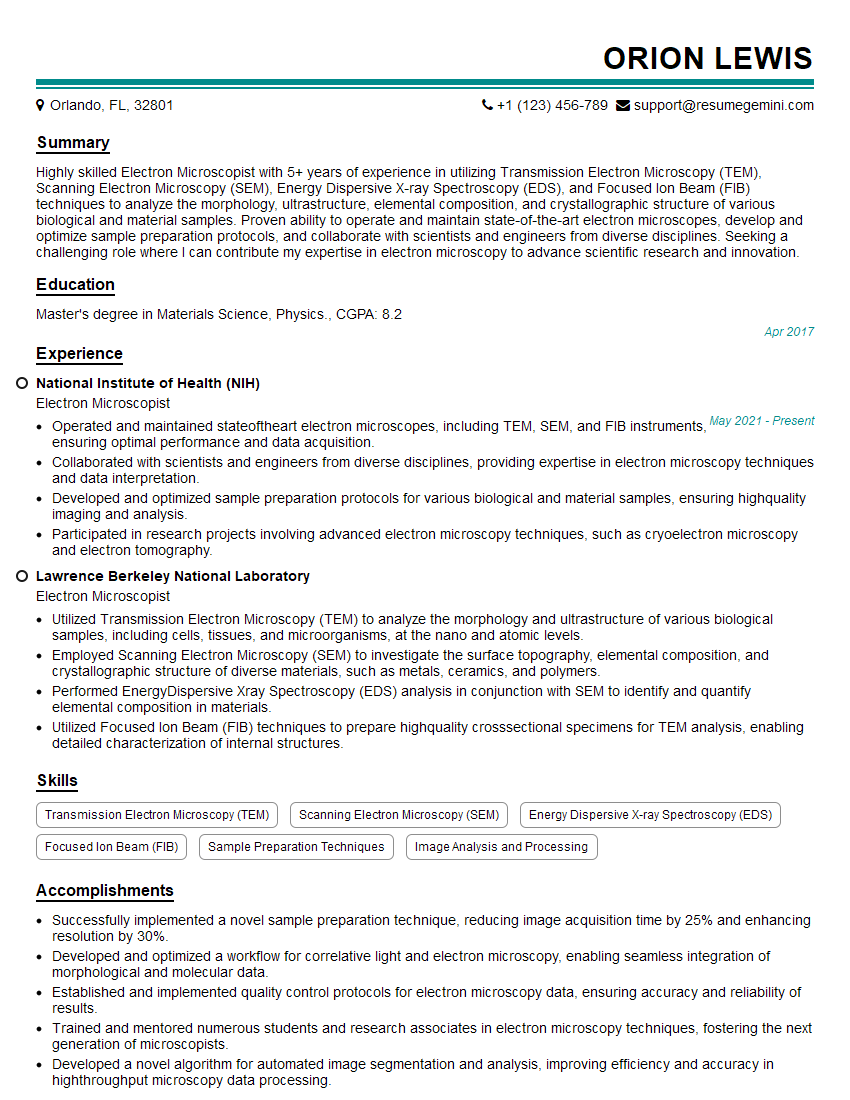
Electron Microscopist Resume Sample

Neuroscientist Resume Sample

Principal Investigator Resume Sample

Lecturer Resume Sample

Cytotechnologist Resume Sample

Histotechnologist Resume Sample

Histopathology Technician Resume Sample

Pathologist Assistant Resume Sample
- Lab Manager
- Instructor
- Professor
- Research Associate
- Senior Research Scientist
- Quality Assurance Specialist
- Research Scientist
- Technical Specialist
- Quality Control Specialist
- Research Technician
- Laboratory Supervisor
- Laboratory Technician
- Clinical Laboratory Scientist
- Electron Microscopist
- Neuroscientist
- Principal Investigator
- Lecturer
- Cytotechnologist
- Histotechnologist
- Histopathology Technician
- Pathologist Assistant
Explore more articles
Users Rating of Our Blogs
Share Your Experience
We value your feedback! Please rate our content and share your thoughts (optional).
What Readers Say About Our Blog
Very informative content, great job.
good