The thought of an interview can be nerve-wracking, but the right preparation can make all the difference. Explore this comprehensive guide to OSHA 30-Hour Excavation Safety interview questions and gain the confidence you need to showcase your abilities and secure the role.
Questions Asked in OSHA 30-Hour Excavation Safety Interview
Q 1. Define the different soil classifications according to OSHA standards.
OSHA doesn’t provide specific soil classifications in a numbered list like Type A, B, and C. Instead, it relies on a competent person’s assessment of the soil’s stability. The classification is inherently qualitative, depending on factors like the soil’s cohesion, angle of repose, and moisture content. However, we can understand the underlying principles. Think of it like this: you wouldn’t build a sandcastle on a steep, sandy slope without support – it’s unstable! Similarly, different soils require different protective measures during excavation.
Stable Rock: This is essentially the most stable soil type. It’s intact and firm, offering significant support. Think of solid bedrock. Excavation in this type of soil usually requires minimal protection, but a competent person must still assess its stability.
Type A Soil: This is cohesive soil, like clay, that’s relatively dry and stable. It stands up well on its own without collapsing easily. It’s like a well-packed mud pie that holds its shape.
Type B Soil: This soil is less stable than Type A. It might include some sandy or silty components, making it more susceptible to collapse. Think of moist, loose sand. It’s less cohesive and requires more caution.
Type C Soil: This is the least stable soil type. It’s essentially loose and easily shifts, including granular soils like dry sand or gravel. It’s like trying to build a castle from loose sand – it’ll crumble! It needs significant support during excavation.
Important Note: The assessment of soil type is critical and should *always* be done by a competent person who understands soil mechanics and OSHA regulations. Incorrect classification can lead to serious injuries or fatalities.
Q 2. Explain the requirements for protective systems in trenches exceeding 5 feet.
When trenches exceed 5 feet in depth, OSHA mandates the use of a protective system to prevent cave-ins. This is crucial because the risk of collapse increases dramatically with depth. Think of a tall sandcastle – the higher it gets, the more likely it is to fall. The protective system must be designed and implemented by a competent person, taking into account the soil type and other site conditions.
Common Protective Systems:
- Shoring: This involves installing a support system along the trench walls to prevent collapse. This might include wooden shoring, metal hydraulic shoring, or other engineered systems. It’s like adding supporting beams to a building to strengthen its structure.
- Sloping: This means cutting back the trench walls at an angle, reducing the steepness to create a more stable slope. The angle depends on the soil type; for example, Type A soil may only need a gentle slope, while Type C soil requires a much shallower angle. Think of how a mountain slope is less likely to cause an avalanche than a near-vertical cliff.
- Benching: This involves cutting a series of horizontal steps or benches into the trench walls. Each bench provides a stable platform, reducing the overall height of the unsupported soil. It’s like creating a series of smaller, more manageable slopes.
- Trench Boxes (Shields): These are pre-fabricated, protective structures that are lowered into the trench. They provide a safe working environment within the trench itself.
The choice of protective system is determined by a competent person based on a thorough assessment of the site conditions.
Q 3. Describe the procedures for inspecting excavation sites before work begins.
Inspecting an excavation site before work begins is paramount to worker safety. Think of it as a pre-flight check for a plane – it’s vital to identify and address potential problems *before* they cause an accident. A competent person should conduct a thorough inspection that includes:
- Soil Assessment: Determining the soil type and its stability, which directly impacts the choice of protective systems.
- Utility Location: Identifying and marking the location of underground utilities (gas, water, electric, sewer, communication lines) using appropriate methods like ‘call before you dig’ services to prevent damage or worker injury. This is like mapping out hazards before undertaking any construction.
- Surrounding Conditions: Checking for potential hazards like unstable ground, surface water, or nearby structures that could affect the stability of the excavation.
- Equipment Inspection: Ensuring that all excavation equipment is in safe working condition before starting any work.
- Weather Conditions: Assessing weather conditions for any potential impact on the excavation site. For instance, heavy rainfall could saturate the soil, making it more unstable.
Documentation of the inspection is crucial to demonstrate that a proper assessment was performed.
Q 4. What are the requirements for shoring, sloping, and benching?
The requirements for shoring, sloping, and benching are directly related to the soil type and trench depth. As mentioned before, a competent person must determine the appropriate method based on their assessment. OSHA provides guidelines, but the specific implementation depends on the site conditions.
Shoring: Must be designed, installed, inspected, and maintained by a competent person. It needs to withstand the anticipated loads from the surrounding soil and maintain the structural integrity of the trench. Improper shoring can lead to catastrophic failure.
Sloping: The angle of the slope depends on the soil type. Type A soil may allow steeper slopes, while Type C soil requires much shallower angles. This is to ensure the slope is stable and won’t collapse. Calculations are often needed to determine the safe slope angle. Sloping must be done by qualified workers.
Benching: Requires careful excavation of horizontal benches into the trench walls to create a step-like structure. The dimensions of each bench and the overall design must meet OSHA standards to ensure stability. Again, this requires the expertise of a qualified professional.
In all cases, regular inspection and maintenance are crucial to ensure the continued safety and effectiveness of these protective systems.
Q 5. Explain the importance of a competent person on an excavation site.
A competent person is the cornerstone of excavation safety. This is not just a title but a responsibility that demands extensive knowledge and experience. They’re the eyes and ears on the site, ensuring that safety measures are properly implemented and that all workers are operating within OSHA standards. Think of them as the ‘safety captain’ of the excavation project.
Their expertise is crucial because they make critical decisions that can prevent accidents. These decisions involve assessing soil types, selecting appropriate protective systems, and recognizing potential hazards. A lack of a competent person can lead to serious consequences, including injuries, fatalities, and legal repercussions.
Q 6. What are the responsibilities of a competent person regarding excavation safety?
The responsibilities of a competent person regarding excavation safety are far-reaching and critical. They must:
- Assess Site Conditions: Conduct thorough inspections to identify hazards and determine soil type.
- Select Protective Systems: Choose the appropriate shoring, sloping, or benching system based on their assessment.
- Oversee Installation: Supervise the installation and maintenance of protective systems to ensure they meet OSHA standards.
- Inspect Regularly: Conduct frequent inspections of the excavation site and protective systems to identify and address any potential hazards.
- Train Workers: Educate workers on excavation safety procedures and the proper use of equipment.
- Enforce Safety Rules: Ensure that workers follow all established safety procedures.
- Keep Records: Maintain records of inspections and other safety-related activities.
In short, the competent person is responsible for the overall safety of the excavation site and its workers.
Q 7. How do you identify and mitigate hazards associated with underground utilities?
Identifying and mitigating hazards associated with underground utilities is crucial for preventing accidents and injuries. This requires a multi-pronged approach:
- ‘Call Before You Dig’: Contact the local one-call center (e.g., 811 in the US) to have underground utilities marked before any excavation work begins. This prevents accidental damage to utility lines, which could cause disruptions or injuries.
- Hand Excavation: In areas near marked utilities, always use hand excavation methods to carefully expose and avoid damaging the lines. Power tools risk accidental contact.
- Visual Inspection: Carefully examine the area before and during excavation for any signs of utility lines that might not have been accurately marked.
- Protective Measures: If utility lines are encountered, take the necessary precautions, such as shoring or other measures to protect the lines and workers. This might require stopping work and contacting the utility company for assistance.
- Emergency Procedures: Have a plan in place for handling any unexpected encounters with utilities, including emergency contact information.
Remember, damaging underground utilities can be costly, dangerous, and even fatal. Proactive measures are paramount.
Q 8. Describe the emergency procedures for a cave-in.
Cave-ins are terrifying and potentially fatal. The first priority is always the safety of the workers. Emergency procedures begin with a rapid evacuation of the immediate area. This requires a designated emergency response team familiar with the site and excavation procedures.
Next, call emergency services (911) immediately. Provide precise location details, the number of people potentially buried or injured, and any other relevant information. Once emergency personnel arrive, cooperate fully to facilitate rescue efforts.
Before excavation begins, a comprehensive rescue plan must be in place, including readily available rescue equipment, designated escape routes, and a clear communication system. Regular safety drills should be implemented to ensure everyone understands their role in an emergency.
For example, imagine a trench collapse trapping a worker. The immediate actions would be shouting for help, alerting the onsite supervisor, and if possible, trying to use nearby tools to create space for air and rescue. Following the company’s emergency plan is vital for coordinated rescue efforts and minimizes further risk.
Q 9. What are the requirements for atmospheric monitoring in excavations?
Atmospheric monitoring in excavations is crucial because hazardous gases can accumulate unnoticed, posing significant risks to workers. OSHA mandates testing for oxygen deficiency, combustible gases (methane, propane), and toxic gases (hydrogen sulfide, carbon monoxide) in all excavations deeper than 4 feet. The frequency and type of monitoring will vary depending on the soil type, proximity to potential sources of hazardous gases, and the excavation’s depth.
For example, excavations near gas lines require continuous monitoring. Soil composition also matters – certain types of soil can release methane, necessitating more frequent testing. This monitoring is typically performed using portable gas detectors, which should be calibrated regularly and used by trained personnel. Records of all atmospheric tests must be maintained, ensuring accountability and a clear audit trail.
Failure to monitor can have severe consequences. Oxygen deficiency can lead to unconsciousness and death, while toxic gases like hydrogen sulfide cause immediate health problems even in low concentrations. A proper monitoring program safeguards workers and satisfies OSHA requirements.
Q 10. Explain the proper use of personal protective equipment (PPE) in excavations.
Appropriate PPE is critical in excavation safety. This isn’t just about hard hats; it’s a comprehensive approach to protecting workers from various hazards. Basic PPE includes hard hats, safety glasses or goggles, high-visibility clothing, and sturdy work boots with steel toes to protect against falling objects and sharp debris.
In deeper excavations, additional PPE becomes essential. This includes harnesses and lanyards for fall protection, ensuring workers are properly secured when working at heights or near unstable edges. Gloves provide hand protection from sharp objects and chemicals. Respiratory protection, such as respirators, might be necessary depending on the atmospheric monitoring results.
Think of it like this: PPE is the worker’s last line of defense. The proper selection and use of PPE drastically reduces the risk of injury from falls, impacts, chemical exposure, and inhalation hazards. Training workers on proper PPE selection, usage, and maintenance is crucial for effective protection.
Q 11. How do you ensure adequate access and egress from excavations?
Safe and convenient access and egress are paramount to excavation safety. OSHA mandates that access and egress must be provided at intervals not exceeding 25 feet horizontally. For excavations deeper than 4 feet, the means of access must be ladders, ramps, or stairways that meet specified safety standards. These means of egress must be securely anchored, extending at least 3 feet above the excavation’s edge.
Ramps should have appropriate gradients and non-slippery surfaces. Ladders need to be properly secured to prevent slipping or tilting. Stairways should adhere to OSHA’s guidelines for construction and maintenance. These access points must remain unobstructed and easily accessible at all times. This is not just for convenience but for immediate evacuation in emergencies.
Improper access can lead to falls, delays in rescue, and potential injury. Prioritizing safe and accessible entry and exit points is a fundamental aspect of excavation safety and compliance with OSHA regulations.
Q 12. Describe the requirements for employee training related to excavation safety.
OSHA mandates comprehensive training for all employees involved in excavation work. This training must cover the hazards associated with excavation, including cave-ins, atmospheric hazards, and equipment operation. The training needs to be specific to the tasks the worker will be performing.
The training should cover recognition and avoidance of hazards, proper use of PPE, emergency procedures, and the specific requirements for the type of excavation being conducted. It is not a one-time event; refresher training is often required. Competent personnel who are knowledgeable in excavation safety must conduct the training. Documentation of employee training, including the date, participants, and topics covered, is essential for compliance.
For instance, a worker operating an excavator needs specific training on that machine’s operation, maintenance, and safety features. Someone inspecting shoring needs training on identifying potential failure points and ensuring the system’s integrity. Effective training empowers workers to identify and mitigate hazards, ultimately preventing accidents.
Q 13. What are the specific OSHA requirements for trench protection systems?
OSHA specifies detailed requirements for trench protection systems, focusing on preventing cave-ins. The choice of protection system depends on various factors, including the soil type, depth, and proximity to other hazards. For excavations exceeding 5 feet in depth, protection systems are generally mandatory.
Common trench protection methods include:
- Shoring: This involves installing a system of supports (such as timber, metal, or hydraulic shoring) along the sides of the trench to prevent collapse.
- Shields: These are pre-fabricated structures that are pushed into the ground to support the trench walls.
- Sloping or Benching: This method involves cutting back the trench walls at an angle to create a stable slope, reducing the risk of collapse.
Improper trench protection is a leading cause of excavation fatalities. OSHA’s requirements are designed to ensure the stability of trench walls, preventing cave-ins and protecting workers. Regular inspections, using a checklist, are crucial for detecting potential problems before they cause accidents.
Q 14. Explain the process for developing an excavation safety plan.
Developing a comprehensive excavation safety plan is vital for minimizing risks. This process requires a systematic approach, starting with a thorough site assessment. The plan should identify all potential hazards, including soil type, underground utilities, environmental conditions, and the presence of any hazardous materials.
Next, determine the appropriate control measures based on the assessment. This could include selecting suitable trench protection systems, establishing emergency procedures, outlining PPE requirements, and scheduling atmospheric monitoring. The plan needs to detail the responsibilities of each team member. This should include who is responsible for installing and inspecting trench protection, conducting atmospheric testing, and handling emergencies.
Finally, the plan should include training protocols, maintenance procedures, and a method for keeping records. Regular updates are essential to reflect changing site conditions or new information. A well-developed and implemented excavation safety plan will ensure compliance with OSHA standards and provide a safe working environment for all personnel.
Consider a scenario where a utility line is discovered unexpectedly during excavation. A robust safety plan would outline procedures for dealing with such unexpected discoveries, including notifying the utility company, halting work in the affected area, and implementing appropriate safeguards before continuing.
Q 15. How do you handle soil instability during excavation?
Soil instability is a major hazard in excavation. It’s crucial to identify and mitigate it before any digging begins. We do this through a multi-pronged approach.
- Soil Classification: First, a geotechnical engineer performs a soil classification test to determine the type of soil (e.g., Type A, B, or C) and its stability. This dictates the appropriate protective systems.
- Pre-Excavation Inspection: A thorough visual inspection of the site is essential to identify any existing signs of instability, such as cracks, water accumulation, or previous disturbances.
- Water Management: Water significantly reduces soil strength. We use dewatering techniques like sumps, pumps, or well points to control groundwater and prevent saturation.
- Support Systems: Based on the soil classification, we select appropriate support systems. These can range from simple sloping or benching (for stable soils) to more complex systems like shoring, trench boxes, or sheet piling (for unstable soils).
- Monitoring: Continuous monitoring during excavation is critical. Regular inspections ensure the stability of the support systems and address any emerging issues promptly.
For example, if we encounter unexpectedly loose soil during excavation, we immediately stop work and re-evaluate the support system. We might need to install additional shoring or switch to a more robust system. Safety is paramount, and we always prioritize worker protection.
Career Expert Tips:
- Ace those interviews! Prepare effectively by reviewing the Top 50 Most Common Interview Questions on ResumeGemini.
- Navigate your job search with confidence! Explore a wide range of Career Tips on ResumeGemini. Learn about common challenges and recommendations to overcome them.
- Craft the perfect resume! Master the Art of Resume Writing with ResumeGemini’s guide. Showcase your unique qualifications and achievements effectively.
- Don’t miss out on holiday savings! Build your dream resume with ResumeGemini’s ATS optimized templates.
Q 16. Describe different types of trench boxes and their applications.
Trench boxes are protective structures used to safeguard workers in trenches. Different types cater to various situations:
- Aluminum Trench Boxes: Lightweight and easy to handle, making them suitable for smaller excavations. They’re often used in areas with limited access.
- Steel Trench Boxes: Stronger and more durable than aluminum, capable of withstanding higher pressures. They are preferred for deeper and more unstable trenches.
- Hydraulic Trench Boxes: These adjustable boxes offer versatility, allowing for adaptation to different trench widths and depths. They are commonly used in situations where trench dimensions may change.
The choice depends on several factors including trench depth, soil conditions, and the presence of underground utilities. For instance, if we are excavating a deep trench in unstable soil, a steel trench box offering superior protection would be selected. In contrast, a smaller aluminum box might suffice for a shallower, stable trench.
Q 17. What is the role of the site-specific safety plan?
A site-specific safety plan is a crucial document tailored to the unique risks present at each excavation site. It’s not a generic template; it’s a detailed plan that considers the specific soil conditions, underground utilities, environmental factors, and the work processes. The plan outlines the protective measures necessary for each step of the excavation, including:
- Soil Classification and Support System Selection: Specifies the type of soil and the chosen excavation support system.
- Emergency Procedures: Details the steps to take in case of a cave-in or other emergencies.
- Protective Equipment Requirements: Lists the mandatory PPE for workers.
- Inspection Procedures: Defines the frequency and methods of inspections.
- Training Requirements: Describes the training necessary for all workers involved in the excavation.
Think of it as a roadmap for safety. By outlining all potential hazards and mitigation strategies, it prevents accidents and keeps workers safe.
Q 18. Explain the importance of daily inspections of excavations.
Daily inspections are non-negotiable for excavation safety. They serve as a critical check to detect potential problems before they escalate into accidents. Inspections cover several aspects:
- Visual Assessment: Check for any signs of soil instability, such as cracks, bulging, or water accumulation.
- Support System Integrity: Examine the shoring, trench boxes, or other support systems for damage or instability.
- Equipment Functionality: Ensure that all equipment, such as pumps and excavators, are functioning properly.
- Weather Conditions: Note any changes in weather that could impact soil stability (e.g., heavy rain).
- Worker Compliance: Verify that workers are using appropriate PPE and following established safety procedures.
Imagine a small crack appearing in a trench wall unnoticed. A daily inspection catches it, allowing for immediate remediation, preventing a potentially fatal cave-in. It’s a simple but highly effective preventative measure.
Q 19. What are the consequences of non-compliance with OSHA excavation regulations?
Non-compliance with OSHA excavation regulations can have severe consequences, ranging from hefty fines to criminal charges. Here are some potential outcomes:
- Fines: OSHA can issue significant penalties for violations, potentially reaching hundreds of thousands of dollars, depending on the severity and history of violations.
- Citations and Penalties: This formal process documents the violations and sets a timeline for remediation. Failure to comply can result in escalating penalties.
- Shutdowns: OSHA has the authority to shut down an excavation site if unsafe conditions exist, halting progress and causing significant project delays.
- Criminal Charges: In cases involving serious injuries or fatalities due to negligence, criminal charges may be filed against responsible individuals or companies. This can lead to jail time and substantial legal costs.
- Loss of Reputation and Contracts: Public record of OSHA violations can damage a company’s reputation, making it difficult to obtain future contracts.
The cost of compliance is far less than the potential consequences of non-compliance.
Q 20. How do you determine the appropriate type of excavation support system?
Determining the appropriate excavation support system requires a comprehensive assessment. Here’s a step-by-step approach:
- Soil Classification: A geotechnical engineer must classify the soil (Type A, B, or C) based on its strength and stability.
- Trench Depth: Deeper trenches require more robust support systems.
- Surrounding Conditions: Factors like groundwater, vibrations from nearby construction, and the presence of utilities influence the choice of system.
- Regulatory Requirements: OSHA regulations specify the required support systems based on soil type and trench depth.
- Engineering Expertise: Consulting a geotechnical engineer is often crucial to ensure the chosen system is appropriate for the specific conditions.
We never compromise on safety. If there’s any uncertainty, we always err on the side of caution and choose a more robust system. A properly engineered support system is the first line of defense against cave-ins.
Q 21. Explain the difference between sloping and benching.
Sloping and benching are two common methods for protecting workers in excavations, particularly in stable soil conditions. They differ in their approach:
- Sloping: Involves cutting the sides of the excavation at an angle (slope), reducing the height of the unsupported soil face. The slope angle depends on the soil type, with steeper slopes permitted for more stable soils (Type A). Think of it as gently easing the soil face down.
- Benching: Creating a series of horizontal platforms (benches) along the side of the excavation. Each bench acts as a step, reducing the overall height of the unsupported soil. This is useful in deeper excavations or in cases where sloping might not be feasible.
The choice between sloping and benching depends on the soil type, the depth of the excavation, and the site-specific conditions. For example, sloping might be preferable in a shallower excavation with stable soil, while benching might be more suitable for a deeper excavation or when dealing with less stable soil.
Q 22. Describe the hazards associated with working near energized power lines.
Working near energized power lines presents a severe and potentially fatal risk. The primary hazard is electrocution, which can occur through direct contact with the lines or indirect contact through conductive materials like tools or equipment. Even a close proximity can cause an arc flash, resulting in severe burns and other injuries. The intensity of the hazard depends on the voltage of the power lines; higher voltage lines present a significantly greater danger. Think of it like this: you wouldn’t touch a hot stove, and energized power lines are far more dangerous.
OSHA mandates specific safety procedures, including maintaining a safe distance (determined by the voltage and other factors), using spotters, de-energizing lines when possible, and implementing rigorous safety training. Ignoring these precautions can have devastating consequences.
For example, imagine a crew excavating near a high-voltage power line. If a worker accidentally makes contact, the consequences can range from severe burns and electrocution to death. Even a tool contacting the line could cause an arc flash, seriously injuring or killing those nearby. Proper planning, training, and adherence to OSHA guidelines are crucial in mitigating these risks.
Q 23. What are the requirements for working in confined spaces within an excavation?
Working in confined spaces within an excavation adds another layer of complexity to safety considerations. These spaces, often poorly ventilated and with limited access, pose risks of oxygen deficiency, hazardous atmosphere buildup (e.g., methane, hydrogen sulfide), and entrapment.
OSHA mandates that before anyone enters a confined space within an excavation, a permit-required confined space program must be in place. This involves:
- Atmospheric testing: Checking oxygen levels, flammable gases, and toxic gases before and during entry.
- Ventilation: Providing adequate ventilation to remove hazardous atmospheres.
- Entry procedures: Establishing safe entry and exit procedures, including the use of harnesses and lifelines.
- Monitoring: Continuously monitoring the atmosphere during occupancy.
- Rescue plan: Having a comprehensive rescue plan in place in case of an emergency.
- Trained personnel: Ensuring that only trained and authorized personnel enter the confined space.
Failure to adhere to these requirements can lead to serious injury or death due to asphyxiation, explosions, or other hazards. Imagine a worker entering a trench to repair a pipe without proper atmospheric testing. They could be overcome by a lack of oxygen or a buildup of toxic gases, resulting in a life-threatening situation. Therefore, a rigorous permit-required confined space program is non-negotiable in these situations.
Q 24. How do you protect against hazards from ground water in an excavation?
Groundwater poses significant hazards in excavations, including cave-ins, equipment damage, and worker injury. The presence of water weakens the soil, making it more susceptible to collapse. It also can create unstable conditions around the excavation.
Protection strategies include:
- Dewatering: Removing groundwater using pumps or other methods. This is often the most effective solution, especially in areas with high water tables.
- Shoring or sloping: Stabilizing the soil walls to prevent collapse. This is a crucial protective measure when dewatering isn’t feasible or sufficient.
- Sumps and pumps: Creating a sump at the bottom of the excavation to collect water and using pumps to remove it.
- Diversion of surface water: Redirecting surface water runoff away from the excavation site to prevent it from entering.
- Protective barriers: Using protective barriers to minimize water infiltration.
For example, if an excavation is performed near a river or in an area with a high water table, ignoring the risk of groundwater could lead to a trench collapse, trapping and potentially killing workers. Therefore, proactive measures to address potential groundwater issues are always necessary and paramount to safety.
Q 25. Explain the importance of keeping accurate records of excavation activities.
Maintaining accurate records of excavation activities is crucial for several reasons. It demonstrates compliance with OSHA regulations, facilitates incident investigation, allows for better planning of future projects, and aids in risk assessment. These records serve as proof of adherence to safety standards and can be critical in the event of an incident or legal action.
Records should include information such as:
- Location and depth of the excavation
- Soil type and conditions
- Protective systems used (shoring, sloping, etc.)
- Daily inspections
- Weather conditions
- Incidents and near misses
- Training records for personnel
Imagine a scenario where a trench collapse occurs. Detailed records help investigators determine the cause of the collapse, identify any safety violations, and prevent similar incidents in the future. Without such records, determining the root cause would be extremely difficult, potentially hindering any efforts to improve safety procedures.
Q 26. Describe the process for reporting accidents and incidents related to excavations.
Reporting accidents and incidents related to excavations is a critical aspect of ensuring safety and preventing future occurrences. OSHA requires immediate reporting of fatalities and hospitalizations, while other incidents must be reported according to company policies and local regulations.
The reporting process typically involves:
- Immediate notification: Supervisors and safety personnel must be notified immediately of any accident or incident.
- Investigation: A thorough investigation should be conducted to determine the root cause of the incident.
- Documentation: All details of the incident, including witness statements, photos, and any relevant documents, should be carefully documented.
- Corrective actions: Corrective actions to prevent similar incidents in the future should be identified and implemented.
- Reporting to OSHA: Certain incidents, such as fatalities and hospitalizations, must be reported to OSHA within specific timeframes.
For example, if a worker sustains an injury due to a trench collapse, immediate medical attention is crucial and a thorough incident report detailing the circumstances, contributing factors, and corrective actions must be filed both internally and with OSHA (if applicable) to prevent similar incidents.
Q 27. How would you address a situation where a worker refuses to use safety equipment?
A worker’s refusal to use safety equipment is a serious issue that requires immediate and decisive action. This is not just a matter of personal preference, it’s about workplace safety and the well-being of the entire crew.
My approach would involve:
- Understanding the reason: First, I would attempt to understand the reason behind the refusal. Are there issues with the equipment’s fit, comfort, or functionality? Are there concerns about the equipment’s effectiveness or perceived inconvenience?
- Addressing concerns: If there are legitimate concerns about the equipment, I’d address them immediately. Perhaps a different size or type of equipment is needed, or training on proper use is required.
- Reiterating the importance: I would calmly but firmly reiterate the importance of safety equipment and its role in protecting the worker from serious injury or death. I’d use concrete examples of how the equipment has prevented accidents in the past.
- Disciplinary action: If the refusal persists despite addressing concerns and education, disciplinary action, as outlined in company policy, would be necessary. This could range from a verbal warning to suspension or termination, depending on the severity and frequency of the refusal.
Safety is never negotiable. By understanding the reasons for refusal, addressing valid concerns, and enforcing safety rules, we ensure a safe work environment for everyone. A worker’s refusal to wear a hard hat in a construction zone, for instance, could have fatal consequences. In such a case, disciplinary measures are necessary to protect both the worker and others from potential harm.
Q 28. What are your strategies for communicating safety protocols effectively to a crew?
Effective communication is the cornerstone of a safe work environment. My strategies for communicating safety protocols effectively involve a multi-faceted approach:
- Pre-task planning meetings: Holding brief meetings before each task to review the specific hazards, safety procedures, and emergency protocols. This creates an opportunity to address individual concerns and to ensure that everyone understands the plan.
- Visual aids: Using visual aids such as diagrams, photos, and videos to illustrate safety procedures and hazards. This can make complex concepts easier to grasp, particularly for those who are not native English speakers or who have limited literacy skills.
- Hands-on training: Providing hands-on training and demonstrations to reinforce learning and ensure proficiency in using safety equipment and following procedures. This ensures that workers understand the practical application of safety procedures.
- Regular toolbox talks: Conducting regular short safety meetings to review specific safety topics, discuss recent incidents or near misses, and reinforce good safety practices. This keeps safety at the forefront of everyone’s minds.
- Open communication channels: Creating an environment where workers feel comfortable asking questions and raising concerns without fear of reprisal. A sense of trust and open communication is crucial to ensure safety compliance.
- Language assistance: Providing language assistance if needed, whether through interpreters or translated materials, to ensure that all workers understand safety protocols, regardless of their native language.
For example, using a visual aid to demonstrate the proper technique for using a trench box would be more effective than simply giving verbal instructions. Similarly, regular toolbox talks ensure that important safety messages are consistently reinforced and that workers stay updated on best practices.
Key Topics to Learn for OSHA 30-Hour Excavation Safety Interview
- Excavation Hazards Identification and Classification: Understanding common hazards like cave-ins, atmospheric hazards, and equipment-related risks. This includes learning to identify soil types and their associated risks.
- Protective Systems: Mastering the practical application of shoring, sloping, benching, and other protective systems. Be prepared to discuss the selection criteria for each based on soil conditions and excavation depth.
- Soil Classification and Testing: Knowing how to interpret soil classifications and the importance of proper soil testing to determine appropriate protective measures. This includes understanding the limitations of visual inspections.
- Safe Excavation Procedures: Understanding the steps involved in planning, executing, and inspecting excavations, including pre-excavation planning, daily inspections, and emergency procedures.
- Emergency Response Planning: Developing and implementing emergency action plans for excavation sites, including procedures for dealing with cave-ins and other emergencies.
- Competent Person Responsibilities: Clearly understanding the role and responsibilities of a Competent Person in overseeing excavation safety. Be able to explain their authority and decision-making processes.
- Personal Protective Equipment (PPE): Knowing the appropriate PPE for excavation work and the rationale behind its use. This includes hard hats, high-visibility clothing, and specific safety equipment for different tasks.
- OSHA Regulations and Compliance: Demonstrating a strong understanding of relevant OSHA regulations (e.g., Subpart P) and the implications of non-compliance. Be prepared to discuss potential penalties and consequences.
- Problem-Solving Scenarios: Practice analyzing hypothetical scenarios involving excavation safety challenges and outlining appropriate solutions based on OSHA standards and best practices.
- Inspection Techniques and Documentation: Familiarize yourself with proper inspection techniques for excavations and the importance of thorough and accurate documentation of inspections and findings.
Next Steps
Mastering OSHA 30-Hour Excavation Safety significantly enhances your career prospects in construction and related fields, demonstrating your commitment to workplace safety and boosting your employability. To maximize your job search success, create a compelling and ATS-friendly resume that highlights your skills and experience. ResumeGemini is a trusted resource to help you build a professional resume that gets noticed. We offer examples of resumes tailored to OSHA 30-Hour Excavation Safety to guide you in creating your own standout application.
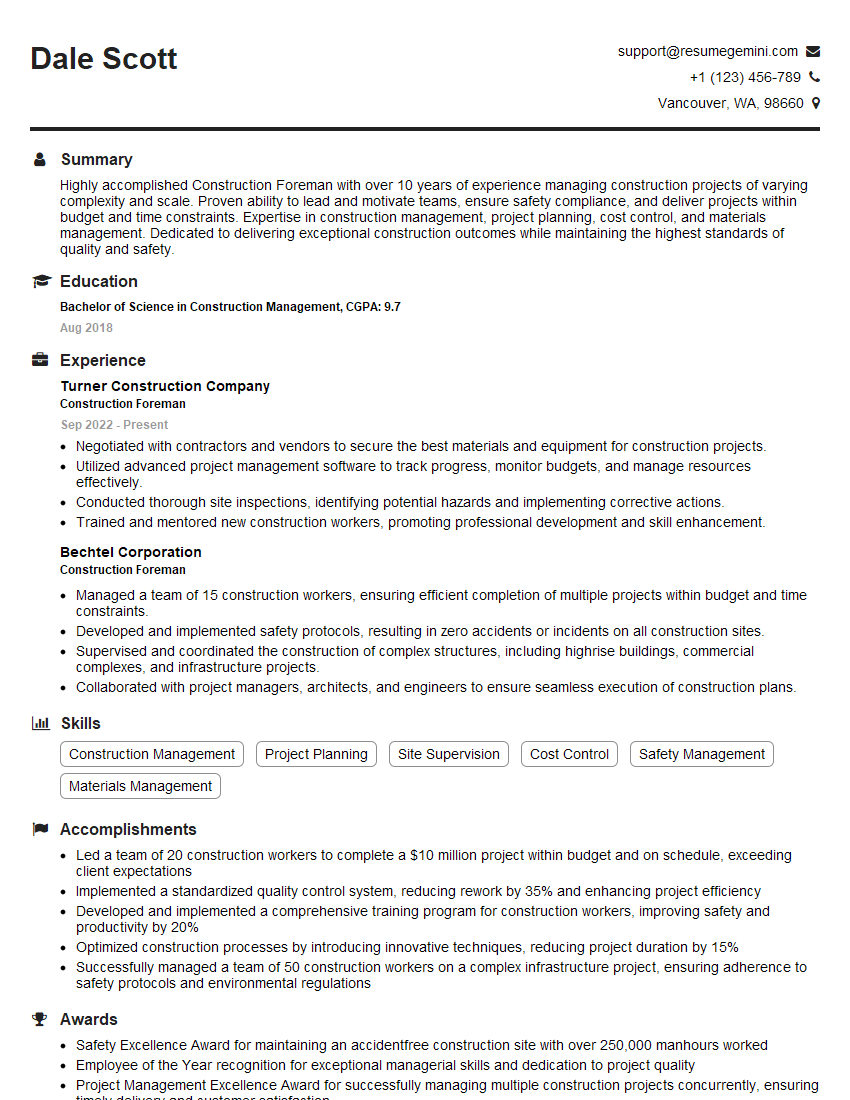
Construction Foreman Resume Sample

Construction Superintendent Resume Sample

General Contractor Resume Sample

Safety Director Resume Sample

Environmental Health and Safety Manager Resume Sample

Training Coordinator Resume Sample

Compliance Officer Resume Sample

Risk Manager Resume Sample
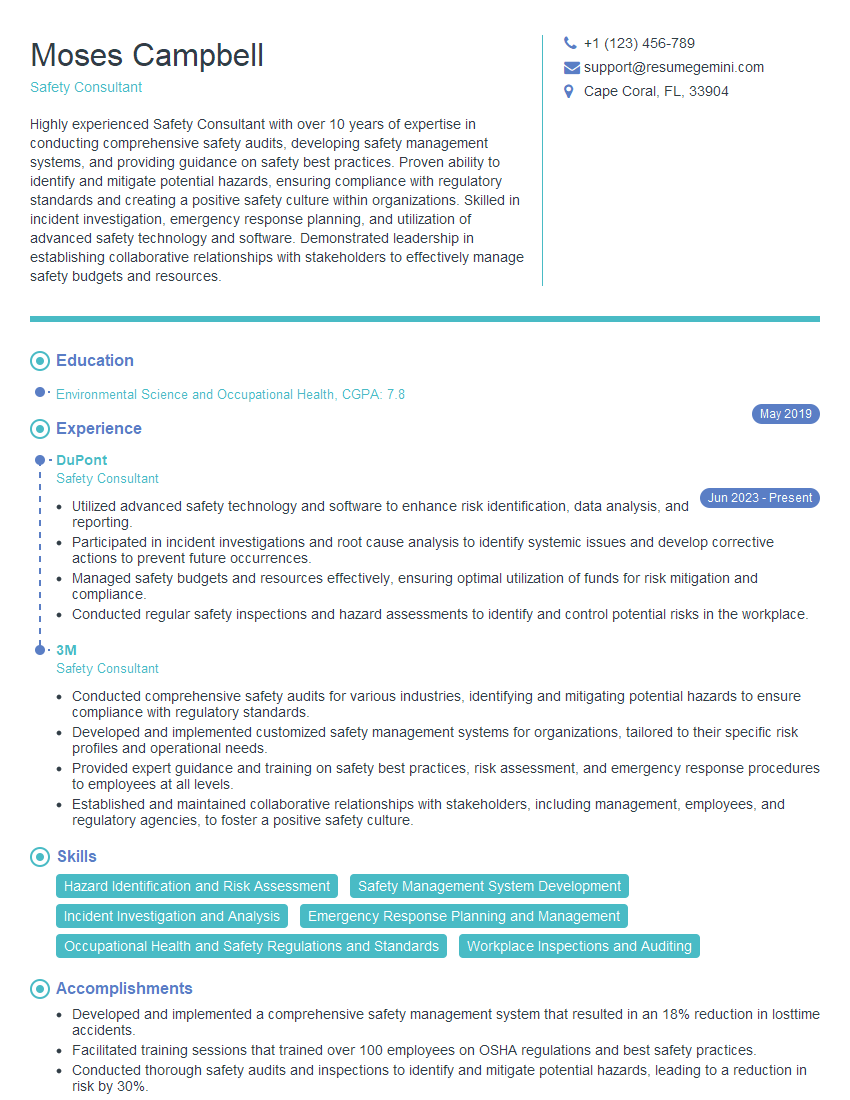
Safety Consultant Resume Sample

Safety Inspector Resume Sample

Civil Engineering Technician Resume Sample
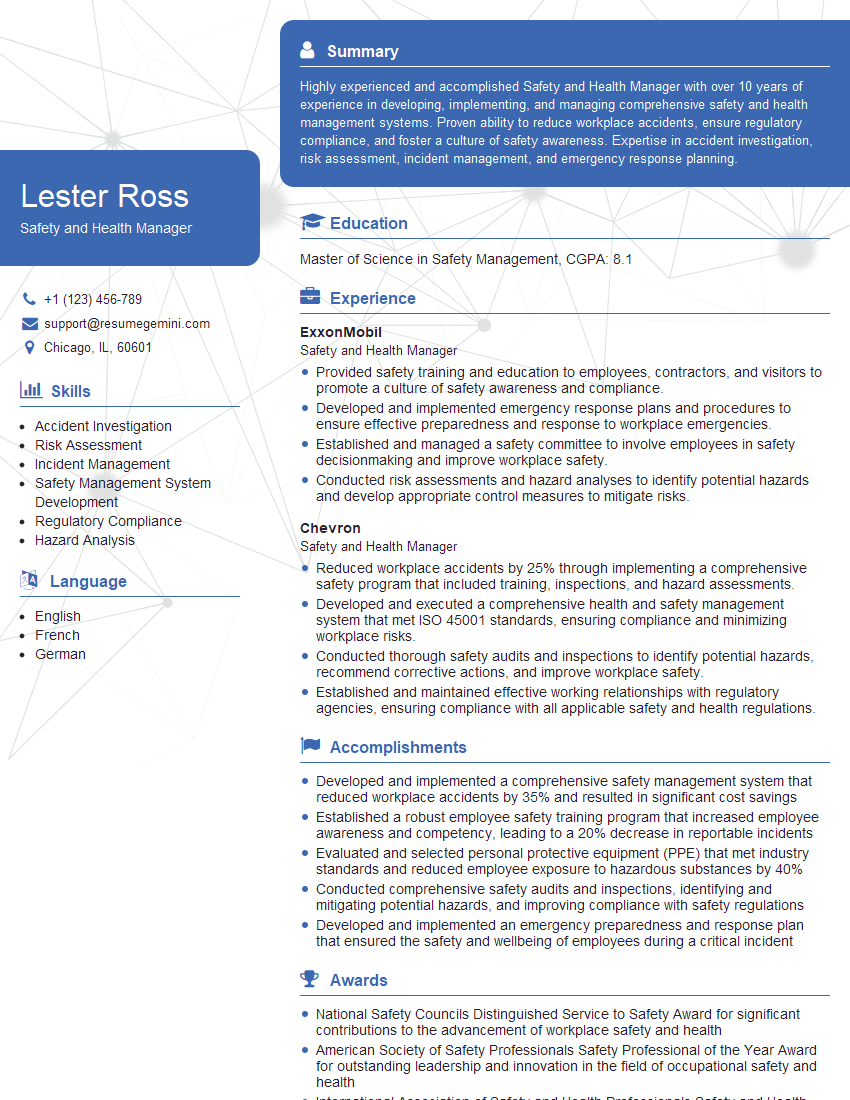
Safety and Health Manager Resume Sample

Site Supervisor Resume Sample
Explore more articles
Users Rating of Our Blogs
Share Your Experience
We value your feedback! Please rate our content and share your thoughts (optional).
What Readers Say About Our Blog
Very informative content, great job.
good