Feeling uncertain about what to expect in your upcoming interview? We’ve got you covered! This blog highlights the most important Crisis Mapping interview questions and provides actionable advice to help you stand out as the ideal candidate. Let’s pave the way for your success.
Questions Asked in Crisis Mapping Interview
Q 1. Explain the different data sources used in Crisis Mapping.
Crisis mapping relies on a diverse range of data sources to build a comprehensive picture of a crisis situation. Think of it like assembling a puzzle – each piece provides a different view, and together they form the whole image. These sources can be broadly categorized into:
- Social Media Data: Tweets, Facebook posts, Instagram photos and videos – these provide real-time information from affected individuals, often including location data, images, and firsthand accounts. For example, during a hurricane, people might tweet about flooding in their neighborhood, providing valuable situational awareness.
- News Media Reports: News agencies and online news platforms offer a structured perspective on unfolding events. While not always immediate, they provide context and verification of information from social media.
- Governmental and Institutional Data: This includes official reports from disaster relief agencies (like FEMA), government weather services, and epidemiological data, providing authoritative information on impacted areas and resources.
- Satellite Imagery: Satellite data offers a bird’s-eye view of the affected area, showing damage assessment, infrastructural disruption, and population displacement. Post-earthquake damage assessment, for instance, relies heavily on satellite imagery.
- Mobile Phone Data: Aggregated and anonymized mobile phone data can reveal population movements and disruptions to communication networks during a crisis. This data is often crucial in understanding population displacement patterns.
- Sensor Data: This includes data from various sensors like seismic monitors (in earthquakes), water level sensors (in floods), or air quality sensors (in pollution events), providing objective, quantitative data about the physical characteristics of the crisis.
The combination of these data sources is key, allowing for triangulation and validation of information, leading to a more reliable and complete picture.
Q 2. Describe your experience with various GIS software (e.g., ArcGIS, QGIS).
My experience with GIS software is extensive, encompassing both ArcGIS and QGIS. I’ve worked extensively with ArcGIS Pro, leveraging its advanced spatial analysis tools for complex tasks such as creating vulnerability maps, performing proximity analysis to identify people in need of immediate aid, and generating reports for decision-makers. I find ArcGIS particularly useful for its robust geoprocessing capabilities and integration with other Esri products.
On the other hand, QGIS, being open-source, offers a valuable alternative, particularly in situations with limited budget or need for flexibility. I’ve used QGIS extensively for data visualization and processing, specifically for creating interactive maps that can be easily shared and updated. For instance, I’ve used QGIS to create user-friendly maps displaying the locations of shelters and medical facilities after a natural disaster. Its plugins provide excellent flexibility, allowing customization of functionalities. My proficiency in both platforms ensures I can adapt to various project requirements and technological constraints.
Q 3. How do you ensure data accuracy and reliability in Crisis Mapping?
Data accuracy and reliability are paramount in crisis mapping, as lives often depend on the information presented. My approach employs a multi-faceted strategy:
- Data Source Triangulation: Comparing data from multiple sources (e.g., social media, news reports, official data) to identify inconsistencies and confirm information. If multiple independent sources report the same information, it strengthens the credibility.
- Data Validation and Verification: Employing techniques like manual verification of social media reports with imagery or cross-referencing information with established databases. I often use geolocation tools to verify the locations reported in social media posts.
- Data Cleaning and Preprocessing: Addressing issues such as missing data, inconsistent formats, and outliers during the data preparation stage. This might involve data standardization, removing duplicates, and handling errors in coordinates.
- Quality Control Checks: Implementing rigorous quality control checks at each stage of the process. This can include peer review and regular audits to ensure the integrity of the data.
- Metadata Management: Meticulously documenting the source, accuracy, and limitations of each data source to maintain transparency and accountability.
Think of it like a detective investigating a crime – we need multiple pieces of evidence and careful analysis to arrive at the truth. In crisis mapping, that truth provides crucial insights for effective response and resource allocation.
Q 4. What are the ethical considerations in using crisis mapping data?
Ethical considerations are crucial in crisis mapping. We are handling sensitive information related to human lives and vulnerabilities. Key ethical considerations include:
- Privacy Protection: Anonymizing and aggregating data when necessary to protect the identity and privacy of individuals affected by the crisis. This is paramount, especially when using social media data which might contain personally identifiable information.
- Data Security: Protecting the data from unauthorized access, use, or disclosure. Employing robust security measures is crucial to prevent misuse or breaches.
- Informed Consent: Obtaining consent when directly collecting data from individuals, ensuring transparency about how the data will be used.
- Transparency and Accountability: Being open about the data sources, methodologies, and limitations of the crisis map. This builds trust and allows others to scrutinize the process.
- Bias Mitigation: Being mindful of potential biases in data sources and ensuring equitable representation of affected communities. This could involve correcting for biases related to language, geography, or access to technology.
- Avoiding Misinformation: Carefully verifying information before incorporating it into the map to prevent the spread of misinformation and panic.
Responsible crisis mapping prioritizes the wellbeing and dignity of affected populations. It’s not just about creating a map; it’s about using that map to assist those in need in an ethical manner.
Q 5. Describe your experience with real-time data integration in crisis mapping.
Real-time data integration is essential in crisis mapping, allowing for rapid response and dynamic updates. My experience includes working with streaming data from social media APIs, integrating real-time sensor data feeds, and using webhooks to automatically update the map based on new information. This is typically achieved using appropriate programming languages like Python, along with libraries such as Tweepy (for Twitter data) and specialized GIS APIs.
For example, during a wildfire, integrating real-time data from fire sensors and weather stations allows for creating dynamic maps that show the spread of fire, areas at immediate risk, and optimal evacuation routes. This capability is crucial for coordinating emergency response efforts and informing affected populations in near real-time.
# Example Python snippet (Illustrative) import tweepy # Example library # ... code to stream tweets containing relevant keywords ... # ... code to geolocate tweets and update map accordingly ...
Q 6. How do you handle conflicting data sources during a crisis?
Conflicting data sources are a common challenge in crisis mapping. The process of resolving these conflicts involves a systematic approach:
- Identifying and Documenting Discrepancies: Carefully noting any discrepancies between different data sources. These inconsistencies often highlight the need for further investigation.
- Source Assessment: Evaluating the credibility and reliability of each source, considering factors such as data provenance, source bias, and temporal resolution.
- Data Reconciliation: Employing techniques such as data fusion or weighted averaging to combine data sources. This might involve giving more weight to more reliable sources.
- Spatial and Temporal Context: Analyzing the spatial and temporal context of the conflicting data. Discrepancies may be due to timing differences or inaccurate location information.
- Manual Verification: In some cases, manual verification might be necessary through ground truthing or contacting relevant sources.
- Transparency and Communication: Clearly documenting the resolution process, highlighting any uncertainties, and communicating any caveats in the resulting map.
For instance, if one source indicates significant damage in a specific area while another source reports minimal damage, further investigation is needed, perhaps by reviewing satellite imagery or contacting local authorities.
Q 7. Explain your understanding of spatial analysis techniques used in Crisis Mapping.
Spatial analysis techniques are fundamental to crisis mapping, providing insights that go beyond simple visualization. These techniques help us understand the patterns and relationships within the data.
- Proximity Analysis: Determining the distances between different features, such as identifying populations near hazardous areas or locating the nearest shelters to affected communities.
- Overlay Analysis: Combining multiple datasets (e.g., population density and flood risk) to identify areas of high vulnerability.
- Network Analysis: Analyzing transportation networks to identify optimal routes for emergency response or evacuation planning.
- Spatial Interpolation: Estimating values at unsampled locations based on known values. For instance, estimating the extent of damage based on observations at a limited number of points.
- Density Mapping: Visualizing the concentration of events or features, such as showing the density of reported casualties or damaged structures.
- Buffering: Creating zones around features of interest, such as showing areas within a certain distance of a hospital or a flooded region.
These techniques are crucial for creating actionable intelligence, assisting in efficient resource allocation, and improving decision-making during a crisis. For example, using network analysis, we can identify the most efficient routes for delivering aid based on road closures and traffic conditions. Overlaying population density with flood risk maps helps prioritize rescue efforts in the most densely populated vulnerable areas.
Q 8. Describe your experience visualizing crisis data using maps and dashboards.
Visualizing crisis data effectively is crucial for efficient response and recovery. My experience involves leveraging various Geographic Information Systems (GIS) software and platforms to create interactive maps and dashboards. This includes integrating diverse data sources, such as incident reports, population density, infrastructure damage assessments, and real-time sensor data, into a visually compelling and easily understandable format. For example, during a flood event, I’d integrate satellite imagery showing the extent of flooding with reports of affected areas, evacuation routes, and locations of rescue teams. This would be displayed on a dynamic dashboard that updates automatically as new data arrives, allowing responders to see the situation evolve in real time. I’m also experienced in using different visualization techniques, such as heatmaps to represent intensity of damage or flow maps to show the movement of people, to effectively communicate complex information quickly.
I have proficiency in using tools like ArcGIS, QGIS, and Tableau to develop these visualizations, and I regularly incorporate interactive elements like zooming, panning, and filtering to enable granular exploration of the data.
Q 9. How do you prioritize data needs during a time-sensitive crisis?
Prioritizing data needs during a crisis is critical, as time is of the essence. My approach uses a structured framework prioritizing information based on its immediate impact on life-saving operations and resource allocation. This involves:
- Identifying immediate needs: This involves focusing on the most urgent needs, such as locating survivors, assessing the extent of damage to critical infrastructure (hospitals, power plants), and identifying areas requiring immediate humanitarian aid.
- Data Triage: We evaluate the data sources based on reliability, timeliness, and relevance to the immediate priorities. For instance, verified reports from on-the-ground responders would rank higher than unconfirmed social media posts.
- Data Validation: Rigorous validation procedures are critical to avoid misinformation which can hamper relief efforts. We cross-reference information from multiple sources to ensure accuracy.
- Prioritized dissemination: The validated, prioritized data is disseminated to the relevant stakeholders through appropriate channels, ensuring that the right people get the right information at the right time.
For instance, during an earthquake, identifying the locations of trapped individuals and damaged hospitals would take precedence over the assessment of less critical infrastructure damage.
Q 10. What are the limitations of Crisis Mapping?
Crisis mapping, while powerful, has several limitations. One key challenge is data availability and quality. In many crisis situations, data collection is difficult and unreliable due to damaged infrastructure, security concerns, or the sheer chaos of the event. This can lead to incomplete or inaccurate maps. Another limitation is the potential for biases in the data collected, which can reflect underlying societal inequalities or biases in reporting. For example, data scarcity in remote or marginalized communities can skew our understanding of the situation.
Additionally, there is the issue of interpreting the data. Maps are visualizations; they don’t inherently explain the ‘why’ behind events. One must be aware of potential misleading interpretations derived from incomplete information. Finally, the dynamic nature of crises means that maps are snapshots in time and may quickly become outdated.
Q 11. Explain the role of crowdsourcing in Crisis Mapping.
Crowdsourcing plays a vital role in crisis mapping by leveraging the collective intelligence of citizens on the ground. This involves using various online platforms and tools to collect real-time information from individuals directly affected by or witnessing the crisis. This can include eyewitness accounts, photos, videos, and location data submitted through mobile apps or web forms. For example, during a hurricane, individuals can submit reports on road closures, building damage, or locations of stranded individuals using dedicated applications.
However, crowdsourced data needs careful validation and verification to ensure accuracy and avoid spreading misinformation. Using multiple data sources and implementing quality control measures are crucial aspects of leveraging crowdsourced information effectively. It’s a powerful tool, but careful management is vital for its success.
Q 12. How do you communicate crisis mapping information to stakeholders?
Communicating crisis mapping information effectively requires tailoring the message to the specific needs and technical capabilities of various stakeholders. This necessitates a multi-faceted approach.
- Interactive Dashboards: For technical stakeholders like emergency responders and government agencies, interactive dashboards providing real-time updates and detailed data visualizations are invaluable.
- Simplified Maps: For the general public, simplified maps focusing on key information such as evacuation routes, shelter locations, and affected areas are more appropriate. These should avoid technical jargon and emphasize clear, concise messaging.
- Briefings and Reports: Regular briefings and summary reports provide key insights and strategic overviews to decision-makers.
- Media Engagement: Working with the media is crucial for disseminating information widely and transparently.
The goal is to make the information accessible, understandable, and actionable for all involved.
Q 13. Describe your experience working with different map projections.
My experience working with different map projections is extensive, as the choice of projection significantly impacts the accuracy and interpretation of spatial data. Each projection distorts the Earth’s spherical surface in different ways, and selecting the appropriate one is crucial for the accuracy of the map. I’m proficient in using various projections, including:
- Mercator: Commonly used for navigation, but significantly distorts areas at higher latitudes.
- Lambert Conformal Conic: Well-suited for mapping large areas of mid-latitudes, offering a good balance between shape and area preservation.
- Albers Equal-Area Conic: Preserves area accurately, crucial for representing population density or resource distribution but may distort shape.
Choosing the right projection is context-dependent. For example, during a regional disaster, an equal-area projection would accurately depict the relative sizes of affected areas, whereas navigation might require a Mercator projection. Understanding the strengths and weaknesses of each projection is crucial for producing accurate and reliable maps.
Q 14. How do you ensure data security and privacy in Crisis Mapping?
Data security and privacy are paramount in crisis mapping, especially when dealing with sensitive information about affected individuals. My approach adheres to strict ethical and legal guidelines to protect data throughout its lifecycle. This involves:
- Data Anonymization and Aggregation: Sensitive data is anonymized or aggregated wherever possible to remove identifying information while preserving the value of the data for analysis.
- Secure Data Storage and Transmission: We utilize encrypted storage and transmission methods to protect data from unauthorized access.
- Access Control: Strict access control measures ensure that only authorized personnel can access sensitive data.
- Compliance with Regulations: All activities comply with relevant data protection regulations and ethical guidelines.
- Transparency and Consent: Whenever possible, we obtain informed consent from individuals whose data is collected and used in crisis mapping.
Maintaining the trust of affected communities is crucial. Transparency and accountability in data handling are vital for building this trust.
Q 15. What are the key performance indicators (KPIs) you use to measure the effectiveness of crisis mapping?
Measuring the effectiveness of crisis mapping relies on a suite of Key Performance Indicators (KPIs) tailored to the specific crisis and goals. We don’t use a one-size-fits-all approach. Instead, we focus on a combination of metrics that assess accuracy, timeliness, and impact.
- Accuracy: This measures how closely the mapped data reflects the real-world situation. We assess this by comparing our maps to ground truth data, such as official reports or on-the-ground assessments. A high percentage of accurate data points indicates a robust mapping process. We might track the percentage of correctly geolocated incidents or the accuracy of damage assessments.
- Timeliness: In crisis situations, speed is crucial. We measure timeliness by tracking the time it takes to collect, process, and disseminate information. Key metrics here include the time lag between an event and its appearance on the map, and the frequency of map updates. Faster updates lead to quicker response times.
- Impact: Ultimately, the goal is to improve response and recovery efforts. Impact KPIs measure the contribution of our crisis maps to decision-making. Examples include the number of organizations using the maps, the number of lives saved or impacted positively due to the information, or the efficiency improvements observed in relief operations. We might survey responders to quantify the impact.
- Completeness: This refers to how comprehensively the map captures the relevant information about the crisis. Are all affected areas represented? Are all critical resources and needs accounted for? We might track the percentage of affected areas covered by our mapping efforts.
For instance, in a flood scenario, accuracy might focus on the precise delineation of flooded zones. Timeliness would focus on the speed of map updates as the flood progresses, and impact would measure how the map assisted evacuation efforts.
Career Expert Tips:
- Ace those interviews! Prepare effectively by reviewing the Top 50 Most Common Interview Questions on ResumeGemini.
- Navigate your job search with confidence! Explore a wide range of Career Tips on ResumeGemini. Learn about common challenges and recommendations to overcome them.
- Craft the perfect resume! Master the Art of Resume Writing with ResumeGemini’s guide. Showcase your unique qualifications and achievements effectively.
- Don’t miss out on holiday savings! Build your dream resume with ResumeGemini’s ATS optimized templates.
Q 16. How do you adapt your crisis mapping approach to different types of disasters?
Adapting crisis mapping to different disaster types necessitates a flexible and modular approach. The core principles remain consistent – data collection, processing, analysis, and visualization – but the specific data sources, techniques, and map design elements need adjustment.
- Data Sources: A hurricane might rely heavily on satellite imagery for damage assessment, while an earthquake might utilize social media reports for initial situational awareness. Wildfires could leverage real-time fire spread models in addition to imagery.
- Data Processing: The necessary cleaning and pre-processing techniques vary drastically. Cleaning noisy social media data is very different from georeferencing satellite imagery. For example, identifying and removing duplicate entries from crowdsourced data might be crucial in one scenario, while atmospheric correction might be essential for interpreting satellite imagery in another.
- Map Design: Visualizations must be tailored to the specifics. For a hurricane, wind speed and precipitation data are essential, but these would be less relevant for an earthquake, where building damage and population density would take precedence. Clear, intuitive symbology reflecting the disaster’s specific characteristics is vital.
For example, a volcanic eruption might require maps showing lava flow predictions overlaid with evacuation routes, while a pandemic would need maps visualizing case counts and hospital capacity. Our team is skilled at rapidly adapting our workflow to accommodate these differences, ensuring the maps remain relevant and actionable in each unique situation.
Q 17. Describe your experience with data cleaning and preprocessing techniques.
Data cleaning and pre-processing are the backbone of effective crisis mapping. Raw data is often messy, incomplete, and inconsistent, requiring rigorous handling before it can be reliably used for mapping and analysis.
- Data Source Specific Cleaning: Each source has its own challenges. Social media data necessitates dealing with noisy text, irrelevant information, and inconsistencies in language and formatting. Satellite imagery requires atmospheric correction, geometric corrections, and cloud masking. We often use custom scripts and tools to perform these tasks.
- Error Detection & Correction: We employ automated techniques, such as outlier detection algorithms, alongside manual review to identify and correct errors. For instance, identifying obviously incorrect locations based on geographical context requires careful examination.
- Data Integration: Often we need to combine data from multiple sources, which necessitates harmonizing different formats, units, and coordinate systems. This requires careful data transformation and potentially the creation of a standardized data model.
- Data Validation: Once cleaned and processed, data needs validation to confirm its accuracy and reliability. This might involve comparison with ground-truth data or expert review.
For example, in a recent project involving flood data from multiple sources – official reports, social media, and news articles – we used Python scripts to standardize location information, identify and remove duplicates, and convert different date formats into a uniform structure. Manual review ensured the accuracy of geographically significant points.
Q 18. Explain your understanding of different map symbology and cartographic design principles.
Map symbology and cartographic design principles are crucial for creating clear, effective crisis maps. Poor design can lead to misinterpretations and hinder decision-making.
- Symbology: Choosing appropriate symbols, colors, and patterns to represent different features is critical. We follow cartographic best practices, ensuring symbols are easily distinguishable, and color schemes are perceptually appropriate (e.g., using color blindness-friendly palettes). We utilize established standards like the ISO 7000 series for symbol representation when possible.
- Visual Hierarchy: The design needs to guide the viewer’s eye to the most important information. This is achieved through size, color, and placement of elements on the map. We prioritize information that aids emergency response and decision making – for example, clearly indicating the locations of shelters, hospitals, or damaged infrastructure.
- Clarity and Simplicity: We avoid clutter and unnecessary detail, using only the information needed to convey the message clearly and quickly. The map must be easily understandable even under stress.
- Accessibility: Our maps are designed to be accessible to diverse audiences. This includes using alt text for images to enhance accessibility for visually impaired individuals. Different formats and scales are often created to suit diverse needs.
For instance, in mapping affected areas during a wildfire, we might use graduated colors to represent the intensity of the fire, clear symbols for evacuation routes, and distinct markers for shelter locations. We avoid a cluttered layout by focusing on crucial information.
Q 19. How do you use crisis mapping to support decision-making during an emergency?
Crisis mapping directly supports decision-making by providing a clear, comprehensive, and up-to-date picture of the situation. This allows responders to:
- Assess the Situation: Maps provide a spatial overview of the affected areas, allowing responders to quickly understand the extent and severity of the crisis. This includes identifying areas with the most significant damage, high population density, or limited access.
- Allocate Resources: Knowing the location of impacted communities, blocked roads, or damaged infrastructure helps in efficiently allocating emergency resources such as personnel, supplies, and equipment. Real-time mapping allows for dynamic resource allocation based on changing conditions.
- Coordinate Response: Maps facilitate communication and collaboration among different responders. A shared map serves as a common operational picture, ensuring everyone is working with the same information and minimizing duplication of effort.
- Monitor Progress: Over time, maps can track the progress of response efforts. This allows responders to monitor the effectiveness of their actions and make adjustments as needed. This might involve tracking the number of people evacuated, the amount of aid delivered, or the progress of restoration work.
For example, during a hurricane, a crisis map showing flooded areas, blocked roads, and the location of shelters helps responders prioritize rescue efforts and direct aid to the most vulnerable populations. This ensures a more effective and efficient response.
Q 20. Describe a challenging crisis mapping project you worked on and how you overcame the obstacles.
One particularly challenging project involved mapping the aftermath of a major earthquake in a remote mountainous region. The initial challenges were significant:
- Limited Connectivity: The earthquake damaged communication infrastructure, severely limiting our access to real-time data. Satellite connectivity was also intermittent.
- Difficult Terrain: The mountainous terrain made ground-truthing extremely difficult and dangerous. Access to affected areas was severely limited.
- Data Scarcity: Initial data was patchy and unreliable due to communication disruptions.
To overcome these challenges, we adopted a multi-pronged strategy:
- Leveraging Multiple Data Sources: We combined satellite imagery with sparse reports from local authorities, social media, and news agencies. We carefully validated information from various sources to reduce bias and increase accuracy.
- Developing Innovative Data Collection Techniques: We collaborated with local community groups, providing them with basic mobile data collection tools for reporting on the ground. This allowed us to augment the limited remotely sensed data.
- Utilizing Advanced Image Processing: To overcome cloud cover in the satellite imagery, we used sophisticated image processing techniques, including cloud masking and data fusion, to enhance the clarity and resolution of the available satellite imagery.
Despite the obstacles, we managed to create a comprehensive crisis map within a reasonable timeframe. This map played a critical role in guiding relief efforts and ensuring aid reached those in need.
Q 21. What are the advantages and disadvantages of using satellite imagery in crisis mapping?
Satellite imagery offers unparalleled advantages in crisis mapping, but also has limitations.
- Advantages:
- Broad Coverage: Satellites can capture large areas quickly, providing a wide-area perspective of the affected region.
- Objective Data: Imagery provides relatively unbiased visual data that can be analyzed to assess damage, track changes, and identify areas of need.
- Accessibility: Many sources provide freely accessible satellite imagery which significantly enhances affordability and accessibility.
- Historical Data: Archives of satellite imagery allow for before-and-after comparisons, providing valuable insights into the extent of the damage.
- Disadvantages:
- Cloud Cover: Clouds can obscure the view, preventing clear imaging of the ground.
- Resolution Limitations: While resolution is constantly improving, limitations still exist. Fine-grained details may not always be visible.
- Cost: High-resolution imagery can be expensive, especially for large areas and frequent updates.
- Processing Time: Processing and analyzing large datasets from satellite imagery can be time-consuming.
- Interpretation Expertise: Accurate interpretation requires specialized skills and knowledge of remote sensing techniques.
For instance, while satellite imagery might reveal the extent of flooding after a hurricane, it might not be able to identify the precise location of stranded individuals. We often integrate satellite data with other sources to mitigate these limitations.
Q 22. How familiar are you with OpenStreetMap and its role in crisis mapping?
OpenStreetMap (OSM) is a collaborative, free and open-source map of the world, created and maintained by a global community. Its crucial role in crisis mapping stems from its flexibility and rapid updatability. Unlike proprietary maps that can be slow to reflect real-time changes, OSM allows for near-instantaneous updates by volunteers on the ground, providing critical information during emergencies.
For example, during a major earthquake, volunteers can use handheld GPS devices or mobile apps to map damaged infrastructure, blocked roads, and locations of shelters, adding this information directly to the OSM database. This immediately makes it accessible to aid organizations, emergency responders, and even affected individuals seeking help. The open nature of OSM ensures that this crucial information is shared freely and widely, maximizing its impact in a crisis.
Q 23. Describe your experience working with different data formats (e.g., shapefiles, GeoJSON).
My experience spans a wide range of geospatial data formats. I’m proficient in handling shapefiles, a widely used format for storing vector data like roads and buildings, and GeoJSON, a more modern, web-friendly format that’s increasingly popular. I’ve also worked with raster formats like GeoTIFF, particularly useful for satellite imagery analysis in crisis situations. Understanding the strengths and limitations of each format is key. For instance, shapefiles can be cumbersome to manage for very large datasets, whereas GeoJSON’s JSON structure is much easier for integration with web-based mapping applications.
I routinely convert between formats as needed for analysis and visualization. For instance, I might convert satellite imagery from GeoTIFF to a format suitable for processing with image analysis software, or convert point data from a CSV file into a GeoJSON format for use in a web map. This adaptability ensures effective data management and integration within various crisis mapping workflows.
Q 24. Explain your understanding of spatial autocorrelation and its implications for crisis mapping.
Spatial autocorrelation describes the degree to which nearby locations exhibit similar characteristics. In crisis mapping, this is incredibly important because events often cluster. For example, damage from a flood will likely be concentrated along a river, and disease outbreaks might cluster in densely populated areas. Understanding spatial autocorrelation helps us avoid misleading interpretations of data.
Ignoring spatial autocorrelation can lead to inaccurate assessments of risk or resource allocation. For instance, if we simply average the damage level across a region without accounting for clustering, we might underestimate the severity of damage in highly affected zones and overestimate it in less affected areas. We use statistical methods like Moran’s I to measure spatial autocorrelation and incorporate it into our analyses, leading to more accurate and nuanced understandings of crisis impacts.
Q 25. How do you validate and verify information obtained from social media for crisis mapping?
Validating social media information for crisis mapping requires a multi-step process focusing on triangulation and verification. We cannot rely solely on a single source. First, we examine the source’s credibility – is it a known reliable account, or an anonymous one? We then cross-reference information from multiple sources; if several independent accounts report the same event, its reliability increases. We also look for corroborating evidence from other data sources, such as satellite imagery or official reports. Finally, we assess the content itself; is it geographically consistent? Does it align with our knowledge of the situation?
A practical example would be verifying reports of building collapses after an earthquake. We’d compare social media reports with satellite imagery showing damaged buildings, official casualty reports, and potentially even ground-based images from news agencies. This layered approach minimizes errors and ensures accuracy.
Q 26. What is your experience with using mobile mapping technology in crisis response?
I have extensive experience leveraging mobile mapping technology in crisis response, particularly using mobile devices equipped with GPS and data collection apps. These devices allow for rapid data acquisition in the field, especially in areas with limited internet connectivity. For instance, we’ve used them to map the extent of flooding in remote villages after a cyclone, quickly collecting data on affected homes, infrastructure damage, and locations of stranded people.
The use of mobile mapping isn’t just about location; we capture photos and videos to provide visual evidence of the situation on the ground. This data is then uploaded to a central database, which can be accessed remotely by responders and decision-makers. Data quality is paramount. That’s why our team strictly adheres to established data collection protocols and employs robust quality control measures.
Q 27. Describe your experience with integrating crisis mapping data with other information systems.
Integrating crisis mapping data with other information systems is crucial for creating a comprehensive picture of the situation. We’ve successfully integrated crisis map data with population databases to estimate the number of people affected by a disaster, with vulnerability data to identify the most at-risk populations, and with logistics systems to optimize resource allocation. This usually involves using standard data exchange formats and APIs (Application Programming Interfaces).
A real-world scenario involves integrating crisis map data (showing areas affected by a wildfire) with a database of hospitals and their capacities. This integration can reveal which hospitals are likely to become overwhelmed and support better patient allocation planning. These integrations provide more context and support for evidence-based decision making.
Q 28. How do you stay current with the latest advancements in crisis mapping technology and methodologies?
Staying current in the rapidly evolving field of crisis mapping requires active participation in the community. I regularly attend conferences, workshops, and webinars focused on crisis mapping and related technologies. I actively engage with online communities, follow relevant publications and research papers, and am a member of professional organizations. I also contribute to open-source projects, allowing me to learn from others’ experiences and contribute to the advancement of crisis mapping tools and techniques.
Keeping abreast of the latest developments in areas like AI-powered image analysis, improved satellite data accessibility, and the use of blockchain technology for data verification and transparency is vital. This constant learning ensures that my skills remain relevant and that our crisis response efforts are informed by the most advanced technologies and approaches.
Key Topics to Learn for Crisis Mapping Interview
- Data Acquisition and Sources: Understanding various data sources (social media, satellite imagery, sensor networks, etc.) and their strengths/limitations in crisis situations.
- Data Processing and Cleaning: Techniques for handling noisy, incomplete, and unstructured data; data validation and verification processes.
- Spatial Analysis and Visualization: Utilizing GIS software and techniques (e.g., mapping, spatial statistics) to analyze and visualize crisis-related data effectively.
- Crisis Mapping Tools and Technologies: Familiarity with relevant software and platforms (e.g., open-source tools, commercial GIS platforms) used in crisis mapping.
- Data Interpretation and Reporting: Effectively communicating insights derived from crisis mapping data to stakeholders, including clear and concise reporting.
- Ethical Considerations: Understanding privacy concerns, data security, and responsible use of crisis mapping data in sensitive situations.
- Real-time Data Analysis and Response: Skills in handling and analyzing streaming data for timely decision-making during a crisis.
- Predictive Modeling and Forecasting: Applying analytical techniques to forecast potential crisis impacts and inform preparedness strategies.
Next Steps
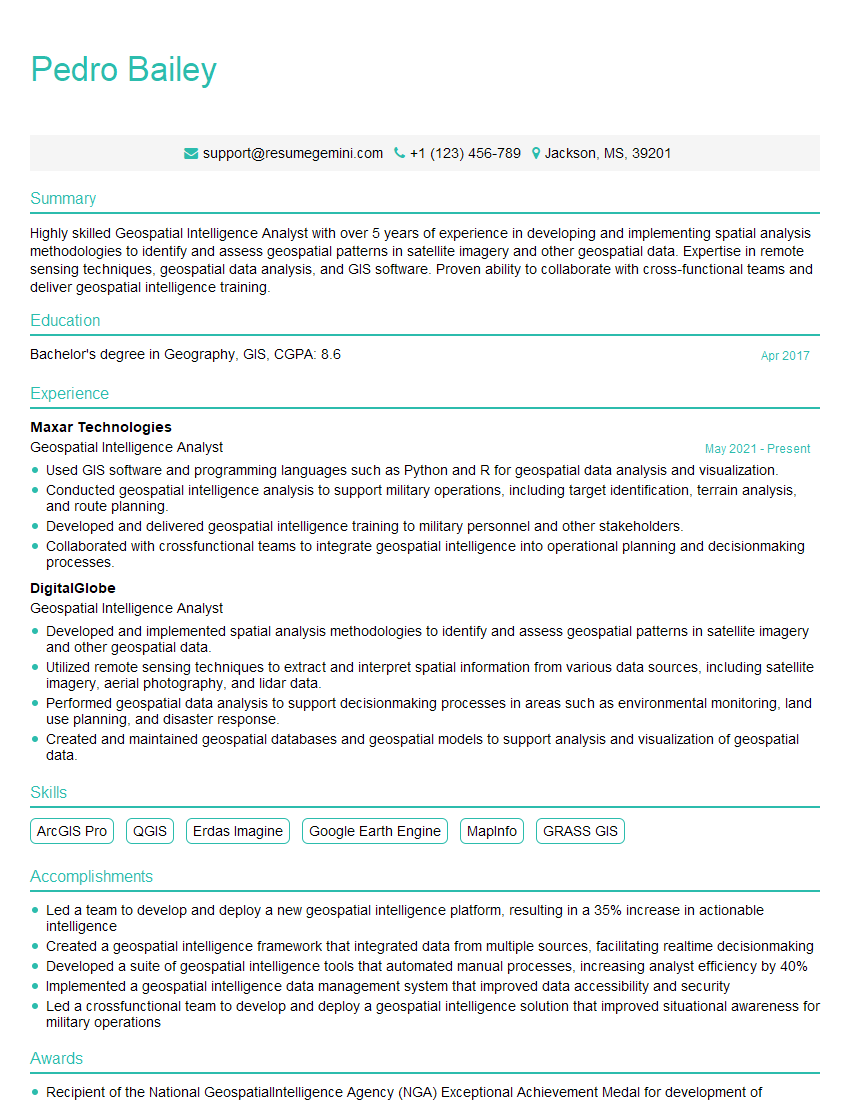
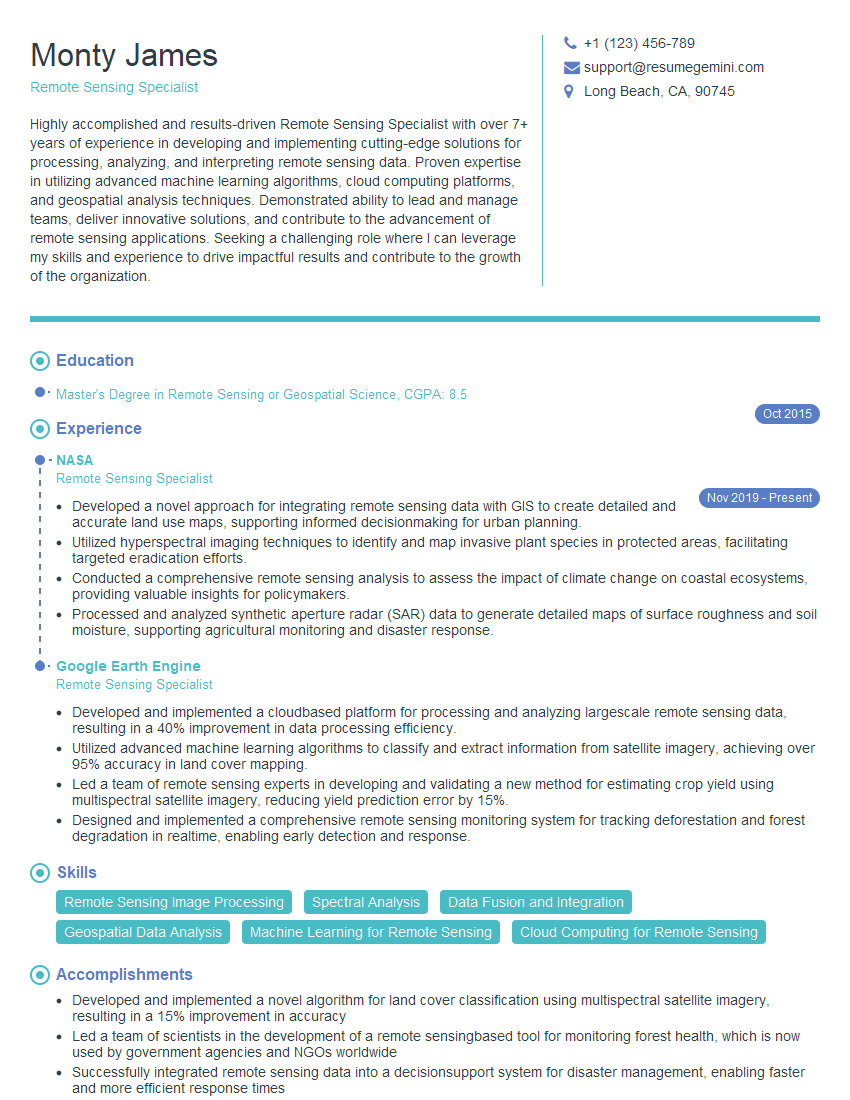
Mastering crisis mapping opens doors to impactful careers in humanitarian aid, disaster response, public health, and international development. A strong understanding of these concepts will significantly enhance your interview performance and career prospects. To maximize your chances, creating an ATS-friendly resume is crucial. We highly recommend using ResumeGemini to build a professional resume that showcases your skills and experience effectively. ResumeGemini offers examples of resumes tailored to Crisis Mapping to guide you through the process.
Explore more articles
Users Rating of Our Blogs
Share Your Experience
We value your feedback! Please rate our content and share your thoughts (optional).
What Readers Say About Our Blog
Very informative content, great job.
good