Interviews are more than just a Q&A session—they’re a chance to prove your worth. This blog dives into essential Overhaul Planning interview questions and expert tips to help you align your answers with what hiring managers are looking for. Start preparing to shine!
Questions Asked in Overhaul Planning Interview
Q 1. Describe your experience in developing overhaul schedules.
Developing overhaul schedules is a meticulous process that requires a deep understanding of the system being overhauled, available resources, and project constraints. I begin by thoroughly reviewing the system’s documentation, identifying all components requiring attention. This includes not only the primary components but also associated systems and supporting infrastructure. Next, I break down the overhaul into smaller, manageable tasks. This task breakdown is crucial for accurate scheduling and resource allocation. For example, in an aircraft engine overhaul, tasks might include disassembling the engine, inspecting individual parts, repairing or replacing damaged components, reassembling the engine, and finally, conducting rigorous testing. I then sequence these tasks logically, considering dependencies – some tasks cannot begin until others are completed. This leads to the creation of a detailed Gantt chart or similar schedule, indicating task durations, start and finish dates, and potential critical paths.
For instance, in a recent project involving the overhaul of a large industrial generator, I utilized a combination of precedence diagramming method (PDM) and critical path method (CPM) to create a highly effective schedule that minimized downtime and maximized efficiency. The PDM helped visualize task dependencies, while the CPM pinpointed the critical path—the sequence of tasks that directly impacts the project’s overall duration.
Q 2. How do you prioritize tasks during an overhaul project?
Prioritizing tasks during an overhaul requires a multi-faceted approach. I typically use a combination of techniques, starting with identifying critical tasks—those that directly impact the project’s completion date or overall functionality. This often involves a critical path analysis (discussed further in question 7). Next, I consider the potential impact of delays. Tasks with high risk of causing significant delays or safety hazards get top priority. I also factor in resource availability and dependencies. Tasks requiring specialized tools or skilled personnel might need prioritizing if those resources are limited. Finally, I use a scoring system that combines factors like criticality, risk, and resource requirements to create a ranked list of tasks. This prioritization is dynamic; it’s constantly reviewed and adjusted as the project progresses and new information emerges.
For example, in a ship overhaul, repairing a critical hull breach would undoubtedly take precedence over repainting the ship’s exterior, even if the latter is visually more important.
Q 3. Explain your process for estimating the cost of an overhaul.
Estimating the cost of an overhaul is a complex process that demands detailed planning. I start by compiling a comprehensive list of all necessary materials, labor, and services. For each item, I develop a detailed cost estimate, considering factors like quantity, unit price, and potential markups. This includes direct costs (materials, labor) and indirect costs (overhead, permits, testing). I often employ a bottom-up approach, calculating costs at the individual task level and then aggregating them to arrive at a total project cost. I also build in contingency buffers to account for unexpected issues or price fluctuations. This buffer is usually expressed as a percentage of the total estimated cost. The percentage itself depends on the complexity of the project and the level of uncertainty involved. Regular reviews and updates to the cost estimates are critical as the project progresses and more precise information becomes available.
For instance, when estimating the cost of an aircraft engine overhaul, I’d factor in the cost of specialized tools, the hourly rates of certified mechanics, the cost of replacement parts, and the cost of rigorous testing procedures, alongside potential unforeseen complications.
Q 4. What software or tools do you use for overhaul planning?
My toolset for overhaul planning includes a combination of software and tools. For scheduling and resource management, I frequently utilize Primavera P6 or Microsoft Project. These software packages facilitate the creation of detailed Gantt charts, track progress against the schedule, and manage resource allocation effectively. For cost estimation, I employ spreadsheet software like Microsoft Excel or dedicated cost estimation software, enabling detailed cost breakdowns and scenario planning. I also leverage CAD software for visualization and detailed planning, particularly in projects involving complex mechanical systems. Finally, collaborative platforms like SharePoint or similar tools are used for efficient communication and document management amongst the project team.
Q 5. How do you manage resource allocation during an overhaul?
Resource allocation is crucial for successful overhaul planning. It involves assigning the right resources (personnel, materials, equipment) to the right tasks at the right time. I start by creating a resource inventory, listing all available personnel and equipment with their skills and availability. Then, using project scheduling software, I assign resources to tasks based on their skills and the task’s requirements. This process considers resource constraints (e.g., limited availability of specialized personnel) and potential conflicts. To mitigate potential resource bottlenecks, I employ techniques like resource leveling—adjusting the schedule to smooth out peaks and valleys in resource demand. Regular monitoring of resource utilization is critical to identify potential issues early on and adjust resource allocation as needed.
For example, in a power plant overhaul, ensuring sufficient skilled technicians are available for critical tasks like turbine inspection is paramount. Effective resource allocation might involve temporarily hiring additional personnel or adjusting the schedule to balance workload across teams.
Q 6. How do you handle unexpected issues or delays during an overhaul?
Handling unexpected issues or delays is an inevitable part of overhaul planning. My approach involves a proactive risk management strategy. Before the overhaul begins, I identify potential risks and develop contingency plans. This includes identifying potential delays, assessing their impact, and outlining mitigation strategies. When unexpected issues arise, I utilize a structured problem-solving approach. First, I clearly define the problem, assessing its impact on the schedule and budget. Then, I brainstorm potential solutions with the project team, evaluating their feasibility and impact. Finally, I select the optimal solution, implement it, and monitor its effectiveness. Open communication with stakeholders is key to managing expectations and ensuring everyone is informed about progress and any necessary adjustments to the plan.
For example, if a critical part arrives late, I might explore options like using a temporary replacement, adjusting the schedule to accommodate the delay, or expediting the delivery of the part. Transparency with stakeholders is crucial in managing expectations during such unforeseen circumstances.
Q 7. Explain your understanding of critical path analysis in overhaul planning.
Critical path analysis (CPA) is a crucial technique in overhaul planning. It identifies the longest sequence of tasks in a project, representing the minimum time required for completion. This ‘critical path’ determines the project’s overall duration. Any delay on the critical path directly impacts the project’s completion date. CPA allows us to focus resources and attention on the most critical tasks to prevent delays. We use software like Primavera P6 to perform CPA, which visually highlights the critical path on the project schedule. Understanding the critical path enables proactive risk management, as we can identify tasks most vulnerable to delays and develop mitigation strategies.
Imagine an overhaul of a refinery. Using CPA, we might identify the sequence of tasks related to the reactor’s shutdown, cleaning, and restart as the critical path. Focusing on efficient execution of these tasks, possibly by allocating extra resources or expertise, becomes crucial to avoid project delays and subsequent revenue losses.
Q 8. How do you ensure compliance with safety regulations during an overhaul?
Ensuring safety compliance during an overhaul is paramount. It’s not just about ticking boxes; it’s about creating a culture of safety that permeates every stage of the process. We begin by identifying all applicable safety regulations, including OSHA guidelines (or equivalent in your region), industry best practices, and client-specific requirements. These are compiled into a comprehensive safety plan.
This plan is then implemented through several key strategies: Pre-overhaul safety inspections rigorously examine the equipment and work environment to identify potential hazards. We utilize lockout/tagout procedures to prevent accidental energy releases during maintenance. Personal Protective Equipment (PPE) is mandatory, and workers receive thorough training on its proper use. Regular safety meetings are held to address immediate concerns and reinforce safety protocols. We also incorporate safety checklists at every stage of the overhaul, ensuring every task is completed safely and correctly. Finally, we meticulously document all safety procedures and any incidents, facilitating continuous improvement and accountability.
For example, during a recent aircraft engine overhaul, we implemented a strict confined space entry protocol, including atmospheric monitoring and designated standby personnel, surpassing minimum regulatory requirements to ensure the safety of our technicians.
Q 9. Describe your experience with risk assessment in overhaul planning.
Risk assessment is integral to effective overhaul planning. It’s not merely a checklist; it’s a proactive, iterative process designed to identify, analyze, and mitigate potential problems before they impact the project’s timeline, budget, or, most importantly, safety. My approach involves a structured methodology, often employing Failure Mode and Effects Analysis (FMEA).
FMEA systematically examines each step of the overhaul process, identifying potential failure modes, their effects, and the severity, occurrence, and detection rates of those failures. This allows us to prioritize risks based on their potential impact. For example, a failure in a critical component might have a high severity, a high occurrence rate (due to its age or usage), and a low detection rate (due to its location or function). This would be flagged as a high-priority risk, demanding immediate attention and mitigation strategies. We then develop mitigation plans for each high-priority risk, outlining preventative measures, contingency plans, and responsibilities.
In a recent power plant turbine overhaul, our risk assessment highlighted the potential for damage to delicate blades during transportation. Our mitigation plan included specialized packaging, vibration monitoring during transport, and meticulous handling by trained personnel, preventing costly delays and potential injuries.
Q 10. How do you communicate effectively with stakeholders during an overhaul project?
Effective communication is the lifeblood of a successful overhaul. It ensures everyone is on the same page, leading to smoother operations and fewer misunderstandings. My approach focuses on clarity, transparency, and multi-channel communication.
We start with a clearly defined communication plan, identifying key stakeholders (clients, engineers, technicians, procurement teams, etc.) and their information needs. We utilize various communication channels: regular project meetings to discuss progress, challenges, and decisions; email updates for routine information dissemination; project management software to track progress, assign tasks, and manage documentation; and visual aids such as dashboards and progress reports to provide a clear picture of the project’s status. We also prioritize open dialogue, creating a safe space for stakeholders to raise concerns and offer suggestions.
For instance, during a large-scale ship engine overhaul, we used a dedicated project portal to share real-time updates on progress, allowing the client to monitor the project remotely and receive immediate answers to any questions. This fostered transparency and trust, leading to a successful and harmonious project completion.
Q 11. How do you track progress and measure performance during an overhaul?
Progress tracking and performance measurement are crucial for ensuring the overhaul stays on schedule and within budget. We use a combination of quantitative and qualitative metrics to monitor performance.
Quantitative metrics include adherence to the project schedule (measured through earned value management or critical path method), budget adherence, and key performance indicators (KPIs) specific to the overhaul (e.g., number of components inspected, number of repairs completed, man-hours utilized). We use project management software to track these metrics in real-time. Qualitative metrics assess aspects like teamwork, communication effectiveness, and risk management. Regular project reviews, including lessons learned sessions, provide valuable insights into these qualitative factors.
We frequently utilize Gantt charts and other visual tools to monitor progress against the planned schedule. Any deviations from the plan are immediately investigated, and corrective actions are implemented. Performance reports, including variance analysis (comparing actual vs. planned performance), are generated regularly and shared with stakeholders to ensure transparency and accountability.
In a recent refinery overhaul, meticulous tracking of man-hours and material costs, combined with regular progress meetings, allowed us to identify and address a potential budget overrun early, preventing a significant financial impact.
Q 12. What is your experience with different overhaul methodologies?
My experience encompasses a range of overhaul methodologies, adapting my approach to suit the specific context of each project. These methodologies often overlap and are not mutually exclusive.
- Condition-Based Maintenance (CBM): This data-driven approach focuses on maintaining equipment based on its actual condition, rather than a fixed schedule. Sensors and monitoring systems provide real-time data, allowing us to prioritize repairs and optimize maintenance activities.
- Predictive Maintenance: This goes a step further than CBM by using data analysis and advanced algorithms to predict potential failures before they occur, enabling proactive maintenance and minimizing downtime.
- Preventive Maintenance (PM): This involves regular maintenance tasks performed at predetermined intervals to prevent failures. While less sophisticated than CBM and predictive maintenance, it remains a vital part of many overhaul strategies.
- Lean Overhaul: This methodology emphasizes efficiency and waste reduction by streamlining processes, eliminating non-value-added activities, and empowering teams to identify and resolve inefficiencies.
Choosing the right methodology depends on factors like equipment criticality, data availability, budget constraints, and client preferences. Often, a hybrid approach, combining elements of different methodologies, is the most effective solution.
Q 13. How do you manage the procurement process for overhaul parts?
Procuring parts for an overhaul is a critical process that directly impacts the project’s schedule and budget. It requires meticulous planning and execution.
Our procurement process begins with a comprehensive bill of materials (BOM), meticulously listing all required parts, their specifications, and quantities. We then conduct a thorough market research to identify potential suppliers, evaluating factors such as quality, price, lead times, and reliability. We use a competitive bidding process to ensure we obtain the best possible value. Once a supplier is selected, we establish clear contracts outlining delivery schedules, quality requirements, and payment terms. Throughout the process, we maintain close communication with the supplier, monitoring progress and addressing any potential issues promptly.
We also implement robust quality control procedures to ensure that all received parts meet the required specifications. This includes inspecting parts upon delivery and performing necessary testing before installation. In situations where parts are unavailable or lead times are excessively long, we may explore alternative sources, consider substitute parts, or adjust the project schedule accordingly. This proactive approach helps to mitigate delays and cost overruns.
Q 14. Explain your approach to managing inventory during an overhaul.
Inventory management during an overhaul is a delicate balancing act. We need to have enough parts on hand to avoid delays but not so much that we tie up capital or risk obsolescence. Our approach incorporates several key strategies:
- Accurate Forecasting: We use historical data and project requirements to forecast part demand accurately. This helps us determine the optimal inventory levels.
- Just-in-Time (JIT) Inventory: Where feasible, we utilize JIT principles to minimize inventory holding costs while ensuring timely availability of parts.
- Vendor Managed Inventory (VMI): For frequently used parts, we often partner with suppliers to implement VMI programs, where the supplier manages our inventory levels and ensures timely replenishment.
- Regular Stock Audits: We perform regular physical stock audits to verify inventory levels and identify discrepancies. This helps maintain accurate inventory records.
- Designated Storage Areas: We utilize clearly designated storage areas with proper organization to prevent damage, loss, or misidentification of parts.
By carefully managing our inventory, we minimize storage costs, reduce the risk of part obsolescence, and ensure that the overhaul proceeds smoothly and efficiently.
Q 15. How do you ensure the quality of work during an overhaul?
Ensuring quality during an overhaul is paramount. It’s not just about completing the tasks; it’s about achieving the intended outcome—restoring equipment to optimal functionality and extending its lifespan. This involves a multi-pronged approach:
- Rigorous Inspection & Testing: Before, during, and after each stage of the overhaul, thorough inspections and tests are conducted. This might involve visual inspections, non-destructive testing (NDT) methods like ultrasonic testing or dye penetrant inspection, and functional testing to verify performance. For example, after an engine overhaul, we’d perform a rigorous compression test to ensure each cylinder is functioning properly.
- Strict Adherence to Procedures: We follow meticulously documented procedures, often based on OEM (Original Equipment Manufacturer) guidelines or industry best practices. These procedures dictate the sequence of tasks, the tools and materials to be used, and the acceptance criteria for each step. Deviation from these procedures is documented and requires approval.
- Skilled Workforce & Training: Our technicians are highly skilled and undergo regular training to stay updated on the latest technologies and repair techniques. This ensures consistency and proficiency across all tasks. We regularly conduct competency assessments to ensure skill levels are maintained.
- Quality Control Checks: Independent quality control checks are implemented at critical points during the process. A dedicated quality control inspector might review completed work, verifying that specifications are met and documentation is accurate.
- Traceability and Documentation: Detailed records are maintained throughout the entire overhaul process. This includes parts used, labor hours, inspection results, and any deviations from the planned procedures. This comprehensive documentation helps with future maintenance planning and troubleshooting.
By implementing these measures, we minimize errors, ensure consistent quality, and increase the reliability of the equipment after the overhaul.
Career Expert Tips:
- Ace those interviews! Prepare effectively by reviewing the Top 50 Most Common Interview Questions on ResumeGemini.
- Navigate your job search with confidence! Explore a wide range of Career Tips on ResumeGemini. Learn about common challenges and recommendations to overcome them.
- Craft the perfect resume! Master the Art of Resume Writing with ResumeGemini’s guide. Showcase your unique qualifications and achievements effectively.
- Don’t miss out on holiday savings! Build your dream resume with ResumeGemini’s ATS optimized templates.
Q 16. Describe your experience with Root Cause Analysis and its role in overhaul planning.
Root Cause Analysis (RCA) is critical in overhaul planning. It’s not enough to just fix a problem; we need to understand *why* it occurred in the first place to prevent recurrence. My experience with RCA involves applying various methodologies, such as the ‘5 Whys’ technique or the Fishbone diagram (Ishikawa diagram).
For instance, if a turbine blade failed, a simple fix would be to replace the blade. However, RCA would delve deeper. We’d ask ‘why’ the blade failed repeatedly: Was it due to material fatigue? Was there an issue with the manufacturing process? Was the operating temperature outside acceptable limits? By systematically investigating these ‘whys,’ we identify the root cause, which might be a flaw in the design, a deficiency in maintenance practices, or an operational issue.
This understanding shapes the overhaul plan. If the RCA reveals a systemic problem, the overhaul might involve design modifications, improved maintenance procedures, or operator retraining, in addition to the immediate repairs. This proactive approach significantly reduces the likelihood of future failures and improves the overall reliability of the equipment.
Q 17. How do you integrate overhaul planning with other maintenance activities?
Overhaul planning is deeply integrated with other maintenance activities. It’s not a standalone event but a crucial part of a broader maintenance strategy. We use a Computerized Maintenance Management System (CMMS) to effectively coordinate these activities.
- Preventative Maintenance (PM): Overhauls are often scheduled based on PM data. The frequency and scope of PM tasks directly influence the overhaul plan. Regular lubrication, inspections, and minor repairs identified during PM significantly reduce the workload and extend the time between overhauls.
- Corrective Maintenance: Corrective maintenance, addressing immediate failures, provides valuable information for the overhaul planning process. Recurring failures identified during corrective maintenance will inform RCA and influence overhaul scope.
- Predictive Maintenance: Predictive maintenance using sensors and data analysis allows for more precise scheduling of overhauls. For example, vibration analysis on a rotating component can predict impending failure, allowing us to schedule an overhaul before catastrophic damage occurs.
The CMMS allows us to track all maintenance activities, analyze trends, and make data-driven decisions regarding overhaul scheduling and scope. This integrated approach optimizes maintenance costs, minimizes downtime, and improves the overall reliability of equipment.
Q 18. Explain your experience with preventative maintenance planning related to overhauls.
Preventative maintenance (PM) planning is crucial for successful overhauls. A well-defined PM program reduces the severity of problems, minimizing the work required during the overhaul.
My experience involves developing and implementing PM schedules based on manufacturer recommendations, historical data, and risk assessments. For example, a PM schedule for a large engine might include regular oil changes, filter replacements, inspections of critical components, and performance testing. These activities help detect and address minor issues before they escalate into major failures requiring extensive repairs during an overhaul.
By proactively addressing potential issues through PM, we reduce the scope and duration of overhauls, leading to significant cost savings and minimized downtime. A well-defined PM program will also extend the time between major overhauls, further enhancing efficiency and cost-effectiveness.
Q 19. What are your methods for optimizing overhaul schedules for efficiency?
Optimizing overhaul schedules for efficiency requires a holistic approach. It’s not just about speed; it’s about minimizing downtime while maintaining quality. My methods include:
- Critical Path Analysis: Identifying the tasks that are essential and determining their sequence to optimize the overall schedule. This helps us pinpoint potential bottlenecks and schedule resources effectively.
- Resource Allocation: Efficiently allocating personnel, tools, and parts to avoid delays. This includes having necessary parts readily available to minimize waiting time.
- Parallel Tasks: Identifying tasks that can be performed concurrently to reduce the overall duration of the overhaul. For example, while one team works on the engine, another team can work on the auxiliary systems.
- Simulation and Modeling: Using simulation software to model different scheduling scenarios and optimize resource allocation for minimal downtime.
- Lean Principles: Applying Lean principles to eliminate waste and improve efficiency throughout the overhaul process. This might involve streamlining workflows, reducing unnecessary steps, and optimizing inventory management.
These methods ensure we complete the overhaul within the planned timeframe, minimizing disruption to operations and maximizing the return on investment.
Q 20. Describe your experience working within budget constraints during an overhaul.
Working within budget constraints during an overhaul demands careful planning and execution. It’s a balancing act between quality, time, and cost. My approach involves:
- Detailed Budgeting: Creating a detailed budget that includes all anticipated costs, such as labor, parts, materials, and disposal fees. This often involves using historical data and cost estimating software.
- Value Engineering: Evaluating different repair options to find cost-effective solutions without compromising quality. This might involve selecting alternative parts or modifying repair procedures.
- Negotiating with Suppliers: Negotiating favorable prices with suppliers for parts and materials. This requires building strong relationships and leveraging bulk purchasing power.
- Real-time Monitoring: Continuously monitoring expenses throughout the overhaul to ensure we stay on track. This involves regular reviews of actual costs against the budget and taking corrective actions if necessary.
- Contingency Planning: Building a contingency plan to address unexpected costs or delays. This minimizes the impact of unforeseen events on the overall budget.
By implementing these strategies, we can effectively manage costs while ensuring the successful completion of the overhaul within budget.
Q 21. How do you use data analysis to improve overhaul planning processes?
Data analysis plays a vital role in improving overhaul planning processes. By collecting and analyzing data from various sources, we can identify trends, predict potential problems, and optimize our strategies.
- Historical Data Analysis: Analyzing historical overhaul data, including downtime, costs, and failure rates, to identify recurring issues and improve future planning.
- Predictive Maintenance Data: Using sensor data and predictive analytics to optimize overhaul scheduling and reduce unexpected downtime.
- Parts Usage Data: Analyzing parts usage data to optimize inventory management and reduce lead times for parts procurement.
- Labor Data: Analyzing labor hours to identify areas for efficiency improvements and optimize workforce allocation.
- Statistical Process Control (SPC): Applying SPC techniques to monitor and control the quality of overhaul processes, identifying and addressing variations in performance.
By leveraging data analysis, we can move beyond reactive maintenance to a more proactive and data-driven approach, optimizing overhaul processes and enhancing the overall reliability and efficiency of equipment.
Q 22. How do you incorporate lessons learned from past overhauls into future planning?
Incorporating lessons learned is crucial for continuous improvement in overhaul planning. We use a structured approach involving post-overhaul reviews, detailed analysis of deviations from the plan, and proactive integration of findings into future projects. Think of it like a feedback loop: the more data we collect and analyze, the better we can predict and prevent issues.
For example, if a previous overhaul experienced unexpected delays due to a specific part’s unavailability, we’d revise our procurement process in subsequent plans. This might involve securing multiple sourcing options, establishing advanced stock levels, or implementing a more robust inventory management system. We meticulously document these lessons, often using a dedicated knowledge management system, to ensure they are readily accessible to the entire team for future reference. This includes both technical issues and process inefficiencies.
- Post-Overhaul Review Meetings: Formal meetings where the entire team discusses successes, challenges, and areas for improvement.
- Data Analysis: Statistical analysis of overhaul durations, costs, and resource utilization to identify trends and patterns.
- Knowledge Management System: A centralized repository for storing and retrieving lessons learned, best practices, and improvement recommendations.
Q 23. How do you manage the documentation and reporting requirements of an overhaul?
Managing documentation and reporting is paramount for ensuring accountability, traceability, and compliance. We utilize a robust, integrated system, often a combination of digital platforms and physical files. This ensures all aspects of the overhaul, from initial planning documents to final inspection reports, are meticulously recorded and easily accessible.
Our system typically involves:
- Project Management Software: For scheduling, task assignment, progress tracking, and communication.
- Document Management System: For storing and managing all relevant documents, including engineering drawings, maintenance manuals, inspection reports, and permits.
- Reporting Templates: Standardized templates for generating regular progress reports, cost reports, and safety reports to stakeholders.
- Digital Work Orders & Checklists: Using digital tools eliminates paperwork and ensures consistent execution of procedures.
A clear reporting structure ensures timely information flow to all parties involved – from the engineering team to upper management and regulatory bodies.
Q 24. Explain your experience with different types of overhaul projects (e.g., engine, turbine).
My experience encompasses a broad range of overhaul projects, including those involving complex machinery like gas turbines, aircraft engines, and industrial generators. The overarching principles remain the same—meticulous planning, precise execution, and robust quality control—but the specifics vary considerably depending on the technology involved.
Gas Turbine Overhauls: These projects are particularly demanding due to the high precision and specialized tools required. We focus heavily on safety protocols and precise alignment procedures. Often, specialized expertise and external vendors are involved.
Aircraft Engine Overhauls: These are characterized by stringent regulatory requirements and a deep emphasis on safety. Extensive documentation is crucial, and adherence to manufacturer’s guidelines is paramount. The use of sophisticated diagnostic tools is essential.
Industrial Generator Overhauls: These projects often emphasize minimizing downtime and maintaining a continuous power supply. Careful planning to minimize disruption to operations is a key aspect.
In each case, thorough risk assessment, a well-defined work breakdown structure (WBS), and a robust quality control system are key to successful completion.
Q 25. How do you handle conflicting priorities among different overhaul tasks?
Conflicting priorities are inevitable in complex overhaul projects. To address this, we employ a prioritization matrix that weighs factors like urgency, impact, and resource availability. This matrix is typically based on a combination of quantitative and qualitative assessments. It’s not just about speed; it’s about ensuring the most critical tasks are completed first to minimize risk and impact on project timelines and budget.
For example, if we encounter a conflict between repairing a critical component and completing a less critical task, the prioritization matrix would help us make an informed decision, taking into account potential delays and cost implications associated with each path. Transparency and communication are essential; all stakeholders need to be informed of the priorities and rationale behind them.
We use tools like project management software to visualize the dependencies between tasks and allocate resources effectively, ensuring that the most critical path is continuously monitored and optimized.
Q 26. Describe your experience with implementing and improving overhaul planning processes.
I have extensive experience implementing and refining overhaul planning processes. My approach emphasizes iterative improvement, focusing on data-driven decision making and continuous feedback. It’s an ongoing process, not a one-time event.
For instance, I’ve implemented a system of regular process reviews after each overhaul. This involves analyzing what worked well, what needed improvement, and identifying potential areas for automation. We’ve moved from largely manual processes to using digital tools for planning, scheduling, and tracking progress, resulting in significant improvements in efficiency and accuracy. We have also incorporated lean principles to identify and eliminate waste in the process.
One key improvement was implementing a more robust risk management framework, which allowed for better identification and mitigation of potential problems, leading to fewer unexpected delays and cost overruns. The implementation of these changes has resulted in improved turnaround times, reduced costs, and enhanced overall project efficiency.
Q 27. What are your strategies for mitigating risks associated with overhaul downtime?
Mitigating risks associated with overhaul downtime is a critical aspect of my approach. We employ a multi-pronged strategy that combines proactive planning, contingency planning, and robust risk management.
Proactive Planning: This involves meticulous scheduling, resource allocation, and parts procurement to minimize potential delays. We use techniques like critical path analysis to identify potential bottlenecks and develop strategies to avoid them. It’s like building a safety net before you start walking a tightrope.
Contingency Planning: We develop detailed plans for handling potential disruptions, such as equipment failures or parts delays. This might include having backup equipment on hand, alternative sourcing options for parts, or a plan to fast-track critical repair activities.
Risk Management: We perform a comprehensive risk assessment at the beginning of the project, identifying potential hazards and developing mitigation strategies. This involves regularly reviewing the risks, monitoring their likelihood, and adjusting mitigation plans as needed.
Q 28. How do you ensure smooth handover between different phases of an overhaul?
Ensuring a smooth handover between phases is essential for efficiency and quality. We achieve this through meticulous planning and clear communication, emphasizing close collaboration between teams.
Before commencing each phase, a detailed handover meeting is conducted. This involves a thorough review of the work completed in the previous phase, a detailed explanation of the tasks to be undertaken in the current phase, and a clear definition of roles and responsibilities. We use checklists to ensure nothing is overlooked. It’s like passing the baton in a relay race – a clean handoff is crucial for success.
Clear documentation and standardized procedures also play a vital role. All relevant information, including test results, inspection reports, and any identified issues, are documented and transferred to the responsible team. This reduces ambiguity and promotes seamless collaboration.
Regular communication throughout the process, using tools like project management software and daily stand-up meetings, ensures any arising issues are addressed promptly and effectively.
Key Topics to Learn for Overhaul Planning Interview
- Project Scoping and Definition: Understanding the goals, constraints, and deliverables of an overhaul project. This includes defining success metrics and identifying potential risks.
- Resource Allocation and Management: Efficiently allocating personnel, materials, and equipment to ensure timely and cost-effective completion. Practical application involves creating realistic schedules and managing potential resource conflicts.
- Risk Assessment and Mitigation: Identifying potential problems (technical, logistical, financial) and developing strategies to minimize their impact on the project timeline and budget. Consider using techniques like SWOT analysis.
- Scheduling and Sequencing: Developing a detailed project schedule, considering dependencies between tasks and optimizing for efficiency. Familiarize yourself with common scheduling methods (e.g., critical path method).
- Budgeting and Cost Control: Creating a comprehensive budget, tracking expenses, and implementing measures to control costs throughout the project lifecycle. Understand variance analysis and cost reporting.
- Communication and Collaboration: Effective communication with stakeholders (management, technicians, clients) to ensure everyone is informed and aligned. This involves proactive updates, clear reporting, and conflict resolution.
- Change Management: Developing a process for handling changes to the project scope, schedule, or budget in a controlled and efficient manner. Understanding change order procedures is crucial.
- Quality Control and Assurance: Implementing processes to ensure the quality of work and adherence to safety standards. This includes inspection procedures and quality documentation.
- Post-Overhaul Evaluation and Reporting: Analyzing the project’s performance against planned goals and identifying areas for improvement in future projects. Data analysis and reporting skills are vital here.
Next Steps
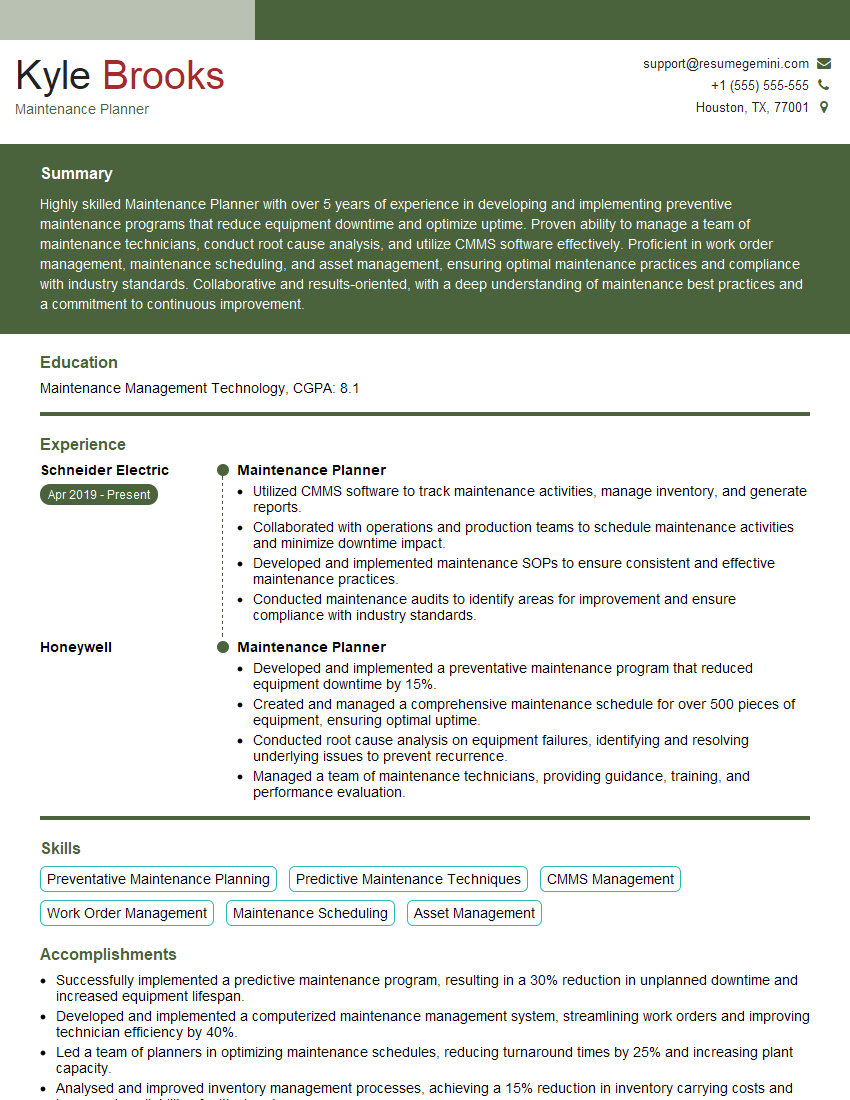
Mastering Overhaul Planning significantly enhances your career prospects, opening doors to leadership roles and higher earning potential. An ATS-friendly resume is crucial for getting your application noticed. To build a compelling and effective resume that highlights your Overhaul Planning skills, we highly recommend using ResumeGemini. ResumeGemini provides a user-friendly platform and offers examples of resumes tailored to Overhaul Planning to guide your preparation. Invest the time to craft a strong resume – it’s your first impression on potential employers.
Explore more articles
Users Rating of Our Blogs
Share Your Experience
We value your feedback! Please rate our content and share your thoughts (optional).
What Readers Say About Our Blog
Very informative content, great job.
good