The right preparation can turn an interview into an opportunity to showcase your expertise. This guide to Overlock Collar Interfacing interview questions is your ultimate resource, providing key insights and tips to help you ace your responses and stand out as a top candidate.
Questions Asked in Overlock Collar Interfacing Interview
Q 1. Explain the purpose of using interfacing in collar construction.
Interfacing in collar construction provides crucial support and structure. Think of it as the unsung hero, giving the collar its desired shape, crispness, and preventing it from flopping or collapsing. Without interfacing, your collar would likely be limp and lack the definition needed for a professional finish. It adds body and prevents stretching or distortion, ensuring a polished look that lasts.
Q 2. What types of interfacing are suitable for overlock collar construction?
The best interfacing for overlock collar construction depends on the fabric weight and desired level of stiffness, but generally, lightweight to medium-weight fusible interfacing is ideal. For delicate fabrics, a soft, lightweight woven interfacing might be preferred to maintain drape. For heavier fabrics, a slightly more structured, yet still flexible, woven or non-woven interfacing would work well. Avoid heavy-duty interfacings as these can make the collar feel too stiff and bulky, especially when using an overlock stitch which is often found in more lightweight garments.
- Woven interfacings: Offer excellent drape and a subtle structure.
- Non-woven interfacings: Provide good support without adding significant bulk; ideal for lightweight fabrics.
- Fusible interfacings: Are the most common type used for ease of application.
Q 3. Describe the process of fusing interfacing to collar pieces.
Fusing interfacing is a relatively straightforward process. First, ensure your interfacing is the correct size and is carefully cut to match your collar pieces. Pre-press both your collar fabric and the interfacing to remove any wrinkles. Place the interfacing, fusible side down, onto the wrong side of your collar fabric. Using a pressing cloth (to protect the fabric from scorching), press the interfacing firmly onto the fabric, working from the center outwards, using a hot, dry iron. The exact temperature and pressure needed will depend on the interfacing type and your iron; always refer to the interfacing manufacturer’s instructions for best results. Let it cool completely before proceeding.
For tricky curves, like those found in a rounded collar, you can use a tailor’s ham to ensure even pressure and a smooth finish. A tailor’s ham is a padded, curved form that helps distribute the heat and pressure evenly.
Q 4. How does the choice of interfacing affect the drape and structure of a collar?
The choice of interfacing significantly impacts the collar’s drape and structure. A lightweight interfacing will result in a softer, more pliable collar with a natural drape. This is perfect for delicate fabrics and softer, less structured garments. Conversely, a heavier interfacing will produce a crisper, more structured collar, ideal for structured garments or heavier fabrics. The wrong interfacing can ruin the overall look! Too stiff, and the collar will look unnatural; too soft, and it will lose its shape.
Q 5. What are the advantages and disadvantages of using woven vs. non-woven interfacing?
Both woven and non-woven interfacings have their strengths and weaknesses.
- Woven interfacings: These tend to offer superior drape and a more luxurious feel. However, they can be more expensive and may require more precise cutting and application.
- Non-woven interfacings: Generally more affordable and easier to work with, these offer good support without adding significant bulk. They’re excellent for lightweight fabrics where a crisp yet natural drape is desired. However, they may not provide the same level of long-term structure as woven interfacings.
Choosing between them depends heavily on the final garment’s look and feel – a high-end couture piece might warrant the investment in woven interfacing, while a casual garment could easily utilize a non-woven option.
Q 6. How do you ensure accurate placement of interfacing on collar pieces?
Accurate interfacing placement is vital for a professional finish. Before fusing, carefully align the interfacing with the collar piece, ensuring it’s centered and covers the entire piece. Use pattern markings as your guide. Pinning the interfacing in place, especially around curves, before fusing helps prevent shifting. Consider using a spray adhesive for added security, particularly on delicate fabrics. Always check for accurate placement before fusing, as any errors will be very difficult to correct afterward.
Q 7. Describe the steps involved in constructing an overlock collar.
Constructing an overlock collar involves several steps. This assumes the interfacing has already been fused to the collar pieces.
- Stitch the collar stand to the collar: With right sides together, stitch the collar stand to the collar using a suitable stitch for the fabric. A serger (overlock machine) is ideal for this, creating a neat and durable seam.
- Clip and grade seams: Clip the seam allowance curves to reduce bulk and ensure a smooth, rounded collar. Grade the seam allowance to further reduce bulk.
- Turn and press the collar: Carefully turn the collar to the right side, using a point turner or similar tool if necessary to reach corners or tight curves. Press well to crisp the edges and shape the collar.
- Stitch-in-the-ditch: A stitch-in-the-ditch seam will further secure the collar.
- Attach collar to garment: Attach the finished collar to the neckline of the garment, following the appropriate construction method for your garment.
Each step needs precision and care; rushing will quickly show in the finished collar.
Q 8. What are the common challenges encountered during overlock collar construction, and how do you overcome them?
Overlocking collars presents several challenges. One common issue is uneven stitching, leading to a messy finish. This often stems from inconsistent fabric feeding or improper tension settings on the overlocker. Another challenge is fabric stretching or distortion during the overlocking process, resulting in a misshapen collar. Finally, difficulty in achieving a neat and flat seam allowance can make the collar look unprofessional.
To overcome these, meticulous preparation is key. Pre-pressing the fabric to remove wrinkles and ensuring the fabric layers are aligned perfectly before stitching are critical. Regularly checking and adjusting the overlocker’s tension and differential feed settings based on the fabric weight is essential for even stitching and preventing distortion. Using a walking foot on the machine can also aid in even feeding of multiple layers of fabric. Practicing on scrap fabric before starting the actual garment helps to refine technique and settings. Finally, careful trimming of seam allowances after overlocking helps create a smoother, more professional finish.
Q 9. How do you adjust the overlock stitch settings for different fabric weights?
Adjusting overlock stitch settings for different fabric weights is crucial for achieving a balanced and professional finish. Lighter fabrics like silk or chiffon require a looser stitch tension to prevent puckering. Heavier fabrics like denim or canvas need a tighter tension to secure the seam and avoid skipped stitches. The differential feed—a feature that controls the rate at which the fabric is fed through the machine—also needs adjustment. A lower differential feed is better for stable fabrics, whereas a higher setting might be necessary for stretchy or delicate materials to prevent distortion.
For example, a delicate silk would use a low stitch tension (e.g., 3-4 on a scale of 1-10), a low differential feed (e.g., 0.7-0.8), and potentially a narrower stitch width. Conversely, a heavy canvas would require a higher stitch tension (e.g., 7-8), a lower differential feed (e.g., 0.6-0.7), and possibly a wider stitch width for added strength. Always test your settings on a scrap piece of the same fabric before working on the actual collar.
Q 10. How do you prevent puckering or distortion during overlocking?
Puckering and distortion during overlocking usually result from uneven fabric feeding, incorrect tension, or using the wrong stitch type. To prevent puckering, make sure the fabric is fed evenly into the machine. Using a walking foot or a roller foot can assist with this. Adjusting the differential feed helps to regulate fabric movement, reducing stretching and puckering, especially on stretchy fabrics. Ensuring the correct tension is crucial: too tight can cause puckering, and too loose can result in a weak, unraveling stitch.
Another effective technique is using a stay-stitching line just inside the seam allowance before overlocking. This will help stabilize the fabric and prevent stretching. Furthermore, choosing the appropriate stitch type for the fabric is important. For very stretchy materials, a narrow overlock stitch with a reinforced seam will be beneficial. A test run on scrap fabric will always highlight any tension or feed issues before they manifest on the actual project.
Q 11. Explain the importance of proper pressing techniques in collar construction.
Proper pressing techniques are paramount in collar construction. Pressing shapes the collar, sets the seams, and ensures a clean, crisp finish. Pressing after each step—after the overlocking, after understitching (if applicable), and finally after the collar is attached—is key. Using a tailor’s ham and a point presser allows you to shape curves and points accurately. The pressing process also helps to prevent future distortion.
For instance, pressing the seam allowances open after overlocking helps create a flatter, more comfortable collar. Pressing the collar interfacing before attaching it to the fabric ensures it lays smoothly, prevents wrinkles, and contributes to the desired collar roll. Incorrect pressing can lead to uneven collar rolls, puckering, and a generally unprofessional finish. Pressing should be done with low to medium heat, always pressing from the wrong side to prevent shiny marks on the right side of the fabric.
Q 12. What are some common causes of collar roll issues?
Collar roll issues are a frequent challenge. They can stem from several factors, including incorrect interfacing choice, inadequate pressing, or improperly cut collar pieces. Using the wrong weight or type of interfacing is a common culprit. Too stiff an interfacing will create a rigid, unnatural roll, while too flimsy an interfacing will result in a floppy, shapeless collar.
Other causes include uneven seam allowances, improper stitching techniques (such as uneven stitching or too much tension causing puckering), and an inaccurate collar pattern. An incorrectly cut collar piece will never result in a properly rolled collar, regardless of the interfacing or sewing techniques used. Carefully checking the pattern pieces and paying attention to details like seam allowance will assist in preventing these issues.
Q 13. How do you troubleshoot a collar that is too stiff or too floppy?
Troubleshooting a stiff or floppy collar involves examining the interfacing and construction techniques. A too-stiff collar usually indicates using too heavy or inappropriate interfacing. In this case, replacing it with a lighter weight or more flexible interfacing is necessary. Proper pressing is also critical—over-pressing can stiffen a collar unnecessarily. In such cases, carefully repressing with less pressure or using a press cloth will help.
Conversely, a floppy collar might suggest using too light or insufficient interfacing. Adding a lightweight fusible interfacing can solve this, or potentially, switching to a heavier-weight interfacing appropriate for the fabric. Also, check the stitching—loose stitching might cause the collar to flop. Repressing the seams with more pressure to set them properly can help too. A combination of these adjustments, guided by the chosen fabric and collar style, typically achieves the desired outcome.
Q 14. Describe your experience with different types of collar styles.
Throughout my career, I’ve worked extensively with diverse collar styles, ranging from classic shirt collars—like the pointed, rounded, or button-down varieties—to more contemporary designs such as shawl collars, Peter Pan collars, and mandarin collars. Each style presents unique construction challenges. For instance, pointed collars require precise grading and pressing to achieve that crisp point, while shawl collars demand meticulous shaping to create the soft, draped effect. Mandarin collars require attention to details like the exact height and curve to suit the garment.
My experience also covers different fabric types: delicate silks require careful handling and specific stitching techniques, while heavier materials like wool demand a more robust construction approach. The selection of appropriate interfacing is crucial for each style and fabric. I understand the intricacies of each style and the corresponding construction techniques needed to produce a professional and aesthetically pleasing result. Understanding the structural components of different collar styles is vital to successful collar construction.
Q 15. How do you adapt your techniques for different collar shapes and sizes?
Adapting overlock collar interfacing techniques to different collar shapes and sizes hinges on understanding the interplay between fabric drape, interfacing weight, and the collar’s structural requirements. For instance, a small, sharply pointed collar on a crisp shirt will need a lightweight, crisp interfacing, possibly a woven type, applied with precision to maintain its shape. Conversely, a large, softer shawl collar on a coat might require a heavier, more flexible interfacing, perhaps a fusible knit, to provide adequate support without stiffness.
- Shape Considerations: Curved collars require careful shaping of the interfacing before fusing or stitching, often involving pre-shrinking and gentle easing to avoid puckering. Straight collars are comparatively simpler, allowing for more straightforward application.
- Size Considerations: Larger collars necessitate larger pieces of interfacing, meticulously cut to match the collar pattern, ensuring even support across the entire surface. Smaller collars demand precise cutting to avoid wastage and maintain a clean finish.
- Fabric Matching: The interfacing should always complement the outer fabric. A lightweight fabric demands a similarly lightweight interfacing; otherwise, the interfacing might cause unwanted stiffness or puckering. Conversely, a heavier fabric might need a slightly heavier interfacing to prevent the collar from collapsing.
Think of it like building a house: the foundation (interfacing) needs to be proportionate and appropriate for the structure (collar) you’re building. A tiny foundation for a large house will fail, just as a too-heavy interfacing for a delicate fabric will create problems.
Career Expert Tips:
- Ace those interviews! Prepare effectively by reviewing the Top 50 Most Common Interview Questions on ResumeGemini.
- Navigate your job search with confidence! Explore a wide range of Career Tips on ResumeGemini. Learn about common challenges and recommendations to overcome them.
- Craft the perfect resume! Master the Art of Resume Writing with ResumeGemini’s guide. Showcase your unique qualifications and achievements effectively.
- Don’t miss out on holiday savings! Build your dream resume with ResumeGemini’s ATS optimized templates.
Q 16. What is the role of seam finishing in overlock collar construction?
Seam finishing in overlock collar construction is crucial for achieving a professional, durable, and aesthetically pleasing result. It prevents fraying, adds strength to the seams, and contributes to a cleaner overall appearance. The overlock stitch itself provides a degree of seam finishing, but additional steps may be needed depending on the fabric and desired finish.
- Overlocking: The primary seam finishing technique, using the overlock machine to enclose raw edges, preventing fraying and improving durability. This is particularly important for lightweight fabrics or those prone to unraveling.
- Serging: Similar to overlocking, serging encloses raw edges, but often with a decorative stitch. It can be a valuable addition for fabrics where a more visually appealing finish is required.
- Pinking Shears: While less effective than overlocking or serging, pinking shears can be used on fabrics that don’t fray excessively, offering a basic level of seam protection.
For example, a delicate silk collar will benefit greatly from careful overlocking to prevent unraveling, while a more robust cotton might only require a simple overlock finish. The choice of seam finishing aligns with the fabric type and desired level of quality.
Q 17. How do you inspect a finished overlock collar for quality?
Inspecting a finished overlock collar for quality involves a meticulous examination to ensure both structural integrity and aesthetic perfection. This process checks for several key aspects:
- Seam Alignment: Check that the seams are straight, smooth, and evenly spaced, free from puckering or distortion.
- Stitch Quality: Examine the overlock stitch for consistency. The stitches should be even, properly tensioned, and free from skipped stitches or broken threads.
- Edge Finishing: Ensure all raw edges are completely enclosed by the overlock stitch, with no fraying or loose threads.
- Interfacing Adhesion: Verify that the interfacing is properly adhered, with no visible gaps or wrinkles that could compromise the collar’s shape and durability.
- Overall Appearance: Check for any visible flaws, such as uneven stitching, loose threads, or inconsistencies in the fabric.
I often use a strong light and a magnifying glass for closer inspection, especially for delicate fabrics. A final press, without steam, helps identify any last-minute imperfections.
Q 18. What are the safety precautions associated with operating an overlock machine?
Operating an overlock machine requires adherence to specific safety precautions to prevent injuries. These include:
- Proper Training: Never operate an overlock machine without proper training and understanding of its functions and safety features.
- Needle Protection: Always use the appropriate needle guards and ensure needles are replaced promptly if bent or damaged.
- Sharp Objects: Keep hands and fingers clear of the needles and rotating parts at all times. Never reach into the machine while it is operating.
- Machine Maintenance: Regularly clean and lubricate the machine as specified in the manufacturer’s instructions. This reduces the risk of malfunctions.
- Appropriate Attire: Avoid loose clothing or jewelry that could get caught in the machine. Tie up long hair.
- Emergency Stop: Familiarize yourself with the location and operation of the emergency stop switch.
Remember, the overlock machine is a powerful tool; treat it with respect and follow safety protocols diligently to maintain a safe working environment.
Q 19. How do you maintain an overlock machine to ensure optimal performance?
Maintaining an overlock machine is crucial for optimal performance, stitch quality, and longevity. Regular maintenance ensures consistent results and prevents costly repairs. This involves several key steps:
- Regular Cleaning: Regularly clean lint and thread trimmings from around the machine, especially from the feed dogs and knife area. Compressed air can be helpful.
- Lubrication: Apply appropriate lubricant to the moving parts as recommended by the manufacturer. This reduces friction and wear.
- Tension Adjustment: Periodically check and adjust the tension settings according to the type of fabric being used. Incorrect tension can lead to uneven stitches or broken threads.
- Needle Replacement: Regularly replace the needles to ensure consistent stitch formation and avoid thread breakage. Bent or damaged needles should be replaced immediately.
- Stitch Check: Periodically run a test stitch to verify proper stitch formation and tension. Address any irregularities immediately.
Think of it as maintaining a car – regular maintenance prevents bigger, more expensive problems down the road. Neglecting your overlock machine will result in poor quality work and potential breakdowns.
Q 20. Describe your experience working with different fabric types in collar construction.
My experience working with diverse fabric types in collar construction has taught me the importance of selecting the right interfacing and adjusting my techniques to achieve optimal results. Each fabric presents its own challenges and opportunities.
- Woven Fabrics: Cotton, linen, and silk are relatively straightforward, though silks require delicate handling. I’ll choose a corresponding interfacing weight and ensure precise cutting and application to avoid puckering.
- Knit Fabrics: Knits, such as jersey and rib knit, require a more flexible interfacing, often a knit interfacing, to accommodate their stretch and prevent distortion.
- Heavyweight Fabrics: For heavier fabrics like wool or denim, a heavier interfacing is necessary to provide adequate support. Special attention is paid to proper seam finishing.
For example, working with a delicate silk charmeuse required a very lightweight, fusible interfacing applied with a low-heat iron to prevent scorching. On the other hand, a heavy wool coat collar needed a sturdy, woven interfacing, carefully shaped to ensure that the collar held its form.
Q 21. How do you handle difficult fabrics, such as silks or knits, when constructing collars?
Handling difficult fabrics like silks and knits in collar construction demands specific techniques and precautions to prevent damage and achieve a professional finish.
- Silks: Silks are prone to snagging and scorching. I use a low-heat iron when applying interfacing, work on a clean, smooth surface, and handle the fabric gently. A test patch is crucial beforehand. I prefer a lightweight, fusible interfacing that minimizes stiffness.
- Knits: Knits can stretch and distort easily. I choose a knit interfacing that complements the stretch of the fabric. I use a walking foot on my sewing machine for even feeding and avoid excessive tension, which can cause puckering or distortion. Pre-shrinking is also crucial.
- Stabilizers: For very delicate or slippery fabrics, I sometimes use a temporary stabilizer like a lightweight organza or tissue paper to provide additional support during construction. This stabilizer is removed after sewing.
For instance, when constructing a collar from a fine silk georgette, I’d use a low-heat iron to apply a lightweight, sheer interfacing. The added stabilizer would help prevent the fabric from shifting during the stitching process. With a stretchy jersey knit, I’d opt for a corresponding knit interfacing and use a walking foot for consistent feed. These extra steps are vital for maintaining the integrity and beauty of the fabric.
Q 22. What is your experience with industrial overlock machines?
My experience with industrial overlock machines spans over eight years, encompassing various models from brands like Juki, Brother, and PFAFF. I’m proficient in operating, maintaining, and troubleshooting these machines. This includes understanding stitch types, tension adjustments, differential feed mechanisms, and knife adjustments crucial for creating clean, durable overlocked seams, especially vital in collar construction. I’ve worked on high-speed production lines, requiring precision and speed to meet daily targets. I am familiar with preventative maintenance schedules and adept at identifying and resolving minor machine malfunctions independently, minimizing downtime.
For instance, I once diagnosed a looping problem on a Juki overlocker by carefully examining the stitch formation, identifying a slightly misaligned looper. A minor adjustment solved the issue, preventing a potential production slowdown.
Q 23. How do you manage time constraints and meet deadlines in collar production?
Meeting deadlines in collar production relies on efficient workflow management and proactive planning. I start by carefully analyzing the order requirements, including quantity, specifications, and deadlines. I then break down the production process into smaller, manageable tasks, assigning realistic timeframes to each. This involves considering factors like machine setup, material handling, and quality checks. I utilize lean manufacturing principles to minimize waste and optimize workflow. Regular progress monitoring helps identify potential delays early on, allowing for timely adjustments to maintain the production schedule. Effective communication with the team is critical to ensure everyone understands their roles and responsibilities.
For example, if we face a particularly tight deadline, I might prioritize tasks based on their impact on the overall timeline. A critical component – perhaps the most complex collar style – might be completed first to ensure enough time for later stages.
Q 24. Describe your experience working as part of a team in a garment manufacturing environment.
My experience in team environments within garment manufacturing has been extensive. I’ve worked collaboratively with cutters, sewers, quality control inspectors, and supervisors. I value open communication and mutual respect. I actively participate in team meetings, offering input and solutions. I understand the importance of each role in the overall production process and contribute to a positive and productive atmosphere. I also assist colleagues when needed, sharing my expertise and contributing to training less experienced members of the team. Teamwork is paramount in collar production, especially when dealing with complex designs or large orders.
For instance, in one project with intricate collar designs, we encountered a challenge with consistent stitching. By working closely with the other sewers and the quality control team, we identified a minor tension issue on one machine. Through collaborative troubleshooting and adjustments, we maintained consistency in the final product.
Q 25. How do you handle a production issue or defect encountered during collar construction?
Handling production issues or defects during collar construction involves a systematic approach. I begin by identifying the root cause of the problem. This could involve examining the fabric, stitching, interfacing, or even the machine settings. Once the cause is identified, I implement corrective actions. This might involve adjusting machine settings, replacing faulty equipment, or retraining team members on proper techniques. If the defect is significant, I follow company procedures to report the issue, ensuring appropriate action is taken, such as rejecting the faulty collars. Accurate record-keeping is crucial for preventing recurrence of the issue.
For example, if I notice consistent puckering on collars, I would check the tension settings on the overlock machine, examine the fabric type for potential issues and review the interfacing application process. A systematic investigation will help pinpoint the exact cause and solution.
Q 26. How do you prioritize tasks when working on multiple collar constructions simultaneously?
When working on multiple collar constructions simultaneously, I prioritize tasks based on several factors: deadlines, complexity, and order size. Urgent orders with tight deadlines take precedence. Complex collar designs, requiring more time and expertise, are scheduled accordingly. Larger orders are typically broken down into smaller batches to maintain a manageable workflow. I use project management techniques, such as Kanban or a simple to-do list, to maintain organization and track progress. Regular checks of each project ensures smooth and timely execution.
Think of it like a chef juggling multiple dishes – the dish that’s almost ready gets the most immediate attention, while others are monitored for progress.
Q 27. Describe your problem-solving skills with a specific example related to collar construction.
One time, we experienced inconsistent collar roll after applying the interfacing. The collars would roll unevenly, affecting the overall garment aesthetics. Initially, the problem seemed related to the interfacing itself. However, after careful investigation, I discovered that the issue stemmed from inconsistent pressing of the interfacing after attachment. By standardizing the pressing temperature and pressure, we achieved consistent collar roll. This highlighted the importance of not overlooking seemingly simple steps in the process and the need for precise adherence to each stage of collar construction.
Q 28. How do you stay updated with the latest trends and techniques in apparel manufacturing?
Staying updated on apparel manufacturing trends and techniques is essential for maintaining competitiveness. I regularly read industry publications like Apparel, Sourcing Journal and attend trade shows, such as the MAGIC Show or Texworld. I also actively participate in online forums and communities dedicated to apparel manufacturing. These sources provide insights into new technologies, materials, and production methods. I seek out continuing education opportunities, including workshops and seminars on advanced sewing techniques and new machine technologies, to enhance my skills. This ensures I remain at the forefront of the field.
Key Topics to Learn for Overlock Collar Interfacing Interview
- Understanding Collar Construction: Explore different collar types and their impact on interfacing selection. Consider the relationship between collar style, fabric weight, and interfacing choice.
- Interfacing Types and Properties: Become proficient in identifying and differentiating various interfacing materials (e.g., woven, non-woven, fusible, sew-in). Understand their respective stiffness, drape, and stability characteristics.
- Choosing the Right Interfacing: Develop a strong understanding of how to select the appropriate interfacing based on the garment’s design, fabric type, and desired collar structure. Practice analyzing fabric swatches and making informed decisions.
- Application Techniques: Master the proper techniques for applying interfacing, including fusing, basting, and sewing. Understand the implications of different application methods on the final collar structure and drape.
- Troubleshooting Common Issues: Familiarize yourself with common problems encountered during interfacing application (e.g., puckering, wrinkling, uneven adhesion) and develop strategies for preventing and correcting them.
- Quality Control and Inspection: Learn how to effectively inspect finished collars for proper interfacing application, ensuring a high-quality, professional result. Understand the importance of consistent quality in garment manufacturing.
- Impact on Garment Durability: Discuss how the correct interfacing choice and application directly impacts the overall durability and longevity of the garment, reducing returns and increasing customer satisfaction.
Next Steps
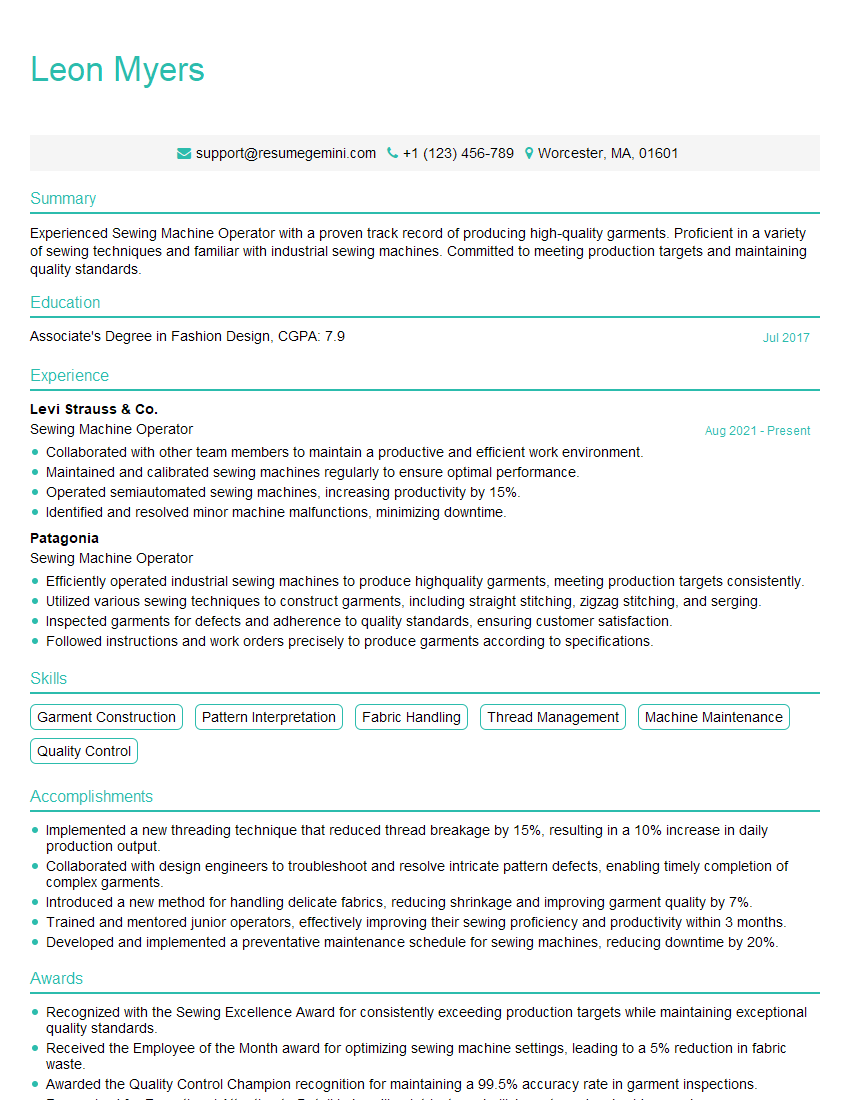
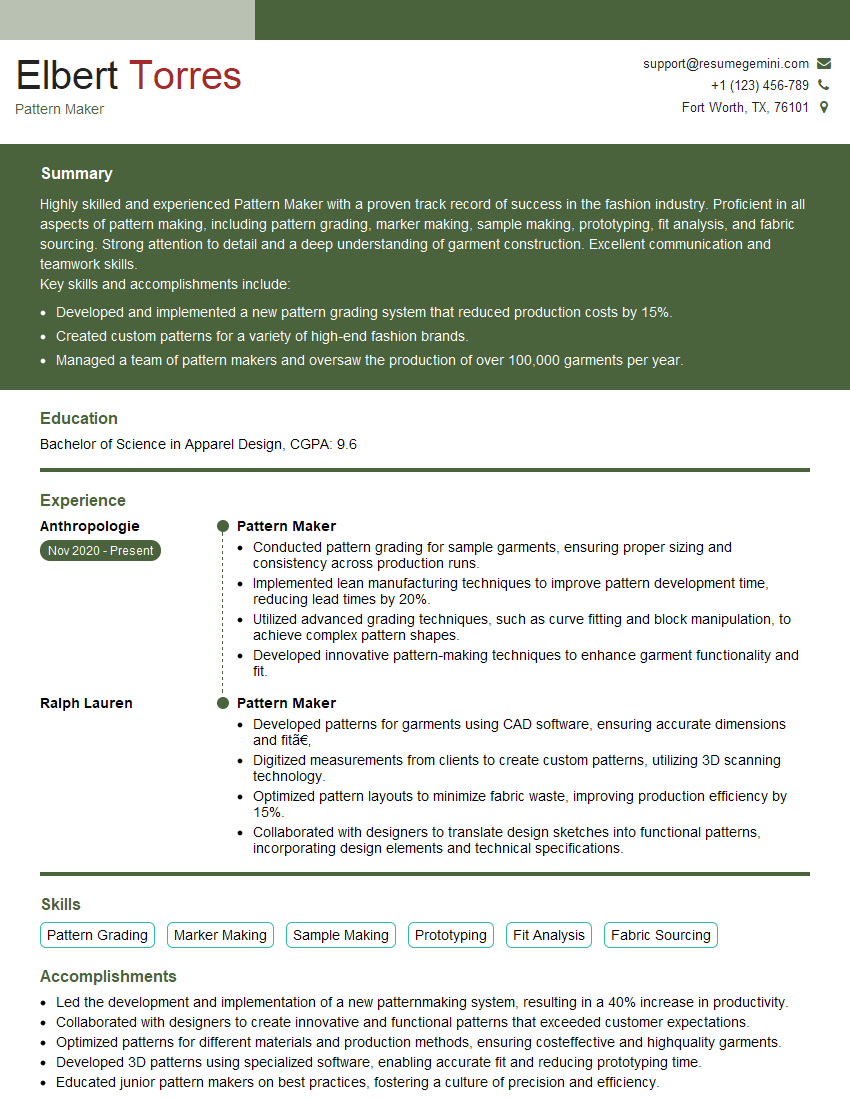
Mastering Overlock Collar Interfacing demonstrates a crucial skillset highly valued in the apparel industry, opening doors to advanced roles and higher earning potential. A strong understanding of this technique showcases your attention to detail, technical expertise, and commitment to quality craftsmanship. To significantly boost your job prospects, create an ATS-friendly resume that effectively highlights your skills and experience. ResumeGemini is a trusted resource to help you build a professional resume that stands out to recruiters. Examples of resumes tailored to Overlock Collar Interfacing expertise are available to guide you.



Explore more articles
Users Rating of Our Blogs
Share Your Experience
We value your feedback! Please rate our content and share your thoughts (optional).
What Readers Say About Our Blog
Very informative content, great job.
good