The thought of an interview can be nerve-wracking, but the right preparation can make all the difference. Explore this comprehensive guide to Log Tracking and Inventory interview questions and gain the confidence you need to showcase your abilities and secure the role.
Questions Asked in Log Tracking and Inventory Interview
Q 1. Explain the importance of accurate log tracking in inventory management.
Accurate log tracking is the backbone of efficient inventory management. Think of it like keeping a detailed diary for your entire stock. Without it, you’re essentially flying blind. Accurate logs provide real-time visibility into your inventory levels, allowing for better decision-making regarding purchasing, production, and sales. This prevents stockouts, reduces waste from overstocking, and ultimately saves your business money and improves customer satisfaction. For example, if your logs accurately reflect that you only have 50 units of a specific product left, you can proactively order more before running out and losing potential sales.
Inaccurate logging, on the other hand, can lead to significant financial losses and operational inefficiencies. Imagine relying on outdated or incorrect data to make crucial business decisions – the consequences can be disastrous.
Q 2. Describe different methods for tracking inventory logs.
Several methods exist for tracking inventory logs, ranging from simple manual systems to sophisticated software solutions. Here are a few:
- Manual Tracking: This involves using spreadsheets, notebooks, or physical inventory cards to record inventory movements. While simple and inexpensive, it’s prone to human error and lacks real-time visibility.
- Barcode/RFID Systems: These utilize scanners to track items using unique identifiers. This provides faster and more accurate tracking than manual methods. Data can be integrated into inventory management software.
- Inventory Management Software: This category includes dedicated software applications designed to manage inventory, often integrated with point-of-sale (POS) systems. These systems automate many processes, providing real-time data, reporting, and forecasting capabilities. Examples include NetSuite, Fishbowl Inventory, and Zoho Inventory.
- Cloud-Based Inventory Management Systems: This offers scalability, accessibility from anywhere, and often integration with other business tools. Data is stored securely in the cloud.
The best method depends on factors like the size of the business, the complexity of the inventory, and the budget.
Q 3. How do you handle discrepancies between physical inventory and recorded inventory logs?
Discrepancies between physical inventory and recorded logs are a common challenge. Addressing them requires a systematic approach. Here’s a step-by-step process:
- Identify the Discrepancy: Conduct a thorough physical count to verify the actual inventory. Compare this to the recorded data to pinpoint the specific discrepancies.
- Investigate the Cause: Determine the root cause. This could be due to data entry errors, theft, damage, spoilage, inaccurate counting, or even system glitches. A thorough investigation may involve reviewing security footage or interviewing staff.
- Adjust the Inventory Records: Correct the inventory records to reflect the actual physical count. This might involve updating the software or manually adjusting the spreadsheets.
- Implement Preventative Measures: To avoid future discrepancies, implement improved controls. This may include better training for staff, improved security measures, regular inventory checks, and implementing more robust inventory management systems.
- Document the Process: Keep detailed records of the discrepancy, investigation, and corrective actions taken. This helps in identifying recurring issues and improving the system.
For instance, if a discrepancy shows 10 fewer units than recorded, you need to investigate whether those units were damaged, lost, or if there was a simple data entry mistake.
Q 4. What are the common challenges in log tracking and inventory management?
Several challenges plague log tracking and inventory management. These include:
- Human Error: Data entry mistakes, inaccurate counting, and misplacement of items are common issues.
- Lack of Real-Time Visibility: Without up-to-the-minute data, it’s difficult to make informed decisions.
- Data Inconsistency: Multiple data sources or systems that don’t communicate effectively can lead to conflicting information.
- Theft or Shrinkage: Loss due to theft, damage, or spoilage can significantly impact inventory accuracy.
- Integration Challenges: Connecting different systems (e.g., POS, ERP, warehouse management) can be complex.
- Cost of Implementation: Implementing advanced inventory management systems can require a substantial initial investment.
- Lack of Training: Staff needs proper training to use new systems effectively.
Overcoming these requires a combination of robust systems, well-trained staff, and continuous improvement processes.
Q 5. Explain the FIFO (First-In, First-Out) and LIFO (Last-In, First-Out) inventory methods.
FIFO (First-In, First-Out) and LIFO (Last-In, First-Out) are two common inventory costing methods that impact how the cost of goods sold (COGS) is calculated. They determine the order in which items are sold from inventory.
- FIFO (First-In, First-Out): Assumes that the oldest items are sold first. This is often appropriate for perishable goods or items with a limited shelf life. For example, imagine a bakery using FIFO – the oldest loaves are sold first to prevent them from going stale.
- LIFO (Last-In, First-Out): Assumes that the newest items are sold first. This method is less commonly used, as it can distort the reported cost of goods sold, especially in times of inflation. It’s often more tax advantageous in inflationary environments because it increases COGS and reduces net income, thereby lowering tax liabilities.
The choice between FIFO and LIFO depends on various factors, including the nature of the inventory, tax implications, and the company’s accounting policies. Both methods have implications for financial reporting and tax planning.
Q 6. How do you ensure the accuracy of inventory data?
Ensuring accurate inventory data is crucial. Here’s how to do it:
- Regular Cycle Counting: Instead of a full physical inventory count yearly, conduct smaller, more frequent counts of specific areas or items. This allows for quicker identification and correction of discrepancies.
- Proper Data Entry Practices: Implement strict procedures for data entry, including double-checking and validation processes to minimize errors.
- Barcode/RFID Scanning: Utilizing these technologies significantly reduces manual data entry and human error.
- Inventory Management System: Implementing a robust system automates many tasks, provides real-time data, and helps identify potential discrepancies.
- Staff Training: Thoroughly train personnel on proper inventory procedures, data entry, and the use of inventory management systems.
- Regular System Audits: Periodic audits of the inventory management system itself are critical to ensure its accuracy and identify areas for improvement.
- Physical Verification: Conduct periodic physical inventory counts to reconcile with recorded data, identifying and addressing any discrepancies.
A multi-faceted approach combining technology, robust processes, and well-trained personnel is essential for accurate inventory data.
Q 7. What software or systems are you familiar with for log tracking and inventory management?
My experience encompasses a range of software and systems for log tracking and inventory management. I’m proficient with various enterprise resource planning (ERP) systems, including SAP and Oracle, which often incorporate robust inventory modules. I’ve also worked extensively with dedicated inventory management software like NetSuite, Fishbowl Inventory, and Zoho Inventory. In addition, I have experience with cloud-based solutions such as DEAR Inventory and Cin7, as well as experience integrating inventory systems with point-of-sale (POS) systems. My experience also includes working with warehouse management systems (WMS) which provide detailed tracking of inventory within the warehouse environment. The specific system choice depends on the client’s specific needs and scale of operation.
Q 8. Describe your experience with cycle counting and its benefits.
Cycle counting is a process of regularly counting a portion of your inventory, rather than doing a full inventory count all at once. Think of it like regularly checking your bank balance instead of waiting for the yearly statement. It’s far more efficient and provides a more up-to-date picture of your stock levels.
Benefits:
- Improved Accuracy: By regularly counting smaller sections, you catch discrepancies early, preventing major inventory errors from accumulating. Imagine finding a small discrepancy; it’s much easier to fix immediately than after it’s compounded over months.
- Reduced Downtime: A full inventory count can shut down operations for days. Cycle counting allows for continuous operations with minimal disruption.
- Better Inventory Control: Frequent counts give you a real-time understanding of your stock, allowing for proactive adjustments to purchasing and production schedules. This prevents stockouts or overstocking.
- Enhanced Efficiency: Counting is often delegated to staff during downtime, minimizing the need for dedicated counting time.
Example: In a warehouse with 10,000 SKUs (Stock Keeping Units), instead of a full count annually, you might schedule daily counts of 50-100 SKUs, systematically covering all items over a period. This approach allows for timely identification and correction of discrepancies.
Q 9. How do you manage inventory shrinkage and loss?
Inventory shrinkage and loss are significant concerns. They represent the difference between what’s recorded in your system and what’s physically present. This can be caused by theft, damage, obsolescence, or errors in recording. Managing this requires a multi-pronged approach.
- Strengthening Security: Implementing robust security measures such as cameras, access control, and employee background checks can deter theft. Think of it as having a secure vault for valuable items.
- Improving Inventory Tracking: Implementing a robust inventory management system with barcode or RFID tracking minimizes human errors. Every item is accounted for digitally, reducing manual counting inaccuracies.
- Regular Cycle Counting: As mentioned before, frequent cycle counts help identify and correct discrepancies before they become major losses. This is a proactive approach to loss prevention.
- Damage Control: Implement procedures to minimize damage during handling and storage, such as proper stacking and use of protective packaging.
- Regular Audits: Conducting thorough physical inventory audits periodically allows for a comprehensive review of stock and identification of any unusual variances.
Example: If your inventory shows 100 units of a particular item, but only 95 are physically present, you’ve experienced a 5% shrinkage. Investigating the cause – theft, damage, or recording error – is crucial.
Q 10. How do you track and manage obsolete or slow-moving inventory?
Obsolete or slow-moving inventory ties up capital and occupies valuable storage space. Managing it effectively requires a proactive approach.
- ABC Analysis: Categorize inventory based on value and velocity (A-high value/high velocity, B-medium, C-low). Focus on managing A items meticulously, and employ different strategies for B and C items.
- Regular Reviews: Conduct periodic reviews of slow-moving items to identify potential causes (e.g., changes in demand, seasonal products). This involves monitoring sales data, analyzing market trends, and reviewing product lifecycles.
- Pricing Strategies: Reduce prices to stimulate sales of slow-moving items. Consider discounts or bundle deals.
- Liquidation: If items remain unsold, consider liquidation through online marketplaces or salvage operations.
- Donation or Disposal: In some cases, donating or disposing of obsolete items might be the most cost-effective solution. This is especially true if the costs of storage outweigh the potential return on sale.
Example: A retail store might find that certain winter clothing items haven’t sold well after the season. They might discount them heavily, potentially even liquidating the remaining stock by the end of summer.
Q 11. Explain your understanding of safety stock and its role in inventory management.
Safety stock is the extra inventory held to buffer against unexpected fluctuations in demand or supply chain disruptions. Think of it as an emergency fund for your inventory. It’s a crucial component of inventory management aimed at preventing stockouts.
Role:
- Mitigates Risk: It protects against unexpected surges in demand or delays in replenishment. If a supplier faces production issues, you’ll have enough stock to meet customer needs.
- Prevents Stockouts: By maintaining a safety stock level, you can avoid losing sales and damaging customer relationships due to unavailability of products.
- Balances Costs: While holding safety stock incurs costs (storage, insurance, etc.), the potential loss of sales due to stockouts can be far greater.
Determining Safety Stock: The optimal safety stock level is determined using various methods, including statistical analysis of historical demand and lead time variability. Many sophisticated inventory management systems can automate these calculations.
Example: A bakery might keep a safety stock of flour to account for unexpected increases in demand or potential delays in flour deliveries. If a storm delays deliveries, they still have enough flour to bake their bread.
Q 12. How do you handle inventory audits?
Inventory audits are comprehensive checks to verify the accuracy of your inventory records against the physical stock. They are crucial for maintaining inventory integrity and identifying areas for improvement.
Handling Inventory Audits:
- Planning and Preparation: Plan the audit meticulously, defining the scope, timeline, and team responsible. Ensure all necessary resources, like scanners and checklists, are available.
- Physical Counting: Conduct a thorough physical count of all inventory items, carefully verifying quantities and conditions. Employ multiple counters for accuracy and use barcodes or RFID for faster counting.
- Record Reconciliation: Compare physical count results with your inventory management system records. Identify discrepancies and investigate their causes.
- Reporting and Corrective Actions: Document findings thoroughly in a formal audit report. Identify root causes of any discrepancies and implement corrective actions to prevent future errors. This might involve process improvements, better training, or system upgrades.
Example: An annual inventory audit might reveal that discrepancies are consistently higher in a particular warehouse section. This points to potential issues with record-keeping, storage practices, or employee training in that specific area.
Q 13. What are your strategies for optimizing inventory levels?
Optimizing inventory levels is a continuous process aiming to balance carrying costs (storage, insurance, etc.) with the risk of stockouts. It requires a blend of forecasting, analysis, and process improvements.
- Demand Forecasting: Accurately predict future demand using historical data, market trends, and seasonality. Sophisticated forecasting methods can provide more accurate predictions.
- Lead Time Management: Optimize the time it takes for orders to be placed and received. Improving supplier relationships and logistics can shorten lead times, reducing the need for large safety stocks.
- Inventory Turnover Analysis: Monitor how quickly inventory is sold. High turnover indicates efficient inventory management, while low turnover points to potential overstocking.
- Just-in-Time (JIT) Inventory: Adopt a JIT system where inventory is ordered only as needed, minimizing storage costs. However, this requires a reliable and responsive supply chain.
- Technology Implementation: Utilize inventory management software with features such as demand forecasting, automated ordering, and real-time tracking.
Example: A restaurant might use data on past sales to predict demand for ingredients on peak days, ordering only the necessary quantity to minimize spoilage while ensuring sufficient supply.
Q 14. Explain your experience with forecasting inventory needs.
Forecasting inventory needs involves predicting future demand to ensure sufficient stock without overstocking. Accuracy is critical, as under-forecasting leads to lost sales while over-forecasting ties up capital and increases storage costs.
Methods:
- Time Series Analysis: Uses historical sales data to identify patterns and trends. Simple moving averages, exponential smoothing, and ARIMA models are common techniques.
- Causal Forecasting: Considers external factors influencing demand, such as economic conditions, marketing campaigns, or seasonality. Regression analysis is often used.
- Qualitative Forecasting: Uses expert opinions, market research, or customer surveys to predict future demand, particularly useful when historical data is limited.
- Software Tools: Many inventory management systems offer advanced forecasting capabilities, utilizing sophisticated algorithms and machine learning.
Example: A clothing retailer might use time series analysis of past sales to predict demand for winter coats in the upcoming season. They might also consider external factors like economic growth and the popularity of specific coat styles.
The best forecasting method depends on the specific product, market conditions, and available data. A combination of techniques is often employed for more accurate predictions.
Q 15. How do you collaborate with other departments to ensure effective inventory management?
Effective inventory management isn’t a solo act; it requires seamless collaboration across departments. In my experience, this involves regular communication and data sharing with key stakeholders like procurement, sales, and warehouse operations.
- Procurement: I work closely with procurement to forecast demand, optimize order quantities, and ensure timely delivery of materials. Mismatches between forecast and actual sales lead to overstocking or stockouts, both costly. For example, we collaborated on a new forecasting model using machine learning that reduced our stockouts by 15%.
- Sales: Understanding sales projections is crucial. Regular meetings with the sales team help me anticipate demand spikes and adjust inventory levels accordingly. This ensures we have enough stock to meet customer orders without tying up excessive capital in storage. For instance, a successful marketing campaign requires a coordinated increase in stock to avoid lost sales opportunities.
- Warehouse Operations: Real-time communication with the warehouse team is paramount for accurate stock tracking. This includes regular reconciliation of physical counts with system records to identify and correct discrepancies quickly. We’ve implemented a system where warehouse staff use mobile scanners to update inventory data instantly, minimizing data entry errors.
These collaborative efforts lead to a more agile and responsive inventory system, optimizing stock levels and minimizing waste.
Career Expert Tips:
- Ace those interviews! Prepare effectively by reviewing the Top 50 Most Common Interview Questions on ResumeGemini.
- Navigate your job search with confidence! Explore a wide range of Career Tips on ResumeGemini. Learn about common challenges and recommendations to overcome them.
- Craft the perfect resume! Master the Art of Resume Writing with ResumeGemini’s guide. Showcase your unique qualifications and achievements effectively.
- Don’t miss out on holiday savings! Build your dream resume with ResumeGemini’s ATS optimized templates.
Q 16. Describe your experience with barcode or RFID technology in inventory management.
Barcode and RFID technologies are game-changers for inventory management, significantly improving accuracy and efficiency. I’ve had extensive experience with both.
- Barcodes: Barcodes are a relatively low-cost and widely adopted technology. I’ve used barcode scanners in various warehouse settings, enabling quick and accurate tracking of individual items during receiving, putaway, picking, and shipping. The data is easily integrated into inventory management systems (IMS) for real-time updates.
- RFID: RFID (Radio-Frequency Identification) offers more advanced capabilities. Unlike barcodes, RFID tags don’t require line-of-sight scanning. This allows for mass scanning of pallets or entire containers, significantly speeding up the inventory process, especially in large warehouses. For example, I implemented an RFID system in a previous role that reduced our cycle counting time by 70% and improved inventory accuracy by 10%.
The choice between barcode and RFID depends on factors like budget, inventory volume, and the need for real-time visibility. For example, a small retail store might find barcodes sufficient, while a large distribution center would benefit greatly from RFID.
Q 17. How do you handle damaged or defective inventory?
Handling damaged or defective inventory is crucial for minimizing losses and maintaining accurate inventory records. My approach involves a multi-step process:
- Identification and Segregation: Damaged or defective items are immediately identified and physically separated from sellable inventory to prevent accidental sale or use.
- Documentation: Detailed records are kept, including the type and quantity of damage, the cause (if known), and the date of discovery. This is important for insurance claims or identifying recurring problems in the supply chain.
- Disposition: The damaged goods are disposed of through appropriate channels, such as returns to the supplier, salvage sales, or proper waste disposal, depending on the nature and extent of the damage and applicable regulations.
- Inventory System Update: The inventory management system is updated to reflect the reduction in sellable inventory and the removal of the damaged items. This ensures that the inventory count remains accurate.
Regular stock checks and quality control measures help minimize the occurrence of damaged goods, but having a robust system to handle these situations is vital for efficient inventory management.
Q 18. How do you manage returns and credits in inventory management?
Managing returns and credits is a critical aspect of inventory management, impacting both financial accuracy and inventory levels. My approach involves:
- Clear Return Policy: A well-defined return policy is essential, clearly outlining the terms and conditions for returns, the timeframe for processing, and the criteria for acceptance. This minimizes confusion and disputes.
- Efficient Return Processing: A streamlined process for receiving, inspecting, and processing returns is crucial. This usually involves verification against the original order, inspection for damage, and updating the inventory system.
- Credit Issuance: Once the return is accepted, appropriate credits are issued to the customer, promptly and accurately. This requires close coordination between the inventory management system and the accounting department.
- Inventory Adjustment: The inventory management system is updated to reflect the returned items, increasing the available stock of that particular item. The condition of the returned items must be factored into the adjustment – damaged items might need to be processed as damaged inventory.
A well-managed return system minimizes the administrative burden, optimizes inventory, and maintains customer satisfaction.
Q 19. Describe your experience with different inventory valuation methods.
Different inventory valuation methods provide different perspectives on the value of inventory, impacting financial statements and business decisions. My experience encompasses several methods:
- First-In, First-Out (FIFO): This method assumes that the oldest inventory items are sold first. It closely reflects the actual flow of goods in many businesses and is generally preferred for perishable goods.
- Last-In, First-Out (LIFO): This method assumes that the newest inventory items are sold first. It can be advantageous during periods of inflation, as it lowers the cost of goods sold, but it can provide a less accurate picture of inventory value.
- Weighted-Average Cost: This method calculates the average cost of all items in inventory, simplifying valuation and reducing the impact of price fluctuations.
The choice of method depends on the industry, inventory characteristics, and accounting standards. I select the method that best reflects the specific business’s needs and provides the most accurate financial reporting.
Q 20. What metrics do you use to measure the effectiveness of inventory management?
Measuring the effectiveness of inventory management requires a set of key performance indicators (KPIs). I regularly monitor:
- Inventory Turnover Rate: This measures how many times inventory is sold and replaced over a period. A higher turnover rate generally indicates efficient inventory management, but an excessively high rate might indicate understocking.
- Inventory Holding Cost: This represents the cost of storing and maintaining inventory, including storage space, insurance, and obsolescence. Efficient inventory management aims to minimize this cost.
- Stockout Rate: This measures the percentage of times an item is unavailable when a customer orders it. A low stockout rate is crucial for maintaining customer satisfaction.
- Inventory Accuracy: This measures the difference between the recorded inventory and the actual physical inventory. High accuracy is critical for informed decision-making.
- Carrying Cost Percentage: This expresses the total carrying cost as a percentage of the average inventory value.
By tracking these metrics, I can identify areas for improvement and implement strategies to optimize inventory management.
Q 21. How do you identify and resolve inventory discrepancies?
Inventory discrepancies—differences between recorded and physical inventory—can arise from various sources, including data entry errors, theft, damage, or process inefficiencies. Identifying and resolving them involves a systematic approach:
- Regular Cycle Counting: Conducting frequent cycle counts instead of relying on infrequent full physical inventories helps catch discrepancies early. Cycle counting involves counting a small portion of the inventory regularly.
- Root Cause Analysis: Investigate the reason behind the discrepancy. Was it a data entry error? Was there a problem with the receiving process? Understanding the root cause prevents future occurrences.
- Reconciliation: Adjust the inventory records to reflect the actual physical count. This usually involves adjusting inventory quantities in the management system.
- Process Improvements: Implement changes to prevent future discrepancies. This might include improving data entry procedures, enhancing security measures, or refining warehouse processes.
Continuous monitoring of inventory accuracy and prompt investigation of discrepancies are critical for maintaining an accurate and reliable inventory system.
Q 22. How do you ensure compliance with regulatory requirements related to inventory management?
Ensuring compliance with regulatory requirements in inventory management is crucial for avoiding penalties and maintaining a strong reputation. This involves understanding and adhering to relevant regulations like those concerning food safety (e.g., FDA regulations in the US), hazardous materials handling (e.g., OSHA guidelines), and tax laws (e.g., accurate tracking for GST/VAT). My approach is multifaceted:
- Thorough Documentation: Maintaining meticulous records of all inventory transactions, including receipts, transfers, and disposals. This documentation serves as audit-proof and supports compliance.
- Regular Audits: Conducting regular internal audits to identify any discrepancies between physical inventory and recorded data. This helps pinpoint potential compliance issues early on.
- System Integration: Utilizing inventory management systems with built-in compliance features. Many systems offer automated reporting and alerts to ensure compliance with specific regulations.
- Employee Training: Educating staff on relevant regulations and the importance of proper inventory handling procedures. Regular refresher training ensures ongoing compliance.
- Staying Updated: Continuously monitoring changes in relevant legislation and updating procedures accordingly. This ensures we remain compliant with evolving requirements.
For example, in a previous role managing a pharmaceutical warehouse, we implemented a strict system of lot number tracking and expiry date management to meet FDA regulations. This system included automated alerts for nearing-expiry products and robust documentation procedures for every inventory movement.
Q 23. Explain your experience with implementing new inventory management systems.
Implementing new inventory management systems requires a strategic approach. My experience involves a structured process encompassing planning, execution, and post-implementation review. I’ve successfully implemented several systems, both cloud-based and on-premise, tailoring the approach to each organization’s specific needs.
- Needs Assessment: First, I conduct a thorough assessment of the organization’s inventory management challenges and needs. This helps in selecting the most suitable system.
- System Selection: Based on the needs assessment, I evaluate different systems based on features, scalability, integration capabilities, and cost-effectiveness.
- Data Migration: The migration of existing inventory data is a critical step. This often involves data cleansing, validation, and transformation to ensure data integrity.
- User Training: Comprehensive training for users is essential for system adoption. I design training programs that cater to different levels of user expertise.
- Testing and Go-Live: Rigorous testing is carried out before going live to identify and resolve any issues. A phased rollout is often preferred to minimize disruption.
- Post-Implementation Review: Post-implementation, I review system performance, user feedback, and identify areas for improvement.
For instance, I spearheaded the implementation of a cloud-based inventory management system for a retail chain with multiple locations. This involved migrating data from disparate spreadsheets, training over 100 staff members, and implementing a robust reporting system to track key performance indicators (KPIs).
Q 24. Describe your experience with data analysis in relation to inventory management.
Data analysis plays a vital role in optimizing inventory management. I use various analytical techniques to gain insights into inventory trends, identify inefficiencies, and make data-driven decisions.
- Demand Forecasting: I utilize statistical methods like moving averages and exponential smoothing to forecast future demand and optimize inventory levels.
- Inventory Turnover Analysis: Analyzing inventory turnover rates helps identify slow-moving items and opportunities for optimization.
- ABC Analysis: Categorizing inventory items based on their value and consumption helps prioritize inventory control efforts. This allows focusing resources on high-value items.
- Root Cause Analysis: Investigating the root causes of inventory discrepancies or losses using techniques like the 5 Whys method.
- Data Visualization: Utilizing dashboards and reports to visualize key inventory metrics, enabling quicker identification of trends and issues.
In a previous role, I used data analysis to identify a pattern of overstocking in a specific product category. By analyzing sales data and demand forecasts, I was able to reduce inventory levels by 20%, resulting in significant cost savings.
Q 25. How do you prioritize tasks in a fast-paced inventory management environment?
Prioritizing tasks in a fast-paced inventory management environment requires a structured approach. I use several techniques to manage my workload effectively:
- Urgency/Importance Matrix (Eisenhower Matrix): Categorizing tasks based on urgency and importance helps prioritize critical tasks over less important ones.
- Kanban Boards: Visualizing tasks on a Kanban board provides a clear overview of the workflow and facilitates efficient task management.
- Task Delegation: Effectively delegating tasks to team members based on their skills and expertise.
- Time Blocking: Allocating specific time slots for different tasks to ensure focused work and avoid distractions.
- Regular Review and Adjustment: Regularly reviewing priorities and adjusting the plan based on changing circumstances.
For example, during a peak season, I used the Eisenhower Matrix to prioritize urgent tasks like fulfilling customer orders over less urgent but important tasks like inventory analysis. This ensured timely order fulfillment while still allowing time for strategic planning.
Q 26. Explain your experience with managing inventory in different locations or warehouses.
Managing inventory across multiple locations or warehouses requires a centralized and well-coordinated system. My experience includes implementing and managing inventory systems for businesses with geographically dispersed facilities.
- Centralized Inventory Management System: Using a centralized system to track inventory across all locations, providing a single source of truth.
- Real-time Visibility: Ensuring real-time visibility into inventory levels at each location.
- Efficient Transfer Management: Establishing efficient processes for transferring inventory between locations to optimize stock levels.
- Warehouse Management System (WMS) Integration: Integrating a WMS with the inventory management system to automate tasks like receiving, putaway, and picking.
- Inventory Optimization Strategies: Implementing strategies like cross-docking and zone picking to improve efficiency in multi-location operations.
I successfully managed inventory for a company with three warehouses across different states. By implementing a centralized inventory management system and optimizing transfer processes, we reduced transportation costs by 15% and improved order fulfillment times.
Q 27. How do you improve efficiency in the inventory management process?
Improving efficiency in inventory management involves a combination of process optimization, technology adoption, and data-driven decision-making.
- Process Optimization: Streamlining inventory processes by identifying and eliminating bottlenecks. This could involve automating repetitive tasks, improving workflows, or optimizing storage layouts.
- Technology Adoption: Implementing technologies like barcode scanners, RFID tags, and automated guided vehicles (AGVs) to automate inventory tracking and handling.
- Data-driven Decision Making: Using data analysis to identify areas for improvement, optimize stock levels, and reduce waste.
- Cycle Counting: Implementing a regular cycle counting program to minimize discrepancies between physical inventory and recorded data.
- Vendor Managed Inventory (VMI): Collaborating with suppliers to manage inventory levels, reducing the burden on internal resources.
In one instance, we implemented a barcode scanning system in a warehouse, reducing picking errors by 30% and improving order fulfillment speed. This also freed up staff time for other value-added activities.
Q 28. Describe a time you had to solve a complex inventory problem.
One of the most challenging inventory problems I encountered involved a significant discrepancy between our recorded inventory levels and the actual physical count. The discrepancy was substantial, affecting several product lines. The initial investigation pointed towards possible theft or data entry errors.
My approach involved a systematic investigation:
- Data Reconciliation: First, I meticulously reviewed all inventory transactions for the period leading up to the discrepancy. This included scrutinizing purchase orders, sales orders, and internal transfers.
- Physical Inventory Count: A complete physical inventory count was undertaken by a separate team, verifying each item’s quantity and location.
- Root Cause Analysis: Comparing the physical count data with the recorded data, we identified a pattern of discrepancies linked to a specific warehouse area and certain product types. Further investigation revealed a faulty scanner in that area, resulting in inaccurate data entry.
- Corrective Actions: We replaced the faulty scanner, retrained staff on proper inventory procedures, and implemented more robust data validation checks. We also instituted a more rigorous cycle counting process.
- Preventive Measures: To prevent future occurrences, we implemented better inventory management software and introduced regular equipment maintenance checks.
This multi-faceted approach resolved the inventory discrepancy, improved data accuracy, and implemented preventative measures to safeguard against future errors. The experience highlighted the importance of a systematic problem-solving approach and the need for thorough data validation in inventory management.
Key Topics to Learn for Log Tracking and Inventory Interview
- Data Structures for Log Management: Understanding how logs are stored and accessed (e.g., databases, file systems). Consider the efficiency of different structures for various log volumes and access patterns.
- Log Analysis Techniques: Learn about methods for extracting meaningful insights from log data, including filtering, aggregation, and pattern recognition. Be prepared to discuss practical applications like identifying system errors or security breaches.
- Inventory Management Systems (IMS): Familiarize yourself with different types of IMS, their functionalities (tracking, forecasting, reporting), and the technologies that support them (e.g., barcodes, RFID). Discuss strengths and weaknesses of various systems.
- Data Integrity and Validation: Understand the importance of ensuring accuracy and reliability in both log data and inventory data. Discuss methods for detecting and correcting errors.
- Reporting and Visualization: Be ready to discuss how to present log and inventory data effectively through dashboards, reports, and visualizations. Consider different stakeholders and their reporting needs.
- Automation and Scripting: Explore how automation can improve log tracking and inventory processes. Familiarity with scripting languages (e.g., Python, PowerShell) for automating tasks is a significant advantage.
- Security Considerations: Discuss the security implications of log data and inventory data, including access control, encryption, and auditing. Understand relevant regulations and compliance requirements.
- Problem-Solving and Troubleshooting: Practice identifying and resolving common issues related to log analysis and inventory management. Be prepared to discuss your approach to problem-solving using real-world examples.
Next Steps
Mastering Log Tracking and Inventory skills significantly enhances your career prospects in various industries, opening doors to roles with increased responsibility and earning potential. A strong resume is crucial for showcasing your expertise to potential employers. Crafting an ATS-friendly resume is key to getting your application noticed. We highly recommend using ResumeGemini to build a professional and impactful resume that highlights your skills effectively. ResumeGemini offers examples of resumes tailored to Log Tracking and Inventory roles to help you create a winning application.
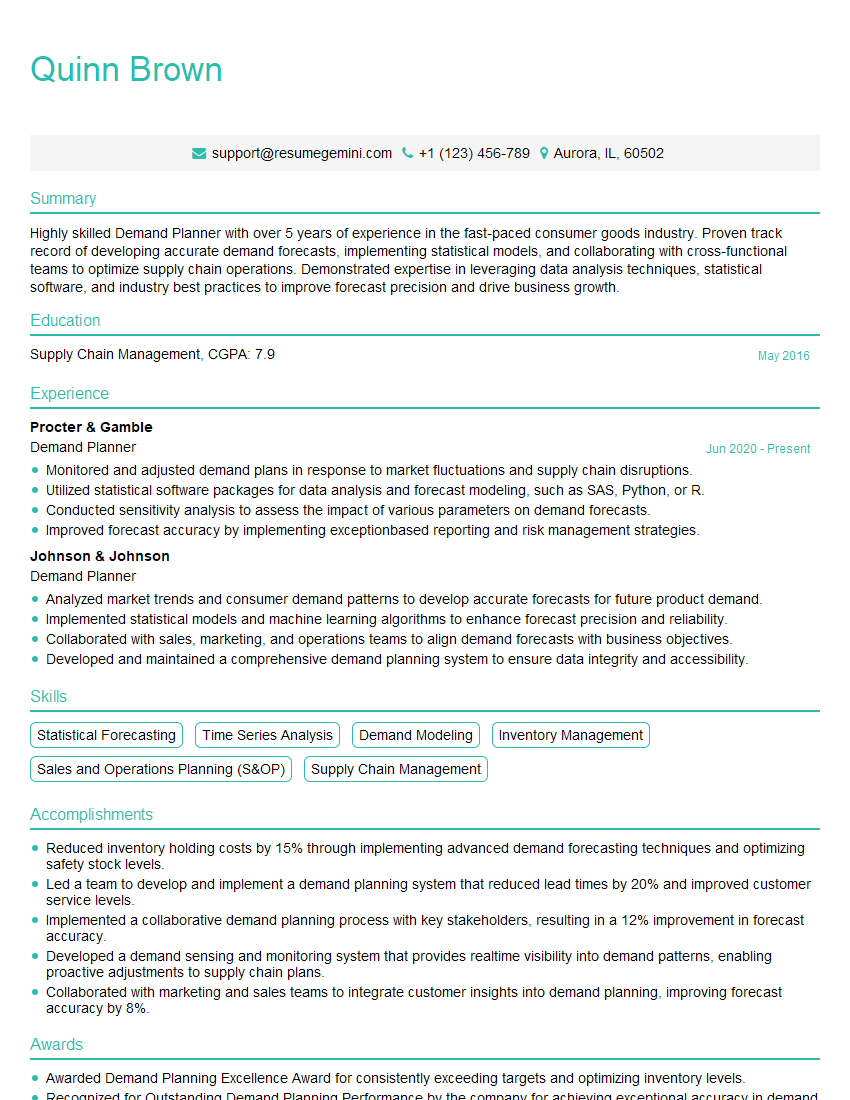
Demand Planner Resume Sample
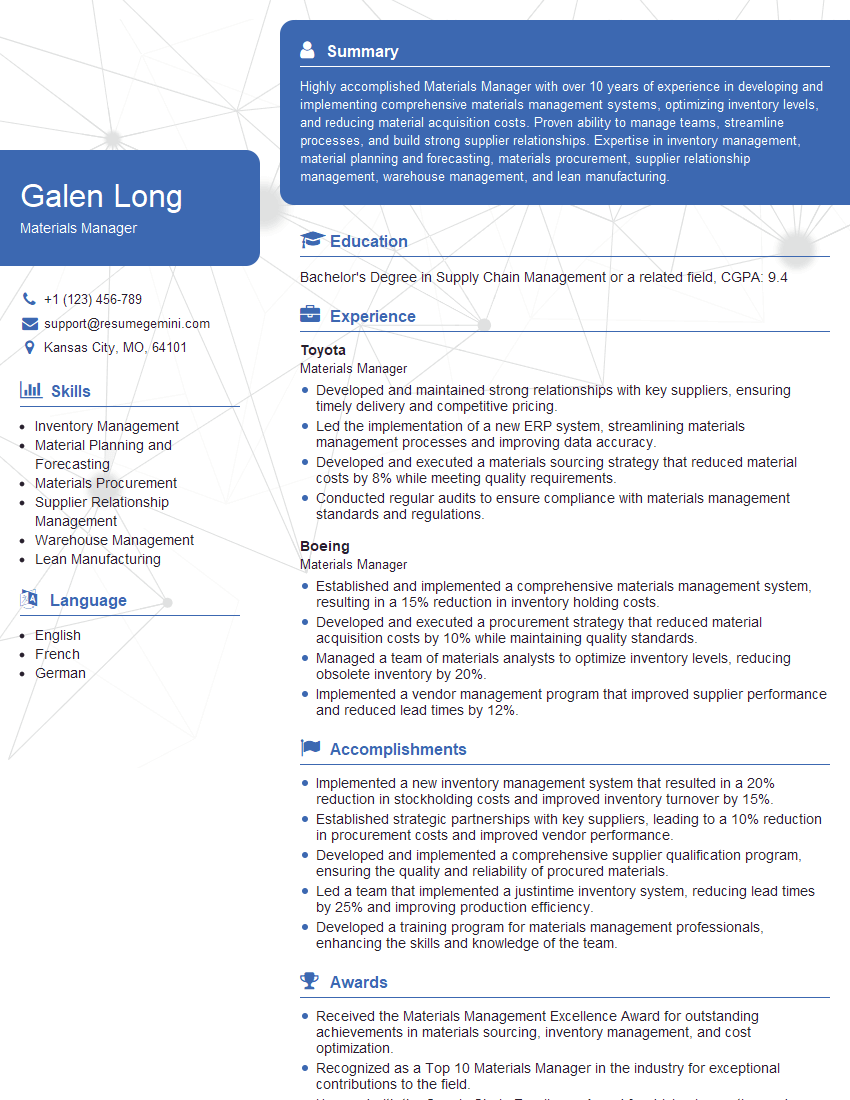
Materials Manager Resume Sample

Supply Chain Manager Resume Sample
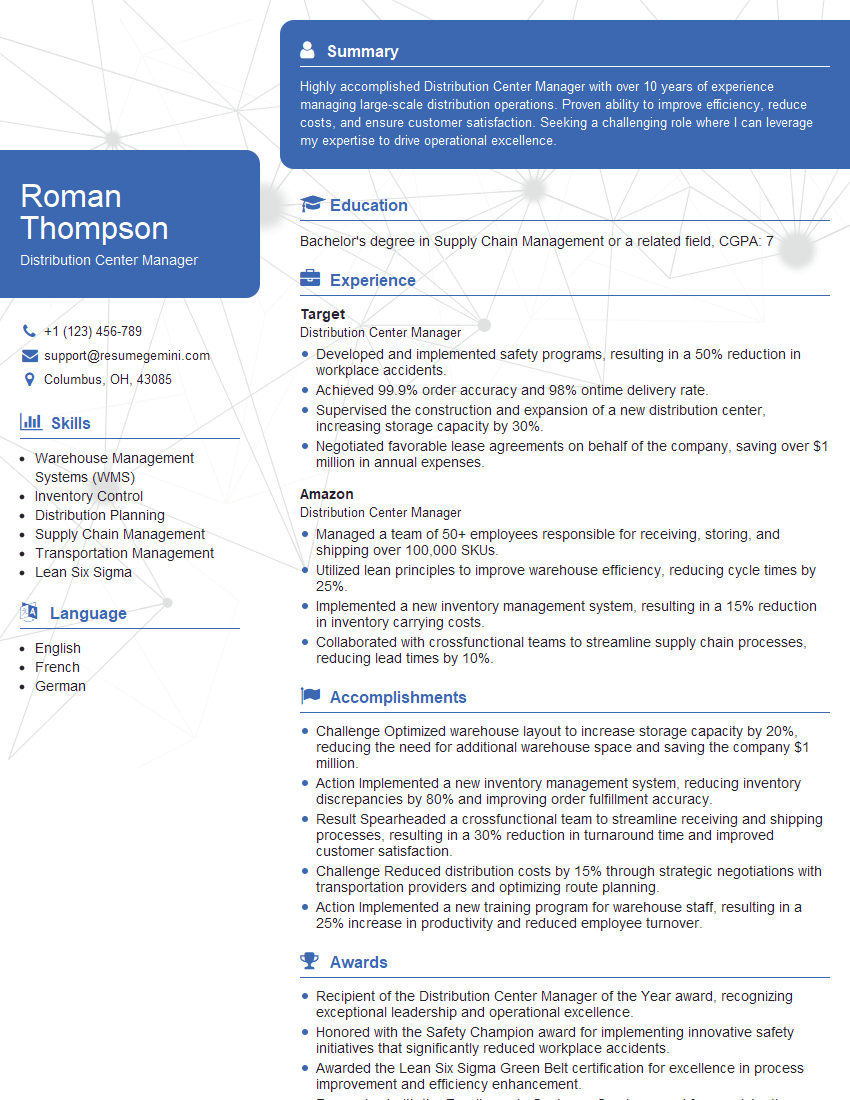
Distribution Center Manager Resume Sample
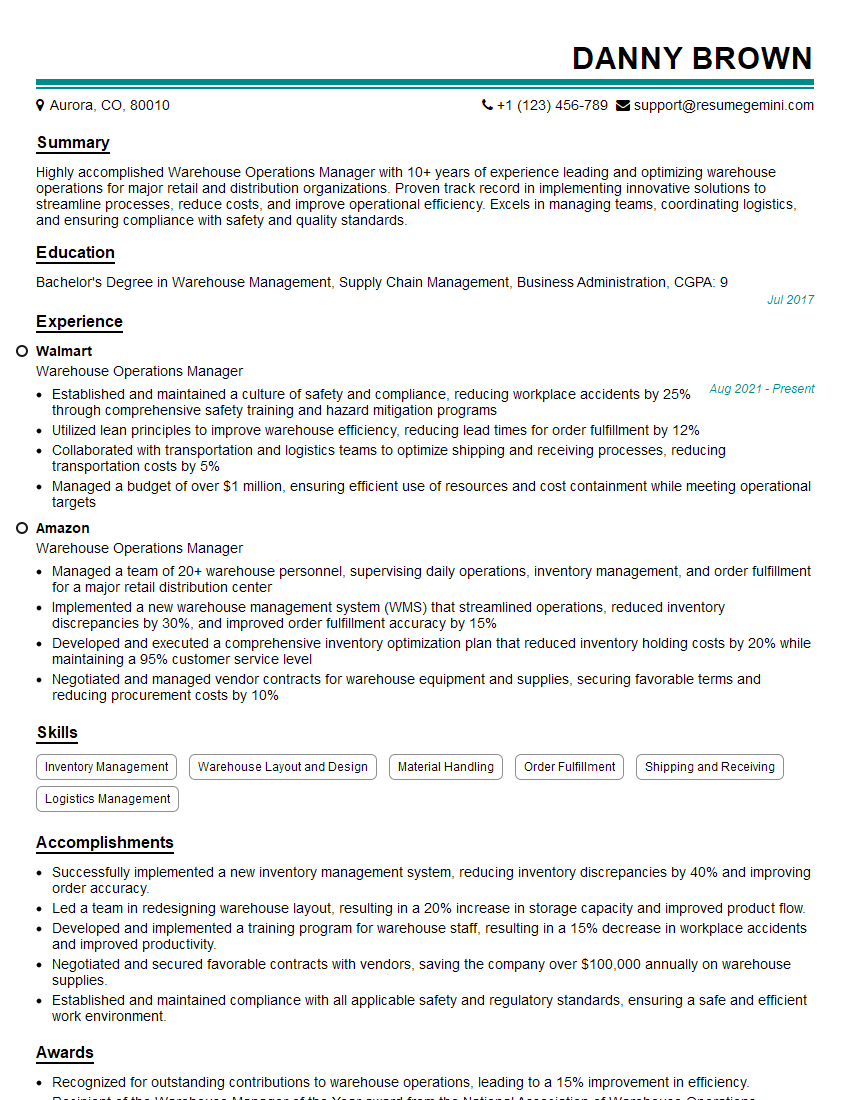
Warehouse Operations Manager Resume Sample
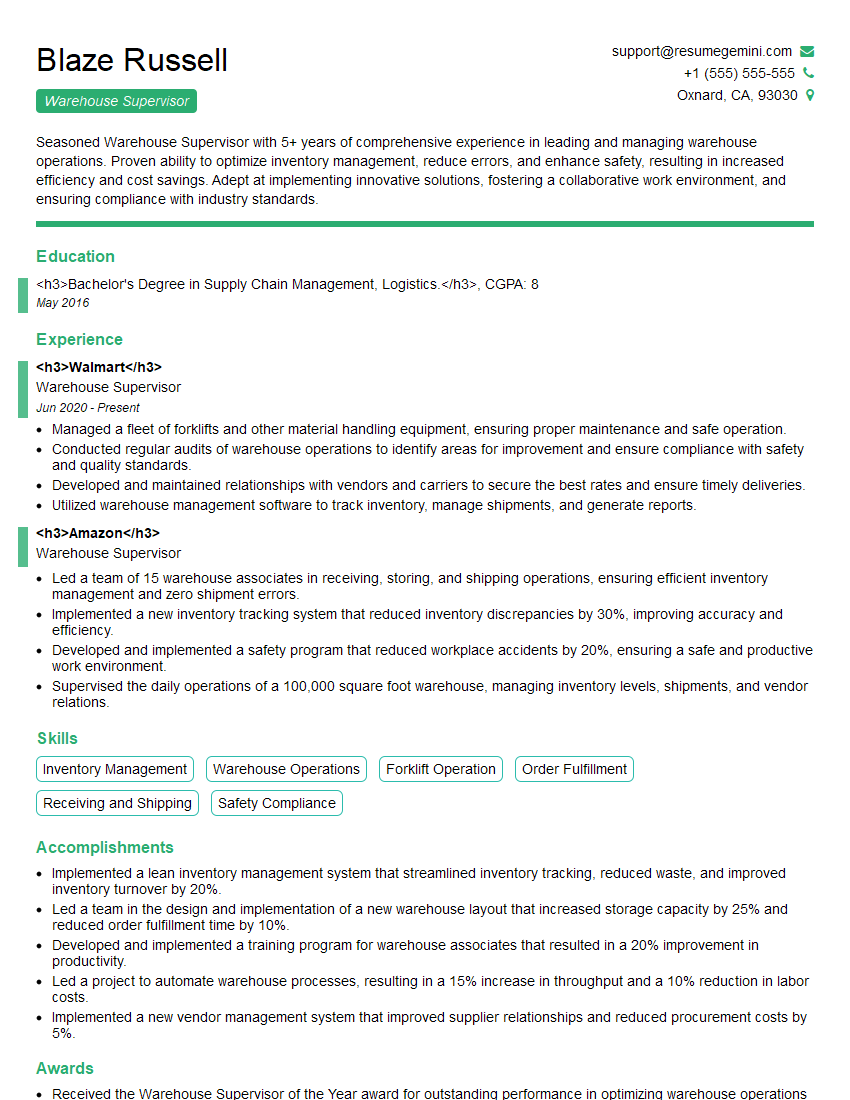
Warehouse Supervisor Resume Sample
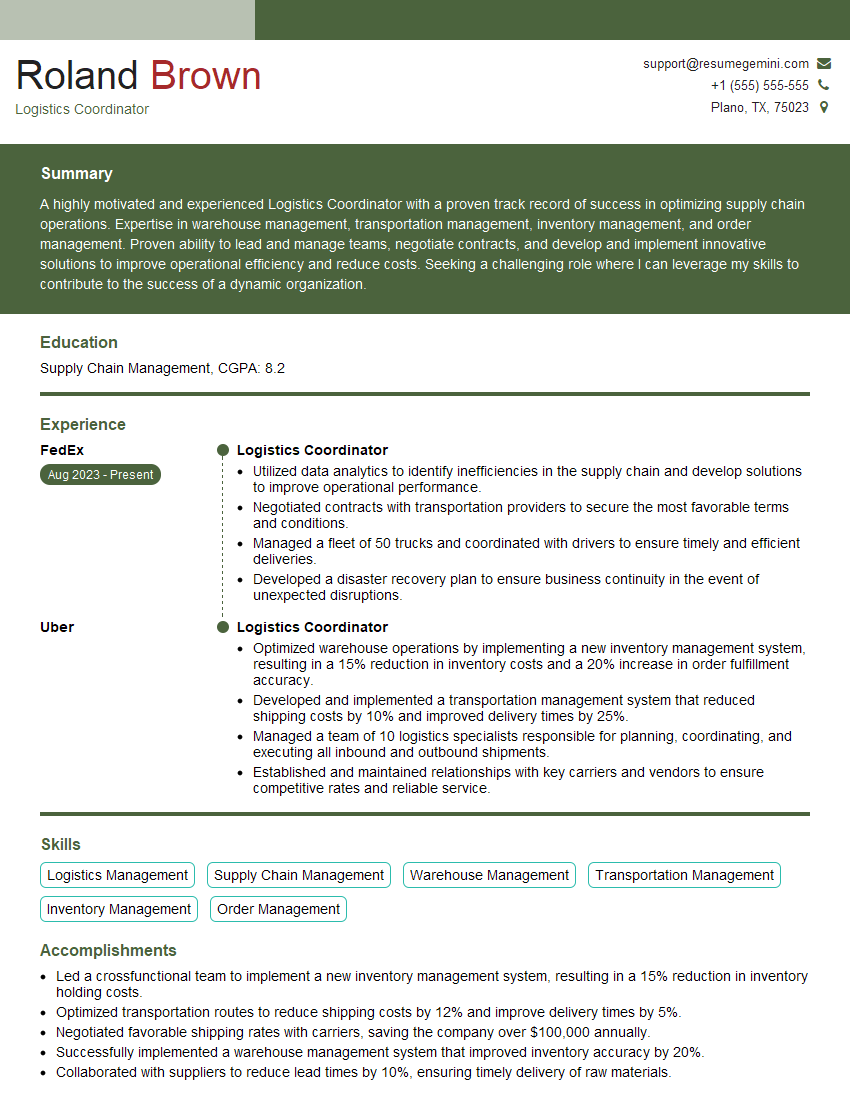
Logistics Coordinator Resume Sample
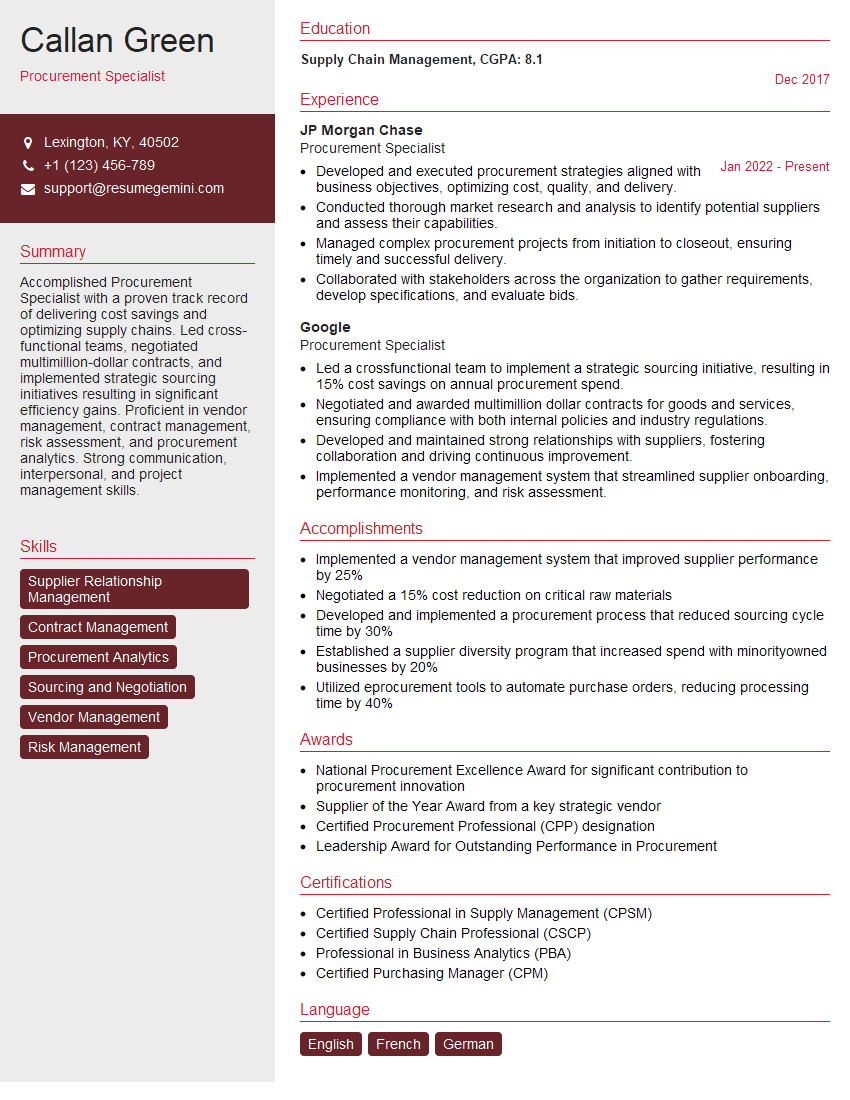
Procurement Specialist Resume Sample
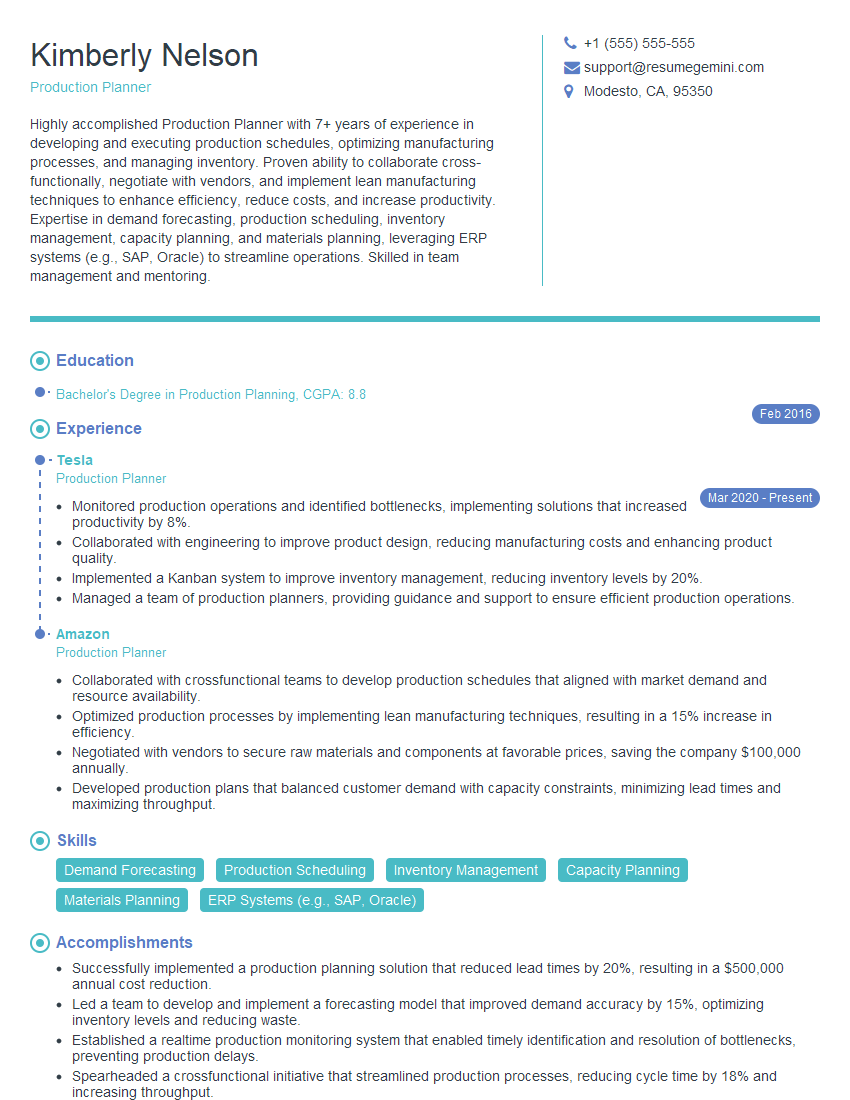
Production Planner Resume Sample
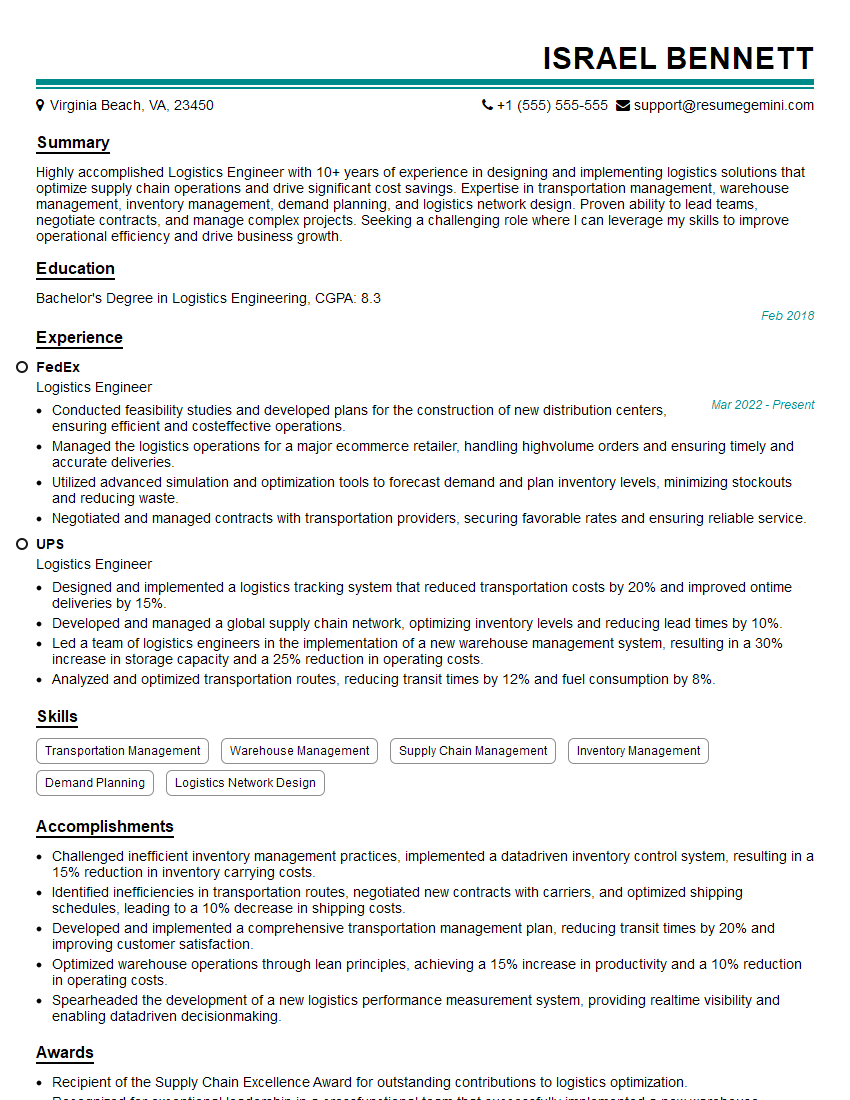
Logistics Engineer Resume Sample
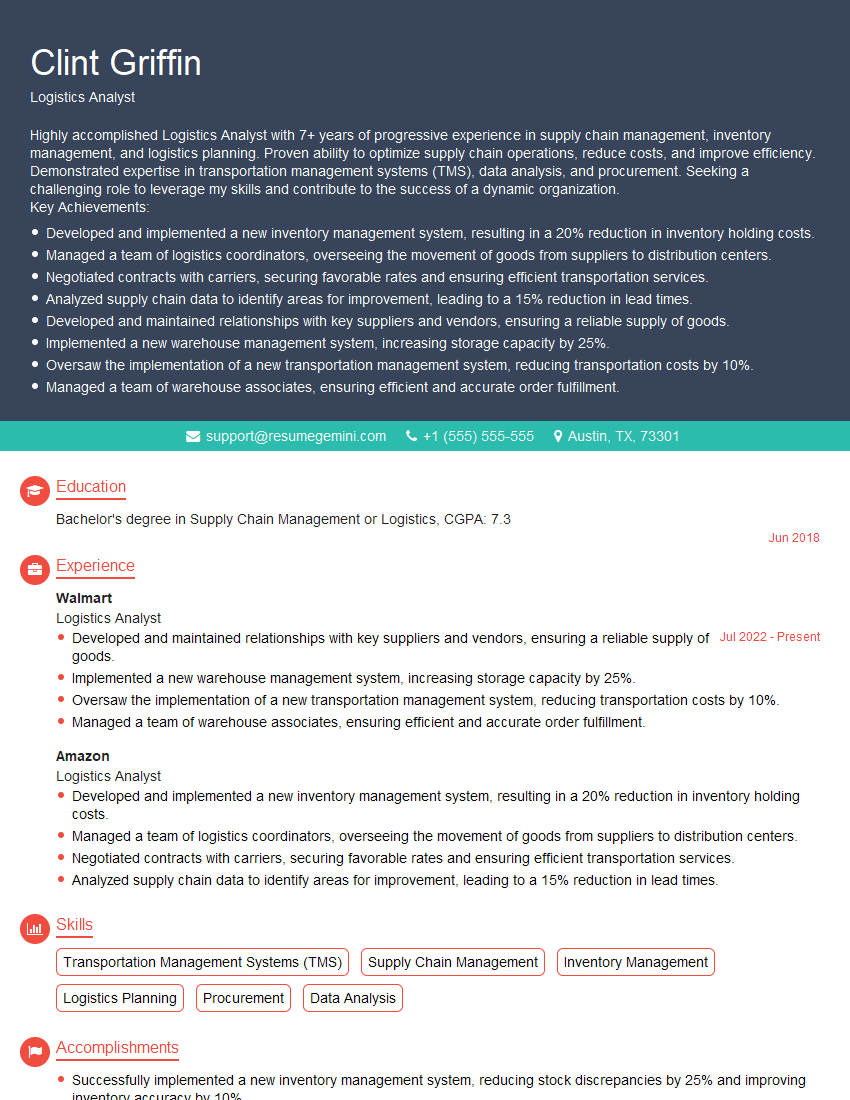
Logistics Analyst Resume Sample
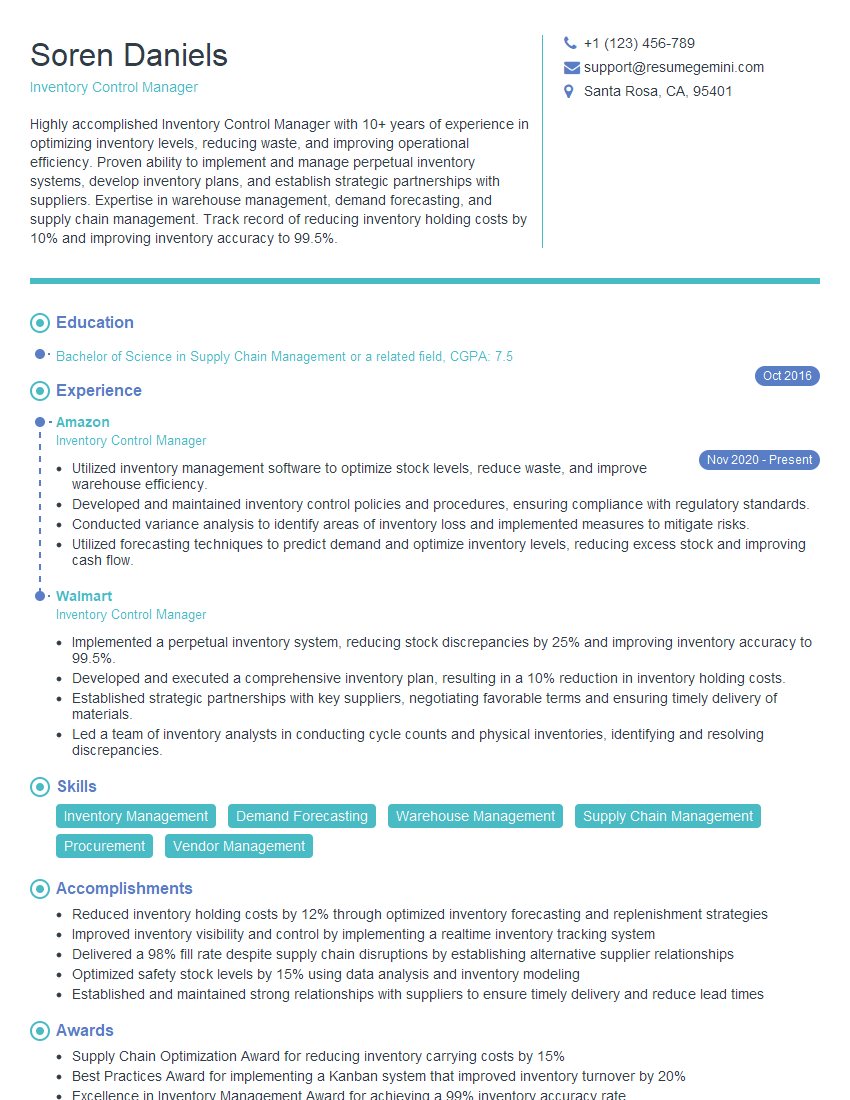
Inventory Control Manager Resume Sample
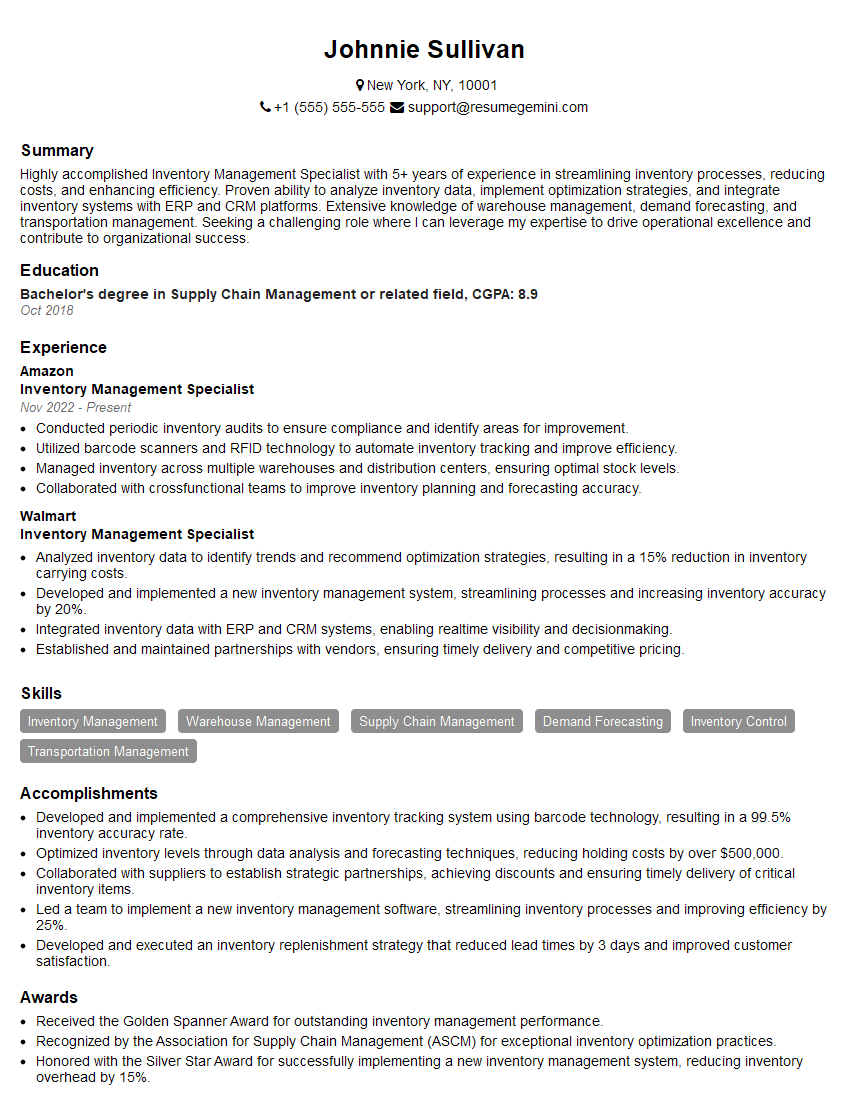
Inventory Management Specialist Resume Sample
Explore more articles
Users Rating of Our Blogs
Share Your Experience
We value your feedback! Please rate our content and share your thoughts (optional).
What Readers Say About Our Blog
Very informative content, great job.
good