Cracking a skill-specific interview, like one for Oyster Aquaculture Best Practices, requires understanding the nuances of the role. In this blog, we present the questions you’re most likely to encounter, along with insights into how to answer them effectively. Let’s ensure you’re ready to make a strong impression.
Questions Asked in Oyster Aquaculture Best Practices Interview
Q 1. Describe the optimal water quality parameters for oyster growth.
Optimal water quality is crucial for oyster growth and survival. Think of it like this: oysters are picky eaters and need a pristine environment to thrive. Key parameters include:
- Salinity: Oysters have a salinity tolerance range, typically between 15 and 30 ppt (parts per thousand). Variations outside this range can stress them, impacting growth and reproduction. For example, sudden freshwater influx from heavy rainfall can be devastating.
- Temperature: Optimal temperature depends on the oyster species and its life stage. Generally, warmer temperatures (within species-specific ranges) accelerate growth, but extremely high temperatures can cause mortality. Conversely, very cold temperatures slow growth and can lead to winter mortality.
- Dissolved Oxygen (DO): Oysters need sufficient dissolved oxygen in the water for respiration. Low DO levels, often associated with algal blooms or eutrophication (excess nutrients), can lead to suffocation and death. Think of it like us needing air to breathe.
- pH: Oysters prefer slightly alkaline conditions, with a pH range of 7.5 to 8.5. Extreme pH fluctuations can affect shell formation and overall health. Ocean acidification, caused by increased CO2 absorption, is a significant concern for oyster farming because it lowers pH.
- Nutrients: While excess nutrients are harmful, a balanced level of phytoplankton (microscopic algae) provides oysters with their primary food source. Monitoring nutrient levels is important to ensure sufficient food without causing harmful algal blooms.
Regular monitoring of these parameters using water quality testing kits and sensors is essential for successful oyster farming. Adjustments to farm practices, such as water circulation or relocation, may be needed to maintain optimal conditions.
Q 2. Explain different oyster cultivation methods (e.g., bottom culture, off-bottom culture).
Oyster cultivation methods vary based on factors like species, water depth, and environmental conditions. The two main categories are:
- Bottom Culture: This traditional method involves planting oyster seed directly onto the seabed or on prepared substrates like oyster shells or reefs. It’s relatively low-cost but can be susceptible to predation, disease outbreaks, and variations in water quality. Think of it as letting the oysters grow naturally, albeit with a bit of human intervention. This method works well in calm, shallow water with suitable substrate.
- Off-bottom Culture: This method raises oysters off the seabed, using various techniques to keep them suspended in the water column. This minimizes contact with sediments, reduces predation, and improves water circulation. Common off-bottom methods include:
- Rack and Tray Systems: Oysters are grown in trays or baskets suspended from racks. This allows for excellent water flow and easy harvesting.
- Longlines: Oysters are suspended from ropes or lines anchored to the seabed. This method is suitable for deeper water and allows for high oyster densities.
- Floating rafts: Oysters are grown in bags or cages attached to floating structures. This maximizes water flow and reduces seabed interaction.
Choosing the appropriate method depends on various factors including site characteristics, available resources, and the oyster species being cultivated. For example, a sheltered bay with calm waters might be ideal for bottom culture, while a more exposed site might require an off-bottom system like longlines to withstand strong currents.
Q 3. What are the common diseases affecting oysters and how are they managed?
Oysters are susceptible to various diseases, often impacting growth and survival. Early detection and proactive management are critical. Common diseases include:
- Dermo (Perkinsus marinus): A parasitic disease causing lesions and reduced growth. Management strategies include selecting resistant oyster strains and optimizing water quality to minimize stress.
- MSX (Haplosporidium nelsoni): Another parasitic disease affecting oysters, leading to mortality. Similar management strategies as Dermo are used.
- Oyster herpes virus (OsHV-1): A viral disease that can cause mass mortalities, especially in young oysters. Biosecurity measures, such as preventing the introduction of infected oysters, are crucial for control.
Disease management relies on a multi-faceted approach:
- Disease monitoring: Regular testing of oysters for disease pathogens using diagnostic techniques.
- Selective breeding: Developing oyster strains that exhibit resistance to common diseases.
- Environmental management: Maintaining optimal water quality parameters to reduce stress and enhance oyster resilience.
- Biosecurity protocols: Implementing strict measures to prevent disease introduction and spread.
Imagine a doctor treating a patient – similar care is given to oysters through preventative measures and early intervention to manage disease outbreaks.
Q 4. Discuss the importance of biosecurity in oyster aquaculture.
Biosecurity in oyster aquaculture is paramount to preventing the introduction and spread of diseases, invasive species, and other harmful organisms. It’s like a fortress protecting your valuable oyster crop. Key aspects include:
- Quarantine: Newly introduced oysters or other materials should be quarantined before integration into the main farm to detect and isolate any potential threats.
- Cleaning and disinfection: Equipment and facilities should be thoroughly cleaned and disinfected regularly to eliminate pathogens and parasites.
- Vector control: Managing vectors such as birds and other animals that can transmit diseases or parasites between farms or locations.
- Waste management: Proper management of waste and byproducts to prevent contamination of surrounding waters.
- Record keeping: Detailed records of stock movements and any disease outbreaks should be maintained to track potential sources and implement preventative measures.
- Worker hygiene: Training personnel on proper hygiene procedures to minimize the risk of transferring pathogens.
Robust biosecurity protocols are essential for the long-term sustainability and economic viability of oyster farming. Failure to implement stringent protocols can lead to devastating disease outbreaks and significant economic losses.
Q 5. Explain the process of oyster seed production and selection.
Oyster seed production involves the controlled breeding and rearing of juvenile oysters (spat) to produce high-quality seed for aquaculture operations. It’s like preparing seedlings for a vegetable garden. The process involves:
- Spawning induction: Mature oysters are induced to spawn (release eggs and sperm) under controlled conditions, often through temperature manipulation or chemical cues.
- Fertilization and larval rearing: Eggs and sperm are mixed to achieve fertilization. Larvae are then reared in tanks under carefully controlled conditions to ensure optimal growth and survival.
- Settlement and metamorphosis: Larvae settle onto a substrate (e.g., shells, spat collectors) where they metamorphose into juvenile oysters.
- Seed selection: After settlement, juvenile oysters (spat) are carefully assessed for size, health, and shell quality. The most robust spat is then selected for further grow-out, ensuring a high-quality starting point for the farm.
Seed selection is crucial as it determines the future productivity and health of the oyster farm. Selection criteria might include size uniformity, shell shape, and resistance to diseases. Genetic improvement programs aimed at enhancing disease resistance and growth rate are also gaining increasing popularity.
Q 6. How do you monitor and control algal blooms in an oyster farm?
Algal blooms can be devastating to oyster farms, causing low dissolved oxygen and even shellfish toxicity. Monitoring and management strategies include:
- Monitoring: Regular monitoring of water quality parameters, including chlorophyll levels (an indicator of algal biomass), dissolved oxygen, and nutrient levels. Remote sensing and in-situ sensors can assist in monitoring.
- Early warning systems: Implementing systems to detect the early signs of an algal bloom, allowing for proactive management before significant impacts occur. Collaboration with local environmental agencies and researchers can greatly assist in this aspect.
- Water circulation: Improving water circulation in the farm can help to reduce the concentration of algae and maintain dissolved oxygen levels.
- Harvesting: During a bloom, harvesting oysters may be necessary to prevent mass mortality due to low dissolved oxygen or toxins.
- Nutrient management: Reducing nutrient inputs from land-based sources such as agriculture and sewage can help to minimize the risk of algal blooms.
Imagine a gardener dealing with an infestation – proactive monitoring and targeted interventions are vital to control the spread and minimize damage.
Q 7. What are the key factors to consider when selecting an oyster farm site?
Site selection for oyster farming is a critical step that will significantly influence the success of the operation. Careful consideration of these factors is necessary:
- Water quality: As discussed earlier, optimal salinity, temperature, dissolved oxygen, pH, and nutrient levels are crucial. The site should have consistent water quality suitable for the specific oyster species.
- Hydrodynamics: Water circulation is essential for delivering food and oxygen to the oysters while removing waste. Sites with good water flow are preferred, but strong currents might require specific cultivation methods.
- Substrate: Bottom culture requires a suitable substrate, while off-bottom methods need appropriate anchoring points or structures.
- Depth: The water depth should be appropriate for the chosen cultivation method and the oyster species.
- Protection from storms and waves: The site should be sheltered from extreme weather events that could damage the farm infrastructure or cause mortality.
- Accessibility: The site should be easily accessible for harvesting, maintenance, and transportation.
- Regulatory compliance: The site should comply with all relevant environmental regulations and permits.
A poorly selected site can lead to low yields, increased disease risk, and significant economic losses. Thorough site assessment and feasibility studies are essential before establishing an oyster farm.
Q 8. Describe the best practices for oyster harvesting and handling.
Oyster harvesting and handling demand meticulous care to maintain quality and safety. Harvesting methods vary depending on the culture system – from dredging for bottom-cultured oysters to hand-picking from racks or longlines. Regardless of the method, minimizing damage to the oysters is crucial. This involves using appropriate tools, gentle handling, and avoiding overcrowding during transport.
Post-harvest, oysters should be kept cool and moist. Rapid cooling is essential to prevent spoilage. We typically use chilled seawater or ice slush to maintain a temperature between 33°F and 40°F (0.5°C and 4.4°C). Oysters should be stored in breathable containers to avoid suffocation. Regular monitoring of temperature and oyster condition is vital to ensure freshness. For example, we check for shell gaping, which is a strong indicator of poor condition. Transport to processing facilities should be swift and under controlled temperature conditions. Think of it like handling a delicate piece of produce: gentle handling throughout the process is paramount.
Q 9. What are the common methods for oyster grading and sizing?
Oyster grading and sizing are essential for market standardization and consumer satisfaction. Oysters are typically graded based on shell size and meat weight. We use a combination of manual sorting and automated grading machines. Manual sorting allows for detailed inspection of shell condition and meat quality, while automated machines improve efficiency for large volumes. Common size categories include ‘small,’ ‘medium,’ ‘large,’ and ‘extra-large,’ often expressed in inches or millimeters of shell length. Meat weight is frequently measured in grams. Grading standards often vary by market and consumer preference. For instance, some markets prefer larger oysters, while others favour those with a specific meat-to-shell ratio. This involves precise measurement tools, calibrated scales, and established size categories for consistency.
Q 10. How do you ensure the food safety and quality of your oysters?
Ensuring food safety and quality is paramount in oyster aquaculture. This involves stringent adherence to best practices throughout the entire production cycle. Our farm is regularly monitored for water quality parameters, including bacterial contamination. We perform regular testing for Vibrio species, particularly Vibrio vulnificus and Vibrio parahaemolyticus, which are significant food safety concerns. Oysters are depurated (purified) in controlled environments to reduce bacterial loads before market. We strictly follow guidelines established by regulatory bodies like the FDA to ensure traceability and minimize bioaccumulation of toxins or contaminants. Comprehensive record-keeping is crucial for tracking the origin and handling history of each batch of oysters. Think of it as a meticulous chain of custody, ensuring complete accountability from the grow-out site to the consumer’s plate.
Q 11. Explain the importance of sustainable oyster farming practices.
Sustainable oyster farming is critical for the long-term health of the ecosystem and the industry’s viability. Sustainable practices minimize environmental impact while ensuring production efficiency. This involves careful site selection, avoiding sensitive habitats, and responsible water management. We employ strategies to mitigate nutrient loading and enhance water filtration. For example, we use appropriate stocking densities to avoid overgrazing and implement integrated multi-trophic aquaculture (IMTA) systems to minimize waste. IMTA incorporates other species, such as seaweed, to absorb excess nutrients and reduce environmental stress. Responsible oyster farming also involves stock enhancement programs to replenish natural populations and support the biodiversity of the marine environment. Essentially, we are aiming for a balanced ecosystem where our farming operations positively contribute to, rather than detract from, the overall health of the marine environment. It’s about making sure we can continue producing oysters for generations to come.
Q 12. How do you address environmental concerns associated with oyster aquaculture (e.g., nutrient loading)?
Addressing environmental concerns, such as nutrient loading, is crucial. Nutrient enrichment from oyster farming can lead to eutrophication and harmful algal blooms. We actively monitor nutrient levels (nitrates, phosphates) in the surrounding waters. Strategies include optimizing stocking densities, employing IMTA systems as mentioned before, and using biofilters to remove excess nutrients. Careful site selection plays a critical role, choosing areas with good water exchange to minimize nutrient accumulation. We also collaborate with scientists and regulatory agencies to monitor the impact of our farming operations on the ecosystem and adapt our strategies as needed. Ultimately, our goal is to minimize our environmental footprint while maintaining a healthy and productive oyster farm. This ongoing effort necessitates consistent monitoring, data analysis, and adaptive management.
Q 13. What are the regulations and permits required for oyster farming in your region?
Regulations and permits for oyster farming vary widely by region. In our area, we require permits from the state Department of Environmental Conservation and the Department of Health. These permits cover water quality assessment, site suitability, and adherence to food safety standards. We must also comply with specific regulations regarding waste disposal, equipment usage, and harvest procedures. Regular inspections are conducted to ensure compliance. It’s a complex regulatory landscape, so we maintain detailed documentation and records of all aspects of our operation to ensure full compliance. Failure to obtain and adhere to the necessary permits can result in hefty fines and closure of operations.
Q 14. Describe your experience with oyster stock management and genetic improvement.
Effective oyster stock management is critical for maintaining productivity and disease resistance. We select oyster broodstock based on genetic markers associated with desirable traits, such as growth rate, shell shape, and disease resistance. We implement selective breeding programs to improve these traits over time. This involves careful monitoring of growth and survival rates, and regular assessment of genetic diversity within our stock. We also collaborate with researchers to explore advanced genetic techniques to further enhance oyster performance and resilience in a changing environment. For instance, we are currently involved in a project investigating the genetics of oyster resistance to ocean acidification. This ensures that our oyster stock remains healthy and productive for the long-term sustainability of our operation.
Q 15. How do you manage labor and equipment costs in an oyster farm?
Managing labor and equipment costs in oyster farming requires a multifaceted approach focusing on efficiency and strategic investment. Think of it like running a well-oiled machine – every part needs to contribute optimally.
Labor Optimization: We utilize techniques like streamlined harvesting processes, efficient sorting and cleaning methods, and well-defined roles within the team. For instance, we might invest in specialized tools to automate tasks like bagging oysters, reducing the time and personnel needed. We also implement training programs to enhance worker skills and reduce errors, minimizing waste and rework.
Equipment Efficiency: Regular maintenance is key. We schedule preventative maintenance for all equipment, from boats and pumps to sorting tables, preventing costly breakdowns. We also focus on selecting durable, high-quality equipment that minimizes repair needs over time. We analyze equipment usage data to identify areas where upgrades or automation could improve productivity and reduce labor costs. For example, we compared the cost and efficiency of using a small boat versus a larger one for harvesting, and the data clearly showed the larger vessel was more cost-effective for our scale of operation.
Cost Analysis and Budgeting: Regular cost analysis is crucial. We track all expenses – labor, fuel, repairs, materials – to identify areas of potential savings. This data informs our annual budget, allowing us to make informed decisions about investments and resource allocation. We use budgeting software to track and analyze spending, allowing us to identify trends and make proactive adjustments.
Career Expert Tips:
- Ace those interviews! Prepare effectively by reviewing the Top 50 Most Common Interview Questions on ResumeGemini.
- Navigate your job search with confidence! Explore a wide range of Career Tips on ResumeGemini. Learn about common challenges and recommendations to overcome them.
- Craft the perfect resume! Master the Art of Resume Writing with ResumeGemini’s guide. Showcase your unique qualifications and achievements effectively.
- Don’t miss out on holiday savings! Build your dream resume with ResumeGemini’s ATS optimized templates.
Q 16. What are the different marketing strategies for oyster sales?
Marketing oysters effectively requires a multi-channel strategy targeting different consumer segments. Think of it like casting a wide net to catch various types of fish.
Direct Sales: Selling directly to restaurants, chefs, and retailers builds strong relationships and ensures premium pricing. This often involves regular visits, showcasing our oysters, and highlighting the unique aspects of our farm and growing methods.
Farmers’ Markets and Events: Participating in local farmers’ markets allows direct engagement with consumers, offering tastings and educating them about sustainable aquaculture practices. These events are invaluable for building brand loyalty and receiving direct feedback.
Online Marketing: A strong website and social media presence is critical. We use high-quality photography and videos to showcase the oysters and the farm, attracting customers and building an online community. We also utilize targeted advertising on social media platforms to reach potential customers based on demographics and interests. We engage customers with storytelling, showing the journey from seed to plate.
Wholesale Distribution: Partnering with distributors expands our market reach, getting our oysters into more stores and restaurants. This requires careful selection of distributors who align with our quality standards and marketing strategies. This allows us to reach a broader market with minimal direct effort.
Q 17. Describe your experience with data collection and analysis in oyster aquaculture.
Data collection and analysis are integral to optimizing oyster farm productivity and profitability. Think of it as the ‘dashboard’ of your oyster business, providing real-time insights.
We collect data on numerous parameters: water quality (temperature, salinity, dissolved oxygen), oyster growth rates, mortality rates, and environmental conditions. We use a combination of manual measurements and automated sensors. Sensors monitor water quality parameters continuously, and we use software to interpret the data, generating alerts if conditions stray from optimal ranges. For instance, an unexpected drop in dissolved oxygen can trigger an alert, allowing for immediate intervention to prevent mass mortality. We regularly analyze growth rates to evaluate the effectiveness of different cultivation methods and feed strategies. This data-driven approach allows us to make informed decisions, enhancing efficiency and yield. We’ve even experimented with using drones for aerial imagery to monitor oyster bed health and growth, capturing data that would be too time consuming to gather manually.
Q 18. How do you use technology to improve efficiency in oyster farming?
Technology plays a crucial role in enhancing efficiency and sustainability in oyster farming. It’s like having a sophisticated toolkit at your disposal.
Automated Monitoring Systems: We use sensors to monitor water quality parameters (temperature, salinity, pH, dissolved oxygen) in real time. This allows for early detection of potential problems and enables proactive adjustments to mitigate risks. This saves time and labor compared to manual monitoring.
Geographic Information Systems (GIS): GIS helps us map oyster beds, track growth, and optimize seeding and harvesting strategies. We also use GIS for spatial planning, minimizing environmental impact.
Remote Sensing: Drones equipped with cameras and sensors allow for efficient monitoring of oyster bed health, providing data on growth, density, and potential diseases. This reduces the need for extensive manual surveys.
Data Analytics Software: We utilize software to analyze the collected data, identifying trends and patterns. This informs our decision-making process, improving efficiency and resource allocation. Examples include forecasting oyster growth based on environmental factors, predicting potential disease outbreaks, and optimizing harvesting schedules.
Q 19. Explain your approach to risk management in oyster aquaculture.
Risk management in oyster farming is paramount. It’s about anticipating potential challenges and developing strategies to minimize their impact. Think of it as having a well-prepared emergency plan.
Disease Management: We implement rigorous biosecurity protocols, regularly monitor oyster health, and promptly address any signs of disease. This includes quarantine procedures for new oyster stock and regular water quality testing.
Environmental Risks: We closely monitor weather patterns, water temperature fluctuations, and potential harmful algal blooms. We have contingency plans in place to mitigate these risks, such as relocating oysters to safer areas or implementing protective measures during extreme weather events.
Market Fluctuations: We diversify our market channels and maintain a strong understanding of market demand to reduce reliance on any single customer or sales channel. This cushions us against price drops or sudden changes in demand.
Insurance and Financial Planning: We maintain adequate insurance coverage to protect against unforeseen events, such as catastrophic weather damage or disease outbreaks. We also adhere to sound financial management practices to ensure the farm’s long-term stability.
Q 20. Describe your experience with troubleshooting issues in oyster cultivation.
Troubleshooting is a daily occurrence in oyster farming. It requires a combination of observation, problem-solving skills, and scientific knowledge. It’s like being a detective, piecing together clues to solve a mystery.
For example, if we observe a sudden increase in oyster mortality, we systematically investigate potential causes. We check water quality parameters (temperature, salinity, dissolved oxygen), examine the oysters for signs of disease, and assess environmental conditions. We might collect water samples for laboratory analysis to identify potential pathogens or toxins. Based on our findings, we implement appropriate corrective measures, such as adjusting water flow, treating the oysters, or modifying cultivation practices. We maintain detailed records of all troubleshooting activities to learn from past experiences and improve our preventative strategies. Documenting everything allows us to track issues over time and identify potential patterns.
Q 21. How do you ensure compliance with food safety regulations?
Ensuring compliance with food safety regulations is non-negotiable. It’s about safeguarding public health and maintaining consumer trust. It’s like following a strict recipe to ensure the final product is safe and delicious.
HACCP Plan: We adhere to a Hazard Analysis and Critical Control Points (HACCP) plan, identifying potential hazards at each stage of the production process and implementing controls to minimize risks. This is a systematic approach to food safety that minimizes contamination risks.
Water Quality Monitoring: Regular monitoring of water quality parameters ensures that our oysters are grown in a clean and safe environment. This monitoring includes testing for bacterial contamination, harmful algal blooms, and other potential pollutants. We maintain detailed records of these results, which are crucial for demonstrating compliance.
Harvesting and Handling Practices: We follow strict procedures for harvesting, cleaning, and processing oysters to minimize the risk of contamination. This involves using clean equipment, following proper sanitation protocols, and ensuring that oysters are handled safely and stored at appropriate temperatures. This prevents contamination and ensures the oysters remain fresh.
Record Keeping: Maintaining detailed records of all aspects of our operation – from water quality tests to harvesting procedures – is essential for traceability and demonstrating compliance. We are also subject to regular inspections from regulatory agencies.
Q 22. What are the different types of oyster species and their characteristics?
Oysters are a diverse group, with many species varying in taste, size, shell shape, and ideal growing conditions. Some of the most commercially important include the Pacific oyster (Magallana gigas), known for its large size and fast growth; the Eastern oyster (Crassostrea virginica), a classic North American species with a distinctive flavor; and the European flat oyster (Ostrea edulis), prized for its delicate flavor and cupped shape. These differences are crucial for selecting the right species for a particular location and market.
- Pacific Oyster (Magallana gigas): Fast-growing, large, adaptable to various salinities, widely cultivated globally.
- Eastern Oyster (Crassostrea virginica): More tolerant of fluctuating temperatures and lower salinities than Pacific oysters, but slower-growing. Highly valued for its flavor profile.
- European Flat Oyster (Ostrea edulis): Slower growth, more demanding of water quality, preferred for its distinctive flavor and shape; more challenging to cultivate.
Understanding these species’ characteristics is fundamental for successful oyster farming, as it dictates site selection, harvesting strategies, and market targeting.
Q 23. Explain your experience with oyster processing and packaging.
My experience in oyster processing and packaging encompasses the entire chain, from harvesting to retail-ready product. This includes careful handling to minimize damage, shucking (opening) the oysters using specialized tools, ensuring proper sanitation throughout the process to maintain quality and prevent contamination. We then grade the oysters by size and quality, removing any damaged or undersized ones. Packaging involves selecting appropriate containers to maintain freshness and prevent breakage during transport. We use various methods, including ice slurry, and in some cases, specialized vacuum-sealed bags to extend shelf life. For example, we’ve implemented a new system of chilled, vacuum-packed oysters in smaller, retail-ready containers, which has increased our shelf-life and allowed us to reach a wider range of markets.
Maintaining traceability throughout the process is crucial, allowing us to identify the origin of any batch for quality control purposes and consumer safety. Detailed record-keeping is paramount and often involves labeling each container with information about the harvest date, farm origin, and grading information.
Q 24. Describe your experience with building and maintaining oyster aquaculture infrastructure.
Building and maintaining oyster aquaculture infrastructure requires a multifaceted approach, considering site selection, environmental impact, and long-term sustainability. My experience includes designing and implementing various systems, such as constructing oyster cages (off-bottom culture), installing and maintaining upweller systems for improved water circulation, creating suitable substrate for bottom culture, and implementing effective biosecurity measures to prevent disease outbreaks. We’ve used various materials ranging from durable, UV-resistant plastics for cages to sustainable and naturally sourced materials for substrate in some of our bottom culture operations. Regular maintenance is key, involving cleaning of cages, repair of infrastructure, and monitoring for any signs of structural damage.
For example, I oversaw the construction of a new floating oyster farm that incorporated innovative technologies, including automated water quality monitoring systems to reduce manual labour and enhance environmental monitoring. This project also highlighted the importance of engaging with local stakeholders and obtaining necessary permits for environmental sustainability and legal compliance.
Q 25. What are the key performance indicators (KPIs) you use to measure success in oyster farming?
Key Performance Indicators (KPIs) in oyster farming are crucial for evaluating efficiency and profitability. We monitor several key metrics, including:
- Growth Rate: Measured as the increase in oyster size over time. This helps determine the effectiveness of feeding strategies and water quality.
- Survival Rate: The percentage of oysters that survive from spat (seed) to harvest. This indicates the success of biosecurity measures and overall farm management.
- Yield per unit area: This KPI measures the total oyster biomass produced per unit area (e.g., kg/m²). It reflects the overall efficiency of the farming system.
- Market Value: The overall financial performance of the farm, including revenue, costs and profits. This is a key indicator of the farm’s economic viability.
- Meat yield: The proportion of edible oyster meat to the total oyster weight, vital for product quality and profitability.
Regularly reviewing and analyzing these KPIs allows for timely adjustments to our farming practices, ensuring optimal productivity and profitability.
Q 26. How do you adapt your farming practices to changing environmental conditions?
Adapting to changing environmental conditions is essential for successful oyster farming. We employ several strategies, including:
- Water Quality Monitoring: Regularly monitoring parameters like temperature, salinity, dissolved oxygen, and pH. This allows us to proactively address any adverse changes.
- Species Selection: Choosing oyster species that are best suited to the local climate and environmental conditions.
- Site Selection: Selecting farm locations that are sheltered from extreme weather events and offer optimal water quality.
- Adaptive Harvesting Strategies: Adjusting harvesting schedules based on growth rates and environmental factors to maximize yield and quality.
- Disease Management: Implementing biosecurity measures to prevent and control disease outbreaks. This may involve selective breeding or the use of probiotics.
For instance, during periods of unusually high water temperatures, we might adjust our feeding strategies and increase water circulation to prevent oyster mortality. We also continuously research new, more resilient oyster strains or farming techniques in response to climate change impacts.
Q 27. Describe your experience with training and supervising oyster farm workers.
Training and supervising oyster farm workers is crucial for ensuring safety, quality, and efficiency. My approach involves providing both hands-on and theoretical training, covering aspects such as oyster biology, husbandry techniques, water quality monitoring, harvesting procedures, safety protocols, and record-keeping. We use a combination of mentoring, on-the-job training, and regular workshops. We emphasize safety procedures diligently, as working around water and heavy equipment poses inherent risks.
Regular feedback and performance reviews are essential, providing opportunities for improvement and professional development. Building a strong team spirit through clear communication and collaborative work fosters a positive and productive environment. We also encourage ongoing learning through participation in industry conferences and workshops, staying abreast of the latest best practices and technologies.
Q 28. How do you handle customer complaints related to oyster quality or delivery?
Handling customer complaints effectively is vital for maintaining customer satisfaction and brand reputation. Our process involves:
- Prompt Acknowledgement: Responding quickly and professionally to all customer complaints.
- Thorough Investigation: Carefully investigating the issue to determine the root cause. This may involve reviewing harvest records, packaging processes, or transportation details.
- Resolution: Offering a suitable resolution, such as a refund, replacement, or discount, based on the nature of the complaint.
- Feedback: Using customer feedback to improve our processes and prevent similar issues in the future. We keep a detailed log of all complaints and resolutions, tracking trends and identifying areas for improvement.
For example, a complaint regarding oyster quality might lead us to review our harvesting and handling practices, while a delivery issue might necessitate changes in our transportation protocols. Our goal is not just to resolve the immediate issue but also to learn from the experience and enhance our overall service quality.
Key Topics to Learn for Oyster Aquaculture Best Practices Interview
- Site Selection and Design: Understanding factors influencing optimal oyster growth, including water quality, salinity, temperature, and currents. Practical application: Analyzing site suitability maps and designing efficient farm layouts.
- Oyster Seed Selection and Handling: Knowledge of different oyster species, their growth characteristics, and disease resistance. Practical application: Evaluating seed quality, optimizing stocking densities, and implementing effective handling techniques to minimize stress and mortality.
- Cultivation Techniques: Familiarity with various oyster cultivation methods (e.g., bottom culture, off-bottom culture, suspended culture). Practical application: Selecting appropriate cultivation methods based on site conditions and economic considerations, and troubleshooting common cultivation challenges.
- Water Quality Management: Understanding the impact of nutrient loading, algal blooms, and disease outbreaks on oyster health. Practical application: Implementing strategies to monitor and improve water quality, and developing effective bioremediation techniques.
- Pest and Disease Management: Identifying common oyster pests and diseases, and implementing effective control measures. Practical application: Diagnosing oyster health problems, implementing appropriate treatments, and implementing preventative strategies.
- Harvesting and Post-Harvest Handling: Understanding best practices for harvesting oysters at optimal size and quality, and implementing safe and efficient post-harvest handling techniques. Practical application: Optimizing harvesting schedules, implementing quality control measures, and adhering to food safety regulations.
- Sustainability and Environmental Impact: Understanding the environmental impacts of oyster aquaculture and implementing sustainable practices to minimize negative effects. Practical application: Implementing environmentally friendly farming techniques, reducing waste, and promoting biodiversity.
- Economic Analysis and Business Management: Understanding the economic aspects of oyster aquaculture, including cost analysis, pricing strategies, and market trends. Practical application: Developing a sound business plan, managing finances effectively, and adapting to market changes.
Next Steps
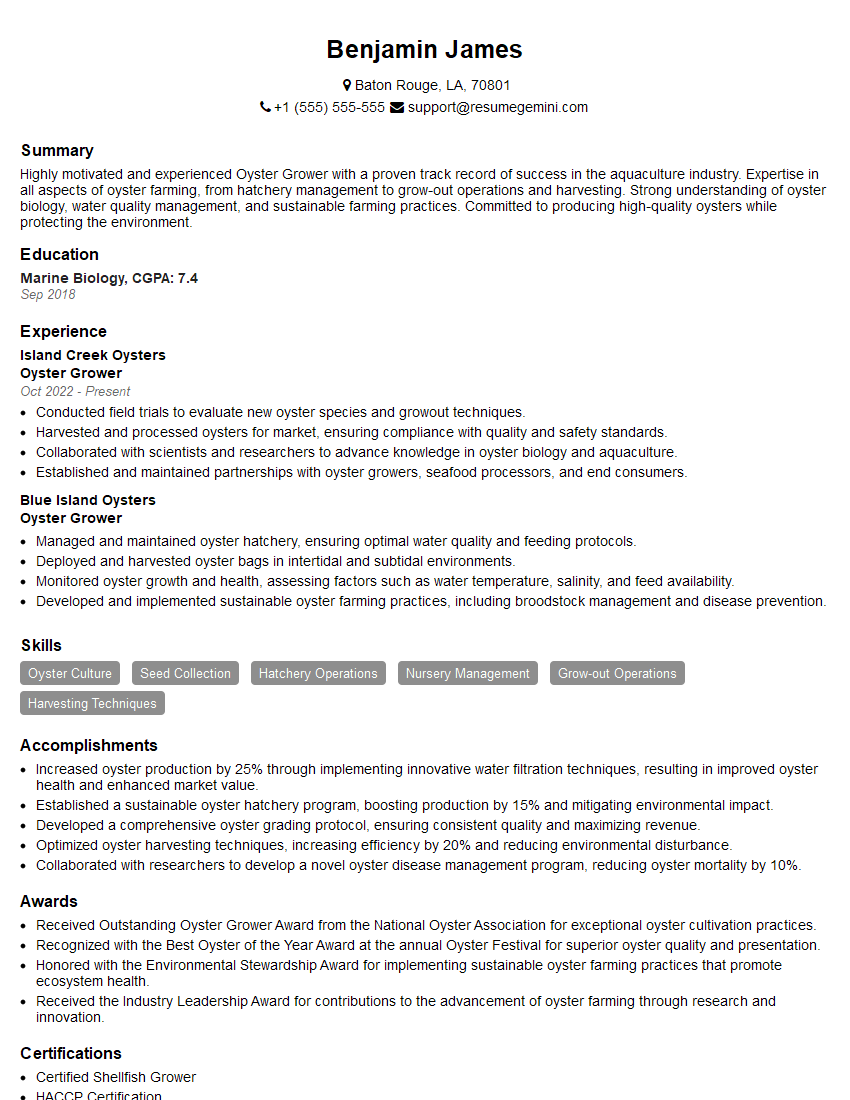
Mastering Oyster Aquaculture Best Practices is crucial for career advancement in this growing field. A strong understanding of these principles will significantly enhance your interview performance and demonstrate your commitment to sustainable and efficient aquaculture. To further strengthen your job application, create an ATS-friendly resume that highlights your skills and experience. ResumeGemini is a trusted resource that can help you build a professional and impactful resume. Examples of resumes tailored to Oyster Aquaculture Best Practices are available to guide you.
Explore more articles
Users Rating of Our Blogs
Share Your Experience
We value your feedback! Please rate our content and share your thoughts (optional).
What Readers Say About Our Blog
Very informative content, great job.
good