The right preparation can turn an interview into an opportunity to showcase your expertise. This guide to Exercise Adherence Counseling interview questions is your ultimate resource, providing key insights and tips to help you ace your responses and stand out as a top candidate.
Questions Asked in Exercise Adherence Counseling Interview
Q 1. Explain the transtheoretical model of behavior change and how you apply it in exercise adherence counseling.
The Transtheoretical Model (TTM), also known as the Stages of Change model, is a framework that describes the process of behavior change as a series of stages. Understanding these stages is crucial in tailoring exercise adherence counseling. These stages are:
- Precontemplation: The individual is not considering change and may be unaware of the problem (e.g., lack of physical activity).
- Contemplation: The individual is aware of the problem and is considering change within the next six months, but hasn’t yet committed.
- Preparation: The individual intends to take action within the next month and may have already taken small steps (e.g., purchasing gym shoes).
- Action: The individual is actively modifying their behavior (e.g., exercising regularly).
- Maintenance: The individual has maintained the new behavior for six months or more and is working to prevent relapse.
In counseling, I assess the client’s stage of change using motivational interviewing techniques. For example, a client in the precontemplation stage might need education on the benefits of exercise, while a client in the action stage needs support and strategies for overcoming barriers. I adjust my approach to match their specific stage, providing tailored interventions and setting realistic expectations.
For instance, a client in the contemplation stage might benefit from goal setting exercises focusing on the short-term benefits of even small amounts of physical activity, whereas a client in the maintenance phase may be better served by relapse prevention strategies and discussions of how to maintain the new routine during vacations or stressful times.
Q 2. Describe the social cognitive theory and its relevance to motivating clients for long-term exercise.
Social Cognitive Theory (SCT) emphasizes the interaction between personal factors, environmental factors, and behavior. It highlights the role of self-efficacy—the belief in one’s ability to succeed in specific situations—in influencing behavior change. A strong sense of self-efficacy is key to long-term exercise adherence.
In my practice, I apply SCT by:
- Building self-efficacy: I help clients set achievable goals, provide positive reinforcement, and highlight past successes. I might use techniques like mastery experiences (gradually increasing exercise intensity), vicarious learning (showing clients examples of others successfully exercising), and verbal persuasion (providing encouragement and confidence-boosting statements).
- Addressing environmental factors: We discuss barriers to exercise (e.g., lack of time, access to facilities) and develop strategies to overcome them. This might involve identifying supportive social networks, finding convenient exercise options, or creating a supportive home environment.
- Modifying personal factors: We explore client attitudes, beliefs, and knowledge about exercise. For example, I might address misconceptions about exercise intensity or debunk common myths.
For example, if a client struggles with time constraints, we might collaboratively explore options like short, high-intensity workouts at home or integrating activity into their daily routines (e.g., taking the stairs instead of the elevator).
Q 3. What strategies do you employ to build rapport and trust with clients during exercise adherence counseling?
Building rapport and trust is fundamental to successful exercise adherence counseling. I achieve this through:
- Active listening: I fully concentrate on the client’s concerns, questions, and experiences without interruption, showing genuine interest and understanding.
- Empathy and validation: I acknowledge the client’s feelings and perspectives, validating their struggles and successes. This helps build a safe and supportive space.
- Respect and collaboration: I work collaboratively with the client, respecting their choices and autonomy. The exercise plan is developed jointly, not imposed.
- Transparency and honesty: I clearly explain the process, potential challenges, and my role as their counselor. I maintain open communication.
- Creating a safe space: I foster an environment where clients feel comfortable sharing their vulnerabilities and concerns without judgment.
A simple example: Starting each session with a brief check-in on how they are feeling, both physically and emotionally, demonstrates care and concern. It also helps to identify potential roadblocks early on.
Q 4. How do you assess a client’s readiness to change regarding exercise behavior?
Assessing a client’s readiness to change involves understanding their stage of change within the TTM and their level of self-efficacy. I use a combination of methods:
- Stage of Change Assessment: I might use questionnaires or engage in open-ended discussions to determine their current stage of change (precontemplation, contemplation, preparation, action, maintenance).
- Self-Efficacy Assessment: I assess their belief in their ability to successfully exercise by asking questions about their confidence in overcoming barriers and achieving their goals. I might also use standardized questionnaires.
- Behavioral Interviews: Through detailed discussions, I explore the client’s past experiences with exercise, their current levels of physical activity, and the perceived barriers to increased exercise.
- Goal Setting Exercises: Together, we explore the client’s fitness goals and discuss the feasibility and attainability of these goals. Challenges or hesitations can reveal insight into their readiness.
For instance, a client expressing strong reservations about exercise and a lack of past success would be considered less ready for change than a client who has already started exercising but wants additional support.
Q 5. What motivational interviewing techniques do you utilize to support client self-efficacy?
Motivational Interviewing (MI) is a client-centered, directive counseling approach that aims to enhance intrinsic motivation for change. Key MI techniques I use to support client self-efficacy include:
- Open-ended questions: Instead of directing, I ask open-ended questions like “What are your thoughts on starting an exercise program?” to encourage self-reflection.
- Affirmations: I acknowledge the client’s strengths and efforts (“I admire your commitment to making a healthier lifestyle change”).
- Reflective listening: I paraphrase the client’s statements to ensure understanding and demonstrate empathy (“So, it sounds like you’re concerned about finding time for exercise?”).
- Summarizing: I periodically summarize the client’s concerns and goals to clarify understanding and reinforce commitment (“Let me make sure I understand. You want to increase your activity level, but are worried about potential injuries.”).
- Eliciting change talk: I guide the client to express their own reasons for change, increasing their self-motivation.
For example, if a client expresses doubt about their ability to stick to an exercise program, I might use reflective listening to explore their concerns and then guide them to identify their past successes in other areas, boosting their belief in their capacity for change.
Q 6. How do you tailor exercise programs to accommodate individual client needs, goals, and limitations?
Tailoring exercise programs is essential for optimal adherence and safety. I begin by conducting a thorough assessment to understand the client’s:
- Physical capabilities and limitations: This includes medical history, current fitness level, any injuries or health conditions.
- Personal goals: What does the client hope to achieve through exercise (weight loss, stress reduction, increased strength)?
- Preferences: What types of exercise does the client enjoy? What are their preferred settings (gym, outdoors, home)?
- Lifestyle: What is their daily schedule like? What are their time constraints and other commitments?
- Resources: What resources are available to the client (gym membership, equipment, support network)?
Based on this information, I develop a personalized exercise plan that is:
- Safe: Addresses any limitations and avoids activities that might cause injury.
- Enjoyable: Incorporates activities the client likes and finds motivating.
- Achievable: Starts at a manageable intensity and gradually progresses in difficulty.
- Sustainable: Fits into the client’s lifestyle and can be maintained long-term.
For example, for a client with knee problems, I might recommend low-impact activities like swimming or cycling instead of running. For a busy client, I might suggest short, high-intensity interval training (HIIT) workouts at home.
Q 7. Explain the importance of setting SMART goals in exercise adherence counseling.
SMART goals are crucial for effective exercise adherence counseling. SMART stands for:
- Specific: The goal should be clearly defined and easy to understand (e.g., “Walk for 30 minutes three times a week”).
- Measurable: Progress should be trackable (e.g., using a fitness tracker or journaling).
- Achievable: The goal should be realistic and challenging, but attainable.
- Relevant: The goal should align with the client’s values and lifestyle.
- Time-bound: The goal should have a specific timeframe (e.g., “Walk for 30 minutes three times a week for the next six weeks”).
Setting SMART goals helps clients stay focused, motivated, and on track. It also provides a clear measure of progress and allows for adjustments as needed. For example, instead of a vague goal like “get in shape,” a SMART goal might be “walk briskly for 20 minutes three times a week for the next month, increasing to 30 minutes by the end of the two months.” This specificity and measurability significantly improves adherence.
Q 8. How do you address common barriers to exercise adherence, such as time constraints or lack of motivation?
Addressing barriers to exercise adherence, like time constraints and lack of motivation, requires a multifaceted approach. It’s not just about suggesting more exercise; it’s about integrating physical activity into a client’s life realistically.
Time Constraints: We collaboratively explore their daily schedule, identifying even small pockets of time (10-15 minutes) that can be dedicated to movement. We might suggest incorporating exercise into their commute (walking or cycling), utilizing lunch breaks, or even breaking down workouts into shorter, more frequent sessions throughout the day. The key is to find a sustainable routine, not an unrealistic one. For example, I once worked with a busy executive who couldn’t find large blocks of time. We started with 10-minute walks during her lunch break, gradually increasing the intensity and duration as she built confidence and enjoyment.
Lack of Motivation: This often stems from setting unrealistic goals, lacking intrinsic motivation, or negative past experiences with exercise. We work together to define achievable goals, focusing on the positive benefits of exercise for their well-being (better sleep, stress reduction, improved mood), rather than purely on weight loss. Exploring their interests is also crucial. Do they enjoy dancing, swimming, hiking? We tailor the exercise program to reflect these preferences, making it enjoyable rather than a chore. Using motivational interviewing techniques to explore their intrinsic motivations and setting SMART (Specific, Measurable, Achievable, Relevant, Time-bound) goals are also extremely effective.
Q 9. Describe your experience using technology (apps, wearables) to enhance exercise adherence.
Technology plays a significant role in enhancing exercise adherence. I frequently utilize fitness tracking apps (like MyFitnessPal, Fitbit, or Apple Health) and wearables to monitor activity levels, sleep patterns, and other health metrics. These tools provide clients with objective data, fostering accountability and motivation. For example, I encourage clients to set daily step goals and celebrate milestones reached. Seeing visual progress on an app or wearable can be incredibly motivating.
Beyond basic tracking, some apps offer guided workouts, personalized coaching, and social features that encourage engagement. I select apps based on the client’s specific needs and tech literacy. I also discuss the potential limitations of technology; it’s a tool, not a solution, and human interaction and support are still vital. For instance, if a client struggles with motivation, technology might highlight the lack of activity, but it doesn’t address the underlying emotional barriers. My role is to support them through those challenges.
Q 10. How do you track client progress and provide feedback to maintain motivation?
Tracking client progress is vital for maintaining motivation and making necessary adjustments to the exercise plan. I use a combination of methods: client self-monitoring (via apps, journals, or simple trackers), direct observation during sessions (if applicable), and regular check-ins to discuss their experiences and challenges.
Feedback is given constructively and focuses on progress made, rather than solely on what needs improvement. For example, if a client hasn’t met their weekly step goal, instead of criticizing the shortfall, we explore the reasons for it – perhaps a busy week or a setback. We then brainstorm solutions, adjusting the goal or finding ways to integrate more movement into their daily life. Regular positive reinforcement and celebrating small victories are equally important for maintaining their momentum. Visual aids, like charts tracking their progress, can also powerfully reinforce positive change.
Q 11. Explain your approach to relapse prevention in exercise adherence counseling.
Relapse prevention is a crucial component of exercise adherence counseling. It involves anticipating potential challenges and developing strategies to cope with them. I educate clients about the common reasons for relapse (stress, illness, lack of time, social events) and help them develop coping mechanisms. We collaboratively create a relapse prevention plan, which includes identifying high-risk situations and alternative behaviors. For example, if stress is a trigger for skipping workouts, we explore relaxation techniques like mindfulness or yoga. If a social event interferes with their exercise schedule, we work on strategies to incorporate physical activity into their social life or compensate for missed sessions.
Furthermore, we discuss the importance of self-compassion and reframing setbacks as temporary challenges rather than complete failures. It’s about building resilience and promoting a healthier, more sustainable relationship with exercise. Relapse is viewed as a learning opportunity, not an indicator of failure.
Q 12. How do you handle client resistance or lack of progress during counseling sessions?
Handling client resistance or lack of progress involves careful consideration of the underlying reasons. Often, it’s not simply a lack of effort but rather deeper issues such as fear of failure, lack of self-efficacy, or unrealistic expectations. Motivational interviewing techniques are particularly effective here. I actively listen to understand their concerns and use empathetic questioning to help them explore their own perspectives and solutions.
For instance, if a client resists increasing the intensity of their workouts, I might ask, “What concerns you about increasing the intensity?” This opens a dialogue allowing them to express their fears and concerns, fostering a collaborative approach to problem-solving. We might then adjust the plan to address those concerns, perhaps gradually increasing intensity over time or focusing on other aspects of fitness they find more enjoyable. Sometimes adjusting the exercise program or finding a different approach can significantly impact engagement.
Q 13. Describe your understanding of different types of exercise and their benefits.
Understanding different types of exercise and their benefits is fundamental. A well-rounded exercise program incorporates various types of activity, addressing different aspects of fitness.
- Cardiovascular Exercise (Aerobic): Activities like running, swimming, cycling, and dancing improve heart health, increase endurance, and burn calories. Benefits include reduced risk of heart disease, improved blood pressure, and weight management.
- Strength Training: Weightlifting, bodyweight exercises, and resistance training build muscle mass, increase bone density, and improve metabolism. Benefits include increased strength, improved posture, and reduced risk of osteoporosis.
- Flexibility and Balance Exercises: Yoga, Pilates, and stretching improve flexibility, balance, and range of motion, reducing risk of injury and improving overall body awareness. Benefits include reduced muscle stiffness, improved posture, and increased joint mobility.
The benefits extend beyond physical health; regular exercise positively impacts mental well-being, reducing stress, anxiety, and symptoms of depression. It’s vital to consider individual preferences, limitations, and goals when recommending specific types of exercises.
Q 14. What are the key elements of a successful exercise prescription?
A successful exercise prescription considers numerous factors beyond simply choosing an activity. It’s a personalized plan tailored to the individual’s needs, abilities, and goals.
- Client Assessment: A thorough assessment is crucial, including evaluating their current fitness level, medical history, limitations, preferences, and goals. This includes considering potential contraindications and any existing conditions.
- Specific Exercise Modalities: Selecting appropriate types of exercise, considering the client’s preferences and capabilities. This involves careful consideration of intensity, duration, frequency, and mode of exercise.
- Progressive Overload: Gradually increasing the intensity, duration, or frequency of exercise over time to challenge the body and promote continuous improvement. This prevents plateaus and promotes long-term adherence.
- Realistic Goals: Setting achievable and measurable goals that motivate the client without overwhelming them. This ensures that the client feels successful and continues with the program.
- Monitoring and Adjustments: Regularly monitoring progress, providing feedback, and making necessary adjustments to the plan as needed. This ensures the program remains effective and enjoyable over time.
- Consideration of the Social Environment: Encouraging social support and integration of exercise into the client’s social life when appropriate.
A well-structured exercise prescription is a dynamic, collaborative process, continually adapting to the client’s progress and feedback.
Q 15. How do you ensure the safety of your clients during exercise programs?
Ensuring client safety is paramount in exercise adherence counseling. It begins with a thorough health screening process, including a detailed health history, current medication review, and potentially a physician’s clearance, particularly for individuals with pre-existing conditions.
During the initial consultation, we discuss any limitations or potential risks, adapting the exercise program to accommodate these factors. For instance, someone with osteoarthritis might benefit from low-impact exercises like swimming or cycling, rather than high-impact activities like running. We also emphasize proper form and technique throughout all exercises to minimize the risk of injuries. Regular check-ins and open communication ensure any emerging issues or discomfort are addressed promptly.
We might use heart rate monitors to track intensity levels, especially for clients with cardiovascular conditions, ensuring they stay within their target heart rate zones. Finally, we educate clients on recognizing signs of overexertion, such as chest pain, dizziness, or extreme fatigue, and instruct them to stop immediately and seek medical attention if needed. It’s all about a proactive and personalized approach to safety.
Career Expert Tips:
- Ace those interviews! Prepare effectively by reviewing the Top 50 Most Common Interview Questions on ResumeGemini.
- Navigate your job search with confidence! Explore a wide range of Career Tips on ResumeGemini. Learn about common challenges and recommendations to overcome them.
- Craft the perfect resume! Master the Art of Resume Writing with ResumeGemini’s guide. Showcase your unique qualifications and achievements effectively.
- Don’t miss out on holiday savings! Build your dream resume with ResumeGemini’s ATS optimized templates.
Q 16. How do you communicate effectively with clients and their healthcare providers?
Effective communication is the cornerstone of successful exercise adherence counseling. I prioritize clear, concise, and empathetic communication with clients, tailoring my approach to their individual learning styles and preferences. I use motivational interviewing techniques to understand their goals, challenges, and beliefs surrounding exercise. This helps me collaboratively develop a plan that they feel invested in.
Communication with healthcare providers involves regular updates and collaborative decision-making. This includes sharing relevant progress updates, addressing any concerns they might have about the client’s exercise program, and seeking their guidance on specific health issues that might impact the plan. Secure communication methods, such as HIPAA-compliant electronic health records, are utilized to maintain confidentiality. Open channels of communication are crucial to ensuring a holistic and coordinated approach to the client’s well-being. For example, I might contact a client’s physician if they report experiencing unexpected chest pain during an exercise session.
Q 17. How do you integrate exercise adherence counseling with other health behavior changes (diet, sleep)?
Integrating exercise adherence counseling with other health behavior changes is crucial for long-term success. It’s not enough to just focus on exercise in isolation; a holistic approach yields far better results. For example, we might explore how improved sleep quality can enhance energy levels for workouts, or how a balanced diet can support muscle recovery and overall performance.
The key is to understand the interdependencies between these behaviors. I use a collaborative approach, working with clients to identify their goals across all areas — diet, sleep, exercise — and develop strategies that address them simultaneously. This might involve setting realistic, achievable goals, using behavior modification techniques like goal setting and self-monitoring, and incorporating strategies to build self-efficacy and motivation across the board. For example, improvements in sleep might lead to increased energy, making it easier to stick to an exercise program. Similarly, choosing nutritious foods can improve energy levels and reduce fatigue during workouts. It’s about reinforcing positive cycles of change.
Q 18. Describe a challenging situation you faced in exercise adherence counseling and how you resolved it.
One challenging situation involved a client with severe anxiety who struggled to leave the house, let alone exercise. Initial attempts at structured exercise programs were met with resistance and increasing anxiety.
My approach involved a gradual, personalized desensitization plan. We started with very short, low-intensity walks around their home, slowly increasing the duration and distance over time. I incorporated mindfulness techniques to manage their anxiety during these walks, focusing on their breath and surroundings. We celebrated small victories and adjusted the plan based on their feedback. The key was building trust, understanding their anxieties, and fostering a sense of control. Eventually, they transitioned to group exercise classes, finding a sense of community and support. The challenge highlighted the need for flexibility, empathy, and a collaborative approach to address psychological barriers to exercise adherence.
Q 19. What methods do you use to measure the effectiveness of your exercise adherence counseling?
Measuring the effectiveness of exercise adherence counseling involves a multi-faceted approach, going beyond simple adherence rates (although that’s important). We track several key indicators.
- Exercise Adherence: Self-reported exercise logs, wearable technology data (steps, activity minutes), and appointment attendance.
- Physical Fitness Changes: Improvements in cardiorespiratory fitness (VO2 max), muscular strength and endurance, flexibility, and body composition (if appropriate and relevant to client goals).
- Health Outcomes: Changes in blood pressure, cholesterol levels, blood glucose, weight, and overall perceived health status (using validated questionnaires).
- Psychological Well-being: Assessing changes in mood, stress levels, self-efficacy, and quality of life using validated questionnaires.
Combining these measures provides a holistic picture of the program’s impact. Regular data analysis guides adjustments to the program, ensuring it remains relevant and effective throughout the process.
Q 20. What professional development activities do you engage in to stay current in this field?
Staying current in exercise adherence counseling requires continuous professional development. I regularly attend conferences and workshops related to behavioral change, exercise physiology, and health psychology. I actively participate in continuing education courses offered by professional organizations such as the American College of Sports Medicine (ACSM) and the National Board for Health and Wellness Coaching (NBHWC).
I also stay updated by reading peer-reviewed research articles and journals in the field. Engaging in online communities and forums helps me connect with other professionals and learn about innovative approaches. Mentorship and collaboration with colleagues are also valuable avenues for professional growth and knowledge sharing. This ongoing learning ensures that I’m equipped with the latest evidence-based practices to best serve my clients.
Q 21. How do you maintain confidentiality and ethical standards in your practice?
Maintaining confidentiality and ethical standards is critical. I adhere strictly to professional codes of ethics, such as those established by relevant organizations. This includes securing all client information using HIPAA-compliant electronic health records and ensuring client data is only accessed by authorized personnel.
Informed consent is obtained before initiating any services, outlining the limits of confidentiality, the process for handling sensitive information, and client rights. I avoid discussing client matters with others unless legally required or with their explicit permission. Ethical dilemmas are addressed through careful reflection and, if needed, consultation with supervisors or ethical review boards. Maintaining professional boundaries is another essential aspect of ethical practice, ensuring the therapeutic relationship remains focused on the client’s well-being.
Q 22. Explain your knowledge of different exercise modalities (e.g., strength training, cardiovascular exercise).
Understanding different exercise modalities is crucial for effective exercise adherence counseling. It’s not just about knowing the names; it’s about understanding the physiological effects, contraindications, and how to tailor them to individual needs.
- Cardiovascular Exercise: This improves heart and lung function. Examples include running, swimming, cycling, and brisk walking. I assess a client’s current fitness level to design a program that gradually increases intensity and duration, preventing injury and burnout. For example, a sedentary client might start with 15 minutes of brisk walking three times a week, gradually increasing to 30-45 minutes.
- Strength Training: This builds muscle mass and strength, improving bone density and metabolism. This involves using weights, resistance bands, or body weight exercises. I teach proper form to prevent injury and tailor the program to the client’s strength and goals. A client recovering from surgery, for example, might begin with very light weights and high repetitions, gradually increasing the load as they recover.
- Flexibility and Balance Exercises: These improve range of motion, balance, and prevent injuries. Yoga, Pilates, and Tai Chi are examples. These are especially important for older adults or individuals with mobility issues. We would incorporate these into a routine to enhance mobility and reduce the risk of falls.
My approach involves educating clients on the benefits of each modality and helping them choose activities they enjoy and can sustain long-term. I strongly believe that sustainable exercise is enjoyable exercise.
Q 23. How do you adapt your counseling strategies for clients with different health conditions or physical limitations?
Adapting counseling strategies is paramount. I utilize a client-centered approach, prioritizing individual needs and limitations. This involves careful assessment, collaboration with healthcare providers, and a phased approach to exercise progression.
- Cardiac Conditions: For clients with heart conditions, I would collaborate closely with their cardiologist, ensuring the exercise program aligns with their medical restrictions. This might involve low-impact activities and careful monitoring of heart rate.
- Arthritis: Clients with arthritis might benefit from low-impact exercises like swimming or water aerobics, which reduce stress on joints. We’d focus on range of motion and strengthening exercises tailored to their specific limitations. Pain management strategies would also be integrated into the plan.
- Obesity: For obese clients, I would prioritize gradual weight loss through a combination of diet and exercise, ensuring the exercise program is safe and sustainable. We might begin with short walks and gradually increase the intensity and duration as their fitness improves.
In each case, I emphasize gradual progression, listening to the client’s body, and celebrating small victories. My goal is empowerment, not perfection. I always remind clients that progress, not perfection is the key to long-term success.
Q 24. Describe your experience working with diverse populations.
I have extensive experience working with diverse populations, including individuals from various socioeconomic backgrounds, ethnicities, ages, and abilities. My approach is deeply rooted in cultural sensitivity and inclusivity. I recognize that factors such as cultural norms, beliefs about health, and access to resources significantly influence exercise participation.
For example, I’ve worked with immigrant communities, adjusting my communication style and integrating their cultural preferences into exercise plans. I’ve also worked with low-income populations, assisting them in finding affordable and accessible exercise options. Adaptability is key – I aim to create a safe and welcoming environment that respects the individual needs of every client.
I understand that successful engagement often involves building trust and demonstrating empathy, recognizing individual challenges, and celebrating the strengths of each client.
Q 25. How do you create a supportive and positive counseling environment?
Creating a supportive and positive counseling environment is crucial for exercise adherence. I employ several techniques to achieve this:
- Active Listening and Empathy: I actively listen to my clients’ concerns, goals, and challenges, demonstrating genuine empathy and understanding.
- Collaboration and Goal Setting: I work collaboratively with clients to set realistic and achievable goals, ensuring they feel a sense of ownership in the process. We break down larger goals into smaller, manageable steps.
- Positive Reinforcement and Celebration of Successes: I provide positive reinforcement and celebrate even small achievements to build confidence and motivation.
- Motivational Interviewing: I use motivational interviewing techniques to help clients identify their intrinsic motivation for change, address ambivalence, and build self-efficacy.
The environment I create is one of trust, respect, and mutual collaboration. My clients feel comfortable sharing their thoughts and feelings without fear of judgment, which leads to greater adherence and overall well-being.
Q 26. What are the limitations of exercise adherence counseling, and how do you address them?
Exercise adherence counseling, while highly effective, has limitations. Factors beyond my control can impact success.
- Lack of Motivation or Self-Efficacy: Some clients lack the intrinsic motivation or self-belief needed to stick to an exercise program. I address this through motivational interviewing and by helping clients identify their personal reasons for wanting to exercise.
- Time Constraints and Lifestyle Barriers: Busy schedules, family responsibilities, and lack of access to facilities can impede adherence. I work with clients to find ways to integrate exercise into their busy lives, suggesting strategies such as shorter, more frequent workouts or home-based exercises.
- Underlying Medical Conditions: Severe medical conditions or unexpected health issues can hinder adherence. I would always advise clients to consult with their doctors about their health and ensure they have realistic expectations. Close collaboration with medical professionals is vital in these cases.
- Lack of Social Support: A lack of social support can affect adherence. I encourage clients to find exercise buddies or join fitness groups to create a supportive social environment.
I actively address these limitations by providing ongoing support, adjusting strategies as needed, and adapting to unforeseen circumstances. Open communication and flexibility are key to navigating these challenges.
Q 27. What are your salary expectations?
My salary expectations are commensurate with my experience and qualifications in the field of Exercise Adherence Counseling. I am confident that my skills and expertise will bring significant value to your organization. I am open to discussing a specific salary range after learning more about the details of the position and benefits package.
Q 28. Why are you interested in this particular position?
I am highly interested in this position because of [Organization’s Name]’s commitment to [mention specific aspects that resonate, e.g., patient-centered care, community outreach, innovative programs]. My passion for helping individuals achieve their health and wellness goals aligns perfectly with your organization’s mission. I am particularly excited about the opportunity to [mention specific aspects of the role or organization’s work that interest you]. I believe my skills and experience in exercise adherence counseling would be a valuable asset to your team.
Key Topics to Learn for Exercise Adherence Counseling Interview
- Behavioral Change Theories: Understanding models like the Transtheoretical Model (Stages of Change), Health Belief Model, and Social Cognitive Theory is crucial for tailoring interventions to individual needs and stages of readiness.
- Motivational Interviewing Techniques: Mastering skills like open-ended questioning, reflective listening, and summarizing to guide clients towards their own self-determined goals and overcome barriers to exercise.
- Goal Setting and SMART Goals: Learn how to collaboratively set Specific, Measurable, Achievable, Relevant, and Time-bound exercise goals that are motivating and sustainable.
- Barrier Identification and Problem-Solving: Develop strategies to proactively identify and address common barriers to exercise adherence, such as time constraints, lack of motivation, or physical limitations. This includes developing creative solutions tailored to the individual.
- Relapse Prevention Planning: Equip clients with strategies to anticipate and manage potential setbacks, fostering long-term adherence to their exercise program.
- Communication and Interpersonal Skills: Practice effective communication techniques to build rapport, provide empathetic support, and foster a positive and motivating counseling relationship.
- Exercise Prescription and Program Design: Understand the principles of exercise prescription, considering individual fitness levels, health conditions, and goals to create safe and effective exercise programs.
- Assessment and Evaluation Techniques: Learn various methods for assessing client readiness, progress, and adherence to the exercise program, allowing for adjustments and improvements.
- Ethical Considerations: Familiarize yourself with ethical guidelines and professional standards relevant to exercise adherence counseling.
Next Steps
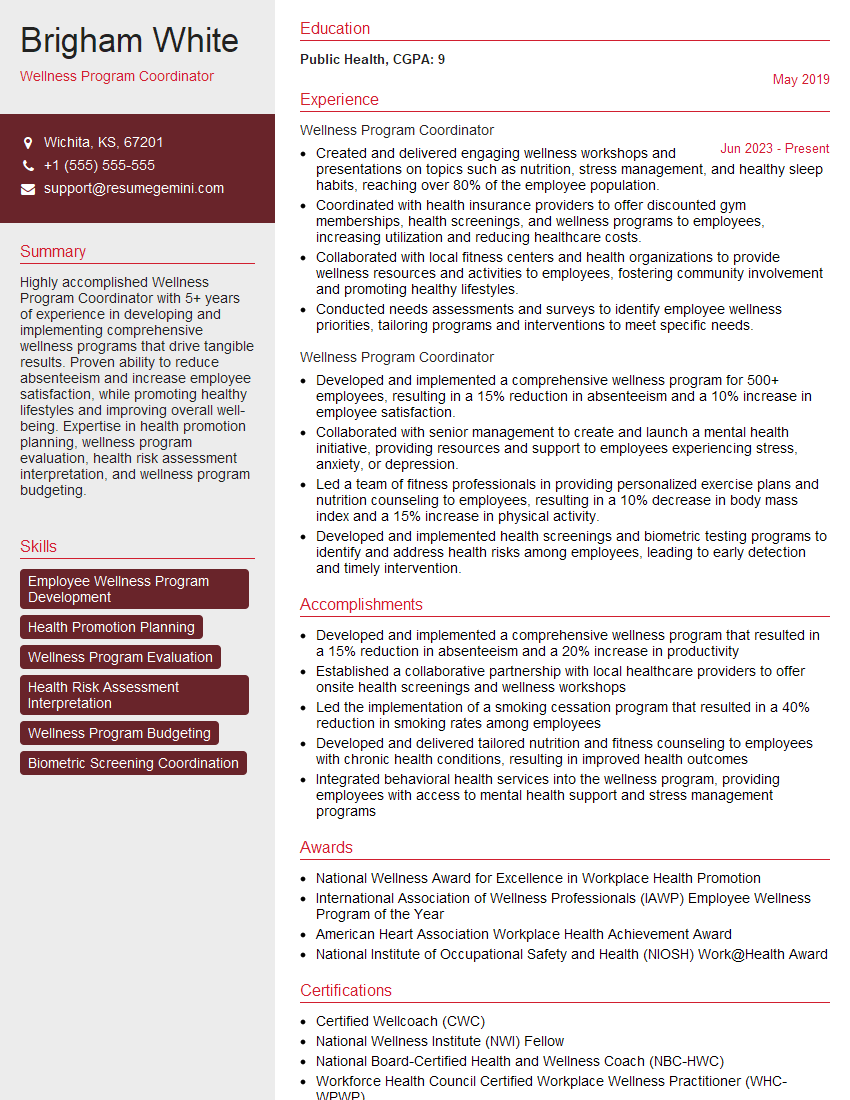
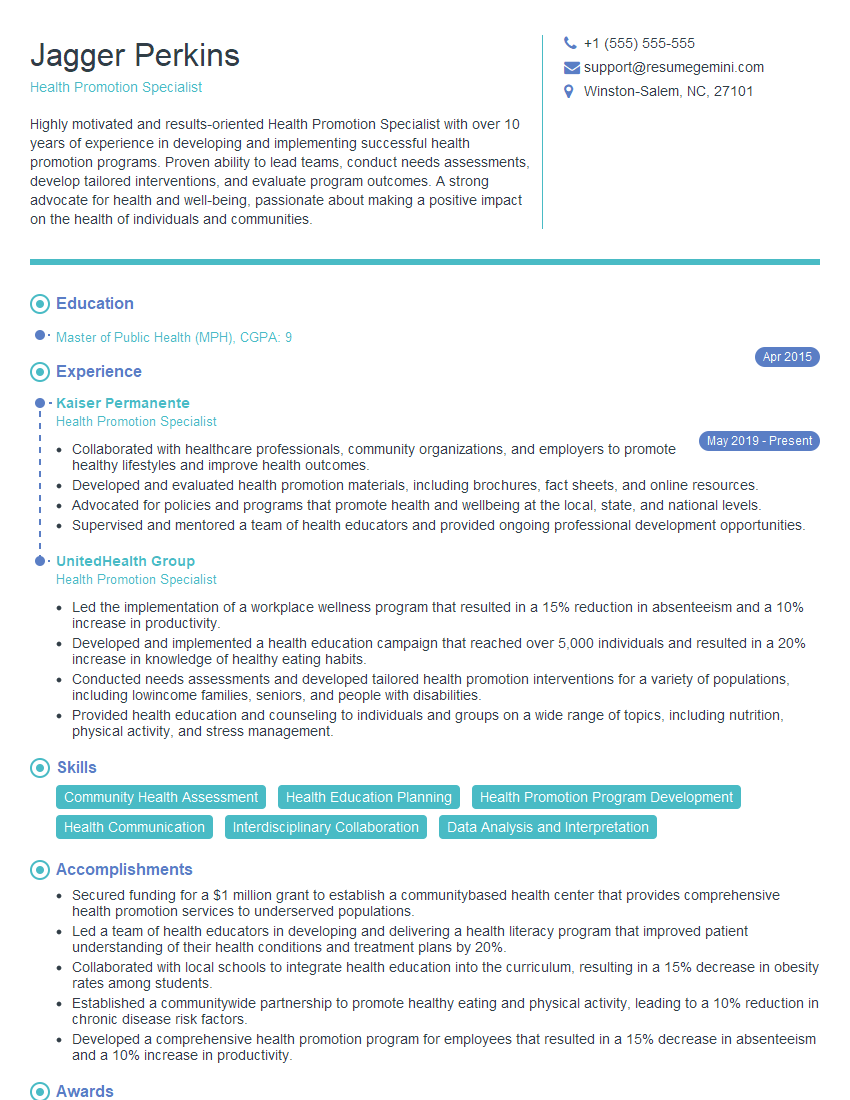
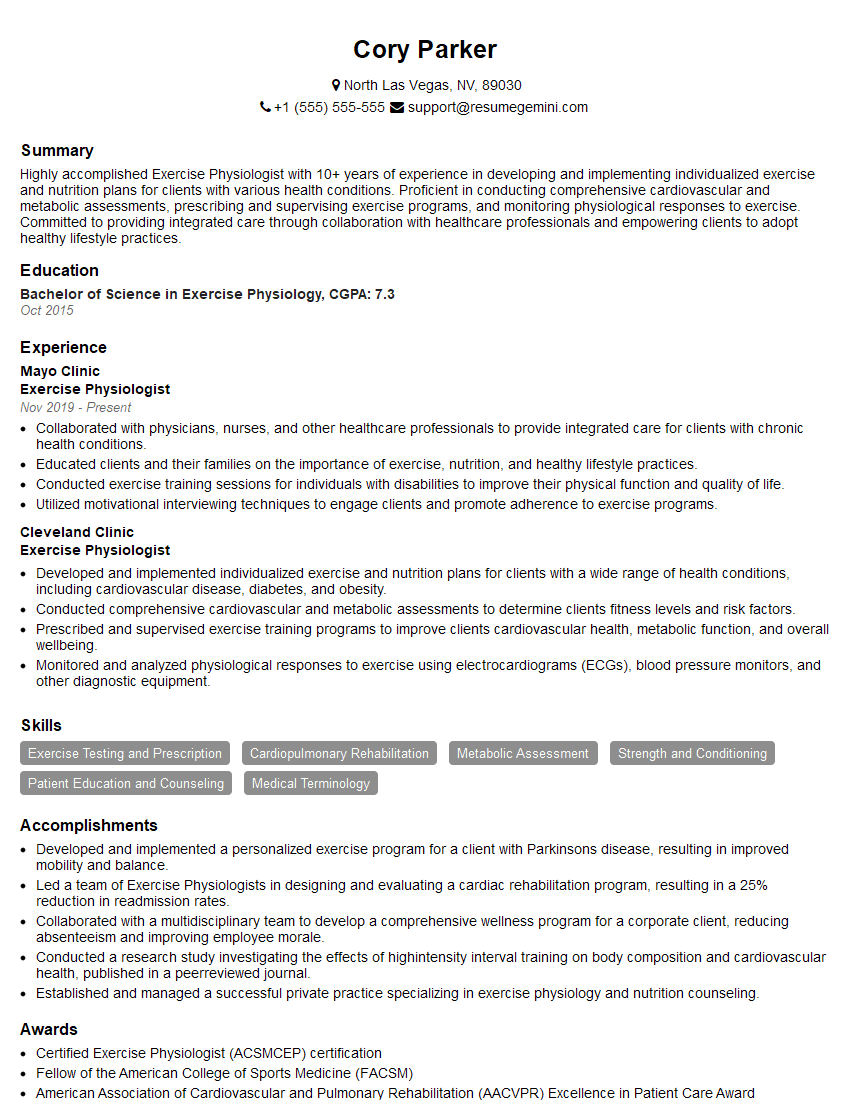
Mastering Exercise Adherence Counseling is vital for career advancement in fitness and health fields, opening doors to specialized roles and increased earning potential. An ATS-friendly resume is crucial for getting your application noticed by recruiters. To significantly enhance your job prospects, we strongly recommend leveraging ResumeGemini to create a compelling and effective resume. ResumeGemini offers tools and examples specifically tailored to Exercise Adherence Counseling, helping you showcase your skills and experience in the best possible light. Examples of resumes tailored to Exercise Adherence Counseling are available to help guide your resume creation.
Explore more articles
Users Rating of Our Blogs
Share Your Experience
We value your feedback! Please rate our content and share your thoughts (optional).
What Readers Say About Our Blog
Very informative content, great job.
good