Preparation is the key to success in any interview. In this post, we’ll explore crucial Oyster Biology and Aquaculture interview questions and equip you with strategies to craft impactful answers. Whether you’re a beginner or a pro, these tips will elevate your preparation.
Questions Asked in Oyster Biology and Aquaculture Interview
Q 1. Describe the life cycle of an oyster.
Oyster life cycles begin with spawning, where mature oysters release eggs and sperm into the water column. Fertilization occurs externally, resulting in microscopic larvae (trochophores). These larvae undergo several developmental stages, including the veliger stage where they develop a rudimentary shell and cilia for swimming. Eventually, they settle onto a suitable substrate, a process called spatfall. Once settled, they metamorphose into juveniles (spat) and begin to develop their adult shell. Growth continues until they reach sexual maturity, typically after one to three years, depending on species and environmental conditions. Then the cycle repeats with spawning.
Think of it like a butterfly’s metamorphosis, but underwater! The free-swimming larvae stage is analogous to the caterpillar, while settling and growth are like the pupa and adult butterfly stages. The key difference is the external fertilization and the reliance on currents to spread the larvae.
Q 2. Explain the process of oyster spat collection and hatchery management.
Oyster spat collection often involves deploying collectors (e.g., shells, tiles, ropes) in areas with high larval densities. These collectors attract settling larvae, and once spat have attached, they are carefully removed and brought to a hatchery. Hatchery management focuses on providing optimal conditions for spat growth and survival. This includes maintaining appropriate water quality (temperature, salinity, pH), providing sufficient food (microalgae), managing water flow, and preventing diseases. Regular monitoring of spat growth, density, and health is crucial.
Imagine a nursery for baby oysters! We create a controlled environment to nurture them through their most vulnerable stage. Careful monitoring and adjustments ensure high survival rates and strong, healthy spat ready for deployment in grow-out systems.
Q 3. What are the common diseases affecting oysters and their management strategies?
Oysters are susceptible to various diseases, including Dermo (Perkinsus marinus), MSX (Haplosporidium nelsoni), and various viral and bacterial infections. These diseases can cause significant mortality and impact aquaculture production. Management strategies involve selecting disease-resistant strains, implementing biosecurity measures (e.g., quarantine, disinfection), optimizing water quality to minimize stress, and employing prophylactic treatments (if approved). In some cases, culling infected oysters may be necessary to prevent the spread of disease.
Similar to human healthcare, preventative measures are key. Selecting robust oyster strains is like choosing a healthy lifestyle, while biosecurity measures act as a protective barrier against infection.
Q 4. Discuss the environmental factors influencing oyster growth and survival.
Several environmental factors influence oyster growth and survival. Water temperature plays a significant role, with optimal ranges varying depending on species. Salinity levels must also be suitable, as oysters are sensitive to both freshwater and hypersaline conditions. Water quality, including dissolved oxygen and nutrient levels, is critical for healthy growth. Sedimentation rates can affect feeding and respiration, while exposure to pollutants can cause stress and mortality. Currents and wave action can affect food delivery and larval settlement.
Think of it as the Goldilocks principle: oysters need ‘just right’ conditions. Too much or too little of any factor can have detrimental effects.
Q 5. Explain different oyster cultivation methods (e.g., bottom culture, raft culture).
Several oyster cultivation methods exist. Bottom culture involves placing oysters directly on the seabed, where they grow naturally. This is a relatively low-cost method but susceptible to predation and environmental variability. Raft culture uses floating rafts or longlines to suspend oysters off the bottom, allowing for better water circulation and easier harvesting, minimizing predation and disease transmission. Other methods include tray culture and suspended culture using bags or cages.
Each method offers trade-offs. Bottom culture is akin to letting nature take its course, while raft culture provides more control over the environment and reduces risk.
Q 6. What are the key water quality parameters for optimal oyster growth?
Optimal oyster growth requires specific water quality parameters. Salinity should fall within the species-specific tolerance range; usually between 15-30 ppt. Temperature should be within the optimal range for growth and reproduction, generally between 15-25°C. Dissolved oxygen levels must remain high (above 5 mg/L) to support respiration. Nutrient levels (nitrogen and phosphorus) need to be sufficient to support phytoplankton growth, the primary food source for oysters, but not excessively high, preventing algal blooms. pH should be close to neutral (around 7.8-8.2).
Think of it like a recipe: each ingredient needs to be balanced for the best results.
Q 7. How do you monitor and control algal blooms in an oyster farm?
Monitoring algal blooms involves regular water quality testing, including chlorophyll a measurements (an indicator of phytoplankton biomass). Early detection is crucial. Control strategies can include reducing nutrient inputs (e.g., managing land runoff), implementing aeration systems to increase oxygen levels, and in extreme cases, using approved algaecides (though this should be done cautiously and only as a last resort due to potential impacts on the oyster ecosystem).
Prevention is always better than cure. Careful management of nutrient inputs and regular monitoring are vital to minimize the risk and impact of algal blooms.
Q 8. Describe the process of oyster harvesting and post-harvest handling.
Oyster harvesting and post-harvest handling are critical for ensuring product quality and safety. Harvesting methods vary depending on the cultivation system. For bottom-planted oysters, divers or dredges are used. For suspended culture, harvesting involves lifting the oyster cages or bags from the water. Post-harvest handling begins immediately after harvesting. Oysters are cleaned to remove debris and then usually purged in clean, flowing seawater for 24-48 hours. This process helps remove sediment and improves the flavor profile. After purging, oysters are graded by size and quality, then packed and quickly chilled to maintain freshness. Temperature control throughout the entire process is crucial, as oysters are highly perishable.
Imagine it like picking fresh fruit from a tree. You wouldn’t leave it out in the sun, would you? The same principle applies to oysters – immediate attention to cleanliness and temperature prevents spoilage and retains the best possible flavor.
- Cleaning: Removing barnacles, seaweed, and other debris.
- Purging: Rinsing in clean, aerated seawater to eliminate sediment.
- Grading: Sorting oysters based on size and quality for market demands.
- Packing: Packaging in appropriate containers to prevent damage and preserve freshness.
- Chilling: Rapid cooling to slow down bacterial growth and enzyme activity.
Q 9. What are the regulations governing oyster aquaculture in your region?
Oyster aquaculture regulations vary significantly by region, but common themes include water quality standards, lease agreements for growing areas, harvesting limits, and biotoxin monitoring. For example, in many areas, water quality testing is mandatory to ensure the absence of harmful bacteria like Vibrio species or biotoxins that can cause illness. Regulations might also specify allowable stocking densities to prevent overcrowding and environmental damage. Lease agreements define the terms of use for designated growing areas, often outlining restrictions on harvesting periods and methods. Finally, regular monitoring programs are frequently in place to detect and manage harmful algal blooms which can contaminate oysters and close harvest areas temporarily.
Think of these regulations as a recipe for safe and sustainable oyster farming, ensuring both public health and environmental protection.
Q 10. How do you ensure the safety and quality of your oyster products?
Ensuring the safety and quality of oyster products requires a multifaceted approach beginning at the growing stage and continuing through harvest and processing. This includes stringent water quality monitoring to detect contamination from pathogens or harmful algal blooms (HABs). Regular testing for Vibrio species and biotoxins is crucial. The entire process, from the grow-out environment to post-harvest handling, must adhere to strict hygiene standards to prevent contamination. Proper temperature control during storage and transportation is vital to maintain freshness and quality. Traceability is also essential, enabling us to identify the source of oysters in case of a problem.
Imagine building a house; you wouldn’t skip inspections or use faulty materials. Similarly, careful monitoring and quality checks at every step are fundamental to creating a safe and high-quality oyster product.
Q 11. Explain the concept of oyster stock enhancement and its benefits.
Oyster stock enhancement involves supplementing natural oyster populations by introducing hatchery-raised spat (juvenile oysters) or adult oysters into existing reefs or designated areas. The primary benefit is increasing the overall abundance of oysters, restoring depleted populations, and supporting ecosystem health. Oysters provide essential ecosystem services such as water filtration, habitat creation, and shoreline protection. By enhancing stocks, we improve these vital functions and enhance biodiversity.
Think of it as giving a boost to a struggling team. By introducing new, healthy individuals, the overall population thrives and improves the overall productivity of the system. In this case, the ‘team’ is the oyster reef, and the productivity is the ecosystem services they provide.
Q 12. Discuss the challenges of sustainable oyster aquaculture.
Sustainable oyster aquaculture faces several significant challenges. Disease outbreaks can devastate oyster populations, requiring effective management strategies. Water quality issues, such as pollution and harmful algal blooms, can severely impact oyster growth and survival. Competition for suitable growing areas and the availability of clean, uncontaminated water pose considerable constraints. Climate change presents a serious threat, with rising sea temperatures and ocean acidification affecting oyster physiology and survival. Balancing the economic needs of oyster farmers with environmental conservation is crucial for long-term sustainability.
Imagine a farmer facing drought and pests. Similar challenges plague oyster farming. Adaptability and innovation are key to overcome these hurdles.
Q 13. How do you assess the economic viability of an oyster farming operation?
Assessing the economic viability of an oyster farming operation requires a thorough analysis of several key factors. This includes calculating the cost of production (seed, labor, feed, equipment, lease fees), estimating market prices and potential sales volume, projecting income and expenses, and assessing potential risks such as disease outbreaks or environmental impacts. A detailed business plan outlining these factors and including sensitivity analyses (e.g., to fluctuating market prices) is crucial for securing financing and making informed decisions. The long-term financial projections should also consider potential impacts of climate change and changing market demands.
Just as any business needs a well-defined strategy, a thorough economic assessment is essential for successful oyster farming. It helps determine if the farm is likely to generate profit and remain sustainable over time.
Q 14. What are the different oyster species and their suitability for cultivation?
Numerous oyster species are cultivated globally, each with varying characteristics influencing their suitability for aquaculture. The Pacific oyster (Magallana gigas) is widely farmed for its fast growth rate and large size. The Eastern oyster (Crassostrea virginica) is another commercially important species, known for its hardiness and tolerance to a range of environmental conditions. The European flat oyster (Ostrea edulis) is prized for its flavor but can be more challenging to cultivate due to slower growth rates. Species selection depends on factors like water temperature, salinity, and disease resistance in the specific growing region. Some species might perform better in colder waters, while others thrive in warmer environments. Disease susceptibility is another major consideration when selecting a suitable species for a particular location.
Selecting the right oyster species is like choosing the right crop for a particular field. Certain species are simply better suited to specific environmental conditions.
Q 15. Describe the methods used for oyster grading and sizing.
Oyster grading and sizing are crucial for market value and efficient aquaculture management. We use several methods, primarily focusing on shell size and meat weight.
- Shell Height Measurement: This is the most common method, using calipers to measure the shell’s height from the hinge to the opposite edge. Oysters are then categorized into size classes, often based on industry standards or market demand (e.g., small, medium, large).
- Weight Grading: For higher-value oysters, we might also grade by the weight of the meat inside the shell. This requires shucking a sample, weighing the meat, and then extrapolating to estimate the meat weight of the entire batch. This method is more labor-intensive but provides a more accurate representation of product value.
- Visual Inspection: Though less precise, visual inspection helps identify any deformities, shell damage, or unusual shapes that might affect market value.
For example, a typical grading system might have size classes like ‘Cocktail’ (under 2 inches), ‘Select’ (2-3 inches), and ‘Market’ (over 3 inches). The chosen grading system often depends on the target market and the species of oyster.
Career Expert Tips:
- Ace those interviews! Prepare effectively by reviewing the Top 50 Most Common Interview Questions on ResumeGemini.
- Navigate your job search with confidence! Explore a wide range of Career Tips on ResumeGemini. Learn about common challenges and recommendations to overcome them.
- Craft the perfect resume! Master the Art of Resume Writing with ResumeGemini’s guide. Showcase your unique qualifications and achievements effectively.
- Don’t miss out on holiday savings! Build your dream resume with ResumeGemini’s ATS optimized templates.
Q 16. Explain the impact of climate change on oyster aquaculture.
Climate change poses significant threats to oyster aquaculture. Rising ocean temperatures lead to increased disease susceptibility and mortality rates in oysters. Ocean acidification, caused by increased atmospheric CO2 absorption, reduces the ability of oysters to build and maintain their shells, hindering growth and survival.
- Increased Disease Prevalence: Warmer waters create favorable conditions for pathogens, resulting in outbreaks of diseases like MSX and Dermo, which can decimate oyster populations.
- Shell Formation Issues: Acidification reduces the availability of carbonate ions, making it harder for oysters to construct their shells. This weakens their shells, leaving them more vulnerable to predators and environmental stresses.
- Altered Salinity and Oxygen Levels: Changes in rainfall patterns and sea level rise can alter salinity and oxygen levels in oyster habitats, negatively impacting oyster growth and survival.
- Extreme Weather Events: Increased frequency and intensity of storms and extreme weather events can damage oyster farms, leading to loss of infrastructure and oyster crops.
Adaptation strategies include selecting more resilient oyster strains, improving water quality management practices, and exploring innovative aquaculture techniques such as offshore farming and protected cultivation systems.
Q 17. How do you manage biofouling on oyster cultivation structures?
Biofouling, the accumulation of unwanted organisms on oyster cultivation structures, is a major challenge in oyster aquaculture. It reduces water flow, limits oyster growth, and can even lead to disease outbreaks. Several methods are used to manage biofouling:
- Regular Cleaning: Physical removal of fouling organisms using brushes, scrapers, or high-pressure water jets is the most common approach. This needs to be done regularly, especially in areas with high fouling rates. The frequency depends on the type of fouling organisms and environmental conditions.
- Use of Antifouling Paints: Special paints containing biocides can be applied to cultivation structures to prevent organism attachment. However, care must be taken to choose environmentally friendly paints that don’t harm oysters or other marine life.
- Biofouling-Resistant Materials: Utilizing materials with inherent resistance to biofouling, such as certain types of plastics or metals, can reduce the need for frequent cleaning and treatments.
- Selective Breeding: Breeding oyster varieties with increased resistance to fouling organisms is a promising long-term strategy.
The best approach often involves a combination of these methods, tailored to the specific environmental conditions and fouling challenges faced by the farm.
Q 18. What are the different types of oyster predators and how do you control them?
Oysters face a range of predators, both in their natural environment and in aquaculture settings. Effective predator control is essential for successful oyster farming.
- Predators: Common oyster predators include crabs (e.g., blue crabs), starfish, snails (e.g., oyster drills), and certain fish species. Birds can also consume oysters, especially smaller ones.
- Control Methods: Predator control strategies often involve a combination of approaches. These may include:
- Exclusion netting: This involves placing nets around oyster cages or other cultivation structures to prevent larger predators like crabs and fish from accessing the oysters.
- Trap deployment: Setting traps to selectively target specific predators, such as crabs or starfish.
- Manual removal: Physically removing predators from oyster beds, though labor-intensive, is often necessary, particularly for localized infestations.
- Predator control via biological methods:Introducing natural predators of the oyster predators, such as specific types of fish or crabs, may help balance the ecosystem.
Choosing the most suitable predator control method depends on factors like the specific predators present, the scale of the operation, and the cost-effectiveness of different strategies.
Q 19. Describe the process of oyster depuration.
Oyster depuration is a process of purifying oysters to remove harmful bacteria and microorganisms, making them safe for human consumption. It involves holding oysters in a controlled environment with clean, flowing seawater for a specific duration to allow them to naturally purge contaminants.
- Process: Oysters are placed in tanks with filtered seawater, ensuring good water circulation and oxygenation. This controlled environment allows the oysters to filter the clean water, removing the bacteria and other contaminants from their tissues.
- Water Quality Monitoring: Continuous monitoring of water quality parameters, such as temperature, salinity, and dissolved oxygen, is crucial to maintain optimal depuration conditions. The water is constantly monitored for bacterial load to confirm that the oysters are effectively purifying.
- Duration: The depuration time varies depending on several factors including the initial bacterial load of the oysters and the water temperature. It can range from a few hours to several days.
- Post-Depuration Testing: After depuration, the oysters undergo rigorous testing to ensure they meet safety standards and are free from harmful bacteria before they are released for sale or consumption.
Effective depuration is vital for public health and consumer confidence in oyster safety. It plays a critical role in mitigating the risks associated with consuming raw or undercooked shellfish.
Q 20. Explain the role of genetics in oyster breeding and selection.
Genetics plays a crucial role in improving oyster production through selective breeding programs. By understanding the genetic basis of desirable traits, we can develop oyster strains that are more resilient, productive, and better suited to specific environmental conditions.
- Trait Selection: Oyster breeders focus on selecting broodstock (parent oysters) that exhibit desirable traits such as fast growth rates, high meat yield, disease resistance, and tolerance to environmental stress factors like temperature changes and low salinity.
- Genetic Markers: Advances in molecular genetics allow breeders to identify genetic markers associated with these traits. This assists in selecting superior broodstock and predicting the offspring’s characteristics more accurately.
- Controlled Breeding: Controlled breeding programs involve carefully selecting and mating oysters with desirable traits to produce offspring with improved characteristics. This can involve techniques like selective breeding or crossbreeding different oyster populations.
- Genomic Selection: Genomic selection is a relatively new method using genomic data to predict the breeding value of individual oysters, improving selection efficiency and allowing for the identification of the best-performing individuals.
Through genetic improvement, we can create oyster populations that are better adapted to changing environmental conditions and more resistant to diseases, ultimately contributing to more sustainable and productive oyster aquaculture.
Q 21. How do you manage nutrient loading in an oyster farming environment?
Nutrient loading, the excessive input of nutrients (nitrogen and phosphorus) into the water, can lead to eutrophication – excessive algae growth that depletes oxygen and harms marine life. Managing nutrient loading in oyster farming is critical for environmental sustainability.
- Sustainable Farming Practices: Careful site selection is crucial, avoiding areas with naturally high nutrient levels. Implementing sustainable aquaculture practices, such as minimizing feed waste and properly managing waste disposal, helps to reduce nutrient inputs.
- Water Quality Monitoring: Regular monitoring of water quality parameters, including nutrient levels, helps assess the impact of oyster farming and identify potential problems early on.
- Integrated Multi-Trophic Aquaculture (IMTA): IMTA involves integrating different species in the same farming system. For example, incorporating seaweed or other filter-feeding organisms can help absorb excess nutrients from the water, reducing the impact of oyster farming on the environment.
- Oyster’s Role in Nutrient Cycling: Oysters themselves act as natural filters, removing nutrients from the water column. This biofiltration capacity contributes to improved water quality and reduces the risk of eutrophication.
Careful planning, sustainable farming practices, and water quality monitoring are crucial to managing nutrient loading in oyster farming and minimizing the environmental impact of this valuable industry.
Q 22. What are the key indicators of oyster health?
Assessing oyster health involves a multifaceted approach, looking beyond just visual inspection. Key indicators fall into several categories: Shell condition – a healthy oyster will have a strong, undamaged shell with a closed or quickly closing valve. A gaping shell often signals illness or death. Tissue condition – healthy oyster meat should be plump, firm, and a creamy off-white color. A pale, shrunken, or discolored meat indicates potential problems. Physiological parameters – measurements such as glycogen and lipid reserves within the tissue provide insights into the oyster’s nutritional status and overall health. Low glycogen levels can indicate stress or starvation. Finally, environmental factors play a crucial role; water quality (temperature, salinity, dissolved oxygen) and the presence of pathogens or pollutants directly influence oyster health. For instance, a sudden temperature spike can trigger mass mortality events. Regular monitoring of all these factors provides a comprehensive picture of the oyster population’s health.
Q 23. Describe the different methods for assessing oyster meat quality.
Assessing oyster meat quality involves both subjective and objective methods. Subjective assessment relies on sensory evaluation: appearance (color, texture), smell (absence of off-odors), and taste (fresh, briny flavor). This is often done by experienced graders. Objective methods incorporate more quantitative measures. These might include measurements of meat yield (weight of meat relative to shell weight), texture profile analysis (measuring firmness, chewiness, etc.), and bacterial load testing to ensure safety. Advanced techniques involve the assessment of biochemical parameters such as the levels of glycogen and other nutritional components. For example, high glycogen content generally indicates high-quality meat. The combination of subjective and objective methods provides a comprehensive picture of oyster meat quality, ensuring consistency and meeting market standards.
Q 24. How do you handle oyster mortality events?
Oyster mortality events require a rapid and systematic response. The first step is to identify the cause. This involves a thorough investigation focusing on environmental parameters (temperature, salinity, oxygen levels, presence of toxins) and disease diagnostics (testing for pathogens). Once the cause is identified, mitigation strategies are implemented. This might include improving water quality (e.g., increasing water flow to enhance oxygenation), treating for disease (if a pathogen is identified), or relocating oysters to a healthier environment. Post-mortem analysis of dead oysters can provide further information on the cause of death and help refine future prevention strategies. Documentation of the event, including water quality data, mortality rates, and implemented solutions, is critical for future risk management and communication with regulatory authorities. One example I encountered was a large-scale mortality event caused by a harmful algal bloom; prompt response involving water quality improvement and harvesting unaffected oysters minimized further losses.
Q 25. Explain the role of technology in modern oyster aquaculture.
Technology has revolutionized modern oyster aquaculture. Sensors and monitoring systems allow real-time tracking of environmental parameters (temperature, salinity, dissolved oxygen, pH), providing early warnings of potential problems and enabling proactive management decisions. Automated feeding systems optimize feed delivery and reduce waste, improving efficiency and reducing labor costs. Remote sensing technologies (e.g., satellite imagery) provide large-scale assessments of water quality and help identify suitable growing areas. Genetic selection and breeding programs are utilizing molecular tools to improve oyster traits such as disease resistance, growth rate, and meat quality. Further, hydroponic and recirculating aquaculture systems allow for year-round production, minimizing the environmental impact and improving control over growing conditions. The integration of these technologies improves productivity, sustainability, and the overall efficiency of oyster farming.
Q 26. What are the market trends for oysters and how do they impact farm management?
Market trends significantly influence oyster farm management. Increasing consumer demand for sustainably produced seafood drives the adoption of eco-friendly practices, such as reducing environmental impact and employing responsible harvesting methods. Demand for specific sizes and types of oysters influences farming strategies, for example, the focus on larger oysters for restaurants might necessitate longer grow-out periods. Pricing fluctuations create a need for effective cost management and efficient production techniques. Tracking market prices and consumer preferences is essential for profitable oyster farming. Tracing and certification programs (e.g., organic certification) are becoming increasingly important, necessitating robust record-keeping and compliance with stringent standards. For instance, a growing preference for smaller, locally sourced oysters has prompted some farms to shift from traditional large-scale production to smaller, more localized operations.
Q 27. Describe your experience with oyster larval development.
My experience with oyster larval development spans many years, encompassing both hatchery and field settings. I have extensive knowledge of the various stages of larval development, from fertilization to metamorphosis. I’m proficient in optimizing hatchery conditions to ensure high larval survival rates and growth. This includes managing water quality parameters, nutrient levels, and larval density. I’ve worked with diverse oyster species, each with its unique larval development requirements. For example, I’ve optimized larval rearing protocols for the Pacific oyster (Crassostrea gigas) and the Eastern oyster (Crassostrea virginica), adapting techniques based on species-specific needs. Understanding the critical periods of larval development, particularly during metamorphosis, is essential for successful hatchery operations and contributes significantly to the overall success of oyster aquaculture.
Q 28. Explain your experience with disease diagnostics in oyster aquaculture.
My experience with disease diagnostics in oyster aquaculture involves employing a range of techniques, from microscopic examination of tissue samples to sophisticated molecular diagnostic tools like PCR (Polymerase Chain Reaction). I am adept at identifying various oyster pathogens, including bacteria, viruses, and parasites, based on both clinical signs and laboratory findings. I have implemented disease surveillance programs on oyster farms, employing both regular sampling and rapid response protocols during suspected outbreaks. This includes the use of various staining techniques to identify pathogens in tissue samples and the application of molecular methods to detect specific pathogens with high sensitivity and specificity. For example, I’ve successfully diagnosed and managed outbreaks of Vibrio spp. and other bacterial infections using rapid diagnostic tests and appropriate treatment strategies. Preventing disease outbreaks through biosecurity measures and proactive management practices remains a critical aspect of my work.
Key Topics to Learn for Oyster Biology and Aquaculture Interview
- Oyster Biology: Life cycle, reproductive strategies, growth and development, physiology (including osmoregulation and feeding), genetics and selective breeding.
- Oyster Ecology: Habitat requirements, population dynamics, predator-prey relationships, disease susceptibility and management, impact of environmental factors (water quality, temperature, salinity).
- Aquaculture Techniques: Seed production, hatchery management, grow-out methods (e.g., bottom culture, raft culture, suspended culture), water quality management, harvesting techniques, post-harvest handling.
- Sustainable Aquaculture Practices: Environmental impact assessment, minimizing pollution, responsible resource management, disease prevention and control, traceability and certification.
- Economic Aspects of Oyster Aquaculture: Market analysis, production costs, pricing strategies, risk management, business planning.
- Practical Application: Troubleshooting common problems in oyster farming (e.g., disease outbreaks, low growth rates, poor water quality), data analysis and interpretation from monitoring programs, developing and implementing improvement strategies.
- Problem-solving: Analyzing complex ecological interactions, designing effective aquaculture systems, evaluating the economic viability of different farming approaches, adapting to changing market demands and environmental conditions.
Next Steps
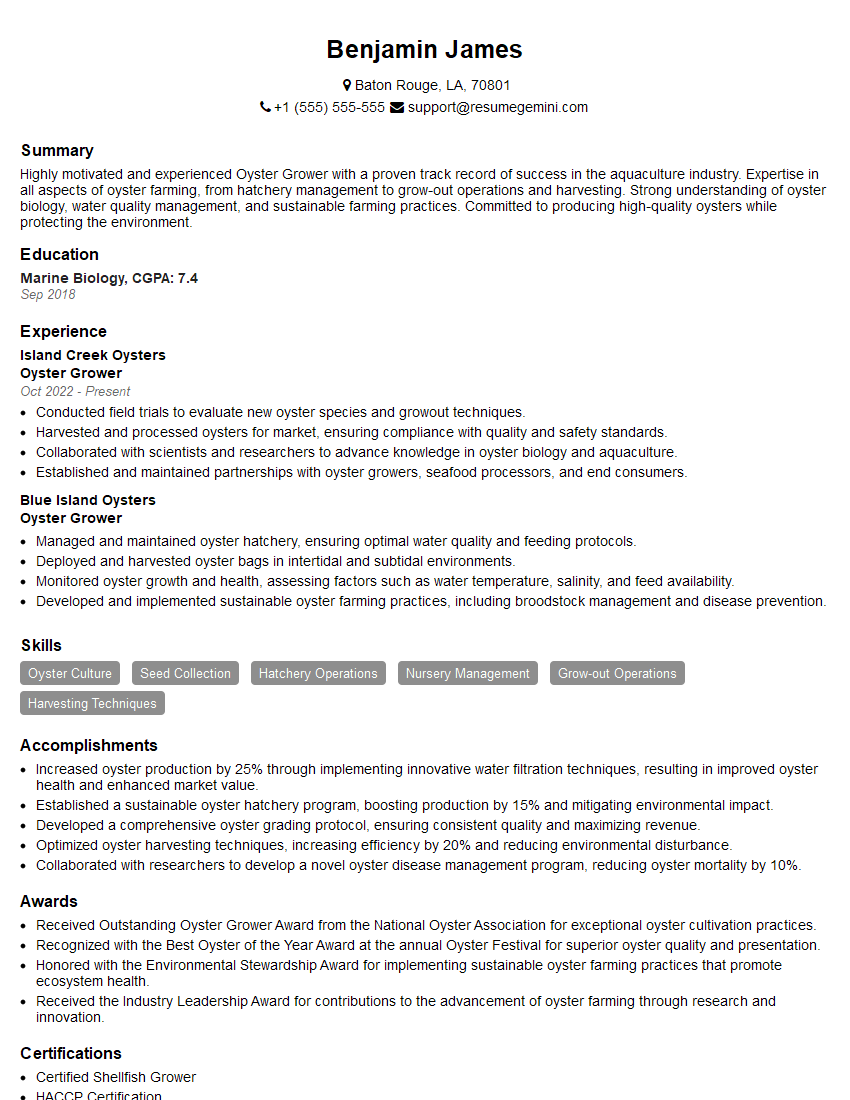
Mastering Oyster Biology and Aquaculture opens doors to a rewarding career in a growing industry. From research and development to farm management and policy, expertise in this field is highly sought after. To maximize your job prospects, crafting a strong, ATS-friendly resume is crucial. ResumeGemini can help you build a compelling resume that showcases your skills and experience effectively. We provide examples of resumes tailored specifically to Oyster Biology and Aquaculture to give you a head start. Take the next step towards your dream career – build your best resume with ResumeGemini.
Explore more articles
Users Rating of Our Blogs
Share Your Experience
We value your feedback! Please rate our content and share your thoughts (optional).
What Readers Say About Our Blog
Very informative content, great job.
good