Feeling uncertain about what to expect in your upcoming interview? We’ve got you covered! This blog highlights the most important High-volume sewing skills interview questions and provides actionable advice to help you stand out as the ideal candidate. Let’s pave the way for your success.
Questions Asked in High-volume sewing skills Interview
Q 1. What types of industrial sewing machines are you proficient with?
My expertise spans a wide range of industrial sewing machines, including single-needle and double-needle lockstitch machines, overlock (serger) machines, coverstitch machines, and specialized machines like bartacking machines and button-sewing machines. I’m proficient with both mechanical and computerized models from leading manufacturers such as Juki, Singer, and Brother. My experience includes operating high-speed machines designed for mass production, demanding precision and efficiency.
For example, I’m highly skilled in operating Juki high-speed lockstitch machines for assembling garments like trousers and shirts, and I’m equally comfortable using a Brother overlock machine for finishing seams to prevent fraying and improve durability. My familiarity extends to adjusting machine tension, stitch length, and other parameters to meet specific project requirements.
Q 2. Describe your experience with different stitch types and their applications.
Different stitch types serve distinct purposes in garment construction. A lockstitch, for instance (created by a lockstitch machine), is a strong, versatile stitch ideal for seams that require durability, such as pant legs or shirt side seams. Overlock stitches, created by serger machines, finish raw edges, preventing fraying while adding elasticity. Coverstitches, which use multiple needles, create a decorative and durable stitch, often used on hems or necklines.
- Lockstitch: The most common stitch; strong and versatile.
- Overlock stitch (serge): Finishes raw edges, prevents fraying and provides stretch.
- Coverstitch: Decorative stitch often used for hemming and finishing.
- Chain stitch: Used for temporary basting or in some specialized applications.
- Blind stitch: Creates an almost invisible hem.
Choosing the right stitch is crucial for garment quality. A lockstitch might be suitable for a heavy-duty jacket, while a delicate blind stitch is preferred for a fine silk blouse. I select stitches based on fabric weight, desired durability, and aesthetic requirements.
Q 3. What is your experience with troubleshooting sewing machine malfunctions?
Troubleshooting is a critical skill in high-volume sewing. I systematically approach malfunctions, starting with the most common causes. For example, inconsistent stitching often points to problems with needle condition, thread tension, or machine timing. A skipped stitch might indicate a bent needle, improper threading, or a problem with the feed dogs. I’m trained to identify and resolve these issues quickly, minimizing downtime.
My troubleshooting process involves:
- Visual inspection: Checking for obvious problems like broken needles, loose threads, or jammed components.
- Testing: Running test stitches with different settings to isolate the problem.
- Adjustments: Adjusting tension, stitch length, and other parameters.
- Component checks: Checking the feed dogs, hook, and other internal components if necessary.
- Maintenance: Performing routine maintenance such as cleaning, oiling, and replacing parts when required.
I’ve developed a keen sense for recognizing patterns and pinpointing the source of the problem efficiently. I remember once, a machine was producing inconsistent stitches, and it turned out to be a tiny piece of lint clogging a critical part of the mechanism. A quick cleaning solved the problem.
Q 4. How do you maintain consistent stitch quality at high production speeds?
Maintaining consistent stitch quality at high speeds requires meticulous attention to detail and preventative maintenance. It’s like driving a high-performance car—you need to know how to handle it properly. First, I carefully select the correct needle and thread type for the fabric. Second, I ensure the machine is properly oiled and cleaned. Then, I meticulously monitor the tension and stitch length. Any deviations are promptly adjusted. This consistent monitoring is essential for consistent quality.
Regular preventative maintenance is key; this includes cleaning the machine, lubricating moving parts, and replacing worn components, such as needles, before they cause problems. Additionally, operator skill is vital; maintaining a consistent speed and feed rate minimizes strain on the machine and improves stitch quality. I employ a standardized setup routine before each job, ensuring consistent starting conditions.
Q 5. Explain your process for identifying and resolving quality issues in sewn garments.
My approach to quality control involves a multi-stage process. It starts with a thorough understanding of the design specifications and quality standards. During the production process, I conduct regular checks for stitch quality, seam integrity, fabric flaws, and adherence to specifications. Any discrepancies are immediately addressed, and the root cause is identified. This often involves careful examination of the stitching and fabric to determine the nature and origin of the problem.
My process typically includes:
- Visual inspection: Checking for obvious flaws like skipped stitches, broken threads, or uneven seams.
- Measurement checks: Verifying seam allowances and garment dimensions against specifications.
- Stress testing: Assessing the durability of seams and stitch quality by applying stress.
- Root cause analysis: Investigating the reason for defects to prevent recurrence. This might involve checking the machine settings, materials, or the sewing process itself.
For instance, if I find consistent seam slippage in a particular area of a garment, I’d investigate everything from needle type to tension to fabric quality and make the necessary adjustments.
Q 6. What is your experience with different sewing machine needles and threads?
Selecting the appropriate needle and thread is critical for achieving high-quality seams. The needle must be the correct size and type for the fabric—a fine needle for delicate fabrics, a heavier needle for thicker materials. The wrong needle can lead to skipped stitches, broken needles, and fabric damage. The thread must also match the fabric’s weight and type; using the incorrect thread can lead to weak seams or poor aesthetics.
I have experience with a wide variety of needles, from sharps and ballpoints to stretch needles and embroidery needles. My thread knowledge covers different materials like cotton, polyester, nylon, and silk, as well as varying thread weights and finishes. Matching the needle and thread to the fabric and machine is vital for efficient sewing and quality results.
Q 7. How do you ensure efficient use of materials and minimize waste in high-volume sewing?
Efficient material use and waste minimization are essential in high-volume sewing. My strategies involve careful planning and precise cutting techniques, utilizing computer-aided design (CAD) systems and efficient pattern layout methods to minimize fabric waste. This process involves nesting patterns to optimize material use and reduce waste significantly. Further, I ensure that fabric scraps are properly sorted and reused whenever possible, for example, for smaller parts or sample creations.
Other strategies I employ include:
- Precise cutting: Using sharp cutting tools and following exact patterns.
- Efficient nesting: Optimizing pattern placement to minimize fabric waste.
- Scrap utilization: Finding alternative uses for fabric scraps.
- Lean manufacturing principles: Applying techniques to streamline the sewing process and reduce waste.
By implementing these strategies, I contribute to both cost savings and environmental sustainability.
Q 8. Describe your experience working in a fast-paced production environment.
My experience in fast-paced production environments is extensive. For instance, during my time at [Previous Company Name], we routinely produced over 5000 units of [Product Type] per week. This required exceptional efficiency and the ability to adapt to constantly changing priorities. Think of it like a well-oiled machine – every team member knew their role, and we seamlessly integrated to meet deadlines. We used lean manufacturing principles, such as Kanban, to manage workflow and minimize waste. This involved prioritizing tasks based on urgency and constantly monitoring our progress against the production schedule. We also implemented strategies to prevent bottlenecks and identify potential issues early, such as daily stand-up meetings to discuss any roadblocks or challenges.
One specific example involved a sudden increase in orders for a particular product. Rather than panicking, we immediately analyzed the workflow and identified a bottleneck in the stitching stage. We quickly re-allocated resources, added an extra sewing machine, and provided additional training to operators, allowing us to meet the increased demand without compromising quality. This demonstrates my ability to think critically and solve problems under pressure in a high-volume environment.
Q 9. How familiar are you with different fabric types and their sewing characteristics?
I’m highly familiar with a wide range of fabrics and their unique sewing characteristics. My experience encompasses everything from delicate silks and chiffons requiring careful handling and specialized needles to durable denim and canvas, demanding robust stitching techniques and heavy-duty machines. I understand the drape, weight, stretch, and fraying tendencies of different materials, which directly impacts needle selection, stitch type, and seam allowance. For example, working with stretch fabrics requires using a stretch stitch to allow for movement without compromising seam strength. Conversely, delicate fabrics necessitate a smaller stitch length and specialized needles to prevent damage. I’ve worked extensively with synthetics, such as polyester and nylon, and natural fibers like cotton, linen, and wool. My knowledge of these fabrics extends to their appropriate cleaning and care instructions, which is vital for providing end-users with valuable information.
Imagine trying to sew a silk scarf with a heavy-duty needle designed for denim – the result would be a disaster! Understanding fabric properties ensures a successful outcome and allows for the production of high-quality garments.
Q 10. What safety precautions do you follow when operating industrial sewing machines?
Safety is paramount in my work. Operating industrial sewing machines necessitates rigorous adherence to safety protocols. This starts with always using machine guards and ensuring they are properly secured. Never operating the machine with loose clothing or jewelry that could get caught in the moving parts is critical. Regular maintenance checks of the machine are vital, ensuring the needle is securely fastened and the machine is properly lubricated to prevent malfunctions. I always use appropriate safety glasses to protect my eyes from flying debris, and I am aware of the potential dangers of repetitive strain injuries (RSI). I employ ergonomic techniques to reduce the risk of RSI, such as taking regular breaks, maintaining proper posture, and adjusting the machine to a comfortable height.
In case of a needle breakage, I know the correct procedure for safely replacing it and checking the surrounding area for any broken pieces. We’re trained on emergency procedures, including how to properly shut down a machine in case of a malfunction. I believe a safe work environment contributes to higher productivity and quality work. It’s not just about avoiding accidents; it’s about creating a culture of safety consciousness.
Q 11. How do you handle production deadlines and unexpected delays?
Meeting deadlines is a crucial aspect of my work. I prioritize tasks based on their due dates and urgency, utilizing tools like project management software to track progress and anticipate potential delays. If I encounter unexpected delays, such as equipment malfunctions or material shortages, I immediately communicate with my supervisor and team members to collaboratively develop solutions. We explore options such as re-allocating resources, finding alternative suppliers, or adjusting the production schedule to minimize the impact of the delay.
For example, during a recent project, a critical part of the machinery broke down, threatening to miss a crucial deadline. Instead of panicking, I immediately contacted maintenance and worked with my team to prioritize tasks that didn’t require the broken machinery. We also communicated proactively with our client, keeping them informed about the situation and the contingency plan. This transparency helped to build trust and prevent any major disruptions. Open communication and proactive problem-solving are key to navigating unexpected challenges in a production setting.
Q 12. What is your experience with sewing patterns and specifications?
My experience with sewing patterns and specifications is thorough. I can interpret technical drawings, grading charts, and bill of materials (BOM) with accuracy and efficiency. I understand how to properly measure fabric, cut accurately to minimize waste, and follow pattern markings meticulously. I am proficient in using various pattern-making tools and software, ensuring consistency and precision. I can adjust patterns to accommodate different sizes or make necessary modifications based on design changes or customer requests. This includes understanding seam allowances, marking notches, and understanding different pattern pieces and their placements. I am also adept at creating my own patterns from scratch, which often happens when working with unique or custom-designed garments.
Imagine trying to sew a complicated garment without a clear pattern – it would be extremely challenging! Understanding patterns and specifications is the foundation of producing consistent, accurate, and high-quality sewn products.
Q 13. Describe your experience with quality control procedures in sewing.
Quality control is an integral part of my workflow. I perform regular checks at different stages of the sewing process to ensure the finished product meets the required standards. This includes inspecting fabric for flaws before cutting, checking the accuracy of stitching, ensuring consistent seam allowances, and verifying the overall fit and finish of the garment. I am familiar with various quality control methods and tools, including using quality control checklists and measuring instruments to ensure accuracy and consistency. I am also trained in identifying and resolving common sewing defects, such as skipped stitches, puckering, or uneven seams. If a defect is found, I know the appropriate steps to address it and how to properly document it to prevent future recurrences.
Think of quality control as a safety net – it catches potential issues early, preventing the production of faulty products and ultimately saving the company money and protecting its reputation.
Q 14. How do you work effectively as part of a sewing team?
I’m a strong team player and value collaboration. In a sewing team environment, effective communication and mutual respect are key. I believe in sharing knowledge and assisting colleagues whenever possible. I am adept at working with individuals at various skill levels and contribute to a positive and productive team atmosphere. I can work both independently and collaboratively, adapting to the needs of the project and the team’s dynamics. I understand the importance of maintaining a clean and organized workspace, which contributes to efficiency and reduces the likelihood of errors. We often work together to meet targets efficiently; for instance, if one team member is struggling with a particular task, others might step in to assist, ensuring that the overall workflow remains consistent.
A successful sewing team operates like a well-coordinated orchestra – each individual plays their part, and the result is a beautiful and harmonious product.
Q 15. What is your experience with different types of sewing machine attachments?
My experience with sewing machine attachments is extensive, encompassing a wide range of functionalities crucial for high-volume production. I’m proficient with attachments like different types of feet (roller feet for difficult fabrics, zipper feet, blind hem feet, walking feet for even feeding), various types of needles (depending on fabric weight and type), and specialized tools such as edge stitching guides and quilting guides. For instance, when working with delicate fabrics like silk, utilizing a roller foot prevents the fabric from being pulled or damaged. Similarly, a walking foot ensures consistent feeding of multiple layers of fabric during quilting or when working with heavy denim.
Understanding the nuances of each attachment is paramount; for example, choosing the wrong needle can lead to skipped stitches or broken needles, significantly impacting productivity. My skill lies not only in knowing which attachment to use, but also in quickly changing and adjusting them to meet the demands of different projects.
Career Expert Tips:
- Ace those interviews! Prepare effectively by reviewing the Top 50 Most Common Interview Questions on ResumeGemini.
- Navigate your job search with confidence! Explore a wide range of Career Tips on ResumeGemini. Learn about common challenges and recommendations to overcome them.
- Craft the perfect resume! Master the Art of Resume Writing with ResumeGemini’s guide. Showcase your unique qualifications and achievements effectively.
- Don’t miss out on holiday savings! Build your dream resume with ResumeGemini’s ATS optimized templates.
Q 16. How do you maintain accurate records of production output?
Maintaining accurate production records in a high-volume setting is essential for tracking efficiency and identifying areas for improvement. I utilize a combination of methods to achieve this. Firstly, I maintain a detailed log for each production run, noting the start and end times, the number of units completed, any materials used, and any challenges encountered. This is often done digitally using a spreadsheet program or dedicated production tracking software.
Secondly, I conduct regular quality checks and record the number of rejected units. This data is crucial for calculating the overall yield and identifying potential issues in the production process. For example, a sudden increase in rejected units might indicate a problem with the machine settings or a flaw in the material. Finally, I consistently review these records to identify trends and implement corrective actions, ensuring continuous improvement in efficiency and quality.
Q 17. How do you handle repetitive tasks in a high-volume setting?
Handling repetitive tasks efficiently is key in high-volume sewing. I combat monotony and maintain accuracy through a structured approach. This involves breaking down complex tasks into smaller, manageable steps. I’ll also incorporate small breaks throughout the day to prevent fatigue and maintain focus, ensuring consistent quality. Furthermore, I actively look for ways to optimize repetitive processes. For instance, I might design a simple jig or template to streamline a particular step, or suggest improvements to the work flow to reduce unnecessary movements.
A practical example: when sewing identical pockets onto hundreds of garments, I would establish a rhythm and focus on consistent placement and stitching. Using a guide and ensuring the machine is properly set up allows me to minimize errors and maintain a high level of output without sacrificing quality. Regular self-checks, perhaps after every 20-30 pieces, help ensure quality control.
Q 18. Describe your experience using computerized sewing machines.
My experience with computerized sewing machines is extensive. I’m proficient in operating various models, understanding their programming capabilities and troubleshooting any technical issues. This includes setting stitch length, width, and patterns, adjusting speed and tension, and utilizing advanced features like automatic needle threading and sensor adjustments. I’m comfortable working with different software interfaces, understanding their strengths and limitations.
For instance, I’ve used computerized machines to create intricate embroidery patterns and complex designs with high precision, something that would be significantly more challenging on a standard machine. I can quickly program the machine to meet specific production needs and troubleshoot any malfunctions, minimizing downtime.
Q 19. What is your experience with different sewing techniques like topstitching, blind stitching, etc.?
My sewing technique repertoire includes various methods essential for high-volume production. Topstitching, for instance, requires consistent stitch length and even spacing to achieve a professional finish. Blind stitching is crucial for clean, invisible seams, often used on hems and linings. I also have experience with techniques like French seams, flat-felled seams, and bound seams, each selected depending on the garment type and desired durability. I adapt my technique according to the fabric type and the intended outcome.
For example, when topstitching a denim jacket, I would use a heavier-duty needle and adjust the pressure foot to ensure even stitching on the thick fabric. For delicate fabrics, I would use a finer needle and reduce the pressure to prevent puckering. The ability to quickly switch between techniques is vital in a high-volume environment.
Q 20. How do you ensure consistent thread tension during high-volume sewing?
Maintaining consistent thread tension is critical for quality in high-volume sewing. This requires a thorough understanding of the machine’s settings and the properties of different threads and fabrics. I regularly check and adjust the tension dial on the machine based on the thread type and fabric weight, ensuring the stitches are neither too loose nor too tight. A properly adjusted tension results in neat, evenly spaced stitches that won’t break easily. If tension issues persist, I diagnose whether it’s a machine setting, thread quality, or needle issue.
Consistent monitoring is key. I frequently inspect my stitches throughout the production run. If the tension changes, I immediately investigate and adjust the settings to avoid producing faulty items. This proactive approach minimizes waste and maintains productivity.
Q 21. Describe your experience with pre-sewing preparation tasks like cutting and marking fabric.
Pre-sewing preparation significantly impacts efficiency and quality in high-volume work. I’m adept at accurately cutting and marking fabric using various methods, including patterns, cutting guides, and laser-cutting technology (if available). Accurate cutting ensures consistent garment sizes and reduces waste. Precise marking is equally important for placement of pockets, buttons, and other details. I understand the importance of proper fabric handling and storage to prevent damage and maintain consistency.
For example, when cutting multiple layers of fabric, I carefully align the layers to ensure each piece is cut uniformly. To minimize errors during marking, I use precise measuring tools and double-check all markings before proceeding to sewing. This meticulous approach contributes to the overall quality and minimizes errors further down the production line.
Q 22. What is your experience with different types of seams and their construction?
My experience encompasses a wide range of seam constructions, crucial for high-volume sewing. Understanding the properties of different seams is key to ensuring durability and aesthetic appeal. For instance, a simple straight stitch seam is efficient for mass production but might not be suitable for areas requiring significant stretch. Conversely, a French seam, while more time-consuming, offers a superior finish and prevents fraying, ideal for high-end garments or those needing extra durability. I’m also proficient in constructing serged seams for clean, professional edges on knit fabrics, flat-felled seams for robust, durable seams commonly used in menswear, and bound seams for a neat finish on curved edges. My expertise extends to selecting the appropriate seam based on fabric type, garment design, and production needs. For example, I would use a zig-zag stitch on a seam prone to fraying, instead of a straight stitch.
- Straight Stitch Seam: Basic, fast, suitable for woven fabrics.
- French Seam: Encapsulates raw edges, provides a clean finish, durable.
- Serged Seam: Clean finish, prevents fraying, ideal for knit fabrics.
- Flat-Felled Seam: Strong, durable, typically used in menswear.
- Bound Seam: Neat, professional finish for curved edges.
Q 23. How familiar are you with lean manufacturing principles in a sewing environment?
Lean manufacturing principles are integral to efficient high-volume sewing. I’m highly familiar with concepts like 5S (Sort, Set in Order, Shine, Standardize, Sustain), Kaizen (continuous improvement), and Just-in-Time (JIT) inventory management. In practice, this means optimizing workflow to minimize waste (material, time, motion), identifying bottlenecks, and improving processes continually. For instance, in a previous role, we implemented a 5S system in our cutting room, resulting in a 15% reduction in material waste and a 10% increase in cutting efficiency. We also utilized Kanban systems to manage the flow of materials between different stages of production, ensuring a smooth and uninterrupted process. My experience includes optimizing sewing machine setups to reduce changeover times and implementing quality control checks at each stage to prevent defects from progressing down the production line.
Q 24. How do you adapt to changes in production requirements and schedules?
Adaptability is key in high-volume sewing. I approach changes in production requirements and schedules by first understanding the new demands – what has changed, and why. I then prioritize tasks based on urgency and impact, communicating effectively with the team to ensure everyone is informed and on the same page. I’m comfortable using different types of sewing machines and adjusting my speed and technique to meet varying demands. For example, if a rush order comes in, I would prioritize that order while maintaining the overall production schedule as much as possible, possibly by re-allocating resources or working overtime if necessary. This involves careful planning and effective communication to minimize disruptions.
Q 25. What are your strategies for managing stress in a high-pressure production setting?
High-pressure production environments can be stressful. My strategies include prioritizing organization and time management. I break down large tasks into smaller, manageable steps, which helps prevent feeling overwhelmed. I also practice mindfulness techniques to stay focused and manage stress levels. Regular breaks and proper hydration also significantly contribute to my ability to maintain performance under pressure. Furthermore, proactive communication with my team helps address potential issues early and prevents stress from escalating.
Q 26. Describe a time you had to solve a complex sewing-related problem.
In a previous role, we encountered a recurring problem with puckering in a specific seam of a particular garment. We tried different stitch types and needle sizes, but the issue persisted. My approach involved systematically analyzing the problem. I examined the fabric composition, the tension of the sewing machine, the needle type, and the speed of the sewing process. I discovered that the fabric was prone to stretching during the sewing process, causing the puckering. By carefully adjusting the machine tension and sewing speed, and implementing a slightly different seam construction, we resolved the issue, significantly improving the quality of the finished product. This experience reinforced the importance of methodical troubleshooting and careful attention to detail in high-volume sewing.
Q 27. What is your experience with using different types of pressing equipment?
My experience includes using various pressing equipment, from basic irons to industrial pressing machines, including steam irons, steam presses, and vacuum presses. I understand the importance of selecting the appropriate equipment for different fabrics and garment types. For example, I would use a steam iron for delicate fabrics like silk and a steam press for more robust materials like cotton or denim. Vacuum presses are ideal for creating a perfectly smooth and flat finish on larger garment pieces. I’m also proficient in using various pressing tools like tailor’s ham, sleeve board, and point presser to achieve professional finishes and ensure accurate shaping of garments.
Q 28. How do you prioritize tasks in a high-volume production setting?
In a high-volume production setting, task prioritization is crucial. I use a combination of methods to effectively manage my workload. First, I identify urgent and important tasks using a matrix prioritizing tasks based on urgency and impact. Secondly, I consider deadlines and production schedules to organize my work systematically. Thirdly, I often collaborate with team members to efficiently handle tasks, distributing workload to maximize productivity. This approach ensures timely completion of all tasks while maintaining the highest quality of work.
Key Topics to Learn for High-Volume Sewing Skills Interview
- Machine Operation & Maintenance: Understanding various industrial sewing machines (e.g., single-needle, double-needle, overlock), their functionalities, and routine maintenance procedures. Practical application includes troubleshooting minor machine malfunctions and performing preventative maintenance.
- Sewing Techniques & Speed: Mastering high-speed sewing techniques for various fabrics and stitch types. Practical application involves demonstrating efficient stitching while maintaining consistent quality and accuracy.
- Quality Control & Inspection: Identifying and correcting stitching defects, ensuring consistent quality throughout the production process. Practical application includes understanding quality standards and using appropriate inspection methods.
- Production Efficiency & Time Management: Optimizing workflow and meeting production targets within deadlines. Practical application involves prioritizing tasks, managing time effectively, and working efficiently within a team environment.
- Safety Procedures & Ergonomics: Adhering to safety regulations and practicing proper ergonomics to prevent injuries. Practical application includes demonstrating safe machine operation and understanding workplace safety protocols.
- Fabric Knowledge & Handling: Understanding different fabric types, their properties, and appropriate sewing techniques for each. Practical application includes selecting the correct needle, thread, and stitch type for various fabrics.
- Teamwork & Communication: Collaborating effectively with team members and communicating clearly with supervisors. Practical application includes participating in team discussions, providing constructive feedback, and following instructions accurately.
Next Steps
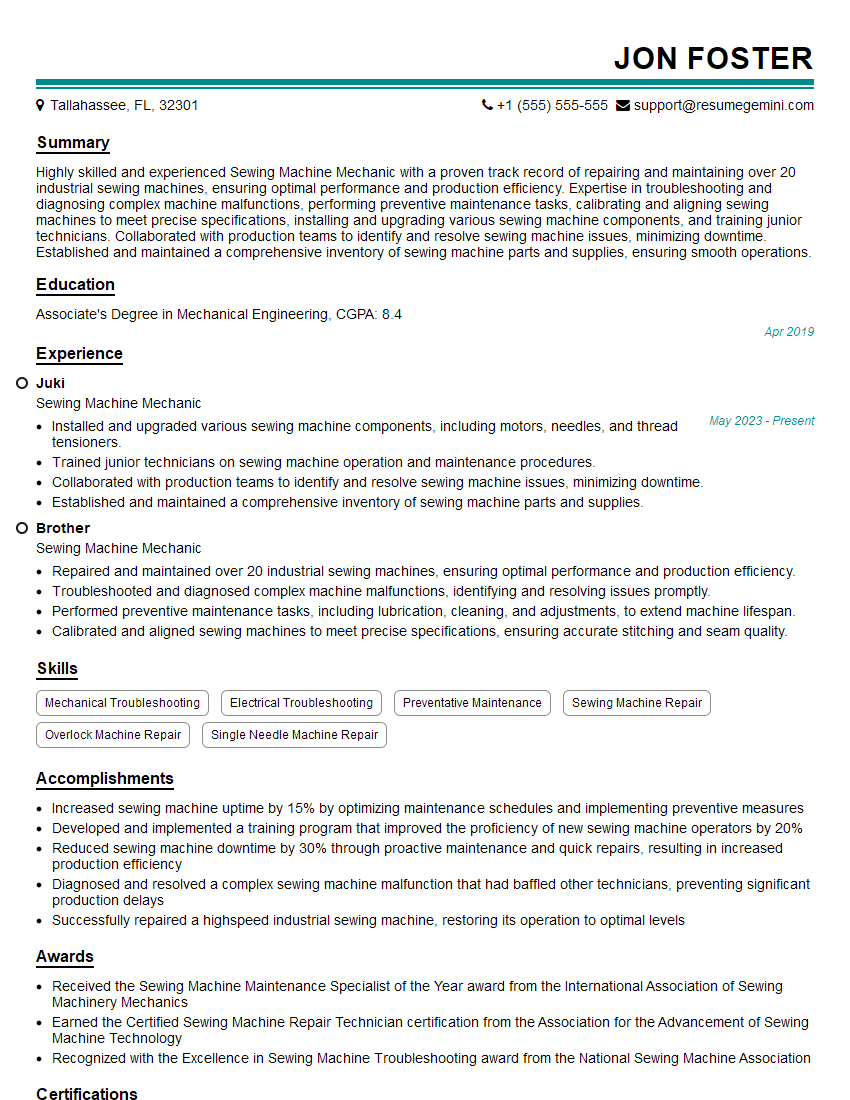
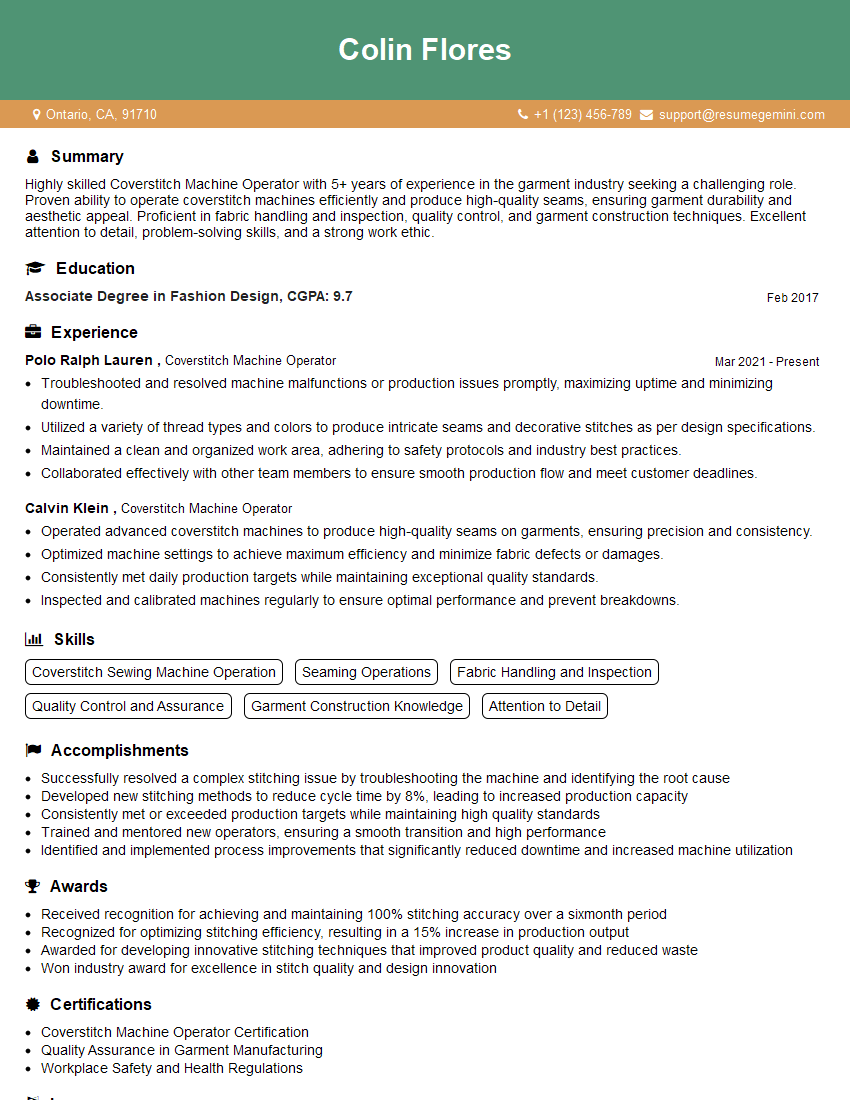
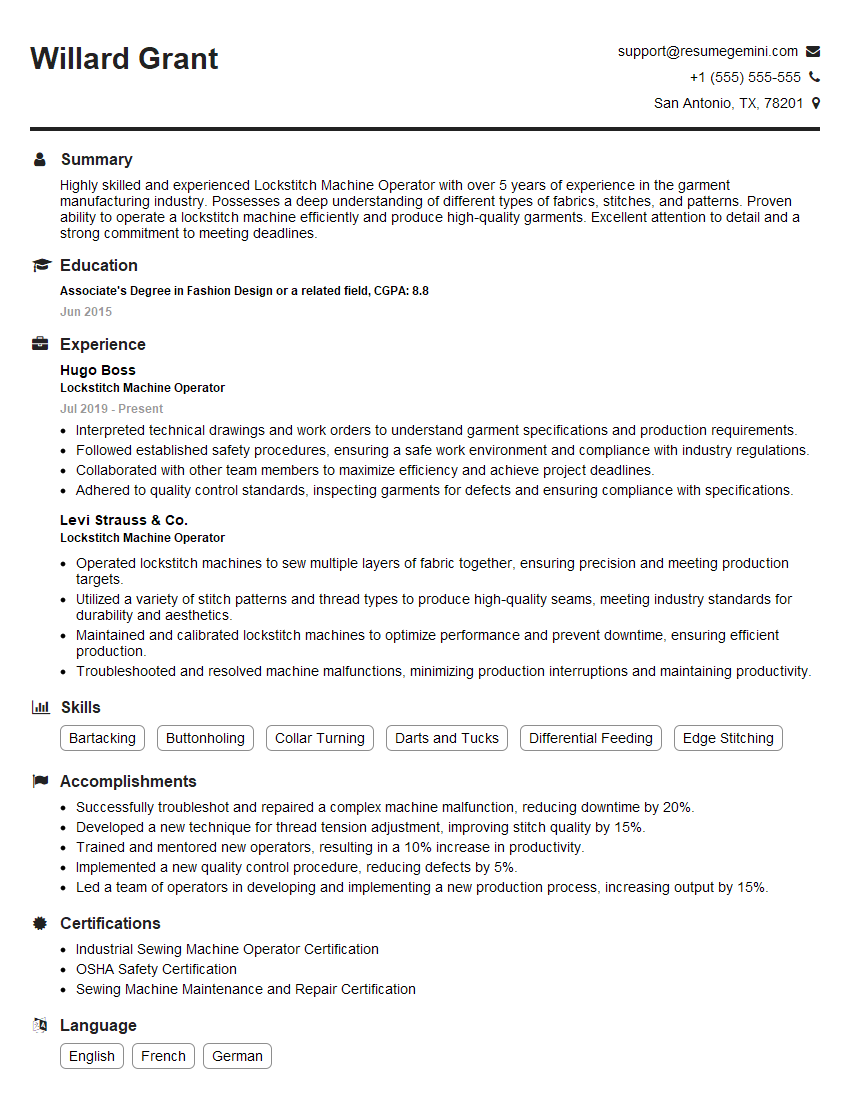
Mastering high-volume sewing skills is crucial for career advancement in the apparel and textile industry, opening doors to higher-paying roles and increased responsibility. To significantly boost your job prospects, creating an ATS-friendly resume is essential. ResumeGemini can help you build a powerful resume that highlights your skills and experience effectively, ensuring your application gets noticed. We provide examples of resumes tailored to high-volume sewing skills to guide you in showcasing your expertise. Take the next step towards your dream career – build a winning resume with ResumeGemini today.
Explore more articles
Users Rating of Our Blogs
Share Your Experience
We value your feedback! Please rate our content and share your thoughts (optional).
What Readers Say About Our Blog
Very informative content, great job.
good