The right preparation can turn an interview into an opportunity to showcase your expertise. This guide to Packaging Standards interview questions is your ultimate resource, providing key insights and tips to help you ace your responses and stand out as a top candidate.
Questions Asked in Packaging Standards Interview
Q 1. Explain your understanding of ISO 22000 and its relevance to packaging.
ISO 22000 is a globally recognized standard that specifies the requirements for a Food Safety Management System (FSMS). It’s crucial for the packaging industry because packaging plays a vital role in maintaining food safety throughout the supply chain. The standard emphasizes hazard analysis and critical control points (HACCP) principles, ensuring that potential hazards are identified and controlled at every stage, including packaging design, material selection, and manufacturing processes.
For example, ISO 22000 dictates that packaging materials must be chosen to prevent contamination and migration of harmful substances into the food. This might involve selecting materials that are compatible with the food product and the storage conditions, and ensuring the absence of substances that could leach into the food at unsafe levels. The standard also outlines requirements for traceability and documentation, ensuring that any issues with the packaging can be quickly identified and addressed.
In my experience, implementing ISO 22000 in packaging design involves close collaboration with food manufacturers to thoroughly assess potential food safety risks. This includes things like ensuring the integrity of seals, preventing oxygen transmission, and choosing materials that don’t affect the food’s sensory properties. Successfully implementing this standard ensures consumer safety and builds trust.
Q 2. What are the key differences between primary, secondary, and tertiary packaging?
The terms primary, secondary, and tertiary packaging refer to the different layers of protection surrounding a product. Think of it like layers of an onion, each offering a specific function.
- Primary Packaging: This is the layer in direct contact with the product. It’s the most important barrier and protects the product directly. Examples include the bottle for a juice, the can for soup, or the plastic film around a single candy bar.
- Secondary Packaging: This layer encloses the primary packaging. Its purpose is to group primary packages and provide further protection and marketing. Examples include a cardboard box holding a six-pack of juice bottles or a shrink wrap holding multiple candy bars.
- Tertiary Packaging: This is the outermost layer and is primarily for bulk handling and transportation. It’s focused on efficiency and protection during shipping and storage. Examples are pallets, shipping containers, or large cardboard boxes used to transport many secondary packages.
Understanding these distinctions is vital for efficient packaging design. Each layer plays a crucial role in product safety, preservation, and presentation, from the factory floor to the customer’s hands. For example, a poorly designed secondary packaging might lead to damage to primary packages during transportation, even if the primary packaging itself is of high quality.
Q 3. Describe your experience with different packaging materials (e.g., paperboard, plastic, metal).
I’ve extensive experience working with various packaging materials. Each has its unique properties and applications. My knowledge encompasses the strengths and limitations of each.
- Paperboard: This is a versatile material, readily recyclable and relatively inexpensive. Its print quality is excellent, making it suitable for high-impact graphic designs. However, its inherent limitations include susceptibility to moisture damage and less strength compared to some other materials.
- Plastics: Plastics offer a huge range of properties depending on the type of polymer used. From flexible films (e.g., polyethylene, polypropylene) for food wrapping to rigid containers (e.g., PET bottles, PVC trays), plastics are ubiquitous. However, concerns regarding recyclability and environmental impact are increasingly important considerations.
- Metal: Metals like aluminum and tinplate provide excellent barrier properties, making them ideal for products requiring protection from oxygen and moisture. They are durable and reusable, but their weight and manufacturing costs are higher compared to other materials. Aluminum cans, for example, are lightweight yet provide strong protection for beverages.
My experience involves material selection based on factors such as product characteristics, shelf life requirements, cost considerations, environmental impact, and regulatory compliance. For example, I’ve been involved in projects where we switched from a more expensive, but superior, barrier material to a more cost-effective alternative that still met the requirements for a particular product’s shelf-life.
Q 4. How do you ensure packaging designs meet regulatory requirements (e.g., FDA, EU)?
Ensuring packaging designs meet regulatory requirements is paramount. This involves thorough understanding of relevant regulations, including those from the FDA (Food and Drug Administration) in the US and the EU (European Union). This typically starts with thorough research and documentation.
The process begins by identifying which regulations are applicable to the specific product and packaging materials. For example, food packaging needs to comply with FDA regulations regarding material composition and food contact substances. This means examining the potential migration of substances from the packaging to the food product and ensuring it remains within safe limits. Similarly, EU regulations might include specifics on labeling requirements, materials allowed for specific food types and recyclability directives.
I typically utilize a checklist system to ensure that all regulations are addressed. This includes verifying compliance through material certifications, conducting necessary testing (e.g., migration testing), and preparing documentation to support the compliance claims. Non-compliance can lead to recalls, fines, and reputational damage, which is why a proactive and meticulous approach is essential. This includes staying up-to-date on evolving regulations and working with regulatory experts when needed.
Q 5. Explain the importance of barrier properties in packaging.
Barrier properties in packaging refer to the material’s ability to prevent the passage of gases, liquids, and other substances into or out of the package. Maintaining product quality and extending shelf life often hinges on these properties. These properties are critical to product integrity and consumer safety.
For example, oxygen barrier properties are crucial for preventing oxidation in food products, which can lead to rancidity and spoilage. Moisture barrier properties protect products from becoming damp, which could lead to mold growth or degradation. Similarly, light barrier properties are essential for protecting light-sensitive products, such as pharmaceuticals or certain types of food.
Choosing appropriate packaging materials with desired barrier properties is critical. For instance, using a metallized film or a multilayer structure (e.g., a combination of plastic and aluminum foil) can create a highly effective oxygen and moisture barrier. Failure to select the appropriate barrier properties can result in reduced product shelf life, sensory changes, and even potential safety hazards.
Q 6. How do you conduct shelf-life testing for packaged products?
Shelf-life testing involves systematically evaluating how a packaged product changes over time under different storage conditions. This process is crucial for determining the product’s optimal shelf life and ensuring its quality and safety throughout its intended duration.
The process typically involves placing samples of the packaged product in various environmental chambers that simulate different temperatures, humidity, and light levels. Regularly, samples are taken and tested to assess various parameters relevant to the product, including sensory attributes (taste, texture, aroma), microbial growth, chemical changes, and physical characteristics (color, appearance).
Data gathered from these tests is then analyzed to establish a relationship between storage conditions and product degradation. This analysis determines the maximum shelf life that can be assigned while still maintaining quality and safety standards. For example, accelerated shelf-life testing using elevated temperatures allows for a faster evaluation of product degradation, although it requires careful extrapolation to ambient conditions.
Q 7. Describe your experience with different types of packaging closures.
Packaging closures are essential for maintaining product integrity, preventing contamination, and ensuring ease of use for the consumer. My experience spans a wide variety of closure types, each with its own advantages and disadvantages.
- Screw Caps: These are common for bottles and jars, offering good sealing and ease of opening and closing.
- Press-on/Snap-on Caps: Often used for smaller containers, these closures are simpler and sometimes more economical, but might not provide as secure a seal.
- Child-Resistant Caps: Required for certain products (e.g., pharmaceuticals, household cleaners) to prevent accidental access by children.
- Tamper-Evident Seals: These seals are designed to indicate whether a container has been opened, offering security and assurance to the consumer.
- Spouts and Dispensers: These are employed for easy pouring or dispensing of liquids or semi-liquids.
The selection of an appropriate closure depends heavily on the nature of the product, its packaging material, and the desired level of protection and convenience. For example, a product with a high risk of spoilage might require a closure with superior sealing capabilities, like a screw cap with an inner liner, compared to a product with a longer shelf-life which might only need a press-on cap.
Q 8. What are the common causes of packaging failures, and how can they be prevented?
Packaging failures stem from a variety of sources, broadly categorized as design flaws, material inadequacies, and process errors. Let’s examine these in detail:
- Design Flaws: Inadequate structural design can lead to collapses during transit. For example, insufficient corner protection on a box containing fragile items can result in damage. Poorly designed closures can cause contents to spill or the packaging to come open. Inadequate consideration for environmental factors such as temperature and humidity fluctuations can also lead to failure.
- Material Inadequacies: Using substandard materials – for example, cardboard with low bursting strength or a plastic film with poor tear resistance – compromises the packaging’s protective capabilities. Moisture absorption by the packaging material can also lead to product spoilage or damage. The wrong type of adhesive may fail under stress or with temperature changes.
- Process Errors: Incorrect assembly of the packaging during the manufacturing process can create weak points. For example, improper sealing of a bag can lead to leakage. Incorrect stacking or handling during storage and transportation can also cause damage. Overfilling a package can exert too much internal pressure, causing the package to burst.
Prevention Strategies: Preventing packaging failures involves a multifaceted approach:
- Robust Design: Utilize advanced design software such as CAD or SolidWorks to conduct Finite Element Analysis (FEA) simulations that assess structural integrity under various stress conditions, including drop tests and compression tests. Develop designs with ample cushioning and reinforcement in areas prone to damage.
- Material Selection: Carefully choose materials based on the product’s fragility, environmental conditions during transit, and required shelf life. Specify the required material properties (e.g., tensile strength, burst strength, water resistance) and adhere strictly to quality control procedures.
- Process Optimization: Implement stringent quality control checkpoints at every stage of the packaging process, from material acquisition to final packaging. Use automated equipment where possible to reduce human error. Regularly train staff on proper packaging procedures.
- Testing and Validation: Conduct rigorous testing programs, including drop tests, vibration tests, and climate chamber testing, to simulate real-world conditions and identify potential weak points before mass production.
For instance, in my previous role, we redesigned a pharmaceutical packaging to include additional internal cushioning, which reduced damage claims by 60% by mitigating vibrations during long-distance shipping.
Q 9. Explain your familiarity with different packaging printing methods.
My experience encompasses a broad range of packaging printing methods, each offering unique advantages and limitations. These include:
- Flexographic Printing: A cost-effective method for high-volume printing on flexible substrates like films and foils. It uses flexible printing plates and is ideal for simple designs and large print runs. I’ve worked extensively with this method for producing packaging for consumer goods.
- Offset Lithography: Produces high-quality, detailed images and is suitable for a wide variety of substrates, including paperboard. However, it is less efficient for shorter print runs. It is frequently used for premium packaging applications that require fine detail and vibrant colours.
- Rotogravure Printing: This method excels in producing high-volume, high-quality prints on flexible materials, particularly for packaging with intricate designs. It’s suitable for printing on various substrates such as plastic films and paper. Cost-effective for very large runs.
- Digital Printing: Offers on-demand printing and is ideal for short run packaging and personalized designs. It’s versatile and allows for faster turnaround times but can be comparatively more expensive for large volumes. I’ve successfully leveraged this for customized packaging and promotional campaigns.
- Screen Printing: Ideal for thick ink layers, specialty inks and unique textures, often used for specialized applications and high-quality finishes. It’s less efficient for high-volume, complex designs.
Choosing the appropriate printing method depends on factors like the required print quality, volume, substrate type, budget, and turnaround time. I am adept at selecting the optimal technique based on a comprehensive assessment of the project requirements.
Q 10. How do you assess the sustainability of different packaging options?
Assessing the sustainability of packaging options involves a holistic evaluation across its entire lifecycle, from raw material sourcing to end-of-life management. I typically consider these key factors:
- Material Choice: Prioritizing renewable and recycled materials like post-consumer recycled (PCR) paperboard, biodegradable plastics (PLA), or compostable materials minimizes environmental impact. I carefully analyze the carbon footprint of different materials.
- Manufacturing Process: Evaluating the energy consumption and emissions associated with the manufacturing process is crucial. Processes with lower energy intensity and reduced waste generation are preferred.
- Packaging Design: Optimizing packaging design to minimize material usage while ensuring product protection is vital. Lightweighting strategies, reduction of void space through clever design, and using minimal packaging components significantly reduce environmental footprint.
- Transportation and Distribution: Considering the efficiency of transportation and distribution networks is important. Optimizing packaging dimensions to maximize space utilization in trucks and containers can reduce fuel consumption and emissions.
- End-of-Life Management: The ease of recycling, composting, or biodegradation is essential. Selecting materials that are easily recyclable or compostable minimizes landfill waste. I always investigate the availability of recycling infrastructure for chosen materials in the target market.
- Lifecycle Assessment (LCA): Conducting a comprehensive LCA study provides a quantitative assessment of a packaging’s environmental impact across its entire lifecycle. This helps in making informed decisions regarding sustainable packaging.
For example, in a recent project, we switched from virgin plastic to PCR plastic for our product packaging, reducing our carbon footprint by 30% while maintaining product protection. We also introduced a design that reduced material usage by 15%.
Q 11. How do you ensure the integrity of packaging throughout the supply chain?
Maintaining packaging integrity throughout the supply chain requires a proactive and multi-layered approach. I employ several strategies:
- Robust Packaging Design: As mentioned earlier, designing packaging to withstand the rigors of handling, transportation, and storage is paramount. This involves using appropriate materials, sufficient cushioning, and secure closures.
- Proper Handling Procedures: Implementing standardized handling procedures at each stage of the supply chain – from manufacturing to warehousing to distribution – is essential to prevent damage. This includes training staff on proper techniques for loading, unloading, and stacking packages.
- Monitoring and Tracking: Utilizing tracking systems such as RFID tags or GPS tracking allows real-time monitoring of the packaging’s condition and location. This provides early warning of potential issues and enables timely intervention.
- Packaging Testing and Quality Control: Regular quality control checks throughout the supply chain ensure that the packaging remains intact and functional. Testing under simulated shipping conditions, using vibration tables and drop testers is vital.
- Collaboration with Supply Chain Partners: Effective communication and collaboration with all stakeholders in the supply chain, including manufacturers, transporters, and distributors, are essential. Sharing best practices and identifying potential vulnerabilities collectively help in ensuring package integrity.
- Damage Reporting and Analysis: Establishing a clear process for reporting and analyzing packaging damage helps identify recurring problems and enables proactive corrective actions. This often involves root cause analysis to determine the source of the failures.
In one instance, by implementing a real-time tracking system, we were able to quickly identify a problem with improper loading techniques at a distribution center and take corrective action, preventing further damage to our products.
Q 12. Explain your experience with packaging design software (e.g., CAD, SolidWorks).
I am proficient in several packaging design software packages, including AutoCAD, SolidWorks, and specialized packaging design software. My experience includes:
- CAD (AutoCAD): I use AutoCAD for creating 2D drawings and technical illustrations for packaging designs, ensuring precise dimensions and specifications for manufacturing. This is crucial for producing accurate templates and ensuring consistency across different production batches.
- SolidWorks: My expertise extends to 3D modeling in SolidWorks, enabling the creation of realistic virtual prototypes to assess structural integrity, optimize designs, and conduct simulations. SolidWorks’ FEA capabilities allow the assessment of packaging strength and durability under various stress scenarios.
- Specialized Packaging Design Software: I’m also familiar with industry-specific software that streamlines the packaging design process. These tools often include features such as automated die-line creation and efficient design visualization. This facilitates quick iteration and reduces design errors.
Using these tools, I can create detailed designs, generate accurate manufacturing specifications, and virtually test the functionality and durability of packaging designs before prototyping. This considerably reduces time-to-market and costs while improving the final product’s quality.
Q 13. What are the key considerations for designing packaging for e-commerce?
E-commerce packaging presents unique challenges, demanding designs that prioritize protection, efficiency, and the customer experience. Key considerations include:
- Protection against Damage: E-commerce packages are often subjected to more rigorous handling during transit. Therefore, the packaging must offer superior protection against shock, vibration, and compression. Appropriate cushioning and robust materials are vital.
- Lightweighting and Cost Efficiency: Minimizing packaging weight reduces shipping costs, which is crucial for profitability in e-commerce. Using lightweight yet protective materials is essential.
- Sustainable Practices: Consumers are increasingly environmentally conscious, making sustainable packaging a key differentiator. Using recycled materials, minimizing packaging waste, and designing for recyclability are critical for success.
- Branding and Customer Experience: The packaging acts as a brand ambassador, creating a positive first impression. Well-designed packaging with attractive graphics, clear instructions, and easy-to-open features enhance the customer experience and brand perception.
- Size and Dimension Optimization: Optimizing package dimensions to minimize void space and maximize space utilization in shipping containers reduces shipping costs and environmental impact. This often involves using custom-sized boxes.
- Ease of Automation: Designs should be compatible with automated packaging and handling systems used in e-commerce fulfillment centers. This ensures efficient and cost-effective processing of orders.
For example, I designed e-commerce packaging that incorporated a custom-fit insert to eliminate void space, reducing material usage by 20% and improving product protection. The design also featured clear, easy-to-follow instructions, leading to positive customer feedback.
Q 14. How do you select appropriate packaging for different products and distribution methods?
Selecting appropriate packaging involves a careful analysis of several factors relating to the product and its journey:
- Product Characteristics: The product’s fragility, weight, size, shape, and susceptibility to environmental factors (temperature, humidity, light) dictate the necessary level of protection.
- Distribution Method: The mode of transportation (air, sea, land) and distance significantly influence packaging requirements. Longer distances necessitate more robust packaging to withstand handling stresses.
- Environmental Conditions: Environmental conditions throughout the supply chain must be factored in. For instance, products shipped to hot or humid climates may require specific temperature-controlled packaging or moisture barriers.
- Shelf Life: For perishable goods, packaging needs to maintain product quality and prevent spoilage. This might include modified atmosphere packaging (MAP) or vacuum sealing.
- Regulatory Requirements: Compliance with relevant regulations concerning food safety, hazardous materials, and labeling requirements is crucial for packaging selection.
- Cost Considerations: Balancing the cost of packaging with the protection it provides is vital. It’s essential to find an optimal balance between cost-effectiveness and product safety.
In practice, I use a decision matrix approach, weighing the relative importance of each factor and selecting the packaging option that best balances protection, cost, sustainability, and regulatory compliance. For example, for a delicate electronic device shipped internationally, I would choose robust packaging with high-impact cushioning, while for a non-perishable item with standard shipping, less protective packaging might suffice.
Q 15. Describe your experience with package testing methods (e.g., drop testing, compression testing).
Package testing is crucial to ensure product protection and maintain quality throughout the supply chain. My experience encompasses a wide range of methods, primarily focusing on drop testing and compression testing. Drop testing simulates the shocks and impacts a package might experience during transit, using calibrated heights and surfaces. This helps determine the package’s ability to withstand drops from varying heights, and data is analyzed to identify weak points or areas for improvement. For example, I worked on a project where we optimized the internal cushioning for a fragile electronic device, reducing damage rates by 40% after implementing changes suggested by our drop tests. Compression testing, on the other hand, assesses the package’s resistance to external pressure, simulating stacking and storage conditions. We use specialized equipment to apply controlled pressure and measure the package’s deformation and integrity. I once utilized compression testing to determine the maximum stacking height for a new beverage carton, preventing damage from excessive weight and ensuring shelf stability.
Beyond these, I’m also familiar with vibration testing (simulating transport vibrations), climate testing (evaluating package performance under varying temperatures and humidity), and puncture resistance tests. The selection of appropriate testing methods always depends on the product’s fragility, the anticipated transportation conditions, and regulatory requirements.
Career Expert Tips:
- Ace those interviews! Prepare effectively by reviewing the Top 50 Most Common Interview Questions on ResumeGemini.
- Navigate your job search with confidence! Explore a wide range of Career Tips on ResumeGemini. Learn about common challenges and recommendations to overcome them.
- Craft the perfect resume! Master the Art of Resume Writing with ResumeGemini’s guide. Showcase your unique qualifications and achievements effectively.
- Don’t miss out on holiday savings! Build your dream resume with ResumeGemini’s ATS optimized templates.
Q 16. How do you manage packaging costs while maintaining quality and performance?
Managing packaging costs effectively requires a holistic approach that balances cost reduction with quality and performance. It’s not simply about finding the cheapest materials; it’s about optimizing the entire packaging system. My strategy involves several key steps:
- Material Selection: Careful consideration of material properties, cost, and sustainability. Sometimes, a slightly more expensive material can lead to significant cost savings down the line by reducing damage or improving efficiency.
- Design Optimization: Minimizing material usage without compromising protection. This often involves using advanced design software and exploring innovative packaging configurations. For instance, switching from a traditional box to a more efficient, custom-fit design resulted in a 15% reduction in material usage in a recent project.
- Negotiation with Suppliers: Building strong relationships with suppliers and leveraging volume discounts can significantly impact overall costs. Exploring alternative suppliers and comparing quotes is also essential.
- Process Efficiency: Streamlining packaging processes to minimize waste and improve speed. Automation and robotics can play a significant role here (more on this later).
- Life Cycle Cost Analysis: Considering the total cost of ownership, including manufacturing, transportation, storage, and disposal costs, rather than focusing solely on the initial material costs.
The key is to find the optimal balance. Cutting costs too aggressively can lead to compromised quality and increased product damage, negating any savings in the long run.
Q 17. Explain your understanding of package labeling regulations.
Package labeling regulations are complex and vary significantly depending on the product, the country of origin, and the destination market. My understanding covers a range of key areas, including:
- Product Information: Accurate and complete labeling of product name, ingredients, weight, volume, nutritional information (where applicable), and any relevant warnings or cautions.
- Allergen Information: Clear and prominent labeling of potential allergens in accordance with relevant regulations (e.g., FDA regulations in the US or EU regulations).
- Country of Origin: Correctly indicating the country where the product was manufactured or packaged.
- Barcodes and Tracking Codes: Inclusion of appropriate barcodes (e.g., UPC, EAN) and tracking codes to facilitate efficient supply chain management.
- Health and Safety Information: Adhering to regulations regarding hazardous materials, handling instructions, and safety warnings.
- Environmental Claims: Careful consideration and substantiation of any environmental claims made on the packaging (e.g., recyclable, compostable).
Staying updated on evolving regulations is vital. We regularly consult relevant regulatory bodies and industry best practices to ensure compliance. Non-compliance can result in significant penalties, product recalls, and reputational damage.
Q 18. How do you evaluate the performance of different packaging materials?
Evaluating the performance of different packaging materials involves a combination of laboratory testing and real-world simulations. Key performance indicators include:
- Strength and Durability: Assessing the material’s ability to withstand various stresses (compression, tension, puncture).
- Barrier Properties: Measuring the material’s ability to protect the product from moisture, oxygen, light, and other environmental factors.
- Sealability: Evaluating the effectiveness of seals and closures to maintain product integrity.
- Sustainability: Considering the material’s recyclability, compostability, and overall environmental impact.
- Cost-Effectiveness: Balancing material performance with cost considerations.
We often employ a combination of quantitative and qualitative methods. Quantitative methods involve precise measurements using standardized testing equipment, while qualitative methods involve visual inspection and subjective assessments. For instance, in one project, we compared the performance of various biodegradable films for a food product, evaluating their barrier properties, strength, and compostability to select the optimal material.
Q 19. Describe your experience with packaging automation and robotics.
My experience with packaging automation and robotics involves the integration of automated systems to improve efficiency, reduce labor costs, and enhance the consistency of packaging operations. This includes experience with:
- Automated Case Packers: Machines that automatically form, fill, and seal cases, significantly increasing throughput and reducing manual handling.
- Robotic Palletizers: Robots that automatically stack and palletize packaged goods, optimizing pallet configurations and improving warehouse space utilization.
- Automated Labeling Systems: Machines that apply labels quickly and accurately, reducing the risk of human error.
- Pick and Place Robots: Robots that precisely handle individual items, placing them into packaging with speed and accuracy.
Implementing these systems requires careful planning and integration with existing production lines. It’s crucial to choose the right systems to meet specific needs and ensure seamless integration. For example, I oversaw the implementation of a robotic palletizer in a large-scale distribution center, which resulted in a 25% increase in palletizing efficiency and a reduction in labor costs.
Q 20. What are the key challenges in designing sustainable packaging?
Designing sustainable packaging presents several key challenges:
- Balancing Protection and Sustainability: Finding materials that provide adequate product protection while minimizing environmental impact. This often involves trade-offs between material properties and sustainability.
- Material Availability and Cost: Sustainable materials are not always readily available or cost-competitive with traditional materials. This requires careful consideration of supply chains and material sourcing.
- Recycling Infrastructure: The effectiveness of sustainable packaging relies on adequate recycling infrastructure. The lack of comprehensive recycling programs in many regions can limit the benefits of using recyclable materials.
- Consumer Behavior: Consumer awareness and participation in recycling programs are crucial for the success of sustainable packaging initiatives. Educating consumers on proper recycling practices is essential.
- Regulation and Certification: Navigating the complex landscape of environmental regulations and certifications can be challenging. Ensuring compliance with relevant standards is crucial.
Overcoming these challenges requires a collaborative approach involving material scientists, packaging engineers, manufacturers, retailers, and consumers. Innovation in materials science and packaging design is critical to develop truly sustainable packaging solutions.
Q 21. Explain your experience with life cycle assessments of packaging.
Life cycle assessment (LCA) is a crucial tool for evaluating the environmental impact of packaging throughout its entire life cycle, from raw material extraction to disposal. My experience involves conducting LCAs to compare the environmental performance of different packaging options. This involves:
- Defining Scope: Clearly defining the boundaries of the LCA, including the functional unit (e.g., packaging one unit of product), the system boundaries, and the data collection period.
- Data Collection: Gathering data on material usage, energy consumption, emissions, waste generation, and other environmental impacts at each stage of the life cycle.
- Impact Assessment: Using LCA software to analyze the gathered data and assess the environmental impacts, often using indicators like global warming potential, resource depletion, and eutrophication.
- Interpretation and Reporting: Interpreting the results and reporting the findings in a clear and concise manner. This often involves identifying areas for improvement and recommending sustainable alternatives.
I’ve used LCA to guide material selection decisions in several projects. By comparing the environmental impacts of different packaging options, we were able to choose materials with lower greenhouse gas emissions and reduced resource consumption. The LCA provided a scientific basis for justifying these choices to stakeholders and demonstrating our commitment to sustainability.
Q 22. How do you balance aesthetics with functionality in packaging design?
Balancing aesthetics and functionality in packaging is crucial for product success. It’s about creating a package that not only looks appealing and reflects the brand identity but also protects the product, is cost-effective to produce, and is user-friendly. Think of it like designing a beautiful house – it needs to be visually stunning but also structurally sound, energy-efficient, and comfortable to live in.
- Aesthetics: This involves choosing the right colors, fonts, graphics, and materials to create an appealing visual impression. Consider the target audience and the brand message when making these choices. For example, a luxury skincare brand might use elegant gold foil and minimalist design, while a children’s toy brand might opt for bright colors and playful illustrations.
- Functionality: This focuses on the practical aspects of the packaging, such as its ability to protect the product during shipping and handling, its ease of use for consumers (opening, dispensing, resealing), and its efficiency in terms of material usage and cost. A well-designed functional package minimizes waste and maximizes shelf appeal.
- The Balance: Achieving the balance requires a collaborative effort between designers, engineers, and marketers. For instance, a beautiful but fragile package might look great but fail to protect the product, while a purely functional package might lack the appeal to attract consumers. The key is to iterate and test different designs, constantly evaluating the trade-offs between aesthetics and functionality.
Q 23. Describe your experience with developing packaging specifications.
My experience in developing packaging specifications is extensive, spanning various industries and product types. I’ve been involved in every stage, from initial concept and design to final production and quality control. This involves creating detailed documents outlining all aspects of the packaging, including:
- Materials: Specifying the type, grade, and source of materials (e.g., cardboard, plastic films, inks) to ensure quality, sustainability, and cost-effectiveness. For example, choosing recycled content cardboard to meet sustainability goals.
- Dimensions: Defining the precise dimensions of the package to ensure proper fit and functionality. This often involves using CAD software and liaising with manufacturers.
- Printing: Specifying the printing techniques (e.g., flexography, offset printing) and ink colors to match the brand’s visual identity and ensure high-quality reproduction of graphics.
- Testing: Defining the necessary testing procedures to ensure the package meets performance requirements, including drop tests, compression tests, and environmental testing (e.g., humidity and temperature).
- Compliance: Ensuring the packaging complies with all relevant regulations and standards (e.g., FDA regulations for food packaging, transport regulations).
I utilize project management tools and collaborative platforms to ensure effective communication and timely completion of projects. A successful specification ensures the final package meets all requirements and can be manufactured efficiently and cost-effectively.
Q 24. How do you manage packaging waste and improve recycling rates?
Managing packaging waste and improving recycling rates is paramount for environmental responsibility and cost reduction. My approach involves a multi-pronged strategy focusing on:
- Material Selection: Prioritizing the use of recyclable and recycled materials. For example, switching from non-recyclable plastics to PCR (Post-Consumer Recycled) plastics or opting for biodegradable alternatives where appropriate.
- Design for Recyclability: Designing packages that are easily recyclable, minimizing the use of mixed materials and ensuring labels and other components are compatible with recycling processes. This could involve simplifying the package structure or using easily separable materials.
- Waste Reduction: Optimizing package sizes and designs to minimize material usage and reduce overall waste. Efficient nesting of packaging components is crucial.
- Consumer Education: Providing clear and concise recycling instructions on the packaging to encourage consumers to recycle properly. Using clear labeling with recognized recycling symbols is key.
- Partnerships: Collaborating with recycling facilities and waste management companies to explore innovative recycling solutions and optimize waste streams.
Tracking recycling rates and analyzing waste data is crucial for measuring the effectiveness of these initiatives and driving continuous improvement. Investing in lightweighting techniques also contributes significantly to waste reduction while maintaining product protection.
Q 25. Explain your knowledge of different types of packaging machinery.
My understanding of packaging machinery encompasses a wide range of technologies used in various packaging applications. This includes:
- Form-Fill-Seal (FFS) machines: These are highly automated machines that simultaneously form, fill, and seal flexible packaging materials such as pouches or bags. They are highly efficient and commonly used for food, pharmaceuticals, and other products.
- Cartoning machines: These machines automatically erect, fill, and close cartons, offering high-speed, efficient packaging solutions for various products.
- Case packers: These are used to automatically group individual packages into cases or larger shipping containers, optimizing efficiency and reducing manual labor.
- Palletizers: These machines automatically stack cases or other units onto pallets, further streamlining the packaging process and improving warehouse efficiency.
- Labeling machines: These machines apply labels to packages with varying levels of automation, from simple manual labelers to sophisticated automated systems.
Knowing the capabilities and limitations of different machines is essential for selecting the right equipment for a given application. This also involves understanding the integration of different machines into a complete packaging line.
Q 26. How do you ensure traceability throughout the packaging process?
Traceability throughout the packaging process is critical for ensuring product safety, quality, and accountability. This involves implementing systems to track the movement and history of materials and products at every stage. This can involve:
- Batch Tracking: Assigning unique batch numbers to materials and products at the start of the process. This allows for rapid identification of the source of any issues.
- Barcode and RFID technology: Using barcodes or RFID tags to track packages and materials as they move through the supply chain. This allows for real-time tracking and monitoring.
- Data Logging: Recording all relevant data throughout the process, such as dates, times, locations, and equipment used. This information can be used for quality control, regulatory compliance, and troubleshooting.
- Supplier Relationship Management (SRM): Implementing robust systems to ensure traceability from raw material suppliers to the final packaged product. This is particularly crucial in industries with strict regulatory requirements.
- Software Systems: Utilizing Enterprise Resource Planning (ERP) systems or dedicated packaging management software to consolidate and manage all traceability data.
A comprehensive traceability system empowers proactive problem-solving, reduces recalls, and fosters customer trust.
Q 27. Describe your experience with different types of package seals and closures.
My experience with different types of package seals and closures includes a wide variety of solutions tailored to specific product and packaging requirements. The choice depends on factors such as product characteristics (e.g., liquid, solid, powder), desired shelf life, and ease of use for the consumer.
- Heat seals: These are commonly used for flexible packaging materials, such as plastic films and pouches, creating a strong and tamper-evident seal. Different heat-sealing techniques (e.g., impulse sealing, continuous sealing) are used depending on the application.
- Induction seals: These are tamper-evident seals formed using electromagnetic induction, offering superior protection against contamination for products like food and pharmaceuticals.
- Pressure-sensitive adhesives: These are widely used in label applications, providing a simple and effective method for adhering labels and closures to packages.
- Closures: This category includes a vast array of options, including screw caps, snap-on lids, zipper closures, and crimp seals, each optimized for specific product types and packaging formats.
- Tamper-evident seals: These are designed to indicate if a package has been opened or tampered with, providing an added layer of security and consumer protection.
Selecting the appropriate seal or closure is a critical aspect of package design, ensuring product safety, maintaining quality, and providing a positive user experience.
Q 28. How do you handle unexpected challenges during the packaging process?
Unexpected challenges are inevitable in the packaging process. My approach involves a combination of proactive planning, efficient problem-solving, and a collaborative mindset.
- Proactive Risk Assessment: Identifying potential risks and developing contingency plans before they occur. This could include anticipating potential supply chain disruptions or equipment malfunctions.
- Root Cause Analysis: When challenges arise, employing structured problem-solving methodologies (like the 5 Whys) to identify the root cause of the issue rather than just addressing the symptoms. This helps to prevent similar issues from recurring.
- Collaboration and Communication: Maintaining open communication with all stakeholders (suppliers, manufacturers, customers) to ensure everyone is informed and can contribute to finding solutions.
- Flexibility and Adaptability: Being able to adapt to unexpected situations and explore alternative solutions when necessary. This could involve sourcing alternative materials, adjusting production schedules, or implementing temporary workarounds.
- Continuous Improvement: After resolving an issue, analyzing the situation to identify opportunities for process improvement and prevent similar incidents in the future.
For example, if a key supplier experiences a delay, I would immediately explore alternative sources, adjust the production schedule, and communicate the potential impact on the delivery timeline to customers.
Key Topics to Learn for Packaging Standards Interview
- Packaging Material Science: Understanding the properties of various materials (paperboard, plastics, metals) and their suitability for different products and applications. Consider factors like strength, barrier properties, and recyclability.
- Packaging Design Principles: Explore the principles of effective packaging design, including structural integrity, protection against damage, and ease of use for both the manufacturer and the consumer. This includes understanding concepts like stacking strength and shelf-life extension.
- Regulatory Compliance: Familiarize yourself with relevant packaging regulations and standards (e.g., FDA, ISO, etc.) and their implications for product safety and environmental impact. Focus on understanding labeling requirements and hazardous material handling.
- Sustainability and Environmental Impact: Understand the environmental footprint of packaging materials and explore sustainable packaging solutions, including recycled content, biodegradable materials, and reduced packaging waste.
- Cost Optimization and Efficiency: Learn how to balance packaging costs with the need for adequate product protection and consumer appeal. Explore different packaging formats and their impact on cost-effectiveness.
- Testing and Quality Control: Understand the various testing methods used to ensure packaging integrity and performance, including drop tests, compression tests, and seal strength testing. Learn about quality control procedures and their role in maintaining consistent standards.
- Supply Chain Management: Explore the role of packaging in the overall supply chain, from material sourcing to delivery to the end consumer. This includes understanding logistics and distribution considerations.
Next Steps
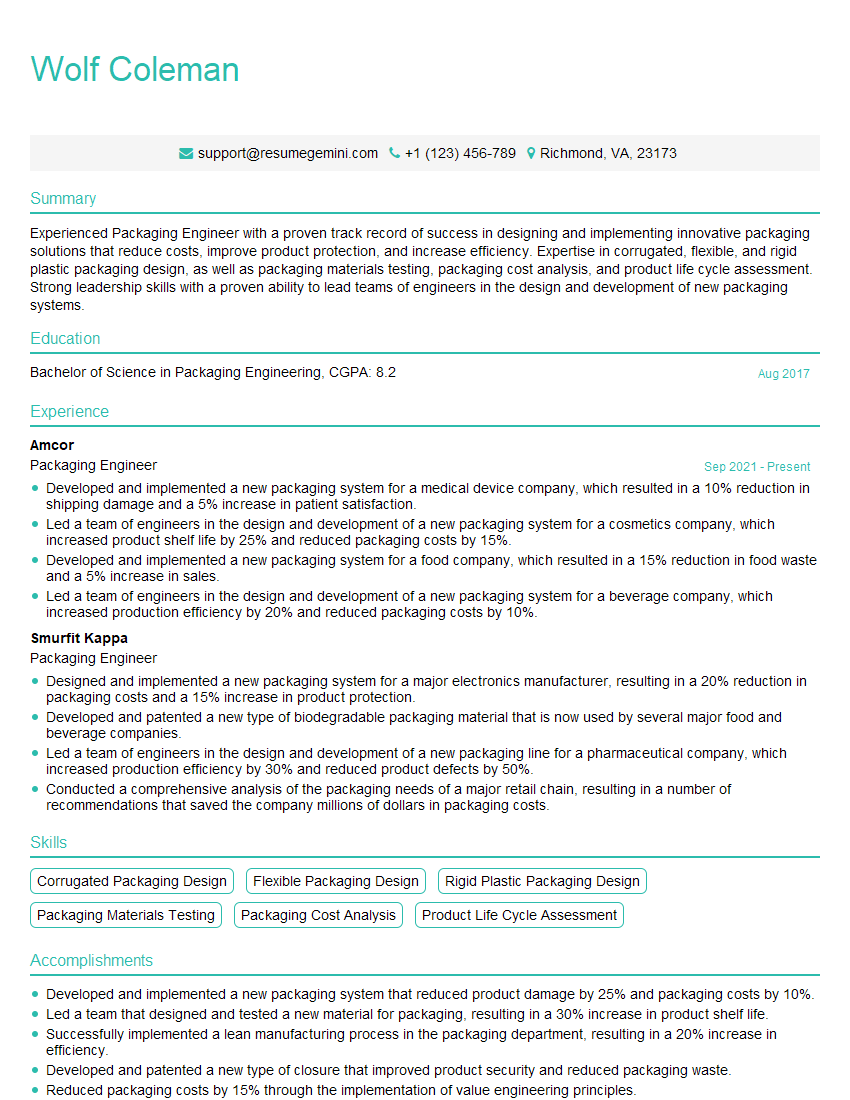
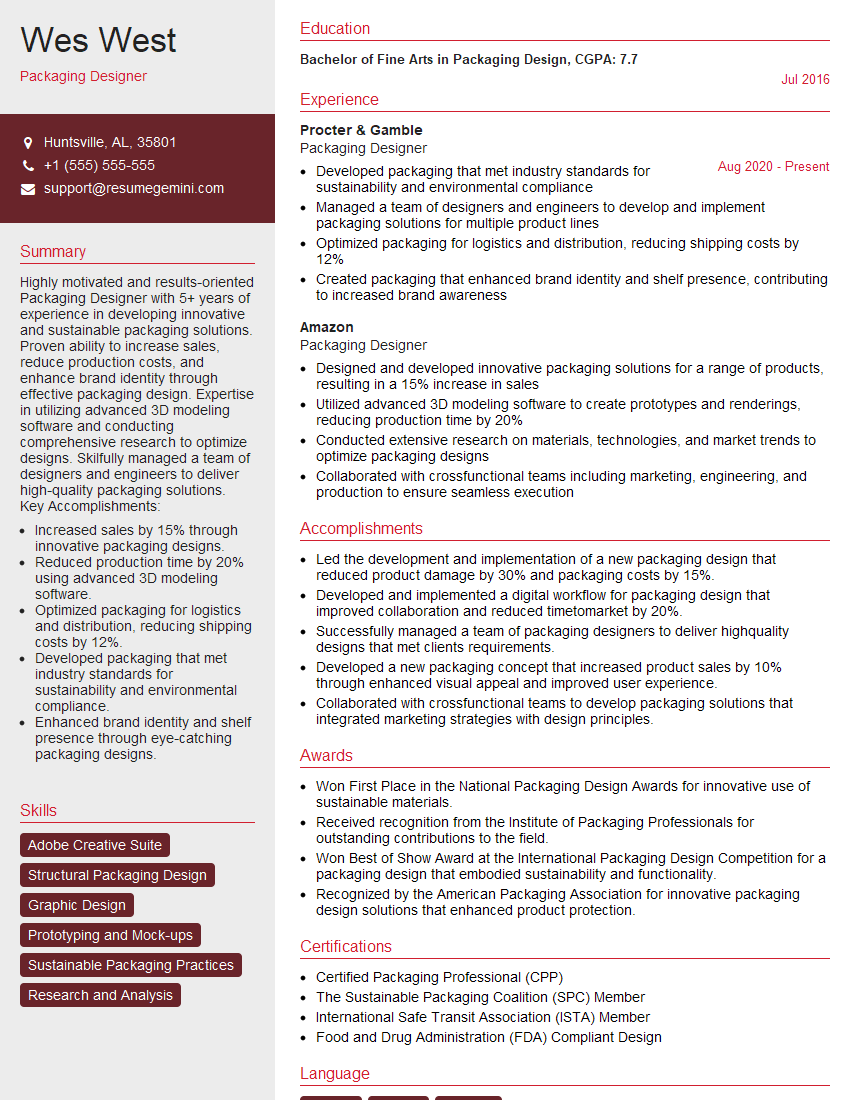
Mastering Packaging Standards is crucial for career advancement in this dynamic field. A strong understanding of these principles will significantly enhance your problem-solving abilities and open doors to exciting opportunities. To maximize your job prospects, creating an ATS-friendly resume is essential. ResumeGemini is a trusted resource to help you build a professional and impactful resume that highlights your skills and experience effectively. Examples of resumes tailored to Packaging Standards are available within ResumeGemini to help guide your creation.
Explore more articles
Users Rating of Our Blogs
Share Your Experience
We value your feedback! Please rate our content and share your thoughts (optional).
What Readers Say About Our Blog
Very informative content, great job.
good