Interviews are more than just a Q&A session—they’re a chance to prove your worth. This blog dives into essential Cotton Irrigation Systems interview questions and expert tips to help you align your answers with what hiring managers are looking for. Start preparing to shine!
Questions Asked in Cotton Irrigation Systems Interview
Q 1. Explain the different types of irrigation systems used in cotton farming.
Cotton farming relies heavily on efficient irrigation. Several systems cater to different needs and scales. The most common types include:
- Furrow Irrigation: Water flows along furrows (small channels) between crop rows. It’s a simple, low-cost method, but less efficient than others due to higher water loss through evaporation and runoff. Imagine a natural stream flowing gently across a field.
- Flood Irrigation: The entire field is flooded with water. While straightforward, it’s highly inefficient, leading to significant water waste and potential soil erosion. Think of a rice paddy, but not ideal for cotton’s specific water needs.
- Sprinkler Irrigation: Water is sprayed over the field using sprinklers. This provides more even coverage than furrow or flood irrigation but still has higher evaporation losses than drip irrigation. Think of a lawn sprinkler, but on a much larger scale and with specialized nozzles.
- Drip Irrigation (or Micro-Irrigation): Water is delivered directly to the plant roots through a network of tubes and emitters. This is the most water-efficient method, minimizing evaporation and runoff, leading to significant water savings and improved yields. Imagine a slow, constant trickle of water directly at the base of each cotton plant.
- Center Pivot Irrigation: A sprinkler system on a moving pivot, irrigating a circular area. It offers good coverage but can be costly to set up and may not suit all terrains.
Q 2. Describe the advantages and disadvantages of drip irrigation for cotton.
Drip irrigation for cotton offers numerous advantages, making it a preferred method in many regions:
- High water-use efficiency: Water is delivered directly to the roots, minimizing evaporation and runoff. This translates to significant water savings, especially crucial in arid and semi-arid regions.
- Improved yields: Consistent moisture at the root zone promotes better plant growth and higher yields compared to other methods.
- Reduced weed growth: The precise application of water keeps the soil surface relatively dry, hindering weed germination and growth.
- Better fertilizer application: Fertilizers can be applied through the drip irrigation system (fertigation), leading to more efficient nutrient uptake by plants.
However, drip irrigation also has some disadvantages:
- Higher initial cost: Setting up a drip irrigation system is more expensive than furrow or flood irrigation.
- Maintenance requirements: Regular cleaning and maintenance are essential to prevent clogging of the emitters and ensure proper functioning.
- Susceptibility to clogging: Soil particles, salts, and other debris can clog the emitters, requiring frequent flushing or replacement.
- Not suitable for all terrains: Sloping terrains or rocky soils may pose challenges for installation and maintenance.
Q 3. How do you determine the appropriate water application rate for cotton?
Determining the appropriate water application rate for cotton involves considering several factors and using a combination of methods:
- Soil type and texture: Sandy soils drain quickly requiring more frequent, but smaller, irrigation events. Clay soils retain water longer needing less frequent, but larger, irrigation events.
- Evapotranspiration (ET): This is the combined loss of water from the soil and plant through evaporation and transpiration. Weather data (temperature, humidity, wind speed, solar radiation) is used to estimate ET, and this helps to determine the water requirements.
- Crop growth stage: Cotton’s water needs vary throughout its life cycle. Higher water demand occurs during peak growth stages like flowering and boll development. Precise irrigation scheduling, considering the plant’s development stage, is crucial.
- Soil moisture monitoring: Using soil moisture sensors (discussed below) allows for real-time assessment of soil water content, providing crucial data for irrigation scheduling.
- Root depth: The deeper the root system, the more water the plant can access, potentially allowing for less frequent irrigation.
The calculation often involves using equations that factor in ET and the soil’s water-holding capacity, ultimately translating to an irrigation schedule with specific application depths and frequencies.
Q 4. What are the key factors to consider when designing a cotton irrigation system?
Designing an effective cotton irrigation system requires careful consideration of many factors:
- Field topography: Slope, elevation changes, and drainage patterns significantly impact system design and water distribution.
- Soil type and characteristics: Water holding capacity, drainage rate, and salinity determine the irrigation method, frequency, and application rate. A soil test is indispensable.
- Water source and availability: The availability of water and its quality (salinity, sediment content) significantly affect system design and selection.
- Crop requirements: Cotton’s water needs vary throughout its growth cycle. The system must be designed to meet the plant’s water demands at each stage.
- Climate: Temperature, humidity, rainfall, and wind influence evapotranspiration rates and irrigation scheduling.
- Budget and economics: The cost of equipment, installation, operation, and maintenance must be factored into the design process.
- Irrigation method: The choice of method (drip, sprinkler, furrow) depends on factors like water availability, topography, soil type, and cost.
Professional expertise is critical in this process, integrating all these aspects for a cost-effective and productive system.
Q 5. Explain how soil type and texture affect irrigation scheduling.
Soil type and texture profoundly influence irrigation scheduling. The key lies in understanding the soil’s water-holding capacity:
- Sandy soils: These soils have large pore spaces, allowing water to drain quickly. They require more frequent irrigation, albeit with smaller volumes, to maintain adequate soil moisture.
- Clay soils: Clay soils have smaller pore spaces, retaining water longer. Irrigation can be less frequent but with larger volumes to account for the slower drainage rate. Over-irrigation can lead to waterlogging and oxygen deprivation for plant roots.
- Loam soils: Loam soils offer a balance between sand and clay, exhibiting moderate water retention. They generally require a middle ground in terms of irrigation frequency and volume, making irrigation scheduling less demanding.
Understanding this soil-water relationship is fundamental to creating an efficient irrigation schedule. Soil testing is often necessary to determine the appropriate soil parameters and design irrigation management.
Q 6. Describe the role of soil moisture sensors in efficient irrigation.
Soil moisture sensors play a crucial role in efficient irrigation by providing real-time data on soil water content. Instead of relying on fixed schedules, irrigation decisions are based on actual soil moisture levels. This leads to significant water savings and improved crop yields.
These sensors come in various types, including:
- Tensiometers: Measure soil water tension or suction. Lower tension indicates higher water content.
- Capacitance probes: Measure the dielectric constant of the soil, which is related to soil water content.
- Neutron probes: Use radioactive sources to measure soil moisture content. They are less commonly used due to safety concerns.
Data from these sensors, combined with weather data and crop growth stages, helps create precise irrigation schedules, optimizing water use and minimizing water stress on plants.
Q 7. How do you monitor the effectiveness of your irrigation system?
Monitoring the effectiveness of an irrigation system is essential to ensure optimal water use and crop yields. This involves several steps:
- Regular visual inspections: Check for leaks, blockages, and proper emitter function. This simple observation can highlight problems before they escalate.
- Soil moisture monitoring: Regularly check soil moisture levels at various points in the field using soil moisture sensors or by manually feeling the soil. Consistent checks are key to maintaining optimal soil moisture.
- Crop growth assessment: Observe plant growth and development for signs of water stress (wilting, leaf roll) or overwatering (yellowing). Healthy cotton is a clear indicator of successful irrigation management.
- Yield monitoring: Measuring the yield per unit area at harvest helps evaluate the system’s overall effectiveness. This provides a direct link between irrigation and productivity.
- Water usage records: Keeping accurate records of water applied and comparing it to estimated water needs, allows for assessing efficiency and potential leaks. Careful record-keeping allows us to trace usage and identify anomalies.
By combining these monitoring methods, farmers can refine irrigation practices, improve water use efficiency, and maximize crop yields. This is an ongoing process of improvement, learning from data, and adapting methods.
Q 8. What are the common problems encountered in cotton irrigation systems and how do you troubleshoot them?
Common problems in cotton irrigation systems often stem from issues with water delivery, system components, or management practices. Let’s look at some examples and troubleshooting steps:
- Clogged emitters or sprinklers: This reduces water flow and leads to uneven distribution. Troubleshooting: Regularly inspect emitters and sprinklers, flushing them with clean water or replacing them as needed.
- Leaks in pipes or fittings: These waste water and reduce system efficiency. Troubleshooting: Conduct regular visual inspections for leaks. Use pressure testing equipment to pinpoint leaks in underground pipes.
- Inaccurate water pressure: Too much pressure can damage components, while too little leads to insufficient water delivery. Troubleshooting: Check the pressure regulator settings and ensure the pump is functioning correctly. Install pressure gauges at strategic points in the system.
- Poor uniformity of water application: This results in some areas receiving too much or too little water, impacting crop yield. Troubleshooting: Conduct a uniformity test (e.g., using catch cans) to identify uneven distribution. Adjust sprinkler spacing or emitter flow rates to improve uniformity.
- Malfunctioning controllers or sensors: This can lead to incorrect irrigation scheduling and water waste. Troubleshooting: Regularly check the controller programming and sensor readings. Replace malfunctioning components promptly.
Troubleshooting often involves systematic checks, starting from the water source and working down to the emitters. Using a combination of visual inspection, pressure testing, and uniformity evaluations is key to pinpoint and fix the underlying issues.
Q 9. Explain the concept of evapotranspiration and its role in irrigation scheduling.
Evapotranspiration (ET) is the combined process of evaporation from the soil surface and transpiration from plants. It represents the total amount of water lost to the atmosphere from an irrigated field. This is crucial for irrigation scheduling because it helps determine the amount of water a crop needs to replace what it loses.
Imagine a cotton plant on a sunny day; water evaporates from the soil, and the plant ‘sweats’ or transpires water through its leaves. The sum of these water losses is ET. By monitoring ET, we can accurately schedule irrigation events to ensure the cotton plants have enough water without over-irrigating, which leads to wasted resources and potential problems like waterlogging.
Different methods exist for estimating ET, including using weather data (temperature, humidity, solar radiation, wind speed) and crop coefficients which adjust ET based on the plant’s growth stage. Sophisticated tools and weather stations are often used to accurately measure and predict ET for precise irrigation management. This helps to prevent both water stress and excessive water application in cotton production.
Q 10. How do you calculate water requirements for cotton using crop coefficients?
Calculating cotton water requirements using crop coefficients involves a few steps:
- Determine the reference evapotranspiration (ET0): This is the evapotranspiration rate for a reference crop (usually short grass) under standard conditions. Data can be obtained from weather stations or through regional estimations.
- Find the crop coefficient (Kc): This factor accounts for the difference in water use between the cotton crop and the reference crop. Kc values vary throughout the cotton growing season, generally increasing from planting to peak growth and then decreasing during the boll-maturation phase. These values are readily available in agricultural handbooks or research literature.
- Calculate the crop evapotranspiration (ETc): ETc = ET0 × Kc
- Adjust for irrigation efficiency: The actual amount of water needed is higher than the calculated ETc because irrigation systems are never 100% efficient. Include an efficiency factor (e.g., 0.8 for a well-maintained drip system) to get the gross irrigation requirement.
Example: Let’s say ET0 is 6 mm/day, Kc for the vegetative growth stage of cotton is 1.0, and irrigation efficiency is 0.8. ETc = 6 mm/day × 1.0 = 6 mm/day. The gross daily water requirement is 6 mm/day / 0.8 = 7.5 mm/day.
This calculation provides a practical estimate of the water needed; however, consider additional factors such as soil type, rainfall, and groundwater levels for a more accurate irrigation schedule.
Q 11. What are the environmental impacts of inefficient irrigation practices?
Inefficient irrigation practices in cotton farming have significant environmental consequences:
- Water depletion: Over-irrigation leads to groundwater depletion and decreased water availability for other uses.
- Soil salinity: Inefficient irrigation practices can raise water tables, leading to salt buildup in the soil, hindering plant growth and reducing land productivity. Poor drainage exacerbates the problem.
- Energy consumption: Pumping large volumes of water requires substantial energy, contributing to greenhouse gas emissions.
- Nutrient runoff: Excess water can carry fertilizers and pesticides into surface water bodies, polluting rivers and lakes, and harming aquatic ecosystems.
- Methane emissions: Waterlogged soils caused by over-irrigation produce methane, a potent greenhouse gas.
By adopting efficient irrigation technologies and methods (like drip irrigation, deficit irrigation and soil moisture monitoring), farmers can significantly mitigate these environmental impacts and promote sustainable cotton production. This is important not only for the long-term health of the environment but also for ensuring a secure water supply for future generations and to support a sustainable cotton industry.
Q 12. Describe the benefits of using a water management software for cotton irrigation.
Water management software offers numerous advantages for cotton irrigation:
- Precise irrigation scheduling: Software integrates weather data, soil moisture information, and crop coefficients to create optimal irrigation schedules, reducing water waste and improving water-use efficiency.
- Real-time monitoring: It provides real-time updates on soil moisture, weather conditions, and system performance, allowing for quick adjustments if needed.
- Data analysis and reporting: It collects and analyzes data to track water use, identify areas for improvement, and optimize irrigation strategies over time. This helps in documenting the performance of irrigation systems and provides evidence for improvement of water management practices.
- Integration with automation: Advanced software systems can integrate with automated irrigation controllers, enabling remote control and management of the entire system.
- Improved yield and profitability: Optimized irrigation leads to healthier crops, higher yields, and ultimately greater profits. By minimizing water stress and reducing water waste, the irrigation system becomes profitable.
Analogy: Think of the software as a ‘smart assistant’ for your irrigation system, providing the information and tools needed to make informed decisions about when, how much, and where to irrigate.
Q 13. How do you ensure the proper maintenance and upkeep of an irrigation system?
Proper maintenance and upkeep are crucial for the longevity and efficiency of any irrigation system. Here’s a comprehensive approach:
- Regular inspections: Conduct routine checks of all components—pipes, fittings, emitters, pumps, and controllers—looking for leaks, blockages, or damage. Establish a schedule of regular checks (e.g., weekly, monthly).
- Cleaning and flushing: Periodically flush the system with clean water to remove sediment and debris that could clog emitters or sprinklers. This is particularly important in areas prone to high sediment.
- Pressure testing: At least once a year, pressure test the entire system to identify leaks. Early detection helps prevent larger, more costly repairs.
- Pump maintenance: Regularly check pump oil levels, belts, and other components. Schedule professional servicing as needed.
- Controller programming: Ensure the irrigation controller is programmed correctly based on weather data, soil type, and crop needs. Update the software as needed and re-calibrate the system frequently.
- Repair and replacement: Promptly repair or replace any damaged or malfunctioning components to prevent further problems.
- Winterization (in cold climates): Properly drain the system to prevent damage from freezing temperatures. Protect sensitive components from frost.
A well-maintained system not only maximizes water-use efficiency but also extends the lifespan of equipment, saving time and money in the long run. A preventive maintenance approach is far more cost-effective and prevents significant water loss.
Q 14. What are the different types of irrigation controllers and their functions?
Irrigation controllers automate the irrigation process, ensuring water is delivered at the right time and in the right amount. Here are some common types:
- Time-clock controllers: These are the simplest type, turning the system on and off at pre-programmed times. They are affordable but lack sophisticated scheduling capabilities.
- Sensor-based controllers: These controllers use soil moisture sensors or weather sensors to adjust irrigation schedules based on real-time conditions. They can significantly reduce water waste by only irrigating when needed. This is a critical improvement over simple time-clock controllers.
- Computerized controllers: These advanced controllers utilize sophisticated algorithms to manage irrigation based on multiple factors including soil type, weather data, crop stage, and even the water storage level.
- Smart controllers: These controllers incorporate features like remote access, data logging, and integration with other farm management systems. This allows for remote management and analysis of irrigation data.
The choice of controller depends on the size and complexity of the irrigation system, the level of automation desired, and the budget. For large-scale cotton farms, sensor-based or computerized controllers offer better water management, efficiency, and sustainability.
Q 15. Explain the importance of water quality in cotton irrigation.
Water quality is paramount in cotton irrigation because the health and yield of the crop are directly tied to the composition of the irrigation water. Poor water quality can significantly reduce yields, increase production costs, and damage the irrigation system itself.
Key factors impacting water quality include:
- Salinity: High salt concentrations (measured as electrical conductivity or EC) can damage plant roots, reducing water uptake and nutrient absorption. This leads to stunted growth and reduced yields.
- Sodium Adsorption Ratio (SAR): High SAR values indicate a greater proportion of sodium in the water, which can negatively affect soil structure and reduce water infiltration, leading to poor drainage and waterlogging.
- Boron: Excessive boron can be toxic to cotton plants, causing leaf chlorosis and reduced growth. Even slightly elevated levels can be detrimental over time.
- Bicarbonates: High bicarbonate levels can raise the pH of the soil, reducing the availability of certain nutrients. This can lead to nutrient deficiencies and reduced plant growth.
Regular water quality testing is crucial for proactively addressing these issues and maintaining optimal crop health.
Career Expert Tips:
- Ace those interviews! Prepare effectively by reviewing the Top 50 Most Common Interview Questions on ResumeGemini.
- Navigate your job search with confidence! Explore a wide range of Career Tips on ResumeGemini. Learn about common challenges and recommendations to overcome them.
- Craft the perfect resume! Master the Art of Resume Writing with ResumeGemini’s guide. Showcase your unique qualifications and achievements effectively.
- Don’t miss out on holiday savings! Build your dream resume with ResumeGemini’s ATS optimized templates.
Q 16. How do you manage salinity issues in irrigation water?
Managing salinity in irrigation water requires a multi-pronged approach. The goal is to either prevent the salts from accumulating in the root zone or to leach them out if they’re already present.
- Water Quality Monitoring: Regular testing allows us to track salinity levels and make informed decisions about irrigation management.
- Blending Water Sources: If available, blending low-salinity water with higher-salinity water can dilute the concentration to a tolerable level for the plants.
- Flushing: Applying large volumes of low-salinity water to leach salts below the root zone can be effective, particularly after a period of irrigation with saline water. This is often done during the fallow period or at the end of the growing season.
- Salt-Tolerant Varieties: Selecting cotton varieties that are known for their tolerance to salinity can significantly reduce yield losses in saline conditions.
- Improved Drainage: Ensuring good soil drainage helps prevent salt accumulation in the root zone. This can involve proper land leveling and the use of drainage systems.
For example, in a field with consistently high salinity issues, I might implement a leaching strategy where I apply a higher volume of water than what is needed for crop evapotranspiration to push salts down past the root zone. This is more expensive, but it safeguards the crop.
Q 17. What are some strategies for optimizing water use in cotton production?
Optimizing water use in cotton production focuses on maximizing yields while minimizing water consumption. Several strategies contribute to this efficiency:
- Drip Irrigation: This highly efficient method delivers water directly to the plant roots, minimizing evaporation and runoff. It allows precise control over water application, reducing waste.
- Soil Moisture Monitoring: Utilizing soil moisture sensors provides real-time data on soil water content, allowing for more precise irrigation scheduling based on actual crop needs rather than guesswork.
- Irrigation Scheduling: Implementing appropriate irrigation scheduling based on factors like evapotranspiration (ET) rates, soil type, and crop growth stage ensures that water is applied only when needed.
- Mulching: Applying mulch to the soil surface reduces evaporation losses and helps maintain soil moisture.
- Water-Wise Cultivars: Selecting cotton varieties with improved water-use efficiency reduces the amount of water required for optimal growth.
- Improved Water Management Practices: Implementing techniques such as deficit irrigation (controlled water stress) during specific growth stages can promote drought tolerance and reduce overall water consumption while still maintaining acceptable yields.
For instance, I’ve seen significant water savings by transitioning from furrow irrigation to drip irrigation in fields with high evaporation rates. The improved water distribution minimized waste, saving hundreds of gallons per acre.
Q 18. Describe your experience with different irrigation scheduling methods.
I have extensive experience with various irrigation scheduling methods, each suited to different conditions and resources.
- Climate-Based Scheduling: This method relies on weather data (temperature, solar radiation, wind speed, and humidity) to estimate evapotranspiration (ET) and schedule irrigation accordingly. It’s a relatively simple method but may not account for variations in soil type and plant status.
- Soil Moisture-Based Scheduling: This uses soil moisture sensors to directly measure soil water content, providing more accurate information than climate-based methods. It’s more expensive to implement but leads to significant water savings.
- Crop Coefficient Method: This method combines climate data with crop-specific coefficients to estimate ET. It accounts for differences in water use between various crop growth stages.
- Plant-Based Scheduling: This involves monitoring plant physiological indicators (e.g., leaf water potential, stomatal conductance) to determine irrigation needs. This approach is very precise but requires specialized equipment and expertise.
I often combine multiple methods for a more robust approach. For example, I might use climate data to get a general ET estimate and then adjust the irrigation schedule based on actual soil moisture readings from sensors. This hybrid approach is highly effective.
Q 19. How do you integrate weather data into your irrigation management strategy?
Weather data plays a critical role in optimizing irrigation management. I integrate weather information in several ways:
- Evapotranspiration (ET) Estimation: Weather stations provide data on temperature, humidity, solar radiation, and wind speed, which are crucial inputs for calculating ET, the amount of water lost from the soil and plant surfaces. This data informs irrigation scheduling.
- Rainfall Monitoring: Real-time rainfall data from weather stations allows me to adjust the irrigation schedule, reducing or eliminating irrigation events when sufficient rainfall has occurred.
- Forecasting: Weather forecasts help predict future ET and rainfall, allowing for proactive adjustments to irrigation schedules to prevent water stress or overwatering.
- Data Integration with Irrigation Systems: Some modern irrigation systems can automatically adjust irrigation schedules based on weather data received from connected weather stations, improving efficiency and reducing manual labor.
For instance, if a forecast predicts heavy rainfall, I can postpone an irrigation event to prevent overwatering and waterlogging. This saves water and reduces the risk of disease.
Q 20. What are the safety precautions when working with irrigation systems?
Safety is paramount when working with irrigation systems. Precautions must be taken to prevent accidents and injuries:
- Lockout/Tagout Procedures: Before performing any maintenance or repairs on irrigation equipment, ensure the power is turned off and locked out, preventing accidental energization. Proper tagging is crucial.
- Personal Protective Equipment (PPE): Use appropriate PPE, such as safety glasses, gloves, steel-toe boots, and hard hats, depending on the task. This is essential for preventing injuries from moving equipment, chemicals, or other hazards.
- Awareness of Hazards: Be aware of potential hazards such as moving machinery, high-pressure water lines, electricity, and chemicals. Always maintain safe distances.
- Regular Inspections: Regularly inspect the irrigation system for leaks, damaged pipes, and other potential problems. Addressing issues promptly minimizes safety risks.
- Emergency Procedures: Establish clear emergency procedures for dealing with accidents, such as electrical shocks or equipment malfunctions. Knowing how to shut down systems quickly is critical.
We conduct regular safety training sessions for all personnel involved in the operation and maintenance of irrigation systems, emphasizing safe work practices.
Q 21. Explain how you would respond to a sudden irrigation system failure.
Responding to a sudden irrigation system failure requires a rapid and systematic approach:
- Assess the Situation: Identify the nature and extent of the failure. Is it a power outage, a pump malfunction, a broken pipe, or something else? Pinpoint the location of the problem.
- Implement Emergency Procedures: If there’s a power outage or other major issue, follow established emergency procedures to protect the equipment and personnel. If there’s a leak, isolate the affected area immediately.
- Secure the System: Turn off any affected parts of the system to prevent further damage or injury. If it is an electrical failure, ensure the power is switched off and locked out.
- Repair or Replacement: Attempt repairs if the problem is minor and can be addressed quickly. However, more significant issues may require calling in qualified technicians or replacing faulty components.
- Monitor the Crop: Regularly monitor the condition of the cotton crop to assess the impact of the irrigation failure and to determine what mitigation strategies might be necessary to minimize yield losses. This could involve hand watering until the system is back online.
- Documentation: Thoroughly document the failure, including the cause, the steps taken to address it, and any repairs or replacements made. This documentation is critical for future maintenance and troubleshooting.
In one instance, a sudden pump failure during a critical growth stage was mitigated by immediately initiating a hand-watering operation, keeping the crop adequately hydrated until the pump was repaired. This immediate response minimized yield losses.
Q 22. What are the economic implications of water scarcity in cotton farming?
Water scarcity significantly impacts cotton farming’s economic viability. Reduced water availability directly translates to lower yields, increasing production costs per unit of cotton. Farmers might need to resort to expensive alternative water sources like groundwater pumping, which can deplete aquifers and incur substantial energy costs. Furthermore, inconsistent water supply can lead to uneven crop growth, reducing the quality of the cotton and consequently lowering its market value. This can trigger financial strain, forcing farmers to reduce their acreage or even abandon cotton farming altogether, impacting the overall agricultural economy and potentially leading to job losses in related industries.
For instance, a farmer relying solely on rainfall in a drought year might experience a 50% yield reduction compared to a year with sufficient rainfall. This translates to a significant loss in revenue, potentially exceeding the cost of implementing efficient irrigation techniques.
Q 23. How do you balance water conservation with optimal crop yield?
Balancing water conservation and optimal crop yield requires a multifaceted approach that combines smart irrigation techniques with precise water management. This involves leveraging technologies like soil moisture sensors to monitor water levels and adjust irrigation schedules accordingly, preventing overwatering or underwatering. Drip irrigation, for example, delivers water directly to the plant roots, minimizing evaporation losses compared to traditional flood irrigation. Employing deficit irrigation, where plants are intentionally subjected to a period of slight water stress, can improve the cotton’s quality and resilience, while still maintaining acceptable yields. Careful selection of drought-resistant cotton varieties also plays a crucial role in optimizing water use efficiency. Regular soil testing can identify nutrient deficiencies, which can impact water uptake by the plant. Addressing these deficiencies through targeted fertilization improves water use efficiency.
In my experience, farmers who adopt these strategies often see a reduction in water consumption of 30-40% without compromising yields and sometimes even improving them.
Q 24. Describe your experience with different types of irrigation pumps.
My experience encompasses a wide range of irrigation pumps, each suited for different contexts. I’ve worked extensively with centrifugal pumps, known for their high flow rates and suitability for large-scale irrigation systems. These pumps are reliable but can be energy-intensive. I’ve also worked with submersible pumps, ideal for deep wells where water extraction is challenging. Submersible pumps are very efficient in terms of energy usage and can work in many situations. Positive displacement pumps are also an option; while more efficient in terms of pumping, they don’t handle large volumes as well. The choice often depends on factors like water source depth, required flow rate, available power supply, and budget constraints. For instance, in a project with limited power availability, we opted for a solar-powered submersible pump, ensuring both sustainability and cost-effectiveness.
Q 25. What are the key considerations for selecting the appropriate irrigation pipe size?
Selecting the appropriate irrigation pipe size is crucial for efficient water delivery and minimizing energy consumption. The key considerations include the required flow rate, the pipe’s length, the desired pressure, and the friction losses within the system. Using a pipe that is too small results in increased pressure drops and reduced flow rates, while a pipe that’s too large is unnecessary and increases the overall cost. Engineers commonly use the Hazen-Williams equation or Darcy-Weisbach equation to calculate the appropriate pipe diameter, considering factors like pipe material roughness. For example, selecting a larger diameter pipe might reduce the need for a more powerful pump, lowering energy consumption over the long term, even if the initial investment is higher.
//Example Calculation (Simplified): Flow Rate = Area * Velocity
Q 26. Explain the impact of irrigation on soil health.
Irrigation significantly impacts soil health, both positively and negatively. Proper irrigation can improve soil structure by enhancing water infiltration and reducing soil compaction. However, excessive irrigation can lead to waterlogging, reducing oxygen availability for plant roots and creating anaerobic conditions that promote the growth of harmful pathogens. Furthermore, improper irrigation management can cause nutrient leaching, reducing soil fertility. Salinization can be another issue if irrigation water contains high salt concentrations. To mitigate these negative effects, irrigation scheduling based on soil moisture monitoring is important. Proper drainage systems and the use of water-efficient irrigation methods are also crucial.
In many cases, the application of organic matter in the form of compost helps restore the soil health which can improve the infiltration of water. Good drainage techniques and selection of appropriate irrigation technologies significantly impact soil health and should be addressed during planning.
Q 27. How do you prevent waterlogging in cotton fields?
Preventing waterlogging involves careful consideration of the soil’s drainage capacity and the irrigation method employed. Proper land leveling ensures even water distribution and reduces ponding. Installing subsurface drainage systems allows for excess water removal. Strategic use of raised beds further improves drainage. Implementing efficient irrigation methods, like drip irrigation, which delivers water directly to the roots, minimizes water waste and reduces the risk of waterlogging. Regular soil testing helps monitor soil moisture levels and guide appropriate irrigation decisions. Careful selection of cotton varieties and their spacing can improve plant health and limit the risks associated with waterlogging.
Q 28. Describe your experience with remote monitoring and control of irrigation systems.
My experience with remote monitoring and control of irrigation systems is extensive. I’ve worked with various technologies, including sensors that measure soil moisture, weather data, and water flow rates. This data is transmitted wirelessly to a central control system, allowing for real-time monitoring and automated adjustments to the irrigation schedule. For instance, if soil moisture sensors indicate sufficient water content, the system automatically reduces or suspends irrigation, saving water and energy. This also allows for remote management of multiple systems using a central platform, thereby minimizing operational cost. Such systems enhance efficiency, reduce water waste, and allow for proactive adjustments to changing weather patterns and field conditions.
In one project, we implemented a system using GSM/GPRS technology to receive updates from several hundred acres of cotton fields. These updates were used to adjust the irrigation based on the readings received. This system helped to save more than 40% of water and reduced operational costs significantly.
Key Topics to Learn for Cotton Irrigation Systems Interview
- Water Requirements of Cotton: Understanding evapotranspiration, soil moisture monitoring, and the impact of various climatic conditions on cotton’s water needs.
- Irrigation Methods: Familiarize yourself with different irrigation techniques (drip, furrow, sprinkler, etc.) and their suitability for cotton cultivation, considering factors like water efficiency, cost, and soil type.
- Irrigation Scheduling: Learn about various scheduling methods (e.g., soil moisture sensors, weather-based models) and their practical application in optimizing water use and yield.
- Water Management Technologies: Explore technologies like automation systems, remote sensing, and data analytics for precise irrigation control and monitoring.
- Irrigation System Design and Maintenance: Understand the principles behind designing efficient and effective irrigation systems for cotton fields, including pipe sizing, pump selection, and regular maintenance procedures.
- Water Quality and Salinity Management: Learn about the effects of water salinity on cotton growth and how to mitigate salinity issues through appropriate irrigation practices.
- Sustainability and Water Conservation: Understand the importance of water-efficient irrigation practices for sustainable cotton production and environmental protection.
- Troubleshooting and Problem-Solving: Develop your ability to identify and solve common problems in cotton irrigation systems, such as clogged emitters, leaks, and pump malfunctions.
- Economic Analysis of Irrigation Systems: Understand the cost-benefit analysis of different irrigation systems and their impact on profitability.
Next Steps
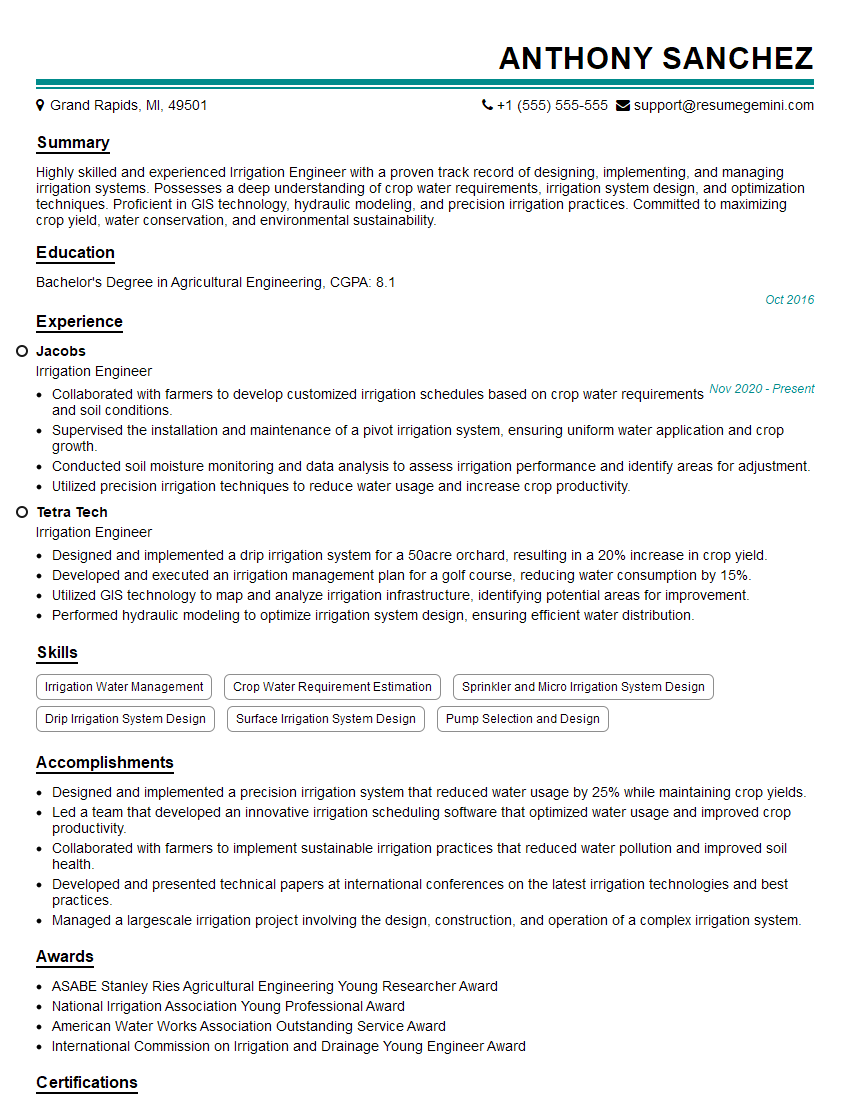
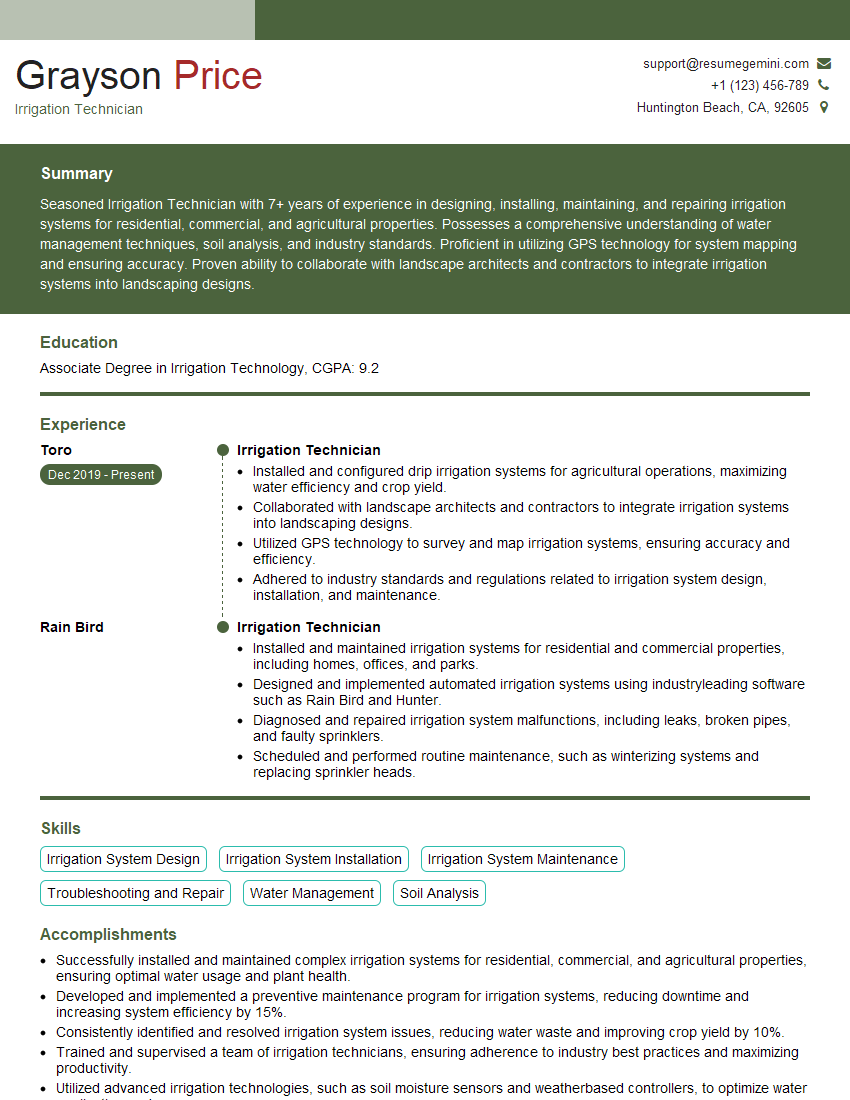
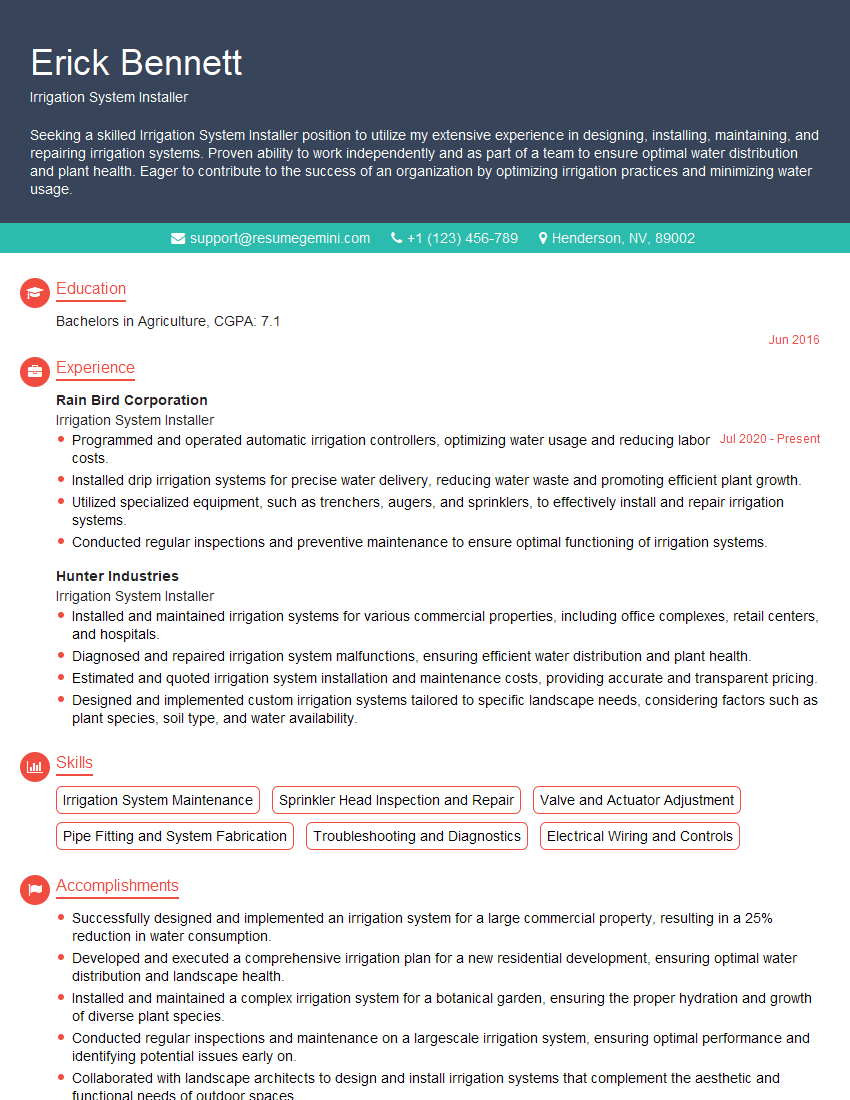
Mastering cotton irrigation systems opens doors to exciting career opportunities in agriculture, water management, and related fields. A strong understanding of these principles demonstrates valuable expertise and problem-solving skills highly sought after by employers. To maximize your job prospects, create an ATS-friendly resume that highlights your relevant skills and experience. We strongly recommend using ResumeGemini, a trusted resource for building professional resumes. ResumeGemini provides examples of resumes tailored to the Cotton Irrigation Systems field to help you craft a compelling application that stands out.

Explore more articles
Users Rating of Our Blogs
Share Your Experience
We value your feedback! Please rate our content and share your thoughts (optional).
What Readers Say About Our Blog
Very informative content, great job.
good