Every successful interview starts with knowing what to expect. In this blog, we’ll take you through the top Packing Shingles According to Specifications interview questions, breaking them down with expert tips to help you deliver impactful answers. Step into your next interview fully prepared and ready to succeed.
Questions Asked in Packing Shingles According to Specifications Interview
Q 1. Describe your experience with different shingle packaging methods.
My experience encompasses a wide range of shingle packaging methods, from the traditional manual bundling and palletizing to fully automated high-speed lines. I’ve worked with various shingle types – asphalt, composite, and even some specialized metal roofing – each requiring tailored packaging approaches. For example, handling delicate slate tiles necessitates extra cushioning and careful stacking, unlike the more robust asphalt shingles which can tolerate higher stacking pressures. Manual methods are great for smaller-scale operations or customized orders, allowing for close attention to detail. Automated systems, however, are essential for high-volume production, maximizing efficiency and minimizing labor costs. They often involve robotic arms for precise stacking and wrapping, ensuring consistent packaging quality.
- Manual Packaging: This involves hand-stacking shingles onto pallets, often using separators to prevent damage. It’s labor-intensive but provides close control over the quality of each package.
- Semi-Automated Packaging: This utilizes machinery for some aspects, like wrapping or strapping, while retaining human intervention for stacking and arrangement.
- Fully Automated Packaging: This is a high-speed process with robots handling the entire packaging process, from shingle feed to pallet wrapping. It’s highly efficient but requires significant upfront investment.
Q 2. How do you ensure shingles are packaged according to manufacturer specifications?
Adhering to manufacturer specifications is paramount. We begin by carefully reviewing the provided documentation, which typically details bundle size, stacking height, pallet configuration, and labeling requirements. This information is crucial for preventing damage during transport and ensuring the shingles reach the customer in perfect condition. For instance, some manufacturers specify the exact number of shingles per bundle, the type of banding required (e.g., steel, plastic), and the maximum allowable weight per pallet. We use checklists and visual aids at every stage of the packaging process to ensure consistent compliance. Regular audits and training sessions further reinforce these procedures. Deviation from specifications is documented and immediately addressed, preventing potential quality issues downstream. We have implemented a barcode scanning system to track bundles and pallets, ensuring accountability and traceability throughout the entire process.
Q 3. What quality control measures do you implement during shingle packaging?
Our quality control process is multi-layered and starts even before the shingles reach the packaging line. Incoming inspection verifies that the shingles are undamaged and meet the required quality standards. During packaging, random sampling is conducted to check bundle integrity, shingle orientation, and adherence to stacking specifications. Regularly scheduled calibrations of packaging machinery ensure consistent performance and prevent errors. We use statistical process control (SPC) techniques to monitor key metrics and promptly address any deviations. Our team receives ongoing training on proper packaging techniques, quality control procedures, and the use of inspection tools. Detailed records are kept of all quality control checks and any identified issues are addressed immediately with corrective and preventative actions in place to eliminate recurrence.
Q 4. How do you handle damaged or defective shingles during the packaging process?
Damaged or defective shingles are handled with a zero-tolerance policy. They are immediately separated from the good shingles during the inspection process. We use a dedicated area for damaged shingles to prevent accidental mixing with good product. Depending on the extent of the damage, they may be repaired (if feasible and permitted by the manufacturer) or set aside for disposal or return to the manufacturer. Detailed records of the number and type of damaged shingles are maintained, allowing for root-cause analysis and improvements in our processes to reduce future occurrences. Proper disposal of damaged shingles adheres to all environmental regulations.
Q 5. What are the common challenges in packing shingles, and how do you overcome them?
Common challenges include shingle breakage due to improper handling, inconsistent pallet construction leading to instability, and inefficiencies in the packaging process itself. We overcome these using several strategies. Improved training and reinforcement of best practices minimize breakage. Using high-quality pallets, ensuring they are correctly sized, and implementing a standardized pallet construction procedure improves stability. To improve efficiency, we conduct time and motion studies to identify bottlenecks, optimize workflows, and leverage automation where possible. Lean manufacturing principles help us to eliminate waste and maximize throughput. For instance, redesigning the pallet layout to minimize empty space improved our pallet utilization significantly.
Q 6. Explain your experience with different types of shingle packaging materials.
My experience includes working with a variety of packaging materials. These include: standard corrugated cardboard for smaller bundles, providing good cushioning and protection; plastic shrink wrap to further secure bundles and protect against moisture; and strong, weather-resistant pallet wrapping to protect the entire pallet during transit. We carefully select materials based on shingle type, climate conditions, and transportation requirements. For example, heavier shingles might necessitate stronger cardboard and additional layers of wrapping to ensure stability and prevent damage. Sustainability is also a key consideration, and we prioritize using recycled and recyclable materials wherever possible. The choice of packaging material often influences the efficiency of the automated packaging lines.
Q 7. How do you ensure efficient and timely shingle packaging?
Efficient and timely packaging is crucial to meet customer demands and maintain profitability. This is achieved through careful planning, optimized workflows, and effective resource management. We use sophisticated scheduling software to plan production runs, optimizing resource utilization and minimizing idle time. Preventive maintenance of packaging equipment ensures minimal downtime. We maintain sufficient inventory of packaging materials to prevent delays. Continuous improvement initiatives, such as process optimization and automation, contribute to ongoing improvements in efficiency. Regular performance reviews and employee feedback are crucial for continually improving the process and identifying opportunities for optimization.
Q 8. Describe your experience with using packaging machinery.
My experience with packaging machinery spans over seven years, encompassing various automated and semi-automated systems. I’ve operated and maintained high-speed palletizers, automated bundling machines, and conveyor systems used in shingle packaging. For example, I was instrumental in troubleshooting a recurring jam in our palletizer. After analyzing the system logs and observing the operation, I identified a problem with the sensor alignment causing inconsistent pallet formation. Adjusting the sensor resolved the issue, significantly boosting our packaging efficiency.
I’m also proficient in using wrapping machines, ensuring secure and weatherproof packaging of shingle bundles. My experience includes regular preventative maintenance on this machinery, including lubrication, cleaning, and minor repairs, ensuring minimal downtime. This reduces potential production losses and maintains consistent output quality.
Q 9. How do you maintain a safe work environment while packing shingles?
Maintaining a safe work environment during shingle packing is paramount. This involves adhering strictly to safety protocols, including the use of personal protective equipment (PPE) like safety glasses, gloves, and steel-toe boots. We regularly conduct safety training to refresh employees on proper lifting techniques to prevent back injuries and the use of machinery. This includes demonstrations of safe operating procedures and emphasizing the importance of reporting any safety concerns or hazards immediately.
The work area is kept clean and organized to minimize tripping hazards. Proper lighting is maintained to enhance visibility. We use designated areas for waste disposal and regularly inspect machinery for potential malfunctions to prevent accidents. We also have emergency response plans in place and conduct regular drills to ensure everyone knows how to respond to any incidents.
Q 10. What is your understanding of OSHA regulations related to shingle packaging?
My understanding of OSHA regulations regarding shingle packaging is comprehensive. I’m familiar with the requirements related to machine guarding, lockout/tagout procedures, personal protective equipment (PPE) usage, and hazard communication. We maintain detailed records of safety training, equipment inspections, and incident reports, all in compliance with OSHA standards. This includes ensuring that all Material Safety Data Sheets (MSDS) for materials used in packaging are readily available and understood by the team.
Specific OSHA standards relevant to our operations include those concerning ergonomics, noise exposure, and personal protective equipment. Regular audits are conducted to ensure ongoing compliance. For example, we recently upgraded our machinery to include more effective guarding mechanisms, reducing the risk of operator injury. These actions reflect our commitment to a safe working environment that aligns with all applicable OSHA regulations.
Q 11. How do you identify and report packaging discrepancies?
Identifying and reporting packaging discrepancies is a critical part of my role. Discrepancies can include incorrect shingle counts within a bundle, damaged packaging, or mislabeling. We use a visual inspection process at various stages of packaging, and I regularly conduct spot checks. If any discrepancies are identified, I immediately halt the process to investigate the root cause. This might involve checking the machinery’s performance, the quality of the materials, or operator adherence to procedures.
All discrepancies are documented using a standardized reporting system, which includes photos and descriptions of the issue. This information is then reported to the supervisor, and corrective actions are implemented to prevent recurrence. This might involve adjusting machinery settings, replacing faulty materials, or providing additional training to employees. Through this thorough process, we maintain a high level of quality control and minimize defects.
Q 12. How familiar are you with different shingle sizes and their corresponding packaging requirements?
I am very familiar with the various shingle sizes and their corresponding packaging requirements. This includes understanding the different bundle sizes and weights for each shingle type, and how these influence the type of packaging materials needed (e.g., wrapping, banding, pallets). For example, larger, heavier shingles require stronger packaging to withstand transport and handling. This might involve using reinforced pallets or additional banding.
We adhere strictly to manufacturer specifications for packaging each shingle type. This ensures the shingles arrive at the customer’s site undamaged and in perfect condition. My experience involves handling a variety of shingles, ranging from 3-tab to architectural styles, each with its specific packaging requirements dictated by the product and its dimensions. We maintain detailed documentation of these specifications for quick reference and consistency.
Q 13. Explain your experience with inventory management related to shingle packaging.
My experience with inventory management related to shingle packaging includes maintaining accurate stock levels of packaging materials, such as pallets, shrink wrap, banding, and labels. I use a combination of physical inventory counts and automated inventory management systems to ensure sufficient supplies are available to meet production demands. This also involves monitoring inventory levels to predict upcoming needs and prevent stockouts.
I work closely with the purchasing department to schedule timely orders of packaging materials, taking into account lead times and storage capacity. Accurate inventory control is crucial for minimizing waste and maintaining efficient production schedules. We use a first-in, first-out (FIFO) system to ensure that older packaging materials are used first, preventing spoilage or expiration issues.
Q 14. How do you handle packaging waste responsibly?
Handling packaging waste responsibly is a priority. We have implemented a comprehensive waste management program that focuses on reducing, reusing, and recycling. This starts with minimizing waste generation by optimizing packaging designs and accurately predicting material needs. We actively recycle cardboard, plastic banding, and other recyclable materials, working with local recycling facilities.
Non-recyclable waste is disposed of properly according to local regulations. We maintain detailed records of waste generation and disposal, ensuring compliance with all environmental regulations. We regularly review our processes to identify further opportunities for waste reduction, such as exploring more sustainable packaging materials or optimizing our packaging processes to create less waste. For example, we recently partnered with a supplier offering recycled packaging materials, minimizing our environmental footprint.
Q 15. Describe your experience with labeling and marking shingle packages.
Labeling and marking shingle packages is crucial for accurate identification and inventory management. It ensures the right product reaches the right destination, preventing costly mistakes and customer dissatisfaction. This involves applying labels that clearly display information such as shingle type (e.g., architectural, 3-tab), color, quantity, manufacturing date, and batch number. We use automated labeling machines for efficiency, ensuring consistent and legible labels every time. For example, a label might read: “Architectural Shingles – Slate Grey – 3 bundles – Mfg Date: 2024-03-15 – Batch # A1234“. Additionally, we manually verify label accuracy before palletizing to catch any errors early on. Sometimes, we’ll need to apply additional custom labels per client specifications, for example indicating the specific project or delivery location.
Career Expert Tips:
- Ace those interviews! Prepare effectively by reviewing the Top 50 Most Common Interview Questions on ResumeGemini.
- Navigate your job search with confidence! Explore a wide range of Career Tips on ResumeGemini. Learn about common challenges and recommendations to overcome them.
- Craft the perfect resume! Master the Art of Resume Writing with ResumeGemini’s guide. Showcase your unique qualifications and achievements effectively.
- Don’t miss out on holiday savings! Build your dream resume with ResumeGemini’s ATS optimized templates.
Q 16. How do you ensure the integrity and stability of shingle packages during transport?
Maintaining the integrity and stability of shingle packages during transport is paramount to prevent damage and ensure product quality. We use several strategies: First, we carefully stack bundles on pallets, following specific weight and height limitations to prevent toppling. Think of building a tower of blocks—you wouldn’t stack the heaviest blocks on top! Second, we securely wrap the pallets with stretch film, creating a tight, protective barrier against moisture and impact. Third, we use corner boards or edge protectors to reinforce the pallet’s structure and prevent crushing. Finally, we ensure proper transportation vehicles are used—those with adequate shock absorption to minimize vibrations during transit. Regular checks of loaded vehicles are also performed to prevent shifting during transit.
Q 17. What are the key performance indicators (KPIs) you monitor in shingle packaging?
Key Performance Indicators (KPIs) we monitor in shingle packaging include: Packaging Speed: This measures the number of bundles packed per hour, indicating efficiency and productivity. Defect Rate: This measures the percentage of packages with damage, incorrect labeling, or other quality issues. A low defect rate is key to maintaining high standards. Waste Rate: This tracks the amount of wasted packaging materials, focusing on minimizing material usage. On-time Delivery Rate: This monitors the percentage of orders packed and shipped on schedule. We analyze these KPIs regularly and use the data to identify areas for improvement and optimize processes, ensuring maximum efficiency and product quality.
Q 18. How do you communicate packaging issues to your supervisor?
Communicating packaging issues to my supervisor involves clear, concise, and timely reporting. I typically use a formal reporting system, such as logging issues in a designated database or submitting a written report. The report would include detailed information such as the nature of the issue (e.g., equipment malfunction, material shortage, labeling errors), the time of occurrence, the number of affected packages, and any corrective actions taken. I’d also include proposed solutions or preventative measures to prevent future occurrences. For urgent issues, I would immediately inform my supervisor verbally, following up with a written report. Open and transparent communication is key to resolving problems effectively and maintaining a smooth operation.
Q 19. How would you handle a sudden increase in shingle packaging orders?
Handling a sudden increase in shingle packaging orders requires a strategic and organized response. First, we would assess the extent of the increase and the available resources. This includes evaluating personnel, equipment capacity, and material availability. Next, we would implement a plan to address the increased demand, possibly involving: Overtime scheduling: To increase packaging capacity. Temporary staffing: Hiring temporary workers to supplement the team. Process optimization: Streamlining our packaging process to maximize efficiency. Prioritization: Focusing on fulfilling the most urgent orders first. Open communication with all stakeholders is crucial throughout this process to maintain transparency and manage expectations.
Q 20. How do you contribute to team productivity in a fast-paced shingle packaging environment?
In a fast-paced shingle packaging environment, teamwork is essential. I contribute to team productivity by: Maintaining a positive attitude: Even under pressure. Assisting colleagues: Offering help when needed and supporting each other. Proactive problem-solving: Identifying and addressing potential issues before they escalate. Adhering to safety protocols: Prioritizing safety to maintain a safe working environment. Continuous improvement: Suggesting improvements to streamline processes. By embodying these principles, I help create a productive and supportive team environment.
Q 21. Describe your experience with troubleshooting packaging equipment malfunctions.
Troubleshooting packaging equipment malfunctions requires a methodical approach. I begin by identifying the problem, noting the symptoms and affected equipment. Then I consult the equipment’s operating manual and troubleshoot the issue based on the provided guidance. For example, if a labeling machine jams, I would first check for obstructions, then examine the label feed mechanism for any defects. If the issue persists, I would systematically check electrical connections, air pressure, and other potential sources of the problem. If I am unable to resolve the issue independently, I immediately report the malfunction to my supervisor and follow their instructions. Regular equipment maintenance and preventative measures greatly reduce the frequency of malfunctions.
Q 22. What is your understanding of the importance of proper palletizing and stacking of shingle packages?
Proper palletizing and stacking of shingle packages is crucial for efficient warehousing, transportation, and ultimately, minimizing damage and ensuring product integrity. Think of it like building a sturdy tower of blocks – each layer needs to be carefully placed to prevent collapse. Improper stacking can lead to crushed or damaged shingles, resulting in costly replacements and customer dissatisfaction.
Specifically, it involves adhering to weight limits per pallet, using appropriate pallet sizes, and employing specific stacking patterns to distribute weight evenly and prevent instability. This includes considering the type of shingle (e.g., three-tab, architectural) as different types have varying weight and fragility. Proper stacking also facilitates easier handling by forklift operators and minimizes the risk of accidents during loading and unloading.
Q 23. How do you ensure that the packaging protects shingles from damage during transit?
Packaging plays a vital role in protecting shingles from damage during transit. We use several strategies to ensure this. Firstly, the shingles themselves are typically bundled in protective wrapping, often plastic sheeting, to minimize abrasion and moisture damage. These bundles are then placed securely within cardboard boxes, providing additional protection against impact and environmental factors. The boxes are designed with sufficient strength to withstand stacking pressure and the rigors of shipping.
Secondly, we employ proper palletizing techniques (as discussed earlier) to prevent shifting or toppling during transportation. Finally, we often utilize corner protectors and edge boards to reinforce pallet load stability and guard against impacts during transit. The choice of packaging material and design varies based on the type of shingle and transportation distance.
Q 24. Explain your understanding of different packaging designs for shingles.
Shingle packaging designs vary depending on the type of shingle, quantity, and transportation methods. Common designs include:
- Standard Cardboard Boxes: These are the most common, offering basic protection against moisture and minor impacts. The box size and strength are tailored to the shingle type and quantity.
- Shrink-Wrapped Bundles: For larger quantities, shingles are bundled and then shrink-wrapped with plastic film, providing a compact and weather-resistant package. This method is efficient for storage and transport but can be susceptible to punctures.
- Pallet-Sized Packaging: For bulk shipments, shingles are directly packed onto pallets, often with added protection like corner boards and stretch wrap. This offers efficiency but requires careful stacking and securing.
- Specialized Packaging for High-End Shingles: Premium shingles might receive additional packaging, such as individual shingle protection or custom-designed boxes, to enhance protection against damage during handling and storage.
The choice of design involves a careful balance between cost, protection, and efficiency.
Q 25. How familiar are you with using barcode scanners and other inventory management systems?
I’m highly proficient in using barcode scanners and inventory management systems. These tools are integral to maintaining accurate records of shingle inventory, tracking shipments, and managing the entire packaging process. Barcode scanning allows us to quickly and accurately identify and quantify shingle bundles, ensuring that we package the correct quantities and meet customer orders precisely. Furthermore, I have experience using inventory management software to track stock levels, forecast demand, and manage warehouse space efficiently. This enables me to optimize our packaging processes and minimize waste.
For example, I can use a barcode scanner to input data directly into the system, tracking the number of bundles packed, the pallet number, and other essential details. This real-time data updates our inventory system immediately, preventing discrepancies and improving overall efficiency.
Q 26. How do you prioritize tasks when dealing with multiple packaging projects?
When juggling multiple packaging projects, I prioritize tasks using a combination of factors. First, I consider project deadlines. Time-sensitive projects that are nearing their due dates get immediate attention. Next, I assess the project’s urgency and potential impact on downstream processes. For instance, a large order with a tight deadline will take precedence over a smaller, less urgent one. Finally, I consider resource availability – if a project requires specialized equipment or personnel currently unavailable, I might prioritize other tasks until the resources are freed up. This involves using a combination of project management techniques including prioritization matrices and task scheduling tools.
Q 27. How do you stay updated on the latest industry standards and best practices in shingle packaging?
Staying updated on industry standards and best practices is crucial in this field. I regularly attend industry conferences and workshops, subscribe to relevant trade publications, and actively participate in online forums and professional networks. This keeps me abreast of changes in packaging materials, regulations, and innovative packaging techniques. Additionally, I actively seek out information from material suppliers and packaging equipment manufacturers to understand the latest offerings and improvements in the market. This ensures our packaging processes remain efficient, cost-effective, and compliant with all applicable regulations.
Q 28. Describe a time you had to adapt to a change in shingle packaging procedures.
We recently transitioned from using standard cardboard boxes to a more environmentally friendly, recyclable alternative. This involved retraining the team on the proper handling and assembly of the new packaging. Initially, there was a slight increase in packaging time due to the unfamiliar materials. To overcome this, we implemented a structured training program, including hands-on practice and visual aids. We also conducted time-motion studies to identify bottlenecks and refine our packing procedures. Ultimately, the transition was successful, with the team adapting efficiently and the new packaging resulting in reduced waste and enhanced environmental sustainability.
Key Topics to Learn for Packing Shingles According to Specifications Interview
- Understanding Shingle Types and Grades: Learn to differentiate between various shingle types (e.g., asphalt, fiberglass, wood) and their corresponding grading specifications. This includes understanding the impact of different grades on packing procedures.
- Packaging Procedures and Best Practices: Familiarize yourself with proper stacking, bundling, and palletizing techniques to ensure shingle integrity and prevent damage during transport. This includes understanding weight limits and proper stacking patterns.
- Quality Control and Inspection: Master the skills needed to inspect packed shingles for defects, ensuring they meet the required specifications before shipment. This includes identifying potential issues and implementing corrective actions.
- Safety Regulations and Procedures: Understand and comply with all relevant safety regulations and procedures related to handling and packing shingles, minimizing the risk of workplace accidents.
- Inventory Management and Tracking: Learn about the role of accurate inventory tracking in efficient shingle packing and order fulfillment. Understand how to manage stock levels and minimize waste.
- Equipment Operation and Maintenance: If applicable, gain proficiency in operating and maintaining any equipment used in the packing process (e.g., pallet jacks, strapping machines). This also includes basic troubleshooting.
- Problem-Solving and Adaptability: Develop your ability to identify and resolve packing issues efficiently, adapting to changing demands and unexpected challenges.
Next Steps
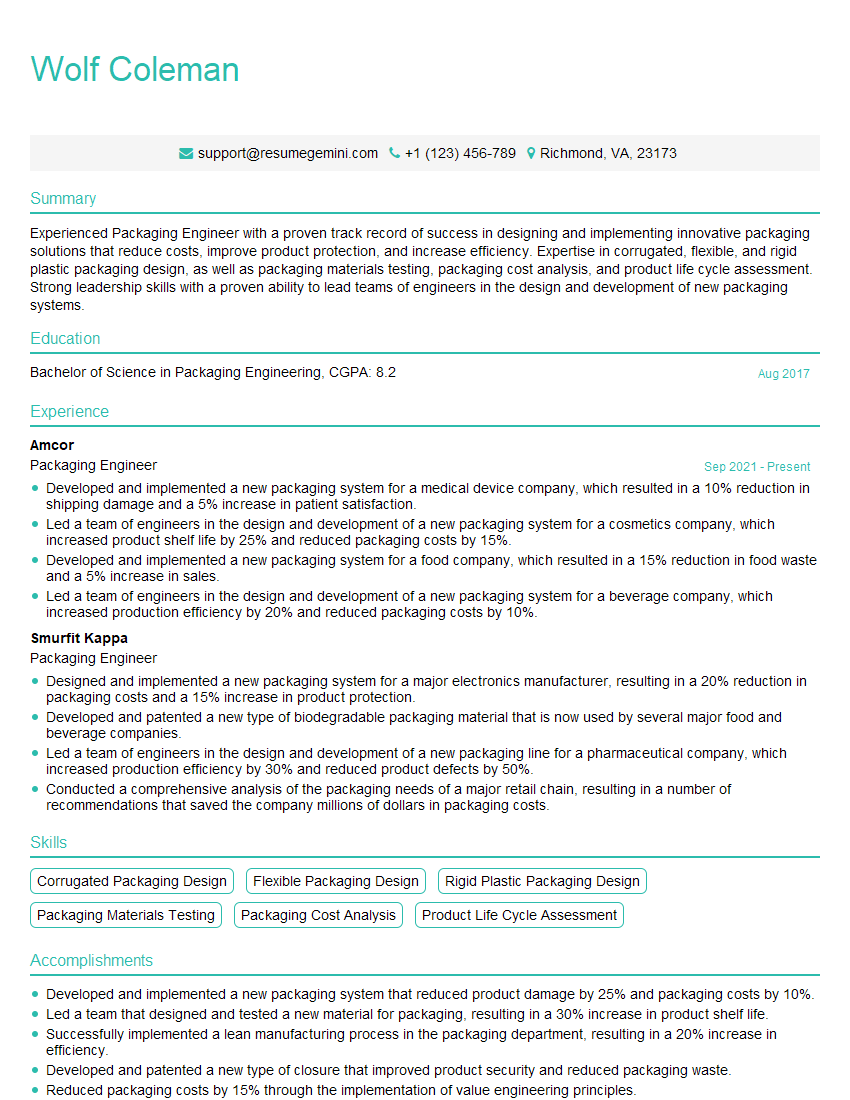
Mastering the skill of Packing Shingles According to Specifications opens doors to various opportunities in the construction and manufacturing industries, offering career progression and increased earning potential. A strong resume is crucial for showcasing your abilities to potential employers. Creating an ATS-friendly resume is vital for getting your application noticed. We highly recommend using ResumeGemini to build a professional and impactful resume that highlights your skills and experience. ResumeGemini provides examples of resumes tailored to Packing Shingles According to Specifications to help guide you in crafting your own.
Explore more articles
Users Rating of Our Blogs
Share Your Experience
We value your feedback! Please rate our content and share your thoughts (optional).
What Readers Say About Our Blog
Very informative content, great job.
good