Preparation is the key to success in any interview. In this post, we’ll explore crucial Paper Engineering interview questions and equip you with strategies to craft impactful answers. Whether you’re a beginner or a pro, these tips will elevate your preparation.
Questions Asked in Paper Engineering Interview
Q 1. Explain the different types of papermaking processes.
Papermaking processes broadly categorize into two main types: manual and machine-made. Manual methods, historically significant, use techniques like hand-molding where pulp is poured onto a screen, allowing water to drain and leaving a sheet of paper. This process is slow but allows for unique textures and high-quality specialty papers. Machine-made paper, dominating modern production, employs continuous machines for high-volume production. Within machine-making, there are several variations depending on the paper type and desired properties. These variations involve differences in pulp preparation, the type of machine used (e.g., Fourdrinier, cylinder), and the subsequent processing steps like calendering and coating.
- Fourdrinier Machine: This is the most common type, forming a continuous sheet of paper on a moving wire screen. Think of it like a giant, sophisticated sieve where water drains from the pulp slurry, leaving behind the fibers to form a paper web.
- Cylinder Machine: This method uses a series of rotating cylinders covered in wire mesh. Each cylinder forms a layer of paper, which are then combined to create thicker or multi-layered papers, often used for cardboard or multi-ply board.
The choice of process depends on factors like desired paper quality, production scale, and cost considerations. Hand-made paper is prized for its unique character and often commands a higher price point, whereas machine-made paper excels in mass production and consistency.
Q 2. Describe the properties of various paper grades and their applications.
Paper grades vary greatly based on their fiber composition, processing, and intended use. Key properties include strength, smoothness, opacity, brightness, and printability. Here are a few examples:
- Newsprint: Made from recycled fibers and designed for high-speed printing. It’s characterized by low opacity and relatively poor strength but is inexpensive.
- Writing Paper: Offers good smoothness and opacity, suitable for writing and printing, often made from bleached wood pulp. There’s a vast range within this category, from inexpensive copy paper to high-quality stationery.
- Cardboard: This is a multi-layered material, usually made on a cylinder machine. Its strength and rigidity make it ideal for packaging and display applications.
- Specialty Papers: This encompasses a wide array including photographic paper (coated for light sensitivity), security paper (incorporating security features), and tissue paper (made from lightweight fibers).
The application directly dictates the appropriate paper grade. For example, using newsprint for a high-quality art print would result in poor image quality and readability, while using heavy cardboard for a fine art drawing would be impractical.
Q 3. How do you optimize paper machine efficiency?
Optimizing paper machine efficiency is a complex task that involves several strategies. It’s about maximizing production while minimizing costs and waste. Here’s a breakdown of key approaches:
- Process Control: Precise control of pulp consistency, drainage rate, and drying parameters is critical. Modern paper machines employ sophisticated sensors and automated control systems to maintain optimal conditions throughout the process. Think of it like a finely tuned orchestra where each instrument (machine component) needs to be in perfect harmony.
- Predictive Maintenance: Regularly scheduled maintenance and predictive analytics help prevent costly downtime and breakdowns. Analyzing machine data to identify potential issues before they arise is crucial for maximizing uptime.
- Waste Reduction: Minimizing fiber loss and water usage significantly improves efficiency and environmental sustainability. This involves optimizing the pulping and dewatering processes, as well as implementing water recycling techniques.
- Operator Training: Highly skilled and trained operators are key to efficient paper machine operation. Regular training and knowledge updates ensure that the machine is running at peak performance and that troubleshooting is effective.
Improving efficiency is an ongoing process requiring continuous monitoring, analysis, and adaptation. The specific strategies will vary based on the paper machine’s design, the paper grade being produced, and the overall mill goals.
Q 4. What are the key quality control parameters in paper manufacturing?
Quality control in paper manufacturing is essential to ensure consistent product quality and meet customer specifications. Key parameters include:
- Basis Weight: The mass per unit area of the paper. Consistent basis weight is crucial for uniform print quality and product performance.
- Thickness: Affects the paper’s stiffness and opacity. Deviation from specified thickness can lead to issues during printing or handling.
- Brightness: Measures the paper’s reflectivity of light, a crucial aspect for printing clarity. Variations can affect the visual appeal of printed materials.
- Opacity: How much light passes through the paper. High opacity is essential for preventing show-through in printed documents.
- Tensile Strength: The paper’s resistance to tearing. Adequate tensile strength is necessary for handling and packaging.
- Moisture Content: Too much or too little moisture can affect the paper’s dimensional stability and printability.
Quality control involves continuous monitoring of these parameters at various stages of production, using online and offline testing methods. Statistical process control (SPC) techniques are often employed to identify trends and prevent deviations from target values.
Q 5. Explain the role of fiber properties in paper strength.
Fiber properties play a critical role in determining paper strength. The type of fiber, its length, and its bonding characteristics all significantly influence the paper’s overall mechanical properties.
- Fiber Length: Longer fibers generally lead to greater strength due to increased fiber-to-fiber bonding. Think of it like building a rope: longer strands make a stronger rope.
- Fiber Morphology: The shape and surface characteristics of the fibers influence their ability to bond. Fibers with a high surface area tend to bond more strongly, creating a more robust paper structure.
- Fiber Bonding: This refers to the inter-fiber interactions (hydrogen bonds) which create a cohesive network within the paper. Good bonding leads to increased tensile strength, tear resistance, and burst strength.
- Fiber Type: Different fibers have different properties. Softwood fibers (like those from pine) tend to be long and strong, whereas hardwood fibers (like those from birch) are shorter and contribute more to the paper’s smoothness and bulk.
The combination and proportion of different fiber types are carefully chosen to optimize the paper’s strength properties for its intended use. For instance, packaging paper requires high tensile strength, so long fibers are preferred, while writing paper may prioritize smoothness, requiring a blend of fiber types.
Q 6. Describe different paper coating techniques and their effects.
Paper coating enhances the paper’s surface properties, improving printability, smoothness, and gloss. Several techniques are used:
- Blade Coating: A coating solution is applied to the paper surface using a blade, creating a uniform and relatively thin coating layer. This is a common and cost-effective method.
- Roll Coating: The paper is passed through a coating roll, which transfers the coating solution onto the paper surface. This method allows for a wider range of coating weights and thicknesses.
- Air Knife Coating: An air stream is used to spread the coating solution evenly across the paper’s surface, providing precise control over coating thickness and uniformity. This technique is often used for high-quality coated papers.
- Gravure Coating: Coating is applied using an engraved roll, providing a precise and consistent coating pattern. This method is suitable for specialty papers requiring high-quality printing.
The choice of coating technique depends on the desired properties, such as gloss, smoothness, and coating weight. Coated papers exhibit improved print quality, reduced ink absorption, and enhanced visual appeal, making them ideal for high-quality printing applications like magazines and brochures.
Q 7. How do you troubleshoot common paper machine problems?
Troubleshooting paper machine problems requires a systematic approach. The first step involves identifying the specific problem through careful observation and data analysis. Common issues and their troubleshooting strategies:
- Web Breaks: These can result from various factors including low tensile strength, improper drying, or machine malfunctions. Troubleshooting involves checking the paper’s properties, inspecting the machine’s rollers and drying cylinders, and adjusting process parameters.
- Caliper Variations: Inconsistent thickness can arise from uneven drying or issues with the forming section. This requires careful analysis of the drying process and adjustments to the machine settings.
- Moisture Content Issues: Too high or too low moisture content can impact the paper’s quality and dimensional stability. Troubleshooting involves checking the dryer section’s performance, adjusting steam pressure, and monitoring humidity levels.
- Coating Defects: Issues with coating uniformity or appearance may indicate problems with the coating solution, application method, or drying process. Troubleshooting requires analyzing the coating solution’s properties, inspecting the coating equipment, and optimizing the drying parameters.
Systematic troubleshooting combines observation, data analysis, and knowledge of papermaking processes. Troubleshooting often involves collaboration between operators, engineers, and maintenance personnel to identify the root cause and implement effective solutions. A well-maintained preventative maintenance schedule can greatly reduce the occurrence of these problems.
Q 8. What are the environmental considerations in paper manufacturing?
Environmental considerations in paper manufacturing are paramount, focusing on minimizing the industry’s significant ecological footprint. This involves managing the entire lifecycle, from sourcing raw materials to waste disposal.
- Sustainable Forestry: Responsible sourcing of wood pulp is critical. This includes utilizing sustainably managed forests, adhering to strict reforestation practices, and avoiding deforestation of old-growth forests. Certifications like the Forest Stewardship Council (FSC) ensure responsible forestry.
- Water Usage: Paper production is water-intensive. Minimizing water consumption through efficient processes, water recycling, and closed-loop systems is crucial. Monitoring and reducing water pollution from discharged effluent is also essential.
- Energy Consumption: The manufacturing process requires substantial energy. Switching to renewable energy sources like biomass or solar power, optimizing energy efficiency in machinery, and improving boiler systems significantly reduces the carbon footprint.
- Waste Management: Minimizing waste generation throughout the production process is vital. This involves optimizing fiber usage, exploring alternative pulping technologies to reduce sludge, and implementing efficient waste recovery systems for by-products like bark and lignin. Proper disposal of hazardous materials is also essential.
- Air Emissions: Reducing air pollution from processes like bleaching and drying is key. Implementing advanced air pollution control technologies and regularly monitoring emissions are critical steps in mitigating environmental impact.
For example, a mill might invest in a biological pulping process, which uses less energy and chemicals compared to traditional methods, reducing its environmental impact substantially.
Q 9. Explain the principles of paper recycling and its impact on sustainability.
Paper recycling is a cornerstone of sustainable paper production, diverting waste from landfills and reducing the demand for virgin wood pulp. The process involves several steps:
- Collection and Sorting: Used paper is collected from various sources (homes, businesses, etc.) and sorted by type (newspaper, cardboard, etc.) to ensure consistent quality of recycled fiber.
- Pulping: The sorted paper is processed into pulp, which involves breaking down the paper fibers using mechanical or chemical methods. This process removes ink and other contaminants.
- Cleaning and Screening: The pulp undergoes cleaning and screening to remove remaining contaminants and ensure uniform fiber length and quality.
- De-inking (if necessary): Depending on the type of paper, de-inking processes might be needed to remove ink efficiently. This often involves flotation or chemical processes.
- Refining and Bleaching (optional): The cleaned pulp may be further refined to improve its properties, and bleaching can be used to achieve desired brightness levels, though this often has higher environmental consequences.
- Papermaking: The prepared pulp is then used in the papermaking process, creating new paper products.
Recycling significantly reduces deforestation, water and energy consumption, and greenhouse gas emissions compared to using virgin fibers. For instance, recycling one ton of paper saves approximately 17 trees.
Q 10. Describe different paper testing methods and their significance.
Various testing methods ensure paper quality meets specific requirements. These tests evaluate physical, optical, and chemical properties:
- Basis Weight: Measures the weight of paper per unit area (grams per square meter), indicating paper thickness and density.
- Thickness: Measures the thickness of the paper sheet, affecting its stiffness and printability.
- Tensile Strength: Measures the paper’s resistance to tearing and stretching, crucial for packaging applications.
- Burst Strength: Measures the pressure required to burst a paper sample, showing resistance to pressure and important for containers.
- Tear Strength: Measures the force required to tear a paper sample, crucial for ensuring durability.
- Brightness: Measures the paper’s whiteness or reflectivity, impacting its appearance and printability.
- Opacity: Measures the paper’s ability to prevent ink show-through, essential for printing quality.
- Moisture Content: Measures the percentage of water in the paper, impacting its dimensional stability and printability.
- Fiber Analysis: Examines the type and length of fibers used, affecting paper properties.
For example, testing the tensile strength of a packaging paper is critical to ensure it can withstand the weight of the product it contains. These tests are conducted using standardized equipment and procedures, and data analysis helps ensure consistent product quality.
Q 11. How do you ensure consistent paper quality throughout the manufacturing process?
Maintaining consistent paper quality requires rigorous monitoring and control throughout the entire manufacturing process. This involves:
- Raw Material Control: Careful selection and consistent supply of high-quality pulp, additives, and chemicals. Regular testing of raw materials ensures consistent properties.
- Process Monitoring: Continuous monitoring of key process parameters (temperature, pressure, consistency, etc.) using online sensors and advanced process control systems (APCS).
- Quality Control Checks: Regular sampling and testing of paper at various stages of production, using various methods described earlier. Statistical process control (SPC) helps identify deviations and correct them proactively.
- Calibration and Maintenance: Regular calibration of instruments and preventive maintenance of machinery are essential to ensure accuracy and consistency.
- Operator Training: Well-trained operators are crucial for consistent operation and prompt identification of potential quality issues.
- Feedback Loops: Effective feedback loops are essential to quickly identify and rectify deviations from target quality parameters.
For instance, if the basis weight of the paper falls outside the acceptable range, immediate adjustments are made to the pulp consistency and machine speed to bring it back within the specifications.
Q 12. What are the latest advancements in paper technology?
Recent advancements in paper technology focus on sustainability, functionality, and performance. Key areas include:
- Bio-based Materials: Increasing use of alternative fibers like agricultural residues (bagasse, hemp) and recycled content to reduce reliance on virgin wood pulp.
- Nanotechnology: Application of nanomaterials to enhance paper properties, such as strength, water resistance, and barrier properties, without excessive use of chemicals.
- Smart Paper: Development of paper with embedded electronics, sensors, and actuators for applications in packaging, security, and other areas.
- Improved Recycling Technologies: Development of advanced de-inking and pulping processes to efficiently recycle more complex paper types.
- Digital Printing on Paper: Development of improved inks and printing techniques for high-quality and cost-effective digital printing on paper substrates.
- 3D Printing with Paper: Development of technologies that use paper as a material for 3D printing, offering new possibilities for design and manufacturing.
For example, the use of nanocellulose can significantly enhance the strength and water resistance of paper, creating more durable packaging materials.
Q 13. Describe your experience with paper converting processes.
My experience in paper converting encompasses a wide range of processes used to transform paper into finished products. This includes:
- Sheet-fed Printing: Experience in using various printing techniques (offset, flexographic, etc.) to print on paper sheets for various applications, including labels, brochures, and packaging.
- Web-fed Printing: Expertise in printing on continuous rolls of paper for applications such as newspapers, magazines, and flexible packaging.
- Die-cutting: Experience in using specialized dies to cut paper into specific shapes and sizes for packaging and promotional materials.
- Folding and Gluing: Proficiency in folding and gluing paper into various configurations for packaging boxes, cartons, and other products.
- Laminating: Experience in applying various coatings and films to paper to improve its properties, such as water resistance, barrier protection, and appearance.
- Embossing and Debossing: Experience in creating raised or indented designs on paper for aesthetic or functional purposes.
In a recent project, I oversaw the conversion of recycled paper into custom-designed packaging for a client, optimizing the process to minimize waste and maximize efficiency.
Q 14. Explain the different types of paper packaging and their suitability for different products.
Paper packaging encompasses various types, each with specific properties and suitability for different products:
- Corrugated Cardboard: Used for shipping boxes, offering high strength and cushioning. Ideal for heavier or fragile products.
- Folding Cartons: Used for various consumer products, offering good print quality and versatility. Suitable for food, cosmetics, and pharmaceuticals.
- Paper Bags: Used for carrying groceries, gifts, and other items. Offer lightweight convenience and environmental friendliness.
- Set-up Boxes: Rigid boxes made from paperboard, often used for luxury items, offering elegance and protection.
- Paper Tubes and Cores: Used for winding paper, textiles, and other materials. Offer strength and easy handling.
- Specialized Packaging: Includes paper-based blister packs, pouches, and other innovative forms adapted for specific product requirements.
The choice of paper packaging depends on factors such as product fragility, weight, environmental considerations, shelf life, and cost. For example, a fragile glass bottle would require a sturdy corrugated box, while a lightweight candy might be packaged in a flexible folding carton. Sustainability considerations increasingly drive the selection of recycled content paperboard.
Q 15. How do you design efficient and cost-effective paper packaging solutions?
Designing efficient and cost-effective paper packaging involves a holistic approach, balancing material usage, manufacturing processes, and customer needs. It’s like building with LEGOs – you want the strongest structure using the fewest pieces.
- Material Selection: Choosing the right paper grade is crucial. Lightweight yet strong substrates like recycled corrugated board can significantly reduce costs without sacrificing durability. For example, using a single-wall corrugated board instead of double-wall where appropriate saves material and reduces weight for shipping.
- Design Optimization: Sophisticated CAD software allows for the creation of minimal-waste die-cuts. This means minimizing the amount of paper lost during the cutting process, maximizing the usable area from each sheet. Think of it as a perfectly fitted jigsaw puzzle—no pieces left over.
- Manufacturing Process: Streamlining the production process, from printing to converting (folding, gluing, etc.), minimizes labor and energy costs. Investing in automated machinery and efficient workflows drastically improves throughput.
- Lifecycle Analysis: Considering the entire life cycle of the packaging, from raw material sourcing to disposal, is vital for sustainability and cost-effectiveness. Utilizing recyclable or biodegradable materials reduces environmental impact and can improve the brand’s image.
For instance, a recent project involved designing packaging for a fragile electronic device. By optimizing the die-cut and using a lightweight honeycomb structure within the corrugated board, we reduced material usage by 20% while maintaining product protection, leading to significant cost savings for the client.
Career Expert Tips:
- Ace those interviews! Prepare effectively by reviewing the Top 50 Most Common Interview Questions on ResumeGemini.
- Navigate your job search with confidence! Explore a wide range of Career Tips on ResumeGemini. Learn about common challenges and recommendations to overcome them.
- Craft the perfect resume! Master the Art of Resume Writing with ResumeGemini’s guide. Showcase your unique qualifications and achievements effectively.
- Don’t miss out on holiday savings! Build your dream resume with ResumeGemini’s ATS optimized templates.
Q 16. What are the key considerations in selecting appropriate paper for printing?
Selecting the right paper for printing involves considering various factors that influence print quality, cost, and the final product’s performance. It’s like choosing the right paint for a masterpiece – the wrong choice can ruin the effect.
- Print Method: Different printing techniques (offset, digital, flexographic) have different requirements. Offset printing, for example, works best with smoother, coated papers, while flexographic printing is suited to more absorbent papers.
- Paper Weight and Thickness: The weight (gsm – grams per square meter) determines the paper’s stiffness and opacity. Heavier papers are more durable but more expensive. Thickness impacts the final product’s feel and handling.
- Brightness and Whiteness: Brightness and whiteness influence the vibrancy of colors and the overall aesthetic appeal. High brightness papers are generally preferred for high-quality prints.
- Surface Finish: The surface finish (coated, uncoated, textured) affects ink absorption, print sharpness, and the final look and feel. Coated papers provide crisper images, while uncoated papers have a more natural feel.
- Paper Type: The type of paper (e.g., wood-free, recycled) impacts its properties, cost, and environmental footprint. Recycled papers, for example, may have a slightly different texture and color.
For example, if we are printing high-resolution images for a luxury product catalog, we would choose a high-brightness, smooth-coated paper to ensure vivid colors and crisp details. However, for a bulk-order flyer, a less expensive, uncoated recycled paper might be more suitable.
Q 17. Explain the challenges in designing paper for specific applications (e.g., high-strength, water resistance).
Designing paper for specific applications like high strength or water resistance presents unique challenges that require innovative material science and processing techniques. Think of designing a material that’s both light as a feather and strong as steel.
- High Strength: Achieving high strength requires using longer fibers, higher density, and specialized treatments. This can involve using high-yield pulps or incorporating additives that enhance fiber bonding. However, increasing strength can sometimes compromise other properties like flexibility and printability.
- Water Resistance: Water resistance is often achieved through surface treatments (coating or lamination) or by using inherently hydrophobic fibers. However, coatings can impact printability and recyclability. Finding a balance between water resistance and other performance attributes is a key challenge.
- Other Applications: Specific applications like grease resistance (for food packaging) or temperature resistance (for industrial uses) demand specialized additives and manufacturing processes.
For instance, creating water-resistant paper for outdoor signage requires balancing the need for durability with the need for vibrant ink adhesion. This often involves applying a special coating that provides water resistance without significantly reducing the ink’s ability to bind to the fibers. This is a delicate balancing act requiring careful selection of coating type and application method.
Q 18. How do you manage inventory control and waste reduction in a paper mill?
Efficient inventory control and waste reduction in a paper mill are crucial for profitability and environmental sustainability. It’s like running a well-oiled machine—every component needs to function optimally.
- Inventory Management System: Implementing a robust inventory management system is paramount, using real-time data to track raw materials, work-in-progress, and finished goods. This enables precise forecasting of demand and prevents overstocking or stockouts. This system should integrate with production planning and scheduling software.
- Process Optimization: Optimizing the papermaking process itself minimizes waste. This includes efficient use of pulp, minimizing rejects, and optimizing energy consumption. Regular maintenance of machinery is vital to prevent breakdowns and reduce waste from spoilage.
- Waste Recycling: Implementing a comprehensive waste recycling program is essential. This includes recycling pulp rejects, reclaiming water, and recovering energy from waste materials. Waste audits can identify areas for improvement.
- Closed-Loop Systems: Designing closed-loop systems where waste from one process becomes the input for another minimizes waste and reduces resource consumption. For example, waste water can be treated and reused in the papermaking process.
In one mill I worked at, we implemented a new inventory system that reduced raw material waste by 15% by enabling more accurate forecasting and preventing overstocking of pulp. This saved the company a substantial amount of money and reduced its environmental impact.
Q 19. Describe your experience with paper machine automation and control systems.
My experience with paper machine automation and control systems spans several years, encompassing various levels of automation, from basic programmable logic controllers (PLCs) to advanced distributed control systems (DCS). It’s like conducting an orchestra – each instrument needs to play in harmony to create the perfect symphony.
- PLC Programming: I am proficient in programming PLCs to automate various aspects of paper machine operation, including speed control, moisture regulation, and web guiding. I’ve utilized various programming languages, including ladder logic and structured text.
- DCS Integration: I have experience integrating various sensors, actuators, and other devices into DCS systems for advanced process control and monitoring. This allows for real-time data acquisition and optimization of the entire process.
- Process Optimization Algorithms: I’ve applied various process optimization algorithms, such as model predictive control (MPC), to improve the efficiency and consistency of paper machine operation. This results in improved quality, reduced waste, and higher throughput.
- Troubleshooting and Maintenance: I have extensive experience in troubleshooting and maintaining automated systems, minimizing downtime and maximizing production.
For instance, in a recent project, we implemented an advanced MPC system on a paper machine, resulting in a 10% increase in production efficiency and a 5% reduction in paper defects. This significantly improved the mill’s profitability and product quality.
Q 20. Explain the principles of process control and optimization in paper manufacturing.
Process control and optimization in paper manufacturing involve using various techniques to maintain consistent product quality while maximizing efficiency and minimizing waste. It’s about fine-tuning a complex system to achieve optimal performance. Think of it as a chef carefully adjusting the seasoning to create the perfect dish.
- Feedback Control Loops: Using feedback control loops to maintain key process variables, such as moisture content, basis weight, and caliper, within specified tolerances. This involves constantly measuring the process, comparing it to the setpoint, and making adjustments accordingly.
- Statistical Process Control (SPC): Employing SPC techniques to monitor and improve the consistency of the process over time. This involves tracking key process parameters and identifying potential sources of variation.
- Advanced Process Control (APC): Implementing APC strategies, such as MPC, to optimize the process in real-time, considering the interactions between different process variables.
- Data Analytics: Using data analytics to identify patterns, trends, and potential areas for improvement. This may involve the use of machine learning algorithms to predict process behavior and optimize control strategies.
For example, we used SPC charts to monitor the variability in paper sheet caliper. By identifying and addressing the root cause of variations in caliper, we were able to significantly reduce defects and improve the overall quality of the product.
Q 21. How do you improve the sustainability of paper manufacturing processes?
Improving the sustainability of paper manufacturing processes requires a multi-faceted approach focusing on reducing environmental impact throughout the entire life cycle. It’s about minimizing our footprint on the planet, like being a responsible steward of our resources.
- Sustainable Sourcing: Using sustainably sourced wood fiber from responsibly managed forests, ensuring that the rate of harvesting doesn’t exceed the rate of regrowth.
- Water Management: Minimizing water usage through efficient processes and water recycling. This involves using closed-loop systems and implementing water treatment technologies.
- Energy Efficiency: Optimizing energy consumption through improved process design, efficient equipment, and renewable energy sources. This could involve installing solar panels or using biomass energy.
- Waste Reduction: Implementing strategies to reduce waste throughout the process, from raw material usage to final product disposal. This includes maximizing the utilization of pulp, minimizing rejects, and improving recycling programs.
- Bio-based Materials: Exploring the use of bio-based materials and alternative fibers, such as agricultural residues or recycled materials, to reduce reliance on virgin wood pulp.
One example of a successful sustainability initiative is the increased use of recycled fibers in paper production. By using more recycled materials, we can conserve forests, reduce energy consumption, and minimize waste sent to landfills.
Q 22. Describe your experience with statistical process control (SPC) in a paper mill.
Statistical Process Control (SPC) is crucial in paper manufacturing for maintaining consistent product quality and minimizing defects. It involves using statistical methods to monitor and control the manufacturing process. In a paper mill, I’ve used SPC extensively to track key parameters like basis weight, caliper, moisture content, and tensile strength. We utilize control charts, such as X-bar and R charts or individuals and moving range charts, to visualize process variation over time. For example, if the basis weight (the weight of a paper sheet per unit area) starts showing a trend outside the control limits, it signals a potential problem in the paper machine, like inconsistencies in pulp supply or issues with the press section. We would then investigate the root cause and implement corrective actions. I’ve also implemented process capability analysis (Cpk) to assess the ability of the process to meet specified tolerances, helping us identify areas for improvement and optimize production parameters to enhance efficiency and reduce waste.
In one specific instance, we experienced increased variability in the caliper of our coated paper. By analyzing the control charts, we identified a pattern correlating the increase with specific shifts. Further investigation revealed a slight misalignment in the calendering rollers during those shifts. After realignment, the caliper variability returned to within acceptable limits, demonstrating the effectiveness of SPC in identifying and resolving process issues.
Q 23. Explain the role of different additives in paper manufacturing.
Various additives play essential roles in tailoring paper properties to meet specific end-use requirements. Think of them as the secret ingredients that give paper its unique characteristics. They are added during different stages of the papermaking process. Key examples include:
- Fillers: Such as calcium carbonate (CaCO3) or clay, are added to improve paper brightness, opacity, smoothness, and printability. They fill the gaps between fibers, resulting in a denser sheet.
- Sizing agents: Like starch or synthetic polymers, prevent ink feathering and improve the paper’s resistance to water. This is crucial for writing and printing applications.
- Retention aids: These polymers help retain fibers and fillers within the paper sheet, reducing fiber loss and improving efficiency. They’re essential for managing the wastewater treatment load.
- Wet-strength agents: These enhance the paper’s strength when wet, beneficial for products like paper towels or packaging exposed to moisture.
- Binders: Used in coated papers, these create a uniform coating layer, influencing surface properties like smoothness and gloss.
The selection and quantity of additives are carefully controlled to achieve desired paper properties while considering cost-effectiveness and environmental impact. For instance, using recycled fiber often requires more fillers to achieve target opacity.
Q 24. How do you manage safety and environmental compliance in a paper mill?
Safety and environmental compliance are paramount in paper manufacturing. My approach involves a multi-pronged strategy emphasizing proactive measures, rigorous adherence to regulations, and continuous improvement. This involves:
- Implementing strict safety protocols: This includes regular safety training for all personnel, use of personal protective equipment (PPE), and conducting risk assessments to identify and mitigate hazards, like lockout/tagout procedures on machinery.
- Ensuring compliance with environmental regulations: This includes adhering to discharge limits for wastewater, air emissions, and solid waste management. We regularly monitor effluent quality and maintain detailed records to demonstrate compliance. We utilize technologies such as effluent treatment plants and high-efficiency boilers to minimize environmental impact.
- Waste reduction and recycling programs: Implementing strategies to minimize waste generation, maximize recycling of fibers and other materials, and promote responsible sourcing of raw materials.
- Continuous monitoring and reporting: Regularly monitoring key environmental parameters and maintaining meticulous records for compliance audits. We use sophisticated software for data management and reporting.
I believe in fostering a safety-conscious culture where every employee understands their role in maintaining a safe and environmentally responsible workplace. A robust safety management system, combined with regular audits and training, is key to success in this area.
Q 25. Describe your experience with root cause analysis and problem-solving in paper manufacturing.
Root cause analysis (RCA) is integral to problem-solving in paper manufacturing. When production issues arise, I typically employ structured methods like the ‘5 Whys’ technique or the fishbone diagram (Ishikawa diagram) to systematically investigate the underlying cause of the problem. For example, if we encounter frequent paper breaks on the paper machine, we might use the 5 Whys:
- Why did the paper break? – Because of a fiber jam.
- Why was there a fiber jam? – Because the headbox flow was inconsistent.
- Why was the headbox flow inconsistent? – Because the consistency sensor was malfunctioning.
- Why was the sensor malfunctioning? – Because it wasn’t calibrated properly.
- Why wasn’t it calibrated? – Because the scheduled maintenance wasn’t completed.
This identifies the root cause as a failure in the scheduled maintenance program. The solution would be to improve maintenance procedures and training. I also use data analysis techniques to identify patterns and correlations related to the problem, often leveraging SPC data. A collaborative approach, involving operators, engineers, and technicians, is essential to ensure a thorough and effective RCA.
Q 26. What are the key performance indicators (KPIs) in a paper mill?
Key Performance Indicators (KPIs) in a paper mill track the efficiency, quality, and profitability of the operation. These can be categorized into:
- Production KPIs: Production rate (tons/day), machine efficiency, uptime, and production cost per ton.
- Quality KPIs: Basis weight consistency, caliper, brightness, tensile strength, and reject rate.
- Environmental KPIs: Water consumption per ton of paper, energy consumption per ton, solid waste generated, and air emissions.
- Safety KPIs: Lost time injury rate (LTIR), near-miss incidents, and safety training participation rate.
- Financial KPIs: Gross profit margin, return on investment (ROI), and operating profit.
Regular monitoring and analysis of these KPIs provide valuable insights into the overall performance of the mill, allowing for timely adjustments and improvements. Using dashboards and reporting tools is crucial to visualize trends and support decision-making.
Q 27. Explain your experience with project management in a paper manufacturing environment.
My experience in project management in a paper manufacturing environment includes leading and participating in various projects, from improving production efficiency to implementing new technologies. I utilize project management methodologies like Agile or Waterfall, tailoring the approach to the specific project requirements. For example, when implementing a new pulp bleaching system, I employed a Waterfall approach due to its structured nature and the need for sequential execution of tasks. This involved detailed planning, risk assessment, resource allocation, and rigorous progress tracking. For smaller, iterative improvements, an Agile approach was more suitable, allowing for flexibility and quick adaptation to changing conditions. Critical success factors include:
- Clear project scope and objectives: Defining a concise and measurable goal.
- Detailed planning and scheduling: Developing a realistic project timeline and resource plan.
- Risk management: Identifying potential risks and developing mitigation strategies.
- Effective communication: Maintaining regular communication with stakeholders.
- Monitoring and control: Tracking progress against the plan and making necessary adjustments.
I’ve successfully managed projects resulting in improved production efficiency, reduced downtime, enhanced product quality, and cost savings.
Q 28. How do you stay updated on the latest trends and technologies in the paper industry?
Staying updated on the latest trends and technologies is vital in the dynamic paper industry. My approach includes a multi-faceted strategy:
- Industry publications and journals: Regularly reading industry-specific journals, such as TAPPI Journal, to stay abreast of research and advancements.
- Industry conferences and trade shows: Attending conferences and trade shows to network with peers and learn about new technologies and best practices. This includes events hosted by organizations like TAPPI.
- Online resources and webinars: Following industry news websites and participating in online webinars on emerging technologies and trends.
- Professional networking: Engaging with colleagues and industry experts through professional organizations like TAPPI, exchanging information and insights.
- Continuous learning: Actively seeking opportunities for professional development through workshops and courses on relevant topics like advanced process control or sustainable paper manufacturing.
This continuous learning process ensures I remain at the forefront of the industry’s advancements, allowing me to leverage the latest knowledge to improve efficiency, enhance sustainability, and drive innovation within the paper mill.
Key Topics to Learn for Your Paper Engineering Interview
- Fiber Science & Pulp Technology: Understand the properties of different fibers (wood, recycled, etc.), pulping processes (mechanical, chemical), and their impact on paper properties.
- Papermaking Processes: Familiarize yourself with the various stages of paper manufacturing, including stock preparation, forming, pressing, drying, and calendaring. Be ready to discuss process optimization and efficiency.
- Paper Properties & Testing: Master the key properties of paper (strength, opacity, smoothness, etc.) and the standard testing methods used to evaluate them. Understand the relationship between processing and final product characteristics.
- Paper Coating & Finishing: Explore different coating techniques and their effects on paper properties. Understand the role of finishing processes in achieving desired surface characteristics and print quality.
- Paper Machine Operation & Control: Gain a working knowledge of paper machine operation, including process control systems and troubleshooting techniques. Discuss experience with automation and optimization strategies.
- Sustainability & Environmental Impact: Demonstrate an understanding of sustainable papermaking practices, including waste reduction, water conservation, and the use of recycled fibers. Be prepared to discuss environmental regulations and their impact on the industry.
- Problem-Solving & Troubleshooting: Showcase your ability to identify and solve problems related to paper quality, machine performance, and process efficiency. Use examples from your experience to illustrate your problem-solving approach.
Next Steps
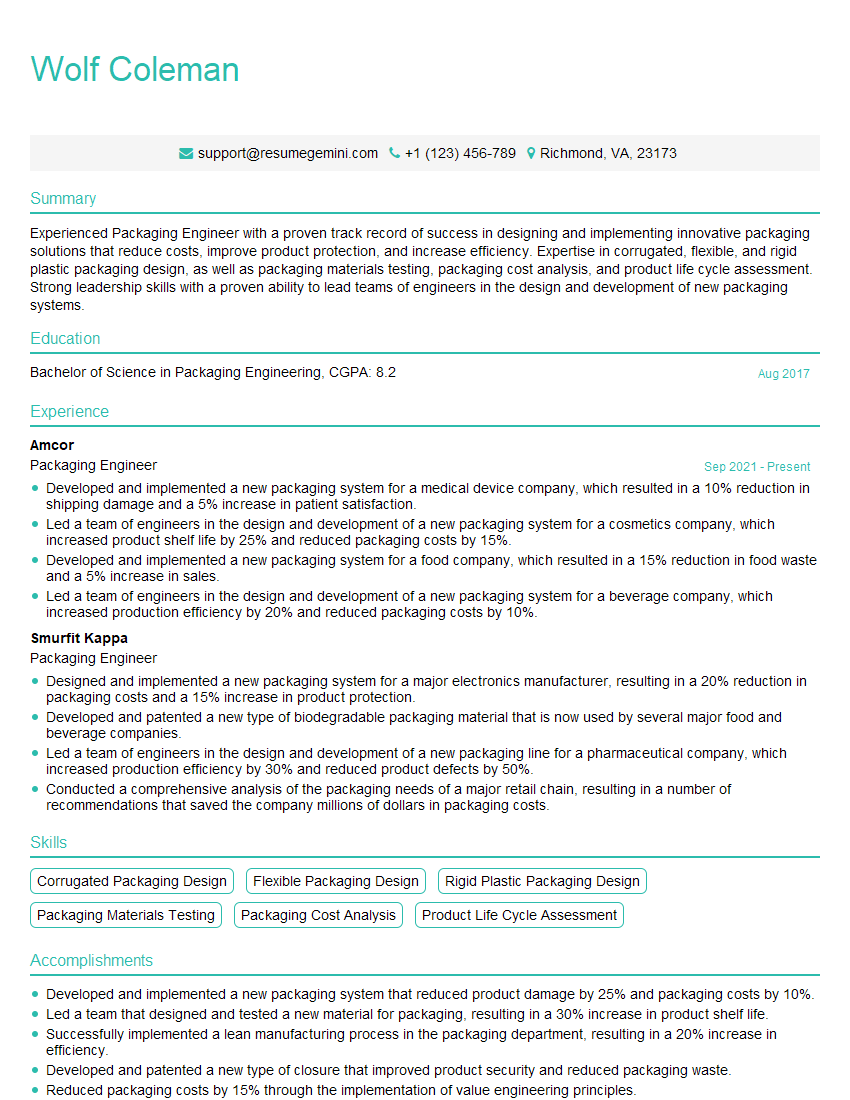
Mastering Paper Engineering opens doors to a rewarding career with diverse opportunities in manufacturing, research and development, quality control, and sustainability initiatives. To maximize your job prospects, it’s crucial to present your skills and experience effectively. Creating an ATS-friendly resume is key to getting your application noticed. ResumeGemini is a trusted resource that can help you build a professional and impactful resume. Examples of resumes tailored to Paper Engineering are available to guide you. Take the next step towards your dream career – build a compelling resume that showcases your expertise!
Explore more articles
Users Rating of Our Blogs
Share Your Experience
We value your feedback! Please rate our content and share your thoughts (optional).
What Readers Say About Our Blog
Very informative content, great job.
good