The right preparation can turn an interview into an opportunity to showcase your expertise. This guide to Safety and Handling of Chemicals interview questions is your ultimate resource, providing key insights and tips to help you ace your responses and stand out as a top candidate.
Questions Asked in Safety and Handling of Chemicals Interview
Q 1. Describe your experience with OSHA regulations related to chemical handling.
My experience with OSHA regulations regarding chemical handling is extensive. I’ve been directly involved in ensuring compliance with OSHA’s Hazard Communication Standard (HCS), which mandates the creation and implementation of comprehensive chemical safety programs. This includes developing and reviewing Safety Data Sheets (SDS), implementing proper labeling procedures, and providing employee training on safe chemical handling practices. I’ve also participated in numerous workplace inspections and audits, ensuring adherence to OSHA’s process safety management requirements for highly hazardous chemicals. For instance, in a previous role, I spearheaded an initiative to update our company’s chemical inventory database to better align with OSHA’s requirements, significantly improving our tracking of hazardous materials and reducing potential risks. This involved not only updating the database but also training employees on the proper procedures for adding, modifying, and searching the database.
Furthermore, my experience extends to understanding and implementing OSHA’s Personal Protective Equipment (PPE) standards, ensuring employees have the appropriate PPE for the specific chemical hazards they face. This includes selecting, fitting, and maintaining the right types of respirators, gloves, eye protection, and protective clothing. I’ve also conducted numerous safety training sessions, focusing on emergency response procedures for chemical spills and other hazardous events, reinforcing OSHA’s emphasis on proactive risk management.
Q 2. Explain the Globally Harmonized System of Classification and Labelling of Chemicals (GHS).
The Globally Harmonized System of Classification and Labelling of Chemicals (GHS) is an internationally agreed-upon system designed to bring consistency to the classification and communication of chemical hazards worldwide. It aims to reduce the confusion caused by varying national regulations by using a standardized approach to hazard classification, labeling, and safety data sheets (SDS).
The GHS uses a hazard classification system that categorizes chemicals based on their physical, health, and environmental hazards. These hazards are then communicated through standardized labels featuring pictograms, signal words (danger or warning), hazard statements, and precautionary statements. For example, a corrosive chemical will have a corrosiveness pictogram (a symbol of a hand in a corrosive liquid) and the signal word ‘Danger’. The hazard statement will clearly outline the nature of the corrosive hazard (e.g., ‘Causes severe skin burns and eye damage’), while the precautionary statements will offer instructions on how to handle the chemical safely (e.g., ‘Wear protective gloves/protective clothing/eye protection/face protection’).
The consistent use of SDSs, created in accordance with GHS requirements, ensures that users worldwide have access to the same crucial safety information about a chemical, regardless of where it’s manufactured or sold. This standardization significantly improves chemical safety on a global scale.
Q 3. How would you handle a chemical spill?
Handling a chemical spill requires a rapid and methodical response, prioritizing safety above all else. The first step is to immediately evacuate the area, ensuring that all personnel are a safe distance away from the spill. Next, I would assess the situation, identifying the chemical spilled and its hazards (referencing the SDS). This assessment dictates the next steps; for example, whether the spill is a minor leak easily cleaned or requires specialized equipment and emergency services.
Following the assessment, appropriate PPE must be worn, selected based on the chemical’s hazards (e.g., acid-resistant gloves, respirators, eye protection, etc.). After ensuring proper PPE, the spill can be contained, using absorbent materials to prevent further spread. The specific containment method will depend on the nature of the spill. For example, a small liquid spill might be contained using absorbent pads, while a large spill might necessitate the use of spill booms or other containment equipment.
Once contained, the spill must be cleaned up, following the instructions outlined in the SDS. This could involve using neutralizers, specific cleaning agents, or other techniques. After cleaning, the area must be thoroughly inspected to confirm complete removal. All contaminated materials are disposed of according to relevant regulations. Finally, the incident should be documented, including the chemical involved, the quantity spilled, the cleanup method used, and any injuries or damages.
Q 4. What are the different types of Personal Protective Equipment (PPE) used in chemical handling, and when would you use each?
Personal Protective Equipment (PPE) is crucial in chemical handling, with the specific type chosen based on the hazards of the chemicals involved. The selection process should always reference the SDS for the chemical. Different PPE protects against various hazards:
- Respirators: Used when airborne chemicals pose inhalation hazards. Different respirator types exist, like particulate respirators for dusts and mists, or cartridge respirators with specific cartridges for different gases and vapors.
- Gloves: Protect hands from chemical contact. The choice depends on the chemical; nitrile gloves are common for many chemicals, but more specialized gloves, such as neoprene or butyl rubber, are needed for highly corrosive or reactive substances.
- Eye protection: Chemical splash goggles or face shields are essential to protect eyes from splashes or fumes. The selection should take into account the potential for splash or vapor exposure.
- Protective clothing: Aprons, coveralls, or specialized suits provide full-body protection from chemical contact, preventing skin burns or absorption. The choice depends on the severity of potential contact hazards.
- Footwear: Chemical-resistant boots prevent chemical spills from reaching the feet, offering an extra layer of protection.
For example, working with concentrated sulfuric acid would necessitate a full face shield, acid-resistant gloves (Neoprene or Viton), and a chemical-resistant apron or suit. Handling a solvent with mild skin irritation might only require nitrile gloves and splash goggles.
Q 5. Explain the importance of Material Safety Data Sheets (MSDS) in chemical safety.
Material Safety Data Sheets (MSDS), now commonly referred to as Safety Data Sheets (SDS), are crucial documents providing comprehensive information on the hazards of a chemical and how to handle it safely. They serve as a primary source of information for anyone working with or around that chemical.
SDSs contain details on the chemical’s identity, its physical and chemical properties, health hazards (acute and chronic), flammability, reactivity, and ecological effects. They also outline appropriate handling procedures, personal protective equipment requirements, first aid measures, spill response procedures, and disposal methods. This information enables employers to create appropriate safety programs, train employees effectively, and ensure compliance with relevant safety regulations (like OSHA’s Hazard Communication Standard).
In essence, SDSs are critical for preventing accidents, protecting worker health, and minimizing environmental impact. Without readily accessible and accurate SDSs, making informed decisions about chemical safety is simply impossible.
Q 6. Describe your experience with risk assessment methodologies related to chemical handling.
My experience with risk assessment methodologies for chemical handling encompasses various approaches. I am proficient in using qualitative and quantitative methods to identify, analyze, and control chemical hazards. I have extensive experience applying bow-tie analysis, fault tree analysis, and event tree analysis methodologies to complex chemical handling processes.
In my previous roles, I’ve led risk assessments for numerous projects involving the handling and storage of various chemicals. This involved identifying potential hazards (such as spills, fires, explosions, and exposures), evaluating the likelihood and severity of these hazards, and determining the necessary control measures. These measures might range from engineering controls (like ventilation systems or containment barriers) to administrative controls (such as work procedures and training programs) and personal protective equipment.
A recent example involves conducting a risk assessment for a new chemical storage facility. Using a bow-tie approach, I identified potential causes of a chemical spill, analyzed the consequences, and recommended mitigation strategies such as improved bunding systems and emergency response protocols. The quantitative risk assessment helped us prioritize control measures based on their effectiveness in reducing risk.
Q 7. What are the common hazards associated with handling corrosive chemicals?
Corrosive chemicals pose several significant hazards, primarily through their ability to cause irreversible damage to living tissue and materials. These hazards include:
- Severe burns: Corrosive chemicals can cause severe chemical burns to skin, eyes, and mucous membranes upon contact, leading to permanent scarring and even blindness.
- Tissue damage: The corrosive action of these chemicals can destroy biological tissues, impacting organ function and causing significant pain and discomfort.
- Respiratory damage: Inhalation of corrosive fumes or mists can irritate or damage the respiratory system, potentially leading to bronchitis, pneumonia, or other serious respiratory conditions.
- Equipment damage: Corrosive chemicals can corrode or damage equipment and materials, leading to leaks, spills, and equipment failure.
- Environmental damage: The release of corrosive chemicals into the environment can cause significant harm to ecosystems, soil, and water sources.
Examples of highly corrosive chemicals include strong acids (such as sulfuric acid, hydrochloric acid, and nitric acid) and strong bases (such as sodium hydroxide and potassium hydroxide). Handling these chemicals requires stringent safety precautions, including the use of appropriate PPE, careful handling techniques, and emergency spill response plans.
Q 8. How do you ensure proper ventilation in areas where chemicals are handled?
Proper ventilation in areas where chemicals are handled is crucial for preventing exposure to hazardous fumes, vapors, and dusts. It’s about ensuring a constant flow of fresh air to dilute and remove airborne contaminants, keeping concentrations below permissible exposure limits (PELs). This is achieved through a combination of strategies.
- Local Exhaust Ventilation (LEV): This involves placing hoods or enclosures directly over the source of the chemical release, capturing contaminants at their point of origin. Think of a fume hood in a chemistry lab – it directly removes fumes from reactions.
- General Dilution Ventilation: This relies on introducing large volumes of fresh air into the workspace to dilute the concentration of airborne contaminants. This is often supplemented with strategically placed exhaust fans to ensure proper air circulation. Imagine a large warehouse where general ventilation helps disperse any chemical odors.
- Mechanical Ventilation Systems: These systems utilize fans, ducts, and other components to actively move air. Regular maintenance and monitoring of these systems, including filter changes and airflow measurements, are critical to ensure effectiveness. Think of the HVAC systems in a pharmaceutical manufacturing plant.
The choice of ventilation system depends on the type and quantity of chemicals handled, the potential hazards, and the size of the workspace. A risk assessment is crucial to determine the appropriate level of ventilation required. For example, working with highly volatile solvents would necessitate a robust LEV system, while handling less volatile substances might only require general dilution ventilation.
Q 9. What are the procedures for storing and disposing of hazardous waste?
Storing and disposing of hazardous waste requires strict adherence to regulations and safety protocols to protect human health and the environment. Improper handling can lead to severe consequences, including contamination of soil and water, and exposure risks to workers and the public.
- Storage: Hazardous waste must be stored in designated areas, away from incompatible materials. Containers must be properly labeled with clear hazard warnings and information about the contents. Storage areas should be well-ventilated and secured to prevent unauthorized access and spills. Examples of appropriate storage include specialized cabinets for flammables, secondary containment for corrosive liquids, and designated areas for reactive materials.
- Disposal: The disposal process depends on the nature of the waste. Some waste may require treatment before disposal to neutralize or reduce its hazard. This could involve incineration, chemical treatment, or physical separation. Waste is then transported to licensed disposal facilities by authorized carriers who follow specific transportation regulations. Proper documentation, including waste manifests, is crucial to track the waste from generation to final disposal. We always prioritize waste minimization strategies such as recycling and reuse.
Regulations vary by location (local, state, and federal), but the core principles remain the same: proper labeling, segregation, secured storage, and compliant disposal through authorized channels. Failure to comply can result in significant fines and legal repercussions.
Q 10. How would you train employees on safe chemical handling practices?
Training employees on safe chemical handling practices is paramount. It’s not just about providing information; it’s about fostering a safety culture where employees are empowered to identify and mitigate risks. My training programs are multi-faceted and incorporate several key elements.
- Initial Training: Covers basic concepts like hazard identification, risk assessment, proper use of personal protective equipment (PPE), emergency procedures, and handling specific chemicals used in the workplace. This will include hands-on demonstrations and practical exercises.
- Refresher Training: Conducted regularly to reinforce key concepts and address any updates to regulations or procedures. This keeps training current and ensures continued competence.
- On-the-Job Training (OJT): Provides supervised practical experience under the guidance of experienced personnel. This allows employees to apply their knowledge in a real-world setting.
- Hazard Communication Training: Crucially, employees are trained to understand and interpret Safety Data Sheets (SDS) and labels to identify hazards and understand safe handling procedures.
- Interactive Training Methods: Using case studies, simulations, and interactive exercises, I make the training engaging and relatable. This approach increases knowledge retention and practical skills.
Effective training ensures employees understand their responsibilities and are competent in handling chemicals safely. Regular assessment and feedback mechanisms help monitor the effectiveness of the training and address any gaps in understanding.
Q 11. Describe your experience with incident investigation and reporting related to chemical incidents.
Incident investigation and reporting are critical for preventing future incidents. My approach follows a structured methodology, emphasizing thoroughness and objectivity.
- Immediate Actions: First, secure the scene, ensuring the safety of personnel. Then, provide any necessary first aid and initiate emergency response protocols as needed.
- Data Collection: Gather all relevant information, including witness statements, photographs, videos, and chemical analysis reports. Review the SDS of the involved chemical(s).
- Root Cause Analysis: Identify the contributing factors that led to the incident using tools like fault tree analysis or the “5 Whys” technique to determine the root causes and not just the symptoms.
- Corrective Actions: Develop and implement corrective actions to prevent recurrence, ensuring that any modifications are thoroughly tested before being fully implemented. This often involves changes to procedures, equipment upgrades, or additional training.
- Reporting: Prepare a comprehensive report detailing the incident, root causes, corrective actions, and recommendations for improvement. This report is crucial for regulatory compliance and informing future safety practices.
For instance, in a previous incident involving a chemical spill, a thorough investigation revealed a lack of proper training on spill response procedures and inadequate spill containment materials. Corrective actions included updated training programs, procurement of appropriate spill kits, and implementation of regular safety inspections.
Q 12. Explain the concept of chemical compatibility and its importance.
Chemical compatibility refers to the ability of different chemicals to coexist without reacting dangerously. Understanding chemical compatibility is crucial for preventing hazardous reactions, such as fires, explosions, or the release of toxic gases.
Importance:
- Safety: Incompatible chemicals can react violently when mixed, resulting in serious accidents. For example, mixing strong acids and bases can generate significant heat and potentially cause splashing.
- Storage: Incompatible chemicals should never be stored together, as contact can lead to uncontrolled reactions. Proper segregation and labeling of storage areas are essential to prevent such incidents.
- Transportation: Similar considerations apply to transportation. Incompatible chemicals must be transported separately to prevent accidental mixing and potential hazards during transit.
- Waste Management: Chemical compatibility is also critical in waste management. Incompatible wastes should not be mixed during collection or disposal to avoid hazardous reactions.
Checking compatibility requires careful review of the SDS for each chemical. Many resources are available that list compatible and incompatible chemical pairings. Ignoring compatibility can have serious consequences, potentially leading to injuries, property damage, and environmental contamination.
Q 13. What are the different types of chemical hazards (physical, health, environmental)?
Chemical hazards encompass a wide range of risks, broadly categorized into physical, health, and environmental hazards.
- Physical Hazards: These relate to the inherent physical properties of a chemical that can cause harm. Examples include flammability (e.g., gasoline), reactivity (e.g., sodium), explosivity (e.g., dynamite), and corrosivity (e.g., sulfuric acid). These hazards can cause immediate harm through fire, explosion, or burns.
- Health Hazards: These hazards affect human health through various routes of exposure (inhalation, ingestion, skin contact). Examples include toxicity (e.g., lead), carcinogenicity (e.g., asbestos), mutagenicity (e.g., benzene), and reproductive toxicity (e.g., certain solvents). The effects can range from minor irritation to severe illness or death, and may be acute (immediate) or chronic (long-term).
- Environmental Hazards: These refer to the potential damage a chemical can cause to the environment. This includes air pollution (e.g., volatile organic compounds), water pollution (e.g., heavy metals), soil contamination (e.g., pesticides), and damage to ecosystems. The environmental impacts can be far-reaching and long-lasting.
Understanding these hazard categories is fundamental to risk assessment and the implementation of appropriate control measures.
Q 14. How do you ensure compliance with relevant environmental regulations regarding chemical handling?
Compliance with environmental regulations regarding chemical handling is essential to protect human health and the environment. My approach to ensuring compliance involves a multi-pronged strategy.
- Knowing the Regulations: Staying updated on all relevant local, state, and federal regulations is paramount. This involves regularly reviewing updates and changes to legislation.
- Inventory Management: Maintain a detailed inventory of all chemicals used, stored, and disposed of. This ensures accurate reporting and allows for efficient tracking of chemical usage.
- Spill Prevention and Response: Implementing robust spill prevention plans and having readily available spill response materials are crucial to minimize environmental impact. Regular drills and training are essential for maintaining preparedness.
- Waste Management: Adhering to strict protocols for hazardous waste storage, transportation, and disposal is paramount. This involves working with licensed waste disposal facilities and maintaining accurate waste manifests.
- Emission Control: Implementing appropriate technologies and practices to control emissions of hazardous substances into the air, water, and soil. This could involve using closed systems, implementing LEV systems, or employing other emission reduction strategies.
- Reporting and Record Keeping: Meticulous record-keeping is crucial to demonstrate compliance. Maintaining accurate records of chemical usage, waste disposal, and environmental monitoring data is vital for audits and inspections.
Regular audits and inspections help identify areas needing improvement and ensure continued compliance. Failure to comply with environmental regulations can result in hefty fines and legal action.
Q 15. Explain your understanding of emergency response procedures for chemical releases.
Emergency response to chemical releases hinges on preparedness, swift action, and a clear understanding of the specific hazards involved. It’s a multi-faceted process starting with prevention – implementing robust safety protocols to minimize the risk of incidents. However, when a release occurs, the first priority is always securing the area and preventing further exposure.
- Immediate Actions: This involves evacuating personnel from the danger zone, establishing a perimeter to control access, and contacting emergency services (fire department, hazmat team). The specific actions will depend on the nature of the released chemical – a flammable liquid will necessitate different procedures than a toxic gas.
- Containment and Mitigation: Once the area is secured, efforts focus on containing the spill or leak to prevent further spread. This may involve using absorbent materials, diking (creating barriers), or deploying specialized equipment. The type of containment method employed depends greatly on the chemical’s properties (e.g., water solubility, reactivity).
- Decontamination: Individuals potentially exposed to the chemical must be decontaminated to remove any residual substance. This may involve washing with water, using specialized decontamination solutions, or removing contaminated clothing. The decontamination process is crucial in minimizing health impacts.
- Post-Incident Investigation: Following the emergency response, a thorough investigation is necessary to determine the root cause of the incident, identify areas for improvement in safety procedures, and prevent recurrence. This often includes detailed documentation, analysis of incident reports, and implementation of corrective actions.
For example, during my time at a pharmaceutical manufacturing plant, we had a minor release of a solvent. Our emergency response plan was activated immediately. We evacuated the affected area, contained the spill using absorbent pads, and decontaminated personnel. A thorough investigation revealed a faulty valve, leading to the immediate replacement of all similar valves across the facility.
Career Expert Tips:
- Ace those interviews! Prepare effectively by reviewing the Top 50 Most Common Interview Questions on ResumeGemini.
- Navigate your job search with confidence! Explore a wide range of Career Tips on ResumeGemini. Learn about common challenges and recommendations to overcome them.
- Craft the perfect resume! Master the Art of Resume Writing with ResumeGemini’s guide. Showcase your unique qualifications and achievements effectively.
- Don’t miss out on holiday savings! Build your dream resume with ResumeGemini’s ATS optimized templates.
Q 16. Describe your experience with lockout/tagout procedures.
Lockout/Tagout (LOTO) procedures are critical for preventing accidental energization of machinery during maintenance or repair. It’s a systematic process designed to ensure that equipment is isolated from its energy sources, preventing unexpected startup and potential injury. My experience encompasses developing, implementing, and auditing LOTO programs in various industrial settings.
- Preparation: Before starting any work, a thorough risk assessment is crucial. This identifies the energy sources associated with the equipment (electrical, hydraulic, pneumatic, etc.) and determines the appropriate LOTO procedures.
- Lockout: The energy source is then physically disconnected and locked out using a unique lock and key or other approved device. This ensures that only authorized personnel can restore power.
- Tagout: A clear tag is attached to the lockout device, providing information about the work being performed, the authorized personnel, and the date/time of lockout.
- Verification: Before work begins, the authorized personnel verify that the equipment is completely de-energized using appropriate testing methods (e.g., multimeter for electrical systems).
- Release: After the work is complete, the LOTO devices are removed only by the authorized personnel who applied them, ensuring that all personnel are clear and the equipment is safe to restart.
In my previous role, I trained technicians on proper LOTO procedures, emphasizing the importance of meticulous documentation and adherence to established protocols. Regular audits ensured that procedures were consistently followed and that equipment was properly locked out before any maintenance activities began. We even utilized a software system for LOTO management to ensure better tracking and compliance.
Q 17. How do you identify and control chemical hazards in a workplace?
Identifying and controlling chemical hazards requires a multi-pronged approach, starting with a thorough hazard assessment. This includes reviewing Safety Data Sheets (SDSs), which provide crucial information about the properties, hazards, and safe handling of each chemical used in the workplace.
- Hazard Identification: This step involves identifying potential hazards associated with each chemical, considering factors such as flammability, toxicity, reactivity, and corrosivity. The SDS is the primary source of this information.
- Risk Assessment: The next step involves assessing the risk associated with each identified hazard. This considers the likelihood of exposure and the severity of potential consequences. A higher risk requires more stringent control measures.
- Control Measures: Control measures are implemented to mitigate identified risks. These can be categorized into engineering controls (ventilation systems, enclosed processes), administrative controls (training, standard operating procedures), and personal protective equipment (PPE) such as gloves, eye protection, and respirators. A hierarchy of controls typically prioritizes engineering controls followed by administrative and then PPE, with PPE being the last resort.
- Monitoring and Review: Regular monitoring ensures the effectiveness of control measures. This may include air monitoring, exposure assessments, and review of incident reports. The process should be reviewed and updated periodically to reflect changes in processes or chemicals.
For example, in a laboratory setting, we identified a high risk associated with a particular solvent due to its volatility and toxicity. We implemented engineering controls like a fume hood, administrative controls like strict handling procedures, and PPE requirements like gloves and respirators. Regular air monitoring confirmed the effectiveness of these measures.
Q 18. What is your experience with developing and implementing chemical safety programs?
I have extensive experience in developing and implementing comprehensive chemical safety programs across diverse industrial sectors. This involves collaborating with stakeholders, conducting thorough risk assessments, and creating detailed procedures and training materials. A strong safety program is proactive, not reactive.
- Needs Assessment: The first step is to assess the specific chemical hazards present in the workplace and identify any gaps in existing safety protocols. This involves reviewing existing documentation, conducting site surveys, and interviewing personnel.
- Program Development: Based on the needs assessment, a detailed safety program is developed. This includes clearly defined procedures for handling, storage, and disposal of chemicals, emergency response plans, and training programs for all personnel involved in handling chemicals.
- Implementation: The program is implemented through training, communication, and enforcement. Personnel are trained on safe handling procedures, emergency response protocols, and the use of PPE. Regular audits and inspections ensure compliance with established procedures.
- Monitoring and Evaluation: The effectiveness of the safety program is monitored through regular inspections, incident reports, and data analysis. The program is continuously updated and improved based on this data.
In one project, I spearheaded the development of a chemical safety program for a manufacturing plant that resulted in a significant reduction in chemical-related incidents and a demonstrable improvement in employee safety performance. This included implementing a new chemical inventory management system and updating all existing standard operating procedures for chemical handling.
Q 19. Explain your understanding of different types of respiratory protection.
Respiratory protection is crucial when working with chemicals that can harm the respiratory system. The choice of respirator depends on the specific hazard and the concentration of airborne contaminants. There’s no one-size-fits-all solution; selection must be based on a thorough hazard assessment.
- Air-Purifying Respirators (APR): These respirators remove contaminants from the air that is inhaled. They are suitable for environments where the oxygen concentration is sufficient. Examples include particulate respirators (N95 masks), which filter out particles, and gas/vapor respirators, which use cartridges or canisters to remove specific gases or vapors. The correct cartridge must be selected based on the specific hazard.
- Supplied-Air Respirators (SAR): These respirators provide a continuous supply of clean air from an external source, such as a compressed air tank or a breathing air compressor. They are suitable for environments with low oxygen levels or high concentrations of hazardous contaminants.
- Self-Contained Breathing Apparatus (SCBA): These respirators provide a self-contained supply of breathing air, typically from a compressed air cylinder. They are suitable for environments with extremely hazardous conditions, such as confined spaces with low oxygen levels or high concentrations of toxic gases.
It’s critical that respirators are properly fitted and maintained. Fit testing ensures that the respirator provides an adequate seal. Regular maintenance, including cleaning and inspection of cartridges and filters, is essential for maintaining effectiveness.
Q 20. Describe your experience with conducting safety inspections and audits.
Conducting safety inspections and audits is a vital component of a robust chemical safety program. Inspections focus on identifying immediate hazards, while audits provide a more comprehensive review of the overall safety management system.
- Safety Inspections: These are typically routine checks of work areas to identify immediate hazards such as spills, leaks, damaged equipment, or improper use of PPE. Inspections are often conducted daily or weekly and often involve checklists to ensure consistency.
- Safety Audits: These are more in-depth assessments of the overall chemical safety management system. They evaluate the effectiveness of safety programs, policies, procedures, training, and emergency response plans. Audits typically involve reviewing documentation, interviewing personnel, and observing work practices.
- Corrective Actions: Findings from both inspections and audits must be documented and addressed with appropriate corrective actions. This may involve repairing damaged equipment, implementing new procedures, or providing additional training. Follow-up is essential to ensure that corrective actions are effective.
In my experience, I have led numerous safety inspections and audits, resulting in the identification and correction of many potential hazards. These activities have been instrumental in preventing chemical-related incidents and improving the overall safety performance of organizations.
Q 21. How do you manage and monitor the use of chemicals in a workplace?
Managing and monitoring chemical use involves a multi-faceted approach that incorporates inventory control, usage tracking, and waste management. Effective management minimizes risks and ensures compliance with regulations.
- Inventory Control: Maintaining an accurate inventory of all chemicals is crucial for tracking usage, preventing unauthorized access, and ensuring proper storage. This often involves a database or software system to manage chemical information, quantities, and locations.
- Usage Tracking: Monitoring chemical usage helps identify trends, potential waste, and areas for improvement in efficiency. This may involve tracking the amount of each chemical used in different processes, as well as the frequency of use.
- Waste Management: Proper disposal of chemical waste is essential to prevent environmental contamination and comply with regulations. This involves segregating different types of waste, labeling containers appropriately, and using licensed waste disposal contractors.
- Compliance: Staying up-to-date with relevant regulations is crucial. This includes complying with OSHA regulations in the US or equivalent regulations in other jurisdictions.
In a previous role, I implemented a new chemical management system that improved inventory accuracy, reduced waste, and enhanced compliance with environmental regulations. The system also provided real-time data on chemical usage, allowing us to identify opportunities for optimization and cost savings.
Q 22. Explain the importance of proper labeling and signage in chemical handling areas.
Proper labeling and signage in chemical handling areas are paramount for safety. They act as the first line of defense, providing crucial information to anyone interacting with the chemicals, regardless of their expertise. Think of them as a visual warning system.
Labels: These are affixed directly to chemical containers and provide specific details like the chemical name, hazards (flammability, toxicity, reactivity), safety precautions, and emergency contact information. A common standard is the Globally Harmonized System of Classification and Labelling of Chemicals (GHS), which uses pictograms to quickly communicate hazard types.
Signage: This encompasses larger signs posted in the handling area, indicating things like ‘No Smoking’, ‘Protective Equipment Required’, ‘Emergency Eyewash Station’, or specific hazard warnings for the area (e.g., ‘Flammable Materials’). Signage ensures that even someone unfamiliar with a specific chemical is aware of the potential hazards.
Example: Imagine a laboratory. Each chemical bottle will have a label detailing its contents and hazards. Additionally, signs in the lab might indicate the location of safety showers, eye wash stations, and fire extinguishers. Without clear labels and signage, there’s a significant risk of accidental exposure or misuse of chemicals.
Q 23. What is your understanding of the hierarchy of hazard controls?
The hierarchy of hazard controls is a prioritized approach to managing chemical hazards, starting with the most effective controls and moving to less effective ones only when necessary. It’s based on the principle of eliminating hazards first, then substituting, engineering controls, administrative controls, and finally, personal protective equipment (PPE).
Elimination: Completely removing the hazard. Example: Switching to a less hazardous chemical in a process.
Substitution: Replacing a hazardous chemical with a safer alternative. Example: Using water-based cleaning solutions instead of harsh solvents.
Engineering Controls: Implementing physical changes to the work environment to minimize exposure. Examples: Enclosing processes, using ventilation systems (fume hoods), implementing automated systems.
Administrative Controls: Implementing work practices and procedures to reduce risk. Examples: Training programs, standard operating procedures (SOPs), restricted access areas, rotating employees to limit exposure.
Personal Protective Equipment (PPE): Providing individuals with equipment to protect them from hazards. Examples: Gloves, respirators, safety glasses, lab coats. This is the least effective control and should only be used as a last resort.
Practical Application: If you’re working with a highly toxic chemical, the first step would be to see if you can eliminate its use entirely. If not, perhaps you can substitute it with a less toxic option. Only after exploring elimination and substitution would you consider engineering controls like installing a ventilation system. PPE like respirators would only be used if the other controls aren’t sufficient.
Q 24. Describe your experience with working with flammable and combustible materials.
My experience with flammable and combustible materials spans several years and diverse settings, including laboratory work and industrial manufacturing. I’ve handled materials ranging from common solvents like ethanol and acetone to more hazardous substances like hexane and various petroleum products. Safety protocols are always strictly followed, as a single spark or incorrect storage can lead to disastrous consequences.
In the lab, we utilize specialized storage cabinets for flammables, equipped with explosion-proof venting. Storage areas are kept cool, well-ventilated, and away from ignition sources. We always use appropriate safety equipment, like flame-resistant lab coats and gloves. For larger-scale handling, I’ve worked with industries adhering to NFPA (National Fire Protection Association) standards, using specific procedures for transferring, dispensing, and handling flammable liquids, minimizing spills, and ensuring proper grounding to prevent static electricity buildup.
Example: During a large-scale chemical spill involving a flammable liquid, I coordinated the evacuation of personnel, implemented emergency shutdown procedures, and directed the cleanup team using approved safety procedures. Proper training and adherence to established protocols are essential to prevent fires and other accidents.
Q 25. How do you ensure the safe transportation and storage of chemicals?
Safe transportation and storage of chemicals require a multi-faceted approach, focusing on containment, segregation, and hazard control. Proper packaging, labeling, and vehicle selection are crucial during transportation. For storage, the environment must minimize exposure to incompatible materials and environmental factors.
Transportation: Chemicals are transported in containers designed to withstand the stresses of transit, including impact, vibration, and temperature fluctuations. The containers must be properly labeled and secured to prevent spills or leaks. Drivers must be trained in safe handling procedures, and routes should be planned to minimize risks.
Storage: Storage areas must be well-ventilated, away from ignition sources (for flammables), protected from extreme temperatures and direct sunlight, and clearly marked with appropriate signage. Incompatible chemicals should be segregated to prevent hazardous reactions. Shelving should be strong enough to support the weight of the chemicals, and spill containment measures (e.g., spill pallets) should be in place.
Example: Storing strong acids and bases separately is vital because they react violently if mixed. Similarly, flammables must be kept away from oxidizers to avoid fire hazards. The use of Safety Data Sheets (SDS) is essential to understanding the storage requirements of specific chemicals.
Q 26. Explain your understanding of confined space entry procedures related to chemical handling.
Confined space entry involving chemicals presents significant risks, demanding rigorous procedures to protect workers. These spaces often have limited access, poor ventilation, and the potential for hazardous atmospheres. A permit-to-work system is typically employed.
Atmospheric Testing: Before entry, the atmosphere must be tested for oxygen levels, flammable gases, and toxic substances to ensure it’s safe to breathe. Continuous monitoring is necessary during the entry.
Ventilation: Adequate ventilation is crucial to remove hazardous gases or vapors. Mechanical ventilation systems might be necessary.
Lockout/Tagout: Equipment within the confined space must be locked out and tagged out to prevent accidental start-up.
Personal Protective Equipment (PPE): Appropriate PPE, including respirators, harnesses, and fall protection, is essential. Respiratory protection selection depends on the atmospheric testing results.
Standby Person: A trained standby person must remain outside the confined space to monitor the workers and provide assistance if needed.
Emergency Procedures: Clearly defined emergency procedures, including rescue plans and communication protocols, must be in place.
Example: Entering a tank to clean it would require atmospheric testing for oxygen deficiency and the presence of flammable vapors before allowing entry. The worker would need a respirator, harness, and a standby person equipped with rescue gear. A detailed entry permit outlining all the safety precautions and emergency procedures would need to be signed off before commencing the task.
Q 27. What is your experience with the use of engineering controls to mitigate chemical hazards?
My experience with engineering controls for mitigating chemical hazards involves a range of techniques focused on preventing or reducing worker exposure. These are often the most effective means of control because they address the hazard at the source, rather than relying on personal protective equipment.
Ventilation Systems: I’ve worked extensively with designing and implementing local exhaust ventilation (LEV) systems in labs and industrial settings. LEVs capture airborne chemicals at their source, preventing widespread contamination. This includes fume hoods, ductwork systems, and other localized ventilation methods.
Enclosure Systems: Enclosing chemical processes or equipment limits the spread of airborne contaminants. This could involve designing or selecting appropriate enclosures, including fully enclosed reaction vessels or glove boxes for handling highly toxic substances.
Process Modifications: I’ve been involved in process modifications designed to reduce chemical usage or eliminate hazardous steps altogether. This involves detailed risk assessment and collaboration with process engineers.
Example: In a manufacturing plant, we replaced an open-air chemical mixing process with an enclosed, automated system. This drastically reduced worker exposure to airborne chemicals and improved overall safety.
Q 28. Describe your familiarity with various types of chemical monitoring equipment.
My familiarity with chemical monitoring equipment extends to various types, each suited for specific applications and hazards. These instruments are crucial for ensuring worker safety and environmental compliance.
Gas Detectors: These devices detect the presence and concentration of various gases in the air, including flammable gases (e.g., methane, propane), toxic gases (e.g., carbon monoxide, hydrogen sulfide), and oxygen levels. Fixed, portable, and personal monitoring devices are available.
Air Sampling Pumps and Tubes: These are used for collecting air samples for laboratory analysis. Different tubes are used depending on the target chemical.
Spectrophotometers: Used for analyzing the concentration of chemicals in various samples (air, water, soil). Different types of spectrophotometers offer varying levels of sensitivity and application.
pH Meters: Used for measuring the acidity or alkalinity of liquids. This is critical for handling acids and bases safely.
Personal Monitoring Devices: These devices (often worn by workers) continuously monitor worker exposure to hazardous chemicals. The data is often logged and downloaded for analysis and compliance purposes.
Example: When dealing with potential exposure to hydrogen sulfide (a toxic and flammable gas), portable gas detectors are used for monitoring the atmosphere before and during operations. Personal monitoring devices may be worn for continuous exposure tracking and documentation.
Key Topics to Learn for Safety and Handling of Chemicals Interview
- Chemical Hazards Identification: Understanding different types of chemical hazards (physical, health, environmental), including acute and chronic effects, and utilizing Safety Data Sheets (SDS) effectively.
- Personal Protective Equipment (PPE): Selecting and properly using appropriate PPE (gloves, respirators, eye protection, etc.) based on identified hazards and risk assessments. Practical application: Scenario-based questions on selecting PPE for specific chemical handling tasks.
- Spill Response and Emergency Procedures: Knowing emergency procedures for chemical spills and leaks, including containment, cleanup, and reporting protocols. Practical application: Describing your approach to handling a hypothetical chemical spill.
- Storage and Handling Practices: Understanding safe storage practices for chemicals, including proper labeling, segregation, and inventory management. Practical application: Designing a safe storage area for a given set of chemicals.
- Regulatory Compliance: Familiarity with relevant safety regulations (OSHA, EPA, etc.) and their practical implications in a workplace setting. Practical application: Explaining how to ensure compliance with a specific regulation.
- Risk Assessment and Mitigation: Conducting thorough risk assessments to identify potential hazards and implementing appropriate control measures to mitigate risks. Practical application: Developing a risk assessment plan for a specific chemical handling process.
- Waste Disposal and Management: Understanding proper procedures for handling and disposing of chemical waste in accordance with environmental regulations. Practical application: Explaining the different methods of waste disposal and their suitability for various chemical wastes.
Next Steps
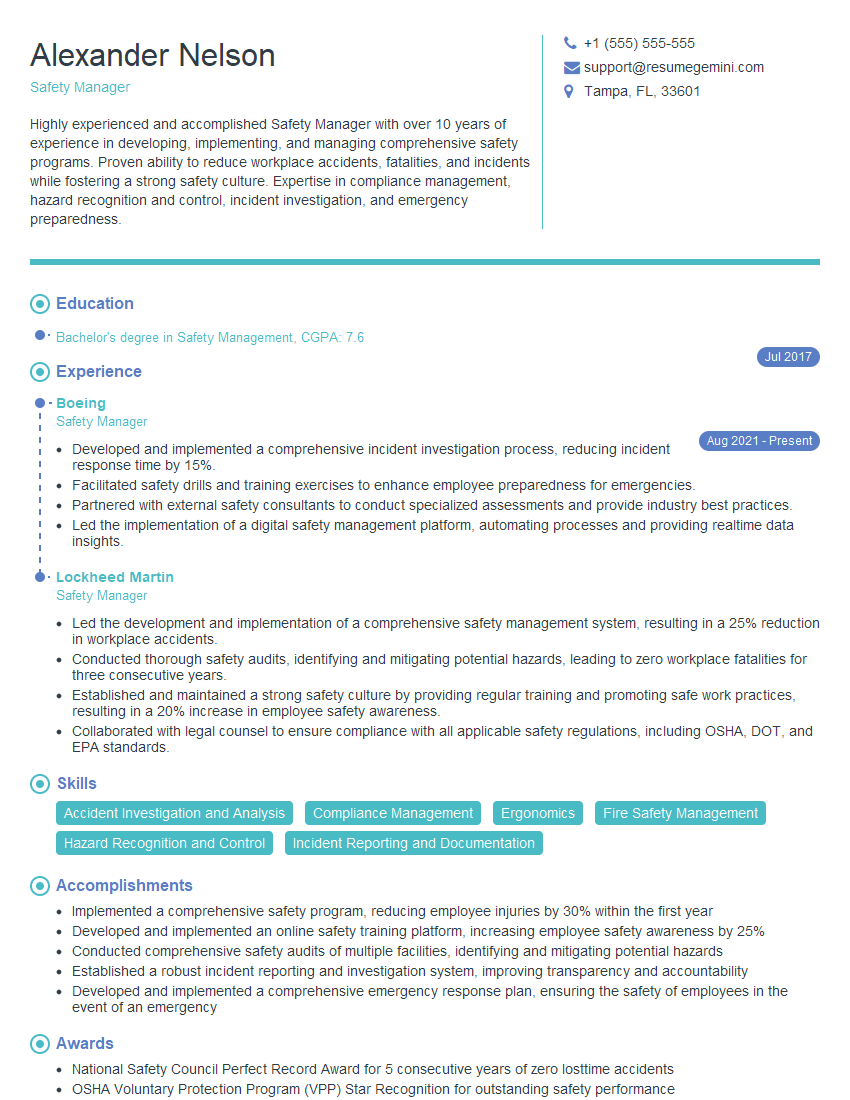
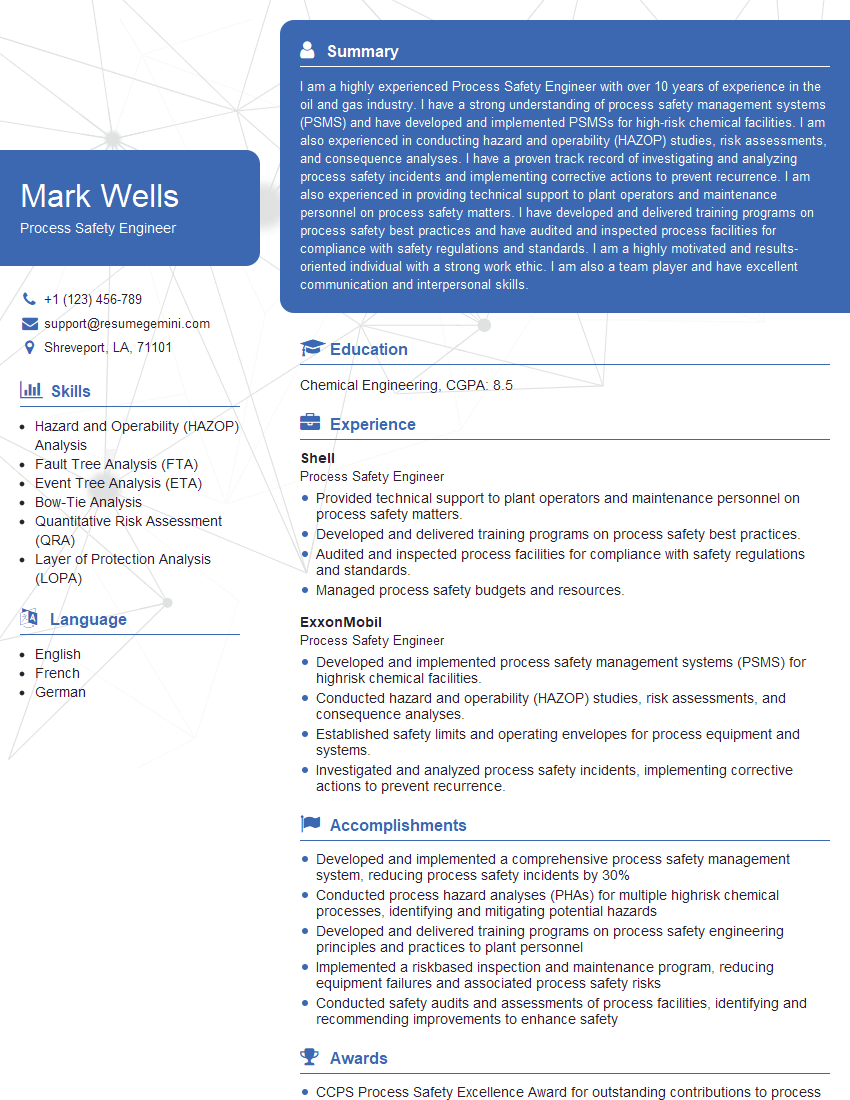
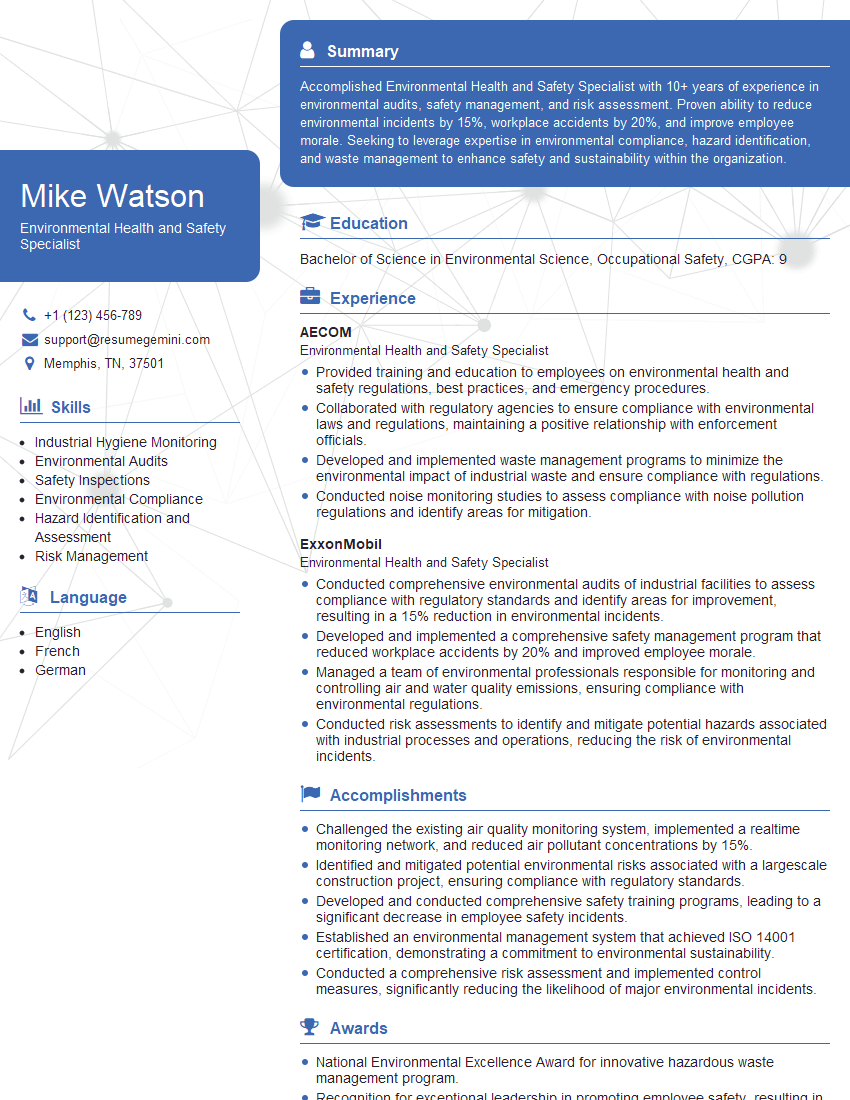
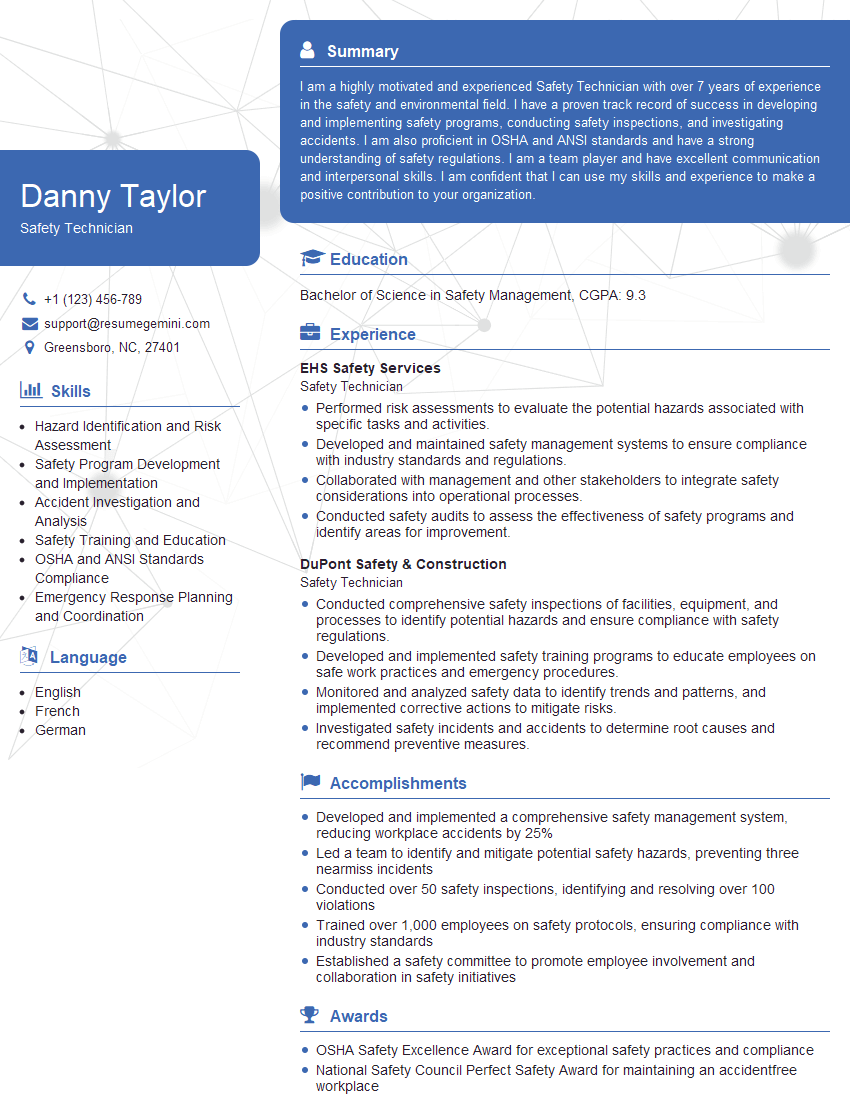
Mastering safety and handling of chemicals is crucial for a successful and fulfilling career in this field, opening doors to diverse roles and opportunities for professional growth. A strong understanding of these principles demonstrates your commitment to safety and responsibility, highly valued by employers. To enhance your job prospects, create an ATS-friendly resume that effectively highlights your skills and experience. We highly recommend using ResumeGemini to build a professional and impactful resume. ResumeGemini offers a streamlined process and provides examples of resumes tailored to the Safety and Handling of Chemicals field, ensuring your application stands out from the competition.



Explore more articles
Users Rating of Our Blogs
Share Your Experience
We value your feedback! Please rate our content and share your thoughts (optional).
What Readers Say About Our Blog
Very informative content, great job.
good