Are you ready to stand out in your next interview? Understanding and preparing for Paper Selection and Preparation interview questions is a game-changer. In this blog, we’ve compiled key questions and expert advice to help you showcase your skills with confidence and precision. Let’s get started on your journey to acing the interview.
Questions Asked in Paper Selection and Preparation Interview
Q 1. What are the key factors to consider when selecting paper for high-resolution printing?
Selecting paper for high-resolution printing requires careful consideration of several key factors. The goal is to ensure the final print showcases the image’s detail and vibrancy without compromising quality. Think of it like choosing the perfect canvas for a masterpiece – the wrong choice can ruin the artwork.
- Resolution and smoothness: Higher resolutions demand smoother paper surfaces to prevent ink from feathering or bleeding. Papers with a high coating weight are ideal. Look for specifications mentioning smoothness in terms of ‘points’ – a higher number indicates smoother paper.
- Brightness and Whiteness: Bright, white paper enhances color reproduction. The brightness and whiteness are measured using specific scales, and higher values generally mean a brighter, cleaner look, especially crucial for vibrant colors in high-res images.
- Paper Weight (Grammage): Heavier paper provides better rigidity and reduces show-through, particularly important for high-resolution prints which often utilize dense ink coverage. A thicker paper stock better supports the high-resolution image and prevents distortion.
- Color profile: Consider the color profile of the paper, ensuring it’s compatible with your printing process and desired color gamut. Different papers will reproduce colors slightly differently.
- Ink absorption: The paper’s ability to absorb ink influences the print’s sharpness and vibrancy. A balanced absorption rate prevents excessive ink bleeding, which would compromise resolution. Coated papers generally manage ink absorption more effectively than uncoated ones.
For example, printing a high-resolution photograph intended for gallery display requires significantly higher-quality paper than printing a simple draft document.
Q 2. Explain the difference between coated and uncoated paper and their applications.
Coated and uncoated papers differ significantly in their surface treatment and resulting properties, impacting their suitability for various printing applications. It’s like comparing a smooth, polished countertop to a naturally textured wood surface.
- Coated Paper: This type of paper is treated with a layer of coating, typically clay or polymer, which creates a smooth, non-porous surface. This leads to excellent ink holdout, sharper images, and vibrant colors. It’s perfect for high-resolution printing, such as glossy brochures, magazines, and high-quality photographs. The coating protects the print and makes it more resistant to smudging. Examples include gloss, matte, and silk coated papers.
- Uncoated Paper: Uncoated paper lacks this surface treatment, resulting in a more porous, textured surface. It absorbs ink more readily, making it less ideal for fine details but providing a more natural feel. It’s commonly used for stationery, business cards, letterheads, and book pages where a softer, more tactile experience is desired. It also tends to be more environmentally friendly due to the absence of additional coating materials.
Choosing between coated and uncoated paper hinges on the desired aesthetic and the level of detail required in the final print. A glossy magazine cover would necessitate coated paper, while a rustic wedding invitation might call for uncoated paper.
Q 3. Describe the process of preparing paper for offset printing.
Preparing paper for offset printing involves several critical steps to ensure smooth and efficient printing. Think of it as preparing a canvas for a painting, ensuring it is properly primed and ready for the artwork.
- Paper Selection: Choose paper appropriate for offset printing, considering grammage, finish, and coating. The paper must be compatible with the printing press and ink used.
- Conditioning: Acclimatizing the paper to the printing environment is crucial. This allows the paper to reach the correct moisture content, minimizing expansion and contraction during the printing process and preventing issues like paper jams or misalignment.
- Inspection: Meticulously inspecting the paper for defects like wrinkles, creases, holes, or discoloration is essential. Any damaged sheets must be removed to avoid printing errors.
- Cutting and Handling: Precise cutting and careful handling prevent paper damage and ensure that the sheets are appropriately sized and stacked for the printing press. Correct stacking prevents skewing and improves overall print quality.
- Pre-Press Considerations: Working closely with pre-press professionals to ensure the artwork is correctly formatted for the chosen paper size and type is vital. Color profiles and image resolution need to be carefully managed to obtain the desired results.
Skipping even one of these steps can lead to significant printing problems, such as ink smudging, misalignment, and overall reduced print quality.
Q 4. How do you assess the quality of paper stock?
Assessing paper quality involves a multi-sensory approach, combining visual inspection with physical testing. It’s akin to appraising a piece of fine art – you consider both the aesthetic qualities and the materials used.
- Visual Inspection: Examine the paper for surface smoothness, color uniformity, and the absence of defects like pinholes, wrinkles, or discolorations.
- Brightness and Whiteness Measurement: Using instruments like a spectrophotometer provides objective measurements of paper brightness and whiteness, ensuring consistency and meeting specific requirements.
- Thickness and Grammage Measurement: Accurate measurement of thickness and grammage (weight per unit area) using a micrometer ensures that the paper meets specifications, influencing its stiffness and print quality.
- Opacity Measurement: Testing opacity, or the paper’s ability to prevent show-through, is crucial, particularly for double-sided printing.
- Touch and Feel: Subjective evaluation involving the paper’s texture and feel can reveal its inherent quality. This is especially important for premium papers where tactile experience is key.
- Testing Ink Absorption: Testing ink absorption provides insight into the paper’s ability to hold ink without bleeding or feathering, vital for high-quality reproduction.
Utilizing a combination of these methods provides a comprehensive assessment of paper quality, ensuring it meets the project’s specific needs and expected print outcome.
Q 5. What are the common paper defects and how can they be identified?
Common paper defects can significantly impact print quality, necessitating careful identification and mitigation. Early detection and prevention are crucial to minimizing waste and maintaining print consistency. Think of these as ‘flaws’ in the canvas before painting starts.
- Holes and Pin Holes: Small or large holes in the paper, often caused during manufacturing, affect print quality and can lead to ink bleeding.
- Wrinkles and Creases: These physical imperfections can disrupt the printing process, resulting in uneven ink distribution and visible distortion.
- Discoloration and Staining: Irregularities in color, or stains, compromise print aesthetics and can indicate improper handling or storage of paper.
- Dust and Lint: These contaminants accumulate on the paper surface, interfering with ink transfer and impacting the print’s clarity.
- Caliper Variations: Uneven thickness can cause printing problems on offset presses, leading to misregistration or streaks in the final product.
- Curl: Paper curling is caused by inconsistent moisture content. This impacts printability and causes jamming in the press.
Identifying these defects requires careful visual inspection and, in some cases, specialized testing equipment. Effective quality control measures throughout the paper handling process are crucial to minimize their occurrence.
Q 6. Explain the importance of paper grammage in print design.
Paper grammage (weight per square meter) is a crucial factor in print design, influencing the final product’s feel, durability, and overall aesthetic. Think of it as selecting the right fabric for a garment – different fabrics have different weights and properties that affect the final look and feel.
- Weight and Substance: Higher grammage paper feels thicker and more substantial, conveying a sense of quality and luxury. It’s often used for high-end brochures, business cards, and invitations.
- Rigidity and Strength: Heavier papers are stiffer and more resistant to bending and tearing. This is important for items that need to withstand handling or folding.
- Show-through: Heavier grammage reduces show-through, where ink on one side of the paper is visible on the other. This is vital for double-sided printing.
- Printing Process: The chosen printing process can influence the appropriate grammage. For example, some printing methods are more suitable for lighter paper weights, while others can handle heavier stocks.
- Cost: Higher grammage papers typically cost more due to their increased material usage. Therefore, selecting the right grammage balances the desired quality with the budget.
The grammage choice depends on the intended use of the printed material. A lightweight flyer might use 80gsm paper, while a high-quality brochure might utilize 170gsm or heavier.
Q 7. What are the different paper finishes and their suitability for various print jobs?
Paper finishes significantly influence the visual and tactile experience of printed materials. Choosing the right finish is as important as choosing the right paper type – each offers a different aesthetic and functional purpose.
- Gloss: Provides a shiny, reflective surface, ideal for showcasing vibrant colors and sharp images. Commonly used for magazines, brochures, and packaging where visual impact is key. However, it can sometimes show fingerprints.
- Matte: Offers a smooth, non-reflective surface, reducing glare and enhancing readability, making it suitable for books, high-quality photographs, and projects requiring reduced glare.
- Silk: A middle ground between gloss and matte, providing a subtle sheen and good color reproduction. It’s a versatile option for various print jobs where a balance of visual appeal and readability is needed.
- Uncoated: Has a natural, textured feel, providing a rustic or elegant look. Ideal for stationery, invitations, or projects emphasizing a tactile experience.
- Embossed: Adds a three-dimensional texture to the paper, creating a luxurious and sophisticated feel. Often used for high-end products and invitations.
- Varnished: Provides a protective layer, enhancing durability and water resistance. Commonly used for outdoor signage, menus, and packaging requiring added protection.
Selecting the appropriate finish requires considering the project’s aesthetic goals and the intended use of the printed product. A glossy finish might be suitable for a product catalogue, whereas a matte finish might be preferred for a novel.
Q 8. How do you handle paper that is warped or curled?
Warped or curled paper is a common issue, often caused by changes in humidity or improper storage. The solution depends on the severity of the curl. For minor curling, you can often flatten the paper by placing it under heavy weights for a period, such as between sheets of heavier card stock under a stack of books for a day or two. This allows the paper fibers to relax and regain their flatness. For severely curled paper, a more aggressive approach might be necessary. You could try using a professional paper flattening press, which applies even pressure to flatten the paper. If the paper is very valuable or the project critical, it’s best to consult a professional paper conservator. They have specialized equipment and techniques to handle delicate or severely damaged paper without causing further harm. Think of it like straightening a slightly bent picture frame – a gentle approach is best, and sometimes professional help is needed for more severe damage.
Q 9. What are the environmental considerations in paper selection?
Environmental considerations are paramount in paper selection. Choosing environmentally responsible paper reduces your carbon footprint and promotes sustainable forestry practices. Look for papers with certifications like FSC (Forest Stewardship Council) which ensures the paper comes from responsibly managed forests. Consider the paper’s post-consumer recycled content. A higher percentage of post-consumer recycled fibers means less reliance on virgin pulp, reducing deforestation and energy consumption. Think about the paper’s chlorine-free bleaching process – totally chlorine-free (TCF) or elemental chlorine-free (ECF) processes minimize harmful dioxins released during bleaching. Finally, always consider the overall lifecycle impact of the paper, from its sourcing to its eventual disposal or recycling. For example, choosing a thicker, more durable paper might seem wasteful, but if it reduces the need for reprints or replacements, the overall environmental impact could be lower.
Q 10. Describe the process of calibrating a printing press to account for different paper types.
Calibrating a printing press for different paper types is crucial for achieving consistent, high-quality results. The process involves adjusting various settings on the press to compensate for the unique properties of each paper. This often starts with setting the paper feed and registration systems to accurately handle the thickness and stiffness of the paper. Next, you’ll adjust the pressure applied by the rollers to ensure even ink transfer without causing paper damage or slippage. Ink settings also need adjustments, as different paper absorbency will dictate how much ink is needed for vibrant, consistent color reproduction. This often involves adjusting the ink viscosity and the pressure applied by the printing heads. Finally, color calibration is critical. Different papers absorb and reflect light differently, impacting color accuracy. A colorimeter or spectrophotometer helps measure and adjust color profiles to compensate for these variations. The whole process is iterative, with test prints used to fine-tune the settings until the desired quality is achieved. Think of it like adjusting a camera’s settings for different lighting conditions – each paper type presents unique ‘lighting’ conditions for the printing process.
Q 11. What are the effects of humidity and temperature on paper?
Humidity and temperature significantly affect paper. High humidity causes paper to absorb moisture, leading to expansion and potential warping or curling. Low humidity, conversely, causes paper to dry out, making it brittle and prone to cracking. Extreme temperature fluctuations exacerbate these issues. Think about how your own skin feels in different environments – too much moisture makes it soft and pliable, while dry air makes it tight and potentially cracked. Paper reacts similarly. In professional settings, maintaining a stable temperature and humidity level (ideally around 50% relative humidity) within storage and printing areas is crucial to preserve paper quality and prevent damage. This usually involves the use of climate-controlled storage rooms, especially for archival materials or high-value prints.
Q 12. How do you determine the appropriate paper size and weight for a specific project?
Determining the appropriate paper size and weight for a specific project depends on several factors. The project’s intended use and the desired aesthetic are primary considerations. A brochure requires a different paper weight and size than a fine art print. The content itself also influences the choices. A large amount of text might necessitate a higher weight paper to prevent show-through, while a visually rich piece might favor a smoother, heavier paper to showcase the visuals effectively. The printing method also plays a crucial role. Offset printing handles heavier weights better than inkjet, while some specialty finishes may be limited by weight and size. For example, a high-quality business card needs a crisp, sturdy weight (often around 16pt), while a flyer might be more cost-effective and appropriate using a lighter weight (around 80lb cover). Always consider the final form and function of the printed material to make informed decisions.
Q 13. What are some strategies to reduce paper waste?
Reducing paper waste involves adopting strategies at various stages of the workflow. Digitalization is a key component – replacing paper-based documents with digital alternatives whenever possible drastically cuts down on consumption. This includes using email and cloud-based storage systems. Careful planning and efficient design can optimize paper usage. Using double-sided printing and ensuring accurate print jobs minimize wasted sheets. Prioritizing sustainable paper choices, as discussed earlier, also reduces the environmental impact of waste. Implementing effective recycling programs within the workplace is crucial, and making employees aware of responsible practices is a vital step to increase participation. Even minor measures, like using scrap paper for drafts or notes, can make a difference.
Q 14. How do you manage the inventory of different paper types?
Managing paper inventory involves a multi-pronged approach. First, a clear inventory system is essential. This can be a simple spreadsheet or a more sophisticated inventory management software. Regular stock checks ensure that you always have sufficient supplies without excessive overstocking. Proper storage is vital to maintain paper quality. This includes storing paper in a climate-controlled environment, organized by type and weight to prevent damage and facilitate easy retrieval. An effective ordering system needs to be implemented – setting reordering points and maintaining supplier relationships ensures timely replenishment of stock. This should also include regular reviews of paper usage to identify trends and adjust purchasing strategies accordingly to optimize stock levels. Just like managing a retail store, but instead of shirts and pants, we’re handling different paper types to meet project demands.
Q 15. Explain the concept of color calibration and its importance in paper selection.
Color calibration is the process of ensuring that the colors you see on your screen accurately represent the colors that will be printed on paper. It’s crucial in paper selection because different papers absorb and reflect light differently, leading to variations in color reproduction. For instance, a bright white paper will yield significantly different results than a cream-colored or off-white paper, particularly with vibrant colors. Without proper color calibration, your print job might look dull, washed out, or have colors that are drastically different from your digital design.
Imagine baking a cake: your recipe (digital design) calls for specific ingredients and proportions. The paper is like the baking pan. A dark pan will absorb more heat, potentially affecting the cake’s browning and texture, just as paper’s color and texture influence ink absorption and color appearance. Color calibration ensures your ‘cake’ (print) matches the ‘recipe’ (design).
In practice, this involves using color management profiles specific to the chosen paper type within your design software and printing workflow. These profiles provide the printer with information on how the paper interacts with ink, allowing for accurate color matching. Ignoring this step leads to costly reprints and disappointment.
Career Expert Tips:
- Ace those interviews! Prepare effectively by reviewing the Top 50 Most Common Interview Questions on ResumeGemini.
- Navigate your job search with confidence! Explore a wide range of Career Tips on ResumeGemini. Learn about common challenges and recommendations to overcome them.
- Craft the perfect resume! Master the Art of Resume Writing with ResumeGemini’s guide. Showcase your unique qualifications and achievements effectively.
- Don’t miss out on holiday savings! Build your dream resume with ResumeGemini’s ATS optimized templates.
Q 16. What are the different types of paper used in packaging?
The paper used in packaging is incredibly diverse, ranging from lightweight papers for brochures to heavy-duty cardboards for shipping boxes. Some key types include:
- Kraft Paper: A strong, durable paper often used for shopping bags, corrugated boxes, and other packaging requiring high tensile strength. It’s known for its eco-friendly nature and unbleached brown color.
- Cardboard/Paperboard: This encompasses various thicknesses and compositions, including corrugated board (used for most boxes) and solid board (used for things like cereal boxes and book covers). The layering and construction techniques dramatically influence the strength and stiffness.
- Coated Paperboard: This type is often coated with a protective layer for improved printability, gloss, and water resistance. It’s frequently used for food packaging, where barrier properties are crucial.
- Recycled Paperboard: Environmentally friendly option made from recycled fibers. The quality can vary depending on the recycling process and fiber content.
- Speciality Papers: This category includes papers with unique properties such as grease resistance (for food packaging), high barrier properties (preventing oxygen or moisture penetration), or metallic coatings for aesthetic appeal.
The choice depends on factors like product weight, protection requirements, environmental concerns, printability, and cost.
Q 17. How do you choose paper that is compatible with different printing techniques?
Choosing paper compatible with different printing techniques requires careful consideration of the paper’s properties and the printing method’s requirements. Different papers react differently to various printing processes.
- Offset Printing: Requires a smooth, coated paper to prevent ink from feathering. The paper’s absorption rate also plays a crucial role in achieving sharp, clean prints.
- Digital Printing: More forgiving than offset, but still benefits from paper with good ink receptivity. Papers with a slightly textured surface can sometimes be used.
- Flexographic Printing: Commonly used for packaging and requires papers that can withstand the pressure and ink used in this high-speed process. Paper strength and surface treatment are key.
- Screen Printing: Can handle a wider range of papers, but porous papers may absorb excessive ink. Paper thickness is important for avoiding ghosting (bleed through).
Before selection, check the paper manufacturer’s specifications to ensure compatibility with your target printing technique. Test prints are invaluable for verifying suitability and color reproduction accuracy.
Q 18. What safety precautions are necessary when handling large quantities of paper?
Handling large quantities of paper necessitates several safety precautions to minimize risks:
- Proper Lifting Techniques: Always use proper lifting techniques to prevent back injuries. Avoid twisting and keep the load close to the body.
- Storage and Organization: Store paper neatly and securely to prevent collapses. Ensure adequate spacing between stacks to allow for airflow and prevent moisture build-up.
- Personal Protective Equipment (PPE): Depending on the paper type and handling methods, PPE such as gloves, safety glasses, and dust masks might be necessary.
- Environmental Controls: Maintain a proper temperature and humidity level in the storage area to prevent paper damage due to excessive moisture or dryness.
- Fire Safety: Paper is highly flammable. Keep flammable materials away from heat sources and ensure adequate fire suppression systems are in place.
- Workplace Ergonomics: Organize the workspace to minimize strain and ensure comfortable working conditions.
Regular safety training and adherence to company safety protocols are essential.
Q 19. Describe your experience with different paper-cutting and trimming techniques.
My experience encompasses a variety of paper-cutting and trimming techniques. I’m proficient in using:
- Guillotine Cutters: For precise, straight cuts on large quantities of paper. Regular maintenance and blade sharpness are crucial for clean cuts.
- Rotary Cutters: Ideal for cutting intricate shapes or large volumes of paper with consistent accuracy. These are particularly useful for packaging applications.
- Die-Cutting Machines: Used for creating custom shapes and designs, particularly effective for producing unique packaging and labels.
- Paper Trimmers: Smaller, manual tools for trimming smaller quantities of paper. Useful for smaller projects and quick adjustments.
Each technique has its strengths and limitations. The choice depends on factors such as the quantity of paper, the complexity of the cut, and the required precision. For example, die-cutting offers immense flexibility in design but necessitates higher initial investment in custom dies.
Q 20. How do you troubleshoot issues related to paper jams in printing equipment?
Troubleshooting paper jams requires a systematic approach:
- Identify the source: Observe the printer to see where the jam is occurring. Check the input tray, rollers, and output tray.
- Turn off and unplug the printer: This is a crucial safety step to prevent electrical shocks.
- Carefully remove the jammed paper: Avoid tearing the paper as this can worsen the problem. Gently pull the paper in the direction of the paper path.
- Inspect the rollers: Check for any debris or obstructions on the rollers. Clean them gently with a soft cloth.
- Check the paper path: Ensure that the paper path is clear and free from any obstructions.
- Check paper type and size: Verify that the paper type and size are appropriate for the printer. Use the correct paper tray for the correct paper size.
- Check the printer settings: Make sure that the printer settings match the paper type and size.
- Restart the printer: After completing these steps, restart the printer and attempt to print again.
If the problem persists, consult the printer’s manual or contact technical support.
Q 21. What software or tools do you use for paper selection and management?
My paper selection and management process relies on a combination of software and tools:
- Color Management Software: Software like Adobe Acrobat Pro, and other specialized color management software for profiling and calibration.
- Paper Databases and Catalogs: Online and physical catalogs from paper manufacturers, providing detailed information on paper properties.
- Spreadsheets and Databases: For organizing paper inventory, tracking costs, and managing stock levels.
- Digital Asset Management (DAM) systems: In large-scale operations, DAM systems are used to manage paper specifications and related files.
- Project Management Software: Integration of paper choice into project tracking, linking the paper used to specific printing jobs.
These tools enable efficient paper selection, minimize waste through informed choices, and provide a readily accessible information repository for future projects.
Q 22. Explain your understanding of paper recycling processes.
Paper recycling is a multi-step process aimed at transforming used paper into new paper products, reducing landfill waste and conserving resources. It broadly involves these stages:
- Collection and Sorting: Used paper is collected from various sources – homes, businesses, and recycling centers – and sorted by type (newspaper, cardboard, office paper, etc.) to maintain quality. Contamination (like plastics or food) is removed at this stage.
- Pulping: The sorted paper is pulped. This involves mixing it with water and chemicals to break down the fibers. The chemicals used depend on the type of paper and the desired outcome, aiming to remove ink and other impurities.
- Cleaning and Screening: The pulp is cleaned to remove remaining contaminants, and screened to separate out larger particles and debris.
- De-inking: For papers with ink, a de-inking process is crucial. This uses chemical and mechanical methods to separate the ink from the fibers. The effectiveness of this step greatly influences the quality of the recycled paper.
- Bleaching (Optional): Some recycled paper undergoes bleaching to brighten the color. However, this process can be environmentally intensive, and many recycled papers prioritize maintaining a natural, slightly off-white shade.
- Refining: The pulp is refined to adjust the fiber length and consistency, impacting the final paper’s strength and texture.
- Papermaking: The refined pulp is then formed into a sheet of paper on a paper machine, using a process similar to that of making virgin paper, involving water removal and pressing.
- Finishing: Finally, the paper is dried, calendered (smoothed), and cut into the desired size and format.
Think of it like a meticulous cleanup and reconstruction project where the raw materials are the used fibers and the final product is a renewed sheet of paper ready for its next purpose.
Q 23. What is your experience with different paper suppliers and their offerings?
Over my career, I’ve worked with numerous paper suppliers, each with unique strengths. For instance, ‘GreenLeaf Papers’ excels in sustainable, FSC-certified options, offering a wide range of recycled and sustainably sourced papers with detailed certifications. Their customer service is also excellent, offering timely support and guidance on paper selection. On the other hand, ‘Precision Papers’ specializes in high-quality coated papers perfect for high-resolution printing. They consistently deliver on color accuracy and print consistency, but their environmental credentials are less emphasized compared to GreenLeaf. Finally, ‘BulkPaper Solutions’ focuses on providing a large selection of standard papers at competitive pricing, ideal for large-volume projects where cost is a major factor. Their offering is wide but lacks the specialization of the other two suppliers in sustainability and high-end print quality. The selection of a supplier always depends on the project requirements – sustainability concerns, print quality needs, and budget.
Q 24. Describe a time you had to solve a problem related to paper quality.
During a large-scale brochure printing project, we encountered unexpected issues with paper quality halfway through the run. The paper, supposedly a consistent 100lb gloss stock, exhibited significant variations in thickness and sheen. This resulted in inconsistent ink absorption and a noticeable difference in the final product’s visual appeal. We immediately halted production. My investigation revealed that the supplier had accidentally shipped a mixed batch from different production runs, leading to the inconsistencies. We quickly contacted the supplier who, acknowledging the mistake, provided a replacement shipment of the correctly specified paper. To avoid further delays, we prioritized printing the remaining brochures with the corrected paper. We collaborated closely with the printer to ensure smooth production and minimized the impact on the delivery timeline. We also implemented a more rigorous quality control process, including random sampling and inspection of incoming paper shipments, to prevent similar issues in future projects.
Q 25. How do you ensure consistent paper quality throughout a large print run?
Maintaining consistent paper quality throughout a large print run requires a multi-pronged approach:
- Specify Precise Paper Requirements: Detailed specifications are crucial, including grammage, finish, brightness, and any relevant certifications (like FSC or recycled content).
- Source from Reputable Suppliers: Choose reliable suppliers known for their quality control and consistency. Request samples and conduct thorough testing before committing to a large order.
- Order Sufficient Paper from a Single Batch: Avoid mixing paper from different batches or production runs to prevent variations.
- Implement On-site Quality Control: Regularly monitor the paper throughout the print run for any inconsistencies. This could include visual inspection, measuring thickness, and checking for defects.
- Maintain Consistent Printing Conditions: Factors like humidity and temperature in the printing environment can affect paper properties. Keeping these factors stable helps to ensure consistent results.
- Collaborate with the Printer: Open communication with the printing facility is essential. They can provide valuable insights into paper handling and identify potential issues early on.
Think of it like baking a cake – using the same recipe, ingredients, and oven temperature each time ensures consistency in the final product. Similarly, consistency in paper and printing conditions is key to a successful print run.
Q 26. What are the advantages and disadvantages of using recycled paper?
Recycled paper offers significant environmental advantages but also has some drawbacks:
- Advantages:
- Reduced Deforestation: Using recycled paper reduces the demand for virgin pulp, lessening the pressure on forests.
- Lower Greenhouse Gas Emissions: The manufacturing process of recycled paper generally produces fewer greenhouse gases compared to virgin paper production.
- Conservation of Water and Energy: Recycling paper requires less water and energy than producing virgin paper.
- Reduced Landfill Waste: Recycling diverts paper waste from landfills, minimizing environmental pollution.
- Disadvantages:
- Potentially Lower Print Quality: Depending on the recycling process and the quality of the recycled fibers, the resulting paper might have a slightly rougher texture or lower brightness compared to virgin paper. This can affect the appearance of high-resolution prints.
- Variations in Color and Texture: Recycled paper may exhibit minor variations in color and texture compared to virgin paper.
- Higher Cost (Sometimes): In some cases, recycled paper may be slightly more expensive than virgin paper, though this is becoming less common.
- Potential for Contamination: If the recycling process isn’t thorough, contaminants can remain in the recycled paper.
Q 27. How do you handle discrepancies between the specified paper requirements and the available stock?
When discrepancies arise between specified paper requirements and available stock, the solution involves a careful evaluation of priorities and alternatives:
- Assess the Impact: First, determine the severity of the discrepancy. Is it a minor variation (e.g., slightly different shade of white) that won’t significantly impact the final product, or a major difference (e.g., different weight or finish) that could compromise print quality or functionality?
- Explore Alternatives: If the discrepancy is minor, consider whether the available stock is an acceptable substitute. This might involve consulting color charts or testing the available paper against the original specifications.
- Negotiate with the Supplier: If a suitable alternative isn’t available, discuss the situation with the supplier to find a solution. This could involve expediting the order of the specified paper, offering a substitute from a different source, or exploring alternative products.
- Communicate with the Client: If the discrepancy is significant and cannot be easily resolved, keep the client informed. Transparency is crucial in such situations to manage expectations and find a mutually acceptable solution.
- Document Everything: Maintain thorough records of all communication, decisions, and any compromises made to avoid future misunderstandings.
The goal is to find a solution that balances print quality, project deadlines, and client expectations. It’s often a matter of weighing the risks and benefits of different options.
Q 28. What are your strategies for staying updated on the latest advancements in paper technology?
Staying updated in the dynamic world of paper technology involves a multi-faceted approach:
- Industry Publications and Trade Shows: Regularly reading trade journals like
Paper Technology Magazineand attending industry events such as thePaperConconference allow me to learn about the latest innovations, new paper types, and emerging trends. - Online Resources and Databases: Utilizing online databases and websites specializing in paper specifications and sustainability certifications provides access to valuable information and allows comparisons between different products.
- Networking with Industry Professionals: Attending industry events and connecting with professionals from different companies enables me to learn from their experiences and gain insights into new technologies and developments.
- Supplier Partnerships: Building strong relationships with paper suppliers ensures access to the latest information on their products, innovations, and sustainable practices. Many suppliers actively share information on advancements.
- Continuous Learning and Training: Pursuing professional development courses and workshops that focus on paper science, printing technologies, and sustainable practices keeps me abreast of the latest advances.
Think of it as continuous professional development. The industry is constantly evolving, and staying informed is crucial to providing high-quality, sustainable, and cost-effective solutions for our clients.
Key Topics to Learn for Paper Selection and Preparation Interview
- Understanding Paper Properties: Explore different paper types (e.g., coated, uncoated, recycled), their characteristics (e.g., weight, texture, opacity), and suitability for various printing methods and applications.
- Paper Sourcing and Sustainability: Discuss responsible sourcing practices, environmental considerations (e.g., FSC certification), and the impact of paper selection on the overall environmental footprint.
- Cost Optimization Strategies: Analyze the cost-effectiveness of different paper choices considering factors like quantity, quality, and printing costs. Develop strategies to balance quality and budget.
- Print Production Workflow: Understand how paper selection impacts the overall print workflow, including pre-press, press operation, and post-press finishing. Identify potential challenges and solutions related to paper choice.
- Quality Control and Inspection: Learn about quality control measures during paper selection and throughout the printing process. Understand how to identify and address paper-related defects.
- Industry Regulations and Standards: Familiarize yourself with relevant industry standards and regulations concerning paper quality, safety, and environmental compliance.
- Problem-Solving in Paper Selection: Develop your ability to analyze specific printing projects and select the optimal paper type based on project requirements and constraints. Practice identifying and resolving potential paper-related issues.
Next Steps
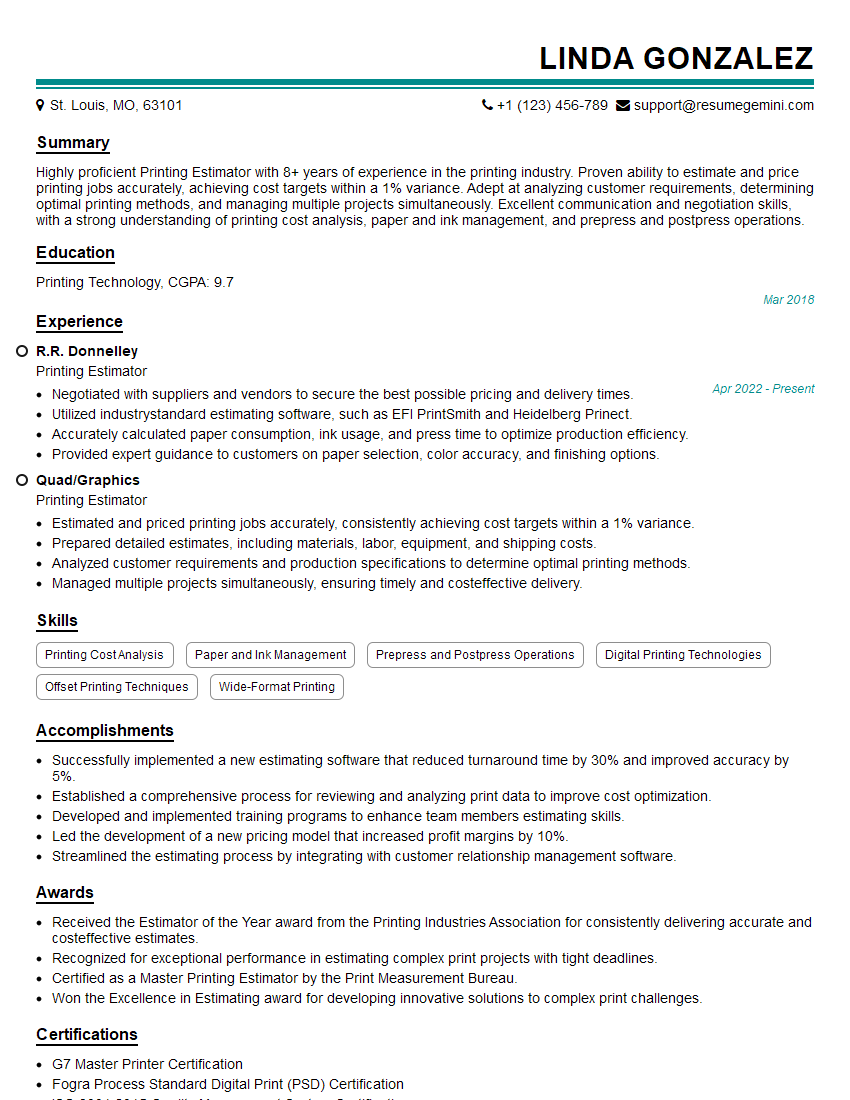
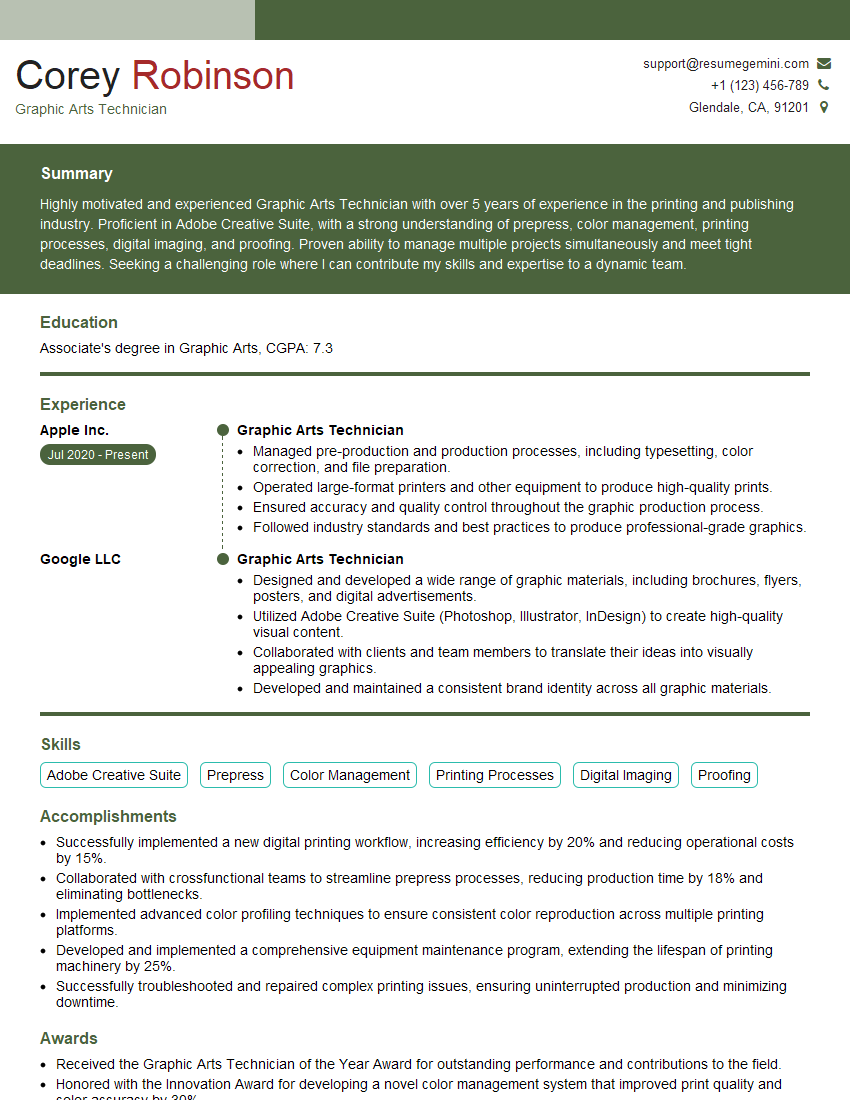
Mastering Paper Selection and Preparation is crucial for career advancement in the printing and publishing industries. A strong understanding of paper properties, sourcing, and cost optimization will significantly enhance your problem-solving abilities and decision-making skills. Building an ATS-friendly resume is essential to increase your job prospects. To create a professional and impactful resume that highlights your skills and experience in Paper Selection and Preparation, we encourage you to utilize ResumeGemini. ResumeGemini offers a user-friendly platform and provides examples of resumes tailored to this specific field, helping you showcase your qualifications effectively. Take the next step towards your dream career today!
Explore more articles
Users Rating of Our Blogs
Share Your Experience
We value your feedback! Please rate our content and share your thoughts (optional).
What Readers Say About Our Blog
Very informative content, great job.
good