Every successful interview starts with knowing what to expect. In this blog, we’ll take you through the top Rigging and Slinging Certification interview questions, breaking them down with expert tips to help you deliver impactful answers. Step into your next interview fully prepared and ready to succeed.
Questions Asked in Rigging and Slinging Certification Interview
Q 1. What are the different types of slings and their applications?
Slings are the essential components connecting the load to the lifting device. Several types cater to different needs and load characteristics. Choosing the right sling is crucial for safety and efficiency.
- Polyester/Nylon Web Slings: These are incredibly versatile, relatively lightweight, and offer good shock absorption. They’re commonly used for general lifting tasks, particularly when flexibility is needed. Imagine moving furniture or large equipment in a warehouse – web slings are perfect for that. They come in various widths and lengths, and their SWL is clearly marked.
- Round Slings: Made from high-tensile synthetic fibers, these slings are robust and excellent for lifting heavy, bulky objects. Their circular shape distributes the load evenly, making them suitable for curved or irregularly shaped items. Think of lifting a large steel pipe – a round sling is ideal.
- Chain Slings: These are extremely durable and resistant to abrasion, making them suitable for harsh environments and heavy-duty lifting. However, they lack the flexibility of web slings. Commonly used in construction or demolition, where sharp edges are a concern.
- Wire Rope Slings: Similar to chain slings in their strength, wire rope slings are preferred where high tensile strength is required and abrasion resistance is a primary consideration. They are often used for lifting heavy machinery or materials in industrial settings.
The choice of sling depends heavily on factors such as the load’s weight, shape, and material, as well as the environment and the lifting method employed. Understanding these factors is key to selecting the appropriate sling for the job.
Q 2. Explain the importance of pre-lift inspections.
Pre-lift inspections are paramount for preventing accidents. They’re a crucial safety check that ensures all equipment is in top condition before lifting commences. Think of it like a pre-flight check for an airplane – you wouldn’t take off without one!
A thorough inspection should cover the following:
- Slings: Check for fraying, cuts, burns, excessive wear, and proper tagging with the SWL.
- Rigging Hardware: Inspect shackles, hooks, and other hardware for cracks, deformation, or damage. Ensure proper lubrication and functionality.
- Lifting Equipment: Verify the crane or hoist is functioning correctly and has the necessary capacity for the load.
- Lifting Environment: Assess the area for obstructions, uneven ground, or other hazards that could compromise safety.
Documenting the inspection is critical. A simple checklist or form allows you to record findings and ensure accountability. Ignoring a pre-lift inspection is a shortcut to disaster. It’s a quick, easy, and essential step that saves lives and prevents costly equipment damage.
Q 3. How do you calculate safe working loads (SWL) for slings?
Calculating the Safe Working Load (SWL) is not a simple formula; it’s dependent on the type of sling, its condition, angle, and the manufacturer’s specifications. It’s not something to estimate – always consult the manufacturer’s data.
Each sling has its SWL clearly marked (usually a tag). This is the maximum load the sling can safely handle under ideal conditions. However, the effective SWL can be reduced when:
- Angle of Lift: Lifting at angles other than vertical reduces the SWL significantly. A sling lifted at a 30-degree angle from the vertical will have only around 87% of its vertical SWL. The reduction is even greater at smaller angles. Formulae and charts are available to calculate the reduction depending on the angle.
- Number of Legs: Multiple legs distribute the load, increasing the overall lifting capacity. For instance, two legs at a 60-degree angle will allow you to lift approximately twice the single leg SWL.
- Sling Material and Construction: Different sling materials (polyester, nylon, chain, wire rope) have different strength characteristics.
Example: If a sling’s marked SWL is 10,000 lbs vertically, lifting at a 45-degree angle with two legs, reduces the effective SWL. You would need to consult the relevant chart or formula to calculate the actual SWL for this specific scenario.
Always use a safety factor, which adds an extra margin of safety above the SWL.
Q 4. Describe the different types of rigging hardware and their uses.
Rigging hardware is the critical link between the sling and the load or the lifting equipment. Each piece plays a unique role. A common analogy is to think of these components as the building blocks of a system.
- Shackles: These are used to connect slings to hooks or other rigging hardware. They come in various sizes and types (bow shackles, D-shackles) and have clearly marked SWLs.
- Hooks: These are used to attach the sling or shackle to the lifting equipment (crane hook, hoist hook). They must be inspected regularly for damage and bending.
- Eye Bolts: These are used to create a secure attachment point on the load. They must be appropriately sized for the load and installed correctly.
- Rings: Often used as connecting links between different parts of the rigging system, providing flexibility and different attachment points.
- Clamps: Employed to secure wire rope slings. Selecting the right clamp is crucial to prevent slippage.
Choosing the right hardware is as important as choosing the right sling. The entire rigging system must be compatible and rated for the load’s weight. Improperly selected or damaged hardware is a major safety hazard.
Q 5. What are the regulations and standards governing rigging and slinging?
Rigging and slinging operations are governed by stringent regulations and standards to ensure workplace safety. These vary depending on location but generally follow widely accepted industry practices. Some key standards include:
- OSHA (Occupational Safety and Health Administration): In the United States, OSHA sets regulations for workplace safety, including those for rigging and lifting.
- ASME (American Society of Mechanical Engineers): ASME provides standards for cranes, hoists, and other lifting equipment.
- ANSI (American National Standards Institute): ANSI develops and publishes consensus standards on a wide range of industrial topics, including rigging and slinging.
These standards detail requirements for inspections, training, load limits, and the safe use of equipment. Adherence to these regulations is not just a suggestion; it’s legally mandated and essential for protecting workers and preventing accidents. Staying informed about updates and changes in these standards is vital for all professionals involved in rigging.
Q 6. How do you identify and handle damaged rigging equipment?
Damaged rigging equipment is a significant safety risk and must be handled with extreme caution. The “better safe than sorry” approach always wins in this field.
Identifying damage requires careful observation. Look for:
- Tears, cuts, or abrasions: On slings, these weaken the material and reduce its SWL.
- Burns or heat damage: Heat can significantly reduce the strength of synthetic slings.
- Corrosion: This weakens metal components, such as chains and shackles.
- Deformations: Bent hooks or damaged shackles compromise their integrity.
- Missing or illegible markings: These indicate potential problems with tracking history and maintenance.
Handling Damaged Equipment:
- Immediately remove damaged equipment from service.
- Clearly mark it as “out of service” to prevent accidental use.
- Report the damage to the appropriate supervisor.
- Dispose of damaged equipment properly to prevent unauthorized reuse.
- Never attempt to repair damaged rigging equipment yourself. Only qualified personnel should handle repairs or replacements.
Prevention is better than cure. Regular inspections can prevent many accidents.
Q 7. What are the safety procedures for rigging and slinging operations?
Rigging and slinging operations demand strict adherence to safety protocols. A single mistake can have devastating consequences. The following measures are essential:
- Proper Training and Certification: Riggers and slingers should undergo thorough training and obtain appropriate certifications to demonstrate their competence.
- Pre-Lift Planning: Develop a detailed plan that outlines the lifting procedure, equipment selection, and safety precautions. This ensures everyone knows their roles and responsibilities.
- Pre-Lift Inspection: As discussed previously, this is a critical step to identify any potential hazards before lifting.
- Clear Communication: Establish a clear communication system between the rigger, crane operator, and other personnel involved. Hand signals are often used to ensure clear instructions.
- Personal Protective Equipment (PPE): Always wear appropriate PPE such as hard hats, safety glasses, gloves, and high-visibility clothing.
- Load Securing: Ensure the load is secured properly to prevent shifting or slippage during lifting.
- Emergency Procedures: Establish clear emergency procedures and ensure all personnel are aware of what to do in case of an accident. This includes escape routes and the location of safety equipment.
Safety should be the top priority in every rigging operation. A culture of safety is paramount in preventing accidents.
Q 8. Explain the different types of knots used in rigging and their applications.
Knots are fundamental in rigging, providing secure connections and facilitating safe lifting operations. The choice of knot depends heavily on the application and load requirements. Incorrect knot selection can lead to catastrophic failure. Here are a few examples:
- Bowline: Forms a fixed loop that won’t slip. Excellent for attaching a sling to a load, particularly useful when a running end is needed for adjustments. Imagine creating a secure loop around a heavy piece of equipment to lift it without the loop tightening or loosening.
- Clove Hitch: A quick and easy knot used for temporary attachments. While simple, it’s crucial to double and properly secure it for safety. I’ve often used this to secure a guide rope for a smaller lift, as long as I know the load isn’t excessive.
- Figure Eight Knot: Used to form a secure loop at the end of a rope, frequently used as a stopper knot to prevent the rope from running through a pulley system. Think of this as a safety measure to prevent rope slippage.
- Fisherman’s Knot: Used to join two ropes of similar diameter. It’s critical to ensure both ropes are tightly bound and properly secured to prevent the knot from coming undone under tension. I have used this knot to join two separate anchor points.
It’s vital to remember that the strength of a knot is always less than the strength of the rope itself. Proper knot tying technique and regular inspection are paramount for safe rigging.
Q 9. How do you communicate effectively with crane operators during a lift?
Clear and concise communication with crane operators is non-negotiable for safe lifting operations. Misunderstandings can have devastating consequences. My approach involves a standardized system:
- Pre-lift Briefing: Before any lift commences, I conduct a thorough briefing with the operator, discussing the load weight, center of gravity, rigging plan, and any potential hazards. This is vital as a common language must be established.
- Hand Signals: I utilize universally recognized hand signals to direct the crane’s movements. This eliminates reliance on verbal communication, which can be distorted by noise or distance. Every single signal must be verified.
- Clear and Concise Verbal Instructions: When hand signals are not sufficient, I use short, clear commands, such as “Hoist slowly,” “Lower gently,” or “Swing to the left.” Avoid jargon or ambiguous terminology.
- Confirmation: I always confirm the crane operator’s understanding of each instruction. A simple “Acknowledged” or a thumbs-up goes a long way.
- Maintaining Eye Contact: Direct eye contact ensures that the operator is paying attention to the instructions and that there’s clear understanding.
By following this system, I’ve successfully managed hundreds of lifts, always prioritizing safety through communication.
Q 10. Describe your experience with different types of cranes and lifting equipment.
My experience encompasses a wide range of cranes and lifting equipment. I’m proficient with:
- Tower Cranes: Used extensively in high-rise construction, demanding careful planning and precise operation due to their height and reach.
- Mobile Cranes: Versatile and widely used for various lifting tasks, requiring expertise in understanding their load charts and stability limits. I have experience with various configurations, from crawler cranes to all-terrain cranes.
- Overhead Cranes: Common in industrial settings, requiring an understanding of their capacity and safe operation within confined spaces.
- Forklifts: While not always considered ‘heavy lifting,’ their improper use can be disastrous. I’m experienced in using these safely and effectively in loading and unloading operations.
- Various Lifting Equipment: This also includes chain hoists, lever hoists, and come-alongs. Understanding their capacities and limitations is essential.
Through hands-on experience and rigorous training, I have gained a comprehensive understanding of the capabilities and limitations of each piece of equipment, emphasizing safety as my top priority.
Q 11. What are the factors that affect the safe working load of a sling?
Several factors influence the safe working load (SWL) of a sling, and it’s crucial to consider them all. Reducing the SWL below the manufacturer’s rating can cause failure:
- Sling Material: The material’s strength and type directly affect SWL. Synthetic slings, for instance, degrade with UV exposure, reducing their strength over time.
- Sling Angle: Lifting a load with slings at angles greater than 30 degrees significantly reduces the SWL. The load is distributed more to the slings, which increases the force on the slings.
- Number of Legs: Multiple legs distribute the load, increasing the overall capacity. Two-leg slings increase SWL as compared to a single-leg sling.
- Sling Condition: Damage such as cuts, abrasion, or heat damage greatly compromises a sling’s strength and should immediately result in the sling being removed from use.
- Type of Sling: Different slings (e.g., chain, wire rope, synthetic webbing) have varying strength characteristics and SWLs.
Always consult the manufacturer’s data plate and relevant safety standards to determine the SWL and appropriate usage of the sling.
Q 12. How do you determine the appropriate angle for slinging?
Determining the appropriate sling angle is vital for safe lifting, as the angle directly impacts the load on each sling leg. Ideally, angles should be kept as close to vertical (0 degrees) as possible. However, this isn’t always feasible. Here’s how to approach it:
- Consider the Load’s Geometry: The shape and size of the load influence the placement of the slings and the resulting angles.
- Use a Sling Angle Calculator: Many online calculators or software programs can help determine the appropriate SWL based on the sling angle and the number of legs.
- The 30-Degree Rule: As a general rule of thumb, angles should be kept below 30 degrees to minimize the increase in load on each leg. Exceeding this angle reduces the SWL substantially.
- Observe the Load: Pay close attention to how the load is behaving during lifting. Unusual movements or stress on the slings suggest a need to adjust the angles.
Remember, the steeper the angle, the greater the load on each leg, exponentially increasing the risk of sling failure.
Q 13. What are the consequences of improper rigging and slinging practices?
Improper rigging and slinging practices lead to a cascade of potentially devastating consequences, impacting personnel and property:
- Equipment Damage: Loads can drop unexpectedly, damaging the load itself, surrounding equipment, or the structure being used for the lift.
- Injury or Fatality: Dropped loads can cause serious injury or death to those in the vicinity.
- Property Damage: Beyond the load itself, surrounding structures or equipment may be damaged or destroyed.
- Production Delays: Accidents lead to delays, repair costs, and investigations, significantly impacting productivity.
- Legal Ramifications: Companies may face heavy fines, lawsuits, or even criminal charges related to negligence or unsafe practices.
Prioritizing proper rigging and slinging practices is not just about efficiency; it’s about safeguarding lives and minimizing financial and legal consequences.
Q 14. How do you handle emergency situations during a rigging operation?
Emergency situations during rigging can arise unexpectedly, and a swift, informed response is key. My approach is based on training and experience:
- Immediate Assessment: Quickly assess the situation, identifying the immediate danger and the people at risk. This requires calm and clear thinking.
- Secure the Area: Establish a safe perimeter to keep personnel away from the potential hazard.
- Communicate Clearly: Communicate the emergency clearly to the crane operator, supervisors, and emergency personnel.
- Activate Emergency Procedures: Follow established emergency procedures, which might include shutting down equipment or evacuating the area.
- Post-Incident Procedures: After the immediate threat is addressed, follow post-incident procedures, including documentation, investigation, and corrective actions. This includes reporting, accident documentation, and potential root cause analysis.
Regular training, rehearsals of emergency plans, and a strong understanding of safety protocols enable a rapid and effective response during unforeseen events. My experience has involved several close calls, but through quick thinking and adherence to established procedures, serious accidents were avoided.
Q 15. Explain the importance of risk assessment in rigging and slinging.
Risk assessment in rigging and slinging is paramount because it’s a high-risk activity. It’s essentially a systematic process of identifying potential hazards, analyzing the likelihood and severity of those hazards causing harm, and determining the necessary control measures to mitigate the risks. Think of it as a proactive safety net.
A thorough risk assessment considers various factors, including the type of load (weight, shape, stability), the environment (weather conditions, ground stability, obstructions), the rigging equipment (sling type, condition, rated capacity), and the personnel involved (experience level, training, competence). For example, lifting a heavy, oddly-shaped load in high winds requires a more detailed and cautious assessment than lifting a simple pallet indoors.
The outcome of a risk assessment informs the safe work method statement (SWMS), which details the specific steps, precautions, and equipment needed to perform the lift safely. Ignoring risk assessment can lead to serious accidents, injuries, property damage, and even fatalities.
Career Expert Tips:
- Ace those interviews! Prepare effectively by reviewing the Top 50 Most Common Interview Questions on ResumeGemini.
- Navigate your job search with confidence! Explore a wide range of Career Tips on ResumeGemini. Learn about common challenges and recommendations to overcome them.
- Craft the perfect resume! Master the Art of Resume Writing with ResumeGemini’s guide. Showcase your unique qualifications and achievements effectively.
- Don’t miss out on holiday savings! Build your dream resume with ResumeGemini’s ATS optimized templates.
Q 16. What are your methods for ensuring the safety of yourself and your team?
Ensuring the safety of myself and my team is my top priority. My approach is multi-layered and proactive. It starts with adhering to all relevant safety regulations and standards. Beyond that, I have several key methods:
- Pre-lift checks: Before every lift, we conduct thorough inspections of all equipment (slings, shackles, hooks, crane) and the working area. This includes checking for damage, wear and tear, proper markings, and correct capacity ratings. We also verify that everyone involved understands their roles and responsibilities.
- Communication: Clear and concise communication is essential. Before, during, and after the lift, we use hand signals, radio communication, or a designated signal person to ensure everyone is informed and coordinated. Miscommunication is a major cause of accidents.
- Competency: I ensure my team holds the necessary certifications and has the requisite experience for the task at hand. Regular training and refresher courses are crucial to maintain competency and stay up-to-date on best practices and new equipment.
- Personal Protective Equipment (PPE): We always use appropriate PPE, including safety helmets, gloves, high-visibility clothing, and safety footwear.
- Emergency Procedures: We have well-defined emergency procedures in place, including escape routes and emergency contact information, and conduct regular drills to ensure everyone knows what to do in case of an accident.
Ultimately, my commitment to safety fosters a culture of vigilance and teamwork, creating a safer working environment for everyone involved.
Q 17. Describe your experience with different lifting techniques.
I’m experienced with various lifting techniques, including:
- Vertical Lifts: These are the most common, where the load is lifted straight up. I’m adept at calculating the correct sling angles and ensuring proper load distribution to prevent damage to the load or equipment.
- Horizontal Lifts: These are more complex, requiring careful consideration of load stability and potential swing. I utilize spreader beams or multiple slings to distribute the load evenly and prevent tilting or rotation.
- Pick and Carry Lifts: This involves lifting and moving the load to a specific location. Accurate planning and coordination are key here, ensuring safe navigation through the working area.
- Derricking: In this method, a crane or derrick is used with specialized attachments for challenging lifts, like placing heavy equipment in tight spaces. This requires advanced knowledge of crane operation and load calculations.
My experience extends to different load types and working environments. I’ve handled everything from delicate machinery to heavy steel components in varied weather conditions and challenging terrain. Every lift is unique and requires careful planning and execution tailored to the specific situation.
Q 18. How do you inspect and maintain rigging equipment?
Rigging equipment inspection and maintenance are non-negotiable for safety. My process involves a thorough visual examination and documentation.
- Visual Inspection: I carefully check each component for signs of wear, damage, corrosion, distortion, or any other defects. This includes checking slings for fraying, cuts, burns, or excessive wear; shackles for cracks or deformation; and hooks for damage to the point or throat opening. I also look for proper markings and certification tags indicating the equipment’s rated capacity and last inspection date.
- Documentation: I meticulously document every inspection, including the date, time, equipment ID, condition, and any necessary repairs or replacements. This creates a clear audit trail and aids in equipment management.
- Regular Testing: Certain equipment requires regular testing beyond visual inspection (e.g., load testing of slings). I ensure that these tests are performed according to relevant standards and the results are documented.
- Storage and Handling: Correct storage and handling are just as critical as inspection. Equipment should be stored properly to prevent damage and degradation. Avoid storing slings in damp or corrosive environments.
- Retirement: Damaged or excessively worn-out equipment is immediately removed from service and replaced. It’s never worth risking safety to save money by using compromised equipment.
Remember, a well-maintained sling is a safe sling, and proactive maintenance prevents costly accidents and downtime.
Q 19. What are the limitations of different types of slings?
Different sling types have different limitations. Understanding these limitations is critical for safe operation.
- Polyester Slings: Strong and relatively lightweight, but susceptible to damage from sharp edges or chemicals. They can also degrade under prolonged UV exposure.
- Nylon Slings: Similar to polyester, but have a higher stretch which can be a factor in some lifts. They can be affected by heat and abrasion.
- Wire Rope Slings: Extremely strong and durable, but prone to wear and internal damage that’s difficult to see visually. Regular inspection with specialized equipment is needed.
- Chain Slings: Very durable and able to withstand high loads, but susceptible to stretching and deformation if overloaded. Regular lubrication is necessary.
Each sling type has a specific working load limit (WLL) that must never be exceeded. Exceeding the WLL can lead to catastrophic failure.
Q 20. How do you select the appropriate sling for a specific load?
Selecting the right sling for a specific load involves careful consideration of several factors:
- Load Weight: The sling’s WLL must exceed the load weight, considering safety factors.
- Load Shape and Characteristics: The sling’s configuration must be suitable for the load’s shape and distribution to avoid point loading.
- Load Material and Surface: Sharp edges or abrasive surfaces require slings that are resistant to damage from these conditions.
- Environmental Conditions: Temperature, humidity, and the presence of chemicals can influence sling selection.
- Lifting Method: The chosen lifting technique and the required sling angles must be considered.
For example, a heavy, irregularly shaped steel component might require a wire rope sling with multiple legs to distribute the load effectively. A delicate piece of equipment might call for a soft sling (like a polyester or nylon sling) to protect the surface. Always consult load charts and manufacturers’ specifications to ensure that the sling selection is appropriate.
Q 21. Explain the concept of load distribution in rigging.
Load distribution in rigging ensures that the weight of the load is evenly spread across the entire lifting assembly, minimizing stress on individual components and preventing damage to the load or equipment.
Uneven load distribution can lead to:
- Sling failure: Concentrated stress on a small portion of a sling can lead to premature failure.
- Load damage: Uneven pressure on the load can cause deformation or breakage.
- Equipment damage: Excessive stress on hooks, shackles, or other lifting equipment can cause damage or failure.
Proper load distribution is achieved through:
- Correct sling placement: Positioning slings symmetrically to distribute weight evenly.
- Appropriate sling angles: Minimizing vertical sling angles to reduce stress on the slings.
- Use of spreader beams or other distribution devices: Distributing the weight across multiple points.
For instance, lifting a long, heavy beam requires two slings attached at each end to prevent bending and twisting. In contrast, a more symmetrical load, like a pallet, might only require a single sling.
Q 22. How do you deal with unexpected problems during a lift?
Unexpected problems during a lift are unfortunately common. My approach is based on a calm, systematic assessment and prioritization of safety. First, I’d immediately stop the lift. Safety is paramount, and proceeding with an unknown issue could lead to catastrophic consequences. Then, I’d perform a thorough visual inspection of the rigging, load, and surrounding area. This includes checking for any signs of damage to slings, shackles, or the load itself; verifying proper load distribution; and assessing the environment for any changes that might affect stability (e.g., shifting ground, strong winds).
Depending on the problem, solutions vary. A broken sling requires immediate replacement with a properly rated and inspected alternative. An unstable load might require readjustment of the rigging configuration or additional securing measures. Communication is critical – I’d update the crane operator, spotters, and any other personnel involved. Documentation is equally vital – all actions taken, observations made, and decisions reached are meticulously recorded. If the problem is beyond my expertise, I would consult a qualified engineer or supervisor immediately. I’ve had an instance where a sudden gust of wind almost caused a load to swing dangerously. Immediately stopping the lift and waiting for calmer conditions prevented a potentially serious accident. The key is to stay calm, assess, act, and document, always prioritizing safety.
Q 23. Describe your experience with different types of rigging plans.
My experience spans a variety of rigging plans, from simple one-point lifts to complex multi-point lifts involving multiple cranes and specialized equipment. I’m proficient in developing plans for vertical lifts, using various sling configurations such as choker hitches, basket hitches, and bridle hitches. I’ve also worked extensively with horizontal lifts, employing spreader beams and other load distribution devices. My experience includes rigging plans for both static and dynamic loads, each requiring different considerations regarding swing radius, load stability, and potential stress points. For instance, I’ve developed a rigging plan for lifting a large transformer where precise load distribution was paramount to prevent damage to the delicate equipment. This involved a sophisticated bridle hitch configuration with load cells for precise monitoring of tension in each leg. In another project involving an unusually shaped component, we used a custom-designed spreader beam to ensure uniform load distribution.
The choice of a rigging plan is determined by several factors, including the load’s weight, shape, size, and center of gravity; the available lifting equipment; and the environmental conditions. I always ensure the selected plan complies with all relevant safety regulations and best practices.
Q 24. How do you ensure compliance with safety regulations?
Compliance with safety regulations is non-negotiable. My approach is proactive and multi-layered. First, I ensure I’m thoroughly familiar with all applicable local, national, and industry-specific regulations, such as OSHA (in the US) or equivalent standards in other jurisdictions. Before any lift, I conduct a comprehensive pre-lift inspection, meticulously checking all equipment (slings, shackles, hooks, crane, etc.) for damage, wear, and proper certifications. I’ve developed checklists to ensure consistency and completeness in these inspections. I verify that all personnel involved in the lift are properly trained and certified in accordance with the applicable safety regulations.
Detailed documentation is another cornerstone of my approach. This includes completing pre-lift and post-lift inspections reports, documenting any anomalies or issues encountered, and ensuring that all necessary permits and authorizations are in place. Regular participation in safety training and staying up-to-date on new regulations are critical. This includes attending safety workshops and conferences to understand the latest changes and best practices. I view safety not just as compliance, but as a commitment to my team and the success of our operations.
Q 25. What are the common causes of rigging accidents?
Rigging accidents, unfortunately, are often the result of a chain of contributing factors rather than a single cause. Some of the most common include:
- Improper rigging techniques: Incorrect hitches, inadequate load distribution, and failing to account for the center of gravity are frequent culprits.
- Using damaged or worn equipment: Overloaded slings, corroded shackles, or faulty hooks can lead to sudden failure.
- Inadequate planning: Lack of proper planning, including failing to account for environmental conditions or load characteristics, can result in dangerous situations.
- Lack of communication: Misunderstandings between crane operators, riggers, and spotters can cause accidents.
- Insufficient training and certification: Rigging requires specialized knowledge and skills; insufficient training and certification put everyone at risk.
- Failure to follow safety procedures: Not following established safety procedures or ignoring safety warnings significantly increases the risk of accidents.
For instance, an accident I witnessed involved a sling failing due to excessive wear and tear that wasn’t noticed during the pre-lift inspection. This highlights the importance of thorough inspections.
Q 26. What are your strategies for preventing rigging accidents?
Preventing rigging accidents is a multifaceted process requiring commitment at every level. My strategies focus on proactive measures and continuous improvement.
- Thorough planning and risk assessment: Developing detailed rigging plans that account for all potential hazards and conducting thorough risk assessments are crucial.
- Rigorous equipment inspection: Regular and meticulous inspection of all rigging equipment, including slings, shackles, and hooks, is paramount. This involves visual inspections, load testing, and adherence to regular replacement schedules.
- Proper training and certification: Ensuring that all personnel involved in rigging operations have the necessary training, certifications, and experience is vital.
- Effective communication: Establishing clear communication protocols and utilizing signal systems to avoid misunderstandings during lifts is crucial.
- Adherence to safety regulations and procedures: Strict adherence to all relevant safety regulations and established procedures is non-negotiable.
- Regular safety meetings and training: Conducting regular safety meetings to discuss potential hazards, lessons learned from past incidents, and best practices reinforces safety culture.
I regularly conduct toolbox talks to discuss potential hazards and reinforce best practices, making safety an ongoing conversation within the team.
Q 27. Describe your experience with different types of load securing techniques.
My experience encompasses a wide range of load securing techniques, selected based on the specific characteristics of the load and the lift requirements. For instance, I’ve used:
- Chain slings: Durable and versatile, ideal for heavier loads and harsh environments. I understand the importance of inspecting chains for wear and elongation and ensuring proper load distribution.
- Wire rope slings: High tensile strength, commonly used for lifting heavy items. Again, careful inspection for kinking, fraying, or corrosion is essential.
- Web slings: Lightweight and easy to handle, suitable for various applications. I understand the limitations of web slings, particularly regarding sharp edges and potential damage.
- Clamp-type load securing devices: Used to secure loads against shifting or movement during transport. Proper application and selection based on load weight and material are key.
I’ve also worked with specialized load securing techniques, such as using dunnage and blocking to secure uneven or fragile loads, preventing damage during transport or lifting. The proper choice of load securing technique is critical in preventing damage to the load and ensuring worker safety. Incorrect securing can result in loads shifting, leading to instability or potential falls during transportation or lifting.
Q 28. How do you handle communication challenges during a rigging operation?
Effective communication is absolutely critical in rigging operations. To handle communication challenges, I employ several strategies:
- Pre-lift meetings: Before any lift, I conduct thorough briefings with all involved parties (crane operator, spotters, other riggers, etc.). This ensures everyone understands the plan, their roles, and potential hazards.
- Clear and concise hand signals: I utilize standardized hand signals, ensuring everyone understands their meaning. These are practiced regularly to maintain consistency.
- Two-way radios: Radios are used for clear communication, especially in noisy environments or when dealing with larger lifts involving multiple teams.
- Written communication: Supplementing verbal and visual communication with written instructions and checklists ensures nothing is missed.
- Regular check-ins: Frequent communication throughout the lift helps identify and address potential problems immediately.
In one instance, language barriers posed a challenge. We overcame this by using visual aids, pre-planned hand signals, and a translator to ensure everyone was on the same page. Proactive communication planning and redundancy are essential to minimize the impact of any communication challenges.
Key Topics to Learn for Rigging and Slinging Certification Interview
- Understanding Rigging Hardware: Become proficient in identifying, inspecting, and selecting appropriate rigging hardware (e.g., shackles, hooks, slings, wire rope) for various lifting applications. This includes understanding load limits and safety factors.
- Safe Lifting Techniques: Master the practical application of safe lifting procedures, including proper sling placement, load balancing, and communication protocols with the lifting team. Practice visualizing load distribution and potential hazards.
- Risk Assessment and Hazard Identification: Develop strong skills in identifying potential hazards associated with rigging and slinging operations. Learn how to conduct thorough risk assessments and implement appropriate control measures to mitigate risks.
- Knots and Hitches: Gain a comprehensive understanding of various knots and hitches commonly used in rigging, including their proper application, limitations, and inspection methods. Practice tying and inspecting these knots under supervision.
- Regulations and Standards: Familiarize yourself with relevant safety regulations, industry standards (e.g., OSHA), and best practices related to rigging and slinging. Understanding compliance is crucial.
- Inspection and Maintenance: Learn the procedures for inspecting rigging equipment for wear and tear, damage, and proper functionality. Understand maintenance schedules and reporting procedures.
- Problem-Solving and Decision-Making: Develop your ability to analyze complex lifting scenarios, identify potential problems, and make sound, safety-conscious decisions under pressure. Practice applying your knowledge to hypothetical situations.
Next Steps
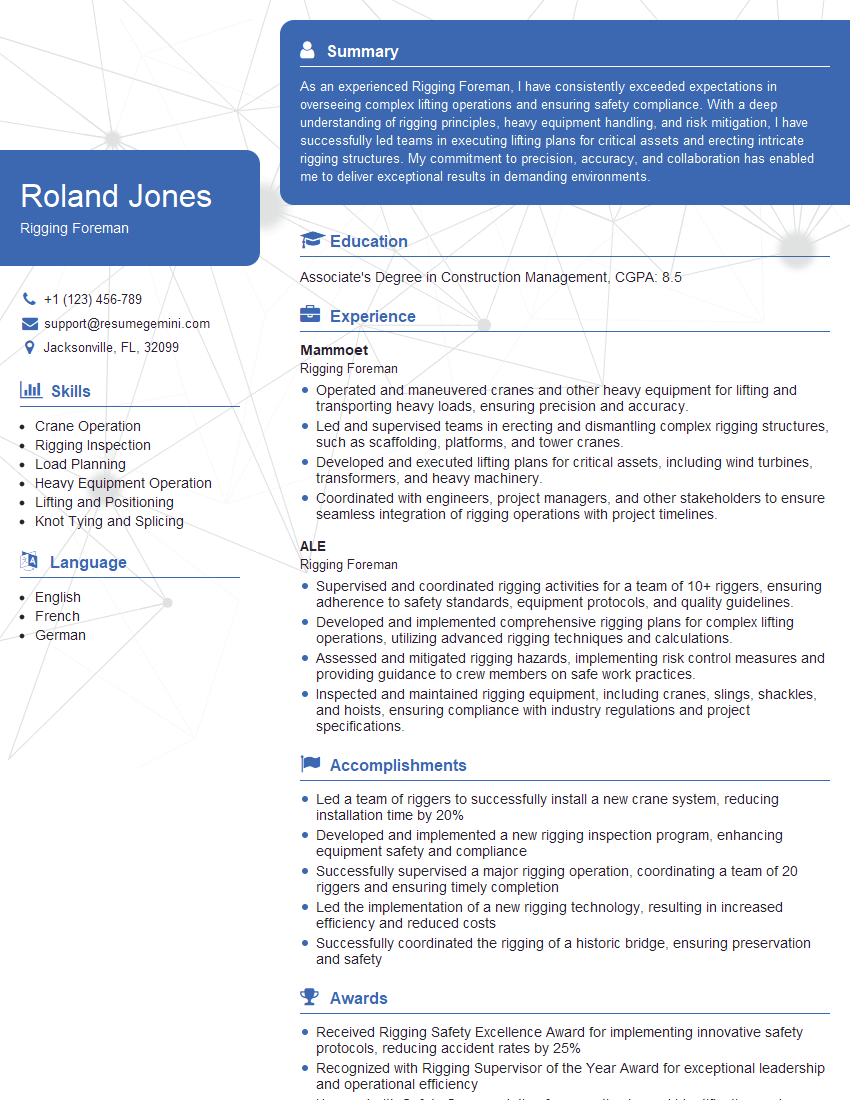
Mastering your Rigging and Slinging Certification opens doors to exciting career opportunities and higher earning potential within the industry. A strong resume is your key to unlocking these prospects. Creating an ATS-friendly resume, optimized for applicant tracking systems, is crucial for getting your application noticed. We highly recommend using ResumeGemini to build a professional and impactful resume that showcases your skills and experience effectively. ResumeGemini provides examples of resumes tailored specifically to Rigging and Slinging Certification, ensuring your application stands out from the competition.



Explore more articles
Users Rating of Our Blogs
Share Your Experience
We value your feedback! Please rate our content and share your thoughts (optional).
What Readers Say About Our Blog
Very informative content, great job.
good