Unlock your full potential by mastering the most common Parachute Packing and Maintenance interview questions. This blog offers a deep dive into the critical topics, ensuring you’re not only prepared to answer but to excel. With these insights, you’ll approach your interview with clarity and confidence.
Questions Asked in Parachute Packing and Maintenance Interview
Q 1. Describe the proper procedure for packing a round parachute.
Packing a round parachute correctly is crucial for safety. It’s a methodical process that ensures the canopy deploys smoothly and reliably. Think of it like carefully folding a very important piece of clothing – every fold matters.
- Pre-flight Inspection: Before even starting, thoroughly inspect the parachute for any damage, wear and tear, or foreign objects. This includes the canopy, lines, bridle, and container.
- Laying Out the Canopy: Spread the canopy out flat, ensuring it’s free from wrinkles and creases. Imagine you’re ironing a delicate shirt; smooth it out meticulously.
- Folding the Canopy: Begin folding the canopy in a precise manner, following the manufacturer’s instructions. There are specific methods and techniques, often involving accordion folds to create a compact and stable pack. Improper folding can lead to malfunctions.
- Bridle and Lines: Carefully place the bridle and lines within the container, ensuring they are not twisted or knotted. These lines are the lifeline; any entanglement can be disastrous.
- Packing the Canopy: Gently place the folded canopy into the container, ensuring it’s neatly arranged and doesn’t bunch up. Think of it as packing a suitcase – compact, but not compressed.
- Closing and Securing: Secure the container properly, ensuring all closures are functioning correctly. Double-check everything before finalizing.
- Final Inspection: Perform a final visual inspection to ensure the pack is neat, secure, and shows no signs of potential problems.
Consistent and careful packing is paramount. A poorly packed parachute can lead to partial or complete canopy malfunctions, putting the jumper at serious risk.
Q 2. Explain the different types of parachute malfunctions and how to address them.
Parachute malfunctions can range from minor to life-threatening. Understanding these malfunctions and their remedies is critical for safe skydiving.
- Line Over: A line becomes wrapped around another line or part of the parachute, hindering its deployment. Addressing it: Requires immediate corrective action, often involving a reserve parachute deployment.
- Mal-Deployment: The canopy fails to fully inflate properly. Addressing it: May involve cutaway procedures and reserve deployment, depending on the severity.
- Partial Deployment: The canopy partially inflates, creating an unstable descent. Addressing it: Requires immediate cutaway and reserve deployment.
- Hard Opening: A violently fast and jarring deployment. Addressing it: While often not catastrophic, it can cause injury. Careful packing and maintenance are key to prevention.
- Suspension Line Failure: One or more suspension lines break, compromising the stability and function of the canopy. Addressing it: Often requires immediate reserve deployment.
Proper training, regular inspections, and meticulous packing minimize the risk of malfunctions. Remember, your life depends on your parachute; treat it with the utmost respect.
Q 3. What are the key components of a parachute system, and how do they interact?
A parachute system is a complex interplay of several key components, each with its critical role.
- Canopy: The main part that slows descent, the fabric is crucial for effective braking. Its material and design dictate its performance.
- Suspension Lines: These lines connect the canopy to the harness, distributing the load evenly. They must be strong and resistant to wear and tear.
- Bridle: A system of lines that distribute the load from the harness to the canopy, ensuring a stable and even opening.
- Harness: Provides a secure and comfortable fit for the jumper, securing them to the parachute system.
- Container: Houses and protects the parachute during packing and storage. It should be durable and resistant to damage.
- Reserve Parachute: A backup parachute system, providing redundancy and a safe escape option.
These components interact together in a synchronized manner. If one element fails, the entire system is compromised, emphasizing the need for regular inspection and maintenance of all parts. Imagine it as a carefully designed machine; every part is essential to its function.
Q 4. How do you inspect a parachute for wear and tear, and what are the acceptance criteria?
Regular inspections are essential to ensure parachute safety and longevity. This isn’t just a visual check; it’s a meticulous examination.
- Visual Inspection: Carefully examine the canopy for rips, tears, holes, and any signs of wear and tear. Check the seams, lines, and bridle for any damage or fraying.
- Line Inspection: Inspect each suspension line individually, checking for fraying, broken strands, or excessive wear. Look closely at the points where the lines attach to the canopy and bridle.
- Harness Inspection: Thoroughly check the harness for any damage, wear and tear, or loose stitching. Examine the buckles, straps, and rings for any defects.
- Container Inspection: Check the container for any damage to the fabric, stitching, or closures.
Acceptance Criteria: Any signs of significant damage or excessive wear are grounds for rejection. This includes but isn’t limited to: any tears or rips in the canopy fabric exceeding a manufacturer-specified size, broken or severely damaged suspension lines, worn-out harness straps, and malfunctioning container closures. The slightest doubt should lead to the parachute being withdrawn from service. Every single component is critical to safety. A single compromised element can be fatal.
Q 5. What are the regulations and safety standards governing parachute packing and maintenance?
Parachute packing and maintenance are strictly regulated to ensure the safety of skydivers. These regulations vary by country and governing body, but generally include:
- Regular Inspections: Strict requirements for periodic inspections by qualified riggers, adhering to manufacturer’s recommendations.
- Rigger Certification: Only certified riggers are authorized to pack and maintain parachutes, ensuring adherence to safety standards.
- Documentation: Meticulous records of inspections, maintenance, and packing procedures must be maintained, providing a history of the parachute’s condition.
- Material Standards: Regulations defining the materials, construction, and testing requirements for parachutes.
- Pack and Deployment Procedures: Precise procedures for packing and deploying parachutes, ensuring consistency and safety.
These regulations are essential for minimizing risk. Non-compliance can result in severe penalties, including suspension of licenses and even legal action. Safety should always be the utmost priority.
Q 6. How do you identify and address damaged parachute fabric?
Identifying and addressing damaged parachute fabric requires careful examination and appropriate repair techniques.
- Identification: Look closely for any tears, rips, holes, or abrasions. Even small cuts can compromise the structural integrity of the canopy.
- Assessment: Determine the size and location of the damage. Small tears might be repairable; larger ones usually necessitate replacement.
- Repair (If Applicable): Depending on the size and nature of the damage, approved repair techniques (often using specialized patches and adhesives) can be employed. This requires expertise and training; only qualified riggers can do this safely and effectively.
- Rejection: If the damage is severe or beyond repair, the parachute must be taken out of service.
Attempting repairs without proper training is incredibly dangerous. Always consult a qualified parachute rigger for any damage assessment and repair. A small oversight can have fatal consequences.
Q 7. Describe the process for replacing a parachute’s risers or suspension lines.
Replacing risers or suspension lines is a complex procedure requiring specialized skills and tools. It’s not a DIY project.
- Disassembly: Carefully remove the damaged risers or suspension lines, taking note of their routing and connections.
- Preparation: Prepare the new risers or suspension lines, making sure they are the correct length and type.
- Attachment: Carefully attach the new risers or suspension lines to the appropriate points on the canopy and harness, following the manufacturer’s instructions. This is a precision process; incorrect attachment can compromise the parachute’s performance.
- Testing and Inspection: Thoroughly inspect the completed work, ensuring all connections are secure and the lines are properly routed. Any remaining tension, knots, or twists may hinder deployment.
- Documentation: The work should be properly documented for record-keeping purposes.
This procedure should only be performed by a certified parachute rigger with the appropriate training and tools. Incorrect installation can lead to a catastrophic malfunction during deployment. The life of the jumper literally hangs on the quality of this work.
Q 8. What are the different types of parachute canopies and their applications?
Parachute canopies come in various designs, each suited for specific applications. The choice depends on factors like intended use (e.g., skydiving, cargo delivery, military operations), weight capacity, and desired descent rate.
- Round Canopies: These are the simplest and oldest designs, characterized by their circular shape. They are relatively stable but have a slower descent rate and are less maneuverable. They’re often used in simpler applications or as reserve parachutes.
- Square/Rectangular Canopies: These offer increased maneuverability and higher descent rates compared to round canopies. They are commonly used in skydiving, allowing for precise control and acrobatic maneuvers. Different aspect ratios (ratio of length to width) affect performance.
- Ram-Air Canopies: These are high-performance canopies with internal air vents that inflate during descent, creating a rigid airfoil. This leads to faster descent rates and enhanced maneuverability, making them ideal for precision landings and advanced skydiving techniques. They are often used in wingsuit flying and BASE jumping.
- Parafoils: These have a flexible wing-like structure, providing excellent glide performance and high stability. Often utilized for cargo delivery and precision parachute systems in military and humanitarian aid.
Choosing the right canopy is critical for safety and mission success. For instance, a round canopy suitable for a static line jump wouldn’t be appropriate for a high-performance wingsuit jump.
Q 9. Explain the importance of proper parachute storage and handling.
Proper storage and handling are paramount for maintaining parachute integrity and ensuring safe deployment. Neglect can lead to premature wear, degradation of materials, and potentially catastrophic malfunctions.
- Clean and Dry Storage: Parachutes should be stored in a clean, dry, and well-ventilated area, away from direct sunlight, extreme temperatures, and moisture. Direct sunlight can degrade the canopy fabric.
- Proper Folding and Packing: The parachute should be carefully folded and packed according to the manufacturer’s instructions to prevent wrinkles, creases, or entanglement of lines. Improper folding can compromise canopy inflation.
- Regular Inspection: Regular inspections are crucial to identify any damage or wear to the canopy, lines, and other components. This should be done by a qualified parachute rigger.
- Avoid Contamination: Keep parachutes away from chemicals, oils, and sharp objects that could damage the fabric or lines. A tiny puncture can have major consequences.
Imagine a pilot relying on a parachute damaged by improper storage – the consequences could be devastating. Careful handling is not just a matter of routine; it’s a life-or-death issue.
Q 10. How do you perform a pre-flight inspection of a packed parachute?
A pre-flight inspection is a crucial step before any jump. It involves a systematic check of the packed parachute to ensure it’s in perfect working order. This is not a quick glance; it’s a meticulous process.
- Visual Inspection: Examine the outside of the pack for any signs of damage, tears, or unusual bulges. Check the deployment handle and pilot chute.
- Reserve Parachute Check: If applicable, inspect the reserve parachute pack similarly. This is an extra layer of safety.
- Verification of Packing: Verify the parachute was packed by a qualified rigger and the packing date is within the allowed timeframe. The packing slip should be checked.
- Deployment System Check: Check that the deployment system (main and reserve) is functioning correctly and is not snagged or damaged. Test the handle movement (smooth and free).
- Fabric and Lines Check (If possible): If permitted, gently inspect the exposed portions of the canopy and lines for any visible wear, tears, or fraying. This is best done during repacking.
The pre-flight check is your last line of defense before you jump. Skipping it or rushing through it is incredibly dangerous. I’ve seen accidents caused by simple oversights, highlighting the importance of thoroughness.
Q 11. What are the common causes of parachute malfunctions?
Parachute malfunctions can stem from various causes, both human error and equipment failure. Understanding these causes is essential for prevention and safe operation.
- Improper Packing: This is a leading cause, including overlooked twists in the lines, improperly secured bridle, or incomplete canopy inflation.
- Equipment Failure: Wear and tear, manufacturing defects, or damage to the canopy, lines, or deployment system can all lead to malfunctions. Regular inspection is key to catching these problems early.
- Environmental Factors: Severe weather conditions like high winds or intense rain can impact parachute performance. Knowing weather conditions and limitations is paramount.
- Human Error: Incorrect deployment techniques, failure to use proper emergency procedures, or neglecting pre-flight checks contribute to many accidents.
- Line Entanglements: Lines becoming entangled during deployment or descent can cause a significant malfunction. Proper packing and careful attention during deployment are crucial.
Malfunctions aren’t always predictable. It’s essential to be prepared with contingency plans and emergency procedures, knowing how to react to various failure modes.
Q 12. Describe the steps involved in repairing a minor rip in a parachute canopy.
Repairing a parachute is a highly specialized task requiring significant training and expertise. Only a qualified parachute rigger should attempt such repairs.
A minor rip, if located in a non-critical area and not too extensive, might be repairable. However, this is a complex process that involves meticulously cleaning the area, applying appropriate patches using specialized materials and techniques to match the canopy material and strength, and then carefully sewing the patch in place with high-tensile thread. The repaired area must be carefully inspected and tested for tensile strength afterwards to ensure its structural integrity. Any doubt should result in the parachute being retired.
Improper repairs can weaken the canopy, creating a critical safety risk. Never attempt to repair a parachute unless you are a certified and experienced parachute rigger. A seemingly small rip can lead to catastrophic consequences if not handled properly.
Q 13. How do you ensure the proper functioning of a parachute’s deployment system?
Ensuring a parachute’s deployment system functions correctly is critical. This involves regular checks and maintenance of all components.
- Regular Inspection: Inspect the bridle, risers, main deployment handle, pilot chute, and any other components. Look for wear, fraying, or damage.
- Deployment Handle Function: Ensure the deployment handle is easily accessible and functions smoothly. Check for any stiffness or sticking.
- Pilot Chute Deployment: Test the pilot chute’s deployment mechanism to ensure it deploys correctly and without snags.
- Reserve System (If Applicable): The reserve parachute system should be checked regularly and independently. Its deployment mechanism should be verified.
- Professional Maintenance: Regular professional maintenance is required. A certified rigger should periodically inspect and repack your parachute to ensure all components are in good condition.
A failure in the deployment system can result in the canopy not opening, a severely delayed opening, or a partial deployment. Regular and thorough checks are critical to prevent this.
Q 14. What are the safety precautions you take when working with parachutes?
Safety is paramount when working with parachutes. Numerous precautions should be followed.
- Qualified Personnel: Only qualified and certified personnel should pack, inspect, and repair parachutes. This ensures competence and adherence to safety standards.
- Clean Work Area: Maintain a clean and organized work area to minimize the risk of damage or contamination to the parachute.
- Appropriate Tools and Materials: Use only approved tools and materials for repairs and maintenance. Improper tools could damage the parachute.
- Personal Protective Equipment (PPE): Use appropriate PPE such as gloves and eye protection when handling parachutes to protect yourself from sharp objects or potential irritants.
- Follow Manufacturer Instructions: Always adhere strictly to the manufacturer’s instructions for packing, maintenance, and repairs. Deviation from instructions can lead to dangerous consequences.
- Never Compromise Safety: If there is any doubt about the integrity of a parachute, it should be immediately removed from service.
Working with parachutes involves inherent risks. Strict adherence to safety protocols is not just a best practice; it’s essential for preventing injuries and fatalities.
Q 15. How do you document parachute inspections and maintenance?
Parachute inspection and maintenance documentation is crucial for safety and legal compliance. We use a rigorous system combining digital and physical records. Each parachute has a dedicated logbook, meticulously recording every inspection, repair, and packing detail. This includes the date, the inspector’s signature and certification number, a description of any findings (even minor ones), and the actions taken. We utilize a digital database that mirrors the logbook information, allowing for easier search and retrieval of historical data. This database also helps track maintenance schedules and alerts us to upcoming due dates. For example, if a minor rip is found during an inspection, the logbook would note its location, size, the type of repair (patching, stitching), and the materials used. Photos and videos are also included for comprehensive documentation whenever appropriate. The combination of physical and digital records ensures redundancy and allows for easy auditing by regulatory bodies.
Career Expert Tips:
- Ace those interviews! Prepare effectively by reviewing the Top 50 Most Common Interview Questions on ResumeGemini.
- Navigate your job search with confidence! Explore a wide range of Career Tips on ResumeGemini. Learn about common challenges and recommendations to overcome them.
- Craft the perfect resume! Master the Art of Resume Writing with ResumeGemini’s guide. Showcase your unique qualifications and achievements effectively.
- Don’t miss out on holiday savings! Build your dream resume with ResumeGemini’s ATS optimized templates.
Q 16. What is your experience with different types of parachute packing techniques?
My experience encompasses a wide range of parachute packing techniques, from the traditional round parachutes to modern ram-air and square parachutes. I’m proficient in both manual and assisted packing methods. For round parachutes, I’m experienced in the techniques used for both single- and multi-stage deployments. I’ve worked extensively with various ram-air parachutes, understanding the critical steps involved in ensuring proper inflation and stability. This includes correctly packing the main canopy, reserve canopy, and pilot chute. I also understand the unique challenges presented by square parachutes and the importance of precise folding and packing to achieve a consistent deployment. My training also includes understanding the specific requirements and techniques for packing different types of parachutes designed for specific purposes, such as cargo parachutes and those used for military operations. Furthermore, I have experience with different types of reserve parachute packing techniques, emphasizing safety and ensuring reliable deployment in emergency situations.
Q 17. Describe a time you had to troubleshoot a parachute packing problem.
During a routine inspection of a ram-air parachute, I discovered a small, almost invisible snag in the main canopy fabric near one of the suspension lines. Initially, it was difficult to spot, but my experience allowed me to recognize the potential hazard. A small snag like that could easily become a larger tear during deployment, compromising the parachute’s stability and potentially leading to a malfunction. Instead of dismissing it, I carefully examined the area using a magnifying glass and noted the exact location and severity of the snag. The solution involved using specialized materials and techniques to repair the snag without weakening the canopy. This included cleaning the damaged area, applying a thin layer of specially formulated adhesive designed for parachute fabrics, and then reinforcing the area with a small, carefully placed patch. The parachute was then repacked according to standard procedures and subjected to a rigorous re-inspection before being cleared for use. This situation highlighted the importance of meticulous inspections and the critical role of problem-solving skills in ensuring parachute safety.
Q 18. How do you stay current on the latest parachute technology and regulations?
Staying current is paramount in this field. I actively participate in industry conferences and workshops, attending seminars led by leading experts in parachute technology and safety regulations. I’m a member of relevant professional organizations, providing access to the latest publications, best practices, and updates on safety standards. I regularly review technical bulletins and safety advisories issued by manufacturers and regulatory bodies. I also subscribe to industry journals and online resources dedicated to parachute technology and maintenance. For instance, I recently attended a workshop on the advancements in high-altitude parachute deployment, learning about new materials and design features improving performance in extreme conditions. Continuous learning helps me adapt to evolving technologies and ensures I am consistently working according to the highest safety standards.
Q 19. What is your understanding of different parachute materials and their properties?
Parachute materials are critically important to performance and safety. We commonly use nylon and ripstop nylon due to their high strength-to-weight ratio, tear resistance, and durability. Nylon is known for its flexibility and elasticity, while ripstop nylon has reinforced threads woven to prevent tears from spreading. The porosity (how easily air passes through) is an important factor; too much porosity can hinder performance, while too little can impede inflation. Other materials, such as polyester, are sometimes used, each having specific properties that affect performance, such as resistance to wear, moisture absorption, and UV degradation. Modern parachutes also often incorporate specialized coatings and treatments for increased strength, UV protection, and water resistance. Understanding these material properties is crucial to selecting the appropriate parachute for a specific application and making informed decisions during inspection and maintenance.
Q 20. Explain the importance of proper labeling and identification of parachute components.
Proper labeling and identification are non-negotiable for safety. Each parachute component—from the main canopy to the pilot chute and suspension lines—must be clearly and permanently labeled with its manufacturer, model number, serial number, date of manufacture, and any relevant maintenance or repair information. This information is crucial for traceability and allows for quick identification of any potential problems. We use durable, weather-resistant labels to ensure the information remains legible throughout the parachute’s lifespan. The labeling system also ensures that all components are compatible with each other. Using incorrect components can compromise the parachute’s integrity, leading to serious consequences. Accurate labeling also helps during maintenance and inspections, ensuring we are working with the correct parts and identifying any potential issues or inconsistencies promptly.
Q 21. What are the environmental factors that can affect parachute performance?
Environmental factors significantly impact parachute performance. High altitude introduces extreme cold, reducing material strength and impacting airflow. High humidity can increase the weight of the parachute and potentially affect the canopy’s drying time, impacting its performance. Strong winds during deployment can cause significant stress on the canopy and suspension lines, potentially affecting the deployment stability. Rainfall can affect the fabric’s weight and potentially cause waterlogging, reducing the parachute’s effectiveness. Extreme temperatures, both high and low, can also affect the strength and flexibility of the parachute materials. Understanding these environmental conditions is vital for proper parachute selection, maintenance, and for making informed decisions concerning the safety of parachute operation. For example, choosing a more robust and water-resistant canopy for rainy climates or a lightweight canopy for higher altitudes.
Q 22. How do you ensure the integrity of parachute stitching and seams?
Ensuring the integrity of parachute stitching and seams is paramount for safety. We use a multi-pronged approach that begins with meticulous inspection during manufacturing and continues throughout the parachute’s lifecycle.
- Visual Inspection: Every inch of stitching and every seam is visually examined under bright light for any signs of fraying, broken threads, or inconsistencies. We look for anything out of the ordinary. Think of it like a tailor meticulously checking a suit before it leaves the shop.
- Stress Testing: Rigorous testing involves applying controlled loads to the parachute to simulate the stresses experienced during deployment and descent. This helps identify weak points before they become critical failures. Imagine pulling on different parts of the parachute with calibrated force.
- Material Testing: The parachute fabric itself undergoes periodic testing to ensure it maintains its strength and resistance to tearing and abrasion. This is critical because fabric degrades over time due to UV exposure and use.
- Documentation: Every inspection and test is meticulously documented, including date, inspector’s name, and any findings. This detailed record provides a complete history of the parachute’s condition.
These steps, combined with regular maintenance, significantly reduce the risk of seam or stitching failure, ensuring the parachute’s reliability.
Q 23. What is your experience with different types of parachute harnesses?
My experience encompasses a wide range of parachute harness types, from basic round parachutes to advanced systems used in military and high-performance sports.
- Standard harnesses: I’m proficient with the various configurations of standard harnesses, including those designed for skydiving, paragliding, and general aviation. I understand how to adjust them for proper fit and weight distribution.
- Container Systems: I’m familiar with various container systems, from simple main and reserve deployments to complex multi-chute systems. This includes understanding how to inspect and maintain the deployment mechanisms within these containers.
- Specialized Harnesses: I have worked with specialized harnesses used in cargo deployment and other non-human applications. These often require specific maintenance protocols due to their unique designs and operating conditions.
Understanding the nuances of each harness type, including their strengths, weaknesses, and limitations, is crucial for ensuring safe and effective parachute operation.
Q 24. Explain the importance of proper canopy inflation and descent rates.
Proper canopy inflation and descent rates are critical for a safe parachute landing. Canopy inflation that’s too slow can lead to a dangerous low-altitude deployment, while improper inflation can cause a collapse or malfunction. Conversely, a descent rate that’s too fast increases the risk of injury upon landing.
- Canopy Inflation: The canopy should inflate fully and symmetrically to achieve optimal stability and drag. A partially inflated canopy is extremely dangerous and can lead to oscillations or a complete collapse. This is like having a sail that only partially catches the wind – you won’t go where you intend.
- Descent Rate: The descent rate should be within the safe operating parameters for the specific parachute and environmental conditions. A descent rate that’s too fast can result in a hard landing which is a common cause of injury. Factors like wind speed and the weight of the load significantly impact the descent rate, and it is critical to account for these factors during flight planning.
Understanding the factors influencing inflation and descent, along with the ability to identify and correct issues during descent, is a core aspect of parachute safety.
Q 25. What are the signs of potential parachute malfunction during deployment?
Recognizing potential parachute malfunctions during deployment is a critical skill that requires vigilance and experience.
- Line twists: Lines wrapping around the canopy during deployment can cause severe asymmetry and instability.
- Partial inflation: This is easily noticed during deployment. A section of the canopy not filling with air indicates a malfunction that should be immediately addressed.
- Canopy collapse: A complete or partial collapse of the canopy signals a severe malfunction. This could be due to a line twist, air turbulence, or canopy damage.
- Excessive oscillations: Uncontrolled swinging or spinning of the canopy usually indicates a problem that needs to be resolved.
- Abnormal descent rate: A much faster or slower than normal descent rate can also signal a malfunction.
In each of these cases, the emergency procedures should be initiated promptly. This could include using a reserve parachute or employing other emergency measures.
Q 26. How do you handle emergencies or accidents involving parachutes?
Handling parachute emergencies or accidents involves a systematic approach focused on immediate action and post-incident investigation.
- Immediate Response: This involves assessing the situation, providing immediate first aid, and contacting emergency services. Securing the area and preventing further injury are important priorities.
- Parachute Recovery and Inspection: The damaged parachute should be carefully recovered to determine the cause of failure. A thorough inspection often is required as a key part of the investigation process.
- Incident Reporting: Accidents are carefully documented and reported to the relevant authorities (this will vary based on location and application). This is essential to improve safety practices in the future.
- Post-Incident Analysis: A detailed investigation identifies the contributing factors leading to the incident. These findings help to develop procedures and solutions for preventing similar events.
The lessons learned from each incident are crucial for advancing safety and reliability standards.
Q 27. What is your experience with specialized parachute systems, such as cargo parachutes?
My experience with specialized parachute systems, such as cargo parachutes, is extensive. These systems present unique challenges due to their larger size, heavier loads, and the need for precise deployment in various conditions.
- Cargo Parachute Systems: I’m familiar with the design, maintenance, and deployment of various types of cargo parachute systems, including ram-air and round parachutes. This also includes understanding the different rigging techniques and loading procedures required for the safe handling of heavy goods.
- Deployment Mechanisms: I understand the mechanics and operation of different deployment systems, including drogue chutes and main parachute release mechanisms.
- Environmental Factors: I recognize the importance of considering environmental factors, like wind speed and altitude, when planning cargo parachute deployments. Understanding how these factors affect the deployment and descent rate is crucial for a successful delivery.
This experience has sharpened my understanding of the principles of aerodynamics, load distribution, and risk mitigation in various applications beyond those for human use.
Q 28. What steps do you take to ensure the compatibility of parachutes with their respective aircraft or platforms?
Ensuring parachute compatibility with the aircraft or platform is fundamental to safe operation. It involves a detailed assessment of several key factors.
- Aircraft Integration: The parachute system must be correctly integrated with the aircraft’s release mechanisms and overall structure. This necessitates understanding the aircraft’s capabilities and operational limitations.
- Weight and Load Capacity: The parachute’s load capacity must be sufficient to safely handle the weight of the payload (e.g., cargo or personnel). This also includes accounting for any additional weight that could be added such as equipment or fuel.
- Deployment Altitude and Airspeed: The parachute’s design and deployment parameters must be compatible with the aircraft’s operating altitude and airspeed. Deploying too early or late can result in severe issues.
- Environmental Considerations: Wind speed, temperature, and humidity can all affect parachute performance. These factors must be accounted for when selecting and deploying the parachute system.
Careful planning and adherence to established compatibility guidelines are essential for mitigating risks related to deployment failures and ensuring operational safety. It’s a process that balances system requirements with operational capability for each platform.
Key Topics to Learn for Parachute Packing and Maintenance Interview
- Parachute Fabric & Materials: Understanding different parachute materials (nylon, ripstop, etc.), their strengths, weaknesses, and appropriate applications. This includes recognizing signs of wear and tear.
- Packing Procedures & Techniques: Mastering various parachute packing methods, ensuring consistent and accurate folding to maintain functionality and safety. This involves practical application of established procedures and adherence to strict guidelines.
- Inspection & Quality Control: Thorough inspection techniques for identifying defects, damage, or potential problems before, during, and after packing. This includes understanding relevant safety regulations and documentation.
- Maintenance & Repair: Basic parachute repair techniques, including patching, stitching, and replacing components. Knowing when repairs are necessary versus when a parachute should be discarded.
- Safety Regulations & Standards: Familiarity with industry-specific regulations, safety protocols, and best practices related to parachute handling, storage, and maintenance. Understanding the importance of meticulous attention to detail.
- Troubleshooting & Problem-Solving: Identifying and resolving common issues during packing or inspection. This includes analytical skills to determine the root cause of problems and implement effective solutions.
- Deployment Systems & Mechanisms: Understanding the different deployment systems and their mechanisms, including ripcord operation and reserve parachute systems. This also involves knowledge of potential malfunctions and their resolution.
Next Steps
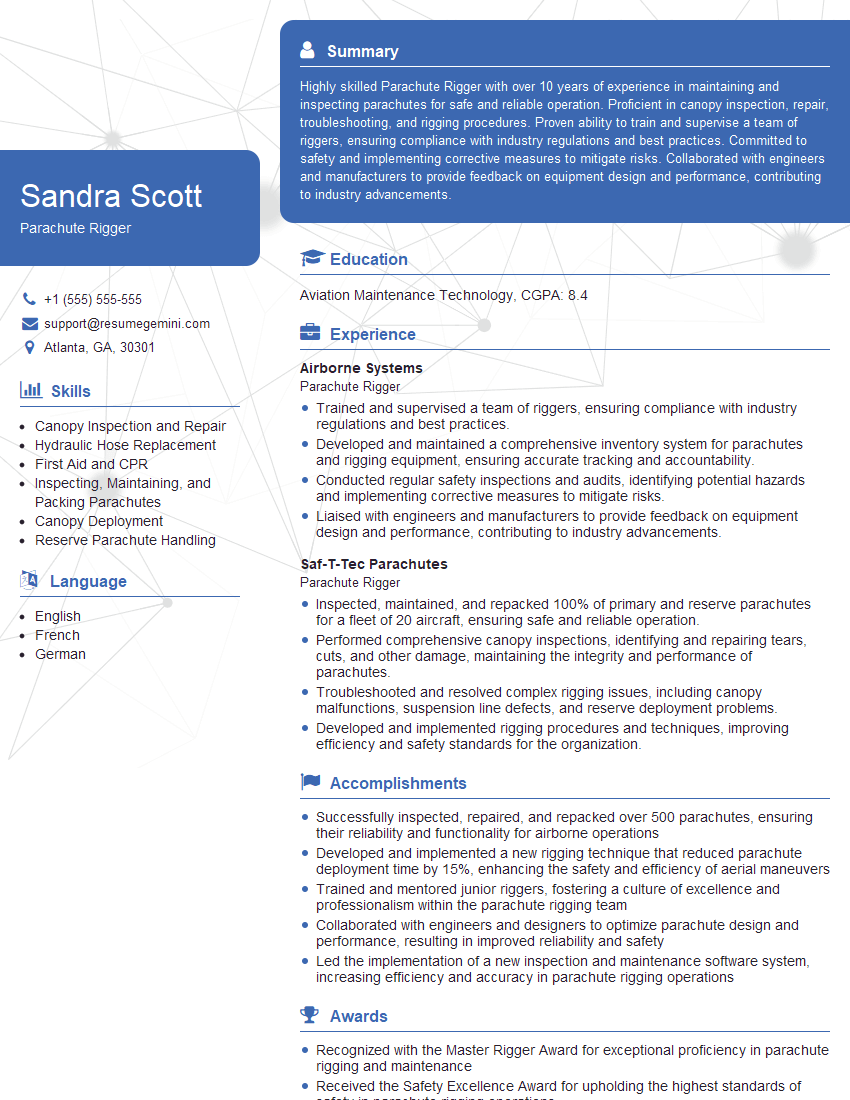
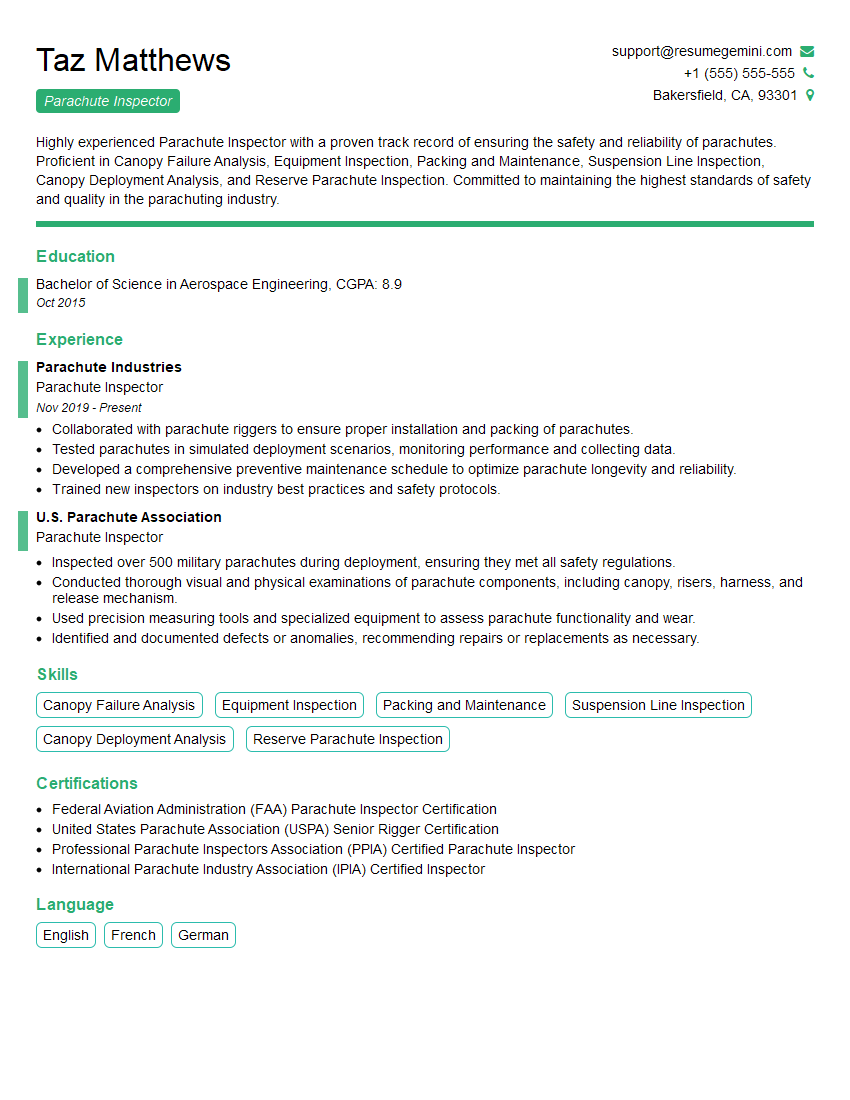
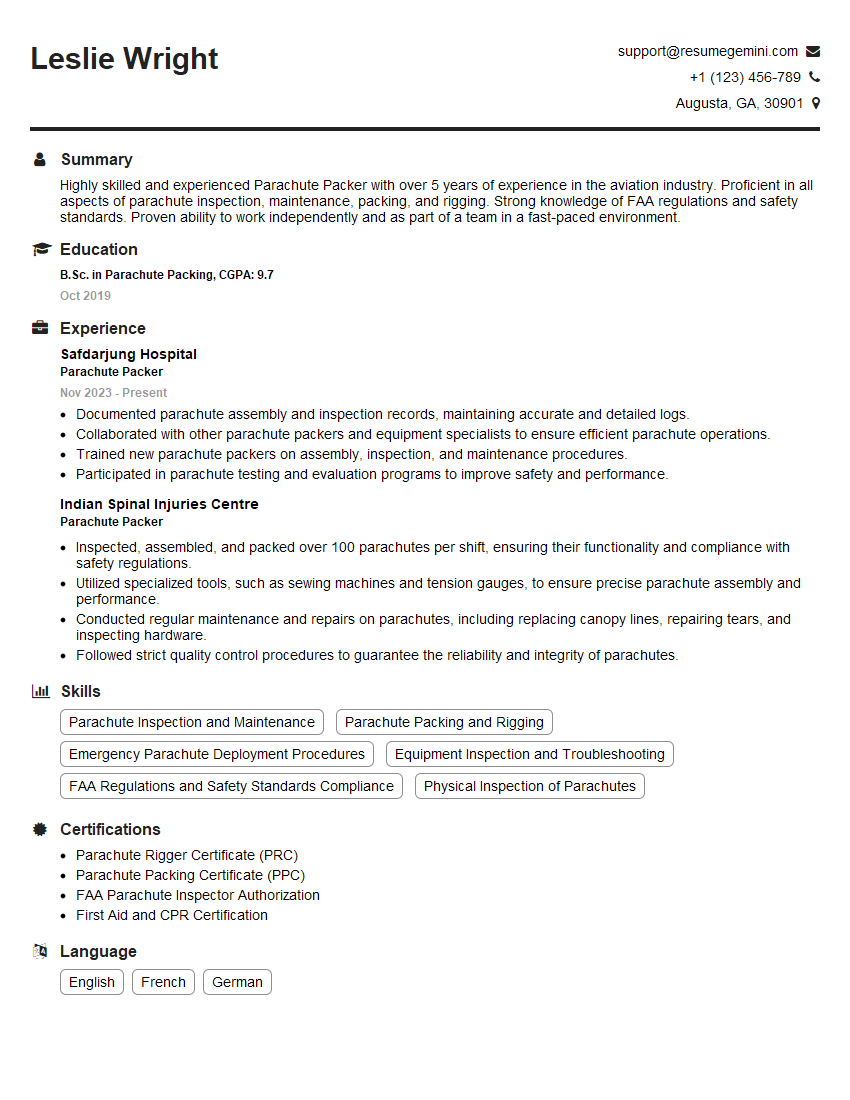
Mastering Parachute Packing and Maintenance opens doors to a rewarding career in a critical safety-focused industry. Proficiency in this area demonstrates attention to detail, precision, and a commitment to safety – highly valued qualities in many roles. To maximize your job prospects, creating an ATS-friendly resume is crucial. ResumeGemini is a trusted resource to help you build a professional resume that highlights your skills and experience effectively. Examples of resumes tailored to Parachute Packing and Maintenance are available to guide you through the process. Take the next step toward your ideal career by crafting a compelling resume that showcases your expertise.
Explore more articles
Users Rating of Our Blogs
Share Your Experience
We value your feedback! Please rate our content and share your thoughts (optional).
What Readers Say About Our Blog
Very informative content, great job.
good