The right preparation can turn an interview into an opportunity to showcase your expertise. This guide to Communication with Carriers and Customers interview questions is your ultimate resource, providing key insights and tips to help you ace your responses and stand out as a top candidate.
Questions Asked in Communication with Carriers and Customers Interview
Q 1. Describe your experience managing relationships with multiple carriers.
Managing relationships with multiple carriers requires a strategic approach balancing collaboration and assertive advocacy for our clients. My experience involves negotiating contracts, monitoring service level agreements (SLAs), and proactively addressing performance issues. I’ve successfully managed relationships with a diverse range of carriers, including major national providers and smaller, regional ones, each with its unique operational procedures and communication styles.
For example, in my previous role, I managed relationships with five major telecom carriers, coordinating network deployments, troubleshooting connectivity issues, and negotiating pricing structures. I developed strong working relationships with key personnel at each carrier, fostering open communication and ensuring prompt responses to critical issues. This included regular meetings, performance reviews, and collaborative problem-solving sessions.
I leveraged a centralized communication platform to streamline interaction and track performance metrics across all carriers. This improved efficiency, transparency, and accountability, facilitating better overall service management.
Q 2. How do you prioritize competing demands from different carriers?
Prioritizing competing demands from different carriers necessitates a clear framework. My approach relies on a combination of factors, including SLA agreements, business criticality, and the potential impact on our customers. I utilize a weighted scoring system, assigning higher priorities to issues impacting the largest number of customers or causing significant service disruptions. This allows for efficient resource allocation and helps prevent cascading failures.
For instance, if one carrier experiences an outage affecting a critical customer application and another carrier has a minor billing discrepancy, the outage takes precedence due to the immediate and widespread impact. This requires clear communication with all carriers, setting transparent expectations on response times and resolution strategies. I regularly communicate these prioritizations with the carrier management teams, ensuring they understand our needs and the rationale behind our choices.
Q 3. Explain your approach to resolving escalated customer complaints involving carrier issues.
Resolving escalated customer complaints involving carrier issues requires a systematic approach combining empathy, technical understanding, and assertive communication. My process involves first actively listening to the customer’s concerns, acknowledging their frustration, and assuring them we’re committed to a resolution.
Next, I meticulously gather all relevant information: the nature of the problem, the specific carrier involved, timestamps, and any troubleshooting steps already taken. This data is then used to diagnose the root cause and contact the appropriate carrier representative. I document all communications and actions to maintain a clear audit trail and ensure accountability. If the carrier’s response is insufficient, I escalate the issue through their internal channels, leveraging my existing relationships to expedite the resolution process.
Finally, I keep the customer informed throughout the entire process, providing regular updates and managing their expectations. Once the issue is resolved, I follow up with the customer to ensure their satisfaction and gather feedback for process improvement.
Q 4. What metrics do you use to measure the success of your carrier communication strategies?
Measuring the success of carrier communication strategies involves monitoring a range of key performance indicators (KPIs). These include:
- Mean Time To Resolution (MTTR): How quickly carrier issues are resolved.
- Service Level Agreement (SLA) Compliance: The percentage of SLAs met by each carrier.
- Customer Satisfaction (CSAT): Customer feedback on the handling of carrier-related issues.
- Carrier Response Time: The speed of response from carriers to our inquiries.
- Network Uptime: The percentage of time the network is operational.
Regular reporting and analysis of these metrics provide insights into the effectiveness of our strategies, highlighting areas for improvement and informing future negotiations and collaborations with carriers.
Q 5. How do you handle situations where a carrier’s service level agreement (SLA) is not met?
When a carrier fails to meet its SLA, I initiate a structured process. First, I document the breach, outlining the specific SLA violation and its impact on our service and customers. Then, I immediately contact the carrier’s account manager, presenting the documented breach and requesting immediate remediation. I clearly outline the impact of the non-compliance, referencing specific financial penalties outlined in the contract if applicable.
If the carrier fails to rectify the situation within a reasonable timeframe, or if the proposed solution is unacceptable, I escalate the issue to higher-level management within the carrier’s organization. This may involve formal written notifications and leveraging my pre-established relationships to secure a prompt and satisfactory resolution. Ultimately, failure to meet SLAs may result in financial penalties, contract renegotiation, or even a change of carrier if the issue is recurring or severely impacts service quality.
Q 6. Describe a time you had to negotiate a contract with a carrier. What was the outcome?
I recently negotiated a contract with a new cloud carrier to enhance our disaster recovery capabilities. Our primary goal was to secure a cost-effective solution with high availability and robust security features. The initial offer was significantly higher than our budget. Our strategy involved a detailed cost-benefit analysis, demonstrating the value proposition of the service and highlighting the potential cost savings associated with improved uptime and reduced risk.
We also leveraged market analysis showing competitive pricing from other providers, creating leverage for negotiations. Through a series of collaborative discussions, we successfully negotiated a 15% reduction in the initial price, along with improved SLAs and a flexible contract term. The outcome was a mutually beneficial agreement that met our business requirements while ensuring a fair price. This involved demonstrating a thorough understanding of the market and presenting a strong, data-driven case for our desired terms.
Q 7. How do you effectively communicate technical information to non-technical customers?
Communicating complex technical information to non-technical customers requires a clear and concise approach that avoids jargon. I use analogies and metaphors to illustrate technical concepts in a relatable way. For example, instead of saying “bandwidth bottlenecks,” I might explain it as “a crowded highway causing traffic jams.” I also prioritize visual aids like diagrams and charts to break down complex information into digestible pieces.
I ensure the language used is simple and easy to understand, and I actively seek feedback to confirm comprehension. I tailor the level of detail to the customer’s technical proficiency, focusing on the impact rather than the technical specifics whenever possible. When necessary, I use plain language summaries alongside more detailed technical explanations. This layered approach caters to various levels of understanding and improves customer comprehension and satisfaction.
Q 8. How do you handle difficult or angry customers? Provide a specific example.
Handling angry customers requires a calm, empathetic approach focused on active listening and de-escalation. My strategy centers around understanding their concerns, validating their feelings, and collaboratively finding a solution. I avoid interrupting, instead letting them fully express their frustration. I use phrases like, “I understand your frustration,” and “I’m here to help resolve this.” Then, I actively listen to pinpoint the core issue. Once understood, I clearly outline the steps to address it, managing expectations realistically. I always aim to find a mutually acceptable solution and follow up to ensure their satisfaction.
For example, I once dealt with a customer whose shipment was severely delayed. He was extremely angry, using aggressive language. Instead of reacting defensively, I listened patiently, acknowledging his anger and apologizing for the inconvenience. I then explained the reasons for the delay (an unforeseen logistical issue), outlining the steps taken to expedite the delivery and offering a partial refund as compensation. I kept him updated every step of the way. Following the successful delivery and his receipt of the refund, he expressed his appreciation for my handling of the situation.
Q 9. What experience do you have with different communication channels (email, phone, chat)?
I have extensive experience across various communication channels. Phone calls allow for immediate feedback and a more personal connection, crucial for resolving complex issues or calming upset customers. Emails are efficient for detailed information, confirmations, and asynchronous communication, useful for providing updates or clarifying details. Live chat offers real-time support, excellent for quick queries and immediate assistance. I adapt my communication style to best suit each channel. For example, on the phone, I use a warmer, more conversational tone; in emails, I maintain a professional and detailed approach; and in chat, I keep responses concise and efficient, using clear formatting.
Q 10. How do you build rapport and trust with both carriers and customers?
Building rapport and trust involves consistent, transparent, and reliable communication. With carriers, this includes maintaining clear and open lines of communication, proactively addressing potential issues, and consistently meeting deadlines. I build relationships based on mutual respect and understanding, recognizing the importance of their role in the success of the operation. With customers, trust is built by providing accurate information, actively listening to their concerns, and consistently exceeding their expectations. This means demonstrating empathy, being responsive, and following through on promises. Active listening, offering sincere apologies when necessary, and always seeking mutually beneficial solutions are essential.
Q 11. Describe your experience with different customer relationship management (CRM) systems.
I’m proficient in several CRM systems, including Salesforce, Zendesk, and HubSpot. My experience encompasses data entry, report generation, contact management, and utilizing the systems for improving customer service efficiency. I’m comfortable navigating the features of these platforms to track customer interactions, manage cases effectively, and analyze data to identify trends and areas for improvement in communication strategies. My skills include using CRM systems to automate repetitive tasks, thereby freeing up time for more complex communication management and strategic initiatives.
Q 12. How do you identify and address recurring customer communication problems?
Identifying and addressing recurring customer communication problems involves data analysis and proactive problem-solving. I use CRM systems to track customer feedback, identifying recurring themes or complaints. For example, a significant number of complaints about slow delivery times might indicate a problem with the logistics process. Once a recurring issue is identified, I collaborate with the relevant teams (e.g., logistics, product development) to investigate the root cause and implement a solution. This might involve process improvements, updated training for staff, or adjustments to communication protocols. Then I monitor the effectiveness of the solutions implemented to ensure the problem is truly resolved.
Q 13. How do you adapt your communication style to different audiences (technical vs. non-technical)?
Adapting communication style is vital. When communicating with technical audiences, I utilize precise terminology, providing detailed explanations and focusing on functionality. With non-technical audiences, I simplify complex concepts, using analogies and avoiding jargon. For instance, explaining network latency to a technical audience might involve discussing packet loss and bandwidth limitations, while for a non-technical audience, I’d simply explain it as a delay in response time, comparing it to a busy phone line. This tailored approach ensures clear understanding and effective communication regardless of the audience’s technical expertise.
Q 14. How do you proactively identify potential problems with carriers or customers?
Proactive identification of potential problems relies on careful monitoring and predictive analysis. With carriers, I maintain regular communication, proactively addressing potential delays or disruptions in service. This includes reviewing delivery schedules, monitoring carrier performance metrics, and anticipating potential supply chain issues. With customers, I analyze customer feedback and service requests to identify emerging trends or potential dissatisfaction. This allows for timely interventions, preventing small problems from escalating into larger issues. This might involve proactive communication addressing a known potential delay or launching a customer satisfaction survey to gauge sentiment and address emerging concerns before they become widespread.
Q 15. What is your process for escalating critical issues to upper management?
My process for escalating critical issues to upper management is structured and prioritized to ensure timely and effective resolution. It begins with a thorough assessment of the issue’s impact – considering the number of affected customers, potential financial losses, and reputational damage.
I then prepare a concise, data-driven report outlining the problem, its root cause (to the best of my current understanding), and the immediate steps taken to mitigate its effects. This report includes specific metrics demonstrating the severity and urgency. For example, if a major network outage is impacting thousands of customers, I would include the number of affected customers, the duration of the outage, and potential revenue loss projections.
Next, I initiate escalation through the appropriate channels, typically starting with my direct manager. If the issue requires immediate attention, or involves a cross-functional team resolution, I’ll use a combination of email, phone calls, and potentially even an urgent in-person meeting, depending on the situation and the preference of senior management. I ensure that all stakeholders are informed in a timely manner. Finally, I maintain regular updates to upper management regarding the ongoing situation and any significant developments until a resolution is reached and preventative measures are implemented. This proactive and structured approach has consistently proven effective in resolving critical issues efficiently and mitigating potential damage.
Career Expert Tips:
- Ace those interviews! Prepare effectively by reviewing the Top 50 Most Common Interview Questions on ResumeGemini.
- Navigate your job search with confidence! Explore a wide range of Career Tips on ResumeGemini. Learn about common challenges and recommendations to overcome them.
- Craft the perfect resume! Master the Art of Resume Writing with ResumeGemini’s guide. Showcase your unique qualifications and achievements effectively.
- Don’t miss out on holiday savings! Build your dream resume with ResumeGemini’s ATS optimized templates.
Q 16. How do you ensure consistent messaging across all communication channels?
Ensuring consistent messaging across all communication channels – be it emails, SMS messages, social media, or in-person interactions with carriers and customers – is paramount for brand reputation and trust. My approach involves a three-pronged strategy:
- Centralized Messaging Platform: We utilize a central content repository and approval process to ensure all communication materials are vetted and consistent with our brand voice and messaging guidelines. This repository contains approved templates and key messaging points for different scenarios.
- Regular Training and Communication: All staff members involved in communicating with carriers or customers receive regular training on these guidelines and the importance of brand consistency. This training includes role-playing exercises and feedback sessions. For instance, customer service representatives are trained on handling common complaints with standardized responses that align with the overall brand messaging.
- Monitoring and Feedback Loop: We actively monitor all communication channels for inconsistencies or deviations from the approved messaging. Customer feedback and carrier interactions are analyzed to identify areas needing improvement in communication strategy. This feedback loop allows for continuous improvement and refinement of our messaging approach.
Think of it like a well-oiled machine. Each part – the centralized platform, the training, and the feedback loop – works together to ensure smooth, consistent, and effective communication.
Q 17. How do you use data and analytics to improve communication with carriers and customers?
Data and analytics are crucial to improving communication effectiveness. We leverage data in two primary ways:
- Customer Segmentation & Personalization: Analyzing customer data (demographics, purchase history, service usage, etc.) allows us to segment our customer base and tailor our communication accordingly. For instance, we might use different messaging for loyal, high-value customers versus new subscribers. This targeted approach improves engagement and customer satisfaction. We can leverage data to personalize email campaigns, offer targeted promotions, and proactively address potential issues before they escalate.
- Performance Monitoring & Carrier Relationship Management: Analyzing communication performance metrics (e.g., customer satisfaction scores, call resolution times, carrier response times) provides insights into areas needing improvement. For example, if customer satisfaction scores are low after a specific communication campaign, we can analyze the data to identify what caused the dissatisfaction and adjust our approach accordingly. Similarly, by monitoring carrier response times and service level agreements (SLAs), we identify potential problems and proactively address any issues with the carriers. This data-driven approach ensures we optimize communication for both customers and carriers.
In essence, data allows us to move from generic communication to highly targeted, proactive, and performance-driven interactions.
Q 18. Describe your experience with reporting on key performance indicators (KPIs) related to customer and carrier communication.
My experience with reporting on KPIs related to customer and carrier communication is extensive. I’ve used various reporting tools and techniques to track numerous KPIs, including:
- Customer Satisfaction (CSAT): Measured through surveys, feedback forms, and social media monitoring.
- Net Promoter Score (NPS): Indicating customer loyalty and willingness to recommend our services.
- First Call Resolution (FCR): Tracking the percentage of customer issues resolved on the first contact.
- Average Handling Time (AHT): Measuring the efficiency of our customer service teams.
- Carrier Response Time: Tracking the time it takes carriers to respond to our requests or alerts.
- Service Level Agreement (SLA) Compliance: Monitoring whether carriers meet their agreed-upon service levels.
I present these reports regularly to upper management, highlighting both successes and areas needing improvement. I often supplement these quantitative measures with qualitative data obtained from customer feedback and stakeholder interactions. This comprehensive reporting process enables data-driven decision-making and continuous improvement of our communication strategies.
Q 19. How do you handle conflicting information from different sources (carriers, customers, internal teams)?
Handling conflicting information is a common challenge that requires a methodical approach. I follow a structured process:
- Gather all information: I systematically collect information from all sources, documenting each piece of information with its source. This ensures a complete picture of the situation.
- Verify the information: I cross-reference the information from different sources, looking for corroboration or contradictions. I also validate data with reliable external sources if necessary.
- Identify the most reliable source: Based on credibility and track record, I determine the most likely source of accurate information. For example, carrier-provided network data would be more reliable than an isolated customer complaint.
- Communicate transparently: I clearly communicate the conflicting information and my assessment to the relevant stakeholders. Transparency is key to building trust and maintaining credibility.
- Develop a resolution: I propose a resolution based on the most reliable information and the best course of action to mitigate any negative impact on customers or the business.
This approach, emphasizing verification and transparent communication, helps resolve conflicting information efficiently and minimizes potential errors.
Q 20. What are some common communication challenges you’ve faced in your previous roles?
In my previous roles, I’ve encountered several communication challenges:
- Siloed Information: Information not being shared effectively across different departments, leading to inconsistent messaging and delays in issue resolution. We implemented cross-functional team meetings and a centralized communication platform to overcome this.
- Lack of Clear Communication Channels: Absence of well-defined procedures for escalating issues and disseminating urgent information, leading to confusion and delays. Establishing clear escalation paths and communication protocols addressed this.
- Technical Jargon: Using overly technical language when communicating with non-technical audiences. Simplifying the language and using clear, concise explanations helped improve communication effectiveness.
- Slow Response Times: Delayed responses to customer and carrier inquiries, leading to frustration and negative experiences. Implementing automated response systems and prioritizing high-priority requests greatly improved response times.
Each of these challenges taught valuable lessons in the importance of process improvement, clear communication strategies, and the use of the right tools and technologies for effective communication management.
Q 21. How do you stay updated on industry changes and best practices in carrier and customer communication?
Staying updated on industry changes and best practices is crucial in this dynamic field. I utilize several methods:
- Industry Publications and Journals: I regularly read relevant publications (e.g., trade magazines, online journals) to stay informed about technological advancements, regulatory changes, and emerging trends in customer and carrier communication.
- Industry Conferences and Webinars: I attend industry events, conferences, and webinars to network with professionals, learn from experts, and gain insights into best practices. This also provides an opportunity to share experiences and learn from others.
- Professional Networks: I am actively involved in professional organizations and online communities to discuss challenges, share best practices, and learn from the experiences of other professionals. This networking is invaluable for staying up-to-date.
- Continuous Learning: I actively seek out online courses, workshops, and certifications to improve my skills and knowledge in areas such as communication strategy, data analytics, and customer relationship management.
This multifaceted approach ensures I stay ahead of the curve and consistently adapt my communication strategies to meet evolving needs and expectations.
Q 22. Explain your understanding of regulatory compliance related to telecom customer communication.
Regulatory compliance in telecom customer communication is crucial for maintaining ethical and legal standards. It involves adhering to a complex web of laws and regulations governing how companies interact with their customers. This includes rules around data privacy (like GDPR and CCPA), marketing practices (like TCPA for unsolicited calls and texts), billing transparency, and handling of customer complaints. Non-compliance can lead to hefty fines and reputational damage.
- Data Privacy: Companies must obtain explicit consent before collecting and using customer data, ensuring data security, and providing transparent information about data usage. For instance, a clear privacy policy must be readily accessible.
- Marketing Communication: Regulations strictly control unsolicited marketing calls and texts. Companies need to obtain prior consent or use specific exemptions (like established business relationships). Failure to do so results in penalties.
- Billing Transparency: Clear and accurate billing practices are paramount. Customers need to understand all charges and have access to detailed billing statements. Hidden fees and deceptive billing practices are strictly prohibited.
- Complaint Handling: Companies must have effective mechanisms for handling customer complaints, investigating issues promptly, and providing fair resolutions. This often involves specific timeframes for responding to complaints and maintaining detailed records.
Understanding and adhering to these regulations requires ongoing monitoring of legal updates, implementing robust compliance programs, and regular training for employees involved in customer communication. A failure to do so exposes the company to significant legal and financial risks.
Q 23. How would you explain a complex technical issue to a non-technical customer?
Explaining complex technical issues to non-technical customers requires empathy and a simplified approach. I avoid jargon and use analogies to illustrate concepts.
For example, if explaining network latency, I wouldn’t say “increased packet loss due to congestion on the core network.” Instead, I’d say: “Imagine a highway with a lot of traffic. Your data is like a car trying to get through. When the highway is congested, your car (data) takes longer to reach its destination, making things slower. That’s latency.”
I also use visuals like diagrams or flowcharts. Breaking down the problem into smaller, digestible chunks helps customers understand each step. After explaining, I’d always ask if they have any questions to ensure understanding. Finally, I summarize the key takeaways in plain language to reinforce the explanation.
Q 24. Describe a time you successfully de-escalated a tense situation with a customer or carrier.
During a service outage impacting a major carrier, their representative became extremely agitated, blaming our systems for the disruption despite ongoing investigations indicating the issue was on their end. The situation escalated quickly, with accusations flying and threats of service termination.
To de-escalate, I first acknowledged their frustration and validated their concerns. I reiterated that we understood the seriousness of the situation and were working diligently to identify the root cause, emphasizing our collaborative efforts to resolve it. I then switched from a defensive posture to a more cooperative one, suggesting we work together to review the network data concurrently. This collaborative approach showed I valued their perspective and aimed for a mutual resolution.
We jointly reviewed the data, and we soon discovered the problem stemmed from a misconfiguration on their end. By actively collaborating, we quickly pinpointed the issue and developed a solution. This resulted in a much faster resolution and restored a positive working relationship with the carrier. The key was active listening, empathy, and a collaborative problem-solving approach.
Q 25. What strategies do you employ to improve customer satisfaction and loyalty?
Improving customer satisfaction and loyalty involves a multi-pronged approach focusing on proactive communication and personalized service.
- Proactive Communication: Regular updates, especially during service interruptions or planned maintenance, keep customers informed and reduce anxiety. Personalized messages acknowledging specific customer issues or providing targeted solutions can also go a long way.
- Personalized Service: Using customer data (while respecting privacy regulations) to offer tailored solutions and recommendations enhances the experience. For example, recommending a suitable plan upgrade based on usage patterns.
- Efficient and Accessible Support: Providing multiple support channels (phone, email, chat, social media) makes it easy for customers to reach out. Quick response times and efficient resolution of issues are crucial.
- Feedback Mechanisms: Regular surveys, feedback forms, and reviews help gauge customer sentiment and identify areas for improvement. Actively responding to feedback shows customers their opinions are valued.
- Loyalty Programs: Rewards programs and exclusive benefits for loyal customers foster a sense of appreciation and encourage continued patronage.
Ultimately, exceeding customer expectations and creating a positive experience build loyalty and encourage positive word-of-mouth referrals.
Q 26. How do you measure the effectiveness of your communication efforts?
Measuring communication effectiveness involves analyzing both quantitative and qualitative data.
- Quantitative Data: This includes metrics like customer satisfaction scores (CSAT), Net Promoter Score (NPS), resolution times for support tickets, average handling time for calls, and customer churn rate. These metrics provide objective measures of performance.
- Qualitative Data: Gathering feedback through surveys, customer reviews, and social media monitoring provides insights into customer sentiment and the effectiveness of messaging. Analyzing comments and themes helps understand customer perception and pinpoint areas needing improvement.
By combining quantitative and qualitative data, we gain a comprehensive view of communication effectiveness. Analyzing trends and patterns helps identify what’s working and where adjustments are needed. For instance, a low CSAT score for a specific support channel may indicate a need for improved training or process changes.
Q 27. What are your salary expectations for this role?
My salary expectations for this role are in the range of [Insert Salary Range] annually, commensurate with my experience and skills, and aligned with the market rate for similar positions.
This range is based on my research into current compensation trends in the telecommunications industry, my demonstrated success in managing carrier relationships and improving customer satisfaction, and the specific responsibilities outlined in this role.
Q 28. Do you have any questions for me?
Yes, I have a few questions. First, could you elaborate on the company’s approach to managing relationships with key carriers? Second, what are the company’s long-term goals for improving customer experience and loyalty? Finally, what opportunities are there for professional development and growth within the company?
Key Topics to Learn for Communication with Carriers and Customers Interview
- Understanding Carrier Relationships: Explore the dynamics of working with different carriers (e.g., mobile, landline, satellite), including contract negotiations, service level agreements (SLAs), and performance monitoring.
- Effective Customer Communication Strategies: Learn about various communication channels (email, phone, chat), active listening techniques, conflict resolution methods, and building rapport with diverse customer groups.
- Troubleshooting and Problem-Solving: Practice identifying common communication issues, escalating problems effectively, and documenting solutions. Develop your approach to addressing technical and non-technical challenges.
- Data Analysis and Reporting: Understand how communication data (e.g., call logs, customer feedback surveys) informs strategies and improvements. Practice presenting data insights clearly and concisely.
- Regulatory Compliance and Best Practices: Familiarize yourself with relevant industry regulations and best practices regarding customer privacy, data security, and communication protocols.
- Technology and Tools: Gain proficiency in relevant communication technologies (CRM systems, ticketing systems, collaboration platforms) and understand how they enhance communication efficiency.
- Teamwork and Collaboration: Discuss your experience in collaborating with internal teams (technical support, sales, marketing) to deliver seamless customer service and address carrier-related concerns.
Next Steps
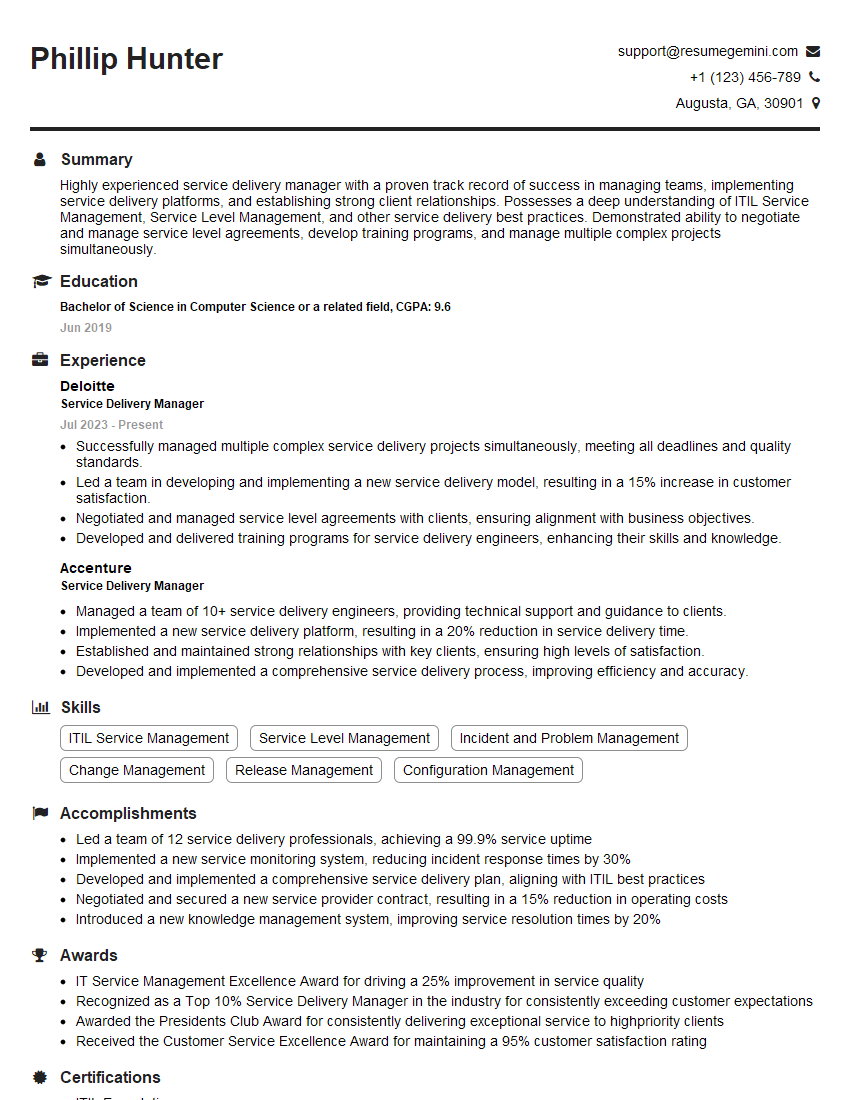
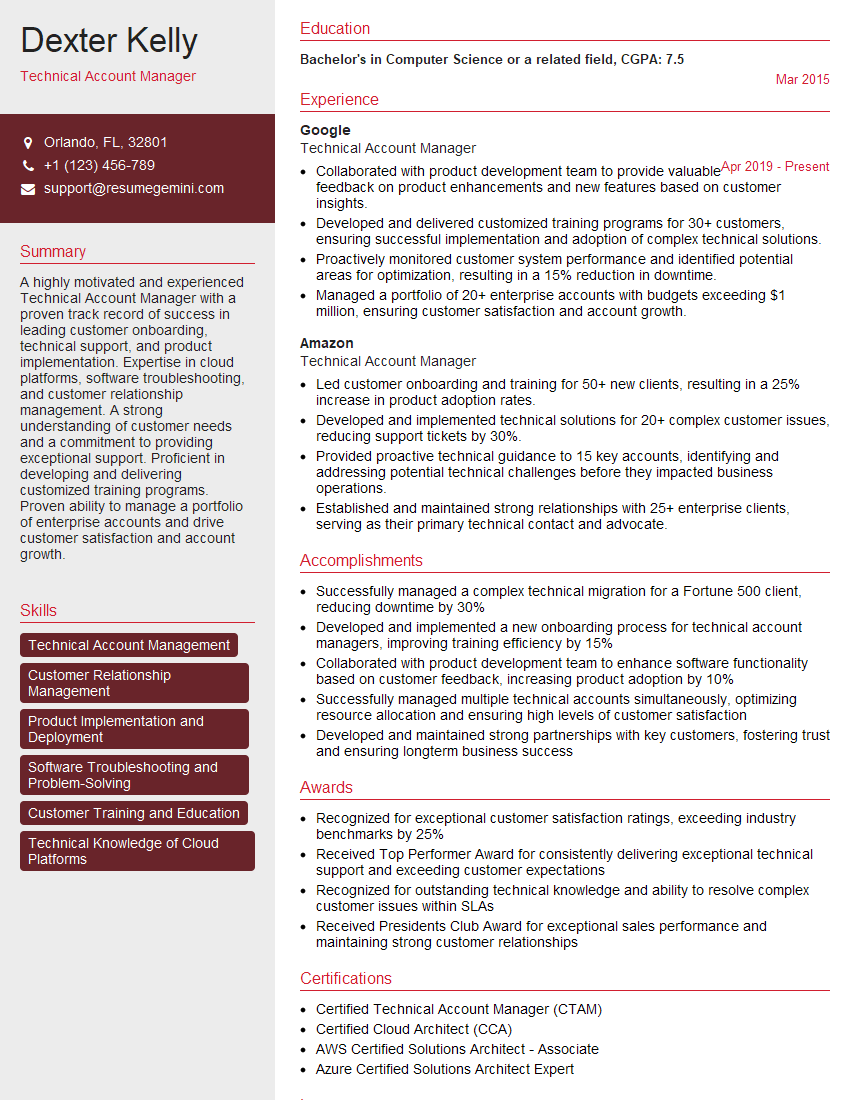
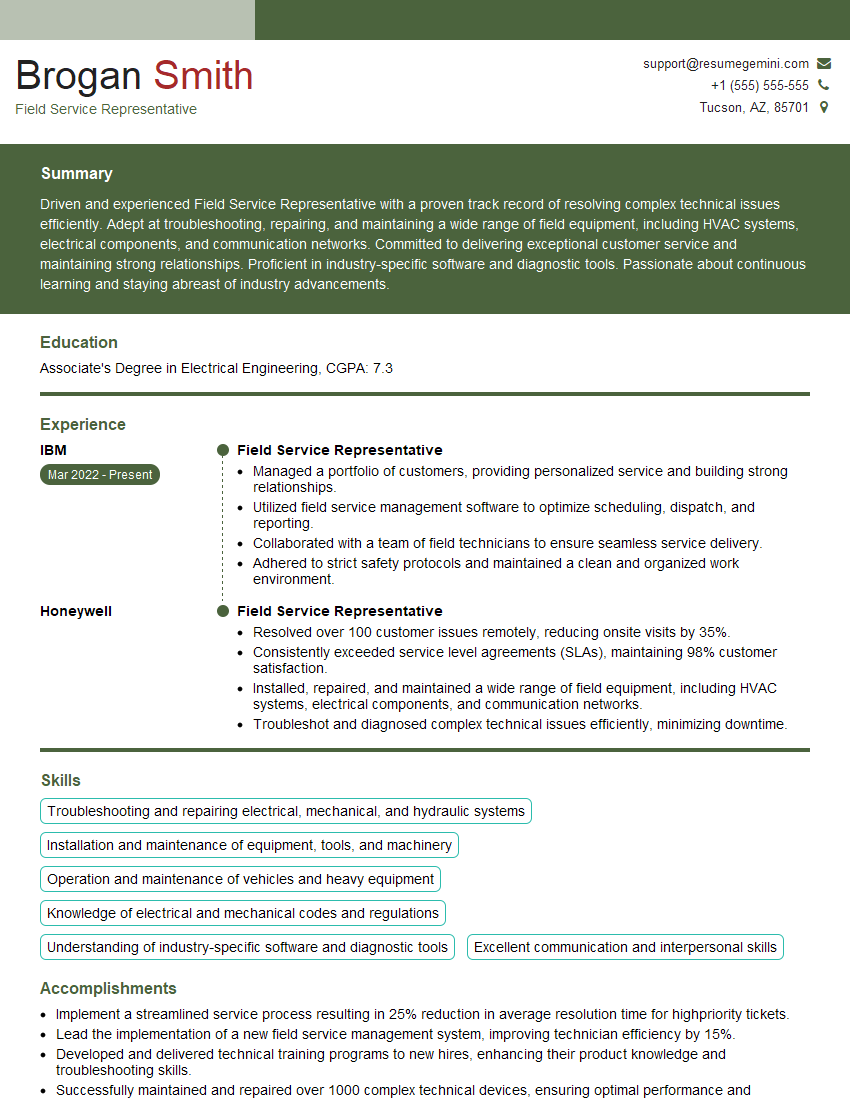
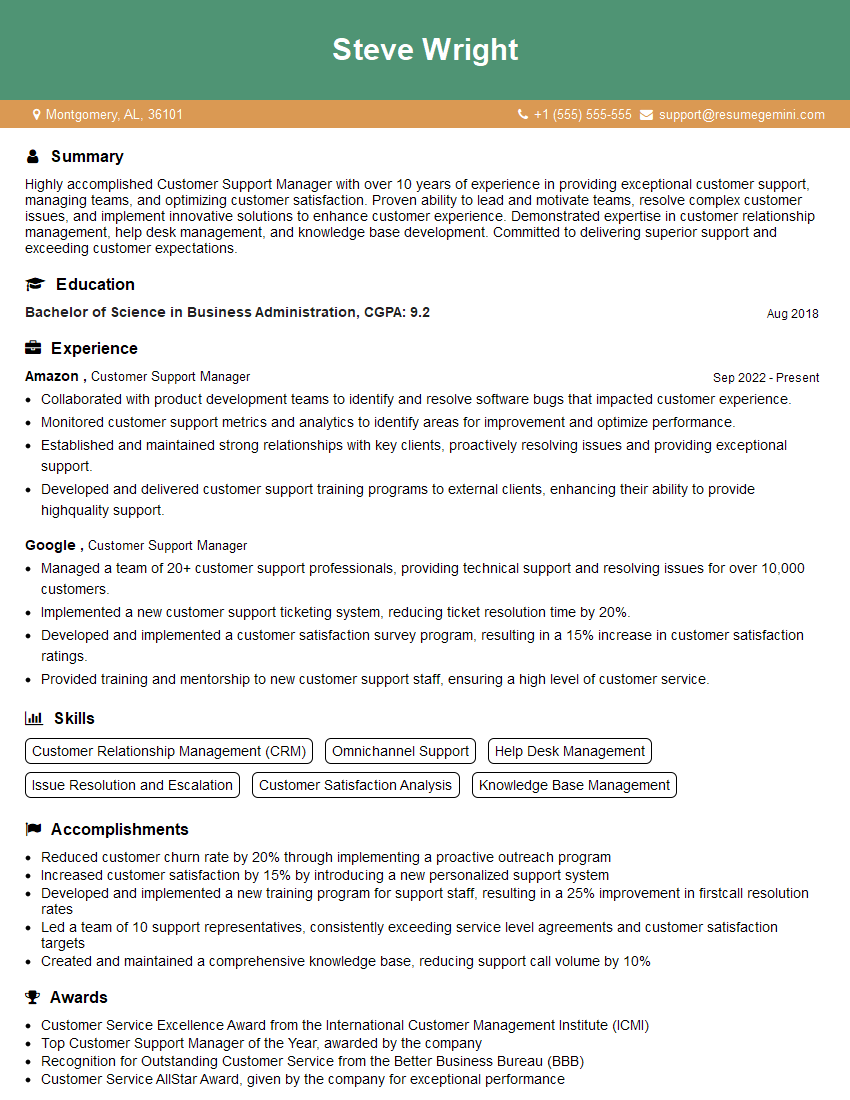
Mastering communication with carriers and customers is crucial for career advancement in this field. It demonstrates your ability to build strong relationships, resolve conflicts effectively, and contribute to a positive customer experience. To enhance your job prospects, creating an ATS-friendly resume is essential. ResumeGemini is a trusted resource to help you build a professional and impactful resume that showcases your skills and experience. We provide examples of resumes tailored to Communication with Carriers and Customers roles to help guide you in this process. Take the next step towards your dream job!
Explore more articles
Users Rating of Our Blogs
Share Your Experience
We value your feedback! Please rate our content and share your thoughts (optional).
What Readers Say About Our Blog
Very informative content, great job.
good