Every successful interview starts with knowing what to expect. In this blog, we’ll take you through the top Passion for Gospel Music and Ministry interview questions, breaking them down with expert tips to help you deliver impactful answers. Step into your next interview fully prepared and ready to succeed.
Questions Asked in Passion for Gospel Music and Ministry Interview
Q 1. Describe your experience leading worship services.
Leading worship is more than just playing music; it’s about creating a space where people connect with God through song. My experience spans over fifteen years, leading services in various settings – from small intimate gatherings to large stadium events. I’ve learned to adapt my style to the specific needs of each congregation, understanding that the goal is always to facilitate a powerful and moving worship experience.
For instance, in a smaller, more intimate setting, I might focus on leading congregational singing with a smaller band, emphasizing participation and fostering a sense of community. In a larger setting, I might utilize a full choir and orchestration, crafting a more elaborate and theatrical worship experience designed to inspire awe. Regardless of the scale, my approach always prioritizes authenticity, theological accuracy, and a deep understanding of the emotional and spiritual needs of the congregation.
I meticulously plan set lists considering the sermon theme, the liturgical calendar, and the overall emotional arc of the service. I pay close attention to the flow and transitions between songs, ensuring a seamless and impactful worship experience. I believe in the power of intentional pauses, allowing space for reflection and personal encounter with God. Furthermore, I actively engage the congregation, inviting them to participate through singing, prayer, and even moments of silence.
Q 2. What software are you proficient in for music production/editing?
Proficiency in music production software is crucial for creating high-quality recordings and enhancing the worship experience. I’m highly proficient in several industry-standard Digital Audio Workstations (DAWs), including Logic Pro X, Ableton Live, and Pro Tools. My expertise extends to audio editing, mixing, and mastering, allowing me to produce professional-sounding recordings for our church’s services and projects.
I’m also experienced using notation software like Sibelius and Finale for creating arrangements and scores. For example, I recently used Logic Pro X to produce a studio-quality recording of our church choir’s performance of a newly composed gospel anthem. This involved multi-track recording, individual instrument editing, mixing, and mastering to achieve a polished final product. My skills also extend to audio restoration, sound design, and various audio effects processing.
Q 3. How do you incorporate technology into your ministry?
Technology plays a vital role in expanding our ministry’s reach and effectiveness. We utilize streaming platforms like YouTube and Facebook Live to broadcast our services to a global audience, connecting with individuals who may not be able to attend physically. This has been particularly beneficial during periods of social distancing and also allows us to reach those who may be in remote locations or have physical limitations.
We also use church management software to manage volunteers, track attendance, and communicate with members. Furthermore, I utilize presentation software such as ProPresenter to create engaging visuals for our services, complementing the music and enhancing the overall worship experience. A recent project involved creating a video montage of congregational photos accompanied by worship music, projecting this on a large screen during the service to build a sense of community.
In addition, we leverage social media platforms such as Instagram and TikTok to share our music and connect with a younger demographic. Creating engaging short-form video content featuring snippets of our music and testimonies has allowed us to increase our social media reach significantly.
Q 4. Explain your approach to selecting appropriate music for different services.
Selecting appropriate music for different services requires careful consideration of several factors. The liturgical calendar, the sermon theme, and the overall atmosphere I want to create significantly influence my choices. For example, during Lent, I might choose more reflective and introspective songs, while during Easter, celebratory and triumphant anthems are appropriate.
I also consider the age range and musical preferences of the congregation. While maintaining a foundation of traditional gospel hymns, I also incorporate contemporary gospel styles and occasionally introduce songs from other genres, ensuring the music resonates with a diverse audience. Furthermore, I balance upbeat and contemplative songs to create a dynamic and emotionally engaging worship experience.
For instance, if the sermon focuses on themes of grace and forgiveness, I might select songs that emphasize God’s love and mercy. My aim is for the music to not only complement the message but also to enhance the congregation’s emotional and spiritual journey throughout the service. I always prioritize theological accuracy and ensure that the lyrics reflect biblical truths and promote a spirit of reverence and worship.
Q 5. Describe your experience working with diverse musical styles within Gospel music.
Gospel music encompasses a wide spectrum of styles, from traditional hymns to contemporary R&B, hip-hop gospel, and even gospel jazz. My experience working with these diverse styles has broadened my musical horizons and allowed me to connect with a wider range of people. I believe it’s important to honor the rich history of gospel music while embracing innovative expressions.
For example, I’ve successfully incorporated traditional gospel hymns into contemporary arrangements, adding elements of modern instrumentation and rhythmic styles. I’ve also worked with artists specializing in different gospel subgenres, allowing me to integrate various styles into our worship services seamlessly. This requires a deep understanding of musical theory, harmony, and rhythm, and the ability to blend seemingly disparate styles while maintaining a cohesive and spiritually impactful whole. It’s a delicate balance, but one that can yield truly enriching and powerful results.
Q 6. How do you manage conflicts within a church music team?
Conflicts within a church music team are inevitable. My approach focuses on proactive communication, establishing clear expectations, and fostering a collaborative environment. I encourage open dialogue and create space for team members to express their concerns and perspectives. I believe in leading by example, demonstrating respect and humility in all interactions.
When conflicts arise, I facilitate a structured discussion where each member can voice their opinions without interruption. I use active listening to understand the root causes of the conflict and help find common ground. If necessary, I involve a neutral third party to mediate the dispute and ensure a fair and just resolution. The goal is to resolve conflicts constructively, strengthening team unity and fostering a positive working relationship.
For instance, a conflict may arise regarding the selection of songs for a particular service. My strategy involves a democratic approach, where team members present their suggestions and collectively reach a consensus. If a compromise cannot be reached, I may use my leadership experience to guide the decision-making process, ensuring fairness and transparency. The focus is always on the overall goal – to create a powerful and uplifting worship experience for the congregation.
Q 7. How do you handle criticism of your musical choices or leadership?
Criticism, when delivered constructively, can be a valuable tool for growth. I strive to approach criticism with an open mind, seeking to understand the perspective of the person offering the feedback. I believe it’s crucial to distinguish between constructive criticism, which aims to improve the quality of the music or leadership, and personal attacks.
For constructive criticism, I engage in a thoughtful dialogue, seeking clarity and understanding. I listen carefully, ask clarifying questions, and evaluate the validity of the critique. If the feedback is valid, I’m willing to adapt my approach, learning from the experience and seeking to improve. I see criticism as an opportunity for growth and refinement. However, I address personal attacks firmly but respectfully, setting boundaries and maintaining professional decorum.
For instance, if someone criticizes a particular musical selection, I might politely engage in conversation, explaining the rationale behind the choice and exploring alternative options for future services. If the criticism is rooted in personal preference rather than a valid musical or theological concern, I acknowledge their perspective but maintain my artistic judgment. The balance lies in being open to feedback without compromising artistic integrity and spiritual guidance.
Q 8. What is your approach to mentoring aspiring Gospel musicians?
Mentoring aspiring Gospel musicians involves a holistic approach that nurtures both their musical talent and spiritual growth. It’s not just about technique; it’s about shaping character and purpose.
- Spiritual Foundation: We begin by discussing their relationship with God and how their music reflects that faith. This includes exploring their understanding of biblical principles and their personal walk with Christ.
- Musical Skill Development: I work with them on vocal technique, instrument proficiency (if applicable), music theory, and songwriting. This might involve structured lessons, feedback on performances, and collaborative songwriting sessions.
- Performance & Stage Presence: Beyond technical skills, I emphasize stage presence, connecting with audiences, and communicating the message authentically. We work on confidence-building techniques and public speaking skills.
- Industry Knowledge: Navigating the music industry requires knowledge of copyright, contracts, and marketing. I guide them in understanding these aspects to protect themselves and build a sustainable career.
- Mentorship & Support: This isn’t a one-time thing; it’s an ongoing relationship of support, encouragement, and accountability. I offer advice, guidance, and a listening ear as they navigate the challenges and joys of their musical journey.
For example, I recently mentored a young singer-songwriter who struggled with stage fright. Through a series of personalized workshops focusing on breathing techniques, positive self-talk, and simulated performance settings, she gained the confidence to perform powerfully at a local church.
Q 9. Describe a time you had to adapt your plans due to unforeseen circumstances during a service.
During a recent Easter service, our scheduled guest soloist fell ill just moments before their performance. This required immediate adaptation. Instead of panicking, we rallied the existing worship team. We quickly selected a few powerful hymns from our repertoire that aligned with the service’s theme of resurrection and hope. The team leader and I worked together to adjust the setlist, ensuring a smooth transition and maintaining the overall flow. We also briefly addressed the audience, explaining the situation with grace and transparency. The resulting performance, though unplanned, was incredibly moving and spiritually uplifting. The congregation felt the unity and the spirit of resilience within the team.
This experience taught me the importance of flexibility, teamwork, and trust in God’s plan, even amidst unforeseen circumstances. It also reinforced the need to have a strong repertoire and a team that’s prepared to adapt quickly.
Q 10. How do you ensure the quality of sound during a live performance?
Ensuring high-quality sound during a live Gospel performance involves meticulous planning and execution. It’s a multi-faceted process.
- Sound Check: A thorough sound check is crucial. This involves testing all microphones, instruments, and speakers to identify and address any potential issues before the service begins.
- Microphone Technique: Proper microphone placement and technique are essential to capture clear audio without feedback. This depends on the type of microphone and the specific instrument or vocalist.
- Mixing and EQ: A skilled sound engineer is needed to manage the audio mix, ensuring that all instruments and vocals are balanced and clear. Equalization (EQ) is used to adjust the tonal balance of each element.
- Monitoring: Providing appropriate stage monitors allows performers to hear themselves and other musicians adequately, helping them perform confidently and in time.
- Room Acoustics: Understanding the acoustics of the venue is vital. Factors like room size, shape, and materials affect sound quality. We might use sound dampening materials or strategically place speakers to optimize the sound.
For instance, if we notice a persistent feedback issue during sound check, we might try adjusting microphone placement, reducing gain, or using a feedback suppressor. Constant monitoring and adjustments during the performance itself ensure a consistently excellent sound experience for the audience.
Q 11. How familiar are you with copyright laws related to gospel music?
I’m very familiar with copyright laws related to Gospel music. Understanding these laws is crucial for ethical and legal reasons. It’s important for both the composers and performers of Gospel music to be knowledgeable about copyright regulations.
- Copyright Ownership: The composer automatically owns the copyright to their original musical work. This includes the melody, harmony, and lyrics.
- Public Performance Rights: Performing copyrighted music publicly, such as in a church service or concert, requires securing the necessary licenses, especially if using commercially published music.
- Mechanical Licenses: Making recordings of copyrighted music requires obtaining a mechanical license, usually from the copyright holder or their designated licensing agency.
- Sampling and Interpolation: Using parts of existing copyrighted music in new compositions needs careful consideration and often requires permission from the copyright holder. Failure to do so leads to copyright infringement.
- Copyright Infringement Penalties: Copyright infringement can result in significant legal penalties, including fines and lawsuits.
We always ensure that any music used in our services or recordings is either in the public domain, licensed appropriately, or we have secured explicit permission from the copyright holder. It’s always better to be proactive and seek legal counsel when uncertainty arises.
Q 12. How do you balance creative expression with theological integrity in your music?
Balancing creative expression with theological integrity in Gospel music is paramount. It’s about crafting music that’s both artistically compelling and theologically sound.
- Biblical Themes: My songwriting often centers on biblical themes of faith, hope, love, redemption, and praise. The lyrics communicate a clear message that aligns with biblical principles.
- Authenticity: It’s about being genuine and truthful in my expression of faith. The music reflects my personal relationship with God and my desire to share that with others.
- Avoiding Misrepresentation: I carefully consider the potential interpretations of my lyrics and music. It’s important to avoid anything that could misrepresent or trivialize theological concepts.
- Musical Style: While creative freedom in musical style is important, I ensure that the chosen style enhances, rather than detracts from, the message. The music should complement the lyrics without overshadowing them.
- Seeking Feedback: Before releasing any music, I often seek feedback from trusted mentors and fellow believers to ensure theological accuracy and overall effectiveness.
For example, a recent song I composed uses a contemporary musical style but focuses on the biblical theme of grace. The upbeat tempo reflects the joy of salvation, while the lyrics emphasize the depth and power of God’s grace.
Q 13. What are some contemporary gospel artists who inspire you and why?
Several contemporary Gospel artists deeply inspire me. Their creativity, spiritual depth, and commitment to their faith resonate strongly.
- Kirk Franklin: His innovative approach to blending Gospel with other genres has significantly impacted the sound of contemporary Gospel. He’s a master of pushing boundaries while remaining deeply rooted in faith.
- Tasha Cobbs Leonard: Her powerful vocals and heartfelt lyrics communicate profound spiritual experiences with authenticity and grace. Her music is both uplifting and profoundly moving.
- Maverick City Music: Their collaborative approach brings together diverse talents to create powerful, community-driven worship experiences. They exemplify the power of collaboration and shared faith.
These artists, amongst others, inspire me through their dedication to sharing their faith through music, their innovation and artistic excellence, and their commitment to authentic expression.
Q 14. Explain your experience with music arranging and composition.
My experience in music arranging and composition spans many years. I’ve worked on various projects, from simple hymn arrangements to complex orchestral scores for Gospel performances.
- Arranging: I’ve arranged numerous hymns and contemporary Gospel songs for different ensembles, including choirs, bands, and orchestras. This involves adapting existing compositions to fit the specific instrumentation and vocal ranges of the group.
- Composition: I’ve composed original Gospel songs for various occasions, including church services, concerts, and albums. This involves creating melodies, harmonies, and lyrics from scratch, often drawing inspiration from biblical texts or personal spiritual experiences.
- Software Proficiency: I’m proficient in music notation software such as Sibelius and Finale, allowing me to create professional-quality scores and arrangements. I also utilize Digital Audio Workstations (DAWs) like Logic Pro X and Ableton Live for recording, editing, and mixing my compositions.
- Orchestration: I have experience orchestrating Gospel compositions for larger ensembles, incorporating various instruments such as strings, brass, woodwinds, and percussion to enhance the emotional impact and richness of the music.
For instance, I recently arranged a traditional hymn for a large choir and orchestra, incorporating elements of contemporary Gospel style while maintaining the integrity of the original melody. The result was a powerful and moving performance that blended tradition and innovation.
Q 15. How do you maintain a healthy work-life balance in ministry?
Maintaining a healthy work-life balance in ministry, particularly within Gospel music and ministry, is crucial for long-term effectiveness and well-being. It’s a constant juggling act, but achievable with intentionality. Think of it like a three-legged stool: spiritual well-being, personal well-being, and ministry work. If one leg is weak, the whole stool collapses.
- Spiritual Discipline: Prioritizing personal prayer, Bible study, and fellowship ensures my spiritual tank is full. This isn’t just a task; it’s refueling for the demands of ministry.
- Personal Boundaries: Learning to say ‘no’ to additional commitments when necessary is vital. Overcommitting leads to burnout. I schedule dedicated time for family, hobbies, and rest—treating these as non-negotiable appointments.
- Delegation and Teamwork: Recognizing my limitations and delegating tasks effectively within the team is essential. Building strong relationships with other ministry leaders allows for shared responsibilities and reduces individual workload.
- Self-Care: This includes physical exercise, healthy eating, and sufficient sleep. It’s easy to neglect these when ministry demands are high, but they are non-negotiable for sustaining energy and focus.
For example, I dedicate one evening a week solely to family time, regardless of ministry demands. This ensures my family feels valued and strengthens our bond, which in turn reduces stress and enhances my overall well-being.
Career Expert Tips:
- Ace those interviews! Prepare effectively by reviewing the Top 50 Most Common Interview Questions on ResumeGemini.
- Navigate your job search with confidence! Explore a wide range of Career Tips on ResumeGemini. Learn about common challenges and recommendations to overcome them.
- Craft the perfect resume! Master the Art of Resume Writing with ResumeGemini’s guide. Showcase your unique qualifications and achievements effectively.
- Don’t miss out on holiday savings! Build your dream resume with ResumeGemini’s ATS optimized templates.
Q 16. Describe your experience working with volunteers in a church setting.
Working with volunteers in a church setting requires fostering a supportive and encouraging environment. It’s about empowering individuals to use their gifts for God’s glory. My experience highlights the importance of clear communication, training, and appreciation.
- Clear Roles and Responsibilities: Defining roles clearly from the outset prevents confusion and ensures everyone understands their contributions. I use detailed job descriptions and regular team meetings to reinforce roles.
- Comprehensive Training: Providing adequate training, whether it’s technical skills for sound operation or interpersonal skills for ministry interaction, ensures volunteers feel confident and capable.
- Regular Communication: Consistent communication keeps volunteers informed and engaged. This includes regular email updates, team meetings, and individual check-ins to address concerns and provide support.
- Recognition and Appreciation: Volunteers are often unsung heroes. Expressing sincere gratitude through verbal appreciation, small tokens of appreciation, or public acknowledgment goes a long way in boosting morale and retention.
For instance, I established a mentorship program where experienced volunteers guide new ones, fostering a sense of community and shared responsibility. This has significantly improved volunteer retention and overall ministry effectiveness.
Q 17. How do you measure the effectiveness of your music ministry?
Measuring the effectiveness of a music ministry isn’t solely about attendance numbers. It’s a multifaceted assessment encompassing spiritual impact, community building, and overall engagement. I use a combination of quantitative and qualitative methods.
- Attendance and Participation: While not the sole measure, consistent attendance indicates engagement. Active participation, such as singing along or responding to the music, is a positive indicator.
- Feedback Mechanisms: Collecting feedback through surveys, suggestion boxes, and informal conversations helps gauge audience satisfaction and identify areas for improvement. This feedback can be incredibly insightful.
- Spiritual Impact: Observing changes in attitudes, testimonies of transformation, or increased participation in other church activities can demonstrate the music ministry’s spiritual influence.
- Community Building: A successful music ministry fosters a sense of community among musicians and congregants. This can be measured through the development of strong relationships and collaborative projects.
For example, we recently conducted a post-service survey that revealed a significant increase in attendees feeling a deeper connection with God after our services, showing a direct positive correlation between our music and spiritual impact.
Q 18. What are your goals for professional development in Gospel music?
My goals for professional development in Gospel music center around expanding my musical skills, enhancing my leadership capabilities, and increasing my ministry impact.
- Advanced Musical Training: I aim to further develop my musical skills through workshops, masterclasses, or advanced degree programs, focusing on areas such as vocal coaching, arranging, and music production.
- Leadership Development: I plan to participate in leadership training programs to enhance my ability to manage teams, motivate volunteers, and effectively communicate a vision.
- Expanding Ministry Reach: I aim to explore opportunities to expand the reach of my music ministry through collaborations, recordings, or online platforms, reaching a broader audience.
- Staying Current: Continuously learning about new techniques, technologies, and trends in Gospel music keeps me relevant and allows me to innovate within my ministry.
For instance, I’m currently pursuing a certificate in music production to improve the quality of our church’s recordings and online presence.
Q 19. How do you incorporate audience participation into your worship services?
Incorporating audience participation is crucial for creating a dynamic and engaging worship experience. It’s about transforming the congregation from passive listeners into active participants.
- Call and Response: Using call and response techniques, where the congregation repeats phrases or melodies, creates a sense of shared participation and joyful expression.
- Hymn Sing-Alongs: Familiar hymns, choruses, and Gospel standards are excellent for encouraging congregational singing, fostering a sense of unity and shared faith.
- Interactive Elements: Incorporating simple actions, movements, or visual elements that complement the music can enhance participation and create a more immersive experience.
- Music Selection: Choosing music that resonates with the congregation’s preferences and spiritual journey ensures that they feel connected and empowered to participate.
For instance, during our services, we regularly incorporate popular Gospel songs that encourage spontaneous clapping, swaying, and singing along, resulting in a lively and engaging atmosphere.
Q 20. How do you handle requests for specific songs or musical styles?
Handling requests for specific songs or musical styles requires a delicate balance between respecting preferences and maintaining the overall vision and purpose of the worship service. My approach involves communication, discernment, and flexibility.
- Open Communication: Encourage congregants to share their song requests respectfully. This allows for a dialogue and understanding of their preferences.
- Discernment and Selection: Evaluate requests based on their theological appropriateness, musical quality, and fit within the overall flow of the service. Not all requests are suitable for every service.
- Creative Solutions: If a requested song doesn’t fit, explore alternative ways to incorporate elements of the style or theme into other selections.
- Transparency and Explanation: Communicating decisions clearly and respectfully, even if a request is declined, builds trust and understanding within the congregation.
For instance, if a congregant requests a contemporary Gospel song that doesn’t align with the service’s theme, I might suggest incorporating a similar style in a different song or include it in a future service to meet their request without disrupting the flow of the current service.
Q 21. Describe your experience with fundraising or grant writing for music ministry.
Fundraising and grant writing for a music ministry require a strategic approach, highlighting the ministry’s impact and demonstrating a need for support. My experience involves clear articulation of the ministry’s vision, demonstrating financial responsibility, and building strong relationships with potential donors.
- Develop a Compelling Narrative: Crafting a compelling narrative that clearly articulates the ministry’s vision, impact, and goals is crucial for attracting donors. This should highlight the ministry’s spiritual and community impact.
- Create a Detailed Budget: A well-structured budget demonstrating financial responsibility and accountability is essential for securing funding. This should show how funds will be used efficiently and effectively.
- Identify Funding Sources: Researching and identifying potential funding sources, such as foundations, grants, individual donors, and corporate sponsorships, is crucial for maximizing funding opportunities.
- Build Relationships: Cultivating strong relationships with potential donors is vital for securing ongoing support. This involves maintaining regular communication and demonstrating gratitude.
For example, we successfully secured a grant by highlighting the ministry’s positive influence on youth through our Gospel choir program, demonstrating the tangible community impact of our music ministry and justifying the funding request.
Q 22. How do you build and maintain relationships with church members and leadership?
Building and maintaining strong relationships within a church community is fundamental to effective ministry. It’s about genuine connection, not just transactional interactions. I approach this through intentional actions and consistent effort.
- Active Listening and Empathy: I prioritize truly listening to individuals, understanding their needs and concerns, and responding with empathy. This involves attending church events, making time for personal conversations, and actively participating in community life.
- Regular Communication: Open and consistent communication is vital. This includes sending regular newsletters, using announcements during services, and utilizing various communication channels to keep everyone informed and engaged. For example, a simple email or text message acknowledging a birthday or offering support during a difficult time can go a long way.
- Serving Others: Serving alongside church members creates opportunities for relationship building. This can range from assisting with church events to providing support to individuals in need. Volunteering for tasks and offering help strengthens bonds and fosters a sense of community.
- Transparency and Accountability: Building trust requires transparency and accountability. I aim to be open and honest in my actions, readily available to address concerns, and accountable for my responsibilities.
- Seeking Feedback: Regularly seeking feedback from church members and leadership provides valuable insights and allows for continuous improvement in my ministry approach. This demonstrates a willingness to learn and grow.
Q 23. Explain your understanding of different musical styles within the Gospel genre.
Gospel music encompasses a rich tapestry of styles, each with its unique character and impact. Understanding these styles is crucial for effective ministry.
- Traditional Gospel: Characterized by rich harmonies, call-and-response vocals, and often a focus on spiritual themes of praise, redemption, and faith. Think of the soulful sounds of Mahalia Jackson or Thomas A. Dorsey.
- Contemporary Gospel: Blends traditional gospel elements with modern musical styles such as R&B, pop, and hip-hop. Artists like Kirk Franklin and Tasha Cobbs Leonard exemplify this dynamic fusion.
- Southern Gospel: Typically features upbeat tempos, strong instrumentation, and a focus on storytelling and positive messaging. Groups like the Gaither Vocal Band represent this style.
- Urban Gospel: Often incorporates hip-hop rhythms, rap elements, and contemporary production techniques to reach a younger generation. Artists such as Lecrae demonstrate this style’s power.
- Black Gospel: This encompasses many subgenres and highlights the rich history of gospel music originating within the African American community. Its diverse sounds reflect the deep spirituality and cultural expression of this history.
Each style possesses its own unique power to connect with audiences, and understanding their nuances is key to choosing the most impactful approach for a particular setting or event.
Q 24. How do you communicate effectively with musicians of varying skill levels?
Communicating effectively with musicians of varying skill levels requires patience, understanding, and a clear, adaptable communication style.
- Clear and Concise Instructions: Providing clear and concise instructions, using both verbal and visual aids, ensures everyone understands the expectations.
- Individualized Approach: Recognizing that each musician has different levels of experience, I tailor my communication to their individual needs. Experienced musicians might appreciate more complex arrangements or improvisational opportunities, while those newer to music might benefit from more basic guidance and support.
- Positive Reinforcement and Encouragement: Creating a positive and encouraging environment where musicians feel comfortable contributing their talents and asking questions is paramount. Celebrating both individual and collective achievements fosters team unity.
- Open Communication Channels: Establishing open communication channels, such as regular rehearsals or group chats, ensures effective information flow and creates opportunities for collaboration and feedback.
- Collaborative Rehearsals: Collaborative rehearsals allow for collective problem-solving, ensuring everyone feels heard and involved in the creative process. This also helps to build musical cohesion.
For example, if a musician is struggling with a particularly difficult passage, I offer extra coaching, breaking down the section into smaller, manageable parts. I also demonstrate effective rehearsal techniques to foster individual growth and improvement.
Q 25. Describe your experience with budgeting and financial management in a ministry context.
Budgeting and financial management are essential for the sustainability of any ministry, including a music ministry. My experience encompasses careful planning, transparent record-keeping, and proactive fundraising strategies.
- Detailed Budgeting: Creating a detailed budget that outlines projected income and expenses is crucial for effective financial management. This includes anticipating costs associated with equipment, music, travel, and other ministry-related expenses.
- Transparent Accounting: Maintaining accurate and transparent financial records is essential for building trust and accountability. I use accounting software to track income and expenses, providing regular reports to ministry leadership.
- Fundraising Initiatives: Developing effective fundraising strategies is necessary to ensure the ministry’s financial stability. This may involve organizing concerts, seeking sponsorships, or applying for grants.
- Resource Allocation: Careful resource allocation ensures that funds are used effectively and efficiently to support the ministry’s goals and objectives. This includes prioritizing needs and allocating funds according to strategic plans.
- Regular Financial Reviews: Conducting regular financial reviews ensures that the budget is adhered to and that necessary adjustments are made to ensure financial health.
For instance, when planning a large-scale musical event, I would create a detailed budget that includes all anticipated costs, including venue rental, equipment hire, marketing materials, and musician fees. I then develop a fundraising plan to cover these expenses, perhaps including ticket sales, sponsorships, or donations.
Q 26. What are your thoughts on the role of music in evangelism?
Music plays a vital role in evangelism, acting as a powerful tool to connect with hearts and minds. It transcends language barriers and cultural differences, creating an atmosphere of worship and spiritual connection.
- Emotional Connection: Music evokes powerful emotions, making it a conduit for communicating spiritual messages. Uplifting songs inspire hope, while reflective pieces encourage introspection and contemplation.
- Accessibility and Inclusivity: Music offers a universally accessible way to share the Gospel. It breaks down barriers and welcomes individuals from diverse backgrounds and experiences.
- Community Building: Shared musical experiences foster a sense of community and belonging, enriching the worship experience and strengthening bonds among individuals.
- Witness and Testimony: Musical performances can serve as a powerful witness to faith, expressing personal testimony through song and creating opportunities for meaningful conversations about spiritual experiences.
- Spiritual Transformation: Music can be a catalyst for spiritual transformation, moving individuals to repentance, faith, and a deeper relationship with God.
For example, a moving rendition of a hymn can convey a message of hope and redemption more profoundly than words alone. The emotional power of the music opens hearts to receive the spiritual message being conveyed.
Q 27. How do you promote your music ministry or the church’s musical events?
Promoting a music ministry or church musical events requires a multifaceted approach that utilizes various channels to reach a broad audience.
- Website and Social Media: A well-designed website and active social media presence are essential. This involves sharing event details, posting engaging content, and building a community online. For example, using Instagram to share behind-the-scenes glimpses into rehearsals or creating a Facebook event page to facilitate registration and communication.
- Traditional Media: Utilizing traditional media outlets, such as local newspapers, radio stations, and community bulletin boards, can extend the reach of promotional efforts. Press releases announcing upcoming events can be particularly effective.
- Partnerships and Collaborations: Collaborating with other churches, organizations, or community groups can expand the audience and create opportunities for cross-promotion. Joint events or shared advertising space can prove beneficial.
- Email Marketing: Developing an email list and sending out regular newsletters or event announcements to subscribers can maintain consistent engagement and build anticipation.
- Flyers and Posters: Employing traditional methods like flyers and posters in strategic locations within the community serves as a visible reminder of upcoming events.
Effective promotion also requires tracking results and adapting strategies based on what works best in terms of audience engagement and response.
Q 28. Describe your experience with using social media to engage with your audience.
Social media has become an indispensable tool for engaging with audiences in today’s digital landscape. My approach to utilizing social media is strategic and community-focused.
- Platform Selection: I carefully select the most appropriate platforms for my target audience. For instance, Instagram might be ideal for sharing visually engaging content, while Facebook offers opportunities for broader community building and event promotion.
- Content Strategy: I develop a consistent content strategy that includes a mix of photos, videos, live streams, and written updates, keeping the content relevant and engaging to maintain audience interest.
- Community Building: I use social media to build community by responding to comments and messages, hosting interactive Q&A sessions, and fostering discussion among followers.
- Analytics and Tracking: Regularly analyzing social media analytics helps to understand what resonates with the audience and allows for adjustments in content strategy. This enables data-driven decisions for improved engagement.
- Professionalism and Brand Consistency: Maintaining a professional image and consistent brand identity across all social media platforms is essential for building trust and credibility.
For example, I might use Facebook Live to stream a rehearsal or a short performance, fostering a sense of connection and participation with my online audience. Then, I can use Instagram to share shorter, visually engaging clips from the live stream to attract new followers and expand my audience.
Key Topics to Learn for Passion for Gospel Music and Ministry Interview
- Theological Foundation: Understanding the biblical basis for Gospel music and ministry. Explore the historical context and various theological interpretations.
- Musical Proficiency: Demonstrating your skills in vocal performance, instrumental playing (if applicable), music theory, and composition within the Gospel genre. Be prepared to discuss your strengths and areas for growth.
- Ministry Experience: Articulating your experience in leading worship, teaching, mentoring, or community outreach through music. Highlight impactful moments and lessons learned.
- Spiritual Leadership: Discuss your understanding of spiritual leadership, team dynamics, and conflict resolution within a faith-based environment. Consider examples of your leadership style and its effectiveness.
- Communication & Outreach: Explain your approach to communicating the Gospel message through music, considering different audiences and contexts. How do you effectively share your faith and connect with others?
- Technological Proficiency: Depending on the role, demonstrate familiarity with music software, audio/video recording and editing, social media, or other relevant technologies used in Gospel music ministry.
- Problem-Solving & Adaptability: Prepare examples demonstrating your ability to solve problems creatively and adapt to changing circumstances within a ministry setting. How have you overcome challenges in your musical or ministry experience?
- Collaboration & Teamwork: Highlight your experience working collaboratively with musicians, pastors, and other ministry leaders. Discuss your role within a team and your ability to contribute effectively.
Next Steps
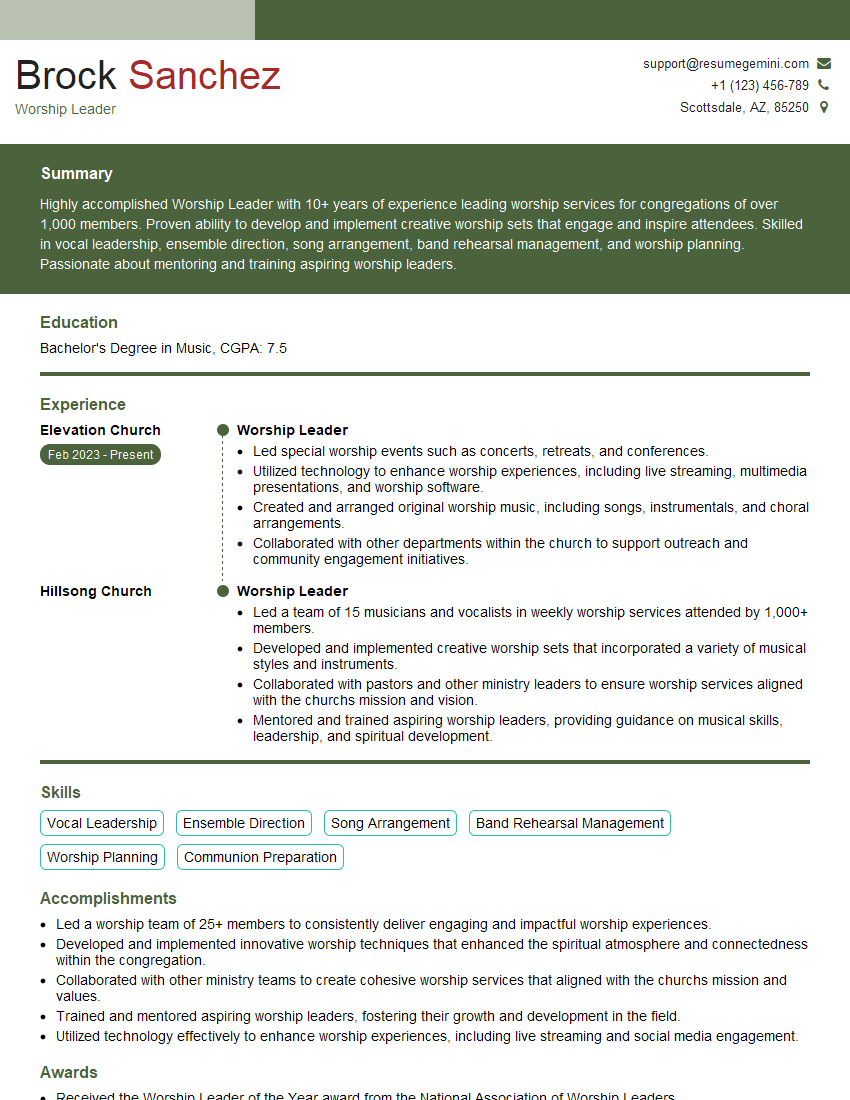
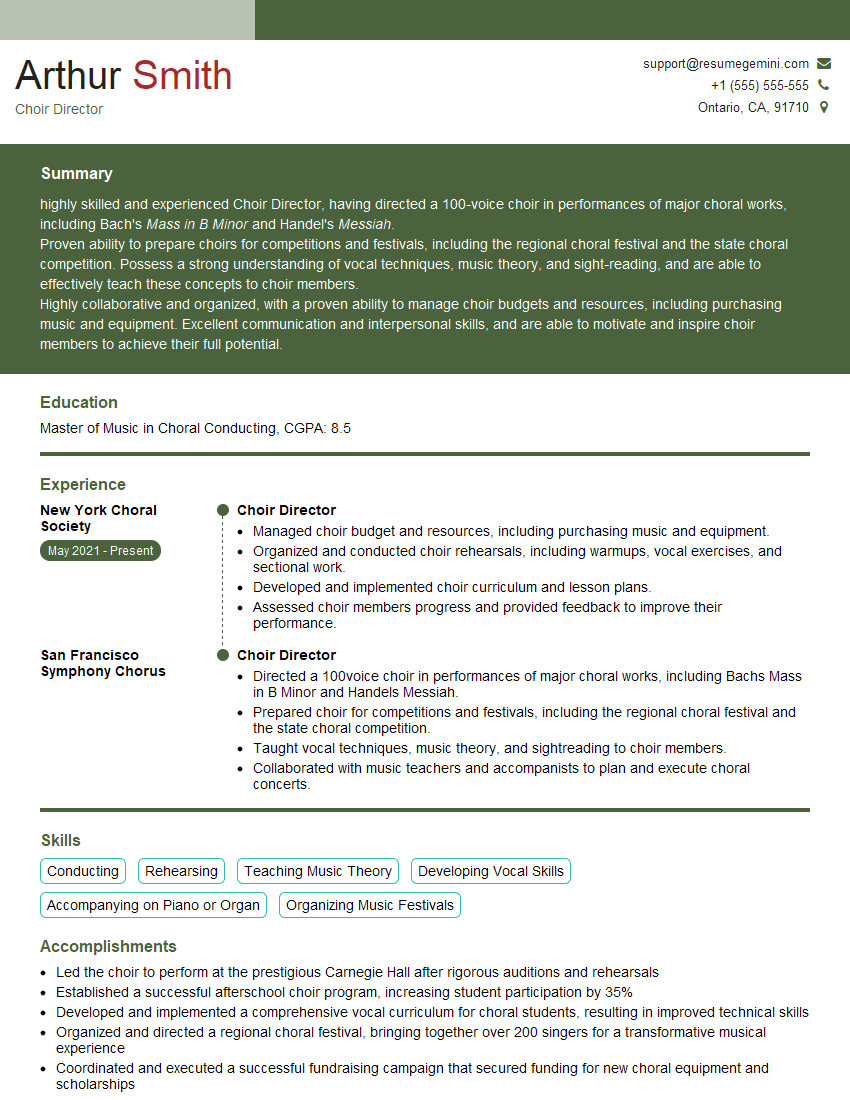
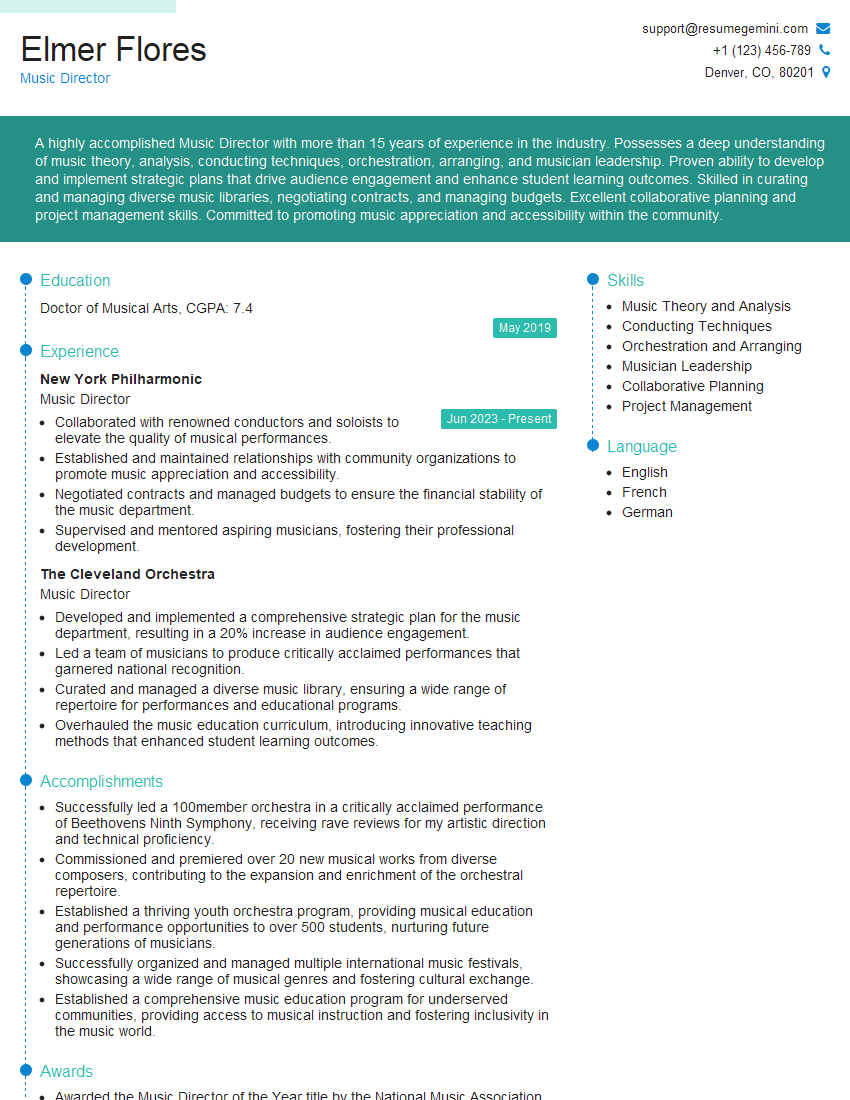
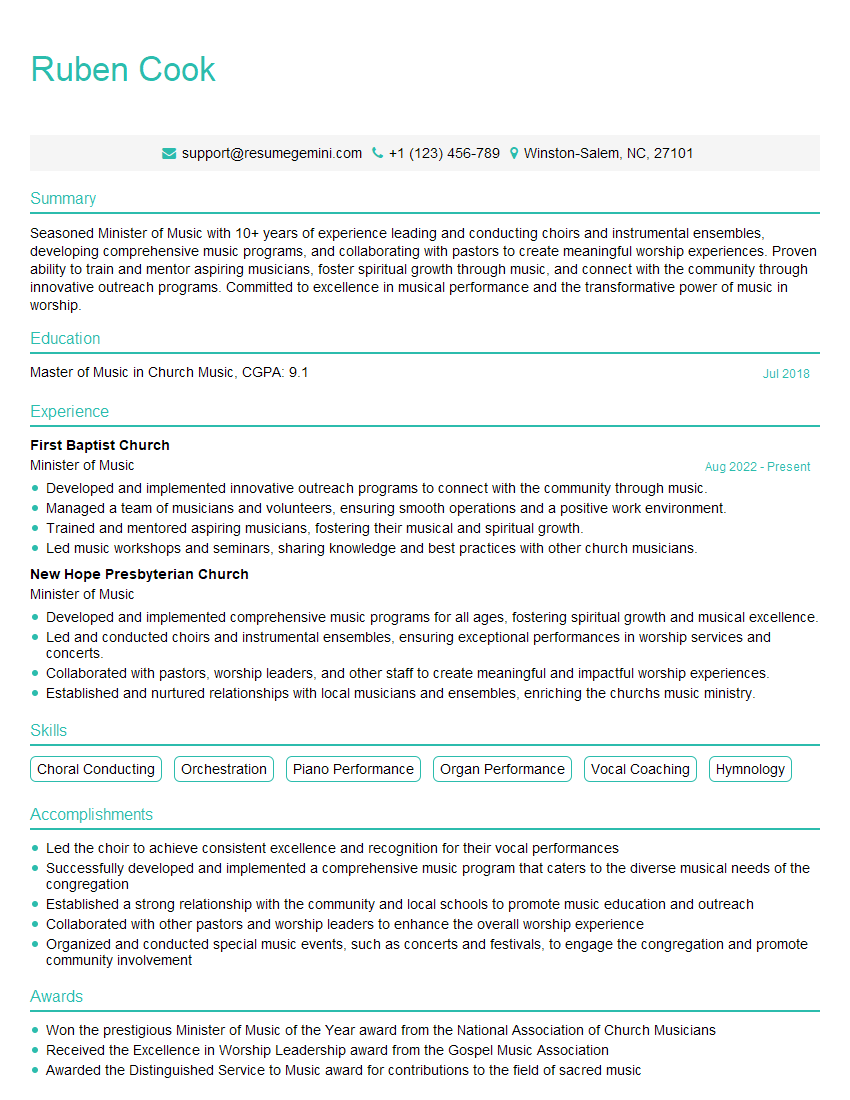
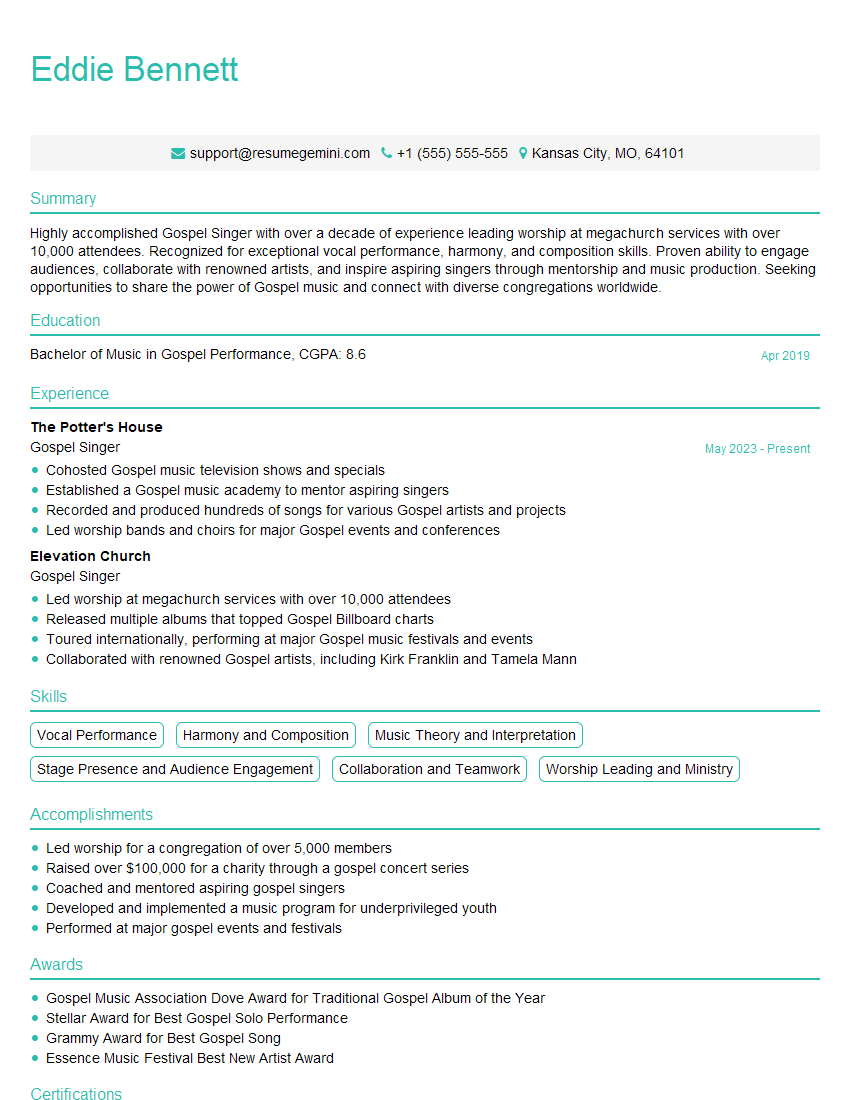
Mastering the principles of Passion for Gospel Music and Ministry significantly enhances your career prospects, opening doors to fulfilling roles within churches, outreach organizations, and the wider Gospel music industry. To maximize your chances, create a compelling and ATS-friendly resume that showcases your skills and experience. ResumeGemini is a trusted resource to help you build a professional resume that stands out. Examples of resumes tailored to Passion for Gospel Music and Ministry are available to help guide you.
Explore more articles
Users Rating of Our Blogs
Share Your Experience
We value your feedback! Please rate our content and share your thoughts (optional).
What Readers Say About Our Blog
Very informative content, great job.
good