The right preparation can turn an interview into an opportunity to showcase your expertise. This guide to Passion for Journalism interview questions is your ultimate resource, providing key insights and tips to help you ace your responses and stand out as a top candidate.
Questions Asked in Passion for Journalism Interview
Q 1. Describe your understanding of journalistic ethics.
Journalistic ethics are the principles of right conduct governing the collection, presentation, and dissemination of news. It’s a moral compass guiding journalists to act with integrity, fairness, and responsibility. This involves a commitment to truth and accuracy, minimizing harm, acting independently, and being accountable for one’s work.
- Truth and Accuracy: This is paramount. It means verifying information from multiple sources, correcting errors promptly and transparently, and avoiding fabrication or plagiarism.
- Minimizing Harm: Journalists must consider the potential impact of their reporting on individuals and society. This includes avoiding sensationalism, protecting sources’ confidentiality when appropriate, and being mindful of the language used.
- Independence: Maintaining objectivity is key. This means avoiding conflicts of interest, refusing gifts or favors from sources, and making clear distinctions between news and opinion.
- Accountability: Journalists should be transparent about their methods and sources, and be willing to correct errors or address criticisms.
For example, a journalist might choose not to publish a story that could potentially endanger a source even if it’s a compelling narrative. Or, if a factual error is discovered after publication, a correction is issued immediately and prominently.
Q 2. Explain the importance of fact-checking in journalism.
Fact-checking is the cornerstone of credible journalism. It’s the process of verifying the accuracy of information before publication. Without it, misinformation can spread rapidly, damaging public trust and potentially harming individuals.
The importance lies in ensuring the public receives accurate and reliable information. A false or misleading report can have serious consequences, influencing public opinion, policy decisions, and even individuals’ lives. Thorough fact-checking helps mitigate these risks.
My approach involves consulting multiple reliable sources, cross-referencing information, examining original documents when possible, and verifying claims with experts in the relevant field. I also employ fact-checking tools and databases to aid the process.
For instance, while reporting on a political campaign, I would verify candidates’ claims about their records and policies using official documents, independent analyses, and interviews with multiple experts instead of relying on a single press release.
Q 3. How do you handle conflicting information sources?
Handling conflicting information sources requires a methodical approach. It’s crucial to remain objective and avoid drawing premature conclusions.
- Identify the Sources: Determine the credibility and potential biases of each source. Consider their expertise, track record, and potential motivations.
- Verify Information: Cross-reference the information with additional sources. Look for corroborating evidence or conflicting accounts.
- Assess the Evidence: Evaluate the quality and reliability of the evidence presented by each source. Look for primary sources whenever possible.
- Seek Expert Opinion: If necessary, consult experts in the relevant field to help interpret the information and assess its validity.
- Present Balanced Reporting: Acknowledge discrepancies and present all sides of the story fairly. Avoid presenting conflicting information as equally credible if evidence suggests otherwise.
For example, if reporting on a controversial scientific study, I would consult independent experts, review the methodology of the study, and examine any published critiques to provide a balanced account of the situation.
Q 4. What is your preferred newsgathering method?
My preferred newsgathering method is a multi-faceted approach, combining various techniques to obtain the most comprehensive and accurate information.
- Interviews: Conducting in-depth interviews with sources is vital for gathering firsthand accounts and perspectives.
- Document Review: Examining official documents, records, and reports provides essential context and factual basis for stories.
- Observation: Direct observation of events, situations, or places allows for firsthand reporting and adds depth to the narrative.
- Data Analysis: Analyzing statistical data, research findings, and other quantitative information can provide insights and support claims.
- Online Research: Utilizing reputable online sources, databases, and archives provides access to a wealth of information.
I believe a blend of these methods offers the best chance of gaining a holistic understanding of the subject matter, avoiding biases, and presenting a well-rounded story.
Q 5. Describe your experience with interviewing sources.
I have extensive experience conducting interviews, ranging from informal conversations to highly structured interviews with public figures. My approach is always to build rapport, listen actively, and ask thoughtful, open-ended questions.
Before the interview, I conduct thorough research to ensure I understand the context and ask relevant questions. During the interview, I actively listen to understand the source’s perspective and ask follow-up questions to clarify or challenge their statements. I always strive to create a safe and comfortable environment for the interviewee to speak openly and honestly.
After the interview, I carefully review my notes and recordings to ensure accuracy and context. I also strive to be transparent with the source about how the information will be used and always seek to obtain consent for publication if needed.
For example, when interviewing a victim of a crime, I would prioritize their safety and emotional well-being by approaching the interview with sensitivity and respecting their boundaries.
Q 6. How do you ensure accuracy and objectivity in your reporting?
Ensuring accuracy and objectivity in my reporting is a continuous process, requiring rigorous attention to detail and a commitment to ethical principles.
- Multiple Source Verification: I always seek corroboration from multiple independent and credible sources before reporting any information.
- Fact-Checking and Verification: I meticulously check all facts, figures, and quotes for accuracy, using fact-checking tools and databases when necessary.
- Contextualization: I provide sufficient context to help readers understand the information accurately and avoid misinterpretations.
- Avoiding Bias: I consciously strive to avoid personal biases and present information fairly, acknowledging diverse perspectives when relevant.
- Transparency: I am transparent about my sources and methods, enabling readers to evaluate the credibility of my reporting.
For instance, if I’m writing about a controversial topic, I ensure to interview individuals representing diverse viewpoints, and present both their arguments and supporting evidence, allowing readers to form their own conclusions based on verifiable facts.
Q 7. How do you adapt your writing style for different audiences?
Adapting my writing style for different audiences is crucial for effective communication. I consider factors like the publication, readership, and intended purpose of the story when choosing my tone, language, and structure.
For a general audience publication, I use clear, concise language, avoiding jargon and technical terms. For a specialized publication, I may use more technical language and detailed explanations. The tone also adjusts – a serious news report will be different from a lighthearted feature piece.
For example, a story about complex financial regulations might be simplified for a general newspaper readership, focusing on the implications for average citizens. Conversely, a publication for financial professionals might benefit from a more detailed explanation, including technical terminology.
Understanding my audience informs my choice of vocabulary, sentence structure, and overall narrative style. I aim for clarity and engagement, ensuring the information is easily accessible and interesting for the intended readers.
Q 8. Explain your experience with different journalistic styles (e.g., investigative, narrative).
My journalistic experience spans a range of styles, each demanding a unique approach. Investigative journalism, for instance, requires meticulous research, often involving extensive interviews, document review, and data analysis. A recent investigation I conducted into local government corruption involved months of sifting through public records and interviewing numerous sources, ultimately uncovering a significant embezzlement scheme. This demanded a systematic approach, meticulously documenting every piece of evidence and cross-referencing sources to ensure accuracy and avoid bias.
Narrative journalism, on the other hand, emphasizes storytelling. It’s about crafting compelling narratives that engage readers emotionally while conveying factual information. For a feature story I wrote about a community rebuilding after a natural disaster, I focused on individual stories of resilience and loss, weaving them into a narrative that highlighted the community’s strength and spirit. This involved prioritizing human interest and using vivid language to create an immersive reading experience. I’ve also worked on news features, which bridge the gap between hard news and more in-depth storytelling, requiring a blend of accuracy and narrative structure.
Q 9. How do you meet deadlines under pressure?
Meeting deadlines under pressure is crucial in journalism. My strategy involves a combination of effective time management, prioritization, and a proactive approach. I always begin by breaking down large assignments into smaller, manageable tasks, creating a realistic timeline with clear milestones. I use project management tools to track progress and allocate sufficient time for each stage, from research and interviewing to writing and editing. If unexpected delays occur, I immediately reassess my priorities and communicate transparently with my editor to adjust the timeline if necessary.
For instance, during a breaking news situation where I had to file a story within an hour, I prioritized the most critical information, focusing on the five Ws and H (who, what, where, when, why, and how). Once the initial story was filed, I continued updating it with additional information as it became available. Flexibility and adaptability are key to navigating high-pressure situations.
Q 10. Describe a time you had to make a quick editorial decision.
I once had to make a quick editorial decision involving a potentially sensitive story about a local business accused of unethical practices. The information was unverified, coming from an anonymous source. While I wanted to publish the story to inform the public, I had to balance this with my responsibility to ensure accuracy and avoid harming the business without evidence.
My decision was to delay publication until I could independently verify the claims. I spent several days rigorously investigating, contacting multiple sources to corroborate the information. When I had sufficient verified evidence, I proceeded, ensuring the story clearly stated the source’s anonymity and the steps taken to verify the information. This taught me the vital importance of ethical decision-making, fact-checking, and transparency in journalism, even under time constraints.
Q 11. How do you use social media in your journalism?
Social media plays a significant role in modern journalism, both as a source of information and a tool for distribution. I use platforms like Twitter and Facebook to monitor breaking news, engage with sources, and follow relevant conversations. It helps to identify emerging stories and gauge public reaction. However, I’m cautious about relying solely on social media for factual information, always verifying details through reliable sources before incorporating them into my stories.
I also use social media to share my published work, increasing its reach and encouraging engagement with my audience. I carefully consider the ethical implications of my social media activity, ensuring my posts are professional, accurate, and respectful. I understand that my online presence is an extension of my professional image.
Q 12. How familiar are you with AP style or other journalistic style guides?
I am very familiar with AP style, and have used it extensively throughout my career. I understand the nuances of its rules on capitalization, punctuation, numbers, and style conventions. This knowledge ensures consistency and clarity in my writing. I also have experience with other style guides, such as the Chicago Manual of Style, adapting my writing to meet the specific requirements of different publications and organizations. Consistency in style is crucial for credibility and professionalism.
Understanding style guides is more than just following rules; it’s about maintaining clarity, accuracy, and a consistent voice throughout the publication. It’s about knowing when to use a hyphen, when to use a comma, and when to avoid clichés and jargon. It’s a foundational skill for any journalist.
Q 13. Explain your experience with multimedia journalism.
Multimedia journalism is essential in today’s media landscape. I have extensive experience integrating various media formats, including text, images, audio, and video, into my storytelling. For a recent project about environmental issues, I not only wrote a comprehensive article but also incorporated drone footage to showcase the affected areas, short audio interviews with local residents, and compelling photographs to illustrate the scale and impact of the problem.
This multi-faceted approach made the story more engaging and accessible to a wider audience, demonstrating the power of multimedia in conveying complex information effectively. My proficiency extends to using various editing software and digital tools to create high-quality multimedia content. This ability to combine different media formats effectively strengthens my storytelling and broadens my reach.
Q 14. How do you verify information from anonymous sources?
Verifying information from anonymous sources requires a cautious and meticulous approach. While anonymous sources can be valuable in uncovering sensitive information, it’s critical to ensure the information’s credibility. I typically employ several methods. First, I assess the source’s motivation for remaining anonymous, understanding their potential biases or agendas. Second, I seek corroboration from other independent sources to verify the information. If the information is significant, I might try to obtain as much detail as possible from the anonymous source, including specific facts, dates, and locations, to use in further investigation.
Crucially, I never publish information from an anonymous source without thorough verification. The process might involve interviewing multiple sources, reviewing documents, and cross-referencing information. If the information cannot be verified, I won’t use it. Transparency about the source’s anonymity is also key – readers need to know the limitations of the information presented. This responsible approach protects my integrity as a journalist and builds trust with my audience.
Q 15. Describe your experience with data journalism and its tools.
Data journalism is the use of computational methods to analyze and present information, often involving large datasets. My experience encompasses using various tools to collect, clean, analyze, and visualize data to tell compelling stories. This includes proficiency in programming languages like Python and R, utilizing libraries such as Pandas and Dplyr for data manipulation, and employing visualization tools like Tableau and Flourish to create impactful charts and graphs. For instance, I recently used Python and a publicly available dataset from the US Census Bureau to analyze demographic shifts in a particular city and created an interactive map to visualize the findings. This allowed for a richer, more evidence-based narrative than relying solely on anecdotal evidence.
- Data Collection: Scraping websites, utilizing APIs, and accessing public databases are common methods.
- Data Cleaning: Handling missing data, correcting inconsistencies, and standardizing formats are crucial steps.
- Data Analysis: Using statistical techniques to identify trends, patterns, and correlations is essential for impactful storytelling.
- Data Visualization: Transforming complex data into easily understandable charts, graphs, and maps is key to engaging the audience.
Career Expert Tips:
- Ace those interviews! Prepare effectively by reviewing the Top 50 Most Common Interview Questions on ResumeGemini.
- Navigate your job search with confidence! Explore a wide range of Career Tips on ResumeGemini. Learn about common challenges and recommendations to overcome them.
- Craft the perfect resume! Master the Art of Resume Writing with ResumeGemini’s guide. Showcase your unique qualifications and achievements effectively.
- Don’t miss out on holiday savings! Build your dream resume with ResumeGemini’s ATS optimized templates.
Q 16. How do you handle criticism of your work?
Criticism is an inevitable part of journalism. I approach it constructively, viewing it as an opportunity for learning and improvement. First, I carefully consider the source of the criticism – is it a well-informed critique or a personal attack? For valid criticisms, I analyze the points raised, assessing their merits. If the criticism highlights a factual error or a weakness in my reporting, I acknowledge the mistake, correct it publicly if necessary, and learn from the experience. For example, when a reader pointed out a statistical inaccuracy in one of my articles, I immediately investigated and issued a correction with a clear explanation. I always prioritize transparency and integrity.
Q 17. What steps do you take to ensure your reporting is unbiased?
Maintaining unbiased reporting is paramount. My approach involves several key steps. Firstly, I strive to present multiple perspectives on every story. This involves seeking out diverse sources with varying viewpoints, carefully quoting them accurately, and avoiding language that suggests favoritism. Secondly, I rigorously fact-check all information, cross-referencing sources and verifying claims before publication. Thirdly, I am conscious of my own biases and strive for self-awareness. I actively seek feedback from editors and colleagues to identify any potential biases in my writing. Finally, I follow a strict editorial process that includes peer review and editing to minimize subjectivity.
Q 18. How do you build trust with sources?
Building trust with sources is fundamental to good journalism. It’s based on respect, confidentiality, and transparency. I begin by being upfront about my intentions and the purpose of my reporting. I clearly explain how their information will be used and always honor any agreements made about anonymity. I also strive to build rapport by actively listening to my sources, demonstrating empathy, and being responsive to their needs and concerns. Over time, consistent professionalism and ethical conduct build trust and encourage sources to share information openly and honestly. In one instance, I cultivated a relationship with a local community leader over several months, leading to them sharing crucial information for a sensitive investigative piece.
Q 19. Describe your experience with different types of news media (print, broadcast, online).
I have experience across various news media platforms. In print journalism, I’ve honed my skills in crafting concise, impactful narratives within space constraints. Broadcast journalism demands a different approach – clear and concise language, effective storytelling, and the ability to adapt to a live environment. I’ve learned the importance of strong visuals and sound bites in broadcast reports. Online journalism offers the advantage of multimedia storytelling; I’ve incorporated videos, graphics, and interactive elements to enhance reader engagement and understanding. Each medium presents unique challenges and opportunities, and I’ve adapted my reporting style accordingly.
Q 20. How do you deal with difficult or uncooperative sources?
Dealing with uncooperative sources requires patience and persistence. I begin by understanding their reluctance – are they concerned about confidentiality, wary of the media, or perhaps simply busy? I try to address their concerns directly and respectfully, offering assurances of confidentiality or proposing alternative methods of communication. I may try to approach the situation from a different angle, seeking information through alternative sources or utilizing public records. In cases where cooperation remains impossible, I carefully assess whether the information is crucial to the story and consider alternative approaches to present the narrative.
Q 21. What is your understanding of libel and defamation laws?
Libel and defamation are legal concepts that protect individuals’ reputations from false and damaging statements. Libel is a written or published defamatory statement, while defamation encompasses both written and spoken statements. To avoid libel, journalists must ensure that all information is accurately reported and verified before publication. This involves rigorous fact-checking, using reliable sources, and avoiding speculative or unsubstantiated claims. Furthermore, proving the truth of a statement is a strong defense against libel claims. A nuanced understanding of these laws is crucial for responsible and ethical reporting. A misreported fact can not only damage an individual’s reputation but also result in legal ramifications for the journalist and their publication.
Q 22. How do you maintain your objectivity in emotionally charged situations?
Maintaining objectivity in emotionally charged situations is paramount in journalism. It requires a conscious and deliberate effort to separate personal feelings from factual reporting. Think of it like being a surgeon: you need to be deeply empathetic to your patient’s suffering, but your actions must be guided by clinical precision, not emotion.
My approach involves several key strategies. First, I rigorously fact-check all information from multiple, independent sources. This helps to avoid biases present in a single source. Second, I actively seek diverse perspectives. Interviewing individuals from opposing viewpoints helps me paint a more complete and balanced picture. Third, I consciously use neutral language, avoiding emotionally charged words or phrases. Finally, I frequently review my work, asking myself: ‘Am I presenting all sides fairly? Could my phrasing be interpreted as biased?’ For example, during a report on a controversial political rally, I made sure to include quotes from both supporters and protestors, avoiding language that would favor one side.
Q 23. Describe your experience with SEO and content optimization for news articles.
SEO and content optimization are crucial for maximizing the reach of news articles. It’s about making sure your story is easily discoverable by search engines and readers alike. My experience involves a multifaceted approach.
- Keyword Research: I use tools like Google Keyword Planner and SEMrush to identify relevant keywords and phrases related to the news story. For instance, if covering a local election, I’d research terms like ‘[city name] election results,’ ‘[candidate name] platform,’ and ‘[local issue] election.’
- On-Page Optimization: This includes optimizing the title tags, meta descriptions, headings (H1-H6), and image alt text to incorporate relevant keywords naturally. I also ensure the article is well-structured and easy to read, using short paragraphs and bullet points where appropriate.
- Content Strategy: Knowing the audience is key. I tailor the writing style and tone to resonate with the target demographic. For a younger audience, a more concise and engaging style might be used, while a more formal tone may be suitable for a professional audience.
- Social Media Promotion: Sharing the article on relevant social media platforms with engaging captions and visuals greatly increases its visibility.
I also monitor the performance of articles using analytics tools like Google Analytics, identifying what’s working and what needs improvement. This iterative approach allows continuous optimization.
Q 24. How do you stay updated on current events and emerging trends?
Staying updated on current events and emerging trends requires a multi-pronged strategy. It’s not just about reading the news; it’s about actively engaging with the information landscape.
- News Aggregation: I regularly consult reputable news sources from around the globe, including print and online publications, wire services (like Associated Press and Reuters), and international news organizations. This provides a breadth of perspectives.
- Specialized Publications & Blogs: Depending on my area of focus, I subscribe to industry-specific publications and blogs to stay abreast of emerging trends within those fields.
- Social Media Monitoring: While social media should be treated with caution as a primary source, responsible monitoring can provide early warnings of breaking news and identify emerging trends. I’m careful to verify information from these channels through credible sources.
- Podcasts & Webinars: I actively listen to podcasts and participate in webinars related to journalism and current affairs, providing valuable insights and expert commentary.
- Networking: Connecting with other journalists and professionals allows for the exchange of information and perspectives.
This multifaceted approach ensures a comprehensive understanding of the ever-evolving news environment.
Q 25. How do you evaluate the credibility of information sources online?
Evaluating the credibility of online information sources demands a critical and discerning eye. It’s easy to fall prey to misinformation. My approach involves several steps:
- Source Identification: I carefully identify the author or organization behind the information. Is it a reputable news outlet, a government agency, an academic institution, or an anonymous blog?
- Fact-Checking: I corroborate information with multiple sources. A single source is never enough. If multiple independent, reliable sources report the same information, it’s more likely to be accurate.
- Bias Detection: I’m aware of potential biases inherent in different sources. I analyze the language used, the perspectives presented, and the overall tone to identify any potential slant.
- Date & Context: I check the date of publication to ensure the information is current and relevant. The context in which the information was presented is also crucial for understanding its meaning and validity.
- Website Reputation: I consider the reputation of the website itself. Does it have a history of publishing accurate information? Is it known for its credibility?
For example, I wouldn’t rely on a social media post as a primary source, but I might use it as a lead to find more credible sources. Ultimately, verification and triangulation are key to establishing credibility.
Q 26. Explain your experience working collaboratively on a news story.
Collaborative work is essential in journalism. Recently, I was part of a team covering a major environmental disaster. Our team comprised reporters, photographers, videographers, and editors.
Our workflow involved:
- Assignment of Roles: Each team member had a specific role, based on their strengths. This included tasks like conducting interviews, gathering data, shooting footage, and writing different sections of the story.
- Regular Communication: We held frequent meetings to coordinate our efforts, share information, and discuss progress. This ensured everyone was on the same page.
- Information Sharing: A shared online platform facilitated the exchange of information, photos, and video footage.
- Editing and Fact-Checking: The editing process involved multiple reviews and fact-checks to ensure accuracy and consistency.
- Story Construction: We worked together to construct a cohesive narrative, weaving together different elements to create a comprehensive story.
The collaborative nature of this process allowed us to deliver a more impactful and comprehensive news piece than any of us could have produced individually. It fostered mutual learning and improved the quality of our work.
Q 27. How do you manage multiple assignments simultaneously?
Managing multiple assignments simultaneously requires effective time management and prioritization skills. It’s like juggling; you need to keep all the balls in the air without dropping any. My approach involves:
- Prioritization: I identify the most urgent and important tasks using a system like Eisenhower Matrix (urgent/important). Deadlines play a critical role in this process.
- Task Breakdown: I break down large assignments into smaller, more manageable tasks. This makes the overall project seem less daunting.
- Time Blocking: I allocate specific time slots for each task, scheduling them into my day. This helps to maintain focus and prevent distractions.
- Delegation (when possible): If possible, I delegate tasks that can be effectively handled by others. This frees up my time for higher-priority items.
- Regular Review: I regularly review my progress, making adjustments as needed. This prevents unforeseen delays and allows me to stay on track.
- Tool Usage: Project management software and tools like Trello or Asana are invaluable for tracking progress and keeping organized.
This system allows me to remain productive and meet deadlines even when juggling multiple assignments simultaneously. Flexibility is key; sometimes unforeseen events require a re-evaluation of priorities. The key is to adapt and adjust as needed.
Key Topics to Learn for a Passion for Journalism Interview
- Journalistic Ethics and Principles: Understanding fairness, accuracy, objectivity, and responsibility in reporting. Practical application: Analyzing ethical dilemmas in real-world news scenarios and articulating your approach to resolving them.
- News Gathering and Reporting Techniques: Mastering interviewing skills, fact-checking methodologies, and source verification processes. Practical application: Describing your experience (or hypothetical scenario) of gathering information for a news story, including challenges faced and solutions implemented.
- Different Journalism Styles and Formats: Familiarity with various writing styles (e.g., inverted pyramid, narrative, feature writing) and media formats (print, online, broadcast). Practical application: Explaining your understanding of which style best suits a particular news story and why.
- Digital Media and Social Media in Journalism: Understanding the impact of digital platforms on news dissemination, audience engagement, and the challenges of misinformation. Practical application: Discussing strategies for effective social media engagement in journalistic practice.
- Media Law and Regulations: Knowledge of libel, copyright, and freedom of the press. Practical application: Analyzing potential legal implications in a given news reporting situation.
- Storytelling and Narrative Structure: Ability to craft compelling narratives that engage the reader or viewer. Practical application: Illustrating how you would structure a story to maximize impact and audience connection.
Next Steps
Mastering the principles and practices of journalism is crucial for career advancement in this dynamic field. A strong understanding of journalistic ethics, reporting techniques, and digital media will significantly enhance your job prospects. To increase your chances of landing your dream role, creating an ATS-friendly resume is paramount. ResumeGemini is a trusted resource that can help you build a professional and impactful resume. Examples of resumes tailored to showcase your passion for journalism are available to guide you. Invest the time to create a resume that highlights your skills and experience effectively – it’s your first impression with potential employers.

Communications Manager Resume Sample
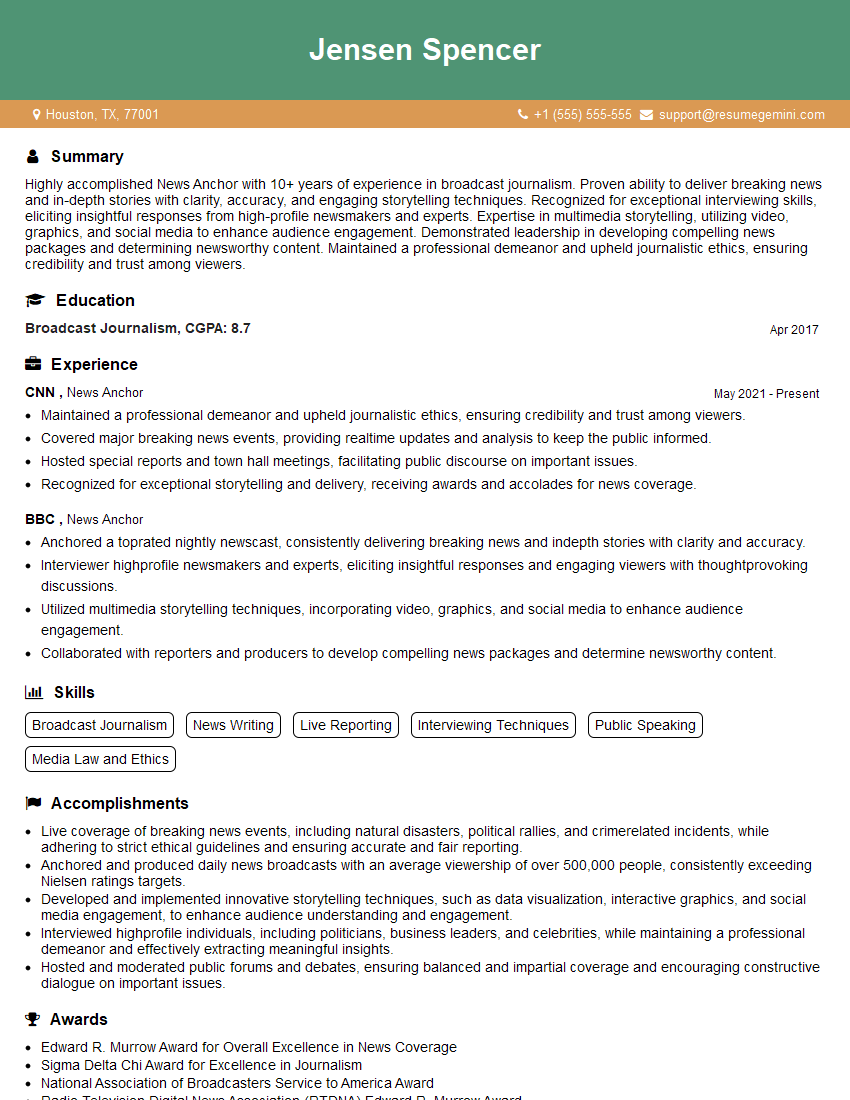
News Anchor Resume Sample
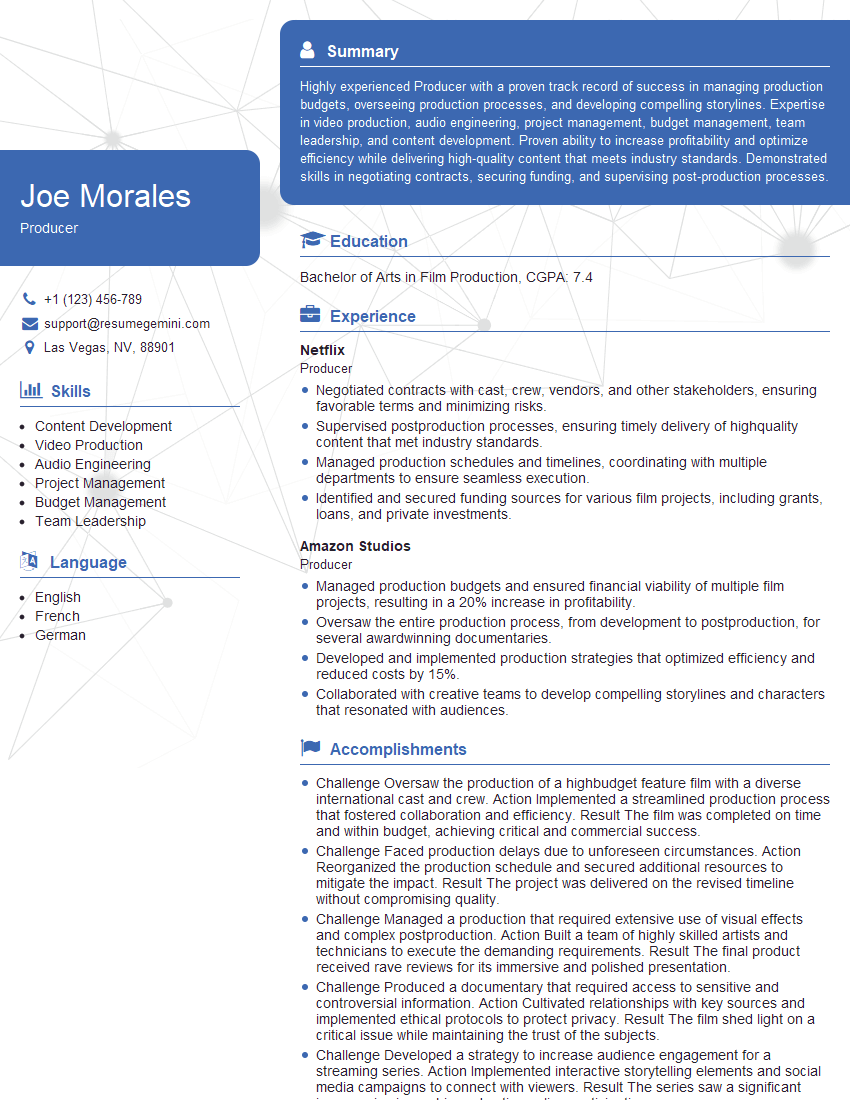
Producer Resume Sample
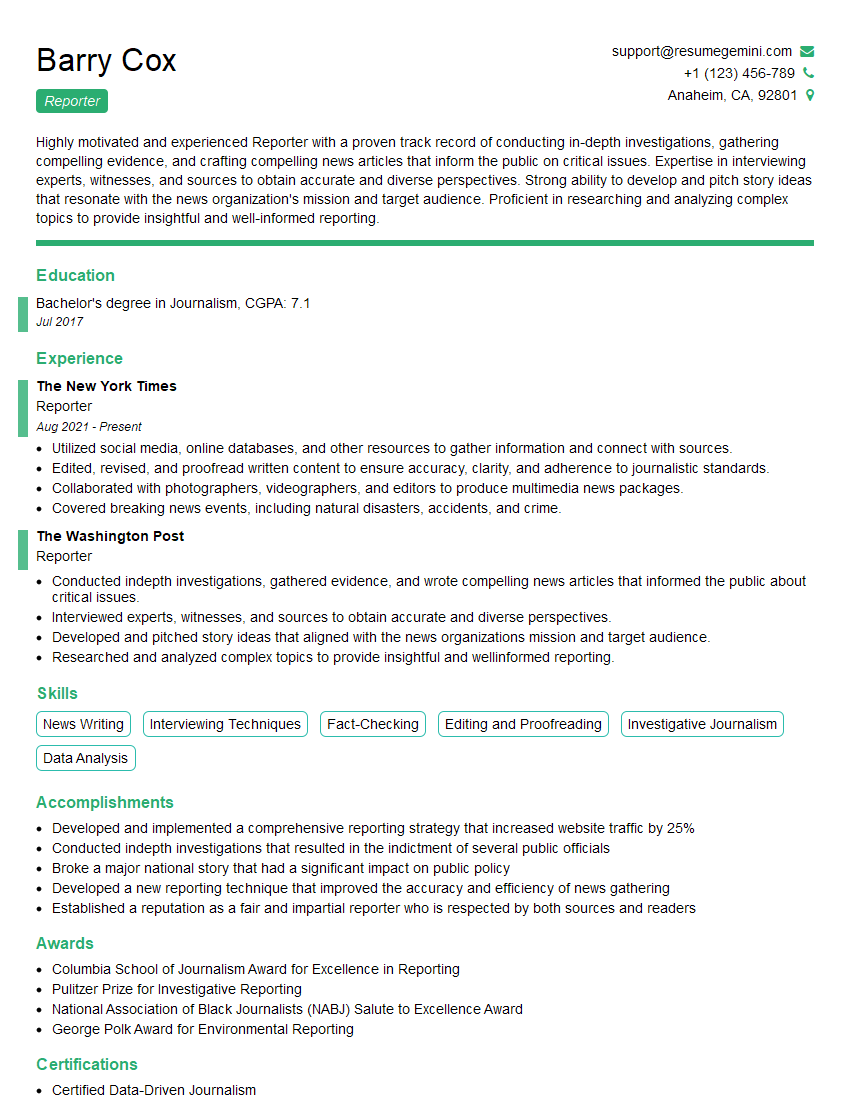
Reporter Resume Sample
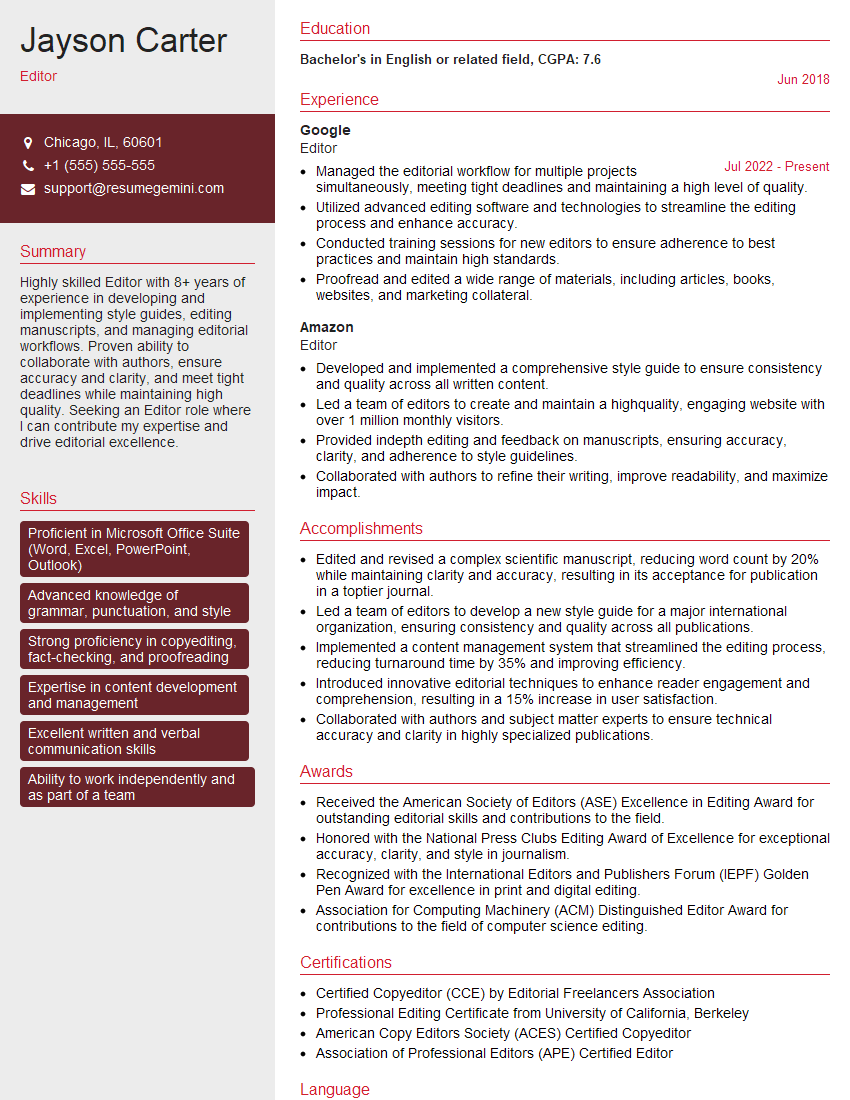
Editor Resume Sample
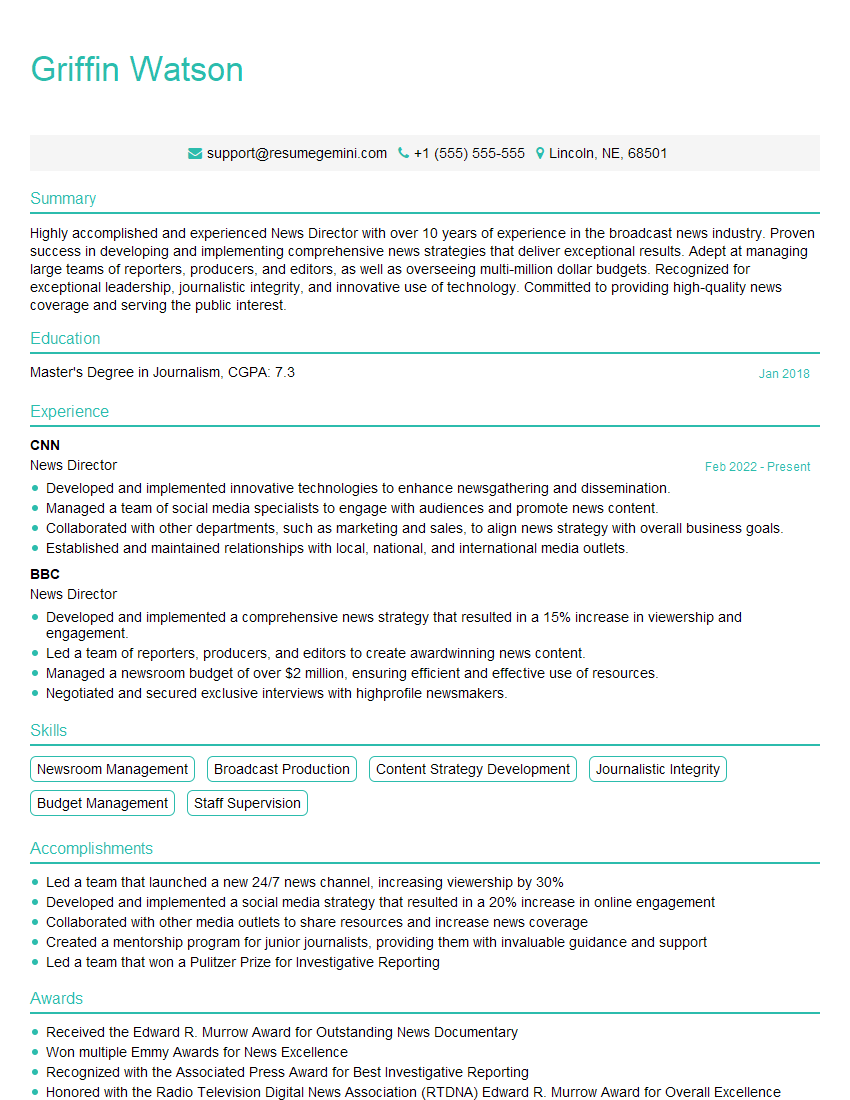
News Director Resume Sample
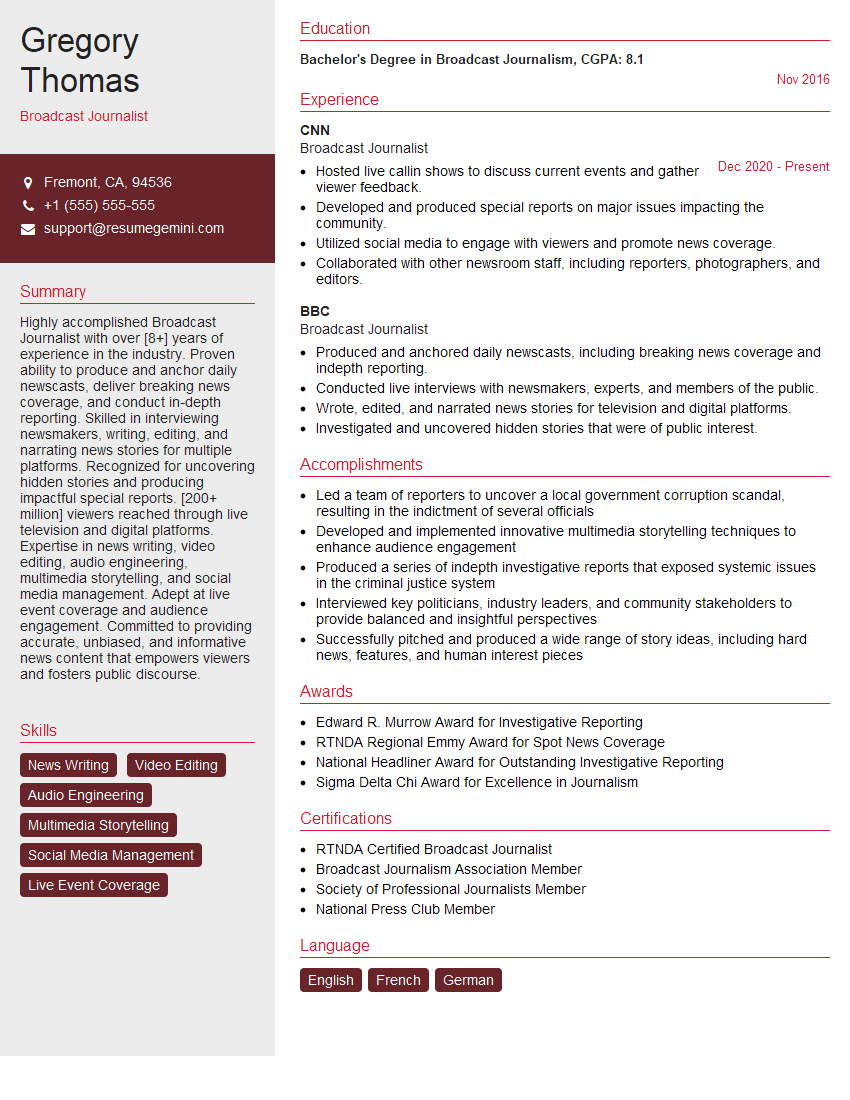
Broadcast Journalist Resume Sample
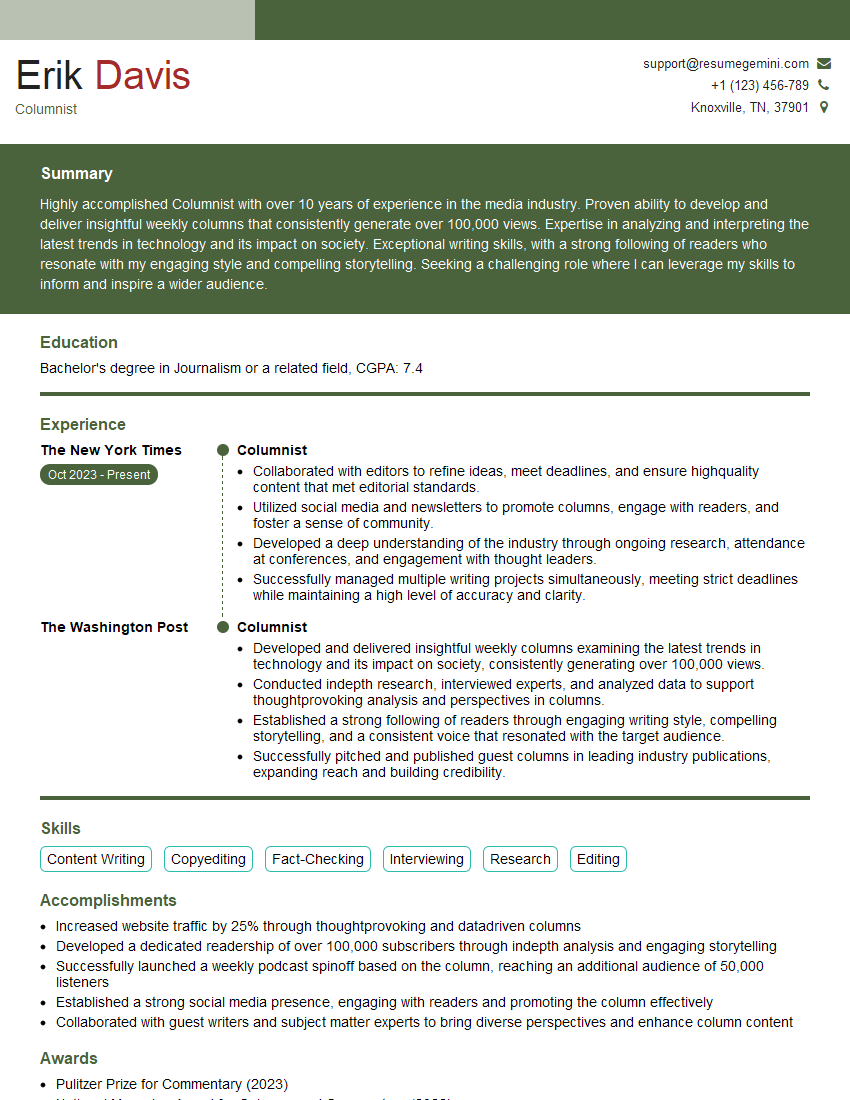
Columnist Resume Sample
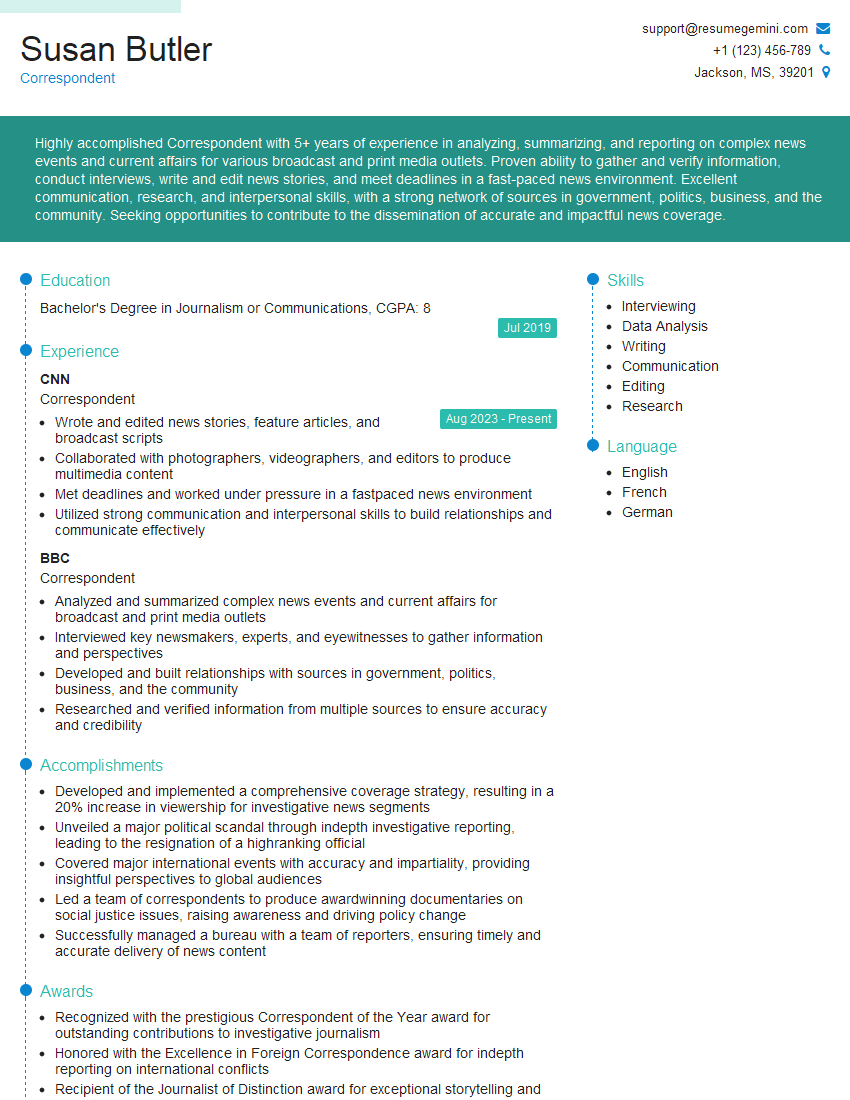
Correspondent Resume Sample
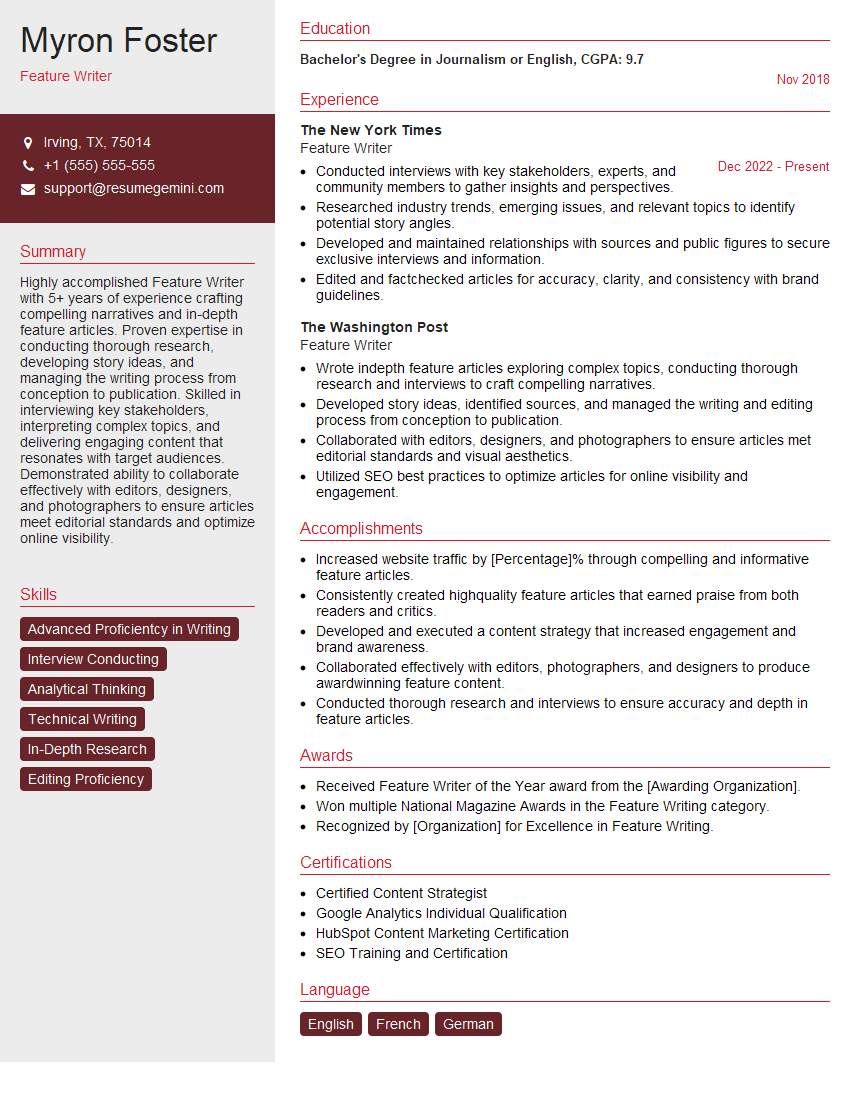
Feature Writer Resume Sample
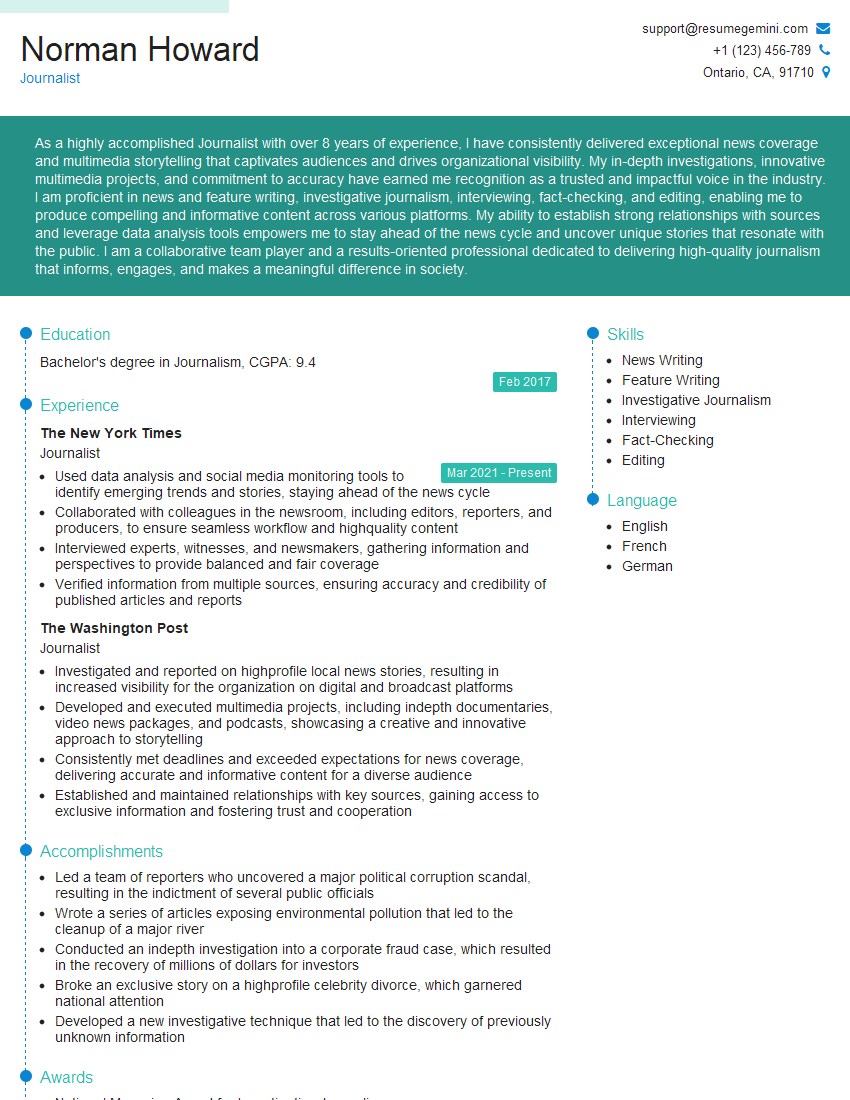
Journalist Resume Sample
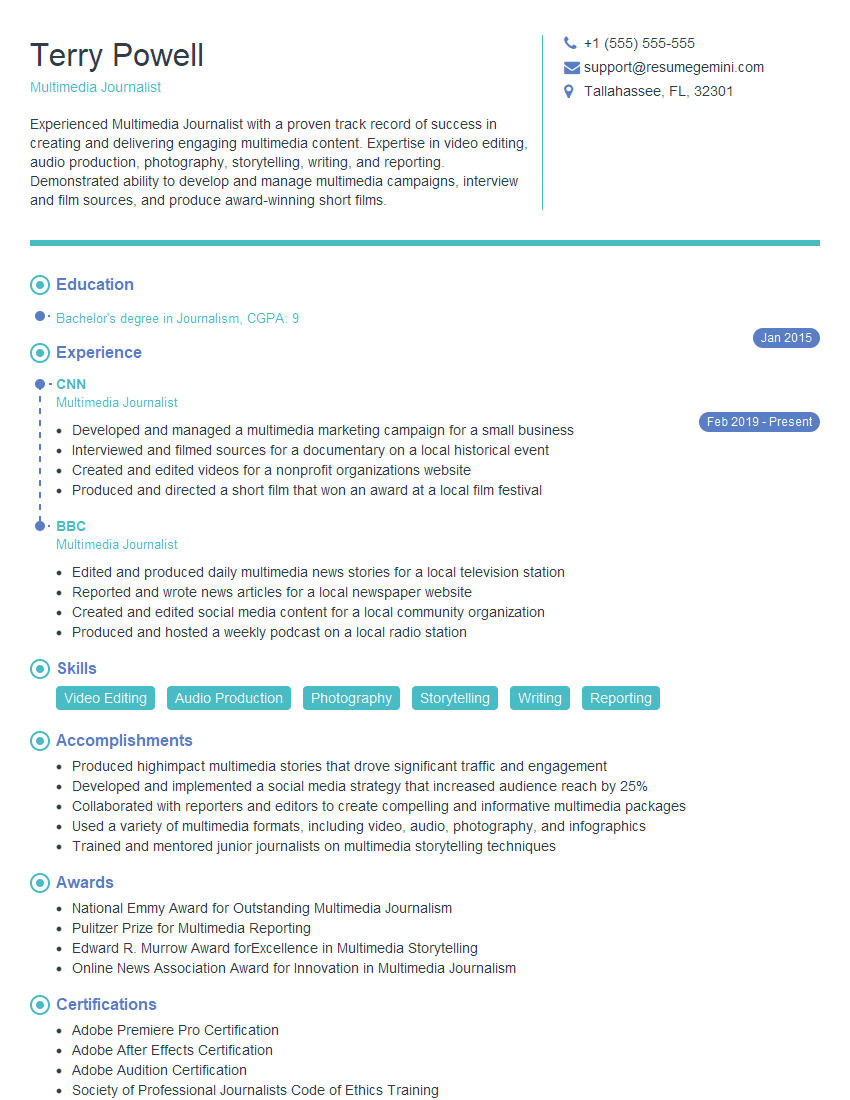
Multimedia Journalist Resume Sample
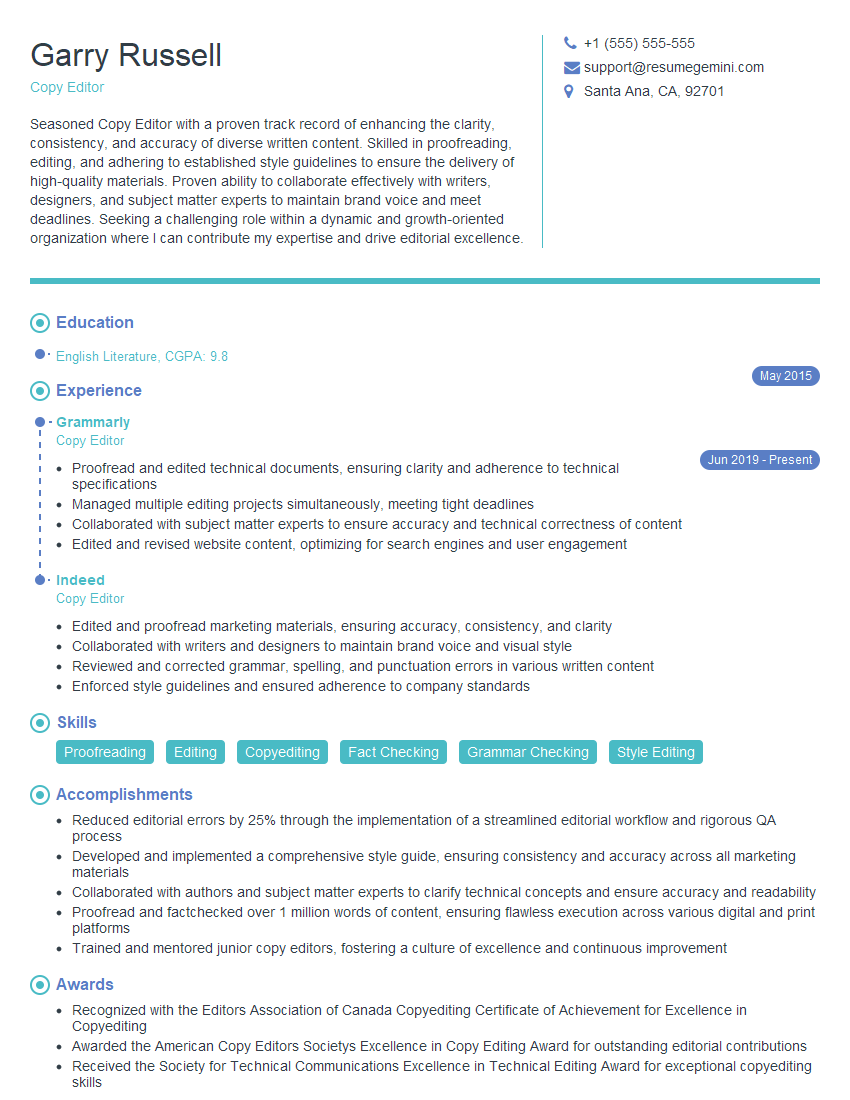
Copy Editor Resume Sample
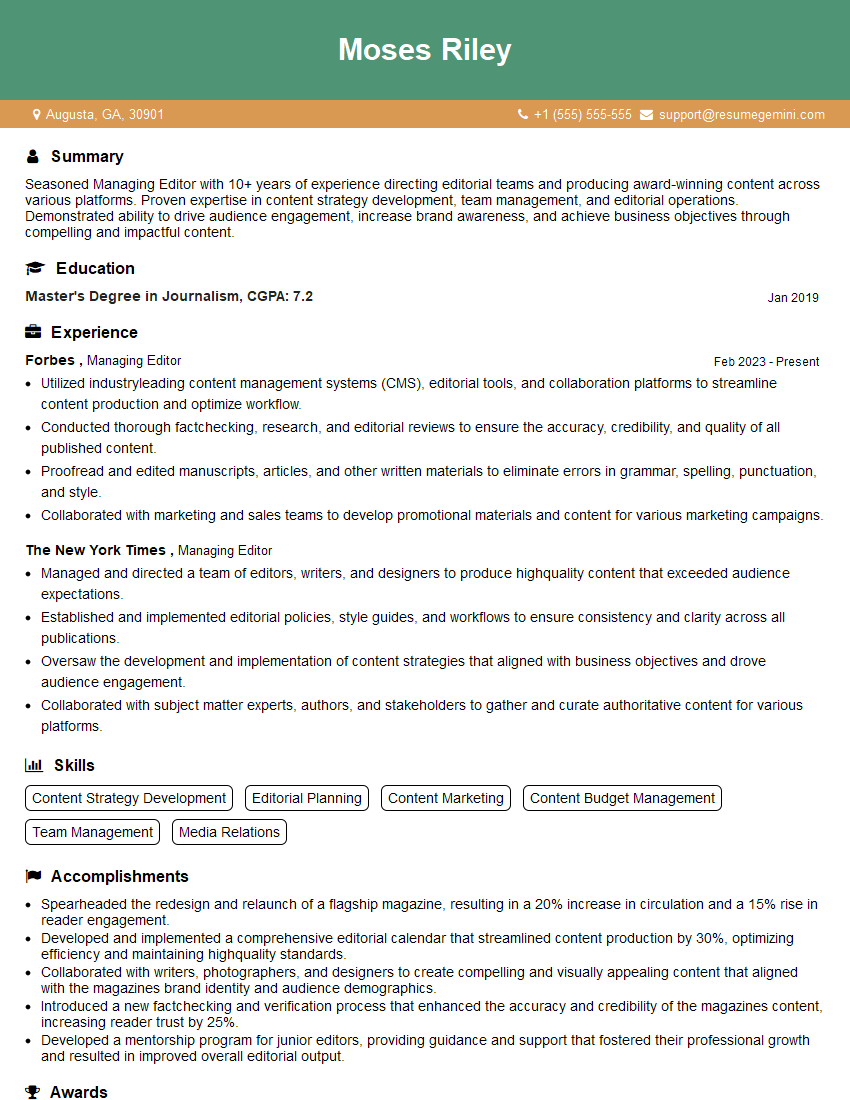
Managing Editor Resume Sample
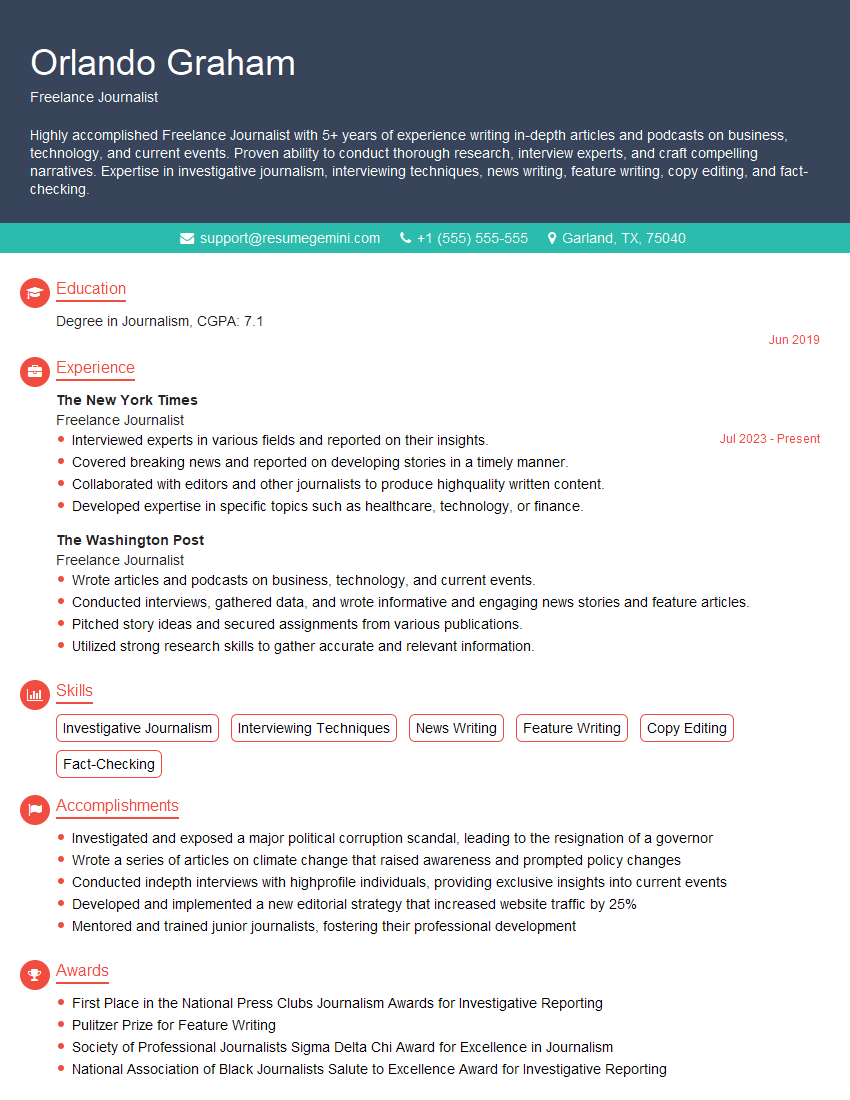
Freelance Journalist Resume Sample
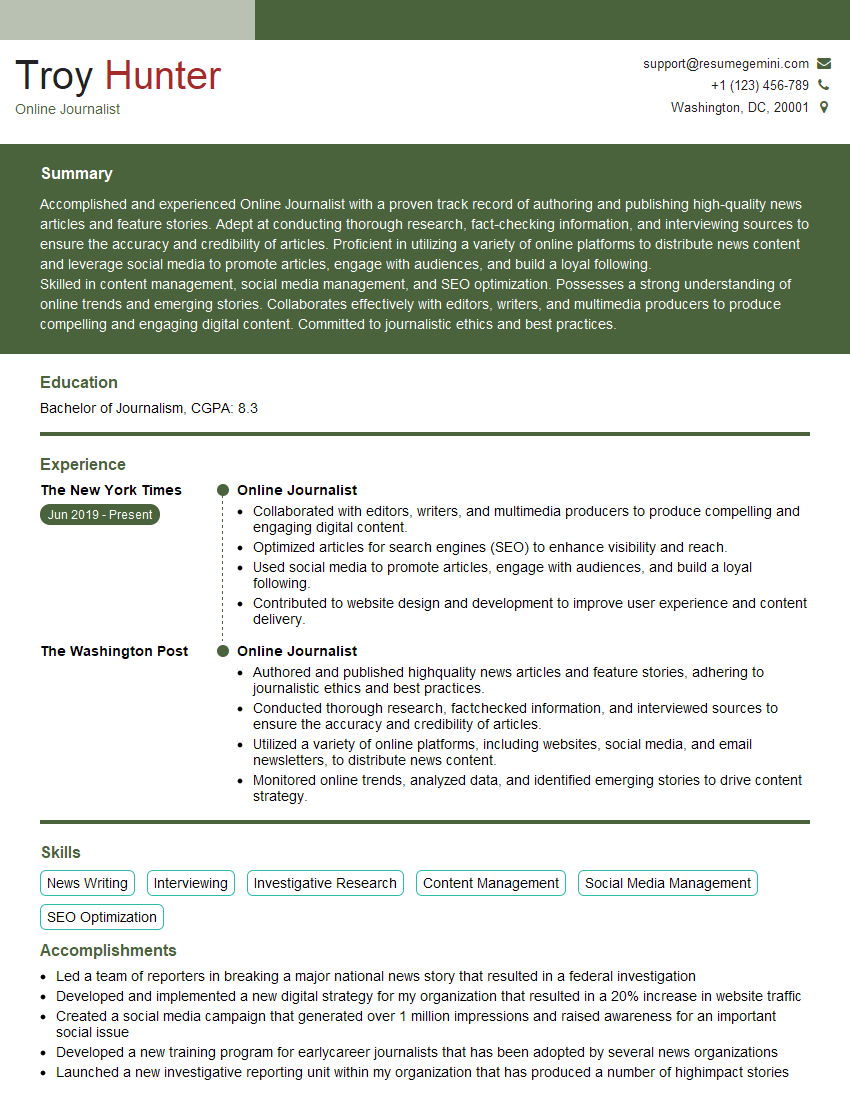
Online Journalist Resume Sample
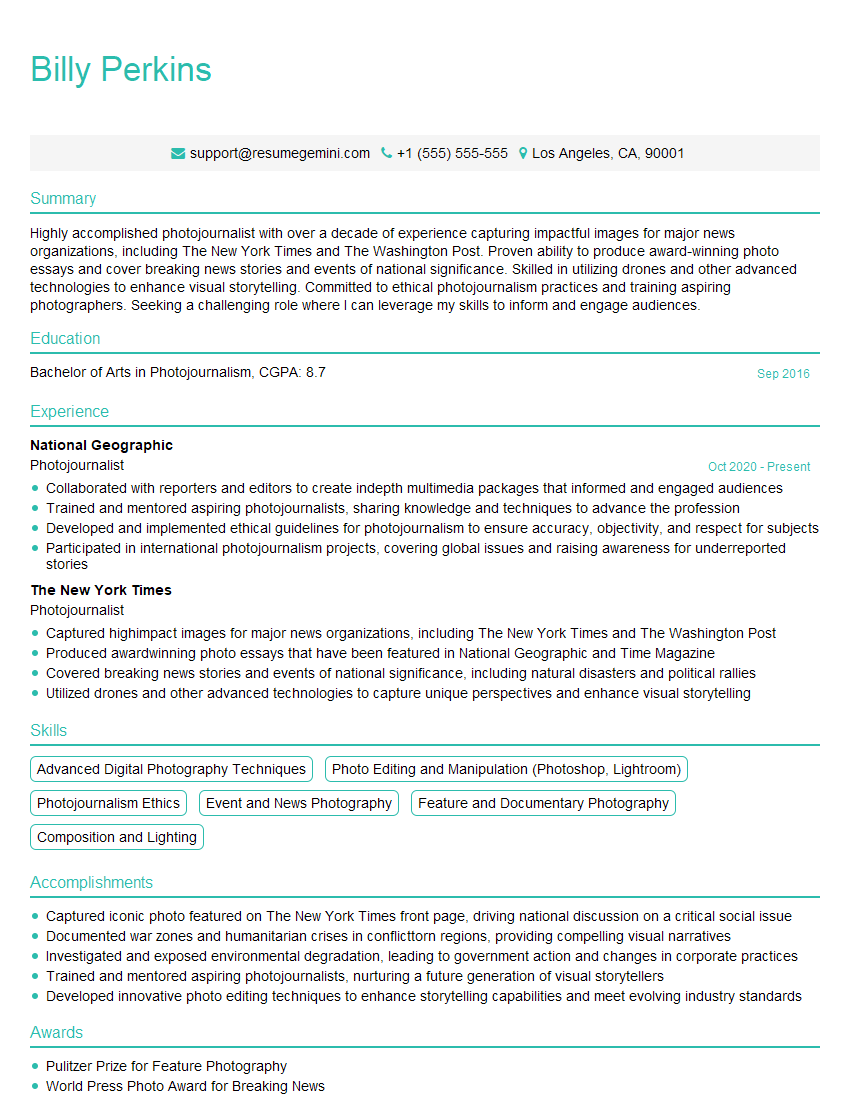
Photojournalist Resume Sample
Explore more articles
Users Rating of Our Blogs
Share Your Experience
We value your feedback! Please rate our content and share your thoughts (optional).
What Readers Say About Our Blog
Very informative content, great job.
good