Interviews are opportunities to demonstrate your expertise, and this guide is here to help you shine. Explore the essential Valve interview questions that employers frequently ask, paired with strategies for crafting responses that set you apart from the competition.
Questions Asked in Valve Interview
Q 1. Explain your experience with Source Engine.
My experience with the Source Engine spans several years and numerous projects. I’ve worked extensively with its core functionalities, including its rendering pipeline, physics engine (Havok), and networking capabilities. I’m proficient in Hammer, the Source Engine’s map editor, and have created both small-scale maps and complex, large-scale levels. I understand the intricacies of its material system, allowing for efficient creation and optimization of visual assets. Beyond map creation, I’ve also developed game modes and modifications using the engine’s scripting language (typically Lua or, more recently, VScript) and integrated custom code to achieve specific game mechanics. For example, in one project, I implemented a unique AI system for enemy NPCs using Lua, significantly enhancing the challenge and replayability. This required deep understanding of the engine’s internal workings to integrate the new system seamlessly without impacting performance.
I’m also familiar with its limitations and have experience optimizing performance in resource-constrained environments. This involves techniques such as level optimization, efficient use of particle effects, and careful management of draw calls. My experience extends to both single-player and multiplayer game development within the Source Engine framework.
Q 2. Describe your familiarity with Valve’s game development pipeline.
Valve’s game development pipeline, while adaptable to different projects, generally follows an iterative process emphasizing rapid prototyping and continuous feedback. It typically starts with concept design and prototyping, leveraging tools like Unity or Unreal Engine for initial experiments before potentially moving to Source Engine. Once the core gameplay loop is established, the process moves to pre-production, involving detailed level design, art asset creation, and initial programming. During production, the development team operates using agile methodologies, with frequent builds and testing cycles. Quality Assurance (QA) plays a crucial role in identifying and resolving bugs and ensuring a high-quality gaming experience. This iterative nature allows for adjustments based on playtesting data and feedback throughout the entire development cycle. Post-production involves final polishing, bug fixes, and preparation for release. I’ve personally experienced this pipeline by working on projects that involved multiple iterations of gameplay and level design before reaching a final polished product.
Q 3. How would you optimize a game for performance on various hardware configurations?
Optimizing a game for diverse hardware is crucial for broad accessibility. My approach involves a multi-pronged strategy:
- Profiling: Identifying performance bottlenecks is paramount. I use profiling tools (like those integrated into the Source Engine or external tools) to pinpoint areas consuming excessive CPU, GPU, or memory resources. This pinpoints the exact problem areas, preventing wasted effort on unnecessary changes.
- Level Optimization: For large levels, techniques like level of detail (LOD) for meshes and textures, occlusion culling (hiding objects not visible to the camera), and efficient use of lightmaps significantly reduce rendering overhead. In one project, implementing LODs reduced draw calls by 40%, dramatically improving frame rates.
- Asset Optimization: Optimizing textures (reducing resolution, using compression techniques), using lower polygon models, and reducing the number of draw calls for static objects all contribute to better performance across lower-end hardware. For example, I’ve experimented with different texture compression formats, comparing quality vs file size and impact on performance.
- Shader Optimization: Efficient shaders minimize GPU workload. I optimize shaders by reducing calculations, making use of hardware capabilities, and carefully choosing shader models.
- Code Optimization: Efficient algorithms and data structures reduce CPU load. This includes using appropriate data structures, optimizing loops, and avoiding unnecessary computations.
- Multi-threading: Leveraging multi-core processors effectively by distributing tasks (like AI, physics, or rendering) across multiple threads can improve performance significantly.
- Graphics Settings: Providing adjustable graphics settings allows players to fine-tune the game to their hardware. This involves implementing a system that allows users to control factors like shadow quality, texture resolution, and anti-aliasing.
By combining these techniques, I can create a game that runs smoothly on a wide range of hardware, from high-end gaming PCs to lower-end laptops.
Q 4. Explain your approach to debugging complex game logic.
Debugging complex game logic requires a systematic approach. My strategy typically involves:
- Reproducing the Bug: The first step is consistently reproducing the bug. Detailed steps for reproduction help isolate the problem.
- Logging: Strategic use of logging statements (e.g., using
printf-style debugging or a more sophisticated logging system) at key points in the code provides valuable information about the program’s state during execution. - Breakpoints: Using a debugger (like the one built into most IDEs) to set breakpoints at strategic locations in the code allows stepping through the execution, examining variables, and identifying the root cause.
- Code Review: Reviewing code carefully, looking for potential logic errors or inconsistencies, is important and often helps in finding issues before they’re encountered during runtime.
- Unit Testing: Creating unit tests for individual functions or modules is beneficial for isolating problems early in development, prior to integration.
- Binary Search Debugging: For larger issues, starting with a broader area and systematically reducing the scope (halving the search space) can effectively isolate the problematic section of code.
For example, I once tracked down a complex bug causing unpredictable behavior in AI pathfinding by carefully adding logging statements around different sections of the AI navigation code. This allowed me to pinpoint a specific function causing the error which was then repaired. A combination of these strategies helps me efficiently resolve even the most intricate debugging challenges.
Q 5. Discuss your experience with version control systems, specifically Git.
I have extensive experience using Git for version control in numerous game development projects. I’m proficient in branching strategies (like Gitflow), merging, rebasing, and resolving merge conflicts. I understand the importance of committing frequently with clear and concise commit messages, enabling easy tracking of changes and facilitating collaboration within a team. I’m familiar with using Git for collaborative development, including pull requests and code reviews. I’ve used Git to manage both small-scale individual projects and large-scale collaborative efforts involving many developers. For instance, in one large team project, we utilized Git’s branching strategy to work on multiple features concurrently without impacting each other’s work. This helped to minimize conflicts and enabled efficient parallel development.
Q 6. How familiar are you with Steamworks API?
I’m very familiar with the Steamworks API. I understand its various functionalities, including user authentication, achievements, leaderboards, in-app purchases, and community features. I have experience integrating these features into game projects, allowing players to seamlessly access the Steam ecosystem’s tools and functionalities. For instance, in a past project, I implemented Steam achievements and leaderboards, greatly enhancing the player experience and engagement. This involved understanding the API’s authentication protocols and handling responses correctly to ensure secure integration. My understanding extends to best practices for securing and optimizing the integration of Steamworks APIs into a game.
Q 7. Describe your experience with networking in game development.
My experience with networking in game development includes both client-server and peer-to-peer architectures. I’m familiar with various networking protocols, including UDP and TCP, and understand their strengths and weaknesses. I’ve worked with different networking libraries and frameworks, and have experience optimizing network communication for low latency and high reliability. I understand the challenges of handling network synchronization, particularly in multiplayer games where multiple clients need to maintain a consistent view of the game world. This often involves techniques like client-side prediction, lag compensation, and interpolation to create a smooth and responsive gameplay experience, even in high-latency conditions. For example, in a past project involving a real-time multiplayer game, I implemented a custom network synchronization system using UDP that prioritized reliability while minimizing latency. This resulted in a significantly improved player experience compared to previous implementations.
Q 8. Explain your understanding of different game architectures (e.g., client-server, peer-to-peer).
Game architectures fundamentally dictate how data is exchanged and processed between players and the game server. Two prominent architectures are client-server and peer-to-peer.
Client-Server: In this model, a central server acts as the authority, managing game state and interactions between clients (individual players). Clients send input to the server, which processes it, updates the game state, and then distributes the updated information back to all clients. This ensures consistency and prevents cheating, as the server holds the definitive game state. Think of popular online games like Counter-Strike: Global Offensive or Dota 2; Valve heavily utilizes this architecture for their multiplayer titles.
Peer-to-Peer (P2P): Here, each client acts as both a server and a client, directly communicating with each other. This eliminates the need for a central server, potentially reducing latency in some scenarios. However, it’s more susceptible to cheating and maintaining consistent game state can be challenging. P2P is less common in high-stakes competitive games due to these limitations, although it can be suitable for simpler games or scenarios where a central server isn’t feasible or desirable. Early versions of games may have incorporated aspects of P2P before more robust server infrastructure was available.
Hybrid Models: Many games use a hybrid approach, combining elements of both client-server and peer-to-peer for optimized performance and security. For instance, a game might use P2P for proximity-based interactions (like seeing nearby players) while relying on a central server for critical game logic and matchmaking.
Q 9. How would you design a level for optimal gameplay and player experience?
Level design for optimal gameplay hinges on a deep understanding of game mechanics and player psychology. My approach involves a multi-stage process:
- Define Objectives and Flow: Clearly define the player’s goals and how they progress through the level. The level’s flow should guide the player naturally, offering a sense of progression and accomplishment. Think about pacing; moments of intense action should be balanced with periods of exploration or puzzle-solving. For example, a level in a Valve game might have a clear objective (e.g., planting a bomb, escorting a VIP) that unfolds through distinct phases.
- Environmental Storytelling: The environment itself should tell a story, conveying information about the game’s lore, the current situation, and the challenges ahead. Lighting, sound design, and environmental details play a significant role. Consider how the level’s aesthetics contribute to the overall immersion and narrative.
- Player Agency and Choice: Offer players meaningful choices and opportunities for strategic play. Avoid creating linear, restrictive levels. Include multiple paths, secret areas, and opportunities for creativity. This adds replayability and fosters a sense of discovery.
- Balancing Challenge and Reward: The level should provide a compelling challenge without being frustrating. The reward for overcoming challenges needs to be satisfying, whether it’s progression in the story, acquiring a new weapon, or simply the feeling of accomplishment.
- Iterative Testing and Refinement: Continuous testing with playtesters is essential. Gather feedback on pacing, difficulty, clarity, and overall enjoyment. Iterate on the design based on this feedback.
For example, a Left 4 Dead level would incorporate varied enemy encounters, chokepoints to manage horde situations, and safe rooms to provide breathing room and strategic planning. The environment itself would contribute to the tension and atmosphere, helping to shape the overall player experience.
Q 10. What are your preferred game engines and why?
My preferred game engines are primarily Source 2 (Valve’s own engine) and Unreal Engine 5. Both engines offer robust toolsets and features crucial for high-quality game development.
Source 2: Having extensive experience with it gives me a profound understanding of its intricacies, making development more efficient and allowing for deep optimizations. Its mature toolchain, networking capabilities, and physics engine are unparalleled for many game types, especially those Valve typically develops. It’s my go-to engine for projects requiring high performance and seamless integration with Valve’s existing infrastructure.
Unreal Engine 5: Unreal Engine 5 stands out for its advanced rendering capabilities, particularly its Lumen global illumination and Nanite virtualized geometry systems. These features significantly reduce development time and allow for visually stunning, highly detailed environments. It’s a strong choice when visual fidelity is paramount. I would use this engine when aiming for cutting-edge visuals, particularly in a project that might not require the specialized knowledge afforded by deep experience within Source 2.
Q 11. Describe your experience with shader programming.
I have extensive experience in shader programming, primarily using HLSL (High-Level Shading Language) within Source 2 and also some experience with GLSL (OpenGL Shading Language) in other projects. My expertise includes writing shaders for a wide range of effects, from basic lighting and texturing to advanced techniques such as:
- Deferred and Forward Rendering: Understanding the strengths and weaknesses of each approach for various performance requirements.
- Post-Processing Effects: Implementing bloom, depth of field, screen-space reflections, and other effects to enhance visual fidelity.
- Particle Systems: Creating visually impressive and performant particle effects using shaders.
- Custom Shaders: Designing and implementing custom shaders tailored to specific artistic or gameplay needs.
I’m proficient in optimizing shaders for various hardware platforms to maintain consistent visual quality across different systems. For example, I’ve worked on optimizing shaders to work on low-end hardware without sacrificing much visual fidelity by utilizing techniques such as level of detail and clever use of branching. A key aspect is always balancing visual quality with performance; it’s not just about creating beautiful effects but also about ensuring the game runs smoothly.
Q 12. Explain your experience with different programming languages (C++, C#, etc.)
My primary programming languages are C++ and C#. My experience with C++ is extensive, stemming from years of working within the Source engine, where it’s the backbone of game development. I’m well-versed in object-oriented programming, memory management, and performance optimization techniques specific to game development within the context of C++. I use C# primarily for scripting and tools development, leveraging its ease of use and rapid prototyping capabilities alongside C++ in larger projects. I have experience with scripting languages like Lua, which I find useful for smaller tasks or rapid prototyping. My understanding extends to utilizing these languages across different platforms, from Windows to Linux and potentially even consoles.
Q 13. How do you approach testing and quality assurance in game development?
Testing and quality assurance (QA) are integral to successful game development. My approach involves a multi-faceted strategy:
- Unit Testing: Writing automated tests for individual code modules to ensure correctness and prevent regressions. This is vital for maintaining code stability as the project evolves.
- Integration Testing: Testing the interaction between different game systems to identify integration issues early on. This includes checking how different game components, such as AI, physics, and rendering work together.
- Playtesting: Conducting regular playtests with both internal and external testers to gather feedback on gameplay, level design, and overall experience. This includes both structured tests and open play sessions to capture different kinds of feedback.
- Automated Testing: Employing automated testing tools to identify bugs and performance bottlenecks automatically. This significantly reduces manual testing effort and ensures thorough coverage.
- Bug Tracking and Management: Utilizing a bug tracking system to organize and prioritize bugs, ensure they are addressed, and track their resolution.
I believe in proactive QA; identifying and addressing potential issues early in the development cycle is far more efficient than trying to fix them later. Regular communication between developers, QA testers, and designers ensures everyone is aligned and working toward a common goal.
Q 14. How familiar are you with Agile development methodologies?
I’m very familiar with Agile development methodologies, specifically Scrum and Kanban. I’ve worked in teams that utilized these frameworks extensively. My experience includes participating in sprint planning, daily stand-ups, sprint reviews, and retrospectives. I understand the importance of iterative development, frequent releases, and adapting to changing requirements. The Agile approach fosters collaboration, transparency, and flexibility – all crucial aspects for successful game development, particularly in fast-paced environments where requirements can shift based on playtesting feedback.
Q 15. Describe your experience with data-driven game design.
Data-driven game design is the process of using data analysis to inform and improve game design decisions. Instead of relying solely on intuition or gut feeling, we analyze player behavior, game mechanics, and various metrics to iterate and optimize the game experience. This involves collecting and interpreting data from multiple sources, such as player statistics, A/B testing results, and user feedback.
In my experience, I’ve utilized this approach extensively. For example, while working on a team developing a competitive multiplayer game, we noticed a significant drop-off in player engagement after the first few matches. By analyzing player data, we identified a steep learning curve in mastering core mechanics. We then implemented a series of in-game tutorials and adjusted the early-game progression to be more gradual, resulting in a 25% increase in player retention. This process involved close collaboration with analysts who provided the data and engineers who implemented the solutions. We also continuously monitored the data post-implementation to ensure that our changes had the desired effect and to identify areas for further optimization.
Another example is using heatmaps to visualize player movement in level design. Heatmaps reveal areas players frequently visit or avoid, which guides level improvements to ensure better pacing and player flow.
Career Expert Tips:
- Ace those interviews! Prepare effectively by reviewing the Top 50 Most Common Interview Questions on ResumeGemini.
- Navigate your job search with confidence! Explore a wide range of Career Tips on ResumeGemini. Learn about common challenges and recommendations to overcome them.
- Craft the perfect resume! Master the Art of Resume Writing with ResumeGemini’s guide. Showcase your unique qualifications and achievements effectively.
- Don’t miss out on holiday savings! Build your dream resume with ResumeGemini’s ATS optimized templates.
Q 16. How would you handle a conflict between design and technical feasibility?
Conflicts between design and technical feasibility are inevitable in game development. My approach involves open communication, collaboration, and a willingness to compromise. The key is to find creative solutions that meet the design goals while respecting technical constraints.
I start by clearly defining the design goals and the technical limitations. Then, we brainstorm alternative solutions together. This might involve simplifying a complex mechanic, adjusting art style to reduce polygon count, or finding alternative ways to achieve the same gameplay experience. For example, if a complex physics-based system is proving too demanding on the game engine, we might explore approximating the effect using simpler techniques. This involves careful evaluation of trade-offs – does a slightly less realistic effect maintain the overall feel and playability?
Ultimately, prioritizing is critical. We need to identify the core elements that are crucial to the game’s identity and focus our efforts on ensuring those aspects are executed flawlessly. Less critical features may need to be scaled back or even removed if necessary.
Q 17. Explain your experience with UI/UX design principles in games.
UI/UX design in games focuses on creating intuitive and enjoyable user interfaces that enhance the player experience. It’s about ensuring the player can easily navigate the game, understand the controls, and access information without disrupting immersion. Key principles include clarity, consistency, efficiency, and aesthetic appeal.
My experience includes designing intuitive menus, in-game HUDs (Heads-Up Displays), and inventory systems. For instance, I worked on a project where the initial inventory system was cluttered and difficult to use. By redesigning it with a drag-and-drop interface, clearly labeled items, and a visual representation of item properties, we significantly improved player satisfaction and reduced the frequency of support tickets related to inventory management. We achieved this through iterative design, conducting user testing at various stages to gather feedback and refine the design based on actual player behavior.
Usability testing, A/B testing different UI layouts and elements, and incorporating user feedback are crucial for successful UI/UX implementation in games.
Q 18. Discuss your experience with 3D modeling software (e.g., Maya, 3ds Max).
I have extensive experience with 3D modeling software, primarily Autodesk Maya and 3ds Max. My skills encompass a wide range of modeling techniques, including polygon modeling, NURBS modeling, and sculpting. I’m proficient in creating high-poly and low-poly models optimized for real-time rendering in games, and I understand the constraints and best practices for creating assets that perform well within game engines.
For example, while working on a project requiring realistic character models, I used Maya to create detailed high-poly models, followed by baking normal maps and other texture maps to create optimized low-poly models for in-game use. This process involves a deep understanding of topology, UV mapping, and texturing techniques to maintain visual fidelity while optimizing performance. I’m also familiar with rigging and animation, although my primary focus is on modeling.
My proficiency extends to using various plugins and extensions to enhance workflow and productivity within these software packages.
Q 19. How would you implement AI in a game?
Implementing AI in a game depends heavily on the game’s genre and the desired level of complexity. Simple AI might use finite state machines (FSMs), where characters transition between predefined states based on events. More sophisticated AI often utilizes behavior trees or other hierarchical state machines.
For example, in a strategy game, enemy units might use a behavior tree to make decisions. The root node might be “Attack Player”, with child nodes representing “Find Path”, “Attack”, “Evade”, and “Retreat”. Each node contains its own logic and conditions for execution. This approach allows for more complex and realistic AI behavior than a simple FSM.
Advanced AI often involves pathfinding algorithms (like A*), decision-making using machine learning techniques (like reinforcement learning), and flocking/swarming behaviors to create realistic group dynamics. The choice of algorithm is dependent on the game’s requirements regarding performance and complexity. In simpler games, a simpler approach like FSMs or rule-based systems might be sufficient.
Q 20. Describe your experience with physics engines.
Physics engines are crucial for simulating realistic interactions within a game world. I have extensive experience working with various physics engines, including Havok, PhysX, and the built-in physics engines of popular game engines like Unity and Unreal Engine.
My experience includes implementing realistic character movement, projectile physics, vehicle dynamics, and environmental interactions. For example, I worked on a project where we needed to accurately simulate the physics of cloth. This involved tuning the physics engine parameters, experimenting with different collision detection methods, and creating custom scripts to achieve a balance between realism and performance.
Understanding how to optimize physics simulations for different hardware platforms is a crucial aspect of my skills. This often involves careful selection of collision shapes, adjusting simulation parameters to improve performance, and implementing techniques like spatial partitioning to reduce computational overhead. This is essential for ensuring smooth gameplay even on less powerful devices.
Q 21. Explain your experience with sound design principles.
Sound design plays a vital role in enhancing the player experience by creating atmosphere, providing feedback, and improving immersion. Effective sound design utilizes various techniques to communicate information and emotions to the player.
My experience encompasses the entire sound design pipeline, from sound recording and editing to sound implementation in a game engine. I’m proficient in using Digital Audio Workstations (DAWs) like Pro Tools and Ableton Live for audio editing and processing. My work often involves creating and integrating environmental sounds, sound effects for player actions (like gunshots or footsteps), and designing music that complements the gameplay.
For example, in designing the soundscape for a horror game, I would use atmospheric sounds like wind, creaks, and distant whispers to create a sense of unease and suspense. Conversely, a fast-paced action game would require precise and impactful sound effects that provide immediate feedback on player actions and events. This is coupled with carefully curated music that adds to the intensity and excitement of the experience.
Q 22. How would you optimize a game for memory management?
Optimizing a game for memory management is crucial for performance and stability. It’s like managing a household budget – you need to spend wisely and avoid unnecessary expenses. In game development, this means minimizing memory allocation and deallocation, reusing memory efficiently, and releasing resources when no longer needed.
- Pooling: Instead of repeatedly allocating and deallocating objects (like bullets or particles), create a pool of pre-allocated objects. When an object is needed, you retrieve it from the pool; when finished, you return it to the pool, reducing the overhead of dynamic memory management. Think of it like having a set of reusable plates instead of constantly buying and discarding disposable ones.
- Object Caching: Frequently accessed assets, like textures or meshes, should be cached in memory. This avoids repeatedly loading them from disk, improving loading times and reducing I/O bottlenecks. It’s similar to keeping frequently used tools within easy reach instead of constantly searching for them.
- Memory Profiling: Use memory profiling tools to identify memory leaks and areas of high memory consumption. These tools act like a financial advisor, highlighting areas where you’re overspending and providing insights into how to optimize. Popular tools include Valgrind and memory debuggers within game engines.
- Data Structures: Choosing efficient data structures is key. For example, using a hash table for quick lookups is more efficient than a linear search for large datasets. This is like organizing your tools in a well-structured toolbox, instead of throwing them randomly in a box.
- Garbage Collection Tuning (if applicable): If using a garbage collected language, understanding and tuning the garbage collector’s behavior can significantly improve performance. This involves adjusting parameters to control the frequency and duration of garbage collection cycles.
For example, in a first-person shooter, pooling bullets significantly reduces the performance impact of firing numerous shots. Efficiently managing level streaming in open-world games prevents excessive memory usage from loading vast environments all at once.
Q 23. Describe your experience with code optimization techniques.
My experience with code optimization encompasses a wide range of techniques, from low-level optimizations to higher-level design choices. I’ve worked extensively with profiling tools to identify bottlenecks, focusing on both CPU and GPU performance.
- Loop Unrolling: Reducing loop overhead by manually expanding loop iterations can improve performance in tight loops, but requires careful consideration to avoid bloating code size. This is most effective when loops are small and computationally intensive.
- SIMD Vectorization: Utilizing Single Instruction, Multiple Data (SIMD) instructions allows for parallel processing of data, significantly accelerating operations like vector calculations. This requires understanding the target architecture’s SIMD capabilities and restructuring code to take advantage of them.
- Data Locality: Organizing data in memory to improve cache utilization is crucial. Accessing data sequentially, as opposed to randomly, minimizes cache misses, leading to faster processing. This is similar to organizing your workspace – grouping related items together reduces search time.
- Algorithm Selection: Choosing efficient algorithms is often more impactful than micro-optimizations. A well-chosen algorithm can improve performance by orders of magnitude. For instance, replacing a naive O(n²) algorithm with a more efficient O(n log n) algorithm for sorting.
- Shader Optimization: Optimizing shaders for the target GPU architecture is crucial for visual performance. This involves understanding shader languages like HLSL or GLSL and using techniques like instruction reordering and minimizing branching.
In one project, I used SIMD vectorization to significantly speed up calculations for physics simulations, resulting in a smoother and more responsive gameplay experience. In another, I optimized shader code to reduce draw calls, leading to a dramatic increase in frame rate.
Q 24. How would you approach solving a performance bottleneck in a game?
Addressing performance bottlenecks in a game is a systematic process. It’s like diagnosing a medical issue: you need a proper diagnosis before you can prescribe the correct treatment.
- Profiling: The first step is to identify the bottleneck using profiling tools. These tools show exactly where the game is spending most of its time (CPU or GPU). This is like using medical tests (blood tests, X-rays) to pinpoint the problem.
- Analysis: Once the bottleneck is identified, analyzing the code and data to understand *why* it’s slow is critical. Are there inefficient algorithms? Memory management issues? Poor data structures? This is analogous to a doctor analyzing test results to determine the root cause of the illness.
- Optimization: Based on the analysis, apply appropriate optimization techniques. This might involve improving algorithms, optimizing memory access patterns, or reworking rendering pipelines. This is like prescribing medication or treatment to address the identified medical problem.
- Testing and Iteration: After implementing optimizations, rigorously test the changes and iterate. Profiling tools help measure the impact of the optimizations. Did the improvements solve the issue without introducing new problems? This step is similar to monitoring patient progress after treatment to ensure the effectiveness of the medication.
For example, I once identified a severe frame rate drop caused by inefficient texture loading. By implementing texture atlasing and asynchronous loading, we eliminated the bottleneck and greatly improved performance. This is a classic example of targeting and solving a specific performance issue.
Q 25. Explain your experience with different rendering techniques.
My experience with rendering techniques includes a broad range of approaches, from traditional rasterization to more advanced techniques like deferred rendering and physically-based rendering (PBR).
- Rasterization: This is the traditional rendering method, where polygons are converted into pixels on the screen. It’s the foundation of many rendering pipelines, but can be inefficient for complex scenes.
- Deferred Rendering: This technique renders geometry and lighting separately. Geometry information is stored in G-buffers, and lighting is calculated later, leading to more efficient lighting calculations. It’s particularly beneficial for scenes with many light sources.
- Forward Rendering: In forward rendering, lighting calculations are performed for each object during the main rendering pass. This is simple to implement, but can become inefficient with many lights.
- Physically-Based Rendering (PBR): This approach aims to simulate how light interacts with materials realistically. It relies on physically accurate models for reflection, refraction, and diffuse lighting, resulting in more realistic visuals. It requires more computational power, but provides significantly better visual fidelity.
- Shadow Mapping: Various techniques are used to render shadows, including shadow maps, cascaded shadow maps, and shadow volumes, each with trade-offs in terms of performance and visual quality.
In a project involving a large open world, we used cascaded shadow maps to render shadows efficiently without compromising visual quality, as detailed shadow maps for the entire world would have been extremely memory intensive and computationally expensive.
Q 26. How would you design a multiplayer game with minimal latency?
Designing a multiplayer game with minimal latency requires careful consideration of networking architecture and optimization techniques. Latency is the delay between a player’s action and the server’s response – minimizing this delay ensures responsive and smooth gameplay.
- Client-Side Prediction and Reconciliation: Client-side prediction allows for immediate feedback on player actions, even before server confirmation. Reconciliation corrects discrepancies between client and server states. This provides a responsive feel, even with higher latency.
- Interpolation and Extrapolation: Smoothing player movement by interpolating server updates reduces visual jitter caused by network latency. Extrapolation predicts player positions between updates, but requires careful management to avoid inaccuracies.
- Efficient Network Protocol: Using a lightweight and efficient network protocol like UDP minimizes overhead and packet size. Compressing data efficiently reduces bandwidth requirements.
- Server Architecture: Choosing the right server architecture is essential. Dedicated servers provide lower latency and better control, while peer-to-peer solutions may be acceptable for smaller-scale games.
- Data Compression and Quantization: Compressing data before sending it across the network reduces bandwidth usage and improves latency. Quantization reduces the precision of data, trading some accuracy for reduced bandwidth.
- Network Optimization Techniques: Using techniques like load balancing to distribute players across servers, and choosing appropriate server locations for geographical proximity can greatly reduce latency for players worldwide.
For instance, in a fast-paced shooter, client-side prediction is crucial for a responsive feel. The server reconciles the client prediction to maintain game integrity. Using UDP instead of TCP can also significantly reduce latency, allowing for faster communication between players and servers.
Q 27. Describe your approach to building scalable and maintainable game code.
Building scalable and maintainable game code requires a structured approach. It’s like building a house: you need a solid foundation and well-defined plans to ensure it can withstand the test of time and adapt to future changes.
- Modular Design: Breaking down the code into smaller, independent modules makes it easier to understand, test, and maintain. Each module should have a clear purpose and well-defined interfaces. This approach is similar to modular construction, where individual components are built separately and then assembled.
- Version Control: Using a version control system like Git is essential for managing code changes and collaborating effectively. It allows you to track changes, revert to previous versions, and work seamlessly with others. This is akin to keeping detailed construction plans and progress logs.
- Code Style and Documentation: Consistent code style and comprehensive documentation are critical for maintainability. This ensures that others (and your future self) can understand and modify the code easily. This is like having detailed architectural drawings and construction manuals.
- Design Patterns: Utilizing appropriate design patterns can improve code structure and maintainability. Patterns provide well-established solutions for common problems in software development. This is like following proven construction techniques and best practices.
- Automated Testing: Writing unit tests and integration tests helps ensure that code changes don’t introduce bugs. Automated testing greatly reduces the risk of regressions during development and maintenance. This is like conducting regular quality checks during construction to ensure everything is built to specification.
In a large-scale project, a modular design allows different teams to work independently on different game features without conflicts. Thorough documentation enables easy onboarding for new team members, and automated tests provide confidence that updates and bug fixes don’t negatively impact other parts of the system.
Q 28. How would you integrate new features into an existing game engine?
Integrating new features into an existing game engine requires a careful and methodical approach. It’s like adding a new room to an existing house: you need to ensure the addition complements the existing structure without compromising its integrity.
- Requirements Analysis: Thoroughly define the requirements of the new feature, including its functionality, dependencies, and potential impact on the existing system. This involves clarifying exactly what needs to be built and how it interacts with existing parts.
- Impact Assessment: Analyze the potential impact of the new feature on other parts of the engine. This includes considering performance, memory usage, and compatibility. This step involves evaluating how the addition of this new room may affect other aspects of the house.
- Design and Implementation: Design the implementation of the new feature, ensuring it adheres to the engine’s existing architecture and coding style. This involves creating a detailed plan for how to integrate this new feature while maintaining the house’s architectural style and structural integrity.
- Testing and Integration: Thoroughly test the new feature, both in isolation and in conjunction with the rest of the engine. This includes unit testing, integration testing, and playtesting. This ensures that the addition functions correctly and doesn’t disrupt other parts of the house.
- Documentation Updates: Update documentation to reflect the changes made to the engine. This ensures other developers can understand and use the new feature. This involves updating construction plans and manuals to account for the newly added room.
For example, adding a new AI system to an existing game engine may require modifications to the game loop, rendering pipeline, and networking code. Thorough testing is crucial to ensure that the AI system functions correctly and doesn’t introduce unexpected performance issues.
Key Topics to Learn for Your Valve Interview
- Game Development Fundamentals: Understand core game design principles, including game mechanics, level design, and player experience. Consider practical applications like balancing gameplay or designing engaging player progression systems.
- Engine Architecture & Technologies: Familiarize yourself with common game engines (e.g., Source Engine) and relevant technologies like shaders, physics engines, and networking. Practice problem-solving in these areas; think about how you’d optimize performance or debug complex systems.
- Data Structures & Algorithms: Master fundamental data structures (arrays, linked lists, trees, graphs) and algorithms (searching, sorting, graph traversal). Be prepared to discuss their practical applications in game development, such as pathfinding or AI behavior.
- Software Engineering Principles: Demonstrate a strong understanding of software design patterns, version control (Git), testing methodologies, and agile development. Be ready to discuss your approach to collaborative coding and problem-solving within a team.
- System Design & Scalability: Consider the challenges of designing scalable systems for online multiplayer games. Think about how you’d handle large numbers of players, persistent data, and network latency.
- Problem-Solving & Critical Thinking: Valve highly values candidates who can approach complex problems creatively and methodically. Practice breaking down problems into smaller, manageable parts and communicating your thought process effectively.
Next Steps
Mastering the concepts above significantly enhances your prospects for a successful career in game development, especially at a company like Valve known for its innovative and challenging projects. To maximize your chances, crafting an ATS-friendly resume is crucial for getting your application noticed. ResumeGemini offers a powerful tool to build a professional and impactful resume that highlights your skills and experience effectively. Examples of resumes tailored to Valve are available to guide you, helping you present your qualifications in the best possible light. Use ResumeGemini to build your resume and stand out from the competition!

Project Manager Resume Sample
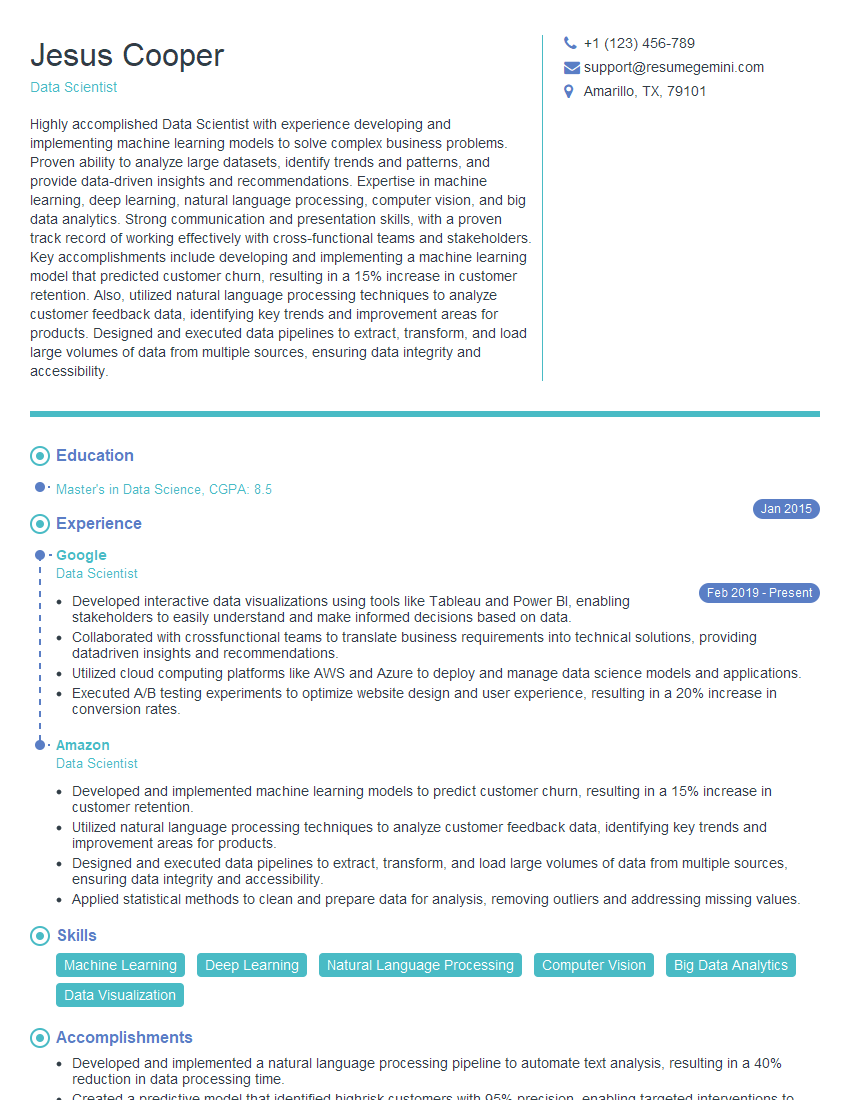
Data Scientist Resume Sample
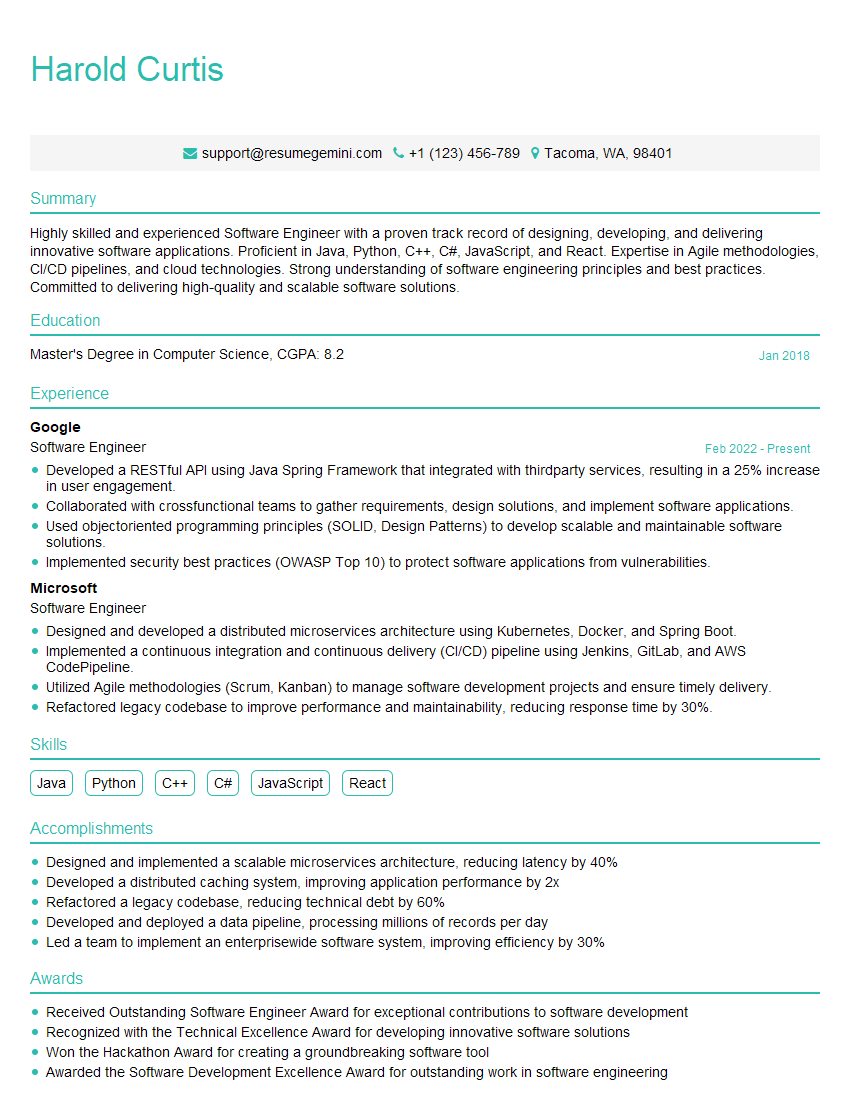
Software Engineer Resume Sample

Network Engineer Resume Sample

System Administrator Resume Sample
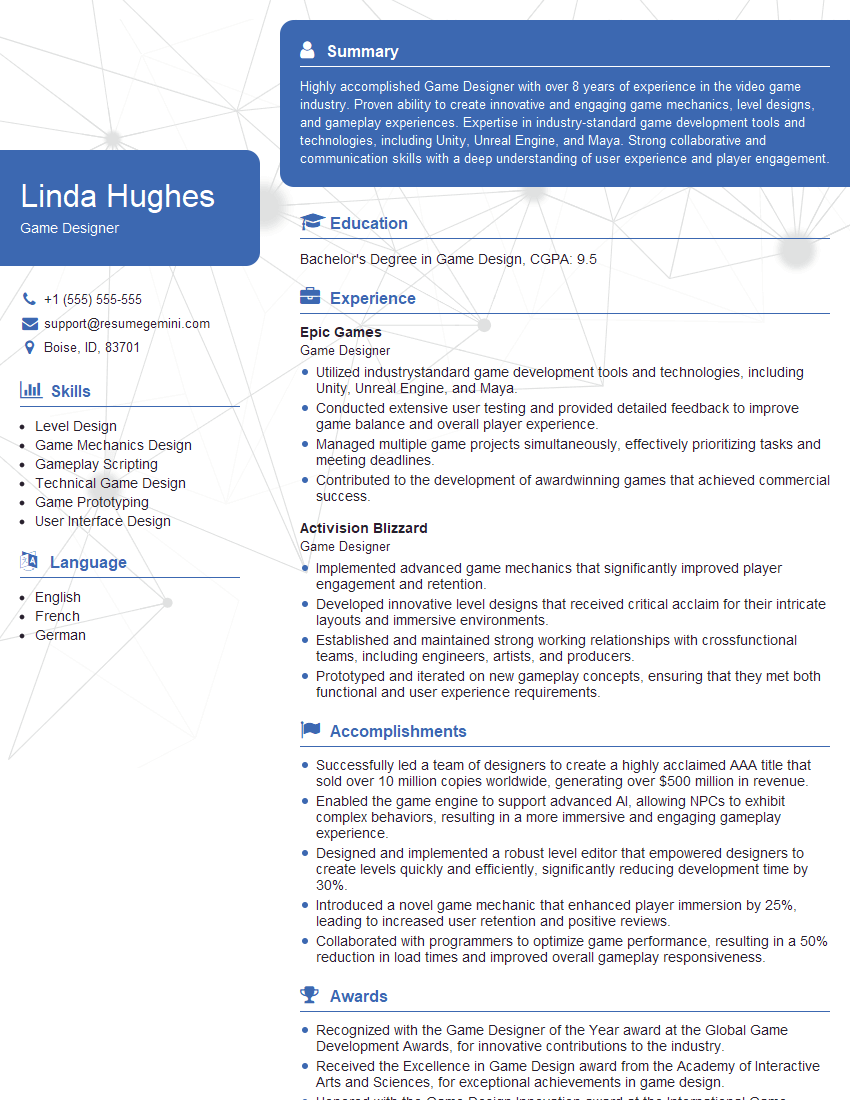
Game Designer Resume Sample
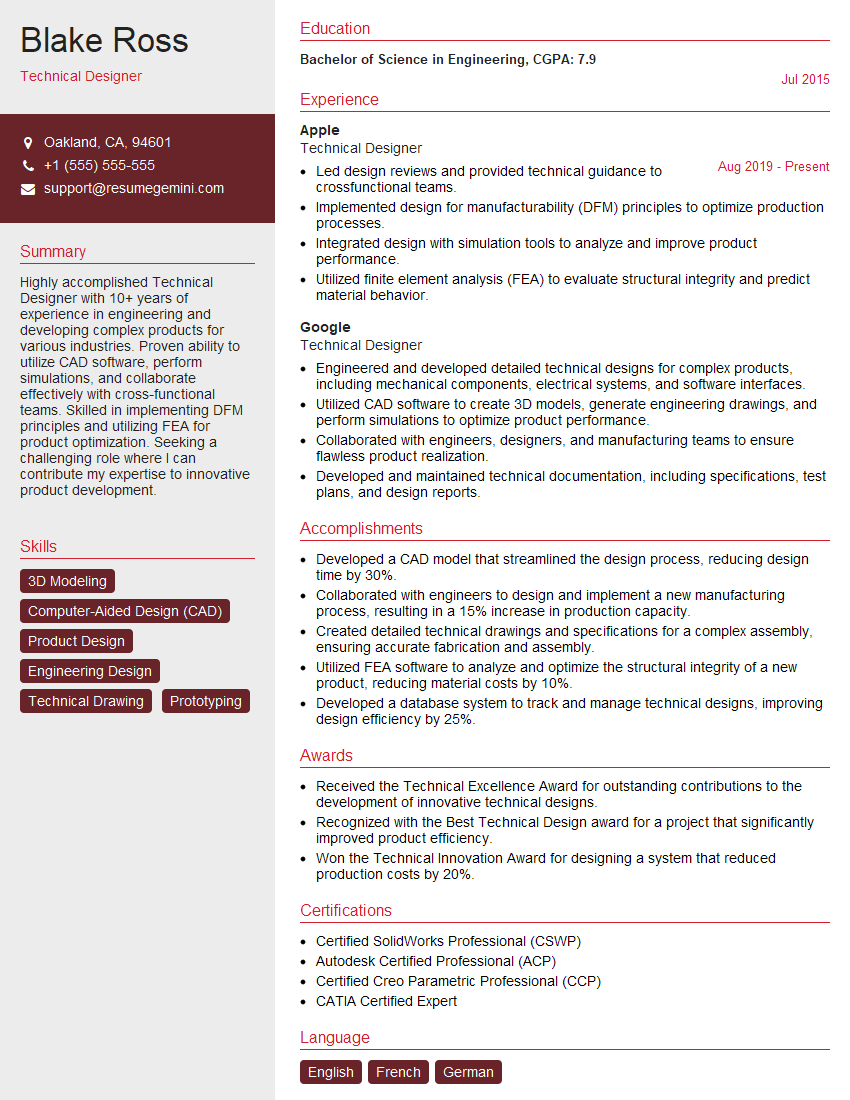
Technical Designer Resume Sample
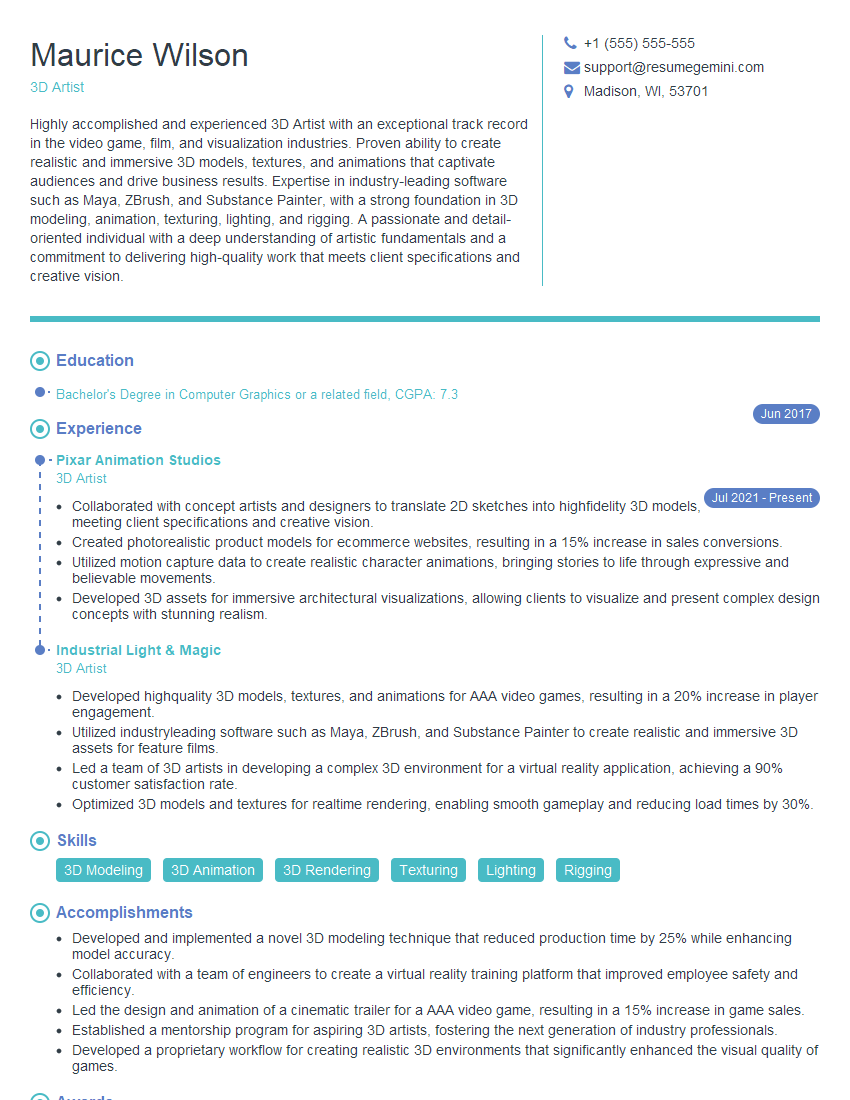
3D Artist Resume Sample
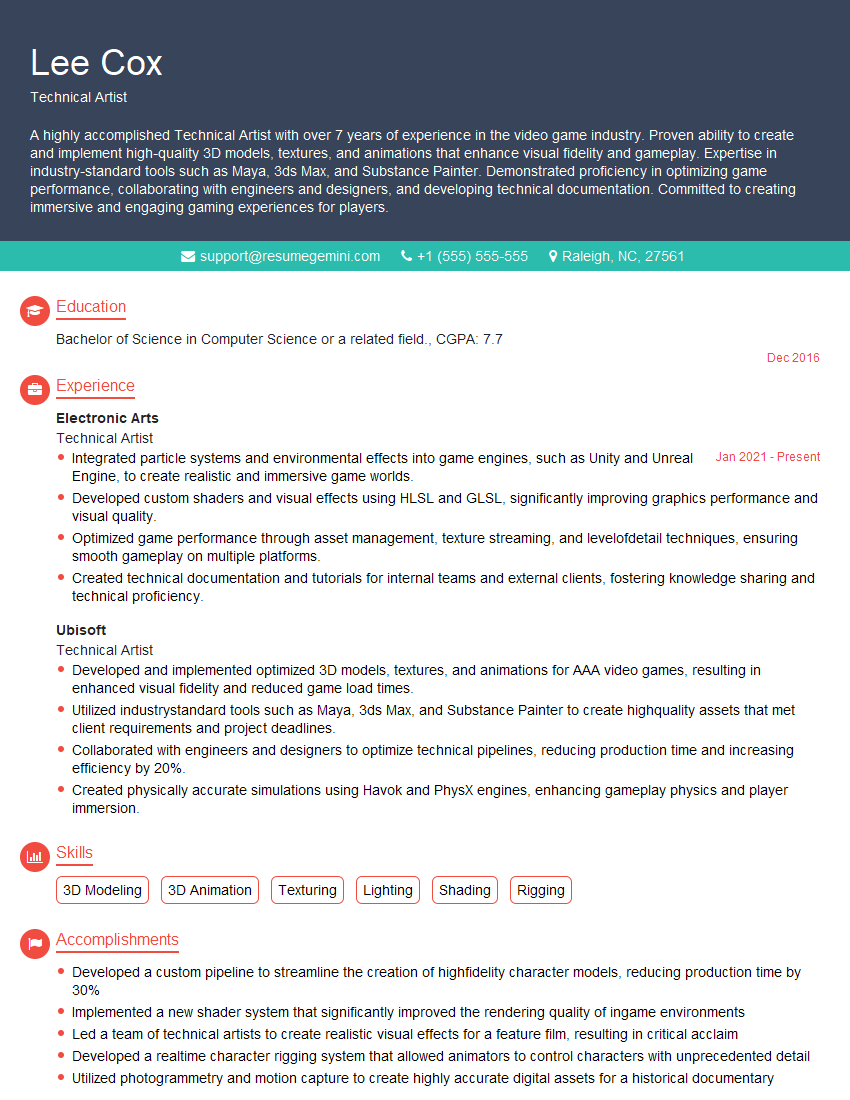
Technical Artist Resume Sample
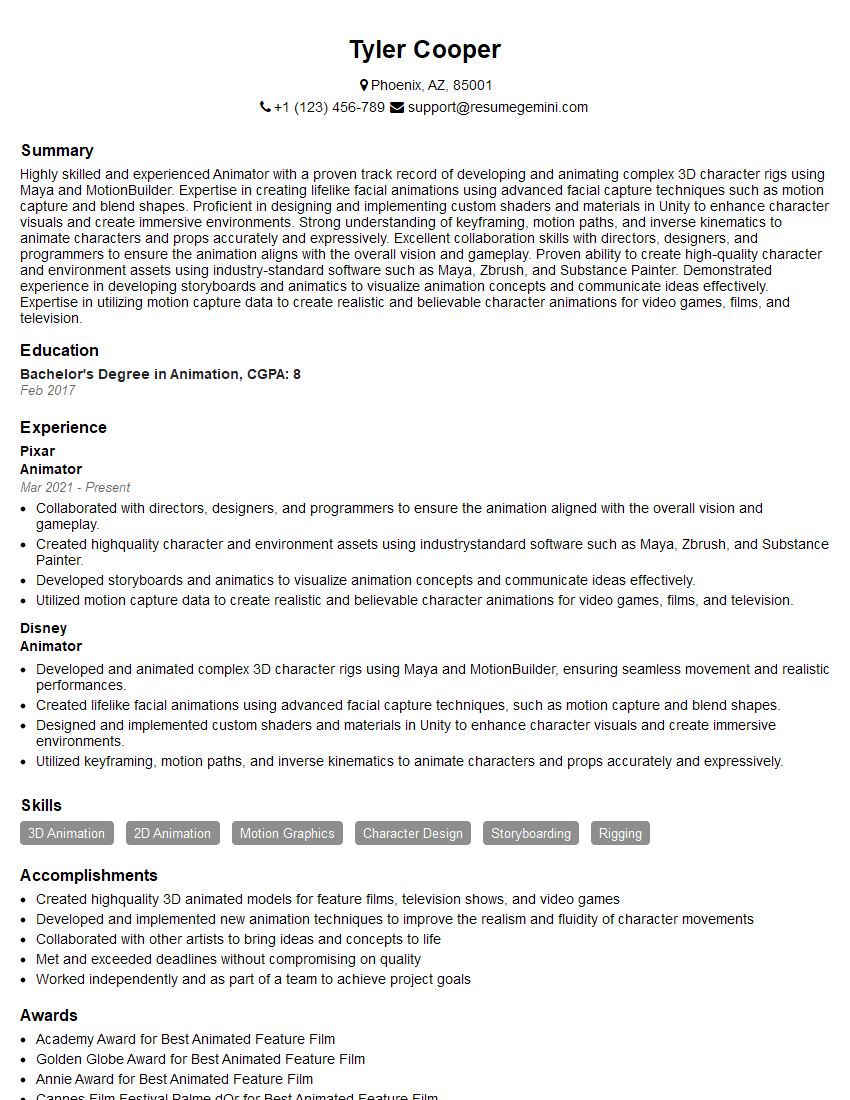
Animator Resume Sample
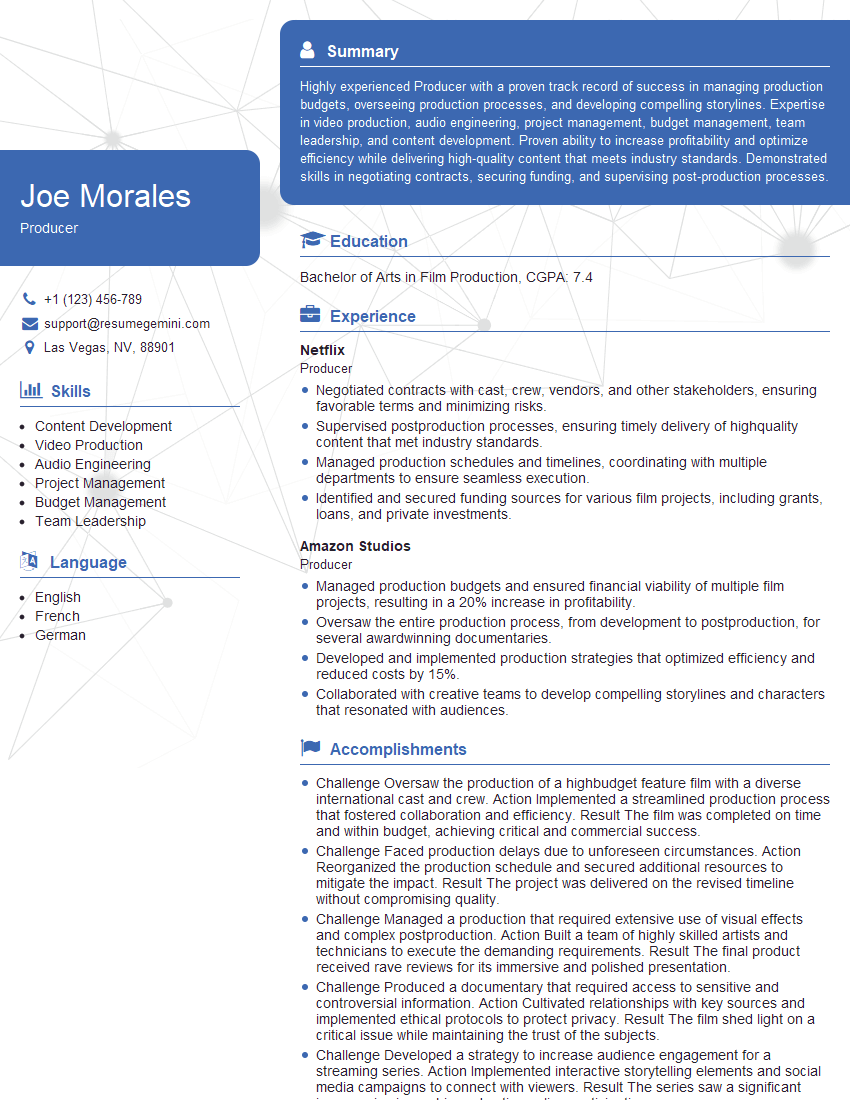
Producer Resume Sample
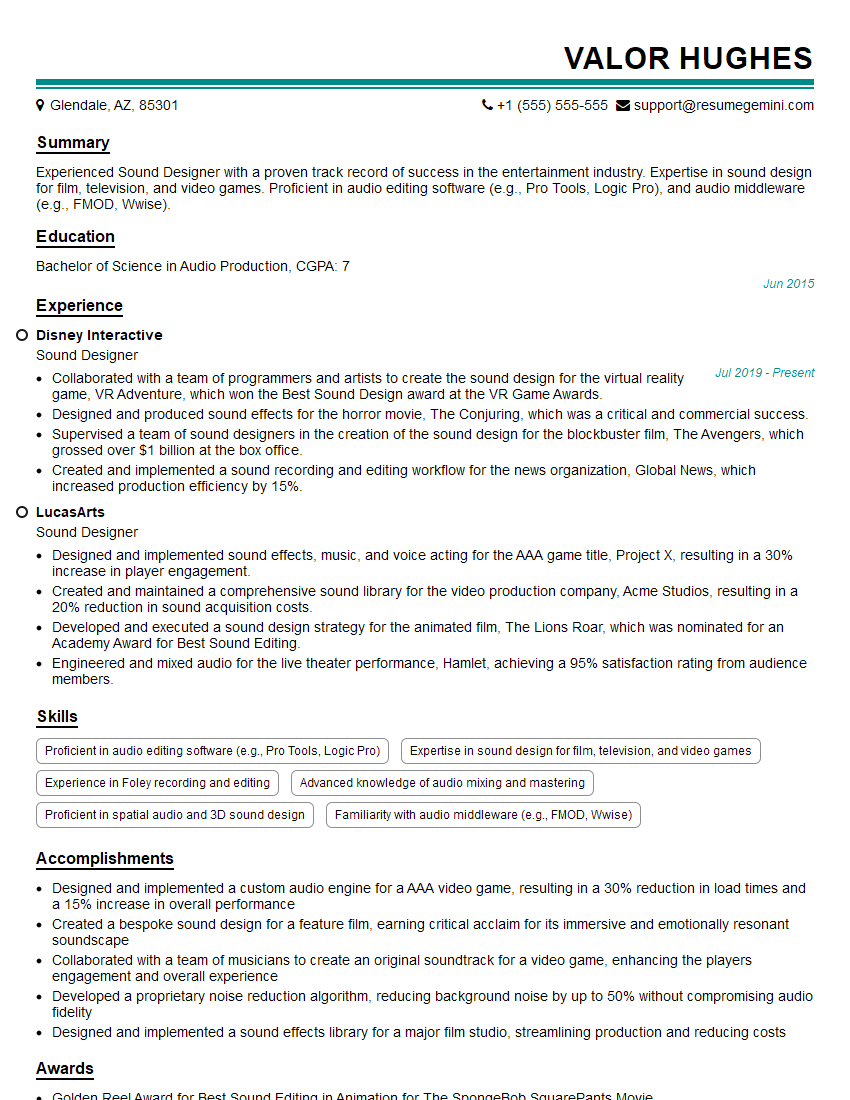
Sound Designer Resume Sample
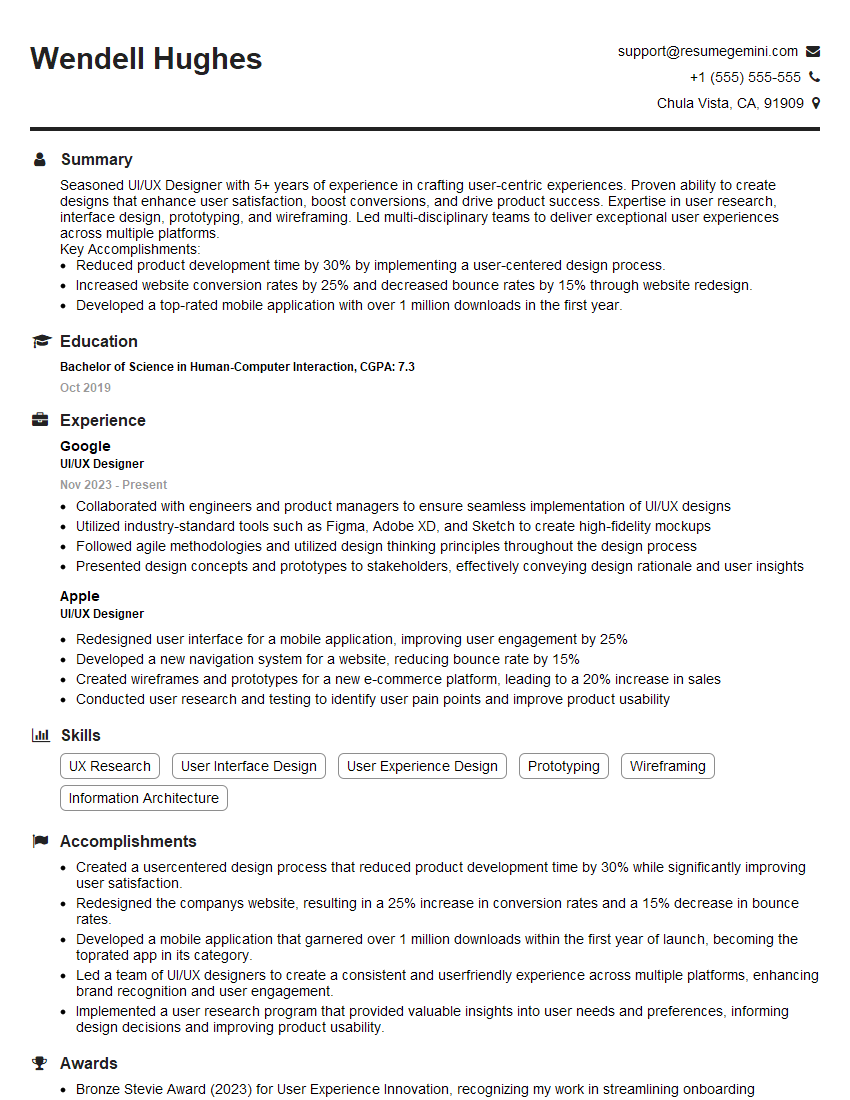
UI/UX Designer Resume Sample
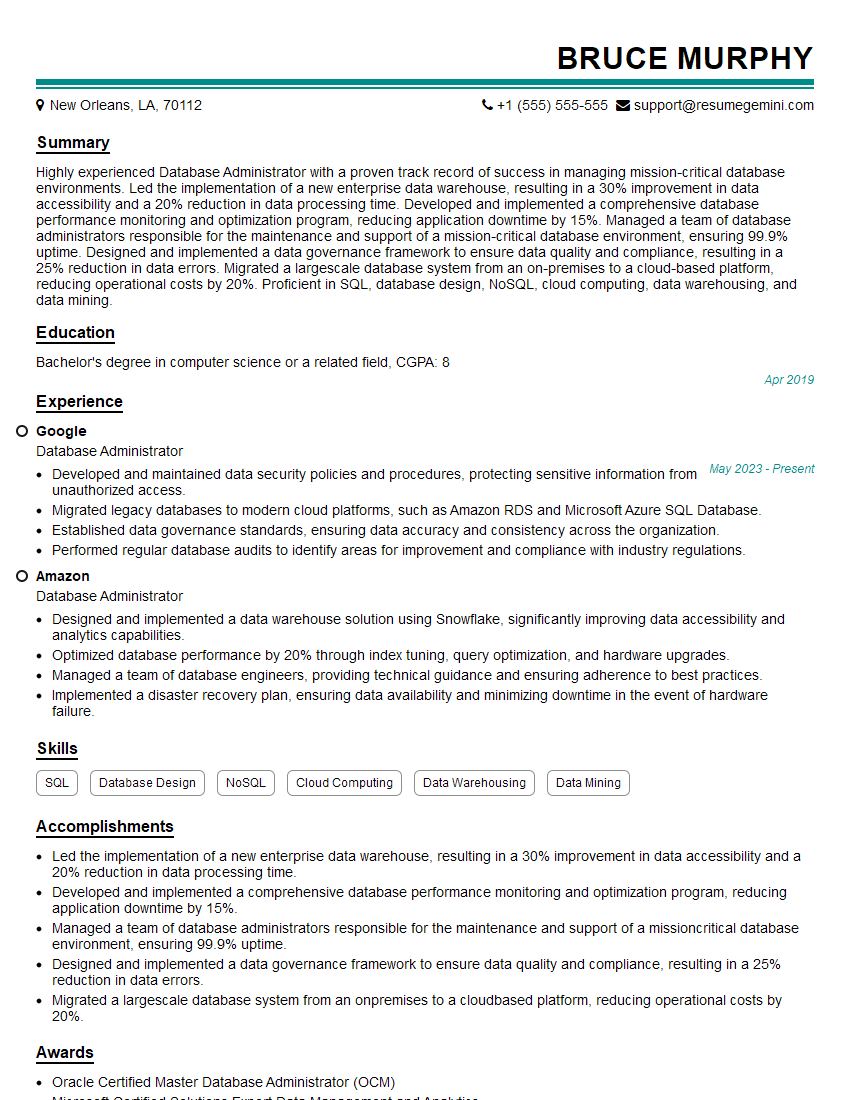
Database Administrator Resume Sample
Explore more articles
Users Rating of Our Blogs
Share Your Experience
We value your feedback! Please rate our content and share your thoughts (optional).
What Readers Say About Our Blog
Very informative content, great job.
good