The thought of an interview can be nerve-wracking, but the right preparation can make all the difference. Explore this comprehensive guide to Pedigree Research and Analysis interview questions and gain the confidence you need to showcase your abilities and secure the role.
Questions Asked in Pedigree Research and Analysis Interview
Q 1. Explain the importance of accurate record-keeping in pedigree analysis.
Accurate record-keeping is the cornerstone of effective pedigree analysis. Without precise and complete data, the entire process becomes unreliable, leading to inaccurate conclusions about inheritance patterns. Think of a family tree – if branches are missing, relationships are unclear, or dates are wrong, you can’t accurately trace the lineage of a particular trait.
Accurate records should include the following: complete family history across multiple generations, clearly identified individuals with their relationships to each other, accurate recording of affected and unaffected individuals for the trait of interest, and if possible, the presence or absence of other relevant medical information. Any ambiguity or incompleteness will hinder the analysis and may lead to misinterpretations of inheritance patterns.
For example, missing information about a deceased individual who may have carried a recessive allele could lead to an incorrect assumption about the mode of inheritance of a disease.
Q 2. Describe different types of pedigree symbols and their meanings.
Pedigree symbols are standardized graphical representations used to denote individuals and their relationships within a family. They provide a visual way to represent complex family structures and inheritance patterns concisely. Consistent use of these symbols is crucial for clear communication and correct interpretation.
- Square: Represents a male.
- Circle: Represents a female.
- Filled symbol (square or circle): Indicates an individual affected by the trait.
- Unfilled symbol (square or circle): Indicates an unaffected individual.
- Half-filled symbol (square or circle): May indicate a carrier of a recessive trait or an individual with a mildly affected phenotype.
- Horizontal line connecting a square and a circle: Represents a mating pair.
- Vertical line connecting parents to offspring: Represents the parent-offspring relationship.
- Roman numerals: Usually denote generations.
- Arabic numerals: Usually denote individuals within a generation.
- Diamond: Represents an individual of unspecified sex.
- Proband (index case): Often indicated by an arrow pointing to them.
For instance, a filled square would represent an affected male, while a half-filled circle might show a female carrier of a recessive disease allele.
Q 3. How do you interpret a pedigree to identify modes of inheritance (autosomal dominant, recessive, X-linked)?
Interpreting a pedigree to determine the mode of inheritance involves carefully analyzing the pattern of affected and unaffected individuals across generations. Different inheritance patterns exhibit distinct characteristics.
- Autosomal Dominant: Affected individuals appear in every generation, affected individuals have at least one affected parent, males and females are affected equally. Examples include Achondroplasia and Huntington’s disease.
- Autosomal Recessive: Affected individuals typically skip generations, affected individuals usually have unaffected parents (both parents are carriers), males and females are affected equally. Examples include Cystic Fibrosis and Sickle Cell Anemia.
- X-linked Recessive: More males are affected than females, affected males usually have unaffected parents (mother is a carrier), affected females have an affected father and at least one carrier mother. Examples include Hemophilia and Duchenne Muscular Dystrophy.
By systematically observing these patterns in the pedigree, we can deduce the most likely mode of inheritance of the trait under study. The presence or absence of affected individuals in certain generations and their genders is key to this process.
Q 4. What are the limitations of pedigree analysis?
While pedigree analysis is a powerful tool, it has limitations. The accuracy of the analysis is directly dependent on the accuracy and completeness of the family history data. Incomplete or inaccurate information can lead to misleading conclusions. Several factors limit its effectiveness:
- Small sample size: A small family may not demonstrate the typical pattern of a particular inheritance mode.
- Incomplete penetrance: An individual might carry the gene for a trait but not express it, making it appear as if the trait is skipped in a generation.
- Variable expressivity: The severity of a trait can vary between individuals even within the same family, making it hard to definitively classify an individual as affected or unaffected.
- Environmental factors: Environmental influences can mimic or mask genetic effects, complicating the analysis.
- New mutations: A trait can appear to arise spontaneously due to a new mutation, making it difficult to trace back through the pedigree.
Therefore, it’s crucial to consider these limitations and interpret the pedigree data cautiously, ideally in conjunction with other genetic testing methods.
Q 5. How can you use pedigree analysis to predict the probability of inheritance of a specific trait?
Predicting the probability of inheritance uses Mendelian principles and Punnett squares. Once the mode of inheritance has been determined from the pedigree, probabilities can be calculated for offspring of specific parents. For example:
Let’s say a pedigree suggests an autosomal recessive trait. If both parents are carriers (heterozygotes, denoted as Aa), the probability of their child inheriting the trait (aa) is 25% (1 out of 4 possible genotypes). A Punnett square would visually demonstrate this probability. We can use similar approaches to predict probabilities for autosomal dominant and X-linked traits, considering the specific genotypes and inheritance patterns involved.
It’s essential to remember that these are probabilities, not certainties. Larger families are more likely to yield results that closely reflect the predicted probabilities.
Q 6. Explain the concept of inbreeding and its effects on a pedigree.
Inbreeding refers to mating between closely related individuals. In a pedigree, this is represented by a loop in the family tree, showing close relatives marrying each other. Inbreeding increases the likelihood of offspring inheriting two copies of the same gene, one from each parent, increasing the risk of recessive disorders.
The effects of inbreeding on a pedigree include increased homozygosity (two identical alleles at a locus) and increased probability of expressing recessive traits, both advantageous and disadvantageous. Increased homozygosity can lead to a higher incidence of both rare recessive disorders (e.g., increased chance of inheriting two copies of a deleterious recessive gene) and the expression of favorable traits if these traits happen to be homozygous dominant in a given population.
Pedigrees showing high rates of inbreeding often display a higher frequency of inherited diseases and other phenotypic abnormalities compared to pedigrees with low inbreeding.
Q 7. How do you identify potential errors or inconsistencies in a pedigree?
Identifying inconsistencies in a pedigree requires careful scrutiny of the data for anomalies that don’t fit expected inheritance patterns. Several strategies can be used to identify these errors:
- Check for Mendelian inconsistencies: Are there instances where affected individuals have unaffected parents in a dominant trait, or unaffected parents have affected offspring for a dominant trait? Such patterns may indicate recording errors.
- Examine gender ratios: Do the gender ratios of affected individuals match what’s expected for the proposed mode of inheritance? Discrepancies could indicate errors or suggest a different mode of inheritance than initially assumed.
- Look for missing information: Are there gaps in the pedigree, missing individuals or incomplete data on affected status? Missing information can significantly affect accuracy.
- Review age of onset: Some traits have later-onset, and an older individual might not have shown symptoms yet. This isn’t an error but needs to be considered.
- Compare with other data: If available, compare pedigree data with other genetic information, such as karyotypes or molecular tests, to corroborate the analysis.
By methodically examining these aspects of the pedigree, we can identify potential errors or inconsistencies that might otherwise lead to incorrect conclusions. This is akin to fact-checking and editing a written document – multiple passes and verification are essential to ensure accuracy.
Q 8. Describe your experience with pedigree software or databases.
My experience with pedigree software and databases is extensive. I’ve worked with various programs, from simple family tree generators to sophisticated software packages designed specifically for genetic analysis. These include programs capable of handling large datasets, complex relationships, and various inheritance patterns. For instance, I’ve used programs like Pedigree Viewer for visualizing pedigrees and identifying potential inheritance patterns. I’m also proficient in using databases like Genealogy databases to gather relevant family history information and cross-reference it with genetic data. My experience extends to integrating these tools with statistical software for more robust analyses. This combined approach allows for comprehensive pedigree analysis, ensuring accurate interpretation and informed conclusions.
Q 9. How do you handle incomplete or missing data in a pedigree analysis?
Handling incomplete or missing data is a crucial aspect of pedigree analysis. The absence of information can significantly impact the accuracy of conclusions. My approach involves a multi-pronged strategy. Firstly, I systematically document all missing data points, noting their nature and potential impact on the analysis. Then, I employ several techniques. This might include using Bayesian methods to incorporate prior knowledge and uncertainty into the analysis. For example, if a particular genetic condition has a known prevalence in a specific population, this information can be used to infer probabilities for individuals with missing data. Alternatively, I may employ imputation methods to fill in missing data based on patterns observed in the existing data. Finally, I always perform sensitivity analyses to assess the impact of missing data on the results. This provides a measure of robustness and confidence in the conclusions drawn from the analysis. Essentially, transparency and careful consideration of uncertainty are paramount.
Q 10. What statistical methods are used in pedigree analysis?
Pedigree analysis leverages several statistical methods, depending on the research question and the nature of the data. Common methods include:
- Segregation analysis: This examines the inheritance pattern of a trait within families to determine its mode of inheritance (e.g., autosomal dominant, recessive, X-linked).
- Linkage analysis: Used to locate genes responsible for inherited traits by examining the co-inheritance of markers and the trait of interest. This often involves calculating LOD (logarithm of odds) scores.
- Association studies: These assess the statistical association between genetic markers and traits, often in larger population samples, but can be applied to family data as well.
- Bayesian methods: These statistical approaches allow for incorporation of prior knowledge and uncertainty, which is particularly useful when dealing with incomplete data. For instance, in Bayesian networks, prior probabilities of different inheritance patterns can be used to make inferences.
- Regression analysis: This can be used to model the relationship between the trait of interest and other factors like age, gender, and other potential genetic markers.
The choice of method hinges upon the specific research goal and available data. For example, linkage analysis would be appropriate for identifying a gene causing a rare disease in a family, whereas association studies might be better suited for common diseases influenced by multiple genes.
Q 11. Explain the difference between a family tree and a pedigree chart.
While both family trees and pedigree charts depict family relationships, they differ significantly in their purpose and design. A family tree is primarily a genealogical record, showcasing ancestral lineages and relationships across multiple generations. It may include information on birth dates, marriage dates, locations, and occupations, but focuses mainly on the broad family structure. In contrast, a pedigree chart is specifically designed for genetic analysis. It uses standardized symbols to represent individuals and their relationships, highlighting phenotypes (observable characteristics) and genotypes (genetic makeup) relevant to the genetic trait under study. A pedigree chart is not concerned with the comprehensive genealogical history, but concentrates solely on aspects relevant to inheritance of specific traits. Think of a family tree as a broader historical record, while a pedigree chart is a focused tool for genetic investigation.
Q 12. How can pedigree analysis be used in genetic counseling?
Pedigree analysis is an invaluable tool in genetic counseling. It helps assess the risk of inheriting genetic disorders within families. For instance, by analyzing a pedigree chart showing a family history of cystic fibrosis, a genetic counselor can determine the probability of a couple having a child with the disease, based on the inheritance pattern of the CFTR gene. This information allows counselors to provide informed choices concerning family planning. Pedigree analysis can also aid in identifying individuals who may be carriers of recessive genetic disorders, which can have implications for reproductive planning. Furthermore, it can assist in explaining complex genetic inheritance patterns to families, improving understanding and empowering decision-making.
Q 13. Describe your experience with analyzing complex pedigrees with multiple traits.
Analyzing complex pedigrees involving multiple traits requires a sophisticated approach. It often necessitates the use of statistical models that account for the correlations between traits, potential gene-gene interactions, and environmental influences. I approach these complex analyses using multifactorial inheritance models, which consider multiple genes and environmental factors affecting the phenotype. I leverage statistical software capable of handling complex datasets and employing methods such as multivariate analysis, path analysis or Bayesian networks to unravel the relationships between genes and the multiple traits. Visualizations, like network diagrams showing relationships between genes and traits, help to summarize and interpret these complex analyses. Careful consideration of potential confounding factors is also critical. For example, if studying height and weight, environmental factors such as nutrition will influence both.
Q 14. How do you use pedigree analysis to identify potential carriers of genetic disorders?
Pedigree analysis effectively identifies potential carriers of genetic disorders by examining family history and inheritance patterns. For autosomal recessive disorders, carriers have one affected allele and one normal allele, showing no symptoms. However, they can pass the affected allele to their offspring. In a pedigree, individuals who have affected children but are themselves unaffected are strong candidates for carriers. For X-linked recessive disorders, females can be carriers, passing the affected allele to their sons. Careful analysis of affected and unaffected individuals in several generations can reveal patterns suggestive of carrier status. Probabilistic calculations, often informed by population frequencies of the disorder, can then refine estimates of carrier probability. This is essential for providing informed genetic counseling and assessing reproductive risks.
Q 15. Explain how pedigree analysis can be applied in animal or plant breeding.
Pedigree analysis is an invaluable tool in animal and plant breeding, allowing breeders to track the inheritance of desirable and undesirable traits across generations. By visually representing family relationships and phenotypes, we can identify individuals carrying specific alleles and predict the likelihood of offspring inheriting those alleles. This is crucial for selective breeding programs aimed at enhancing productivity, disease resistance, or other economically important traits.
For example, imagine a breeder wants to increase milk yield in a dairy herd. A pedigree can reveal which cows consistently produce high milk volumes, identifying superior genetic lines. This allows the breeder to select breeding pairs more likely to produce high-yielding offspring, accelerating genetic improvement. Similarly, in plant breeding, pedigrees help identify disease-resistant varieties, allowing breeders to develop crops less susceptible to pests and diseases.
In essence, pedigree analysis provides a blueprint of the genetic makeup of a population, guiding informed breeding decisions and maximizing the probability of producing offspring with desired characteristics.
Career Expert Tips:
- Ace those interviews! Prepare effectively by reviewing the Top 50 Most Common Interview Questions on ResumeGemini.
- Navigate your job search with confidence! Explore a wide range of Career Tips on ResumeGemini. Learn about common challenges and recommendations to overcome them.
- Craft the perfect resume! Master the Art of Resume Writing with ResumeGemini’s guide. Showcase your unique qualifications and achievements effectively.
- Don’t miss out on holiday savings! Build your dream resume with ResumeGemini’s ATS optimized templates.
Q 16. What is the significance of Mendelian ratios in pedigree analysis?
Mendelian ratios, stemming from Gregor Mendel’s experiments on pea plants, represent the expected proportions of different genotypes and phenotypes in offspring resulting from a specific cross. These ratios are fundamental to pedigree analysis because they provide a framework for interpreting inheritance patterns. For instance, a 3:1 phenotypic ratio in offspring suggests a simple Mendelian inheritance of a dominant trait, whereas a 1:1 ratio often indicates a heterozygous cross.
Deviations from expected Mendelian ratios can hint at more complex inheritance patterns, such as incomplete dominance, codominance, or epistasis. By comparing observed phenotypic ratios in a pedigree to expected Mendelian ratios, we can infer the mode of inheritance of a trait and identify possible underlying genetic mechanisms.
Consider a pedigree showing a dominant trait. If we consistently see a 3:1 ratio among offspring in families where both parents express the trait, it confirms the simple dominant inheritance pattern. However, inconsistencies might indicate other factors at play, requiring further investigation.
Q 17. Describe your understanding of linkage analysis in relation to pedigrees.
Linkage analysis in pedigrees explores the tendency of genes located close together on the same chromosome to be inherited together. This is because linked genes are less likely to be separated during meiosis (chromosome crossover). Analyzing pedigrees for linked genes helps map the location of genes responsible for specific traits. The closer two genes are, the less frequent recombination will occur, and the higher the linkage disequilibrium between them.
Identifying linkage helps understand the genetic architecture of complex traits and map disease genes. For example, if a specific disease is consistently inherited along with a known marker gene in a pedigree, it suggests they are located close to each other on the same chromosome. This information helps narrow down the search for the disease-causing gene within that chromosomal region.
We use recombination frequencies to estimate the genetic distance between linked genes. A high recombination frequency implies a larger physical distance, and vice-versa. In pedigrees, this is manifested by observing the frequency of offspring who inherit a combination of traits different from their parents.
Q 18. How can pedigree analysis be integrated with other genetic analysis techniques?
Pedigree analysis doesn’t exist in isolation; it’s highly effective when integrated with other genetic analysis techniques. The synergy of multiple approaches creates a more comprehensive understanding of genetic inheritance.
- Genome-Wide Association Studies (GWAS): Pedigrees can be used to identify candidate genes for GWAS, which can then be used to confirm the association of those genes with the trait in larger populations.
- Whole-Genome Sequencing (WGS): Pedigree analysis helps prioritize specific individuals for WGS based on their phenotypic characteristics and family history, which helps determine causal mutations.
- Cytogenetic analysis: Pedigrees highlighting chromosomal abnormalities can be used to correlate phenotypes with chromosomal changes seen through karyotyping or other cytogenetic methods.
- Quantitative trait loci (QTL) mapping: Pedigree data is essential for QTL mapping, identifying genomic regions associated with complex traits showing continuous variation.
For example, a pedigree suggestive of a recessive trait could be followed up with GWAS to pinpoint the exact gene, or even WGS to identify the specific mutation.
Q 19. How do you determine the penetrance and expressivity of a trait from a pedigree?
Penetrance refers to the proportion of individuals with a specific genotype who express the associated phenotype. Expressivity describes the degree or intensity to which a phenotype is expressed in individuals with the same genotype.
In a pedigree, we assess penetrance by looking at the proportion of individuals carrying the genotype associated with a trait who actually exhibit that trait. Incomplete penetrance means that not all individuals with the genotype show the phenotype. Expressivity is assessed by observing the variation in the severity or manifestation of the phenotype among affected individuals.
For example, a pedigree showing a dominant trait might have instances where individuals with the genotype don’t show the trait (reduced penetrance). Alternatively, even if everyone with the genotype shows the trait, the intensity of the trait might vary (variable expressivity). For instance, one person with a dominant allele causing deafness might experience profound deafness, while another only experiences mild hearing loss.
Q 20. Explain how you would approach analyzing a pedigree for a suspected mitochondrial inheritance.
Analyzing a pedigree for suspected mitochondrial inheritance requires a keen eye for specific patterns. Mitochondrial DNA (mtDNA) is inherited maternally—meaning only from the mother. Therefore, in a pedigree exhibiting mitochondrial inheritance, all offspring of an affected mother will inherit the trait, whereas affected fathers will not transmit the trait to their offspring.
Key indicators in a pedigree suggestive of mitochondrial inheritance include:
- Maternal inheritance: The trait is passed down exclusively through female lineages.
- Variable expressivity: The severity of the trait can differ significantly among individuals with the same genotype.
- Heteroplasmy: The coexistence of both mutant and wild-type mtDNA, resulting in varied expression of the trait within a family.
When analyzing such a pedigree, careful record keeping and thorough phenotypic characterization are critical to confirming maternal transmission and ruling out other possibilities.
Q 21. What is the role of pedigree analysis in forensic genealogy?
Pedigree analysis plays a crucial, albeit often indirect, role in forensic genealogy. While not directly used to identify suspects like DNA profiling, it helps in constructing and validating familial relationships. This is especially important when investigating cold cases or when limited DNA evidence is available.
Forensic genealogists use publicly available genealogical databases and construct pedigrees based on shared genetic markers, working backwards to establish familial connections. Then, traditional pedigree analysis techniques help determine the likelihood of a relationship between an individual identified via DNA and a possible suspect, helping narrow down the search for a perpetrator or identify unknown relatives.
In essence, pedigree analysis provides a framework for interpreting and contextualizing genetic data from familial matches obtained through forensic genetic testing and large genealogical databases, providing an important tool in investigative work.
Q 22. How do you assess the reliability of information provided within a pedigree?
Assessing the reliability of pedigree information is crucial for accurate analysis. It’s like building a house – you wouldn’t use weak foundations! We need to evaluate the source, completeness, and consistency of the data.
Source Credibility: Is the information from a trusted source, such as medical records, direct interviews with family members, or established databases? Information from unreliable sources, like hearsay, requires careful scrutiny and corroboration.
Completeness of Data: Are there significant gaps in the pedigree? Missing information can lead to ambiguous interpretations. For example, if a family member’s medical history is unknown, it can be difficult to determine inheritance patterns. We aim for a comprehensive picture across generations.
Consistency of Information: Are there inconsistencies or contradictions within the data? For instance, if one source indicates a family member had a certain trait, but another source contradicts this, we need to investigate further and potentially seek additional evidence to resolve the discrepancies.
Accuracy of Phenotype Descriptions: The clarity and specificity of phenotypic descriptions are critical. Vague descriptions such as ‘heart problem’ are less useful than precise diagnoses, for instance, ‘hypertrophic cardiomyopathy’.
Through a rigorous evaluation of these factors, we can assess the trustworthiness of the pedigree and appropriately account for uncertainties in our analysis. We might even use statistical methods to quantify the confidence in our conclusions.
Q 23. Describe a challenging pedigree analysis you have undertaken and how you overcame the challenges.
One particularly challenging analysis involved a pedigree with suspected mitochondrial inheritance. The initial presentation showed a complex pattern of inheritance, with affected individuals appearing across generations, but not in every generation, and exhibiting variable expressivity—meaning the severity of the condition differed among affected individuals. This made it difficult to distinguish between mitochondrial inheritance and other modes, like autosomal dominant with incomplete penetrance (meaning the gene is present but the trait may not always show).
To overcome these challenges, we:
Expanded Data Collection: We contacted additional family members to gather more detailed medical histories and phenotypic information. We also performed thorough literature reviews to identify similar cases and potential diagnostic clues.
Statistical Modeling: We employed advanced statistical methods to model different inheritance patterns, including mitochondrial inheritance and autosomal dominant inheritance with reduced penetrance. This allowed us to compare the likelihood of each model given the observed data.
Molecular Genetic Testing: We suggested molecular genetic testing of selected family members to confirm or refute the suspected mitochondrial inheritance pattern. This provided critical empirical evidence to support or reject our pedigree-based hypotheses.
By integrating these approaches, we were able to develop a more accurate and nuanced understanding of the inheritance pattern, which was crucial for genetic counseling and potential therapeutic interventions. The case highlighted the importance of combining pedigree analysis with other investigative methods for complex genetic scenarios.
Q 24. Explain your familiarity with different pedigree drawing software and formats.
I’m proficient in several pedigree drawing software and formats. My experience includes using both commercial software packages like PEDSYS, Linkage, and Progeny, as well as open-source options like GEDCOM and online tools. Each has its strengths and weaknesses. Commercial packages often provide advanced features for complex analysis and data management. Open-source tools might offer greater flexibility and customization, though they may require more technical expertise to utilize effectively.
I am familiar with various formats including:
Standard Pedigree Symbols: I use the standard symbols for males (squares), females (circles), affected individuals (filled shapes), carriers (half-filled shapes), etc. Consistent use of these symbols ensures clarity and easy interpretation.
GEDCOM: This is a widely used standard file format for genealogical data which can be imported and exported by various software packages. It is useful for exchanging pedigree data between different platforms.
My choice of software depends on the project’s specifics – the size and complexity of the pedigree, the need for advanced analysis features, and the availability of resources. Adaptability is key in selecting the appropriate tool for the job.
Q 25. How do you communicate complex pedigree information to non-specialists?
Communicating complex pedigree information to non-specialists requires clear, concise language and visual aids. It’s like explaining a complex recipe to someone who’s never cooked before—you have to break it down into easy steps.
Visual Representation: A well-designed pedigree chart is essential. I use clear symbols, color-coding, and simple labels to make it easily understood. Simplifying the chart, focusing on key information, can be very effective.
Analogy and Storytelling: I often use analogies to illustrate concepts. For example, I might compare gene inheritance to shuffling a deck of cards to explain the different probabilities. Storytelling helps make the information relatable and engaging.
Layperson’s Language: I avoid jargon and technical terms unless absolutely necessary. If I have to use technical terms, I explain them in simple, easy-to-understand language. The goal is comprehension, not just delivery.
Interactive Elements: Interactive elements like presentations with animated explanations can help enhance understanding and engagement.
Remember, the goal is to ensure the audience comprehends the information, regardless of their background. Clear and engaging communication is crucial for effective dissemination of genetic information.
Q 26. What are some ethical considerations in pedigree analysis, especially related to privacy and informed consent?
Ethical considerations are paramount in pedigree analysis. Privacy and informed consent are particularly critical. It’s like working with confidential medical records – discretion and respect are essential.
Privacy: All information obtained should be treated with strict confidentiality. Data should be anonymized whenever possible. Strict adherence to data protection regulations (like HIPAA in the US or GDPR in Europe) is paramount.
Informed Consent: Participants must be fully informed about the purpose of the study, how their data will be used, and the potential risks and benefits. They must provide explicit consent before participation, allowing them to withdraw at any point. This should be documented meticulously.
Potential for Stigma: We must be mindful of the potential for stigma associated with certain genetic conditions. Results should be presented with sensitivity and support. We should be prepared to offer access to genetic counseling resources.
Data Security: Pedigree data needs robust security measures to prevent unauthorized access and ensure data integrity. Encryption and secure storage are essential.
Ethical guidelines ensure responsible conduct and respect for individual rights in pedigree research.
Q 27. How do you stay updated with advancements in Pedigree analysis techniques and tools?
Staying current in pedigree analysis requires a multi-faceted approach. It’s like staying updated on the latest software—you need to actively seek out new information.
Scientific Literature: I regularly read peer-reviewed journals such as the American Journal of Human Genetics and Clinical Genetics to stay abreast of advancements in methodology, analytical tools, and interpretations.
Conferences and Workshops: I attend conferences and workshops related to human genetics and pedigree analysis to learn about the latest research findings and connect with other experts in the field.
Online Resources: I utilize online resources such as databases of genetic variants and professional societies’ websites to access the most recent information and software updates.
Professional Networks: Participating in professional organizations and networks allows for collaborative learning and exchange of knowledge with colleagues.
Continuous learning and engagement in the professional community ensure that my skills and knowledge remain current and relevant.
Q 28. Describe your experience in collaborating with other researchers or professionals on pedigree analysis projects.
Collaboration is crucial in pedigree analysis, especially with complex pedigrees. It’s like building a complex jigsaw puzzle—multiple sets of eyes bring better results.
I have worked extensively with geneticists, genetic counselors, clinicians, and bioinformaticians on several projects. My collaborations have included:
Joint Data Collection and Interpretation: Collaborating with clinicians to gather detailed phenotypic data and jointly interpret pedigree findings.
Bioinformatic Analysis: Working with bioinformaticians to perform complex statistical analyses and modeling of inheritance patterns.
Genetic Counseling: Collaborating with genetic counselors to communicate findings to families and provide guidance on genetic risk assessment and management.
Manuscript Writing and Publication: Working with co-authors to write and publish research findings in peer-reviewed journals.
These collaborations not only enhance the rigor and accuracy of the analyses but also broaden the perspective and understanding of genetic conditions. Effective communication and shared expertise are key to successful collaborative endeavors.
Key Topics to Learn for Pedigree Research and Analysis Interview
- Basic Pedigree Symbols and Notation: Understanding the standardized symbols used to represent individuals, relationships, and traits within a pedigree chart. This forms the foundation for all pedigree analysis.
- Modes of Inheritance: Mastering autosomal dominant, autosomal recessive, X-linked dominant, and X-linked recessive inheritance patterns. Be prepared to analyze pedigrees and determine the likely mode of inheritance for a given trait.
- Probability and Risk Assessment: Applying probability principles to calculate the risk of inheriting a specific trait based on the information presented in a pedigree. This is crucial for predicting the likelihood of future offspring inheriting a condition.
- Analyzing Complex Pedigrees: Developing the ability to interpret pedigrees with incomplete information, multiple affected individuals, or traits exhibiting incomplete penetrance or variable expressivity. This requires strong analytical and problem-solving skills.
- Ethical Considerations: Understanding the ethical implications of genetic testing and pedigree analysis, including issues of confidentiality, informed consent, and genetic discrimination.
- Practical Application: Be ready to discuss how pedigree analysis is used in various fields, such as genetic counseling, animal breeding, and human disease research. Prepare examples demonstrating your understanding of real-world applications.
- Problem-solving approaches: Practice working through hypothetical pedigree scenarios, systematically eliminating possibilities, and justifying your conclusions based on sound genetic principles. Develop clear and concise communication to explain your reasoning.
Next Steps
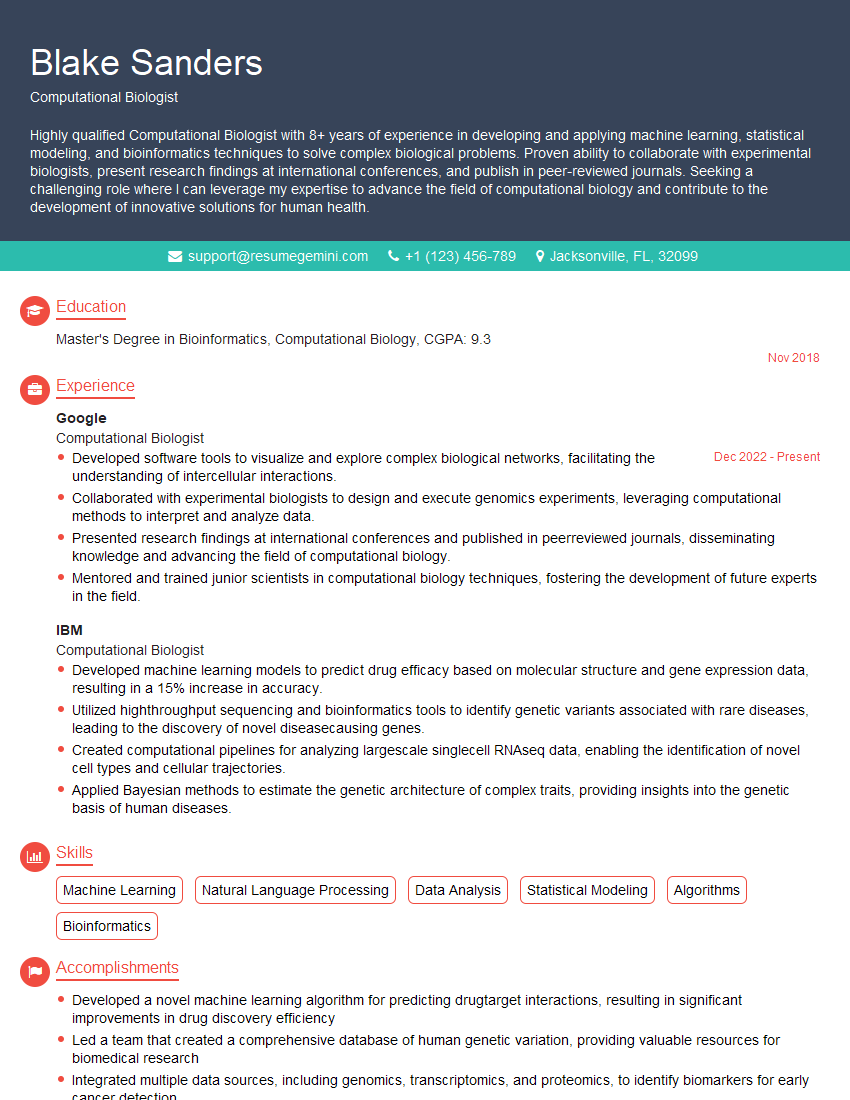
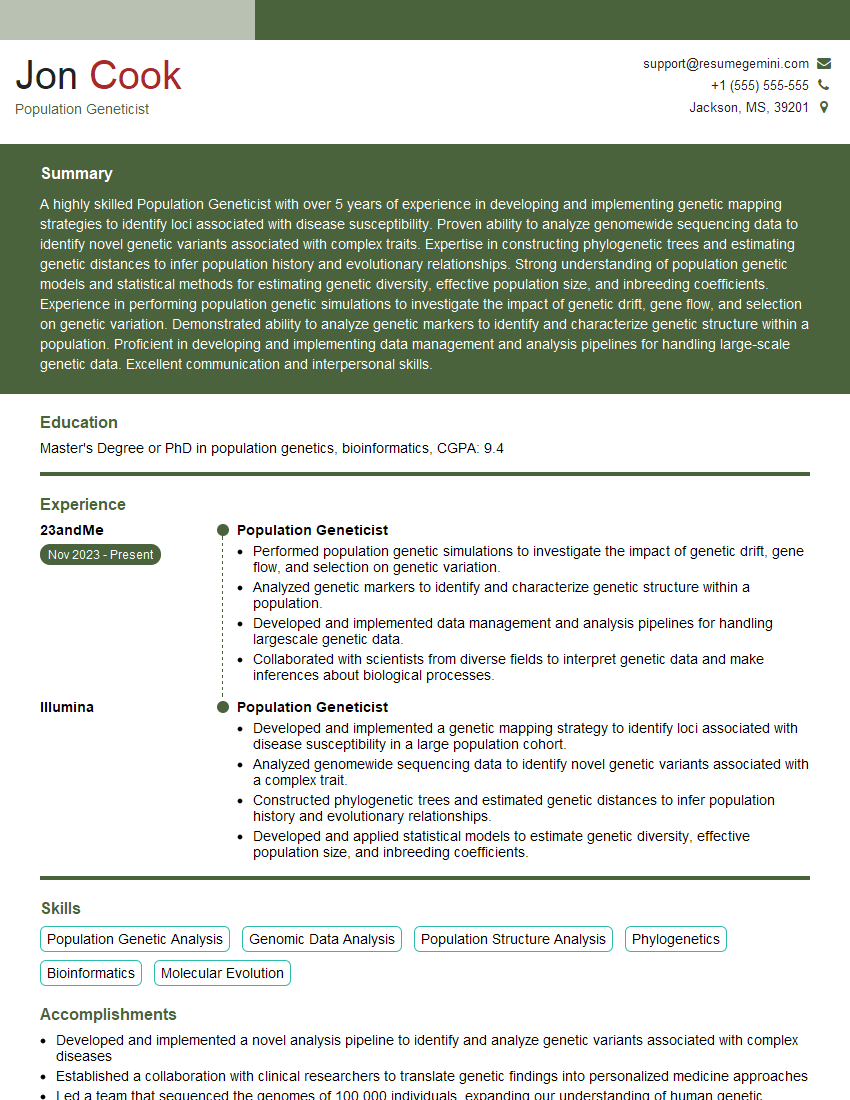
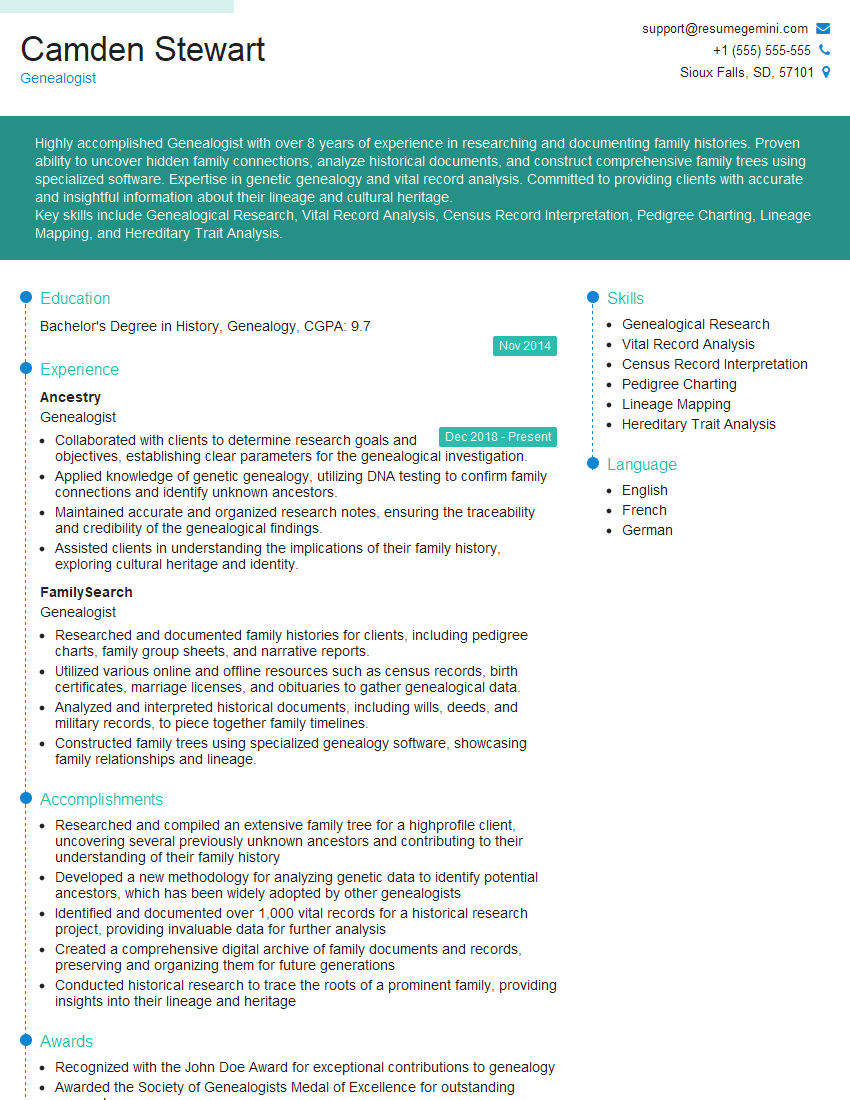
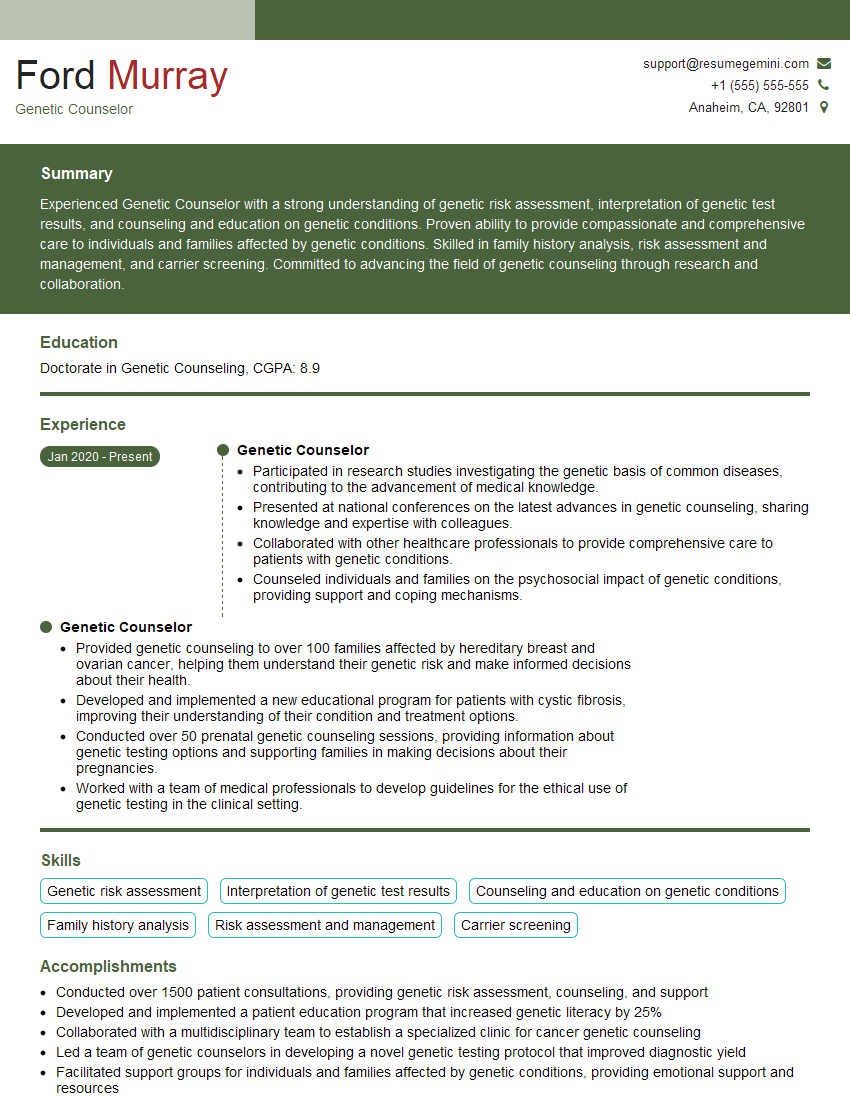
Mastering Pedigree Research and Analysis opens doors to exciting career opportunities in genetics, healthcare, and related fields. A strong understanding of these concepts significantly enhances your candidacy and demonstrates your analytical abilities. To maximize your job prospects, crafting an ATS-friendly resume is essential. ResumeGemini is a trusted resource that can help you build a professional and impactful resume tailored to showcase your skills and experience. Examples of resumes specifically tailored to Pedigree Research and Analysis positions are available through ResumeGemini to help you get started.


Explore more articles
Users Rating of Our Blogs
Share Your Experience
We value your feedback! Please rate our content and share your thoughts (optional).
What Readers Say About Our Blog
Very informative content, great job.
good